Modern Art in Old Castille

Modern Art in Old Castille

When I first came to Europe I was, like any good American, in search of the very old. We have skyscrapers and Jackson Pollocks in my country, but we don’t have cathedrals, castles, or El Greco. Yet to see Europe as merely a repository of its history is to forget that its residents are just as keen as anyone to advance into the future. And so I recommend any visiting Americans to make time to experience a bit of the more modern side of Spain.

Segovia, for example, is justly famous for its Roman aqueduct and its elegant cathedral. But tucked away in its winding streets is the Museo de Arte Contemporáneo Esteban Vicente. This small museum would be worth your time even if it weren’t free to visit. It is named after an important but lesser-known artist from the 20th century, a member of the famous Generation of 1927 (which also included Lorca and Dalí), who spent time in Paris alongside Picasso, and finally moved to New York City in the wake of the Spanish Civil War. There, he became one of the main representatives of abstract expressionism.
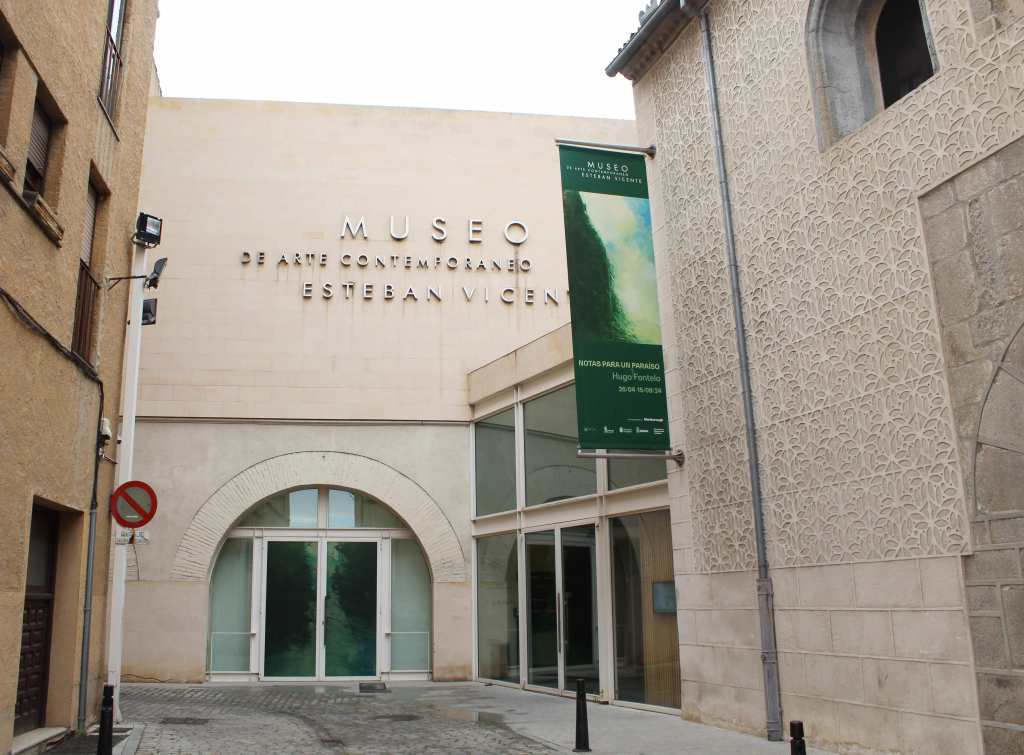
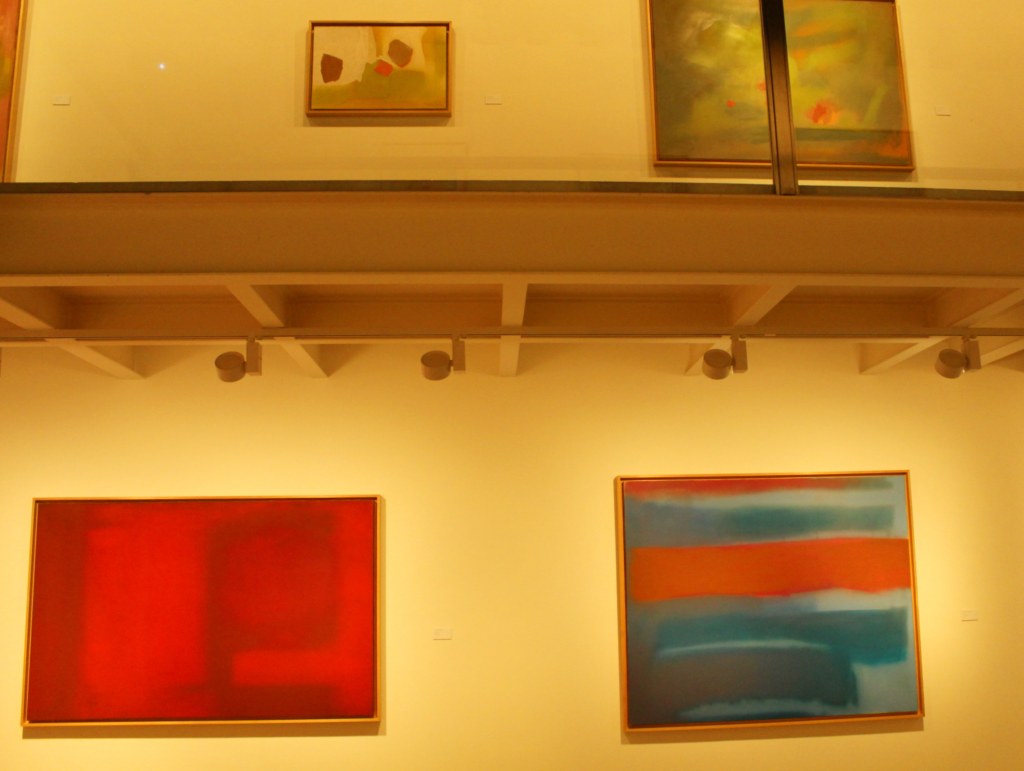
The museum is housed in what used to be a hospital; and the large rooms and austere architecture contrast starkly with the art. Though he began as a figurative painter, Vicente quickly moved into the kind of abstract art that many people turn up their noses at—atmospheric blobs and swirls of color on canvas. I must admit that it isn’t usually my cup of tea, either. Nevertheless, in the context of Segovia, a city of narrow streets, hard angles, and gray stone, his art was wonderfully refreshing—light and playful, almost ethereal in its vagueness.
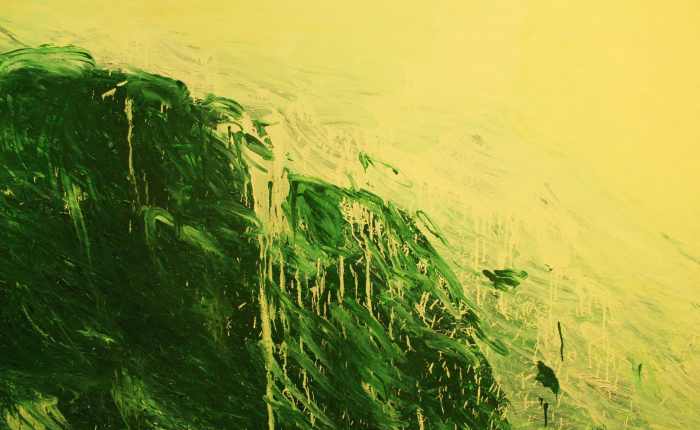
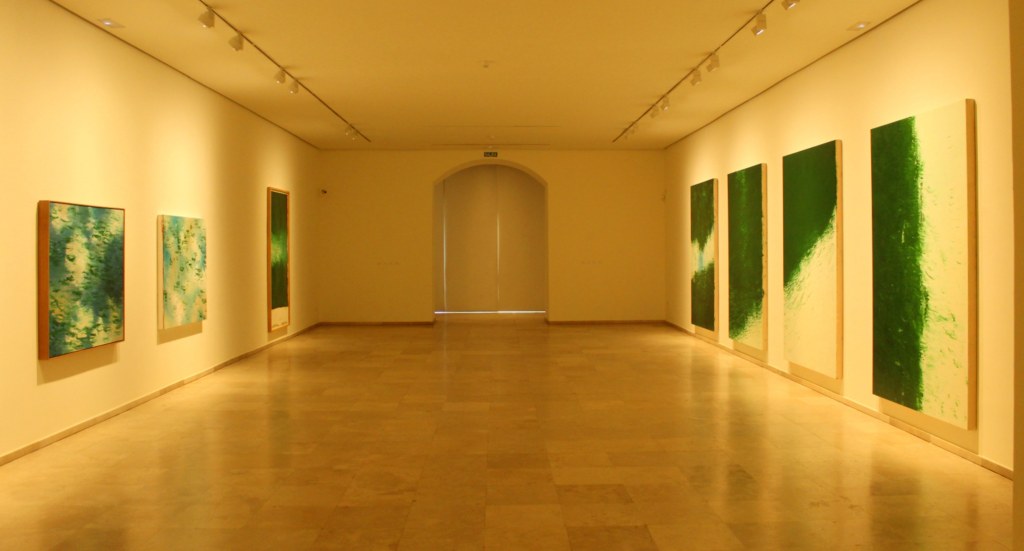
When I visited, there was a temporary exhibit by the contemporary artist Hugo Fontela—another Spaniard working in the abstract vein, living in New York. He worked in a very restrained color pallet, just green on a white canvas. Yet with the rhythm and intensity of his brush strokes, he managed to evoke clouds, waves, wind, and whole landscapes. It was an impressive performance.
Even deeper into Old Castile is the city of Valladolid. Though often overlooked by tourists, it is a city well worth visiting, especially as it is easily accessible by fast train from Madrid. Among the curiosities of the city is its huge and rather ugly cathedral—a massive pile of stone that looks oddly unfinished. This is because, when it was conceived, Valladolid was serving as the capital of Spain, and so its church was meant to be the biggest in the world. When the capital was moved to Madrid, however, the construction stopped, and now the building trails off into nothingness.

The most famous museum in the city is the Museo Nacional de Escultura, a collection of sculptures from the middle ages onward (mostly religious), housed in an old monastery. However, during my brief time in Valladolid, I found my visit to another museum far more enjoyable: the Museo Patio Herreriano.
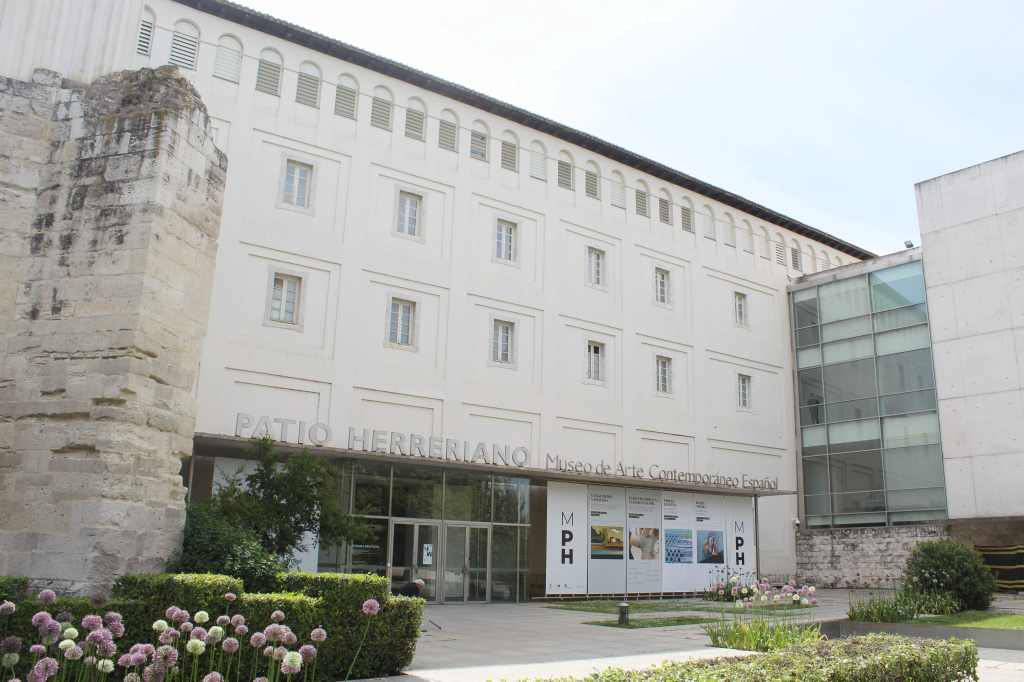
The museum is located in the remains of the former monastery of San Benito el Real. Though its name pays homage to the great Spanish architect Juan de Herrera, it was really designed by one of his followers, Juan de Ribero Rada. However, the building was in such disrepair by the time it was decided to create a museum that substantial renovations were necessary. The building now is thus a strange Frankenstein mixture of old and new sections.

The museum’s collection is huge and extensive, containing works by Joan Miró, Salvador Dalí, and even our friend Esteban Vicente, as well as contemporary artists such as Azucena Vieites. I wandered around rather aimlessly, having neglected even to pick up a map, doing my best despite being sleep-deprived and dehydrated to appreciate the art. I would be insincere if I pretended that I liked everything. Indeed, contemporary art often leaves me scratching my head and even vaguely bored. 

But any kind of art is largely hit and miss; and contemporary art even more so. Going to a modern art museum, therefore, requires a certain suspension of judgment, a certain amount of patience, until you discover something that pulls you in.
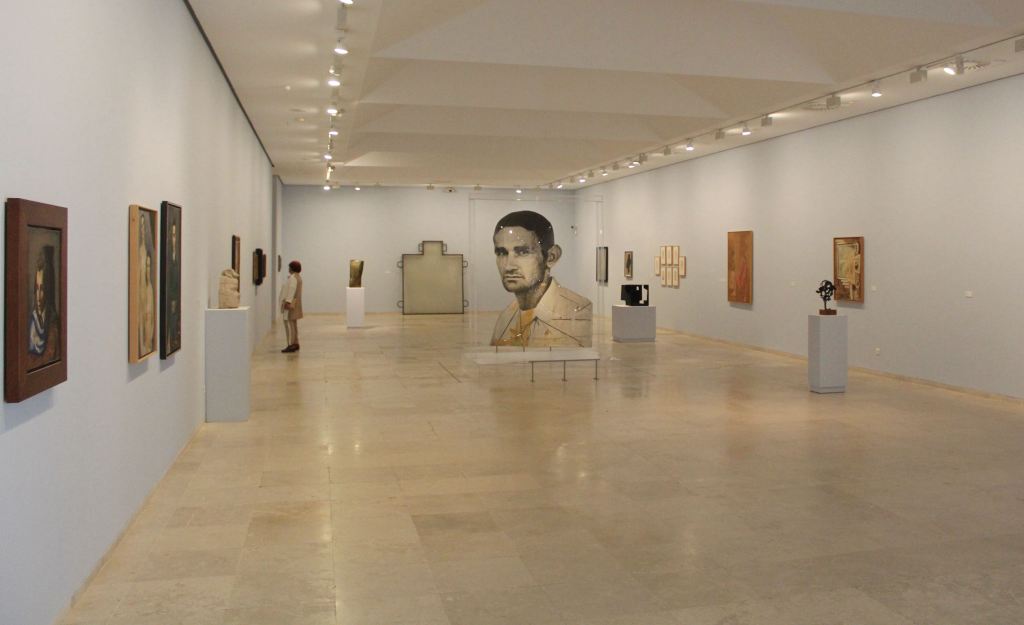
For me, this was an exhibit on Delhy Tejero, a Spanish artist I had never heard of before. What immediately struck me about her work was how varied it was, in both style and content. She could do realistic, figurative drawings or highly abstract paintings; her work can be cartoonish, dreamy, or serious; she can focus on folklore or lose herself in the purity of geometric shapes. Perhaps none of the works on display was a surpassing masterpiece, but taken as a whole her work exemplified such a degree of curiosity, open-mindedness, and fine sensibility that it left me deeply impressed.
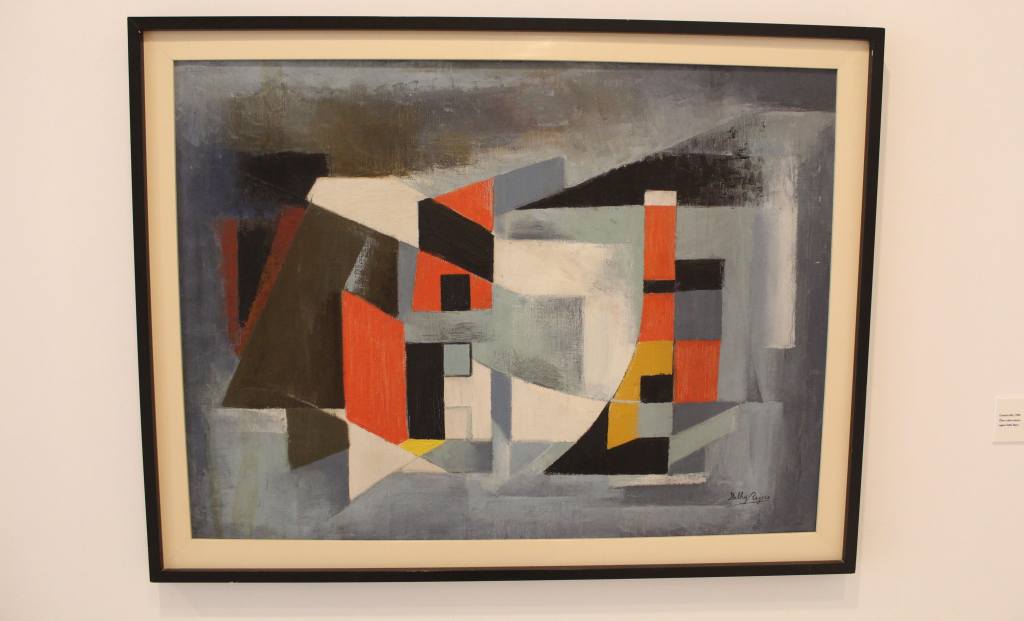
These are just two examples of the fine, lesser-known modern art museums to be found all over Spain. And I think that, especially for the weary traveller, traversing the scorched soil of the central Castilian plains, besieged by castles, cathedrals, and ruins of bygone civilizations, a bit of absurdity, playfulness, and abstraction can do much to clear the palette. 
Review: Get the Picture

Review: Get the Picture

Get the Picture: A Mind-Bending Journey Among the Inspired Artists and Obsessive Art Fiends Who Taught Me How to See by Bianca Bosker

My rating: 5 of 5 stars


Much like Michael Pollan’s Omnivore’s Dilemma, I feel compelled to give this book top marks—not because I agreed with everything Bosker said, and not because I loved every moment of it—simply because I doubt a better book could be written about its subject. Bosker threw herself at the world of contemporary art with the devotion of a fanatic and the patience of a saint. This book represents, in a very real sense, a decent chunk of Bianca Bosker’s life. Years went into it.

The comparison with Pollan is apt, as—like the food writer—Bosker is a kind of experiential journalist. She is not content to read art theorists and to visit a few galleries. No, she must work for a gallerist, apprentice with a painter, watch over the art in a museum, sell paintings in a show, plan an exhibition—in short, she must do everything that anyone involved in the art world does. And in so doing, she painstakingly assembles a map of this small, strange world.

The (ahem) portrait that she paints of this world is not flattering. This is especially true of the first part of the book, in which she becomes an assistant to a hip Brooklyn gallerist, Jack Barrett. I must say that I found Barrett to be the most unlikable person I had read about in quite some time—and I am including the murderous cannibals in The Road. He epitomizes everything unsavory in the art world: an obsession with reputation, with coolness, with inaccessibility, with fitting in—with everything, in short, except the art itself.

Like many gallerists, apparently, he prefers a property on an upper floor, so that it doesn’t attract street traffic. Visits from ordinary people—so-called ‘schmoes’—are to be avoided at all costs, as their appreciation is worse than worthless: it is detrimental. He even contemplates, at one point, hiring a web designer to make his website as difficult to use as possible, perhaps with white font over a white background. (Judging from his current website, this was wisely decided against.)

This emphasis on inaccessibility is certainly reflected in the language of the art world, whose style will be familiar to anybody who has been in academia. Probably many of you have had the experience of seeing something incomprehensible in an exhibition, turning to the plaque for guidance, and being confronted with a text that only adds to the confusion. As Bosker notes, this style of writing came into vogue in the 20th century, modelled after the French deconstructionists—whose already turgid prose was translated into highly unidiomatic English, and then emulated by anglophone writers. It is, in short, language meant to mystify and intimidate, not enlighten.

Most importantly, in Mr. Barrett’s world, “context” is king—which is really just a pretentious word for “reputation.” He is constantly worried about whether the people he is talking to are the “right” sort of people, in the sense that doing business with them will bolster his own reputation. When deciding whether to represent an artist, his most important question is whether they are the sort of person he would like to hang out with. He even goes so far as to nitpick Bosker’s clothes and to coach her behavior—not too many questions, no complements, no staring at the art—during their visits to galleries, since he doesn’t want her to taint his own manicured reputation.

The final irony is that Barrett, like so many in the art world, does so much of what he does in the name of progressive values, while personally betraying them. Several times, for example, he berates older painters and art critics (like Kenneth Clarke) for their focus on the female body, but he has no problem openly criticizing Bosker’s outfits, and even her exercise habits. He is critical of the white male establishment while being, quite obviously, a part of it—someone who is certainly from a rich family, but who hides his background so as to conceal his own privilege. And he is far from an aberration: as Bosker points out, the majority of galleries are owned by white males.

I am probably spending too much time on Barrett, who really only occupies the first quarter of the book. But I found his entire attitude towards art to be so poisonous that I could hardly even believe that such a person could really exist, much less be (as Bosker insists) one of the ‘nicer’ gallery-owners in New York. Yet perhaps the most damning fact is that, as Bosker points out, Barrett rarely if ever comments on the formal qualities of a work. In the rare moments that he deigns to explain why he likes a particular piece, he resorts to interpretations that rely on his knowledge of the artist—of “context,” in other words. If the book consisted solely of Bosker’s experience with Barrett, one would have to conclude that the art world was entirely and utterly vapid.

But Bosker has an incredible capacity for hope; and even after her tense working relationship with Barrett breaks down completely (he implies that he purposely told her the wrong way to paint a wall, so that he could criticize her for doing it wrong), she persists and actually succeeds in meeting some pretty nice people. The next gallerists she works for tell her, contra Barrett, to “stay in the work”—to appreciate the art you see in front of you, and not fall back on its reputation. And rather than insist on a frigid dress code and an affectless demeanor, they are bouncing off the walls with enthusiasm for the art they sell.

Yet the hero of this book is, undoubtedly, Julie Curtiss. With all of the focus on gallerists, curators, and collectors in the beginning half of the book, it is easy to forget the actual people who make the art. And Curtiss, whatever you think of her work, is every inch an artist—manic about her craft, able to talk your ears off about color, a perfectionist in every detail, and motivated by a kind of ineffable aesthetic vision. In stark contrast to the Barrett camp of art, Curtiss seems motivated purely by the formal qualities of her work—a vision in her head that she is trying to make manifest. What it means—whether it means anything—is of far less significance.

Bosker ends the book by taking her own stab at the question: What is the value of art? She decides that art works by reuniting us with the basic data of our senses. As she notes, our brains are constantly taking the information from our eyes and fitting it to preconceived patterns, which aid us in quickly making sense of what we experience. The advantage of this is greatly increased processing time (we know a lion immediately when we see one), but the disadvantage is that we can become disconnected from the real stuff of experience. Art breaks this pattern by presenting images to our brains that we can’t immediately make sense of.

Now, I think there is a great deal to be said for this view. For one thing, it avoids the over-reliance on “context” that plagues so much modern art—a sculpture of a coffee mug that comes with an essay about modern-day consumerism. However, as an attempt to come to grips with art it strikes me as both too broad and too narrow—too broad, in that many things besides art can reconnect us with our senses (travel, drugs, exercise…), and too narrow, in that art can do more than just attune us to the beauty of color and form. Yet it is difficult to criticize Bosker on this point, given that Plato and Kant also tried and failed to come up with an all-encompassing philosophy of art.

In any case, before writing this review, I made sure to try to put Bosker’s advice into practice. Last Saturday, I went to the Reina Sofia museum and forced myself to stare at art that, otherwise, I would probably have scornfully walked right by. As she advised, I tried to notice at least five things about each work I focused on, and even set a timer on my watch for five minutes, not allowing myself to move on until the time ran out. Perhaps this sounds more like a form of self-hypnosis or meditation than genuine art appreciation, but I did find myself enjoying some rather far-out contemporary works that were not to my usual taste.

And it is a great testament to Bosker’s book that, in spite of the (ahem, ahem) ugly picture she paints of the art world—so full of empty pretensions and hypocrisy, a “progressive” world of starving artists and rich collectors—that despite all this, she still deepened my enjoyment of contemporary art. It is a masterpiece.


View all my reviews

Cover photo by Wallygva at English Wikipedia, CC BY-SA 3.0, https://commons.wikimedia.org/w/index.php?curid=15372441

Review: The Dehumanization of Art

Review: The Dehumanization of Art

La deshumanización del arte y otros ensayos de estéticaLa deshumanización del arte y otros ensayos de estética by José Ortega y Gasset

My rating: 4 of 5 stars

In my judgment, the characteristic feature of new art “from the sociological point of view” is that it divides the public into two categories: those that understand it, and those that don’t.

The more I read of José Ortega y Gasset, the more I discover that he was one of the most complete intellectuals of the previous century. During his prolific career he made contributions to political theory, to philosophy, to literary criticism, and now I see to art criticism.

In the title essay of this collection, Ortega sets out to explain and defend the “new art.” He was writing at the high point of modernism, when the artists of the Generation of ’27 in Spain—a cadre that included Dalí, Buñuel, and Lorca—were embarking on new stylistic experiments. Somewhat older and rather conservative by temper, Ortega shows a surprising (to me) affinity for the new art. He sees cubism and surrealism as inevitable products of art history, and thinks it imperative to attempt to understand the young artists.

One reason why Ortega is attracted to this art is precisely because of its inaccessibility. An elitist to the bone, he firmly believed that humankind could be neatly divided into two sorts, the masses and the innovatives, and had nothing but scorn for the former. Thus new art’s intentional difficulty is, for Ortega, a way of pushing back against the artistic tyranny of the vulgar crowd. This shift was made, says Ortega, as a reaction against the trend of the preceding century, when art became more and more accessible.

The titular “dehumanization” consists of the new art’s content becoming increasingly remote from human life. The art of the nineteenth century was, on the whole, confessional and sympathetic, relying on its audience’s ability to identify with characters or the artist himself. But the new art is not based on fellow-feeling. It is an art for artists, and appeals only to our pure aesthetic sense.

As usual, Ortega is bursting with intriguing ideas that are not fully developed. He notes the new art’s use of irony, oneiric symbolism, its rejection of transcendence, its insistence on artistic purity, and its heavy use of metaphor. But he does not delve deeply into any of these topics, and he does not carefully investigate any particular work or movement. Ortega’s mind is like a simmering ember that sheds sparks but never properly ignites. He has a seemingly limitless store of pithy observations and intriguing theories, but never builds these into a complete system. He is like a child on a beach, picking up rocks, examining them, and then moving on. He wasn’t one for sand castles.

One reason for this is that he normally wrote in a short format—essays, articles, and speeches—and only later wove these into books. It is a journalistic philosophy, assembled on the fly. Personally I find this manner of philosophizing intriguing and valuable. His books are short, punchy, and rich; and even if I am seldom convinced by his views, I also never put down one of his books without a store of ideas to ponder. He is even worth reading just for his style; like Bertrand Russell in English, Ortega manages to combine clarity, sophistication, and personality. I look forward to the next book.

View all my reviews