Review: The Pillow Book

Review: The Pillow Book

The Pillow Book by Sei Shōnagon

My rating: 5 of 5 stars

I set to work with this boundless pile of paper to fill it to the last sheet with all manner of odd things, so no doubt there’s much in these pages that make no sense.


This is an utterly delightful book. Indeed, it is fair to say that this is a book about delight in all its manifold forms.

This is all the more remarkable given what we know about the author’s life. Sei Shōnagon was a kind of lady-in-waiting for the Empress Teishi. However, not long after her marriage, Teishi was supplanted by another Empress, Shōshi (whose own lady-in-waiting, Murasaki, wrote the classic Tale of Genji), and soon thereafter died in childbirth at the age of 23. Thus, Shōnagon’s life in the capital was tense, humiliating, and short-lived. It is not even rightly known what became of Shōnagon after Teishi’s death. Even the date of her death is in doubt.

One might expect the writings of such a person to be tinged by melancholy or motivated by revenge. What we have, instead, is an elegant series of reminiscences and observations about the beauty of her world. Shōnagon appears to have loved court life—the ceremony, the pomp, the artificiality, the formality, the refinement, the elegance—in short, everything. Her taste for her role in court is striking to the modern reader, as her life cannot but appear incredibly confined to us. She spends all her time literally cordoned off, separated from the men by a screen, and is constantly at the Empress’s beck and call. I would have lost my mind.

But Shōnagon wrings as many drops of aesthetic pleasure out of her circumstances as humanly possible. She is, for example, enchanted by the subtleties of dress—what ranks of court officials can wear which articles of clothing, what colors are appropriate for which season. The sounds of words delight her, as do the specific characters used to write them. Seasons, trees, flowers, birds, and insects all attract her attention.

These items are gathered together into lists, which comprise the bulk of this volume. Indeed, Shōnagon must be one of the all-time masters of the list, as she is inexhaustibly brilliant at thinking of categories. True, there are pedestrian ones such as bridges, mountains, ponds, and so forth. Some of these are so short and perfunctory that one wonders why Shōnagon thought it worthwhile to jot them down. But most lists are based, not on the thing itself, but on how it makes Shōnagon feel: dispiriting things, infuriating things, things that look enjoyable (but aren’t), splendid things, regrettable things, things that are distressing to see, things that are hard to say, common things that suddenly sound special, things that look ordinary but become extraordinary when written…

These lists were so quirky and, often, so hilarious that I was incongruously reminded of Wes Anderson’s films, which often feature odd lists. (Come to think of it, if anyone could turn this book into movie, it would have to be a pretentious aesthete like Anderson. He also shares Shōnagon’s love of colors.) But the list, in Shōnagon’s hands, becomes more than just a tool of organization. It reveals a kind of aesthetic philosophy—in part, that of the society she lived in, but to a great degree idiosyncratic—wherein the sensible qualities evoked by things are ultimately more important than the things themselves.

This is exemplified in what is arguably the dominant theme of this book: poetry. To an extent that is very difficult to imagine today, poetry pervaded court life in Heian Japan. Virtually everyone at the court, it seems, had memorized a great deal of poetry, and their conversations are littered with erudite references. (Unfortunately for me, most of this poetry relied on puns that are untranslatable, making it rather baffling in English.) Moreover, it was common to correspond via poetry, and the ability to compose on the fly was highly prized. Stories abound of someone (usually Shōnagon herself) finding the exact perfect reference or quote for an occasion, or completing the opening lines of a poem with brilliant aplomb. It is as if everyone at the White House were expected to freestyle.

It must be said, however, that despite Shōnagon’s attempt to reach a state of pure aesthetic appreciation, her strong and sharp personality very often breaks through. And good thing it does, for without it the book would not be even half as enjoyable as it is.

Admittedly, Shōnagon the person is, in many respects, unpleasant. She is snobby in the extreme and not a little vain. Her attitudes toward common folks is one of utmost condescension, and her need to be refined at all times sometimes verges into the ridiculous (in one section, she pretends not to know the word for “oar,” as it is too vulgar an object for her delicate vocabulary). Shōnagon is even capable of cruelty, which is exemplified in a section when a commoner comes in tears to report that his house burned down, and Shōnagon breaks into laughter and writes a satirical poem about his predicament. (The poor man, being illiterate, mistakes the poem for a promissory note.)

This opinion of Shōnagon was, apparently, shared by at least some of her contemporaries. Lady Murasaki, for example, found her to be “dreadfully conceited” and predicted: “Those who think of themselves as being superior to everyone else in this way will inevitably suffer and some to a bad end.” For my part, however, I think that the tension between Shōnagon’s very human shortcomings and her airy aesthetic focus creates a kind of dynamic tension that makes this book become fully alive as a human document.

I cannot finish a review of this book without mentioning its immense value simply as a window into another time. I was constantly thrown to the endnotes (which I wish had been footnotes) to understand some obscure reference or puzzling custom, and in the process inadvertently learned much about Heian Japan. Somehow, both Shōnagon’s numerous poetic references and her love of gossip combine to make her age come fully alive in these pages, in a way that few other books accomplish. In other words, this book is wholly delightful.


View all my reviews

Review: Modern Romance

Review: Modern Romance

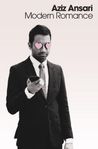
Modern RomanceModern Romance by Aziz Ansari

My rating: 4 of 5 stars


One firm takeaway from all our interviews with women is that most dudes out there are straight-up bozos.

My introduction to modern romance was abrupt and unexpected. I was back in New York for the holidays, drinking with a few friends, sipping and gulping the wonderful IPAs that I miss when I’m here in Spain.

Sometime deep into the night, one of my friends, who is a gay man—this is relevant to the story; you should also know that I’m a straight guy—asked if anyone wanted to go on his Tinder. “I do!” I said, and soon found myself face to face with the infamous app for the first time in my life.

Now, for the three remaining people who don’t know how Tinder works, it’s very simple: You look at pictures of people, and swipe left if you don’t want to talk to them, right if you do. (In this respect it’s like the Last Judgment.) If someone you’ve approved of also approves of you, then you are both given the option to send messages.

My friend was obviously a stud, because I was getting matches left and right (well, only right). One of these matches was a young man who I’ll call Woodrow Wilson. With permission from my friend, I sent Woodrow a message. The conversation went something like this:

Me: What’s your favorite tree?

Woodrow Wilson: Uh, White Pines are pretty cool I guess.

Me: White Pines? So cliché.

Woodrow Wilson: You’re right, I was only testing the waters. I’m really fond of Quaking Aspens. You?

Me: Now we’re talking. I’ve always been fond of the Shagbark Hickory.

The conversation proceeded like this for about four days, by which time it was clear that I had found my soul mate through my gay friend’s Tinder. Unfortunately, many barriers stood in the way—I’m straight, I was going back to Spain, and I was basically deceiving him—so I didn’t meet Woodrow Wilson. (If you ever read this—hello, and sorry!) But the experience was enough to make me curious about the opportunities and hazards of romance in the modern world.

Being a reluctant single, a very reluctant millennial, and a very, very reluctant member of the modern world, you can imagine I was, well, reluctant to tackle this topic. This book enticed me, not because it was written by Aziz Ansari—I didn’t consider myself a fan, and in college I even passed up the opportunity to see him live on campus—but because he teamed up with a sociologist, Eric Klinenberg, to write it. I listened to the audiobook, nasally narrated by Aziz.

The most striking thing about this book is that, despite its lighthearted tone and frequent funny asides, it is basically a serious and even an earnest book. Sociological statistics, psychological studies, and anthropological analyses are mixed with anecdotes and interviews and a bit of humor to give a quick but surprisingly thorough tour of romance in the contemporary world.

Aziz begins by pointing out that dating in today’s world is strikingly different from dating in my grandparents’ or even my parents’ generation. This is not only because of advances in technology but, more importantly, because of shifts in values. We now have developed what you might call a perfectionistic attitude towards finding a partner. We want to find a “soul mate,” “the one,” somebody who fulfills us and thrills us. Aziz contrasts this with what he calls the “good enough” marriages of yesteryears—finding a partner that satisfies some basic criteria, like having a job and a shiny pocket watch

I myself have noticed this shift from studying anthropology and history. In cultures all around the world—and in the West until quite recently—marriages were considered a communal affair. Aziz’s own parents had an arranged marriage, and according to him have had a long, successful relationship. (To be honest the idea of an arranged marriage has always been strangely appealing to me, since I don’t think any decision of such importance should be left in my hands. But the rest of my generation disagrees, apparently, so now I’m left to rummage through apps.)

Connected to this rise in the “soul mate” marriage is a rise in our preoccupation with romantic love. According to the biological anthropologist, Helen Fisher, there are two distinct types of love in the human brain: romantic, and companionate. Romantic love is the kind that writes bad poetry; companionate love is the kind that does the dishes. Romantic love hits early in a relationship and lasts up to a year and a half; companionate love grows slowly over time, perhaps over decades. This division accords well with my own experience.

(Parenthetically, I have long been skeptical, even morbidly suspicious, of romantic love: that kind of idealizing, gushing, delicious, walking on air feeling. To me it seems to be a form of self-deception, convincing yourself that your partner is perfect, even divine, and that nobody else in the world could make you so happy—when the truth is that your partner is a flawed person, only one of many flawed people who could induce the same delirious sensation. Wow, I sound really bitter in this paragraph.)

This cultural shift has been bolstered by our new dating technology. Now we do not only have the expectation that we can find the perfect partner, but we have the tools to do the searching. I can, and sometimes do, scroll through hundreds of faces on my phone per day. All this is very exciting; never before could I have so many romantic options at my fingertips.

But there are some major drawbacks to this. One is what the psychologist Barry Schwartz called the “paradox of choice.” Although you’d think having more options would make people more satisfied, in fact the reverse occurs. I remember watching TV was a lot more fun when I was a kid and I only had a few dozen channels; when we upgraded to hundreds of channels, it became stressful—what if there was something better on? Similarly, after spending three months in a camp in Kenya, eating whatever I was given, I found it overwhelming to go to a pizza place and order. How could I choose from so many toppings?

Along with these broader observations is a treasure trove of statistics and anecdotes that, if you’re like me, you’ll be quoting and misquoting for weeks. I found the little vignettes on the dating cultures in Japan, where there’s a sex crisis, Buenos Aires, where there’s a machismo crisis, and Paris, where there’s lots of infidelity but apparently no crisis, to be particularly memorable.

These anecdotes are not just for mental titillation, but are used to support several tenets of dating advice. Here are just a few takeaways. Check your punctuation before you send a text. When you ask someone out on a date, include a specific time and location, not “wanna hang out some time?” vagueness. Texting people is not a reliable way to gauge if you’ll like them in person; it’s best to ask them out sooner and not prolong a meaningless texting conversation. Take the time to get to know people; rarely do you see the more interesting side of someone’s personality on a first date.

As you can see, this book is quite a rare hybrid: part social science, and part self-help, and part comedy. And yet the book rarely feels disorganized or scatterbrained. Aziz keeps a tight rein on his materials; the writing is compact, clever, and informative. With the notable limitation that this book deals only with heterosexual couples, and covers no topic in serious depth, I can say that it’s hard for me to imagine how any such short book could give so complete a picture of modern romance.

Most impressive is the human touch. What could have potentially been a mere smattering of facts and stories, Aziz makes into a coherent whole by grounding everything in the day-to-day frustrations and realities of the dating world. Aziz knows firsthand how much dating can suck, how tiresome, uncomfortable, and stressful it can be. Yet, for all this, the book is ultimately hopeful.

Beneath all these shifts in values and demographics, all the innovations in dating technologies and changes in romantic habits, all the horror stories and the heartbreaks, beyond the lipstick and the cologne, below the collared shirts and high heeled shoes, above the loud music and the strong liquor, pushing every button and writing every text, is the universal human itch to connect.

This itch has always been with us and always will be. Each generation just learns to scratch it in new and interesting ways.

(If interested in setting something up, please direct all inquiries to my mom.)

View all my reviews

Review: The World at War

Review: The World at War

The World At WarThe World At War by Mark Arnold-Forster

My rating: 5 of 5 stars

Consisting of 26 episodes, each about 50 minutes long, The World at War traces the history of the Second World War from its pre-War beginnings to its aftermath. The program is remarkable in scope, covering the relevant political history of the United States, England, Germany, and Japan; the war efforts in north Africa and southeast Asia; the Russian and the Western front, as well as the final push against Japan; the bombing campaigns and their effects on civilian life; the struggle of the Allied shipping fleet against the German U-boats; the final peace negotiations in Europe and Asia, and the concomitant haggling between the U.S.S.R. and the West; the horrors of the Holocaust; and much else.

But the series has depth as well as breadth. There are hours and hours of archival footage—of battles, bombings, bombardments, protests, speeches, life on the front line, civilian life, negotiations, military parades, invasions, celebrations, triumphs, massacres, tragedies—much of it never used before, unearthed by the program’s research team.

Even more impressively, there are hours of interview footage, from from Poles, Russians, French, Germans, English, Americans, Japanese. There are interviews of gunners, tank crew, infantrymen, sailors, pilots; interviews of housewives, firefighters, barmen, taxi drivers; as well as from politicians, advisors, generals, and even Hitler’s personal secretary and chauffeur. Considering that these interviews were made specifically for the series, from people directly involved in the action, this makes the raw footage (most of it unused) a valuable primary historical document. And this is not to mention the wonderful narration by Laurence Olivier, which is always tasteful, often moving, and sometimes chilling.

In short, the documentary is a masterpiece, bringing the drama of the war to life while also being supremely informative. If you want to watch any documentary about World War II, make it this one.

To speak personally, watching this documentary had a strange effect on me, because it made me realize how much my perspective has changed since I was a kid. Back then, I used to watch World War II documentaries because the war seemed like a comic book. It was a story with clear bad guys and good guys, and the good guys won in the end. It was a story of personal heroism and bravery, of self-sacrifice and honor, of hardships endured and battles fought for the greater good. I was even fascinated with the military technology, the tanks, war planes, battleships, and guns. I remember going to the military museum at West Point, and seeing replicas of the nuclear bombs used on Hiroshima and Nagasaki. There was something undeniably awe-inspiring about the ability to create so much destruction, to wield so much power.

This time around, I had a different reaction. The more I watched, the more I became overwhelmed with a sense of pointless loss, destruction, and violence. Millions of young men marching off to shoot other young men, and for what? Towns blown to pieces, cities burned to the ground, and, most of all, countless lives lost. People shot, stabbed, drowned, burned; people executed by firing squad, hanging, the gas chamber. Beaches filled with bloated bodies, corpses rotting in the road, the remains grandmothers and children buried under piles of rubble. And it just kept going, the planes kept dropping bombs, the men kept throwing grenades, the tanks kept rolling on. By the end of the series, every episode made me feel sick.

When you see the numbers of the dead, it’s easy to grow numb. The totals become mere, meaningless statistics. But when you realize that those millions were composed of individuals, people with their own favorite song to whistle, shade of blue, local restaurant, people with their own quirks of personality, their own flaws and virtues, people who were loved and who loved in return, people who might have done anything had they survived the war, the enormity of the tragedy dawns on you. No matter what the aggressors hoped to gain from the war, no matter how glorious it seemed, it could not have been worth it.

The documentary does not shy away from the horrors of war, but dwells on them, and for good reason. For if there is any lesson to be learned from World War II, it is simply this: We must do everything in our power to avoid repeating that catastrophe.

View all my reviews