Adventures in Public Healthcare

Adventures in Public Healthcare

In the wake of the murder of Brian Thompson, the simmering anger that Americans feel for their healthcare system has boiled over. The internet is full of stories of people denied necessary treatments and medicine by our byzantine and heartless insurance industry. The alleged killer, Luigi Mangione, has even become a kind of folk hero to some, for taking revenge against a system they believe is just as guilty of murder—if not more so.

Fortunately, I don’t have a horror story about the American healthcare system to contribute. Nor am I here to lionize Mangione. Instead, I wanted to write up my experience dealing with a public healthcare system, in case any Americans are curious about what it is like in the rest of the world.

Shortly after running the Marathon, in 2023, I wanted to go to get a checkup to make sure I was alright. At the time I had private insurance through my job, which is fairly common even in a country with a robust public system. However, I should note that even the private insurance here is much better than it is in the United States. I never had a copay and, as far as I know, didn’t have a deductible. When I went to the dentist, podiatrist, or radiologist, the subject of money was not even brought up. Far from the American experience, here people get private insurance for convenience, and don’t seem to spend any time fighting with their insurers.

I went to an English-speaking doctor popular among expats. After a blood test, it turned out that I had extremely low iron reserves and was mildly anemic. My levels of ferritin (an enzyme that stores iron) were particularly low, about a quarter of the minimum level.

My doctor didn’t seem particularly concerned. He prescribed me iron pills to take for 90 days and told me to check back after the summer. By chance, during that time I got a new job, a better one, but which didn’t come with private insurance. Thus, when I went to do the follow-up, I went to the public health center in my neighborhood.

The experience was quite different. While the private doctor’s office was basically comparable to what I was used to in America—with a front desk, a waiting room, and a private room in the back to see patients—the public health center was more like an urgent care. There was a large central waiting room with metal benches and rows of doors leading to dozens of doctor’s offices.

After a brief talk with the doctor, I was told to come back in a few days for the blood test. The results were later delivered to me on the public health portal. After 90 days of iron supplements, my iron and ferritin levels were still abnormally low. Shortly thereafter, I got a call from the doctor. She seemed concerned. She asked me if I was a vegetarian or a vegan; and when I said no, whether I suffered from stomach pain or diarrhea. When I said no again, she told me that I would have to do an additional blood test and, more upsetting, bring in a stool sample.

This is when I began to panic. I had blithely assumed that my low iron levels were due to overtraining for the marathon, but the doctor seemed to think it could indicate something far more serious. I will spare you the details, but the stool sample was brought, and the blood test done, with no progress. There was no blood in my stool nor was I positive for celiac disease.

The doctor called me again, and told me that I would have to go get an ultrasound. This is when I realized that they were looking for lumps in my digestive tract—ulcers, cysts, or even tumors. A letter came in the mail, telling me how to make the appointment. Within a month, my belly was smothered in sticky goo and the nurse was passing her baton over it, as if I were pregnant. I expected her to say something but she didn’t, so I just wiped off the goo and left. The report came a few days later, again through the health portal: no irregularities found.

I thought that this might be the end of it, but I got another call from the public doctor. She said that, to be absolutely sure, I would have to get a colonoscopy (of my intestines) and an endoscopy (of my stomach). This is when panic really started to set in. You see, both stomach and colon cancer can cause iron deficiency, often without noticeable symptoms—until it’s too late, that is. And while colon cancer has a relatively good outlook, stomach cancer decidedly does not.

The appointment for the procedure was set for the beginning of April. This left me about two months to stew in anxiety. My mind was not soothed when a story was published in the New York Times, just a week before the appointment, that colon and rectal cancer rates are growing among young people. It seemed like an ominous sign.

For an endoscopy, a tube is inserted down your throat; and for a colonoscopy, up the other end. You’re spit-roasted, in other words. Thankfully, they sedate you for the procedure. It is the leadup to the colonoscopy that is the really unpleasant part. As the day nears, you must increasingly restrict your diet, cutting out foods with lots of fiber or strong colors, and finally cutting out food altogether. The final step is taking a powerful laxative. It’s not a fun way to pass the day.

Since you’re put under sedation, which takes a while to wear off, you can’t go to a colonoscopy alone. There has to be someone to help get you back home. Thankfully, I had Rebe. She arrived home from work and it was time to go. Strangely, at that moment, I didn’t feel a lot of anxiety about the results. I was so tired from not eating that I just wanted to get it over with.

I waited for just about five minutes before I was ushered in. The next thing I knew, I was on a stretcher with a needle in my arm. “You’re going to sleep,” the doctor said, and I was out. I came to, as many anesthetized patients do, wondering when they were going to start, and was astounded to learn that it was already over. I felt groggy and hungover. After waiting for fifteen minutes, I was handed the report: they hadn’t found anything—no tumors, no cysts, no ulcers, just a mild gastritis. It turns out that, as I originally thought, I had just over-trained for the marathon and used up my iron reserves.

You would think that I would be ecstatic at the news. But in my groggy state, I only felt annoyed that I had gone through so much trouble just to be told I was fine. I had pizza that night and drifted off into sleep.

I wanted to relate this health scare simply because it was shocking to me that, after so many tests, and speaking to so many doctors and nurses, I was never once asked to pay. No bill came in the mail. I walked out of the hospital a free (and healthy) man. What’s more, though I had to wait a couple months for the procedure, I never felt like the wait times were excessive—a common argument against public healthcare in America. As far as the doctors went, though they couldn’t spend a lot of time with me, they were highly professional, and arguably did a better job than their private counterpart, who only prescribed me iron supplements for a potential symptom of cancer.

To be absolutely fair, I should mention that the public system in Spain seems to do a very bad job when it comes to dentistry. I’ve never heard a good word about the public dental system, and the vast majority of the people I know don’t even bother trying to use it. As a result, like many people, I have private health insurance, paying a measly four euros a month. With those four euros, I get a cleaning and a checkup twice a year, with no co-pay—though, if I need anything beyond that, I have to pay out of pocket.

However, I should also mention that dental procedures are incomparably cheaper here than in the US. A single cavity drilling and filling costs between 40 and 50 euros, for example, and a root canal is about 200—prices that would seem almost free to many Americans. Even so, this doesn’t excuse the lack of good public dental care in Spain. For the life of me, I can’t understand why teeth are deemed categorically different from the rest of the body when it comes to insurance.

Even with that lack, however, I think that the healthcare system here in Spain is far superior to what Americans have to suffer through. It is cheaper both individually and collectively, and achieves better outcomes, as evidenced by Spain’s significantly higher lifespan. Going bankrupt due to a health problem is unheard of; people are not afraid of going to the doctor or the hospital or to call an ambulance. Not everyone is satisfied, for sure, but there certainly isn’t the deep hatred on display in my country.

Unfortunately, here the public system is continually in danger of privatization by right-wing parties. But if more Spaniards understood what Americans had to deal with, they would cherish their system, with all of its faults.


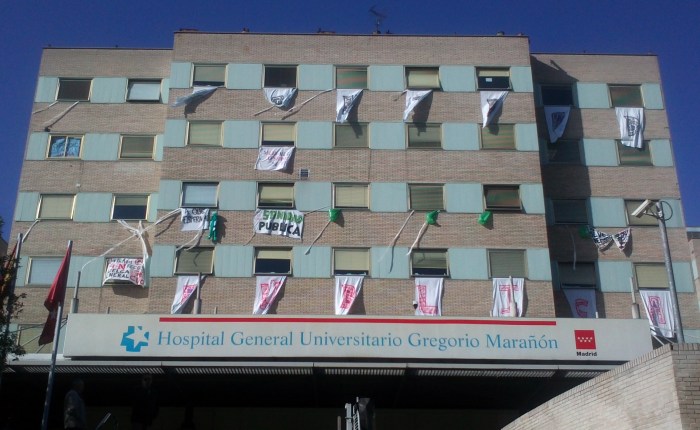
Cover photo by Israel Hergón – Flickr: IMG659, CC BY-SA 2.0, https://commons.wikimedia.org/w/index.php?curid=32799310

Review: Priced Out

Review: Priced Out

Priced Out: The Economic and Ethical Costs of American Health Care by Uwe Reinhardt

My rating: 4 of 5 stars

Mantras about the virtues of markets are no substitute for serious ethical convictions.

There are a great many things for Americans to feel embarrassed about. Depending on your politics, you may bemoan the rise of identity politics and the snowflake culture predominating on college campuses; or perhaps you rage against racist policing or our lax gun laws. But I think that, as Americans, we can all come together and feel a deep and lasting shame over our health care system—specifically, how we finance it. According to Reinhardt, our system is so bad that it is routinely invoked in international conferences as a kind of boogey man, an example of what to avoid. And after reading this book, it is easy to see why.

I did not suspect that our system was quite so bad until I left the country. But, in retrospect, the evidence was quite apparent. Virtually all of my friends have expressed anxiety about their health care at some point—high premiums, high deductibles, or simply no health insurance at all. I have seen family members spend weeks negotiating with insurance companies for payment of their medicines (and even after the insurance chips in, the cost is still breathtaking). Meanwhile, in my five years here, I have yet to hear a single Spaniard express anxiety over how they will pay for a medicine or a medical procedure. Here, as in most of Europe, this type of anxiety is quite uncommon.

The U.S. system fails on many different fronts. Most simply, there is coverage. Millions of Americans have no coverage, and millions more have inadequate coverage (such as many of my friends, whose deductibles are so high that they may as well not have insurance). Second is cost. Both medical procedures and medicines are significantly more expensive in the United States. For example, the drug Xarelto (for blood clots) costs $101 in Spain, $292 in the U.S. The average cost of an appendectomy is $2,003 in Spain, $15,930 in America. A third failure— closely related to cost—is waste. Our byzantine payment system requires doctors and hospitals to spend great amounts of time and money communicating with insurance companies, which of course costs money, which of course gets transferred to the consumer.

But most fundamental failure is a failure of ethics. Or perhaps it is better to say a lack of ethical vision. As Reinhardt explains, while much of the debate on health care in America concerns itself with technicalities—risk pools, risk exposure, whether premiums should be actuarially fair or community-rated, etc.—this debate conceals the fact that we have yet to come to a consensus on the moral foundations of health care. Most of the world’s developed nations have established their systems on the presumption that health care is a social good. In the United States, on the other hand, we are sort of muddled, at times treating health care as if it is a commodity, and yet unwilling to face up to the implications of that choice—such as letting poor people die without treatment.

Aside from the ethical issues involved, health care has many features that make it unlike a typical commodity, and thus poorly governed by supply-and-demand. If I want to buy a car, for example, typically I am not in a great rush to do so. I can shop around, test-drive cars, compare prices across companies and locations, and read reviews. I can even decide that I do not want to buy a car after all, and instead buy a train pass. All of this contributes to control the price of cars, and incentivizes car companies to give us the best value for our money.

None of this is the case in our health care system. The demand is non-negotiable and, very often, time-sensitive. Furthermore, most patients lack the knowledge needed to evaluate what procedures or tests are justified or not, so oftentimes we cannot even be fully aware of our own ‘demand.’ Besides that, we have no ability to compare prices or to compare treatment efficacy. And even if we are careful to go to a hospital in our insurance network, there may be doctors ‘out of network’ working there, leading to the ugly phenomenon of surprise medical bills.

Added together, it is as if the car salesman blindfolded me, put a gun to my head, told me I had to choose a car in five minutes, while he was the only source of information about what car I needed (and medical bills can be quite as expensive as cars!). This is the position of the American “consumer” of healthcare.

My own brief experience with emergency medical care highlights the situation. The only time that I have ever been taken to an emergency room, I was unconscious. I woke up after being transported by the ambulance. Luckily, I was quickly discharged, and I also had insurance. But even though my insurance covered the hospital bill, it did not cover the ambulance, which I had to pay out of pocket. Again, I was lucky, since I was able to afford it. Many cannot, however, and have the experience of waking up from an accident, an injury, or an operation in debt. How can you be an intelligent consumer when you are unconscious?

The helplessness of the consumer creates a perverse incentive in our system. There is little downward pressure on prices. Instead, what results is a kind of arms race between health care providers and insurers. Insurers are incentivized to put up as many barriers as possible to paying out, which requires doctors and hospitals to invest ever-more resources into their billing departments, which of course only increases the cost to the patient. In many hospitals, there are more billing clerks than hospital beds; and when you realize that these billing clerks have their own counterparts in the insurance companies, you can get some idea of the enormous bloat created by our financing system.

I think there is a particular irony to this situation, since our American insistence on market values has created a labyrinthine network of incomprehensible rules, endless paperwork, and legions of bureaucrats—the very thing that capitalist principles were supposed to eliminate. Indeed, ironies abound in our system. For example, we endlessly discuss the affordability of government programs, while the tax incentives for employment-based insurance (which costs the federal and state governments an annual $300 billion in foregone revenues) is never mentioned. What is more, while the insurance mandates of Obamacare were roundly criticized as forcing the healthy to subsidize the unhealthy, as Reinhardt points out, the exact same thing occurs in insurance-based healthcare. And as a final irony:

It is fair to ask why, if socialized medicine is so bad, Americans for almost a century now have preserved precisely that construct for their military Veterans, and, indeed, why the latter are so defensive and protective of that socialized medicine system.

After reading this review, you may be excused for thinking that this book is a fiery manifesto about the evils of the system. Far from it. Uwe Reinhardt was a prominent economist and much of this book consists of tables and graphs. The writing is, if anything, on the dry side, and the tone is one of intellectual criticism rather than passionate outrage. Yet, strangely, this is why I found the book so effective. It is one thing for an arm-swinging socialist to condemn the evils of the system, but quite another for a calm economist to go through the data, point by point, and explain how it all works and how it compares with other countries’ performance.

You may also be excused for thinking that, given all this, Reinhardt would be an advocate for a single-payer system in the United States. After all, he was one of the architects of Taiwan’s single-payer system, which costs about 6% of the country’s GDP. (For comparison, America’s system costs us 17% of GDP!) But Reinhardt thinks that such a system would not work on American soil. For one, the libertarian streak in our culture runs too deep for such a system to be broadly acceptable. More importantly, however, Reinhardt thinks that our campaign finance system is so corrupt that the health care lobby would be able to exert a heavy influence on the government, thus canceling the benefit.

He instead advocates for an ‘all-payer’ system. The idea is to consolidate the market power of consumers by having standard prices set either by the government, or by associations of care providers and insurers. This would, at the very least, avoid the wild price variability that can be found in even a single city in the United States. It also helps to bring costs down, as demonstrated in Maryland, which has had an all-payer system for quite a while. Japan’s system is also established on this principle, and spends far less money per capita on its health care system, despite having a significantly older population than the United States.

In normal times, I was not exactly optimistic about the prospect of reforming our broken health care system. But in the wake of this pandemic, it does seem as if major reforms might not only be possible, but inevitable. Employment-based insurance makes little sense if people lose their jobs during a major health crisis, as has already happened to many millions of Americans. And high unemployment may persist for some time. What is more, a major health crisis, resulting in many thousands of additional hospital stays, will put pressure on private insurance firms and lead to a significant rise in insurance premiums. Basically, higher-risk patients create higher cost, and a pandemic puts far more people into the high-risk category. The greater strain on an already teetering system may be the proverbial straw on the camel’s back. We shall see.

View all my reviews