Adventures in Public Healthcare

Adventures in Public Healthcare

In the wake of the murder of Brian Thompson, the simmering anger that Americans feel for their healthcare system has boiled over. The internet is full of stories of people denied necessary treatments and medicine by our byzantine and heartless insurance industry. The alleged killer, Luigi Mangione, has even become a kind of folk hero to some, for taking revenge against a system they believe is just as guilty of murder—if not more so.

Fortunately, I don’t have a horror story about the American healthcare system to contribute. Nor am I here to lionize Mangione. Instead, I wanted to write up my experience dealing with a public healthcare system, in case any Americans are curious about what it is like in the rest of the world.

Shortly after running the Marathon, in 2023, I wanted to go to get a checkup to make sure I was alright. At the time I had private insurance through my job, which is fairly common even in a country with a robust public system. However, I should note that even the private insurance here is much better than it is in the United States. I never had a copay and, as far as I know, didn’t have a deductible. When I went to the dentist, podiatrist, or radiologist, the subject of money was not even brought up. Far from the American experience, here people get private insurance for convenience, and don’t seem to spend any time fighting with their insurers.

I went to an English-speaking doctor popular among expats. After a blood test, it turned out that I had extremely low iron reserves and was mildly anemic. My levels of ferritin (an enzyme that stores iron) were particularly low, about a quarter of the minimum level.

My doctor didn’t seem particularly concerned. He prescribed me iron pills to take for 90 days and told me to check back after the summer. By chance, during that time I got a new job, a better one, but which didn’t come with private insurance. Thus, when I went to do the follow-up, I went to the public health center in my neighborhood.

The experience was quite different. While the private doctor’s office was basically comparable to what I was used to in America—with a front desk, a waiting room, and a private room in the back to see patients—the public health center was more like an urgent care. There was a large central waiting room with metal benches and rows of doors leading to dozens of doctor’s offices.

After a brief talk with the doctor, I was told to come back in a few days for the blood test. The results were later delivered to me on the public health portal. After 90 days of iron supplements, my iron and ferritin levels were still abnormally low. Shortly thereafter, I got a call from the doctor. She seemed concerned. She asked me if I was a vegetarian or a vegan; and when I said no, whether I suffered from stomach pain or diarrhea. When I said no again, she told me that I would have to do an additional blood test and, more upsetting, bring in a stool sample.

This is when I began to panic. I had blithely assumed that my low iron levels were due to overtraining for the marathon, but the doctor seemed to think it could indicate something far more serious. I will spare you the details, but the stool sample was brought, and the blood test done, with no progress. There was no blood in my stool nor was I positive for celiac disease.

The doctor called me again, and told me that I would have to go get an ultrasound. This is when I realized that they were looking for lumps in my digestive tract—ulcers, cysts, or even tumors. A letter came in the mail, telling me how to make the appointment. Within a month, my belly was smothered in sticky goo and the nurse was passing her baton over it, as if I were pregnant. I expected her to say something but she didn’t, so I just wiped off the goo and left. The report came a few days later, again through the health portal: no irregularities found.

I thought that this might be the end of it, but I got another call from the public doctor. She said that, to be absolutely sure, I would have to get a colonoscopy (of my intestines) and an endoscopy (of my stomach). This is when panic really started to set in. You see, both stomach and colon cancer can cause iron deficiency, often without noticeable symptoms—until it’s too late, that is. And while colon cancer has a relatively good outlook, stomach cancer decidedly does not.

The appointment for the procedure was set for the beginning of April. This left me about two months to stew in anxiety. My mind was not soothed when a story was published in the New York Times, just a week before the appointment, that colon and rectal cancer rates are growing among young people. It seemed like an ominous sign.

For an endoscopy, a tube is inserted down your throat; and for a colonoscopy, up the other end. You’re spit-roasted, in other words. Thankfully, they sedate you for the procedure. It is the leadup to the colonoscopy that is the really unpleasant part. As the day nears, you must increasingly restrict your diet, cutting out foods with lots of fiber or strong colors, and finally cutting out food altogether. The final step is taking a powerful laxative. It’s not a fun way to pass the day.

Since you’re put under sedation, which takes a while to wear off, you can’t go to a colonoscopy alone. There has to be someone to help get you back home. Thankfully, I had Rebe. She arrived home from work and it was time to go. Strangely, at that moment, I didn’t feel a lot of anxiety about the results. I was so tired from not eating that I just wanted to get it over with.

I waited for just about five minutes before I was ushered in. The next thing I knew, I was on a stretcher with a needle in my arm. “You’re going to sleep,” the doctor said, and I was out. I came to, as many anesthetized patients do, wondering when they were going to start, and was astounded to learn that it was already over. I felt groggy and hungover. After waiting for fifteen minutes, I was handed the report: they hadn’t found anything—no tumors, no cysts, no ulcers, just a mild gastritis. It turns out that, as I originally thought, I had just over-trained for the marathon and used up my iron reserves.

You would think that I would be ecstatic at the news. But in my groggy state, I only felt annoyed that I had gone through so much trouble just to be told I was fine. I had pizza that night and drifted off into sleep.

I wanted to relate this health scare simply because it was shocking to me that, after so many tests, and speaking to so many doctors and nurses, I was never once asked to pay. No bill came in the mail. I walked out of the hospital a free (and healthy) man. What’s more, though I had to wait a couple months for the procedure, I never felt like the wait times were excessive—a common argument against public healthcare in America. As far as the doctors went, though they couldn’t spend a lot of time with me, they were highly professional, and arguably did a better job than their private counterpart, who only prescribed me iron supplements for a potential symptom of cancer.

To be absolutely fair, I should mention that the public system in Spain seems to do a very bad job when it comes to dentistry. I’ve never heard a good word about the public dental system, and the vast majority of the people I know don’t even bother trying to use it. As a result, like many people, I have private health insurance, paying a measly four euros a month. With those four euros, I get a cleaning and a checkup twice a year, with no co-pay—though, if I need anything beyond that, I have to pay out of pocket.

However, I should also mention that dental procedures are incomparably cheaper here than in the US. A single cavity drilling and filling costs between 40 and 50 euros, for example, and a root canal is about 200—prices that would seem almost free to many Americans. Even so, this doesn’t excuse the lack of good public dental care in Spain. For the life of me, I can’t understand why teeth are deemed categorically different from the rest of the body when it comes to insurance.

Even with that lack, however, I think that the healthcare system here in Spain is far superior to what Americans have to suffer through. It is cheaper both individually and collectively, and achieves better outcomes, as evidenced by Spain’s significantly higher lifespan. Going bankrupt due to a health problem is unheard of; people are not afraid of going to the doctor or the hospital or to call an ambulance. Not everyone is satisfied, for sure, but there certainly isn’t the deep hatred on display in my country.

Unfortunately, here the public system is continually in danger of privatization by right-wing parties. But if more Spaniards understood what Americans had to deal with, they would cherish their system, with all of its faults.


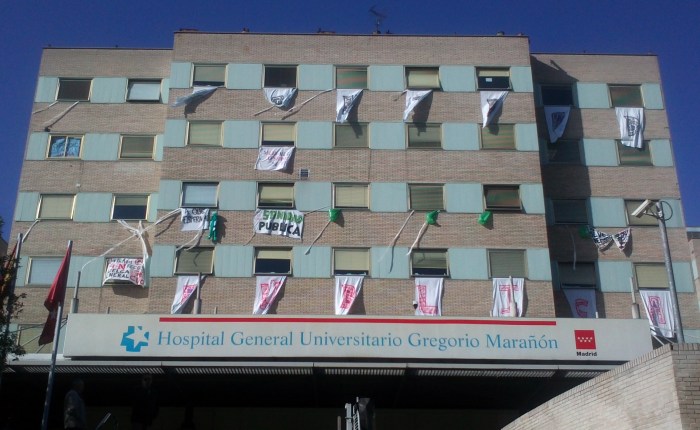
Cover photo by Israel Hergón – Flickr: IMG659, CC BY-SA 2.0, https://commons.wikimedia.org/w/index.php?curid=32799310

Letters from Spain #11: The European Way of Life

Letters from Spain #11: The European Way of Life

At long last, here is my first podcast of the new year. Some of my older podcasts are unavailable on iTunes now, but they are all on YouTube, including this one!

https://podcasts.apple.com/us/podcast/letters-from-spain-11-the-european-way-of-life/id1469809686?i=1000463500918

(For the transcript, see below.)


Hello.

Happy New Years to all five of my listeners! It feels good to be back.

For this letter, I want to finally talk about something that has been on my mind a long time, and that is the contrast between the American and the European ways of life. I think this is especially relevant now, during our endlessly long election season back in America, because this contrast between America and Europe has actually exerted a strong influence over progressive American politics. You could arguably boil down the progressive platform—championed by Bernie Sanders and Elizabeth Warren—to the following statement: that America should be more like Europe. So what’s Europe like?

One of the most obvious contrasts is healthcare. Spain, like Germany, France, or Denmark, has a nationalized healthcare system. That means that every citizen is automatically covered at all times, free of charge or nearly so (although some people do supplement their public healthcare with private insurance). This is radically different from the United States, where most people have private healthcare, usually tied to one’s job. The difference is profound. In America, people really worry about the cost of healthcare. Even relatively well-off people.

The cost of an ambulance is one example. If you pass out in the street and somebody calls the ambulance for you, you can wake up in debt. There’s a famous story of a woman who fell between the subway car and the platform, who begged people not to call an ambulance because she couldn’t afford it. People go bankrupt in America because of illnesses and injuries—something almost unheard of in Europe. It’s not uncommon in America to see GoFundMe campaigns for people struggling with medical costs. But this isn’t just a question of insurance. It’s also because anything related to healthcare is absurdly expensive in the United States. A hip replacement, for example, is six times more expensive in the US than in Spain. That means you could take a nice long vacation in Spain, and then get your hip replacement, and it would still cost less money. And medication prices are wild in America. Insulin is so expensive that some people try to ration it, and a few have died in the process.

There are lots of reasons for the high cost of healthcare in the USA. One is the bureaucratic complexity needed to deal with all the different private insurers. Some hospitals need just as many administrators as hospital beds to process all the intricacies of insurance claims. Another reason is that, in most countries, medicine is bought in bulk by the government from the drug companies, while in the United States each person buys directly from the drug companies—and there’s no bargaining power in that situation.

Anyways, I don’t want to set myself up as some expert on healthcare, which I’m clearly not. What I can say is that I’ve never heard a Spanish person worry about whether they’ll be able to afford going to a doctor, while in America the financial costs of getting sick are at times even scarier than the actual sickness. On the other hand, I have had a bad experience with a Spanish dentist here. They often try to rip you off. (Though admittedly most dentists are private in Spain.)

Speaking of health, another big difference between America and Europe is our eating habits. We eat a lot in America—a lot of food, and a lot of junk food—and as a consequence obesity rates in America are over twice as high as they are in Europe. This tends to make us sick, which only exacerbates our healthcare problem. One thing that we Americans do have over Spain, at least, is that fewer people smoke in the United States (15%) than in Spain (about 22%). But America definitely loses when it comes to physical activity. Since so much of our country is designed for driving, the average American walks less than 5,000 steps a day, as compared to more than 9,000 for Spain. This, combined with other factors like Spain’s diet, led Bloomberg to proclaim Spain the healthiest country in the world. (The United States ranked 35. In fact, the average life expectancy in America has been falling for the last three years.)

So much for health. But there are still more striking contrast between Spain and the United States. One big one is maternity leave. Every European Union country guarantees at least 14 weeks of maternity leave, and several also give paternity leave. This means that a new mother can take over three months with her new baby, while receiving full pay, and guaranteeing a job when she returns to work. I have no idea why this isn’t a more outrageous issue in the United States, where the government guarantees no days of paid maternity leave—everybody likes mothers, after all. By the way, America is also unique for offering no minimum paid vacation days, and no guaranteed paid holidays. Spain, by contrast, offers a minimum of 22 working days off, plus a mandated 12 paid holidays, and an optional 2 more holidays that local governments can choose.

The last major contrast I’ll mention is university. The cost of going to college in America is incomparably higher than it is in Europe. Even a public university can cost tens of thousands of dollars per year. Student debt has become a way of life in the US, and virtually everyone graduates with at least a few thousand dollars of loans they need to pay off. This has a huge effect, not only on our economy, but in our educational decisions and philosophy. It influences everything from what we study, to grade inflation, to job choices after college. Meanwhile, in Europe, getting a degree is cheap and in some places even free. With a stipend, you may even be paid to attend a university. As you can imagine, this makes a big difference.

There are many other differences, too—the strength of workers’ unions in Europe is a big one—which combine to make Europe substantially more egalitarian than the United States. Here are some figures. From 1970 to the present, the share of total income going to the top 1% in America rose from 8% to 20%. In Europe, it also rose, but from 7.5% to 10%. That is, in America it increased by 150%, while in Europe by about 33%. That’s a big difference. In this same time period, the share of income going to the bottom 50% of the population fell by 7% in America (to 13%), and by only 2% in Europe (to 18%). To sum up, in America the gap between the rich and the poor has grown far wider than in Europe. 

And this brings me to a central contrast. In America we talk about the American “dream.” That is, our model is based on the idea of people “making it”—pulling themselves up by their bootstraps into another economic echelon. And of course there are success stories. But this narrative hides the fact that, if you don’t “make it,” then life in America can be rather harsh. Even more importantly, getting to the top is extremely rare. Besides the fact that having a highly unequal society means that there is less room at the top and more room at the bottom, America does not score particularly well on social mobility. According to the World Economic Forum, the United States ranked 27th globally. The top 13 countries, by the way, were all European. And the top five are the Nordic countries, famed for their socialist policies: Denmark, Norway, Finland, Sweden, and Iceland (in that order). 

Admittedly, Spain ranked just below America, at the 28th spot. But the important thing to note is that, in Spain, social mobility is not vitally important to well-being, since a robust social security program guarantees a high minimum standard of life. This is why I refer to the “European Way of Life” rather than the “European Dream.” Because the idea in Europe is that the good life should not be a longshot, rags-to-riches, one-in-a-million dream, but something taken for granted.

My point has not been to convince you with statistics. These issues are extremely complicated, and of course Europe has its own problems. My point is this. When Americans, especially younger Americans, look across the Atlantic and see all of these differences—healthcare, education, maternity leave, vacation—many of them naturally wonder why we cannot do the same thing in our wealthy country. Why is America so exceptional in these rather unfortunate ways? I can’t say I know the answer to this question. But I know that awareness of this discrepancy is growing, and has already had a major effect on our own politics as more and more voters react with outrage. Americans put up with many things that, in Europe, would cause mass protests. But will Americans continue to do so?

Thank you.