In the Footsteps of García Lorca

In the Footsteps of García Lorca

Federico García Lorca is the most famous playwright and poet that Spain produced in the previous century. This is largely owing to undeniable brilliance, as any readers of Bodas de Sangre or Yerma can attest to. Yet his fame is also due, in part, to the tragic story of his death—executed by Nationalist forces during the first few months of the Spanish Civil War. Among the hundreds of thousands dead from that conflict, Lorca remains its most famous victim. And in death, he has become a kind of secular saint to artistic freedom.

The precise details of Lorca’s murder were, for a long while, rather obscure; and it is largely thanks to the Irish writer, Ian Gibson, that it was finally uncovered. Prior to our trip to Granada, Rebe had read Gibson’s book, El asesinato de García Lorca, and so we had a full Lorca itinerary planned.

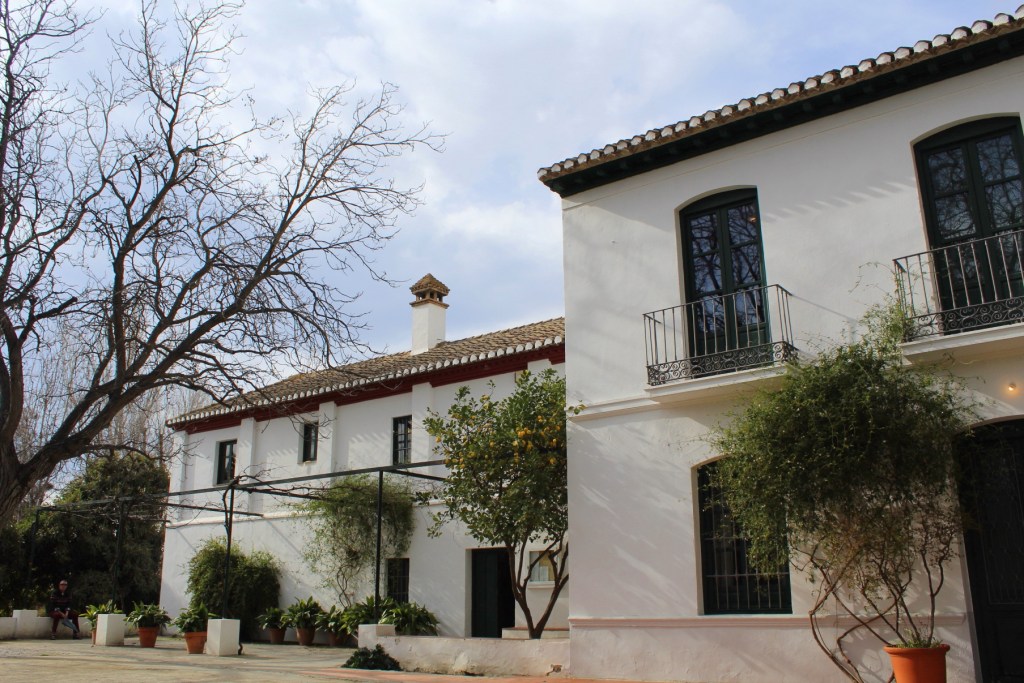
Our first stop was the Huerta de San Vicente. This was the summer house of the García Lorca family for the last ten years of the poet’s life. It is a kind of rustic villa, typical of Andalusia, with large windows and whitewashed walls—ideal for keeping cool. We joined a tour and were shown around the house, which has a piano that Lorca would play on (he was a gifted musician, and friends with Manuel de Falla), as well as a desk at which he wrote.
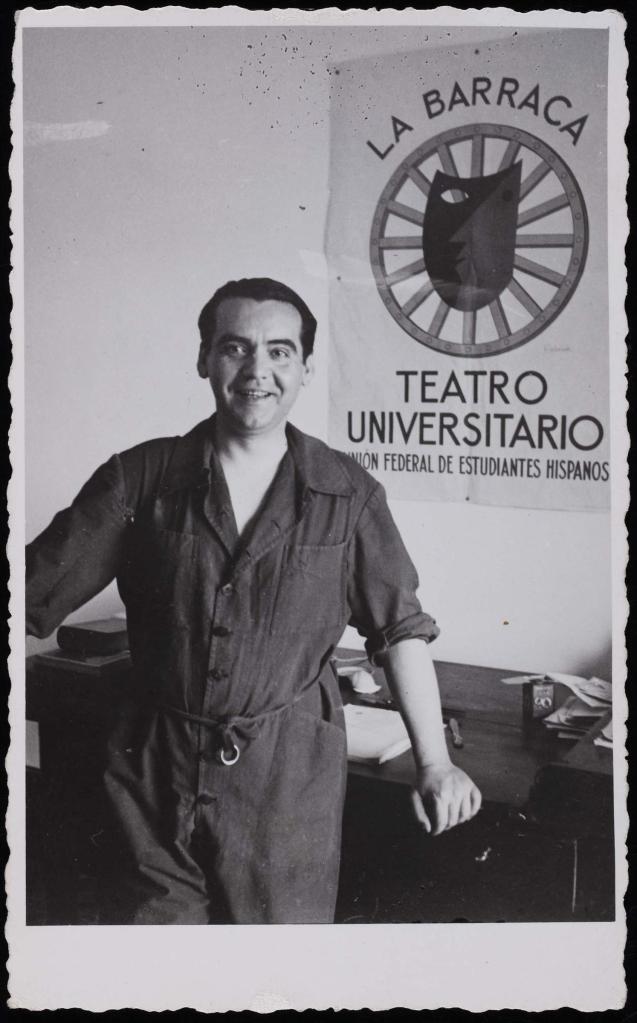
The hour-long visit gave a satisfying overview of the many facets of his short life. Lorca came across as a man wholly devoted to the arts—to music, to poetry, and above all to theater. One of my favorite items on display was a poster for La Barraca, a popular theater group that he helped to direct. They would travel around the countryside and perform for the benefit of the public, putting on avante-garde shows for the masses. It reminds me somewhat of the Federal Theater Project of the American New Deal, and demonstrates that Lorca, while not overtly political, did not shy away from social causes.
Our next stop was the small town of Fuente Vaqueros, which is a short drive from Granada. There, we visited the house where Lorca was born and spent his earliest years. It is a large house with thick walls, ideal for keeping out the heat. We were given a tour—just the two of us—by a local whose grandfather had gone to the same primary school as Lorca himself! He explained that the Lorca family was quite wealthy, having made their fortune in the tobacco business. Indeed, their house was one of the first to receive electricity in the area.

The upstairs of the house was made into a small exhibition space. Among other things, there is the only extant video clip of the poet, as he emerges from a truck used to haul theater supplies. The video has no sound and it lasts for only a few moments. Yet it is a tantalizing glimpse into the past. Also on display are puppets that Lorca made, in order to put on shows for his baby sister.

A short drive from Fuente Vaqueros is the town of Valderrubio, previously known as “Asquerosa” (“Disgusting”). Apparently, this name is a linguistic coincidence, having come from the Latin Aqua Rosae (“Pink Water”), but it led to the unfortunate toponym “asquerosos” for the denizens of this perfectly inoffensive town. Here is yet another house museum of the playwright, this one larger and grander than the one in Fuente Vaqueros. Unfortunately, however, we arrived too late for the tour of this house, and had to content ourselves with a quick walk-through.
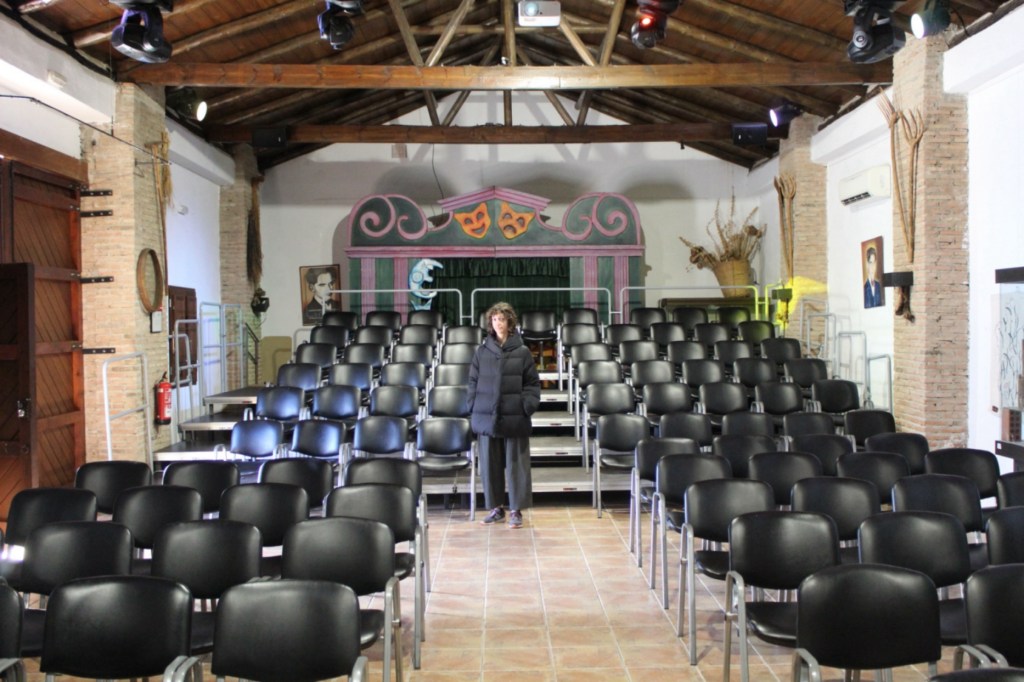
Rebe in the theater attached to the house museum.

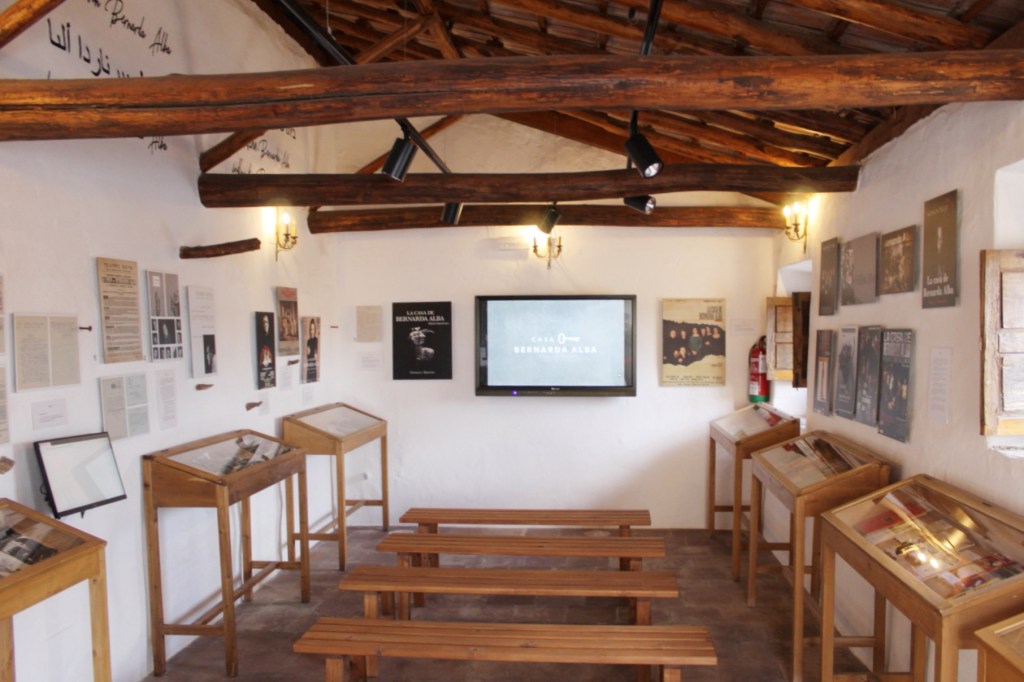
But we were on time for the tour of the House of Bernarda Alba. This is an attractive villa next to the Lorca property, where a widow lived with her daughters. Federico used this family as the basis for one of his best plays, La casa de Bernarda Alba, which is about a tyrannical widow who imposes a decade’s long period of mourning on herself and her daughters after the death of her husband. Apparently, the actual family—who I presume weren’t nearly as monstrous as Lorca portrayed them—were understandably quite offended by this, and cut off contact with the Lorcas. And now, to add insult to injury, their home stands as a museum to the poet’s honor!
Our last stop was rather more somber. On the 19th of August, 1936, Lorca was arrested, taken outside the city, and shot. Against the advice of his friends, on the eve of the Civil War he had traveled to his native city. But as war broke out and violence spread, he realized that he was unsafe and so hid himself in the home of family friends, who were members of the right-wing Falangist party. The political connection didn’t help. Along with three other men, he was taken to a spot on the highway between Vïznar and Alfacar and shot.

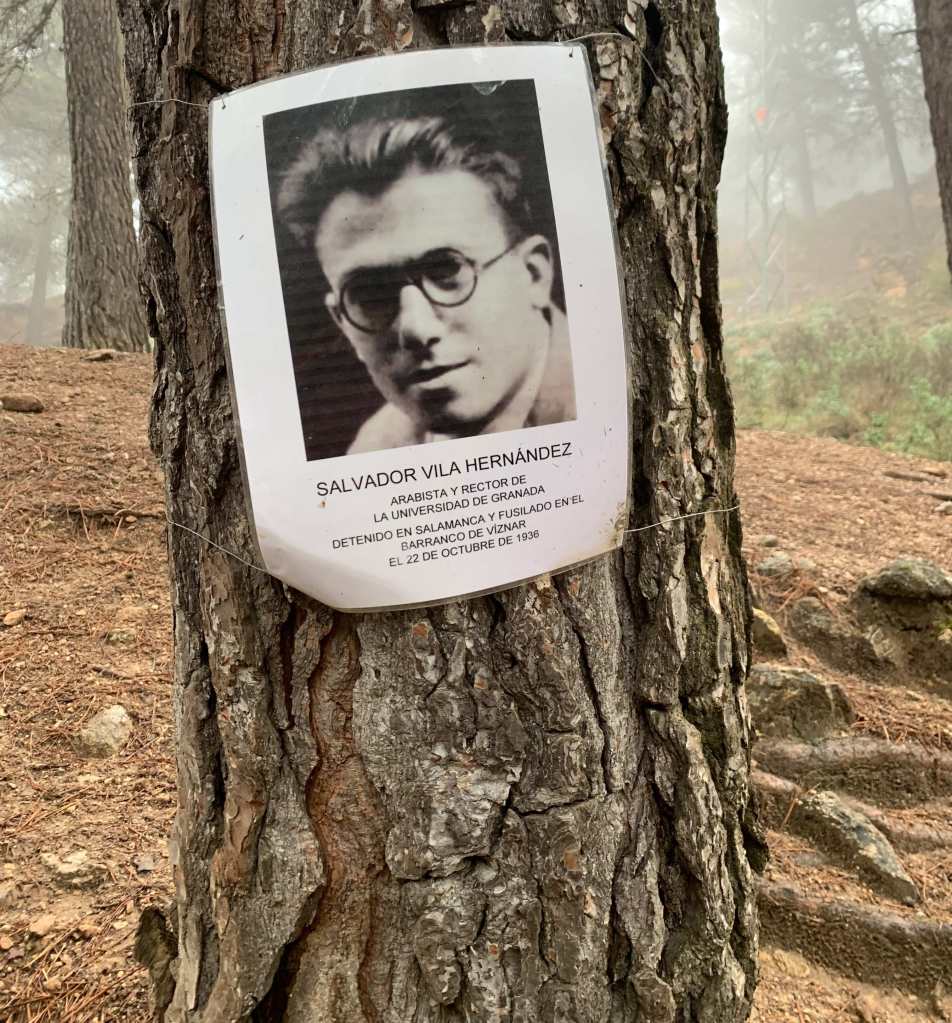
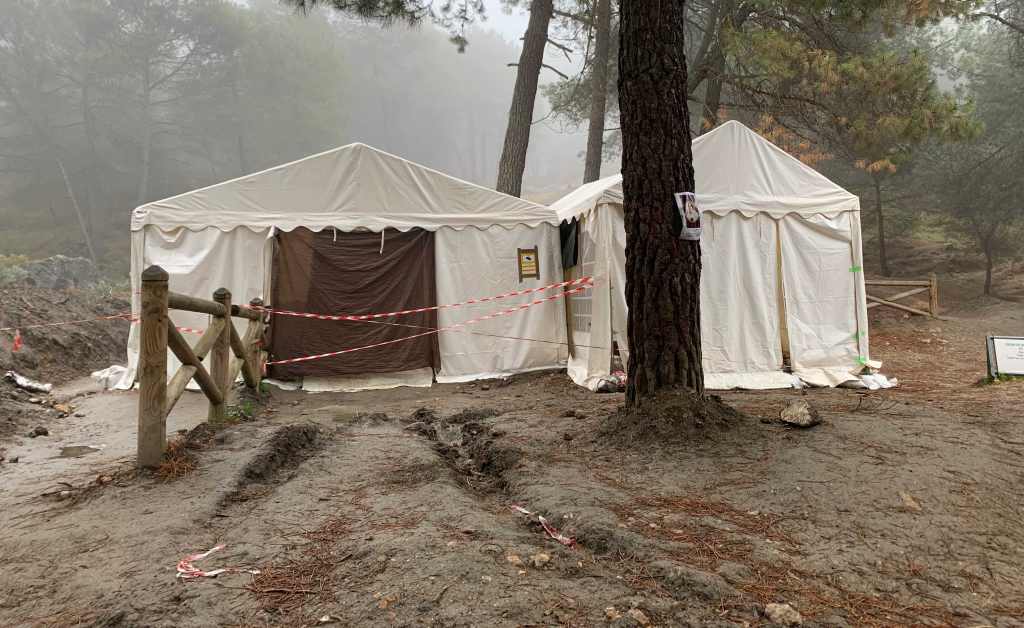
The place where Lorca was executed is hardly recognizable today. At the time it was a barren hillside, completely devoid of vegetation. Today, however, it is a grove of tall pine trees that cover the ground with shade. We parked the car and walked up a hill, not sure what we were looking for. Then we noticed papers tacked onto trees, like ‘Lost Cat’ posters on telephone polls. They were photos of the people believed to be executed here. There were dozens of these photos, each one with a name, profession, and believed date of death.
Even more unsettling were the white tents, standing empty and silent. They were covering excavation pits, where investigators are finally unearthing the remains of the hundreds of victims executed here, nearly a century after the Civil War. The investigators are also collecting DNA samples from surviving family members, so as to be able to identify any remains they uncover. Lorca’s body is believed to be here somewhere, though it hasn’t been identified yet. (You can learn more about the effort by following the groups’s Instagram.)
To state the obvious, it is chilling to think that such a harmless man—a gift to the world and an ornament to his country—could be deemed so threatening that he had to be executed this way. His last moments must have been terrifying. His work, however, has outlived Franco and his regime, and perhaps it will outlive the current constitution.

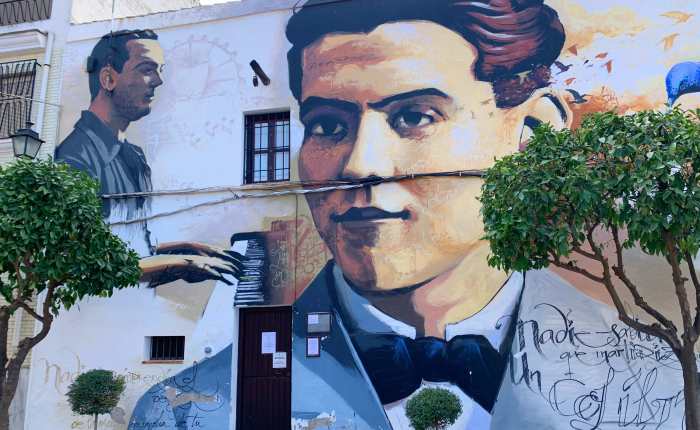
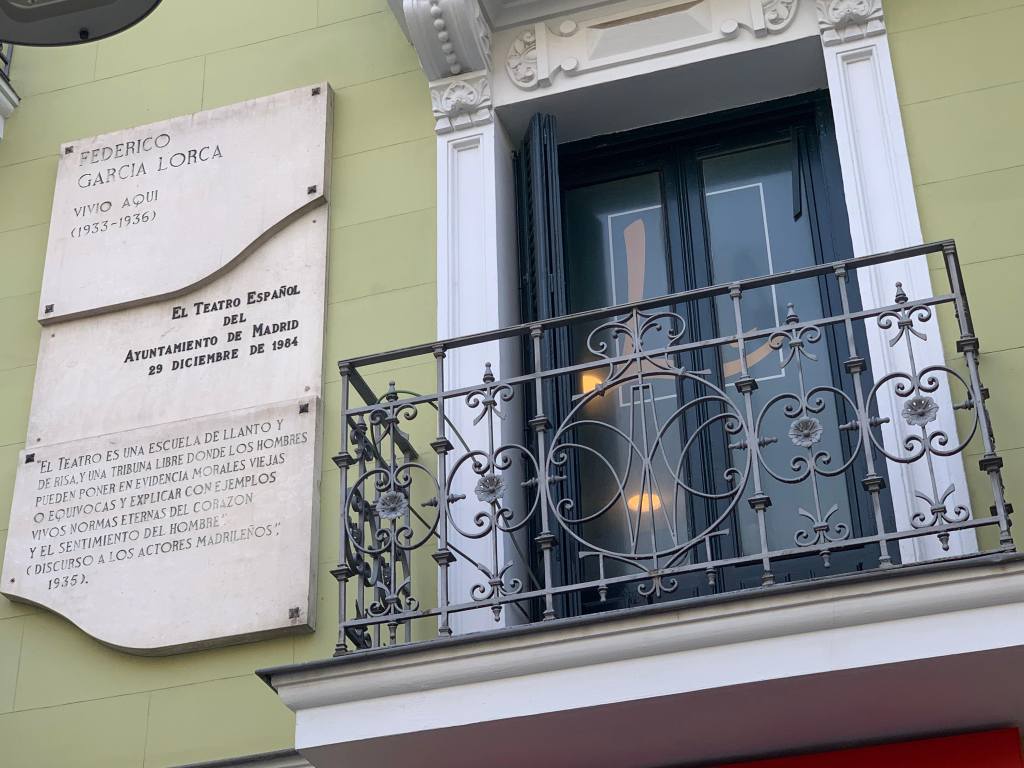
Now, for the very serious Lorca fan, there are also some sites to visit in Madrid. There is a lovely statue of the poet in the plaza de Santa Ana, and on Calle de Alcalá 96 there is a plaque which marks the apartment where Lorca lived for the last three years of his life. Another worthwhile visit is the Residencia de Estudiantes, where Lorca lived as a student along with his Dalí. The two were very close as young men, though many have criticized Dalí’s later reconciliation with the Francoist regime as a betrayal to the memory of his friend. 
But, of course, the most important thing is not to follow in his footsteps, but to keep reading and performing his works. This way, he will remain forever alive. 

Summertime in Andalucía: Granada

Summertime in Andalucía: Granada

It was the summer of that fateful year, 2020. In Spain, the major restrictions had just been lifted. Indeed, in retrospect this summer was the eye of the storm, as the first wave of infection had just receded, falling to very low levels; and public health officials were still unsure whether further measures would be necessary—and, if so, which.

My brother and I had weathered the pandemic in our tiny apartment in Madrid. He had been accepted into law school back home, so his time in Spain was coming to an end—time which had recently been spent doing pushups in his room and watching movies on his laptop. Now it was finally our chance to get out and have one last trip through the country.


Our plan was, as usual, rather convoluted. We took the high-speed (AVE) train down to Málaga, and then went to the airport to rent a car. Finally, we drove an hour and a half to Granada, listening to an audiobook about the Morgan banking dynasty along the way (random, I know).

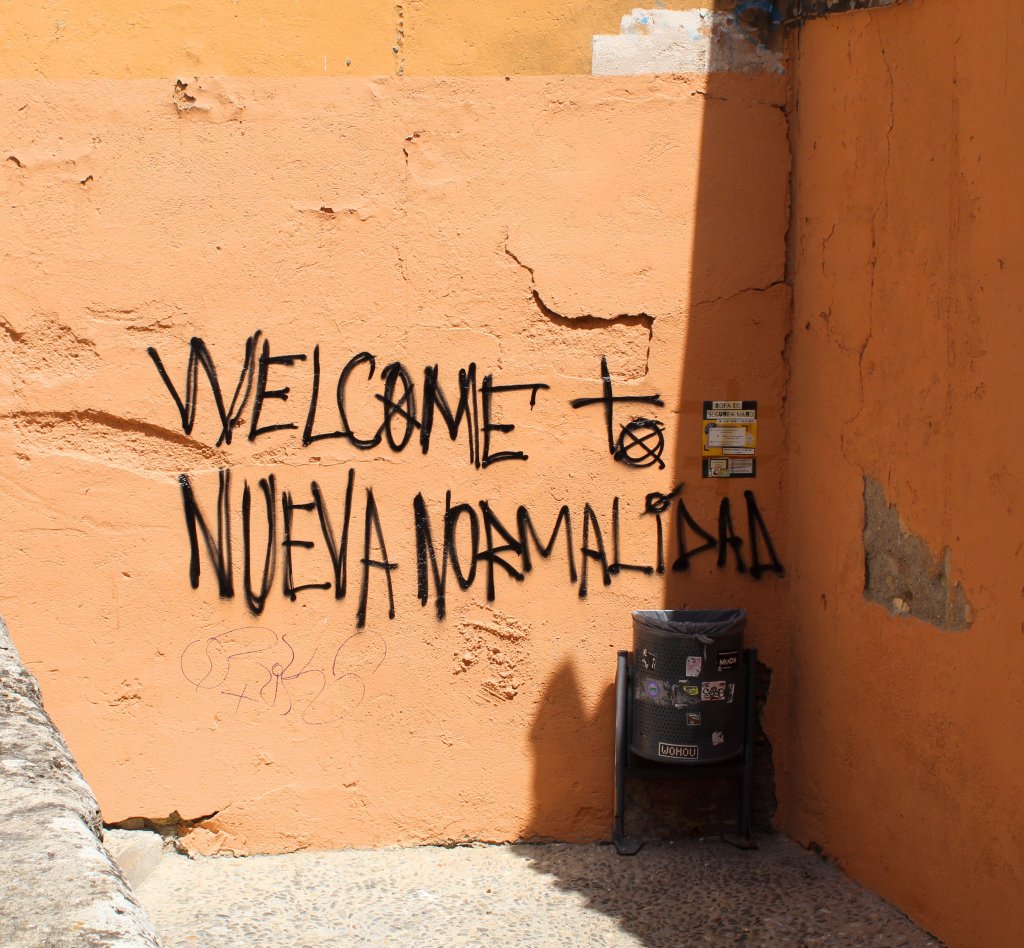
We arrived in the middle of a typically hot summer day. It was around 38 degrees Celsius (100 Fahrenheit) and the streets were totally deserted. But like two dumb tourists, we decided to walk into the city. The whitewashed walls of the buildings seemed to reflect the sunlight into our faces. On the side of one building somebody had spray painted: Welcome to nueva normalidad (the new normal). And the city did have a post-apocalyptic feel, if only because nobody seemed to be living in it. The shops were closed; the windows and doors all shut; and a few lonely drinkers hid inside the bars.

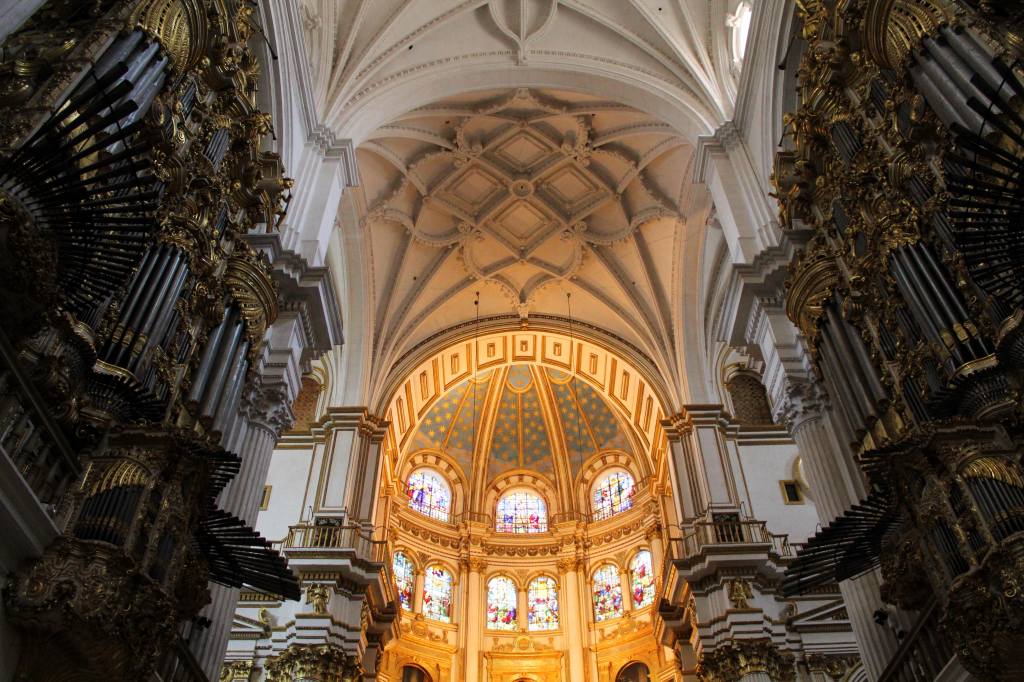
We experienced some relief when we entered the Granada Cathedral. The cavern-like interior was reasonably cool. As you may know, Granada was the last stronghold of Muslim Spain to fall to the Catholic Monarchs (Isabel and Ferdinand), finally conquered in that other fateful year, 1492. This cathedral is, then, something of a triumphalist monument, having been built over the remains of the mosque that once occupied this spot. To add insult to injury, the Catholic Monarchs are themselves portrayed as figures on either side of the main altarpiece (a device later used by Ferdinand II in El Escorial), piously thanking God for their victory.

The cathedral of Granada

One can sense the symbolic importance Granada had to these two epochal figures, as they are buried right next door, in the Royal Chapel. Curiously, although the cathedral is built in a clean, elegant Renaissance style, this chapel—though constructed just a few decades earlier—is wholly gothic in style, bristling with spires and points. Photos are not permitted inside, but the main attraction is the beautifully carved tomb of the king and queen, carved by the Italian Domenico Fancelli.

Right next to these are the even grander tombs of Juana la loca (the mad)—daughter of the Catholic Monarchs—and her husband, the very short-lived Felipe el hermoso (the handsome). This unfortunate Philip, who died at the age of 28, actually was the king of Spain for a few months in 1506, but died in Burgos under mysterious circumstances. It is unknown whether, or to what extent, his widow Juana really was mentally ill, as the men in her life (her husband, father, and then her son) all had much to gain by having her declared unfit to rule and confined.

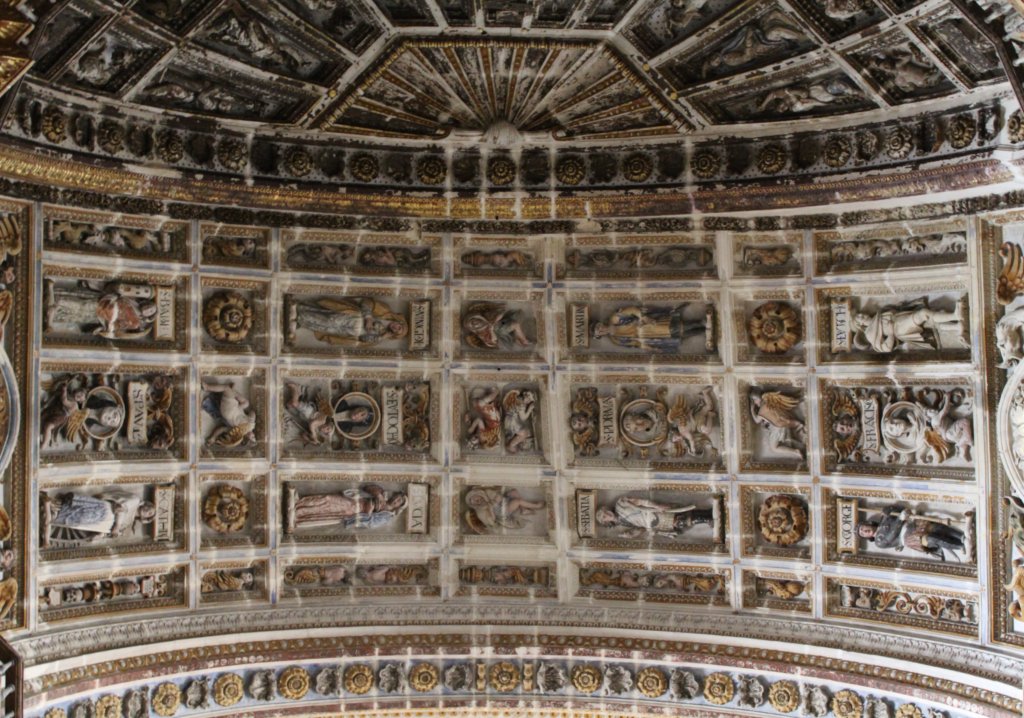
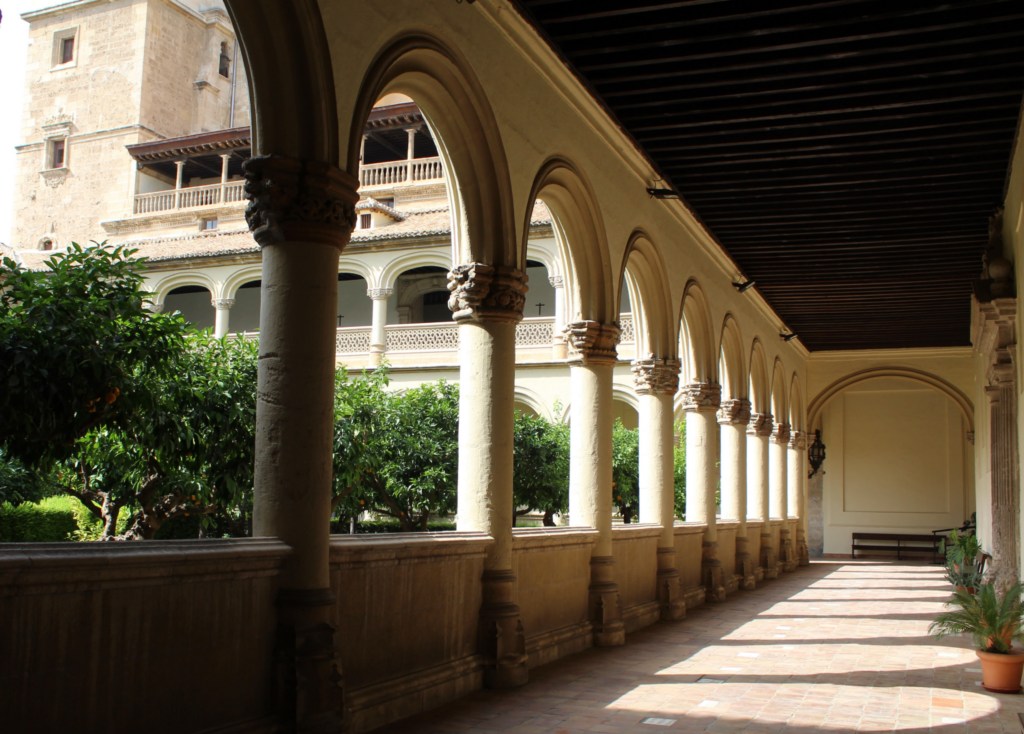
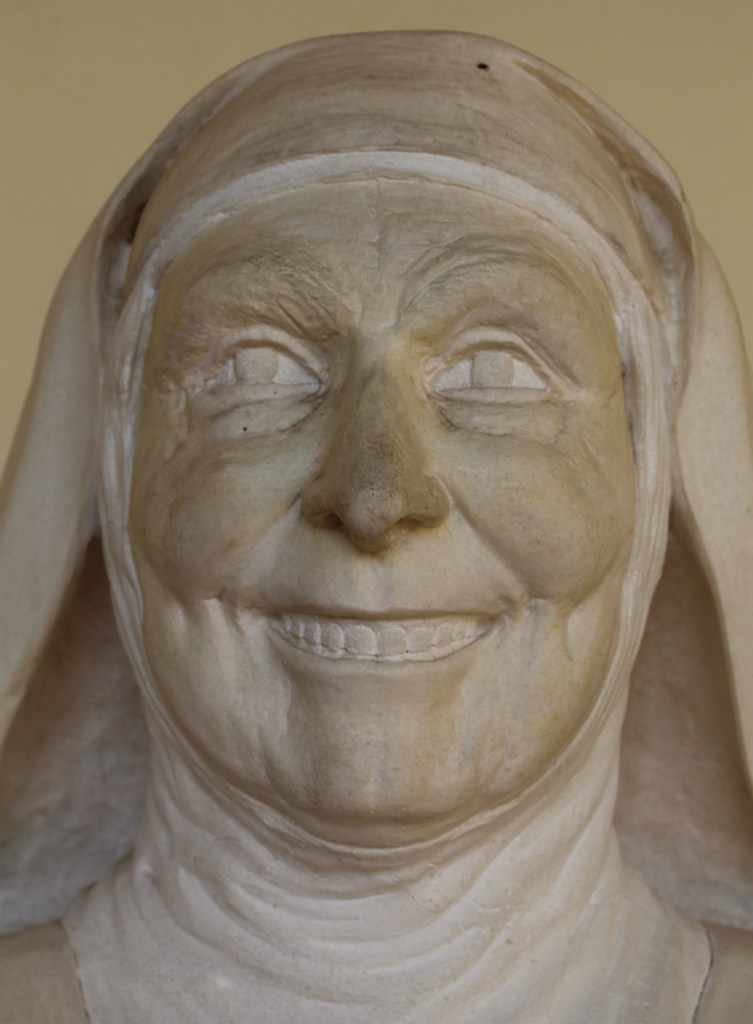
Next, we visited the Monastery of San Jerónimo, which was built at around the same time as the cathedral and the chapel, also at the behest of Isabel and Ferdinand. Like the cathedral, the monastery was constructed in the Renaissance style, which had just arrived in the country. By far the outstanding part of the visit was the main altarpiece, which is both enormous and enormously detailed. But I also enjoyed the statue of the maniacally smiling nun.

The church of the Monasterio de San Jerónimo
A detail of the ceiling above the main altar.
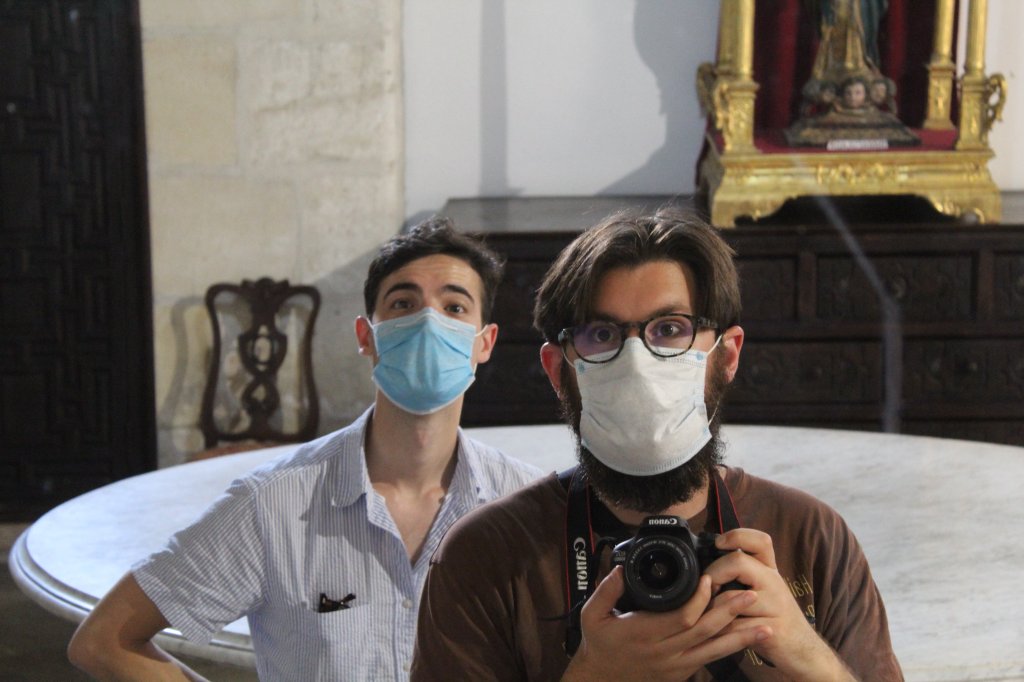
My brother emerged from the lockdown a little more put together than I did.

I am narrating these visits as if we were coherent. In truth, by this point we were sleep-deprived, hungry, dehydrated, and just worn out from the train ride, the drive, and from walking around the hot city. So, after a quick bite to eat, we decided to walk back to the Airbnb for a break. By now it was late afternoon, the hottest part of the day. Our path took us up one of the many hills in the city as the sun blazed down from above. The streets were still completely deserted. The only people stupid enough to be marching through the evening heat were the two American tourists. And we were regretting it. (If you think Spaniards are lazy because of the siesta, try staying active in the middle of an Andalusian summer day. There is a reason that certain customs develop.)

After what seemed an eternity, we arrived at the Airbnb and collapsed into the bed, falling asleep immediately.

We awoke two hours later into a different world. The sun was about to set (which means that it was around nine at night) and the city had come alive then. Every bar and restaurant was full, the plazas and sidewalks were bustling. And it was easy to see why: the temperature had dropped from hellish to perfectly pleasant.

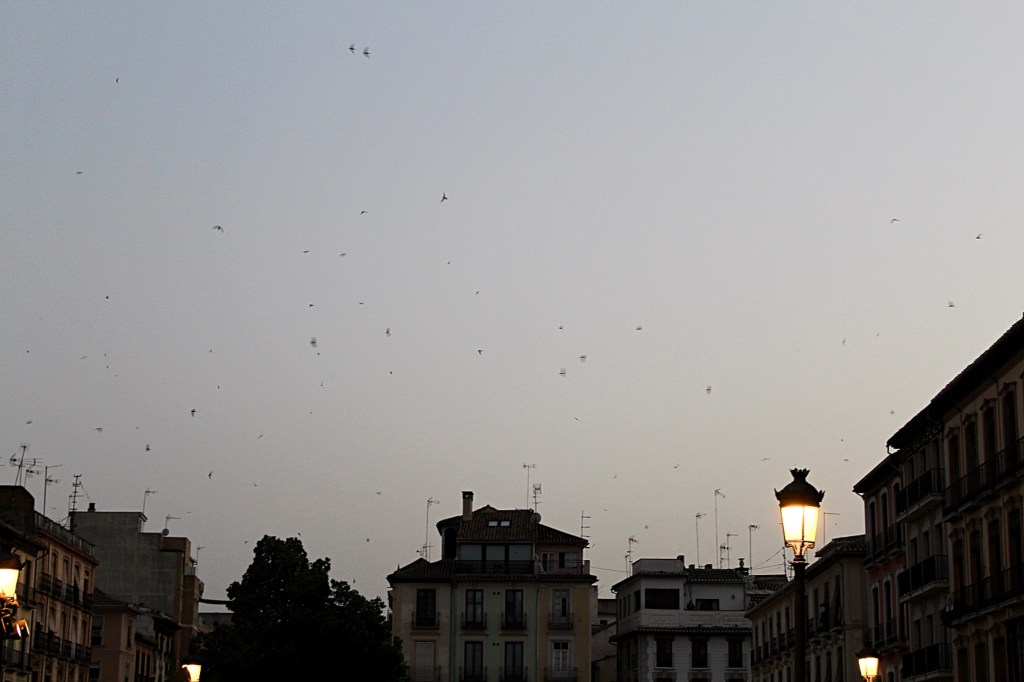
Granada is really a city for the birds.

We had a quick dinner and then made our way to the famous Mirador de San Nicolás, a viewpoint on the top of a hill, directly opposite the Alhambra. As usual, it was swarming with people, though for a change they were mostly Spaniards (if memory serves, the country had not yet opened up to foreign tourists after the lockdown). We had a drink, listened to the locals playing flamenco, and looked across to that famous palace—emblem of Moorish Spain—which was the next item on our itinerary.


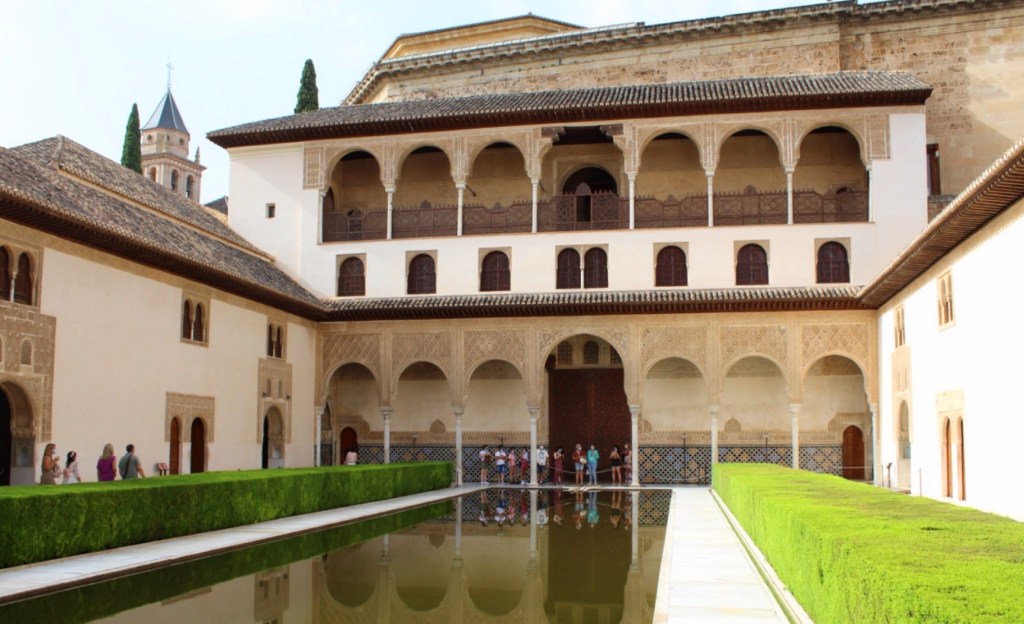
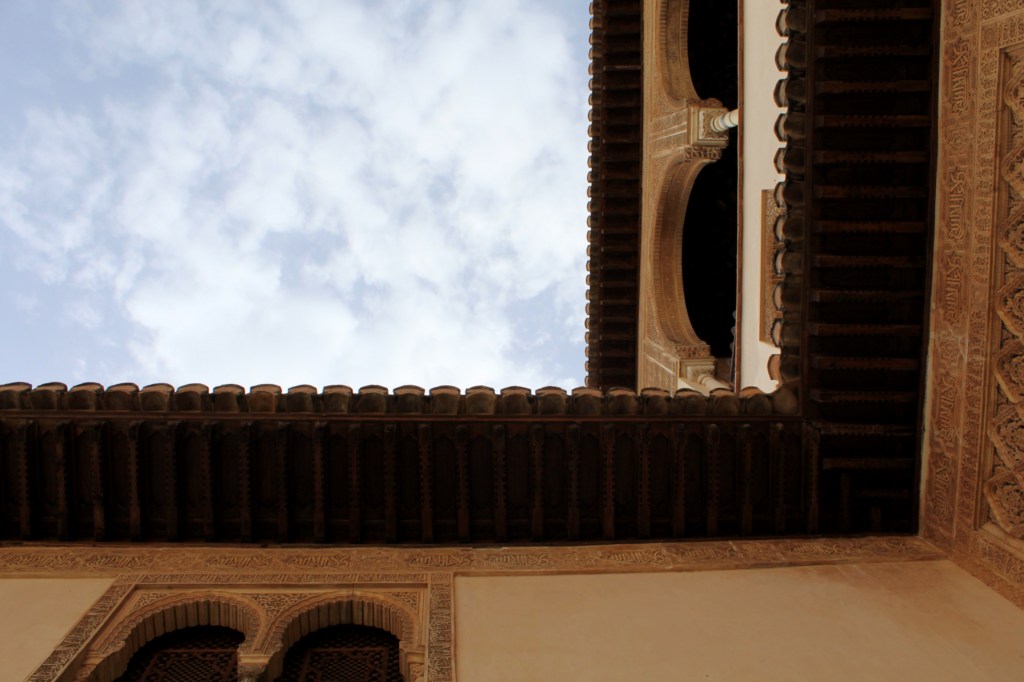
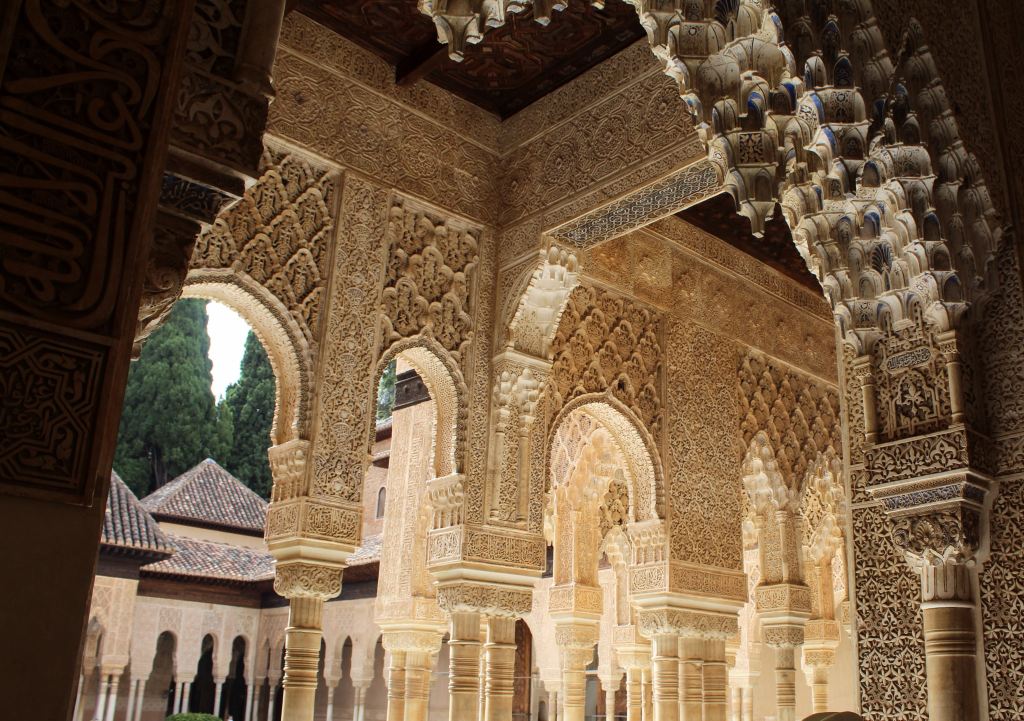
Even in the wake of the apocalypse, it is still wise to book your visit to the Alhambra in advance. We had our tickets to go bright and early. Now, I have already written a very long post about the Alhambra, its architecture, and its history, so I will not rehash that here.

I will only say that if you ever have a chance to visit this iconic site in the wake of a global pandemic, take it. The Alhambra is normally packed with people, which necessarily detracts from the experience—since it is hard to appreciate the mathematical elegance of its designs while elbowing fellow tourists. This time, there were perhaps a quarter of the usual number of visitors. It was incomparably better.

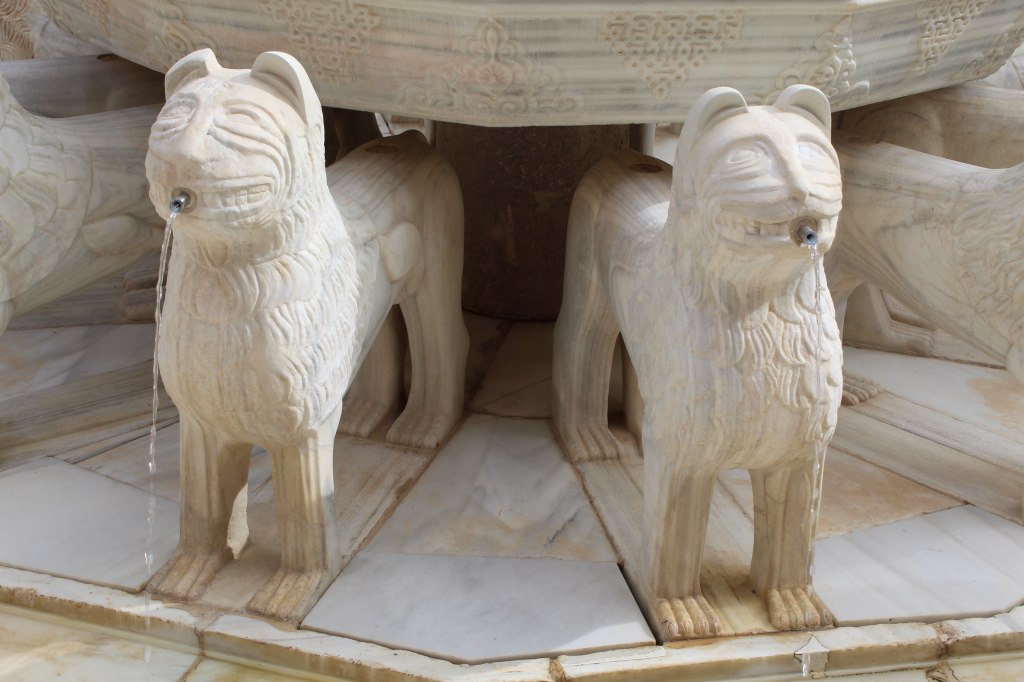
The famous lion fountain.
Contrast between Moorish and Christian decoration.
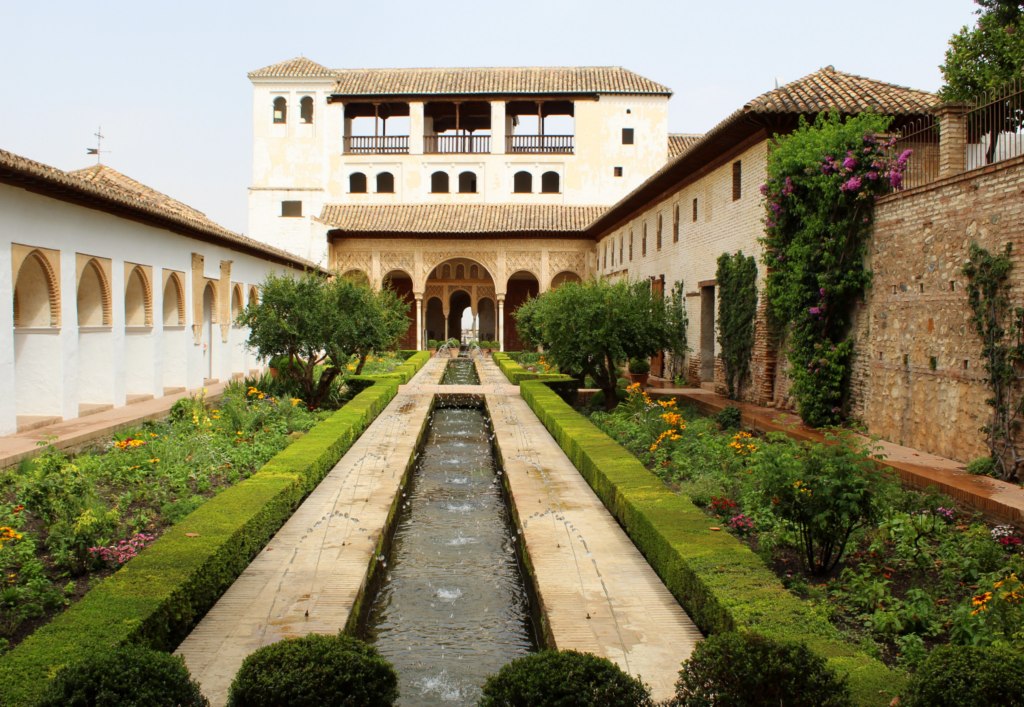
The Generalife
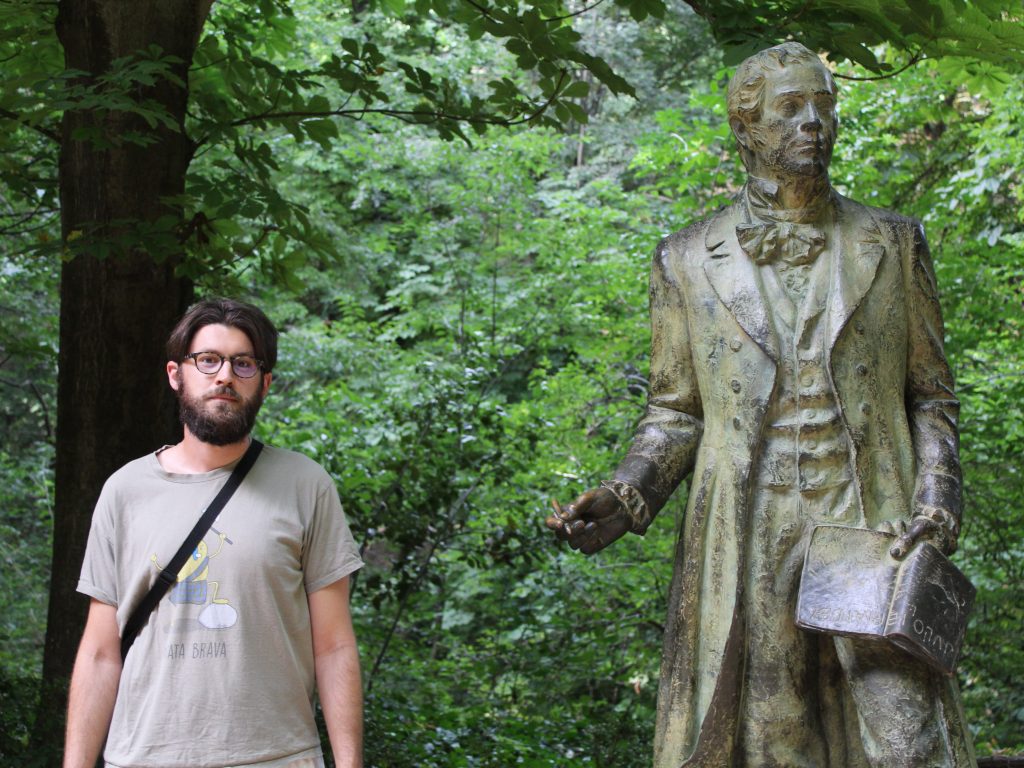
Washington Irving and me—two children of the Hudson.
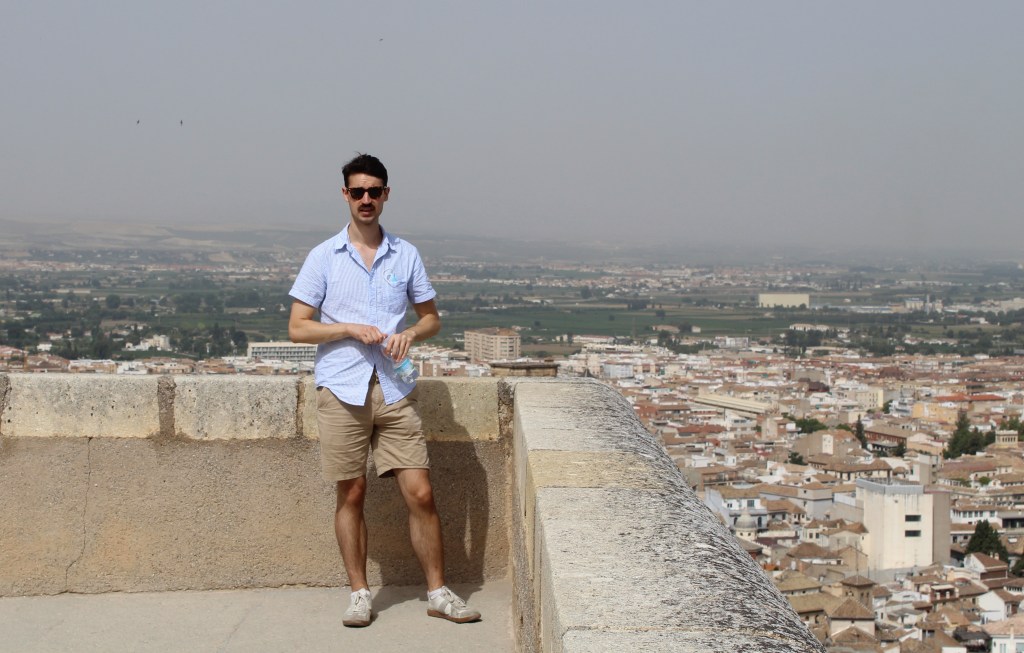
Jay with mustache and Granada.

With our visit to the Alhambra completed, our short time in Granada was up. We ate a quick meal and then drove back to Málaga for the next stage of our journey.