
When I first came to Europe I was, like any good American, in search of the very old. We have skyscrapers and Jackson Pollocks in my country, but we don’t have cathedrals, castles, or El Greco. Yet to see Europe as merely a repository of its history is to forget that its residents are just as keen as anyone to advance into the future. And so I recommend any visiting Americans to make time to experience a bit of the more modern side of Spain.
Segovia, for example, is justly famous for its Roman aqueduct and its elegant cathedral. But tucked away in its winding streets is the Museo de Arte Contemporáneo Esteban Vicente. This small museum would be worth your time even if it weren’t free to visit. It is named after an important but lesser-known artist from the 20th century, a member of the famous Generation of 1927 (which also included Lorca and Dalí), who spent time in Paris alongside Picasso, and finally moved to New York City in the wake of the Spanish Civil War. There, he became one of the main representatives of abstract expressionism.
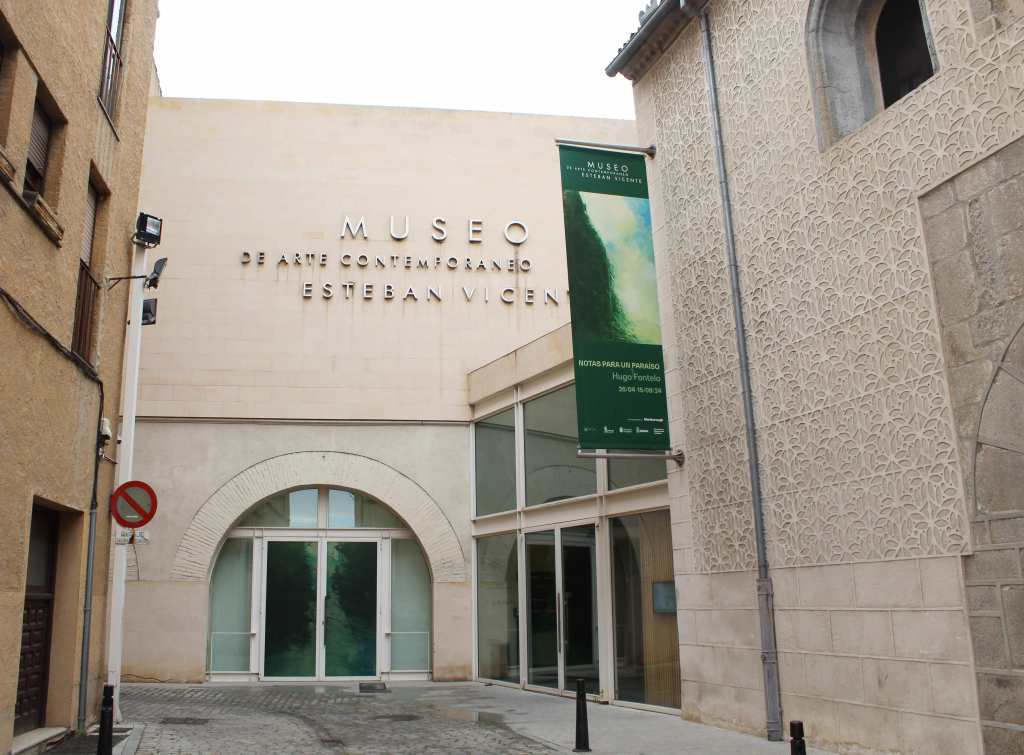
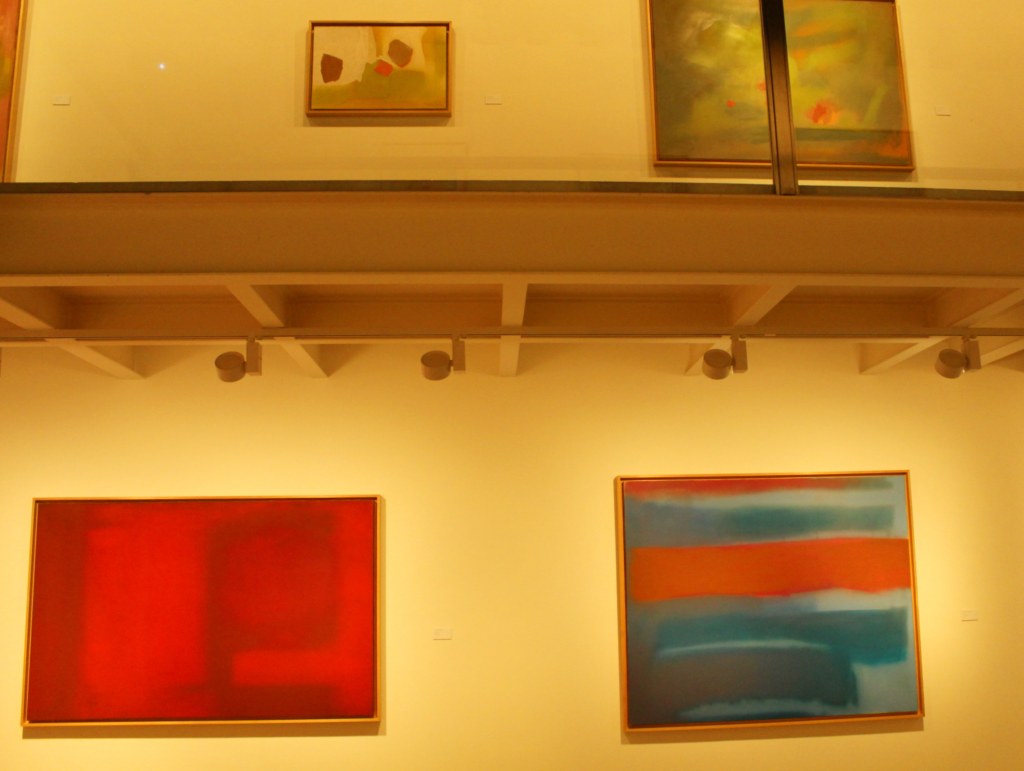
The museum is housed in what used to be a hospital; and the large rooms and austere architecture contrast starkly with the art. Though he began as a figurative painter, Vicente quickly moved into the kind of abstract art that many people turn up their noses at—atmospheric blobs and swirls of color on canvas. I must admit that it isn’t usually my cup of tea, either. Nevertheless, in the context of Segovia, a city of narrow streets, hard angles, and gray stone, his art was wonderfully refreshing—light and playful, almost ethereal in its vagueness.
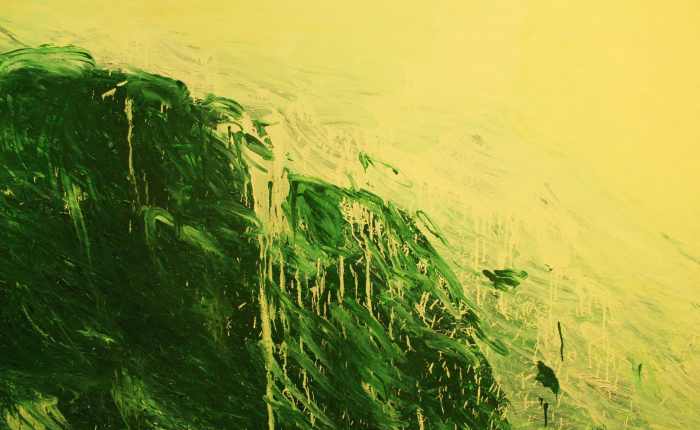
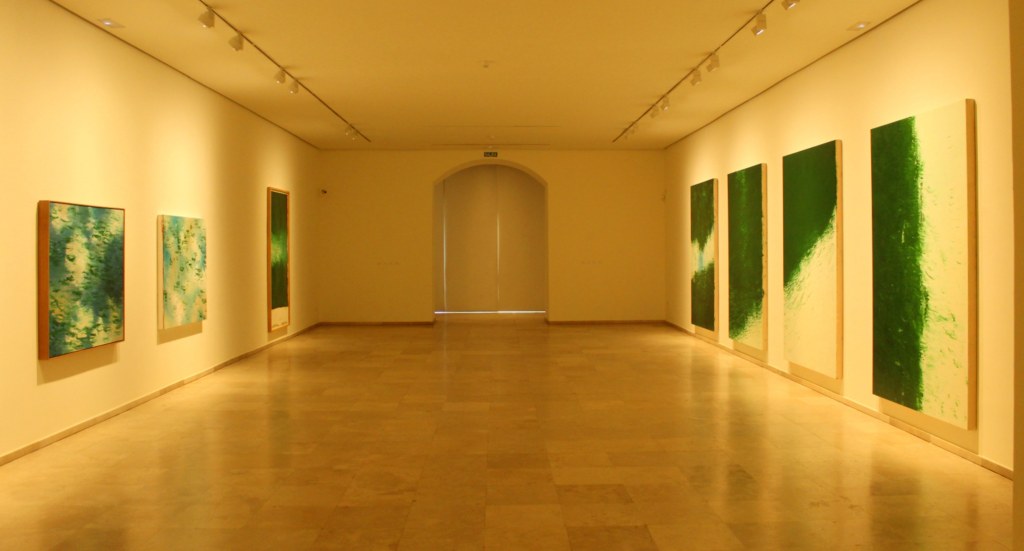
When I visited, there was a temporary exhibit by the contemporary artist Hugo Fontela—another Spaniard working in the abstract vein, living in New York. He worked in a very restrained color pallet, just green on a white canvas. Yet with the rhythm and intensity of his brush strokes, he managed to evoke clouds, waves, wind, and whole landscapes. It was an impressive performance.
Even deeper into Old Castile is the city of Valladolid. Though often overlooked by tourists, it is a city well worth visiting, especially as it is easily accessible by fast train from Madrid. Among the curiosities of the city is its huge and rather ugly cathedral—a massive pile of stone that looks oddly unfinished. This is because, when it was conceived, Valladolid was serving as the capital of Spain, and so its church was meant to be the biggest in the world. When the capital was moved to Madrid, however, the construction stopped, and now the building trails off into nothingness.
The most famous museum in the city is the Museo Nacional de Escultura, a collection of sculptures from the middle ages onward (mostly religious), housed in an old monastery. However, during my brief time in Valladolid, I found my visit to another museum far more enjoyable: the Museo Patio Herreriano.
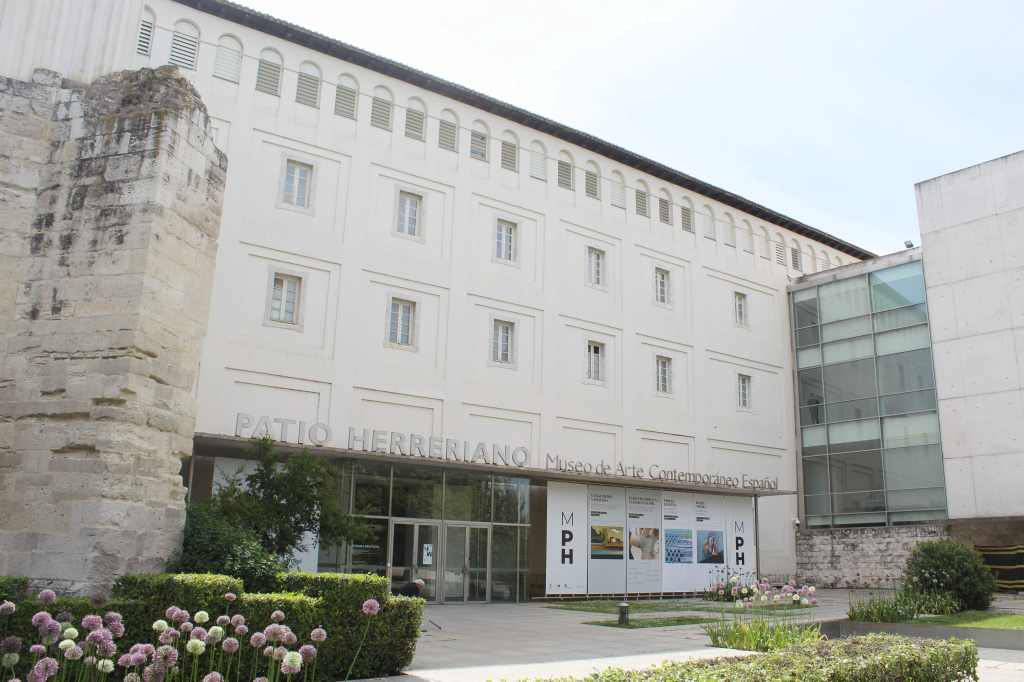
The museum is located in the remains of the former monastery of San Benito el Real. Though its name pays homage to the great Spanish architect Juan de Herrera, it was really designed by one of his followers, Juan de Ribero Rada. However, the building was in such disrepair by the time it was decided to create a museum that substantial renovations were necessary. The building now is thus a strange Frankenstein mixture of old and new sections.
The museum’s collection is huge and extensive, containing works by Joan Miró, Salvador Dalí, and even our friend Esteban Vicente, as well as contemporary artists such as Azucena Vieites. I wandered around rather aimlessly, having neglected even to pick up a map, doing my best despite being sleep-deprived and dehydrated to appreciate the art. I would be insincere if I pretended that I liked everything. Indeed, contemporary art often leaves me scratching my head and even vaguely bored.
But any kind of art is largely hit and miss; and contemporary art even more so. Going to a modern art museum, therefore, requires a certain suspension of judgment, a certain amount of patience, until you discover something that pulls you in.
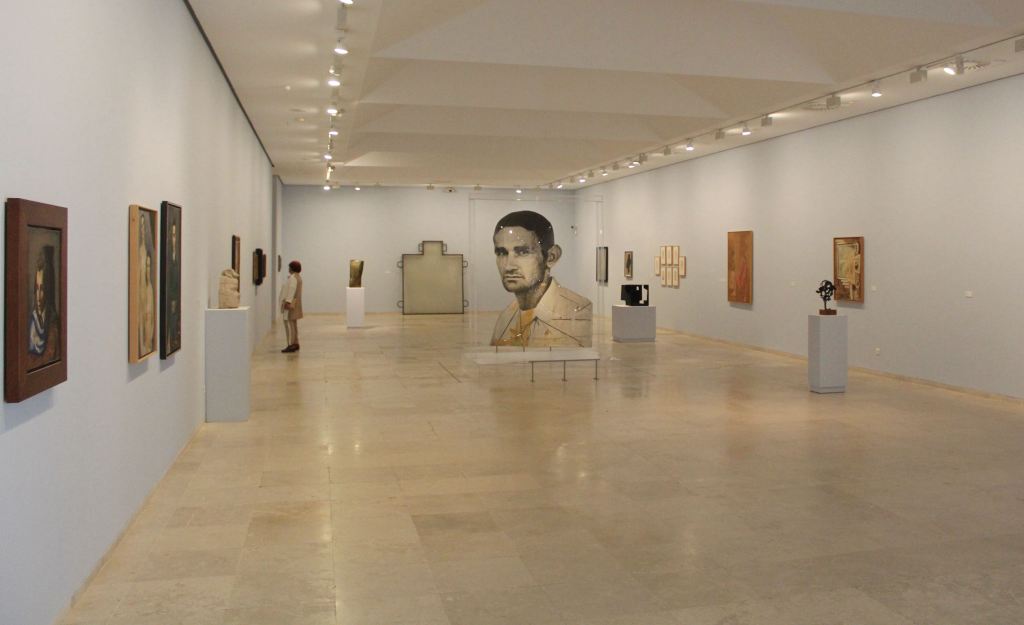
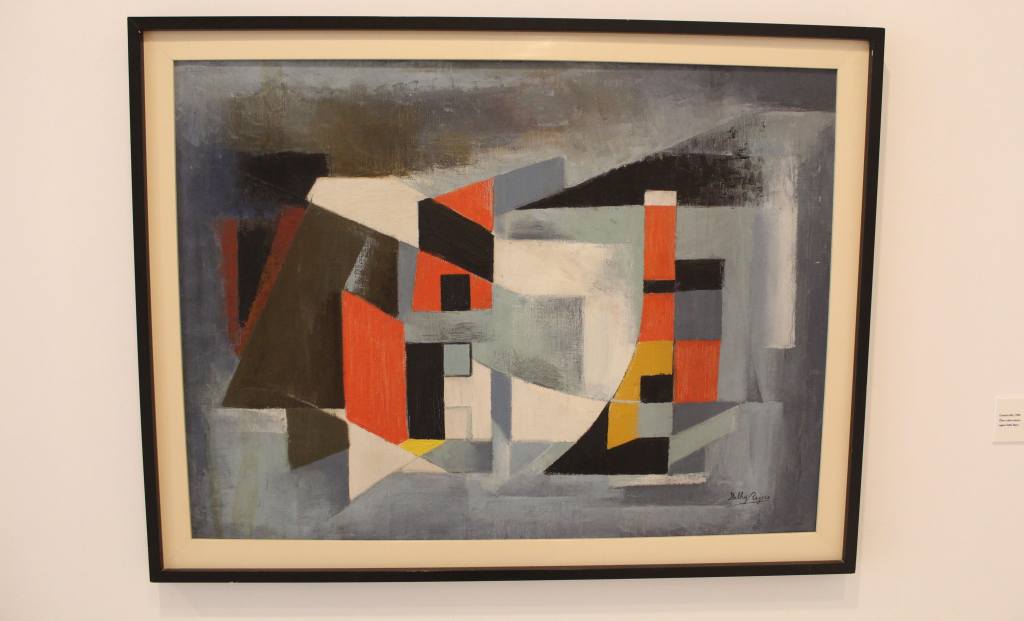
For me, this was an exhibit on Delhy Tejero, a Spanish artist I had never heard of before. What immediately struck me about her work was how varied it was, in both style and content. She could do realistic, figurative drawings or highly abstract paintings; her work can be cartoonish, dreamy, or serious; she can focus on folklore or lose herself in the purity of geometric shapes. Perhaps none of the works on display was a surpassing masterpiece, but taken as a whole her work exemplified such a degree of curiosity, open-mindedness, and fine sensibility that it left me deeply impressed.
These are just two examples of the fine, lesser-known modern art museums to be found all over Spain. And I think that, especially for the weary traveller, traversing the scorched soil of the central Castilian plains, besieged by castles, cathedrals, and ruins of bygone civilizations, a bit of absurdity, playfulness, and abstraction can do much to clear the palette.
 Lotz in Translation