
“Make sure to apply plenty of sun cream,” the radio advised, “and take it easy on the beer. One or two is fine, but any more and you might get dehydrated.”
This was the voice of an expert on public health, speaking on Ireland’s national radio station, RTE. Ireland, you see, was experiencing a heat wave. The skies were clear and sunny, and the temperature was reaching highs of… around 25°C (75°F). In other words, the weather was absolutely perfect. But on this rainy island, such scorching temperatures were worthy of serious news coverage.
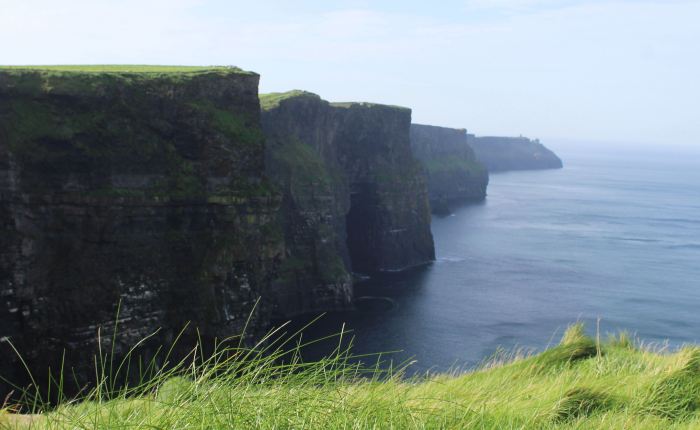
Meanwhile, we rode down country roads, windows down, soaking in the effervescent green of the Irish countryside. We were on our way to one of Ireland’s most famous natural wonders: the Cliffs of Moher.
Now, here I want to add a note about RTE. Despite the official name being in the Irish language (Raidió Teilifís Éireann), RTE primarily broadcasts in English. This makes it an absolutely delightful resource for any American travelers to the Emerald Isle. Just by turning on any car radio, you are given an immersive window into the realities of Irish culture. During our trip, we listened every time we were in the car, hearing programs about budget negotiations, interviews with cookbook authors, and discussions of rising energy prices. This may not sound especially engrossing, but it made our visit feel that much more intimate.
The health expert elaborated on the dangers of sunburn and dehydration as our destination came into view: the visitor centre. You know you have arrived when you see the huge parking lot across the road, which on any given day will be full of tour buses and private cars. The cliffs are free, but the parking is not.
The visitor centre is worth stepping into before you see the cliffs. Opened in 2007, it was built into a hillside to better preserve the natural environment. Aside from serving snacks and having public toilets, the centre also has small exhibits on the geology, history, and wildlife to be found on the cliffs. But the detail that most sticks out in my memory are the women working at the gift shop, who were visibly red and covered with sweat due to the heat wave—despite my feeling entirely comfortable. I suppose it matters what you’re used to.
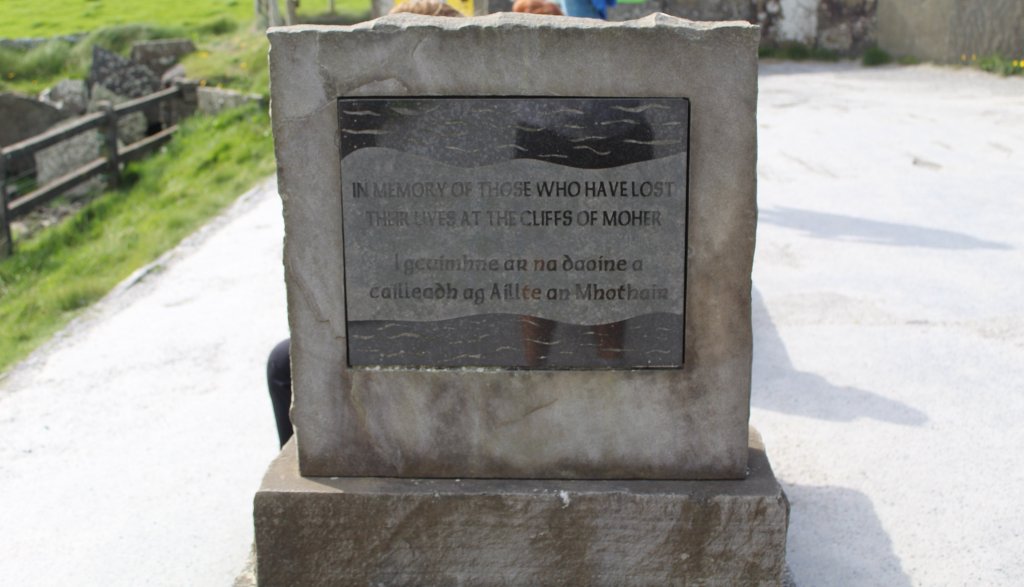
It is a short walk from the visitor centre to the edge of the cliffs. The first view is breathtaking—as is every view after that. Though it is cliche to say it, the photos simply do not do justice to the cliffs. Their scale is unlike anything I have ever seen. Standing at over 100 meters (or around 330 feet) above the sea, and stretching for miles in both directions, the cliffs are an overwhelming spectacle—one of the few tourist attractions that stand up both to the hype and to the inevitable hordes of tourists.
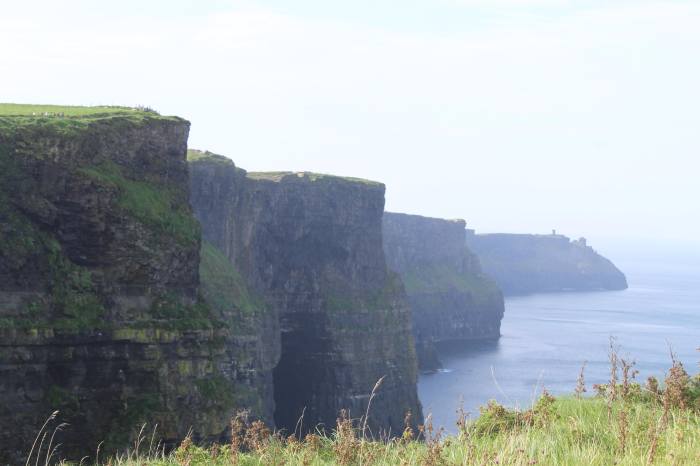
We like to say that Rome was not built in a day, but geological time operates on a scale that dwarfs even our longest empires. These cliffs are a case in point. What we see today is the process of hundreds of thousands of years of water erosion. The process is simple: the waves crashing into the rock eventually cause a notch in the area touching the sea. As this gets deeper, it eventually cannot support the weight of the rock above it, and the whole side of the shore comes crashing down. This is how we get these sheer rock faces.
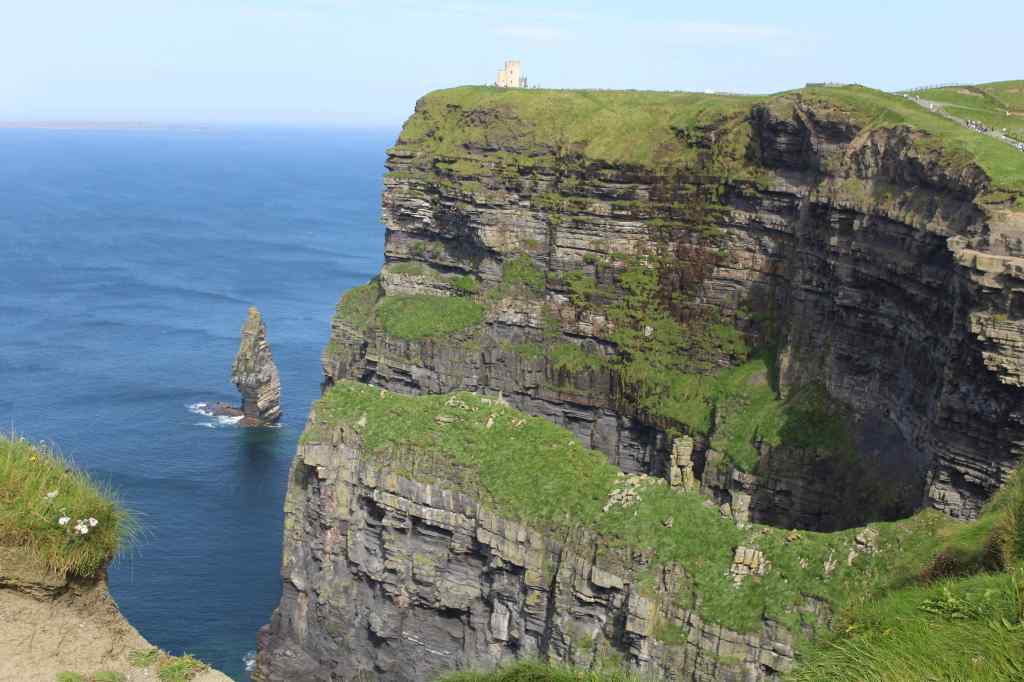
Due to this erosion, a huge layer of rock is exposed to the eye. This is what geologists dream of. It is the history of the earth, exposed to public view. The rock here is sedimentary, meaning that it was deposited by ancient rivers, and compacted into layers of hard shale and sandstone over time. As you might expect, the oldest rocks are at the bottom; these date back over 300 million years, before the time of the dinosaurs. The fossils preserved in the rock are the traces left by tiny burrowing creatures who lived in the ancient riverbed.
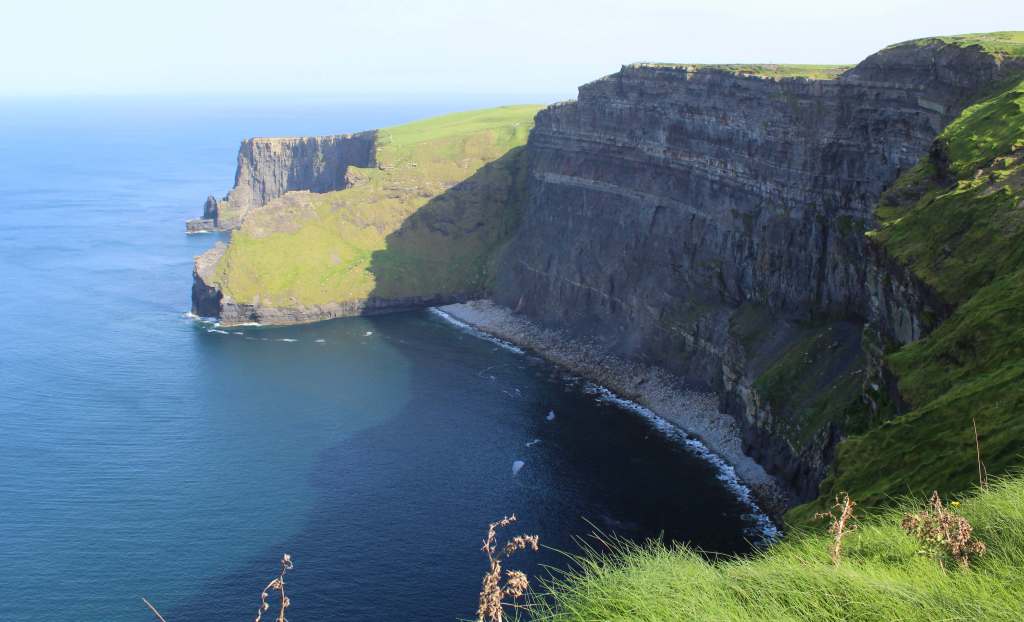
Yet viewing the cliffs does not put most visitors in the mood for scientific inquiry. Instead, they invite a sense of gaping wonder at the scale and majesty of nature, even amid the famously docile landscape of Ireland. My brother and I wandered up and down the path, taking photos of the cliffs from different angles, none of which was wholly satisfactory. Seabirds glided in the strong currents of air that formed from the ocean wind hitting the rock face—and which sent the sharp scent of salt water up to the viewing platforms.
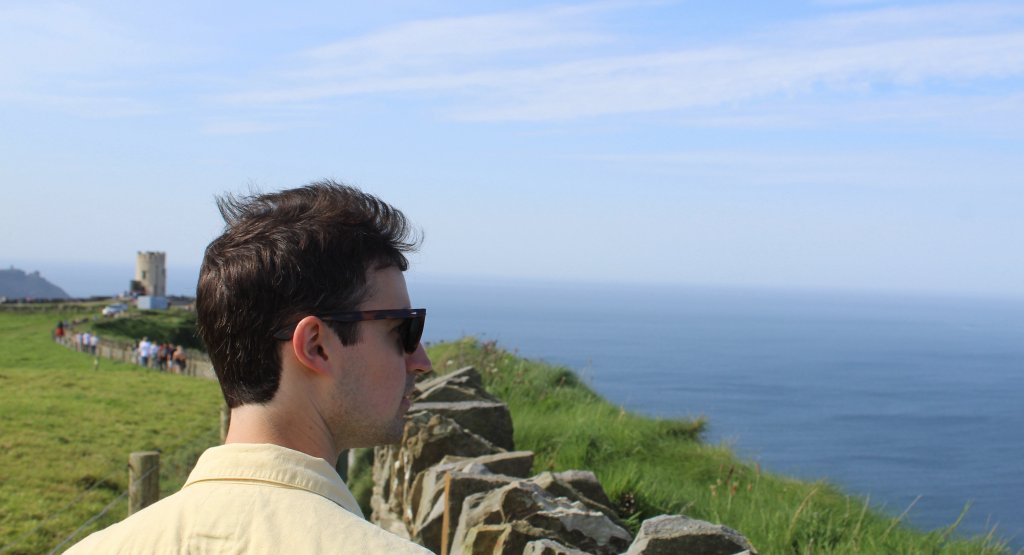
But enjoying a spectacle is hard work; so, feeling hungry, we wandered off to find a vegetarian hamburger truck that we had heard about (it was very good). Our mom, who wasn’t very hungry, stayed behind at the visitor center. By the time we got back, she was enjoying a performance of a marching band that had set up in the large seating area outside. It was an odd contrast—this austere icon of Ireland, and music that would not have been out of place at an American football game. But, strangely, it only added to the pleasant atmosphere of the unseasonably warm day.
The rest of our day was yet unplanned. We figured that we would be able to find something interesting in the vicinity of the Cliffs of Moher, and we were right. With our trusted Rick Steves guidebook in hand, we opened to one of the many maps, and found that we were near an area called “the Burren.” The name alone sounded strangely promising.
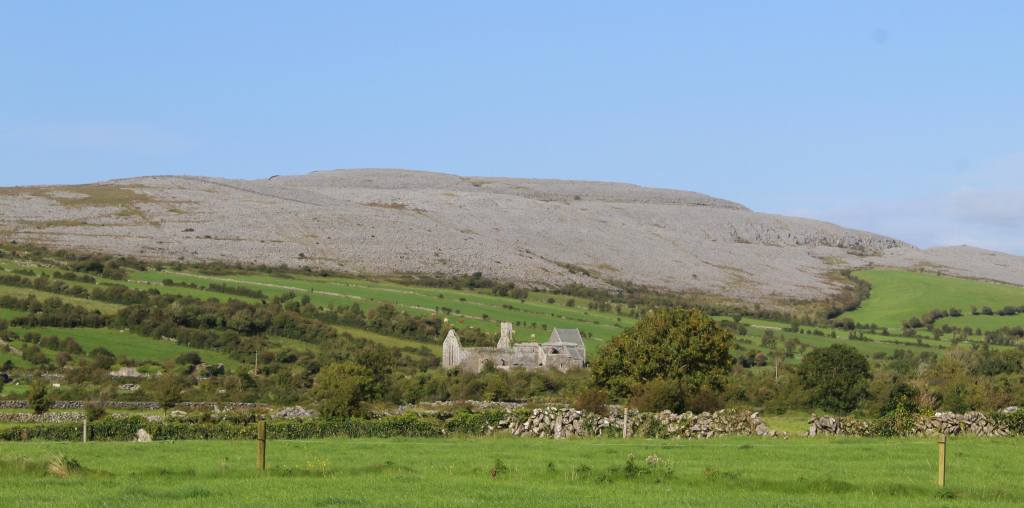
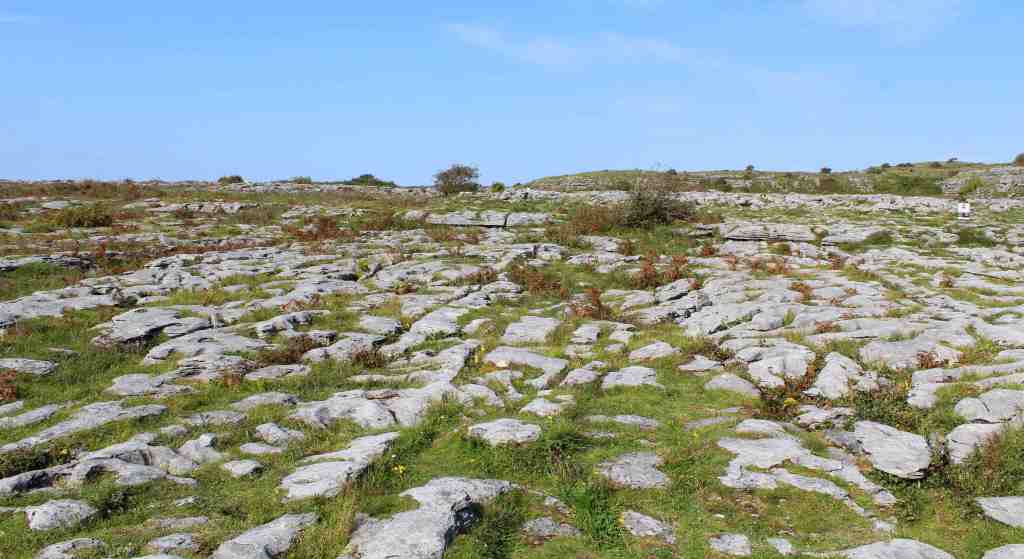
As we drove into the area, the landscape began to change. The hills of grass that characterize the country become relatively flat, and covered in rock. Indeed, from a distance you could see how the landscape abruptly changes, the trees and greenery giving way to swirls of gray stone. Getting closer, we could see that the ground was blanketed with a natural pavement—a series of flat stones forming a solid surface, between which grass and flowers grew. It produced an immediate impression—a landscape of stark and ancient beauty.
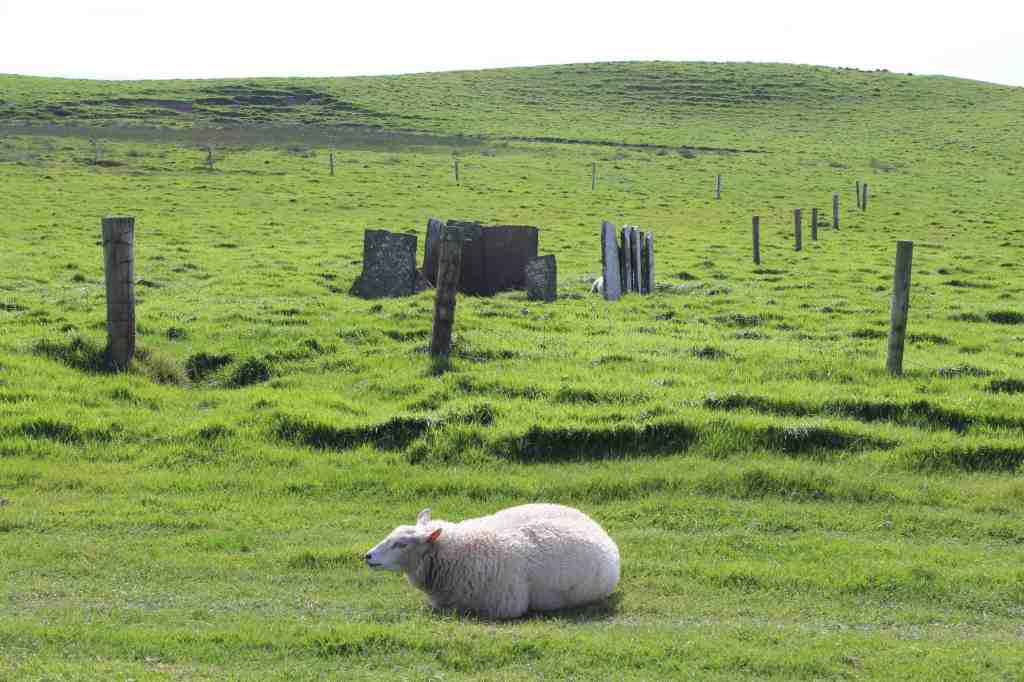
This impression was magnified at our first stop: the Poulnabrone Dolmen. This is an ancient megalith, well over 5,000 years old. As it stands now, the structure consists of three upright stones supporting a slab roof. But this is only the “skeleton” of the original construction. In its time, it would have been covered in soil and topped with a “cairn,” or a tower of rocks. Even so, it is an impressive sight. The arrangement of stones looks fragile, as if it can topple over at any moment. The visitor cannot help but wonder how it survived for so long. It is also impossible not to wonder how the stones were moved into this arrangement without the help of modern technology. The roof stone is so large that I don’t think even several dozen people could safely lift it.
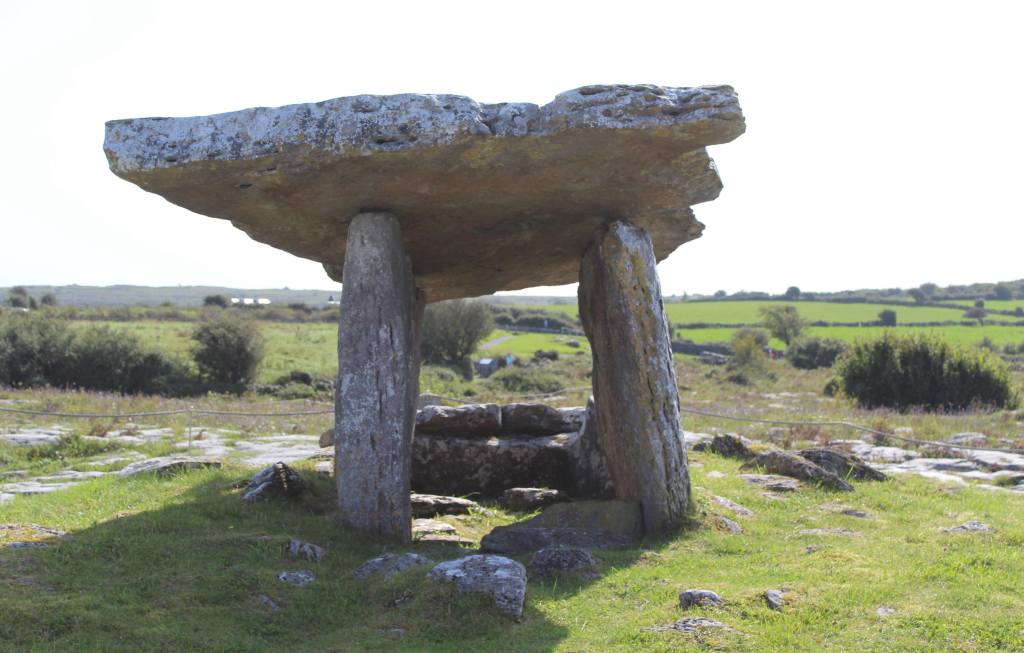
The short walk from the parking lot to the dolmen was unusually difficult, owing to the curious topography of the Burren. You have to be aware of where you are putting your foot, or you may step from the high platform of rocks into one of the crevices between them—thus risking a twisted ankle. Yet this extra awareness gives the Poulnabrone Dolmen an added spiritual element, as the visitor is forced to focus on their surroundings. This, added to the peculiar beauty of the landscape—quiet, empty of birdsong, isolated and exposed, as if you were on the top of a high mountain—lends this lonely monument a mystical atmosphere, as if it really were the portal to another world.
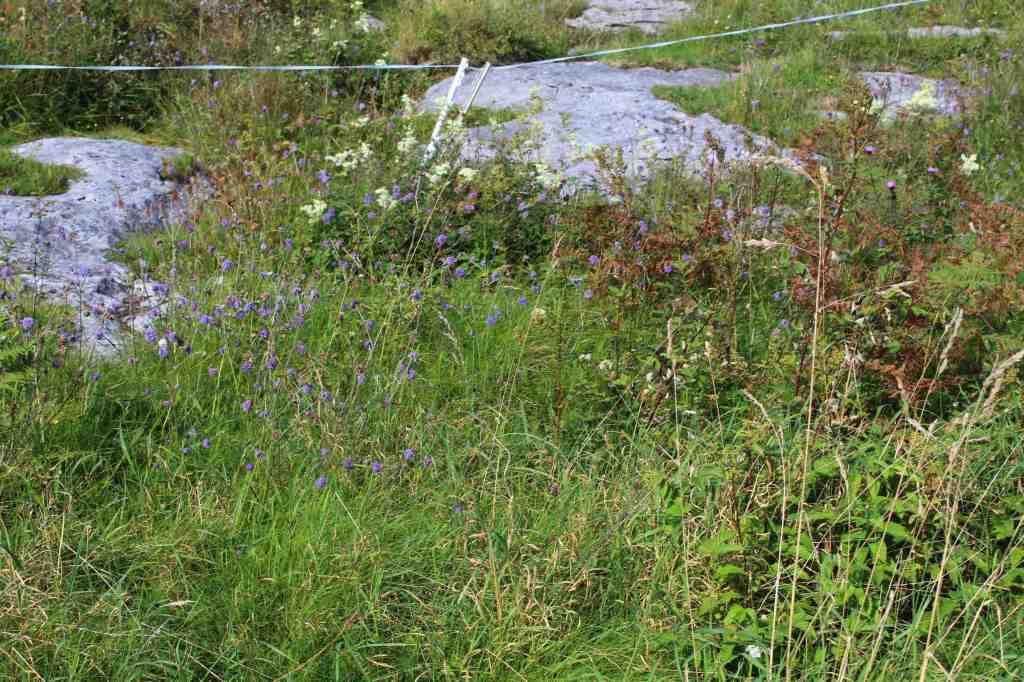
Our next stop in the Burren was the eponymous visitor centre. Located in the exceedingly small village of Kilfenora, this institution does not look like much from the outside. But it is well worth a visit. A small fee will get you into the museum, which has all the information you could want to learn about the Burren—flora and fauna, geology, history, and even music. I found the information about the flora to be especially interesting. Puzzlingly, this rocky and barren landscape is home to over 70% of the country’s native plant species, many of them wildflowers. Even more puzzlingly, alpine and mediterranean flowers bloom together here. The deep groves in the limestone apparently provide an ideal micro-environment.
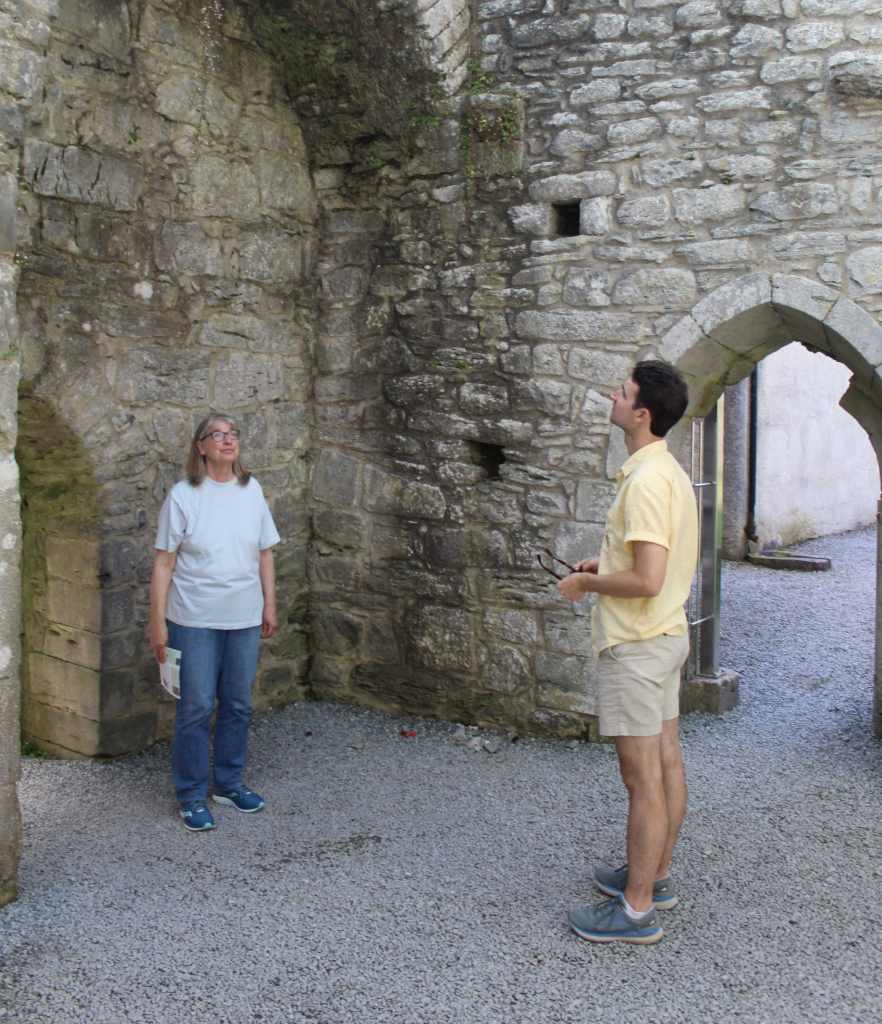
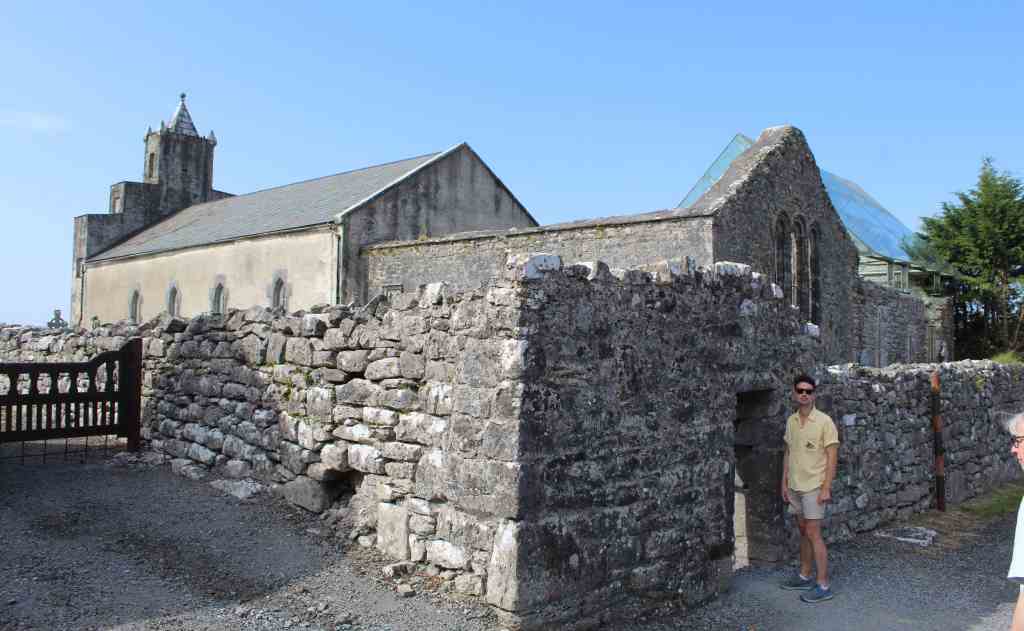
Another highlight of the visitor centre is the Kilfenora Cathedral, which today lies mostly in ruins. This attractive church building is now used to exhibit a collection of High Crosses, which are large stone crucifixes. These monuments, dating mostly from the early middle ages, are often decorated with elaborate images—illustrating Biblical stories at a time when most people were illiterate. The finest of these can rival the great gothic tympanums (the area over a doorway).
Yet during my visit, another parallel came to mind. In Galicia, the northwest of Spain, the landscape is also dotted with tall stone crucifixes, called cruceiros. This parallel struck me as odd, as Galicia is also home to many prehistoric dolmens—some that are remarkably similar to the one I had just seen here. Perhaps this should not be too surprising, however: both Galicia and Ireland were once populated by Celtic peoples. Indeed, there was once a time in human history—over 10,000 years ago, during the last great Ice Age—when it was possible to walk from Spain all the way to Ireland. This may seem like a very long time, but it is just a moment in the history of the earth.
Perhaps I am thinking in these terms because the Cliffs of Moher and the Burren both evoke the deep, geological past of Ireland, and remind us that the land beneath our feet is far more than just a country.
 Lotz in Translation