This, for me, is a perfect little book—part science-fiction, part philosophy, and all wit.
I confess that I have always been somewhat lukewarm towards the more famous Candide, perhaps because that book pokes fun at an idea that I have never believed nor even taken seriously—namely, that we live in the best of all possible worlds. But this book explores an idea which I have often contemplated: the smallness of our species in the universe.
In a way, the idea is not very sensible, since size is a relative term, and in any case physical size has nothing to do with importance. Nevertheless, when you look out of a plane window or down a skyscraper, and marvel at the almost comical smallness of buildings, cars, and people, it is an irresistible thought—that all of the things we concern ourselves with are ultimately without consequence.
One can perhaps see this book as a farcical precursor to Carl Sagan’s Pale Blue Dot, which uses science rather than wit to emphasis our littleness. Both books come to the same point: we do not know far more than we know, we cover our ignorance with myths and theories, and we fight and kill one another for absolute trivialities. As one of the book’s philosopher says, “Did you know, for example, that as I am speaking with you, there are 100,000 madmen of our species wearing hats, killing 100,00 other animals wearing turbans, or being massacred by them, and that we have used almost the whole surface of the Earth for this purpose since time immemorial?”
The final message of the book is rather bleak and even nihilistic, if lightened by Voltaire’s humor: that humanity is vanishingly unimportant. This is not exactly good philosophy, nor is it even necessarily good moralizing, since if nothing means anything we might as well do what we want. However, this “cosmic” perspective can, I think, be used to moderate ourselves: as a timely reminder of our ultimate ignorance and of our ultimate insignificance. It can at least help us to take ourselves a little less seriously. And, as Betrand Russell observed of Spinoza’s cosmic philosophy:
There are even times when it is comforting to reflect that human life, with all that it contains of evil and suffering, is an infinitesimal part of the life of the universe. Such reflections may not suffice to constitute a religion, but in a painful world they are a help towards sanity and an antidote to the paralysis of utter despair.
If we must have fables, for heaven’s sake let them at least be emblems of truth.
Here are two more tales of Voltaire, one written before and one after the famous Candide. All three center on a young man in love with a beautiful girl, whose love is thwarted as he is tossed about by fortune. Yet in content and tone the three are fairly divergent.
Zadig, the earliest of the tales, is set in the orient of the Arabian Nights. The titular hero is excellent in every way; he is wise, he is dexterous, he is honorable, and he even practices the art of deduction as well as Sherlock Holmes. Yet no matter what he does, misfortune follows close at his heals.
So far the tale more or less resembles Candide. However, Voltaire ends the story on an unexpected note. Zadig’s misfortunes eventually lead him to marry the woman he loves and become king; and the moral is that, as Pope said, all partial evil leads to universal good. In other words, one must trust fate and not presume to denounce bad luck. This is striking because it is the exact moral that Voltaire so mercilessly parodies in Candide. It appears the younger Voltaire was more optimistic.
The last tale, L’Ingénu (or “The Child of Nature” as the translator renders it) is about an American native who ends up in Breton and tries to integrate. This tale is more pointedly satirical than Zadig, as Voltaire goes out of his way to mock the hypocrisy of French catholics. In tone this tale is not nearly so lighthearted; indeed, in style it is more novelistic than joyfully silly. The final message is that French society is deeply corrupt and that many misfortunes are simply the result of human wickedness. And as the last sentence of the book tells us: “Misfortune is no use at all!”
Optimistic or pessimistic, these two tales are gems of wit from a humane thinker and a sharp writer. Everything I read of the French imp increases my admiration for him.
Like many on Goodreads, I decided to read this book because of Manny’s enthusiastic review. And I am glad I did. As a teacher of English as a foreign language, it seemed high time that I understand something of the language’s history. This book was an excellent choice, since it focused on that aspect of English most pesky to foreign speakers—grammar—while avoiding the too-often-told story of the growth of English vocabulary via French and Latin.
McWhorter begins by focusing on two distinctive features of English grammar: the so-called ‘meaningless’ do (as in, “Do you eat rabbits?”) and the use of the progressive in order to talk about the present (as in, “I am going,” rather than simply “I go”). Not coincidentally, these two aspect of English cause some of the most persistent errors in my students. In Spanish, just like in every other European language I know, there is no auxiliary verb needed for negations or questions; you can simply ask “¿Comes conejos?” Similarly, in Spanish, as in German or French, you can use the simple present to refer to what you are doing now; thus, a Spaniard can say “Voy” to express a current movement, and they reserve “Estoy yendo” for special emphasis.
Curiously, no other Germanic languages have these features. Indeed, they are absent (according to McWhorter) from every other European language, with the notable exception of the Celtic languages (specifically, Welsh and Cornish). This leads him to the quite natural supposition that the indigenous Celtic languages exerted an influence on the Old English spoken by the invading Anglo-Saxons. He musters quite a number of evidences and arguments in support of this thesis, to the extent that I was pretty worn out by the end of the chapter.
To be fair, this idea is considered quite controversial in the academic community, so McWhorter felt the need to champion it in full battle array. Nevertheless I think the maxim “Know your audience” applies here. I presume most readers of this book will be, like me, non-specialists, with little reason to be skeptical of the Celtic influence; to the contrary, it struck me as extremely plausible. So McWhorter’s harping on the point was simply taxing. In any case, if he is looking to influence the academic community, a short popular book is not the medium to do it.
McWhorter’s next chapter deals with the Viking influence, which he holds responsible for the jettisoning of much of Old English’s serpentine Germanic grammar, resulting in the relatively “easy” language we have today. And he rounds out the book by making the considerably more speculative argument that Proto-Germanic diverged in such a distinctive way from Proto-Indo-European because a large number of Semitic speakers (Phoenicians who had made it to Denmark) learned the language. At this point, I admit that I began to have reservations about McWhorter’s method. Despite the reasonableness of the Celtic-English and the Scandinavian-English hypotheses, the cumulative effects of McWhorter’s arguments was to weaken each.
McWhorter’s specialty is researching how languages influenced one another historically; and one begins to suspect that this academic orientation leads him to see evidence for this phenomenon everywhere. To me it is unsatisfying to write a history of English as a series of stories, however plausible, of how it was influenced by other languages. This is because, logically, in order for there to be distinct languages capable of mixing there must first be languages capable of transforming without any linguistic contact. It can all begin to sound like a biologist who insists that the reason elephants have tusks is because proto-elephants mated with proto-walruses epochs ago.
This is an unfair comparison, of course; and to repeat I think his Celtic argument is quite strong. However, the more one reads, the more McWhorter’s method can begin to sound unsettlingly like Just-So stories. Some inconsistencies in the arguments make this clear. For example, he brushes aside the paucity of Celtic vocabulary in English, while citing the many Scandinavian loan-words as evidence for Viking influence (not to mention the possible Semitic loan-words in Proto-Germanic). To me it seems prima facie dubious that Welsh and Cornish speakers were able to fundamentally transform English’s grammar without leaving a considerable stockpile of loanwords. Importing words is the most natural thing in the world when learning a foreign language; I do it all the time, as do my students.
To objections like these McWhorter is always able to point to a case where a similar event occurred as the scenario he is describing. But, again, one surmises that the corpus of available examples is large enough to back up any claim he wishes to impose. McWhorter criticizes other linguists for ignoring the causes of language change. But is invoking the influence of other languages a satisfying explanation? To me this is of the same order as arguing that life on Earth originally came from Mars. Perhaps, but how does life arise in the first place?
Now, it may be unfair of me to nitpick what is, after all, a popular book. But if McWhorter saw fit to include so much argument in favor of his uncommonly-held opinions, I think it behooves readers to be somewhat skeptical, especially since the general reader has no specialized knowledge to ground her acceptance or rejection of McWhorter’s conclusions. For my part, I think a more expository and less polemical book on the history of English would have made for far more pleasing reading. Yet McWhorter is an engaging writer and an original thinker, so it was valuable to learn of his approach to linguistics.
… the work of getting anybody to cheerfully undertake the monotony and drudgery of education must be effected not by pay merely, but by a skillfully worked-up appeal to the emotions as well.
I read this book in preparation for a recent visit to Pompeii; and it was an excellent choice. The ancient letters and the ruined city make for an ideal pairing, as both offer a remarkable look into daily life in ancient Rome. Pliny had a long and eventful career: an orator, magistrate, lawyer, and writer. His correspondence includes mundane details, tender love letters, poetic reflections, philosophical musings, and much else. Whatever the subject, his personality shines through: intelligent, urbane, loyal, if a bit ostentatious and pompous. He is, above all, eloquent; and his letters are without exception written in superb prose.
Though each epistle is a valuable historical document, some are conspicuously noteworthy. Most interesting for me was his description of the eruption of Vesuvius, which resulted in the death of his illustrious uncle, Pliny the Elder. He recounts his uncle’s and his own experience in two letters to his friend the historian Cornelius Tacitus. Here, with an eye to posterity, perhaps, Pliny reaches the height of his literary skill as he relates his escape from the eruption:
We had scarcely sat down when night came upon us, not such as we have seen when the sky is cloudy, or when there is no moon, but that of a room when it is shut up, and all the lights put out. You might hear the shrieks of women, the screams of children, and the shouts of men; some calling for their children, others for their parents, others for their husbands, and seeking to recognize each other by the voices that replied; one lamenting his own fate, another that of his family; some wishing to die, from the very fear of dying; some lifting their hands to the gods; but the greater part convinced that there were now no gods at all, and that the final endless night of which we have heard had come upon the world.
The collection is also invaluable for the correspondence between Pliny and Trajan. In these letters Pliny’s style is more restrained and formal; he takes the part of a supplicant and an apprentice. For the most part he is asking the Emperor for a favor or for advice. Much of it is concerned with the proper way to interpret the law and to distribute punishments, or else asking for permission to erect aqueducts, temples, and the like. Most extraordinary are two letters concerning the practice, spread, and prosecution of Christianity. Even at this early date, it was clear that the religion could grow rapidly: “In fact, this contagious superstition is not confined to the cities only, but has spread its infection among the neighboring villages and country.”
In sum, I recommend this book to anyone and everyone interested in ancient Rome. The letters are at once a model of style and a window into the past. Few books offer so much insight and pleasure for such little drudgery.
Time is not a carousel on which we might, next time round, snatch the brass ring by being better prepared.
When I began this book, I thought that I would speed through it in a summer month of dedicated reading, while there was little else to distract me. Yet after four weeks of slogging I had not even gotten a third of the way through. Worse still, I never felt fully engaged; every time I returned to the book it required an act of will; the pace never picked up, the writing never become effortlessly pleasurable. So I put it aside, to finish at the end of summer. When that didn’t work, I put it aside, to finish during Christmas break. And when that didn’t work, I bought the audiobook, to finish the remaining chapters on my runs. Now, 261 days later, I can finally tick it off my list.
Edwin G. Burrows and Mike Wallace set an ambitious goal: to write an authoritative, comprehensive, and accessible history of New York City. In their words, they want to include “sex and sewer systems, finance and architecture, immigration and politics, poetry and crime,” and that list is only the beginning. The amount of research required to assemble this vast and teetering edifice of knowledge is almost nauseating. When you consider that this book, heavy enough to serve as a deadly weapon, is the condensed version of thousands of smaller books, dissertations, papers, and studies, you cannot help but feel admiration for the many hours of sweat and toil that went into this pharaonic task. And in the end they have accomplished at least two of their three goals: the book is authoritative and comprehensive. But is it accessible?
This is where my criticism begins. Burrows and Wallace attempt to gather together so many threads of research that the final tapestry is confused and chaotic. In a single chapter they can pivot wildly from one topic to another, going from department stores to race riots to train lines, so that the reader has little to hold on to as they traverse this whirlwind of information. The final product is an assemblage rather than a coherent story, an encyclopedia disguised as a narrative history. Granted, encyclopedias are good and useful things; but they seldom make for compelling reading. What was lacking was a guiding organizational principle. This could have taken the form of a thesis on, say, the way that the city developed; or it could have been a literary device, such as arranging the information around certain historical figures.
Lacking this, what we often get is a list—which, as it happens, is the author’s favorite rhetorical device. To pick an entirely typical sentence, the authors inform us that, in 1828, the Common Council licensed “nearly seven thousand people, including butchers, grocers, tavern keepers, cartmen, hackney coachmen, pawnbrokers, and market clerks, together with platoons of inspectors, weighers, measurers, and gaugers of lumber, lime, coal, and flour.” Now, lists can be wonderful to read if used sparingly and assembled with care—just ask Rabelais. But overused, they become tedious and exhausting.
This is indicative of what is a more general fault of the book, the lack of authorial personality in its prose. Perhaps this is because Burrows and Wallace edited and rewrote each other’s chapters, creating a kind of anonymous hybrid author. Now, this is not to say that the prose is bad; to the contrary, I think that this book is consistently well-written. If the book is dry, it is not because of any lack of writerly skill, but because the prose limits itself to recounting fact rather than expressing opinion or thought. Again, the book is an encyclopedia without the alphabetical order, and encyclopedias are not supposed to contain any speck of subjectivity. Unfortunately, even the most masterly prose is dead on the page if there is no discernable person behind it.
I am being rather critical of a book which, without a doubt, is a triumph of synthesis and scholarship. If I am disappointed, it is because I felt that I could have retained much more of the information in these pages had it been presented with more coherence—a larger perspective, a sense of overall order, an underpinning structure. As it stands, I do not have that satisfying (if, perhaps, untrustworthy) feeling that an excellent history can provide: that of seeing the past from a high perspective, as a grand and logical unfolding. Though not exactly fair, I cannot help comparing Gotham unfavorably with another massive book about the history of the city, The Power Broker, which forever changed how I look at the city and, indeed, at the nature of power itself. Yet after finishing this, I am not sure if my perspective on the city has been appreciably changed.
But I should end on a positive note. This is a well-written, exhaustive, and thoroughly impressive history of the city. And despite all my complaints and headaches, I liked it enough so that I will, someday, drag myself through its sequel.
… nothing is so indecent that it cannot be said to another person if the proper words are used to convey it…
I did not think that a collection of tales from the late Middle Ages would be so raunchy and ribald. While artisans were busy erecting gothic cathedrals—symbols of humanity’s insignificance before an omnipotent deity—Boccaccio was busy writing this most human of books. Indeed, the Decameron can be seen as the humanistic reply to Dante’s Divine Comedy: a celebration of our very worldliness. In Boccaccio’s world, the keystone virtue is not holiness nor piety, but cunning; and those who lack it are sure to be the victims of those who possess it.
Seen from the present day, Boccaccio’s masterpiece seems progressive in many respects. For one, he treats of nobles and peasants indifferently; and in the final (and incredibly sadistic) story he even asserts that these distinctions are of no importance compared with personal merit. More shocking is Boccaccio’s frank portrayal of female sexuality, something that would be taboo for much of European history. At times Boccaccio even seems like a proto-feminist: Women are central to the book, as Boccaccio frames the collection of stories as a diversion for women who have been forced into idleness by their social position. To be sure, there are many regressive and even alarming views about women mixed in with his more “advanced” ideas; even so, he does a better job than, say, Dickens often does.
Another surprising feature of these stories is Boccaccio’s open anticlericalism. The way he speaks of monks and nuns would be scandalous even now. There are many moments in the book in which he seems to be advocating a kind of hippy-ish tolerance for the pleasures of the flesh, condemning all opponents to sensual delight as hypocrites and fools. He even portrays homosexuality as an amusing foible rather than a deadly sin. Considering all this, it is difficult to imagine the reaction if it had been published considerably later. It seems that tolerance does not progress in a neat line.
Boccaccio’s chief virtue as a storyteller is his ability to manipulate plot. In this he is the exact reflection of Shakespeare (one of Boccaccio’s borrowers), who had every gift except plot. Boccaccio’s characters are never round nor indeed memorable; they can for the most part be interchanged at random. But each of these 100 tales, with very few exceptions, is thoroughly charming for having all the elements of a good story: a setup (inevitably involving a man and a woman), a problem (normally somebody trying to sleep with someone else), a clever trick to solve it (and a dunce to suffer as a consequence), a dramatic climax (the heroes are almost foiled), and a satisfying conclusion. All together, these 100 stories are a treasure trove which every responsible storyteller must pilfer mercilessly. If you are going on a camping trip, you could do much worse than to bring a copy of the Decameron along for the evenings.
Of all the people on the face of this green earth, I never thought I would be the one reviewing this book. Indeed, I began this year by writing a blog post about my new year’s resolutions, confidently predicting that, whatever happened, I would not begin to exercise. Yet a month later I found myself in a sportswear store, perplexedly looking at running gear. What happened?
Nothing, really. Unlike Peter Sagal, my foray into running has not been the product of any personal troubles or existential crises. I am 27, too old for my quarter-life crisis, too young to be worried about entering middle age. I haven’t gotten married yet, and so have not had to endure any difficult divorce. I haven’t even had a bad breakup recently. I just decided to try something new, out of a sense of curiosity.
When I was in high school, you see, I dreaded the day when we were made to run a mile in gym class. It seemed like such an impossibly long distance. I was chubby and out of shape, so I could never make it the whole way without walking a considerable portion. Later on, at the ripe age of 17, I had to go to physical therapy for my knees after overstretching in Tae Kwon Do classes. These experiences convinced me that running was not my bent. But last February, feeling experimental, I decided to see whether walking a lot in Europe had inadvertently made me capable, finally, of running a mile without stopping. And it had.
Judging from this book, my experience was not typical. Running seems to be one of those hobbies, like meditation or prayer, that people pick up after some sort of acute trauma. Sagal got into running as he entered his forties, facing a midlife crisis which was to include a difficult divorce. As a comparison, it took the Buddhist author, Pema Chödrön, two divorces to become a celibate nun and celebrated teacher. (Lacking this experience, I am neither particularly enlightened nor especially fast.) Indeed, Sagal’s divorce haunts these pages as a kind of bitter undercurrent which seems to put many readers off. For my part, I do not require radio comedians to write about their ex-wives with saintliness.
I doubt I would have enjoyed this book half as much if I had bought the print version. Sagal is a radio personality, and the audiobook has his skillful delivery and signature voice. Using the audiobook also means that you can listen to the book while running. This is what I did, pledging that I would get through the book’s five hours and twenty-five minutes in five runs or fewer—and I succeeded. Listening to bald man who has struggled with his weight, and who had little natural talent to begin with, was great motivation as I shuffled my own soft body through Madrid’s Retiro Park. Now, here is an athlete I can identify with.
Apart from recounting some of his marathon experiences—which included the 2013 Boston Marathon, where he witnessed the bombing—as well as a few other running anecdotes, Sagal offers a bit of advice—all of it very sensible, and most of which I do not follow: don’t over-train, run with a group, eat healthy, etc. Most interesting to me was Sagal’s advising runners to go without headphones, in order to experience their environment and to mindfully monitor their bodies.
In fact, the way that Sagal describes running often reminded me of meditation books I have read. Both practices involve spending a considerable amount of time alone, paying attention to one’s breath and one’s body. Both practices are supposed to relieve stress and make one generally happier. And, as I mentioned, people tend to turn to these practices when they are having a problem. It is curious that focusing on the body can have such strong therapeutic effects.
One major difference between running and meditation is competitiveness. Runners are relentlessly challenging each other and themselves. This may not be wise, but it is fun on occasion. This foolhardy spirit of competitiveness has led me to sign up for Madrid’s half marathon on April 27. If you are standing near the finish line that day, and you wait long enough, you may see a tall, sweaty, teetering American stumble across the finish line. Wish me luck.
Of course, a critic resembles a poet to a hair, except that he has no anguish in his heart, no music on his lips.
This is one of those rare unclassifiable books, whose genre was born the day it was published and which has since left no heirs. Kierkegaard gives us what appears, at first, to be a sort of literary experiment: the papers of two imaginary characters, found inside the escritoire by a third imaginary character. These two characters—referred to as ‘A’ and ‘B’—serve as the titular either/or; and their writings are a study in contrast. Specifically, Kierkegaard uses these two personages to juxtapose the aesthetic with the ethical modes of life, presumably asking the reader to choose between them. You might say it is a ‘choose your own adventure’ book of philosophy, except the adventure chosen turns out to be your life.
Part 1, by A, gives us the aesthetic man. We are presented with extracts from a journal, essays on Mozart’s Don Giovanni and ancient tragedy, a study of boredom, and the famous Seducer’s Diary: A’s record of his carefully planned seduction of a young girl. Part 2 is more focused, consisting of two long letters sent by B (who is supposed to be a middle-aged judge) to A, both exhorting the latter to turn towards a more ethical view of life. The styles of the two writers are suitably different: A is excitable, hyperbolic, and aphoristic, while B is more staid and focused. Nevertheless, it is never difficult to tell that Kierkegaard is the true author.
Neatly summarizing the difference in perspectives would be difficult, since Kierkegaard tends to be flexible with his own definitions. Perhaps the best way to capture the contrast is with the book’s central metaphor: seduction vs. marriage. In the first, A is concerned with attaining a maximum of pleasure. He is not a hedonist, and is not very interested in sex. Rather, he is interested in avoiding boredom by carefully shaping his developing relationship like a well-plotted novel, ensuring that each emotion is felt to the utmost. His primary concern, in other words, is to avoid the stale, the cliché, the repetitive. The judge, by contrast, sees marriage as far preferable to seduction, since it is through commitments like marriage that the inner self develops and becomes fully actualized. While the aesthete prefers to live in the moment, the ethical man notes that, even if every moment is novel, the self remains the same. Change requires commitment.
Interpreting the book is difficult. Are we being asked to make a choice in values? Such a choice could have no basis but chance or personal whim, since no pre-existing value could guide us between two incompatible value-systems. This, you might say, is the existentialist interpretation of the book: the primacy of choice over values. Yet other options are available. For example, despite Kierkegaard’s famous opposition to Hegel’s philosophy, this text is open to a Hegelian reading. Specifically, B’s perspective seems in many respects superior to A’s, since B demonstrates that he is able to understand A, while A presumably cannot understand B. Thus, you can perhaps regard B as the Hegelian antithesis to A’s thesis; and perhaps both of these can be united in a wider perspective, such as in Kierkegaard’s Knight of Faith—a religious unity of inner feeling and outer obligation. There is also the unmistakable autobiographical element in this writing, since Kierkegaard had not long before broken off his own engagement.
This is just to scrape the surface of possibility. And this shows both the strength and weakness of Kierkegaard’s writing. On the one hand, this book is highly rich and suggestive, with brilliant passages buried amid piles of less compelling material. On the other hand, to call a book “rich” and “suggestive” is also to call it confused. Since no clear message emerges, and since there are no arguments to guide the way, the book can easily yield interpretations consonant with pre-conceived opinions. In other words, it is hard to me to imagine somebody being convinced to change their mind by reading this. But Kierkegaard can perhaps better be likened to a good art critic than to a systematic philosopher, for the value in his writing consists more in illuminating comments than in a final conclusion.
On the whole, however, I must say that I emerged with a distaste for Kierkegaard’s writing. At times he rises to commanding eloquence; but so often he seems to wallow in confusing and repetitive intricacies. More to the point, I find the general tenor of his writing to be anti-rationalist; and this is exemplified in the complete lack of argument in his writings. But nobody could deny that, all told, this is an extraordinary book and a worthy addition to the philosophical tradition.
This little book is one of the most read and translated works of the Spanish Golden Age. It has been surprisingly influential. Schopenhauer was a famous devotee, and even learned Spanish so that he could produce a translation (which went on to commercial success). Two English translations have been best-sellers, the first in 1892 and the second in 1992. Advice typically does not age well, but Gracián’s has stood the temporal test.
Yet for the reader of the original Spanish—especially the non-native reader—the book can be perplexing. Gracián was a major writer in the conceptismo movement: a literary style in which a maximum of meaning was compressed into a minimum of words, using every rhetorical trick of the trivium to achieve a style that seems to curl itself into a ball and then to explode in all directions. This can make the experience of reading Gracián quite akin to that of reading poetry—except here, unlike in poetry, you can be sure that there is a sensible meaning laying concealed underneath. When the antiquity of Gracián’s Castilian is added to the mix, the result is literary dish that is difficult to digest.
After a meaning is beaten out of Gracián’s twisted words, however, the result is some surprisingly straightforward advice. “Prudent” is the operative word, for Gracián manages to be idealistic and realistic at once, walking the fine like between cynicism and naïveté. Admittedly, however, the bulk of this advice is directed towards the successful courtier, and so is difficult to apply to less exalted positions. There is, for example, much advice concerned with how to treat inferiors and superiors, but in a world where explicit hierarchies are increasingly frowned upon (or at least tactfully concealed), the poor reader wonders what to make of it.
But much of the advice is timeless and universal. Make friends with those you can learn from (but not those who can outshine you!). Don’t let wishful thinking lead you into unrealistic hopes. Never lose your self-respect. The wise man gains more from his enemies than the fool from his friends. Know how to forget. Know how to ask. Look within… As any reader of Don Quixote knows, Spanish is a language exceedingly rich in proverbs; so it perhaps should come as no surprise that this language—so rhythmic and so easy to make rhymes with—is also an excellent vehicle for maxims. Gracián exploits the proverbial potential of Castilian to the maximum, expressing a sly but respectable philosophy in 300 pithy paragraphs.
Despite all the wit and wisdom to be found in these pages, however, I found myself wishing for amplification. Montaigne, though short on practical advice, is long on examples; so by the end of his essays the reader has a good idea how to put his ideas into practice. Gracián, by contrast, has no time for examples, and so the reader is left with a rather abstract imperative to work with. Needless to say I will not become a successful courtier anytime soon.
Ideas are interesting, but people are vastly more so.
Sarah Bakewell has followed her lovely book about Montaigne with an equally lovely book about the existentialist movement. Comparing the books, one can see an obvious theme emerge in Bakewell’s writing: the interest in practical philosophy. Montaigne and the existentialists share the tendency to write about their own lives and, in various ways, to attempt to live out the tenets of their philosophies. This makes Bakewell’s biographical method especially revealing and rewarding, while at the same time adding a subtle, highbrow self-help aspect to her books—life lessons with the imprimatur of big names and fine prose.
Bakewell attempts to tell the story of the existentialist movement from its twentieth-century beginnings (skipping over precursors such as Dostoyevsky and Kierkegaard) to its apparent end, with the deaths of its principle architects. The four main protagonists are Martin Heidegger, Maurice Merleau-Ponty, Simone de Beauvoir, and Jean-Paul Sartre (who, unsurprisingly, is the dominant personality), along with shorter appearances by other thinkers: Husserl, Camus, Raymond Aron, Karl Jaspers, and Simone Weil, to name the most prominent. When you consider the sheer amount of biographical and philosophical material this list represents, you realize the magnitude of the task set before Bakewell, and the consequent skill she demonstrated in producing a readable, elegant, and stimulating book.
I am sorry to say that I have read very little of the writings of the principle actors, with the exception of Heidegger. Bakewell’s account of him mostly confirmed my own experiences with the infuriating metaphysician, especially in his disturbing lack of character and, indeed, of basic humanity. Sartre comes across as far more human, if not exactly more likable. Few people could hear of Sartre’s enormous philosophical, biographical, journalistic, and literary output, over so many years, without feeling a sense of awe. Nevertheless, Sartre’s opinions rarely struck me as measured or reasonable. Though I often mourn the decline of the public intellectual, Sartre’s example gives me pause, for his influence on contemporary politics was not necessarily salubrious. Perhaps it is true that intellectuals, seeking consistency and clarity, are naturally inclined towards extreme positions. Sartre was, in any case, and it led him into some foolish and even reprehensible positions.
By contrast to these two giants, Beauvoir and Merleau-Ponty come off rather well in this story. The former tempered her political opinions with a greater subtlety, thoroughness, and empathy; while the latter lived a quietly productive and happy life, while creating a philosophy that Bakewell argues constitutes the greatest intellectual legacy of the bunch.
Just as Bakewell argued that Montaigne’s writings are newly relevant for his sense of moderation, so she argues that the existentialists are newly relevant for exploring the questions of authenticity and freedom. Not having read most of their work, I cannot comment on this. But what I found most inspiring was their burning desire to think and to write—and to write like mad, for hours each day, in every genre, for decades on end. Though most of this writing was born today to die tomorrow, each one of them produced a magisterial tome for future readers to beat their heads against. I suppose I will have to pick them up sometime soon.
There are few phrases more annoying or more effective than “I told you so.”
This is my second encounter with Thomas Kuhn, and again I emerge deeply impressed. To do justice to an event so multifaceted as the Copernican Revolution a scholar must have a flexible mind; and Kuhn is fully equal to the task. He moves seamlessly from scientific data, to philosophical analysis, to historical context, and then back again. The result is a book that serves as an admirable introduction to the basics of astronomy and a thorough overview of the Copernican Revolution, while raising intriguing questions about the nature of scientific progress.
Kuhn first makes an essential point: that the conceptual schemes of science serve both a logical and a psychological function. Their logical function is to economically organize the data (in this case, the position and movement of heavenly objects); their psychological function is to make people feel at home in the universe. Belief is only necessary for this second function. A scientist can use a conceptual scheme perfectly well without believing that it represents how the universe ‘truly is’; but people have an obvious and, apparently, near-universal need to understand their place in, and relation to, the cosmos. Thus, scientists throughout history have insisted on the truth of their systems, despite the history of science being littered with the refuse of abandoned theories (to use Kuhn’s expression). Even if this belief cannot be justified philosophically, however, it does provide a powerful emotional impetus to scientific activity.
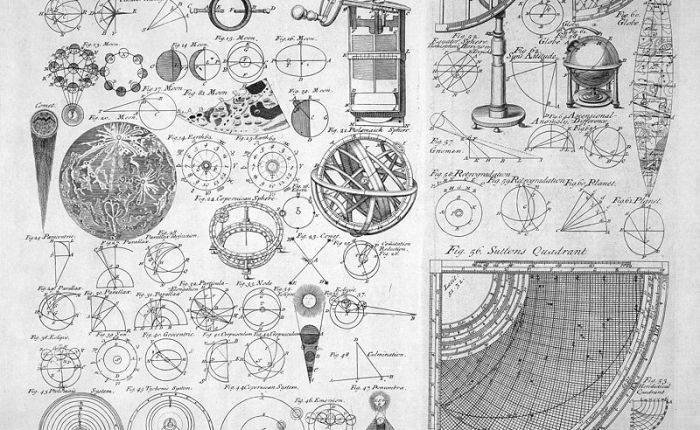
Another question Kuhn raises is when and why scientists decide that an old paradigm is unsustainable and a new one is required. For centuries astronomers in the Muslim and Western worlds worked within the basic approach laid down by Ptolemy, hoping that small adjustments could finally remove the slight errors inherent in the system. During this time, the flexibility of the Ptolemaic approach—allowing for fine-tuning in deferents, equants, and epicycles—was seen as one of its strengths. Besides, the Ptolemaic astronomy was fully integrated within the wider Aristotelian science of the age; and this science blended perfectly with common everyday notions. The fact that the Ptolemaic science broke down is attributable as much, or more, to factors external to the science as to those internal to it. Specifically, with the Renaissance came the rediscovery of Neoplatonism, with its emphasis on mathematical harmonies—something absent from Aristotelianism—as well as its strain of sun-worship.
Copernicus was one of those affected by the new current of Neoplatonism; and it is this, Kuhn argues, that ultimately made him dissatisfied with the Ptolemaic system and apt to place the sun at the center of his system. We often hear of science progressing as a result of new experiments and empirical discoveries; but no such novel observation played a role in Copernicus’s innovation. Rather, the source of Copernicus’s rejection of an earth-centered universe was its inability to explain why the planets’ orbits are related to the sun’s. His system answered that question. But this was only an aesthetic improvement. It did not lead to more accurate predictions—the essential task of astronomy—and, indeed, it did not even lead to more efficient calculations. The oft-reproduced image of the Copernican universe, consisting of seven concentric circles, is a simplification; his actual system used dozens of circles and was cumbersome and difficult to use.
But the most puzzling feature of Copernicus’s innovation is that it achieves qualitative simplification at the expense of rendering it completely incompatible with the wider worldview. Aristotelian physics cannot explain why a person would not fly off of a moving earth. And, indeed, the entire cosmological picture, such as that painted so convincingly by Dante, ceases to make sense in a Copernican universe. For centuries people had understood the earth as a midpoint between the fires of hell and the perfect heavens above. Now, hell was only metaphorically “below” and heaven only metaphorically “above.” Besides that, the universe had to be expanded to mystifying proportions; the earth became only a small and unimportant speck in an unimaginably vast space. Strangely, however, Copernicus seemed blind to most of these consequences of his innovation. A specialist concerned only with creating a harmonious system, his attempt to render it physically plausible or theologically palatable is, at best, half-hearted.
This leads to the irony that one of the greatest intellectual revolutions in history started with a man concerned with technical minutiae inaccessible to the vast majority of the public, who had access to no fundamentally new data, whose system was neither more accurate nor more efficient than its predecessor, and whose main concern was qualitative harmoniousness. Copernicus was no radical and had no notion of upsetting the established authority; he himself would likely have been appalled at the Newtonian universe that was the end result of this process.
Yet this simple innovation, once proposed, had ripple effects. Though the earth’s motion was near universally rejected as a fact, its use in a serious astronomical work kept it alive as an option. And this new option could not be laughed away when, in the next generation under Tycho Brahe, better observations and novel phenomena upset the Ptolemaic world order. The heavens could no longer be seen as perfect and unchanging when Brahe proved that supernovae and comets do not exhibit a parallax (as in, they do not to change location when the observer moves), and thus could not be atmospheric phenomena. Further, Brahe’s unprecedentedly accurate observations of the planets were incompatible with any Ptolemaic system.
This seems to be one of many cases in the history of science when novel observations followed, rather than preceded, a theoretical innovation. us Granted, this incongruence led Brahe to propose his own earth-centered system, the Tychonic, rather than adopt a sun-centered universe. But this new system used Copernican mathematics, and embodied the Copernican harmonies. In any case it is hard to see how the Tychonic system could ever have been anything but a stopgap, since the jump from Ptolemy to Brahe was scarcely easier than the jump from Ptolemy to Copernicus. Besides, it struck many as dynamically implausible that everything in the universe would orbit the sun except the earth and the moon.
Kepler and Galileo were among those unconvinced by the Tychonic system. The two very different men were both of an independent turn of mind, and their work finally made the Copernican universe unequivocally superior. Kepler particularly made the decisive step with his three laws: that planets orbit in ellipses with the sun at a focus, that they sweep out equal areas in equal times, and that they orbit the sun in a ratio of the 3/2 power (the orbital axis to the orbital time). But in Kepler we find further ironies. Far from the dispassionate lover of truth, Kepler was a Neoplatonic mystic, bursting with occult hypotheses. Many parts of his work strike the modern reader as scarcely more rational than the ravings of a conspiracy theorist. Yet the hard core of Kepler’s astronomical work lifted Copernicanism into a league of its own for accuracy of prediction and efficiency of calculation. If the orbits of the planets were related to the sun in such simple, elegant ways, it was difficult to see how earth could be at the center of it all.
This is my best attempt at summarizing the most salient points of the book. But of course there is far more in here, most of it worthwhile. I particularly enjoyed Kuhn’s chapter on the oft-ignored medieval research into physics, such as the impetus theory in the work of Nicole Oresme. The only weak point of the book was the rather brief epilogue to Copernicus. In particular, I would have appreciated an entire chapter devoted to Newton, since it was his Principia that was, in Kuhn’s phrase, the “capstone” of the revolution. But on the whole I think this is a superlative book, serious yet accessible, informative while brief. Kuhn captures the reality of scientific progress, which is far less neat that we may like to believe. Most striking is how a revolution which was guided by many extra-logical considerations—the Neoplatonic belief in celestial harmonies, the desire for mathematical elegance, the weakening of the religious worldview, the need to feel at home in the universe—fueled a process which, taken as a whole, resulted in a science definitively better than the Ptolemaic system it replaced.
Kuhn makes no mistake about this. Here is what the reputed relativist has to say:
The last two and one-half centuries have proved that the conception of the universe which emerged from the Revolution was a far more powerful intellectual tool than the universe of Aristotle and Ptolemy. The scientific cosmology evolved by seventeenth-century scientists and the concepts of space, force, and matter that underlay it, accounted for both celestial and terrestrial motions with a precision undreamed of in antiquity. In addition, they guided many novel and immensely fruitful research programs, disclosing a host of previously unsuspected natural phenomena and revealing order in fields of experience that had been intractable to men governed by the ancient world view.








 Lotz in Translation