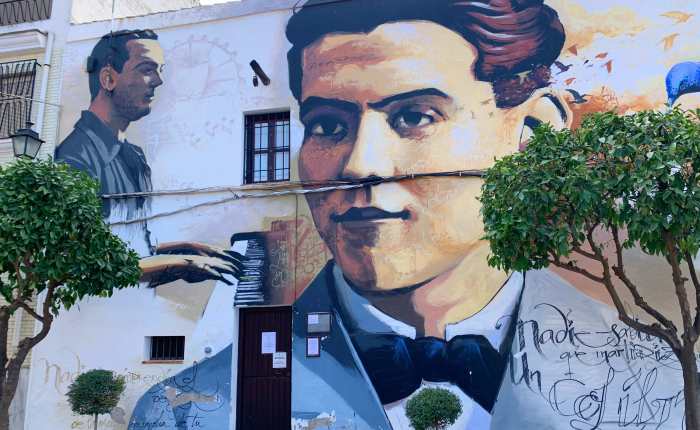
In the Footsteps of García Lorca

In the Footsteps of García Lorca

Federico García Lorca is the most famous playwright and poet that Spain produced in the previous century. This is largely owing to undeniable brilliance, as any readers of Bodas de Sangre or Yerma can attest to. Yet his fame is also due, in part, to the tragic story of his death—executed by Nationalist forces during the first few months of the Spanish Civil War. Among the hundreds of thousands dead from that conflict, Lorca remains its most famous victim. And in death, he has become a kind of secular saint to artistic freedom.

The precise details of Lorca’s murder were, for a long while, rather obscure; and it is largely thanks to the Irish writer, Ian Gibson, that it was finally uncovered. Prior to our trip to Granada, Rebe had read Gibson’s book, El asesinato de García Lorca, and so we had a full Lorca itinerary planned.

Our first stop was the Huerta de San Vicente. This was the summer house of the García Lorca family for the last ten years of the poet’s life. It is a kind of rustic villa, typical of Andalusia, with large windows and whitewashed walls—ideal for keeping cool. We joined a tour and were shown around the house, which has a piano that Lorca would play on (he was a gifted musician, and friends with Manuel de Falla), as well as a desk at which he wrote.
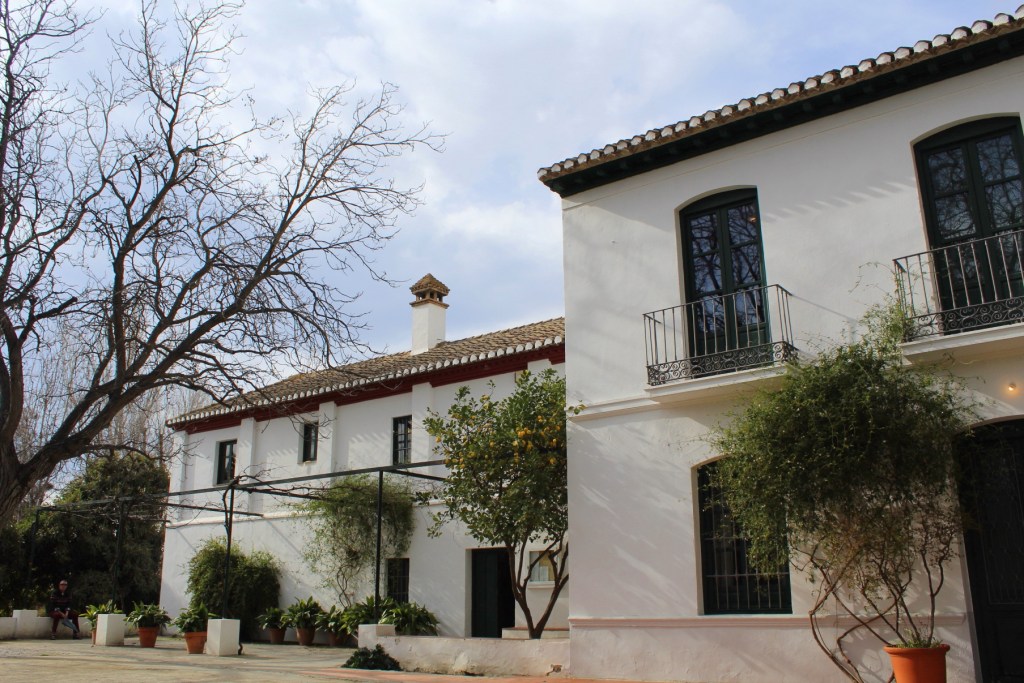
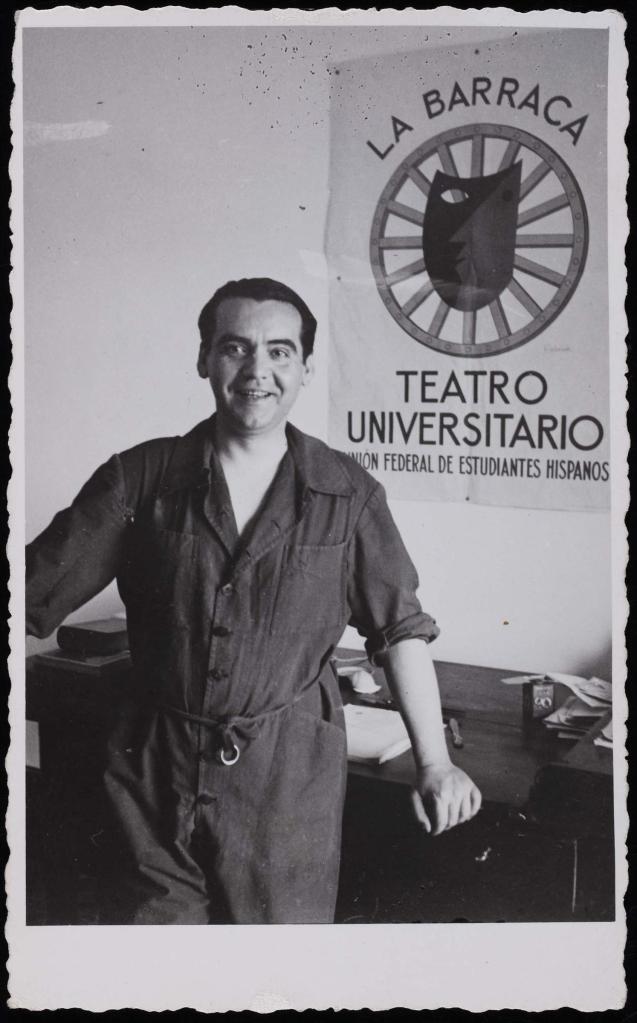
The hour-long visit gave a satisfying overview of the many facets of his short life. Lorca came across as a man wholly devoted to the arts—to music, to poetry, and above all to theater. One of my favorite items on display was a poster for La Barraca, a popular theater group that he helped to direct. They would travel around the countryside and perform for the benefit of the public, putting on avante-garde shows for the masses. It reminds me somewhat of the Federal Theater Project of the American New Deal, and demonstrates that Lorca, while not overtly political, did not shy away from social causes.
Our next stop was the small town of Fuente Vaqueros, which is a short drive from Granada. There, we visited the house where Lorca was born and spent his earliest years. It is a large house with thick walls, ideal for keeping out the heat. We were given a tour—just the two of us—by a local whose grandfather had gone to the same primary school as Lorca himself! He explained that the Lorca family was quite wealthy, having made their fortune in the tobacco business. Indeed, their house was one of the first to receive electricity in the area.

The upstairs of the house was made into a small exhibition space. Among other things, there is the only extant video clip of the poet, as he emerges from a truck used to haul theater supplies. The video has no sound and it lasts for only a few moments. Yet it is a tantalizing glimpse into the past. Also on display are puppets that Lorca made, in order to put on shows for his baby sister.

A short drive from Fuente Vaqueros is the town of Valderrubio, previously known as “Asquerosa” (“Disgusting”). Apparently, this name is a linguistic coincidence, having come from the Latin Aqua Rosae (“Pink Water”), but it led to the unfortunate toponym “asquerosos” for the denizens of this perfectly inoffensive town. Here is yet another house museum of the playwright, this one larger and grander than the one in Fuente Vaqueros. Unfortunately, however, we arrived too late for the tour of this house, and had to content ourselves with a quick walk-through.
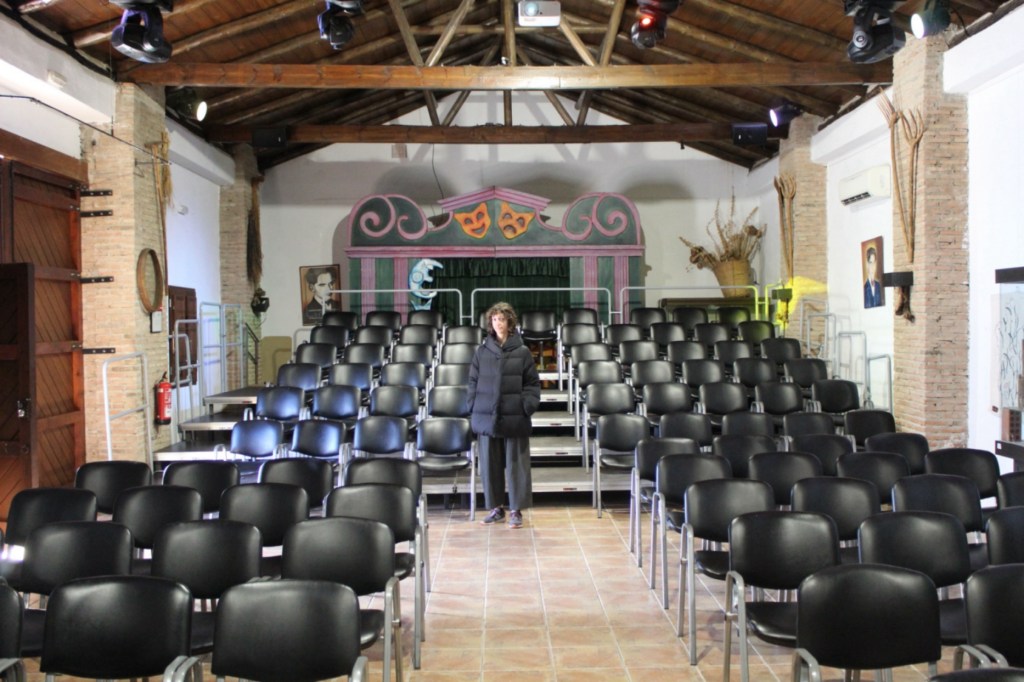
Rebe in the theater attached to the house museum.

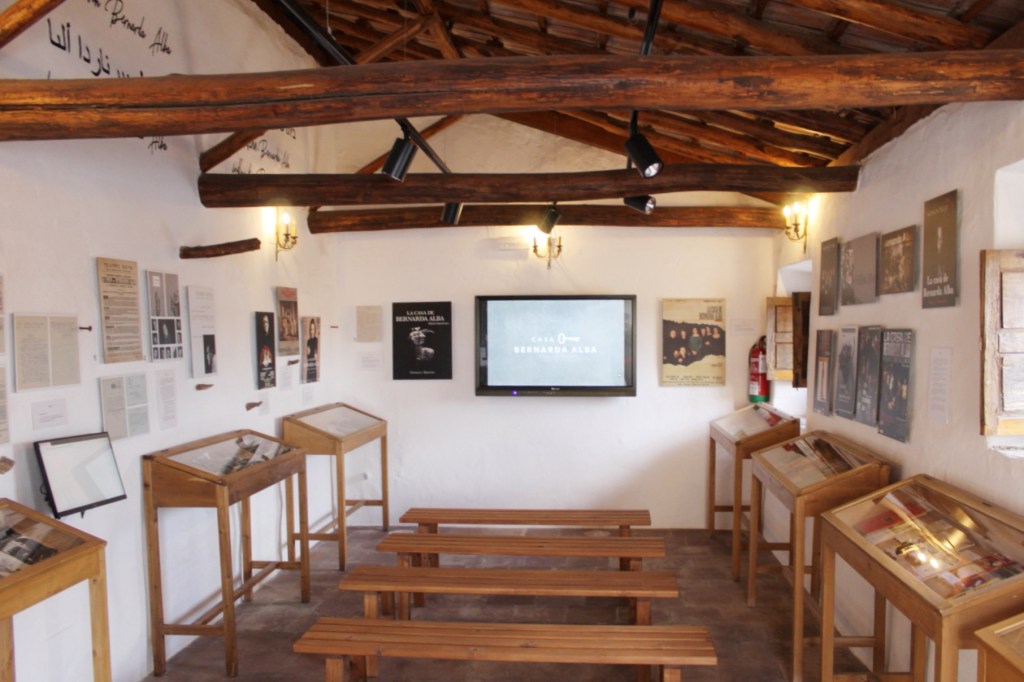
But we were on time for the tour of the House of Bernarda Alba. This is an attractive villa next to the Lorca property, where a widow lived with her daughters. Federico used this family as the basis for one of his best plays, La casa de Bernarda Alba, which is about a tyrannical widow who imposes a decade’s long period of mourning on herself and her daughters after the death of her husband. Apparently, the actual family—who I presume weren’t nearly as monstrous as Lorca portrayed them—were understandably quite offended by this, and cut off contact with the Lorcas. And now, to add insult to injury, their home stands as a museum to the poet’s honor!
Our last stop was rather more somber. On the 19th of August, 1936, Lorca was arrested, taken outside the city, and shot. Against the advice of his friends, on the eve of the Civil War he had traveled to his native city. But as war broke out and violence spread, he realized that he was unsafe and so hid himself in the home of family friends, who were members of the right-wing Falangist party. The political connection didn’t help. Along with three other men, he was taken to a spot on the highway between Vïznar and Alfacar and shot.

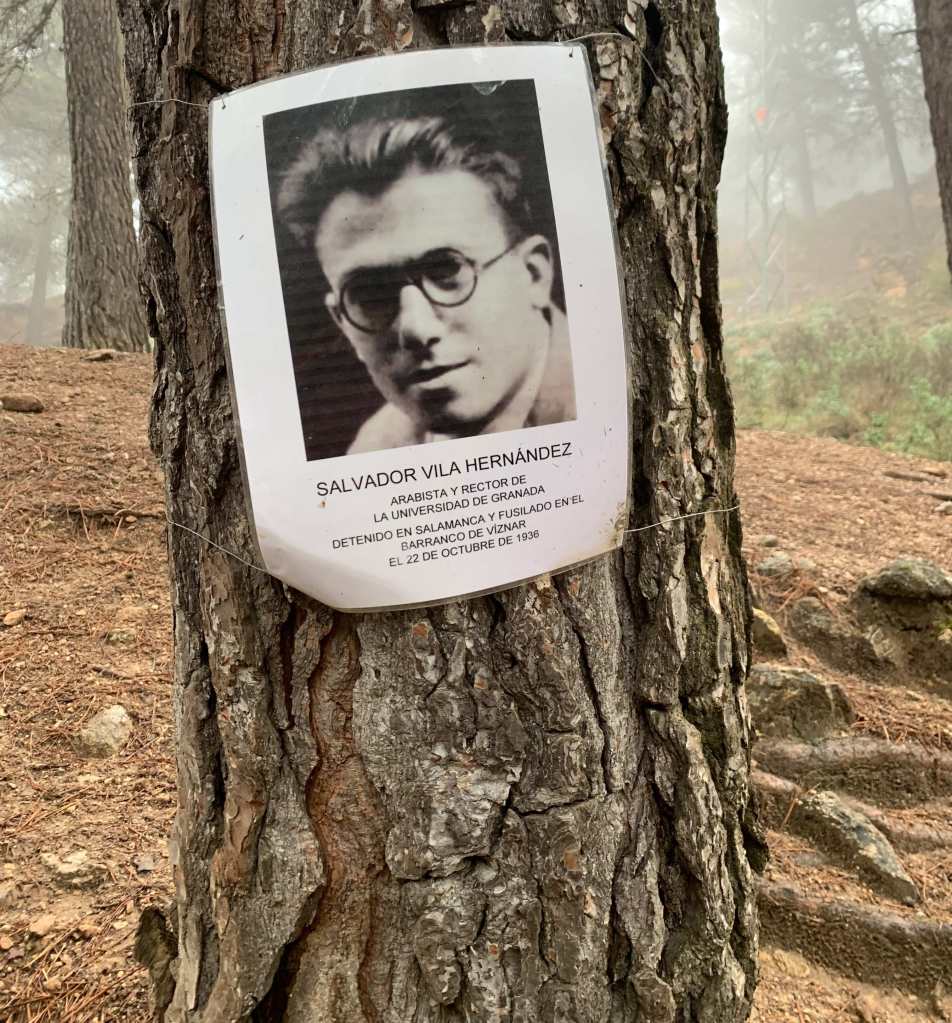
The place where Lorca was executed is hardly recognizable today. At the time it was a barren hillside, completely devoid of vegetation. Today, however, it is a grove of tall pine trees that cover the ground with shade. We parked the car and walked up a hill, not sure what we were looking for. Then we noticed papers tacked onto trees, like ‘Lost Cat’ posters on telephone polls. They were photos of the people believed to be executed here. There were dozens of these photos, each one with a name, profession, and believed date of death.
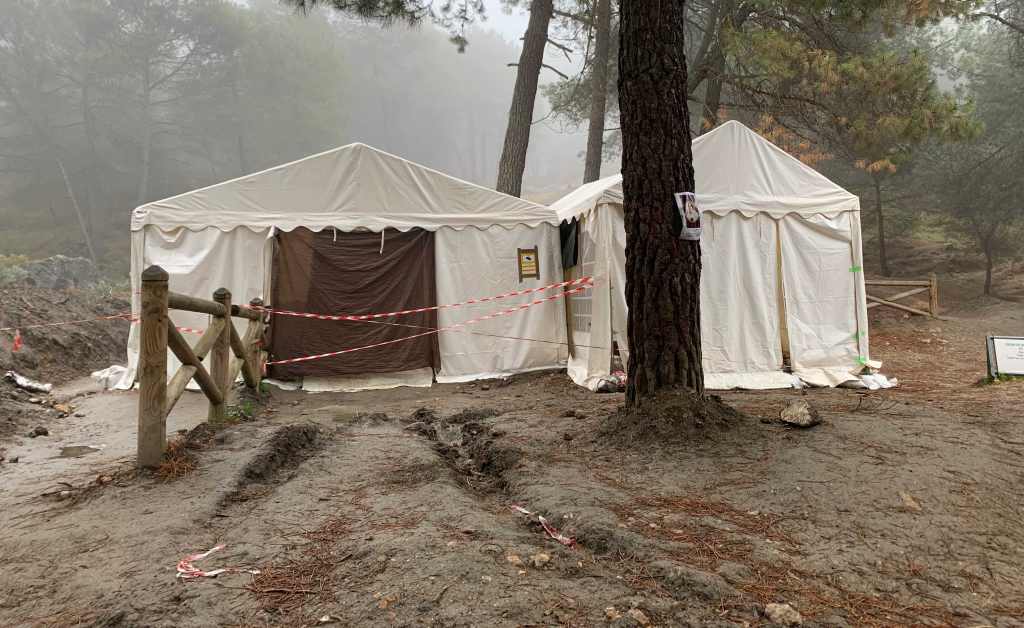
Even more unsettling were the white tents, standing empty and silent. They were covering excavation pits, where investigators are finally unearthing the remains of the hundreds of victims executed here, nearly a century after the Civil War. The investigators are also collecting DNA samples from surviving family members, so as to be able to identify any remains they uncover. Lorca’s body is believed to be here somewhere, though it hasn’t been identified yet. (You can learn more about the effort by following the groups’s Instagram.)
To state the obvious, it is chilling to think that such a harmless man—a gift to the world and an ornament to his country—could be deemed so threatening that he had to be executed this way. His last moments must have been terrifying. His work, however, has outlived Franco and his regime, and perhaps it will outlive the current constitution.

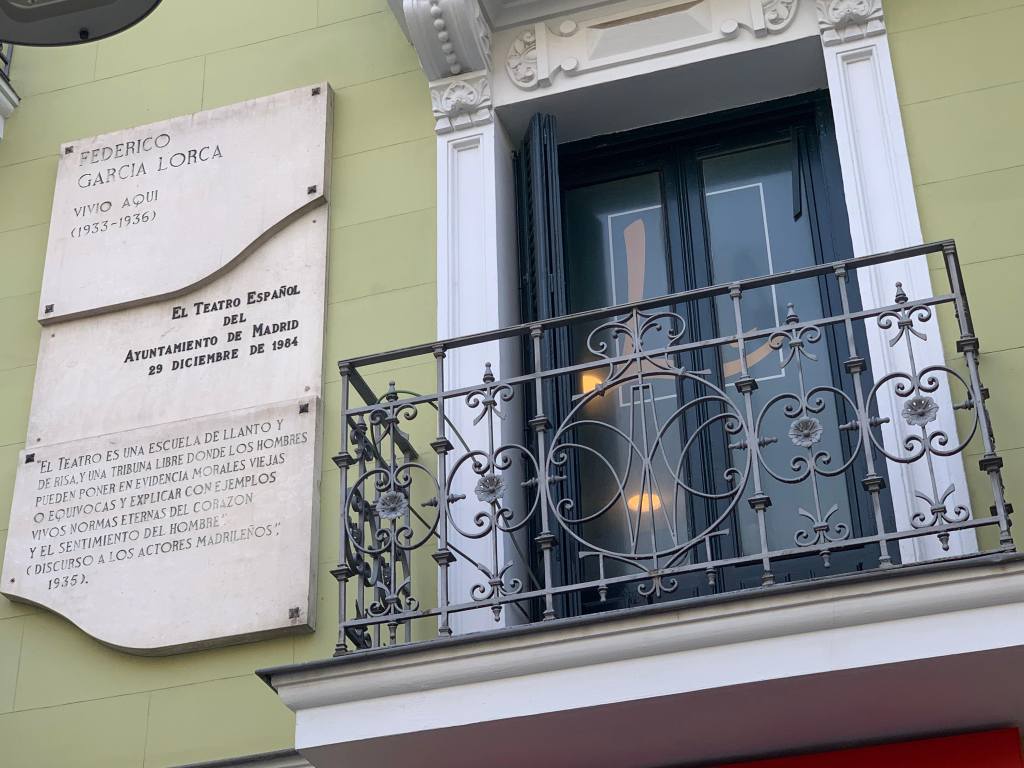
Now, for the very serious Lorca fan, there are also some sites to visit in Madrid. There is a lovely statue of the poet in the plaza de Santa Ana, and on Calle de Alcalá 96 there is a plaque which marks the apartment where Lorca lived for the last three years of his life. Another worthwhile visit is the Residencia de Estudiantes, where Lorca lived as a student along with his Dalí. The two were very close as young men, though many have criticized Dalí’s later reconciliation with the Francoist regime as a betrayal to the memory of his friend. 
But, of course, the most important thing is not to follow in his footsteps, but to keep reading and performing his works. This way, he will remain forever alive. 
Review: The Warren Commission Report

Review: The Warren Commission Report

The Warren Commission Report: The Official Report of the President’s Commission on the Assassination of President John F. Kennedy by Warren Commission

My rating: 4 of 5 stars


Before launching into this review, I ought to say why I read this infamous report in the first place. I have never been particularly interested in JFK or the assassination, and thus I knew just the bare basics of the official story and the conspiracy theories. My interest in the book was actually sparked by Werner Herzog, who named the Warren Commission Report as one of his favorite books. I read the report, then, mainly to appreciate how the story is told and the conclusions are reached, rather than to find any hidden truths of the assassination.

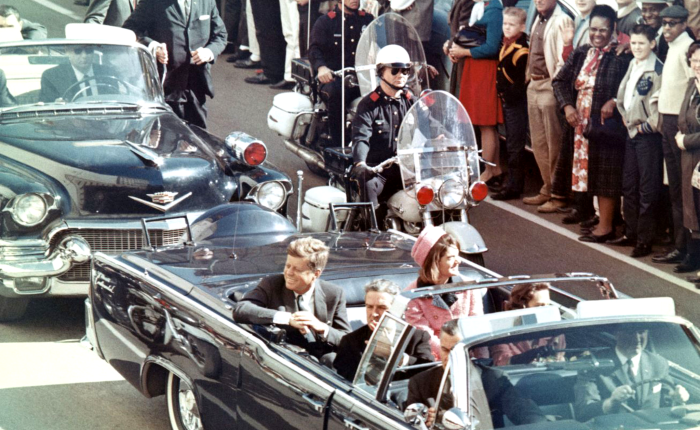
From the first pages, I could see what Herzog enjoyed about the book. In the guise of a bureaucratic, governmental document, we have an excellent true crime thriller. Unlike the overworked detectives of cop shows, the Commission had the nearly unlimited resources of the United States government at their disposal, and were able to perform any tests they wished. Expert riflemen attempted to replicate the shots; key witnesses were timed reenacting their movements; a car was driven at the exact speed as the presidential limo while pictures were taken through the scope on the rifle; the frame rate on the Zapruder film was used to determine the exact timings of the shots fired; and so on.

This way, the Commission closes in on the conclusion: it was Oswald—and only Oswald—from the sixth floor of the Texas School Book Depository. Every minute is accounted for, every movement is traced, every alternative theory is considered and discarded. It is, in short, a tour de force in the prosecutorial arts.

Yet I think this does not fully explain the report’s appeal to Herzog. Speaking purely in terms of aesthetic appreciation, what is especially compelling about the book is how grand, potentially historic conclusions follow from tiny questions of fact. Could the rifle be operated fast enough? Was the shot too difficult? How many shots were heard? Among the delights of Herzog’s best documentaries is the sensation of a profound abyss of mystery opening up in unexpected places. And the report certainly provides that sensation.

Now, I think it would be remiss of me if I did not at least attempt to comment on the plausibility of the report’s conclusions. I should say that, going into it, I was highly disposed to accept Oswald as the lone gunman. After all, we live in the era of mass shootings, most often carried out by loners with inscrutable motives. Indeed, Lee Harvey Oswald—a 24-year old white guy, a misfit with few friends—seems like the textbook example of a mass shooter. As a case in point, the would-be assassin of Donald Trump, Thomas Matthew Crooks, seems to have had a similar profile.

And the evidence linking Oswald to the crime is quite strong. There is the picture of him with the rifle, the fact that the rifle was found in his place of work, the visit to his wife the day before to pick up the rifle, the fact that he immediately fled the scene, his history of impulsive decision-making, his interest in left-wing movements, the total lack of an alibi, the multiple witnesses linking him to the subsequent murder of officer Tippit, resisting arrest shortly thereafter with a gun on his person… The list goes on.

What is more, in addition to the (apparent) lack of evidence linking Oswald to a conspiracy, several considerations seem to make such a link unlikely. For one, it is not as if JFK was a highly unusual president in terms of his politics. If Kennedy had been proposing something truly radical—provoking a nuclear war with the USSR, say, or instigating a communist revolution in the USA—then I could imagine a sizable contingent of disloyal personnel who might want him dead. But the fact is that JFK was a liberal anti-communist, and he was succeeded by… LBJ, a liberal anti-communist.

As for the Soviet Union, they would appear to have had little to gain and much to lose by getting involved in an assassination attempt, since discovery could provoke a massive war, and success did not materially benefit them in any way. The connection with Cuba is admittedly plausible, if only because of Kennedy’s many dealings with the country (the Bay of Pigs invasion, the Missile Crisis, attempted CIA assassinations of Castro…).

As for LBJ, though he was as power-hungry as they come, and had a penchant for unscrupulous behavior, it is frankly difficult for me to believe that, as Vice-President, he could have wooed away enough government agents, and sworn them all to absolute secrecy, in the service of his personal ambition. A single whistle-blower would have toppled the plan—and humans are bad at keeping secrets.

This is all to say that I found the report extremely believable. But in the interest of fairness, I decided to watch the first major documentary questioning the conclusions of the report: Rush to Judgment. This is the film version of a 1966 book by Mark Lane, a lawyer. And its premise is, I think, a fair one. If the Warren Commission was the posthumous prosecution, Oswald also deserved a posthumous defense, which Lane intended to provide.

To start, I think it is only fair to point out some considerations that undermine the report’s conclusions. The most conspicuous one is that LBJ created the Commission to prove to the public that Oswald was the lone gunman, in order, in his words, to avoid a war that could “kill 40 million Americans in an hour.” That is to say that the Commission worked to prove a foregone conclusion, ostensibly to avoid a crisis in international relations. And, of course, the killing of Oswald by Jack Ruby before he could be tried cannot help but raise eyebrows.

In his documentary, Mark Lane interviews several witnesses whose testimony does not conform with the official story. Many people from different vantage points report hearing the shots from—you guessed it—the grassy knoll, and some even said they saw smoke in the air. Mark Lane also probes potential connections between Jack Ruby and the Dallas Police Department, including officer Tippit, and he portrays the so-called “magic bullet” theory (namely, that a single bullet pierced Kennedy’s neck and wounded Governor Connally) as being inconsistent with the evidence.

For me, the contrary eye- and earwitness testimony is fairly easy to discount. In such a chaotic environment, with people running everywhere, several vehicles on the road, and many hard surfaces for sounds to reflect from, I think it would be difficult for an unprepared observer to localize the source of a sound or even to make a precise count of the shots. In any case, given the somewhat contradictory testimony, many people simply must be mistaken.

The argument that Oswald was not a good enough marksman also strikes me as weak. Oswald had military training, an accurate weapon, and in any case there’s always an element of luck involved. (Thomas Matthew Crooks missed by a fraction of an inch—the difference between a historic turning point and a footnote.)

Many conspiracy theories rely on a close examination of the Zapruder film. Among the arguments made are that Kennedy jerks back instead of forward in response to the lethal shot to his head (indicating it came from in front and not behind), and that Connally seems to react the first shot—the “magic bullet”—a couple seconds after Kennedy clutches his throat.

For what it’s worth, to my eyes it does look like the president is shot in the head from behind (it’s gruesome to watch). But the timing problem between Kennedy’s and Connally’s initial reactions is harder to explain if they were, indeed, struck by the same bullet. In fact, what the film apparently shows does correspond with how Connally remembered the event: hearing a shot, turning to his right to check on Kennedy, and then getting shot himself before the final, fatal shot to the president.

This would seem to indicate three shots: the first hitting Kennedy in the neck, the second hitting Connally in the back, and the third lethally wounding Kennedy in the head. The problem with that sequence is that the bullet exiting Kennedy’s neck would have caused substantial damage to the inside of the car, had it not hit another person. What’s more, given the constraints of the bolt-action Carcano rifle used in the attack, it seems almost impossible that three shots could have been gotten off in such quick succession. Thus the single-bullet theory.

I think it would be dishonest of me to say that I know enough about ballistics, marksmanship, firearms, traumatic wounds, or any other pertinent subject to venture my own explanation. (And I think I will probably regret even touching my toes into this vast reservoir of fevered speculation.) I will say, however, that the popular theory of a second shooter wouldn’t explain the lack of damage to the inside of the car—not to mention requiring the supposed second shooter to fire in such close coordination with Oswald as to be basically indistinguishable.

To round out this review, I should mention the bevy of documents made available to the public, starting in the 90s and as recently as last year. One of the strangest findings concerns a trip that Oswald made in late September and early October of 1963—in other words, shortly before the assassination—to Mexico City, in order to obtain a visa to either the Soviet Union or Cuba. Both of those embassies were being closely monitored by the CIA, and apparently somebody was caught on tape impersonating Oswald in phone calls. This was subsequently denied and covered up by the CIA. I really have no idea what that might mean.

There are approximately one million other stories and rumors—involving the Mafia, Jack Ruby, Officer Tippit, failed assassination attempts, murdered witnesses, and so on—which no single person could summarize or evaluate.

For me, I come back to my general skepticism of conspiracy theories, which is founded on my unshakable belief in human incompetence. Any task that requires a large number of people to work together and keep absolute secrecy arouses my suspicion. Aside from that, it seems that Oswald would be a uniquely bad co-conspirator. As the report points out, he attracted the notice of law enforcement everywhere he went; and his arrogance and impulsiveness made him difficult to work with. Given what is known about Oswald, he doesn’t seem to be the sort of person to be recruited for a secret operation.

I am also wary of the strong psychological pull of conspiracy theories. The idea that a lone gunman could change history—for the murkiest of motives—is inherently unsatisfying. Only connoisseurs of the absurd (like Herzog) could relish the fact that luck and chance can play such a defining role in our lives. I think it is significant that both Reagan’s and Trump’s attempted assassination have received far less attention from amateur sleuths, for the simple reason that their assailants failed while Oswald accomplished his grim task.

That being said, I also think that the members of the Warren Commission did not act as pure factfinders, but as prosecutors of the lone gunman theory. In so doing, they worked closely with the Secret Service, CIA, and FBI, rather than using their own investigators. And it seems clear that the FBI and CIA were not entirely truthful about what they knew about Oswald in the wake of the assassination.

If there was a cover-up, however, that does not necessarily mean there was a full-blown conspiracy. Governments can keep secrets simply to avoid looking incompetent, or to protect clandestine sources of information, or to avoid diplomatic crises, or simply out of a reflexive furtiveness, or for any number of reasons. As a case in point, the weather balloon explanation of the Roswell incident was, indeed, revealed to be a cover story—not of aliens, but of a top-secret balloon apparatus to detect atomic research.

Yet if there is a lesson to be learned from the Kennedy assassination, it is arguably the same rather boring lesson taught by the attempted Trump assassination: the need for better presidential protection.


View all my reviews