The Blog Turns 10!

The Blog Turns 10!

Today marks the 10-year anniversary of the first ever post on my blog. A lot has changed since then. At the time, I had just moved to Spain for what was supposed to be a single year. I was 24 years old, and immature even for that age. My Spanish was terrible, bordering on non-existent. And Europe was shockingly new.

The idea of starting a blog came from my habit of writing book reviews. That practice began just from a desire to really keep track of what I learned from all of the books I was reading. There is a famous quote, often attributed to St. Augustine: “The world is a book, and those who do not travel read only a page.” Not well-traveled himself, the good saint almost certainly never said this. Still, in that spirit, I decided that I ought to write up my trips, if only to really suck the marrow out of each experience. After all, I was only supposed to be there a year.

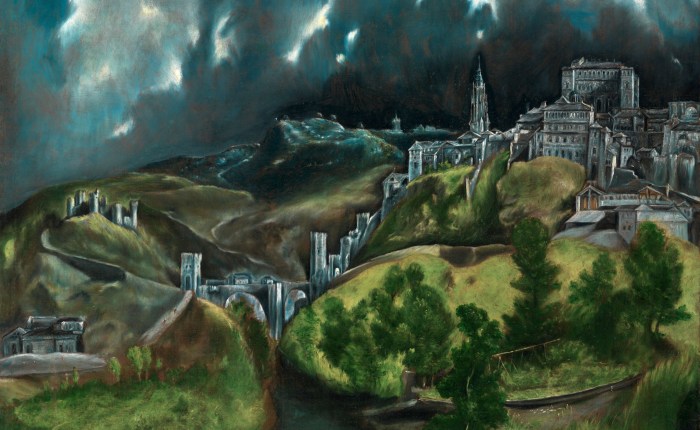
My first post was about Toledo. This was appropriate, as Toledo was the first place I visited in Spain that really astounded me. There is simply nothing in the United States that even remotely resembles the city’s perfectly preserved medieval core—its twisting, narrow streets, its stone bridges and walls, and above all its gothic cathedral.

The grand church was a revelation. Inside and out, the building was simply covered in artwork—statues, friezes, frescoes, and paintings—every inch of it made by hand, over centuries. It wasn’t just that the cathedral was beautiful. It gave me a new concept of time. Even the most negligible adornment would have taken hours, days, weeks of painstaking work.

The structure of the building itself, its stone roof seeming to float above me, seemed almost miraculous. That it could be designed without computers and assembled without machines was a testament to human perseverance, if nothing else. It did to me precisely what it was made to do: make me feel like an insignificant, ephemeral nothing in comparison with the world around me. 

It was this experience, above all, that prompted me to write up the visit and to begin this blog. Since then, I’ve published over 700 posts here, including another one about Toledo. Over this time, the purpose and nature of the blog has fluctuated. At first it was meant to be a sort of diary, recording my own experience. Later, I tried to make it more like a travel guide, providing useful information and context to would-be travelers.

Yet I must admit that I haven’t had the discipline to stick to any one concept of this blog. So it is very much a mixed bag—of reviews, essays, short stories, travel pieces, and anything else that I deemed worthy of writing. This lack of an overarching concept has irked me, and I have often chastised myself for being such a self-indulgent writer. But at this point, I can at least say that this blog is an accurate reflection of myself—both my strengths and my shortcomings.

Much has changed during this time. I stayed in Spain far longer than I ever dreamed, spending over a decade in that enchanting country. My Spanish improved to the point where I consider myself nearly bilingual. And Europe went from shocking to comforting, as I saw cathedral after cathedral, city after city, and grew accustomed to the sights, languages, customs, and the different pace of life in that continent.

Change in life can happen so gradually that it is difficult to even notice. But I was given a chance to reflect on my new perspective on a recent visit to Toledo, back in October, nearly ten years after my initial trip. The city was still beautiful, the cathedral still magnificent. Yet I was not transported in the same way as I was. Not that I think any less of Toledo, just that it was no longer an alien world to me. It was home.

Rereading my original post about Toledo is another chance to reflect on this change. Now, I normally avoid reading my old writing, as I find it acutely embarrassing. But I actually came away from this reread with some affection for the Roy of that time. True, he had a lot to learn, and a lot of growing up to do. He was pretentious, often condescending, and took himself far too seriously. But he was curious, he was passionate, and he wanted to improve himself intellectually and even spiritually. He was on the search for wisdom.

I don’t know if the Roy of that time would be pleased with the Roy of today. I’m not always pleased with myself. Certainly I didn’t achieve his dream of becoming a famous writer, though I have gotten a couple books published. In any case, I should thank him; I owe my former self a lot. At a crucial moment in his life, he decided to go on a journey rather than embark on a conventional career. I just hope that I can make proper use of the experience he gave me.

My life changed, once again, on the 20th of October, when I moved back to New York. It was a tough, complicated decision, and of course there is much I miss about Spain. So far, however, it seems to have been the right one. In any case, it does put the future of this blog in doubt. Admittedly, I have a backlog of travel pieces that I want to write up in the coming months. And, hopefully, there are new trips to be taken, and much of the world still to see.

Realistically, though, I imagine that I’ll be doing significantly less traveling in the foreseeable future—especially as I get my career on track here. But, knowing myself, I will find something to write about. I always seem to.

I can’t end this post without thanking everyone who has taken even a passing interest in this blog. Hopefully, we’ll see each other here in another ten years. Until then, cheers!

Review: Over the Edge of the World

Review: Over the Edge of the World

Over the Edge of the World: Magellan’s Terrifying Circumnavigation of the Globe by Laurence Bergreen

My rating: 5 of 5 stars


I am a sucker for books like this—stories of survival and exploration—and this one must be among the best. It has everything: wild orgies, bloody battles, mutinies, shipwrecks, torture, disease, treasure—and all of this excitement is woven into a historically significant tale. Indeed, aside from being just a darn good story, Magellan’s voyage provides an insightful window into its time: the state of navigation, of European politics, and of global trade, as well as a snapshot of early European encounters with other cultures (it did not go well).

Magellan was arguably a victim of the same misconception that misled Columbus: namely, that the earth was significantly smaller than it really is. Just as Columbus believed that he could make it to Asia simply by heading straight across the Atlantic, so did Magellan believe that the spice islands would be within a few days or, at most, weeks sail beyond South America. Both were mistaken, though for Magellan’s crew the consequences were significantly more dire.

In the 99 days at sea between the strait which now bears the explorer’s name, and their first landfall at Guam, nineteen sailors died of scurvy, and many others fell gravely ill. (Of the 270 sailors who set out on the voyage, 173 would die, 55 would desert, 12 would be taken prisoner, and only 30 would successfully complete the circumnavigation.)

In retrospect, it is difficult to believe that Europeans could remain so ignorant for so long about the causes of the disease (vitamin C deficiency). Somehow, it did not even cross the sailors’ minds that their diet of biscuits and dried meat could be the cause of their ill health. Even seemingly obviously sources of evidence—such as their quick recovery upon eating fresh fruit, or the seeming immunity from the disease of all those (like Magellan) who were eating preserved quince—did not provoke any sort of epiphany. Instead, the sailors vaguely chalked up the disease to “bad air.” This is an illustrative moment in the history of science, for it shows how background assumptions and beliefs shape the sorts of things we are inclined to view as pertinent evidence.

Indeed, many aspects of this voyage strike the modern reader as absurd. For one, the expedition’s main objective was the acquisition of spices—namely, cloves, nutmeg, and cinnamon. Considering that virtually anyone can now obtain each of these spices in a supermarket for a pittance, it beggars belief that so many sailors would risk their lives for such a purpose. At the time, these “exotic” spices were only grown in a few islands in the Pacific Ocean, and were thus rarer and more valuable than gold. Nowadays, in the age of factory farming, this is obviously not the case—a vivid lesson in supply and demand. What used to be the quintessential marker of extreme wealth are now the standard components of a pumpkin spice latte.

Another absurdity is that Magellan never intended to circumnavigate the globe. Thinking that the spice islands (the Moluccas) were not very far from South America, his plan was to return the way he came. Instead, he proved that his new route to Asia was entirely impractical, with virtually no commercial prospects whatsoever. The Pacific Ocean (which he named) proved to be both far too big and not at all “pacific.” Ironically, the main accomplishment of the voyage was intellectual—proving, for example, that the earth was far larger than previously thought—which had nothing to do with its original purpose. Certainly, Magellan himself was the furthest thing from a scientist.

If I have one criticism of the book, it is that Bergreen is far too laudatory of Magellan, using words like “heroic” to describe him and his men. The man was undoubtedly impressive: brave to the point of foolhardiness, determined to the point of stubbornness, and a highly skilled navigator. However, he was hardly an exemplary leader. Brutal, cruel, highhanded, he did not inspire any loyalty among his armada. He was almost the victim of a popular mutiny (and, in any case, one ship did sneak back to Spain), and he was possibly abandoned by the bulk of his men during the battle that claimed his life. One can clearly see the shape of European colonization to come in his attempts at mass conversion and his willingness to kill and enslave those he comes across.

It is yet another irony that the man most famous for circumnavigating the globe only got about halfway before dying in an ill-advised and unnecessary battle. Interestingly, though in Spain Juan Sebastián Elcano—the captain who led the survivors back to Spain after Magellan’s death—is almost as famous as Magellan himself, the Basque mariner does not feature prominently in this book. Elcano, for his part, is certainly a less colorful character than the Portuguese commander, though he must have been a skilled leader to have successfully completed the voyage. (He later died of scurvy on another expedition.) In celebration of the 500th anniversary of the voyage (completed on September 6, 1522), there was even a cantata written in Elcano’s honor and performed at the National Spanish Auditorium. Unfortunately, there were no more tickets available, and I missed it.

Yet if this strange and terrible voyage had a true hero, I would argue it was neither Magellan nor Elcano, but the Venetian nobleman, Antonio Pigafetta. A gentleman scholar, he kept a diary of the voyage that has proven to be a trove of information. He was endlessly curious, and made genuine attempts to understand the language and culture of some of the places they visited. It is largely thanks to him that we have such a vivid account of the voyage. And I think a good story is worth all the tea in China—or all the cloves in the Moluccas.


View all my reviews

Quotes & Commentary #37: Emerson

Quotes & Commentary #37: Emerson


The years teach much which the days never know.

—Ralph Waldo Emerson

Time is curious. It is the most insubstantial of fabrics—impalpable, immaterial, invisible and ever elusive—and yet inescapably real.

Like a barren plain, time is flat and featureless.

The natural world gives time some structure. The turning of the earth about its axis gives us night and day, and the tilting of the earth’s axis gives us the seasons. The longest cycle of all is the earth’s journey around the sun, something that we are about to celebrate.

Humans, never content with nature, have added new landmarks to time’s endless uniformity. We name the seasons and divide them up into months; we name these months and divide them up into days; we name the days and give each day twenty-four hours; and each one of these hours carries with it a customary activity—eating, sleeping, working, playing.

Humans simply cannot abide the emptiness of time. We cannot tolerate time’s continuity, time’s running ever onward, forward, never pausing, never returning, time’s endless movement into the infinite future. All this makes us uncomfortable.

Thus we try to make time cyclical. As we are pushed along, we stick posts in the ground to mark our passing, and try to separate each one of these posts by the same stretch of ground. We go through the year marking the same periodic holidays and private anniversaries. The new year is our universal benchmark, the measuring post by which we all orient ourselves.

Since time is featureless, it is purely arbitrary where we place this marker. We could, if we wanted, chose to regard March 1st or September 27th as the New Year. And isn’t it absurd that we try to divide something continuous, like time, into discrete elements, like years? Isn’t it silly that we think 2016 transforms itself into 2017 in one instant, instead of gradually fading one to the other as time rolls along?

But we need structure. We need landmarks in the barren expanse to remind us how far we have gone, and how far we have to go. This is why New Year’s Eve is valuable: it gives us the chance to pause and reckon up what has come to pass, what was good, what was bad, and what we could do to preserve the good and shed the bad. It gives us the opportunity to delineate, however vaguely, the arc of our lives.

Things invisible day by day reveal themselves in this wider perspective. A mass of senseless trivialities, taken together, can reveal a design and purpose that lay buried under daily cares.

Life must be lived moment to moment; but these moments, so ordinary and unremarkable, can manifest stories of the deepest significance. These stories are our lives, viewed from afar, and we need to reread these stories every once in a while to keep ourselves on the right track. 

Have a happy near year, everyone.