Riding Down the Rhine

Riding Down the Rhine

There is probably no landscape so evocative of Germany as the Middle Rhine. It is as if everything from the water to the trees were composed by Richard Wagner. With its rolling green hills, the river bustling with barge traffic, the quaint villages and innumerable castles, the whole place is like the fever dream of some 19th century romantic poet. This is what I was here to explore.

I had traveled from Düsseldorf that morning (nearly a two-hour trip) and arrived in Koblenz—the largest city in this section of the Rhine—by noon. There, I dropped my big backpack in a storage locker and then immediately hopped on another train.

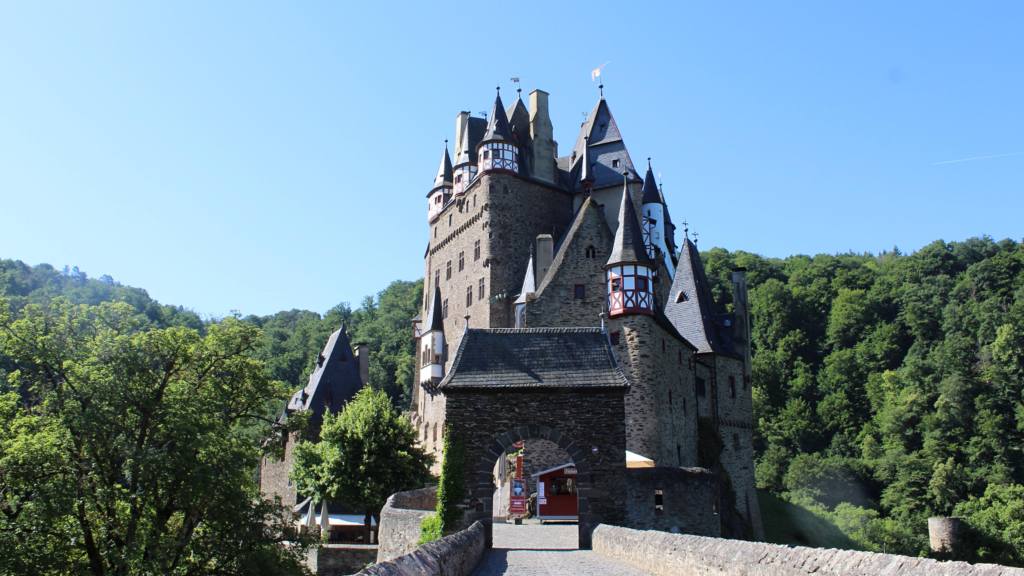
In just another 15 minutes, I was in Braubach, a sleepy little town on the eastern bank of the river. But I was not here for the village. Instead, I walked straight to the top of the hill that overlooks the town, rushing so as to catch the first possible tour. I was going to visit the Marksburg. (Some people say “Marksburg Castle,” but “burg” already means “castle.”)

Now, the Rhineland has been an important territory since Roman times. Simultaneously a geographic division (near the border with France), as well as a major artery of trade, the river is a key to political and economic dominance. As a result, it is densely packed with castles and fortifications, from those hoping to defend from invasion or extract tolls. Most of these castles have been destroyed in one war or another. The castles standing today are, most of them, reconstructions dating from the 19th century, when the Rhine became an epicenter of the Romantic movement.

But the Marksburg is one of only two castles which was never burned down or blown up (though it was severely damaged by the Americans in 1945—sorry). For that reason, it is one of the jewels of the river.

You can only visit the Marksburg on a tour, and most of these are in German. Yet anglophones need not fear: non-German speakers are given a little information card to read along as the tour guide explains what’s what. I optimistically thought that my German might be good enough to catch at least some of my guide’s explanation (which sounded very engaging), though I quickly had to admit that I was in over my head. Still, it was a fascinating visit.

We began by entering the main gate. Immediately I was given a sense of how difficult it would have been to actually conquer this castle, for we found ourselves in a kind of narrow stone passageway with a wooden platform above us. For any archers—or even for a boy with a heavy rock to throw—we would have been sitting ducks. On the wall were the coats of arms of all of the noble families who once controlled this castle. At the top there was a battery of cannons pointed out towards the Rhine. Looking out, I could see that any ships on the river below would be in much the same position as a soldier storming through the gate—proverbial fish in barrels.

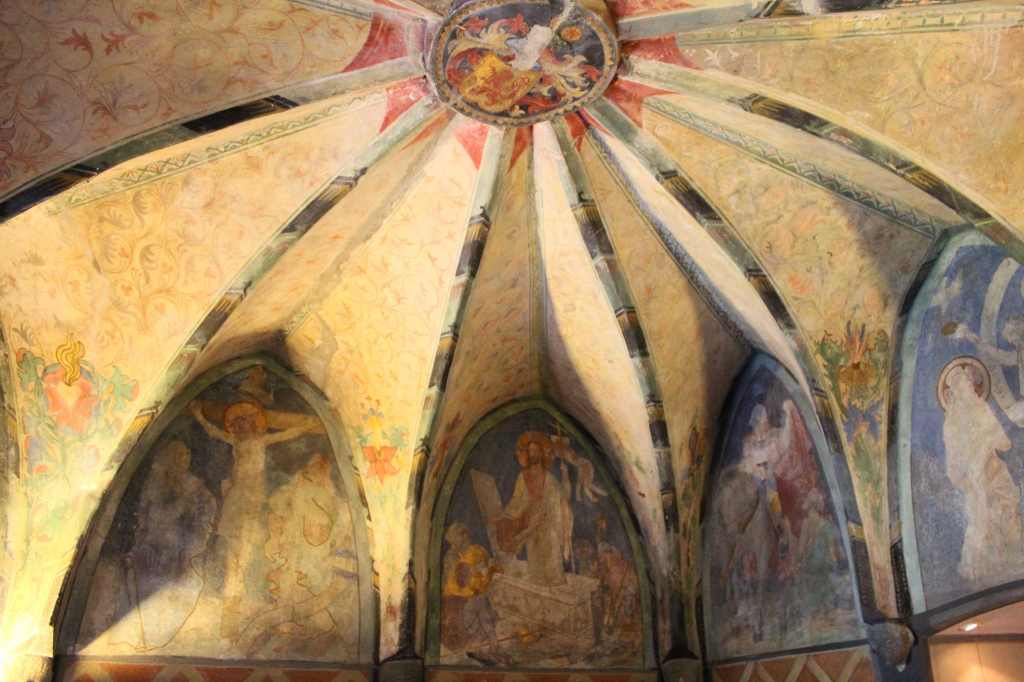
Now, because the castle fell into neglect before its acquisition by the German Castles Association, none of its original furnishings remain. Thus, the interior of the castle is more of a museum than a time-capsule. There is, for example, a room dedicated to the different types of arms and armor used by soldiers throughout history (a bit corny, to be honest), and a garden full of plants important to the medieval herbarium. I particularly liked the kitchen full of period utensils; it put me in the mood for a kingly feast (though I had to settle for currywurst in the castle’s café). But the most beautiful thing to see were the romanesque frescoes on the wall of the chapel.

The medieval kitchen
The chapel with Romanesque frescoes

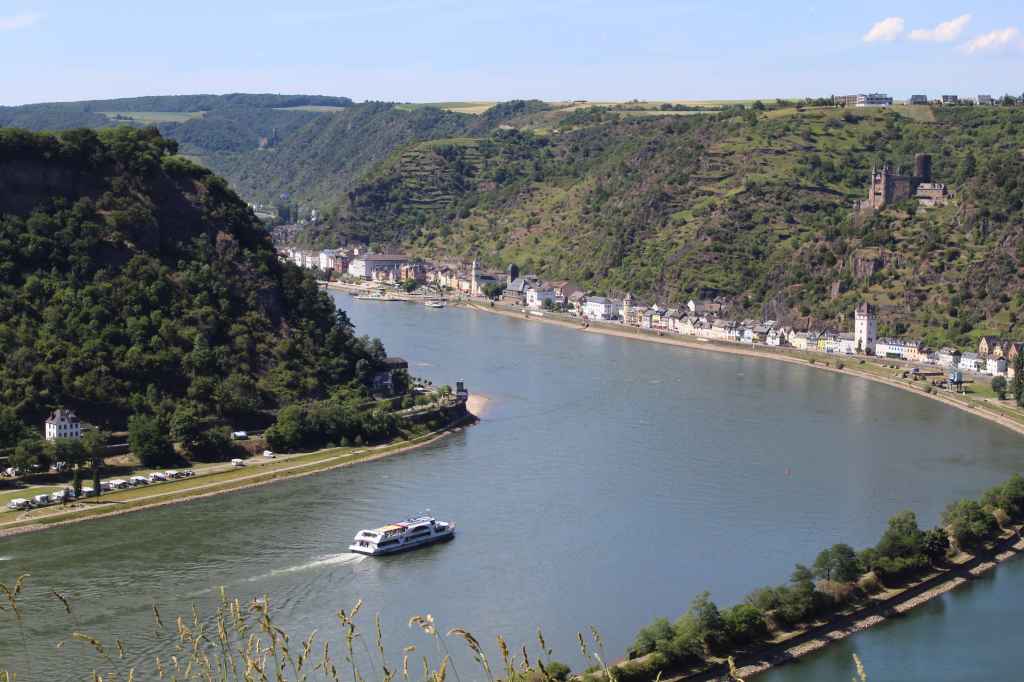
My next stop was a town bearing the attractive name of Sankt Goarshausen. This town is yet another fairly nondescript village on the Rhine. Its main claim to fame is being next to the Lorelei—a huge rocky cliff at a pronounced bend in the river. For centuries, this was a perilous point of navigation for water traffic on the Rhine, and so various legends have grown up to explain the numerous shipwrecks. The most famous of these involves a kind of blond siren who distracts sailors with her beauty. This legend was put into verse by the famed poet Heinrich Heine, whose poem has been set to music by several composers. Here are a few lines:

Die Luft ist kühl, und es dunkelt

Und ruhig fliesst der Rhein

Der Gipfel des Berges funkelt

Im Abendsonnenschein

Die schönste Jungfrau sitzet

Dort oben wunderbar

Ihr Goldenes Geschmied blitzet

Sie kämmt ihr goldenes Haar

In English this goes something like this:

The air is cool, and darkness comes

And quietly flows the Rhine

The mountain peaks are glistening

In the rays of the evening sun

There sits the beautiful maiden

Up there, wondrous

Her golden jewels are shining

She combs her golden hair

You get the idea. Well, beautiful maidens notwithstanding, the Lorelei is indeed a navigational hazard. As recently as 2011, a barge met its demise at this place. And as with seemingly all capsized boats, this one was carrying an environmental hazard—in this case, several thousand tons of sulphuric acid. Sorry, fish.

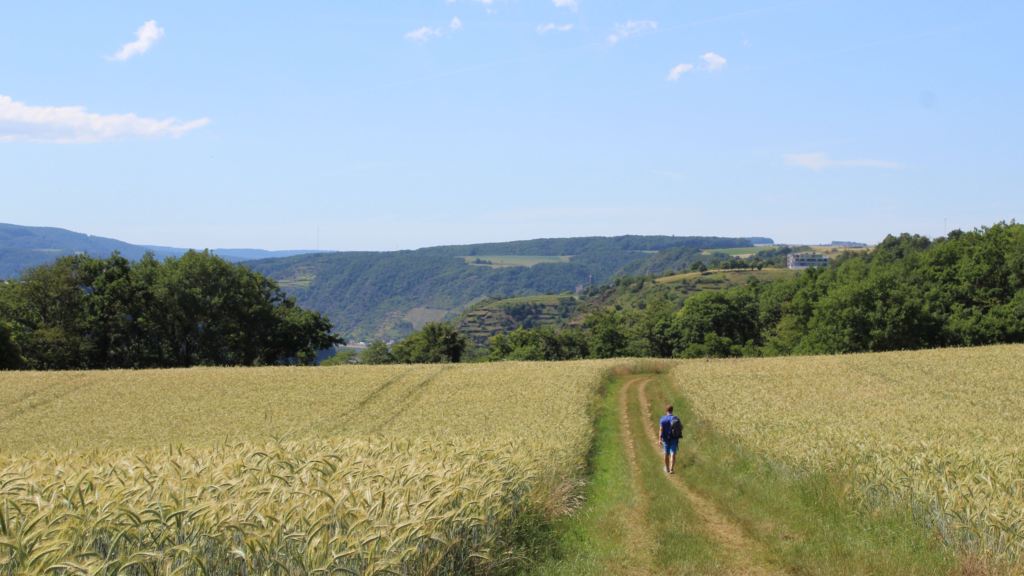
I was here because I wanted to climb up to the top. The path was short but steep, consisting of one staircase after another. On the way, I passed a sign that told me not to “desecrate this holy place,” as it was meant to “honor German heathens.” Duly warned, I arrived panting and sweaty at the top, where there was a small park with an excellent view of the river. When I caught my breath and got my fill of the scenery, I decided that it was time to return to Sankt Goarshausen. Instead of going straight back down the way I came up, I followed another path on my map that seemed less steep. Soon I found myself in the middle of a field of wheat. I kept going, and soon the Burg Katz (“Cat Castle”) came into view. This is more of a mansion attached to a derelict turret than a proper castle, and in any case is now privately owned and not open to visitors. But it does make for a good photo.

(A bit upriver is the humorously named Burg Maus, or “Mouse Castle,” which was built by the rivals of the Counts of Katzenellenbogen.)

At Sankt Goarshausen I had a beer to cool off and then caught the train back to Koblenz. That was it for my first day on the Rhine. I had been moving nonstop since the early morning, and I needed dinner and a shower. But I still had the next full day to explore.


Early the next morning, the train left me in Sankt Goar. This town is directly opposite where I was the day before, visiting the Lorelei. Indeed, Sankt Goar is the sibling town of Sankt Goarshausen, the two being named after Goar of Aquitaine, who served as bishop in Trier, over 100 km to the west. For many years now, a bridge has been proposed to connect these two estranged sisters (which would be the first bridge to cross the middle Rhine), but it has yet to be built. Instead, a ferry runs back and forth a few times a day.

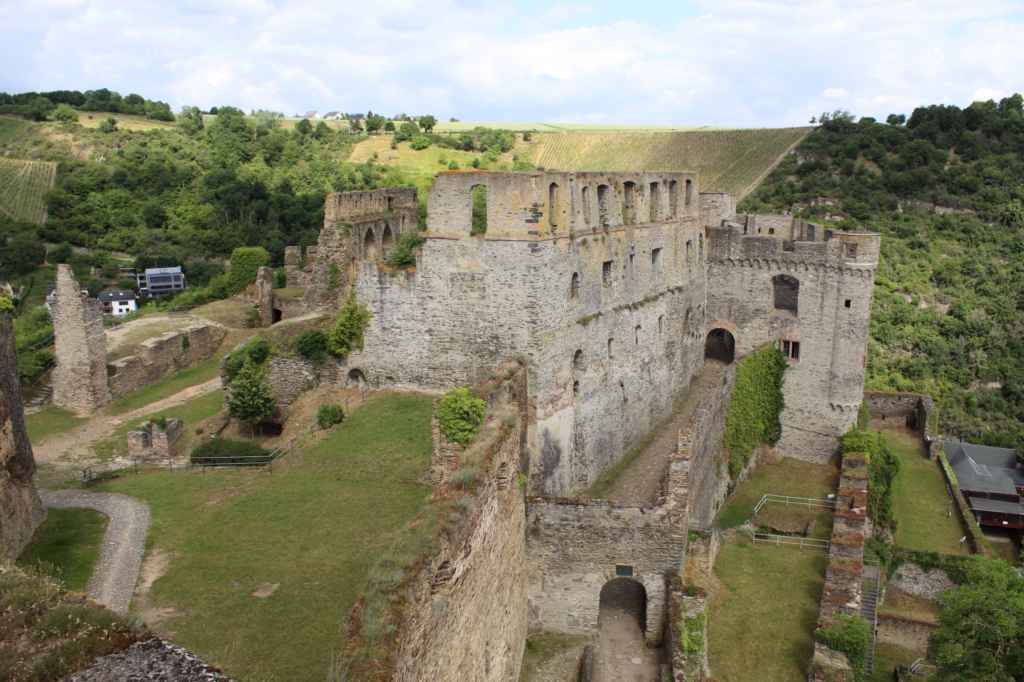
I was here to see yet another castle, one of the biggest on the Rhine: the Rheinfels. In its prime, the fortress must have been enormous and formidable. Much of the structure was built under the auspices of the awesome Count of Katzenelbogen (“Cat’s Elbows”), of Katz Castle, who wanted to use the two castles to extract tolls from river traffic.

Burg Rheinfels before it was destroyed.

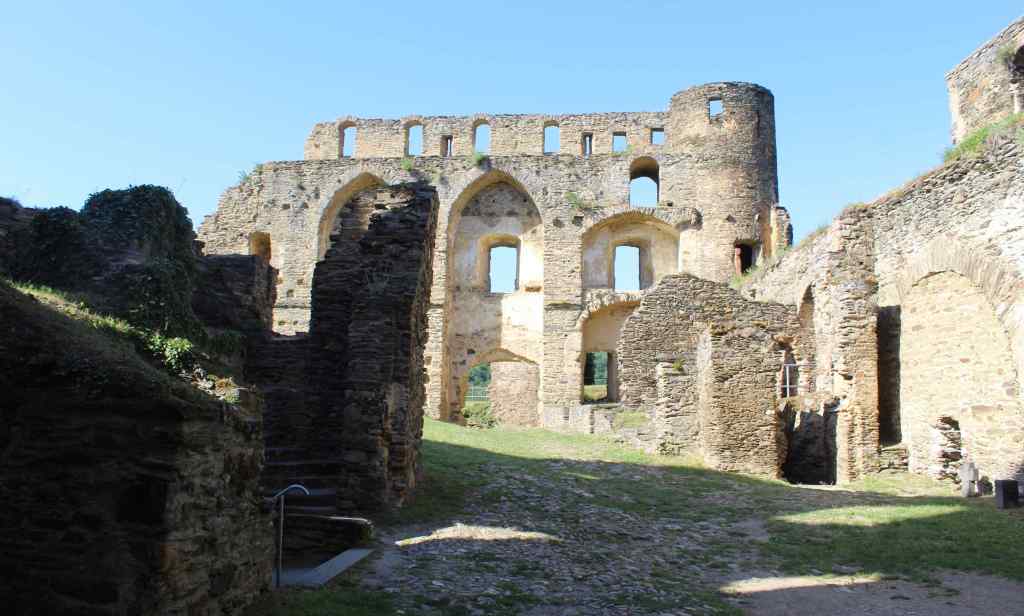
Unfortunately for us, during one of the many wars between the Germans and the French (this one during the French Revolution), invading troops decided to make an example of the iconic castle and ruined it (in technical terms, “slighting”). This was something of a scandal. Although the castle had, in previous conflicts, proven its ability to withstand attacks and sieges by far superior forces, the aging commander Philip Valentin von Resius, upon hearing that a huge French army was approaching, abandoned the castle in great haste. The keep was thus taken without a fight, even though it may very well have withstood the attack. As a result, the French walked right into the abandoned castle, and decided to demonstrate French might. Now only a fraction of the original building remains.

In my enthusiasm to take full advantage of my day on the Rhine, I arrived at the castle gates right as it was opening. I was the first and, for most of my visit, the only visitor in the enormous compound. If memory serves, I was given a little information card that had information about what each section of the castle used to be. But to be honest, I am not particularly interested in castle architecture nor in medieval warfare, and this was of scant interest to me. Instead, I savored the atmosphere of quiet ruin that hung about the place. I walked into one of the intact chambers, in the basement, and whistled—the echo ricocheting like a pinball off the walls. Then, after strolling through the ruins, I sat on a bench overlooking a valley behind the castle. It was a perfect summer day, and I felt that surreal sensation of being absolutely relaxed in a place which you have only ever seen in pictures.

My reverie was broken by a sound. The scream of an airplane engine caught my ear. And although I assumed it would naturally die down, the sound instead quickly increased into an overwhelming roar. For a moment, I panicked. Was a plane about to crash into the castle and incinerate me? 

Then the sound suddenly died away. Curious, I ran towards where it had come from, the river, but there was nothing to see. So I asked the man at the ticket booth, who told me that it was an American fighter jet, from a nearby military base. Sometimes they fly low over the valley in training flights. War is still close at hand in the Rhine Valley. (The town was occupied by the French again in World War I, and then taken by American troops in World War II.)

My castle quota reached for the day, I decided to have a little snack. My original idea was to walk into town and have a quick sandwich. Aside from the Rheinfels, there is very little to do or see in Sankt Goar. But its central street is attractive and charming. Though normally I don’t have a sweet tooth, a display of cakes and pastries caught my eye, and I decided to change my plans. Instead of a sandwich, I had a slice of Black Forest Cake (Schwarzwald Küchen). Very satisfying.

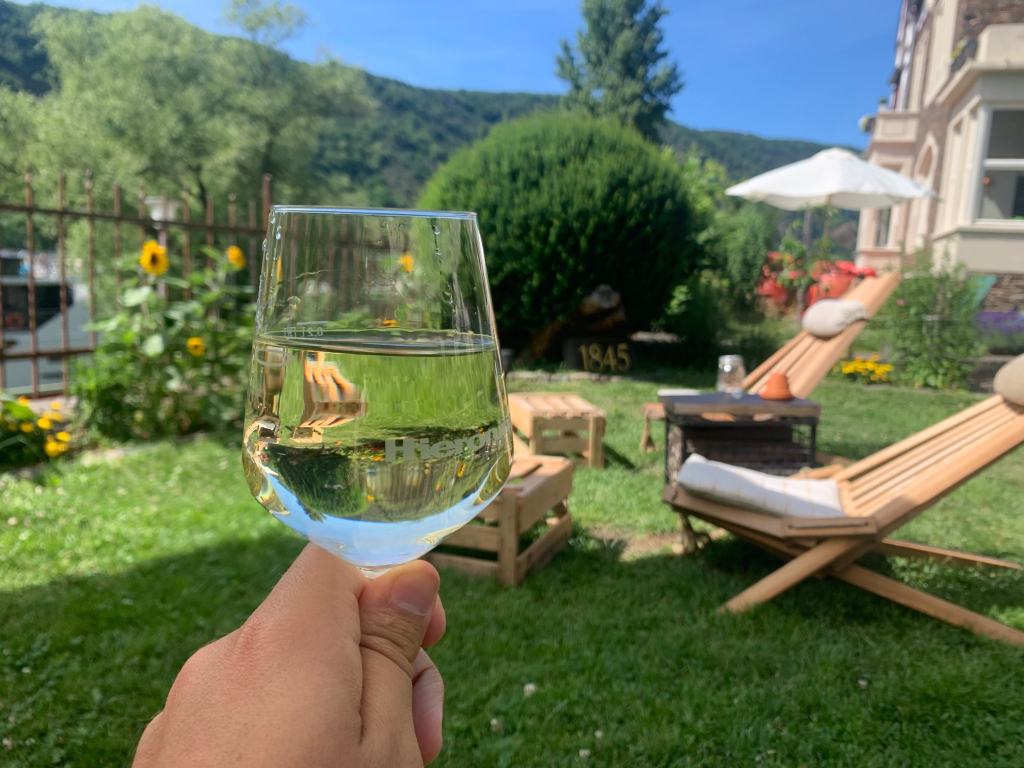
My stomach pleased, I walked over to the riverside, where I bought a ticket for the only operating ferry on this part of the Rhine: Köln-Düsseldorfer. I acquired my ticket and noted down the departure times. It was going to leave in just over an hour. This left me with enough time to visit the wine bar across the river from the Lorelei. It was a long walk and I had to rush; but as I knew from my trip to Vienna that Germanic white wine is delicious, I decided that it was worth it. I arrived sweaty and parched, which made the wine especially good but difficult to savor. I wished I had more time, but the ferry was approaching and I couldn’t risk missing my boat.

The ferry pulled into the harbor and I climbed up to the top floor, where a bunch of other sunburnt tourists were baking under the sun. The ride was slow and scenic, reminding me of the ferry I had taken the previous month in Lago di Como. Every little town seemed to have its own castle, and much of the remaining land was given over to vineyards. The most impressive sight was the ship-shaped Pfalzgrafenstein Castle, which has been built in the middle of the river. It used to work with the nearby Gutenfels castle to extract tolls from passing ships. Unlike so many other fortifications on this martial river, the Pfalzgrafenstein has never been seriously damaged. However, as it was only a military bastion and never the home of a nobleman, its interior is quite spartan. (You can take a tour from nearby Kaub, but I read that it wasn’t worth it.)

Pfalzgraben and Gutenfels

The boat deposited me in Bacharach, one of the most famous villages on the river. The town is full of delightful half-timbered houses—one of them goes all the way back to the 1300s century—giving it a kind of stereotypical German quaintness. Yet as soon as I got off the boat, I decided to walk up into the vineyards on the hill surrounding the river, in order to get a better vantage point. There, I climbed up one of the old watch-towers of the medieval town, the Postenturm, to get a wonderful view of the Rhine valley beyond. After getting my fill of the scenery, I walked up the main road to the Steeger Tor, a gate from the old medieval walls.

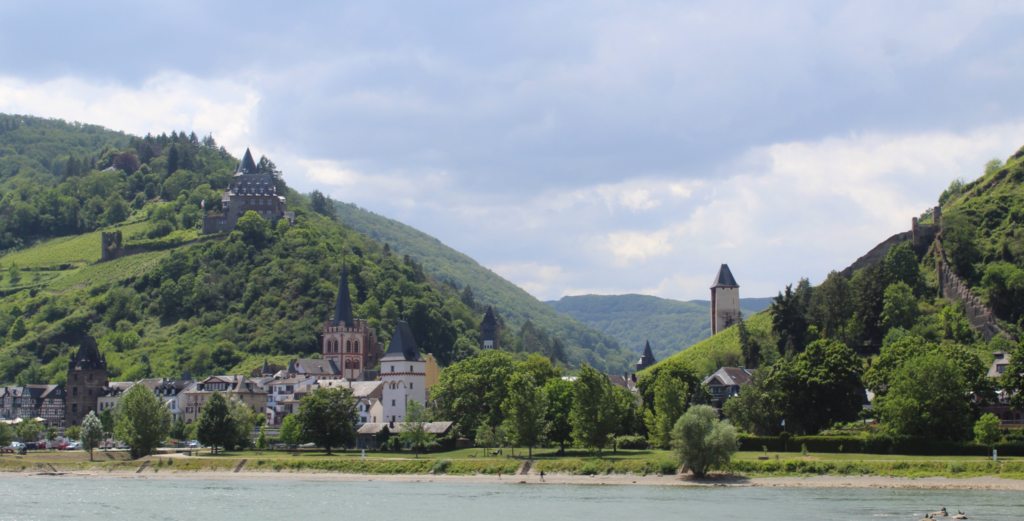
Bacharach from the water. On the left, on the hill, is the Stahleck. On the right is the Postenturm.

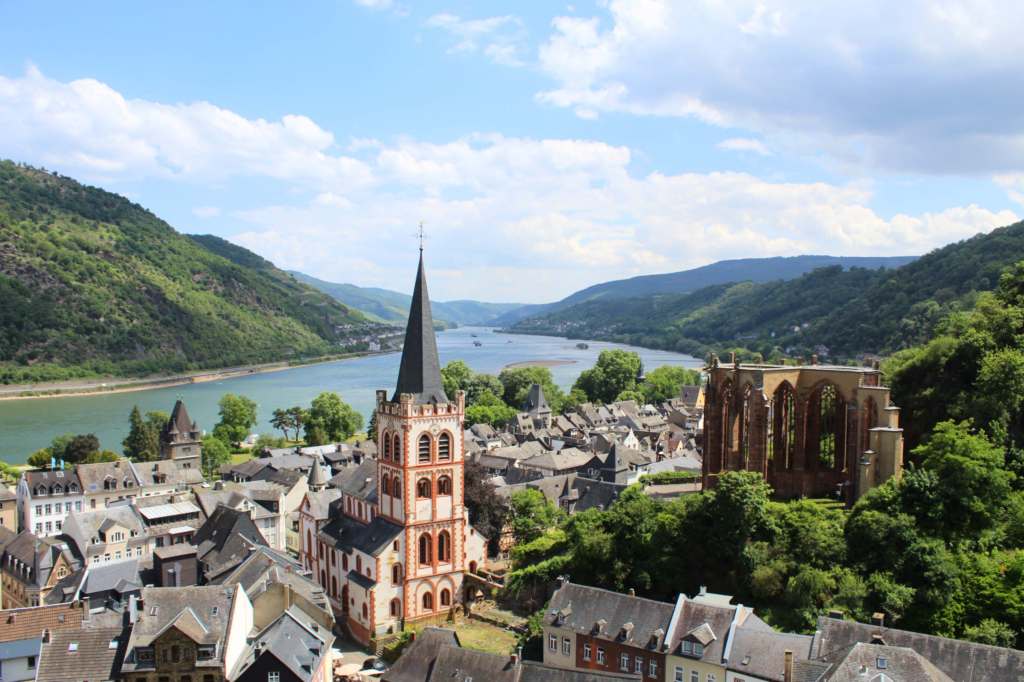
The town of Bacharach is crowned with yet another impressive castle, the Stahleck. I decided not to make the trek up to visit, however, as it is now used as a youth hostel. (In any case, like many of the castles on the Rhine, this one is a reconstruction of a previous castle destroyed in war.) But I did walk up to appreciate the Wernerkapelle. This is a beautiful gothic ruin on a hilltop—a perfect romantic combination of medieval mystery and desolation. Unfortunately, the story of this chapel is not so pleasant. It is named after a young boy who was murdered in the 13th century. The townspeople blamed the local Jewish population (with no evidence, of course), which led to a massacre of 40 people. The past can be very inconveniently ugly.

After getting my fill of the sights and views, I decided to kill the time remaining for my return ferry journey by sampling more of the local wine. The typical wines of the region are all white wines, crisp and fresh. Very refreshing. I lapsed into a kind of half-drunk, half-dehydrated reverie.

Finally it was time to return to Koblenz. Luckily for me, the return journey happened to be on the most famous boat on the Rhine, the RMS Goethe. The largest side-paddle steamer in the world, this boat began sailing back in 1913. After being hit by a bomb in the Second World War, it sat for some time on the bottom of the Rhine, until it was finally restored in the 1990s. Nowadays, it is floating nostalgia. I nabbed a seat on one of the side decks and enjoyed a final beer as we crawled up to Sankt Goar. It was the golden hour and the river was especially beautiful. I could see why so many countries and leaders have spent so many centuries fighting over it.

I had loved my time on the Rhine. In many ways, it reminded me of my home in the Hudson Valley—small towns nestled along a picturesque river. Even the verdant landscape was reminiscent of upstate New York. But of course, there are no castles where I’m from (or, at least, no real ones), and our wine is not nearly as good. At least we have better pizza.

The Rhinish Rivalry: Düsseldorf and Köln

The Rhinish Rivalry: Düsseldorf and Köln

Düsseldorf

Düsseldorf is not on many travel agendas. Indeed, it doesn’t even merit a mention in the copy of Rick Steves’s Germany travel guide that I had brought with me. For my part, I knew close to nothing about the place. And yet this was my destination.

As it happened, a friend of mine from Spain, Sai, had moved here (for work), and offered me a place to sleep on his sofa. Another coincidence: my German conversational partner, Karen—whom I had met in Scotland—lived quite closeby, and offered to show me around. So Düsseldorf it was.

Düsseldorf is named after the river Düssel, a tributary of the nearby Rhine, which flows through the city. (“Dorf” means town or village.) While the Rhine Valley is famous for its dramatic hills and castles, at this point the land is extremely flat and highly urbanized. Not for nothing does Steves call it the “unromantic Rhine.” With over 600,000 inhabitants, Düsseldorf is a medium-sized city, somewhat smaller than nearby Cologne (with which it has a fierce rivalry). Despite this, it is Düsseldorf, not Cologne, which is the capital of the region. 

Sai was busy at work, so it was Karen who showed me around the city. First, she took me to Königsalle, the widest boulevard in the country. It is so wide because a large landscaped canal runs through the center of it, with bridges covered in ornamental statues crossing the water. But Kö (as the locals call it) is mainly famous for its upscale shopping, with luxury store after luxury store. Each of these locales, as Karen pointed out, has a kind of bouncer out front, controlling access to the expensive goods within. It was a slightly sickening sight.

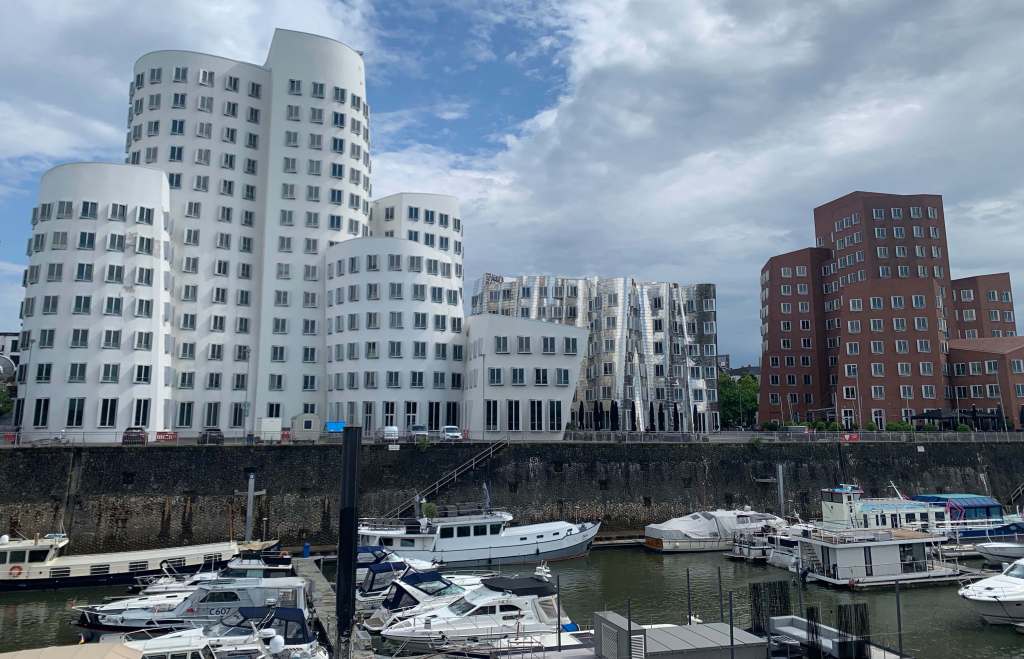
After that, Karen took me to the marina of the city, where a few dozen smaller, private boats are docked. There, we sat on a park bench and admired the Neuer Zollhof. These are a group of three buildings designed by Frank Gehry, which feature the characteristic twisting architecture familiar to anyone who has seen, say, the Dancing House in Prague or the Guggenheim Museum in Bilbao. Each one is made out of a different material—brick, plaster, and reflective stainless steel—but when I visited, the plaster was in poor shape.

This pretty much concluded my first tour of the main sights of Düsseldorf. From there, we walked along the river Rhine. It was a hot day, and I wondered why nobody was swimming in the water. But I quickly gathered that that would be a bad idea. For one, the current is surprisingly fast and strong, easily able to sweep you downstream. I also doubt that the water is particularly clean, considering the constant traffic of barges passing up and downstream. Even now, the Rhine is a major artery of commerce. I enjoyed watching them go by, wondering at their cargo. The captains and crew must live a good chunk of their lives on these ships, which sometimes had the appearance of mobile homes—with their cars parked on the back and, in some cases, their kids playing on a swing set as the boat drifted downstream.

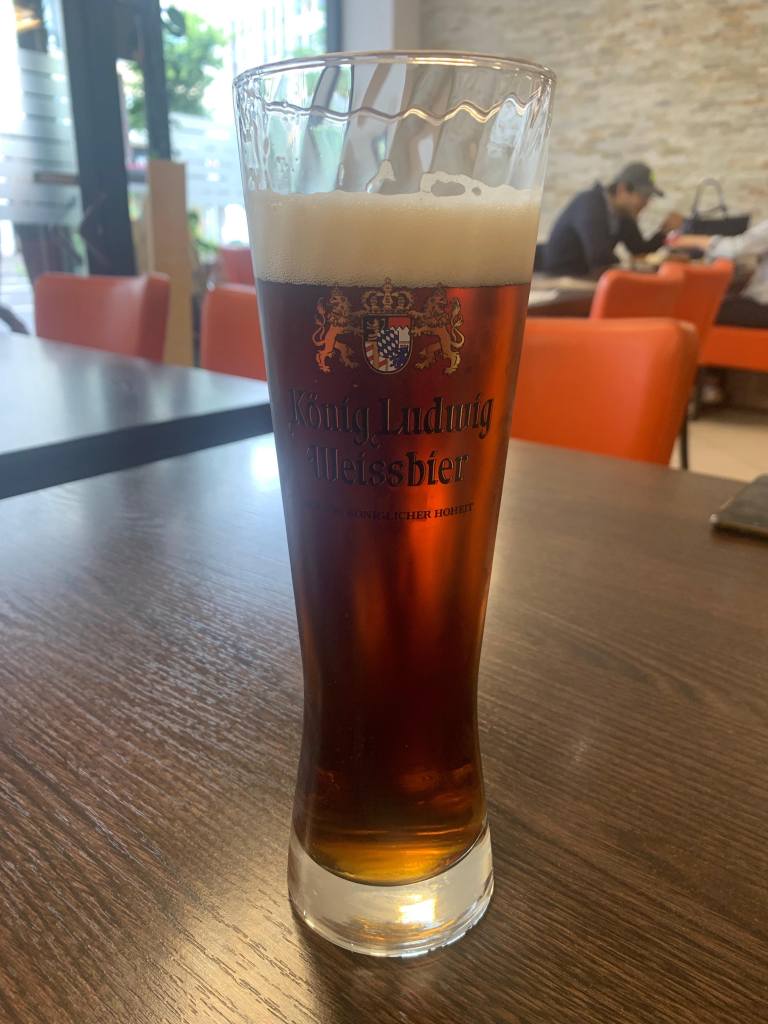
In Germany, drinking in public is perfectly legal (a wonderful state of affairs!). Thus, we bought beers at a stand and sat down on some beach chairs facing the river. This was my first taste of Altbier, the local beer of Düsseldorf. It is sort of rust colored and has a strong, hoppy taste. (It is called “old beer” because it is fermented with yeast that floats on top, which is older than the bottom-fermenting yeast used to make lagers.) Despite being brewed like ales, however, its taste is quite distinct, and significantly lighter. As I discovered later, Altbier—like Kölsch, its rival from Cologne—is typically served in small glasses, which are circulated by the waiter on a tray. When you take a glass, the server puts a mark on your coaster, thus keeping a tally of your drinks.

Altbier

We finished up the day by going to dinner in a Japanese restaurant. It was excellent. Düsseldorf, you see, has one of the largest Japanese populations in Europe. Indeed, Düsseldorf is a highly diverse city in general, with a substantial Chinese population and a great many immigrants from within Europe. Shortly after I arrived, for example, Sai took me to one of the Asian supermarkets near his apartment, and I was astounded at the selection of available foods and ingredients. A few days later, Sai invited me to a picnic in the park with some friends of his, most of whom were of Chinese extraction. We had a veritable feast of non-German foods.

Sai has a demanding job, but he found the time to show me around the city a bit. We took a walk towards the Kö-Bogen, a large and flashy complex of office buildings near the Königsalle. Nearby is the Hofgarten, Düsseldorf’s central park. It was a beautiful day and the park was full of strolling families and youngsters lounging on park benches. Soon, we came upon an impressive neoclassical statue, consisting of a perfectly muscular young man who is dying on his bed, accompanied by a sympathetic lion. This is a war memorial, but not one dedicated to either World War. Instead, this commemorates the dead of the German wars of independence as well as the Franco-Prussian War of 1870. Since that time, war memorials have become less beautiful and more anguished. 

My friend Sai having fun in Düsseldorf

As it happened, the day of the picnic with Sai was also some kind of museum day. This meant that many of the city’s museums were free to visit and open late. Many of these institutions are probably well worth a visit, but I had other plans. I wanted to go out to the city’s Altstadt (Old Town) to enjoy some of the famous nightlife.

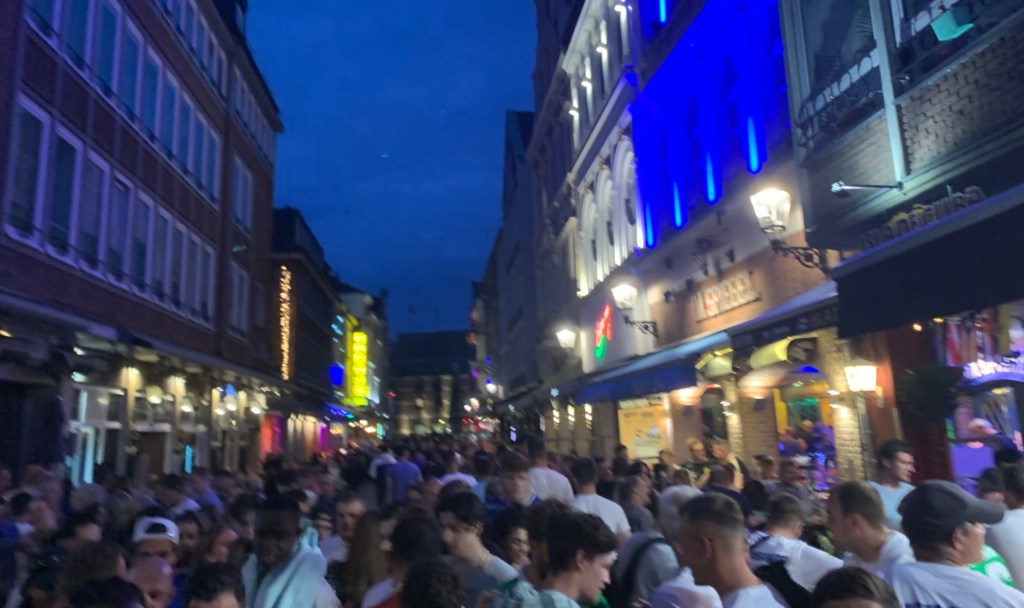
A blury photo of the festivities

This proved to be a mistake. Sai and I arrived shortly after dinner, and the entire neighborhood was completely overrun. There were bachelor and bachelorette parties, and groups of university students on the prowl. Every single one of the seemingly innumerable bars was packed. I was astounded that such a seemingly sleepy town could turn into what struck me as a giant frat party. During the day, Düsseldorf seemed so perfectly bourgeois; but at night, it was overtaken by a kind of adolescent, macho drunkenness. Sai and I had a few of the Altbiers at a bar, but quickly retreated from the noise and chaos. Instead, we got some beers at a corner store and walked along the Rhine. Even here, it was scarcely quieter. For me, being stuck in the middle of so many drunk young people made me distinctly uncomfortable, and it was a relief when we called it a night early.

Such was my experience of Düsseldorf, a city that perhaps deserved more of my time and attention. My brief impression was rather confused. With its high-end shopping, large immigrant community, and raucous night-life, the city seemed to have a split personality. Next, it was time to visit its rival.


Köln

Cologne is in every way a bigger city than Düsseldorf. With over a million inhabitants, it feels properly urban. Whereas the Düsseldorf train station makes very little impression, for example, Köln’s enormous Hauptbahnhof immediately conveys to you its size and importance.

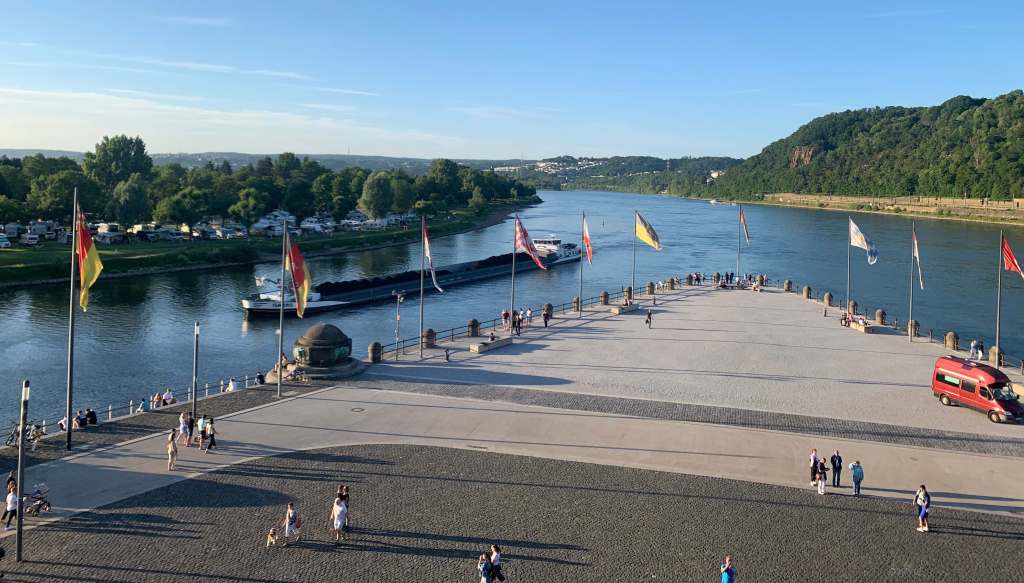
I visited on a tight schedule. This was several days after my visit to Düsseldorf. That morning, I had left my Airbnb in Koblenz (in the Rhine valley, to be related in a future post) in order to return to Düsseldorf for my evening flight back to Madrid. Cologne was one of the major stops on the commuter train from Koblenz, so it was easy to get off and see this famous German city as a final sightseeing stop.

Indeed, Cologne seems custom-made for day trippers. The train station is full of automated luggage storage lockers, which bring your baggage to the basement via an elevator. It was easy to use, cheap, and worked perfectly.

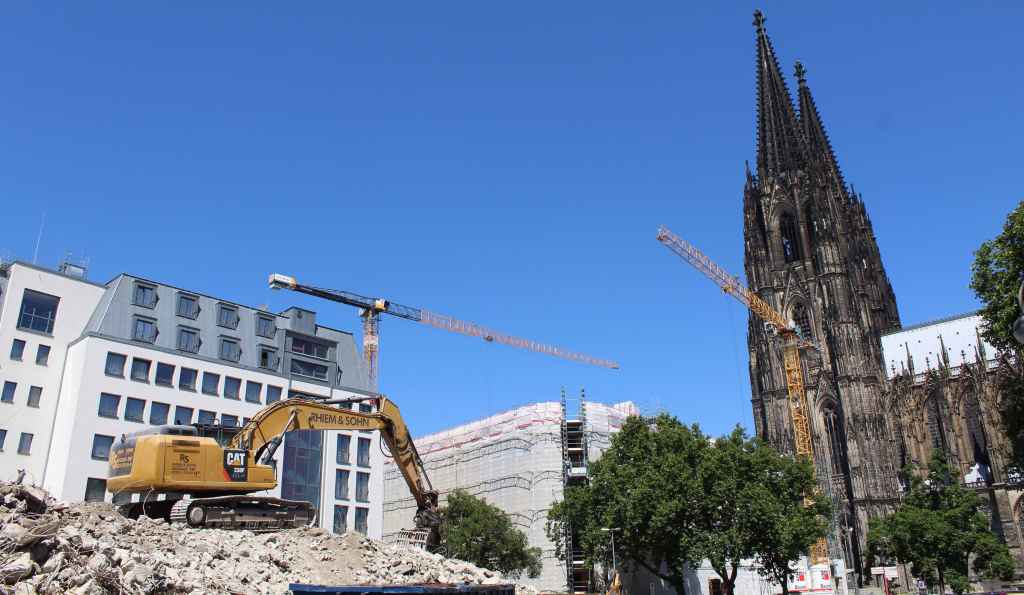
Right next to the station is Cologne’s principal tourist attraction: the Kölner Dom, the city’s magnificent gothic cathedral. Like many European churches, it took several eras to complete. It was begun in the 1200s, in a pure gothic style; but construction was stopped in the 16th century, the Renaissance, with still half of the church unbuilt. For centuries, the half-built cathedral stood in the city, with the medieval wooden crane still mounted atop one of the towers. Finally, in the 1800s, when a romantic passion for the medieval past was sweeping over Europe, it was decided to finish the building according to its original plans. Its completion in 1880—632 years after it was begun—became a national celebration for the relatively new nation of Germany (unified on January 1, 1871).

An unusual vantage point on the cathedral

Since I had recently visited Italy, it was natural to compare the Kölner Dom to that other massive gothic church which took 600 years to finish: the Duomo of Milan. For my part, the German church is the clear winner. Whereas the Duomo is a confused mess of spikes and statues, the Cologne Cathedral has a unified and coherent aesthetic. Its first and last impression is of overwhelming verticality, as if the church is a kind of spiritual rocket about to take off towards heaven. Indeed, even today Cologne Cathedral is among the tallest church buildings in the world, stretching up 157 meters (or over 500 feet). Even its bell is big. The enormous Petersglocke (affectionately called “Fat Peter”) is the second-largest swinging bell in the world, weighing one ton more than the massive Pummerin in Vienna.

Like so many churches and monuments in Europe, the Cologne Cathedral was badly damaged during the Second World War. On a wall near the cathedral, you can see photos of the destruction. The entire city of Cologne was turned into rubble from Allied bombing raids, but the towers of the cathedral remained standing. In the final battle for the city, a German Panzer tank fought a rearguard battle against advancing Allied armor, disabling two Sherman tanks in the process. It was finally destroyed by one of the new American Pershing tanks—an event captured on video by an attached American cameraman.

The still-standing cathedral amid the ruined city and the collapsed bridge.

Right across from the cathedral is (or was, it seems to have been moved) the Roman-Germanic Museum. Cologne, you see, was originally a provincial outpost of the Roman Empire. Indeed, the name of the city comes from the Latin colonia. As a result, the area is abounding in Roman ruins, many of which are collected in this museum. Right nearby is the Ludwig Museum, the city’s premier institution of modern art.

But with my limited time, I decided to go slightly further off and visited the Wallrat-Richartz Museum. Its clunky name notwithstanding, this is a fantastic painting gallery, with a collection that spans from the gothic to the early 20th century. The medieval section is likely the strongest, as the museum has many excellent examples of gothic paintings, some of the best I have ever seen. But with Rembrandt, Monet, and Van Gogh in attendance, there is no lack of quality in the other departments.

Right across the street is the Farina Fragrance Museum. It was here that the Italian Giovanni Maria Farina (whose name is often Germanized to Johann) produced his famous eau de cologne (“water of Cologne”); and they are still in business to this day. (Curiously, although in English cologne is normally marketed for men, in Spanish “colonia” does not have such gendered connotations.)

From there, I went back in the direction of the cathedral. From there, I walked across the Heinrich-Böll Platz, where I noticed a strange sign in French. Apparently, the city’s concert hall was constructed under this square. But it was not well-conceived, for the sounds of people walking could be clearly heard in the Philharmonie. Thus, every time there is a performance, the plaza must be closed to foot traffic. Lucky for me, there was no symphony going on, and I could cross without issue.

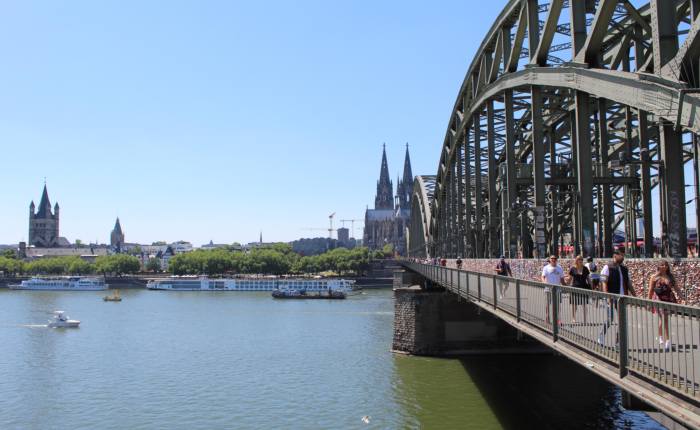
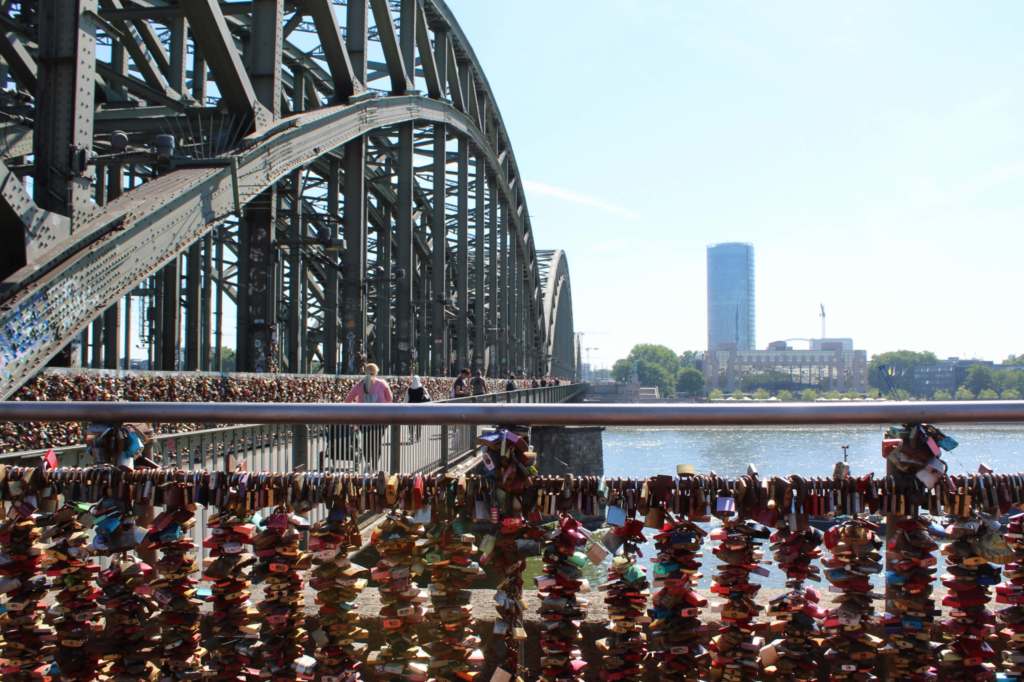
I climbed up some stairs, onto the Hohenzollern Bridge. This is the busiest train bridge in Germany, constantly rumbling with traffic. It is also a landmark for lovebirds, who leave locks on the bridge’s railing. The bridge is named after Germany’s erstwhile royal family, and statues of the old kings guard the four corners of the bridge.

Across the bridge is one of the tallest buildings in the city (though still considerably shorter than the cathedral’s towers), the Kölntriangle. Situated on a little hill, this building is known for its viewing platform on the top floor. I paid and took the elevator to the top, where there is a 360-degree view of the city. Frankly, Cologne is not the most beautiful city to see from the air, but you do get a classic photo of the cathedral next to the bridge.

Finally, it was time to have lunch. My roommate at the time had a German boyfriend who was from Cologne, and he kindly sent me a long list of things to see and do. Unfortunately, I hardly had time to scratch the surface, but I did follow his advice as to where to have a good German meal. Früh am Dom is a traditional beer hall right near the Cathedral. Outside the place was bustling with activity and I was afraid I wouldn’t be seated; but as soon as I walked in, I saw that the beautifully furnished space was half empty.

To eat, I ordered Himmel und Ääd (the Rhinish dialect for “heaven and earth”), a formidable dish consisting of blood sausages over mashed potato and apple sauce. It was delicious—especially, when washed down with the city’s typical beer, Kölsch. Compared to Düsseldorf’s Altbier, Kölsch is much lighter in color and flavor. Though mild, I found it to be delicious and extremely refreshing. As in Altbier, the Kölsch was served in little glasses, and the drinks marked on your coaster. I believe I had three before the end of my meal.

Stuffed, I now had just a bit of time to kill before my train to the airport. To enjoy Germany’s lax laws, I got a Kölsch from a corner store, walked to the park along the Rhine, and drank it slowly in the sunlight. It had been a wonderful trip to Germany.

Epilogue: Travel Troubles

But my voyage was not to have such a tranquil end. For one, the train was absolutely packed. I quickly gave up on finding a seat and resigned myself to standing with my heavy backpack near the doors, as the crowd surged in and out. We passed stop after stop, with the train only growing more and more crowded. After a little more than an hour, the train was full almost to bursting, and I was very eager to get off.

Yet that was not to be. On the tracks between Düsseldorf and its airport, the train came to a halt. Then, a crackling and muffled voice came over the loudspeakers, and made a brief announcement. My German was good enough to get the basic message. My heart sank: the train was not going to stop at the airport, but would bypass the stop and go to the next town over, Duisburg. Full of anxiety now, I got off and looked for the next train back to the airport. It was supposed to arrive in just 10 minutes. But after more than a week in Germany, I knew that this was unlikely. (The trains in Germany are famously unreliable.)

As predicted, the train was delayed. Indeed, it was so late that it had not arrived by the time the next train to the airport was supposed to come. That one was delayed, too. Then this happened again with the next train, so I was waiting on three. I began to grow very panicked, since now I couldn’t tell which train would arrive first or what track it would be on. I was so frantic that I jumped on the first train appearing to head in the right direction, without even being quite sure what train it was.

I had chosen well, and after a delay of about 40 minutes I was at the airport. But my travel stress was not at an end. As I walked into the main lobby, I noticed two enormous lines stretching through the airport. After some reconnaissance, it dawned on me that these were the lines for security. I had given myself a large margin to arrive for my flight, so even with the previous delay I still had almost two hours. But as the line edged forward, I realized that I might be cutting it close.

An hour passed, and we were finally in view of the metal detectors and luggage scanners. Then, behind me, a frazzled woman started making her way through the line, explaining to each person that she was going to miss her flight if they didn’t let her through. Finally, she made it to me, and I let her pass me by (I still had about 45 minutes). But the main in front of me adamantly refused.

“Please, sir, I’m going to miss my flight,” she said, holding her hands in a gesture of supplication.

“That’s not my problem!” he shouted back.

“Please, it doesn’t affect you.”

“You think you’re the only one who’s going to miss their flight?” he snapped. “I’m going to miss my flight, too!”

The argument went on for about ten minutes, with the woman pleading and the man growing more enraged, until finally, exasperated, he let her pass by. (Later, I heard him talking to a colleague on the phone, reporting that he did indeed miss his flight. I don’t know if the woman made it.)
I made it to my gate with just twenty minutes to spare, feeling immensely relieved. I’d had a wonderful time in Germany. But I must say, the country’s reputation for efficiency is rather unmerited.

Aachen: City of Charlemagne

Aachen: City of Charlemagne

It was the summer of 2022 and Europe was in the midst of an energy crisis. As a response to the rise in fuel prices, many governments attempted to make public transportation cheaper. Spain, for example, reduced the price of monthly metro cards by half and offered free train passes for commuters. Germany, meanwhile, offered a nine euro monthly pass that was valid for the bus, metro, and commuter trains for the entire country. It was an incredible deal, and I had arrived in Germany right in time to take advantage of it.

Now, this may come as a surprise if you believe in the German stereotype of efficiency and timeliness, but the trains in Germany are a mess, with constant cancellations and delays. (This is partly because, unlike in Spain or France, the high speed trains in Germany use the same tracks as the local trains.) The new 9-euro pass had only added to the chaos, since the added passengers put additional pressure on the already overburdened system. 

So the train ride was not exactly quick. But I was in a good mood, nevertheless. You see, Aachen had been on my list for years, ever since I watched Kenneth Clark’s magnificent documentary Civilisation. The first episode of that series begins with the so-called Dark Ages, and culminates in the rise of Charlemagne—an event which, for Clark, signifies the rebirth of European civilization from the brink of destruction. Though many historians would, I think, dispute this dramatic conclusion, it cannot be denied that Charlemagne is a figure of paramount importance in the history of Europe. And if you want to learn about Charlemagne, Aachen is the place to be.

But my arrival was something of an anticlimax. As it happened, my train pulled into the Aachen Hauptbahnhof at almost the same moment that several appointments were made available on the Spanish government website. As I was in desperate need of an appointment (in order to get a document that would allow me to travel back to the United States while my visa was being renewed), I spent a panicked 15 minutes navigating the poorly designed and unreliable website in order to secure myself a spot. After so many years in Spain, I still feel acute and almost crippling anxiety when I have to do anything regarding my visa. My hands literally shook as I confirmed the appointment. When I realized I had been successful, relief washed over me.

Now, I could explore the town with no distractions. My route took me to one of the two surviving medieval gates of the city, the Marschiertor. (On the other side of town is the even more impressive Ponttor.) Nowadays, this huge gate stands alone, as Aachen is happily safe from foreign invaders—for the foreseeable future, at least.

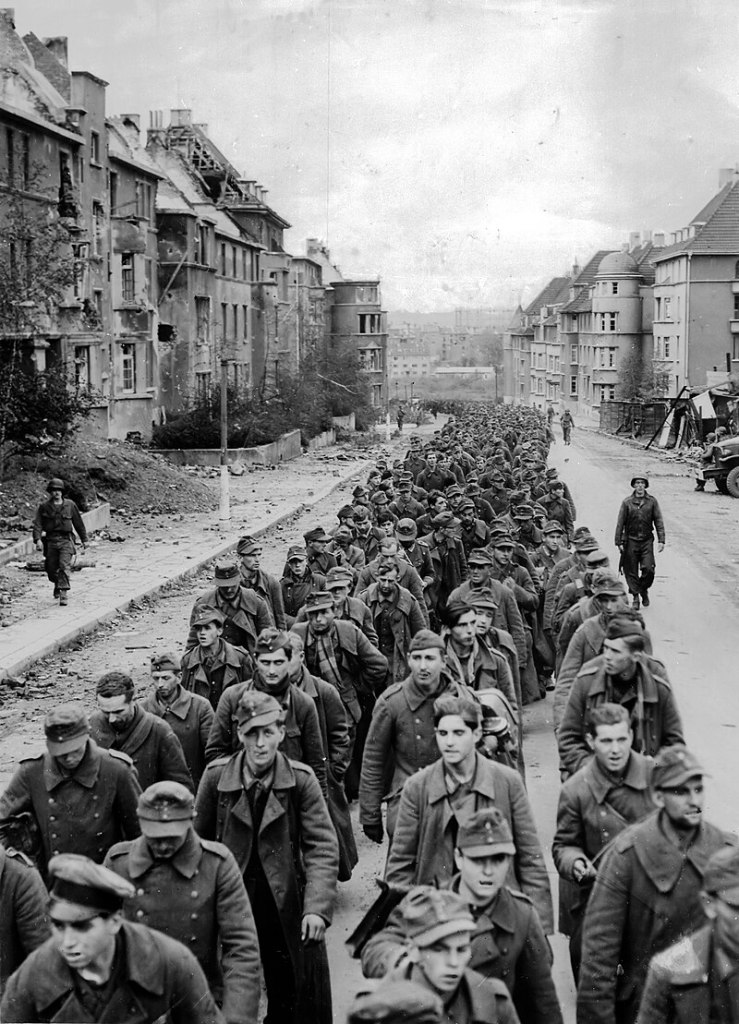
Speaking of invasions, Aachen has been under the control of France on at least two occasions. First, it was ceded to France for about 15 years after Napoleon defeated the Holy Roman Empire. Then, after World War I, it was controlled by the allies until 1930. Germany lost control of the city at least once more after that, to American troops, who virtually leveled the place in the process. It was the first German city to fall to the Allies during the Second World War.

German prisoners of war marching through the ruins of Aachen.

As you can see from these snapshots of its long and somewhat turbulent history, Aachen is not the sleepy town that is status as a spa city would have you believe (its hot springs have been appreciated since Roman times). Partially this is due to its history as a capital of the Holy Roman Empire (of that, more below). But this is also because Aachen is near the borders of Belgium and the Netherlands, making it simultaneously the door to Germany (in the Second World War) and, via Belgium, the door to France (in the First). 

All this has resulted in a multitude of names for this place. In German it is, of course, Aachen, while in French it is Aix-la-Chapelle. Meanwhile, in Italian, Portuguese, and Spanish, the city is called some variation of Aquisgrán. This is an awful lot of historical and linguistic weight for one town of a quarter of a million souls to bear. But, on that sunny summer day, none of the residents seemed to notice or mind.

Aachen Town Hall

My first stop was the Aachen Town Hall. This is a venerable old building that, like Aachen itself, has suffered many reversals of fortune—burned down, left to crumble, burned down again, and then finally bombed. As it stands today, it is an imposing neo-gothic structure that looks more like the abode of a nefarious count than a civic-minded mayor. But the flocks of school children on field trips, and the wedding party out front, showed that—appearances to the contrary—this is indeed a beloved part of the town. For a modest price, you can even visit the interior of the Rathaus. If for nothing else, this is worth it to see the extremely well-made replicas of the Imperial Regalia of the Holy Roman Empire. (The originals are now in Vienna.) This includes the famous Imperial Crown, which is so encrusted with jewels that it looks decidedly uncomfortable. 

The Imperial Crown
St. Stephen’s Purse

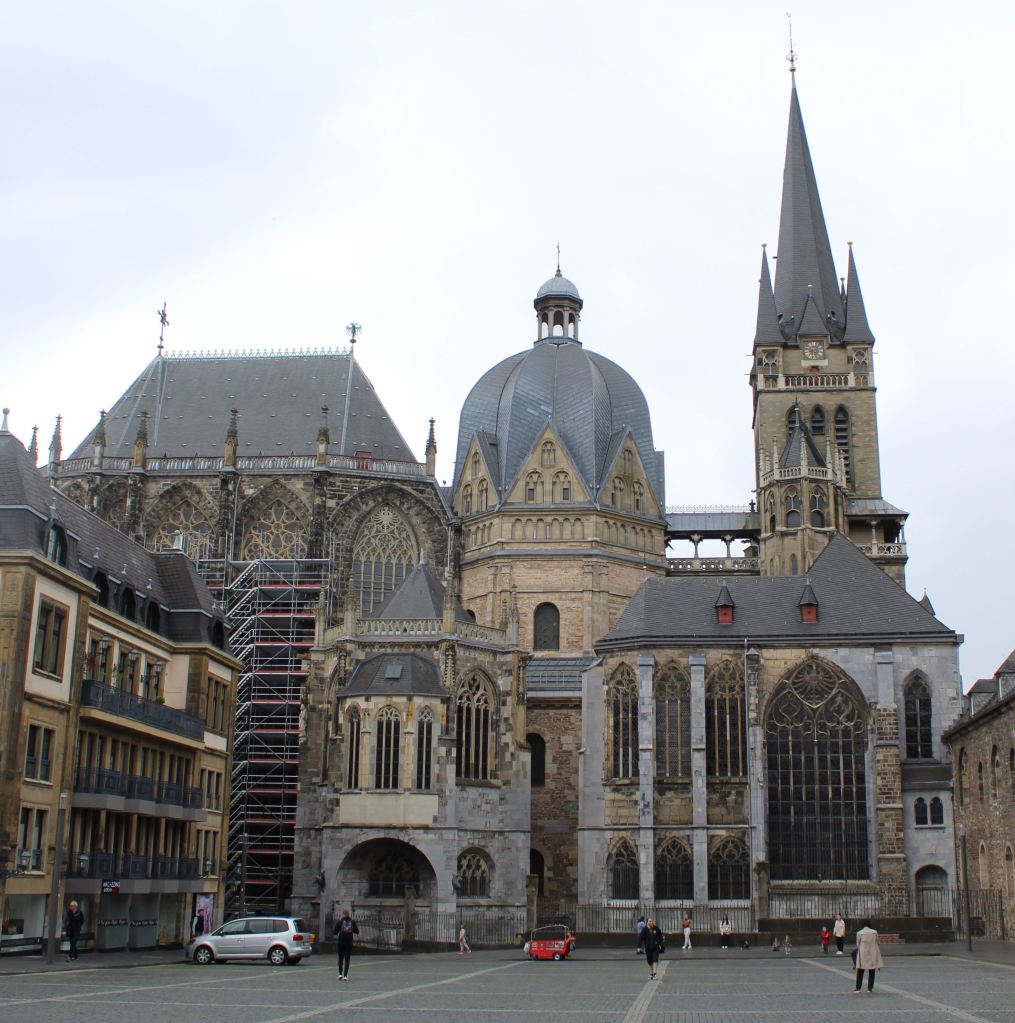
My next destination was the Aachen Cathedral. This is by far the most famous sight in the city—the church built by Charlemagne himself, where 31 kings and 12 queens were crowned, one of the first places to be listed as a UNESCO World Heritage site. I walked in and was immediately awe-struck. But my amazement turned to confusion when I failed to find the legendary Throne of Charlemagne. I asked one of the tired-looking guards, in the best German I could muster, “Wo ist der Thron des Karl der Grosse?” He responded quickly, repeating the word “Führing” several times, which my dictionary told me meant “guided tour.”

With this new information, I left the cathedral and found the neighboring office, where tickets can be bought for the guided tour. Once there, I noticed an option to buy a combination ticket for the tour and the cathedral treasury—which worked out quite well for me, as it gave me something to do while I waited for the tour to begin.

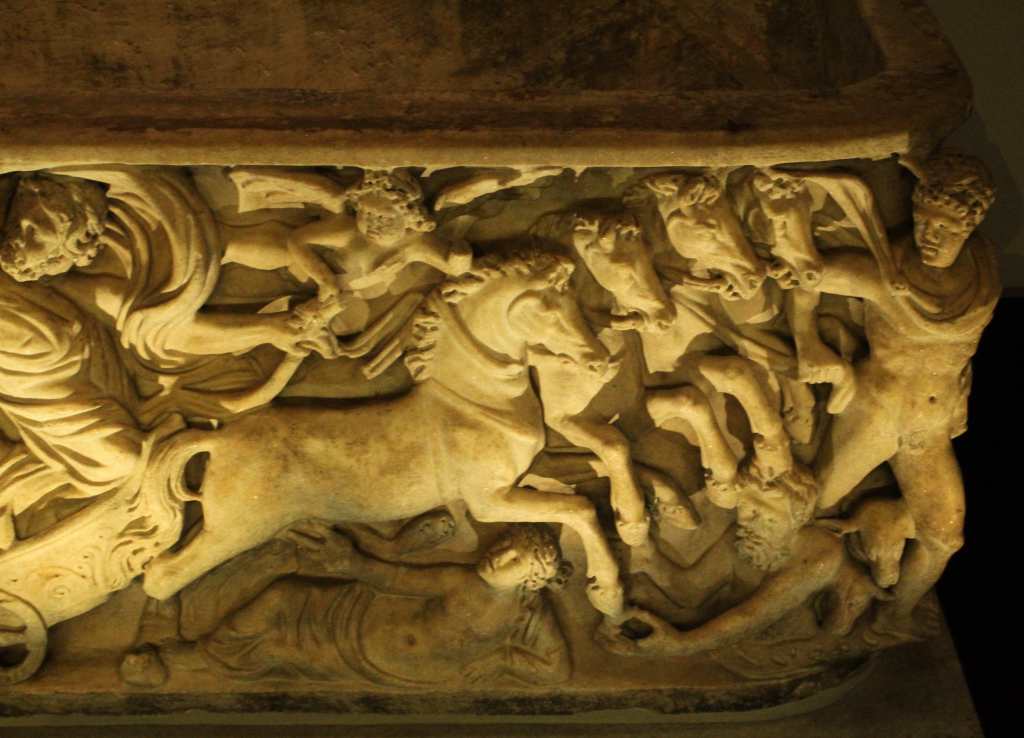
Now, I have been in many cathedral treasuries by now, and most of the time I find them rather uninspiring—usually consisting of gold and silver reliquaries of various shapes and designs. But the artwork on display here was exquisite and unique. There is, for example, the Proserpina sarcophagus. Made of marble and carved in ancient Rome, it was brought here as a symbol of imperial rule by Charlemagne, who was quite possibly buried in it. Also (potentially) belonging to Charlemagne is a hunting horn and knife. But two works of the goldsmith stood out to me as the jewels of the collection.

A detail of the Proserpina Sarcophagus

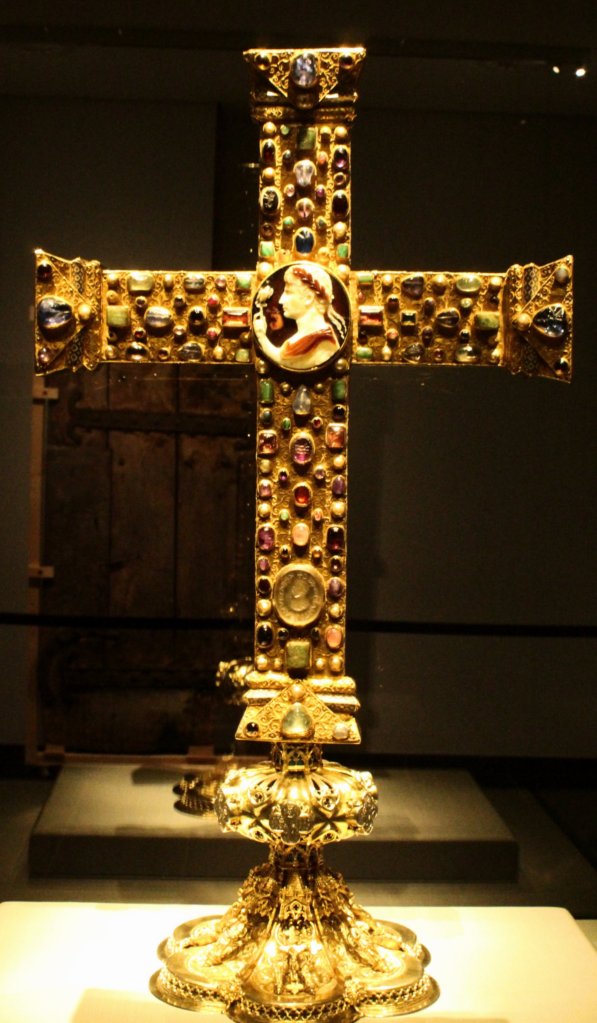
One is the Cross of Lothair, made around the year 1000. On one side the gold cross is completely covered in jewels (much like the imperial crown). Strangely, in the very center of the cross is a cameo of Augustus Caesar. Now, it is possible that this pagan emperor was included to symbolize the connection between the ancient empire and the medieval so-called Holy Roman Empire. But it is just as possible that they simply did not know who it represented and thought it was a holy figure. In any case, the reverse side is certainly pious. Delicately engraved into the gold is a portrayal of the crucifixion. To modern eyes, it appears rather standard in design, if well-executed. But in 1000 the image of Christ suffering on the cross still wasn’t paramount in Christian decoration (notice the many depictions of Christ of the Last Judgments in medieval churches). This crucifix, then, is not only beautiful but artistically daring.

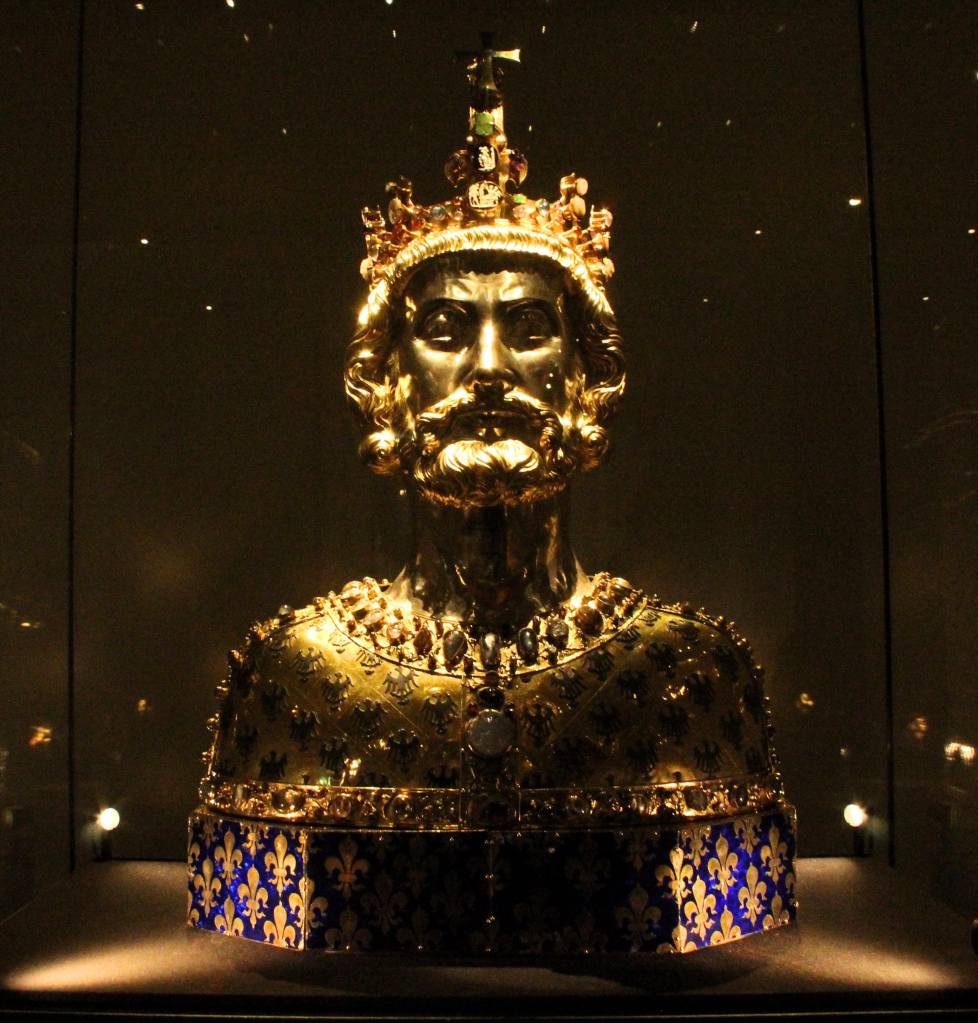
The other is the bust of Charlemagne, a reliquary containing a part of the king’s skull. Roughly life-sized, the bust was made hundreds of years after Charlemagne’s death, and so probably bears little resemblance to the actual king. But this portrait, however idealized, is shockingly lifelike nevertheless. The anonymous craftsmen who made it were obviously masters of their arts. The bust works on three levels, as a work of art, a religious object, and a symbol of imperial power. For example, the king’s tunic is covered with the imperial eagle and he wears a crown covered with jewels and, again, ancient Roman cameos (signifying the inheritance of the Roman Empire). It is a marvelous statue—delicate and beautiful, while authentically royal and imposing.

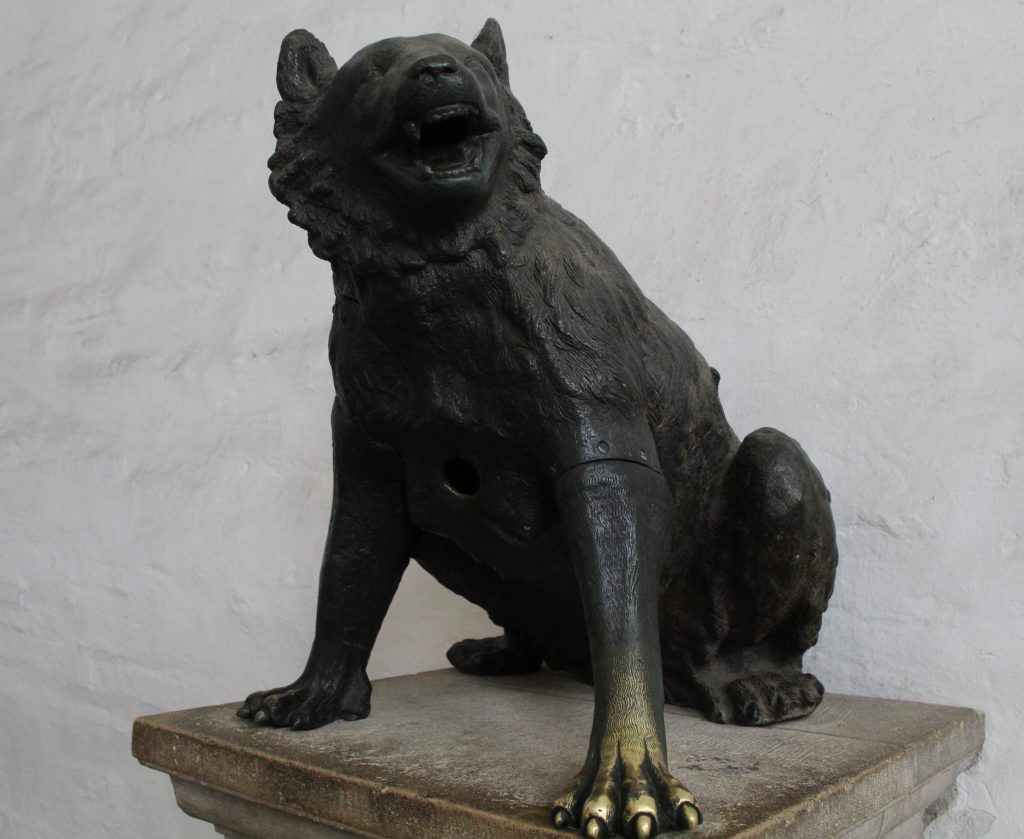
Now it was time to visit the cathedral. The visit began with the traditional entrance to the church, the Wolfstür. This is the subject of a legend, which (if memory serves) goes like this: The townspeople, lacking the time and resources to complete the church, made a deal with Satan. If he completed the church, he would be able to keep the soul of the first creature that entered its doors. But when it came time to honor the bargain, the townspeople craftily sent a wolf to enter the church doors, which is obviously not what Lucifer had in mind. The enraged devil tried to leave the church to punish the townspeople, but got his thumb caught in the closing door.

This story (repeated, in various forms, all over Europe and perhaps the world) has some physical manifestations. In the bronze door knocker, for example, there is a bump inside the lion’s mouth, which legend says is the satanic thumb. Once inside, there is a statue of the unfortunate wolf, and opposite that is (for whatever reason) a pine cone.

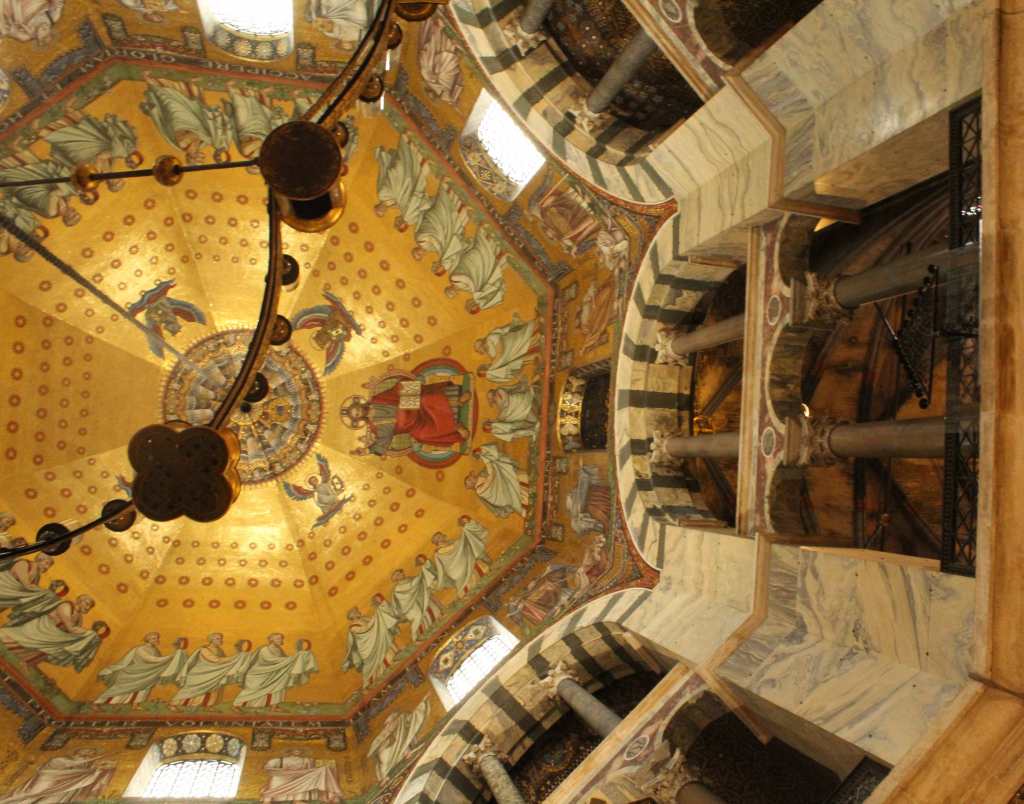
Finally we entered the church itself. The core of the structure—the so-called Palatine Chapel—goes back all the way to the year 800, though it has been so finely refurbished that you would hardly guess its age from its polished and immaculate appearance. In structure it is hardly like the typical European church, with its three names culminating in a main altar. Instead, the church is octagonal, with no natural front and back. It takes this design from the Byzantines, as the core of the church is closely modeled after Basilica San Vitale in Ravenna. Indeed, the structure even incorporates ancient marble columns taken from Rome. Clearly, Charlemagne was quite consciously forging a connection between his new kingdom and the splendor of the ancient world.

Hanging in the center of this splendid octagon is the so-called Barbarossa Chandelier, named for the Holy Roman Emperor Frederick I (who had a red beard). Looking like a giant crown, its symmetrical shape complements the octagonal space, creating a sort of tunnel view up to the mosaic on top of the cathedral.

Then, our guide took out a large key and opened the grated metal door leading up to the stairs. This was the moment I had been waiting for, as I knew that Charlemagne’s Throne was on the up there. After pausing to admire the railings, ceiling mosaics, and marble columns, we arrived at the legendary seat.

It is, at first glance, almost comically unimpressive. Far from being the gold and bejeweled seat one might expect, it is made of plain stone slabs, sitting on a platform of what appear to be cinder blocks. Apparently, however, the slabs which make up the throne are relics of some kind (there are different theories, but they all connect the stones to Jerusalem and the life of Jesus). This contrives to make the throne itself into a kind of relic. And, indeed, visiting pilgrims would crawl underneath the throne as an act of devotion.

Considering this religious nature, “throne” may not even be the best word to describe this esteemed seat—at least, as it was originally conceived. Charlemagne, for example, was not crowned here, but in Rome. And, certainly, it is strange to imagine that ruler issuing his decrees from the second floor of a cathedral. But it became a throne, if it was not one to begin with. As I mentioned, dozens of monarchs were crowned on this very spot. Napoleon, in a rare moment of humility, climbed the steps but refrained from sitting down himself. According to our guide, such scruples did not stop Heinrich Himmler.

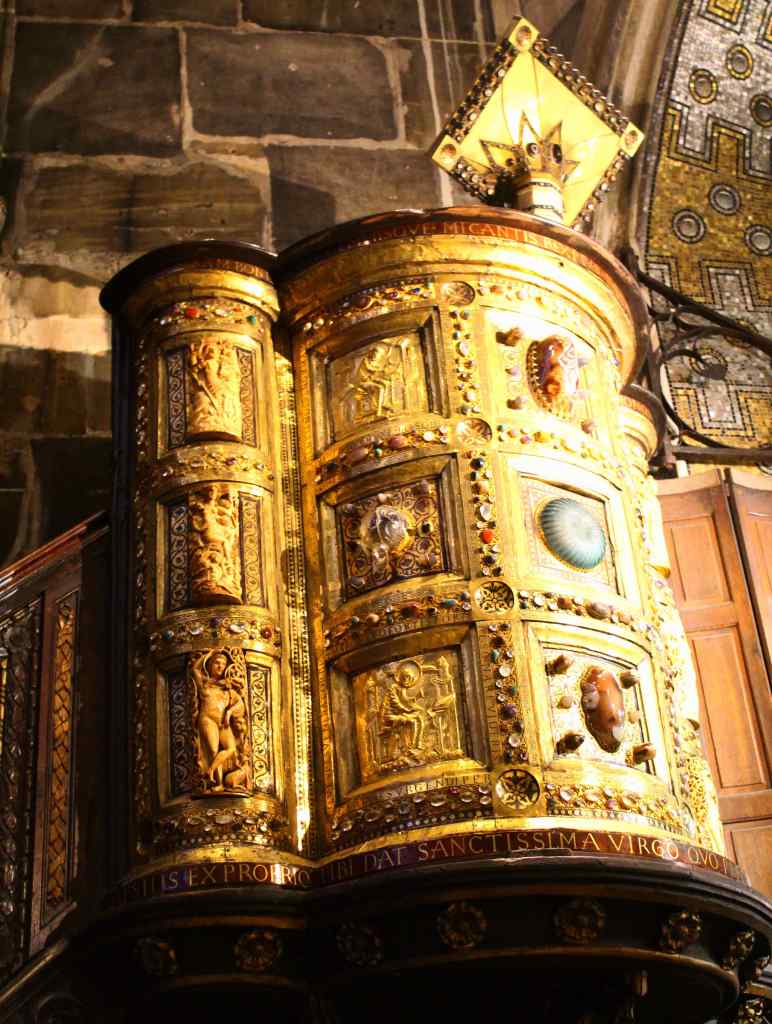
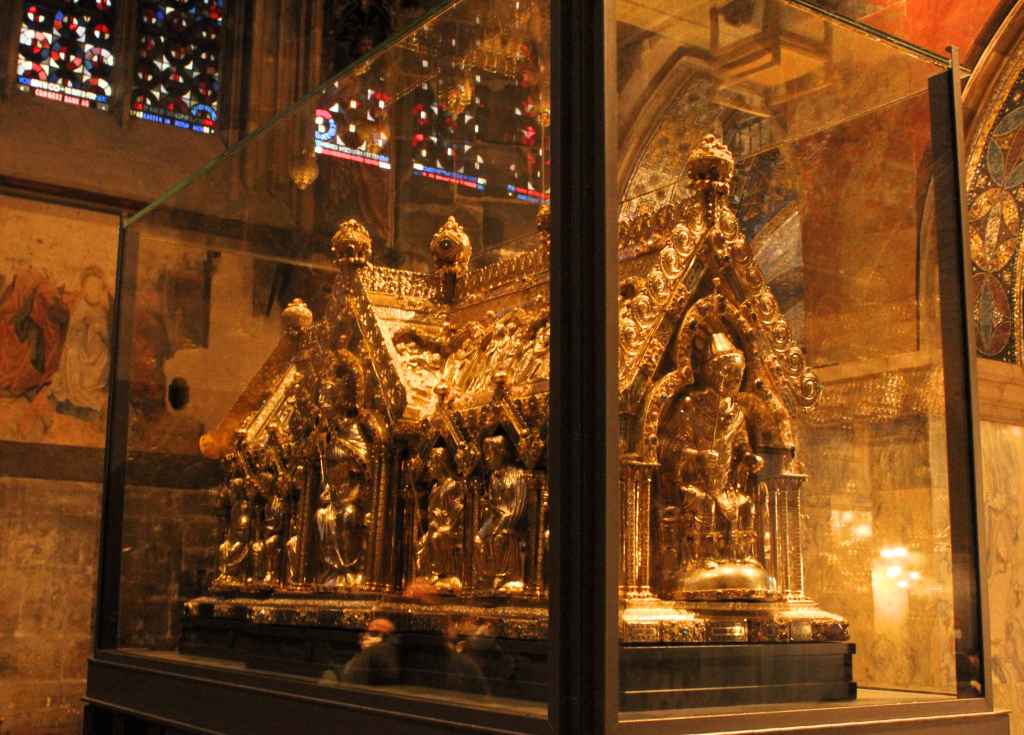
Now it was time to enter the gothic church. The original Palatine Chapel has, you see, been supplemented with a gothic choir, of a much more conventional—not to say unattractive—design. This part of the church also has its share of famous objects. There is, for example, Henry’s Pulpit (also called an “ambon”), which is yet another example of the golden and encrusted style typical of the Carolingian period. It is covered with exquisite ivory carvings and, as typical of the Holy Roman Empire, it incorporates elements of pagan art pillaged from Italy and the Holy Land. Nearby are the Karlsschrein and the Marienschrein, two enormous gold reliquaries. The first contains the bones of Charlemagne himself (moved from the Roman sarcophagus, apparently), while the second is supposed to contain Jesus’ swaddling clothes and a dress belonging to the Virgin Mary. What is indisputable, however, is that these two are remarkable examples of medieval metalworking. 

This is where the tour ended. Dazzled, I wandered back into the streets of Aachen. It had warmed up by now and my jacket was unnecessary. Extremely hungry, I was gratified to find a German sausage restaurant right around the corner. There, I tried to order the most “German” thing I could, and decided that would be a mug of beer and a plate of blood sausages, accompanied with mashed potatoes and applesauce. A bit over the top, but I enjoyed it.

Stuffed to bursting, I wandered back to the train to return to Düsseldorf, where I was going to stay. But that is a story for another post.

Milan & Lago di Como

Milan & Lago di Como

The bus from the airport dropped us off in front of a monster of a building. We were in Milan, and this was the city’s Centrale train station. Its enormous stone facade looms over the viewer, the pile of stone seemingly poised to crush you. It is, in a word, rather an aggressive structure—with ferocious eagles and lions staring malignantly from its walls. It should come as no surprise, then, that this grandiose design was willed into existence by the Duce himself, who wanted it to represent the power of Fascist Italy.

Rebe and I had come for a little break. It was May—international worker’s day—and the weather was sunny and warm. The first thing we did was to eat some pizza. Within five minutes of walking, we saw a place that looked good and went in. I have no idea if it was special by Italian standards, but the pizza was better than the best you can find in Madrid. Yes, we were in Italy.

This was my second time in Milan. My first had been in high school, on a class trip, when we had seen The Last Supper. Of course, I was too young to appreciate anything about the art (I was far more interested in the airlocks that controlled the atmosphere inside the room than the fresco itself). A decade and a half later, the city looked entirely unfamiliar to me. Not even a shadow of memory remained.

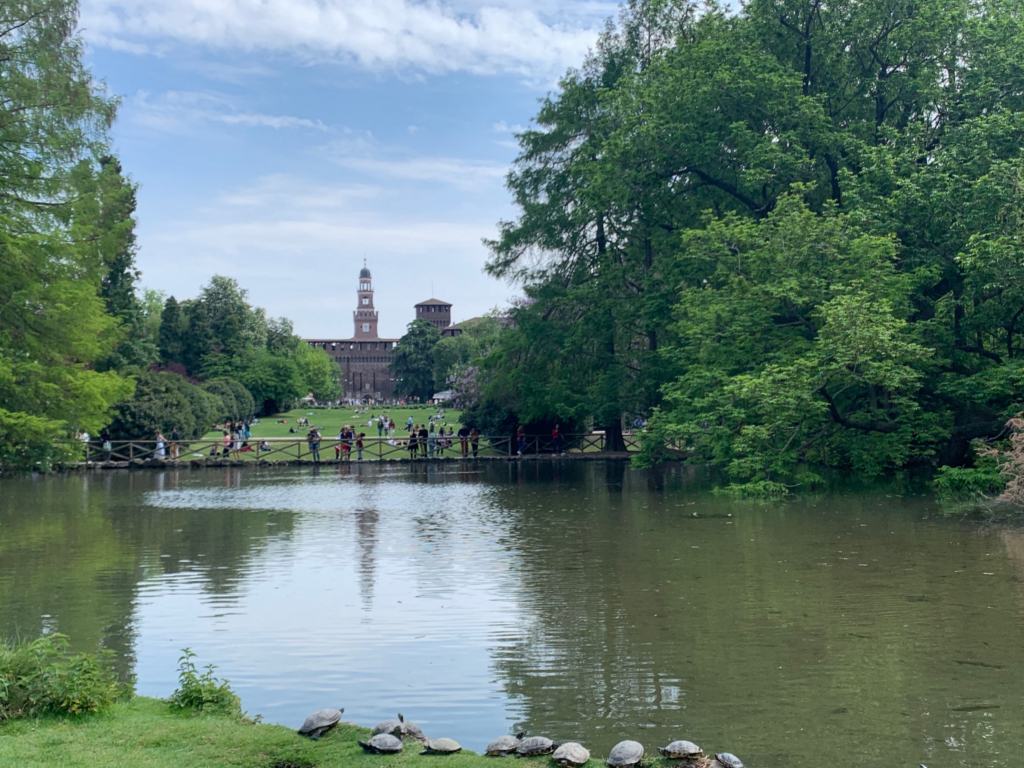
We had a little time to kill before we could check into the Airbnb, so we decided to visit the Castello Sforzesco. This is a lovely Renaissance fortification made of brick, which is free to visit. The castle is named after Francesco Sforza I, an important ruler of the city, who turned the erstwhile medieval castle into the palace we see today. One of his sons, Ludovico, was a great lover of the arts and contributed to the palace’s further beautification—notably, by calling on artists like Bramante and Leonardo da Vinci. Today, this castle is home to several museums, notably the city’s painting gallery.

But we did not have time to visit any museums. Instead, we took a stroll around the lovely Parco Sempione, a large landscaped park. And as it was quite warm, we helped ourselves to some gelato. (Since we had traveled with Ryanair, which charges for carry-on luggage, we only had small backpacks and didn’t need to find a luggage locker.)

After some time relaxing on the grass, it was time to go. Our Airbnb was not in the city of Milan. We only had three days to spend in Italy, and I decided that it would be more fun to explore the nearby Lago di Como rather than stay in the city of Milan. So we walked over to the Cadorna train station and took a commuter train north. Soon, we were all checked in, and exploring the city of Como, at the southern point of the lake.


It was a relief to be outside of a big city. A cool breeze blew off the lake and green hills rose up above us. As if hypnotized, we began to walk along the water.

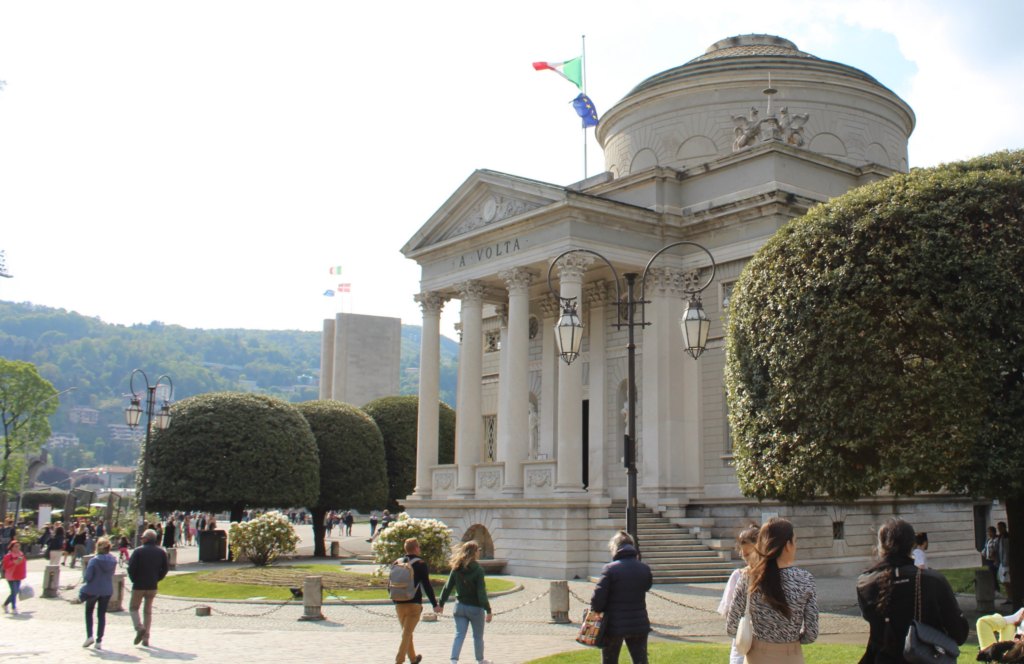
Perhaps I was just sleep deprived and delirious, but I remember this walk with a strange intensity. Everything seemed colorful, new, and interesting. The ferries in the harbor, the blue hangar full of sea planes, the colorful concession stand selling gelato and panini with Italian flags waving on the top… Soon, we came across a large, classical building. This was the Tempio Voltiano, a temple dedicated to Como’s most famous son, Alessandro Volta. It contains some of the great scientist’s devices, including his voltaic piles—the first ever batteries. (Unfortunately, by the time we arrived it was closed.) Nearby is the War Memorial, a large concrete tower dedicated to those who fought and died in World War I. Built in 1933, the memorial looks remarkably more modern than that, perhaps because it was based on a sketch by the Italian futurist Antonio Sant’Elia, who himself was a casualty of the war.

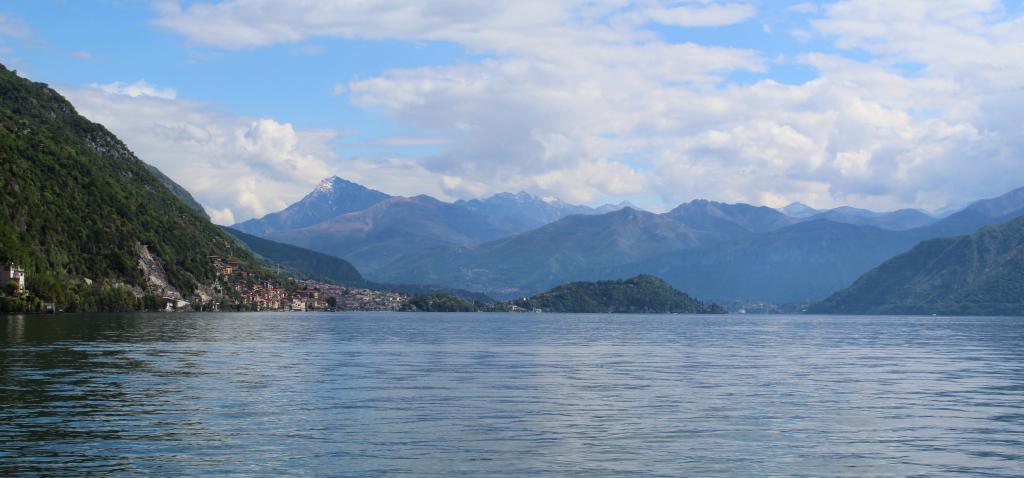
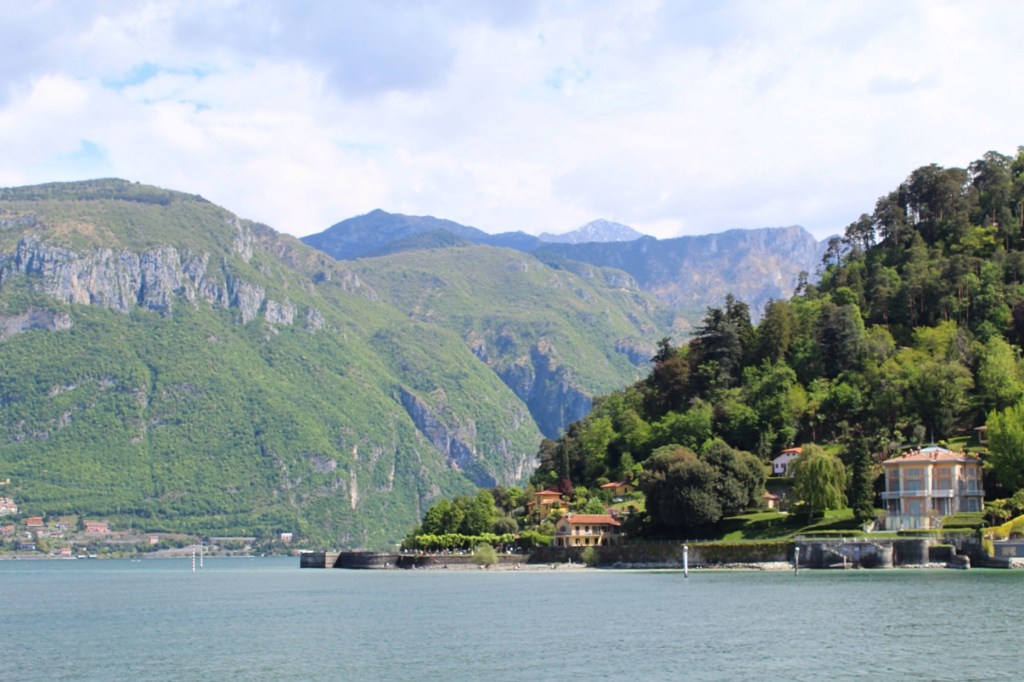
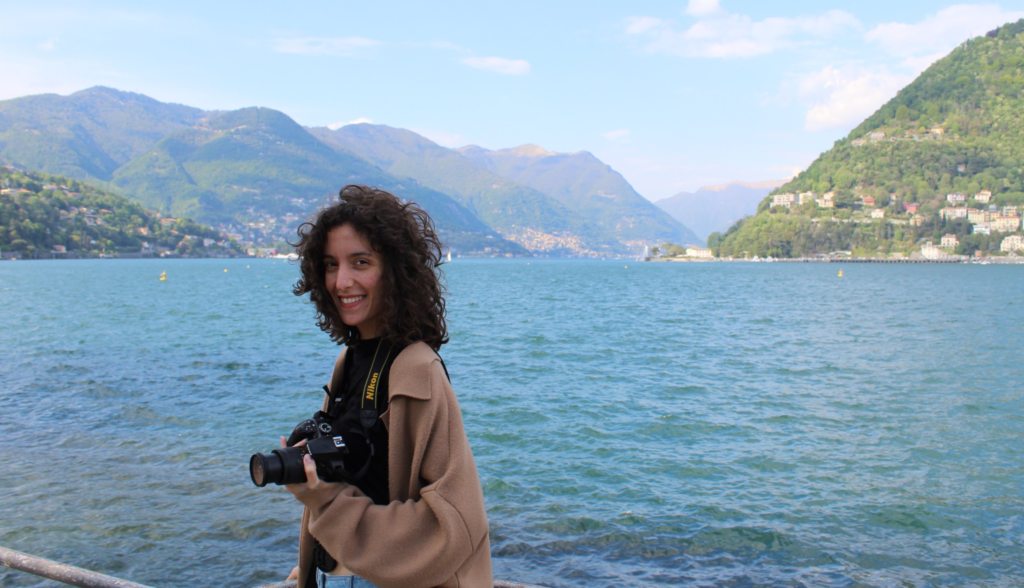
We continued to wander along the lake. With every step, more of the landscape came into view. It seemed too pretty to be real. The deep blue of the water, the dramatic hills, the unobtrusive architecture of the structures, all of it combined to make a kind of living postcard. It is no wonder that this lake has been a favorite resort since Roman times. But it is a minor miracle, at least, that after so many centuries of human habituation the environment seems so pristine, and the human presence remains tasteful and discreet. Sometimes one really has to hand it to the Italians. They may seem stubborn and stuck in their ways, but they know what they’re doing.

Eventually, we came upon the Villa Olmo, one of a seemingly endless number of lovely mansions that dot the lakeside. Now, I normally have scant interest in the ostentatious residences of the very rich; but this villa and its garden—like everything else—fit so perfectly the aesthetic of the lake that I could not possibly object. It was especially charming because, just as we arrived, a troop of people in period costumes walked by. I have no idea what they were doing.

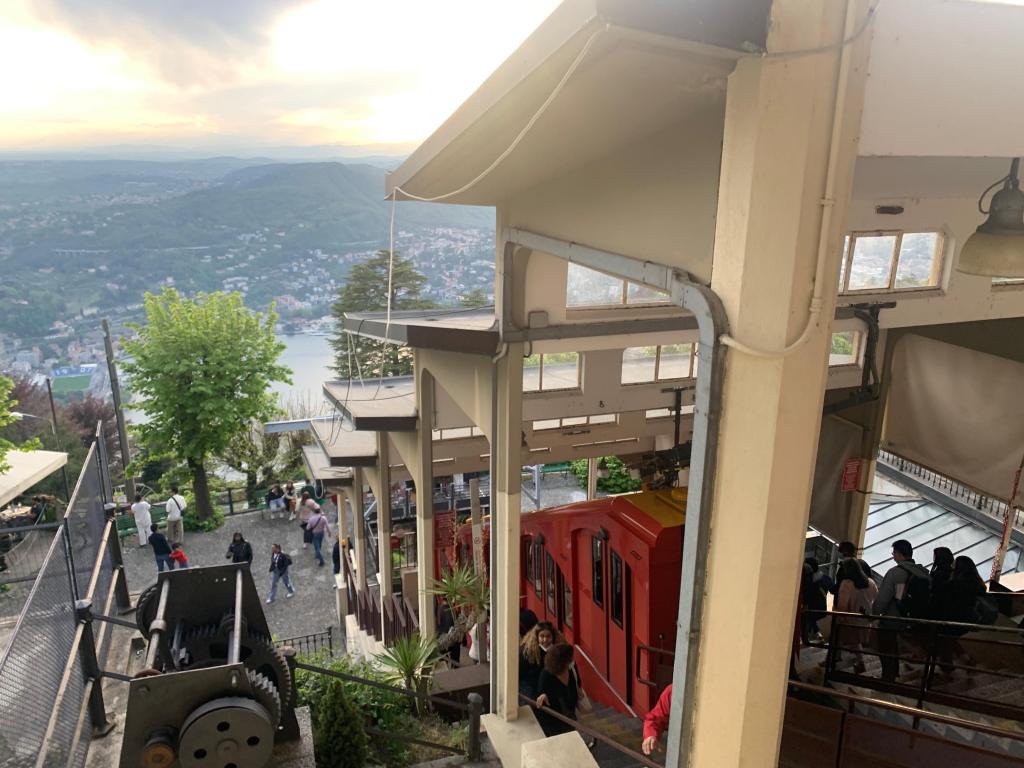
It was getting late now and we needed to find a place for dinner. We decided that we would take the funicular up to Brunate, a small village on top of the nearby hills, and try our luck there. We had to wait in a queue for about ten minutes for it to arrive—a time that was rendered almost intolerable by the presence of a bunch of Erasmus students talking loudly in front of us. (One student, after professing to know “some Spanish,” proceeded to butcher the conjugation of a basic verb in a way I did not think possible.) Finally, the machine arrived and we boarded (as far away as possible from the students). It was a lovely, if crowded, ride, and soon enough we were in the sleepy town of Brunate.

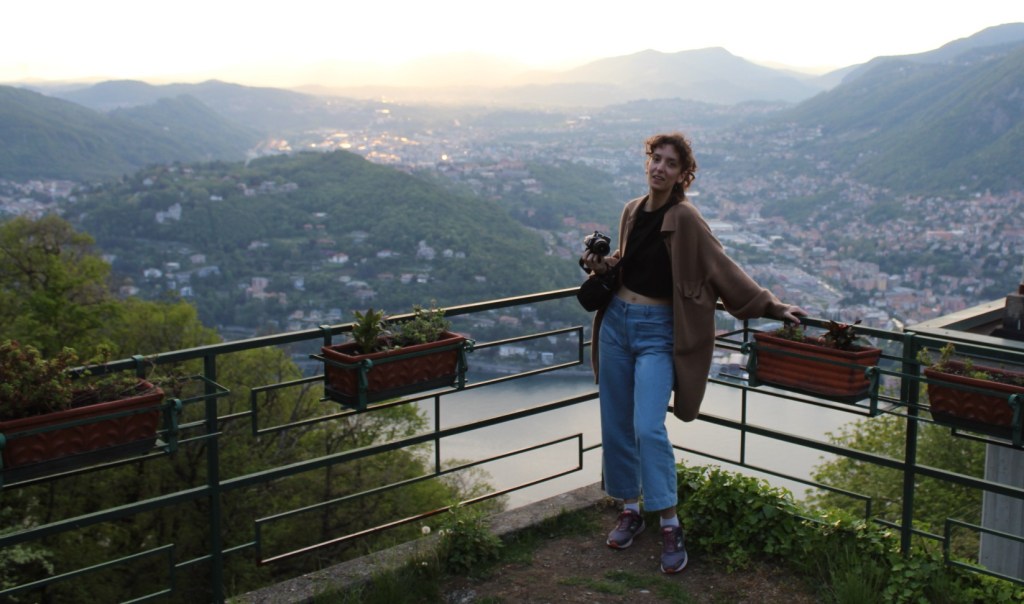
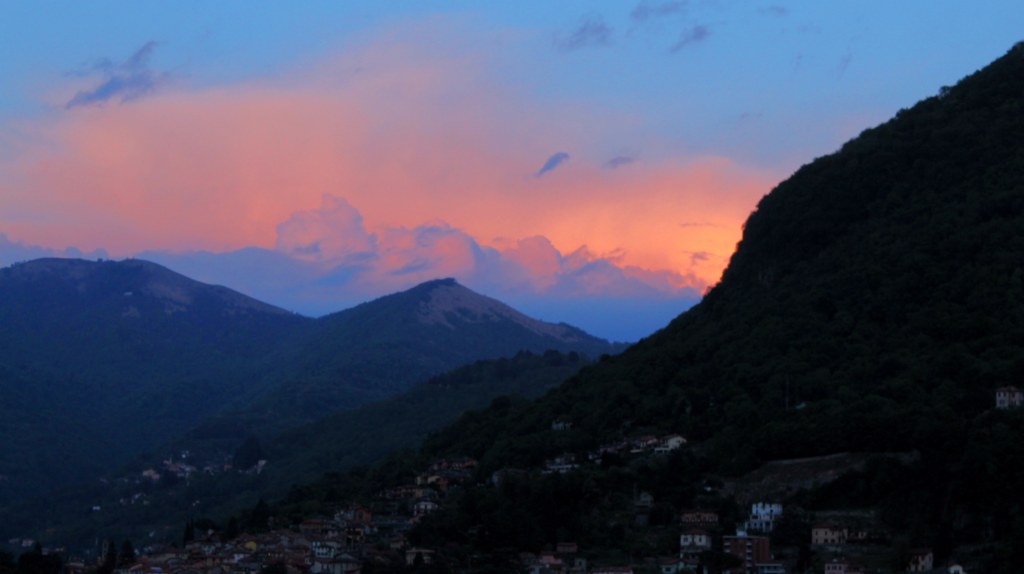
It seemed like a ghost town after Como. Very few people were in the streets, and the light was fading fast. We hadn’t eaten in hours and were starving by now. We had to find a restaurant. After a quick search online, I guided us to the Trattoria del Cacciatore, crossing my fingers that the place wouldn’t be packed. Indeed, we had the opposite problem: the restaurant was completely empty and they hadn’t even opened up the kitchen yet. I suppose Italians dine as late as the Spanish. We were told we would have to wait half an hour, but were invited into the restaurant’s large backyard to have a drink. The view was shockingly nice—the lake and the mountains stretching out before us, the sky red from the setting sun. I drank an aperol spritz before being called in to enjoy a fine meal. It had been a wonderful day in Italy.

Rebe posing at the restaurant. The view extends into Switzerland.

The next day we woke up early and returned to Como. This was our big day to explore the lake. The Lago di Como is shaped like an inverted Y, with the city of Como at the southern end of the western branch. Our first destination was Bellagio, which sits right at the center, where the three branches connect. To get there, we had to take a ferry. There are several routes on the lake, some local, and others express. To save time, we elected to take one of the express ferries that go there directly—making the trip in about 40 minutes, instead of over twice that much time.

The trip had a few hiccups. For one, even though surgical masks were acceptable for traveling on trains and planes in Italy (oh, the COVID times!), for some odd reason the ferry company demanded that we use the heavy-duty N95 mask. Unprepared for this requirement, we bought some masks from some entrepreneurs selling them on the street (for a significant mark-up, of course).

Because of this scramble to cover our breathing holes, we were among the last to board the ferry, meaning we had to take a seat below deck. This was quite frustrating, since we knew the views of the lake must be gorgeous. Rebe decided to take matters into her own hands and marched up the stairs to take pictures. I attempted to follow, but was immediately told by an attendant to return to my seat. I went back downstairs feeling defeated—frustrated that Rebe was enjoying the scenery while I had a view of a wall. After about ten minutes I made a second attempt, only to be told by the same young Italian man to go back to my seat. I was flabbergasted by this, since I was standing right next to Rebe, who was entirely ignored by the attendant. Was this Italian machismo, or just chivalry? (Maybe it comes to the same thing.)

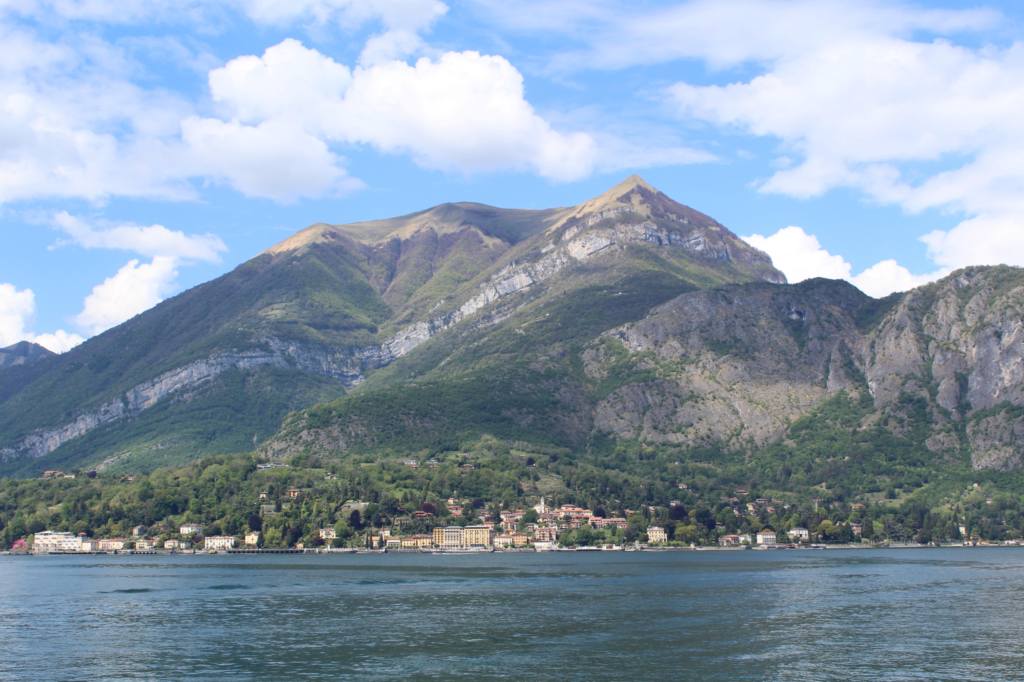
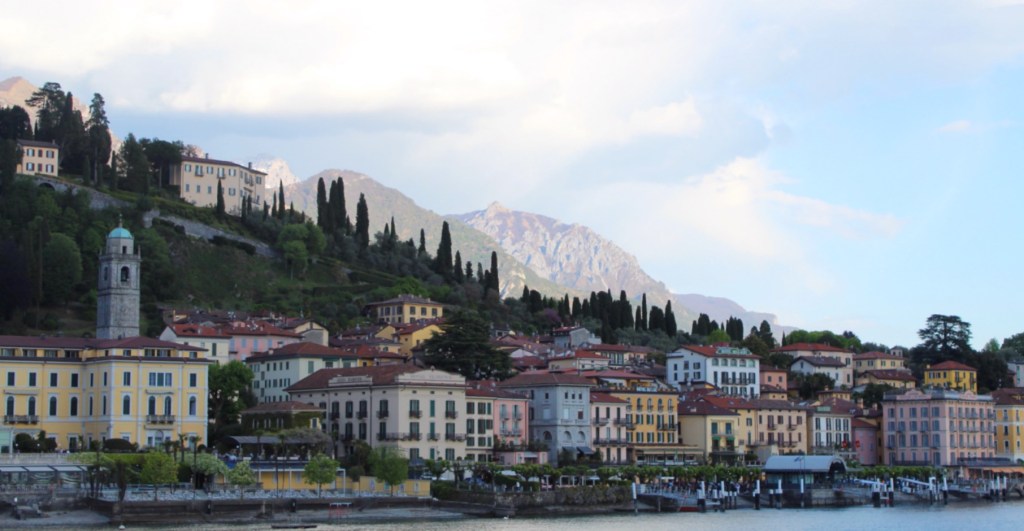
We arrived in Bellagio in good time. Like everything on this lake, but even more so, it was picture-perfect—a kind of Platonic ideal of a lakeside town. If you try to imagine a place where a world-weary Romantic poet would go to recuperate his spirits, or a disenchanted millionaire would go to discover the charms of the simple life, Bellagio is what comes to mind. It is, in short, a gorgeous town. We walked first to the end of the peninsula, which had a wonderful view of the lake with snow-capped mountains beyond. There, a woman was selling a private boat rental, which we briefly considered before we looked at the price. Then, we walked through the center of town. It was crowded with tourists and full of the expected shops selling gelato and trinkets.

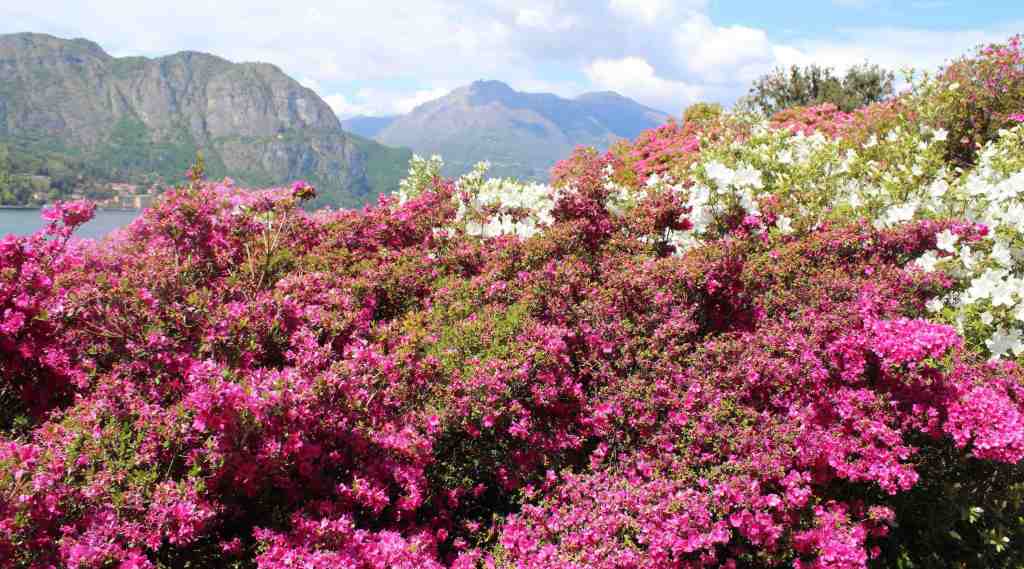
The main site to see in Bellagio is the Villa Melzi d’Eril and its gardens. Melzi, the man, is principally known to history for his brief stint as the Vice President of Italy under Napoleon. But he was also an art collector who was determined to make his villa one of the greatest on the lake. He succeeded. Though we didn’t enter the villa itself, the gardens are as beautifully arranged as any in the world—full of statues, excellent viewpoints, and exotic plants, trees, and flowers. As with everything on the lake, the overall effect was of overwhelming beauty—to the extent that your eyes can hardly take it in. I wonder if the residents of the lake long for brutalist concrete structures and piles of garbage, if only for a contrast.

We went back to the dock to get on the ferry to our next destination: Varenna, which is just across the water. While Bellagio, with a population of about four thousand, feels relatively compact, Varenna is positively tiny: with 800 souls calling it home. And as tiresome as it must be to hear by now, it is another jewel. Indeed, I found myself thinking on the ferry ride that the residents of this place, from Roman times onward, had collectively turned it into a kind of communal work of art—a living landscape painting that they gradually composed.

The view as we left Bellagio
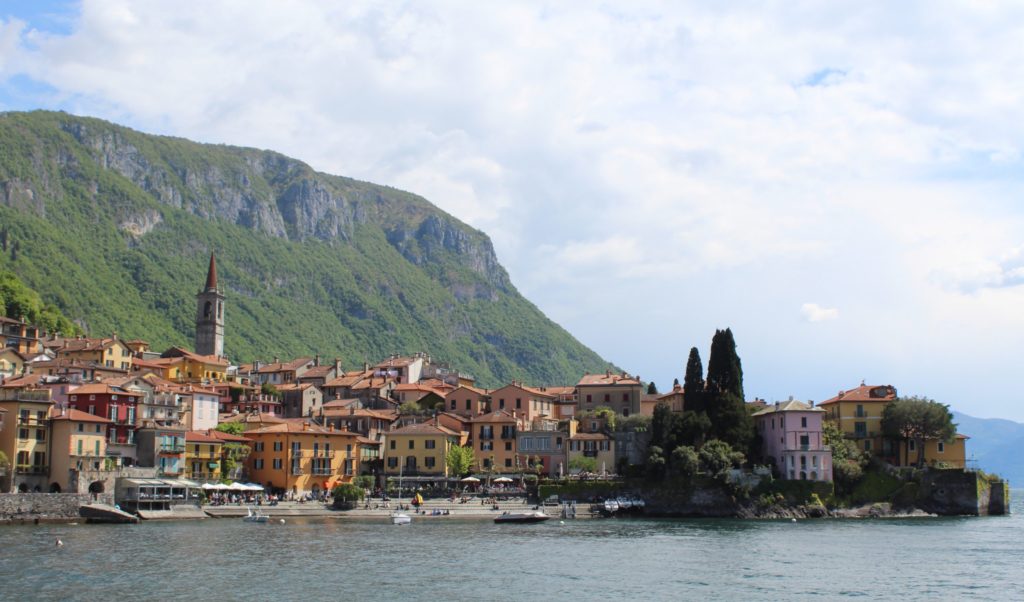
The village of Varenna

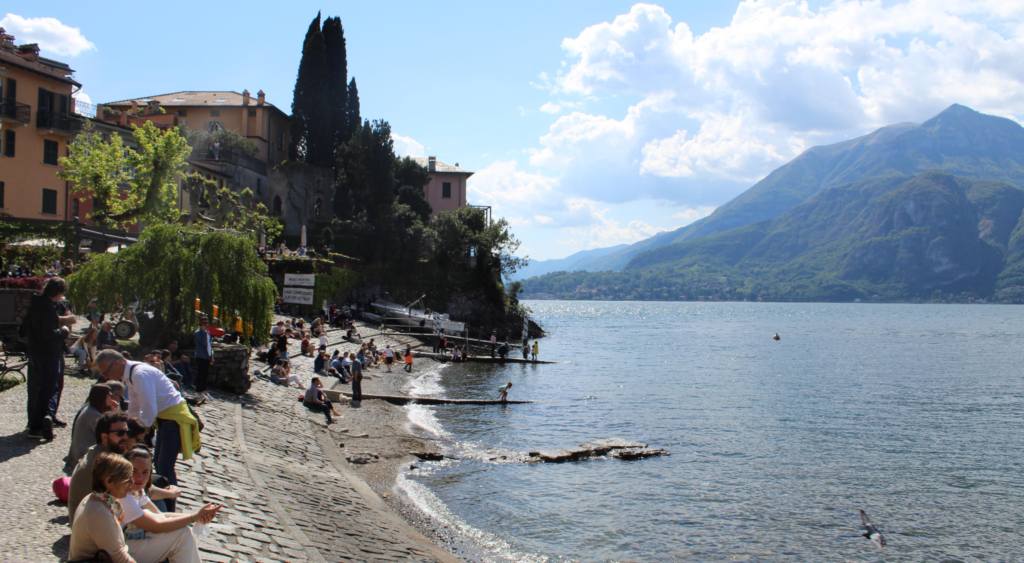
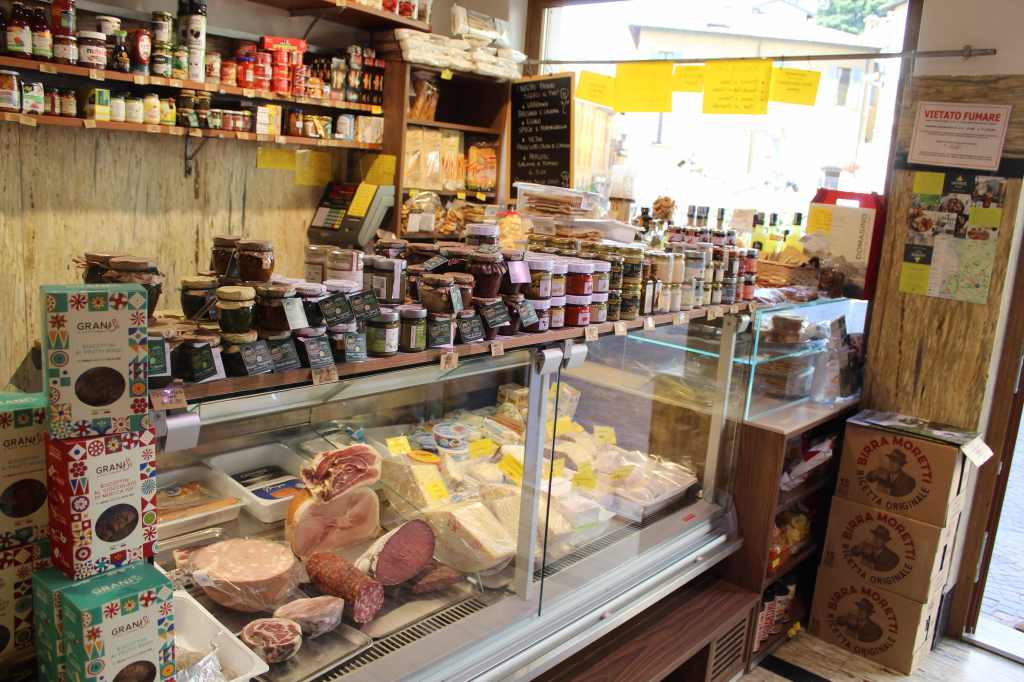
There is really nothing to do in Varenna, which is the best thing about it. There is a kind of plaza that drops off into the water, and at any given time is covered with dazed tourists gazing at the scenery. After our own bit of gazing, we wandered inland, eventually ending up at what we would call in New York a “deli,” but which I believe the Italians would refer to us a salumeria. There, we got a couple sandwiches and then wandered into the local church, Chiesa San Giorgio. This modest bit of sightseeing done, we retreated to a nearby bar for campari sodas.

The main square in Varenna
A local Italian deli
The Chiesa San Giorgio

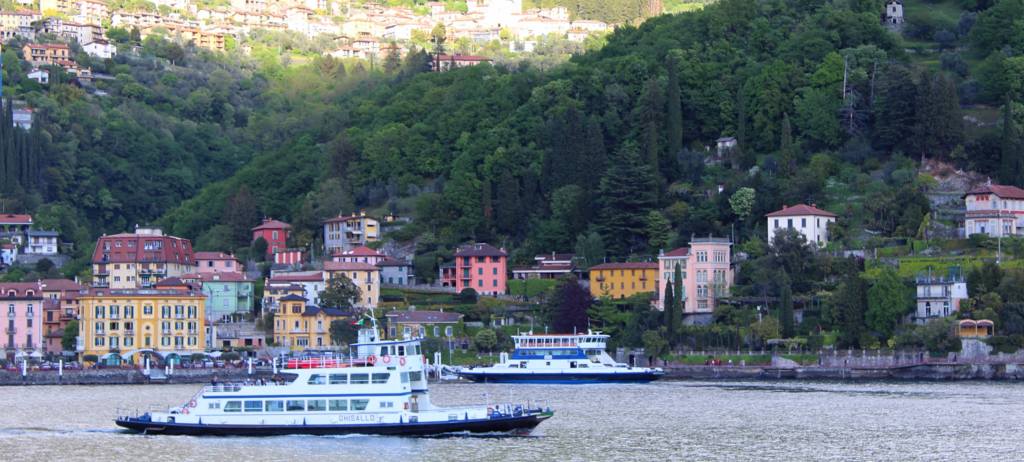
We had had an altogether lovely day on the lake. But the voyage back to Como was perhaps my favorite part. Instead of taking the express ferry, we took the local, which took nearly three hours in its meandering voyage from Varenna back to Como. If I felt deprived of lake scenery on the voyage out, I was absolutely saturated with it by the time we got back. The only thing that would have made it more enjoyable was if the ferry’s bar had been open. A nice glass of wine would have been ideal. But we were still in COVID times, and so I had to get drunk on pure aesthetic pleasure.

Our short vacation was coming to a close. The next day, we had a late flight back to Madrid. This did not leave us much time to explore Milan.

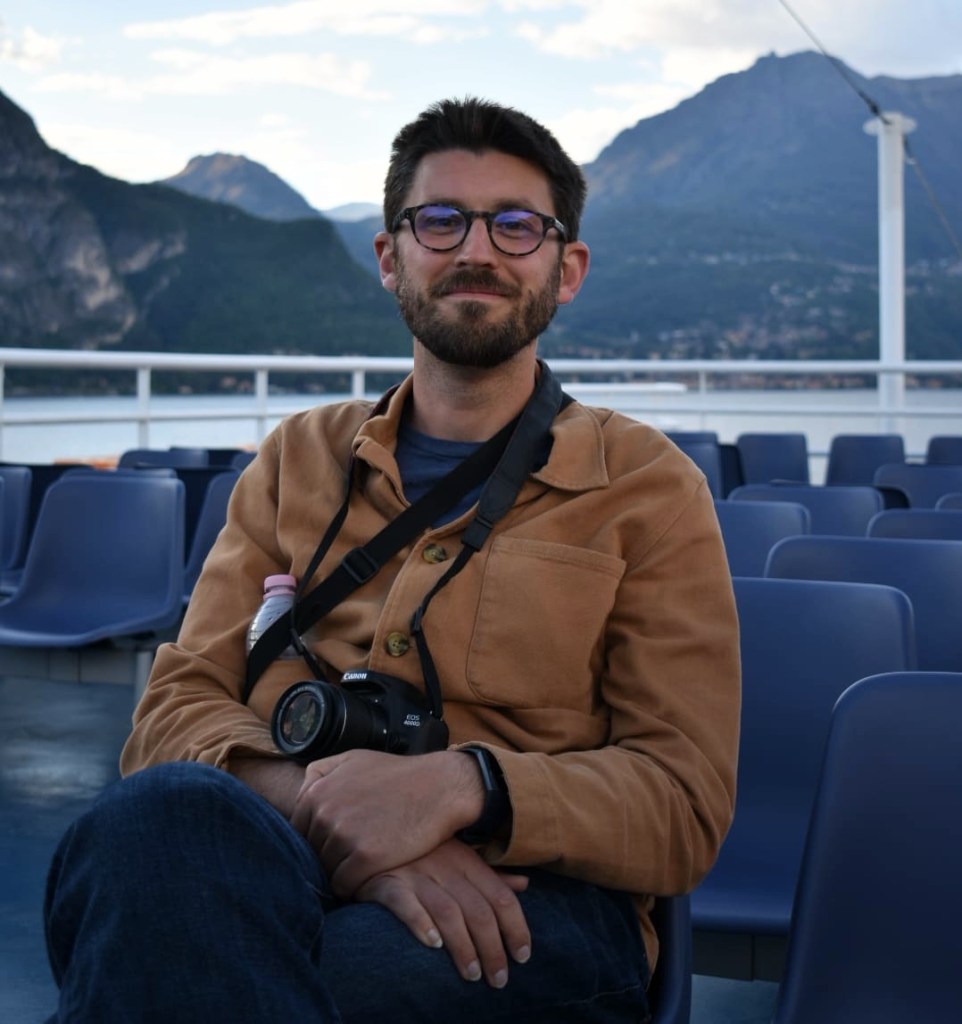
I had a great time on the ferry back.

Milan is the second largest city in Italy. A capital of finance and fashion, it does not exactly fit the stereotype that many hold of Italy—neither quaint and full of art, nor chaotic and rugged. Old women aren’t shouting from their balconies and old ruins aren’t dotted the cityscape. It is, rather, a clean and rather posh place.

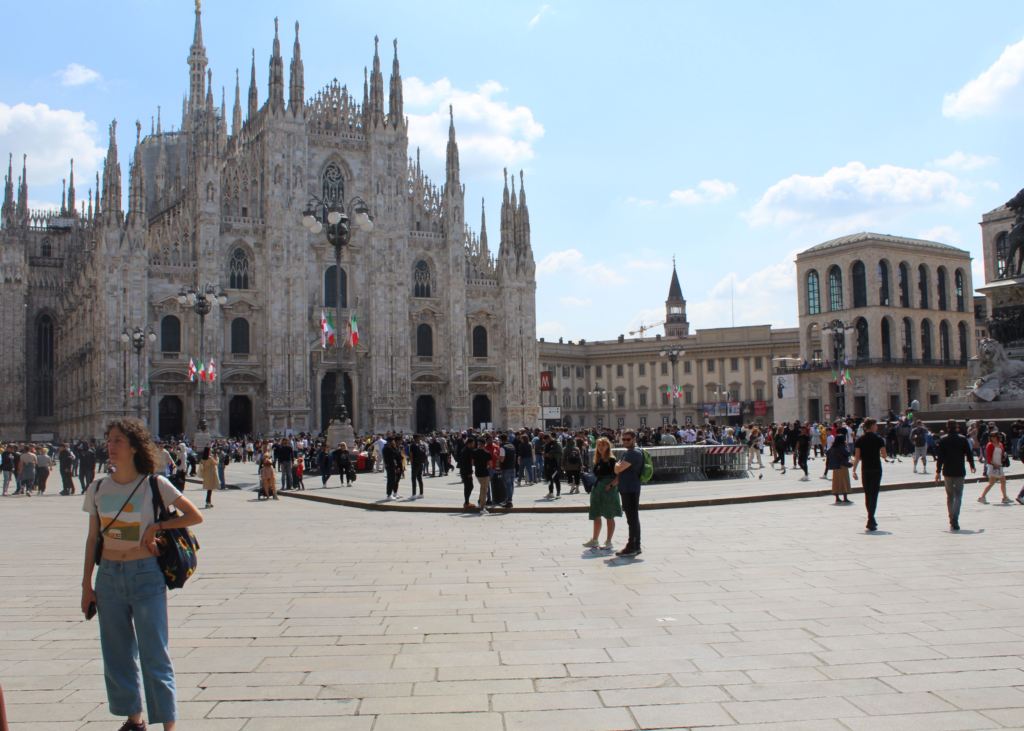
Our time was extremely limited, so we went to the symbol of the city: the Duomo. When we visited (and this may still be the case) you had to buy a timed ticket in order to go onto the roof. We selected a time two hours hence, and then set about to see something of Milan.

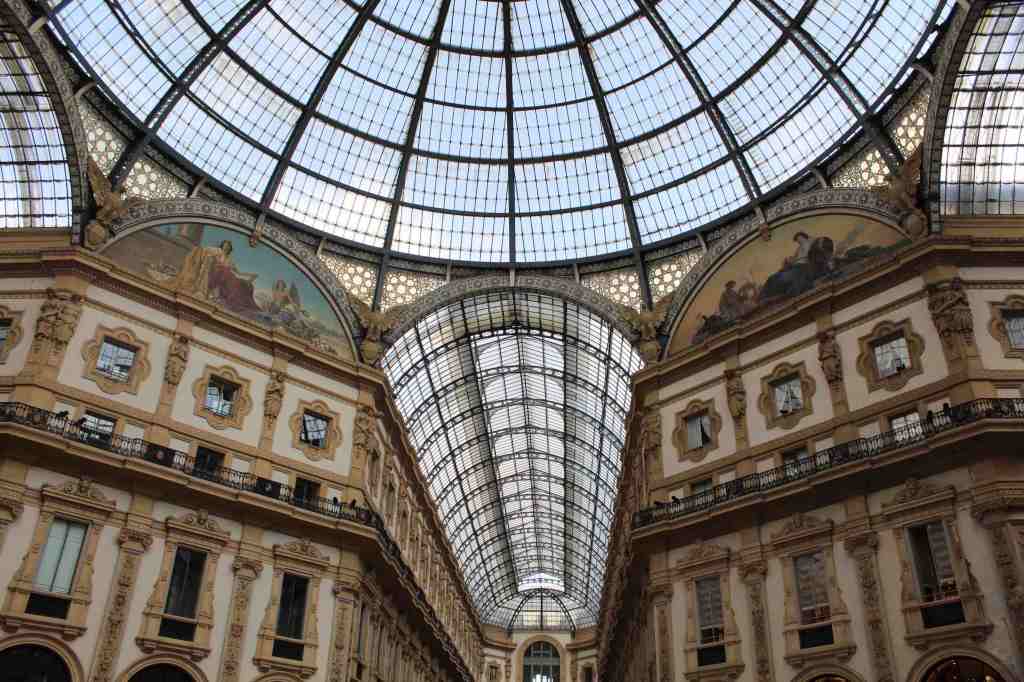
To start, the Duomo is ringed by important buildings. There is the Palazzo dell’Arengario, for example, which now houses the Museo del Novecento (museum of the 1900s). Right nextdoor is the old Royal Palace, which now serves as a cultural center. And across the piazza is the magnificent Galleria Vittoria Emanuele II. This is a beautiful shopping gallery, consisting of two arcades that intersect at a huge glass dome. The place is full of restaurants and shops that we could hardly afford even to look at, but it was a pleasure just to explore this piece of 19th century splendor. The floor mosaic in the center—representing the regions of Italy—is especially lovely. Rome is, of course, represented by a she-wolf, while Florence is a lily. Turin, meanwhile, is a much-abused bull, whose delicate parts have been worn away by visitors spinning on their heel over them. Supposedly, this brings you good fortune. Perhaps I ought to have tried it!

That poor bull!

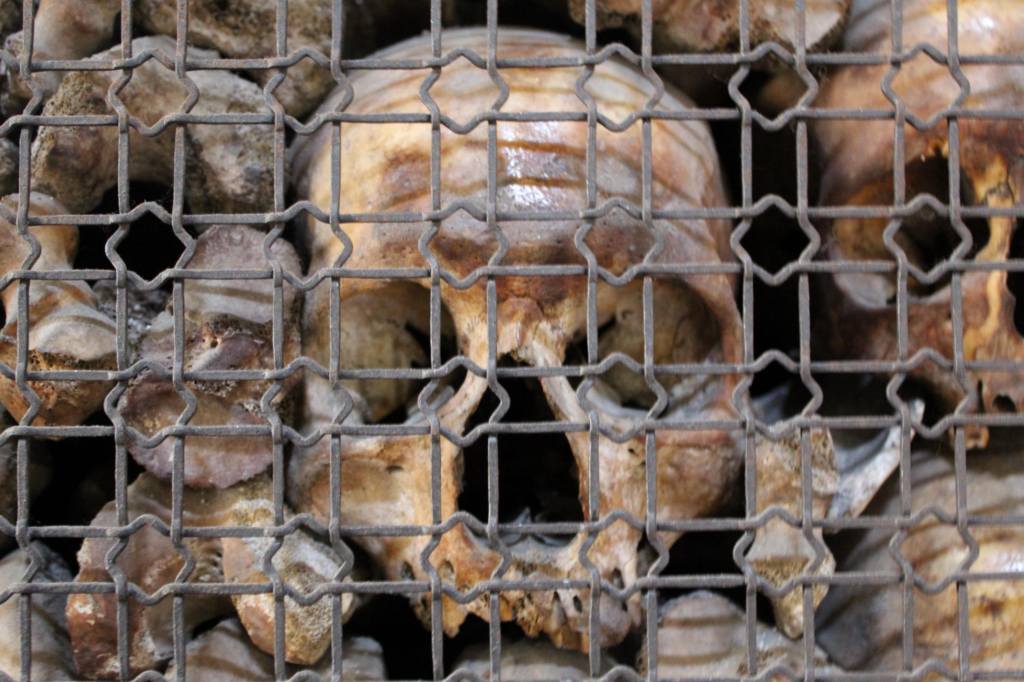
Then, we visited San Bernadino alle Osso, a church nearby famous for its ossuary. This is a small side-chapel that has been extensively decorated with human bones (apparently the cemetery got too full). It is free to visit and is certainly worth your time if you have any taste for the morbid.

Finally it was time for the Duomo. My first impression was of its sheer size. It is the third largest church in the world, narrowly beating the gargantuan cathedral in Seville. Stylistically, it struck me as odd. Unlike the other great Italian churches, this one is a medley of styles, owing to the ungodly long time it took to complete—from 1386 to 1965. The proliferation of spikes and spires indicates gothic (unusual in Italy, to say the least, where the Renaissance dominates), but the Milan Cathedral does not have the exuberance, the spiritual riot, of a true gothic creation. It is, rather, quite stiff and almost formalistic, the lines in its facade intersecting at right angles, ascending up in a straight line without giving a great impression of height. This sterility is due, I think, to its facade being actually neo-gothic (after all, it was completed in the 19th century).
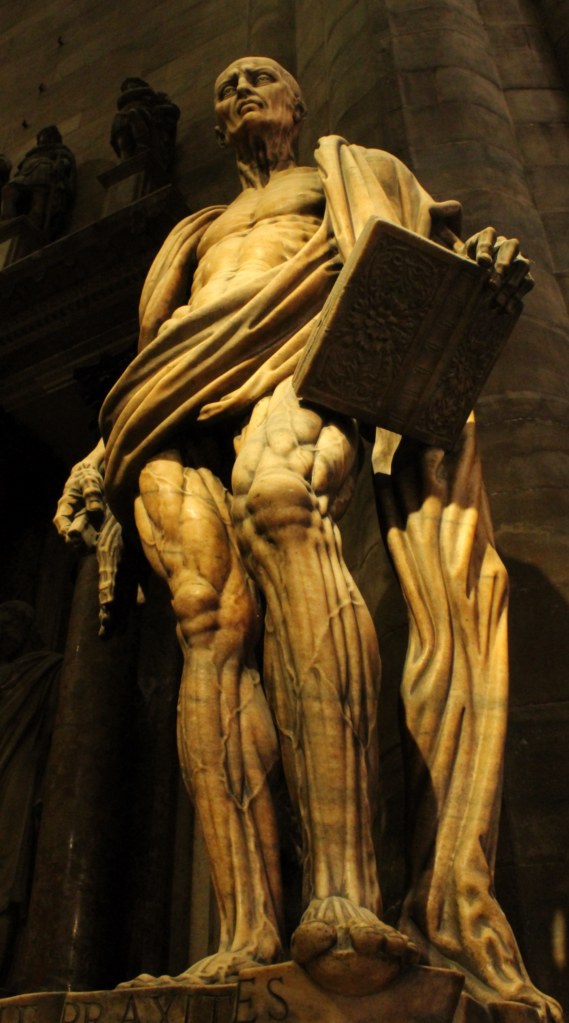
Stepping inside, I was once again astonished by its size. I also thought the interior of the church more restrained and tasteful. The same cannot be said, however, for the cathedral’s most famous statue, Marco d’Agrate’s Saint Bartholemew Flayed. Here we can see the unfortunate saint posing like a Roman senator, his skin wrapped around him like a toga, his muscles, veins, and nerves exposed. It is a kind of tour de force of anatomy, and obviously executed with a great deal of skill. But it is hard to call such a gruesome display a masterpiece.

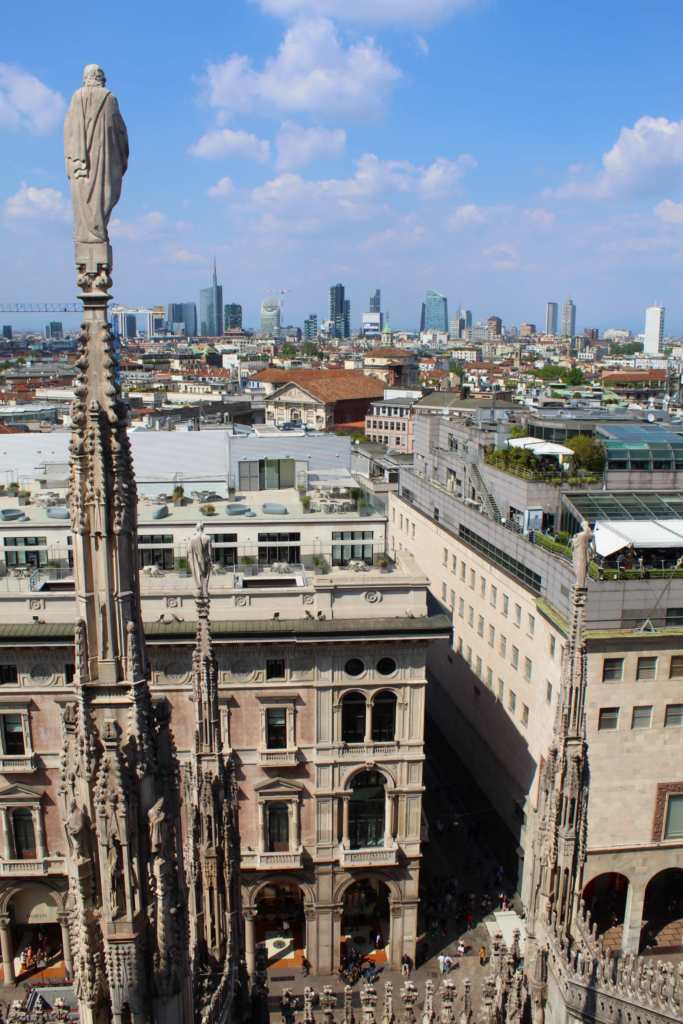
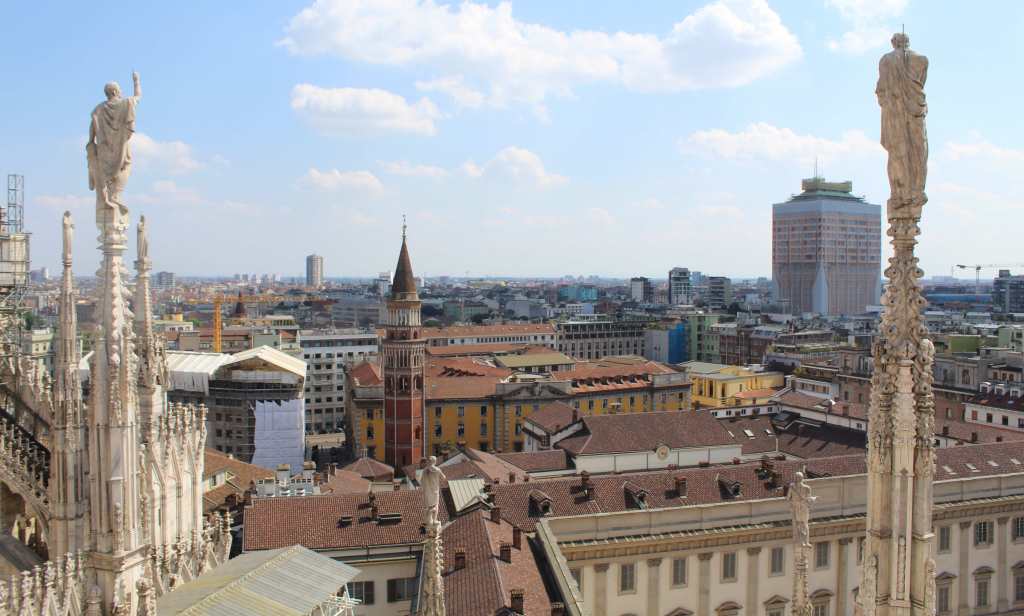
Next, we took an elevator up to the roof. Though it was somewhat expensive (over 30 euros a person, I believe), the visit to the roof proved to be a worthwhile experience. What was nothing but a tangle of statues hanging in the air when viewed from the ground became, from up close, a kind of stone forest. While the decorative statues, judged individually, were rather generic and unremarkable, the sensation of being surrounded by so many floating figures was genuinely uplifting. The visit culminated (pardon the pun) at the top of the roof, where visitors were stretched out on the stone as if it were just another beach.

Old and new skylines in Milan

This was it for us. After a quick lunch (more pizza), we made our way to the Centrale train station and caught a bus to the airport. It had been a wonderful trip, though we had left much undone. I was particularly disappointed that we hadn’t had time to visit the Cimetière Monumentale—the city’s massive and beautiful burying ground—or the Pinacoteca di Brera, Milan’s world class art museum. But after having seen so much beauty, it was impossible to have any regrets. Italy never disappoints.

A special thanks to Rebe, who took some of the photos in this post

Return to Vienna

Return to Vienna

The train was boarding in Budapest’s Keleti station. An elderly Hungarian woman, speaking broken German, asked me to help her with her bags. I did so, and then took a seat on the train. We were bound for Vienna.

The ride was not quite as uneventful as I had hoped. For one, I soon discovered that the ticket I purchased online (for a very reasonable price) did not come with a seat number. Thus, anytime the train made a stop, there was a chance that I would be booted by someone who did have a reserved seat. This made the trip considerably less relaxing than it could have been. Then, the train stopped at the Austro-Hungarian border, and—surprising in Europe, where borders are so permeable—a troop of armed border agents got in and started systematically checking people’s passports. We were also instructed to put on our special N95 masks, mandated at that time by Austrian law for indoor spaces. Everybody complied, though it did seem rather silly to be putting on a mask after breathing in the air for well over an hour.

(I think somebody should examine the relative COVID rates between Hungary, which had no restrictions at all, and Austria, which not only had a mask mandate, but required the heavy-duty N95 masks. It is a natural experiment.)

A little after noon, the train pulled into the Vienna Hauptbahnhof. I took a metro into the city center, deposited my luggage in one of the many storage lockers, and then set out to re-discover Vienna. My first priority was lunch. For this, I headed to a Viennese staple, Buffet Trzesniewski (the name is Polish, I believe) for some of their tiny little open-faced sandwiches. I got five—with various combinations of egg, fish, mayonnaise, and bacon—and every one was delightful. Indeed, I admit that the description of the food did not sound at all appetizing to me, but each sandwich was scrumptious. I particularly liked the small glass of beer, called a “pfiff,” to wash it down.

I later returned and had a glass of wine.

Reinforced, I was ready for Vienna’s cathedral. The last time I had visited, which was in 2018, I had balked at the entry fee for the grand church, and contented myself with a peak inside. This time, I resolved not to be so cheap. The ticket comes with the option of an audio guide. But at the time of my visit, I was in the throes of an obsession with Rick Steves, and instead elected to use his free audio guide. I’m sure it comes to the same thing, although my choice allowed me to enjoy the nasal strains of his high-pitched voice.

The roots of St. Stephen’s Cathedral go back to the Romanesque period, though the church, as it stands today, is mostly gothic in design. The visitor will likely notice two things immediately: first, the majestic south tower—a classic gothic skyscraper—and second, the colorful roof tile mosaic. Perhaps the colors are so vibrant because it was installed after a great fire gutted the cathedral and destroyed its roof in 1945. The retreating German commander actually disobeyed orders to destroy the building, but a fire caused by looting nearly did the job, anyway.

This fire also destroyed many of the bells in the cathedral, including the famous Pummerin, which had been cast from the canons of defeated Turkish invaders in 1705. Thankfully, a replacement was cast and installed in the shorter, but stabler, north tower. This new Pummerin clocks in at over 20,000 kg, the third largest bell in Europe. (For context, the Liberty Bell weighs just 940 kg, not even half of a tenth as much.) It can only be heard on special holidays and other festive occasions, so I was not lucky enough to be the person for whom the bell tolls.

(On the topic of big bells, even though it has nothing to do with Vienna, I cannot help mentioning the story of the largest bell ever made, the Great Bell of Dhammazedi. It was cast in present-day Myanmar and weighed an unbelievable 300,000 kg—or, if you’re American, over 300 Liberty Bells! The great bell was stolen in 1608 by the Portuguese “adventurer” Filipe de Brito, who hauled it by elephant to a raft, hoping—of all things—to melt it down to make cannons. His scheme unwound when his raft sank, taking his flagship with it, as the incredibly heavy bell proved to be too… well, incredibly heavy. De Brito was captured and executed by being impaled on a stick. There have been many attempts to find the bell under the river, but so far it has eluded detection. In any case, I have no idea how it could be lifted.

Anyway, back to the cathedral.)

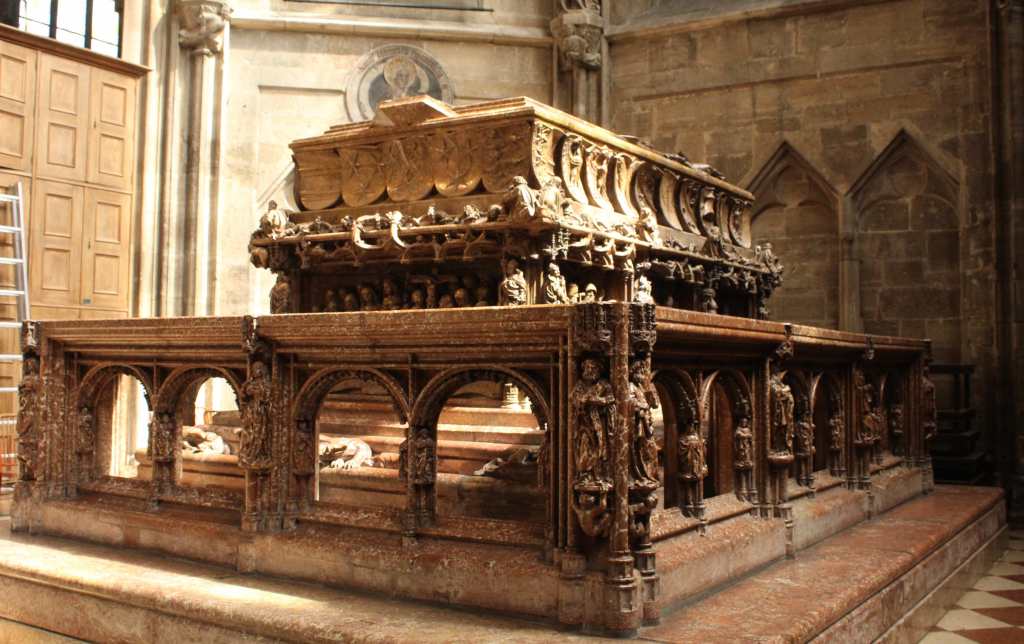
There are several highlights on the tour around the cathedral. In one corner of the cathedral is the stately tomb of Frederick III, Holy Roman Emperor. Like so many kingly sarcophagi in Europe, this one contains the bones of a Hapsburg. Another is the beautiful Neustädter altar, a massive, folding wooden piece that is a pentaptych rather than the traditional triptych. When it is fully opened, it reveals a marvelous series of reliefs; but when folded up—and it often is—the altar reveals only an uninspiring series of paintings. 

The tomb of Frederick III
Unluckily, I was there on a day when the altar was closed.

The pulpit, thankfully, is always on display, and it is marvelous. It is a perfect example of the Gothic style—gorgeous, meticulous, intricate, and heavily symbolic. As in so much Catholic art, the entire worldview seems to be represented using a panoply of saints and signs (many of them animals).

The architect of this stony florescence must have known that he had created a masterpiece, as he included a self-portrait below. You can see him peering from an open window, his compass in hand. This is known in German as the Fenstergucker (window-looker), and it is one of the most winsome self-portraits I can think of. Nearby, on a wall, is a similar figure. This time he is holding a compass and a framing square. And, like the builder himself, he symbolically holds up the cathedral at the base of an arch. By the way, it is not known who exactly this master builder was. The two prime candidates are Anton Pilgram and Niclaes Gerheart van Leyden.

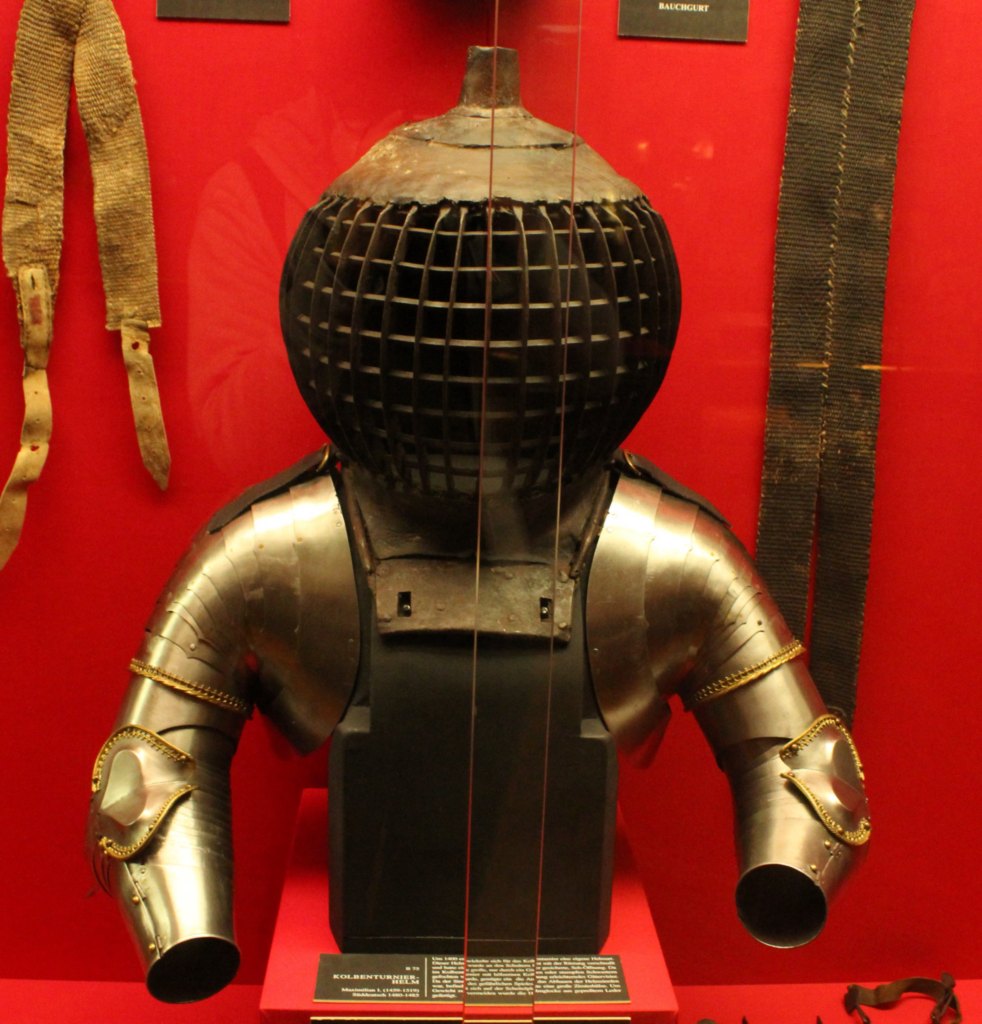
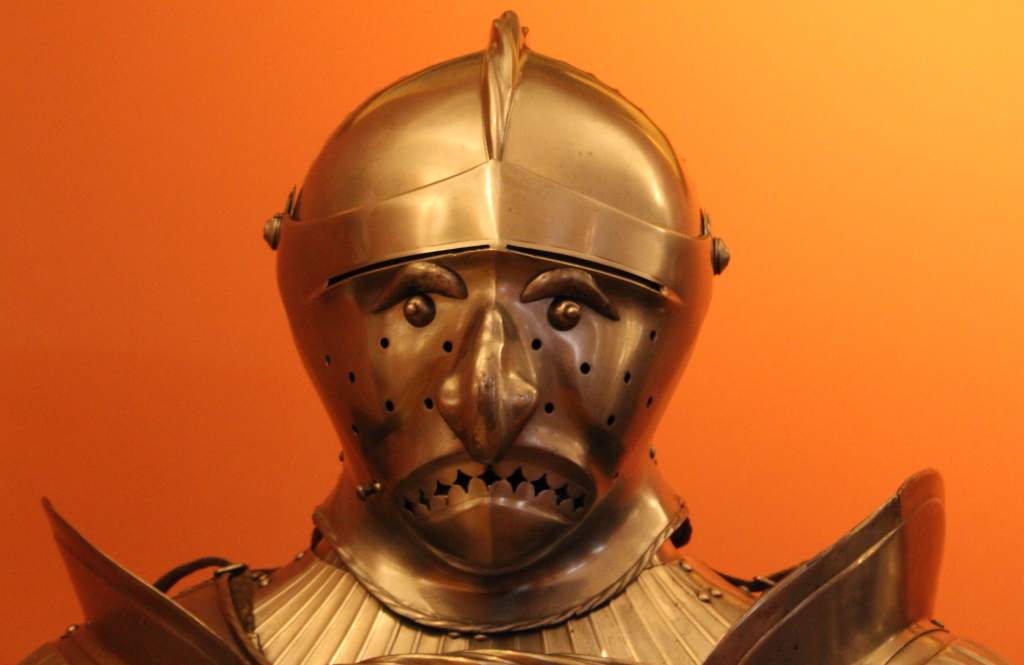
It was getting late now, so I decided to visit the Weltmuseum Wien, which was open until 7pm on the day I visited. This is a large and rather miscellaneous museum located in one wing of the Hofburg Palace. The collection includes a great deal of medieval arms and armory—some of it quite beautiful, though the signs were only in German so I couldn’t learn much—as well as a smattering of objects of “anthropological” interest (meaning, from cultures outside of Europe). But I spent virtually all of my time in the collection of musical instruments.

This must be one of the greatest collections of this sort in the world. For one, there is an assortment of famous instruments—either because of who made them, or who played them. There is an Amati violin, for example, and a piano that was played by both Robert and Clara Schumann, as well as Johannes Brahms. But there are also many instruments special for their particular beauty or unusual design. After all, there is nothing inherently special about the design of a flute or a violin; anything that makes noise can be an instrument. Thus, there are bizarrely twisting horns and oddly shaped stringed contraptions. The collection goes even beyond instruments. There is a table specially designed to hold music for a string quartet; and another table, belonging to the bishop of Passau, is decorated with musical notation.

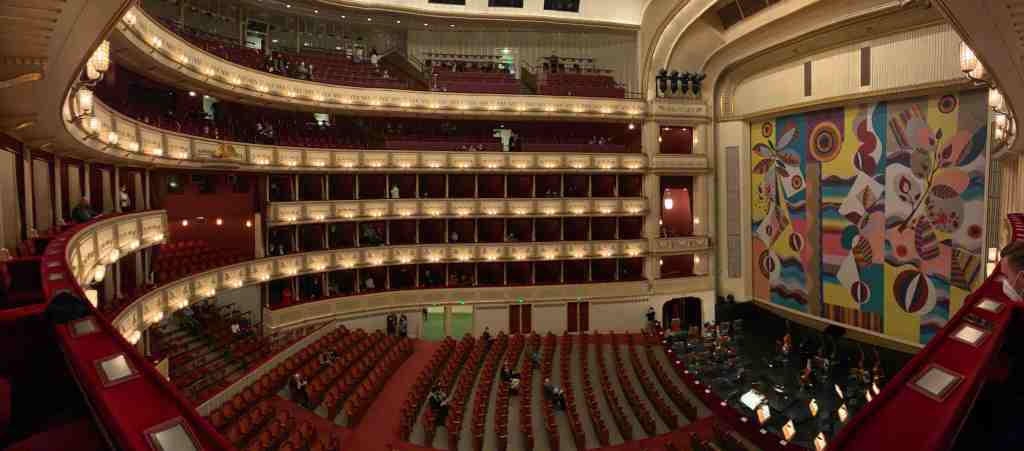
This visit put me in the ideal mood for my next destination: the Wiener Staatsoper (Vienna State Opera). Now, it is possible to buy standing-room only tickets a few hours before a performance. But I doubted that I could stand through an entire performance, and so opted to buy a cheap seat (for about $15). This price would have been worth it just to be given the privilege of exploring this fine building—a beautiful neoclassical construction fit for the Austro-Hungarian Emperor himself. Lucky for me, Carmen was playing during my visit, and I was able to see (or, rather, hear, since my seat had limited visibility) that marvelous opera performed with great panache. 

In short, though I had arrived around midday, I managed to have quite a wonderful day in the Austrian capital.


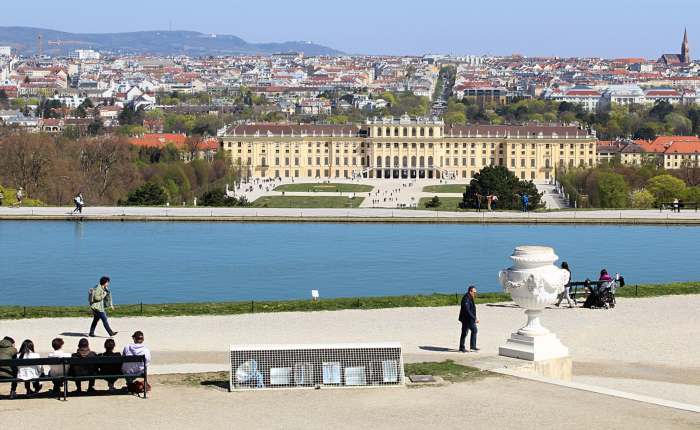
As my Airbnb was nearby, I decided to start off my next day by visiting the great Schönbrunn Palace. According to Rick Steves—who would know—this is the one palace in Europe that can rival Versailles. But you would not think it from the outside. Whereas Versailles’s exterior is vast and resplendent, the Schönbrunn is, by palatial standards, relatively modest—painted plain yellow, with few frills. But if you pay the (somewhat steep) entry, you will see that the interior is indeed as sumptuous as could be desired. Even so, if you ask me, the best part of the visit is a (free) stroll through the palace gardens, which are vast and lush

Two figures loom over the Schönbrunn: Franz Joseph I and his wife, Elisabeth. Franz Joseph, the longest-reigning emperor of Austria, was born in this palace; and it is also here that he died, in 1916, at the age of 86. His wife, Elisabeth—affectionately known as “Sisi”—was quite a colorful figure. Highly neurotic and hugely dissatisfied with court life, she spent much of her time traveling around, unaccompanied by her husband. But when she was in Austria, she often retreated to this palace. Like so many public figures during this time, she was assassinated by an anarchist in 1898, making her the longest-reigning Austrian empress.

(Though it is not directly related to the palace, I cannot help inserting a little story. The marriage of Franz Joseph and Sisi produced only one son, Rudolph. This made him heir apparent to the throne; but in 1889, he died in gruesome murder-suicide pact with his lover, the 17-year old Mary Vetsera. Rudolph’s motivations are still unclear, but his marriage was very unhappy. This led to his cousin, Franz Ferdinand, becoming the new heir apparent. And, of course, his murder at the hands of Serbian nationalists kicked off the First World War, which eventually brought down the whole Empire.)

Palaces, even beautiful ones, tend to put me in a foul mood. (I suppose they bring together too many things I detest—obscene luxury, arbitrary power, and huge crowds of tourists.) To recover my spirits, I went to another of Vienna’s world class museums, the Albertina.

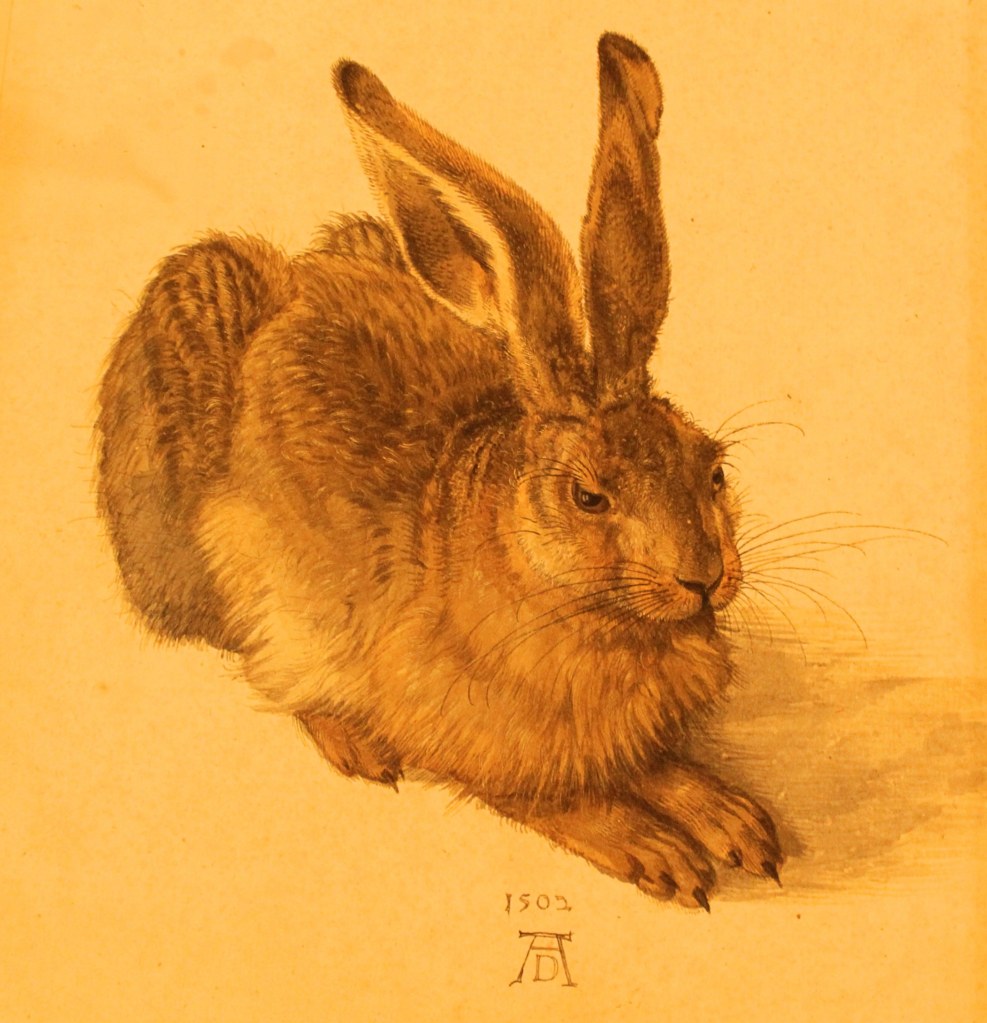
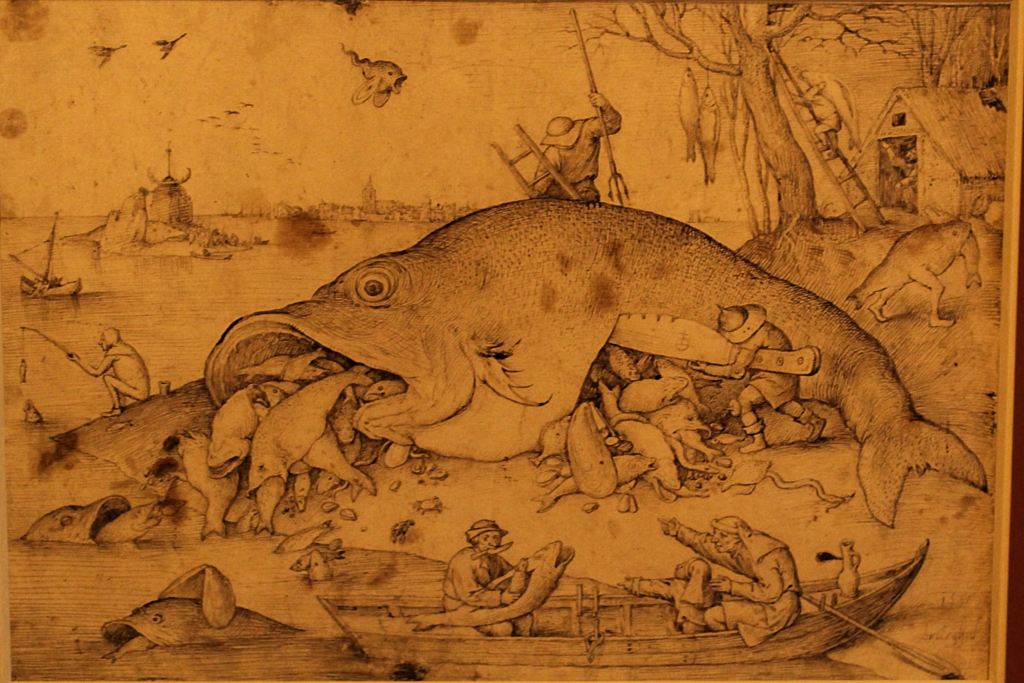
Located in another erstwhile palace (Vienna is full of them), the museum is named after Duke Albert, a Hapsburg Prince and art collector who used to live here. A visit to the Albertina is a complete experience. You begin by walking into an ornate foyer and exploring some of the palace rooms. Then, you get to the core of the museum: the collection of prints and drawings. Few, if any, museums in the world can rival the quality of these works. There is Dürer’s exquisite watercolor of a rabbit, Da Vinci’s study of the last supper, and a monstrous fish disgorging its insides by Pieter Bruegel the Elder. A study for Hieronymous Bosch’s Garden of Earthly Delights is on display, as is a muscular male nude from Michelangelo.

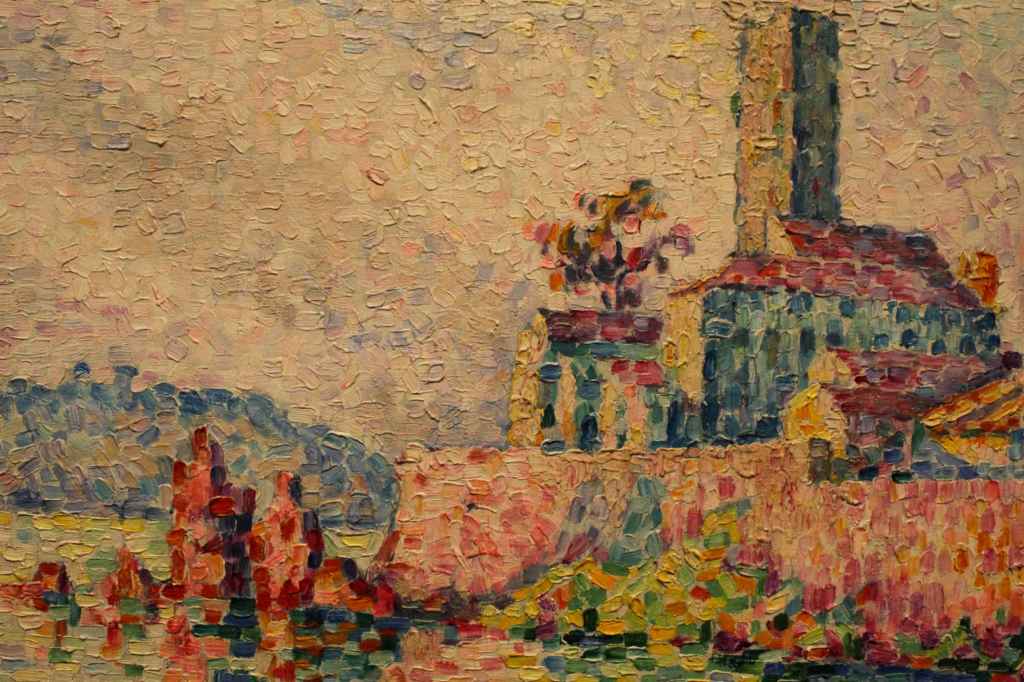
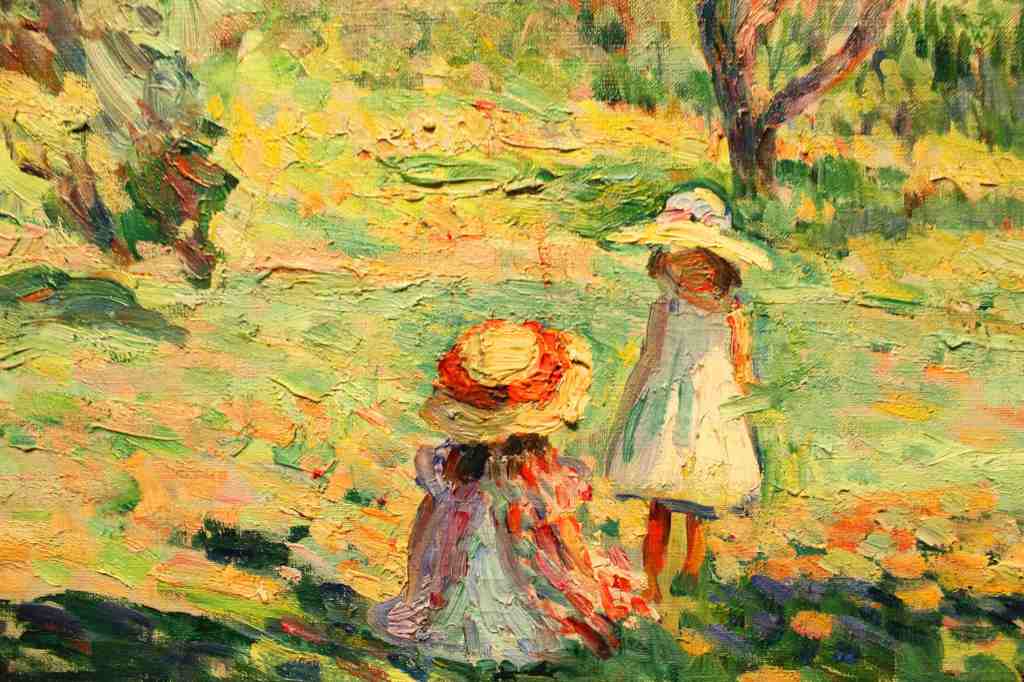
This riot of brilliant draftsmanship would be more than enough for any art lover. But the museum also has a substantial collection of Impressionist and Post-impressionist paintings. Indeed, with works by Picasso, Monet, Cézanne, and Magritte, this collection alone would also make a fine museum. I was particularly interested in the Munch exhibit that was on display during my visit. Aside from his famous Scream, I had known close to nothing about the Norwegian painter, and it was a pleasure to witness his artistic development.

I like to take closeup shots of paintings.

Right next to this museum is another classic Viennese attraction: the Wurst stand. It is recognizable from the large green rabbit on top (modeled after the Dürer painting). There, you can order from a range of delicious sausages for a quick and filling meal. Vienna is, of course, full of sausage vendors, though this one is the most famous.

My next destination was far outside the city center. To get there, I took the metro to the Wien-Heiligenstadt station, in the north.

Though Vienna is a beautiful city, it was a relief to be in a more humble, ordinary neighborhood, with no crowds to speak of. Vienna is so grand, so stately, and so full of tourists that it can feel like one big, outdoor palace. Now, at least, it felt like I was in a place where ordinary people lived. I wandered around a little, stumbling upon a little park named for Beethoven, and eventually decided to have lunch in a place called Mayer am Pfarrplatz. Though the place had seats for upwards of 100, it was mostly empty, and I was put at a table in the patio. I ordered the cordon bleu with the Austrian potato salad (that means vinegar and no mayo), and found it to be delicious beyond belief. The white wine was also stupendous.

While I ate, the waitress informed me that Beethoven used to live in the adjoining house. I later learned, however, that Beethoven lived in dozens of different apartments throughout his life, so this might not be such a claim to fame. Still, thinking of Beethoven did improve my dining experience. 

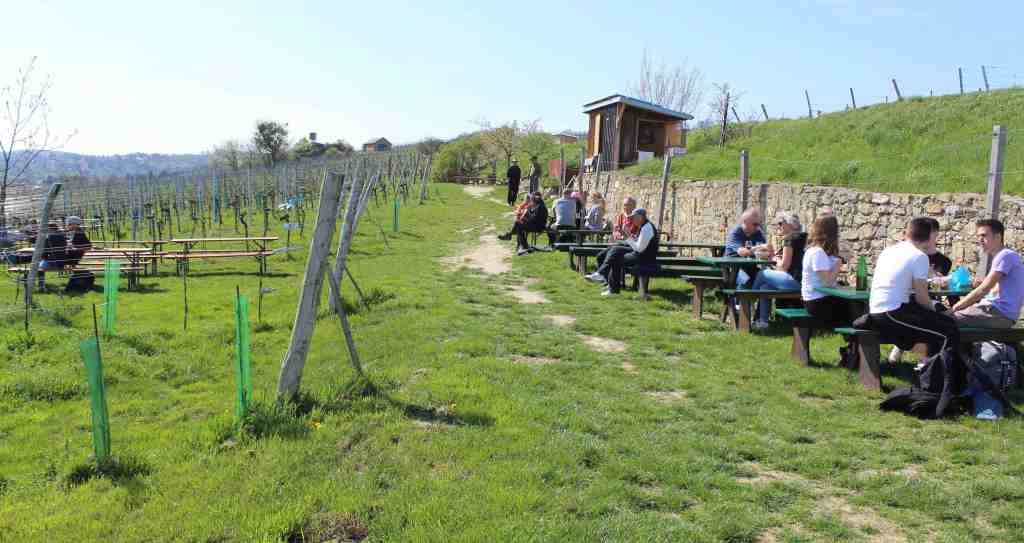
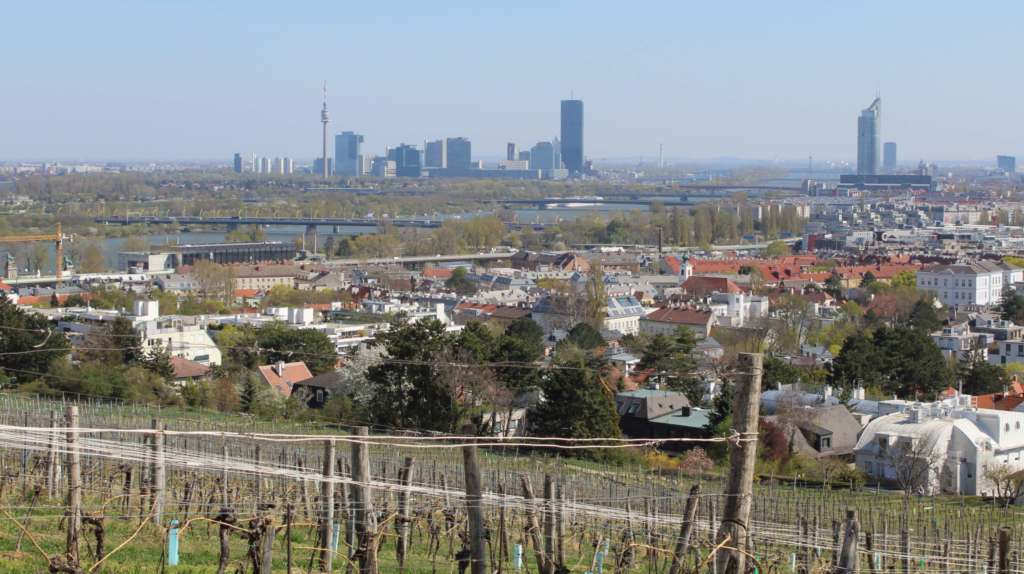
I left in a satisfied stupor and continued to climb up the hill into the vineyards beyond the city. In no time, I was completely surrounded by fields of grape vines, and soon I came upon one of the famous wine stands. It was an Edenic vision: picnic tables full of happy people, all holding glasses of crisp white wine. I bought myself a glass and sat down. The view of the Danube and the city beyond was nearly as intoxicating as the drink; and the wine was scrumptious—light, dry, and refreshing. Indeed, I think I enjoyed those couple hours just sipping wine outside an order of magnitude more than I enjoyed visiting the palaces and museums. I highly recommend it.

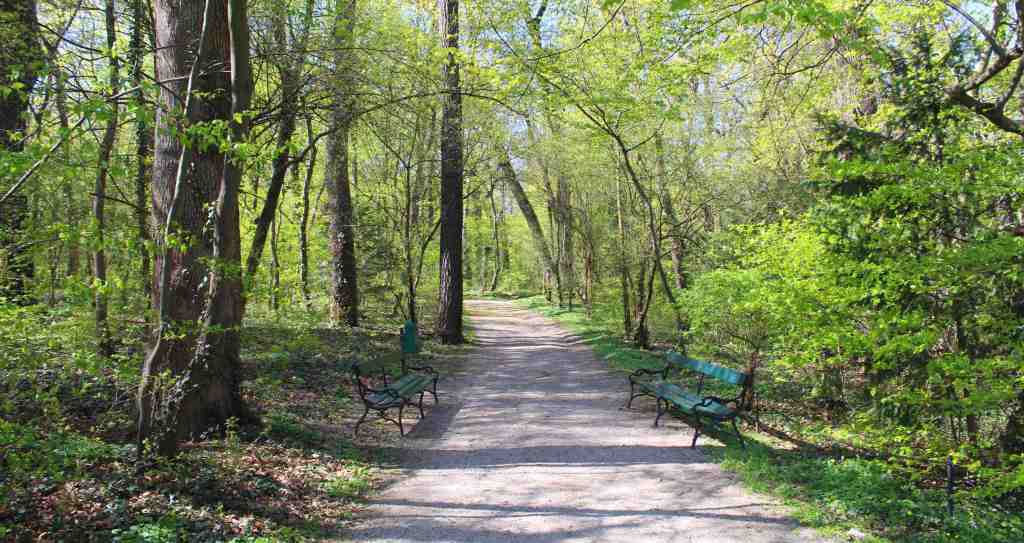
This pretty much did it for my day, as far as sightseeing was concerned. After drinking so much wine, I went back to my Airbnb and had a short nap. Then, as a form of repentance, I put on my running shoes and went to the Donauinsel.

Much like Budapest, you see, Vienna has its own island park. Unlike Budapest’s Margaret Island, however, Vienna’s island is artificial. It was originally created as a form of flood control, but accidentally became the most popular recreational area in the city. The island is narrow and long. If you ran from the southern to the northern tip, and then back again, you would complete a full marathon. Yet it only takes a few minutes to go from one side to the other. When I went, the park was full of cyclists, joggers, and people out for a stroll. And for my part, I quite enjoyed running along the gravelly paths with the cool breeze coming off the water.


I woke up in a melancholy mood, as it was the last day of my trip. Lucky for me, however, my flight back was quite late in the day, so I had time to do some sightseeing. In cases like these, luggage lockers are an essential resource. I checked out of my Airbnb, stowed my bag, and was first in line at the Café Demel to get breakfast.

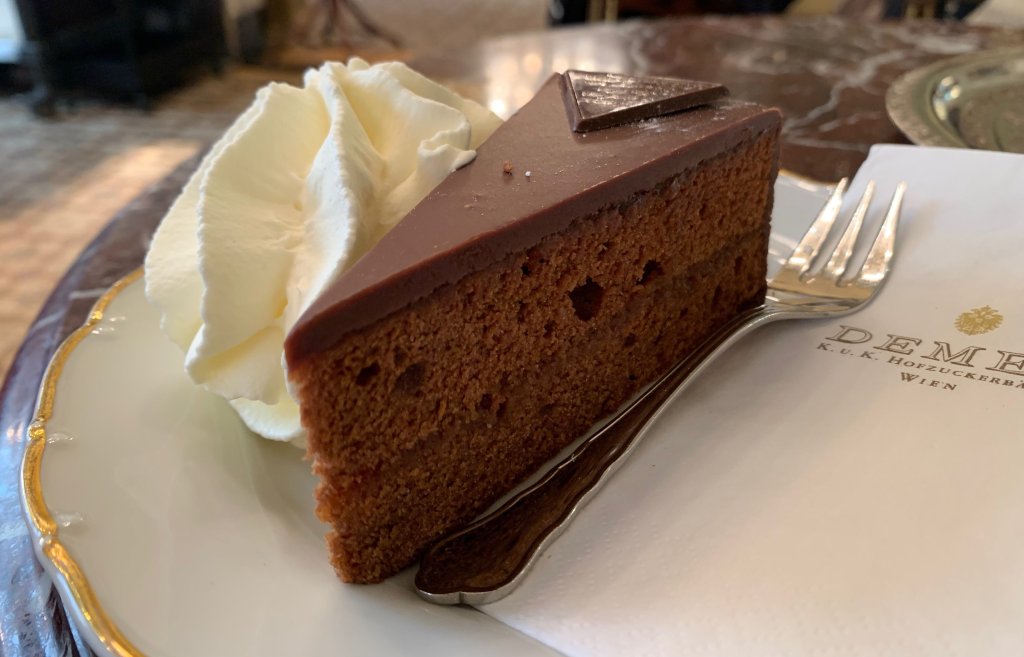
Now, Vienna is famous for its cafés, and justly so. They maintain the old musty smell of the Austrian Empire—with ritzy decorations, bow-tied servers, and a rack of newspapers. Demel is particularly attractive, filled as it is with sweets wrapped up in gift boxes. For breakfast, I ordered the obligatory Viennese classic: Sachertorte. This is a kind of dense chocolate cake with a bit of apricot jam in the center. To drink I ordered a “melange,” which is what the Viennese call a cappuccino for some reason. It was quite good—though, I must say, rather pricey.

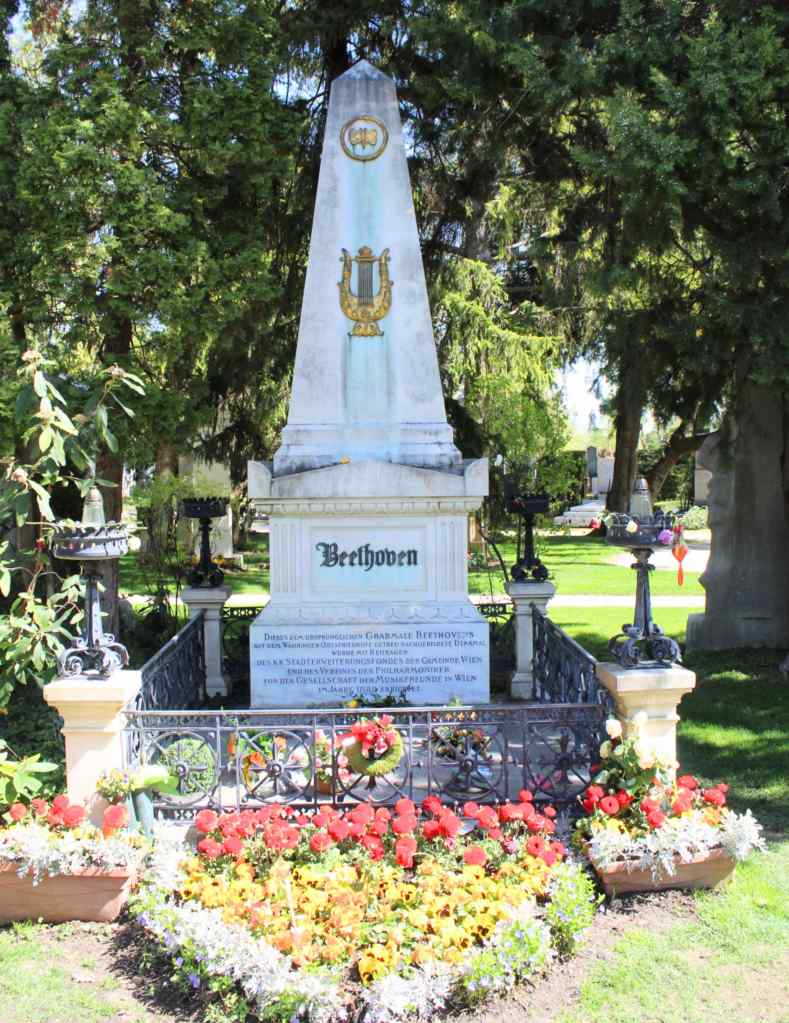
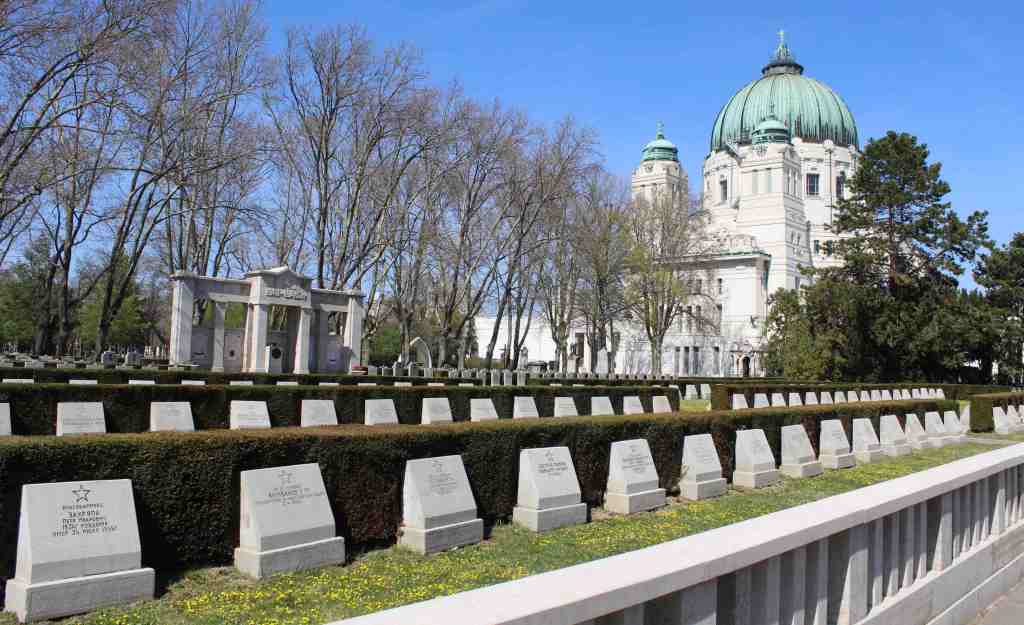
From there, I got on a tram. My destination: Vienna Central Cemetery. This is an enormous cemetery which, its name notwithstanding, is on the outskirts of the city. With three million buried, it is one of the most populous cemeteries in the world. Though not as beautiful as Père Lachaise, this burying ground is an essential place of pilgrimage for music lovers. For it is here that the esteemed bodies of Beethoven, Brahms, Schubert, Strauss, and Salieri are interred.

Now, at first glance it may seem strange that Beethoven, who died in 1827, or Schubert, who died the following year, should be buried in Vienna Central—which, after all, opened in 1863. Their presence is due to a kind of marketing ploy. The cemetery was originally unpopular because of its distance from the city center, so they decided to relocate some revered corpses to make it more of a “destination.” Clearly, it worked.

Luckily for the visitor, all of these famous composers are right next to one another. For me, it is a subtly powerful experience to stand before the graves of such legendary figures. Their reputation is so enormous that they hardly seem real. But when you are standing above their bones, their humanity is palpable; and their achievements become all the more impressive for being made by somebody no different, in essence, from myself.

Aside from the musical greats, this cemetery is also interesting because of its interdenominational nature—not so common in Europe. There are sections for Catholics, Protestants, Greek Orthodox, Jews, Muslims, and even Buddhists. I was interested to find a large section devoted to Soviet soldiers who died during the Second World War.

After taking the tram back to the center, I only had a short time before I had to head to the airport. Since I was then in the throes of a Rick Steves addiction, I decided to follow his walking tour of the city. This proved to be a good choice, as it led me past a few interesting things I had missed. For example, I took some time to admire the enormous and bulbous Plague Column, which was erected in 1679 after a terrible epidemic. Strangely, the Baroque monument does capture (though perhaps unintentionally) something of the horror of a deadly pestilence.

I also was shown something I had overlooked before: the Memorial against war and fascism. This is in the Albertinaplatz, right near the museum. Designed by Alfred Hrdlicka, it consists of several free-standing sculptures made using rock quarried in the Mauthhausen mine. The monument commemorates victims of the Holocaust, as well as the innocent victims of all wars. In this spot used to stand a residential building that was struck by an Allied bomb in 1945, killing many hundreds of people—many of whom are still buried under the ground.

The “tour” ended at the Hofburg palace, the main residence of the Habsburgs. (The Schönbrunn was a summer palace.) It was strange to contemplate such a vast and monumental building which now serves no purpose except tourism. Like Vienna itself, the palace is a kind of head without a body—the wreck of foregone imperial grandeur.

But you cannot feel bad for the Viennese. After all, their city is consistently rated the most livable in the world. After just a few days, I could see why.

Budapest or Bust

Budapest or Bust

I have never met a person who has traveled to Budapest and didn’t like it. Though the city was not even on my travel radar when I arrived in Europe—not featuring prominently in any of the history I was familiar with—one glowing review after another was enough to convince me to pay the city a visit. “Not every city has a vibe,” one of my friends told me one day. “Budapest definitely has a vibe.”

I arrived in Budapest one day in early April, fully ready to be vibed (or whatever the verb might be). A variety of things immediately pleased me: the plentiful restaurants (I ate Chinese noodle soup), the convenient trams and buses, and the well-designed transport app that allowed me to buy every ticket I needed on my phone. And all of it was cheap! Perhaps I am overly attached to lucre, but when I am in a reasonably-priced place I feel immediately better than when I am somewhere expensive. Rather than having to guard my wallet with my life—which means continually fighting my impulses to do pleasurable things—I can relax and simply enjoy the experience. I was, in short, already vibing.

After my bags were dropped off, I first headed to the Hungarian National Museum. This actually wasn’t in my original plans, but by chance it was very close to my Airbnb, so I figured: why not? It was a good choice. The Hungarian National Museum covers the history of the country from prehistory to the present. It is a story that I was hardly acquainted with. To simplify matters greatly, one theme in Hungarian history is the preservation of their very distinct identity in the face of foreign domination and in spite of being at a natural crossroads between Europe and Asia. Hungary was a part of the Roman Empire, the Ottoman Empire, and the Austro-Hungarian Empire, the Third Reich, and the Soviet Union; and yet their culture remains highly distinct.

Apparently this is a real skull, deliberately compressed like this.

For example, the Hungarian language is, as you may know, unrelated to its Slavic or Germanic neighbors. Indeed, it is not even in the same Indo-European language tree that includes everything from English to Sanskrit—meaning that the Hungarians resisted even prehistoric invasions and expansions. Hungarian is, rather, a Uralic language, which means that it is more closely related to Finnish than it is to Russian. This is why it looks so strange to foreign visitors. I did not manage to pick up a single Hungarian word.

(I should also mention that the name for Hungary has nothing to do with appetite, but rather is a latinized form of an old Byzantine Greek name for the area. The Hungarians, for their part, call their country Magyarorszag, or “Land of the Magyars.” Their language is called “Uralic” because it is believed that the Magyars originated in the Urals, in present-day Russia.)

A detail of the museum ceiling.
He looks so friendly.

In any case, it was a wonderful museum, with Roman ruins in the basement, archaeological treasures on the ground floor (including an elongated skull), and beautiful medieval artwork on the top floor. One of the gems of the museum is a piano that once belonged to Beethoven and Hungarian virtuoso, Franz Liszt. And I was particularly gratified to learn the story of the American general, Harry Hill Bandholtz, who personally prevented Romanian forces from looting the museum in the aftermath of the First World War. The exhibit ends with the Soviet period; you walk out saying goodbye to Stalin.

After this, I was rather hungry (pun unintended but unavoidable), so I made my way to the Great Market Hall. This is exactly what it sounds like: an enormous food market in the center of the city. Opened in 1897, it was the brainchild of the first mayor of Budapest, Károly Kammermayer, and it was designed with flair. An enormous steel structure, it is big enough to be an airport hanger, and almost attractive enough to be a church. The roof is covered in colorful tiles, much like the Cathedral of Vienna, and the inside is full of all sorts of decorative touches in its steelwork. Like the Eiffel Tower, completed just ten years earlier, this is a monument of the industrial age.

It is also just a fun place to be. The basement is stinky: full of pickled products and fishmongers. The ground floor has fruit and vegetable stands, wine for sale, butchers (with delicious Hungarian sausages), and lots of vendors selling Hungarian paprika. This spice is, of course, the culinary signature of the country, though you may be surprised to learn that it became popular in the country as recently as the 1800s. (The Spanish, by contrast, have been using it since the 1600s.) Hungarian paprika may not have the deepest historical roots, then, but its fame is justified by its deep flavor. You can trust me on this, since I bought some at the market, took it home, and cooked with it.

The best part of the market is the upper floor, which is full of lots of tourist junk and, much more importantly, restaurants. I stopped at one food stand selling Hungarian staples and got a plate of chicken paprikash with a side of nokedli (Hungarian dumplings). It was phenomenal—so phenomenal that I didn’t mind sitting on the floor (the seats were occupied) and eating it from a flimsy paper plate. I ought to mention that, the following day, I returned to this market and got a Hungarian sausage with potatoes, which was also scrumptious.

Now, a few paragraphs ago, perceptive readers may have noticed the oddity that Budapest had its first mayor in the late 19th century. Isn’t it a much older city? The explanation for this is simple. Budapest was officially created in 1873, when the cities of Buda and Pest (and Óbuda) were joined. There remain significant differences between the two formerly separate cities, however: Pest is older, more touristy, and very flat, whereas Buda—which sits across the Danube—is hillier, quieter, and more residential.

My next destination was right in the center of Budapest: St. Stephen’s Basilica. Compared to many of the grand churches of Europe, this one is rather young, having been completed in 1905. Yet even if it lacks the historical interest of some other buildings, it is still worth visiting for the beautifully decorated interior, which is illuminated with golden light. The basilica is named for the first king of Hungary, who was a pious Christian at a time when many of his fellow Hungarians were pagans. His mummified hand is preserved in an ornate reliquary; and the royal appendage has had, in the words of the placard, an “adventurous fate”—having been kept in Transylvania, Dubrovnik, Vienna, and “carried west” during the Second World War. Despite all this, the best part of visiting the basilica may be the view from the top.
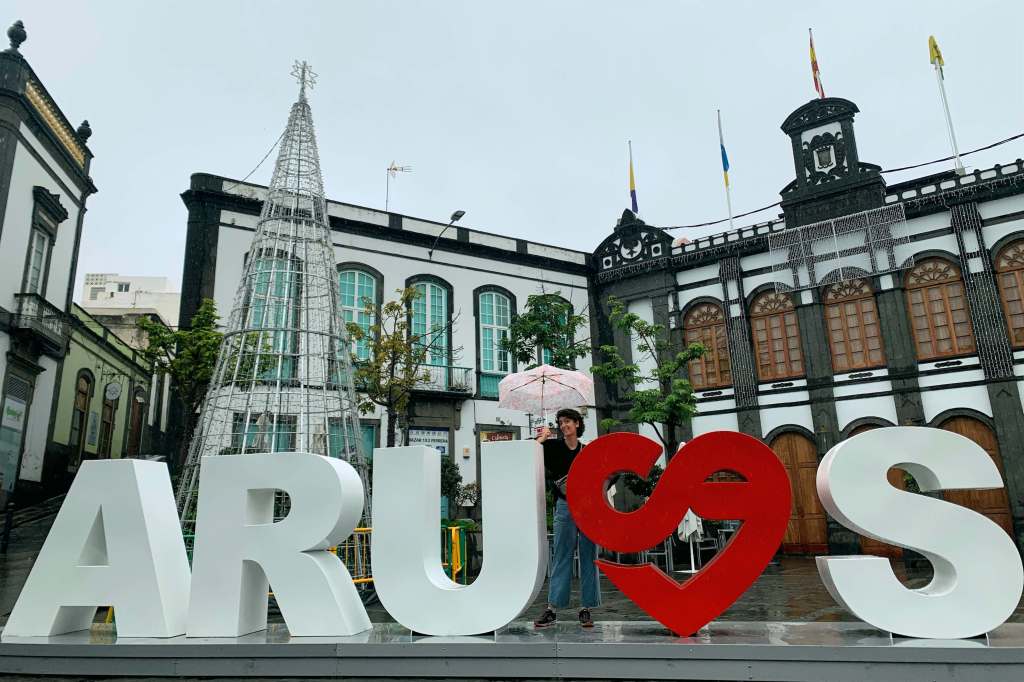
The rest of my first day was uneventful. I walked around the city, ate some goulash and lángos (Hungarian fried bread), and tried some Hungarian wine (very nice). I needed to build up some strength for the morrow.


I woke up early the next day and got ready in a rush. I had booked a tour in the city’s most famous and iconic landmark: the Hungarian Parliament Building. Thankfully, with the help of the excellent trams, I arrived with time to spare, and so could take a moment to enjoy the small exhibit on the building’s architecture located on its northern side. This was a kind of tunnel filled with gargoyles and spires and other stone fragments used in the building. Seeing it all up close did help me realize just how much work went into the design of this monument.
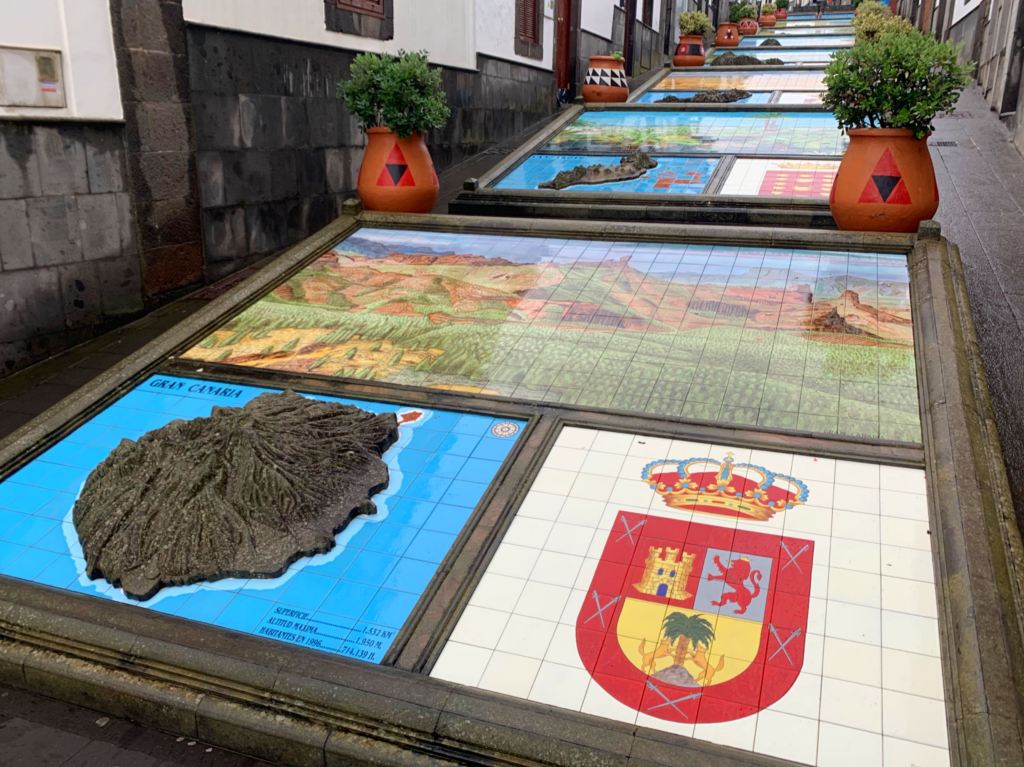
Soon it was time for the tour, and I approached the building. Of course, I had seen it in photos, but its scale is only appreciable from up close. Indeed, it is so big that I almost missed my tour by simply not being able to find the entrance. (One of the guards helped me.) I had to run, but I made it.
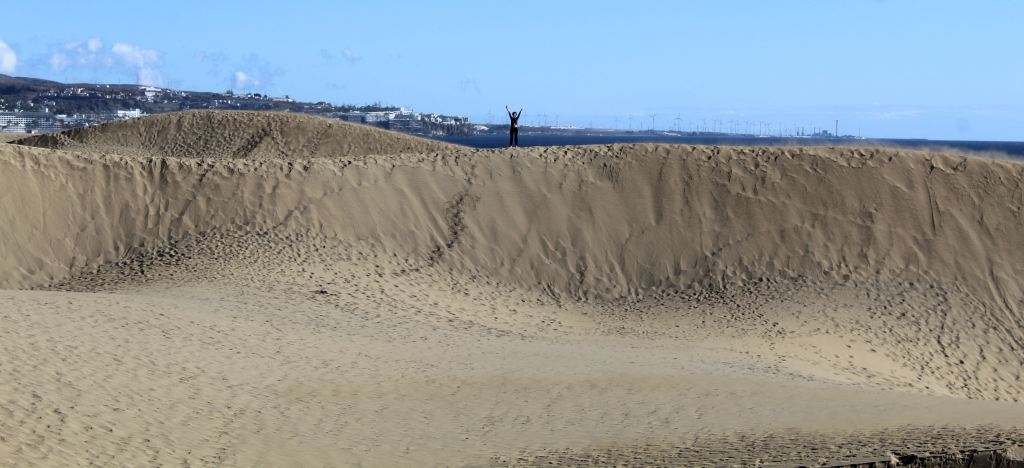
I should mention that tours to the Parliament Building fill up fast, so it is worth booking them well in advance. In my case, I had to sign up for a Spanish tour since there weren’t any English ones available when I looked. Occasionally it pays to be bilingual.

The tour lasted about an hour and took us through just a fraction of the building (it is, after all, the biggest building in the country). But it was a beautiful fraction. Built in 1902, the Hungarian Parliament Building is the soaring, majestic symbol of the country’s sovereignty and democracy. Every inch of it is ornately furnished, with gilded arches, stained-glass windows, and more statues than a cathedral. One highlight is the Assembly Hall, which must be among the most ostentatious settings for a legislative body in the world. The views are stunning, but I can imagine that it gets a little cramped with 199 Members of Parliament and their aides. Another showpiece of the building is the main staircase, which makes the entrances of royal palaces seem tiny by comparison. Right below the central dome is a glass case containing the Holy Crown of Hungary, which tradition states was first worn by St. Stephen himself. It may not be quite that old, but it is a beautiful example of Byzantine craftsmanship. Four liveried soldiers guard the crown, performing an elaborate changing of the guards ceremony every hour.

You cannot take a picture of the actual crown jewels, but a replica is on display in St. Mattias (see below)
Assembly Hall

It is a great shame, to say the least, that a country with such a glorious temple of democracy should be experiencing a backsliding into autocracy under the presidency of Viktor Orbán. Indeed, the danger of dictatorship was starkly obvious during my visit, as it happened just a few months into Putin’s invasion of Ukraine (which shares a border with Hungary). In addition to myself, a Ukrainian mother and child were staying in the Airbnb, refugees of the war. On a lamppost I noticed a satirical sticker linking Orbán to Putin, and I wondered if Hungarians would heed the warning of this war.

Hungary certainly has had its fair share of tyranny. Examples are not far to seek. Right in front of the Hungarian Parliament is the Shoes on the Danube Bank memorial. This is a sculpture depicting just that: empty shoes, right on the edge of the river. This memorializes the Jews and other victims who were executed by the Arrow Cross party—the Hungarian equivalent of the Nazis, who took control of the country late in the war. Victims were first told to remove their shoes (potentially valuable) and then shot into the Danube.

Quite nearby is a less depressing monument, the Széchenyi Chain Bridge. This was the first bridge to permanently unite the Buda and Pest sides of the river. When it opened, in 1849 (for context, 34 years before the Brooklyn Bridge), it was considered a kind of marvel of engineering. More importantly for the tourist, the bridge has a lovely, classical design that forms an iconic part of the Danube panorama. Unfortunately for me, however, the bridge was completely closed when I visited. It had been closed since March of 2021, and is supposed to reopen sometime this year. The bridge is named, by the way, for a politician and reformer—revered by his fellow Hungarians for his progressive ideals—István Széchenyi.

But I am afraid I must return to the topic of tyranny, for my next visit was to the House of Terror. This is a building that was used by both the aforementioned Arrow Cross as well as the ÁVH (Államvédelmi Hatóság), the secret police of the communist regime. No photos are allowed inside, so memory will have to do. The entry came with an audio guide, which gave historical context to the photos and images on display. The story was familiar, if depressing: secret police “disappearing” political dissidents and enforcing the most stringent political orthodoxy. The visit culminated in a long, slow elevator ride to the lower level, which had been used as a prison where suspects were detained, tortured, and executed. 

The wall is covered with the faces of the victims.

I next paid a visit to the Dohány Street Synagogue, more commonly called the Great Synagogue. Its name is due to its size as much as its beauty—it is the largest synagogue in Europe, with seating for about 3,000 worshipers. To visit, you take a guided tour; these are available in many languages and at frequent intervals. The architecture is rather peculiar, combining elements of European churches and Islamic decoration. Yet the synagogue’s history is more compelling than its design. During the Holocaust, the Jewish ghetto was right next to the synagogue; and as a result there is a cemetery for those who died in the brutal conditions. There is also an adjoined museum of Jewish culture, in the former house of Theodor Herzl, a famous activist and journalist, considered to be one of the fathers of Zionism.

The most moving part of the visit is to Raoul Wallenberg Memorial Park, which is on the site of the aforementioned cemetery. Wallenberg, I should mention, was a Swedish diplomat who managed to save thousands of Hungarian Jews from the Nazis (though ironically, he seems to have been killed by the Soviets). His name, and those of others who helped to rescue Jews from the Holocaust, are inscribed on leaves of a statue of a weeping willow designed by Imre Varga. Yet the vast majority of these leaves bear the names of the many thousands of victims of the Nazi terror. In total, over 400,000 Hungarian Jews were killed during the Holocaust, many of them at Auschwitz. Today, there are only about 10,000 Jewish people residing in the country.

(Though I did not manage to visit it myself, I wish I had gone to the Holocaust Memorial Museum while I was there. It was the first state-sponsored Holocaust museum in Europe, and is located in a former synagogue.)

This was a lot of heavy history for one day. So after a quick dinner, I was glad to have a triumphal finale in the Hungarian State Opera House. The building was opened in 1884, just a few years after the slightly more famous Wiener Staatsoper; and from the outside the two look almost identical. The inside is marvelous, as I discovered when I arrived for an evening performance of Richard Strauss’s Die Frau Ohne Schatten. I walked up the marble staircase, below the frescoed ceilings and gilded arches, to sit in my nose-bleed seat high above the stage. The view may not have been great, but I had only paid about $10 for my ticket and felt that it was an amazing deal, all things considered.

That particular opera is known as an extremely difficult work for its many soloists, complex music, and other pyrotechnics demanded by the mythological plot. Its performance was thus a testament to the skill of everyone involved. The particular opera is also quite long, so long that it had to be broken up by three intermissions. I highly recommend any visitors to Budapest to give opera a try, even if you don’t think you like the music. The combination of the fine architecture, elegant dresses, champagne during intermission, and of course the elaborate music, make for an oddly intense experience. Nevertheless, I should admit that I left during the third break, as I didn’t want to be there until midnight.


So far, everything I have described is more or less in the center of old Pest. But Budapest is a far-flung city, with things to see and do in many of its remote corners. This may sound like a negative, but with the city’s excellent public transportation system it is easy to get anywhere. This is why, I think, Budapest does not get as claustrophobically crowded as places like Prague or Munich, which have very focused centers of activity.

Now, to explain the next group of landmarks, you need to know a date: 1896. This is the year of the great Millennium Exhibition, a celebration of the 1000-year anniversary of Hungary. That is, in the year 896, a man named Árpád, leader of the Magyars, was made prince of the newly-created Principality of Hungary. Obviously, the Hungarians of the late 19th century had to celebrate their longevity, and to do so they staged an event similar to a World’s Fair.

Especially created for this event was the first metro on the European continent, and the third in the world (after London and Liverpool). This metro line is still in operation, known simply as Metro Line M1. It was made to ferry Hungarians to and from the fairgrounds. Unlike more modern metros, this one is extremely shallow, just a few feet below Andrássy Avenue, one of Budapest’s principal thoroughfares. The journey from street to metro is almost instantaneous. The metro is also a joy to ride, with attractive cars and stations along the way.

The line ends near Heroes’ Square, the centerpiece of the Millennium Exhibition celebrations. This is a big, open plaza with a sweeping assemblage of statues in two colonnades depicting (as you might expect) heroes from Hungary’s past. The square was obviously built to accommodate masses of people, though for the solo traveler it is almost annoyingly vast. Right in the center is the Memorial Stone of Heroes (often mistaken for a tomb of the unknown soldier), which is a monument to those fallen in war defending the country. Flanking this glorious stone poem to the country’s greatness are two art museums: the Museum of Fine Arts and the Hall of Art. (Unfortunately I didn’t give myself time to visit either.)

Beyond Heroes’ Square is City Park (not very creative names, these), one of the finest parks in Budapest. As you might have guessed, this park was also created for the Millennium Exhibition, and signs of that epochal celebration are not far to seek. The most obvious is Vajdahunyad Castle, a full-scale replica of Corvin Castle, which is now in Romania. This castle was originally built of wood and cardboard and meant to be temporary, but the Budapestians liked it so much that it was rebuilt in stone. Yet aside from these architectural fantasies, the park is also simply a nice place to be. I bought a glass of steaming mulled wine from a street vendor and walked around, enjoying the sight of Hungarians at play.

One thing I did not do, but probably should have, was to visit the Széchenyi Baths. This is a massive thermal bath complex where you can go and soak in water that ranges from warm to scalding. It is one of the most distinctive and famous attractions in the city, but I felt uncomfortable going by myself. To make up for my own cowardice, I recommend you, dear reader, to give it a try.

The other park I visited in Budapest was neither on the Pest nor the Buda side, but right in the middle of the Danube. This is Margaret Island, the green oasis in the center of the city. It is named for a Hungarian Saint, and in the past was covered with churches and monasteries. But the nuns and monks fled during the Turkish invasion. Now there are only a few ruins left to remind visitors of this history. Mostly, it is just a nice place to take a walk. But I was training for a half-marathon, so I decided that I would visit at a faster pace. I soon discovered that Margaret Island is a wonderful place to run. A track—made of special, bouncy material—runs along the edge of the island, allowing you to run with a view of the Danube and the city beyond. Perhaps it was the cool breeze coming off the water, or the thrill of running in a new city, or the competition from the other runners, but I was significantly faster than usual.

So far I have covered a great many monuments on the Pest side. But there remains the other half of the city to explore—the hilly, more sedate Buda.

Perhaps the most famous attraction on the Buda side is Fisherman’s Bastion. It is a place made for Instagram. Constructed around the turn of the 20th century, it is a kind of neo-medieval fantasy castle, whose ornate walls provide an iconic view over Budapest. Its name is due to the fact that the fish market used to be nearby.

Right next door is Mattias Church, perhaps the most beautiful house of worship in the city. Though a church has been here for over 1,000 years, the building as it stands now is gothic in style. It has been through a lot. Among other tribulations, during the Ottoman period, the church was converted into a mosque; then, it was extensively remodeled for the Millennium Exhibition of 1896; and finally it was severely damaged during the Second World War. In any case, the church is absolutely lovely, both inside and out. The imposing gothic exterior—softened by the colorful tilework—yields to a playful explosion of polychrome patterns inside.

Right next door to these two monuments is Buda Castle, an enormous palace that sits on top of castle hill. The original Baroque palace was probably quite remarkable. Unfortunately, however, it was almost completely destroyed during World War II, and the rebuilt castle is not nearly as charming. Or so I hear, since I decided not to visit for myself.

A photo showing the destruction wrought by the Second World War. In the foreground is the Széchenyi Bridge, and Buda Castle is in the background.

My next stop was Gellért Hill, which is one of the highest points in Budapest. I was unlucky, however, as I discovered that the top was closed off for some sort of construction work. I had to content myself with a visit to the Garden of Philosophers. This is a bizarre park a little ways down the hill, which features an assemblage of statues of major religious leaders: Jesus, Abraham, Buddha, Laozi, and Akhenaten (the Egyptian Pharaoh who created a monotheistic cult). Also present are Gandhi, the Bodhidarma, and Saint Francis of Assissi. (Notably absent is a representative of Islam; but of course depicting Muhammad would be, to put it mildly, controversial.) All of them are gathered around a small metallic ball, which represents their common goal. This was the work of a Hungarian sculptor, Nándor Wagner, who wanted to symbolize the commonalities between different faiths. While the idea that the various religions are striving after the same thing is certainly appealing, I think the sculptures are quite compelling in themselves as human figures.

I don’t know why Akhenaten looks like an alien.

Another popular attraction on the Buda side is the Hospital in the Rock. This is exactly what it sounds like: a hospital built into the side of a hill, using a previously existing network of tunnels. These tunnels had been used for centuries by locals as food cellars. In the leadup to the Second World War, the tunnels were equipped with medical equipment and staffed with doctors. But the casualties overran the hospital’s capacity by over 600%. The guide (and you have to visit with a guide) explained that doctors had so few materials that they had to reuse bandages, with predictably grizzly results. After the war, the hospital was repurposed as a kind of nuclear shelter, though it was never used in any emergency situation again. (The guide also said that it couldn’t have withstood a nuclear attack, anyway, as it is not deep enough.) Now the tunnels are filled with hundreds of wax dummies and old equipment, providing a graphic (if silly) illustration of the hospital’s history.

All of this was wonderful enough. But my favorite thing on the Buda side—maybe in the entire city—was Memento Park.

Getting there is not easy. Located on the city limits, it is only accessible by bus. I complicated matters by taking the right bus in the wrong direction; but I realized soon enough, got out, crossed the street, and was soon on my way. 

Memento Park is the dustbin of history, a place where all of the Soviet statues were put after Hungary became independent. It is located in a suburban neighborhood, but you can’t miss it: there is an enormous brick platform topped with the boots of Joseph Stalin. The complete statue was actually destroyed during the Soviet Union. In 1956, the Hungarians attempted to throw off the Soviets. The Red Army crushed the uprising in a matter of days, but not before the Hungarians had a chance to destroy this hated symbol of Soviet Rule. I went inside the base of this statue, and discovered a room full of busts of Stalin and Lenin.

Next to the entrance is one of the best statues in the park: a cubist rendition of Marx and Engels, made from granite taken from the Mauthausen Concentration Camp. The little kiosk where you buy your tickets is an attraction in itself—full of old Soviet knicknacks. You can, for example, buy a real Soviet passport or postcard, or even a CD with old Soviet anthems. With my ticket, I also purchased a little booklet that explained each of the statues on display. I was glad I had it, since otherwise there was little signage. 

Walking around the park is a surreal experience. Dramatic and triumphant statues sit decaying in a field, almost as Washington D.C. would appear after a disease wiped away humanity. The bulk of these statues are in the recognizable Soviet social-realist mode—heroic soldiers, stolid workers, and the occasional full-bodied woman. As works of art, they rarely rise above propaganda, though they are wonderfully evocative of that era. And some are indeed memorable.

One favorite of mine (for obvious reasons) was a monument to the Hungarians who fought in the Spanish Civil War. Three rather frighteningly abstract soldiers stand saluting next to a pile of rocks, on which are inscribed the names of battles during that war. Another highlight is the Martyrs’ Monument, created by Kalló Viktor, which shows a barefoot man reaching out towards the sky as he collapses (presumably from being shot). Just as dramatic is the Republic of Councils monument, which shows a victorious worker rushing forward.

But my absolute favorite is the Béla Kun Monument. Kun’s life illustrates the ups and downs of the communist movement. He fought in the First World War for the Austro-Hungarian empire, was taken prisoner by the Russians, became a communist, returned to Hungary, and led a revolution in his native country. Then, when the Hungarian Soviet Republic collapsed, he escaped to Soviet Russia and participated in political purges. But he reaped what he sowed, as he was himself eventually accused of Trotskyism and executed. It was only after Stalin died that he was rehabilitated and made into an official hero, as depicted in this posthumous monument. This is unlike any statue I have ever seen. Kun stands on a platform, pointing with his hat, while a mass of soldiers march to war beneath him. The chrome plating on the soldiers and their odd, compressed dimensions made them look like toys. It is so silly that it parodies itself.

Everything I had seen and read—not least the Béla Kun Monument—indicated that communism was not a happy time for Hungary (or the Soviet Union, for that matter). Nevertheless, I admit I found it touching that ordinary workers were held in such high esteem. It may have just been propaganda, but even paying lip service to workers is better, in my opinion, than our worship of the super-rich. 

All philosophizing aside, the final exhibit made it very clear what the Soviet Union was actually about. Showing in the adjacent exhibition center was a film by Gábor Zsigmond Papp, in which he had edited together films used to train the secret police. Consisting of four parts—hiding bugs, searching houses, recruiting, and networking—the film was a shocking illustration of the strategies that secret police would use to search out political dissidents. I remember scenes of agents sneaking into a gym locker room to plant a listening device, or picking a lock in an apartment when somebody wasn’t home, in order to search it. (The agents were careful to put everything back where it was, so the suspect wouldn’t know they were there. Apparently, some people would leave small objects, like a hair, stuck in a closed door, so that they would know if the house had been entered.) Clearly, privacy was not a priority during this time. If ordinary people were celebrated openly, they were persecuted secretly.

This was my final stop in Budapest. I wandered back into the bright spring day, walked into the suburbs, and caught a bus back to the city center. It had been a wonderful visit. Budapest is convenient, comfortable, cheap, and full of art and history. And it certainly does have a vibe.

Chicago: Sewage and Synchronicity

Chicago: Sewage and Synchronicity

For years, one of my closest childhood friends, Greg, was living in Chicago as he completed his Ph.D. in history. In the summer of 2021, he was at work on his dissertation, which meant the window to visit him was narrowing. So my brother and I made the journey from New York for a long weekend in the windy city.


As the plane broke through the high, wispy clouds, the city came into view. What was revealed was an astonishingly flat landscape divided into grids as far as the eye could see. We touched down in O’Hare Airport, where we caught the blue line train to the city center. It was a long ride with quite a lot of racket; but complaining about functional public transport in the United States is in bad taste. Slow and loud as it may have been, the “El” trains got us out to Hyde Park (where Greg lives) for a very affordable price. I am grateful.

Since we spent half our time just hanging out, I will not attempt any sort of chronological account of our trip, and will instead simply focus on the major sights we saw while there.

 The most logical place to begin is right in the center of the city. Compared with New York, Chicago is a fairly dispersed city, having no natural boundaries to its expansion besides Lake Michigan. Thus, much of Chicago is not particularly dense—indeed, can seem almost suburban in its layout. However, the heart of the city is rivaled in America only by Manhattan in the height and splendor of its skyscrapers.

These buildings are gathered on either side of the Chicago River, which flows through the city center and into Lake Michigan. (It is this river that the Chicagoans dye green every St. Patrick’s Day, to the delight of the fish.)

Or, well, the river is supposed to flow into the lake; but in 1900, the flow of the river was reversed by city engineers. This was a highly controversial move, as it was done because all of the sewage and garbage deposited into the river was flowing into Lake Michigan, the city’s main water source—an obviously unsanitary situation that provoked outbreaks of typhoid and cholera. Through the use of canal locks, the river was made to flow backwards, thus bringing the tainted water via the Chicago Sanitary and Ship Canal (an enormous engineering feat in itself) to the Des Plaines River, which eventually reaches all the way to the Mississippi River.

But you can imagine that, however popular this reversal may have been in the city of Chicago, it was decidedly unpopular for those further downstream. Indeed, in 1906 the state of Missouri eventually took the issue all the way to the Supreme Court, which ruled in favor of Illinois (though it does not seem especially fair to me).

While we are on the topic of sewage and the Chicago River, there is another story that I must relate. This is the infamous Dave Matthews Band Chicago River incident of 2004, in which a tour bus belonging to the band dumped the bus’s “blackwater tank” (in other words, the sewage) while crossing a bridge over the Chicago River. The driver apparently thought that he could get away with such a maneuver. But unfortunately, the bridge had a grated metal bottom which let the vile liquid through. At just that moment, a boat was passing underneath giving an architecture tour, and the passengers were doused in “blackwater.”

Having said all this, I suppose the fish have more to worry about than green dye.

But to return to my original point, the Chicago River—if not the most appealing body of water—is surrounded by some magnificent architecture. Surely neither you nor I have the patience to go through every single building in the city of Chicago, so I will only mention a few that caught my eye.

One I particularly liked is the Wrigley Building, which features a tower styled after the Giralda in Seville. Built at almost the same time (the 1920s) was the Tribune Tower, which has an elaborate neo-gothic style, with fake flying buttresses adorning the top. Somewhat similar is the neo-gothic Mather Tower, which is so tall and slender that it is sometimes likened by Chicagoans to an upside-town telescope. And completing the rounds of neo-gothic skyscrapers, we have the First United Methodist Church, which looks like a beautiful church spire had been cut off and attached to a bland office building. Of course, the entire thing is not used as a church—but if it were, it would be the tallest church building in the world.

I must begrudgingly mention the Trump Tower, which is one of the most notable buildings in the Chicago skyline. As one might expect of the former president, he wanted to have the tallest building in the world. The plans were considerably scaled back, however, after the September 11 attacks, though Trump’s ego may have been assuaged by the enormous TRUMP sign on the side of the building. (The same architect who designed this building, Adrian Smith, went on to design the Burj Khalifa, which indeed is the tallest building in the world.) On the subject of tall buildings, I must of course mention the big momma of Chicago skyscrapers, the Willis Tower (though you may know it by its former name, the Sears Tower.) This 110-story mammoth is the dominant feature of the Chicago skyline. After it was completed in 1973, it became the world’s tallest building, and held that title for nearly a quarter of a century. It is still among the very tallest of American skyscrapers. The view from the top must be incredible, but the price is pretty steep.

I have left my absolute favorite for last: Marina City. These are two twin residential towers like no other I have ever seen. The aptest description I can think of for these knobby, gnarly, bulging edifices is of two corn cobs. They were built in groovier times—the 1960s—and very much retain a sense of playful fun. That is to say, unlike virtually every “serious” building, there is nothing at all pretentious in this design, and I found myself wondering what it must be like to live in such a whimsical place.

I think they look especially cool in black and white.

Even with such a brief description, I think several facts about Chicago are immediately evident. Most obviously, if you have any appreciation for fine architecture, then Chicago is a wonderful place to visit. Furthermore, since enormous skyscrapers bearing the names of famous companies do not just spring up from the ground, it is evident that Chicago is an economic powerhouse.

Or at least it was. After hitting a peak of population in the 1950s, Chicago has been steadily losing residents, and it seems possible that the city’s days as a center of finance and industry are behind it. But, as I have learned from my travels in Europe, often the best places to visit are the cities that are past their economic prime. Nobody visits Florence and wishes that it were still a power-hungry city-state. Perhaps it is insensitive to say so, but the diminution of economic development helps to preserve valuable heritage. And, ultimately, such places can be far more pleasant than the crawling ant hills which generate capital.

All prognostications of hope and doom aside, another worthy place to visit is Millennium Park. This park opened as recently as 2004, on what used to be the site of the city’s rail yards. As urban centers in the United States deindustrialize, uses must be found for the old factories and railways which have fallen into disuses. Millennium Park is a wonderful model for how this can be done, for it has transformed a large swath of dead real estate into one of the most popular places to visit in the entire country.

One thing that makes the park so attractive are the works of public art. Most famous is Anish Kapoor’s Cloud Gate, perhaps better known as “the Bean.” Compared to, say, Michelangelo’s David it may seem extremely simplistic: steel welded together into a bean shape and then highly polished. However, any fair judge of the work must admit, I think, that it is a brilliantly successful work of public art. Walking around this huge, misshapen fun-house mirror brings out a sense of childish delight in many visitors. And residents of Chicago do have a sense of ownership with the Bean, as evidenced by the hilarious series of 2017 fake Facebook events which began with “Windex the Bean.” A great deal of public art—especially abstract, “modern” public art—falls flat, in the sense that residents hardly care about it. But the Bean has come to symbolize all of Chicago, and therefore must be considered exemplary.

An obligatory Bean selfie.

Just as delightful, in my opinion, is Jaume Plensa’s work Crown Fountain, which features two large towers of video screens over which water can flow. These towers can show any image. But when I visited, these featured faces of ordinary people “blowing,” with a stream of water emanating from their mouths. Judging from the children who were happily gathered underneath these streams, playing in the water, I think that Crown Fountain must also be considered an exemplary success of public art—art which is fully embraced by the community.

Right next to Millennium Park is one of the greatest attractions in the entire city: the Art Institute of Chicago. Now, before visiting I knew that this was a great museum. But I was frankly unprepared for the quality and size of the museum’s collection. Very few museums in the world are comparable; and in the United States, I believe that only New York’s Met stands on the same level.

The Art Institute has an encyclopedic collection, not only of European paintings, but ranging from Ancient Egypt to the Far East to indigenous American art. More importantly, this collection is of the very highest quality. At every turn I was faced with an intriguing work—sometimes striking or bizarre, sometimes shockingly beautiful, but always interesting and worthy of contemplation. If I had known that the museum would be so excellent, I would have tried to spend more than a few hours there. As it was, I was only able to enjoy the highlights.

Greg first guided us to his favorite work, a series of stained glass windows by Marc Chagall, which have a soothing, ethereal midnight blue glow. (And I was reminded of how fortunate I am to have comparably beautiful Chagall windows near my house in Sleepy Hollow, at the Union Church of Pocantico Hills.) For my part, I was especially excited to see Georges Seurat’s masterpiece of modernist alienation, A Sunday Afternoon on the Island of La Grande Jaffe; and I was surprised and delighted to encounter the American equivalent, Edward Hopper’s Nighthawks. The Art Institute has a strong collection dealing with everyday despair.

But the Art Institute is certainly not limited to negative emotion. From Monet, to Georgia O’Keeffe, to the amazing woodblock prints of Hokusai, the lush beauty of nature is present in abundance. From El Greco’s religious ecstasy, to a statue of the Buddha in meditation, to a ritual knife used by rulers in the Chimú culture, we can see evidence of our preoccupation with the supernatural. There are portraits of rural life (like American Gothic or Monet’s painting of haystacks) as well as urban life (like Caillebotte’s rendering of a Paris street or Delauney’s distorted Eiffel Tower). Compare the locomotive in Monet’s Arrival of the Normandy Train with the one in Magritte’s Time Transfixed to see how the same object can be examined, first, as a sensory impression and, second, as a symbol for the unconscious.

But all of these comments and categories are ultimately just a superficial attempt to come to grips with something whose power lies in its very ambiguity—as is true of all great art. My point is simply that you can hardly come away from the museum without a sense of wonder.

(The Art Institute is featured in my favorite Chicago movie: Ferris Bueller’s Day Off. Cameron experiences a kind of existential dread—or awakening, perhaps?—in front of Suerat’s masterpiece, while Ferris and Sloane kiss in front of the Chagall windows.)

I was particularly gratified to learn that the famous 2018 portraits of Barack and Michelle Obama were on loan from the National Portrait Gallery. I had actually missed my opportunity to see them during my 2019 visit to Washington D.C., so it was one of life’s rare second chances. For me, both Kehinde Wiley’s portrait of Barack and Amy Sherald’s portrait of Michelle are well done. They achieve the traditional aim of a portrait, in that they present a likeness of the subject that reveals something of their personality, while also providing a novel twist on the old and tired tradition of oil portraiture. I particularly like Wiley’s take on Barack, in that it emphasizes his thoughtfulness, which I think is his defining quality.

The Obamas are, of course, hometown heroes in Chicago. Michelle has deep roots in the city, having been born and raised on the South Side. And Barack (despite having spent much of his childhood in Hawaii) is identified with the city as well, for it was here that he began his political career. The cult of the Obamas is epitomized in the so-called Kissing Rock. Located in the Hyde Park neighborhood, this is a plaque affixed to a rock, celebrating the spot (approximate, I suppose) where they shared their first kiss. Not far is the site of the future Barack Obama Presidential Library, not yet opened as of this writing.

On the subject of museums, I ought to mention the other major museum we visited on our trip: the Museum of Science and Industry.

This museum is quite far from the center of Chicago, being located on the South Side, near the Hyde Park neighborhood where we were staying. As with many museums around the world, this one is housed in a magnificent building that was constructed for another purpose—in this case, the 1893 World’s Columbian Exposition (basically a world’s fair).

I insisted on going for the simple reason that I had recently watched the classic German war film Das Boot and I felt that I had to see the German U-boat on display. My first impression of the U-Boat was of its size: somehow I had imagined the U-boats would be relatively compact affairs. But U-505 was enormous: 250 feet (76 meters) long, and had a crew of about 50 people. She had an eventful history. After sinking several boats in 1942, she suffered a string of bad luck as she was repeatedly sabotaged by members of the French resistance working at the docks. Finally, on her 10th patrol, she was attacked with depth charges—an experience that proved so traumatic that the captain actually shot himself in front of his crew during the attack. Eventually the U-boat was disabled by the US Navy, who captured the vessel in order to study her.

Greg and Jay for scale.

At the time, I found the experience of seeing an actual German U-boat to be almost awe-inspiring—the chance to see with my own eyes something I had heard about since I was a kid. But in retrospect I am disappointed that we could not take a tour of the interior. Normally the museum offers these tours (for an additional price), but when we visited it was unavailable because of the blasted pandemic. Another casualty of the pandemic was the coal mine. Amazingly, the museum has a large replica coal mine filled with machinery from different time periods, which visitors can tour. But unfortunately for us, as with the U-Boat, the small enclosed spaces make it unfriendly to social distancing rules, and it was closed.

(On the plus side, we did save money this way, since both the U-boat and the coal mining tours cost extra.)

The Museum of Science and Industry is enormous—with exhibits about agriculture and aviation, about weather and math—but only a few things stick out in my memory. One is the beautiful Pioneer Zephyr, the first diesel-powered train in the United States. It has an extremely sleek design made out of glimmering stainless steel, which at the time probably looked futuristic but which nowadays looks retro. Aside from being an attractive vehicle, the Pioneer Zephyr is important in American history, as it helped to repopularize train travel after the Great Depression. It was so streamlined and so fast (it set a speed record between Denver and Colorado) that it was even nicknamed “The Silver Streak” and made the subject of a movie. But my favorite touch was the “observation lounge” in the rear car, which was designed to provide panoramic views as the passengers flew across the countryside.

Another wonderful exhibit was the Great Train Story. This is an enormous model train set, which is a scale model of the journey between Chicago and Seattle. It was obviously made with obsessive attention to detail: at every point in the trip there is something of interest. Though I have no interest in model trains whatsoever, I found myself fully absorbed as I walked around the periphery, following the train as it traversed the “country.” At its best, train travel can be charming and romantic (not to mention efficient), allowing you to glide through landscapes the way a ship sails up a river. And, strangely, the Great Train Story captured that sensation.

That does it for my visit to the Museum of Science and Industry. But I feel I ought to mention the other great museum of Chicago, the Field Museum of Natural History. This is located close to the Art Institute and is one of the great natural history museums of the world. One of my few regrets from the trip is not having visited this institution, as it has an excellent collection of dinosaur fossils.

The most famous of these fossils is the T-rex nicknamed Sue, who is special for many reasons. For one, Sue is the most complete T-rex fossil ever found, with more than 90% of the skeleton (by weight, not by number of bones) accounted for. Sue is also special for having had a tough life. She had broken ribs and a damaged shoulder blade (which healed), holes in her skull from some kind of parasite, and she also probably suffered from arthritis and gout. Sue was one sick puppy. But the story of Sue’s discovery is a drama in itself. Somehow, it involved an FBI raid and the leader of the fossil expedition being sent to prison. To top it all off, when she was sold to the Field Museum, Sue fetched the highest price of any dinosaur fossils ever found up to that time ($8.3 million in 1997, which would be about double that today). She is worth every penny.

This pretty well does it for my time in the center of Chicago. But during our visit we spent most of our time, not visiting the main sites, but in Hyde Park with my friend Greg.

A student of the University of Chicago, Greg naturally lived quite close to its campus. One day he gave us a little tour as we made our way to a farmer’s market. As we walked through it, I found the manicured, neo-gothic campus to be both beautiful and strangely familiar. This deja vu was due, I think, to the college’s architecture being influenced by the taste of its founder: John D. Rockefeller. I grew up in the shadow of Rockefeller’s estate, so by now I can recognize his preferred aesthetic: neo-gothic, molded out of gray granite. This is especially evident in the monumental Rockefeller Chapel, the dominant structure of the campus, big enough to seat 1700 people. Compare it to another great Rockefeller church, the Riverside Church in Manhattan, and the similarities are unmistakable.

Rockefeller Chapel

As we walked, a question popped into my mind, seemingly out of nowhere:

“Greg, what do you think is the most beautiful college campus in America?”

He thought about it and answered: “Pepperdine,” mainly because of its prime location on a hill overlooking the Californian coast.

We arrived at the farmer’s market and I proceeded to stuff myself with artisanal meat pies. But I had a shock when we went up to a fruit stand and the vendor said to Greg:

“You get a free banana if you answer this question.”

“Shoot.”

“What’s the most beautiful campus in the United States?”

“Pepperdine.”

And he got his free banana.

This is one of the most striking examples of synchronicity—uncanny coincidence—that I can remember. The chance that the fruit vendor would ask the exact same question that had popped into my head five minutes prior seems remarkably low. If this was an act of God, I suppose He really wanted Greg to have that banana.

I should also mention our trips to the lake. After just a short walk, we found ourselves on a lovely sand beach on the shore of Lake Michigan. The water was cool, calm, and—best of all—free of salt. (Not that I would drink it, but at least it doesn’t hurt if it gets in your eyes.) And unlike many urban beaches I have visited, it also wasn’t overcrowded. It made me realize how unfortunate residents of Madrid are not to have a water feature nearby. Swimming was wonderfully refreshing after a day of trekking around in the heat. We went on three separate occasions during our four-day trip, and I can easily imagine becoming a regular during the summer months. 

Our first day, the water was choppy.

This part of the city does have a major attraction: the Frederick C. Robie House. Completed in 1910, the house was designed by Frank Lloyd Wright and commissioned by an assistant manager who was just 28 years old (this is when the real estate market was kinder, it seems). Poor Fred Robie did not, however, get to enjoy the fruit of his wealth and taste for long. After just fourteen months, a combination of his dissolving marriage and inheriting his father’s gambling debts made him have to sell the house. The next owner, David Lee Taylor, wasn’t any luckier, as he died less than a year after moving in. Eventually the house ended up in the hands of the Chicago Theological Seminary, who used it (rather sacrilegiously) as a dormitory. The clergymen even planned several times to demolish the building in order to construct a bigger building for their students, and the nonagenarian Wright had to get involved in the protests to stop it. 

Nowadays, the Robie House is listed as a UNESCO World Heritage Site, so it is well out of danger. It has also been largely restored to its original condition. To visit, you need to sign up for a tour, which required no previous reservation when we visited.

This was the first (and so far the only) Wright house I visited, so I did not know what to expect. My only experience of an architecturally notable home is the Casa Batlló, in Barcelona, which was designed by Antoni Gaudí. Compared to the Catalan architect’s intricate and exuberant style, Wright’s design seemed extremely restrained. However, as the tour progressed, I began to appreciate the cohesive vision that tied together everything from the brickwork, to the light fixtures, to the furniture. Everything was of a piece. The horizontal is consistently emphasized over the vertical, making the house seem short, flat, and stretched out. Unlike in Gaudí’s work, right angles abound, which gives the space a kind of crisp mathematical precision. The palette of earth tones that characterize every surface in the house almost make it seem as if the house sprung out of the ground. I especially liked the designs on the stained-glass windows, which are ornamental without being ostentatious.

The guide, who was excellent, recited several of Wright’s more pugnacious quotes about architecture, such as “Modernistic houses are more boxes than houses.” Wright clearly had his own ideas about how a building should be put together. But I must say that, however beautiful the house may have been, I did not find myself wishing I could live in it. The Wright furniture was stylish but did not seem comfortable, and the balanced rooms did not have enough available space for my liking. Also, I imagine that the many large windows make it quite difficult to heat in Chicago’s brutal winters. Maybe this is why the priests wanted to replace it. I wouldn’t want to live in a work of art.

This pretty much rounds out my experience of Chicago’s main sights. To conclude, besides our visit to the city’s gay neighborhood (Northalsted) to spend time in a fun bar with arcade games, I should mention the food. Naturally, we had to try Chicago’s most iconic dish, deep dish pizza. My mom actually went to school in the city and cooks deep dish at least once a year, so I do not have the typical New Yorker’s scorn for this style of pizza. Deep dish really isn’t very comparable to a “normal” pizza, anyway; it is more like a casserole. But if you accept it for what it is, I think that it is extremely delicious.

The other iconic Chicago food we had were the hot dogs. These are traditionally made of beef and topped with pickles, pickled peppers, onions, tomatoes, mustard, and celery salt. I was a bit skeptical of having so many toppings, but it may have been the best hot dog I have ever had. The many sour and acidic ingredients help to balance the greasy, meaty flavor of the frank, making for one perfect gustatory experience.

My biggest regret from the trip is that we didn’t visit one of the city’s many blues bars. The only other time I have been in Chicago was when I was 17 years old, visiting colleges with my aunt and uncle. They were kind enough to take me to a blues bar and I remember loving it. Indeed, I bought the band’s CD and listened to it for weeks afterwards. But this was 2021, COVID times, and we deemed it too risky to go into a crowded bar. I suppose I will just have to return to the windy city.

After a final swim in the lake, my brother and I got on the El and made our way to the airport, where we wolfed down some Chinese food and awaited our flight back to New York. It had been a great trip.

Gauchos: A Lifelong Bar

Gauchos: A Lifelong Bar

One of the best parts of living in Spain is the restaurant scene. The country is exceptional simply for the number of dining establishments. If I had to guess, I would say that there must be more bars and cafés per capita here than in any other country in the world. And though you may not think so, this alone is quite a wonderful thing, since you really never have to worry about where you are going to eat or drink. Chances are, there will be something close.

But in this post I want to focus, not on the quantity, but on the special quality of Spanish restaurants. And to do this, I think it will be better to discuss one exemplary bar rather than to speak in abstractions. For this, I went across the street to one of my favorite local bars, Los Gauchos, and interviewed them. These are my discoveries.

Gauchos is located in the Pacífico neighborhood, which is fairly central but which doesn’t attract much tourism. It is in many respects a typical Spanish bar—or, as the Spanish say, “un bar de toda la vida” (a lifelong bar). That is, it is the sort of establishment you might find in the north or the south, the east or the west, and which retirees and children would both recognize.

An example of a vitrina, one of the most characteristic features of a Spanish bar.

According to Javier—the son of the owner—Gauchos has been open for about thirty years. It was purchased from previous owners, who had run the bar for fifteen years before that. A lifelong bar indeed. (It was the previous owners who named the bar after the famous “gauchos,” who were something like South American cowboys.)

The bar has been around so long that the neighborhood has changed around it. According to Javier (who has worked here since he was 16) and the jovial bartender Melchor (who has worked here since it opened 30 years ago), Pacífico has become more residential in recent years. In past decades, the area was full of offices and industry, and consequently was a ghost town on the weekends when nobody had to work. Lately, they’ve noticed that rising rents are pushing younger people out of the neighborhood, further into the peripheries of the city. 

Now, my country has dive bars and local restaurants aplenty. But I think the closest thing the United States has to this sort of restaurant is, perhaps, a diner—a privately-owned restaurant which nevertheless has a recognizable aesthetic and a fairly standard menu. However, the Spanish “bar de toda la vida” is quite different in being, well, a bar. There is simply no place in my country where you can get a coffee and toast in the morning, eat a multiple-course meal at lunch, and have a gin tonic with your friends until late at night. The typical Spanish bar is an all-in-one experience.

This makes Gauchos, and other bars like it, a kind of de facto neighborhood gathering place. In the morning it attends to the mad rush of commuters on their way to work. Around lunchtime, besuited office workers might sit down for a leisurely lunch. And at night, the sidewalk is full of neighbors having a drink. Partly because apartments in Madrid are often small, friends tend to meet in bars rather than in one another’s houses. The neighborhood bar thus plays an important role as the communal living room. 

Many times I have witnessed a grandpa or a grandma come after picking up their nieto from the nearby school. The other night, three generations of a family came in to hang out. Meanwhile, a man with a guitar sat down to drink peppermint tea and read a comic book. The most raucous nights are when there is an important football match, and the bar and even the pavement fill up with people watching the game on the large TVs, screaming in triumph or agony at every development. In short, the clientele is a cross-section of the neighborhood itself.

As I mentioned, the typical Spanish bar is similar to the American diner in having a standard menu. Just as the latter will have pancakes, hamburgers, and milkshakes, so the former will have bocadillos, tostadas, and tortilla de patata. If Gauchos’s menu is exemplary, it is in having even more reasonable prices than usual. You can order a full plate of food for about 5 euros. The lunch menu—which includes two courses, a drink, and dessert—costs ten euros and fifty cents.

The low prices are not incidental, but essential to any neighborhood Spanish bar. It is a place for anyone and everyone to come. This is a major contrast with most bars and restaurants in the United States, which are seldom cheap (especially after tipping), and which normally try to distinguish themselves with ornate decorations or unusual food options. By contrast, you can buy a cup of coffee in Gauchos and sit there for hours without anyone bothering you.

The contrast goes deeper. Neighborhood bars in Spain are essentially public, open spaces, where anyone can come in and feel at home, whereas bars in the United States are very different. Gauchos, for example, is bright inside and there is never any music playing. (Hemingway would call it a “clean well-lighted place.”) You don’t have to shout to have a conversation and you don’t have to squint to read. By contrast, I often find the darkness and loudness of American bars to be sort of oppressive. You can seldom forget that the bar is private property and that you are not the owner.

The aesthetic of Gauchos is extremely simple. The walls are white, and the chairs and tables are completely plain. As is common in Spain, the bar itself has a large glass display cabinet that is even refrigerated, where the customer can see the various options for tapas,* or even raw meat and pickled fish to be used later. The sign outside consists of simple plastic lettering against a white background. Below this is the iconic toldo verde (green canopy), where the patrons gather to escape either the sun or the (rare) rain.

(*There seems to be some confusion among Americans as to what tapas are. In Madrid, a tapa is just a small bit of food included with your drink. This is normally just a few olives or some mixed nuts. But in a good place like Gauchos, you might get a mini sandwich, some fried chorizo, or a plate of patatas bravas.)

Some tapas waiting to be deployed. The fish on the right are boquerones, anchovies pickled in vinegar. (They’re good!)

There is, in short, hardly any decoration to speak of, which is why British journalist Leah Pattem, in her popular blog, has coined the term “no-frills” for this sort of establishment. It is an apt description, and I think she deserves much credit for bringing this sort of bar—so common as to be taken for granted by many—into the spotlight.
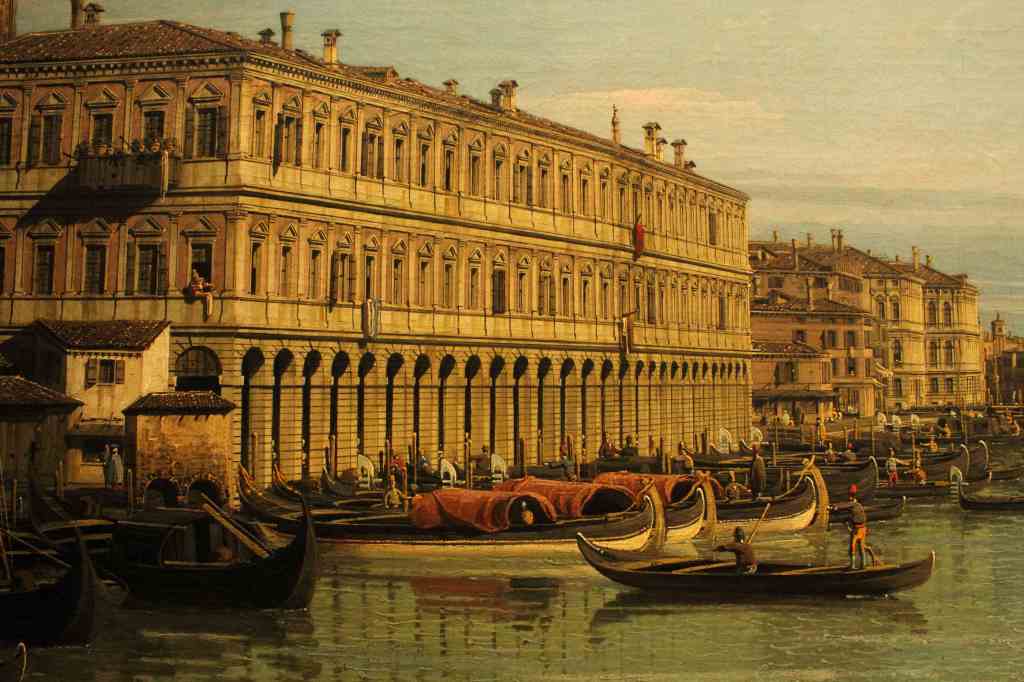
Indeed, for my money the neighborhood bars of Spain are a cultural resource as precious, in their own way, as the Alhambra or the Sagrada Familia. And I think that the people who run them deserve a great deal of credit. It is very hard work—long hours, few days off, both physically and emotionally taxing. So I think we all owe a debt of gratitude to the people who form the backbone of the neighborhood’s social life.

Bartender Melchor, hard at work.

In Spain, as elsewhere, the existence of local restaurants is threatened by ongoing gentrification and the spread of corporate restaurant chains. These trends, if they continue, threaten to turn every city corner into the soulless copy of every other—where identical freeze-dried food can be purchased at identical prices from identically uniformed workers. But if the large crowds that gather around Gauchos every evening are any indication, the Spanish have not lost their taste for their bares de toda la vida—and I hope they never do.

Edinburgh: Wind and Whisky

Edinburgh: Wind and Whisky

When you live in Europe, you notice that certain destinations come up in conversation with surprising frequency. Porto, Budapest, and Normandy are among those which are highly-praised among the well-traveled. Edinburg is another. So although I had no special reason to go—I had not even found an especially cheap flight—I decided that I would use my February vacation to take a little trip up north and see what all the fuss was about.

The plane broke through the gray clouds and touched down in Scotland on a cold, drizzly morning. I found the bus indicated by my Airbnb host and got on the top floor. The double-decker bus afforded me a commanding view of a not-very-exhilarating urban landscape as we traveled from the airport to the suburb where I was to stay. Though there really was nothing interesting to see, the combination of the dreary skies and the (in my eyes) quaint domestic architecture made a powerful contrast with the usual Spanish scenes of sun and walled-in houses.

Soon enough, I was at my destination. It was a rather odd Airbnb experience. My host told me that she had been repeatedly trying to contact me, only to realize that she was thinking of another guest (she managed various properties). Then, I was told, among other things, that the shower was set to the absolute perfect temperature and ought not be changed; also, she insisted that Scotland was just as humid as Florida, so that I ought to leave my window open for a certain amount of time every day to prevent mold. (Unless I am mistaken, the amount of moisture that air can hold is dependent on its temperature, so that cold Scottish breeze can’t hold nearly as much humidity as the scorching soup that is Florida’s atmosphere.) But this sort of thing is par for the course when staying in somebody else’s place. At least it was cheap.

With my bag dropped off, I caught the bus to the city center. I really appreciated the double-decker bus now, as it allowed me a wonderful way to enjoy Edinburgh’s Old Town. But by the time I stepped onto the cobblestone street, I was tired, thirsty, and extremely hungry. The daylight was fading now, and I desperately wanted dinner. This did not put me in the best mood to appreciate the lovely city which now opened up before me. Yet I was sentient enough to notice that the architecture formed a kind of coherent whole, all of the buildings made of the same grayish-brown stone, and constructed in the same heavy style, which seemed somehow suited for this clime.

I wandered up the venerable streets feeling rather sorry for myself, as I peered into window after window to see family and friends having dinner. I did not have the heart or the stomach to walk into a restaurant by myself and eat at a lonely table. I wanted something fast and anonymous, and my prayers were answered when I discovered a quiet kebab shop. I sat down at one of few chairs and, within minutes, my meal was ready. Better than any kebab I had in Spain, and this was not even a well-known spot. And as I ate, I reflected on the stark difference between what I had just observed of Scottish eating culture, huddled up inside, and that of Spain—where patios are overflowing onto every sidewalk. Of course, the weather is the explanation, though I also found it curious that nobody else was in this kebab shop on a Friday night. In Spain, it would have been full to the brim with drinkers.
It was, by now, too late to see any attractions. But it was not too late to enjoy a drink. For this, one of my friends had suggested the famous pub, Sandy’s Bell. Though I was somewhat buoyed by the food, I still felt nervous when I looked through the cloudy windows to see a bar filled with a rowdy crowd. But after pacing back and forth on the frigid street, I mustered enough courage to barge in. The barman immediately asked me for a drink and, like an idiot, I just said “beer.” (In Spain one often just orders “cerveza” and you’re given the only beer on tap.) He wasn’t satisfied with that, and asked me to choose a beer, and I scarcely helped matters when I said “an ale.” One of the regulars at the bar—an older man—took matters into his own hands and said “Try this!” while holding his own drink up to my lips. Too surprised to refuse, I drank a gulp and said, “That one!” The barman returned shortly with a pint of the dark ale.

My troubles were hardly over. The place was packed and every chair and barstool was occupied. I found a corner of the wall I could lean on and sipped my beer rather awkwardly, trying not to be noticed. This was my first Scottish pub experience, and somehow I found it very intimidating. I tried to slow down and enjoy the beer (which was quite good), but I found myself drinking faster and faster, as a part of me was eager to leave. When I realized that I was failing to enjoy the pub, I got rather down on myself—all these years of traveling had not cured me of feeling like a misplaced high school student—but slowly resolved to cut my losses.

Just as I had taken the last sip of beer and I was ready to pay and head out, a man got up to leave from the bar and, like an angel from heaven, offered me his seat. (I really must have looked conspicuously uncomfortable.) I thanked him from the bottom of my heart and got ready for another beer, this time from the commanding position of the bar. A drink sitting down is incomparably better than one standing up, and I felt quickly at ease. The experience was made even better with the purchase of a bag of crisps (salt and vinegar, my favorite flavor, which is rarely available in Spain), which persuaded me that I ought to have a third beer.
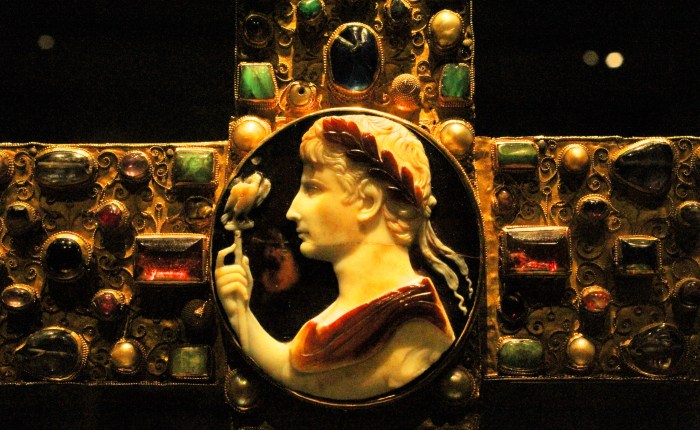
Time slowly ticked by. Eventually I remembered that the bar is famous for its live music. I asked a nice young fellow to my left, and he told me that it started at nine. I looked at my watch: about 45 minutes to go, and no beer left. My better judgment told me that I should just stop and come back another night; but my tempting demons—rather convincing, usually—told me that I ought to just tough it out until I heard some music. The decision was instantly made when I spotted a bottle of Laphroaig on an upper shelf. This is my dad’s favorite type of whiskey, and I felt duty-bound as a son to have a glass in his honor. This was ordered, and I could have sworn that I could feel a wave of respect pass over my fellow patrons.

Laphroaig is, you see, not an especially popular single-malt scotch. A single taste will let you know why. Coming from the island of Islay (pronounced “eye-luh”), this scotch is normally described by whisky enthusiasts as “peaty,” though the first words that come to mind of most ordinary people are considerably less kind. It tastes, to me, how I imagine a strong iodine solution would taste (though admittedly I have never tasted iodine). In other words, Laphroaig is harsh—almost chemically harsh. And yet, strangely, the taste grows on you. If you can get past your initial revulsion you will find it has a sort of complex smokiness beneath the initial shocking acrimoniousness. In short, I actually managed to enjoy my glass of Laphroaig.

And luckily for me, the music began right as I was finished. It was a small group of three people, two on guitars and one on violin, playing lively tunes. I took it in for a while, and then caught the bus back to my Airbnb. I had a big day ahead.


I will begin by mentioning the things I did not decide to see. Perhaps most notably, I did not visit Edinburgh Castle. This is probably the most famous and popular monument in the city—perhaps in all of Scotland—and, even from the outside, you can see why. It is an impressive and imposing fortress which towers over the city. However, from what I read about the castle, there was nothing on the inside which I thought merited the steep entry fee. But I did enjoy the sculptures of Scottish heroes Robert the Bruce and William Wallace that adorned the entryway.

Next on my list of negative tourism is the Holyrood Palace. This palace is actually connected to the castle with a broad avenue known as the Royal Mile (though it is really a little longer than a mile). Holyrood is the official residence of the British monarch in Scotland, still used whenever the king or queen is in town. The rest of the year, it is open to tourism. I actually think that Holyrood is likely a rewarding place to visit, but palaces tend to put me in a bad mood.

But I did enjoy seeing the ruins of Holyrood Abbey behind the palace. While I assumed that it had been gutted in a fire, the story of its destruction is quite a bit more interesting. The abbey played an important role in Scottish history for several centuries after its construction in the 12th century. But when its old timber roofs were replaced by stone vaults seven-hundred years later, this proved to be the end of the old church. Its walls could not support the added weight and the roof eventually collapsed. It does make a fine ruin, though.

Photo taken from Wikimedia Commons; taken by Kaishu.

Another major attraction that I did not visit was Her Majesty’s Yacht, Britannia. As its name suggests, this yacht was used by the British royalty from 1954 to 1997, and is now a kind of museum showcasing royal pomp and luxury. Needless to say, this would have put me in a bad mood, too.

An example of a close.

The last attraction I missed was Mary King’s Close. Now, a “close” is just another term for an alley, and there are a lot of alleys in Edinburgh. The historic center used to be enclosed by a wall, requiring high density, and so these closes are highly claustrophobic spaces—hemmed in by neighboring buildings. This particular close (named after a merchant) was, well, closed as neighboring construction both partially destroyed and buried the little alleyway. Nowadays the abandoned close has something of a reputation among ghost hunters and other seekers after the paranormal. But tourists enjoy the tours about daily life in 17th-century Edinburgh. Perhaps I ought to have gone to this one.  

So where did I go? My first visit was to the National Museum of Scotland. This is an enormous museum with a collection of virtually anything you might imagine. And best of all, it is free to visit. The central hall is immediately impressive—a large area, full of light, modeled on the original Crystal Palace. There, I was immediately attracted by the skull of a sperm whale (“Moby”) who had washed up on Scottish shores and who, despite rescue attempts, unfortunately perished. Moby was not an especially large male (indeed, slightly below average), but even so, his skull alone is longer than two tall men lying end-to-end.

As I said, the museum has a vast and varied collection. There is an exhibit on space, animals, geography, fashion, Ancient Egypt… But I figured that, if I was in Scotland, I ought to visit the Scottish History wing. This is housed in a separate and rather futuristic building, and it makes for an excellent visit. You are led, chronologically, from the stone age on the ground floor to the industrial revolution at the top. Though Scotland is a small and rather remote country, this exhibit encapsulates all of the glory and interest of its history. As I traveled from a medieval greatsword to James Watt’s steam locomotive, I found myself almost awed by how much had transpired in this soggy northern country. 

Right next to the museum is another popular attraction: Greyfriars Kirkyard, a historical cemetery. But before you enter, you might notice the small metal statue of a terrier with a polished nose. This is Bobby, a semi-legendary dog who—according to the story—spent 14 years guarding the grave of his deceased owner, John Gray. The story is understandably quite popular, and Bobby (or his statue) is undeniably cute. But I have to admit that I feel skeptical. Not that I deny the nobility and loyalty of our canine friends, but the story does seem too perfectly calculated to attract tourists. And there are many reasons (free food?) that a dog might be found in a graveyard.

Well, whether or not the Bobby story is perfectly accurate, Greyfriars is worth visiting. I must admit that my knowledge of Scottish history is so spotty that I did not recognize a single name. Yet the grandeur of the tombs is enough to impress upon the visitor the importance of this burying ground. While I strolled around, I noticed two Americans who seemed to be walking with determined step to a particular grave. Thinking that they must know something I didn’t, I followed them as they made their way to the edge of the graveyard. There, I was disappointed to find that they were visiting the grave of a man named Tom Riddle. Now, I have no idea who this man really was, and I am sure my American guides did not either. They were visiting because this name was used by J.K. Rowling as an alias for Voldemort. (Indeed, I think there is quite a lot of Harry Potter tourism to Edinburgh.)

Though I did not know this story at the time, this is the perfect moment to mention one of the more macabre episodes in Edinburgh’s history. There was a time in Scottish history when the medical demand for human cadavers—which doctors used in their lectures—far outpaced the supply, mainly because of strict laws regulating which bodies could be used for such a purpose (paupers and prisoners, mainly). This led to the grotesque practice of “body snatching,” in which grave robbers would dig up the recently buried and sell them to a doctor for a handsome profit. Indeed, this was such a problem that several anti-robbery devices were developed, such as the mortsafe, which is basically a cage placed over the body. (You can see examples of these in Greyfriars.)

But in 1828, two men decided to take this practice one step further, and began murdering people in order to sell their bodies. The men had a very simple system: get a person very drunk, and then smother them to death by laying on top of the victim. After sixteen such murders, they were discovered. One of them, Hare, was inexplicably given a light sentence, while the other, Burke, was hanged for his crimes. With poetic justice, Burke’s body was then dissected before a group of medical students. His skeleton is still on display at Surgeon’s Hall in Edinburgh (I wish I had gone!), as well as—and this strikes me as a tad overboard—a notebook bound with Burke’s skin. 

While I am on this morbid topic, I should mention two other tombs I visited during my time in Edinburgh. One was of the great economist Adam Smith, who is buried in the graveyard of Canongate Kirk. The grave is neither big nor particularly elaborate, but its inscription gets right to the point: “Here are deposited the remains of Adam Smith, author of the Theory of Moral Sentiments and the Wealth of Nations.” Nothing more need be said, as those two works will last longer than any tombstone. Next I visited the tomb of the other great pillar of the Scottish Enlightenment, David Hume. This is in Old Calton Cemetery, which is located on Calton Hill, one of the high points of the city. His tomb is slightly more monumental, consisting of a kind of hollow tower, but there is no memorable inscription. Yet merely being close to the mortal remains of this most skeptical of philosophers was a thrill (though he would likely say I was irrational).

Curiously, right next to this tomb is a statue of one of my countrymen, Abraham Lincoln. He stands over a monument to the Scottish American soldiers who died in the American Civil War. The Scottish are an international bunch.

Very close to Hume’s final resting place, right at the crest of the hill, is a park. In addition to providing excellent views over the city, there are a few curiosities to be found here. The most obvious, perhaps, is the Nelson Monument—an enormous tower, dedicated to the memory of the admiral who helped defeat Napoleon (and, thus, a very British memorial).

But I much preferred the other massive stone construction, the National Monument of Scotland. This was intended to be a glorious monument to the Scottish soldiers who died during the Napoleonic wars, modeled after the Parthenon in Athens. (This idea, by the way, was owed to the notorious Earl of Elgin, who stole the Parthenon frieze from Greece and brought it to the British Museum, where it remains to this day.) The final result, however, is comic and slightly pathetic. The campaign ran out of funds when just the portico had been completed, and it has remained that way ever since. Now it is just a collection of massive columns over a base—columns holding up nothing, a glorious doorway leading to nowhere. But it is great fun to climb on. 

Even more fun to climb was Arthur’s Seat. This is a hill, formed by an ancient volcano, which looms over the city, and which is to Edinburgh what Central Park is to New York. Nobody quite knows why it is called Arthur’s Seat, as it seems highly unlikely that King Arthur—if he even existed—built Camelot here. Thinking that I ought to maximize my time in Edinburgh, I climbed the hill in a mad rush and got to the top in less than an hour. (What are vacations for, if not to anxiously hurry through?) Once there, I got a taste of the famous Scottish wind—or, as they might say, it was a wee bit blowy. The view of the city and the sea beyond was wonderful. The landscape was impressively rugged and wild. Somehow, for a park right next to the capital of Scotland, Arthur’s Seat transports you instantly to the middle of nowhere.

The Nelson Monument with Arthur’s Seat in the background

I should mention that observation of the geology of Arthur’s Seat helped James Hutton develop his scientific ideas. And this is no small thing, as Hutton is known as the “Father of Modern Geology,” whose work basically initiated the modern discipline. This influential Scot is buried in Greyfriars Kirkyard. 

The view from Arthur’s Seat

Now, this does it for my first complete day in Edinburgh, which was long and exhausting. However, as the rest of my sightseeing was done in snatches around a daytrip (mentioned below) and before my flight back, I will mention the remaining sights here without attempting a narrative.

If you walk around Edinburgh, you will undoubtedly notice an infinity of shops selling scarfs and sweaters with what we call, in the US, a plaid design. In Scotland, this is a tartan, and they are often organized according to family names, or “clans.” I was rather excited to find a scarf with the design of my own “clan,” the Johnstons (through my mother’s mother). However, I really did not need a scarf and so decided not to buy one. I am glad I didn’t, as it turns out that this tartan-clan typology is a prime example of what the historian Eric Hobsbawn called an “invented tradition”—as it only goes back to the 19th century and was an intentional way of shaping perceptions of Scottish history. In other words, it is not true that “clans” were proudly displaying their colors back when William Wallace was slicing through Englishmen. Oh well.

John Knox with a friendly greeting card.

If you are in the center of the city, it is certainly worth your while to step into St. Giles’ Cathedral. This is the mother church of Scotland, where John Knox—the Scottish Martin Luther—acted as minister. Now, I must say that I am far too ignorant to give you any more information about this church, so I will only add that it is both beautiful and central to Scottish history. For example, proudly on display is the National Covenant, a document signed in opposition to the king’s attempt to meddle with Scottish religion. If that isn’t a symbol of Scottish independence, then I don’t know what is.

Nearby is a monument to David Hume. The handsome philosopher lounges in a chair, dressed in a toga, and holding a large book. When I visited, however, he was also wearing a Ukrainian flag. This was February 28, 2022, and the Russian invasion of Ukraine had begun just four days earlier. Most commentators had assumed that the battle would be over within the week, perhaps in just three days. So it is stunning to me that, as I sit here over a year later, the war is showing no signs of stopping. I am sure that Hume would have something incisive to say about the folly of mankind in this regard.

There are, of course, monuments and statues all over the capital of Scotland (I’ve already mentioned many), but I think that the grandest is easily that of Walter Scott. It is something of a monstrosity: a neo-gothic spire that ascends 200 feet (60 meters) into the air. This stone needle is covered with statues: 64 characters from Scott’s novels, 8 kneeling druids, and 16 busts of other Scottish poets and writers. Walter Scott and his dog, life sized, sit in the center of this stone carbuncle, almost comically small by comparison. As you may well imagine, an enormous number of stonemasons had to be recruited to put this together; and apparently the hewing came at a steep human cost, as many masons were fatally inflicted with silico-tuberculosis from breathing in the stone dust.

Considering Scott’s fairly modest place in the Western literary canon nowadays, this huge effort seems disproportionate to say the least. But during his lifetime, he was among the most famous and influential authors in the world. As it happens, when I visited, I had just finished reading Ivanhoe; and I think that the monument’s faux-medieval grandeur is quite in keeping with Scott’s style.

I cannot wrap up my time in the Scottish capital without mentioning some Scottish food. Now, when I was younger, my friends and I used to joke (for some reason) about haggis, treating it as an epitome of a disgusting dish. Certainly a description of the food—minced sheep innards cooked in its stomach—does not sound particularly appetizing. But when I ordered a plate of haggis with “neeps and tatties” (rutabaga and mashed potatoes) at the appropriately-named Haggis Box, I found that it was absolutely inoffensive—not only that, but tasty. The meat is minced with onions, oatmeal, and a generous amount of black pepper, and to me was quite reminiscent of Spanish morcilla (blood sausage) in both flavor and texture. In any case, when you stop to consider what goes into an ordinary sausage, then haggis ceases to appear exotic. 

Another Scottish classic is the Full Scottish Breakfast. This is rather similar to the English Breakfast, though it is even richer and heavier. Standard components include: bacon, sausage, haggis, eggs, toast, fried tomatoes, mushrooms, baked beans, and potato scones. I had one of these at the Southern Cross Café before my flight back to Madrid, and did not have to eat anything the rest of the day. A wonderful experience.

This pretty well does it for my time in the city of Edinburgh. But I cannot leave off writing without an overview of the whiskey—or, as the Scottish write it, “whisky.” For this, I went to the Scotch Whisky Experience, which is located quite near Edinburgh Castle. It is certainly a touristy place, though I quickly found that it was a worthy visit.

The first part consists of a silly “ride” on a whiskey barrel, during which an animated Scottish ghost (“animated” in both senses) explains the process of making this distilled spirit. In short, this consists of fermenting malted barley, distilling it until the alcohol content is at least 40%, and then aging the result in an oak barrel. The second part was a kind of virtual tour of the Scottish whisky regions, which are: Upland, Lowland, Speyside, Campbeltown, and Islay. We were each given a scratch-off with the distinct aromas of each whisky type—and, sure enough, the Islay sample smelled like Laphroiag. 

Along with these single malt types (which must be made from malted barley), there is blended whisky, which is usually both cheaper and milder, and thus comprises most of the market. Blended whisky is made from a mixture of grain alcohol (usually corn) with a bit of single-malt. The grain alcohol is fairly neutral in flavor, so any personality is derived from the single malt that is added. 

I was then given a tasting of four single-malt scotches, and thought the Islay whisky was the most interesting (if not necessarily the most drinkable). Indeed, I found the “Experience” to be surprisingly rewarding. Perhaps this is just a romantic notion, but I felt as though Scotland itself was palpable—indeed, tasteable—in each glass. The harsh and smoky flavors somehow called to mind the soggy, grassy, and rocky landscape that I had glimpsed on Arthur’s Seat. Just as it is difficult to imagine such a robust and unforgiving liquor being cultivated in sunny Spain, so is it equally impossible for the rugged landscape of Scotland to yield up anything gentler than this spirit.


During my time writing book reviews on Goodreads, I have “met” many interesting people. One of these is a woman named Karen, who is from Scotland but who has lived in Germany most of her adult life. By chance, she was in Scotland during my visit, and so we agreed to actually, physically meet, as she kindly offered to show me a few sites near Edinburgh.

The drive itself was slightly disorienting, as Karen had brought over her German car but we were driving on the opposite side of the road. Everything was as in a mirror (you pass on the right), but thankfully, Karen did not seem flummoxed. I began to reflect that, even while walking on a sidewalk, an American or a Spaniard will naturally keep to the right side. Do British people naturally keep to the left on the pavement? Somebody must study this.

Our first stop was the Falkirk Wheel. This is a rather odd contraption, designed to unite two canals built at different levels. The Forth and Clyde Canal was opened in 1790, and the Union Canal 32 years later, in 1820. Together they provided a water route between the two major cities of Scotland, Glasgow and Edinburgh; but the problem was that the canals are built at different heights, with the Union Canal 115 feet (35 meters) higher than the Forth and Clyde. This height difference was originally overcome with a series of eleven locks—which is the standard solution. But locks are also expensive and slow, as they take a long time to fill and empty, and require a lot of water and energy for pumps. In any case, the age of canals was soon superseded by the age of the railway, and the canals fell into disuse. Eventually the locks became inoperable and were taken apart, and the canals became rather useless watery ditches.

But as the new millennium approached, the authorities decided that this waterway should be reopened—if not for commercial, at least for symbolic reasons. This beautiful piece of infrastructure was the result. The wheel consists of two troughs of water balanced around a central spoke. By just slightly adjusting the amount of water in each trough, gravity can be used to help turn the wheel and take ships up and down. As such, it is both faster and more efficient than a traditional canal lock, though I am not sure if it could work on a larger scale (such as on the Panama Canal). It is also simply a sleek design.

Karen and I took the canal “cruise,” though to call it a cruise is like calling a walk in the park a “safari.” This is not to say that it was uninteresting. About twenty people got into a boat and we were (very slowly) lifted up to the Union Canal, while a guide explained some of the history of the canal. 

I was especially entertained because the guide had a wonderful, classic Scottish accent. Though every word he spoke was recognizable, it was as if he had put a different vowel between the same consonants. (Sance ya can rad a santance wath all the vawals changed, ya can andarstand wan taa.) While on the subject, it is worth noting that Scottish people have a habit of pronouncing names in surprising ways. For example, though Edinburgh seems obviously meant to be pronounced “eh-din-burg,” the Scottish say “eh-din-bruh.” There are also a few characteristic bits of Scottish English I noticed. “Kirk,” for example, is a local word for “church; and on one traffic sign, the reader was instructed not to park “outwith the line”—the preposition meaning “outside of.” A useful word, that.

Our next stop was, for me, wholly unexpected. Karen informed me that we were going to see a big sculpture, but when I laid eyes on The Kelpies I was stunned by their scale. This is a work by Andy Scott and was completed just ten years ago, in 2013. Two horse’s heads—98 feet, or 30 meters, high—emerge from the ground near a section of the Forth and Clyde Canal. A “kelpie” is, apparently, a kind of water spirit that takes the form of a horse. But Scott has stated that the statue was meant more as an homage to the work horses who played an important role in Scottish history, not least by pulling barges on the canals. The sculptures are made of steel and, for something so large, are remarkably dynamic and lifelike. I think it is a wonderful work of public art.

After that, we headed to a little town called Culross (pronounced “coo-riss,” for some reason). This is a little town across the bay from Edinburgh. Our first order of business was lunch, for which we found a serviceable—if rather slow—taco truck. Then we ambled into town, where we found that there was a little market set up. I took the liberty of buying some fudge and coffee, and had yet another experience of Scottish friendliness. Everyone there was talkative and pleasant. Karen and I walked around the town for a bit, enjoying the lovely village architecture and peeking into the abbey, which was closed when we were there.

Our final stop was in the town of North Queensferry, in order to see the bridges which span the Firth of Forth. “Firth” is yet another example of Scottish English; it means an estuary. The Firth of Forth is, as you may expect, on the river Forth, which reaches the ocean near Edinburgh. At this particular junction in the river, three huge bridges span the division.

We parked the car, ascended a staircase, and soon found ourselves on one of these bridges—the Forth Road Bridge. This is perhaps the least visually interesting of the bridges, but it is the only one open to pedestrian traffic. Indeed, there is little else on the bridge. Opened in 1964, it was in service until 2017, when it was replaced by the adjacent Queensferry Crossing Bridge. Since that time, it has only been open to pedestrians, buses, and taxis. Karen and I thus had the bridge almost all to ourselves. I found it to be a wonderful idea, and now I wish the same was done with the old Tappan Zee Bridge, in New York, which was demolished to make way for the new one. (To be fair, the new one does have a pedestrian walkway.)

That’s the Forth Road Bridge in the background.

The Queensferry Crossing Bridge is an attractive piece of infrastructure. But the real star is the original Forth Bridge. Completed in 1890, this railway bridge is a monument to Scottish engineering. Its design was innovative and was especially noteworthy in using steel—a relatively new material for large constructions at the time. The pictures of the bridge do not do it justice. You need to see it up close to get a sense of its massive scale.

Apparently, the bridge was built so robustly because of an earlier disaster. In 1879, the Tay Bridge (spanning the nearby Firth of Tay) collapsed while a train was passing over, killing everybody onboard. This had the effect of scrapping the original plans for the Forth Bridge, as it was designed by the same architect, Thomas Bouch. (Bouch died less than a year after the disaster, his reputation in ruins.) This tragedy is also notable for being the subject of one of the worst poems ever written in English, by the iconic bad poet, William McGonagall. His poem begins:

Beautiful Railway Bridge of the Silv’ry Tay!

Alas! I am very sorry to say

That ninety lives have been taken away

On the last Sabbath day of 1879

Which will be remembered for a very long time.

(He is buried in Greyfriars, if you would like to pay your respects.)

After we finished admiring the bridges, Karen kindly dropped me back off in Edinburgh. My time there, I have already described, so I will bring this long post to a close. As I hope I have conveyed, I had a wonderful time in the Scottish capital. It is a beautiful and fascinating city, and I hope to return one day, and to see even more of Scotland.

Jaca: A Slightly Unsuccessful Journey

Jaca: A Slightly Unsuccessful Journey

In the September of 2020, Rebe and I attempted to visit the Pyrenees. I have already written a post about what a disaster it turned out to be, so I will not repeat the story here. But suffice to say, we did not make it to our destination.

It was now December 2021. Over a year had passed, and we decided to make a second attempt. Our plan was to explore the Pyrenees region by car. For our home base, we chose the city of Jaca, which is close to the major sites while still large enough to be a good place to spend the evenings (“large” being a relative term: the population is about 13,000). The car was rented, and we made the four-hour drive up to Jaca on a Friday evening, arriving just before sundown.

We had just enough time to settle into the Airbnb and have dinner. Worn out from working that morning and the trip up, we fell asleep early.

One of the few photos we have of Jaca before the snow. Note the brooding clouds in the background.

“Oh my god!” I said, looking out the window when I woke up.

“What? What?!” Rebe said, still in bed.

“It’s snowing!”

“Oh.” She rolled over, annoyed at being woken up for something like snow.

She may not have been impressed, but I looked out the window completely amazed—and not a little nervous. The snow was raining down in great globs of white. I had seen the previous day that some snow was forecast, but this was a genuine blizzard. And we were not prepared.

Friends had warned me about this. I was told by every Spaniard I knew that I ought to bring chains for the tires. But being perfectly ignorant about cars, I assumed that this would be easy to procure. Indeed, I expected the car to come with chains, or at least the rental agency to have some available. This was not the case, however.

Well, no problem, I figured that we would buy some on the way up to Jaca. When we stopped at an automotive store near Zaragoza, however, I realized that this was going to be more complicated than anticipated. I had reserved a normal-sized car from the agency, but for whatever reason we had been given a Toyota RAV 4—in other words, an SUV, with big tires. The automotive store informed us that, for a car of that size, the tire chains would cost well over 100 euros. With only light snow predicted, and for a vacation of just three days, this seemed to be a waste of money.

Not anymore. The snow was coming down in sheets and I knew there was no way we would be able to use the car that day. The only thing to do was to explore Jaca.

The city had been transformed. Whereas yesterday there had not been a bit of snow on the ground—the grass was green and the surroundings mountains visible—now everything was covered in white, and the air was so thick was snow that you could hardly see 100 meters.

The effect of a winter hat on my hair.

It had been years since I had seen snow like this (probably not since I was in college, in New York), and I was completely transfixed. Rebe and I bundled up and waddled around the city taking photos of everything. But we could tell that snow was a matter of course for the locals, as the shops and cafés were opening up as usual.

Indeed, we were surprised to find the city’s largest monument open for visits: the Ciudadela. As its name indicates, this is a citadel, which sits right in the center of the city. It was constructed in the 17th century as a defensive outpost against the French. (Nearby, just outside the city, there’s another fortress built for the same purpose: Fuerte Rapitán.) The citadel did not perform its function satisfactorily, however, as when the French invaded in 1809 they captured the citadel (without resistance!) and held onto it for five years. Later, as with many fortresses, castles, and other monuments in the country, this citadel was used to hold prisoners during the Civil War—in this case, by Franco’s forces. Apparently the conditions were awful. 

Compared with many of the ruined castles scattered over Spain, this fortress is visibly a modern construction. Designed by an Italian (Tiburcio Spanocchi), it was built with a series of low, thick walls arranged concentrically in a star pattern. The tall, flat walls of castles are almost useless against cannon-fire, you see. With this design, it is difficult to hit the walls at a right angle. Further, this design allows the separate corners to defend one another, since the guns can be aimed at the fortress itself.

One of Spain’s elite donkey regimine.

Yet I really can’t say that military history was on my mind as I walked over the defensive ditch and up onto the walls. Rather, the fortress just served as yet another stage for the falling snow to dance across. But we did make it into a few of the building’s exhibitions. The Ciudadela now houses a local military museum. There was information about the history of different military units, special mountain forces, different badges and ranks, and so forth. These exhibits passed briefly through my awareness as I stomped through the halls with my wet boots. It just did not seem like a day to be visiting a museum.

Rebe and I soon finished the visit and were off exploring the town again. I wanted to do a bit of hiking, so we walked the edge of town. Children were building snowmen, families were hurling snowballs, friends were skiing across parks, and plows would occasionally scrape by. Every time a car slowly made its way down the streets, its tires slipping pitifully on the ice, I observed with a pit in my stomach. Unless we could find tires, this was our fate.

But I wanted to enjoy the morning, at least, before we worried about driving. So we made our way through a park and down a path to the Aragón River. With so much snow on the ground, the going was slow and tiring. We decided not to press our luck and turned back at the bridge, returning to town thoroughly worn out from climbing the small hill that leads up from the river. To recover our energy, we went into the nearest café, where I did something I hadn’t done in years: drink a hot chocolate. It was so warm and delicious that I instantly decided I ought to do it more often.

This was the only “eventful” part of the day. We had lunch in some place or other in town and then decided we ought to try to get tired for the car. First, we tried a gas station on the edge of town. Of course, we were out of luck. Half the city was out looking for chains that day and they were completely sold out. We were advised to try a store on the edge of town called Merca Asia. Now, it seems very odd to an American, but there is a type of general goods store in Spain which is usually called some variation of “something-asia,” most commonly “Hiperasia.” The proprietors are normally Chinese immigrants and the enormous stores have virtually anything you can imagine in them.

So Rebe and I walked along the old Jaca Highway, our boots soaked through, wind whipping through our coats, to this store. We were disappointed but not surprised to find it already full of people asking for the exact same thing: tire chains. Without much hope, I asked the man if he had any chains in our size. He said no, but more were soon on the way, and he asked for my number to call me when they arrived. This did not seem very promising but, just in case, I gave him my number anyway. Then we walked back into town, ate dinner, and went to sleep.


The next day we, unfortunately, had plans. Rebe had booked us a ride on a zip-line in a nearby town, and we had to get there by noon. This meant driving. At least the roads were considerably better than they were the previous day, but that is not saying much. There was still ice everywhere. The Spanish do not salt the roads as aggressively as we do in New York, apparently.

We found the car where we had left it after the drive up. It was covered with a thick layer of snow. We needed 10 minutes to clear everything off. Then there was the question of getting out of the parking lot. Unlike the roads, it had not been plowed, and it was not covered with a thick layer of ice. I was really not sure whether the car would be able even to get out of the parking lot.

I should mention at this point that this was my first time driving in snowy or icy conditions, so I had absolutely no idea what I was doing. But I did manage to back up and get on the road. Going slowly, already in a panic, we followed the GPS out of the city. It directed us up a steep hill. But as soon as we began to drive up, I slammed on the breaks. The hill was also covered in a thick layer of ice and I was not sure whether the car would even be able to make it up on road tires. Already half crazed with fear, I slowly backed the car off the hill and got back on the highway, which at least was quite clear.

The problem was that the highway did not lead in the right direction. We had to turn around. The GPS directed us to a place where we could easily make the maneuver. But we had another problem. The little exit ramp where we were instructed to go had been left unplowed, and we ran straight into a snowbank. Now I had to free the car from the snow and merge back onto the highway, with traffic coming from both directions. To make matters worse, cars started appearing behind me, waiting to make the turn. 

When the coast was clear I stepped on the gas. The wheels turned but nothing happened. We were absolutely stuck. I tried again, pumping the pedal, with zero result. At this point my panic and shame was extreme. I was convinced that I would either be killed in an accident, killed by angry fellow-motorists, die of a heart attack, or get arrested for incompetent driving. (Rebe, meanwhile, was extremely calm.) When the man in the car behind me stepped out and started walking towards us, I expected the worst.

But he was politeness itself, and he offered to push us out of the snowbank. With just a slight shove, we were freed, and my heart soared in gratitude for this everyday hero. Soon enough, we were on the highway driving toward Hoz de Jaca. The landscape was beautiful in the snow, which made every hill and rocky outcropping look like a mountain in the distance. We took the exit and began to drive on local roads, which were both more crowded and snowier than the highway. Several signs warned that chains were required by law on the road ahead, warning of fines for non-compliant vehicles. I got so nervous that I pulled over and had Rebe call the zipline place. They assured us that chains were unnecessary and, moreover, that there was plenty of parking.

Their assurance did not make the drive any less stressful. The road narrowed and narrowed until—as often happens in rural Spain—it was only about one and a half lanes wide, though it was for both directions of traffic. In normal circumstances, this is managed by having one car pull off into the shoulder, though when the road was hemmed in with snow banks this proved difficult. I nearly had a heart attack when we had to drive over a narrow dam and then through an equally narrow tunnel (I kept wondering how the locals deal with these roads), but finally we arrived in Hoz de Jaca.

Yet the promise of parking was exaggerated. There was, indeed, a parking lot, but it had not been plowed and was completely useless. Instead I drove up a side street, hoping to find something there. This was a poor decision. This road was also not plowed, and after about 50 meters it was completely impassable. I realized that I had to go back down the hill in reverse. This was not easy, as the road was full of parked cars and it twisted around houses and trees. Luckily, another savior appeared at this moment, in the form of an old man from the town. He stood behind us and yelled instructions, allowing us to navigate the treacherous street (though I still bumped into a tree). I thanked the man from the bottom of my heart as he guided us into a parking spot.

We got out and prepared ourselves for a high-adrenaline experience. Rebe went inside to inform the zipline folks we had arrived. She emerged a few minutes later—angry.

“They say there’s too much wind,” she said. “And they don’t know if they’ll be able to do it today.”

“So what do we do?”

“Let’s just go.”

That seemed wise. The thought of waiting around in the cold for an undefined amount of time was not appealing. And our money would be refunded.

Defeated, we got back in the car and made the harrowing drive through the tunnel and over the dam to the highway. Our next destination was the National Park of Ordesa and Monte Perdido. This is perhaps best described as the Spanish Yosemite: a beautiful valley ringed by epic mountains. It is both a national park and a UNESCO World Heritage site, and is doubtless one of the major attractions of the area.

The drive there was fairly easy until, at a turn-off, there was a sign flashing that chains were required past that point. Right beside the exit was a gas station, so we pulled over to have some time to think. I went inside and asked the attendant whether chains were really necessary. He said yes: the road to the park was pretty rough. Surprisingly, the gas station had chains in the correct size for our SUV. But again they cost well over 100 euros, and could not be returned. Rebe and I thought it over and decided, again, that it wasn’t worth it to buy chains for a car that wasn’t ours, for such a short amount of time.

In retrospect, we probably should have just bought the chains we were offered on the way up, and saved ourselves all this hassle. To be fair, however, I think that the Ordesa National Park is best in Fall and Spring, and that visiting after a heavy snowfall would have been difficult and disappointing. But this could easily be a case of sour grapes.

Defeated once again, we got back in the car and decided to call it a day and return to Jaca. Indeed, we felt so discouraged by the turn of events that we decided to cut short our vacation early. This was actually the official advice. All along the highway, lights were flashing, warning everyone to “return home early,” as another big snowstorm was set to hit on the last day of the long weekend (i.e., the day when everybody would be on the road). We decided, after everything we had been through so far, not to tempt fate further.

This just left one evening in Jaca. I took a walk around the city in the waning light, enjoying the distant vistas of snow on the mountains, and then I decided to visit the Cathedral and the attached Diocesan Museum. Both were surprisingly excellent. Indeed, as I have often mentioned on this blog, local museums in Europe can be of astonishingly high quality, and this is yet another example of this principle. Though small, the collection of Romanesque art is of astonishingly high quality, featuring many beautifully-painted naves. If an American museum had this exhibit, it would be justly famous. Yet I was alone as I appreciated the art.

We had our final dinner in Jaca and prepared to leave early the next morning. I should say that I found Jaca to be quite a congenial place to be stuck in. There are plenty of bars and good restaurants and, though small, the center of the city is very attractive. Indeed, for such a small place, the number of interesting places to eat and shop is impressive. There was even an Iranian-Spanish restaurant (Nadali) and a local brewery (Borda). So it really did not feel very disappointing to have to spend so much time in Jaca.

But it did feel somewhat disappointing to be leaving with our metaphorical tail between our legs, without having really seen the Pyrenees. I suppose Rebe and I will have to make yet another attempt to visit this part of the country.

Epilogue: El Monasterio de Piedra

We began driving early, hoping to squeeze in some last-minute sightseeing. First, we took the road north, towards France, hoping for some good views of the mountains. But we were not rewarded with any dramatic vistas, as the highway passed through a relatively flat area. So we turned around and headed back towards Madrid. The weather was brooding and threatening. As the highway led up over a range of hills it began to pour rain. Many other cars were on the road with us, doubtless heeding the same warning about the incoming storm.

By midday we had gone by Zaragoza and soon we arrived at our main stop: El Monasterio de Piedra. I have already written a long post about this place and its history, so I will only say here that it is a kind of romantic landscape garden that is well worth a visit if you are anywhere in the neighborhood. I think the pictures speak for themselves.

Rebe for scale.

After touring the place and having a quick lunch, we got back in the car to complete the drive. The driving conditions soon got significantly worse than before. As darkness fell, we entered a mass of dense fog, making it impossible to see anything except the lights of the other cars on the road. It was quite a dizzying and even a slightly dreamlike experience to be driving without being able to see the road—just intuiting where it must be by the location of the cars in front of me. About halfway through this ordeal, Rebe informed me that cars in Europe are required to have fog lights. We switched them on and they did help quite a bit.

I felt a great sense of relief when we returned the car. Now I would not have to even think about snow chains for the foreseeable future. And despite the many obstacles, it did not have a scratch on it. The next day—our planned day of return—we slept in.

I was feeling rather good about our decision to come back early, until one of my coworkers told me that he had taken a skiing trip to the French Pyrenees, and had no trouble driving back on the day of the storm. Indeed, there was hardly any snow to speak of. Defeated again!