Federico García Lorca is the most famous playwright and poet that Spain produced in the previous century. This is largely owing to undeniable brilliance, as any readers of Bodas de Sangre or Yerma can attest to. Yet his fame is also due, in part, to the tragic story of his death—executed by Nationalist forces during the first few months of the Spanish Civil War. Among the hundreds of thousands dead from that conflict, Lorca remains its most famous victim. And in death, he has become a kind of secular saint to artistic freedom.
The precise details of Lorca’s murder were, for a long while, rather obscure; and it is largely thanks to the Irish writer, Ian Gibson, that it was finally uncovered. Prior to our trip to Granada, Rebe had read Gibson’s book, El asesinato de García Lorca, and so we had a full Lorca itinerary planned.
Our first stop was the Huerta de San Vicente. This was the summer house of the García Lorca family for the last ten years of the poet’s life. It is a kind of rustic villa, typical of Andalusia, with large windows and whitewashed walls—ideal for keeping cool. We joined a tour and were shown around the house, which has a piano that Lorca would play on (he was a gifted musician, and friends with Manuel de Falla), as well as a desk at which he wrote.
The hour-long visit gave a satisfying overview of the many facets of his short life. Lorca came across as a man wholly devoted to the arts—to music, to poetry, and above all to theater. One of my favorite items on display was a poster for La Barraca, a popular theater group that he helped to direct. They would travel around the countryside and perform for the benefit of the public, putting on avante-garde shows for the masses. It reminds me somewhat of the Federal Theater Project of the American New Deal, and demonstrates that Lorca, while not overtly political, did not shy away from social causes.
Our next stop was the small town of Fuente Vaqueros, which is a short drive from Granada. There, we visited the house where Lorca was born and spent his earliest years. It is a large house with thick walls, ideal for keeping out the heat. We were given a tour—just the two of us—by a local whose grandfather had gone to the same primary school as Lorca himself! He explained that the Lorca family was quite wealthy, having made their fortune in the tobacco business. Indeed, their house was one of the first to receive electricity in the area.
The upstairs of the house was made into a small exhibition space. Among other things, there is the only extant video clip of the poet, as he emerges from a truck used to haul theater supplies. The video has no sound and it lasts for only a few moments. Yet it is a tantalizing glimpse into the past. Also on display are puppets that Lorca made, in order to put on shows for his baby sister.
A short drive from Fuente Vaqueros is the town of Valderrubio, previously known as “Asquerosa” (“Disgusting”). Apparently, this name is a linguistic coincidence, having come from the Latin Aqua Rosae (“Pink Water”), but it led to the unfortunate toponym “asquerosos” for the denizens of this perfectly inoffensive town. Here is yet another house museum of the playwright, this one larger and grander than the one in Fuente Vaqueros. Unfortunately, however, we arrived too late for the tour of this house, and had to content ourselves with a quick walk-through.
Rebe in the theater attached to the house museum.
But we were on time for the tour of the House of Bernarda Alba. This is an attractive villa next to the Lorca property, where a widow lived with her daughters. Federico used this family as the basis for one of his best plays, La casa de Bernarda Alba, which is about a tyrannical widow who imposes a decade’s long period of mourning on herself and her daughters after the death of her husband. Apparently, the actual family—who I presume weren’t nearly as monstrous as Lorca portrayed them—were understandably quite offended by this, and cut off contact with the Lorcas. And now, to add insult to injury, their home stands as a museum to the poet’s honor!
Our last stop was rather more somber. On the 19th of August, 1936, Lorca was arrested, taken outside the city, and shot. Against the advice of his friends, on the eve of the Civil War he had traveled to his native city. But as war broke out and violence spread, he realized that he was unsafe and so hid himself in the home of family friends, who were members of the right-wing Falangist party. The political connection didn’t help. Along with three other men, he was taken to a spot on the highway between Vïznar and Alfacar and shot.
The place where Lorca was executed is hardly recognizable today. At the time it was a barren hillside, completely devoid of vegetation. Today, however, it is a grove of tall pine trees that cover the ground with shade. We parked the car and walked up a hill, not sure what we were looking for. Then we noticed papers tacked onto trees, like ‘Lost Cat’ posters on telephone polls. They were photos of the people believed to be executed here. There were dozens of these photos, each one with a name, profession, and believed date of death.
Even more unsettling were the white tents, standing empty and silent. They were covering excavation pits, where investigators are finally unearthing the remains of the hundreds of victims executed here, nearly a century after the Civil War. The investigators are also collecting DNA samples from surviving family members, so as to be able to identify any remains they uncover. Lorca’s body is believed to be here somewhere, though it hasn’t been identified yet. (You can learn more about the effort by following the groups’s Instagram.)
To state the obvious, it is chilling to think that such a harmless man—a gift to the world and an ornament to his country—could be deemed so threatening that he had to be executed this way. His last moments must have been terrifying. His work, however, has outlived Franco and his regime, and perhaps it will outlive the current constitution.
Now, for the very serious Lorca fan, there are also some sites to visit in Madrid. There is a lovely statue of the poet in the plaza de Santa Ana, and on Calle de Alcalá 96 there is a plaque which marks the apartment where Lorca lived for the last three years of his life. Another worthwhile visit is the Residencia de Estudiantes, where Lorca lived as a student along with his Dalí. The two were very close as young men, though many have criticized Dalí’s later reconciliation with the Francoist regime as a betrayal to the memory of his friend.
But, of course, the most important thing is not to follow in his footsteps, but to keep reading and performing his works. This way, he will remain forever alive.
The name of Claude Monet stands over the artworld like a colossus—the man who defined one of the most iconic movements in art: impressionism. For a great many, I suspect, these blurs of color and light are what immediately spring to mind when they imagine the French countryside. The image of the paint-stained artist, brush in hand, standing in a field of grass, flouting both artistic conventions and social norms, is virtually a cliché now. But all of this we owe to Claude Monet.
Stereotype or no, I admit that this vision of the artist has a certain romantic appeal to me. And so I decided, on my last trip to Paris, to pay a visit to the home of this artist to partake of this dreamy, wistful aesthetic.
Normally, getting there from Paris is no challenge. A high-speed train bridges the distance in less than an hour—departing from Gare Saint-Lazare, a station Monet depicted in a series of paintings, and then arriving in the town of Vernon. This town lies just across the river Seine from Giverny. A taxi, a bus, or even a sprightly walk will get you to Monet’s house in no time.
Gare Saint-Lazare
But I was unlucky. During my trip, in May of 2024, there was maintenance scheduled on this particular train line, so this option was out. So I opted for something I habitually avoid: a guided bus tour.
The bus was set to depart early in the morning, from the Avenue de la Bourdonnais, in the shadow of the Eiffel Tower. However, there was a hitch. As the group of tourists—speaking a babble of tongues—gathered on the pavement to board the bus, a police officer approached the tour guides and explained something with authoritative insistence. Apparently, the bus could not park in its usual spot, because of the new rules put in place in preparation of the summer olympics.
The preparation was already apparent. The Champs de Mars was buried in a mass of scaffolds, and a large stage was nearly finished in the Trocadero on the other side of the river. What this meant for us, however, was that we had to walk to a street a few blocks away. As we walked, a young Italian woman, who spoke astoundingly good English, chit chatted with an elderly American couple; but I was too focused on Monet for smalltalk.
The bus swept us out of the city and into rolling fields of green. We were headed north, towards Normandy. On the bright May morning, it was easy to imagine why this gentle, domesticated landscape inspired artists to capture its delicacy.
We arrived in no time, and I followed the crowd into the property. This was a moment I had imagined to myself many times. Monet’s gardens are a kind of mythical place in the world of art, a place I had seen through Monet’s eyes innumerable times, imbued by his vision with mystery and translucent beauty. It was almost a surreal moment, then, when I realized that I was standing in the gardens, and that they were real, physical, concrete.
The gardens are divided into two sections. Directly in front of the simple house, with its pink plaster walls and vine-covered trellises, there are rows of flowers in square plots. They are arranged like globs of paint, splashes of color that look organized from afar but haphazard from up close. It is impressionism made manifest.
The more famous section of the garden is on the other side of the highway that runs through town. Monet purchased this property later, which is why it is not contiguous with the original gardens. Visitors nowadays can pass from one to the other through a small underpass under the road, but Monet himself would have had to cross it.
If the first section embodies the lightness and prettiness that is often associated with impressionism, this one is its highest embodiment. Here, Monet expressed his love for Japan, with the thicket of bamboo, the famous pond of water lilies, and the green wooden bridge. The pond is shallow and murky, and ringed all sorts of trees, bushes, and flowers. As a result, the surface texture is a mixture of reflections—of the blue sky, grey clouds, and the surrounding gardens—and the waterlilies lurking below. Though I was there briefly, it took little imagination to picture how the surface could change with the time of day, the weather, and the seasons. It is a kind of laboratory to study color and light.
I would have loved to have basked in the garden for hours, but my time was limited by the tour bus schedule. So I pulled myself away to queue up for the house. It is much as one might expect of Monet—open, light, airy, and unpretentious. Unfortunately, however, it is difficult to put oneself in the artist’s shoes and imagine oneself at home, if only for the constant crowds pushing the visitor from room to room. But I still had a few moments to appreciate Monet’s fine collection of Japanese prints.
The visit ends, as so many do, in the gift shop. Yet unlike so many gift shops, this one is actually one of the main attractions. Though it looks like a large green-house, this was actually Monet’s studio—and it is easy to see why, as the large windows in the ceiling flood the space with light. Perhaps it is sacrilegious to fill such a space with knick-knacks for tourists; yet, as far as knick-knacks go, the items on display are surprisingly enticing, if only because they are adorned with the master’s paintings.
If I had more time in Giverny, I would have walked the short distance to the Église Sainte-Radegonde, where Monet is buried in a family plot. I would also have liked to visit the small Museum of Impressionism, which has a collection of paintings by Monet and others. But, alas, my tour bus was departing for Paris, and I didn’t have any more time to spend in Giverny.
When I got back into the city, I decided to round out my Monet experience by visiting the Musée Marmottan. This is located near the Bois de Boulogne, a huge park to the west of the city. The museum has one of the finest Monet collections in the world, mostly thanks to a huge donation by Michel Monet, the artist’s only heir. It is housed in what used to be a Duke’s old hunting lodge; and like the Frick Collection in New York, it preserves some of the ambience of obscene wealth.
The museum has a series of rotating special exhibits (when I visited, it was about art and sport) and a collection of impressionists that goes far beyond Monet. But his work is the main attraction. The paintings are held in an underground space, modeled after another museum in Paris, the Musée de l’Orangerie—with large, open, well-lit rooms which situate the viewer in a kind of simulated garden.
And, indeed, standing there after paying a visit to the real garden gives you a wonderful insight into the way an artist’s eye can both capture and transform its subject. Monet’s paintings are both highly “unrealistic”—impossible to mistake for a photograph, say—and yet startlingly accurate. They convey subtleties of light and color that a more “correct” technique would overlook. Or rather, they convey a kind of flavor—a subjective sensation, overlaid with aesthetic appreciation.
The only disappointment of my visit was that the museum’s most famous work, Impression, Sunrise, was away on loan. This work, which Monet completed in 1872, was monumentally influential; it would eventually give the entire artistic movement its name. The painting was both daringly original and a continuation of trends that came before. Its originality is apparent when compared to the oil paintings of the established French artists of Monet’s day, with their impeccable technique and focus on mythological or allegorical subjects. Monet’s work is nothing like that. But a side-by-side comparison with, say, a Victor Turner painting shows how Monet took pre-existing techniques for portraying light and atmosphere, and then expanded on them.
Impression, Sunrise
The last museum I want to discuss is one I visited many years before this trip, before even the 2020 pandemic: the Musée de l’Orangerie. This museum is in what used to be an “orangery,” a building to protect orange trees from the harsh Paris winter. In the past, you see, oranges were something of a royal prerogative—so delicate that only the huge resources of the monarchy could keep them alive in European climes. This particular orangery is located in the Tuileries Garden, and is the home of Monet’s most impressive works.
The visitor enters and almost immediately finds herself in an oval room, flooded with white light. Running along either wall are huge canvases, the Water Lilies—so big that you can easily imagine that you are visiting Monet’s home in Giverny. They are mesmerizing: exuding an almost mystical intensity. In their own way, these paintings are as ambitious and monumental in scope as any in art history; and yet, they are concerned with something completely ordinary. What makes them so powerful is the intensity of vision that Monet brings to the scene, as if he is somehow penetrating the surface layer of reality and looking at its essence.
I remember sitting on the central benches a long time, and willing myself to extract as much from the paintings as I could. I tried to imagine what it would be like for me to have such a vision, to see light and color as pure attributes of nature, rather than mere signs of material things. What I’m trying to say is that these paintings struck me as being wonderfully profound, in a way that very few paintings do. But then again, perhaps I just like pretty pictures.
Well, that rounds out my Parisian Monet experience. While I’m sure his work is not to everybody’s taste—with its focus on pure aesthetic qualities instead of content—I think that Monet has earned his place in the pantheon of artistic greatness. His career was intensely innovative, and he nurtured his creativity into his old age. Unlike so many artists, it is Monet’s final works which have arguably become his most celebrated. Further, I think his art is especially relevant now, as the contemporary art world—with its emphasis on message over form—has moved so radically away from the principles he embodied. This is not to say that either camp is correct, only that Monet’s vision of art is one that is worth getting to know.
In 1492, Christopher Columbus set out from Spain to find a shorter route to Asia. Europeans knew very little about the Far East at that time; but they did know, albeit vaguely, that Asia was where spices grew. Though it is difficult to imagine nowadays, cinnamon, nutmeg, and cloves were more valuable than gold. Anyone who could find a way to get them directly from the source, avoiding all the intermediary merchants, would stand to make a fortune. This is what motivated Columbus’s journey.
Of course, he did not arrive in Asia and did not find cinnamon, nutmeg, or cloves. The only spice his party did stumble upon was allspice, in Jamaica, which tasted vaguely like a blend of all three (thus the name). But the Spaniards who arrived in the so-called New World were introduced to a product that, in the present day, seems infinitely more important: hot chili peppers.
So the rest of the world was introduced to real, proper spice. To a remarkable extent, however, Spanish cuisine remains free of the influence of its former colonies. Hundreds of years of conquest, colonization, and commerce were not enough to convince the Spanish to find a use for chilis, and their food remains almost entirely picante-free.
Judging from my own experience, there is still a deep-rooted hostility to spice in Spain. I have been solemnly assured by many Spaniards that my hot sauce habit will inevitably result in stomach ulcers, if not full-blown cancer. They look on in alarm as I douse the food at the school cafeteria in my personal bottle of Tabasco, day after day. “On everything?” they ask me, dismayed. “Every day?”
Considering this, it appears to be a minor miracle that Adam Mayo has a stand in the Mercado de San Fernando dedicated to nothing but artisanal hot sauces—and properly spicy ones, too.
The Mercado de San Fernando, in the busy barrio of Lavapiés, is an excellent example of a municipal market. In its cavernous interior, green grocers, fishmongers, and butchers sell fresh foodstuffs, and an array of bars and restaurants cater to the greedy public. Like so many Spanish markets, it is a hub of the neighborhood. Regulars play dominoes and chat with bartenders, while children play tag in the labyrinthine space. On my last visit, a group of amateur musicians had set up and were playing through their set list—not for the public, but just for fun.
One of my favorite spots in this market is Mi Casita. This is a food stand run by Julián, who makes food from his native Colombia. The bulk of his business is selling empanadas—Colombian style, with beef and potato on the inside of a soft corn masa. They are cheap, filling, and delicious. Julian has been living in Spain for 24 years. Originally from Bogotá, he studied business administration, specializing in hospitality and tourism; but like many immigrants, he ended up overqualified for the job he ended up doing in his new home.
While I was chatting with Julián, a security guard, Fernanda, said hello as she made her rounds. Also a fan of Julián’s empanadas, Fernanda hails from Ecuador, and has worked in the market for the past nine years. When I asked her about the relationships between the different workers, she replied that “it’s like a community of neighbors.”
For his part, Adam, the chili sauce vendor, was drafted to dress up as Santa for the market’s holiday celebrations. “It wasn’t very good for business,” he said, “but it was fun.”
The path from a London boyhood to hot sauce vendor in the Spanish capital wasn’t exactly straightforward. Adam’s interest in chili was actually sparked on a holiday in Belize, where he tried the legendary sauce made by Marie Sharp’s. All these years later, the astoundingly smoky sauce made by this women-owned Belizean company is still Adam’s best-selling product.
Adam showing off a spicy beer he made in colaboration with a Spanish craft beer company, La Bailandera. It was properly hot.
Yet much of Adam’s personal and professional life has been focused, not in Latin America or Spain, but further east: in China. He has several degrees in Chinese history and spent many years studying the language at the Escuela Oficial de Idiomas (Spain’s public language academy). Even more impressive, he traveled extensively in the country—not only to its most famous attractions, but all over, visiting rural regions seldom seen by outsiders. All of this is documented in his wonderful blog, holachina.com, which is worth perusing for the photos alone.
One would think that a man who, unlike Columbus, actually reached the far east would be possessed of a singular determination. But Adam is the picture of calm and he sits on a stool beside his table of red bottles, seemingly unconcerned whether anyone buys his wares or not. He is a master of the soft sell, letting the sauces speak for themselves. “The most important part of selling hot sauce is letting customers taste it,” he says. “And of course you’ve got to start mild and then get hotter.”
Now, to the uninitiated, the idea of artisanal hot sauces might seem absurd. Aren’t they all the same? A few minutes at Adam’s Chilli Academy dispels one of that notion. Just as beers are measured with IBU (international bitterness units), hot sauces are measured in Scovilles, which indicates the level of capsaicin in the product. And capsaicin is what makes spicy food spicy. While a jalapeño might get to a few thousand on the Scoville scale, superhot varieties like Ghost peppers, Naga Vipers, or Carolina Reapers can top one million. It is the difference between a tickle on your tongue and a trip to the emergency room.
During the pandemic, Adam started growing his own chilis on his balcony.
Yet heat is just one aspect of a good sauce. Some sauces are fermented, and have that characteristic pickled flavor. Vinegar is commonly added, such as in Tabasco, giving the sauces an additional pungency. But anything can be put into a sauce: from common additions like carrots and onions, to more exotic ingredients like mangos and bananas, to offbeat flavors like maple syrup or horseradish. The varieties are really endless, which is why people can become obsessed with it. Adam has clearly fallen down this rabbit hole, as he rummages through his collection of bottles like an alchemist, displaying his encyclopedic knowledge.
It is one thing to have a store, however, and another thing to make a sale. Are people actually buying? “Oh yes,” he says. “Business is swift.” And according to Adam, 80% of his clients are Spaniards. This would seem to indicate a change in attitude. “A lot of young people are interested in hot sauce,” he explains. “They see it on Hot Ones.” If you don’t know, this is a YouTube talk show, wherein celebrities answer questions while trying increasingly spicy hot wings. The show has proven to be such a hit that there are various spinoffs, such as the Spanish version A las Bravas, which uses potatoes rather than chicken wings.
Adam isn’t the only one who believes in the future of hot sauce in Spain. This article was kicked off by a message I received on this blog from a man named Mark, another Londoner in the chili business. He invited me to come see him in the Mercado de Motores, and I agreed.
In addition to the municipal markets which dot Spanish neighborhoods, there are many temporary markets that are set up on weekends all around the city. The Mercado de Motores is one of the biggest and the best. It takes place every other weekend in the Museo Ferrocarril, or Railway Museum—a collection of antique trains in the old Delicias station that is worth visiting in any case. During the market, vendors selling everything from scarves to earrings to handmade jewelry set up inside the old station, while food trucks dish out burgers and tacos outside.
On my way to see Mark, I was stopped in my tracks by a familiar face. The previous spring, I had gone on a trip to Galicia with my mom; and in a little town overlooking the Cañon de Sil we stumbled across a stand where a man was selling artisanal honey. This was the man I encountered now, several hundred kilometers to the south, with the same spread of honeys before him. His name is Óscar, and he is one of the owners of Sovoral. I stopped to have a chat.
Óscar informed me that he got into the honey business through his wife, who comes from a family of beekeepers. Before that, he was a truck driver. Óscar does much of the beekeeping himself now, despite having an allergy to bee stings. “Doesn’t it scare you?” I asked. “No,” he said, shrugging stoically. “Like anything, you get used to it.” Though I love honey, I was more interested in another of his products, a hot sauce made from pimientos de padrón (a Galician variety of pepper), sherry vinegar, and (of course) honey. It is sold in a beautiful, long-necked bottle and has a surprising flavor. It is not just foreigners, then, who are in the hot sauce business.
Notice the tabasco on the bottom left.
Mark’s stand was just further down. Though I arrived at a less-busy time of day, between the midday and afternoon rushes, Mark was still mobbed with customers. Like Adam, he realizes the importance of letting customers try his products. On the left were crackers with cream cheese, ready to be anointed with one of his four styles of chutney. On the right, corn chips were similarly prepared, ready to be covered in one of his four hot sauces.
Mark’s life before becoming the Sauce Man (his brand name) was just as meandering as Adam’s. He worked in a PR company, and as a DJ, and for a long time in the British consulate, helping befuddled countrymen sort out legal problems.
Mark is energetic. Whether in Spanish or English, his speech is rapid fire. As he works, he is in constant motion. If Adam prefers to let the sauces do the talking, Mark fills up the air around him, seeming to grab every passerby and pull them in. And his approach was working, as I could hardly get a word in amid the constant flow of customers.
Catering to the Spanish market, Mark decided not to go in for intense heat. Many of his chutneys are not spicy at all (though they’re quite good), and even his hottest sauce won’t burn your tongue off. Even so, he is quite convinced that hot sauces have a bright future in Spain. “You and me, we have an advantage,” he explained. “Where do food trends come from? Your country. Then they get to the UK, and finally filter into Europe. It’s like craft beer.”
Judging from his success, he seems to be right. Somehow, while three hundred years of colonizing Mexico were not enough to develop a taste for chili peppers in Spain, just a few decades of exposure to American culture have done the trick. When I ran into Mark the following weekend, at the Mercado Planetario near my apartment, he was similarly deluged with customers—and all of them locals.
Mark very kindly invited me to his kitchen in Vallecas, where he personally makes all of his sauces by hand, with only occasional help. I arrived one afternoon, while Mark was putting the finishing touches on one of his chutneys. “When I’m in production, I work 12-hour days,” he said, pouring sugar into the boiling pot. “Don’t you get tired?” I asked. “Not really. When you’re your own boss, it doesn’t really feel like work.”
But it did look like work, as he peeled and diced onions, blitzed garlic and ginger into a paste, and chopped up pineapples. The striking thing about his process was how uncomplicated it seemed. And I suppose a hot sauce is a simple foodstuff, at least in concept: get some chilis together with a few other ingredients, and blend it all up. The key is finding the right balance of flavor and, crucially, the right consistency—neither gloopy nor runny. How does Mark do it? “I don’t use xanthan gum,” he said, “which is what’s normally used to give it viscosity. I have my own way, but it’s a secret.”
Both Mark and Adam would qualify as small-business owners. Thanks to Adam, however, I got a chance to talk to somebody who produces hot sauce on an industrial scale.
Carlos Carvajal is Spanish-American—with a Granadina mother and an American father. Born in Spain, he grew up in California. There, as a young man, he met a Jamaican man named Joel, who introduced him to the magic of jerk sauce. Carlos himself learned the recipe and, in 1994, opened a hot sauced company with another friend called Slow Jerk. The company was relatively small and they eventually sold it, but it was a beginning.
Now, he is the founder and part-owner of Salsas y Especias Sierra Nevada, which sells hot sauces under the brand Doctor Salsa. In just over a decade, his company has grown into a veritable empire of picante, selling chutneys, seasoning mixes, spicy chips and peanuts, and even spicy honey, in addition to his hot sauces. Most dangerously, you can order pure capsaicin extract from the website—aptly called “tears of the devil.” Based in the town of Ogíjares, near Granada, Carlos’s company now sells sauces throughout the country and beyond, exporting them around Europe.
During our phone conversation, I asked Carlos something that I had also asked Adam and Mark: “Is hot sauce a way of life?” A silly question, sure; but there does seem to be something that unites chiliheads together. In Carlos’s case, he is a blackbelt in several martial arts, and in his free time likes to drive high-powered cars. Adam, as we saw, is a world traveler, while Mark spends his scant free time, not relaxing, but playing golf and tennis. If anything unites lovers of spice, I would posit that it is a certain restlessness: a dissatisfaction with the ordinary, a need to take things to the next level. Why else would they need to make their food painful?
And this brings me back to an earlier question. Is hot sauce unhealthy? The answer seems to be a qualified no. Rather than causing stomach ulcers, hot sauce may actually help prevent them—though it can aggravate any ulcers already formed. Chilis are extremely high in Vitamin C, but only a few drops of hot sauce won’t contribute much to your diet. It’s possible that capsaicin has some health benefits, though the evidence is unclear. According to this article, however, if you ingested too much capsaicin it could actually be fatal; but you’d have to eat 2% of your weight in superhot peppers—an unlikely scenario. For most people, then, the quantity of sauce they consume probably proves to be nutritionally insignificant.
This may sound like a letdown, but I find it liberating. As Carlos pointed out to me, just a few drops of a sauce can change the flavor of an entire dish—adding a new element to it—without altering its nutrition. A simple dish of, say, rice and beans can be turned into a memorable meal with the shake of a bottle. So I think I will continue my Tabasco habit at the school cafeteria.
I turned twenty-one—the legal drinking age in my benighted country—in 2012, in the midst of a Renaissance in craft beer. I had spent most of college pounding cans of Coors Light, whose urinous flavor was offset by being affordable to college kids, with the added benefit that you could feasibly down ten or even twenty in a single night—a feat which naturally came with boasting rights. (I still have vivid memories of emptying dozens of cans from the huge recycling container in my dorm, and then vainly trying to get out the smell of stale beer by blasting it with hot water in the shower.)
It was something of a pleasant surprise, then, when I started drinking craft brews, and discovered that beer could actually be enjoyable in itself. Soon I grew fascinated by the variety and quality of the beers on offer. Breweries started popping up in every town. Even my local gas station began stocking dozens of different craft brews. Rather than simply tasting like watery piss, this beer could be bitter, chocolatey, aromatic, crisp, sweet, fruity, tart, and much else. For the first time in my life, I developed a palette for something, and began to keenly appreciate what had previously just been party fuel.
Thus it came as something of a shock when I moved to Madrid in 2015, and was once again thrown into the world of mass-produced beer. Whereas every self-respecting bar in the US will have at least five or six beers on tap, in Spain, even now, there is often only one. (You might think this is because Spaniards are mostly wine-drinkers. On the contrary, Spanish people drink beer in quantities surpassed by few countries.) I found it almost appalling that you could simply order “a beer” without specifying the type, only the size. Thus, I half-heartedly resigned myself to drinking lagers again, with the consolation that at least Mahou is better than Coors Light.
But all this soon began to change. Craft beer culture started catching on in a big way, and in just a couple of years Madrid was awash in local breweries. As it happens, one of my former coworkers at a school in Aranjuez, Luis, works nights at a brew-pub after he is done teaching. So one day I asked if he could teach me something about the art and science of craft beer.
Luis, enjoying a beer break outside the bar.
Tenta Brewing is located on a shady lane in the small city of Aranjuez. The day I chose to visit was, fortuitously, the first day they were reopening after summer remodeling. I arrived early to help with the final clean-up before the doors opened, and in the process got a miniscule taste of the daily labor involved in owning a brew-pub. As I incompetently cleaned the floor, attempted to tidy the kitchen, and moved tables and chairs to places they weren’t supposed to go, Miguel—the founder, owner, and brewer of Tenta—lost himself in a tangle of tubes in order to connect the casks to the taps. At one point, I was tasked with sticking labels on some cans of beer. “Is there a machine for this?” I asked. “Yes there is,” Luis responded. “You!”
In any case, the restaurant work—setting up, closing up, cooking, cleaning—is only a fraction of the work involved in owning a brew-pub. The major task is actually brewing the beer. And in Tenta, this falls to Miguel. Considering that brewing beer is not something you normally study at university, the world of craft beer is populated by people of many diverse backgrounds. In Miguel’s case, he was a graphic designer for years before he even thought about hops, yeast, or malt. For Miguel, as for so many, the gateway drug was home-brewing. He started as a hobbyist and soon he was hooked. In 2022, the small beer factory finally opened its doors.
Miguel, taking a break from brewing.
As it happens, I have also participated in the homebrewing experiment, though this merely consisted of following the directions on a beer-making kit. Still, it was instructive. Though the process was relatively simple, I was impressed by the scope for error. Every piece of equipment had to be carefully sanitized beforehand. Any deviation in timing or temperature could have fatally ruined the batch. What impressed me most was watching the beer ferment. For all the human labor that goes into beer-making, it is ultimately the yeast that do the heavy lifting—turning sugar into alcohol, and making carbonation in the process. Brewing beer, in other words, does not have the elegant precision of a chemical reaction. It is organic, and potentially messy.
Miguel spent the first two years of his brewing career as a “nomad.” This is a term for brewers who do not have their own factory, but instead make deals with other breweries to produce their beers for a slice of the profits. This is quite a common arrangement in the Spanish beer scene.
By chance, I stumbled upon a beer nomad at a neighborhood fair while writing this piece. In a tent sparsely furnished with a gas grill and half a dozen taps, Antonio (“Tojo” to his friends) was serving Dichosa beer. At the moment, he is brewing his beer in the factory run by Valle del Kahs (of whom, much more later), but he has worked with breweries all over the place.
When asked why he chose to brew his beer as a nomad rather than set up his own factory, he told me that there were several advantages. First, and most obviously, this allows you to avoid the fixed costs of equipment and upkeep. It also is a low-commitment strategy, which lets him move around to search for better arrangements. But the most curious advantage is that he can experiment with the water quality, which can vary quite a bit from place to place. (The water from Madrid is supposed to be exceptionally good, though.)
Tojo, who brews, pours, and even grills.
Even so, it seems curious that one beer maker would allow a rival to use their equipment. That would be like Chrysler manufacturing cars for Ford, right? Yet if you spend any time talking to beer-makers, you quickly get the impression that they do not consider themselves rivals of one another. Rather, there is a heartening spirit of camaraderie among brewers. Each one seems to know everyone else by name, and collaborations are frequent. The last time I visited Tenta, for example, they had a delicious watermelon ale on sale, made in collaboration with Pits, a brewery all the way up in Vigo.
Another reason for collaborating is simply business. Making beer is one thing, but selling it is quite another. Unlike the big-time brewing companies, which sell their beers in bars, restaurants, and supermarkets all over Spain, craft brewers have to work to find their audience. Though many brewers have their own pubs, at the rate that beer is sold in a brew-pub, the factory would remain under-capacity. This is why factory-owners gladly allow other brewers to use their equipment, in order to pick up the slack.
And this is also the reason why so many beer-makers put in long hours manning stands at local fairs and festivals (such as where I saw Tojo). Aside from these, there are dedicated craft beer events organized throughout the country by the Ruta del Lúpulo (the Hop Route). In these, a dozen or so craft breweries gather together, while the quickly inebriated visitor fills his glass from tent to tent. Even bigger is Beermad, a huge gathering of brewers in the so-called “crystal pavilion” in the Casa de Campo park. Local bands and food trucks are often recruited to round out the events.
Now, for my money, a well-made beer can be just as elegant, complex, and delicious as a fine wine. However, the culture of craft beer has little resemblance to the world of wine. For one, there are the aesthetics. While wineries present themselves as an extension of European elegance, the craft brew movement—at least as it exists in Spain—mostly takes its cues from my own country. English-language rock music blares from speakers, while men sporting beards and wearing band T-shirts and black jeans slide you a beer across the table.
Another, more important difference is that wineries are tied to the land in the way a beer-maker is not, or at least not necessarily. This is simply because wine is made from fresh grapes, which do not keep for long, while beer is made from malt (usually malted wheat, but other grains can be used), which keeps very well indeed. A beer maker could thus open a factory in Spain with malts from England and hops from the USA. Nevertheless, many beer makers try to give their product a local touch. Miguel, for example, acquires the fruits he uses to make his watermelon and strawberry beers from a neighboring village. Even the beef for the burgers is from local cattle.
One major challenge for Spanish craft brewers is that, unlike England, Belgium, or Germany, Spain has no autochthonous tradition of craft beer. Spanish drinkers—used to light, commercial lagers—are often unaccustomed to both the flavors and the price of the finer stuff. Still, the world of craft beer is cracking through the ancient drinking culture of Iberia; and nowhere is this more clear than in the Valle del Kahs brewery.
As its name would suggest, this brewery is located in the Puente de Vallecas neighborhood of Madrid. Traditionally a working-class, left-wing area, Vallecas has a strong sense of identity, and this is on full display at the Valle del Kahs pub. Tucked away into the narrow, maze-like streets of the barrio, the place looks nothing like a bar from the outside. And that’s because it wasn’t. The building was inherited by Dani, who owns the brewery along with his wife, Silvia. Before it was a bar, it was a bleach factory, operated for over 100 years by his mother’s family; and it still preserves much of its industrial atmosphere.
Dani, posing beside the heavy metal doors, preserved from the bar’s days as a bleach factory.
Dani’s family was thus one of the pillars of the neighborhood. As a case in point, his grandfather was one of the founding patrons of the Rayo Vallecano football team (soccer, for Americans), who play in the nearby Vallecas Stadium. Dani and Silvia have continued the tradition by sponsoring the Vallecas Rugby team. Trophies and jerseys adorn a corner of the bar, and portraits of the players—sporting jerseys with the Valle del Kahs logo—hang all over the bar. This logo, a growling black wolf, has a curious history. When Vallecas was far more rural, Dani’s father actually came across an abandoned wolf pup, adopted it, and called it Sultan. Dani barely remembers the wolf (he was too young), but the noble creature lives on as the company’s mascot.
Curro, a bartender at Valle del Kahs, hard at work.
As with Miguel of Tenta, Dani got into the beer business via homebrewing. Beforehand, he was in marketing, but was dissatisfied with the high-pressure corporate environment. For her part, Silvia was a watercolorist before she began selling pints. But she continues making art, as evidenced by the diagrammatic drawings that adorn the walls of the bar, such as a periodic table of beer. Their son, Arturo, is now also a part of the business. He was a successful chef before the pandemic, but during the shutdown decided that he would devote his time to liquid rather than solid delights.
I met Arturo on a quiet Wednesday evening, deep in the Vallecas neighborhood. While the family originally made beer in the old bleach factory, last year they decided to rent out a bigger space for brewing in an industrial warehouse. There, Arturo was working alone, solely responsible for the enormous vats of boiling and fermenting malt. His rapid explanation of the beer-making process was punctuated by hisses from a huge compressor in the back, which was gathering and concentrating nitrogen gas to be used for extra carbonation.
Seeing him there, dwarfed and surrounded by shining metal devices, I was impressed by the scientific rigor required to make something so apparently simple. But there is nothing really logical about being a craft brewer. It means long hours of brewing followed by long hours of manning a bar. It means giving up a secure livelihood for one with an uncertain future. It means a constant, uphill battle. But when you see any of these brewers in their element, you know that they are motivated by something beyond good sense. For them, brewing beer is a labor of love.
The first time that I went to Coney Island, I was in college, fully in the grip of a newfound commitment to intellectualism. I was certain that I was going to be a professor, that I was going to be a prolific and influential author, and that most of the world was consequently not up to my exacting standards of culture, taste, and intelligence.
At that moment in my life, Coney Island struck me as the epitome of everything I hoped to reject. Tacky, cheap, loud, dedicated to the pleasures of the flesh, it was horrifying to me. I did not like the beach, or roller coasters, or even funnel cake. It was too hot, too full of naked skin, too shamelessly mindless. I know that I sound as if I were some sort of dreamy Hamlet, condemned to a layer of Dantean hell, but that is what it felt like. Though it pains me to think of it, I was once invited to a birthday party in Coney Island; and rather than play catch on the beach, I spent the time under the boardwalk, reading James Joyce’s Ulysses (which, to be sure, I completely failed to understand).
And yet, Coney Island is so pure in its embodiment of wanton fun that I was also, against my will, fascinated by it. While I felt superior, the place also made me feel as if I was missing something fundamental about life. It became, for me, a symbol of what I lacked, and that is basically how I described Coney Island in my novel Their Solitary Way.
With age comes wisdom, or at least acceptance. It took me time, a long time, to learn to relax and have fun. Now, a decade and a half after my first visit, I think Coney Island is one of the treasures of New York, something I look forward to every summer.
For about a century now, Coney Island has not been an island. Formerly, the Coney Island Creek separated the island from the landmass of Long Island; but a part of this creek was filled in in the 1920s. However, as “Coney Peninsula” doesn’t have quite the same ring, the original name was retained. Aside from Rockaway, Coney Island is the only beach accessible on the subway (and the ride is significantly shorter), and it is also the only amusement park.
Coney Island has been the playground of New York since the 19th century. This is evidenced by the grandiose Coney Island – Stillwell Avenue station, which is the terminus of lines D, F, N, and Q. With its eight individual tracks, it is more reminiscent of a train station than a lowly subway stop, and is obviously built for high volume.
As you walk around the “island” today, buzzing with beach-goers, dancers, tourists, baseball fans, and teenagers on line for various rides, you might be forgiven for thinking that Coney Island is now in its golden age. But the peak of Coney Island occurred from the 1880s to the Second World War. During that time, with three amusement parks operating—Luna Park, Dreamland, and Steeplechase—it was the largest amusement area in the United States.
An early symbol of Coney Island’s greatness was the Elephantine Colossus, a 122-foot tall wooden building in the shape of (you guessed it) an elephant. It was so big that it could be used as a concert hall, a palace of petty amusements, and even a brothel. Indeed, it was significantly bigger than the earlier Elephant of the Bastille, a plaster model of a planned—but never executed—statue, which became an attraction unto itself. (It is now famous principally for Victor Hugo’s description of it in Les Miserables.) Unfortunately, the wooden structure burned down in 1896; but there is another huge wooden elephant in nearby New Jersey, by the same designer: Lucy the Elephant, in Margate City.
(There is a far darker elephant story connected with Coney Island, that of Topsy the elephant. Topsy was a circus elephant who had a reputation for misbehavior. In 1902 it was decided that the elephant would be executed as a publicity stunt. With the blessing of the American Society for the Prevention of Cruelty to Animals, Topsy was poisoned, strangled, and electrocuted. Her electrocution was actually caught on film. This film survives, and it is gruesome to watch. Be it noted that Thomas Edison had nothing to do with this particular animal execution, though it was filmed on an Edison camera.)
But the powers that be were not always kind to the island. One way to demonstrate this is the history of the New York Aquarium. This institution was originally housed in Battery Park, in the historic Castle Clinton, and was free to the public. It was a beloved place, visited by millions per year. Yet it attracted the ire of the infamous park commissioner, Robert Moses—who disliked both the aquarium and Coney Island for being too plebeian—who forcibly transferred the aquarium from Castle Clinton to Coney Island.
This had several unfortunate results. For one, the new aquarium was forced to charge admission. (Currently the price is $30, which is so steep that I have never visited.) The aquarium was also unable to safely transfer their animals, leaving them with no choice but to release their collection into the ocean and begin from scratch. And last, the aquarium was deliberately put in real estate previously occupied by the amusement park, Dreamland, in order to reduce the tawdry attractions.
But an even bigger nemesis to the island was Fred Trump—Donald’s father. A real estate developer, Fred eyed the valuable property occupied by the former Steeplechase Park, and eventually acquired it with the aim of putting up high-rise apartments. He made sure to demolish it quickly, and publicly, before it could be given landmark status; but he was ultimately unsuccessful in his building project. Trump eventually sold the property back to the city, and it was duly turned back into an amusement park.
Nowadays, the only remnant of the old Steeplechase Park is the iconic Parachute Jump. This was a ride that consisted of strapping people into a seat, pulling them up to the top of a 250-foot tall tower, and then letting them fall to earth with a parachute. It sounds extremely dangerous, but the ride apparently had a perfect safety record. The now-defunct ride is strangely beautiful—a kind of blooming steel flower.
This information, I should note, was partly gleaned from the Coney Island History Project. As its name implies, this is a non-profit organization, dedicated to exploring, recording, and divulging the history of Coney Island. In the summer months, they run a small stand near the Wonder Wheel, where the visitor can see remnants of old rides (such as the steeplechase), as well as dozens of excellent old photographs.
The center portrays Coney Island as a haven of cheap fun, which had to survive decades of private greed and public neglect in order to serve its vital function to the city of New York. We have already heard about Robert Moses and Fred Trump; but before them, John McKane, a Tammany Hall politician, tried to sell off much of the publicly owned land for profit. (Unlike the corrupt politicians of later eras, McKane ended up in Sing Sing.)
Fred Trump’s demolition of Steeplechase Park, in the 1960s, inaugurated what was perhaps the darkest period in the island’s history. As its popularity among New Yorkers declined—a result of many factors, such as the rise of the automobile, and the new availability of other recreational sites—much of Coney Island was rezoned and redeveloped for urban housing, with large buildings constructed for lower-income residents. This was followed, predictably, by an increase in crime and a consequent decrease in legitimate business.
It was only in the late 80s that a movement got underway to protect and revitalize the area. The Coney Island Cyclone, the Parachute Drop, and the Wonder Wheel were declared landmarks, and plans were made to construct a minor league baseball stadium on the former site of Steeplechase Park. Of this stadium, more later. First, I want to pay my respects to the classic rides of Coney Island.
The oldest continually operating attraction on the island is the Wonder Wheel. Built in 1920, it has operated every year except 2020, during the pandemic (unfortunately, its centennial). Its design is unlike a standard Ferris wheel, in that some of the compartments can slide around between the rim and the hub. Despite being next to the larger Luna Park—which operates all of the major roller coasters—the Wonder Wheel belongs to its own separate amusement park, Deno’s. Named for Deno Vourderis, who acquired the wheel in 1983, this is a family-run amusement park, still operated by his two sons.
Only slightly younger than the Wonder Wheel is the Coney Island Cyclone. Built in 1927, it was actually the third of the great wooden roller coasters, after the Thunderbolt (1925) and Tornado (1926). The former stopped operating in 1982, but was not demolished until 2001; the latter was destroyed by arson in the 70s. The Cyclone narrowly escaped destruction, too, after it was acquired by the city in order to provide land for an expansion of the Aquarium. The Coney Island Chamber of Commerce fought the aquarium to a standstill, and the plan was eventually scrapped.
The original Thunderbolt rollercoaster, awaiting destruction.
The Cyclone is now the star attraction of Luna Park. Despite its age (or, rather, because of it), the ride holds up. Reaching a maximum speed of 60 miles per hour, it manages to be quite terrifying, as the loud clackety-clack of the car, careening over the spiderweb of ancient wood, gives the sensation of imminent collapse. The sense of riding a rickety antique provides a thrill no modern technology could duplicate.
The current Luna Park is a reincarnation. The original was opened in 1903; and judging from the photos and illustrations, it was a sensational place. With over a million lights—changing color every second—it had every sort of entertainment conceivable. Its name comes from its first and most iconic ride, “A Trip to the Moon.” In this, visitors would travel on a strange spacecraft, as scenes of earth and space were projected on the walls. Then, they would “land” on a papier-mâché moon, where the Man in the Moon would dance for them. It sounds pretty awesome.
A colorized photo of Luna Park in its heyday.
(This brings us back to the unfortunate life of Topsy the elephant. This elephant was acquired by the owners of Luna Park in 1902, and used to advertize the construction of the new park. This included hauling the “spaceship” used in A Trip to the Moon. However, the drunken handler started stabbing Topsy with a pitchfork during the move. The police intervened, and the handler responded by turning the elephant loose, causing predictable havoc. Two months later, this dangerous man rode Topsy directly into the police station—again, causing predictable havoc. Topsy’s execution was thus framed as “penance,” though it was timed as a morbid publicity stunt for the park’s opening. The past wasn’t always such a charming place.)
The Luna Park that exists today only shares its name with that original park, which closed in 1944. The current rendition opened quite recently, in 2010. It has dozens of rides, from spinning teacups to terrifying slingshots (which I would never try). Among these is the new Thunderbolt. Opened in 2014, this is a modern-style rollercoaster, with a completely vertical lift hill (possibly the scariest part of the ride), and four sections when you are momentarily upside-down. Surprisingly, its top speed is a hair under the Cyclone’s; and the comforting impression of modern engineering makes it ever-so-slightly less terrifying.
The new and improved (?) Thunderbolt.
But an amusement park isn’t just rides and roller coasters. An essential element are the carnival games. Coney Island is teeming with such amusements, from Whac-A-Mole, to the ring toss, to miniature basketball free-throws. When I was younger, I steered clear of these games, put off by their vaguely unscrupulous aura. Yet now I think a couple dollars is a fair price for the pleasure of spasmodically attempting to bludgeon some plastic vermin. And I was pleasantly surprised when I actually won a game of water racer (in which you have to fill a container using a water pistol), and was awarded an enormous pillow featuring the likeness of Lebron James. The world may not always be fair, but sometimes you get lucky.
Yet there are pleasures even more acute than these. On a whim, after a long day on the island, we decided to dip into the Eldorado Bumper Cars, on Surf Avenue. It was like walking into a nightclub. Dancehall music blared deafeningly from the speakers as we blinked in the neon darkness. Deliriously, I handed over my ticket, and was directed to one of the waiting cars. The power was switched on and I lurched into motion, careening endlessly around a track, while a teenage boy clipped me from behind with an inscrutable smirk on his face. It was a blast.
As it happens, this bumper car establishment is next to a Coney Island institution: Nathan’s Famous. This is the original location of what is now a hot dog empire. It was founded in 1916 by Nathan Handwerker, though the hot dog recipe was created by his wife, Ida—who, in turn, got the spice blend from her grandmother. Nathan was a Jewish immigrant from Poland, who used his entire life savings—a grand total of $300—to open a hot dog stand with his wife. The hot dogs were all beef, though they were technically not kosher (the animal has to be slaughtered and prepared a specific way) leading Handwerker to dub them “kosher-style.”
Over a century later, Handwerker’s small stand has expanded into a city block, and in the summer months it is consistently packed. Yet with cashiers and counters on three sides of the building, service is surprisingly fast. Now, I am not normally a huge fan of hot dogs—in flavor, color, and texture, they are so processed as to be food-adjacent—but Coney Island, the mecca of mindless fun, is the perfect setting to stop worrying and love the glizzies (as they kids call them nowadays). And insofar as such things can be judged, I actually do think the Nathan’s frank, with mustard and sauerkraut, is a cut above the average wiener.
Nathan’s is also famous for being the site of one of America’s most barbarous rituals: its July 4th Hot Dog Eating Contest. The contest has a mythical origin story, in which four immigrants decided to test their patriotism with an impromptu contest, all the way back in 1916. But the contest really dates from 1972, when it was dreamed up as a promotional event. Though it began rather informally, the contest is now the World Series of the professional eating world. Indeed, for something as silly as an eating contest, there is a surprising amount of drama in the “sport.”
For years, the contest was dominated by Takeru Kobayashi, a Japanese legend who broke record after record, winning from 2001 to 2006. But the food tsunami hasn’t participated since 2009, since he refuses to sign an exclusive contract with Major League Eating. Indeed, the depraved tidal wave was arrested in 2010 when he jumped onto the stage after the contest. Meanwhile, Kobayashi’s arch-rival, Joey Chestnut was barred from the contest in 2024 after he signed an advertising contract with Impossible Foods, which sells plant-based hot dogs. Chestnut still holds the world record for downing a stomach-exploding 76 hot dogs in 10 minutes; but in his absence, Patrick “Deep Dish” Bertoletti took home the 2024 Mustard Belt with a very respectable 58 franks.
Now, I have described the subway stop, the carnival games, the rides, the history, the hot dogs (and the animal cruelty); but Coney Island is, above all, a beach. The experience of visiting Coney Island, for me, inevitably involves walking up and down the boardwalk, taking in the ambience. Indeed, the almost complete lack of shade on the boardwalk never fails to put me in a semi-sunstroked state, giving the scene a kind of mirage-like sheen.
It seems only right and natural that there should be a boardwalk and a beach at Coney Island. Yet like all good things in this world, it had to be fought for.
At the beginning of the 20th century, most of the beachfront property was in private hands, and so access to the ocean was severely restricted. Many poor New Yorkers could only look longingly at the waves through the links in a fence. It was not until 1921 that the city forcibly acquired the land facing the sea, and work began on the boardwalk the following year. It was named in honor of Edward J. Riegelmann, the Brooklyn borough president, who was in charge of the project. He himself opposed the name, preferring the simple “Coney Island Boardwalk,” but his contemporaries were so grateful to him that he was overruled.
Like everything else at Coney Island, the beach is wholly artificial. The beautiful white sand that covers the shore is all imported from beaches in Rockaway or New Jersey. Because the island is shielded from the waves by Breezy Point, in Queens, sand (a product of water erosion) does not naturally form here in large quantities. As recently as the 90s, the US Army Corps of Engineers was called in to add more sand to the beach—in part, to fill in the area underneath the boardwalk, which had become an impromptu shelter for the homeless, as well as a site of frequent crime.
When I was younger, a stroll along the boardwalk was akin to Dante’s voyage through hell. It was a series of activities that actively repelled me. Nowadays, I find a strange comfort in the fact that, on any given summer day, Coney Island will have the same eternal elements.
There are, of course, the thousands sunning themselves on the beach—bronzed and glistening skin, of every imaginable shade, contrasting with the gaudy colors of their swimsuits. At various points along the boardwalk, aspiring DJs have set up speakers, and are pumping out loud dance music for the passersby. Usually there are only a few actual dancers, though they flail with enough enthusiasm to make up for the lack of participants. Further down, there is the snake crew, who carry their limbless, listless reptiles on their shoulders. Presumably they make money by allowing others to pose with the snakes, though I’ve never seen any cash change hands. I have no idea how to care for a serpent; but I can’t help suspecting that so much handling isn’t good for them.
Drinking in public is illegal in the United States. Yet in the bacchanal that is Coney Island, the rules appear to be suspended. Vendors freely sell beer to pedestrians, who drink it without even the formality of a paper bag. On my last visit, a man in an electric wheelchair zoomed around yelling “Corona! Modelo!” to all and sundry. If someone took him up on the offer, he led them to a Latino man with a cooler, who presumably gives his energetic advertizer a cut of the profits.
But to be truly adventurous, one must try a nutcracker. This is a mixed drink with no set recipe, but which usually consists of vodka or tequila mixed with something sweet and fruity, like Kool-Aid. They are sold in plastic bags and drunk through a straw. There is manifestly a lot of leeway for bad actors. Some vendors may save money by watering down their drinks, and a crazy person could easily mix in poison. In my experience, however, the drinks are sugary and strong.
Strolling along the boardwalk, the visitor passes by something all too infrequent in New York City: public bathrooms. The beach is amply provided with “comfort stations,” as they are politely called, some of them quite new and futuristic. Keep going, and you pass by The First Symphony of the Sea, a wall relief by Toshio Sasaki, created to adorn the wall outside the Aquarium. Further down, you leave Coney Island behind completely. The crowds thin out, and there is hardly anyone on the sand. This is Brighton Beach, the tranquil neighbor of Coney Island. It is notable for being the city’s Russian neighborhood. There are several boardwalk restaurants where you can order borscht or pickled herring, and the shop signs are in Cyrillic script.
Turn around now and head back towards Coney Island. The tangled metal profiles of rides loom up in the distance, and the garrulous facades of amusement park eateries—selling fried chicken, hot dogs, oysters, and the like—adorn the boardwalk. Overhead, planes drag huge ads through the sky (even beaches have commercials in America), and the crowds become thick and noisy. Finally, the towering Parachute Jump appears, and next to it the great pier jutting out into the water. Nearby is a large stadium. You have finally arrived at Maimonides Park.
Opened in 2001, this is the most recent addition to the variety of entertainment options available at Coney Island. And it is perfect. Now, the visitor can spend the day sunbathing, eat a hot dog and chase it with a beach beer, ride a roller coaster and win a stuffed animal at the Whac-A-Mole, and then complete the evening with a baseball game. It is America at its finest.
(The historically astute reader may find it curious that a baseball stadium in Brooklyn is named after a medieval Jewish philosopher who lived on the Iberian Peninsula. This is simply due to its being sponsored by the Maimonides Medical Center, a non-sectarian hospital with Jewish roots.)
Maimonides Park is the home of the Brooklyn Cyclones, a minor-league team. You see, each team in Major League Baseball has what are called “farm teams,” where young talent is trained and cultivated. The Cyclones is the farm team of the New York Mets—one of several, actually—whose players earn a small fraction of the money of their major league colleagues, living in the hopes of advancement. As a result, tickets to see the Cyclones are also a small fraction of the price of major league tickets. The last time I went, I paid a bit more than twenty dollars.
The biggest night in Maimonides Park is, by all accounts, Seinfeld Night. It has become an informal holiday. This is the only day of the season when all 7,000 seats of the stadium sell out, as fans line up for a chance to get a Seinfeld bobblehead (usually of George Costanza). The Cyclones go up against their arch-rival, the Hudson Valley Renegades (a farm team for the yankees), and even become, temporarily, another team entirely: the Bubble Boys. Obscure Seinfeld references abound, as show-themes contests are held between innings, and even a few minor actors from the show make guest appearances.
When I last went, the Cyclones—sorry, the Bubbles Boys—lost 0-3 in a rather disappointing game. But the real event began after the game ended: the Dance Like Elaine Contest. For those who haven’t seen the show (and I should shamefacedly admit that this includes me), this is a dance modeled on Elaine’s spasmodic dance moves, famously described by George as “A full-body dry-heave set to music.” Dozens of people dress up in Elaine’s boxy eighties outfits and dance with arhythmic vehemence, as the crowd votes through their cheers. This year, a young woman from Brooklyn, Shannon, took home the gold with a convincingly convulsive performance.
After the contest ended, and we poured out onto the street, I couldn’t help but feel a bit wistful. Coney Island has become an integral part of my summers, something that marks a time of total freedom. More than that, Coney Island is a living embodiment of the carnival spirit, a place where traditional values are suspended or inverted, where any notion of refinement, decorum, or even of a healthy diet do not apply. Indeed, this is partly why Coney Island has had so many enemies throughout the years, from Robert Moses, to Fred Trump, and even to an immature Roy Lotz. It has been attacked as crass, neglected as unimportant, and continually assayed by businessmen trying to privatize sun, sand, and waves.
But one way to judge a thing is by its enemies. By that standard, Coney Island is one of the treasures of New York City—a monument to the prospect that everyone should be able to have a little fun.
It should perhaps come as no surprise that the Hudson Valley is full of the former (and current) homes of the exceptionally wealthy. It is ideally situated to serve as a kind of country retreat for the rich—within a stone’s throw of New York City, but surprisingly green and bucolic.
In the stretch of Route 9 between Irvington and Tarrytown there is a conspicuous concentration of opulent residences. The most famous is arguably Sunnyside, the house of Washington Irving, which now seems like a cottage compared to its neighbors. Nearby is the Belvedere Estate, which once belonged to Samuel Bronfman, owner of Seagram Company, of Canadian whisky fame—though it now serves as the headquarters for the Unificationists, a Korean-Christian version of scientology. And there is also Shadowbrook, a Gilded Age mansion owned by famed jazz saxophonist Stan Getz.
More historical is Villa Lewaro, an Italianate mansion owned by Madam C. J. Walker, the first female self-made millionaire in America—a feat even more impressive considering that she was an African American, living at the turn of the century. She made her wealth by selling beauty products marketed for black women, and then became a noted philanthropist. During her life, Villa Lewaro became an important meeting place for black intellectuals of the Harlem Renaissance.
But the grandest of all of these mansions is Lyndhurst. Rising like a misplaced cathedral over the Hudson, Lyndhurst is a spectacular example of neo-gothic architecture. It was first built for William Paulding, mayor of New York City, and a relative of both John Paulding (the Revolutionary War hero who caught the treasonous Major John André) and, through his sister’s marriage, of Washington Irving. Its extravagant style led locals to deem it “Paulding’s Folly,” though the subsequent owner, George Merrit, expanded the house and made it even more fanciful. Both the original house and the expansion were designed by Alexander Jackson Davis, one of the most sought after architects of his day.
Yet the name most associated with Lyndhurst is that of Jay Gould. It is a name that was widely columniated during his life, and his reputation has hardly improved since his death in 1892. Gould was one of the most famous and despised robber barons, who manipulated markets, bribed politicians, and bent and broke the law in order to maintain his dominance. Unlike Cornelius Vanderbilt, say, Gould’s opulence was not due to his founding a useful business. He was more like Warren Buffet than Bill Gates—an investor, not an entrepreneur. Still, in his defense it must be admitted that, like Vanderbilt or Rockefeller or Carnegie, Gould was a self-made man, born into poverty. (Unlike Rockefeller or Carnegie, however, Gould never became a prominent philanthropist.)
Lyndhurst, as it stands today, is much as Gould left it. The visit begins in the old Carriage House, where there is a gift shop, an informational film, and where you sign up for the tour. (The house can only be visited with a guide.) The interior continues the gothic theme of the facade. The ceilings are vaulted, and the narrow windows curve into a pointed arch (making some rooms of the house rather dark). Imitations of gothic tracery even adorn some of the walls. The furniture, too, is in keeping with the severity of the aesthetic, but several lovely examples of Tiffany stained glass do help to alleviate the stuffy atmosphere.
A curious detail, pointed out by the guide, is the use of paint to imitate other materials. While many surfaces appear at first glance to be marble, they are, in reality, painted wood. Meanwhile, the gothic ceilings, window panes, and tracery are made of wood and plaster rather than real stone. This would seem rather counterintuitive, since Gould certainly could afford any medium he wished. But at the time it was considered both fashionable and luxurious to use faux materials. (There is a fine line, apparently, between extreme luxury and garbage.)
The second floor of the house is dominated by a central gallery, which is brightened by the large windows. This is filled with oil paintings—by lesser-known European masters—most of which can loosely be described as 18th century Romantic realism. Among the collection, however, is a rendering of the Jay Gould Memorial Chapel, a beautiful stone church he helped to reconstruct, as well as a study for the Tiffany stained glass windows to be installed in the chapel. There is also a portrait of Gould himself, who always comes across to me as a misplaced barfly, with his unkempt beard and surly expression.
The two opulent master bedrooms open out into this sun-filled art gallery, making a sharp contrast with the dark, almost church-like ground floor. I would feel rather depressed eating in the pseudo-cathedral of a dining room, but quite happy waking up to such a beautiful, open space.
With its strange mixture of neo-gothic, faux-materials, and ersatz religion, Lyndhurst is one of the most memorable of the great Hudson Valley mansions—surpassed in extravagance, perhaps, only by Frederic Church’s Olana. However, as with so many of these great houses, the gardens are ultimately the pleasanter place.
On its great lawn, jazz concerts are held in the summer, organized by Jazz Forum Arts, which hosts performances all along the Hudson Valley. It is crossed by two prominent trails, the Old Croton Aqueduct and the newer Westchester RiverWalk. There, the walker can enjoy the rose garden, which is reliably swarming with bees and other pollinators, and take in the ruins of the old Greenhouse, which once contained over 40,000 plants, but is now just an empty frame.
If you continue walking south along the Old Croton Aqueduct for about two hours—or, alternately, if you drive twenty minutes down Route 9—you will reach yet another grand Hudson estate. This one, however, is conspicuously lacking the mansion. Much like William Rockefeller’s Rockwood, the resplendent Greystone has long since been demolished (leaving only its name in the nearby Metro-North station). But what survived is arguably better than even the finest old residence. It is perhaps the loveliest garden in the Hudson Valley.
The bygone Greystone mansion
I am referring, of course, to the Untermyer Park and Gardens. Samuel Untermyer was another colorful figure from a bygone age. A lawyer by profession, he somehow made his fortune by fighting against corporate interests. He was an enemy of trusts and monopolies, an advocate of stock market regulation, and instrumental in the establishment of the Federal Reserve. He was also, as it happens, an avid botanist, who wanted to create gardens that would outshine even the landscape at John D. Rockefeller’s Kykuit. Thus, he hired the French-trained architect and designer William W. Bosworth—indeed, the same one the Rockefeller’s hired—to make him the finest gardens that money could buy.
The result is something unlike any other garden I have visited. It is surrounded by high walls, apparently in imitation of old Persian models. After passing under two shady weeping beeches, the central waterway leads the visitor’s eye down the highly symmetrical space. In its focus on flowing water, the garden is indeed reminiscent of its Moorish counterparts in the Alhambra, though the wet climate of the Hudson Valley allows for a proliferation of plant life—rhododendrons, lilies, hollies, hydrangea, amid much else—that is wholly unlike its Islamic models. This central space terminates in a large reflecting pool, over which two sphinxes preside.
After exploring this space (the pseudo-Greek Temple of the Sky was closed when I visited), you can walk down the long, cedar-lined stairway to the Overlook. This may be the best spot on the Hudson to enjoy the palisades, as the view somehow presents the illusion of a wholly undeveloped river, with no human habitation in sight. From there, a path leads to another pseudo-Greek edifice, the Temple of Love—sitting on top of an artificial rocky outcropping, from which a stream trickles down. It would, indeed, be a good place to take someone on a date—scenic, romantic, and free of charge.
It is heartening to see the gardens in such fine shape, as they suffered long periods of neglect after Untermyer’s passing in 1940. He wished to will both the mansion and the gardens to the public, but the cost of upkeep proved so daunting that the property was refused by New York State and Westchester County. The city of Yonkers eventually agreed to accept a small parcel of the original estate, though it quickly fell into disrepair and suffered vandalism. In the 1990s, community leaders began advocating for the purchase of more land, and in 2011 the Untermyer Gardens Conservancy started restoring the park to its former glory.
Even now, however, the beautiful gardens are only a shadow of what they once were. During Untermyer’s life, they had sixty greenhouses, tended by sixty gardeners, and was considered one of the centers of botany in the country. Yet what is left is remarkable enough—and all the more remarkable that it is free and open to the public.
Before the advent of “modern art” in the 20th century, the United States was considered something of a backwater as far as painting was concerned. Any American painter with an ounce of ambition had to travel to Paris and spend time copying masterpieces in the Louvre in order to become respectable.
This is precisely what Samuel Morse did. For two years he worked on what was supposed to be his masterpiece, The Gallery of the Louvre, in which he painstakingly reproduced several European masterworks in miniature. This technical tour de force, proof of his hard-earned artistic prowess, earned him—well, very little, which is why he quit painting thereafter and went into the telegraph business. Thus the eponymous code.
Of the American artists who did achieve success during this time, such as Mary Cassat, John Singer Sargent, and James McNeil Whistler, they all spent formative years in Paris and worked in thoroughly European modes.
But one school of genuinely American painting emerged in the 19th century which owed relatively little to the Old World. This was the Hudson River School. This consisted of grand, sweeping landscapes, capturing the relatively (to Europe) wild and untouched countryside. And though artists in this school would eventually paint all over the United States—and beyond—it is named for the place it began: the Hudson Valley.
It took a foreigner to see the beauty in the American landscape, and the potential to turn it into a new sort of painting. Having grown up in grimy, gritty England—in the throes of the industrial revolution—and moved to the United States as a young man, Thomas Cole (1801 – 1848) was deeply impressed by the endless green hills of the Hudson Valley.
Cole arrived in Catskill, New York, in his early 30s, and rented a room in Cedar Grove, the home of the Thomsons, a prosperous local family. A few years later he married Maria Bartow, a niece of the paterfamilias, and made the house his permanent home. What is now the Thomas Cole National Historic Site is, therefore, the ancestral Thomson residence.
The main house is a beautiful building in the Federal-style, constructed in the early days of the nation, with a lovely porch that wraps around the front. The view from the porch is, indeed, worthy of a picture, with the green-blue profile of the Catskills rolling in the distance. It is not difficult to see why the painter chose to live here. While the Catskills lack the dramatic rocky ridges of the great European mountain chains, the soft, undulating green carpet seems to embody the gentleness of nature.
Due to a navigation error, my mother and I arrived late for the “Deep Dive” tour of the house. Still, we got plenty of information. The house is well-conserved and presented. There are reproductions of many of Cole’s letters and journal entries scattered about, as well as several original paintings. The majority of Cole’s paintings portray rugged landscapes where small figures are dwarfed by nature, though at times he included wild architectural fancies, such as a blue pyramid in The Architect’s Dream.
Upstairs, the museum has the last painting that Cole ever worked on, still unfinished. A cloudy blue sky hovers over a featureless brown landscape, revealing the painter’s process—painting from top to bottom. The only clue as to what he intended to paint below are two figures holding a cross, scratched roughly into the paint. Yet still more eye-catching is his Diagram of Contrasts, a color wheel painted over a black background, which looks startling like a work of contemporary abstract art. Indeed, Cole’s description of the work in his diary is reminiscent of Kandinsky:
It is what may be called the music of colours. I believe that colours are capable of affecting the mind, by combination, degree, and arrangement, like sound.
My favorite part of the visit was a video in Thomas Cole’s original studio (a room which he hated, since its only light source was a window facing north). Using his diaries, the museum recreated a hike that he took in the Catskills, juxtaposing his sketches and paintings with photos of the scene now. Cole’s final product may not compare favorably with, say, The Last Supper; but it would never have occurred to that Italian genius—or, indeed, to any major European painter up to this time—to use hiking as a basis of artistic inspiration. It was a major innovation.
The Thomas Cole National Historic Site includes not only the main house, but several other buildings on the property. There is the visitor center, of course, and also two buildings that Cole designed himself: the Old and the New Studios. The Old Studio—which Cole used for the most productive years of his life—is little more than an adjunct to an old barn, with extra windows for good lighting. The New Studio was wholly designed by Cole, but was demolished in the 70s. It has since been reconstructed according to his design and now serves as an art gallery.
Thomas Cole died young, at the age of 47. But the movement he founded culminated in the work of his star pupil, Frederic Edwin Church (1826 – 1900). As a young artist, Church was a frequent visitor to Cole’s home; and it is easy to picture the young artist admiring the green hillside on the other side of the Hudson. After achieving both fame and wealth far beyond anything Cole could have dreamed of, Church bought himself a huge estate, and erected one of the most startling buildings in the Hudson Valley: Olana.
This property can be spotted from Cedar Grove, as a red dot among the green hills. Indeed, as of 2018, visitors can even walk from Cedar Grove to Olana, thanks to a pedestrian walkway that was affixed to the Rip Van Winkle Bridge. I walked part of the way and recommend the experience, if only for the wonderful views of the river and the Catskills beyond.
Olana amid the hills, seen from across the river, with the Rip Van Winkle Bridge to the left.
Here is the reverse view, from the porch of Olana.
(Curious motorists may notice that the road from the bridge curves somewhat awkwardly on the western side. This was precisely to avoid disturbing Thomas Cole’s historic residence.)
Olana presents a startling vision to the new visitor. You see, Church was a remarkably well-traveled man, especially considering that he lived before the age of air-travel. He designed Olana—in collaboration with famed architect, Calvert Vaux—after returning from the Middle East, basing both the design and the name on Persian models. (In this, he resembles an earlier Hudson Valley resident, Washington Irving, who built his Sunnyside after returning from Spain.)
Historically, painting has been a poorly remunerated profession. Van Gogh famously died penniless, but even the great Rembrandt was considered as little more than skilled craftsman. Of course, most aspiring painters still carry the cross of poverty; but in the 20th century it became at least possible for the most successful artists to become independently wealthy.
So how was Church able to afford such an ostentatious house on one of the most attractive bluffs overlooking the Hudson Valley? This was partly the result of an innovative business practice. In addition to having wealthy patrons who supported him and bought his work—the life-blood of artists for centuries—Church hit upon the idea of touring with his paintings. That is, he sold admission to his works, which would be exhibited in well-lit rooms complete with benches, from which the eager audience could view the painting with opera glasses. At the time, it must have been like a trip to the movies.
This idea worked because of how and what Church painted. Like his mentor, Cole, Church was primarily a landscape painter; but he worked on a grander scale—painting enormous canvasses that could occupy the entire wall—and traveled to far more “exotic” landscapes.
His most famous painting, In the Heart of the Andes, is an excellent example. Inspired by the naturalist Alexander von Humboldt, Church traveled to a land where few Westerners had dared to go, and took painstaking care to accurately capture it all on his canvass—from plant species to climate zones. At a time before color photography, when long-distance travel was inaccessible to the vast majority, the painting must have been a startling window into a distant, alien world. It was a David Attenborough documentary for the 19th century. (You can see this enormous canvass in the Met, where it still may steal your breath.)
The house at Olana unites Church’s dominant interests: landscape, art, and travel. The many arched windows open out onto views of the Hudson Valley and the Catskills that are, indeed, worthy of a painting. And in addition to the house’s odd profile—a kind of Victorian imitation of Persian design, altered to suit a cold climate—it is further distinguished by the many stenciled designs that run along the walls, inside and out. Church designed these stencils himself; and along with striped awnings and colorful roof tiles, they serve to give the house a visual flair quite foreign to most American mansions.
The furnishing of the house reflects Church’s wide travels, as various knicknacks from Mexico and the Middle East are scattered among the elegant furniture. But the main thing the visitor sees are paintings. There are dozens of them—not only by Church, but also Cole and other artist acquaintances. The vast majority of these are landscapes, which again demonstrate both his immaculate technique and his wide travels. Compared to Cole’s more staid style, Church is a cinematic painter, whose landscapes transport you into another world. I would certainly have paid admission to see one.
In addition to Church’s home, the visitor can enjoy his estate, which must be one of the most attractive pieces of property in the entire Hudson Valley. But as it happened, we had to go west on the day we visited; so instead of strolling on the carriage roads, we got in the car and headed to a site on the Hudson River Art Trail: Kaaterskill Falls.
The name of this waterfall—like the name of the Catskills themselves—comes from “cat” (as in bobcat, which presumably were more common in earlier times) and “kill,” an old Dutch term for a stream. Indeed, throughout New York, the curious visitor will find many streams bearing ominous names, like the Sing Sing Kill or Beaverkill.
The falls are magnificent. A stream of water plunges down over 200 feet from a sheer cliff, making them taller than Niagara Falls, if orders of magnitude less powerful. It was largely thanks to Thomas Cole that the falls became a popular tourist attraction in the early United States, who was the first of many to popularize the cascade in paintings. On the day we visited, there were people swimming in the murky pool below, while dozens looked on, awestruck. It is easy to see how Cole was inspired to start a new artistic movement by this landscape.
The guy at the bagel store had noticed my camera. I was in Inwood, far uptown, waiting for my friend Greg.
“Oh, you know. A bit of everything, I guess.”
“Got any kind of social media I can follow?”
Very flattered, I typed in my Instagram on his proffered phone.
“I’m not famous or anything,” I said, and took another bite of my bagel—everything, with lox, cream cheese, and onions. A New York classic.
“I’m sure you got a lotta stories with these photos, boss,” he said, very kindly.
I tried to say “thank you” but, mid chew, only managed “thnnn ynnn.”
Greg arrived five minutes later. After ordering something for himself—“There is only one type of bagel,” he proclaimed: “everything”—we headed out. We were starting our walk to the bottom of Manhattan.
At my insistence, we had started late. I hate getting up early on the weekend, and so I set our rendezvous for 1 p.m.—which, of course, meant that we didn’t get moving until 1:30.
Where I began the walk, at Marble Hill, walking over the East River.
It was a brilliant summer day, hot but not too hot, and blessedly not humid. Our plan, if it deserved the name, was to follow Broadway all the way from the East River to The Battery. However, we also had an agreement—nearly fatal—that we would stop at anything that caught our eye. This happened almost immediately.
To our right, we noticed an old wooden house that looked jarringly out of place. A sign proclaimed it Dyckman Farm, the oldest—and possibly, the only—extant farmhouse on the island of Manhattan. Naturally, we had to visit.
The Dyckman family was of old Dutch stock, having arrived in the 1600s. During the Revolutionary War, however, they fled upstate to avoid the British occupation, returning later to find their original property destroyed. Thus, the current structure dates from around 1785.
Yet the description did not focus exclusively on this family, instead devoting ample space to the many enslaved people who worked and lived on the property, as well as the indigenous people who lived here before. “This is definitely not how it would’ve been described when we were kids,” Greg remarked, quite truly.
The visit cost us $3 and was short and sweet. Two things stick out in my memory. One was a small exhibit about the games that were played by the family, including a playable set of nine men’s morris—a board game even older than chess—with rules printed on the wall. If we had more time, we would’ve had a go. Upstairs, in the bedroom, the walls were decorated with “samplers,” which were embroidered fabrics meant to showcase the skill, class, and devotion of a young woman, in order to secure a favorable match. Tinder profiles seem more efficient, though perhaps less worthy to be deemed family heirlooms.
Yet, for me, the most startling item on display had nothing to do with the farm at all. It was a photograph of the construction of the Dyckman Street subway station, from 1905. What is striking about the image is the almost complete lack of a visible urban presence. It is a stunning reminder of how recent the city’s explosive growth has been. (The photo also intrigues for the apparently nonsensical decision to build public transit into empty land—a paradox resolved by the assurance that the land would be quickly populated once the subway was up and running.)
It is hard to believe that Manhattan ever looked like this.
Our walk continued. Broadway took us alongside Fort Tryon Park, a lovely green space overlooking the Hudson River. We briefly considered visiting the Met Cloisters, which sits atop the large hill, but wisely decided it would take too much time.
Now we were in the Heights. Manhattan above Harlem hardly feels like Manhattan at all. It is another world, an outer borough. With a few exceptions, the buildings are just a few stories tall, and there are virtually no tourists to speak of. This part of town is predominantly Latino. You see just as much Spanish as English in store windows, and hear more of it spoken in the streets. Men in tank tops, sitting on folding chairs, play dominoes on the sidewalk as if it were their front lawn. At one point, we passed by a family having a full-blown cookout, with giant trays of spaghetti and rice and beans. The food looked so good that I was a millimeter away from asking for a plate—when my better judgment forced my legs to keep walking.
On any walk through Manhattan, there are some sights that are unavoidable. A fire hydrant leaking water into the streets, for example, or some pigeons having a feeding frenzy. Rats dart from beneath giant mounds of reeking garbage bags. Orange funnels in the street ooze steam into the air—a byproduct of Con Edison’s massive steam heating system belowground—and identical wooden water towers sit inexplicably above every tall building.
But perhaps the most omnipresent Manhattan sight is scaffolding. There are about 400 miles of it in New York City, on seemingly every other building. Remarking on this, Greg recommended John Wilson’s episode on scaffolding, which is a deep dive into the surprisingly strange world of pedestrian protection. I second the recommendation. But here is the short version.
Scaffolding: a ubiquitous sight in Manhattan
In 1979, Grace Gold, a freshman student at Barnard College, was tragically killed when a piece of debris fell off a building, striking her in the head. This led her older sister, Lori, to a dogged campaign to prevent further tragedies, culminating in the passing of Local Law 11. This mandates the inspection and maintenance of the façades of buildings over six floors tall, every five years. During this work, scaffolds (also called sidewalk sheds) are put up to protect pedestrians below.
The scaffolds present a kind of obstacle course for the pedestrian. Sometimes they provide needed shade, or a place to lean and hang out; and for many New Yorkers, they become a kind of outdoor living room. They can also narrow the sidewalk and cut off pathways, creating annoying detours and bottlenecks. Businesses hate them for decreasing foot traffic, and tourists for ruining photos of iconic buildings.
This time around, it struck me how nearly all of these classic elements of the city—the garbage bags, the water towers, the steam vents, the scaffolds, and even the fire escapes—are absent from the other city I know best: Madrid. Indeed, they are absent from most other American cities, too. Yet when I lived in New York, it never even occurred to me that these features could be unique or identifying.
Now, I have created my own detour, and must return to the walk.
Our first major city landmark was the George Washington Bridge. We passed underneath the busiest bridge in the world and were immediately waylaid by some street vendors. Greg got himself a ring and an outrageous bracelet—successfully bargaining down the price—and we were off again, heading towards Harlem.
Broadway does not take you through any of the most iconic spots in Harlem, which are further east. But it does run by one of the most grandiose and least-known museums in the city: the Hispanic Society of America.
As I’ve mentioned elsewhere, its name is somewhat misleading. Though it is in a “hispanic” neighborhood, the museum is mainly devoted to Spanish cultural heritage; and is not, and has never been, a learned “society.”
The museum is housed in Audubon Terrace, a beautiful beaux-arts complex of buildings. And though it is still not fully open after its years-long renovation, it is free to visit, and was a very pleasant place to cool off for a few minutes. For me, it is a measure of the city’s internationalism that, on top of all of the cultures and countries represented in its boroughs and neighborhoods, I can find a panoramic series of paintings depicting all of the regions of my new homeland—by one of Spain’s greatest painters.
Broadway took us within striking distance of two other Harlem landmarks—Hamilton’s Grange and City College’s magnificent neogothic campus—but we powered on, down to 125th street, where we knew a bar with an excellent happy-hour deal on wine. My brother, Jay (who had previously done this walk, and so didn’t want to subject himself to it again), would meet us there, as Greg and I tried to limit our wine intake so as not to sabotage the journey.
This is, coincidentally, one of the most picturesque stretches of Broadway. The street dips low and then rises up again, which forces the adjacent Subway Line 1 to briefly become elevated above-ground. A century ago, Manhattan actually resembled Chicago in its plethora of elevated metro lines; but most train lines have since been moved underground.
For my part, though I can understand hating the noise and resenting the obstructed views, I think there is something remarkably charming about these elevated lines. The criss-crossing steel beams, looming overhead, evoke a moment in industrial history when technology was both gritty and excitingly new. And the view from the train is certainly better. In any case, the large arch over West 125th Street is worthy of a poem.
As you get into Harlem, one sight becomes omnipresent: public housing. These mainly take the form of square, red-brick buildings, surrounded by small grassy lawns. Admittedly, most of my knowledge of these housing projects comes from reading The Power Broker, wherein Caro describes how Robert Moses destroyed old neighborhoods to make way for soulless housing that was, in many respects, worse than what it replaced. But as the city—and, especially, Manhattan—confronts an ever-worsening housing crisis, it occurs to me that we may have to give the idea of public housing another look.
At one point on the walk, the sidewalk narrowed into a kind of tunnel, due to construction on the building next door. And for whatever reason, the pavement was littered with the lifeless bodies of spotted lanternflies. This is an insect pest, originally from southeast Asia, which has spread far and wide due to human activity (they lay their eggs on pieces of wood, which then get transported). Though the insect is actually quite beautiful—with brilliant red wings and an attractive spotted pattern—and though it poses no direct threat to people, New Yorkers were encouraged to kill them on sight for the threat they pose to agriculture and the environment generally.
By now, they’ve probably multiplied to such an extent that killing them doesn’t do any good; but we still did our part and murdered the three or four remaining living insects on the sidewalk.
“It’s like a level of a video game,” Greg joked, as we exited the lanternfly tunnel.
The best picture I’ve managed to get of a lanternfly, taken from inside a bodega.
Now we were entering the vicinity of Columbia University, whose presence stretches far beyond its main campus. One obvious sign that we were entering its orbit was the proliferation of bookstores and book stands. This was perilous for the both of us. Anyone who knows me is aware of my fondness for the written word. And Greg, well… he’s a history professor. If our odyssey was like a video game, then this level was far more challenging than the lanternflies. We had to resist the pull of knowledge.
Greg looking phenomenal next to a strange statue adorning an empty parking lot.
I did, however, take the opportunity to buy Greg a book I’d been recommending him for some time: Times Square Red, Times Square Blue, by science fiction writer Samuel R. Delany.
Now, to give you some background, Rudy Giuliani’s campaign to clean up Times Square has often been celebrated as an example of successful urban redevelopment. Before Giuliani’s stint as mayor—that is, from the 1960s to the early 90s—Times Square was considered a rather seedy area, full of porn theaters, peep shows, and nightclubs. Far from a tourist attraction, it was an area most people tried to avoid. Its transformation from a symbol of the city’s decline to its star attraction is thus usually heralded as a triumph.
Delany calls into question this basic narrative, and he does so with stories of his own explorations—and sexual adventures—in the old, sordid Times Square. For a sex-positive, anti-gentrification, urban studies academic, and a proud New Yorker to boot (in other words, my friend Greg), this seemed like the perfect read.
The real highlight of this part of town was a visit to Tom’s Restaurant, the diner featured on Seinfeld. For such an iconic spot, it is wonderfully unpretentious, with reasonable prices and a classic diner atmosphere. We took the opportunity to order some milkshakes, and I heartily recommend the same to anyone in the area.
We kept going, moving out of Harlem and into the Upper West Side. This is easily one of the architectural highlights of the city, mainly due to the many ostentatious apartment hotels—the Dakota, the San Remo, the Hotel Belleclaire—that were built in the late 19th and early 20th centuries, by architects such as Emery Roth. Indeed, this part of Manhattan could easily rival the heart of Paris for its elegance and beauty. Even the subway station at 72nd street is a monument. Rather than try to explain any more myself, however, I will recommend this excellent video by Architectural Digest—as well as their YouTube channel generally. It is some of the best content available about the city.
But I will pause to savor the pizza we had at one of my favorite New York spots: Freddie & Pepper’s. All of us ordered the same thing: a slice with tomato, basil, and fresh mozzarella. It was exactly what we needed to continue our walk.
Now, I would like to take a moment to consider the smells of the city. Though some, like pizza, are conspicuously good, for the most part Manhattan is malodorous: hot garbage, urine, car exhaust, bodies covered in sweat… But lately a new smell has taken over: marijuana. It is not exactly the most pleasant odor (at times it can smell remarkably like a skunk), but it is certainly omnipresent since the legalization, in 2021, of recreational cannabis.
One of the ideas behind legalization was to treat cannabis like wine or liquor, selling it at licensed stores. However, since the unlicensed distribution network was already (shall we say) quite robust, unlicensed stores and stands popped up throughout the city before the legal venues could get a foothold, much to the embarrassment of politicians. Indeed, a major government crackdown was taking place during the week of our walk, leading to the shutdown of over 750 illegal stores. Crackdowns notwithstanding, the city has certainly taken to legal weed with gusto.
The last major sight in the Upper West that we passed was Lincoln Center. We sat down to rest in the nearby Richard Tucker Park, while a bored-looking young woman sang operatic arias—quite well, really—in order to “fund her education.” Puccini and Verdi notwithstanding, I had the music of West Side Story in my head. It was here, after all, that the original movie was filmed—in the ruins of the demolished San Juan Hill neighborhood—and where the Steven Spielberg remake was set.
Greg, looking very serious about this walk.
Robert Moses enters this story once again, as it was the notorious commissioner who spearheaded the project—seizing the land from the working-class, multi-ethnic residents of the neighborhood, and then razing the property in order to make way for the city’s new bougie performing arts center. In other words, it was yet another chapter in the long history of Manhattan’s gentrification. At least Lincoln Center looks good.
Finally, as Broadway slowly bent eastward, we hit the next major landmark on our walk: Columbus Circle. This meant that we had finally gotten below Central Park, and were officially entering Midtown Manhattan. The entrance to the park was bustling with activity, as hot dog vendors and the drivers of horse-drawn carriages and pedicabs vied for the tourist’s attention (and money). Yet what struck our collective attention was the large monument on the park’s southwest corner. We stared at it, wondering at its significance, until Jay looked it up on his phone:
“It’s a monument to the USS Maine!”
Now, you may be forgiven for not remembering the significance of this ship. This was an armored cruiser that exploded and sank in Havana’s harbor in 1898, with the loss of 268 sailors. And though the evidence that it had been deliberately attacked by the Spanish was weak at best, the ship’s sinking became a cause célèbre which led to the Spanish American War. Nowadays, neither the Maine nor the war itself (which was basically an American colonial power-grab) are much remembered or remarked upon by Americans. Enormous monuments notwithstanding, the war had a more lasting cultural impact in Spain, as the country’s embarrassing loss to the upstart United States prompted severe self-doubt among its intellectuals, who were dubbed the Generation of ‘98.
Above us, some of the tallest buildings in Manhattan soared off into the sky. This is Billionaire’s Row, a collection of supertall, pencil-thin, ultra-luxury apartment buildings at the bottom of Central Park. For me, though the skyscrapers are impressive as feats of engineering, the buildings make a dubious addition to Manhattan’s skyline—imposingly tall, but not particularly pretty. And, of course, it is rather depressing to have the city’s silhouette dominated by properties to be used as investments for the super rich.
Almost as soon as we left Columbus Circle, we entered Times Square. Far from a discrete part of the city, Times Square seemed to spread impossibly far, its bright and suffocating tentacles strangling block after block. It seems unnecessary to describe the scene—the smothering crowds of gaping tourists, the blinding lights and flashing signs, the street acrobats occupying the sidewalks, the Elmos and Marios and Mickey Mouses (some with their helmets off, smoking a cigarette)—but I do want to mention the religious fanatic, who was standing on a street corner and yelling that Christianity had abandoned Jesus Christ. A man in a wifebeater stopped to shout “Fake news!” nonsensically at the preacher, and his young son did the same.
Greg and Jay took off like rockets—or, should I say, like real New Yorkers—once we hit Times Square, weaving and bobbing through the crowd like professional boxers. I could hardly keep up, though I did my best. It is a truth universally acknowledged by native New Yorkers that Times Square is to be avoided at all costs. And I have to admit that, by the time we got to the end of it—power walking in sullen silence through the crowds—I yearned for a few porn theaters or gogo bars to scare away the tourists. In other words, Samuel R. Delany may have had a point.
Right as we were approaching the southern end of Times Square, and the limit of our tolerance, we passed by a glowing neon American Flag, in front of which a drag queen was yelling into a megaphone, leading a boisterous anti-Trump rally. Just across the street there was a decidedly smaller pro-Trump rally, trying in vain to maintain a similar energy-level. My favorite character was a very calm black man who stood next to the Trumpers, casually holding a Black Lives Matter sign and chatting to his friend.
From here on, the walk entered its most grueling phase. The sun had set and we were all tired—especially me. In perfect frankness, I was suffering from an affliction that often plagues me during my summers in New York: chafing. Suffice to say that, by the time we got past 42nd street, every step I took was a minor agony. Added to this, I had chosen badly and worn my sandals for the walk, which meant my toes were grinding against pebbles and dirt, covering the sides of my feet in blisters.
By the time we got to 30th street, I was waddling like a duck, and in no mood to appreciate architectural treasures. In any case, the city was quite dark by now—and surprisingly dead. From 42nd street to 14th, we did not pass by a single store that attracted our attention. And though it was a Saturday in midtown Manhattan, the streets were surprisingly empty, mostly consisting of people dressed up for expensive outings elsewhere.
A silent rave we passed, in Herald Square
Finally, the Flatiron Building came into view. But something else attracted our attention, a large circular TV monitor. This was the New York-Dublin Portal, an art installation by Benediktas Gylys that opened this year. It is a simple but intriguing concept: a two-way video call so that residents of the two cities can wave at one another. But bad behavior shut down the portal for a week in May. People from both cities couldn’t resist exposing themselves, and a few on the Dublin side had the bright idea to display images of the September 11 attacks.
I was looking forward to waving to some Dubliners (despite the risk of getting flashed). Unfortunately for us, by the time we arrived the portal was closed for the day.
We did at least pause for a drink at an outdoor food stand. It was well past nine o’clock at night and we were all pretty ragged. The prospect of accepting defeat was seriously raised. We did not have much more in the tank. For my part, I badly wanted a shower and to change out of my sticky, stinky clothes. But I wanted to finish the walk even more. And when we saw on our phones that we had just over an hour to go, we decided we had to finish what we started.
Back on our feet—though walking slow—we got to Union Square. In normal times, this is one of my favorite parts of Manhattan (which is generally lacking in green space away from Central Park), but now I just felt a sense of relief that we were recognizably downtown.
I did pause to look up at Metronome, an art installation at the bottom of the park. It consists of a hole that periodically blows smoke rings, next to a series of numbers which don’t make any obvious sense. For years, I would wonder what the numbers might mean, to no avail. It turns out that the digits are a strange kind of clock, displaying (from left to right) the hours, minutes, and seconds from the last midnight, and then the seconds, minutes, and hours to the next one. Not particularly useful, I’d say.
However, since 2020 the display has been repurposed to make a Climate Clock, which counts down years and days to 1.5°C of warming—a number considered to be a threshold for many of the worst effects of climate change. As of this writing, we’re slated to pass over this threshhold on July 21, 2029. Yikes.
Just down the street we passed by one of my favorite spots in the whole city: The Strand Bookstore. It was probably fortunate that, by the time we limped by, it was closed for the day. We couldn’t have survived another delay.
This was the final stretch. The street numbers were falling, 4th, 3rd… until the numbers ceased, and all of the streets had names. We crossed Houston street (pronounced “Howston” in contrast to the city of “Hyooston”) and into SoHo. This was Old Manhattan, Dutch Manhattan, New Amsterdam—the original, chaotic colony, whose criss-crossing streets contrast sharply with the ordered grid of the city’s later expansion northward.
We walked on in relative silence. There was nothing more to say—except complaints. By now I looked as bad as I felt, hobbling down the sidewalk, trying my best to tune out the pain from my lower limbs. I did not have the mental energy to contemplate the African Burial Grounds National Monument, nor to even register City Hall, St. Paul’s Chapel, or Trinity Church…
It was only when we got to the financial district, and passed the iconic Bull Statue, that my spirits lifted. I could smell the water now. We were close.
The final stretch felt like a triumphal march, as we walked through the “Canyon of Heroes.” These are black granite plaques commemorating all of the ticker-tape parades held in New York’s history. You see, it used to be customary to fête important visitors with large parades, in which shredded paper would be thrown everywhere. The tradition started as a spontaneous celebration of the Statue of Liberty’s dedication. Most of the celebrants were visiting dignitaries, heads of state, military heroes, and—most prominently—great aviators. It is a rather charming reminder of the intense excitement of the early days of trans-Atlantic flight.
We finally exited Broadway and entered the Battery. The air was notably cooler, the sounds of the city mixed with crickets. There were surprisingly few people about. We turned a corner and, in the distance, Lady Liberty herself came into view—on the other side of a chain-link fence (a rather depressing image, really). I sat down heavily on a bench, too tired and sore to feel much of anything but relief. But we had made it, from the top to the bottom. It had only taken us 10 hours.
As an epilogue, I wanted to pay my respects to perhaps an unlikely hero of this post: Utagawa Hiroshige. A few weeks previous to this walk, the three of us—Greg, Jay, and I—had seen an exhibit in the Brooklyn Museum of Hiroshige’s celebrated series of woodblock prints, One Hundred Famous Views of Edo.
What impressed me most in those images was Hiroshige’s ability to display so many different aspects of the city that would become Tokyo: its parks, its seasons, its festivals, its streets and buildings, and its people—from priests to prostitutes. It struck me as remarkable that Hiroshige was able to find such beauty in familiar surroundings. But perhaps all he needed for inspiration was a very long walk.
Of the many famous names associated with the Hudson Valley—John D. Rockefeller, Alexander Hamilton, Washington Irving, just to name a few—one name looms over them all: Franklin Delano Roosevelt. He needs no introduction. As president, he guided the nation through two existential threats; and he did much of his work from the home where he was born, overlooking the Hudson River.
The young cousin of the great Teddy Roosevelt—whose own stately home Long Island, Sagamore Hill, has also been turned into a monument—Franklin was from a wealthy family. His father, James, had a degree in law but chose to stop practicing, having received an ample inheritance. It was James who purchased the property in 1866, which he dubbed “Springwood” (a fairly bland name, if you ask me). And it was here, on January 30th, 1882, that his son Franklin was born.
When Franklin himself inherited the house, in 1900, he set about expanding and improving the place. Children notwithstanding, the extra space was mainly to house his collections of books, prints, model ships, stuffed birds, and other paraphernalia. He was apparently something of a packrat. But the result of this remodeling is a beautiful neoclassical structure—grand, without being grandiose.
Having been donated to the government two years before his death, the furnishings of the house are perfectly preserved. Often these are just the sort of things one might expect to see in the house of a patrician: fine furniture, oil paintings, expensive pottery. But a few things stick out in my memory. The most impressive room in the house is Franklin’s library, a beautiful space with dark, polished oak bookshelves filled to the brim. Other rooms are surprising for their simplicity. The bedrooms are anything but luxurious; and the dining room, though elegant, hardly seems big enough for the entourage of the head of state.
Undoubtedly the loveliest aspect of the house is its location. The view of the Hudson Valley from its upper floors could hardly be improved. It is no wonder that the young Franklin came to have a keen appreciation for natural scenery—doing more to expand America’s national parks than even his mustachioed cousin.
The tour of the house is relatively brief. After that, the visitor is free to explore the grounds. Nearby are the stables (Franklin’s father was an avid horse breeder), and I was amused to find a plaque for a horse named “New Deal.”
My mom and my brother, who was in his pandemic mustache phase
But the most moving spot on the entire property is Franklin’s tomb. As per his instructions, he is buried in his garden, where a sundial used to stand, encircled by roses. His tombstone is plain white marble, devoid of any decorations. The president died unexpectedly at the age of 63, of a brain hemorrhage, after being elected a record four times. His body was carried in a grand and somber procession to this place, as the shocked nation mourned his loss.
Interred with him is his wife, Eleanor, who died seventeen years later, in 1962. She was just as much a revolutionary as her husband, and transformed what it meant to be First Lady. If I had properly done my research, I would have gone to see her famous residence, Val-Kill, which is about two miles east of Springwood. Eleanor purchased this property along with two women’s rights activists, Nancy Cook and Marion Dickerman. There, they put into practice their idea of handicrafts (heavily influenced by the art critic John Ruskin), teaching locals to make pewter and furniture.
The site is perhaps more interesting for its LGBT history, as Cook and Marion were romantic partners, and Eleanor herself had a long relationship with the journalist Lorena Hickok. (FDR, for his part, had a prolonged affair with Lucy Mercer Rutherford, Eleanor’s social secretary. You can say that they had a modern marriage.)
Closeby is Top Cottage. Aside from Jefferson’s architectural wonders in Virginia, this is actually the only building designed by a sitting president. It is certainly not a showpiece. Indeed, the cottage was primarily designed to be more wheelchair accessible, after his bout with polio in 1921 left FDR’s legs paralyzed. Curiously, then, Val-Kill and Top Cottage reveal how two normally marginalized groups—the LGBT and the disabled communities—were connected to the center of power during one of the country’s most perilous periods.
To get back to Springwood, however, no visit to the property is complete without the museum, located in the Henry A. Wallace Center. Now, normally I am not a fan of exhibits which consist mainly of long texts with historical photos. It always strikes me that the information would be better displayed in a book or magazine, rather than distributed throughout a building. Even so, I enjoyed the long biographical exposition of FDR’s life, and learned a great deal.
The visit culminates in the basement, with FDR’s iconic Ford Phaeton. It was modified to allow him to drive with his hands, and he keenly enjoyed driving. There is an excellent chapter in Winston Churchill’s memoirs of the Second World War, in which he describes a visit to Springwood, where he was terrified by Franklin’s tendency to race around the country lanes. But Churchill had nothing but praise for the hospitality he received in Hyde Park.
Now, a visit to the Franklin D. Roosevelt Historic Site would be more than enough to fill a day. But the visitor is spoiled by being able to also pay a visit to the Vanderbilt Mansion, which is located just up the Albany Post Road.
The name Vanderbilt is nearly as synonymous with old money as Rockefeller. The dynasty began with Cornelius Vanderbilt (1764 – 1877), who managed to transform his father’s modest ferry business into a railroad empire. Upon his death he bequeathed the vast majority of his riches to his oldest son, William Henry, often called “Billy.” Understandably, the other Vanderbilt descendents were not happy with this arrangement, and this led to a lengthy court battle—which Billy eventually won, thereby becoming the richest man in America.
Billy was a careful guardian of his father’s empire. Though he survived his father by just nine short years, he managed to double the family’s wealth during that time. But he did not decide to imitate his father in leaving all of his wealth to his oldest son. Rather, he split his money between his eight children. While admirably equitable, this fairly well ended the Vanderbilt Empire, as his children proceeded to squander the family fortune, leaving very little for the next generation.
As a case in point, while Cornelius and Billy lived in (comparatively) modest circumstances, the grandchildren built a series of mansions across the United States. All told, they left 40 elaborate dwellings, many of which have become monuments. Among the best-known are Marble House, Rough Point, and The Breakers, all in Newport, Rhode Island. And the most famous of them all: Biltmore Estate, still the largest privately-owned residence in the United States, in Asheville, North Carolina.
The Vanderbilt Mansion in Hyde Park belonged to Frederick William Vanderbilt. Of all of the grandchildren, he was perhaps the most reserved and upright. The ostentatious mansion notwithstanding, he managed to preserve his inheritance and lived free of scandal, quietly devoted to his wife Louise.
But there is nothing quiet about this house. It is palatial, making the Roosevelts’ Springwood look puny by comparison. Every room is decorated to the highest standards of Gilded Age taste—the American nouveau riche imitating European aristocrats. As far as furnishings go, it is a convincing copy: a photo of the interior could easily pass for the house of an English country squire.
My clearest memory of the tour was the guide’s description of their daily routine. It was leisure elevated into a formal art, with rigid rules. Men and women both had different attires for different times of the day—for some light outdoor sport, then for cocktails, then for dinner—and each hour came with its specific sort of alcohol. I imagine mustachioed men in tuxedos, drinking copious quantities of port wine and filling the room with cigar smoke, while their wives sat on the divan in the next room, sipping sherry in elegant ball gowns. It was the transmutation of alcoholism into sophistication.
The tour ended in the servants quarters in the basement—shockingly bare and utilitarian compared with the extravagant luxury in the house above. It was a stark reminder of the huge staff whose (poorly remunerated) work was necessary to make a life like this possible.
When Frederick Vanderbilt died in 1938—having survived his wife by twelve years, and never having had children—he bequeathed his estate to his niece, Margaret. Yet by this time, the huge Gilded Age mansion was a relic from another age; and his niece understandably had little interest either in living on the property or in paying for the upkeep. Her neighbor Franklin thus easily persuaded Margaret to donate the mansion and its property to the United States government (for the token sum of $1) to be turned into a national monument. In fact, FDR occasionally used the property to house his secret service and some visiting guests.
At the end of the tour, we asked the guide (who was excellent) where we could get a local bite to eat. He recommended the nearby Eveready Diner. And as I took a bite of my hamburger, I reflected that I’d just had a wonderful—and a wonderfully American—day in the Hudson Valley.
Throughout most of our relationship, I have been the traveller—visiting as many corners of Europe as time and money allowed. But recently Rebe has started surpassing me, most notably by taking a 10-day trip—by herself!—to the heart of China. This is an interview about her trip, edited for clarity. All photo credits also belong to her: Rebeca López.
ROY: To begin with, why China? Of all the countries in Asia, it’s not the trendiest place to visit. Most people I know want to go to Japan or Thailand.
REBE: Well, I got interested in learning Chinese because my childhood best friend was my chinese neighbor. Also, Chinese is just such an important language. I’ve heard that, if you can speak Chinese, Spanish, and English, you can talk with almost anyone on earth. So I started taking Chinese classes some years ago, though I still have a low level. Also, to be honest, I’ve always liked the food…
ROY: What did you have to do to prepare for your trip? Anything unusual?
REBE: It’s recommended, for some reason, to get vaccinated against Hepatitis, so I did that. Normally I would’ve needed a visa, but China has a special, temporary visa promotion for citizens of some European countries to encourag tourism, so I didn’t have to do anything special. This offer is valid until the end of 2025.
ROY:I’ve heard that using the internet in China is difficult, since they have a lot of restrictions.
REBE: Yeah, so it’s recommended to get a VPN on your phone, which allows you to get around the firewall. Even so, certain applications like Google Maps didn’t really work. Instead, I used an app called Maps.me to get around. Also, most Chinese people use WeChat as their main messaging app, but with the VPN I was able to use Whatsapp as usual. But I did use WeChat to pay for things, since I couldn’t pay directly with my Spanish bank card. Alipay is also really common.
ROY:So, what was the flight like?
REBE: Actually, it wasn’t bad. I was on the plane for 11 hours but somehow it was comfortable. I slept a lot.
ROY: What was your first stop?
REBE: I began in Beijing. I was supposed to be there for 3 days, but my original flight was overbooked and I arrived a day early.
ROY:I know that Beijing is one of the biggest cities in the world. Did it feel massive and overcrowded?
REBE: Not really. Even though there are tons of people, it doesn’t feel overwhelming due to the wide extent of the city. The metro was quite good and it was easy to get around. One thing that was weird, though, was that there were passport checks on every street corner. The police were stationed there checking everyone’s documentation, even Chinese people.
ROY:So what’d you do there?
REBE: The first thing I did was to visit the Forbidden City. It’s really massive. I read online that it has 9,999 rooms. All the buildings are made of wood and it’s really beautiful. There is an exhibition hall called Hall of Clocks and Watches with an impressive collection of luxurious clocks from the Qing Dynasty. Near the Forbidden City there is the Jingshan Park, from which you get astounding views of the palace complex. You can make stops on the way up to admire the many different pavilions that crowd the park.
The next day I visited the Temple of Heaven, built during the Ming dynasty, which is also huge. The largest building of this complex, and the most famous one, is called The Hall of Prayer for Good Harvests. It’s 38 meters tall and it’s entirely made of wood, with no nails. This was probably my favorite monument in the city. Next to the Temple of Heaven I strolled around Tian-Tan park where I saw other pavilions, such as the double-loop Longevity Pavilion. In this park it’s very common to see locals in singing groups, dance lessons or playing a popular chinese game called Jianzi, a sport like badminton that you play with your feet.
Later that day I strolled through Qianmen, a famous 570 year old shopping street. But what I really enjoyed were the Hutongs in the adjacent streets. Hutongs are historical, small grey buildings in narrow streets where people used to live in the past.
The last stop of the day was Beihai Park, with its famous White Pagoda.
ROY: Was that it for Beijing?
REBE: Well, I took a day to go visit the Great Wall. I tried to go to a part of the wall that was less touristy, but it was kind of hard to get to. I was supposed to take a bus, to another bus, and then to a shuttle bus, but I got off at the wrong stop on the first bus and ended up taking a taxi. Taxis in China are pretty cheap.
ROY: What was it like seeing the wall?
REBE: It’s weird, because it’s something you’ve seen in photos so many times, and then you see it for real. It’s a lot of stairs, a lot of going up and down. It was overcast and probably a bit too early in the year to get the best views. The trees were still bare. But of course it was great to see it.
ROY: Did you visit Tiananmen Square?
REBE: Actually I didn’t have time. I was so jet-lagged during the first few days that I fell asleep at like 6 in the afternoon. It was brutal.
ROY: So what did you do after Beijing?
REBE: My next stop was Pingyao. For a Chinese city, it’s actually pretty small, just a few thousand people. But it’s famous for being a well-preserved medieval city. The first bank of China was actually located in Pingyao. It’s surrounded by old walls and the streets look like they did hundreds of years ago. The main thing to do is to visit all the temples. There are Confucian, Taoist, and Buddhist temples. But I didn’t see many because they close by 5 o’clock.
ROY: How long were you there?
REBE: Just a day. That night, I actually slept on a kang, which is a traditional kind of wooden bed.
ROY: Was it comfortable?
REBE: Actually, yes, more than what it sounds like.
Then the next day I went on to Xi’an. This is a much bigger city, though it also has a preserved wall. There I saw the Wild Goose Pagoda, which is huge. And there’s also the Bell Tower and the Drum Tower, which I think were used to tell people the time of day.
ROY: Like a cathedral’s bells?
REBE: Yeah, the Bell Tower marked the dawn and the Drum Tower the sunset. But, anyway, Xi’an is most famous for the Terracotta Army.
ROY: Oh right! Is that inside the city?
REBE: No, but it’s close. I just took a taxi to get there.
ROY: Aren’t they in a mountain or something?
REBE: No, there’s a hill where I think the emperor is buried. But the army is in like an open pit, which has a huge roof built over it. There are three pits, and the second one is the largest. It’s very impressive to see it. There are so many soldiers—thousands. One interesting thing is that they were originally painted. Once they got exposed to the atmosphere, the paint started to fade and peel off in a matter of minutes. When I visited, there were some researchers down in one of the pits, working.
ROY: So that was it for Xi’an?
REBE: Uh, there is a Muslim Quarter in Xi’an where you can visit different mosques and eat amazing food. I also tried biangbiang noodles, which are thick and really good. Fun fact: the Chinese character for these noodles is one of the most difficult and complicated.
ROY: Weird.
REBE: My next stop, and my last destination, was Chengdu. This is the capital of Sichuan. It’s most famous for the giant panda reserve and the plentiful hot pot restaurants.
ROY: You saw pandas?
REBE: I didn’t really have time. There was other stuff I wanted to see.
ROY: So what did you do?
REBE: I went to the house of Du Fu, one of the most famous Chinese poets. It’s kind of outside the city center. The house is small, and I think it’s been reconstructed. But it was nice seeing the old, traditional space. I passed through People’s Park, where I saw professional ear cleaners working. And I also visited the Wuhou Temple, where I saw Buddhist monks singing. It reminded me a lot of Catholic monks, actually.
ROY: Different religions, the same rituals.
REBE: The best thing, by far, was the Leshan Giant Buddha. This was carved into a cliffside over a thousand years ago, and it’s absolutely gigantic. You can’t even really take a good picture when you’re standing under it, because it’s just so tall. Also, the Buddha is in an area full of stone statues of the Buddha, and many of these are really big as well. It’s just very impressive.
ROY: That’s in the city?
REBE: No, you take a train to get to Leshan, which is about an hour. And then you have to take a bus.
ROY: Ok, so then you flew back to Spain—with two stopovers, I remember. But I wanted to ask: What are your final thoughts on the trip?
REBE: Well, I saw lots of amazing things. And I even met a few locals, since some younger people are eager to talk to foreigners and practice their English. But the thing I liked most about the trip was the sensation of being so far away, in a place that is so different. Unlike visiting some touristy places in Europe, it didn’t feel like the places were made for visitors. So navigating the country felt like an adventure.

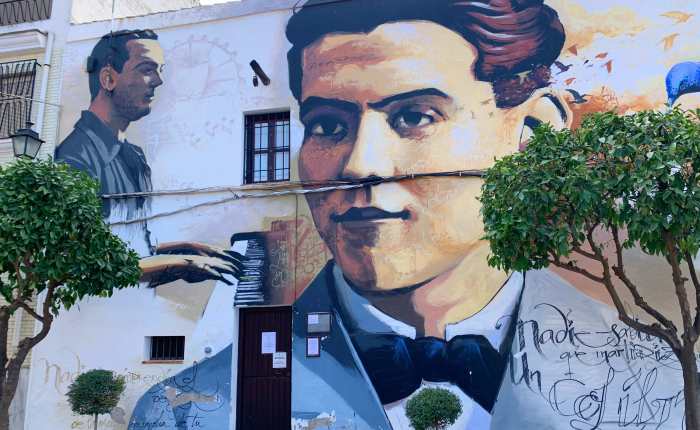
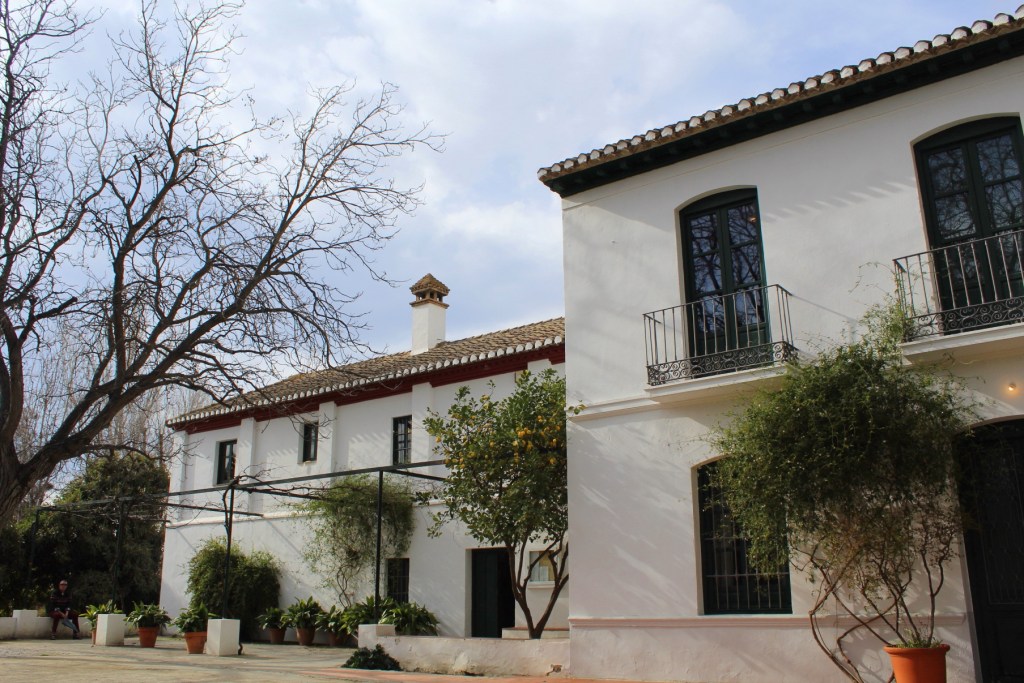
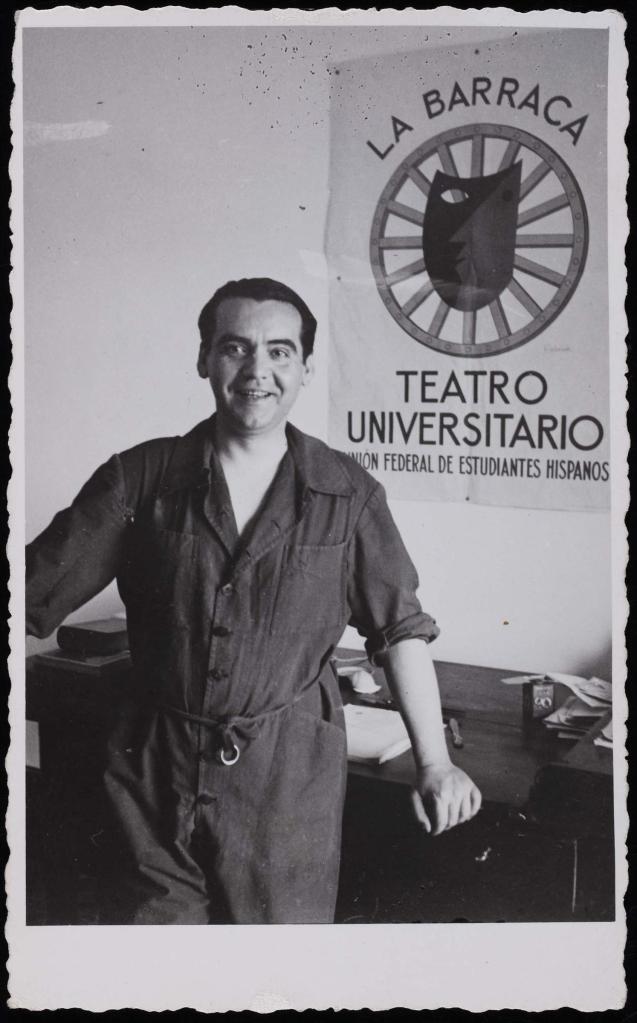
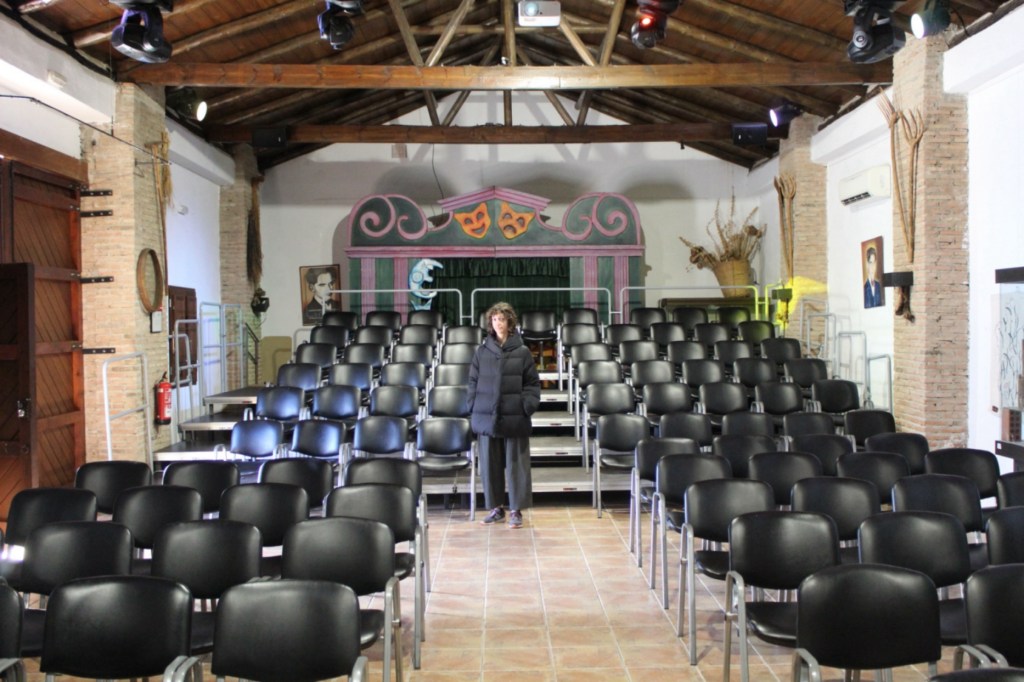
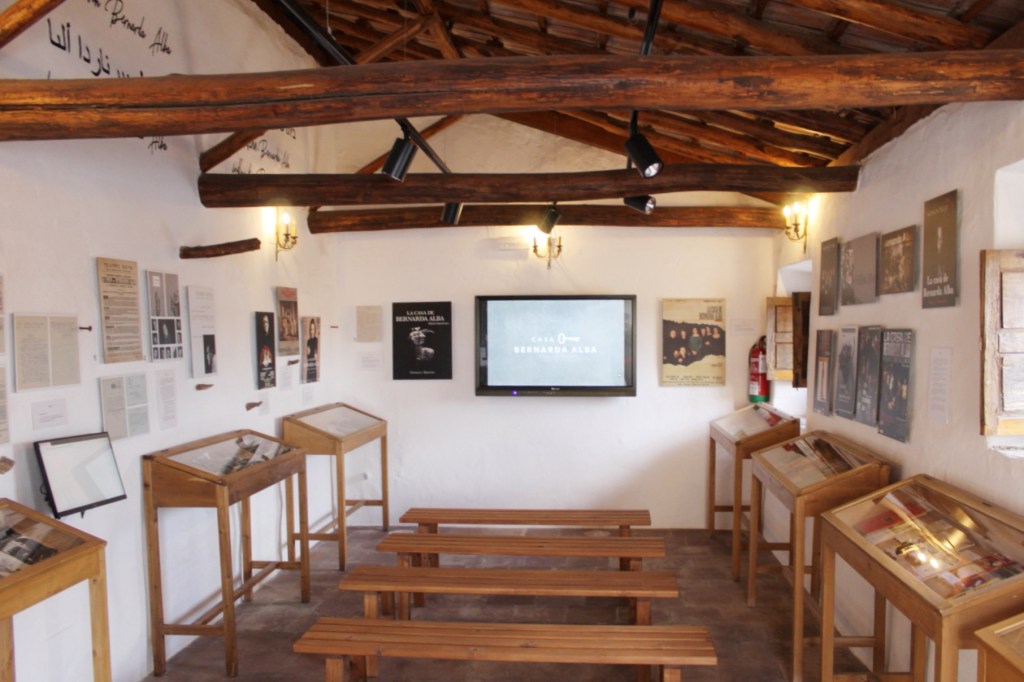
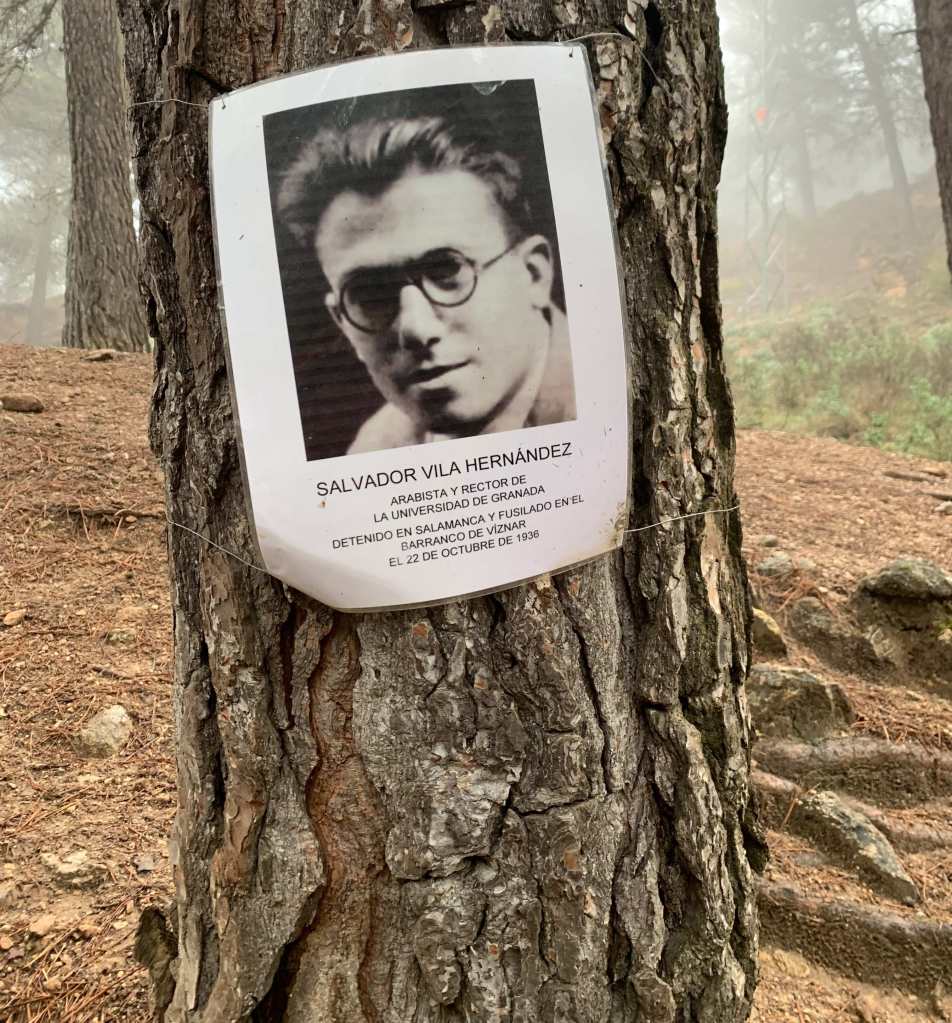
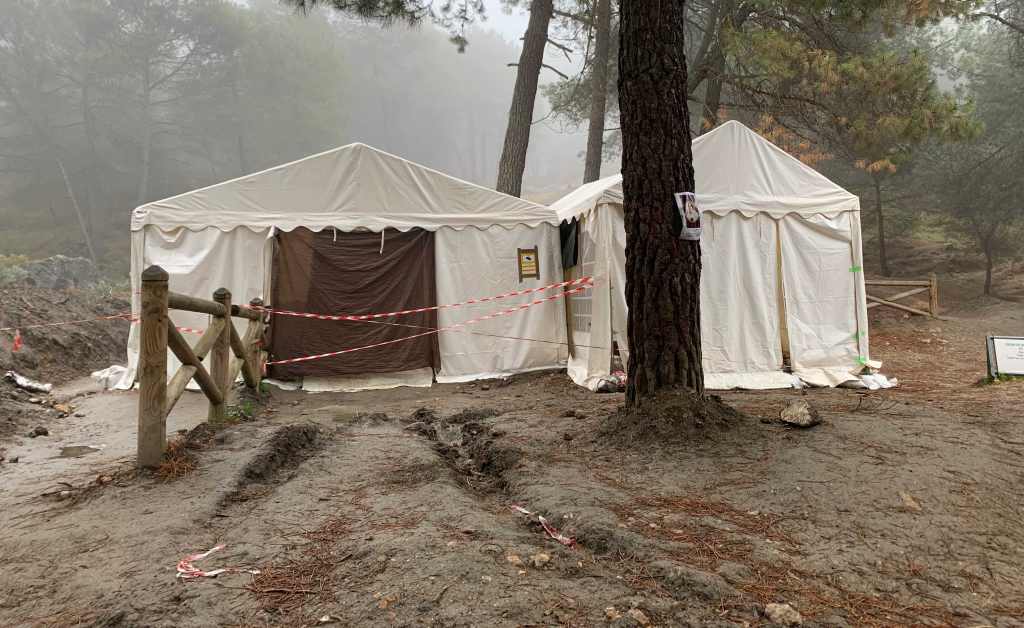
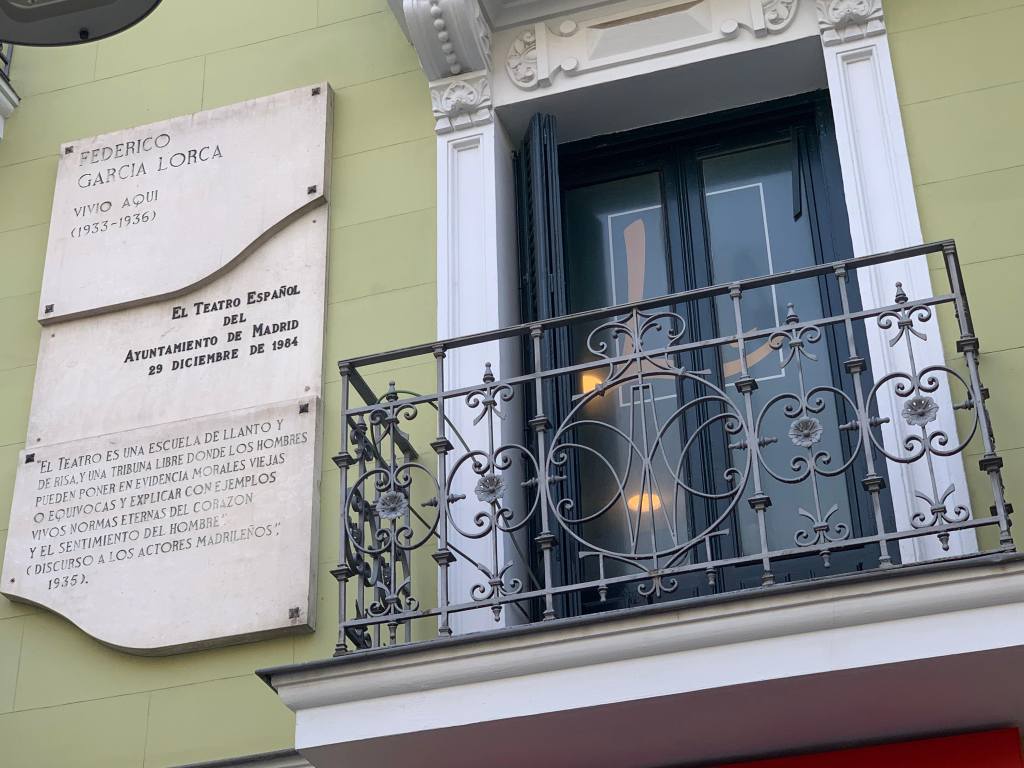

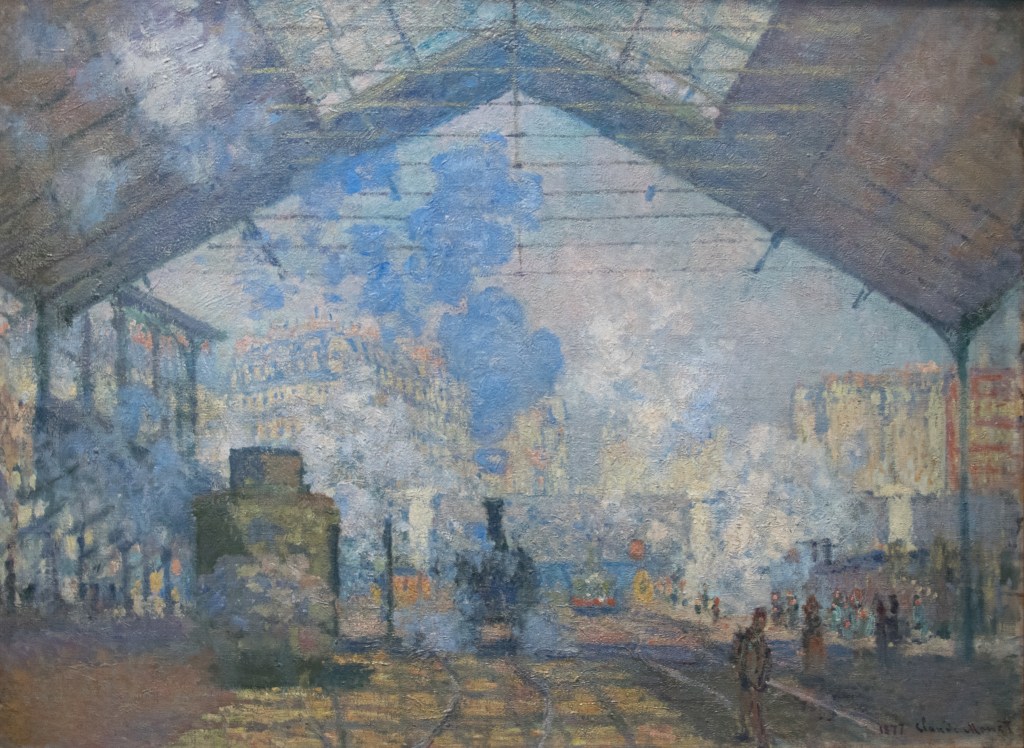
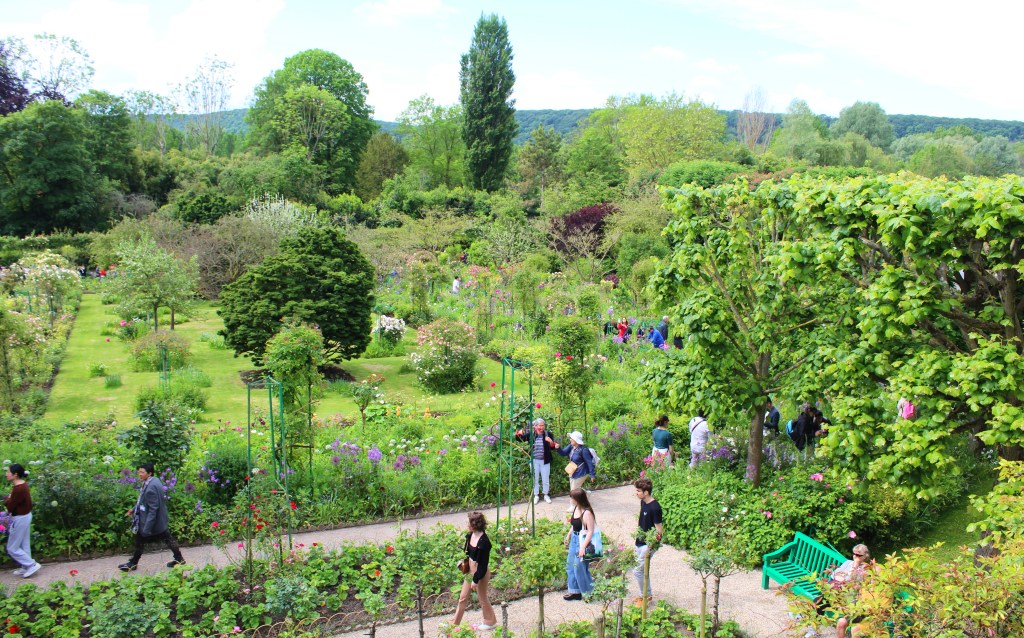
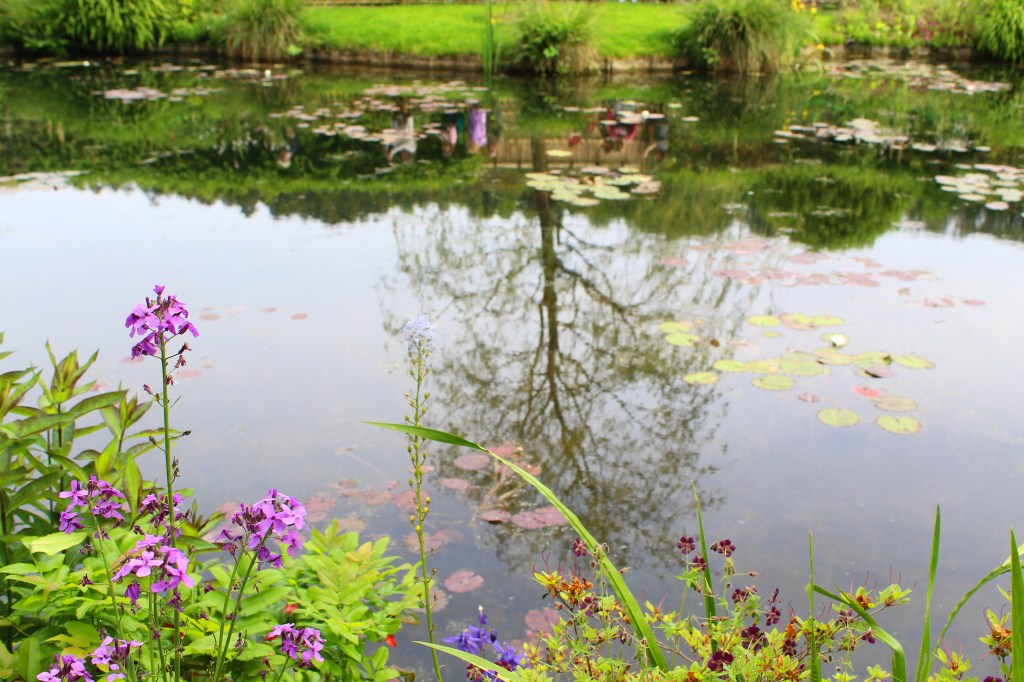
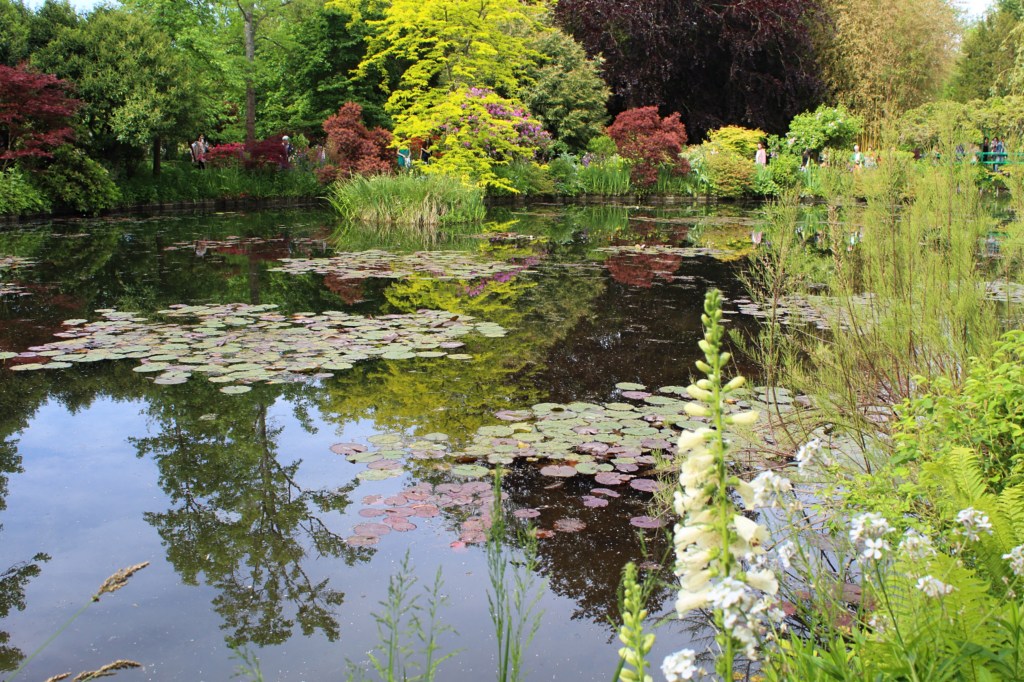
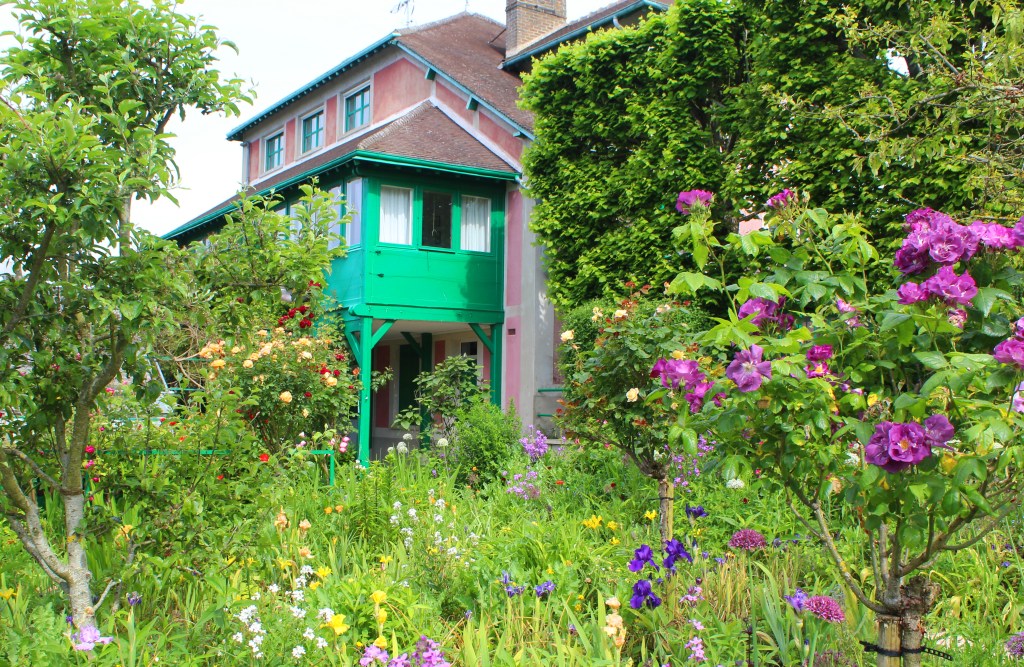
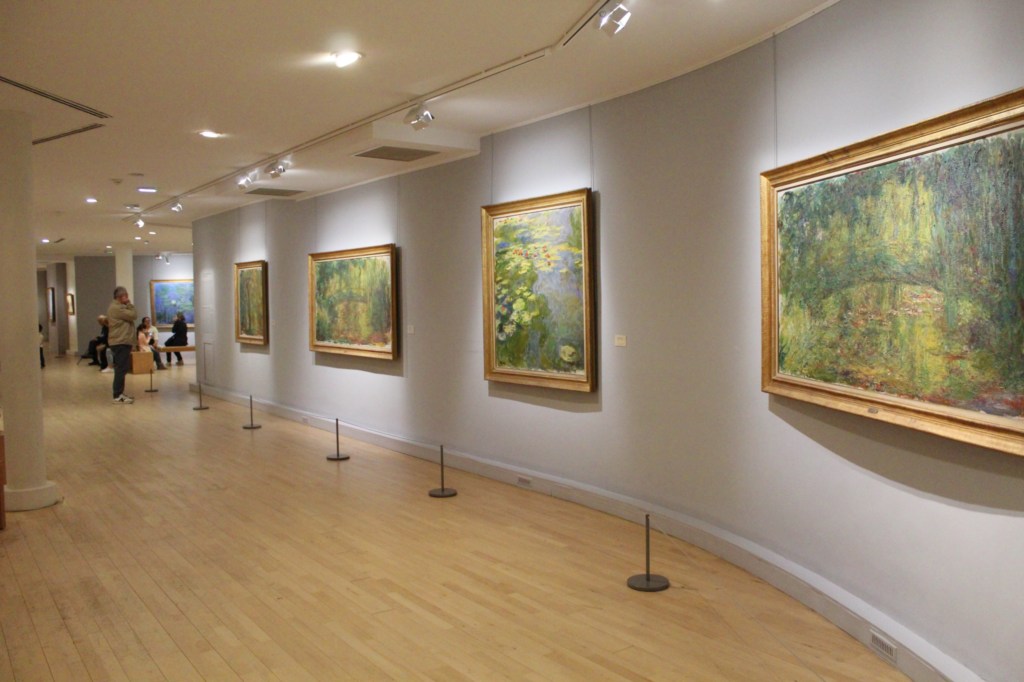
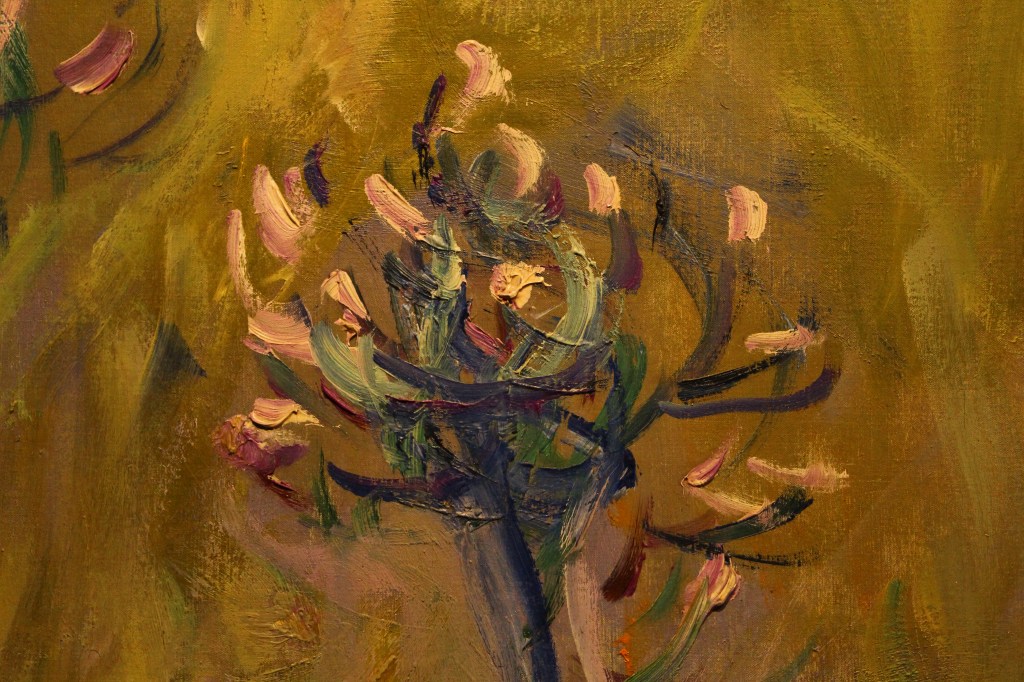
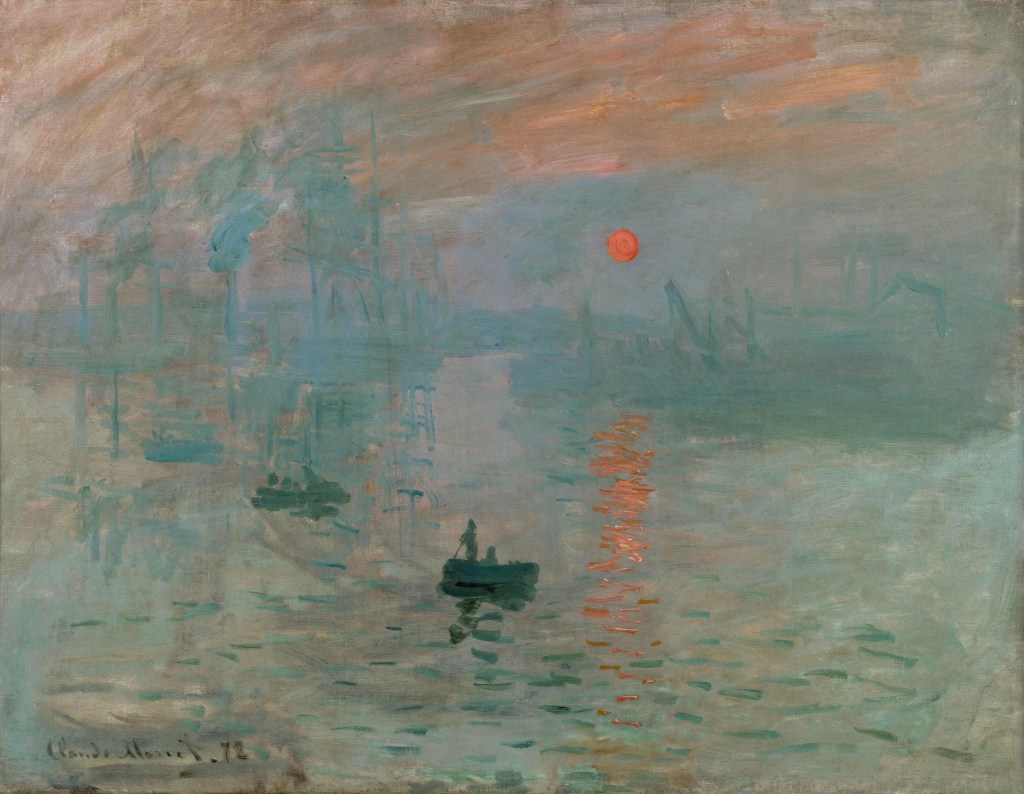
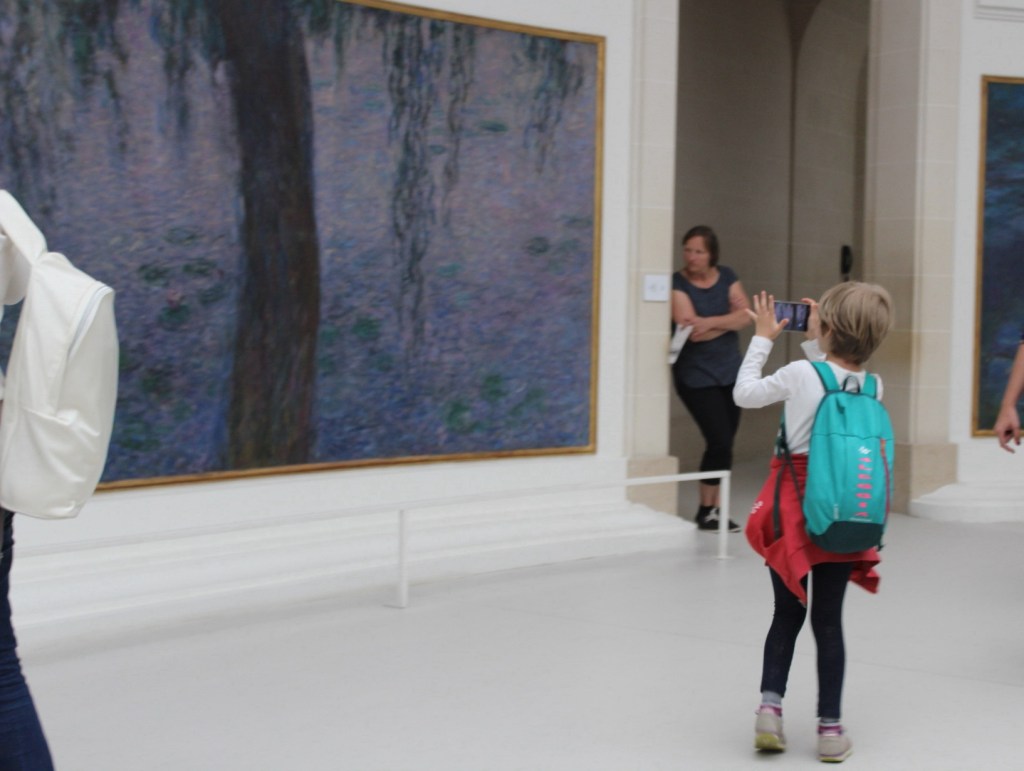
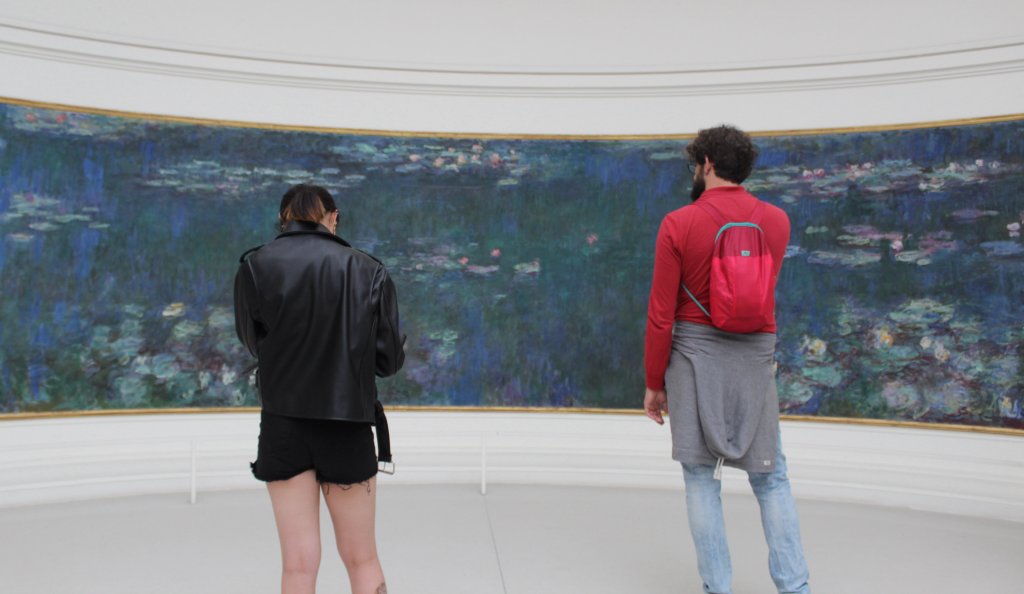
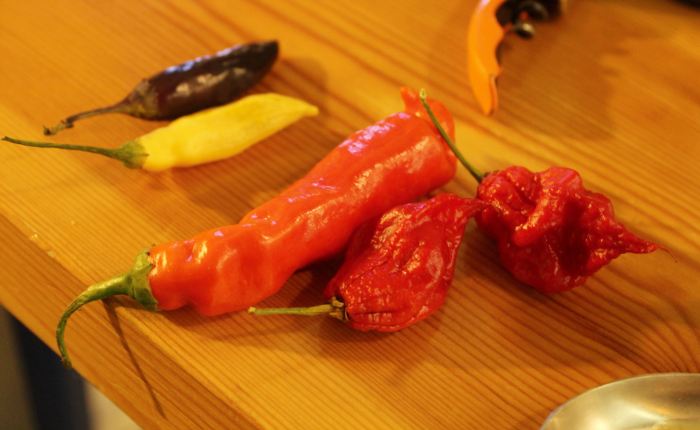
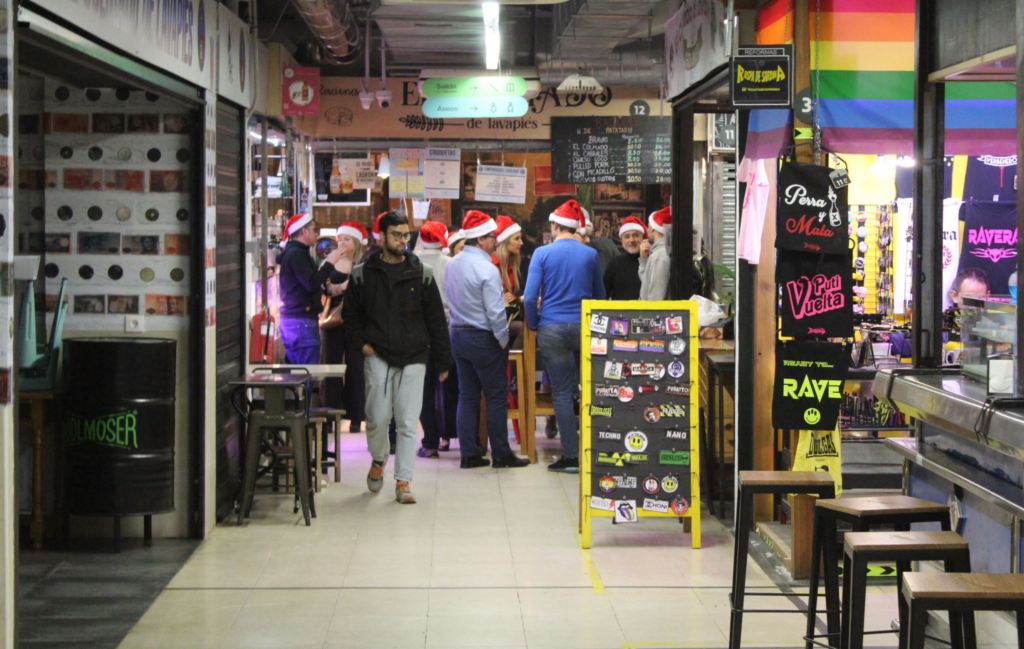
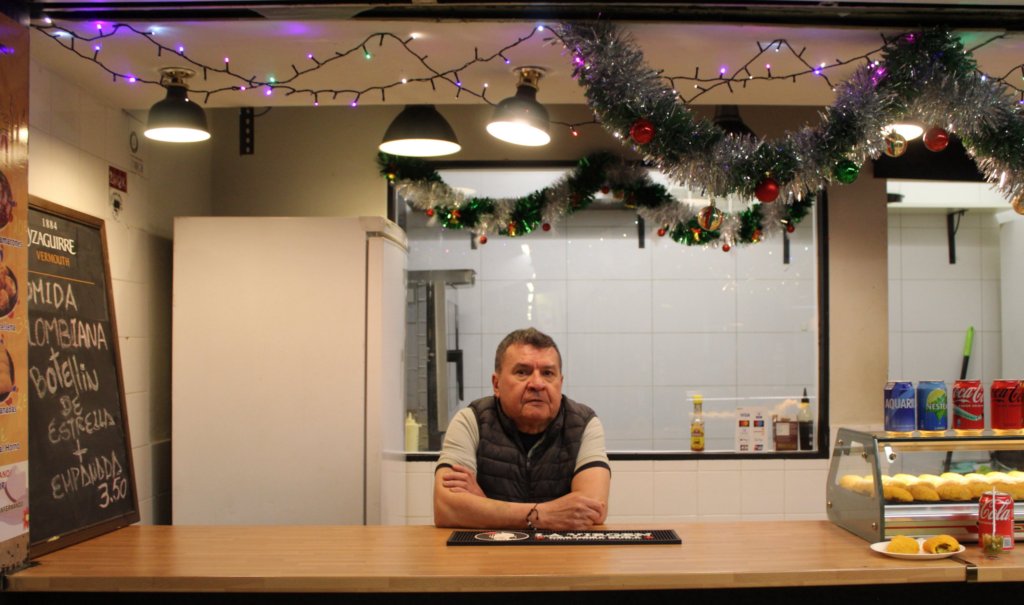
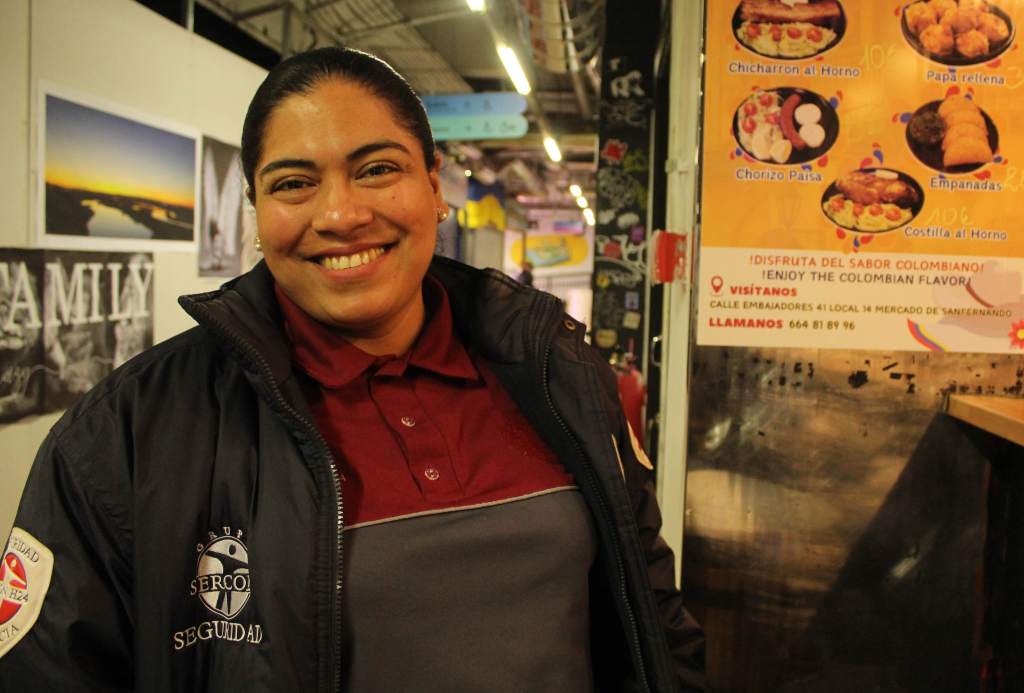
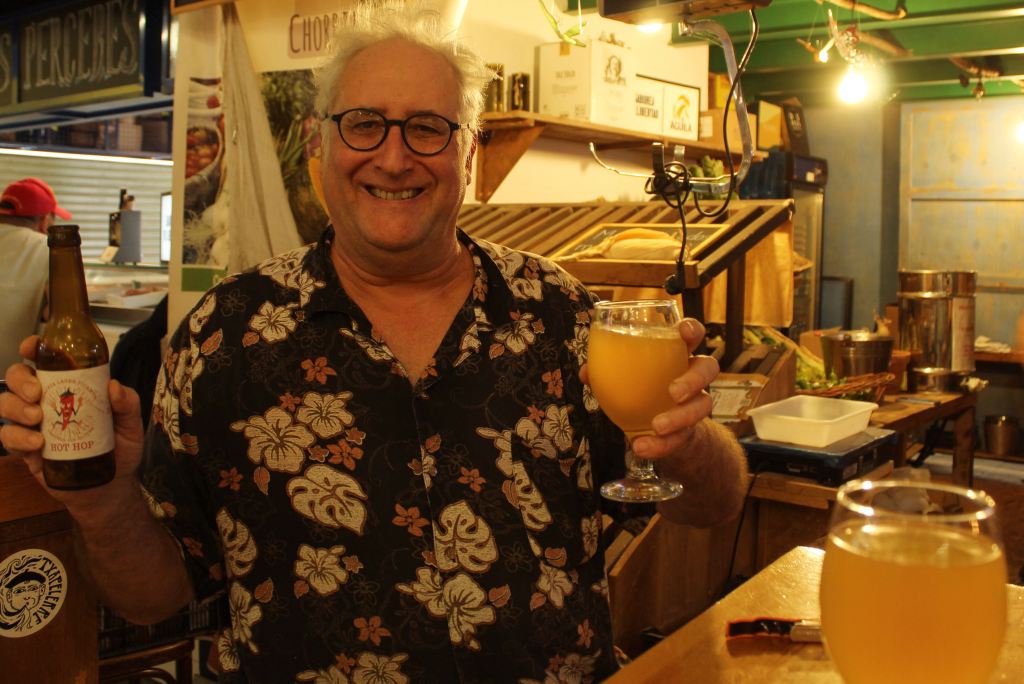
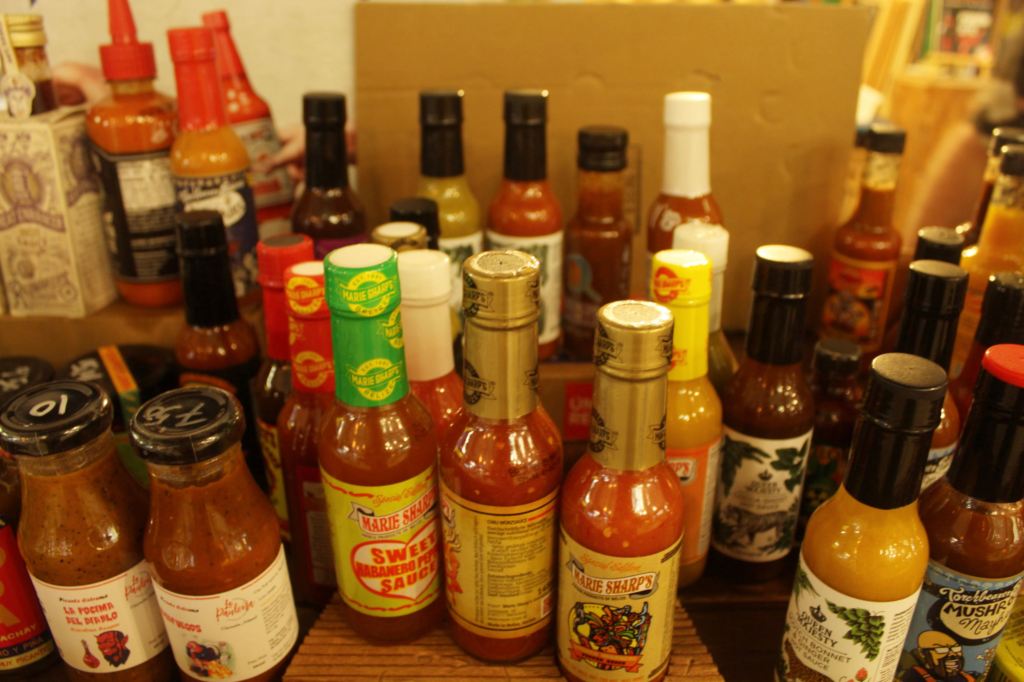
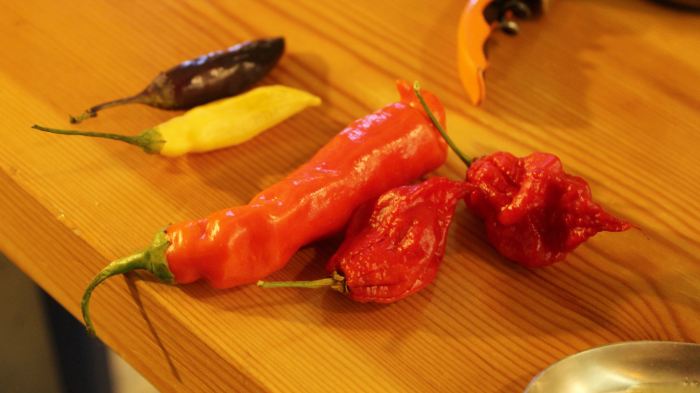
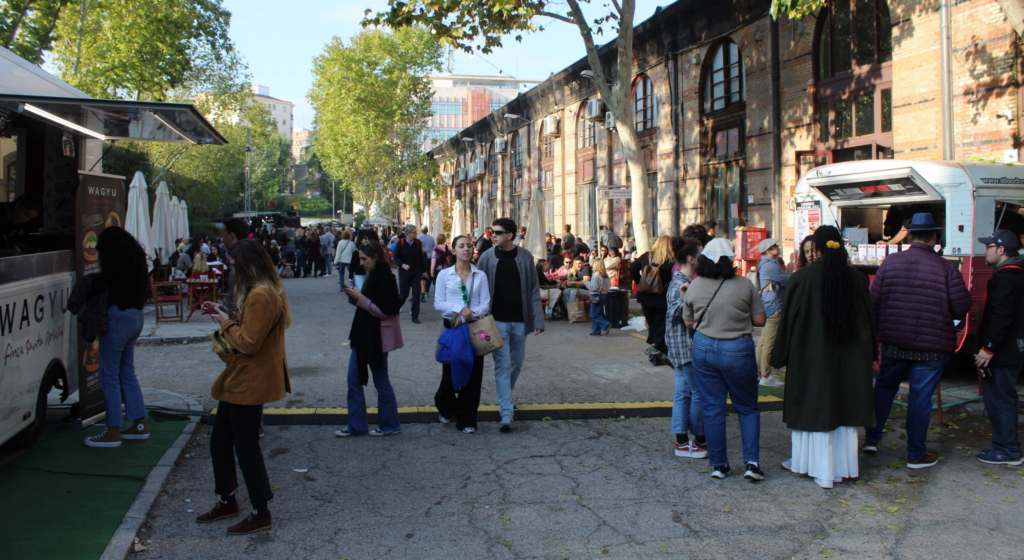
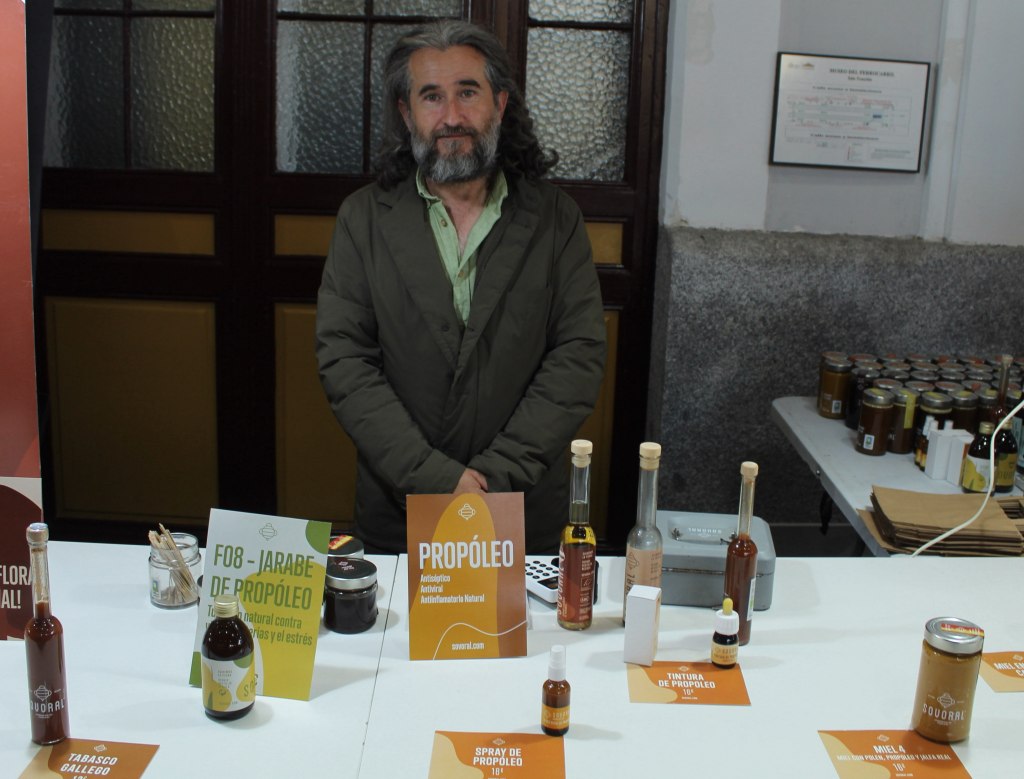
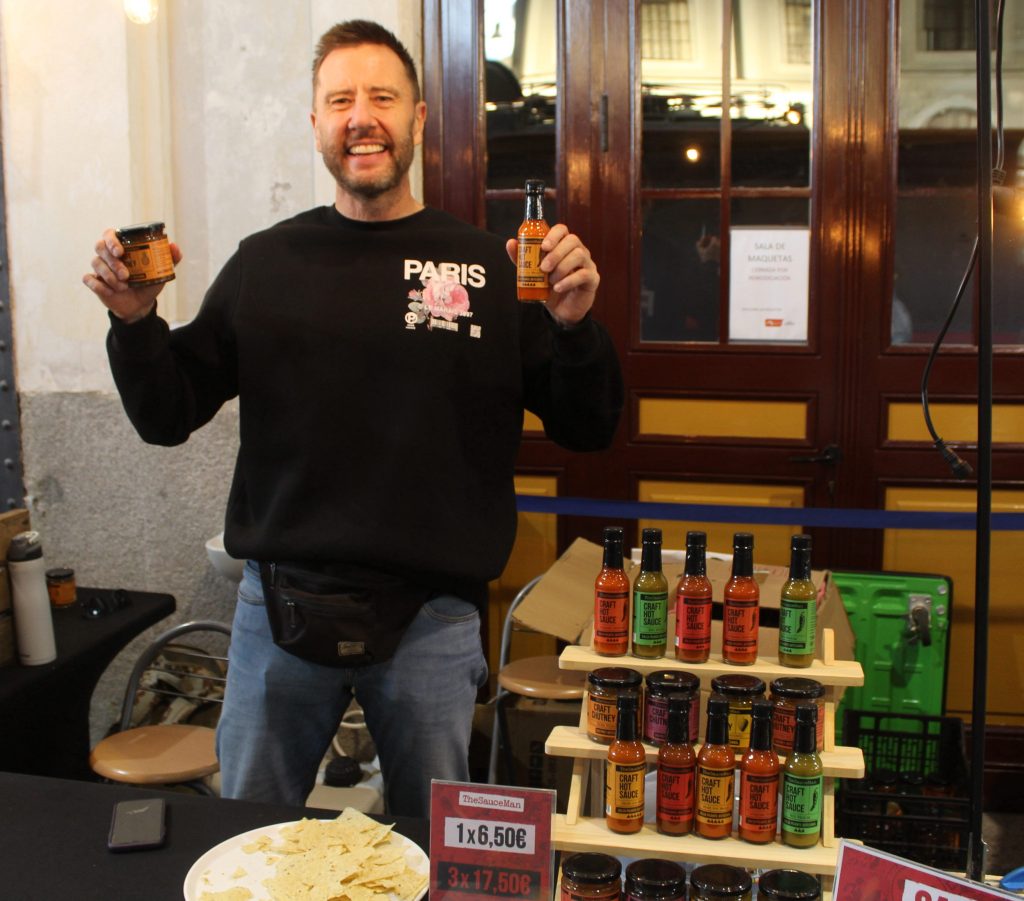
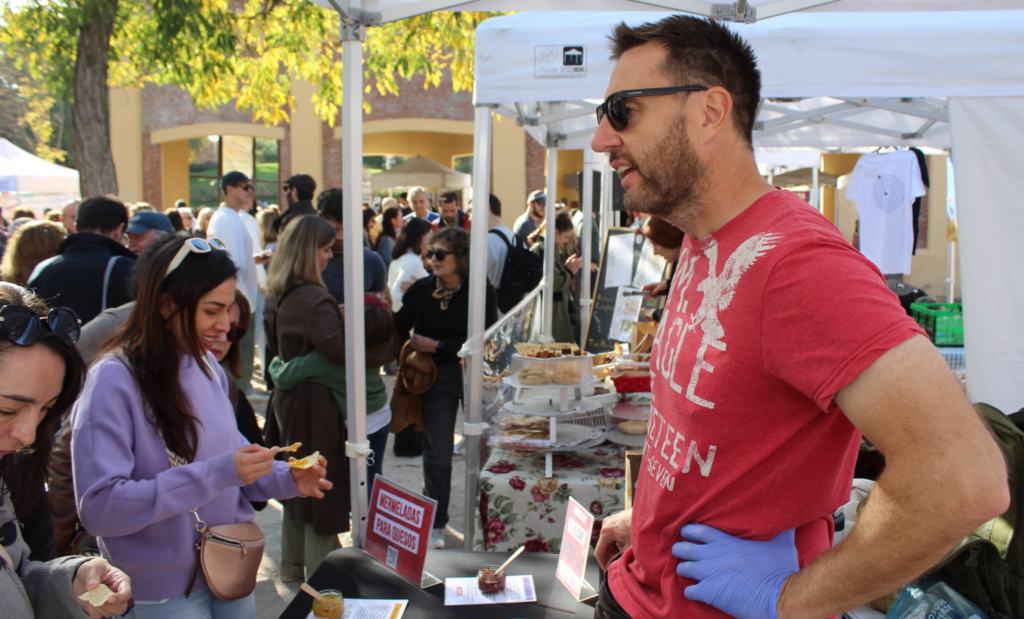
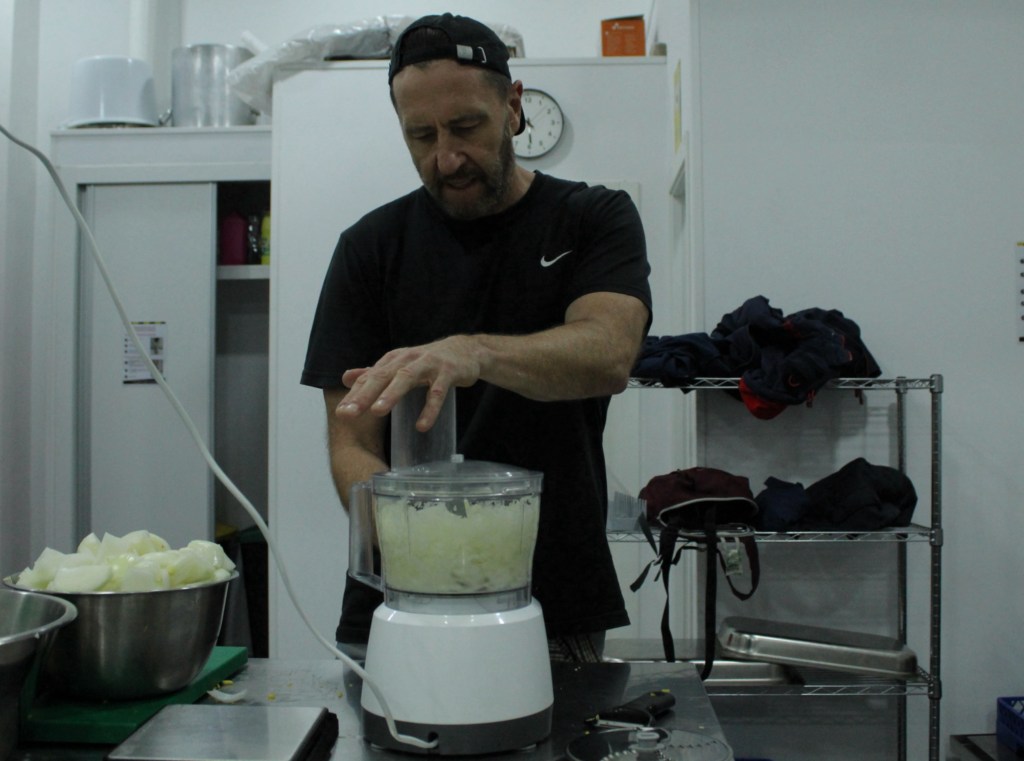
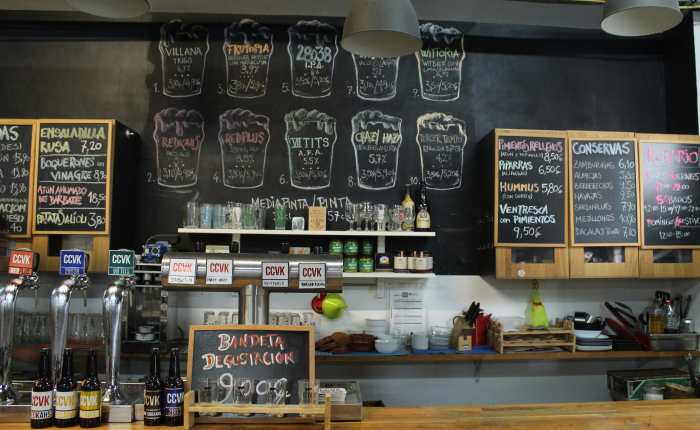
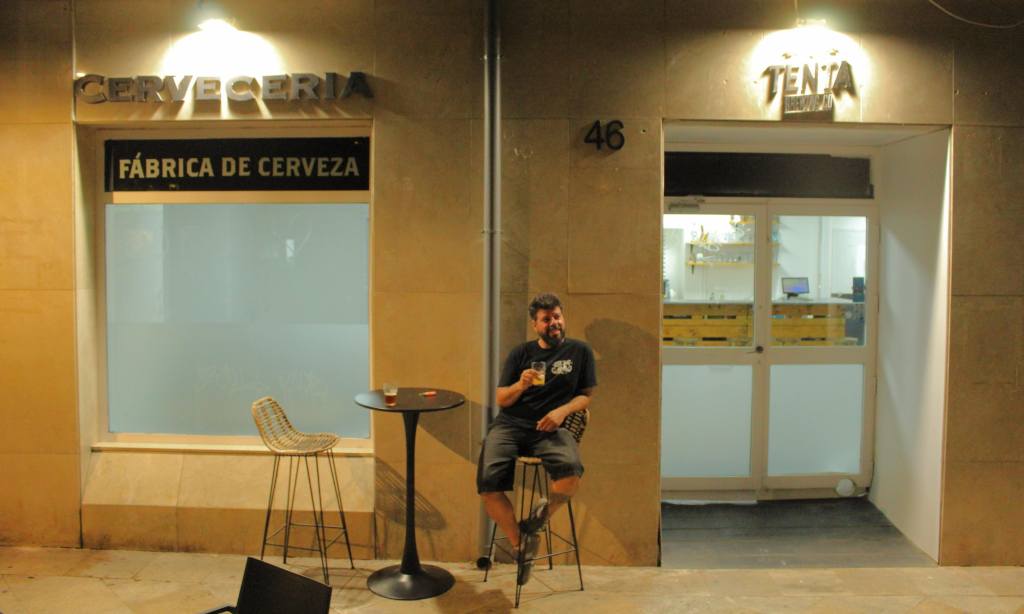
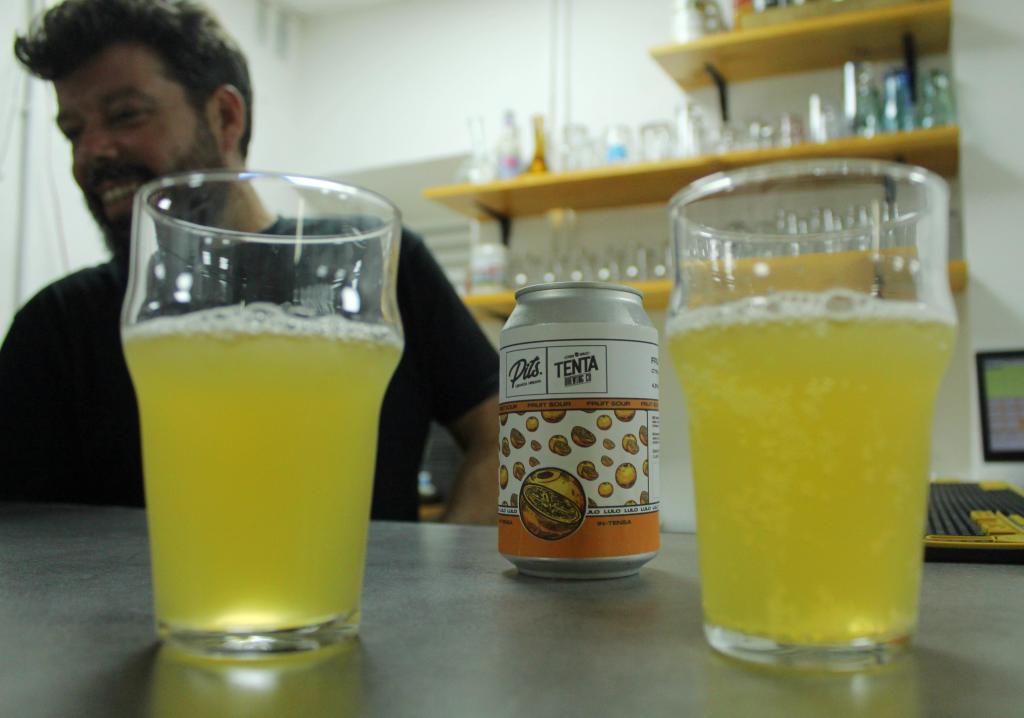
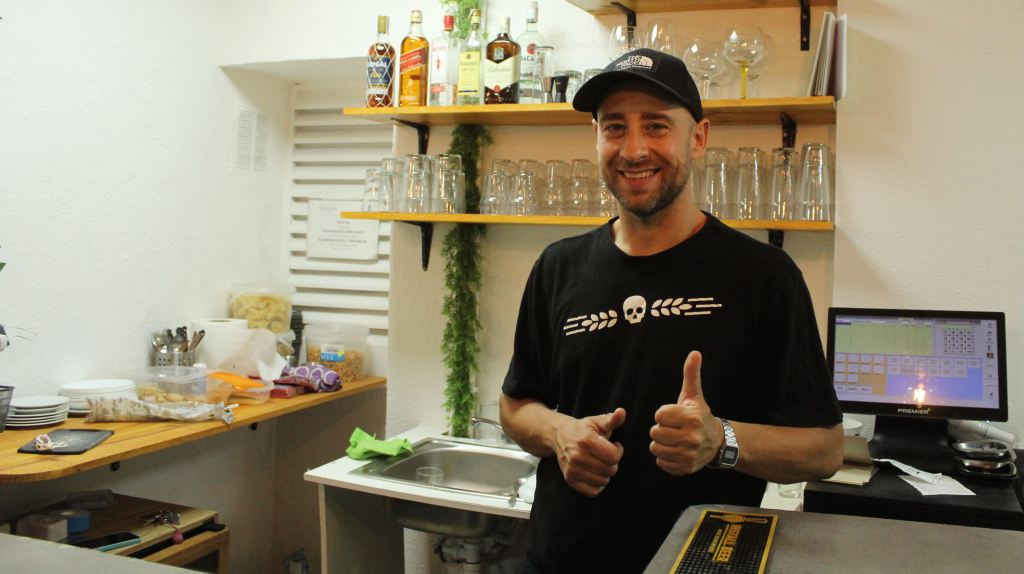
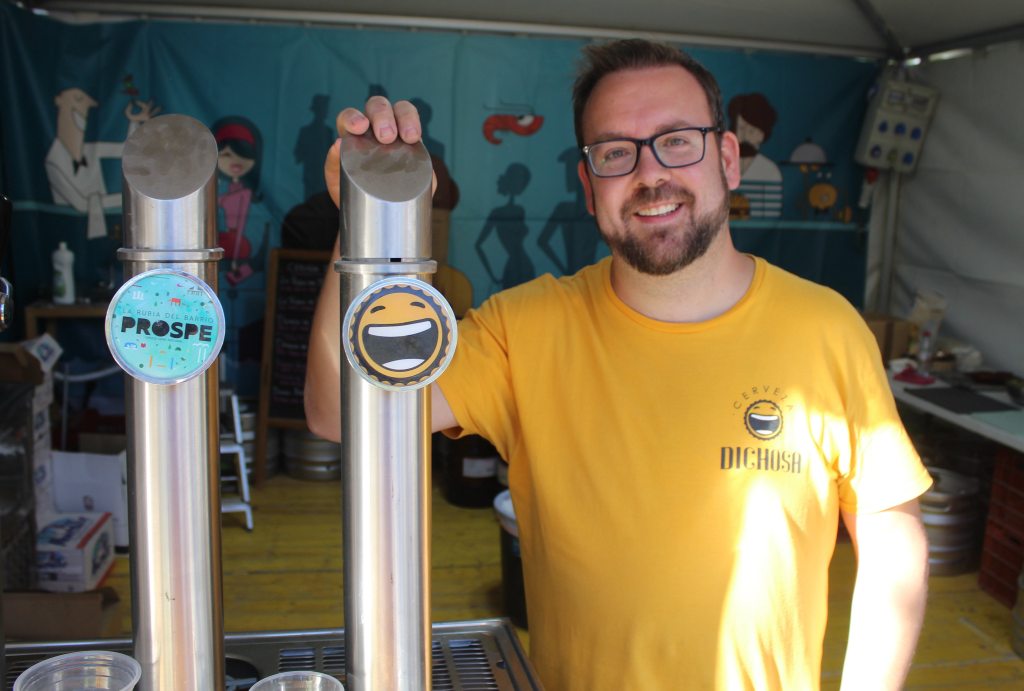
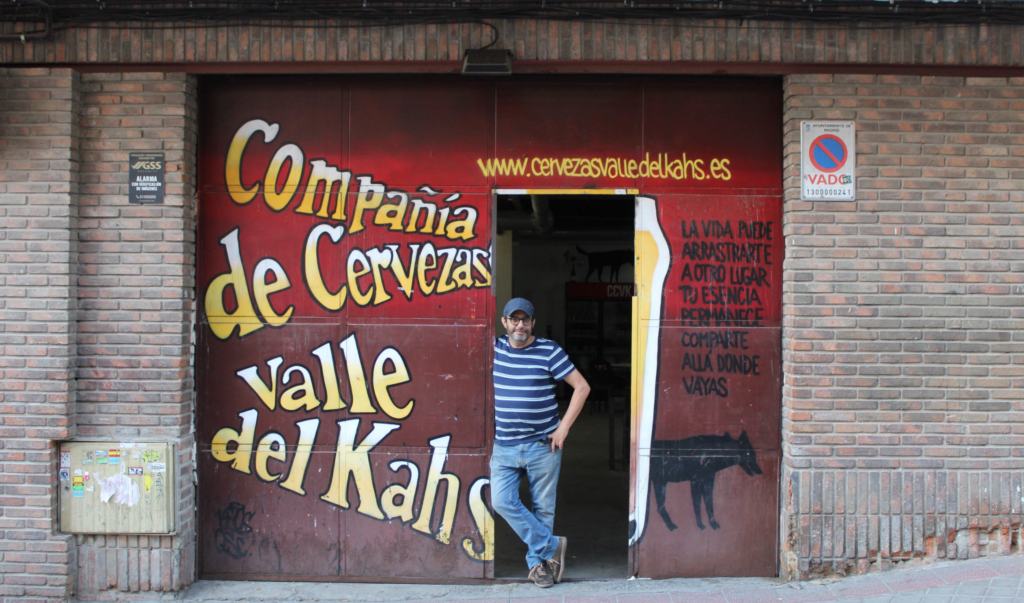
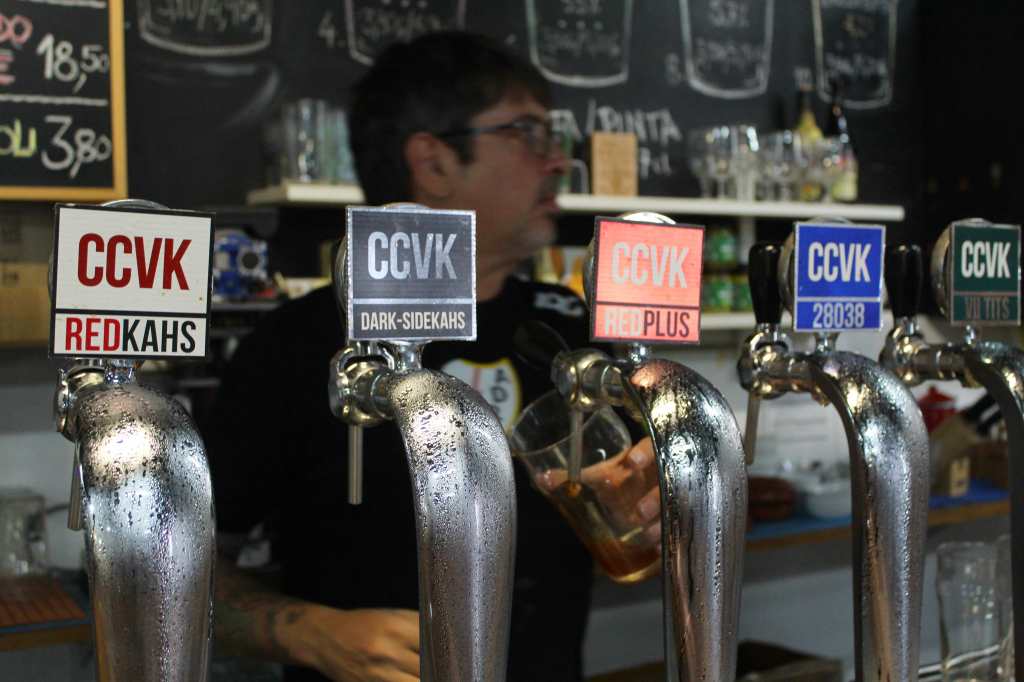
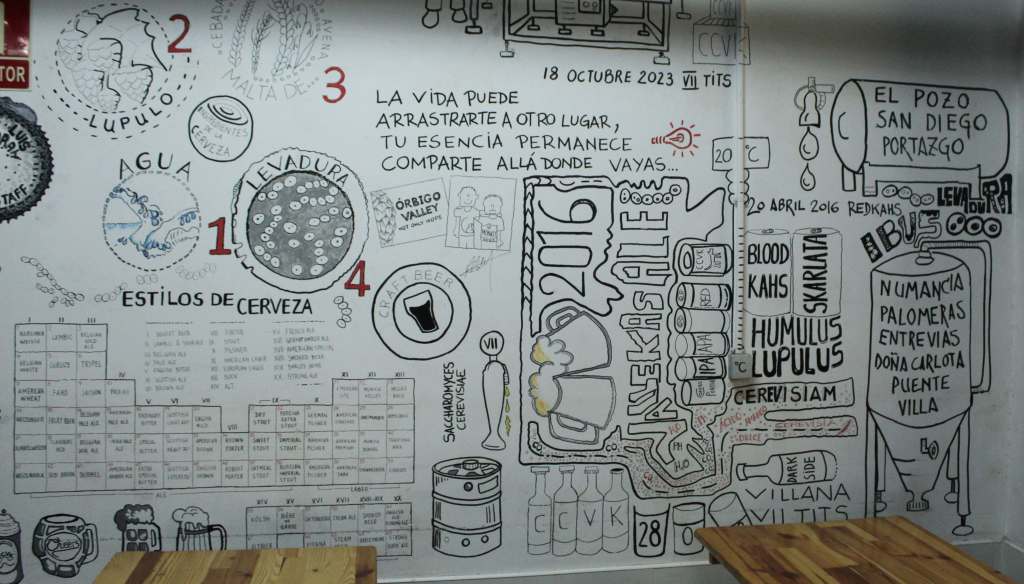

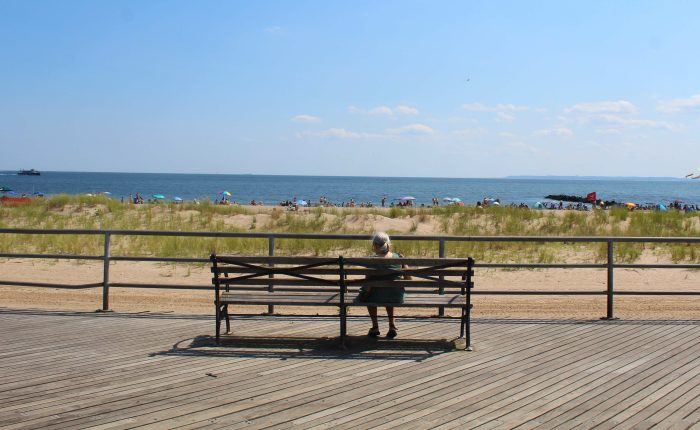
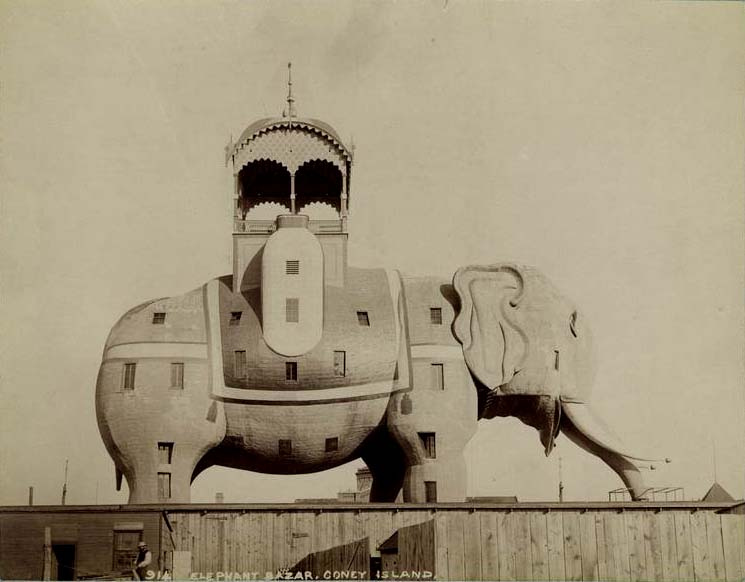
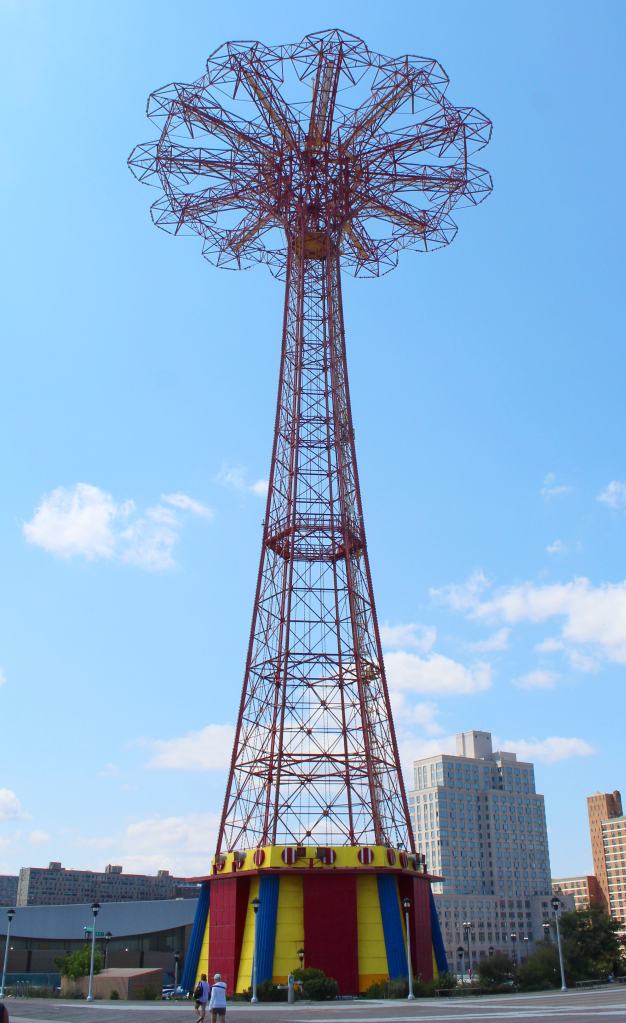
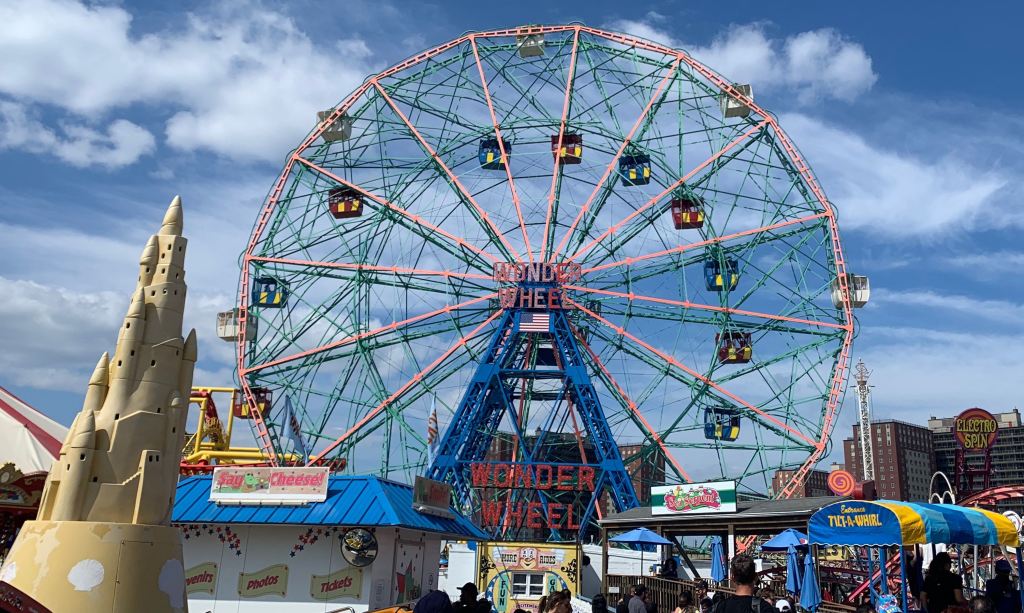
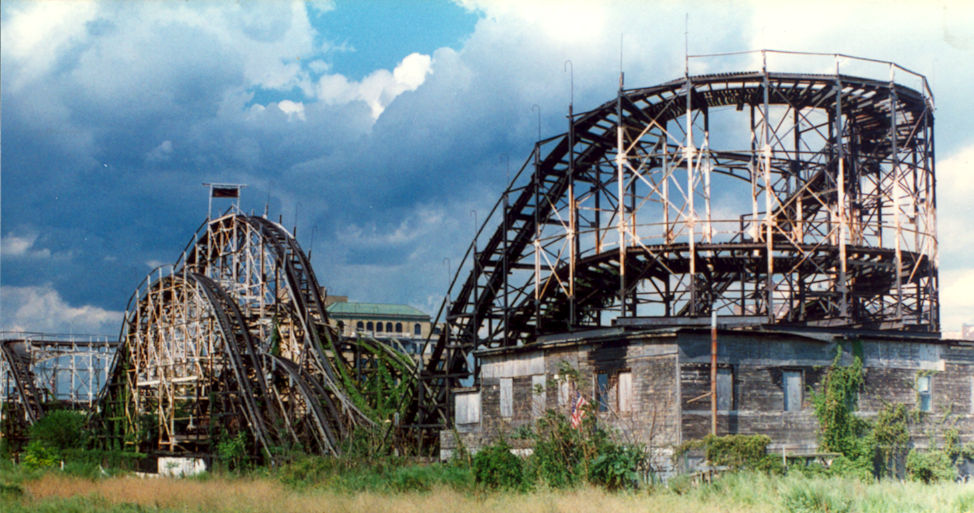
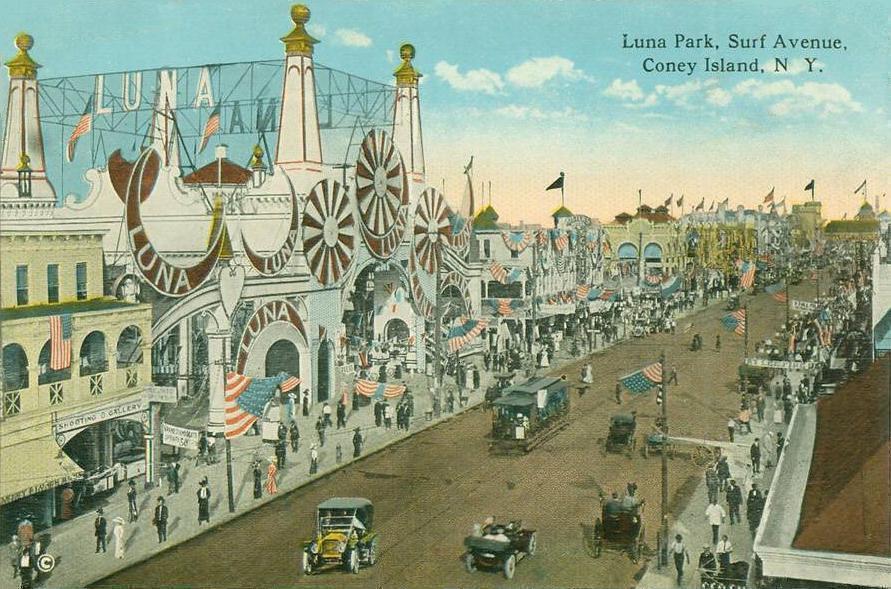

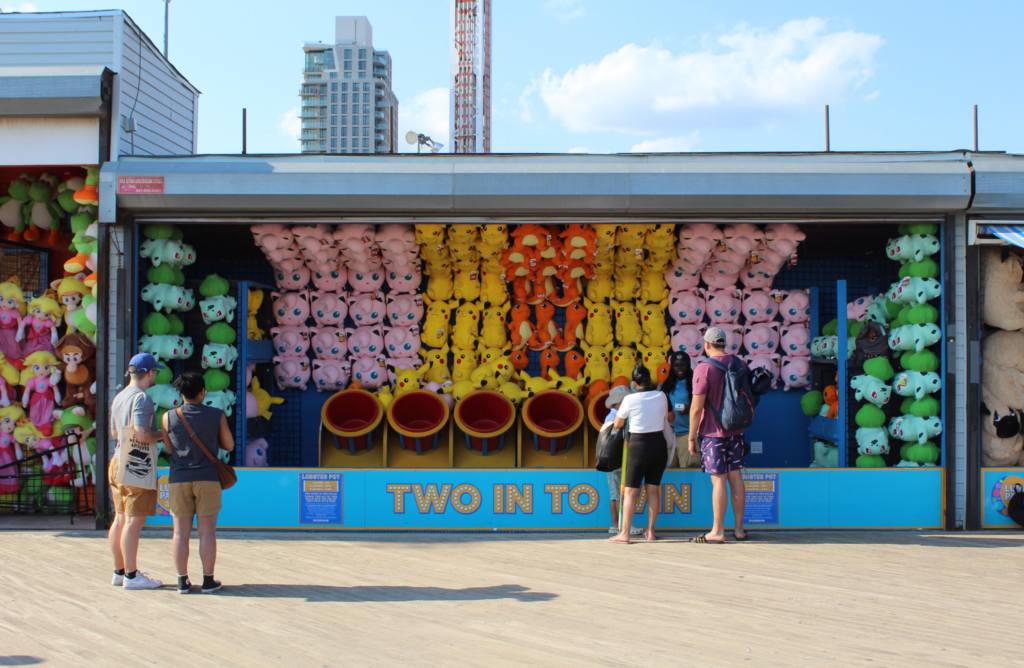
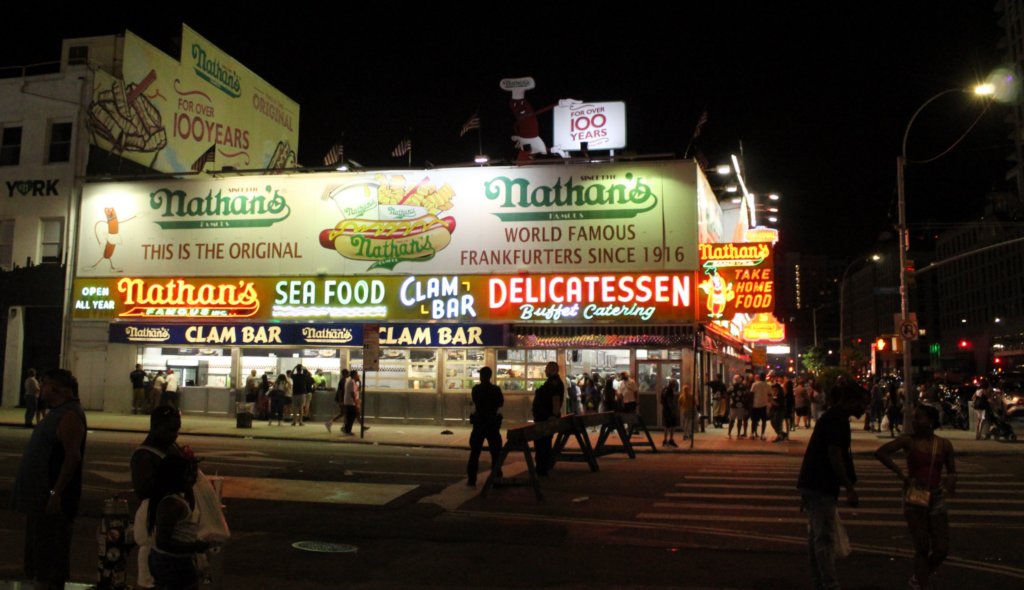
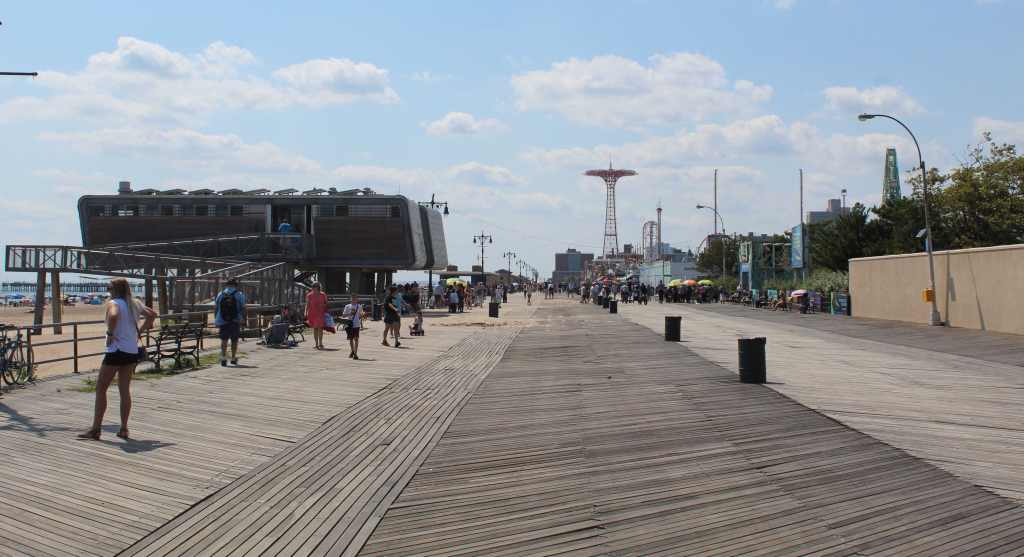
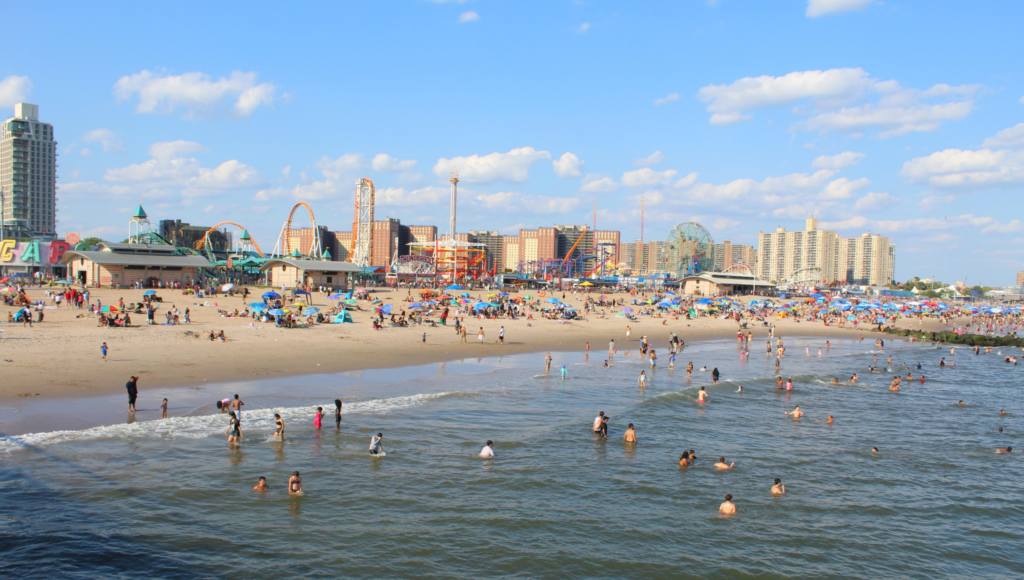
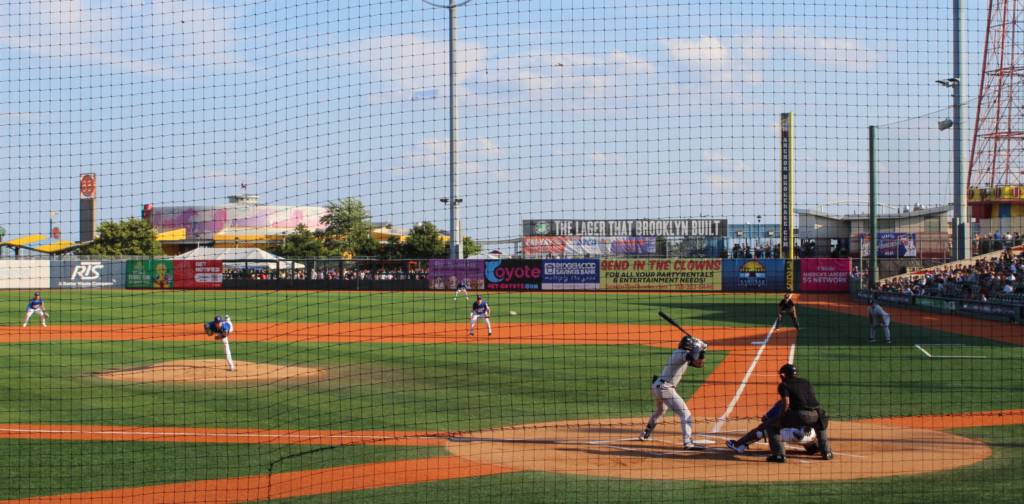
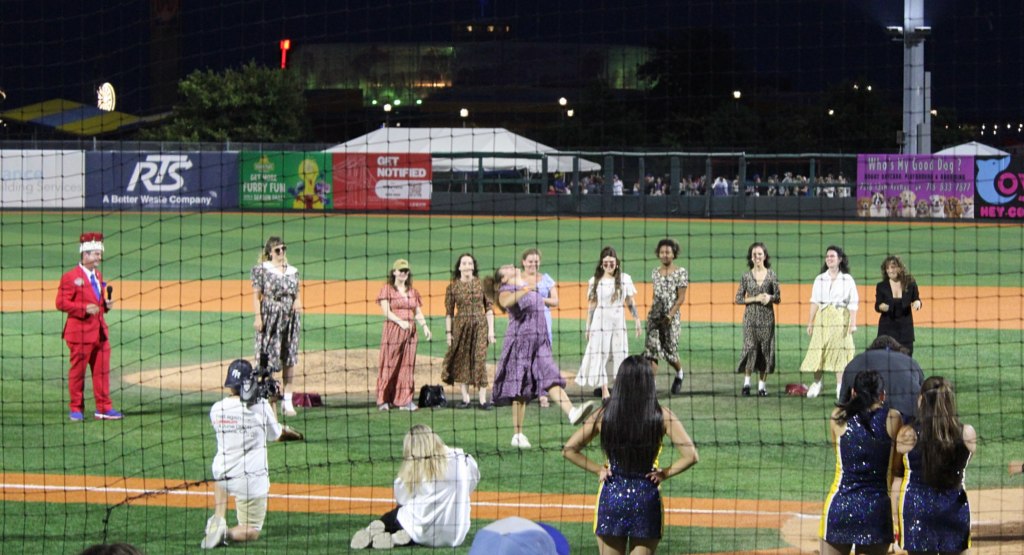
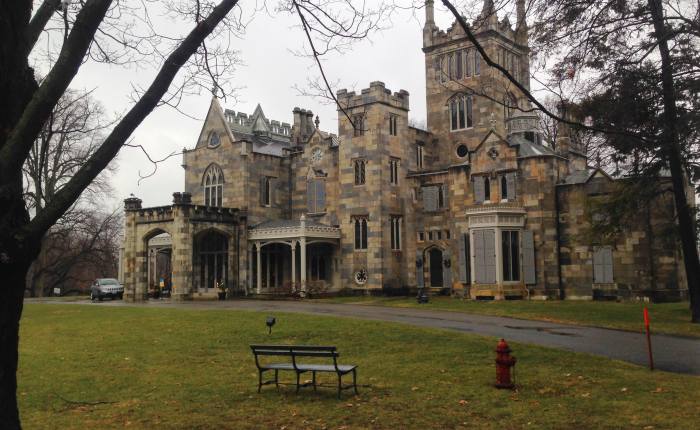
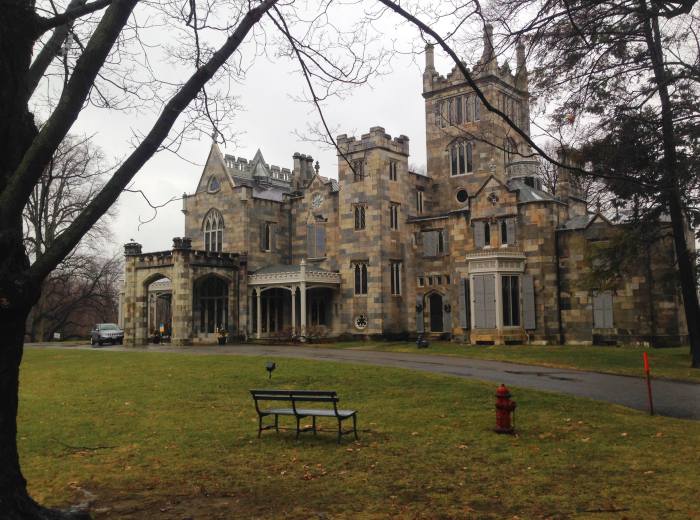
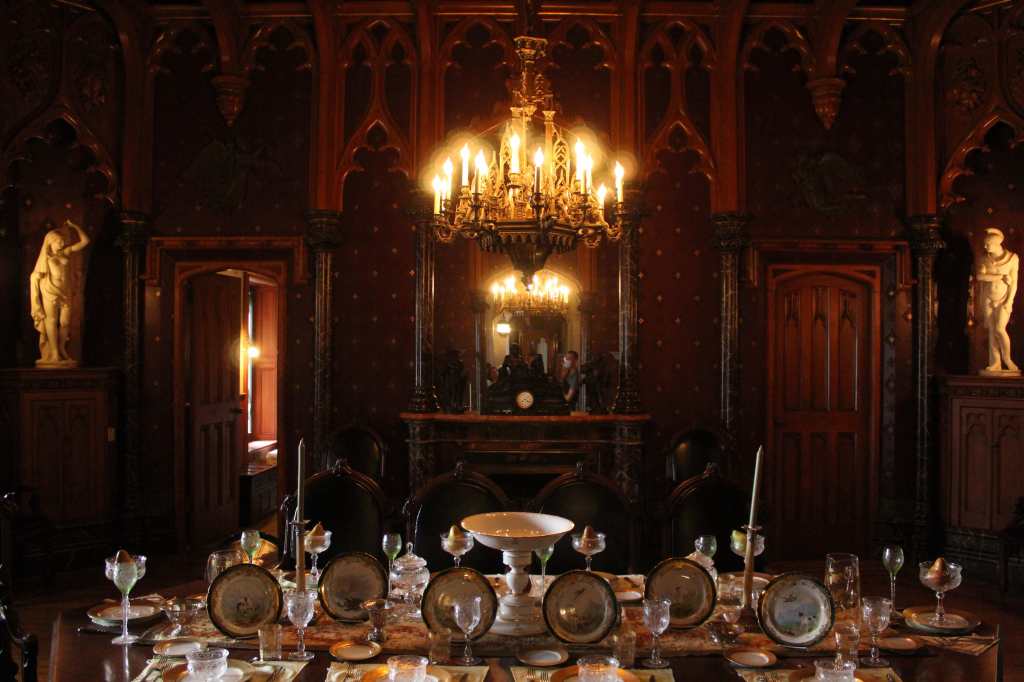
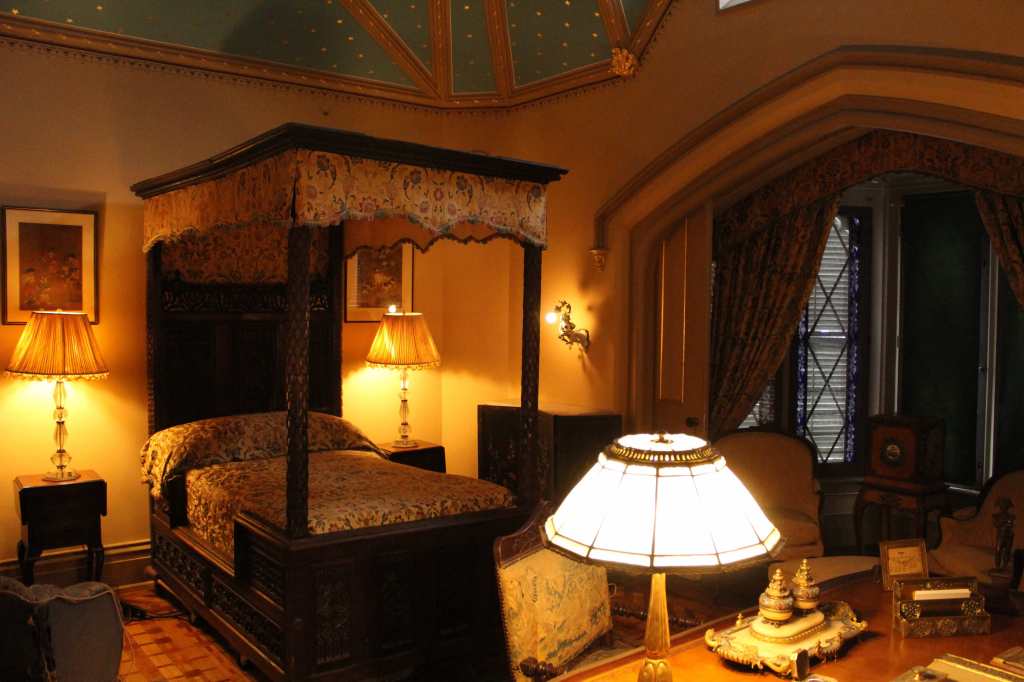
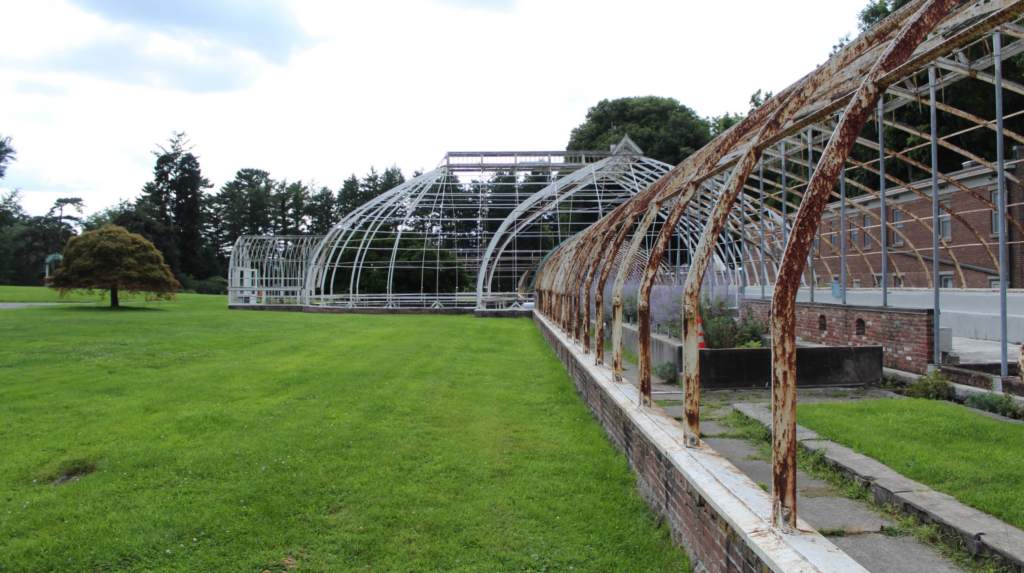
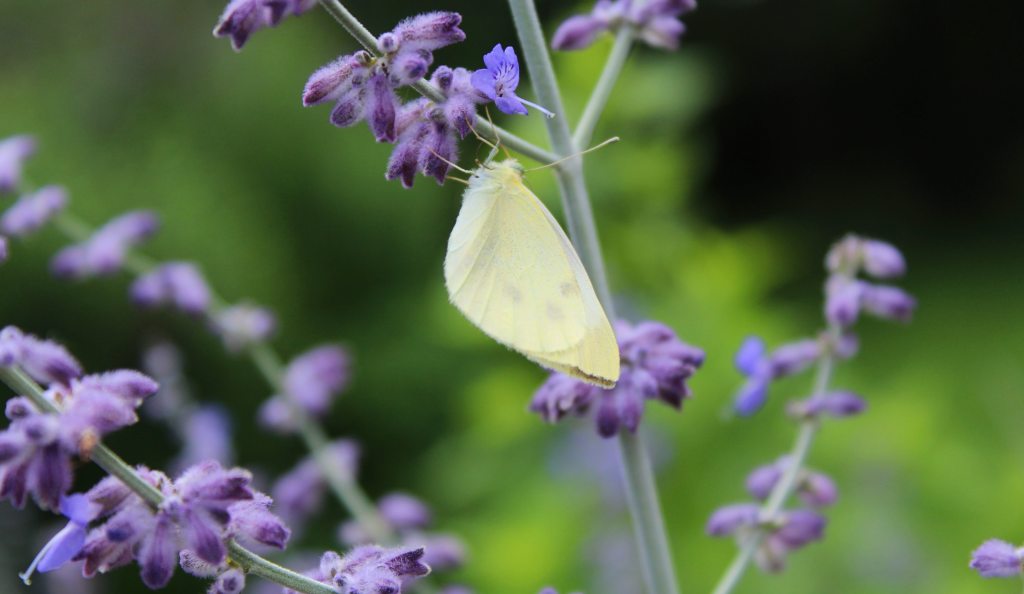
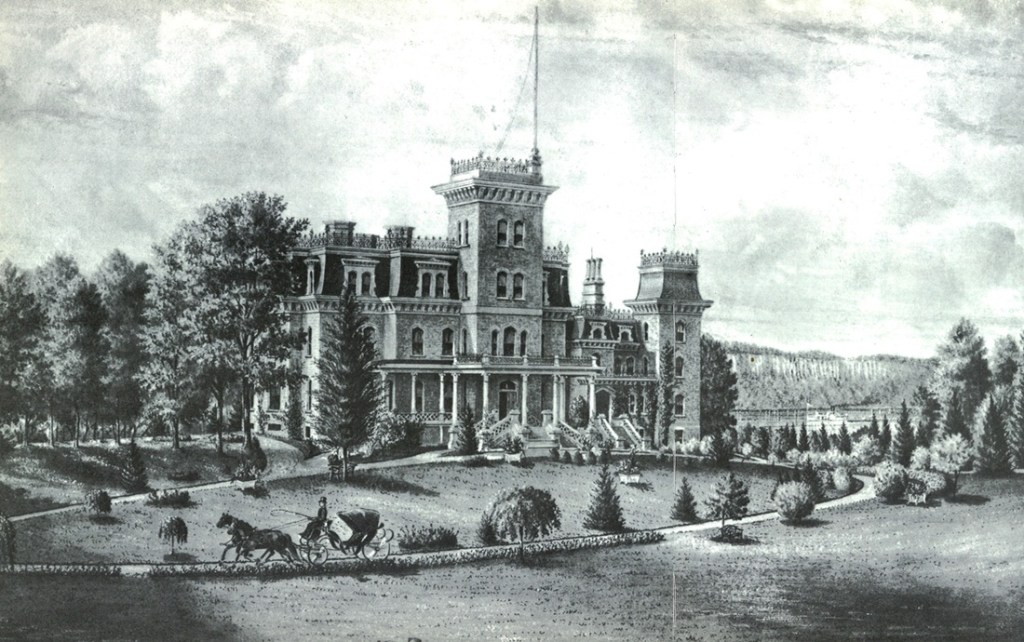
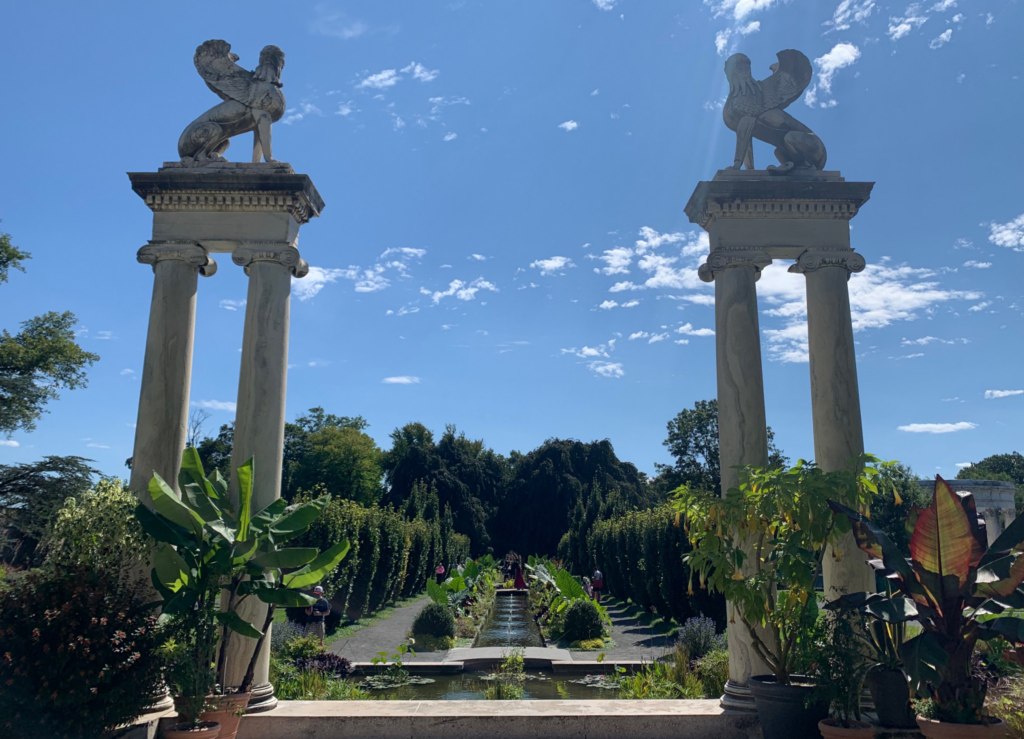
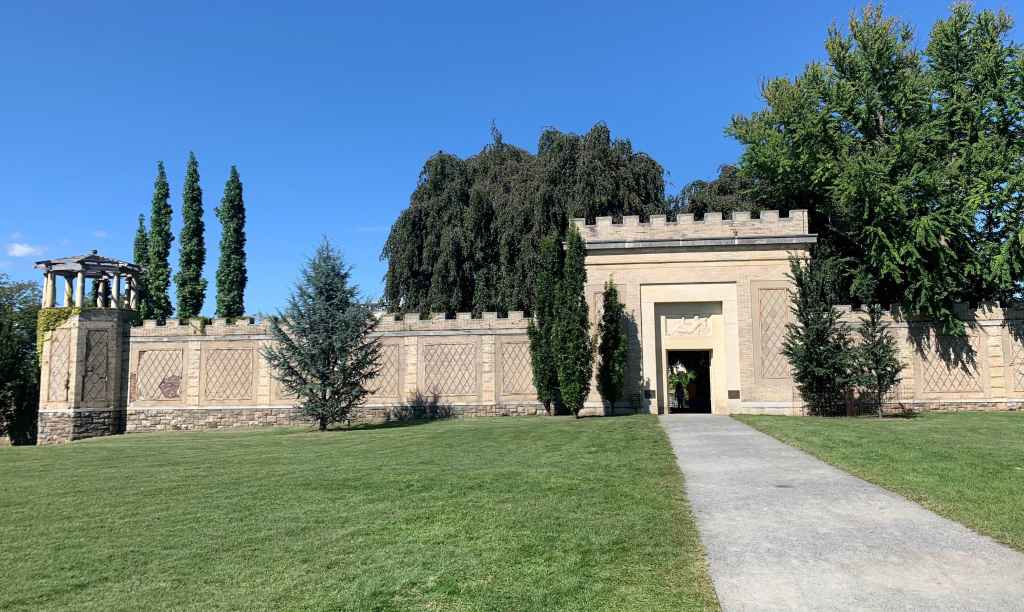
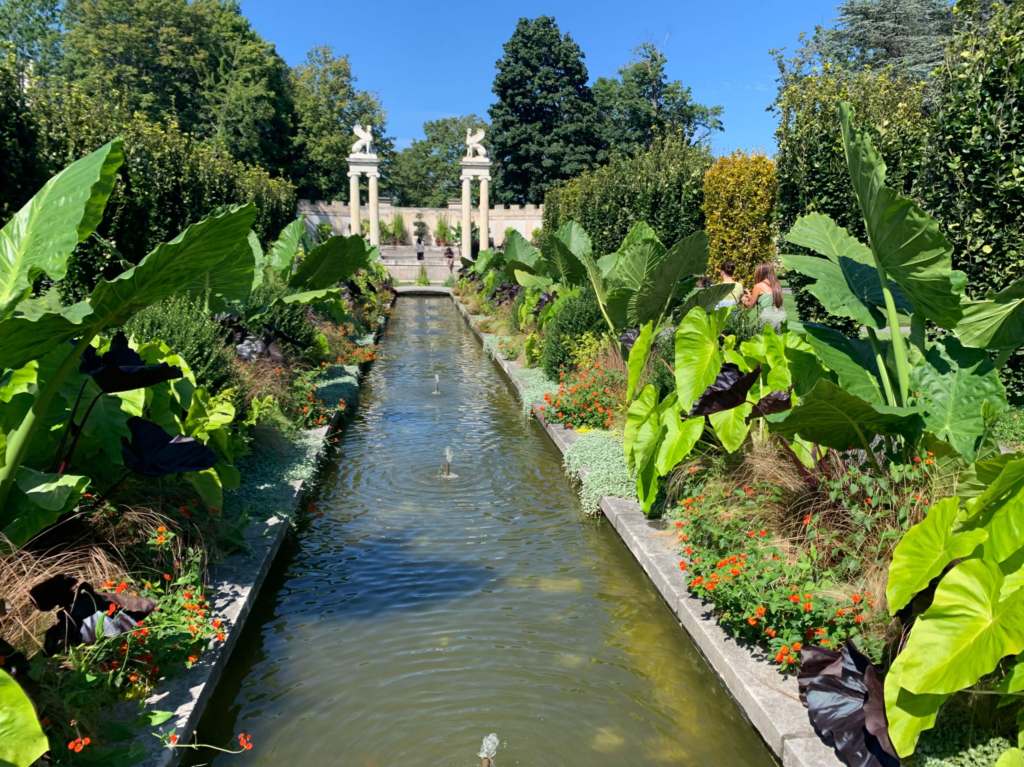
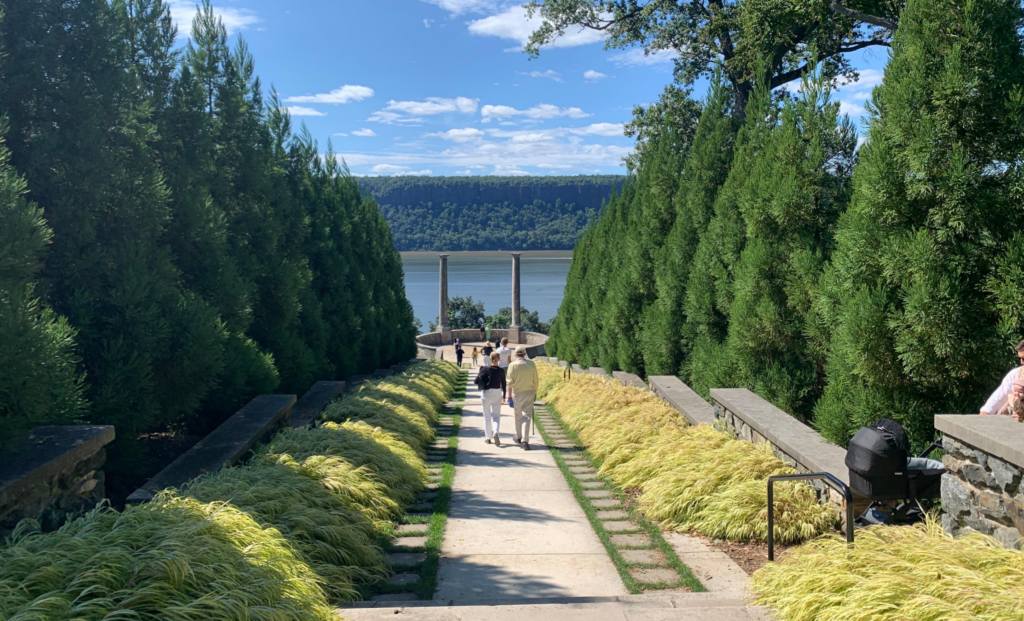
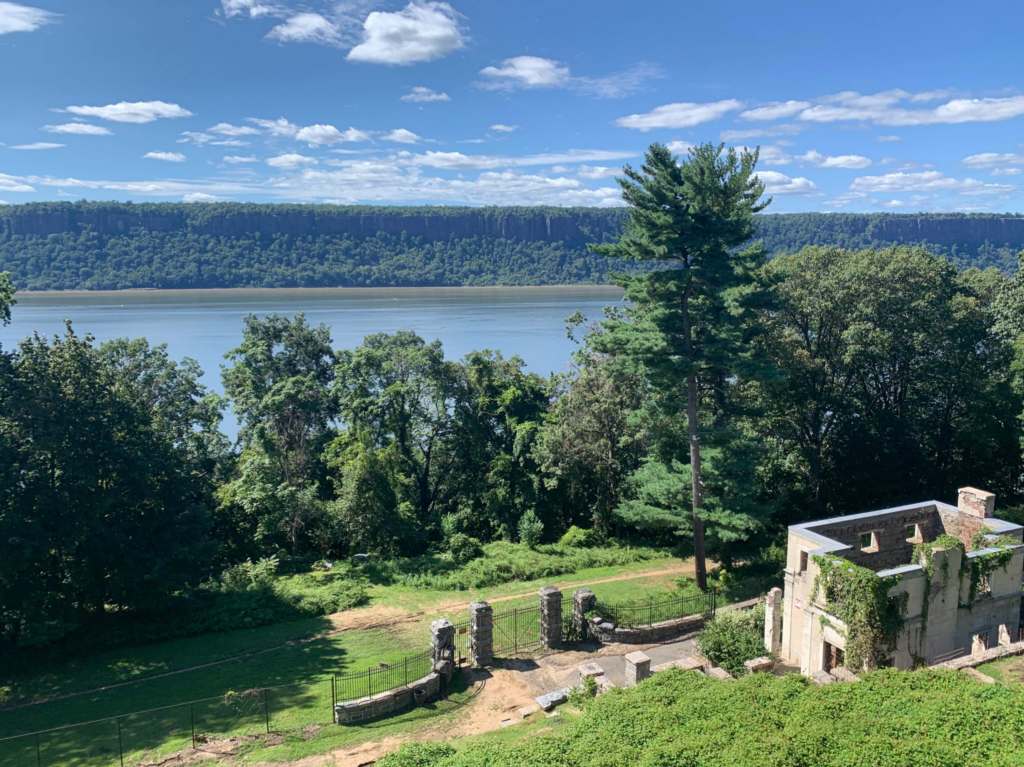
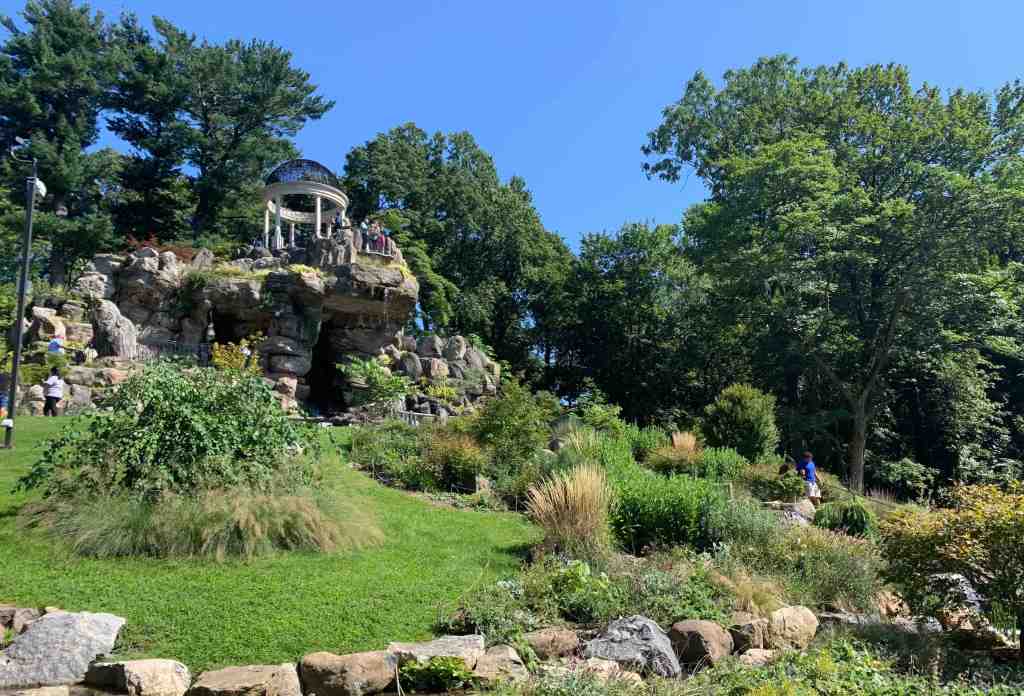
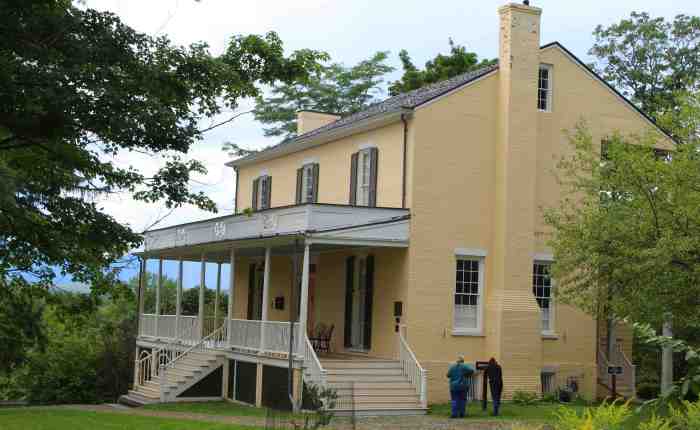
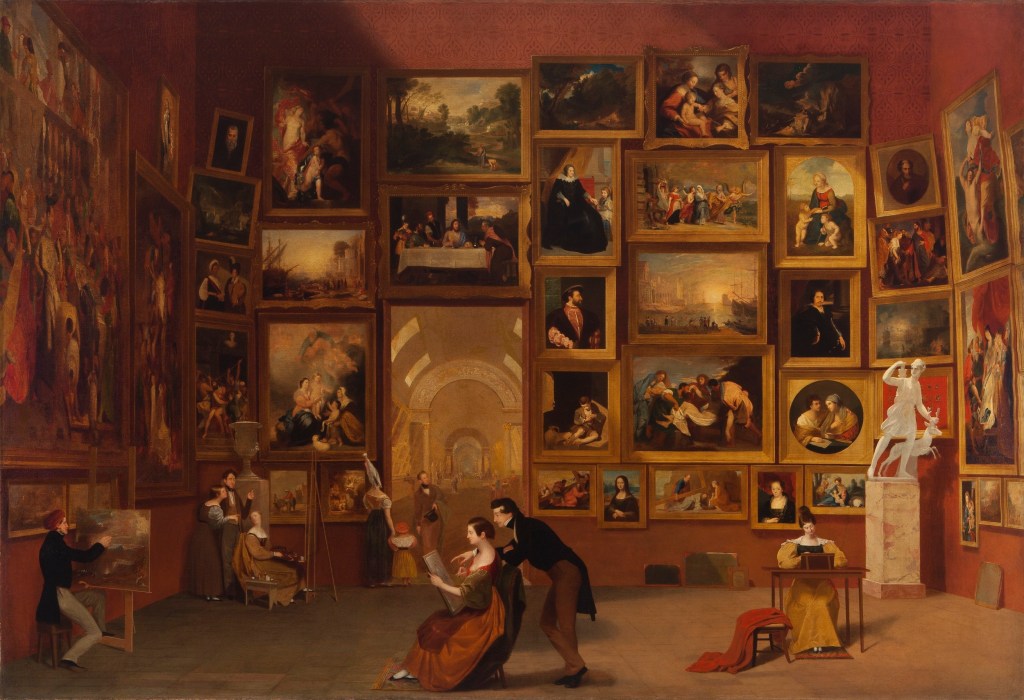
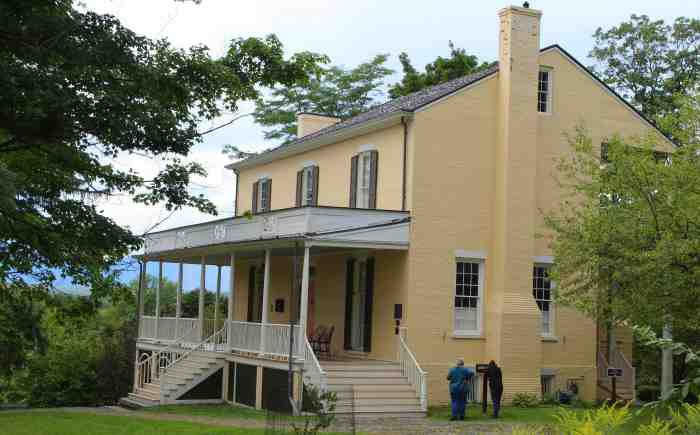


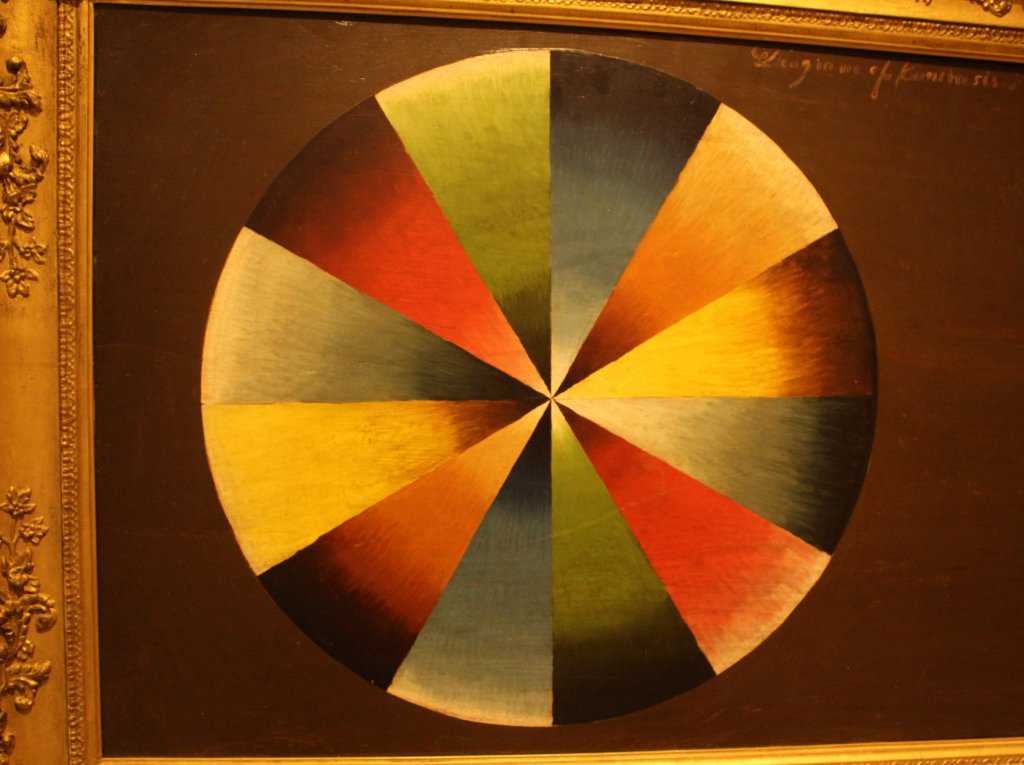
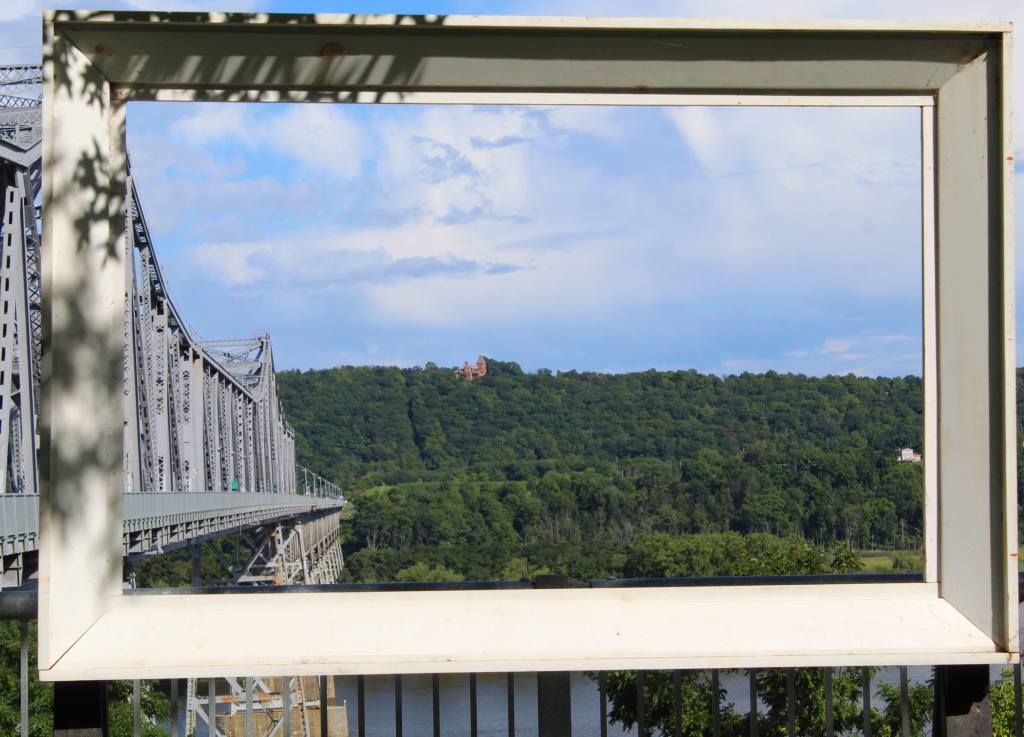
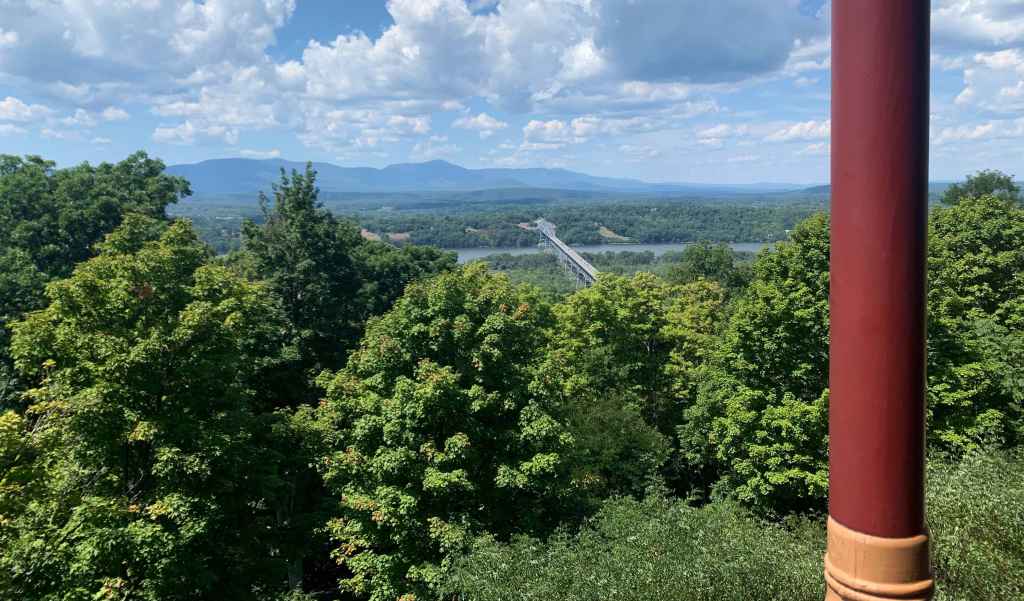
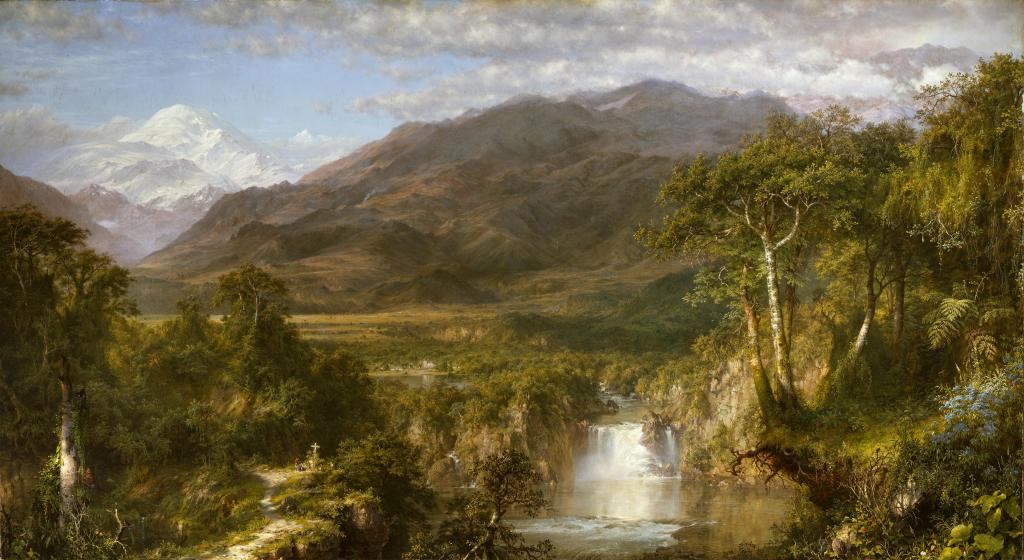
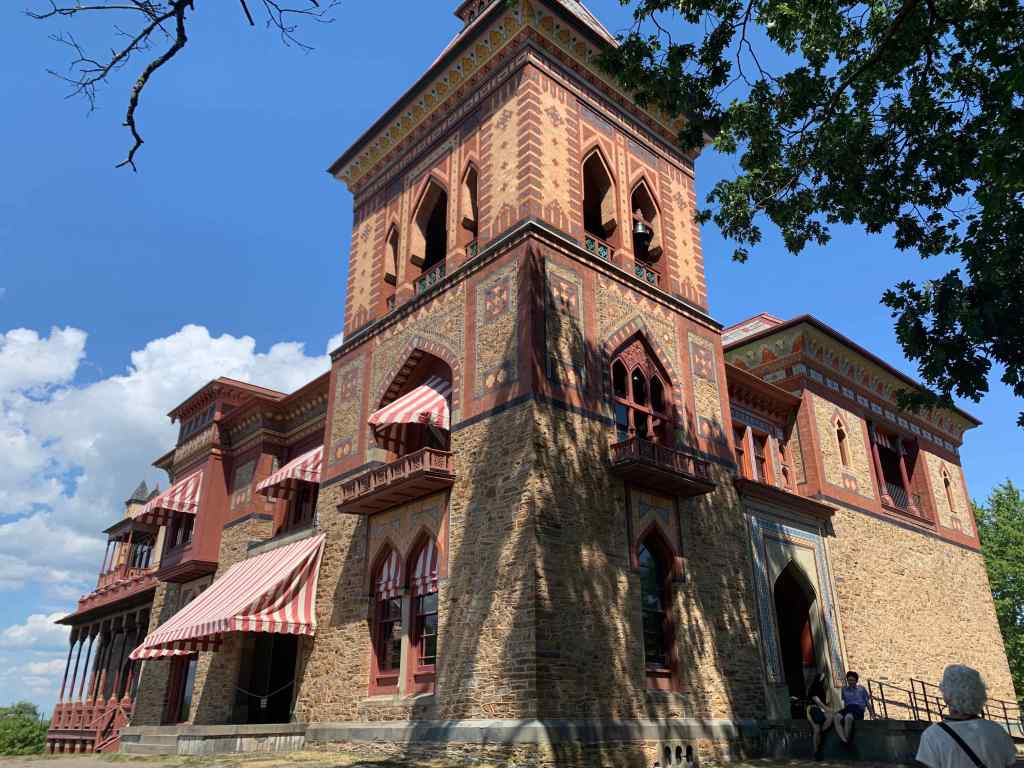
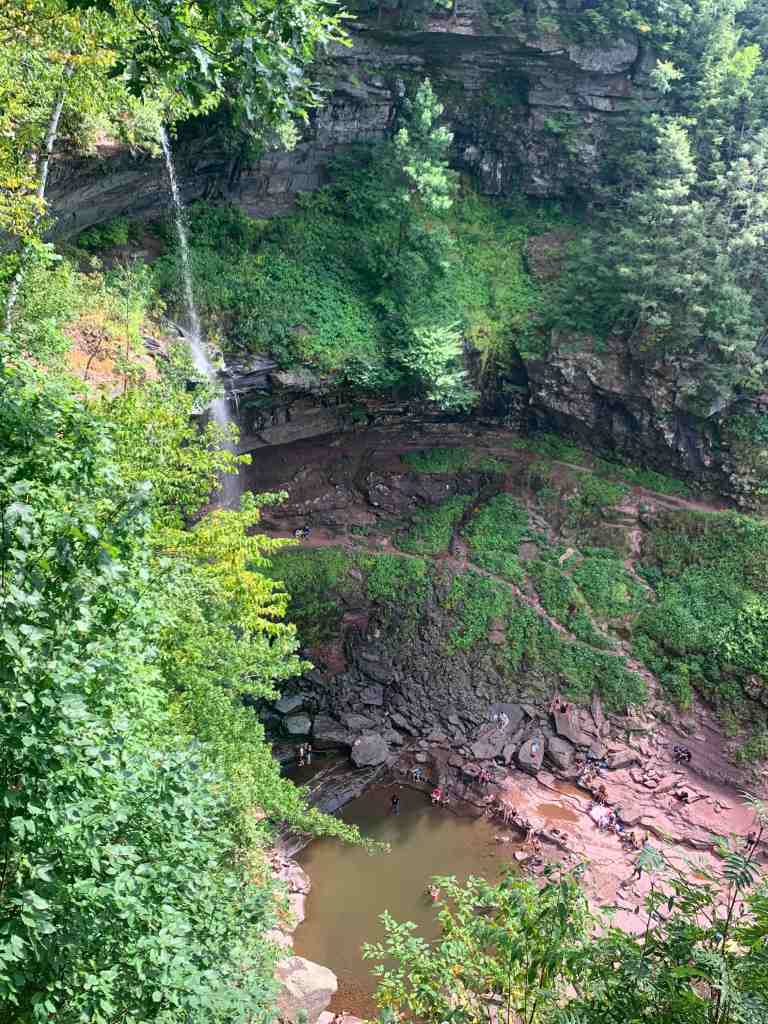
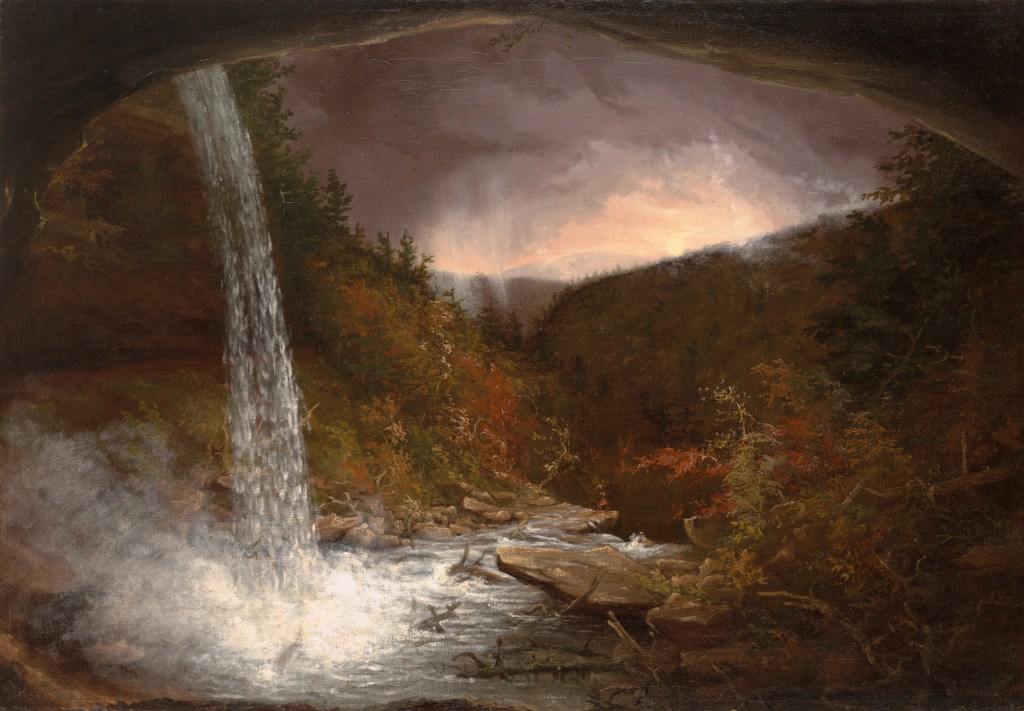
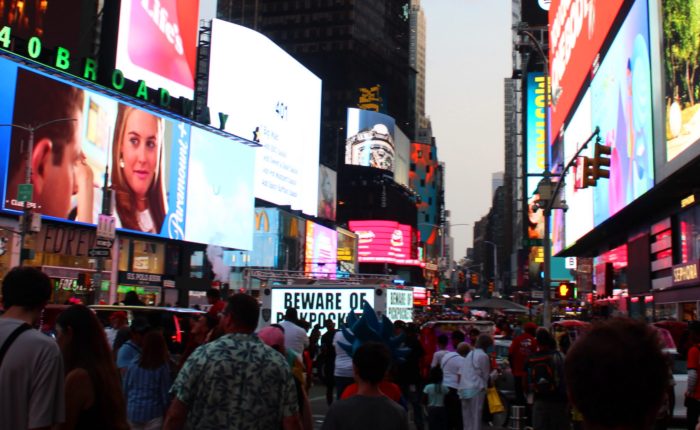
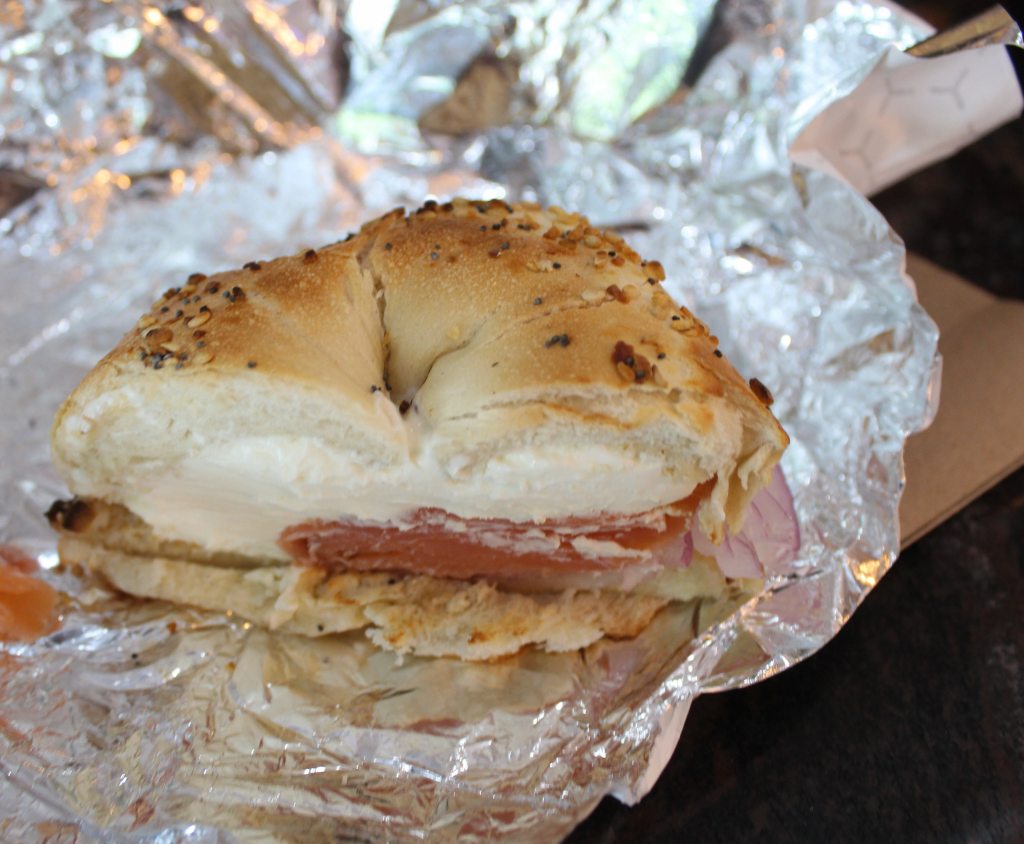
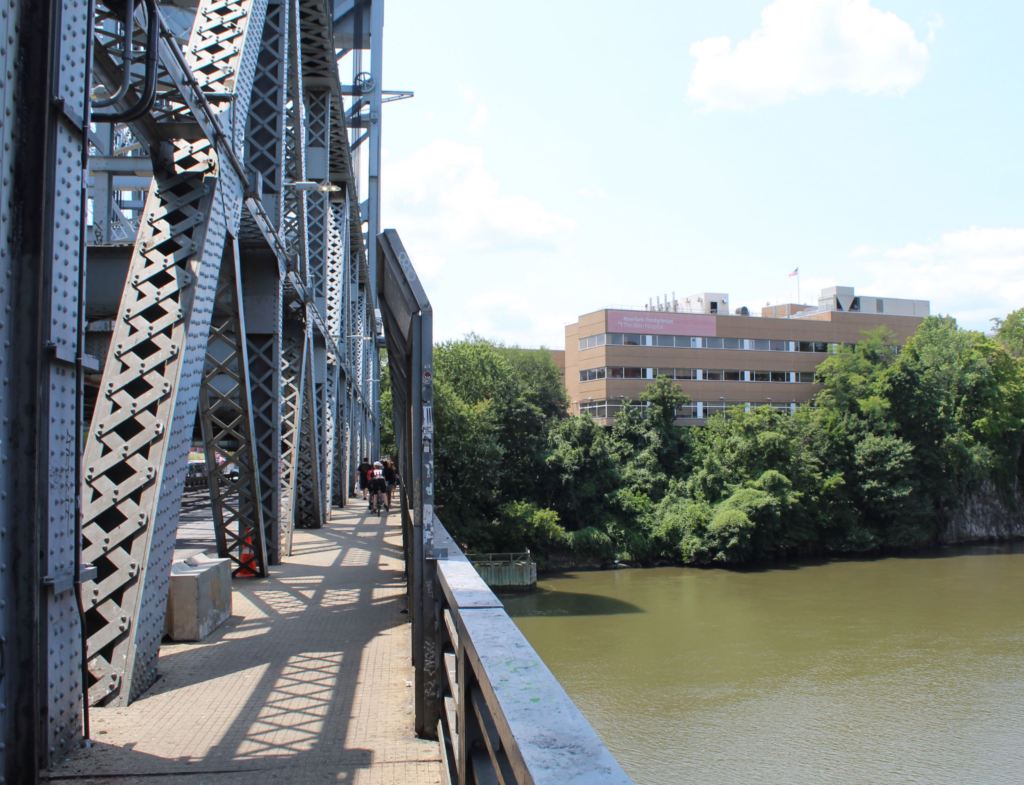
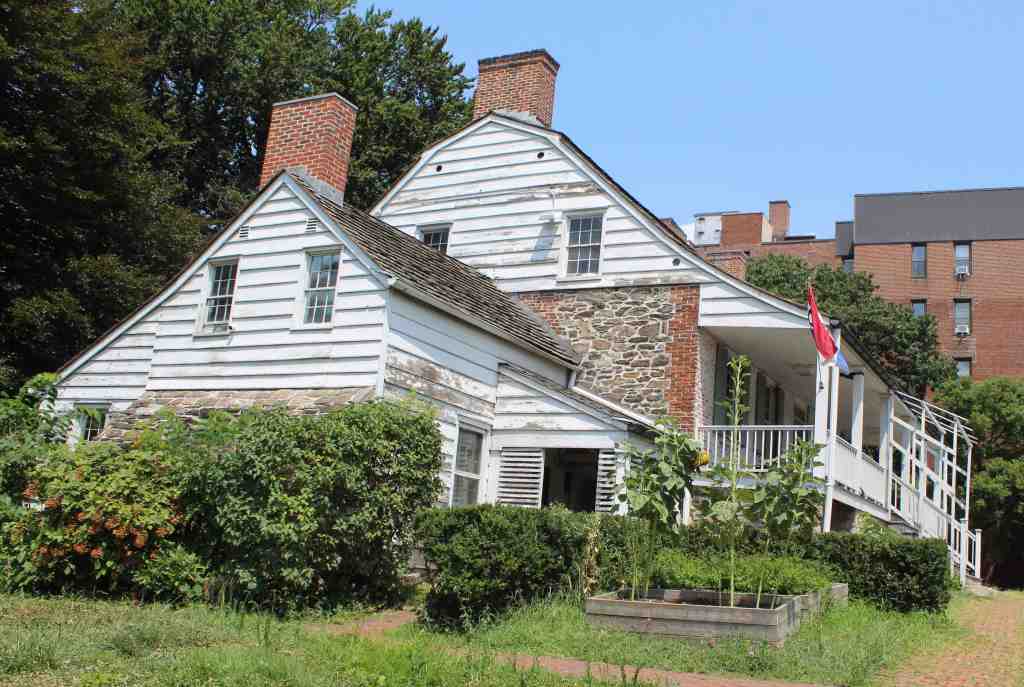
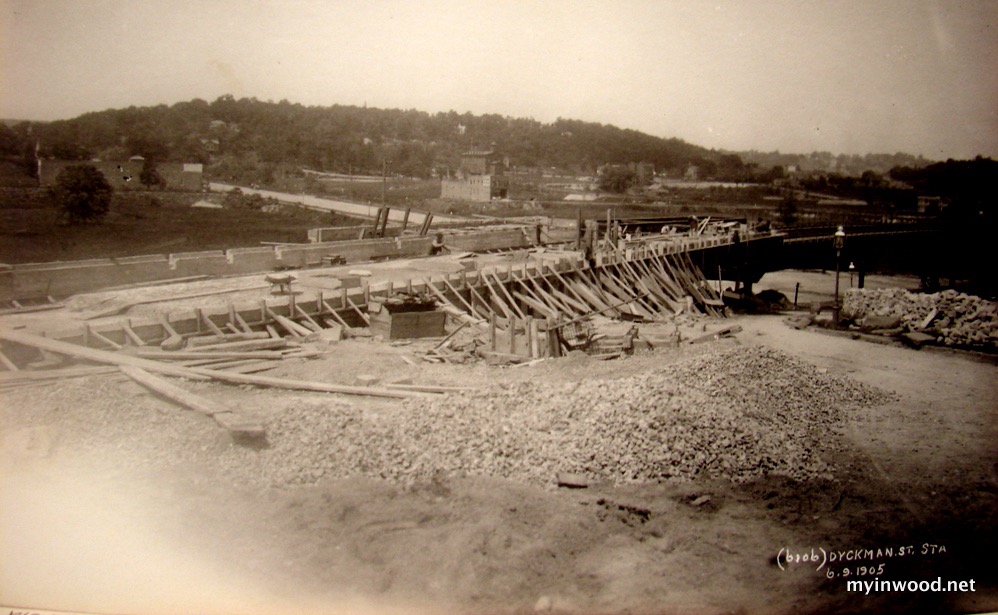
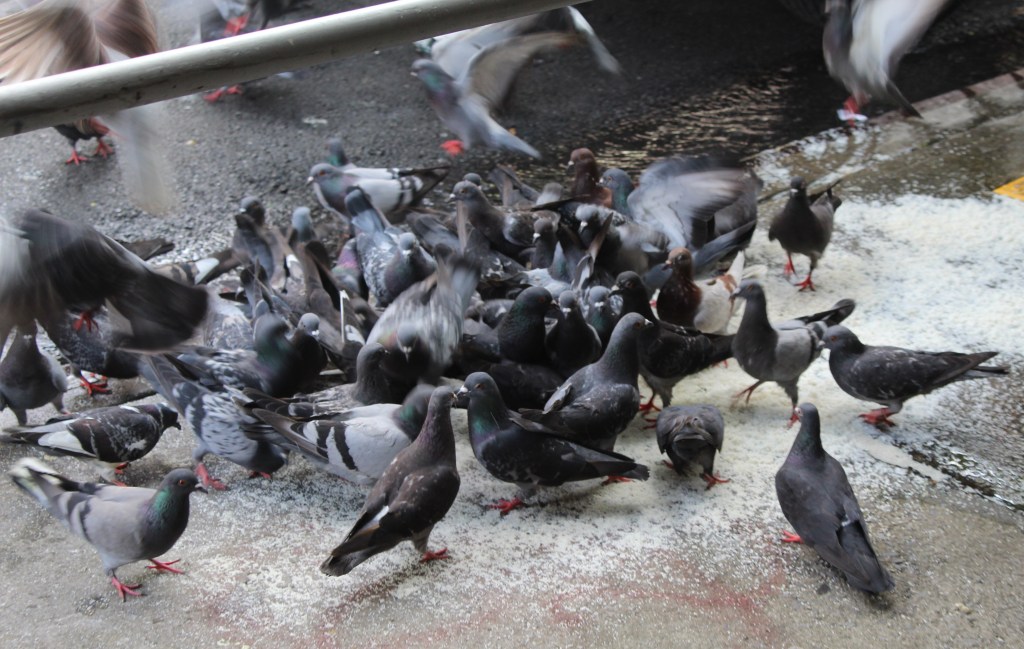
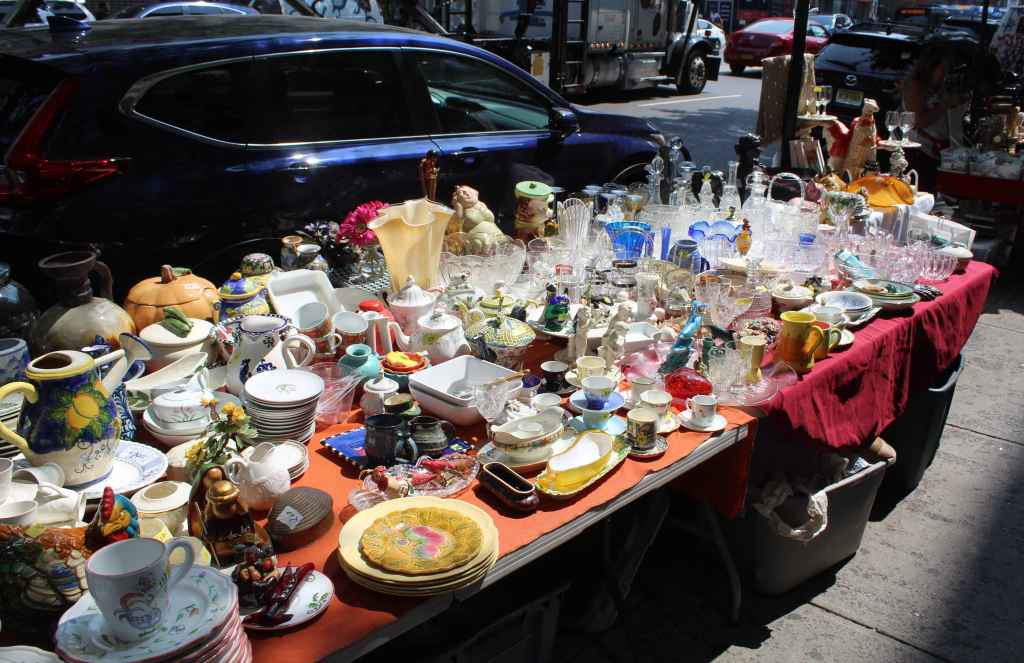
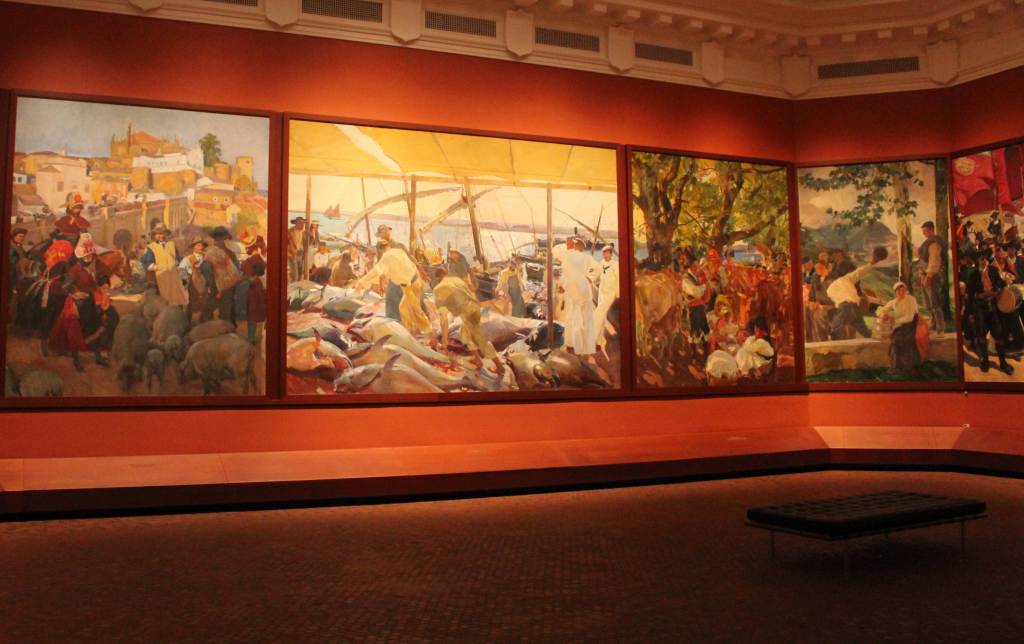
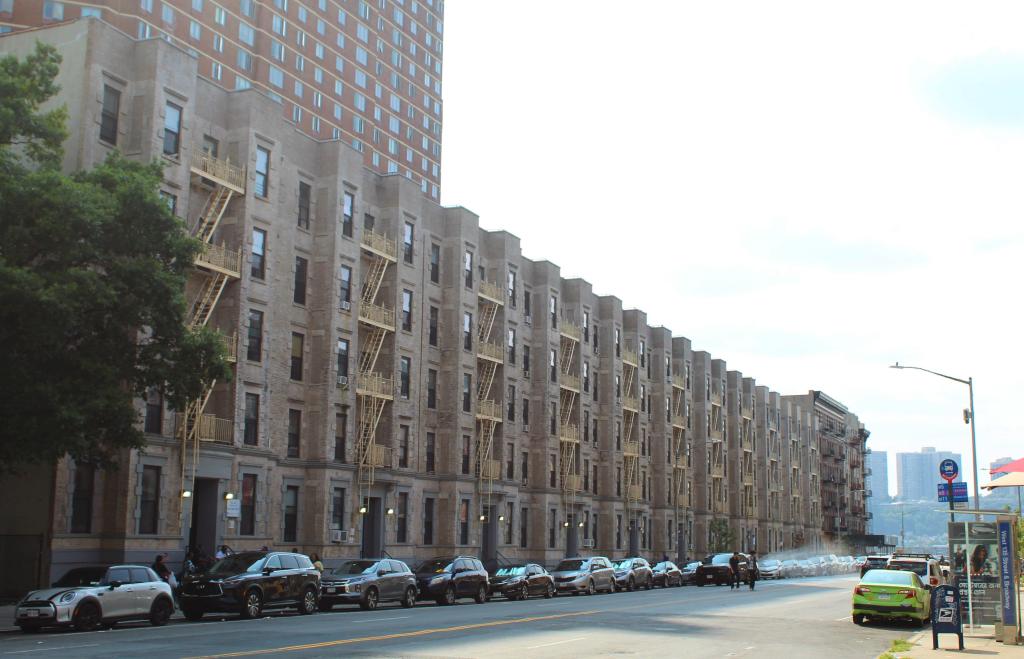
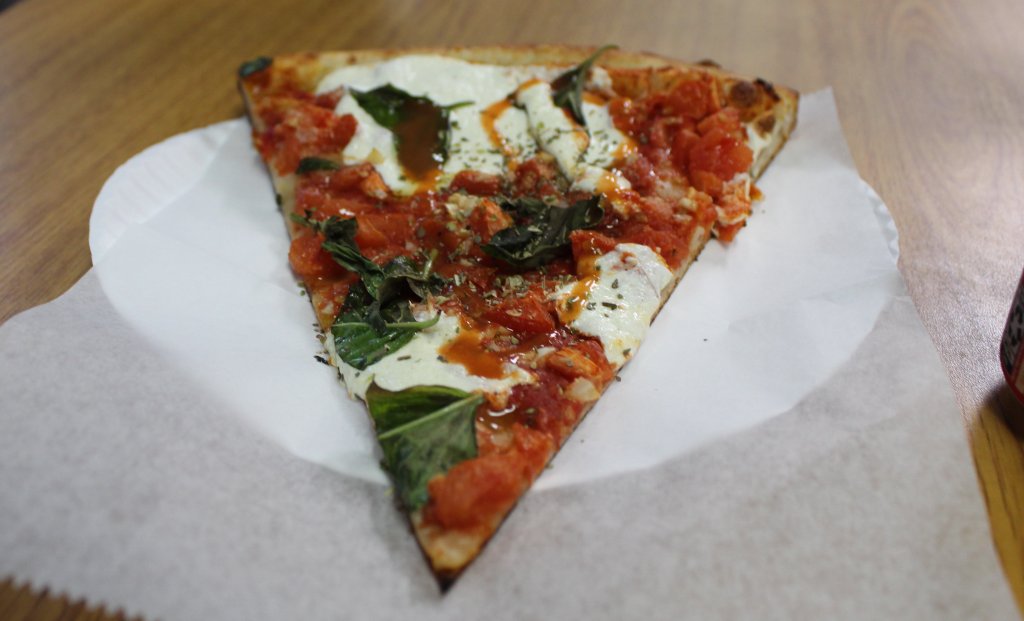

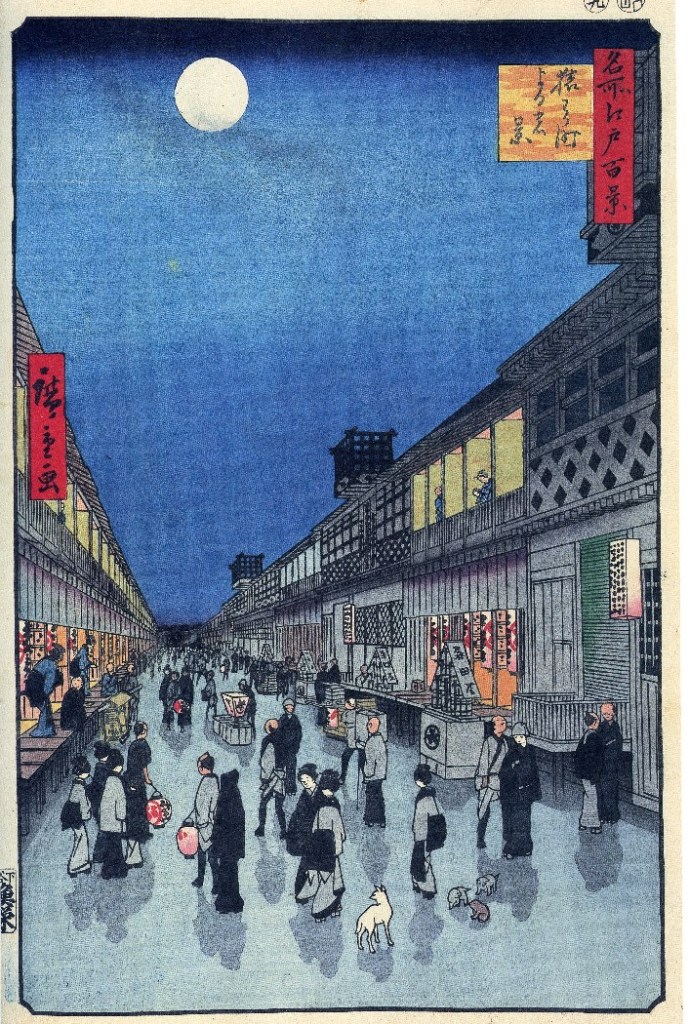
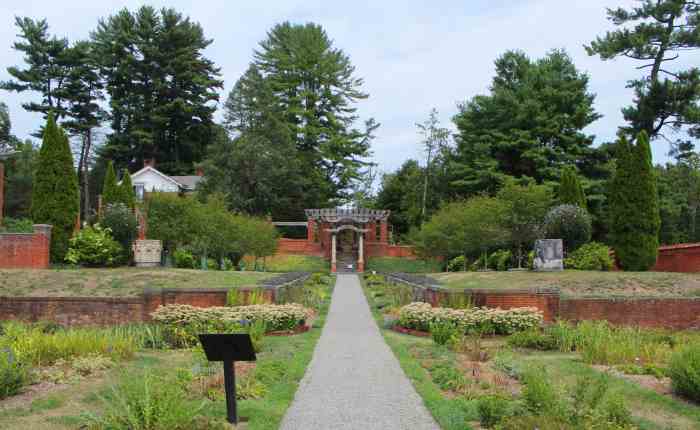
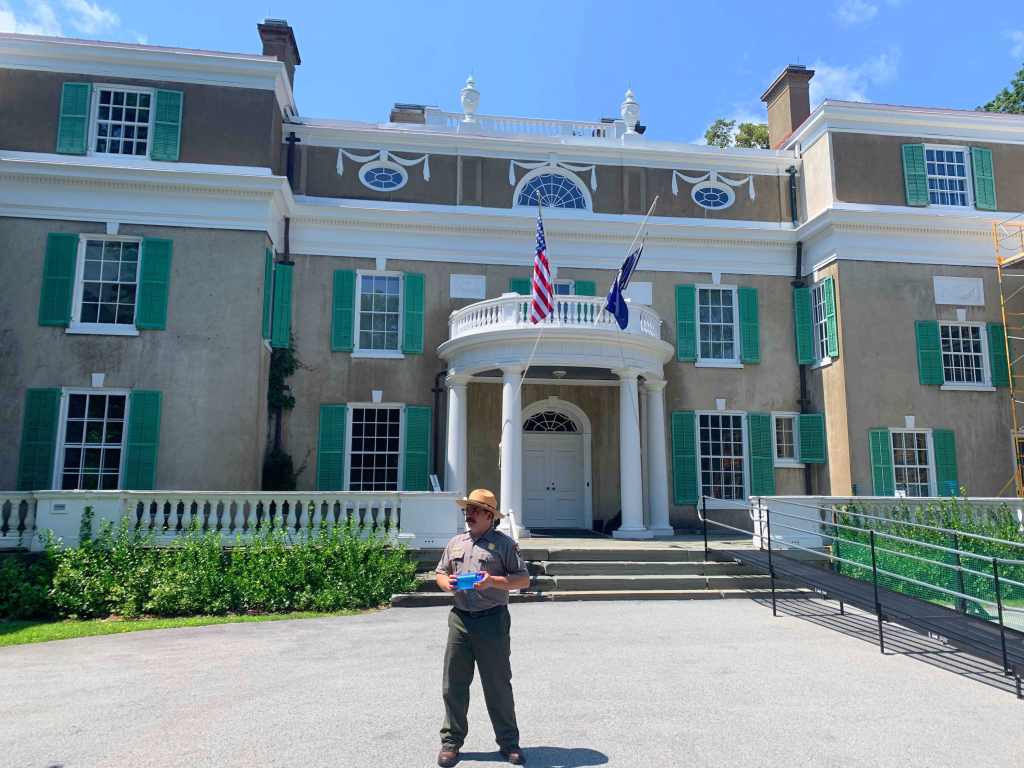
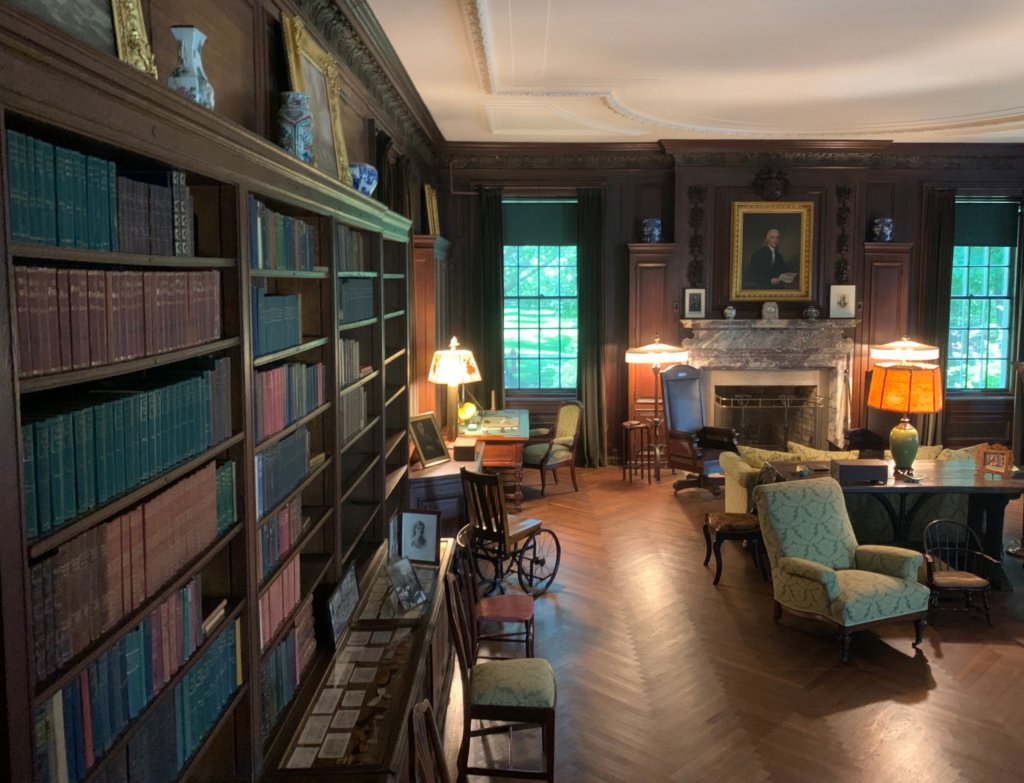
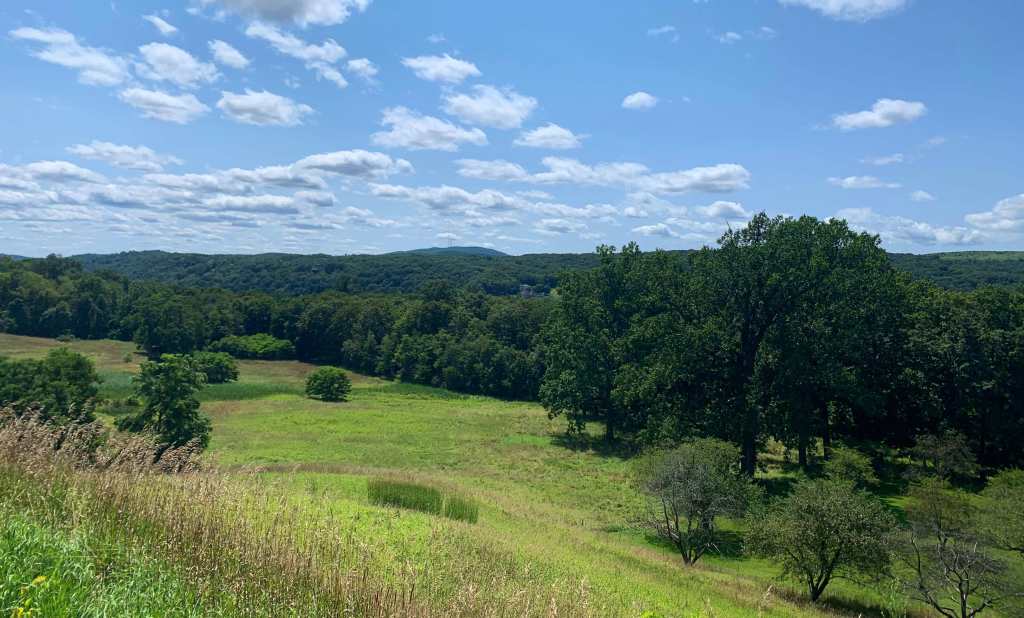
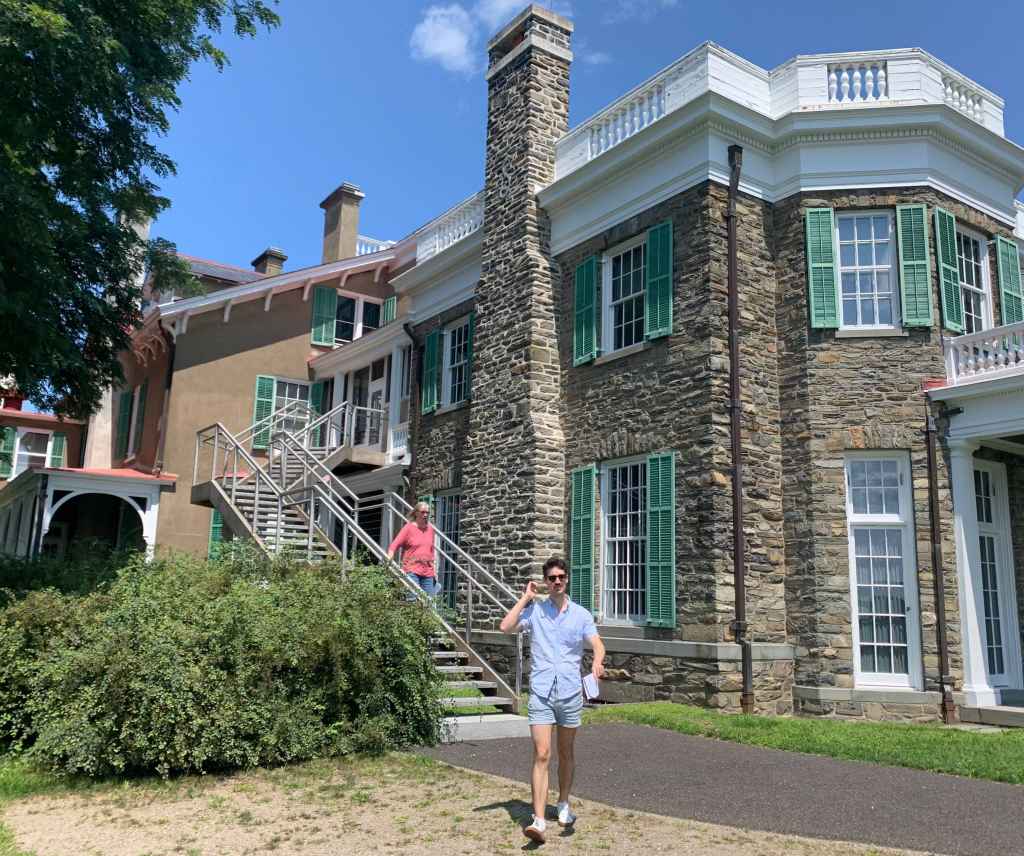
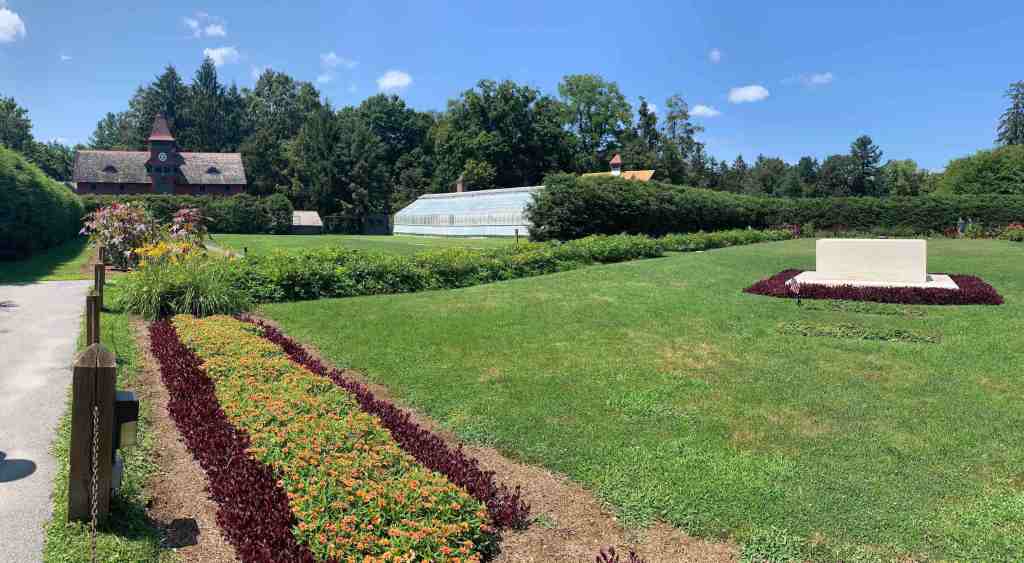
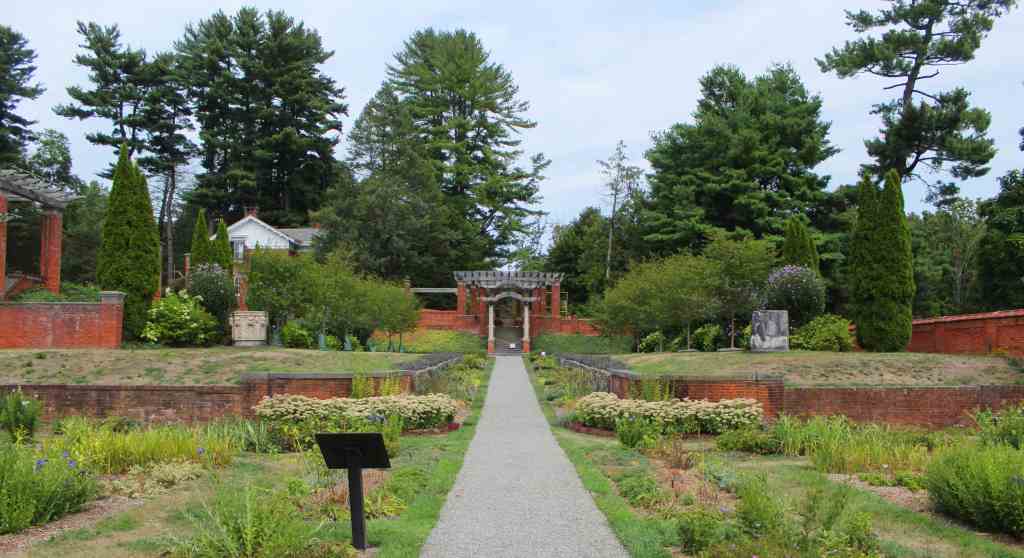
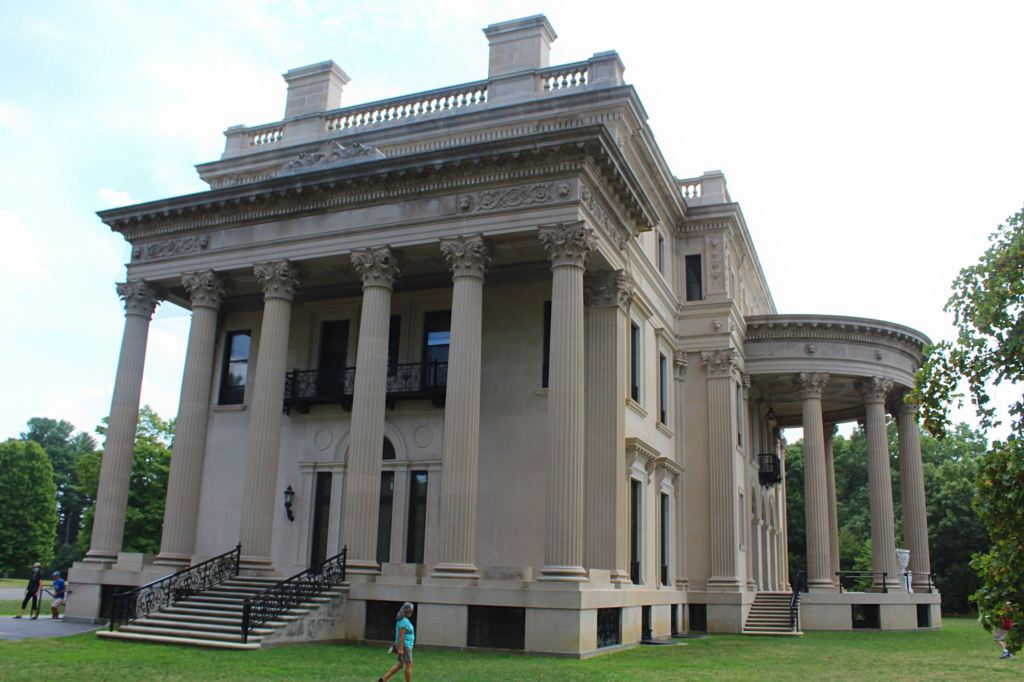
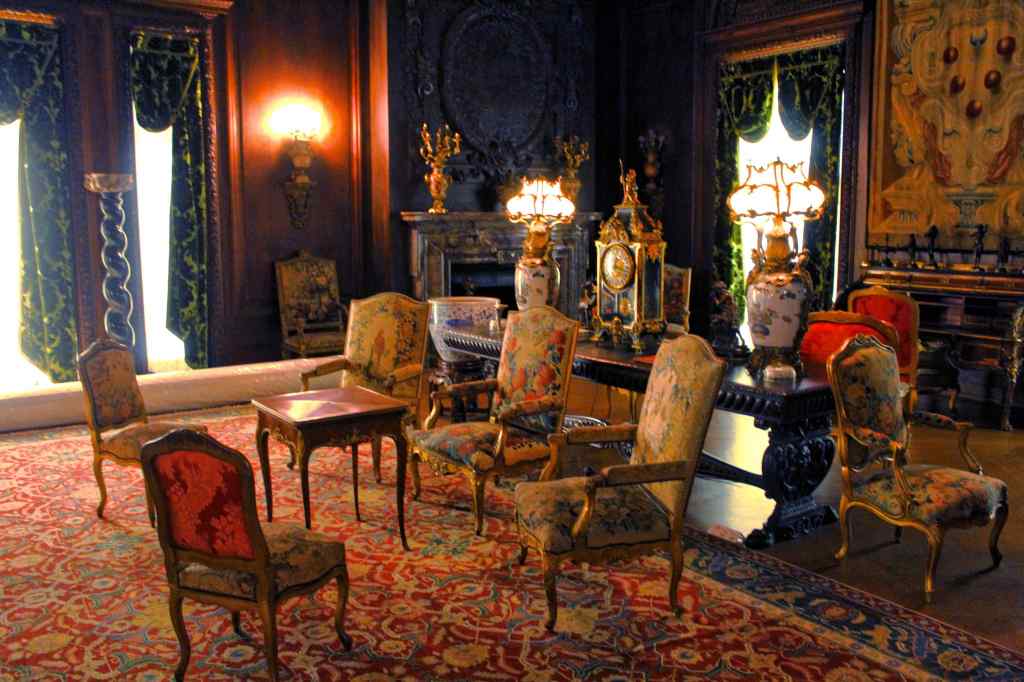
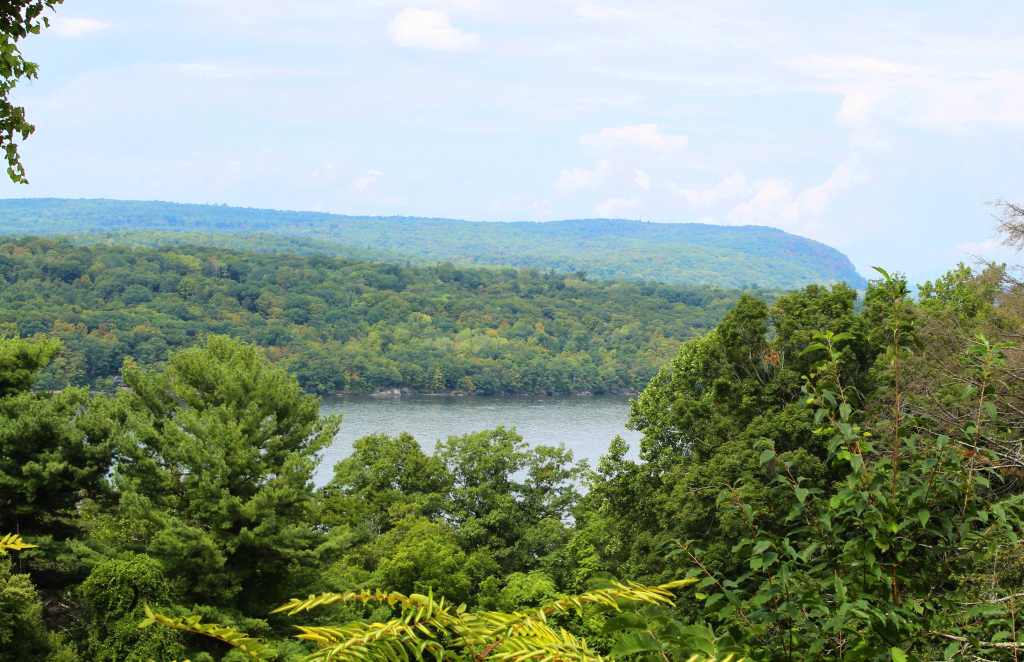
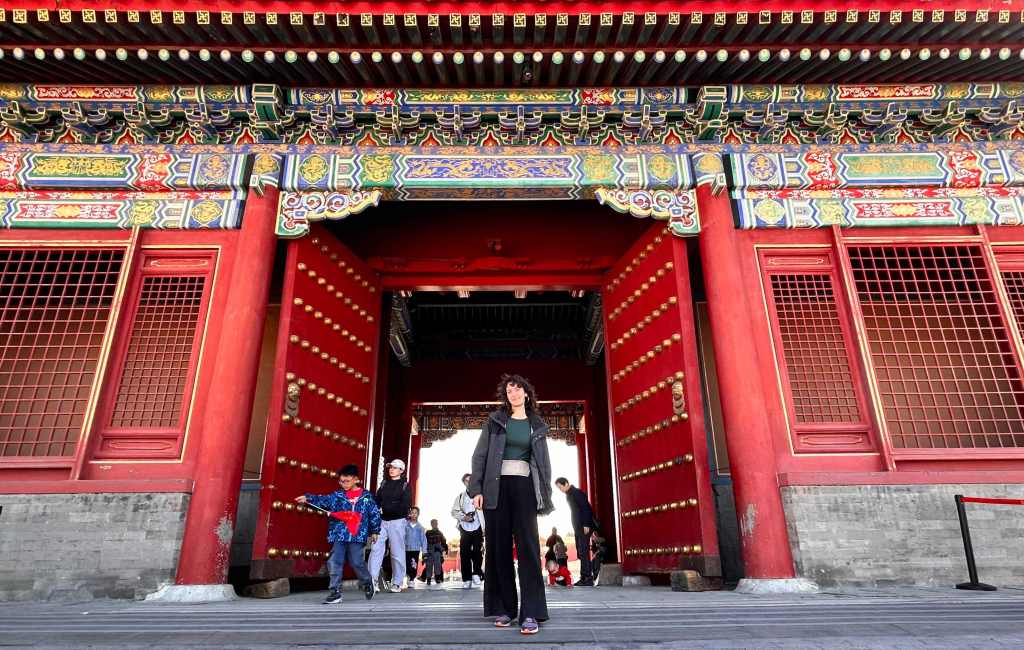
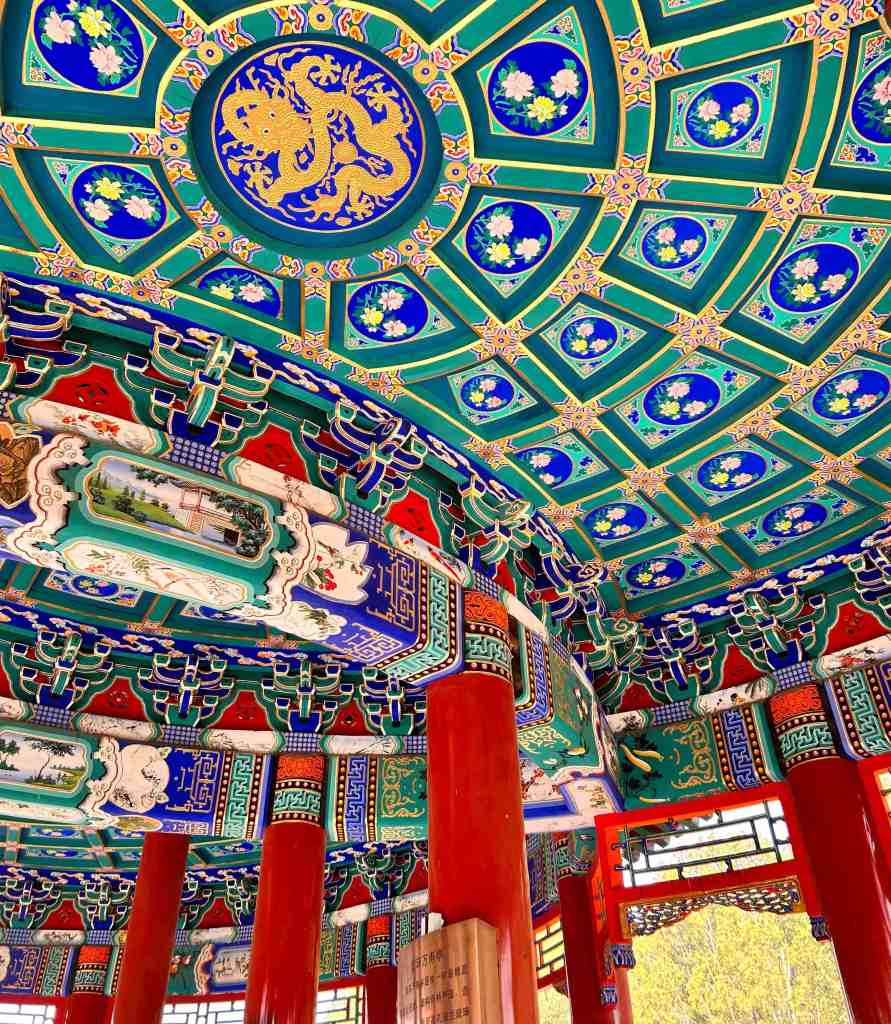
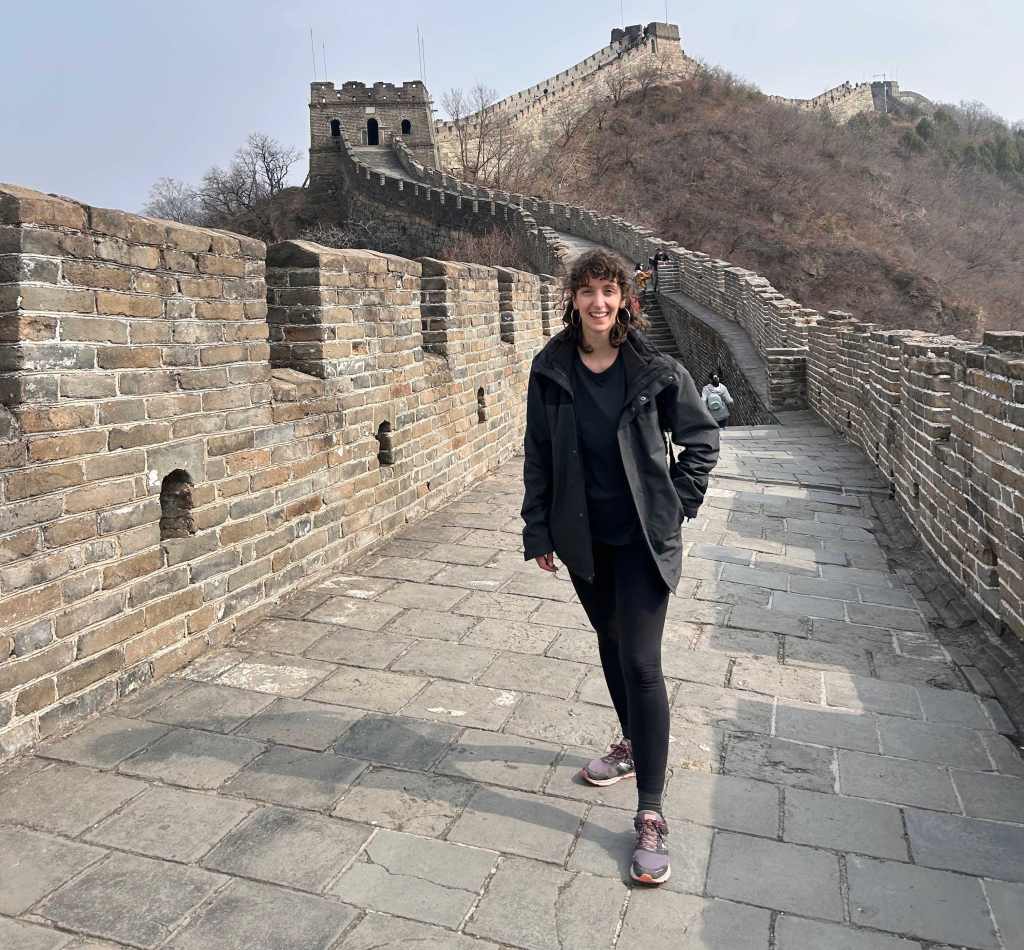
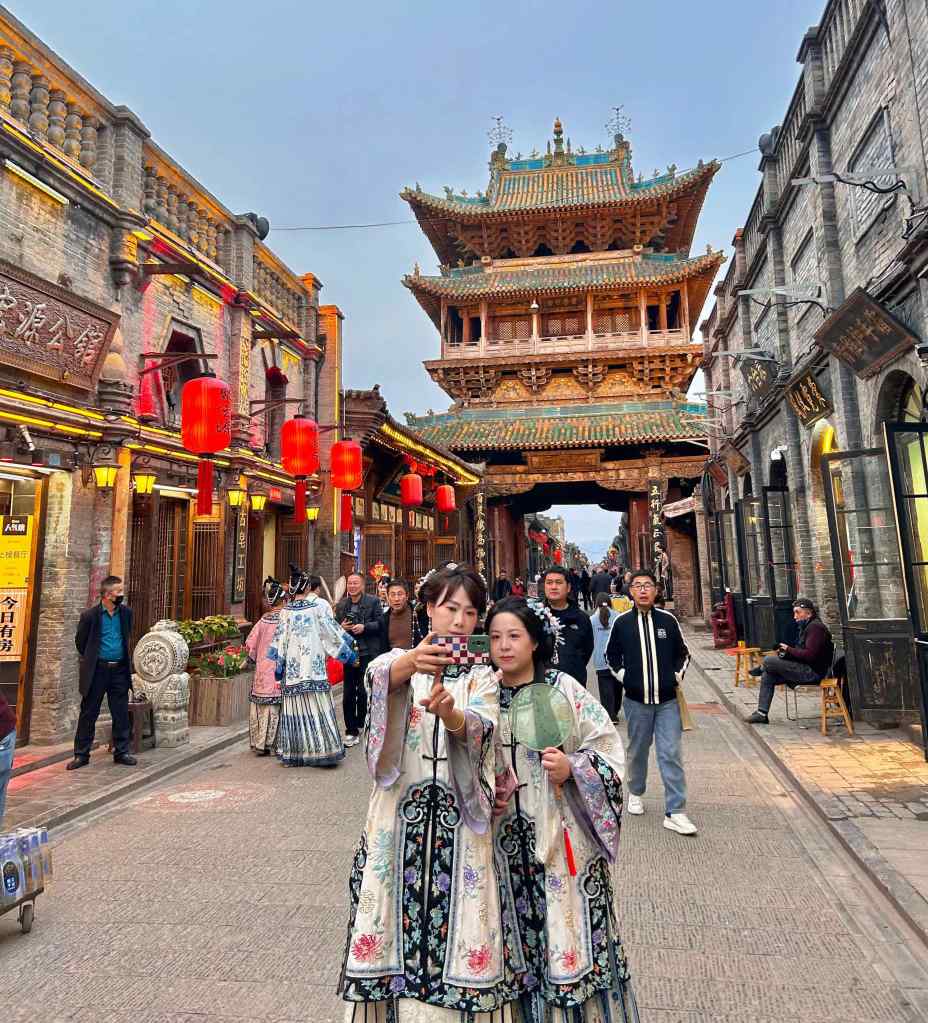
 Lotz in Translation