Review: The Pillow Book

Review: The Pillow Book

The Pillow Book by Sei Shōnagon

My rating: 5 of 5 stars

I set to work with this boundless pile of paper to fill it to the last sheet with all manner of odd things, so no doubt there’s much in these pages that make no sense.


This is an utterly delightful book. Indeed, it is fair to say that this is a book about delight in all its manifold forms.

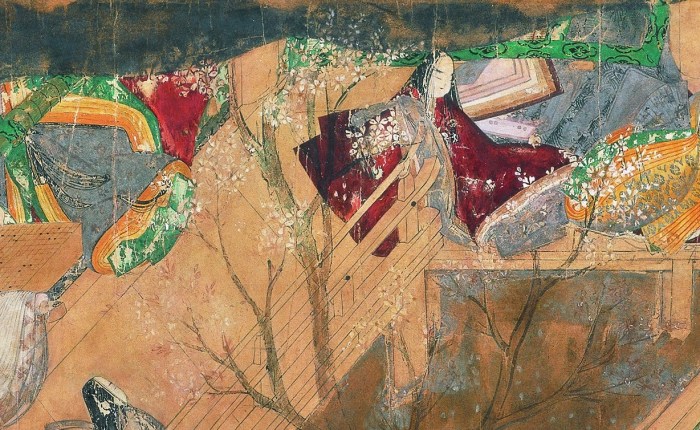
This is all the more remarkable given what we know about the author’s life. Sei Shōnagon was a kind of lady-in-waiting for the Empress Teishi. However, not long after her marriage, Teishi was supplanted by another Empress, Shōshi (whose own lady-in-waiting, Murasaki, wrote the classic Tale of Genji), and soon thereafter died in childbirth at the age of 23. Thus, Shōnagon’s life in the capital was tense, humiliating, and short-lived. It is not even rightly known what became of Shōnagon after Teishi’s death. Even the date of her death is in doubt.

One might expect the writings of such a person to be tinged by melancholy or motivated by revenge. What we have, instead, is an elegant series of reminiscences and observations about the beauty of her world. Shōnagon appears to have loved court life—the ceremony, the pomp, the artificiality, the formality, the refinement, the elegance—in short, everything. Her taste for her role in court is striking to the modern reader, as her life cannot but appear incredibly confined to us. She spends all her time literally cordoned off, separated from the men by a screen, and is constantly at the Empress’s beck and call. I would have lost my mind.

But Shōnagon wrings as many drops of aesthetic pleasure out of her circumstances as humanly possible. She is, for example, enchanted by the subtleties of dress—what ranks of court officials can wear which articles of clothing, what colors are appropriate for which season. The sounds of words delight her, as do the specific characters used to write them. Seasons, trees, flowers, birds, and insects all attract her attention.

These items are gathered together into lists, which comprise the bulk of this volume. Indeed, Shōnagon must be one of the all-time masters of the list, as she is inexhaustibly brilliant at thinking of categories. True, there are pedestrian ones such as bridges, mountains, ponds, and so forth. Some of these are so short and perfunctory that one wonders why Shōnagon thought it worthwhile to jot them down. But most lists are based, not on the thing itself, but on how it makes Shōnagon feel: dispiriting things, infuriating things, things that look enjoyable (but aren’t), splendid things, regrettable things, things that are distressing to see, things that are hard to say, common things that suddenly sound special, things that look ordinary but become extraordinary when written…

These lists were so quirky and, often, so hilarious that I was incongruously reminded of Wes Anderson’s films, which often feature odd lists. (Come to think of it, if anyone could turn this book into movie, it would have to be a pretentious aesthete like Anderson. He also shares Shōnagon’s love of colors.) But the list, in Shōnagon’s hands, becomes more than just a tool of organization. It reveals a kind of aesthetic philosophy—in part, that of the society she lived in, but to a great degree idiosyncratic—wherein the sensible qualities evoked by things are ultimately more important than the things themselves.

This is exemplified in what is arguably the dominant theme of this book: poetry. To an extent that is very difficult to imagine today, poetry pervaded court life in Heian Japan. Virtually everyone at the court, it seems, had memorized a great deal of poetry, and their conversations are littered with erudite references. (Unfortunately for me, most of this poetry relied on puns that are untranslatable, making it rather baffling in English.) Moreover, it was common to correspond via poetry, and the ability to compose on the fly was highly prized. Stories abound of someone (usually Shōnagon herself) finding the exact perfect reference or quote for an occasion, or completing the opening lines of a poem with brilliant aplomb. It is as if everyone at the White House were expected to freestyle.

It must be said, however, that despite Shōnagon’s attempt to reach a state of pure aesthetic appreciation, her strong and sharp personality very often breaks through. And good thing it does, for without it the book would not be even half as enjoyable as it is.

Admittedly, Shōnagon the person is, in many respects, unpleasant. She is snobby in the extreme and not a little vain. Her attitudes toward common folks is one of utmost condescension, and her need to be refined at all times sometimes verges into the ridiculous (in one section, she pretends not to know the word for “oar,” as it is too vulgar an object for her delicate vocabulary). Shōnagon is even capable of cruelty, which is exemplified in a section when a commoner comes in tears to report that his house burned down, and Shōnagon breaks into laughter and writes a satirical poem about his predicament. (The poor man, being illiterate, mistakes the poem for a promissory note.)

This opinion of Shōnagon was, apparently, shared by at least some of her contemporaries. Lady Murasaki, for example, found her to be “dreadfully conceited” and predicted: “Those who think of themselves as being superior to everyone else in this way will inevitably suffer and some to a bad end.” For my part, however, I think that the tension between Shōnagon’s very human shortcomings and her airy aesthetic focus creates a kind of dynamic tension that makes this book become fully alive as a human document.

I cannot finish a review of this book without mentioning its immense value simply as a window into another time. I was constantly thrown to the endnotes (which I wish had been footnotes) to understand some obscure reference or puzzling custom, and in the process inadvertently learned much about Heian Japan. Somehow, both Shōnagon’s numerous poetic references and her love of gossip combine to make her age come fully alive in these pages, in a way that few other books accomplish. In other words, this book is wholly delightful.


View all my reviews

Review: Mozart’s Letters

Review: Mozart’s Letters

Mozart’s Letters, Mozart’s Life by Wolfgang Amadeus Mozart

My rating: 5 of 5 stars


The best time of year for reading is, for me, the time between Christmas and New Year’s. The weather is cold, school is out, and I feel relaxed and fully able to focus. I find myself devouring books with great relish, and that is precisely the case with this wonderful collection of Mozart’s letters.

First, a note on the translation. Mozart’s writing is highly idiosyncratic—full of misspellings (at least when he was younger), multiple languages, puns and wordplay. Spaethling’s translation is thus a kind of virtuosic performance in itself, as he brings as much of this exuberance seamlessly into English. As an example, I will quote the first letter in this collection, written when Mozart was just thirteen:

My dearest mama,

My hear is filled with alott of joy because I feel so jolly on this trip, because it’s so cozy in our carriage, and because our coatchmann is such a fine fellow who drives as fast as he can when the road lets him.

Spaething’s careful rendering of Mozart’s peculiar style allows that composer to fully come to life in this book. The result is undoubtedly one of the most fascinating books in the history of music. Though the letters all have the feeling of being dashed off in a great hurry—much like some of his music—they brim with energy and intelligence, and create a remarkably revealing look at the composer. To get an idea for the Mozartian style, it is worth quoting one of his later letters. This one is to his father, merely describing a pleasant outing in a city park:

I just can’t make up my mind to go back to the city so early—the weather is just so beautiful—and it’s so pleasant to be in the Prater today.—We had a little something to eat in the park, and now we’ll stay until 8 or nine o’clock in the evening.—The only company I have is my pregnant little wife—and her only company—consists of her little husband, who isn’t pregnant but is fat and happy…

The man revealed by these letters is full of contradictions. On the one hand, Mozart is capable of being headstrong, defying his father and even the musical establishment, seeking out his own artistic path. And yet, he is also weak-willed—easily swayed by flattery, improvident with money, and short-sighted regarding his career. One gets the impression that his father had inadvertently been overprotective—shielding the child genius from practical concerns so that he could only focus on music—and when Wolfgang had to make his own way outside of the stern, practical, and worldly guidance of his father, he quickly sank into dysfunction.

This is illustrated most painfully in the last section of this volume, which is filled with repeated and increasingly desperate pleas to his friend for money. His letters to his father are also quite revealing of this dynamic, though perhaps inadvertently so. It is amazing to think that one of the greatest composers of history could have been, in many respects, a frustrating disappointment to his father, but this seems to have been the case. In his letters to his father, he seems always to be pleading for Leopold’s approval, even as the imprudent Wolfgang continually flouts his father’s advice.

And yet, revealing as they are, the best letters in this volume are not those to his father, but to his cousin “Bäsle” (Maria Anna). Mozart seems to have found a kind of ideal playmate for his brand of practical jokes and bathroom humor in his cousin, and his letters to her are full of the most extraordinary playfulness—not to mention, a kind of fixation on excrement which sometimes goes beyond the bounds of humor into obsession. Here is an excerpt of perhaps the best of these letters:

Dearest cozz buzz!

I have received your highly esteemed writing biting, and I have noted doted that my uncle garfuncle, my aunt slant, and you too, are all well mell. We, too, thank god, are in good fettle kettle. Today I got the letter setter from my Papa Haha safely into my paws claws. I hope you too have gotten rotten my note quote that I wrote you from Mannheim…

In these letters, perhaps most clearly, you can see the kind of childlike charm of Mozart. And this immaturity is arguably the source of both his particular genius and his constant financial troubles. Both Mozart’s letters and his music brim with a wonderful sense of play—as if his mind were constantly prancing from one idea to another—picking up one form, giving it a twirl, and setting it down into a new pattern.

Yet it would be wrong to accuse Mozart of superficiality. For underneath this childlike playfulness is a deadly serious commitment to his art. This is readily apparent in this volume, as the constant references to music in these letters belie a kind of workaholic productivity as well as a dedication to reaching the highest possible standards at all times. He was anything but an unconscious composer, as he often shows a keen awareness of how his music should affect his listeners.

It is interesting, I think, to compare these letters with those of another wonderful correspondent, Vincent Van Gogh. At first glance, the two artists could not be any more dissimilar: Van Gogh started late and never achieved fame during his lifetime, whereas Mozart was famous since his childhood. The painter was the furthest thing from a technical master, whereas Mozart dominated both instrumental and compositional technique in multiple domains.

And yet, these two men—both of whom died much too young—share one dominating characteristic: an overwhelming, uncompromising commitment to their art. Arguably, this monomaniacal devotion led both of them astray, as they both died isolated and penniless. But who can honestly wish that either man had been even a whit more “practical.” Indeed, I think the world would be a better place if we had more people to dedicate themselves with reckless abandon to the creation of beauty. And such a man is ultimately what these letters reveal.

View all my reviews

2023 in Books

2023 in Books

2023 on Goodreads by Various

My rating: 5 of 5 stars


Though superficially this year has been a disappointing year in reading—I finished considerably fewer books, just over 60 rather than my typical 75 or more—this lack of quantity is largely illusory. A good number of the books I’ve finished this year have been quite long, many over 500 pages and a couple well over 1,000. So in terms of total pages read, I believe I am at par.

For whatever reason, I usually begin the year by getting extremely obsessed with a book. This year, it happened to be Why We Sleep by Matthew Walker, which convinced me that I was chronically under-rested and, thus, in danger of imminent death. For months afterwards, I dutifully tried different strategies for achieving optimal sleep—cutting down or (briefly) giving up caffeine, sleeping with a mask, going to bed earlier, drinking herbal tea, avoiding alcohol—and it did make a difference. However, probably the best thing I did for my sleep was simply to get a new job that didn’t require me to get up so early. Since then, I have mostly resorted to my old bad habits.

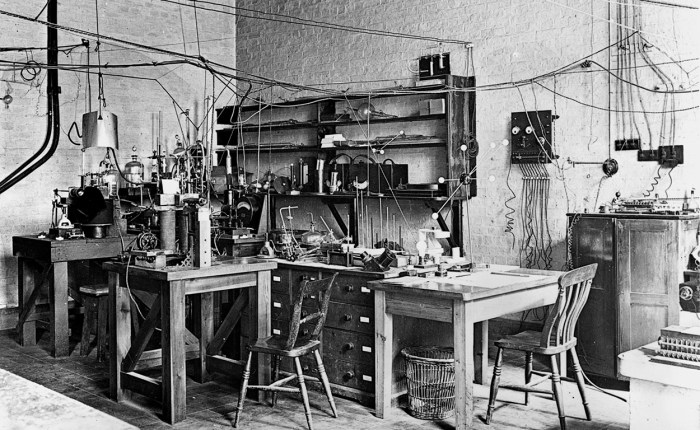
A few books I read this year required so much effort that they became little projects. This can certainly be said of my encounter with the Qur’an—a book difficult for a Westerner to appreciate, I think, though I did my best. I read a few other religious classics to complement my exploration of Islam—some Buddhist sutras and the Egyptian Book of the Dead—though none made nearly so deep an impression on me. Another project, offsetting my spiritual investigation, was my attempt to finally tackle two of the great works in the history of science: Faraday’s Experimental Researches in Electricity and Maxwell’s Treatise on Electricity and Magnetism. In both cases, I achieved only the most basic understanding of these great thinkers, though it was rewarding just the same.

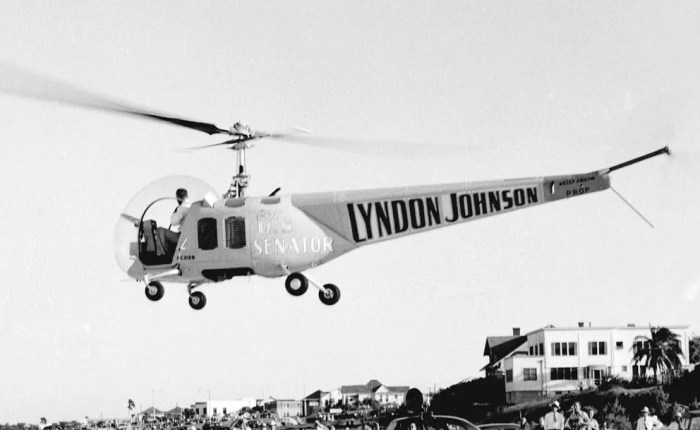
I also finally started on two historical series that had long been on my list. The first is Winston Churchill’s account of World War II—deservedly a classic, and quite fun to read, despite its limitations. The other is Robert Caro’s magisterial biography of Lyndon Johnson, which deserves all the superlatives that can be heaped upon it. Both series, though in different ways, make the fine-grained texture of history more palpable, bringing the past alive with copious detail. I will add to this list, though it isn’t exactly a series, the two books by David Simon: Homicide and The Corner. Though Simon’s scope is smaller—the city of Baltimore rather than a president or a major historical event—he is just as good at revealing the inner workings of human life.

There are a few other smaller categories I should include. One is accounts of historical disasters. This describes John Hersey’s Hiroshima, Svetlana Alexievich’s Voices from Chernobyl, and Walter Lord’s A Night to Remember (about the sinking of the Titanic). Perhaps my morbid fascination with these events reveals something unsavory about my character, but I greatly enjoyed these books. Another category is America. Into this bin I would put William Least Heat-Moon’s famous travelog of the United States, Alan Taylor’s excellent history of the early American colonies, and Laurence Bergreen’s informative biography of Christopher Columbus. I am not sure I am feeling any more patriotic, though it is good to reconnect with one’s native land occasionally.

Last, I ought to mention fiction. This year has been, in retrospect, rather light on literature. True, I finally finished Les Miserables, which took months, and finally reread The Canterbury Tales. I also read the trifecta of great American plays: A Streetcar Named Desire, Death of a Salesman, and A Long Day’s Journey into Night—all deserved classics. But the books that stand out in my memory are The Things They Carried (an excellent anti-war book) and Sister Carrie (a devastating deconstruction of the American Dream). I also ought to mention having read my first P.G. Wodehouse and Agatha Christie, both superb in their respective fields.

My goals for 2024 are basically to keep going in the same direction: read a few more spiritual classics, some more influential works of science, continue reading Caro and Churchill, and tackle some rewarding works of literature. As usual, I must express my gratitude to everyone on this site. All of you help make reading a communal activity rather than a lonely endeavor. It is a continual pleasure.


View all my reviews

Review: Means of Ascent

Review: Means of Ascent

Means of Ascent by Robert A. Caro

My rating: 5 of 5 stars


Robert Caro sets his own standard for political biographies, and if this volume was at all lacking for me it was only in comparison to the masterful first volume in this series. But even this is not exactly a fair comparison, as The Path to Power covered Johnson’s formative years—delving into his family history, his marriage, his schooling, his environment, his first working experience, and finally his rise to the House of Representatives. Its scope, in other words, is quite broad.

Means of Ascent is a very different book, covering only seven years (1941-48). It is significantly shorter (though still hefty enough), and most of these pages are dedicated to Johnson’s 1948 Senate race. This corresponds to what Winston Churchill called his “wilderness years,” in which Johnson was directionless and cut off from the main arteries of power. He spent some of this time in a non-combat role in the military (and spent the rest of his life shamelessly exaggerating his minimal exploits), some of this time using his connections to get rich through a radio station—and finally got back onto the path to power by stealing a Senate election.

As Caro says repeatedly, Johnson is a complex personality with a strange admixture of the despicable and the admirable—and this book contains precious little of the latter. As a result, whereas in the first volume one could sometimes feel sympathetic for the young man from Texas, here he is little more than a power-grasping villain. Caro himself obviously came to feel disgusted with Johnson’s personality, and his feelings seep through in his descriptions of Johnson’s ample transgressions: his blatant mistreatment—indeed, verbal abuse—of anyone he considers inferior (including receptionists, waiters, his own staff, and his poor wife), his absolute amorality regarding even basic ideals (such as democracy itself), and his willingness to stop at nothing to obtain power.

Caro contrasts Johnson’s personality with that of his opponent in the 1948 Senate election, Coke Stevenson—a man Caro portrays as honest and honorable. And here the esteemed biographer got into a little bit of trouble. While Stevenson may indeed have been upstanding in the sense that he was true to his word, did not bow to lobbyists, did not attack political opponents, and did not seek political office in order to satisfy a lust for power—while all this may have been true, Stevenson was also certainly a reactionary and a racist.

These rather unflattering qualities are given only a passing mention in the book, which may leave the reader with a skewed impression of Stevenson. Caro was roundly criticized for this, and in an article in the New York Times, published in 1991, he responded some of these criticisms. Yet his defense—that the subject of race played little role in the election—while valid as far as historical explanation goes, still does not quite excuse the glowing portrait he painted. Upon finishing the book, it is difficult to resist the impression that Caro himself came to admire Stevenson.

Even so, as abhorrent as I find Stevenson’s views to be, I would still prefer such a man to the Johnson of 1948, who seems to have had no political philosophy, no political aspirations beyond his desire to control people, and—worst of all—no respect for the institution of democracy. Throughout all of the legal battles and maneuvers which allowed him to keep his stolen election victory, Johnson never once betrayed the slightest hint that he might have had misgivings about betraying the will of the people. Indeed, as Caro makes clear, he seems to have been proud of it, virtually boasting of the “victory” in later years.

Now, at this point I will do something very brave—or cowardly, perhaps—and venture a slight criticism of Caro. After so many pages, his writing style is beginning to ware on me. This is because, I think, his primary rhetorical technique is that of superlatives. What I mean is that, for Caro, everything is as extreme as possible. Johnson is not just a sleazy politician, but unprecedentedly amoral; Stevenson is not just a popular governor, but a Texan hero; and so on, and so on. Caro relentlessly emphasizes how extreme every event and experience was—so much so that, by the end, you are begging for something totally ordinary and unremarkable to happen (and no, not superlatively ordinary).

That said, the book is eminently readable and highly enjoyable. Here Caro creates such a memorable portrait of an amoral, power-crazed politician that, had this book been written by anyone else, it would by itself be considered an enduring classic of American political writing. It is only when compared to his other books that this one may seem somewhat light.


View all my reviews

Review: Maxwell’s Treatise on Electricity and Magnetism

Review: Maxwell’s Treatise on Electricity and Magnetism

Maxwell’s Treatise on Electricity and Magnetism: The Central Argument by Howard J. Fisher

My rating: 4 of 5 stars


Most good books lend themselves to be read on many levels. One can read them superficially, merely for momentary pleasure, or study them deeply, working your way slowly through their contents. For the most part, I try to chart a middle path through these two extremes, doing my best to understand what I’m reading—at least on a basic level—without getting bogged down in academic study.

However, some books simply do not lend themselves to that approach, and this is one of them. One can skim over the mathematical proofs in, say, Newton’s Principia and still get a fairly good idea of what the book is about. But in Maxwell’s magnum opus, the math is what does the talking. Indeed, by the midway point I was so desperate—feeling guilty, lazy, and stupid for understanding so little of what I was reading—that I decided to turn to an old ally, Kahn Academy. There, I went through all of the videos on electricity and magnetism, and learned a great deal. (The last time I had any formal instruction on the subject was in my sophomore year of high school, and I doubt I understand much back then.)

But I found, when I picked up the book again, that even this Hail Mary would not save me from the perdition of Maxwell’s writing. Indeed, as I had already bought the heavily annotated student’s edition (with copious notes by Howard J. Fisher), it seemed that I had used up all of my lifelines, and simply had to content myself with only the most superficial reading of this important book.

What follows, then, is probably as valuable as a review of Hamlet by somebody with an elementary level of English. Here I goes.

Now, as I mentioned, the version I picked up is meant for students. Thus, it is heavily abridged and, often, so full of explanatory footnotes that the original text is crowded out.

For what it’s worth, even if you do have the mathematical and scientific chops to handle Maxwell’s tome, I would recommend either this version or something similar. The original is famous for being rather unfocused and overlong. After all, this book was not meant to be Maxwell’s Origin of Species—a text devoted to propounding a radical new theory. Maxwell had already set forth his most revolutionary insights—most notably in the paper “A Dynamical Theory of the Electromagnetic Field,” in 1865—several years before this book was published. Instead, this was meant as a kind of definitive textbook on the subject, to be studied by university students, telegram technicians, and other specialists. Thus, there are long sections in which he rehashed old theories which would be of limited interest to any modern reader.

This edition attempts to pare down the original, leaving only what Fisher considers to be the “central argument”—that is, the material leading directly to Maxwell’s signature breakthroughs. These would be, first, his four famous eponymous equations and, second, the electromagnetic theory of light.

Regarding the former, as you may know, Maxwell did not actually formulate his equations in the form which modern students encounter them. It was one of Maxwell’s followers, Oliver Heaviside, who put the equations into their definitive form. Instead, Maxwell puts forward twelve equations, which use the now-defunct quaternion notation rather than vector calculus. This makes Maxwell’s presentation seem rather foreign, even to those less ignorant than myself. What is more, Maxwell has a liking for using Gothic letters as symbols in his equations, which gives them a doubly strange appearance.

More generally, I think even a mathematically literate reader will have some trouble following significant portions of this book, if only because Maxwell’s mathematical language seems clunky and dated. In my version, for example, Fisher is continually translating Maxwell’s operations into more familiar forms (which, admittedly, I still did not follow).

As I had recently made my way through an (abridged) version of Faraday’s epochal Experimental Researches in Electricity, I was most interested in the sections in which Maxwell reflects on his predecessor’s work. He is extremely laudatory of the English physicist and is quite generous in giving credit for developing this new way of examining electricity.

And, indeed, if I have any way of understanding Maxwell, it is only through the lens of Faraday. At first glance, the devoted experimentalist with no mathematical schooling seems to have little in common with the visionary theorist who prefers numbers to words. And yet, as I’m sure Maxwell would agree, they were bound together by a new vision of the cosmos. In a nutshell, and said very imprecisely, I think their insight was to see energy rather than matter as fundamental.

In the Newtonian view that preceded Maxwell, the world was composed of matter—indeed, even light was supposed to be made up of little corpuscles. This matter traveled in straight lines and attracted other matter in straight lines. This Newtonian view was embodied in, say, Ampère’s earlier theory of electromagnetism.

And yet this view always sat uncomfortably with Faraday, who instead saw the curving lines of the magnetic field as the fundamental reality, rather than one piece of matter attracting another via “action at a distance.” Indeed, Faraday’s brilliant experiment involving the shifting of light via a magnet got him tantalizingly close to the central insight of Maxwell’s life: the unification of light with electromagnetic radiation.

Faraday is one fount of Maxwell’s inspiration. Yet if Maxwell has a mathematical predecessor, it is Joseph-Louis Lagrange, whose work comprises a culminating chapter in this book. Lagrange arguably developed the math that Faraday had been striving toward from another direction. For in Lagrangian mechanics, rather than thinking of forces being exerted by physical objects, one thinks of the energies in the system—the object in question merely following the path of least resistance through the fields of energy around it.

It was Maxwell’s great insight to see how the work of Faraday and Lagrange—among many, many other brilliant scientists—fit together to form one complete account of electricity and magnetism. It is a theory in which fields of energy take precedence over particles, indeed in which the world around us is filled with vibrations in luminiferous ether. And while some parts of Maxwell’s theory (notably the ether) have not survived to the present day, his basic insight was so sound and so significant that, as Richard Feynman said, his discovery constitutes one of the major turning points in human history. You certainly wouldn’t be reading this review without it. Thus, Maxwell’s name stands beside Newton’s and Einstein’s as one of the greatest physicists of all time—even if his book is completely opaque to people like me.


View all my reviews

Review: On Death Row (Herzog)

Review: On Death Row (Herzog)

Werner Herzog’s series of films about inmates on death row all begin with him making his stance on the death penalty clear: he is against it. And yet, these films are anything but political. Herzog does not, for example, review the arguments against the death penalty—that many of those condemned are likely innocent, that it is racially biased, that it does not act as a deterrent to other violent crime, and so on—nor does he get into its legal justification or its history. 

Indeed, although Herzog repeatedly states that he is against the death penalty, he seems intentionally to portray the punishment in its most “justifiable” form. With some arguable exceptions (to be discussed later), all of the prisoners he interviewed were convicted of horrible crimes on very strong evidence. Most of them, for that matter, are white; and in any case he never explicitly brings up the subject of race. Thus, most of the arguments usually cited against the death penalty do not apply to these cases.

Despite this—or, perhaps, because of it—Herzog’s films become a strong statement against the death penalty’s continued existence. His view is not that the death penalty is wrong because it violates constitutional rights or it’s statistically unfair or so on, but that the death penalty is simply wrong in itself. This is because even the worst criminals are human beings. It is a simple and powerful argument, and I think ultimately the right one to make. For there will always be people who commit terrible crimes, and as a consequence there will always be the temptation to view such people as somehow inhuman or monstrous, and thus not worthy of life.

Herzog combats this tendency by bringing the viewer into direct contact with the reality of the death penalty. Every episode of this documentary series begins in the same way: The camera goes from the holding cell of the death house to the execution chamber. Eerie music plays in the background and Herzog’s equally eerie voice gives us the basic facts about the death penalty in America.

Typical of Herzog, the camerawork has a curiously amateurish quality. It looks as if somebody were simply holding their phone and walking. The angle shifts like a man turning his head: peering down at the Bibles on the table, up at the microphone to capture the prisoner’s final statement, and into the observation room where relatives of the victims and the prisoner are there to watch the final moments.

It is a short and simple sequence, and yet I think it is far more effective than any flashy camerawork or well-produced dramatization could be, as it really makes you feel as if you are a prisoner being led to your own execution. As the camera moves from the white cellblock to the execution chamber with its sickly green brick walls, you can feel some of the numbing terror of institutionalized death.

And this impression is fleshed out with further information at various moments in the different episodes. In the feature-length, standalone documentary that kicks off the series, Into the Abyss, we hear from the priest who administers the last rites and who stays with the inmate as the poison is administered. Behind him we see the rows of stone crosses, where the prisoners are buried whose families don’t make arrangements. They bear only the prisoner’s ID number, no name.*

Later on in that documentary, we hear from Fred Allen, who was the captain of the team that managed the “Death House.” He describes the final hours of a prisoner: They are allowed to shower, for example, and to put on their civilian clothes. They can use a phone to call loved ones. At the fatal hour, a team of five guards takes the prisoner to the gurney, and are able to have the prisoner strapped down within thirty seconds. Allen performed this routine for over 120 executions. His final job was to unstrap the dead prisoner and move them to a stretcher for removal.**

In the documentary on Hank Skinner—whose execution was stayed by order of the Supreme Court just twenty minutes before it was to take place—we get perhaps the most revealing look at the final moments of an inmate scheduled for death. In Texas, though executions are carried out in Huntsville, the male death row inmates are housed in the Polunsky unit, about 40 miles away. In a powerful sequence, Herzog and his crew make the drive from the one prison to the other, showing what a condemned man would see as his last glimpse of the world outside. As Herzog says, it is rather dreary—the standard tableau of gas stations and billboards facing a highway—but when seen through the eyes of somebody who will shortly cease to exist, even this banal landscape can be crushingly beautiful.

(Skinner has since died in prison, months before his new execution date.)

All of this footage and information serves to make something that is normally quite abstract terrifyingly concrete.*** But perhaps even more valuable than this are the interviews with the inmates. Herzog shows himself in these films to be a masterful, if unorthodox, interviewer. Into the Abyss, for example, opens with Herzog evoking tears from the minister by asking him to explain an encounter with a squirrel.

More generally, he is good at getting his subjects to open up, not just about the details of the cases, but about their inner world—what they miss about the outside world, what they dream about, how they are dealing with their approaching end. Yet sometimes the silences are more revealing than the words. Another of Herzog’s characteristic touches is to hold the camera on a person’s face when they have finished speaking. This is uncomfortable at first, but I think it gives the interactions a certain naturalness that recorded interviews otherwise lack. For in reality we often observe others in silence.

I hesitate to make the following comment, as I am a layperson and have no psychological training whatsoever. Nevertheless, I could not help noticing some strong similarities between many of the subjects. With the exception of Blaine Milam, everyone behind bars whom Herzog interviews is surprisingly articulate and intelligent. More than that, I often got the feeling that they would be adept at convincing and manipulating others, for many of them are persuasive on camera.

This apparent intelligence is striking all the more so for the stupidity of their crimes. The crime at the center of Into the Abyss, for example, is so shocking partly because it was done with so little planning and for such a small reward (a car). Both Douglas Feldman and James Barnes—murderers from other episodes—seem highly intelligent, and yet both were caught for pointless and easily-caught acts of violence (the former, basically a case of road rage, and the later, a domestic dispute). Robert Fratta killed his estranged wife rather than just get a divorce, and Linda Carty murdered a woman for her child, somehow believing she could convince others it was her own. The only notable exception to this pattern of stupidity is George Rivas, of the notorious Texas Seven, who was a methodical planner—most famously, orchestrating a complex prison break.

Another thing I found striking was that so many of these convicts strongly protested their innocence, even in the face of overwhelming evidence against them. To be sure, if you are on death row, the only way to potentially avoid execution is to fight for your innocence. Still, even if their circumstances virtually force them to deny the crime, I did notice a lack of regard or concern for the victims of these crimes. Darlie Routier, for example, who was convicted for killing two of her sons, spends all of her time painstakingly going over all of the evidence that could exculpate her, but seems unconcerned that the (supposed) real killer is still on the loose. An even starker example is Douglas Feldman, who gunned down two truck drivers in a random spree of violence. He said in his final statement:

I hereby declare Robert Steven Everett and Nicholas Velasquez guilty of crimes against me, Douglas Alan Feldman. Either by fact or by proxy, I find them both guilty. I hereby sentence both of them to death, which I carried out in 1988.

A starker lack of remorse could hardly be imagined.

Here are a few more similarities that jump out. Two of the convicts in this series, Darlie Routier and Robert Fratta, are notable for being highly superficial, in the sense that they care deeply about how they look and are perceived by others. Another similarity is religion. Many of the convicts, perhaps unsurprisingly, turn to God in their time of need. Fratta, for example, converted to Christianity in prison, and claimed that God had inspired him to invent a new political philosophy (in which all the Christians live together under an elected monarch—oh, and the different races are to live separately), while another murderer, James Barnes, converted to Islam and confessed to additional murders (including some he probably did not commit). Hank Skinner, meanwhile, lost himself in mystical, New Agey numerical coincidences.

If there is one prisoner who stands out as being unlike the others in this series, it is Blaine Milam. In the film, he comes across as somebody who is neither particularly bright nor articulate (indeed, an intellectual disability claim is being reviewed). And he also lacks, for me, the strange remorseless quality I noted in the other convicts. When he talks, he does not sound like he is trying to manipulate you, and he does not plead his case. And yet, he is guilty of perhaps the most disturbing and disgusting crime of all in this series: the brutal torture and murder of a 13-month-old baby girl. Indeed, this murder was so sickening that it dissuaded Herzog from making more of these films.

In fairness to these convicts, I wish to highlight the two who were convicted on the weakest evidence. In my view (and, again, I am the furthest thing from an expert), these are Darlie Routier and Hank Skinner.

For both, the case against them is largely forensic and circumstantial—they were the only people known to be at the scene of a crime, and their blood was found on the murder weapon and the victims. However, in both cases the motive is rather unclear. Furthermore, Routier was herself nearly killed from a knife wound (prosecutors say it was self-inflicted) and Skinner had such a high level of alcohol and codeine in his system that an expert testified he would have been physically unable to commit the brutal triple homicide (though he did walk to a girlfriend’s house shortly after the murder).

For what it’s worth, I personally found the cases against these two to be quite strong, even if it did leave some room for doubt. The theory of their innocence requires, for both, that somebody break into a house and commit a brutal murder—sparing only the person convicted—and then vanish without leaving any trace of their identity. It seems far-fetched to me.

I have gone on about the criminals, but ultimately even they are not at the core of these films. Rather, it is the crimes they committed. These brutal acts are the vital center of these stories, whose effects ripple outward in space and time. Herzog, as usual, does his best to get as close as he can to the moral abyss. He uses archival footage of crime scenes, recordings of interrogations, taped confessions, interviews with police officers and detectives—all this, trying to get a clear look at the worst side of our nature.

This crime sets the convict on a path towards prison and, ultimately, death. And of course it ends the path of the victims. The victims’ stories, instead, reverberate back in time, as they become the centers of investigations and the protagonists of tragedies. And it is perhaps the final tragedy of these victims that they are no longer around even to tell their stories. As one prosecutor explains, when dealing with a murder, there is a kind of asymmetry in our sympathies, since the victim’s suffering is in the past and, therefore, abstract, while the suffering of the criminal is present and palpable.

Herzog cannot, obviously, round out the picture of these crimes by interviewing its victims. But he does his best to give these victims a voice. When he can, he interviews surviving family members. These interviews are (perhaps unsurprisingly) among the most heartbreaking parts of this series—each person faced with a sudden, violent, irrecoverable loss. And though it is uncomfortable, he even asks the murderers to recall their victims—vainly hoping, perhaps, to ignite some spark of conscience. This is a natural extension of his basic attitude: for if Herzog is against the death penalty, he also cannot ignore the evil of murder. As he repeatedly makes clear, he is not opposed to punishment, but to the taking of human life. 

There is a repeated image in this series, of birds slowly flying over what appears to be a landfill. They are just pigeons and seagulls, hundreds of them, on the lookout for trash. And yet, the sky and land are so bleak that these birds take on the appearance of vultures circling carrion. This image has no obvious connection to the subject of the film, and yet it somehow seems to embody it. Herzog has a knack for choosing visual metaphors that are powerful without being obvious. This image, I think, represents a feeling rather than a thought: pure desolation—ugly, gray, bleak. This mood hangs over this whole project, lending every moment a certain weight. I think it is a feeling we ought to reckon with.


*In Texas, starting in 2019, ministers could no longer be with inmates as they are executed. This is because, in 2019, the execution of Patrick Murphy was stayed since the prison would not allow a Buddhist minister to be with him in the execution chamber, while Christian ministers could be present. The Supreme Court decided that this constituted religious discrimination and the execution was postponed. In response, Texas simply decided that no ministers, Christian or Buddhist, would be allowed in the execution chamber. This hardly addressed the fundamental issue, in my opinion, as Christian prisoners were still given access to a minister (before the execution), while Buddhist inmates were not. This policy was apparently reversed when, in 2021, John Ramirez won a Supreme Court case that allowed a Baptist minister to be in the execution chamber with him when the fatal injection was administered. In any case, it is rather bizarre to think that the government’s commitment to religious equality is enough to stop an execution from going forward, but not its commitment to avoiding cruel and unusual punishments.

**It is worth noting that, after having participated in so many executions, Allen had a crisis of conscience and decided that the death penalty was immoral. He immediately quit his job, even though he had to give up his pension. This crisis was provoked by the execution of Kayla Faye Tucker in 1998, which was the first execution of a woman in Texas since 1863. As it happened, Tucker had become something of a celebrity, with even some foreign officials supporting clemency for her crimes.

***I cannot resist adding one final morbid detail about the execution process. One popular fixture of executions is the “Last Meal,” in which the prisoner can request virtually anything to enjoy as their final taste of earthly nourishment. Back in 1959, the blues singer Jimmy Rogers released a song, “My Last Meal,” in which he (as a convict) requests an impossible last meal (including dinosaur eggs, mosquito knees, and rattlesnake hips) so that the warden won’t be able to execute him. The reality is far less romantic. In Florida, the cost of the last meal is limited to $40, and in Oklahoma to $25, neither of which is enough to afford anything luxurious. In Texas, however, the practice of the last meal was abolished in 2011, when the white supremecist Lawrence Russell Brewer requested an enormous last meal—indeed, almost worthy of Jimmy Rogers—and then refused to touch it. Now, Texas inmates simply eat whatever is served to the other prisoners.

Review: Every Man for Himself and God Against All

Review: Every Man for Himself and God Against All

Every Man for Himself and God Against All: A Memoir by Werner Herzog

My rating: 5 of 5 stars

I saw my first Werner Herzog film in my final year at college. I found out at the last minute that, to graduate on time, I needed to take some kind of history class. For some reason that I don’t remember (maybe cultural aspirations), I chose an introduction to Art History. It was taught by an unenthusiastic and disgruntled graduate student (by the end of that semester he would quit his program to become a chiropractor), yet it somehow left a deep impression on me. I had very limited knowledge of ancient and medieval art, and I can still vividly remember first seeing photos of the Book of Kells and the Boudreaux Tapestry.

But probably my most intense experience of art came early in the semester, when we were learning about prehistoric art. In the middle of class, the professor mentioned, offhand, that there was a recent documentary by Werner Herzog about the caves of Lascaux. I had never heard of Herzog, but I decided to look for the film anyway. It was not at all what I expected. Rather than a standard overview of what we know about cave paintings (which is not much, anyway), the film is an attempt to come to terms with the painters as artists. I felt cheated at first—thinking the film unscientific and wishy-washy—but, by the end, I was convinced that Herzog had indeed taken the right approach. For he does the most important thing, which is to try to recreate with his camera the actual experience of being in the caves.

Later on, I saw Aguirre, the Wrath of God and Fitzcarraldo—probably his two most famous films, both with the unstable actor Klaus Kinski—though I have to admit that neither of them left a particularly deep impression on me. It was only this past summer that I fell completely under Herzog’s spell, when my friends invited me to watch Grizzly Man. I was completely transfixed by it, and (as is typical with me, when I find something I really like) I found myself bringing it up in conversation months afterwards. And so I fell down the rabbit hole—or, to put it in more Herzogian terms, I plunged headfirst into the abyss.

One reason that I became so enamored of his films is because Herzog captures images on film that I’ve only dreamed about: What is it like to swim under the ice, or to get lost in the desert, or to walk inside a volcano, or indeed to be in a cave full of prehistoric paintings? The human experiences that Herzog likes to explore also attract my morbid imagination: living on death row, being attacked by a bear, surviving in the jungle after falling from the air (both Dieter Dengler and Julianes Sturz). And I find Herzog’s manner of approaching these images and experiences to be wonderfully human—perhaps, because he is such a pedestrian filmmaker. I mean that literally, in that his films always convey a kind of physical closeness, as if you are there walking beside him. His most characteristic touch as a filmmaker, I’d argue, are his shots in which the footsteps of the cameraman are palpable.

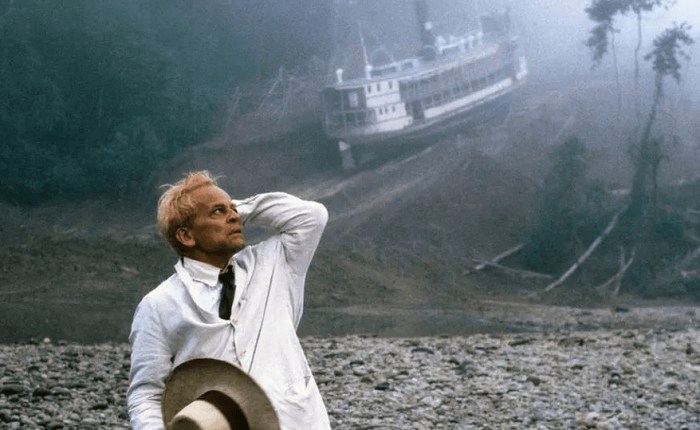
But above all, I appreciate his films and documentaries because they are not about the interpersonal struggles that characterize so much of Hollywood—between children and parents, or between friends, or above all between couples. Granted, this means that his work generally has little value as social commentary, in the way that, say, a classic Victorian novel has. Yet it makes up for it by being about what is, for me, the ultimate theme: the doomed struggle between humanity and the universe. This is summed up in what is arguably the central image in his entire oeuvre, the challenge of Fitzcarraldo: lifting a boat over a mountain in the middle of the jungle. Indeed, the making of the film itself became such an impossible task that it is doubly metaphoric.

Well, I have gone on about Herzog’s work as a filmmaker, but this is a book review, after all. Yet it is apropos, my reaction to this book only makes sense if you know that I am in the midst of a Herzog obsession. And I would only recommend the book to people in a similar predicament. That is, it is difficult for me to imagine someone with only a casual interest in Herzog, or perhaps just wishing to read a good book of memoires, really enjoying the book. Yet if you are a fan, this is wonderful reading.

Or listening. It was an easy decision to experience the book in audio format, narrated in Herzog’s iconic voice. It is certainly good practice for my Herzog impersonation (though it’s still mediocre). Also, it was constantly amusing whenever Herzog pronounced any sort of foreign word—be it German, Spanish, or Nahuatl—as his voice became inundatingly phlegmy.

While Herzog is an extremely thoughtful person—indeed, he seems to be one of the last living examples of the twentieth-century European intellectual, full of strange opinions and oracular pronouncements—while that is true, as I was saying, he is not particularly introspective. To the contrary, he declares himself the enemy of psychoanalysis, and says that there are parts of the human psyche which should remain shrouded in darkness. It is this aversion to delving emotional depths, I think, which makes him spurn human relationships as the focus of his work—and, it seems, as the focus of his life, for he does not seem to be principally motivated by his family or friends.

What motivates him artistically and personally are, rather, what you might call miniature obsessions. The geneses of his films seem to take the following form: He hears a piece of music (such as the madrigals of Carlo Gesualdo) or a story (such as about the simultaneously-speaking twins, Freda and Greta Chaplin) or sees an image (such as man in a protective suit battling an oil fire) and then decides he must make a film about it.

This tendency to get completely lost in a temporary fixation is another quality I share with Herzog. But the big difference between him and sorry devils such as myself is that Herzog is not content to read a book or watch a movie about his latest mania. He actually travels to the ends of the earth to explore it himself.

His absolute determination to see his projects through, regardless of the hardships or the risks, is perhaps his most admirable (and frightening) quality, and the one I identify with the least. I am a soft person who likes comfort, while this book is full of hardship after hardship and injury after injury. It is sometimes difficult to escape the conclusion that the man is a masochist. But I think it is more accurate to say that he has a philosophic attitude to pain. It is woven into his worldview, as something he simply expects to receive from the universe.

Now, I do have to confess at the end of this review that, now and then, I do get a faint whiff of charlatanism. Herzog seems to like telling stories about himself, and he also seems to have a flexible attitude towards the truth (as explained in his theory of “ecstatic truth”). There are precious few flashes of, say, self-deprecating humor to puncture the popular caricature of himself. But even if Herzog the man does not quite live up to Herzog the character, the artistic persona is so compelling that I think we would have to invent him ourselves if he did not really exist.


View all my reviews

Review: Columbus (Laurence Bergreen)

Review: Columbus (Laurence Bergreen)

Columbus: The Four Voyages by Laurence Bergreen

My rating: 4 of 5 stars


I remember learning about Columbus when I was in elementary school. The story was simple: he was a daring, visionary man who set out to prove that the earth was round, heroically defeating the nay-sayers who thought that he would sail right over the edge of the earth. To the mind of a child, it is a compelling tale. It is also, of course, complete fantasy (to use a polite word). Since those Edenic days of unproblematic national heroes, Columbus has become a much more divisive figure. So I decided I ought to get the real story, hopefully from somebody without an ideological axe to grind.

As I knew from his books on Marco Polo and Magellan, Bergreen is in the business of writing popular histories of famous explorers. This book is up to his usual standards, though the raw material he had to work with is naturally somewhat messier. Both Polo and Magellan were famous for one iconic voyage, while Columbus travelled to the “New World” on four separate occasions. Instead of one grand adventure, then, we get a series of expeditions, each one drearier than the last. By the fourth voyage, I was quite ready to be done with the Genoese explorer.

But I did learn. For example, Bergreen makes it clear that the competing narratives of Columbus have existed from almost the very beginning. There were rumors and accusations regarding his cruelty and incompetence during his lifetime (which resulted in his imprisonment); and not long after his death the great Spanish anti-colonialist, Bartolomé de las Casas, skewered Columbus for his role in the destruction of the native peoples. In short, he was never a universally beloved hero.

Furthermore, Columbus only became a cornerstone of patriotic ideology centuries later. He started to be celebrated in North America, for example, after the Revolutionary War, as the young nation searched for a founding myth that wasn’t so tied to England. In Spain, October 12th (when Columbus “discovered” the New World) did not become a holiday until 1892, as part of the conservative restoration of the Bourbon monarchy. In the United States, it was not made a holiday until 1937.

So, should Columbus Day be celebrated? Insofar as celebrating Columbus is merely a way of celebrating European colonization of the Americas (which certainly seems to be the case), then I think the answer must be a clear no. I don’t think it is possible to learn about the cataclysm that engulfed the native peoples of the Americas—which resulted in millions dead and the disappearance of so many cultures and languages—and think that worth celebrating. Granted, there is a kind of paradox for European Americans in this, since if there had not been a Columbus we would not exist; and it is difficult to wish oneself out of existence. Even so, celebrating the enslavement and elimination of whole peoples does not seem quite right.

Yet what about celebrating Columbus himself? Well, he does not exactly make a good impression in these pages. Certainly he was a bold and determined man, willing to risk his life for an idea (as well as for gold and glory). And his talent as a navigator is impressive. But these positive qualities seem rather pale when compared with his narrow-mindedness, his incompetence as an administrator, his cruelty to others, and his messiah complex. In the course of these voyages he combats several mutinies (with varying degrees of success), strands his own men (to be used as a bargaining chip), and has untold numbers of people enslaved. And even if you focus exclusively on his role as a “discoverer,” it is difficult to celebrate a man who steadfastly refused to acknowledge the truth of what he, in fact, had stumbled upon.

The truth is that Columbus, contrary to what the legend says, did not have a more accurate notion of the earth than the experts of the time. Precisely the reverse: Columbus’s voyage was based on a profound underestimate of the size of the earth. Indeed, it was pure luck that there was an unsuspected continent in the middle of the ocean. If America did not exist, and there were nothing but open sea between Europe and Asia—as he thought—Columbus would almost certainly have died in the enormous expanse of water. And he never even had the good grace to admit his mistake, insisting to the end that he had found a route to Asia, despite the very clear evidence to the contrary.

Of course, the fact remains that Columbus thought to do something that nobody (to his knowledge) had ever done before, and in the process inaugurated a new period of history. Indeed, given the tremendous importance of his voyage, we ought to do our best to understand both the man and the colonial undertaking he stands for. And I don’t think that is accomplished with myths and unreflecting celebration.


View all my reviews

Review: Long Day’s Journey into Night

Review: Long Day’s Journey into Night

Long Day’s Journey into Night by Eugene O’Neill

My rating: 5 of 5 stars


My first experience of this play was of an audio recording. It did not make an especially deep impression on me, and I was on the verge of writing a review saying as much, when another reviewer alerted me to the literary importance of the stage instructions. Chastened, I decided I ought to actually read the play before I made a fool of myself, and I’m glad I did. O’Neill, after all, never intended for this work to be produced as a play. It is, rather, like Goethe’s Faust a kind of closet drama, more effective on the page than on the stage.

The play is a masterful depiction of addiction and familial dysfunction. Indeed, I found it to be almost clinical in its psychology. O’Neill was clearly writing from personal experience. He ably captures the mixture of love and resentment that an unhealthy family bond can give rise to—perpetual annoyance, an endless buildup of grievances, non-stop bickering, all built on an unshakable foundation of love. And the characters of this play do love one another, quite dearly, even if they are stuck in a vicious cycle of blame and abuse.

Woven into this dreadful dynamic is addiction. Every member of the family is an addict, and all display the tell-tale signs. They search for excuses—good new or bad news, loneliness or companionship, special occasions or recurrent problems—to justify their habit. And then there is the deferral of responsibility, most exemplified by the mother in this play, who manages to blame everything in her life—her husband, her sons, her doctors, her upbringing—except herself for her morphine addiction. Yet of course the self-deception is never really believed. This awful truth is always there, burning underneath, a gnawing feeling that the substance will never quite deaden.

These contradictions—of great affection and resentment, of excuses and self-knowledge—are so starkly on display in this play that I think even the most brilliant actor would struggle to do it justice. The shifts of tone are too abrupt, the push and pull of conflicting feelings and truths are too violent. But, somehow, it works when read. On the page, a jostled, confused, and depressing mess becomes something orderly, transparent, and deeply tragic. A potentially pathetic group of boozers and dope fiends are transformed into symbols of aching humanity.

Considering that this play is strongly autobiographical, it is frankly amazing to me that O’Neill was able to create such a masterpiece. To confront what must have been a painful and traumatic time in his life and turn it into such a drama—a drama that pulls no punches, and yet condemns no one—is deeply impressive. As this play amply demonstrates, life too often conquers art. Routine deadens us to it, money woos us from it, addiction numbs us to it, so that we lose both our sensitivity to its beauty and the time and energy to create it. But sometimes, art conquers life. And this play is an example of that.


View all my reviews

Review: The Gathering Storm

Review: The Gathering Storm

The Second World War, Volume I: The Gathering Storm by Winston S. Churchill

My rating: 4 of 5 stars


When I first learned, many years ago, that Winston Churchill had written a history of the Second World War, I knew that I would have to read it. After all, I grew up watching documentary after documentary about the conflict (before the History Channel was all about aliens, it was mainly Hitler content). Finally, this summer, I found the complete set, cheap, at the Strand bookstore in New York. Looking at the six fat volumes on my bookshelf, I knew that I was in for a long campaign.

The book is, indeed, long (over 700 pages in this edition), but it is a surprisingly fast read. It was written in haste—if “written” is the right word, for most of the book was either dictated or excerpted from official documents—and reads like a series of dispatches or field reports. This is simultaneously the book’s weakness and its great strength. For Churchill does not attempt to give a universal, impartial overview of the war, but rather recreates what it was like for him to be in the thick of it. And although his perspective does impose serious limitations and distortions on the material, it also makes the narrative far more thrilling. The rush of events is palpable.

Half of this book is devoted to the buildup of the war. Churchill, to his credit, saw the Nazi threat coming from miles away, and tried again and again to rouse his country into action. Unfortunately, his warnings go unheeded, and Germany is allowed time and space to rebuild its military unmolested. It is truly maddening to contemplate all of the lost opportunities. When Germany invaded the Rhineland, for example—clearly violating the Treaty of Versailles—the French and English could have taken decisive action at a time when the German military was miniscule. But nothing can compare with the infamous Munich Agreement, in which a country capable of defending itself was given away to the Germans, which only further strengthened their military for the inevitable war.

One can imagine how such a book could devolve into a series of self-congratulatory told-you-sos. But Churchill, at least in print, is quite generous to his political opponents. In particular, Chamberlain, the architect of appeasement, comes off rather well in Churchill’s telling—portrayed a resolute, peace-loving man who made some very bad decisions. Indeed, I found Churchill’s narrative voice to be rather odd. He has a kind of boyish fascination with war and weapons, and a jingoistic faith in the British people and their empire. Indeed, although he was so very right about Nazi threat, I can easily imagine myself dismissing such a strong believer in king and country as a war-mongering kook.

But he was not a kook, at least not in this regard. Indeed, in his great attention to detail regarding military matters, and his ability to strike a brave, defiant note at a difficult hour, he proved that he was the right man for the moment.


View all my reviews