Review: The Rise and Fall of the Third Reich

Review: The Rise and Fall of the Third Reich

The Rise and Fall of the Third Reich: A History of Nazi GermanyThe Rise and Fall of the Third Reich: A History of Nazi Germany by William L. Shirer

My rating: 4 of 5 stars

Reading this book is an ordeal. It is very long and very depressing. Charting the Third Reich from the birth of Hitler to the collapse of Germany, Shirer tells the whole story with the sweep of a novelist and the detail of an accountant. He wrote the book after having access to huge stores of documents captured by the Allies after the war. Diaries, schedules, testimonies from the Nuremberg trials, the minutes of meetings, and much more were the raw material marshalled to create this tome.

As is often noted, Shirer was a journalist, not a historian, a fact that helps to explain much about this book. He lived in Berlin as a foreign correspondent from 1933 to the end of 1940, reporting on the rise of Hitler and the beginnings of the war, until the threat of the Gestapo forced him to return home. This firsthand experience lent color to his narrative, but also focused his attention on readily observable events. Rather than talk of larger trends—social shifts, economic pressures, cultural developments—Shirer focuses almost exclusively on the doings of individuals in power, such as he had been reporting on.

This focus makes the narrative vivid and pleasingly concrete, but also results in a superficial analysis. A historian would naturally spend more time on the rampant inflation of the times, the institutional weakness of the Weimar Republic, the wider political trends in Europe, the mechanics of a totalitarian state, and so on. Further, Shirer’s explanation of why Germany embarked on such a destructive enterprise boils down to: because it is peopled by Germans. That is, he locates a kind of cultural essence in the German people, an essence stemming from the Reformation and especially Martin Luther, added to by Hegel and then by Nietzsche, which came to full fruition in National Socialism. But this sort of cultural essentialism is, for me, just intellectual laziness. It can be used to explain anything or everything, since these posited cultural qualities are vague and unobservable.

In any case wider historical analysis plays a very small part in this book, which is mainly a record of the decisions and actions of the leading men of the Nazi regime. That is to say that this book is a political and not a military history. The Second World War is discussed, of course, but only insofar as its developments affected or were caused by the Nazi leaders. Shirer is mainly concerned with charting the rise to power of these ruthless men: how they outsmarted the Weimar Republic leaders, fooled the international community, bullied and threatened their way to conquests, and finally instigated a war that resulted in their own ruin.

The balance of the book is tilted heavily towards the rise of the Third Reich. This can make for some dreary reading. In retrospect it is stupefying to witness how blind, inept, and spineless were Hitler’s opponents, first within Germany and then beyond its borders, until the final crisis spurred the world into action against him. Though Shirer’s sturdy prose is normally quite plain and unadorned, he has a steady instinct for the dramatic and writes several unforgettable scenes. Nevertheless the scale of detail Shirer saw fit to include sometimes weighs down the narrative into benumbing dullness. The endless, petty diplomatic maneuvers that preceded the beginning of the War—negotiations, ambassadors, threats, ultimatums, calculations, second thoughts, and so on—made it a relief when the soldiers finally started shooting.

These political dealings of the Nazis constitute the vast bulk of this book. It is a masterclass in how far a little cunning, shameless lying, and absolute ruthlessness can get you. It is also a lesson in the need to cooperate to take decisive action against common threats. In the years since Vietnam, many have concluded that the main lesson to be drawn from America’s foreign policy is the folly of interventionist wars. After the First World War, the Western powers were understantly ever more chary of violence. And yet, at least in Shirer’s telling of the history, a timely show of force could have nipped Hitler’s rise in the bud. If England and France had upheld their treaties and defended their territories and their allies, Hitler could not have amassed so much power at a time when the German military was still small. (Though it must be said that Shirer’s intellectual weakness appears here, too, since he attributes this inaction to pure cowardice.)

In any case, this does bring out an interesting dilemma in foreign policy concerning the benefits and risks of violent intervention. In the case of Hitler, timely action could have prevented a disastrous conflict. And yet in many other historical cases, such as with Saddam Hussein, the threat of non-intervention was vastly overestimated, while the cost of intervention vastly underestimated. The word “estimate” is key here, since these decisions must necessarily be based on guesses of future threats and costs—guesses which may easily be wrong. Since it is impossible to know with certainty the scale of a threat that a situation may pose if left unchecked, there is no surefire way out of this dilemma. This, of course, is just a part of a wider dilemma in life, since so many of our everyday decisions must necessarily be made based on guesses of what the future holds.

You can see that this book, though a popular account, is not lightweight in its details or its implications. Yet it does show its age. Published in 1960, it was written before many valuable sources of information became available, such as the French archives. It also shows its age in its occasional references to homosexuality, which Shirer treats as a perverted vice. This is, of course, morbidly ironic, considering the Nazi persecution of homosexuals (something that Shirer fails to mention). But all in all The Rise and Fall of the Third Reich remains a gripping popular overview of this nightmarish time.

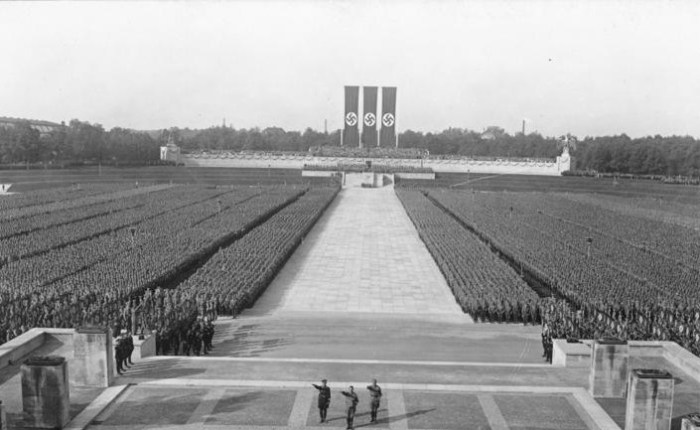
(Cover attributed to Bundesarchiv, Bild 102-16196; licensed under CC BY-SA 3.0; taken from Wikimedia Commons.)

View all my reviews

Review: The Aeronautic Adventure

Review: The Aeronautic Adventure

La aventura aeronáutica: Emilio Herrera, Juan de la CiervaLa aventura aeronáutica: Emilio Herrera, Juan de la Cierva by Carlos Lazaro Avila

My rating: 4 of 5 stars

This book has the very modest distinction of being the only book I’ve read whose author I have interviewed. Carlos Lázaro is a history teacher at the school in which I work; and when he is not scolding students or grading reports, he is researching Spanish military aviation history. This is one of the numerous books he has published on this topic.

La aventura aeonáutica is a dual biography of two of the most important innovators in Spanish aviation history: Emilio Herrera and Juan de la Cierva. Herrera was of the same generation as the Wright Brothers. His specialty was lighter-than-air crafts—dirigibles, zeppelins, and so on—to which he made great practical and theoretical contributions. Among his many accomplishments was his participation in the first intercontinental flight of the Graf Zeppelin, which earned him a ticker-tape parade in New York City. He also designed what is considered the first spacesuit, for a planned but never realized ascension to the stratosphere. Later in life he was also important for his loyalty to the Spanish Republic in exile, even becoming its (mostly ceremonial) president.

Juan de la Cierva is mainly remembered for his invention of the autogiro, or autogyro. This was a sort of early-generation helicopter, designed to fly at speeds impossibly slow for fixed-wing aircraft. The principle of the autogyro is, however, quite different from that of a helicopter. Most notably, the rotor on top is completely unpowered. Forward thrust is provided by a small frontal propeller. This motion pushes air up into the rotor, causing it to spin—though notably, unlike in a helicopter, the air flows through the rotor upwards, not downwards. The rotor’s blades are angled so that the rotation provides lift. You may think of an autogyro as a plane whose wings rotate rather than stay fixed. For this reason autogyros cannot take off and land vertically, nor can they hover, unless there is a countervailing breeze. In any case, I hope you can see from this description that this was an ingenious and original contribution to aeronautic technology.

Like Herrera, De la Cierva was politically active; unlike Herrera, De la Cierva was a committed member of the Right, and threw his support behind Franco. His life was cut short in a plane crash—ironically a passenger plane, not any experimental flight—while trying to organize international support for the coup.

I found the lives of these two men fascinating, since I had not even known their names beforehand, much less any of their accomplishments. The book is admirably informative and concise, full of attractive photos and nifty little side-panels. Hopefully I will visit the Museo del Aire in Madrid soon, to see some of these historical craft for myself.

[Cover photo licensed under CC BY-SA 3.0; taken from Wikimedia Commons; author unknown.]

View all my reviews

Review: Two Gentlemen of Verona

Review: Two Gentlemen of Verona

The Two Gentlemen of VeronaThe Two Gentlemen of Verona by William Shakespeare

My rating: 2 of 5 stars

I think Crab, my dog, be the sourest-natured dog that lives.

Two Gentlemen of Verona is usually grouped with A Comedy of Errors and The Taming of the Shrew as one of Shakespeare’s early comedies. I am inclined to see it as the earliest, if only because it is by far the least compelling. Whereas Shakespeare is rightly known for the depth of his psychological insight and the realism of his characters, the personages of this play are shallow and implausible creatures.

The two titular gentlemen are anything but. Proteus is a cad, a lout, and finally a monster, while his friend Valentine is a nincompoop. The women who capture their hearts are rather more compelling—especially Silvia, who sees right through Proteus—and yet their attraction to these unscrupulous airheads dims their stature as well. The final scene is the culmination of everything wrong with this play: after banishing his friend and lying through his teeth, Proteus tries to rape Silvia, and is then immediately forgiven by Valentine (note: not Silvia), in an ambiguous line that, at first glance, seems to mean that Valentine is gifting him his paramour Silvia. The scene could almost be funny if it were played as a farce, but the straight version I saw was sickening

The real heroes of this play are Proteus’s servant Launce and Launce’s dog Crab—a mutt who, despite having no lines, is better-realized than any of the protagonists. Now with Launce we have the real Shakespearean magic: a living, breathing, fully human character, immediately relatable and deeply compelling. His hilarious monologues are the jewels of this play, which does not deserve him. Other than this pair, the play is only interesting for prefiguring many of the themes Shakespeare would later explore with greater clarity and depth.

View all my reviews

Review: Selected Writing (Ruskin)

Review: Selected Writing (Ruskin)

Selected WritingsSelected Writings by John Ruskin

My rating: 4 of 5 stars

Taste is not only a part and an index of morality;—it is the ONLY morality.

John Ruskin can be said to be the John the Baptist of the religion of art, a herald of things to come. He was shortly followed by the great aesthetes, Walter Pater, Oscar Wilde, and Marcel Proust—who all read and were deeply influenced by his work. But Ruskin himself cannot be called an aesthete—at least, not in the sense that he considered aesthetic appreciate the central goal of life. For Ruskin, art provided not only aesthetic pleasure but genuine moral instruction; great paintings could be read like psalms, and great buildings were sermons in stone.

In this, as in so many other ways, Ruskin can be jarring for the modern reader. Indeed, his ideas were jarring even back then. He made a profession of insistently, dogmatically, and unequivocally asserting opinions that, to most people, seem manifestly untrue. The most notorious of these opinions is thus summed up by him: “You can have noble art only from noble persons, associated under laws fitted to their time and circumstances.” Unethical people, therefore, could produce only base art. And if an entire age habitually produced shoddy paintings and buildings—as Ruskin believed of his own age—then there must obviously be something deeply wrong with that society.

Art and society were thus, for Ruskin, deeply intertwined. This is the bridge that connects his art and his social criticism. Art is never just for art’s sake; it has a didactic and a moral purpose. A work of art is great in proportion to the greatness of its ideas; and these ideas are not the products of an eccentric individual, but of a whole culture, evolving and refining itself through generations. Every great work that results from this evolution “is the embodiment of the Polity, Life, History, and Religious Faith of nations.” As such, these works have a vital social purpose; and it is the job of the art critic to explicate their moral significance. We see this most clearly in Ruskin’s major works on architecture, The Stones of Venice and The Seven Lamps of Architecture, which are concerned, above all, with the ethical lessons inherent in gothic architecture.

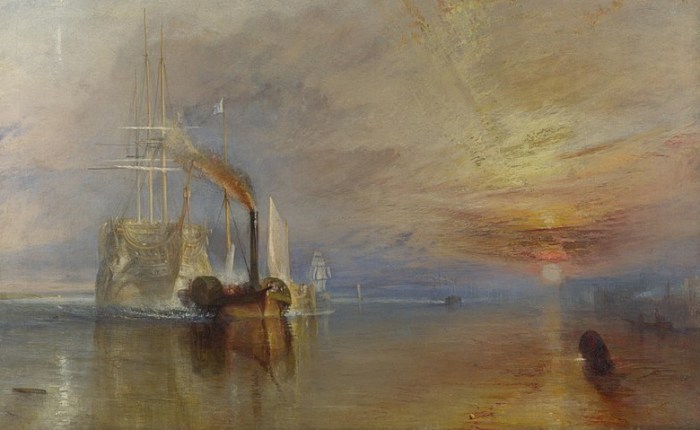
For Ruskin, however, art was not only moral, but truthful. From this conviction came his youthful defense of J.W. Turner in his five-volume Modern Painters. Turner’s works, he thought, revealed a deep insight into the workings of nature; and since Ruskin was himself keenly sensitive to natural beauty, especially mountains, he became Turner’s champion. The job of the landscape painter, like that of the poet, is to record nature as faithfully as possible. Inferior painters and poets allow themselves to be overpowered by emotions, which lead them to personify or to distort nature: Ruskin called this the “pathetic fallacy.” But the truly great painter or poet, the Turners and Dantes, are always in complete control of themselves.

One can see why this was jarring. Most of us naturally distinguish whether something is good, beautiful, or true; but Ruskin insisted that these qualities were inextricable. Art could not be great if it was immoral or if it was untrue. Indeed, for Ruskin, you might say that these qualities were not separable at all; having any of them without having all three was inconceivable. But their existence was not dependent on solitary, virtuous geniuses. To the contrary: the ability to understand nature only exists in developed cultures; moral systems are the products of peoples; and great art can only exist within a school and a tradition. Society was therefore deeply important for Ruskin, being the wellspring of everything he admired and sought.

The later half of his life was, as a result, spent in social reform. Specifically, Ruskin set himself up as the enemy of industrial capitalism. Gothic art was great because each workman was an artist; but in mass-production the workers are reduced to machines. The division of labor is, as he said, really the division of souls, allowing for efficiency but stunting human growth. The ethic of enlightened selfishness could never inspire any great works, since the highest ethical value is selflessness. The environmental destruction wrought by industrialism was not only a crime against future generations but a crime against ourselves, since we were destroying the truth and beauty of nature, which is one of the vital sources of happiness.

This is the quickest summary I can give this selection of Ruskin’s work, whose volumes fill many shells and touch on many different disciplines. There are many reasons to dismiss Ruskin’s ideas. The relationship of beauty to truth and to goodness is obviously more complicated than he insisted. Murderers, rapists, and thieves have been great painters. Honorable men have built ugly houses. And what is the truth of a symphony? But for me it is a relief to find someone who finds beauty so socially vital.

I have spent far too long in concrete landscapes, surrounded by endless rows of identical houses, each one ugly in itself and uglier en masse. The effect that such thoughtless dreariness has on my mood—in contrast with the great enlivening freshness I feel when in a lovely city—has convinced me that architectural beauty is not merely an added frill or an extra perk, but is a positive social good. And it is difficult to dismiss Ruskin’s ideas on architecture, society, and the economy when one goes from a modern suburb to a well-preserved medieval town. How is it that finer houses were built by peasants? How is it that the most wealthy society in history can produce only the most mindless repetition, vast labyrinths of stupidity, destroying whole landscapes in the process?

Ruskin is the prophet of this phenomenon, and thus valuable now more than ever. But apart from this, Ruskin is worth reading just for the quality of his writing. His early style, flowery and involuted, gave way to a clearer strain later in life. But throughout his career his prose is rich with observation and abounding in memorable phrases. Even if one disagrees with all of his conclusions, it is impossible to read him without some stimulating thought.

View all my reviews

Review: Lazarillo de Tormes

Review: Lazarillo de Tormes

La vida del Lazarillo de TormesLa vida del Lazarillo de Tormes by Anonymous

My rating: 4 of 5 stars

One can imagine the anonymous author of Lazarillo de Tormes sitting down to write in a mood similar to that of Erasmus when he penned In Praise of Folly, or of Voltaire when he composed Candide: full of the wry amusement of one engaged in a learned, witty, and irreverent literary exercise. And yet this book, like those other two, quickly became something far more than an elegant diversion. For with Lazarillo the author spawned an entire literary genre, the picaresque, creating a character and a story that have retained their charms long after the targets of the author’s satire have passed out of this world.

The most conspicuous target of the author’s derision is the church—which is likely why the author wished to remain unknown. Pardoners, priests, friars, and chaplains are exposed as hypocritical sinners—as gluttons, profligates, and fornicators, with a pious word for everybody. But the writer also takes aim at the inflated sense of honor that infected society in his day, which most famously compels a starving knight to go about town, pretending to be well off, preferring to suffer and even to die rather than have his poverty revealed.

We see all this through the eyes of Lázaro, a man of humble origins whose highest ambition is to have a full belly. This proves extremely difficult, however, as he goes from one master to another, each of them proving unable or unwilling to satisfactorily feed the ravenous rogue. Like all picaresque heroes, Lázaro is, at bottom, simple and good, with a robust and hearty humor, but who is nevertheless forced into cunning and trickery by hard circumstances. This formula—so successful in the age of television—was used to its full potential in its first historical appearance. Even through the difficult lens of old Castilian, Lázaro’s schemes to steal some crumbs of bread or some swigs of wine are still wonderfully funny.

But the novella is more than a slapstick comedy. The necessities of his belly and the earthiness of his mind allow Lázaro to penetrate all the hypocrisies of those around him—since, after all, hypocritical words cannot be eaten. Lázaro thus proves the ideal vessel for exposing the gulf between being and seeming. The reality he faces is bleak: full of sin, suffering, and poverty. And yet his society is in a state of constant denial, covering up this bleak reality with noble phrases and unheeded pieties. That this is more or less always the case in human life is why this book remains one of the jewels of Spanish literature.

View all my reviews

Review: Frankenstein

Review: Frankenstein

Frankenstein, or The Modern PrometheusFrankenstein, or The Modern Prometheus by Mary Wollstonecraft Shelley

My rating: 4 of 5 stars

Mary Shelley was just eighteen when she wrote this iconic novel, which you might think is extraordinary; but considering who she was, it would have been even more extraordinary, perhaps, had she not done so. The daughter of William Godwin, idealistic philosopher, and Mary Wollstonecraft, the feminist champion, she was wooed and conquered by Percy Bysshe Shelley, who then took her on a vacation with his good friend, Lord Byron, when a cold-snap caused by the ashes released into the atmosphere during the 1815 eruption of Mount Tamora forced them to stay inside for days on end, where they found entertainment by telling ghost stories. If she had not done something memorable in such circumstances, it would have been nearly obscene.

This book was the first “classic” I read on my own initiative. I was the same age as was Shelley herself when she wrote the book. I had just gotten to college, and the experience so impressed me that I thought I had better do something to cultivate my mind. My vocabulary was so feeble at the time that Shelley’s nineteenth century prose—quite overwritten—was like another language. Still, I pressed on to the end, and the experience was enjoyable enough that I immediately went on to read Dracula (which I preferred). Still, the impression lingered on afterwards that there was something not quite right with the book, like a dish that had been somehow botched. Now that I finally read it again I can say why.

What irks me the most is that I find Dr. Frankenstein absolute implausible as a character. If he earnestly thought that he was unlocking the secret of life—a noble goal—why would he keep his work such a secret? And how could such a cold scientific genius, who had just been sewing together corpse parts, be so overwhelmed by the ugliness of his creature’s face that he faints away? How could such a brilliant man not foresee that the monster’s threat about his wedding day was not directed at him? Time after time he makes decisions or has reactions that are, to me, inconsistent and unbelievable. Indeed, I recently read an adapted version for ESL learners which palpably improved the story, I think. Instead of Frankenstein fainting away and falling into a nervous fever for months at the mere sight of his monster, for example, the laboratory catches fire from the lightning and he falsely assumes the monster escapes.

I know, I know, I am supposed to suspend disbelief. But what jarred me was not the lack of scientific plausibility, but the lack of psychological plausibility of Frankenstein’s character. I could hardly believe that Frankenstein, who had unlocked the secret of life and death, did not even momentarily consider reviving his loved ones. I also had trouble believing that Frankenstein could complete 90% of the work on the monster’s bride, and only consider the dangers of doing so at the last possible moment. And a man who is supposedly in the depths of despair or thirsting with mad revenge, but who continually pauses to give loving descriptions of his alpine hikes and his travels through Europe, all the while professing not to have enjoyed them—it swerves into the absurd.

This psychological implausibility infected every other character. The monster’s long speech at the end about his tortured conscience rang more falsely than tin cans. And the bland goodness of Frankenstein’s friends and family made them impossible to mourn—pure white lambs prepared for the slaughter. The general impression is that the characters’ personalities are driven by the necessities of plot, not vice versa, which is never good. Frankenstein is a genius when the story need him to discover life, and an oaf when the story needs him to make a mistake; his monster is ruthless and demonic when tragedy is called for, eloquent and pitiable when things take a more plaintive turn.

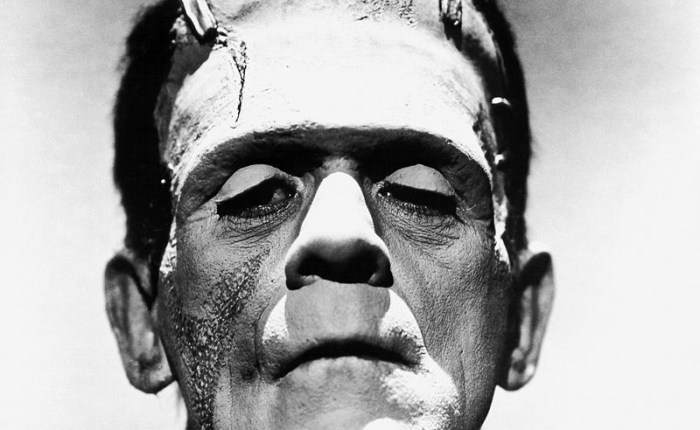
But the book would not have become such an inescapable classic, and an integral part of pop culture, if it did not have compensating virtues. The most striking aspect of the book, for me, is its imagery. Many scenes are so vivid that they are always remembered. Shelley’s swollen prose is ill-suited to the quiet moments of the book, but flies free of excess in the novel’s many dramatic climaxes. And of course the novel’s premise was radically original and proved extremely influential. A ghost story without a ghost, a fantastic tale where technology provides the fantasy—it had not been done before. Its premise, too, has proven extremely rich and relevant, an allegory for humanity’s arrogance and the perils of creation. These virtues will ensure Frankenstein a place in English literature as permanent as Percy’s poems, which may indeed outlast Ozymandias’s statue and still be read when we are able to resuscitate corpses.

View all my reviews

Review: The Letters of Vincent van Gogh

Review: The Letters of Vincent van Gogh

The Letters of Vincent van GoghThe Letters of Vincent van Gogh by Vincent van Gogh

My rating: 5 of 5 stars

For great things do not just happen by impulse but are a succession of small things linked together.

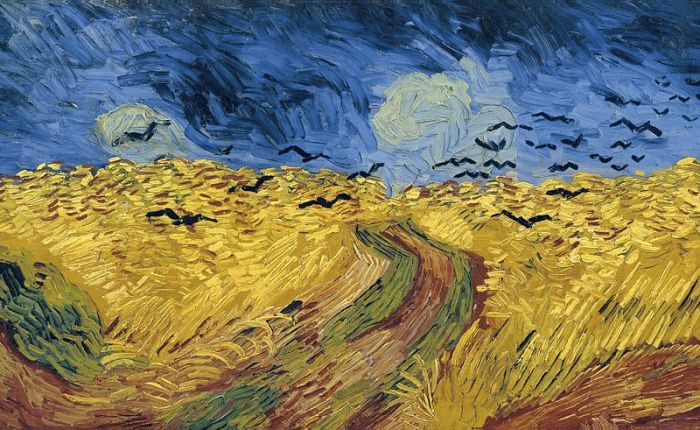
The main problem when encountering Van Gogh is that his life has become the quintessential artistic myth of our age. The obscure genius ahead of his time, toiling in solitude, tortured by personal demons, driven by a creativity that sometimes spilled over into madness—and so on. You’ve heard it all before. You have also seen it before. His paintings suffer from the same overexposure as does his life story. Starry Night hangs, in poster form, in dorm rooms and offices; it is used in commercials and as desktop backgrounds. The challenge, then, as with all iconic art, is to unsee it before it can be properly seen.

The best way to pop this swollen bubble of this myth is, I think, to read these letters. Here an entirely different Van Gogh is revealed. Instead of the mad genius we find the cultured gentleman. Van Gogh could read and write English, French, and German fluently, in addition to his native Dutch. He peppers his letters with references to Dickens, Elliot, Dostoyevsky, Tolstoy, Balzac, Zola. His prose is fluent, cogent, and clear—sometimes even lyrical. His knowledge of art history is equally impressive, as he, for example, compares Shakespeare’s and Rembrandt’s understanding of human nature. Not only this, but he was far from insulated from the artistic currents of his day. To the contrary, he was friends with many of the major artists in Paris—Seurat, Signac, Gauguin—and aware of the work of other prominent painters, such as Monet and Cézanne.

But, of course, Van Gogh’s myth, like many, has some basis in truth. During his lifetime he did not receive even a fraction of the recognition his work deserved (though if he had lived a little longer it likely would have). He was often unhappy and he did suffer from a mental illness of some sort, which did indeed lead him to sever a portion of his own ear. What is less clear is the role that his unhappiness and his mental illness played in his work. In our modern world, still full of Romanticism, we are apt to see these factors as integral to his artistic vision, the source of his inspiration and style. Van Gogh himself had, however, quite a different opinion, seeing his suffering and illness as a distraction or an obstacle, something to be endured but not sought.

The letters in this volume span from 1872 to 1890, the year of his death. Most of them are addressed to his brother, Theo, who worked as an art dealer in Paris and who supported Vincent financially. There are also a few letters to his sister, Wil, and to his artist friends. From the beginning we see Van Gogh as an enthusiastic and earnest man, very liable to be swept up into passions. His first passion was the church. Following in his father’s footsteps, Van Gogh went to England to work as a preacher. His letters from this period are full to bursting with pious sentiments; in one letter he even includes a sermon, which he composed in English. He quickly grew disenchanted with conventional religion, however, and soon he is pining after his cousin, Kee, who rejects him and refuses to see him. Not long after that he takes in a woman named Sien, a former prostitute, and his letters are filled with his dreams of family life.

But in all of these letters, even before he decided to take up art—which he did comparatively late, at the age of 27—Van Gogh shows a keen visual awareness and appreciation. He includes long, detailed, and sometimes rapturous descriptions of towns and landscapes. He is also, from the start, independent to the point of stubbornness. He persists in trying too woe his cousin even in the face of his whole family (including Kee herself) discouraging him. He insists on taking in Sien despite the disapproval of nearly everybody, including his brother and his mentor, Mauve. When it came to art he was absolutely uncompromising, refusing to paint anything just for money, and getting into passionate disagreements with some of his artist friends (Gauguin, most notoriously).

Van Gogh’s intractability often landed him in trouble. He had a bad relationship with his parents and often quarrelled with his brother, Theo, who was his closest confidant. But it is also, I think, the quality that is ultimately most admirable in him. His personal standards drove him to work hard. He was no savant. His letters are filled with exercises and studies. He was tough on his own work and constantly strove to improve it. And though he sometimes got discouraged, there is never any hint of quitting or compromising. This is the classic story, often told. But it is easy to lose sight of how dreary and dispiriting this life could be, day to day. In films the struggling artist is enmeshed in a moving drama, and the audience always knows it will come right in the end. But for Van Gogh this was a plodding daily reality of struggle and failure, with no audience and no guarantee of ultimate success.

That we admire Van Gogh for persisting is, in large part, because his art was truly great. But what would we think if he was mediocre? This, you might say, is the paradox of persistence: We admire those who persist in the face of struggle when they have genuine talent; but when they do not, the spectacle becomes almost pathetic. What would we think of a man financially supported by his brother, constantly quarrelling with and alienating his parents, toiling away in isolation, who produced nothing beautiful? We might be inclined to call such a person naïve, foolish, or even selfish. Whether we admire or scorn stubbornness, in other words, depends on whether it eventually pays off. But in the meantime nobody can know if it will, least of all the stubbornly persistent person. It is, in short, a great risk.

Yet it cannot be said that Van Gogh wagered everything on his talent, since there is not even a hint of calculation or self-interest in his continuing persistence. He is so manifestly, uncompromisingly, absolutely obsessed and absorbed by art that there is no other option for him. Even when institutionalized and hospitalized he thinks of nothing but when, how, where, and what he can paint next. And though he at times expresses regret for the sacrifices this entails—he is especially vexed by the toll it takes on his love-life—he never discusses art with even a touch of bitterness. He is willing to live in a hovel and survive on crumbs if it means he can afford paint. To see such unqualified devotion, not in a novel or on a stage, but in the real, intimate context of his daily life is (to use a hackneyed word) inspiring.

Vincent’s story had a tragic ending. On a summer day in July he walked into a wheat field where he was painting and shot himself in the chest. He survived two more days, finally passing away in his brother’s arms on July 29. The circumstances surrounding this death are rather remarkable, and I don’t wonder that two biographers, Naifeh and Smith, have raised questions about it. The tone of his final letters, while troubled, are far from despairing. He even includes an order of paints in his final dispatch to Theo. And it is also extraordinary to think that a man who had shot himself in the chest could walk a mile back to the inn, or that a man locally known for his mental instability could get a gun. The recent film, Loving Vincent (which I haven’t seen), is focused on this question.

Theo did not long survive his brother: he succumbed to syphilis within just six months. Theo had married his wife, Jo, less than two years earlier, which proved an extremely fortunate circumstance—for art’s sake, at least—since it was Jo who championed Vincent’s legacy and who published his correspondence. Theo and Jo’s only son, named after his uncle Vincent, was responsible for founding the Van Gogh Museum in Amsterdam, which I recently visited. To any who get the chance, I highly recommend this paired experience, for the letters and the paintings are mutually enriching. Few people in history seemed to have lived so entirely for the sake of posterity: churning out paintings which few people saw, writing letter after letter few people read, creating a story and an oeuvre that now have the power to tear you in two.

View all my reviews

Review: Miró—Painter of the Stars

Review: Miró—Painter of the Stars

Miró: El pintor de las estrellasMiró: El pintor de las estrellas by Joan Miró

My rating: 4 of 5 stars

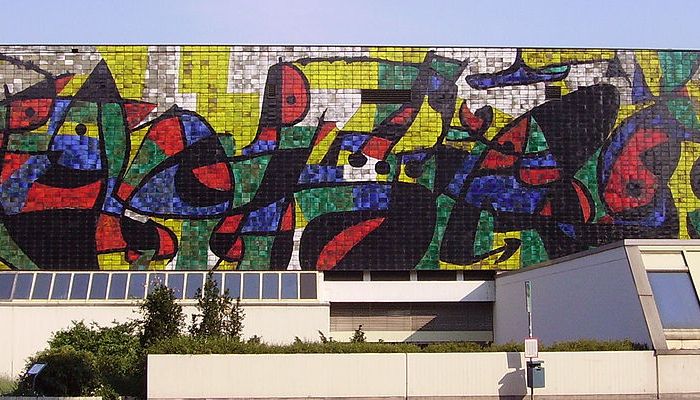
Although Joan Miró’s name is hardly less known than that of Dalí’s or even Picasso’s, his art seems strikingly less popular. I have been told by several people that they cannot appreciate it. And, indeed, I was often left cold by the works I had seen in the Reina Sofia—some of which seems to confirm every negative stereotype about modern art. But I wanted to give Miró another chance; so I visited the Fundació Miró in Barcelona, and read this book.

One of the most difficult tasks before any young artist is to develop her voice. By “voice” I mean many things: style, philosophy, identity, themes, and so on, which taken together make an artists work immediately recognizable as hers. In a word, this requires originality. One might be inclined to think that originality is the easiest thing to achieve—being the natural product of everyone’s differences. But to produce a deeply original work—one that could not have been produced by anybody else—is anything but easy. Artistic voice emerges in a dialectical process with one’s influences, as they are first mastered and then synthesized, until gradually something appears which cannot be traced to any influence.

This process is most easily seen among painters. And it is wonderfully illustrated in Miró, whose work incorporated fauvism, surrealism, and cubism. But it wasn’t only artistic trends that shaped the young painter. He was deeply inspired by natural sights—particularly the countryside near Montroig (near the city of Tarragona, in his ancestral Catalonia). The voice that Miró developed through his formative experiences and influences is unmistakable—displaying a sensibility for forms and color that no other artist could replicate. And consequently one feels, upon entering the Fundació Miró, the same way one feels upon entering the Dalí Museum in Figueres—that one is entering a new visual universe that obeys different laws.

In short, I have come to enjoy Miró’s work far more than I had. I find in it a sense of playfulness, and sometimes a sense of peacefulness, that is deeply appealing; and I enjoy watching his manipulation of forms shift throughout his work, while remaining recognizably Miró, like a theme and variations. But I still must admit that it does not affect me very deeply. My appreciation, in other words, is more intellectual than emotional. And I think that would have suited Miró just fine.

This little book is full of glossy pictures and does an excellent job in covering the different phases of Miró’s career.

View all my reviews

Review: What’s Up with Catalonia?

Review: What’s Up with Catalonia?

What's Up with Catalonia?What’s Up with Catalonia? by Liz Castro

My rating: 3 of 5 stars

Do not invite an American to speak about Europe; he will usually display great presumption and a rather ridiculous arrogance.

—Alexis de Toqueville

Perhaps the most politically controversial topic here in Madrid is the Catalonian independence movement. Almost everyone I speak to is vigorously against it, for one reason or another. I’ve heard people say that it is just a bluff for political negotiations; that it is based on calculated lies; that it is illegal and unconstitutional; that the Catalans are just crazy people; and so on. Indeed, it is my understanding that disagreement over the Catalonia Question is one of the major causes of the current political deadlock in Spain.

People talk about it a lot. But even after dozens of conversations, I still felt that I didn’t understand the situation; I was only hearing one side of the story. So for my first trip to Barcelona, I decided to open this book, a collection of essays by several pro-independence authors. It is a quick read: I read half of the book on the flight to Barcelona, and the other half on the flight back to Madrid. And now that I think of it, that is probably the best place to read this book, suspended in midair between the two cities.

It is this stance, an attempt at impartiality, that I am trying to maintain. But this is difficult for me. As one of the essays in this collection explains, many Americans are predisposed against independence movements because it reminds us of our Civil War. Of course, Catalonia is a completely different issue, so my association is illogical and unfair; and besides, my whole country originated in a war for independence. Yet I find it difficult to contemplate the option of secession without feeling queasy. That’s my bias.

This collections offers a variety of arguments for and perspectives on independence. The reasons offered for secession range from economic, to sentimental, to nationalistic, to linguistic, to historical, to political, often in combination. But, to quote Warwick, the result is less than the sum of its parts. The authors have different priorities and their arguments often contradict one another, which creates a sense of incoherence. One author argues that the Catalan language cannot be used as the primary marker of their identity, since a significant portion of the region’s inhabitants don’t speak it fluently; but another author comes out strongly for Catalan. Lots of authors talk about taxation and fiscal spending—all of them quoting the same statistics, which got rather tiresome by the end—but others said that they would want independence even if these financial troubles were cleared up. The tone of the essays ranged from dry analysis to impassioned pleas. It’s a hodgepodge.

One thing seriously lacking from the discussions of taxation and fiscal spending was how the Catalonia situation compared with that of other countries. In a nutshell, the complaint is that the Spanish government takes more money from Catalonia than they spend on it. But it is my understanding that this is a common occurrence when one region of a country is richer than another: money is diverted to where it is needed most. New York and California help to fund other states; and from what I’m told, Berlin is on the receiving end of a lot of financial support. If one of the authors had framed the fiscal situation in an international context, it would be easier to see whether it was fair.

These criticisms notwithstanding, I think this is an extremely valuable collection. Yes, there are much better overviews of the independence movement in Tremlett’s Ghosts of Spain and Hooper’s The New Spaniards; but those are two foreigners trying to summarize a complicated situation. This collection lets the Catalans speak for themselves, leading to a much more nuanced view of the independence movement. It shouldn’t be read in isolation; this is only one half of the debate. But it is an important half.

Personally I can’t decide how I feel about the whole thing. I am hostile to nationalism in general; and it strikes me that both the pro- and anti-independence positions are tinged with nationalism, for Catalonia or for Spain. I can certainly understand why, after Franco’s repressive policies, there is a considerable amount of bad blood built up in Catalonia; and I appreciate that it would make many Catalans very happy to have a country of their own. On the other hand, I think one mark of a country’s greatness is the amount of diversity it can incorporate, so I’d prefer it if the opposing sides could figure out how to live together without stepping on each other’s toes. Secession strikes my American mind as an overly drastic solution to the problem. But at this point I will take heed from Toqueville’s warning and say no more.

View all my reviews

Review: Why Buddhism is True

Review: Why Buddhism is True

Why Buddhism is True: The Science and Philosophy of Meditation and EnlightenmentWhy Buddhism is True: The Science and Philosophy of Meditation and Enlightenment by Robert Wright

My rating: 3 of 5 stars

A far more accurate title for this book would be Why Mindfulness Meditation is Good. For as Wright—who does not consider himself a Buddhist—admits, he is not really here to talk about any form of traditional Buddhism. He does not even present a strictly “orthodox” view of any secular, Western variety of Buddhism. Instead, this is a rather selective interpretation of some Buddhist doctrines in the light of evolutionary psychology.

Wright’s essential message is that the evolutionary process that shaped the human brain did not adequately program us for life in the modern world; and that mindfulness meditation can help to correct this bad programming.

The first of these claims is fairly uncontroversial. To give an obvious example, our love of salt, beneficial when sodium was hard to come by in natural products, has become maladaptive in the modern world where salt is cheap and plentiful. Our emotions, too, can misfire nowadays. Caring deeply that people have a high opinion of you makes sense when you are, say, living in a small village full of people you know and interact with daily; but it makes little sense when you are surrounded by strangers on a bus.

This mismatch between our emotional setup and the newly complex social world is one reason for rampant stress and anxiety. Something like a job interview—trying to impress a perfect stranger to earn a livelihood—simply didn’t exist for our ancestors. This can also explain of tribalism, which Wright sees as the most pressing danger of the modern world. It makes evolutionary sense to care deeply for oneself and one’s kin, with some close friends thrown in; and those who fall outside of this circle should, following evolutionary logic, be treated with suspicion—which explains why humans are so prone to dividing themselves into mutually antagonistic groups.

But how can mindfulness meditation help? Most obviously, it is a practice designed to give us some distance from our emotions. This is done by separating the feeling from its narrative. In daily life, for example, anger is never experienced “purely”; we always get angry about something; and the thought of this event is a huge component of its experience. But the meditator does her best to focus on the feeling itself, to examine its manifestation in her body and brain, while letting go of the corresponding narrative. Stripped of the provoking incident, the feeling itself ceases to be provocative; and the anger may even disappear completely.

Explained in this way, mindfulness meditation is the mirror image of Cognitive-Behavioral Therapy (CBT). In CBT the anger is attacked from the opposite side: by focusing on the narrative and subjecting it to logical criticism. In my experience, at least, the things one tells oneself while angry rarely stand up to cool analysis. And when one ceases to believe in the thought, the feeling disappears. The efficacy of both mindfulness meditation and CBT, then, is based on the interdependence of feeling and thought. If separated—either by focusing on the feeling during meditation, or the thought through analysis—the emotion disappears.

This, in a nutshell, is how mindfulness meditation can be therapeutic. But Wright wants to make a far more grandiose claim: that mindfulness meditation can reveal truths about the nature of mind, the world, and morality.

One of the central ideas of Buddhism is that of “emptiness”: that the enlightened meditator sees the world as empty of essential form. The first time I encountered this idea in a Buddhist text it made no sense to me; but Wright gives it an intriguing interpretation. Our brain, designed to survive, naturally assigns value to things in our environment based on how useful or harmful they are to us. These evaluations are, according to Wright’s theory, experienced as emotional reactions. I have quite warm and fuzzy feelings about my laptop, for example; and even the communal computers where I work evoke in me a comforting sense of familiarity and utility.

These emotions, which are sometimes very tiny indeed, are what give experiential reality a sense of essence. The emotions, in other words, help us to quickly identify and use objects: I don’t have to think too much about the computers, for example, since the micro-emotion brings its instrumental qualities quickly to my attention. The advantages of this are obvious to anyone in a hurry. Likewise, this emotional registering is equally advantageous in avoiding danger, since taking time to ponder a rattlesnake isn’t advisable.

But the downside is that we can look at the world quite narrowly, ignoring the sensuous qualities of objects in favor of an instrumental view. Visual art actively works against this tendency, I think, by creating images that thwart our normal registering system, thus prompting us into a sensuous examination of the work. Good paintings make us into children again, exploring the world without worrying about making use of things. Mindfulness meditation is supposed to engender this same attitude, not just with regards to a painting, but to everything. Stripped of these identifying emotional reactions, the world might indeed seem “empty”—empty of distinctions, though full of rich sensation.

With objects, it is hard to see why this state of emptiness would be very desirable. (Also it should be said that this idea of micro-emotions serving as registers of essential distinctions is Wright’s interpretation of the psychological data, and is rather speculative.) But with regards to humans, this mindset might have its advantages. Instead of attributing essential qualities of good and bad to somebody we might see that their behavior can vary quite a bit depending on circumstances, and this can make us less judgmental and more forgiving.

Wright also has a go at the traditional Buddhist idea that the self is a delusion. According to what we know about the brain, he says, there is no executive seat of consciousness. He cites the famous split-brain experiments, and others like it, to argue that consciousness is not the powerful decision-maker we once assumed, but is more like a publicity agent: making our actions seem more cogent to others.

This is necessary because, underneath the apparent unity of conscious experience, there are several domain-specific “modules”—such as for sexual jealousy, romantic wooing, and so on—that fight amongst themselves in the brain for power and attention. Each module governs our behavior in different ways; and environmental stimuli determine which module is in control. Our consciousness gives a sense of continuity and coherence to this shifting control, which makes us look better in the eyes of our peers—or that’s how the theory goes, which Wright says is well-supported.

In any case, the upshot of this theory still would not be that the self doesn’t exist; only that the self is more fragmented and less executive than we once supposed. Unfortunately, the book steeply declines in quality in the last few chapters—where Wright tackles the most mystical propositions of Buddhism—when the final stage of the no-self argument is given. This leads him into the following speculations:

If our thoughts are generated by a variety of modules, which use emotion to get our attention; and if we can learn to dissociate ourselves from these emotions and see the world as “empty”; if, in short, we can reach a certain level of detachment from our thoughts and emotions: then, perhaps, we can see sensations arising in our body as equivalent to sensations arising from without. And maybe, too, this state of detachment will allow us to experience other people’s emotions as equivalent to our own, like how we feel pain from seeing a loved one in pain. In this case, can we not be said to have seen the true oneness of reality and the corresponding unreality of personal identity?

These lofty considerations aside, when I am struck by a car they better not take the driver to the emergency room; and when Robert Wright gets a book deal he would be upset if they gave me the money. My point is that this experience of oneness in no way undermines the reality of distinct personal identity, without which we could hardly go a day. And this state of perfect detachment is arguably, contra Wright, a far less realistic way of seeing things, since being genuinely unconcerned as to whom a pain belonged, for example, would make us unable to help. (Also in this way, contra Wight, it would make us obviously less moral.)

More generally, I think Wright is wrong in insisting that meditation can help us to experience reality more “truly.” Admittedly, I know from experience that meditation can be a great aid to introspection and can allow us to deal with our emotions more effectively. But the notion that a meditative experience can allow us to see a metaphysical truth—the unreality of self or the oneness of the cosmos—I reject completely. An essentially private experience cannot confirm or deny anything, as Wright himself says earlier on.

I also reject Wright’s claim that meditation can help us to see moral reality more clearly. By this he means that the detachment engendered by meditation can allow us to see every person as equally valuable rather than selfishly considering one’s own desires more important.

Now, I do not doubt that meditation can make people calmer and even nicer. But detachment does not lead logically to any moral clarity. Detachment is just that—detachment, which means unconcern; and morality is impossible without concern. Indeed, it seems to me that an enlightened person would be even less likely to improve the world, since they can accept any situation with perfect equanimity. Granted, if everyone were perfectly enlightened there would be no reason to improve anything—but I believe the expression about hell freezing over applies here.

Aside from the intellectual weakness of these later chapters, full as they are of vague hand-waving, the book has other flaws. I often got the sense that Wright was presenting the psychological evidence very selectively, emphasizing the studies and theories that accorded with his interpretations of Buddhism, without taking nearly enough time to give the contrasting views. On the other hand, he interprets the Buddhist doctrines quite freely—so in the end, when he says that modern science is confirming Buddhism, I wonder what is confirming what, exactly. The writing, while quite clear, was too hokey and jokey for me.

Last, I found his framing of meditation as a way to save humanity from destructive tribalism as both naïve and misguided. In brief, I think that we ought to try to create a society in which the selfish interests of the greatest number of people are aligned. Selfish attachment, while potentially narrow, need not be if these selves are in enmeshed in mutually beneficial relationships; and some amount of attachment, with its concomitant dissatisfactions, seems necessary for people to exert great effort in improving their station and thus changing our world.

Encouraging people to become selflessly detached, on the other hand, besides being unrealistic, also strikes me as generally undesirable. For all the suffering caused by attachment—of which I am well aware—I am not convinced that life is better without it. As Orwell said: “Many people genuinely do not wish to be saints, and it is probable that some who achieve or aspire to sainthood have never felt much temptation to be human beings.”

View all my reviews