Review: Newton’s Principia

Review: Newton’s Principia
The Principia

The Principia by Isaac Newton

My rating: 5 of 5 stars

It is shown in the Scholium of Prop. 22, Book II, that at the height of 200 miles above the earth the air is more rare than it is at the surface of the earth in the ratio of 30 to 0.0000000000003998, or as 75,000,000,000,000 to 1, nearly.


Marking this book as “read” is as much an act of surrender as an accomplishment. Newton’s reputation for difficulty is well-deserved; this is not a reader-friendly book. Even those with a strong background in science and mathematics will, I suspect, need some aid. The historian of mathematics Colin Pask relied on several secondary sources to work his way through the Principia in order to write his excellent popular guide. (Texts by S. Chandrasekhar, J. Bruce Brackenridge, and Dana Densmore are among the more notable vade mecums for Newton’s proofs.) Gary Rubenstein, a math teacher, takes over an hour to explain a single one of Newton’s proofs in a series of videos (and he had to rely on Brackenridge to do so).

It is not that Newton’s ideas are inherently obscure—though mastering them is not easy—but that Newton’s presentation of his work is terse, dense, incomplete (from omitting steps), and at times cryptic. Part of this was a consequence of his personality: he was a reclusive man and was anxious to avoid public controversies. He says so much himself: In the introduction to Book III, Newton mentions that he had composed a popular version, but discarded it in order to “prevent the disputes” that would arise from a wide readership. Unsurprisingly, when you take material that is intrinsically complex and then render it opaque to the public, the result is not a book that anyone can casually pick up and understand.

The good news is that you do not have to. Newton himself did not advise readers, even mathematically skilled readers, to work their way through every problem. This would be enormously time-consuming. Indeed, Newton recommended his readers to peruse only the first few sections of Book I before moving on directly to Book III, leaving most of the book completely untouched. And this is not bad advice. As Ted said in his review, the average reader could gain much from this book by simply skipping the proofs and calculations, and stopping to read anything that looked interesting. And guides to the Principia are certainly not wanting. Besides the three mentioned above, there is the guide written by Newton scholar I. Bernard Cohen, published as a part of his translation. I initially tried to rely on this guide; but I found that, despite its interest, it is mainly geared towards historians of science; so I switched to Colin Pask’s Magnificent Principia, which does an excellent job in revealing the importance of Newton’s work to modern science.

So much for the book’s difficulty; on to the book itself.

Isaac Newton’s Philosophiæ Naturalis Principia Matematica is one of the most influential scientific works in history, rivaled only by Darwin’s On the Origin of Species. Quite simply, it set the groundwork for physics as we know it. The publication of the Principia, in 1687, completed the revolution in science that began with Copernicus’s publication of De revolutionibus orbium coelestium over one hundred years earlier. Copernicus deliberately modeled his work on Ptolemy’s Almagest, mirroring the structure and style of the Alexandrian Greek’s text. Yet it is Newton’s book that can most properly be compared to Ptolemy’s. For both the Englishman and the Greek used mathematical ingenuity to draw together the work of generations of illustrious predecessors into a single, grand, unified theory of the heavens.

The progression from Copernicus to Newton is a case study in the history of science. Copernicus realized that setting the earth in motion around the sun, rather than the reverse, would solve several puzzling features of the heavens—most conspicuously, why the orbits of the planets seem related to the sun’s movement. Yet Copernicus lacked the physics to explain how a movable earth was possible; in the Aristotelian physics that held sway, there was nothing to explain why people would not fly off of a rotating earth. Furthermore, Copernicus was held back by the mathematical prejudices of the day—namely, the belief in perfect circles.

Johannes Kepler made a great stride forward by replacing circles with ellipses; this led to the discovery of his three laws, whose strength finally made the Copernican system more efficient than its predecessor (which Copernicus’s own version was not). Yet Kepler was able to provide no account of the force that would lead to his elliptical orbits. He hypothesized a sort of magnetic force that would sweep the planets along from a rotating sun, but he could not show why such a force would cause such orbits. Galileo, meanwhile, set to work on the new physics. He showed that objects accelerate downward with a velocity proportional to the square of the distance; and he argued that different objects fall at different speeds due to air resistance, and that acceleration due to gravity would be the same for all objects in a vacuum. But Galileo had no thought of extending his new physics to the heavenly bodies.

By Newton’s day, the evidence against the old Ptolemaic system was overwhelming. Much of this was observational. Galileo observed craters and mountains on the moon; dark spots on the sun; the moons of Jupiter; and the phases of Venus. All of these data, in one way or another, contradicted the old Aristotelian cosmology and Ptolemaic astronomy. Tycho Brahe observed a new star in the sky (caused by a supernova) in 1572, which confuted the idea that the heavens were unchanging; and observations of Haley’s comet in 1682 confirmed that the comet was not somewhere in earth’s atmosphere, but in the supposedly unchanging heavens.

In short, the old system was becoming unsustainable; and yet, nobody could explain the mechanism of the new Copernican picture. The notion that the planets’ orbits were caused by an inverse-square law was suspected by many, including Edmond Haley, Christopher Wren, and Robert Hooke. But it took a mathematician of Newton’s caliber to prove it.

But before Newton published his Principia, another towering intellect put forward a new system of the world: René Descartes. Some thirty years before Newton’s masterpiece saw the light of day, Descartes published his Principia Philosophiæ. Here, Descartes summarized and systemized his skeptical philosophy. He also put forward a new mechanistic system of physics, in which the planets are borne along by cosmic vortices that swirl around each other. Importantly, however, Descartes’s system was entirely qualitative; he provided no equations of motion.

Though Descartes’s hypothesis has no validity, it had a profound effect on Newton, as it provided him with a rival. The very title of Newton’s book seems to allude to Descartes’s: while the French philosopher provides principles, Newton provides mathematical principles—a crucial difference. Almost all of Newton’s Book II (on air resistance) can be seen as a detailed refutation of Descartes’s work; and Newton begins his famous General Scholium with the sentence: “The hypothesis of vortices is pressed with many difficulties.”

In order to secure his everlasting reputation, Newton had to do several things: First, to show that elliptical orbits, obeying Kepler’s law of equal areas in equal times, result from an inverse-square force. Next, to show that this force is proportional to the mass. Finally, to show that it is this very same force that causes terrestrial objects to fall to earth, obeying Galileo’s theorems. The result is Universal Gravity, a force that pervades the universe, causing the planets to rotate and apples to drop with the same mathematical certainty. This universal causation effectively completes the puzzle left by Copernicus: how the earth could rotate around the sun without everything flying off into space.

The Principia is in a league of its own because Newton does not simply do that, but so much more. The book is stuffed with brilliance; and it is exhausting even to list Newton’s accomplishments. Most obviously, there are Newton’s laws of motion, which are still taught to students all over the world. Newton provides the conceptual basis for the calculus; and though he does not explicitly use calculus in the book, a mathematically sophisticated reader could have surmised that Newton was using a new technique. Crucially, Newton derives Kepler’s three laws from his inverse-square law; and he proves that Kepler’s equation has no algebraic solution, and provides computational tools.

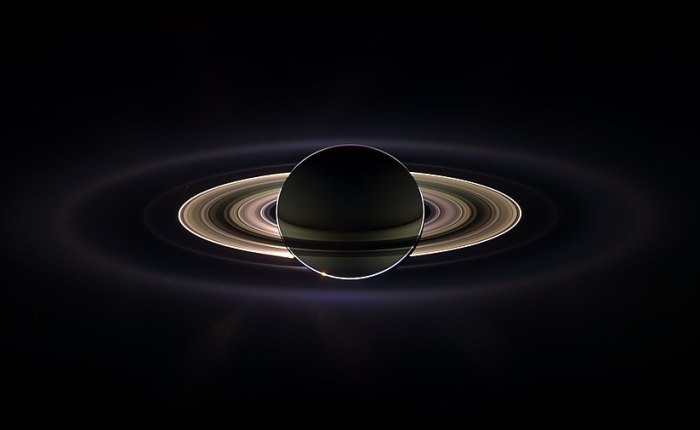
Considering the mass of the sun in comparison with the planets, Newton could have left his system as a series of two-body problems, with the sun determining the orbital motions of all the planets, and the planets determining the motions of their moons. This would have been reasonably accurate. But Newton realized that, if gravity is truly universal, all the planets must exert a force on one another; and this leads him to the invention of perturbation theory, which allows him, for example, to calculate the disturbance in Saturn’s orbit caused by proximity to Jupiter. While he is at it, Newton calculates the relative sizes and densities of the planets, as well as calculates where the center of gravity between the gas giants and the sun must lie. Newton also realized that gravitational effects of the sun and moon are what cause terrestrial tides, and calculated their relative effects (though, as Pask notes, Newton fudges some numbers).

Leaving little to posterity, Newton realized that the spinning of a planet would cause a distortion in its sphericity, making it marginally wider than it is tall. Newton then realized that this slight distortion would cause tidal locking in the case of the moon, which is why the same side of the moon always faces the earth. The slight deformity of the earth is also what causes the procession of the equinoxes (the very slow shift in the location of the equinoctial sunrises in relation to the zodiac). This shift was known at least since Ptolemy, who gave an estimate (too slow) of the rate of change, but was unable to provide any explanation for this phenomenon.

The evidence mustered against Descartes’s theory is formidable. Newton describes experiments in which he dropped pendulums in troughs of water, to test the effects of drag. He also performed experiments by dropping objects from the top of St. Paul’s Cathedral. What is more, Newton used mathematical arguments to show that objects rotating in a vortex obey a periodicity law that is proportional to the square of the distance, and not, as in Kepler’s Third Law, to the 3/2 power. Most convincing of all, Newton analyzes the motion of comets, showing that they would have to travel straight through several different vortices, in the direction contrary to the spinning fluid, in order to describe the orbits that we observe—a manifest absurdity. While he is on the subject of comets, Newton hypothesizes (correctly) that the tail of comets is caused by gas released in proximity to the sun; and he also hypothesizes (intriguingly) that this gas is what brings water to earth.

This is only the roughest of lists. Omitted, for example, are some of the mathematical advances Newton makes in the course of his argument. Even so, I think that the reader can appreciate the scope and depth of Newton’s accomplishment. As Pask notes, between the covers of a single book Newton presents work that, nowadays, would be spread out over hundreds of papers by thousands of authors. The result is a triumph of science. Newton not only solves the longstanding puzzle of the orbits of the planets, but shows how his theory unexpectedly accounts for a range of hitherto separate and inexplicable phenomena: the tides, the procession of the equinoxes, the orbit of the moon, the behavior of pendulums, the appearance of comets. In this Newton demonstrated what was to become the hallmark of modern science: to unify as many different phenomena as possible under a single explanatory scheme.

Besides setting the groundwork for dynamics, which would be developed and refined by Euler, d’Alembert, Lagrange, Laplace, and Hamilton in the coming generations, Newton also provides a model of science that remains inspiring to practitioners in any field. Newton himself attempts to enunciate his principles, in his famous Rules of Reasoning. Yet his emphasis on inductivism—generalizing from the data—does not do justice to the extraordinary amount of imagination required to frame suitable hypotheses. In any case, it is clear that Newton’s success was owed to the application of sophisticated mathematical models, carefully tested against collections of physical measurements, in order to unify the greatest possible number of phenomena. And this was to become a model for other intellectual disciples to aspire to, for good and for ill.

A striking consequence of this model is that its ultimate causal mechanism is a mathematical rule rather than a philosophical principle. The planets orbit the sun because of gravity, whose equations accurately predict their motions; but what gravity is, why it exists, and how it can affect distant objects, is left completely mysterious. This is the origin of Newton’s famous “I frame no hypothesis” comment, in which he explicitly restricts himself to the prediction of observable events rather than speculation on hidden causes (though he was not averse to speculation when the mood struck him). Depending on your point of view, this shift in emphasis either made science more rational or more superficial; but there is little doubt that it made science more effective.

Though this book is too often impenetrable, I still recommend that you give it a try. Few books are so exalting and so humbling. Here is on display the furthest reaches of the power of the human intellect to probe the universe we live in, and to find hidden regularities in the apparent chaos of experience.


View all my reviews

Review: Howards End

Review: Howards End
Howards End

Howards End by E.M. Forster

My rating: 5 of 5 stars

It is the little things one bungles at. The big, real ones are nothing when they come.


The last time I reviewed a novel by E.M. Forster, I wound up blubbering with praise; and now I find myself in similar circumstances. As with A Passage to India, I find Howards End exemplary in every respect: the themes, characterization, the prose, the pacing, the plot. I ought also to mention Forster’s versatility. Though rarely funny, Forster is capable of romantic lyricism, gritty realism, and flighty philosophy. Most convincing of all is his control. Nothing is overdone or heavy-handed—which requires a mixture of technique and taste. While exploring social problems, one never feels that the novel is being unduly interrupted; while constructing a character into an archetype, one never feels that the individual is lost; and the story, though carefully plotted, rarely feels predictable or contrived.

Yet Forster is not a great novelist for his skill alone. He is great because of his insight. More than any novelist I know, Forster is able to connect the inner with the outer life (which is the theme of this novel, and the source of its most famous quote: “Only connect”). Forster is able to show, in other words, how social and economic circumstances breed characters; and how even intelligent and well-meaning characters fail to escape the bounds of their class and nation. He shows, for example, how the money inherited by Margaret and Helen allows for their mental freedom; how Mr. Wilcox’s life of business molds him into a well-meaning shell; and how, despite his best efforts, Leonard Bast cannot help but be shaped by his poverty.

However, if the novel has a message, it is this: even if the inner life is powerless to change material circumstances, it is ultimately the more important aspect of life. This is because, when a tragedy strikes, and mere business acumen or worldly knowledge will not suffice, it is emotional fortitude that is required. Mr. Wilcox has a sort of false strength—a fragile ego he hides behind, a sort of masculine bluff which is easily shattered. Margaret, by contrast, is able to endure tragedies because of her self-knowledge. She is not afraid of the darker aspects of her mind; thus she can look with equanimity upon herself and others, accepting their flaws while seeing their potential. This is what Forster means by “connect”: connecting “the beast” with “the monk”—that is, admitting one’s desires instead of hiding behind a false screen of decency. Only so can we achieve self-knowledge.


View all my reviews

Review: 1491

Review: 1491

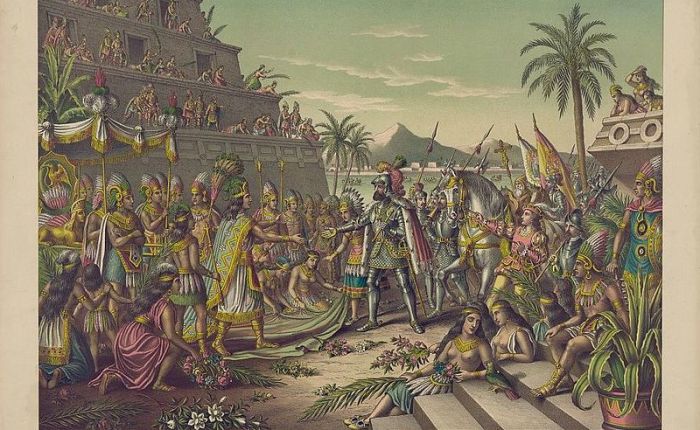
1491: New Revelations of the Americas Before Columbus1491: New Revelations of the Americas Before Columbus by Charles C. Mann

My rating: 3 of 5 stars

I should begin by saying that this book is not what I expected, which necessarily entails some disappointment. I was hoping for a more in-depth look at the major pre-Columbian societies and cultures. What this book instead offers is a sort of overview of trends in research in this area, highlighting how these trends contradict the popular image of the Americas before European colonization. This is, of course, also a valuable and worthwhile topic—and, considering the book’s popularity, many have found it to be so—but I nevertheless must admit that, after putting down the book, I still have only a hazy notion of the actual cultures in question.

Mann sets himself to undermine the popular notion of scattered groups of savages in a pristine, ahistorical paradise, living lightly off the land in a perfect harmony with nature. He sets out to show that, first, there were orders of magnitude more people in the Americas than was originally suspected; second, that humans arrived in the Americas far earlier than previously thought; and third, that pre-Colombian societies radically altered their environment. The picture that emerges is of a continent teeming with complex civilizations, each one manipulating the world around them in unique ways.

Due to the limited and often indirect evidence available to researchers, and the comparatively nascent state of the field, Mann is unable to give a textbook-like overview of pre-Colombian societies. Our knowledge is simply too fragmentary; there are too many scholarly disagreements. He instead chooses to focus on individual scholars and their lines of research, showing how these converge to suggest the aforementioned new conclusions. The advantage to this method is that his narrative is enlivened with the stories of real research; and it also allows Mann to give a more realistic impression of the state of our knowledge. But the disadvantage is that this book often reads like an extended Nat Geo article—the report of a journalist tagging along on research expeditions—rather than the bird’s-eye view I was hoping for.

Another major drawback is that, by focusing on pioneering research, Mann is unable to give answers that are wholly satisfying, since the field itself has not yet reached a stable consensus. The research he relies on for his section on pre-Colombian population, for example, uses a combination of indirect evidence and simple speculation. Granted, I was convinced even before opening this book that European diseases caused significant depopulation after first contact. But whether the fatality rate was as high as 90%, as he suggests, is difficult to accept without more decisive evidence. Personally I find it hard to believe that one-fifth of the global population (to use his figure) could die off without leaving a far less ambiguous archeological trace.

That the research is in this state is not, of course, Mann’s fault; yet he is not merely reporting the results of different experts in the field, but choosing those whose research most strongly supports this book’s thesis. This put me naturally on guard, since I know from my brief time studying archaeology how varied scholarly opinion can be in a field where evidence is necessarily scanty, incomplete, and suggestive. This being said, I do want to emphasize that I was convinced of Mann’s major points; it was only the details that put me in a dubious state of mind.

Mann’s habit of focusing on the research that most forcefully bolsters his conclusions is part of a more general tendency to overstate his case. For example, I find it difficult to accept Mann’s assertion that the first generation of European colonists did not have a decisive military advantage over their American counterparts (which supports the thesis that disease was the decisive factor in the conquest). Steel blades, guns, and mounted cavalry were all landmarks in military technology in Eurasia, so I do not see why they would not lend an advantage in this context. I also could not swallow Mann’s argument that American Indian cultures played such a decisive role in the emergence of Western liberalism and individualism. Now, I have little doubt that the example of egalitarian, non-coercive societies did play a role in this development; but Mann makes it seem as if Locke, Montesquieu, and Voltaire were reliant on this example.

But I should stop nitpicking a book which is thoughtful, well-written, well-researched, and which dispels many obsolete myths. And, really, it is my fault for choosing a book on new revelations, when I really wanted to learn more about the religion, art, architecture, and science of these vanished civilizations.

(I should note one error I caught. Mann says that the Spanish missionary Gaspar de Carvajal was born “in the Spanish town of Extremadura.” But Extremadura is region, or an autonomous community, not a town; Carvajal was born in Trujillo, which is indeed in Extremadura.)

View all my reviews

Review: A Midsummer Night’s Dream

Review: A Midsummer Night’s Dream

A Midsummer Night's DreamA Midsummer Night’s Dream by William Shakespeare

My rating: 3 of 5 stars

The forms of things unknown, the poet’s pen,
Turns them to shapes and gives to airy nothing
A local habitation and a name.

Both times that I have encountered this play, it has failed to make much of an impression on me. I fear that I am insensitive to the atmosphere of enamorment and enchantment that so pervades this work. A Midsummer Night’s Dream is one of the few of the bard’s plays whose plot he himself wrote. The result shows that, while brilliant in nearly every other dramatical ability, plot was not one of Shakespeare’s gifts. The play is a whimsical tapestry, a historically absurd mélange, a jury-rigged skeleton on which to hang his romantic poetry.

As is typical of Shakespeare, his lovers are mostly devoid of intrinsic interest. There is not much that allows the reader to distinguish Helena from Hermia, Lysander from Demetrius; their love-sick pinning all blends together into an impassioned monotony. This, of course, is wholly intentional; the farcical scheme of the love potion reveals that the lovers’ choice is wholly arbitrary—even random—and that the passions are due entirely to the lover and not the beloved. This is standard Shakespeare fare, even if it is spiced up with the device of the fairies.

The standout character is, as so often happens, not a lover at all, but a jester: Bottom. He is the liveliest and most loveable character in the play, a thoroughly upright and decent man. His most striking feature is his imperturbability. Being transformed into a monster hardly phases him; and meeting the fairies of the enchanted world strikes him as no special cause for alarm. Also notable is his apparent indifference to the amorous advances of the fairy queen. Being so lauded and desired does not augment his ego one bit, nor does it prompt him to

View all my reviews

Review: Two New Sciences

Review: Two New Sciences

Two New Sciences/A History of Free FallTwo New Sciences/A History of Free Fall by Galileo Galilei

My rating: 4 of 5 stars

But in what seas are we inadvertently engulfing ourselves, bit by bit? Among voids, infinities, indivisibles, and instantaneous movements, shall we ever be able to reach harbor even after a thousand discussions?

When most people think about the Copernican revolution, the name that comes most readily to mind—more even than that of Copernicus himself—is that of Galileo Galilei. It was he, after all, who fought most valiantly for the acceptance of the theory, and it was he who suffered the most for it—narrowly escaping the tortures of the Inquisition. It was also Galileo who wrote the most famous book to come out of the revolution: Dialogue Concerning the Two Chief World Systems, whose publication most directly resulted in Galileo’s punishment.

Some years ago I read and admired that eloquent work. But lately, after slogging my way through Ptolemy, Copernicus, and Kepler, I have come to look upon Galileo’s famous dialogue with more suspicion. For it was only through the work of Kepler that the Copernican system became unquestionably more efficient than the Ptolemaic as a method of calculating celestial movements; and though Kepler was a contemporary and a correspondent of Galileo, the Italian scientist was not aware of the German’s groundbreaking innovations. Thus the version of heliocentrism that Galileo defends is Copernicus’s original system, preserving much of the cumbrous aspects of Ptolemy—epicycles, perfect circles, and separate tables for longitude and latitude, etc.

Added to this, the most decisive advantages in favor of Copernicus’s system over Ptolemy’s—explaining why the planets’ orbits seem related to the sun’s—are given little prominence, if they are even mentioned. Clearly, a rigorous defense of Copernicanism would require a demonstration that it made calculating heavenly positions easier and more accurate; but there is nothing of the kind in Galileo’s dialogue. As a result, Galileo comes across as a propagandist rather than a scientist. But of course, even if his famous dialogue was pure publicity, Galileo would have a secure place in the annals of astronomy from his observations through his improved telescope: of the lunar surface, of the moons of Jupiter, of the rings of Saturn, of sunspots, and of the phases of Venus. But I doubt this would be enough to earn him his reputation as a cornerstone of the scientific revolution.

This book provides the answer. Here is Galileo’s real scientific masterpiece—one of the most important treatises on mechanics in history. Rather inconveniently, its title is easy to confuse with Galileo’s more famous dialogue; but in content Two New Sciences is an infinitely more serious work than Two Chief World Systems. It is also a far less impassioned work, since Galileo wrote it when he was an old man under house arrest, not a younger man in battle with the Catholic authorities. This inevitably makes the book rather more boring to read; yet even here, Galileo’s lucid style is orders of magnitude more pleasant than, say, Kepler’s or Ptolemy’s.

As in Two Chief World Systems, the format is a dialogue between Simplicio, Sagredo, and Salviati (though Galileo cheats by having Salviati read from his manuscript). Unlike the earlier dialogue, however, Simplicio is not engaged in providing counter-arguments or in defending Aristotle; he mostly just asks clarifying questions. Thus the dialogue format only serves to enliven a straightforward exposition of Galileo’s views, not to simulate a debate.

The book begins by asking why structures cannot be scaled up or down without changing their properties. Why, for example, will a small boat hold together if slid down a ramp, but a larger boat fall to pieces? Why does a horse break its leg it falls down, but a cat can fall from the same distance entirely uninjured? Why are the bones of an elephant proportionately so much squatter and fatter than the bones of a mouse? In biology this is known as the science of allometry, and personally I find it fascinating. The key is that, when increasing size, the ratio of volume to area also increases; thus an elephant’s bones must support far more weight, proportionally, than a mouse’s. As a result, inventors and engineers cannot just scale up contraptions without providing additional support—quite a counter-intuitive idea at the time.

Galileo next delves into infinities. This leads him into what is called “Galileo’s paradox,” but is actually one of the defining properties of infinite sets. This states that the parts of an infinite set can be equal to the whole set; or in other words, they can both be infinite. For example, though the number of integers with a perfect square root (4, 9, 16…) will be fewer than the total number of integers in any finite set (say, from 1-100), in the set of all integers there is an infinite number of integers with a perfect square roots; thus the part is equal to the whole. Galileo also takes a crack at Aristotle’s wheel paradox. This is rather dull to explain; but suffice to say it involves the simultaneous rotation of rigid, concentric circles. Galileo attempts to solve it by postulating an infinite number if infinitesimal voids in the smaller circle, and in fact uses this as evidence for his theory of infinitesimals.

As a solution to the paradox, this metaphysical assertion fails to do justice to its mathematical nature. However, the concept of infinitely small instants does help to escape from of the Zeno-like paradoxes of motion, to which Greek mathematics was prone. For example, if you imagine an decelerating object spending any finite amount of time at any definite speed, you will see that it never comes to a full stop: the first second it will travel one meter, the next second only half a meter, the next second a quarter of a meter, and so on ad infinitum. The notion of deceleration taking places continuously over an infinite number of infinitely small instants helped to escape this dilemma (though it is still unexplained how a thing can be said to “move” during an instant).

Galileo had need of such concepts, since he was writing long before Newton’s calculus and too early to be influenced by Descartes’s analytical geometry. Thus the mathematical apparatus of this book is Greek in form. Galileo’s calculations consist exclusively of ratios between lines rather than equations; and he establishes these ratios using Euclid’s familiar proofs. Consequently, his mechanics is relational or relativistic—able to give proportions but not exact quantities.

This did not stop Galileo from anticipating much of Newton’s system. He establishes the pendulum as an exemplar of continually accelerated motion, and shows that pendulums of the same length of rope swing at the same rate, regardless of the height from which they fall. He asserts that an object, once started in motion, would continue in motion indefinitely were it not for friction and air resistance. He recounts experiments of dropping objects of different masses from the same distance, and seeing them land at the same moment, thus disproving the Aristotelian assertion that objects fall with a speed proportional to their mass. (Unfortunately, there is scant evidence for the story that Galileo performed this experiment from the Leaning Tower of Pisa.) Galileo also makes the daring asserting that, in a vacuum, all objects would fall at the same rate.

There are still more riches to be excavated. Galileo asserts that pitches are caused by vibrating air, that faster vibrations causes higher pitch, and that consonant harmonies are caused by vibrations in regular ratios. He exhaustively calculates how the time and speed of a descending object would differ based on its angle of descent—straight down or on an inclined plane. He also shows that objects shot into the air, as in a catapult, descend back to earth in a parabolic arc; and he shows that objects travel the furthest when shot at 45 degrees. In an appendix, Galileo uses an iterative approach to find the center of gravity of curved solids; and in an added dialogue he discusses the force of percussion.

As you can see, this book is too rich and, in parts, too technical for me to appraise it in detail. I will say, however, that of all the scientific classics I have read this year, the modern spirit of science shines through most clearly in these pages. For like any contemporary scientist, Galileo assumes that the behavior of nature is law-like, and is fundamentally mathematical; and with Galileo we also see a thinker completely willing to submit his speculations to experiment, but completely unwilling to submit them to authority. Far more than in the metaphysical Kepler—who speculated with wild abandon, though he was a scientist of comparable importance—in Galileo we find a true skeptic: who believed only what he could observe, calculate, and prove. The reader instantly feels, in Galileo, the force of an exceptionally clear mind and of an uncompromising dedication to the search for truth.

View all my reviews

Review: ¿Qué es filosofía?

Review: ¿Qué es filosofía?

¿Qué es filosofía?¿Qué es filosofía? by José Ortega y Gasset

My rating: 3 of 5 stars

I have always believed that clarity is the courtesy of philosophy…

When I picture Ortega to myself, I imagine a man seated in the middle of a room full of books—the atmosphere smoky from frequent cigarettes—banging furiously away at a typewriter, going at it from morning till evening, rapidly accumulating piles of written pages by his side. Ortega was so prolific, and wrote about so many different things, that he could have filled an entire journal by himself—and nearly did. I have read only a fraction of his collected works, but this has included: an analysis of love, a political reckoning of Spain, a diagnosis of the social ills of Europe, and essays on literature and modern art. Now added to this list is an introduction to philosophy.

What I most admire in Ortega is this flexibility and his fluency: his omnivorous interest in the world and his ability to write smooth prose about complex issues. What I most deprecate is his tendency to rush headlong into a problem, sweep away controversy with grand gestures, and then to drop it at once. In other words, he is profligate with ideas but stingy with systems. His theories are always germinal; he leaves to others the difficult work of rigorous arguments and concrete applications. This is not damaging in cases such as aesthetic criticism, where rigor is hardly possible anyway; but it is ruinous in the case of philosophy, where logical consistency is so crucial.

The result of his approach is this series of lectures, which does not give a coherent view of philosophy’s history or its method. Instead, Ortega offers an essayistic series of opinions about the shortcomings of previous incarnations of philosophy and where he thinks philosophy should go next. I say “opinions” because, crucially, Ortega does not offer anything resembling a formal argument. This makes it difficult to accept his conclusions and, worse, makes it difficult to understand his opinions in the first place, since without the supporting skeleton of an argument his views remain formless.

Nevertheless, a short summary is still possible. Ortega derides science for being concerned with merely “secondary” problems, and mysticism for being irrational. Materialists metastasize existence into something inhuman and discrete, while idealists (such as Descartes) divorce the subject from his surroundings. Ortega’s solution is his phrase, “I am myself and my surroundings,” considering human experience—composed of the interpenetration of subject and surrounding circumstances—the basic fact of philosophy. In this, as in his emphasize on human freedom, he fits in well with existentialists like Heidegger and Sartre. But he differs from then, first, in writing legibly; and second in his strong emphasis on reason.

I think there are the germs of some worthy ideas contained here; but in order to really understand the ontological and epistemological ramifications of his positions, he would have to argue for them in a way entirely absent from this book.

View all my reviews

Review: Kenneth Clarke’s Civilisation

Review: Kenneth Clarke’s Civilisation

Civilisation:  A Personal ViewCivilisation: A Personal View by Kenneth Clark

My rating: 5 of 5 stars

I wonder if a single thought that has helped forward the human spirit has ever been conceived or written down in an enormous room

I must admit immediately that I have never read nor even laid eyes on this book. I’m sure it’s lovely. This review is, rather, about the television series, which I’d wager is twice as lovely.

Civilisation is the best documentary I’ve ever seen. Kenneth Clark takes his viewer from the Dark Ages, through romanesque, gothic, the Renaissance, the Reformation, baroque, rococo, neoclassicism, impressionism, through the industrial revolution and the two World Wars, all the way up to when the program was made in the late 1960s. This is a remarkable amount of ground to cover for a show with 13 episodes, each 50 minutes long.

Not only chronologically, but in subject matter, this documentary casts a wide net. Although the show’s primary emphasis is on architecture and art, Clark also dips into literature, poetry, music, engineering, politics, and wider social problems like inequality, poverty, oppression, and war. Of course, for lack of time Clark cannot delve too deeply into any one of these subjects; but because the presentation is so skillful and economical, and the selection of material so tasteful, the viewer is nevertheless satisfied at the end of every episode.

The documentary generally shifts between shots of Clark facing the camera, talking to the viewer, and extended, panoramic shots of churches, monuments, paintings, drawings, sculptures, and mountains, while beautiful music plays in the background. Clark himself chose the musical accompaniments to these visuals, and they are uniformly splendid (and this is one reason why I recommend the documentary over the book). More than perhaps anything I’ve seen on a screen, this series is rich, lavish, sumptuous. As the camera pans over the altarpiece of a church, while Bach’s St. Matthew’s Passion plays in the background, it’s so lush and gorgeous that it almost gives you a stomach ache.

Aside from these visuals and music, the main attraction of the series is Clark himself. He comes across as refined, cosmopolitan—almost a freak of erudition. But for all that, he is charming and witty, if ultimately a bit cold. One of the strongest impressions I got was that Clark was a man from another time. He looks out of place as he walks through the modern streets, crowded with cars and buzzing with urban life. He has many misgivings about the modern world: he is anti-Marxist, anti-modern art, and certainly didn’t understand the student protests and hippie culture flourishing at the time. In his own words, he was a “stick in the mud,” and I think felt alienated from his time because of his intense appreciation, even worship, of Western art.

This brings me to some of this program’s shortcomings. Most of these are due to the time in which it was made. This is most apparent in the first episode, “The Skin of Our Teeth,” wherein he argues that civilization almost disappeared during the Dark Ages, and comes close to crediting Charlemagne as the savior of all subsequent culture. This requires that he completely discredit both Byzantine and Muslim culture (not to mention Chinese), both of which were doing just fine. He repeats the tired stereotype about Byzantium being a fossilized culture and treats the Muslims as simple destroyers. Later on in the series, he has some uncharitable things to say about the Germans, which I think was a product of growing up during the World War.

A more serious flaw might be that the series bites off more than it can chew. The questions Clark poses to answer are vast. What is civilization? What makes it thrive? What makes it fall apart? Deep questions, but his answers are by comparison shallow. Civilization requires confidence in the future; they cannot be built on fear. Civilization requires rebirth, the constant search for new styles and ideas; but it also requires continuity and tradition, a respect for the past. Civilization is pushed forward by men of genius (and in this series, they’re all men), who enlarge our faculties with their godlike creative powers; men like Michelangelo, Dante, Beethoven, men who are timeless and yet who forever alter the face of culture.

These are interesting answers, but they seem rather superficial to me. They describe, rather than explain, civilization. But of course, this is a documentary, not a monograph. And although Clark asks and tries to answer many questions, I think his primary goal was simply to inspire a sense of the worth, the preciousness, the grandeur of the accomplishments of European civilization. He wants to remind his viewers that our culture is fragile, and that we owe to it not only beautiful paintings and poetry, but also our very ability to see and appreciate the beauty in certain ways, to think about ideas in a certain light, to live not only a happy but a full and rich life.

Maybe this seems pinched and old-fashioned nowadays. Still, I can’t help thinking of all the times that a friend, a fellow student, or even a teacher has made a blanket statement about “Western culture,” “Enlightenment ideas,” “scientific materialism,” or some such thing, while seeming to understand none of it. (I’ve probably done this myself, too.) I’ve been in classes—serious, graduate-level classes—where, amid condemnations of “Western” ideas and gratuitous namedropping of Western philosophers, I realized that I was the only person there, professor included, who actually read some of these authors. I’m not making this up.

I suppose this is just a callow intellectual fashion, and it will eventually pass away. And I also suppose that this might be slightly preferable to the idiotic self-glorification of “European man” that prevailed in earlier times. At present, however, this program is a wonderful corrective to our bad habits of thought. It’s an education, a social critique, and a joy. I hope you get a chance to watch it.

View all my reviews

Review: Alistair Cooke’s America

Review: Alistair Cooke’s America

Alistair Cooke's AmericaAlistair Cooke’s America by Alistair Cooke

My rating: 4 of 5 stars

… a sign proclaiming in three words that a Roman emperor’s orgy is now a democratic institution. It says: ‘Topless Pizza Lunch.’

(As in my reviews of Kenneth Clarke’s Civilisation and Jacob Bronowski’s The Ascent of Man, this review focuses on the documentary, not the tie-in book.)

This documentary is a window into another time, when the public intellectual was a far more respected institution. Nowadays it is hard to imagine a popular program that contained long stretches of a man simply talking into a camera; nor it is easy to think of a contemporary program so fully dominated by the personality of one person. As the subtitle of this program indicates, this is “A Personal View,” not an attempt at impartiality or objectivity. Cooke is giving us America as he sees it, through the eyes of a highly-educated, well-traveled English immigrant.

The 13 episodes of the series follow a chronological scheme, beginning with the French and Spanish colonists and ending with the (then) present day. The exception to this is the first episode, the best in the series, in which Cooke tells his own story—coming to America as a young man during the Great Depression, and taking a road trip out west. As for the other episodes, there are few surprises in Cooke’s choice of subject: the English dissenters, the Revolutionary War, the drafting of the Constitution, the Louisiana Purchase, and so on, all the way up to the Cold War. We see Ellis Island and the Oregon Trail, New England foliage and the Hoover Dam, Hippie communes and Black Baptist churches—a panorama of American scenes.

In many ways this series falls short of the other two major BBC documentaries of the time, Clarke’s Civilisation and Bronowski’s The Ascent of Man. Cooke’s America has none of the gorgeous cinematography of the former nor the innovative editing of the latter. Indeed, the shooting style of the documentary is remarkably basic—which is not necessarily a bad thing, of course, but in this case it imbued sections of the documentary with a soporific effect. Another difference in quality was due to the level of insight that the programs offer. Cooke, though no chump when it comes to American history, seems an amateur when his expertise is compared to Clarke’s grasp of art and Bronowski’s understanding of science. I was consistently interested, but I cannot say I came away from the program with any deep sense of insight into my vast homeland.

All this being said, there are some delightful sections in the program. Cooke has a great knack for finding fascinating props. He holds up a vial containing tea preserved from the Boston Tea Party, or he holds the manuscript of Dickens’s A Christmas Carol in the Morgan Library, or he itemizes the typical equipment and supplies taken by families on the Oregon Trail. And if the information he presents is not exactly striking, his easy eloquence and gentle wit give his facts a pleasing ring. Cooke’s voice—with his faultless Transatlantic accent—was made for broadcasting, and transmits a sense of confident sophistication that is entirely rare today. Most valuable for us is Cooke’s convincing sense of being above partisan politics—an intelligent observer unbound by any tribe. Again, could any similar program exist today?

View all my reviews

Review: Marianela

Review: Marianela

Marianela (Los mejores clásicos)Marianela by Benito Pérez Galdós

My rating: 5 of 5 stars

Benito Peréz Galdós is yet another of those Spanish authors whose wide fame in their own language is equalled by their wide obscurity elsewhere. In Spain his reputation as a novelist is second only to Cervantes; and yet the English translation of this book, one of his most famous, is out of print. This is a shame, since Galdós was a writer of rare gifts, a fountain of stories written in beautiful prose. In many ways he is reminiscent of Lope de Vega: both a critical and popular success, whose celebrity did not get in the way of his output. For like the golden age playwright, Galdós was extremely prolific. Apart from his few dozen—and often lengthy—social-realist novels, he wrote five series of historical novels, forty-six novels in all, covering the 19th century in Spain. Dickens was a slug by comparison.

This book is about Marianela, called La Nela, an orphaned, “deformed” adolescent who lives in the mining country in Cantabria. She is described as having spotty skin, thin hair, a malproportioned face, and most notably an underdeveloped body for her age. She is the “lazarillo,” or guide, to Pablo, a blind young man from a rich family. The two fall in love, and share many passionate sentiments on their walks together. But then the brilliant doctor, Teodoro Celepín, comes to visit Pablo, examines him, cures his blindness, and, well, Marianela’s life gets considerably worse. It is a simple story with a tragic arc.

For me the outstanding quality of Galdós’s writing is his prose. It is elegant but readable, balanced but energetic. Though there were many words scattered about that I did not understand, I never felt lost; to the contrary, I read quickly, avidly, completely sucked into the story in a way that is rare for me with Spanish books. As with many novelists, there are two main registers of Galdós’s writing on display: scene-setting description and dialogue. Galdós excels at both. The conversations between La Nela and Pablo, though sentimental in a way that only enamored teenagers can be, was totally convincing. And his description of the desolate, charred, and barren landscape of the mines is an excellent example of how a scene can contribute to the narrative of a book:

El vapor principió a zumbar en las calderas del gran automóvil, que hacía funcionar a un tiempo los aparatos de los talleres y el aparato de lavado. El agua, que tan principal papel desempeñaba en esta operación, comenzó a correr por las altas cañerías, de donde debía saltar sobre los cilindros. Risotadas de mujeres y ladridos de hombres que venían de tomar la mañana [beber aguardiente] precedieron a la faena; y al fin empezaron a girar las cribas cilíndricas con infernal chillido; el agua corría de una en otra, pulverizándose, y la tierra sucia se atormentaba con vertiginoso voltear, todando y cayendo de rueda en rueda hasta convertirse en fino polvo achocolatado.

And in English:

The steam began to hiss in the boilers of the big car, which operated the workshop equipment and the cleaning machines at the same time. The water, which played such a principal role in this operation, began to run through the high pipes, where it had to jump over the cylinders. The guffaws of women and the barks of men who came to take the morning [drink aguardiente] preceded the task; and at last they begun to turn the cylindrical sieves with a hellish shriek; the water ran from one to the other, spraying and splashing, and the dirty earth was tormented with dizzy turning, rolling and falling from wheel to wheel until it became a fine chocolate powder.

Few authors could provide such a gripping description of an industrial process and also present us with a character as memorable as La Nela. She is self-contained but selfless, self-willed but self-abnegating, intelligent but ignorant, a person who was given nothing and so expects nothing, but whose isolation caused her to form a novel perspective. Her notion of the world is pagan; she sees things in mythical, poetic categories that lead everyone around her to chastise her for being unchristian. Her tragedy, like so many, is the plight of undeveloped potential; in other circumstances, she may have done remarkable things; but being born poor, orphaned, and “ugly” has confined her to being a guide.

I have said all this in praise of Galdós prose, his scene-setting, his characterization, but of course there is more to this story. Thematically, this book is also quite rich—the relation between inner and outer sense, between inner and outer worth, the relation between knowledge and love—but I will not get into that. This book was too enjoyable to belabor it with heady analysis. To conclude, this novel has convinced me that Galdós is a master of the craft. I am eager to devour more of his books.

View all my reviews

Review: Bury My Heart at Wounded Knee

Review: Bury My Heart at Wounded Knee

Bury My Heart at Wounded Knee: An Indian History of the American WestBury My Heart at Wounded Knee: An Indian History of the American West by Dee Brown

My rating: 3 of 5 stars

This is one of those books whose great merit was in undermining itself. When it was first published, in 1970, it must have been a shock to the Americans who grew up reading and watching movies about the heroic coy boys, settlers, and soldiers who settled the West. It was—and to an extent, remains—a key part of our national myth. But like so many national myths, it left unnoticed the people who were repressed, marginalized, or exterminated on the road to the country’s greatness. Books like this one, a people’s history, told from the perspective of the vanquished, are a necessary corrective to this, and perform an important moral function in our society: shining a light on the misdeed perpetrated by our national heroes.

The greatest testament to the success of a book of this type is to render itself obsolete, and I think this is what has happened in this case—at least, to an extent. For by the time I went to school it was the Dee Brown version of the West, not the Buffalo Bill version, that was taught to us. (Admittedly this must vary a lot depending on where you go to school; I come from quite a liberal area.) Thus the story told in these pages was, however depressing, entirely familiar: broken promises, cultural misunderstandings, blatant dishonesty, and wholesale slaughter. As a result I admit I did not enjoy this book as much as I expected, for everything that Brown narrated was fully expected. Of course, there were moments that pierced through even my dullness, such as the description of the Sand Creek Massacre, which was as horrible as anything I have read about the Holocaust.

Brown is a strong writer, and evokes people and scenes with the power of a good novelist. But I was disappointed at how much of this book is given over to descriptions of battles and skirmishes. The pattern was always the same: the Indians are promised land, the whites decide they want the land after all, tension escalates, and then conflict ensues—with the American military usually coming out the victor. I think it was important that Brown narrate this fighting from the other perspective, since it formed such a cherished part of our myth, but apart from sheer drama I did get much out of it. I would much have preferred that Brown dedicate space to the customs of the groups he is describing—the Navajo, the Sioux, the Cheyenne, the Arapaho, and many more. Without this, we get a sense of brave cultures being swept away, but not a sense of what was actually lost.

A few more criticisms come to mind. Though this book is well-researched and well-sourced, it is clear even at a superficial reading that Brown has imaginatively embellished quite a bit in order to get the novelistic style he was after. More importantly, now that we are (hopefully) moving past this Spaghetti-Western version of American history, I believe a different kind of book is needed. Any book that tells the story exclusively from one side, either victor or vanquished, will leave important parts of the story out. Apart from more ethnographic description of the American Indians in question, I would also have liked a much deeper analysis of the government and settlers. This would have given more insight into why these interactions played out the way they did.

But these criticisms are somewhat unfair, since they are predicated on the book’s success. Without a doubt this was a necessary book, and Brown did us a service in writing it—and in writing it so well.

View all my reviews