
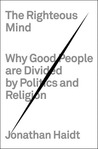
Review: The Righteous Mind

Review: The Righteous Mind

The Righteous Mind: Why Good People are Divided by Politics and ReligionThe Righteous Mind: Why Good People are Divided by Politics and Religion by Jonathan Haidt

My rating: 4 of 5 stars

I expected this book to be good, but I did not expect it to be so rich in ideas and dense with information. Haidt covers far more territory than the subtitle of the book implies. Not only is he attempting to explain why people are morally tribal, but also the way morality works in the human brain, the evolutionary origins of moral feelings, the role of moral psychology in the history of civilization, the origin and function of religion, and how we can apply all this information to the modern political situation—among much else along the way.

Haidt begins with the roles of intuition and reasoning in making moral judgments. He contends that our moral reasoning—the reasons we aver for our moral judgments—consists of mere post hoc rationalizations for our moral intuitions. We intuitively condemn or praise an action, and then search for reasons to justify our intuitive reaction.

He bases his argument on the results of experiments in which the subjects were told a story—usually involving a taboo violation of some kind, such as incest—and then asked whether the story involved any moral breach or not. These stories were carefully crafted so as not to involve harm to anyone (such as a brother and sister having sex in a lonely cabin and never telling anyone, and using contraception to prevent the risk of pregnancy).

Almost inevitably he found the same result: people would condemn the action, but then struggle to find coherent reasons to do so. To use Haidt’s metaphor, our intuition is like a client in a court case, and our reasoning is the lawyer: its job is to win the case for intuition, not to find the truth.

This is hardly a new idea. Haidt’s position was summed up several hundred years before he was born, by Benjamin Franklin: “So convenient a thing it is to be a reasonable creature, since it enables one to find or make a reason for everything one has a mind to do.” An intuitionist view of morality was also put forward by David Hume and Adam Smith. But Haidt’s account is novel for the evolutionary logic behind his argument and the empirical research used to back his claims. This is exemplified in his work on moral axes.

Our moral intuition is not one unified axis from right to wrong. There are, rather, six independent axes: harm, proportionality, equality, loyalty, authority, and purity. In other words, actions can be condemned for a variety of reasons: for harming others, for cheating others, for oppressing others, for betraying one’s group, for disrespecting authority, and for desecrating sacred objects, beings, or places.

These axes of morality arose because of evolutionary pressure. Humans who cared for their offspring and their families survived better, as did humans who had a greater sensitivity to being cheated by freeloaders (proportionality) and who resisted abusive alpha males trying to exploit them (equality). Similarly, humans who were loyal to their group and who respected a power hierarchy outperformed less loyal and less compliant humans, because they created more coherent groups (this explanation relies on group selection theory; see below). And lastly, our sense of purity and desecration—usually linked to religious and superstitious notions—arose out of our drive to avoid physical contamination (for example, pork was morally prohibited because it was unsafe to eat).

Most people in the world use all six of these axes in their moral systems. It is only in the West—particularly in the leftist West—where we focus mainly on the first three: harm, proportionality, and equality. Indeed, one of Haidt’s most interesting points is that the right tends to be more successful in elections because it appeals to a broader moral palate: it appeals to more “moral receptors” in the brain than left-wing morality (which primarily appeals to the axis of help and harm), and is thus more persuasive.

This brings us to Part III of the book, by far the most speculative.

Haidt begins with a defense of group selection: the theory that evolution can operate on the level of groups competing against one another, rather than on individuals. This may sound innocuous, but it is actually a highly controversial topic in biology, as Haidt himself acknowledges. Haidt thinks that group selection is needed to explain the “groupishness” displayed by humans—our ability to put aside personal interest in favor of our groups—and makes a case for the possibility of group selection occurring during the last 10,000 or so years of our history. He makes the theory seem plausible (to a layperson like me), but I think the topic is too complex to be covered in one short chapter.

True or not, Haidt uses the theory of group theory to account for what he calls “hiveish” behavior that humans sometimes display. Why are soldiers willing to sacrifice themselves for their brethren? Why do people like to take ecstasy and rave? Why do we waste so much money and energy going to football games and cheering for our teams? All these behaviors are bizarre when you see humans as fundamentally self-seeking; they only make sense, Haidt argues, if humans possess the ability to transcend their usual self-seeking perspective and identify themselves fully with a group. Activating this self-transcendence requires special circumstances, and it cannot be activated indefinitely; but it produces powerful effects that can permanently alter a person’s perspective.

Haidt then uses group selection and this idea of a “hive-switch” to explain religion. Religions are not ultimately about beliefs, he says, even though religions necessarily involve supernatural beliefs of some kind. Rather, the social functions of religions are primarily to bind groups together. This conclusion is straight out of Durkheim. Haidt’s innovation (well, the credit should probably go to David Sloan Wilson, who wrote Darwin’s Cathedral) is to combine Durkheim’s social explanation of religion with a group-selection theory and a plausible evolutionary story (too long to relate here).

As for empirical support, Haidt cites a historical study of communes, which found that religious communes survived much longer than their secular counterparts, thus suggesting that religions substantially contribute to social cohesion and stability. He also cites several studies showing that religious people tend to be more altruistic and generous than their atheistic peers; and this is apparently unaffected by creed or dogma, depending only on attendance rates of religious services. Indeed, for someone who describes himself as an atheist, Haidt is remarkably positive on the subject of religion; he sees religions as valuable institutions that promote the moral level and stability of a society.

The book ends with a proposed explanation of the political spectrum—people genetically predisposed to derive pleasure from novelty and to be less sensitive to threats become left-wing, and vice versa (the existence of libertarians isn’t explained, and perhaps can’t be)—and finally with an application of the book’s theses to the political arena.

Since we are predisposed to be “groupish” (to display strong loyalty towards our own group) and to be terrible at questioning our own beliefs (since our intuitions direct our reasoning), we should expect to be blind to the arguments of our political adversaries and to regard them as evil. But the reality, Haidt argues, is that each side possesses a valuable perspective, and we need to have civil debate in order to reach reasonable compromises. Pretty thrilling stuff.

Well, there is my summary of the book. As you can see, for such a short book, written for a popular audience, The Righteous Mind is impressively vast in scope. Haidt must come to grips with philosophy, politics, sociology, anthropology, psychology, biology, history—from Hume, to Darwin, to Durkheim—incorporating mountains of empirical evidence and several distinct intellectual traditions into one coherent, readable whole. I was constantly impressed by the performance. But for all that, I had the constant, nagging feeling that Haidt was intentionally playing the devil’s advocate.

Haidt argues that our moral intuition guides our moral reasoning, in a book that rationally explores our moral judgments and aims to convince its readers through reason. The very existence of his book undermines his uni-directional model of intuitions to reasoning. Being reasonable is not easy; but we can take steps to approach arguments more rationally. One of these steps is to summarize another person’s argument before critiquing it, which is what I’ve done in this review.

He argues that religions are not primarily about beliefs but about group fitness; but his evolutionary explanation of religion would be rejected by those who deny evolution on religious grounds; and even if specific beliefs don’t influence altruistic behavior, they certainly do influence which groups (homosexuals, biologists) are shunned. Haidt also argues that religions are valuable because of their ability to promote group cohesion; but if religions necessarily involve irrational beliefs, as Haidt admits, is it really wise to base a moral order on religious notions? If religions contribute to the social order by encouraging people to sacrifice their best interest for illogical reasons—such as in the commune example—should they really be praised?

The internal tension continues. Haidt argues that conservatives have an advantage in elections because they appeal to a broader moral palate, not just care and harm; and he argues that conservatives are valuable because their broad morality makes them more sensitive to disturbances of the social order. Religious conservative groups which enforce loyalty and obedience are more cohesive and durable than secular groups that value tolerance. But Haidt himself endorses utilitarianism (based solely on the harm axis) and ends the book with a plea for moral tolerance. Again, the existence of Haidt’s book presupposes secular tolerance, which makes his stance confusing.

Haidt’s arguments with regard to broad morality come dangerously close to the so-called ‘naturalistic fallacy’: equating what is natural with what is good. He compares moral axes to taste receptors; a morality that appeals to only one axis will be unsuccessful, just like a cuisine that appeals to only one taste receptor will fail to satisfy. But this analogy leads directly to a counter-point: we know that we have evolved to love sugar and salt, but this preference is no longer adaptive, indeed it is unhealthy; and it is equally possible that our moral environment has changed so much that our moral senses are no longer adaptive.

In any case, I think that Haidt’s conclusions about leftist morality are incorrect. Haidt asserts that progressive morality rests primarily on the axis of care and harm, and that loyalty, authority, and purity are actively rejected by liberals (“liberals” in the American sense, as leftist). But this is implausible. Liberals can be extremely preoccupied with loyalty—just ask any Bernie Sanders supporter. The difference is not that liberals don’t care about loyalty, but that they tend to be loyal to different types of groups—parties and ideologies rather than countries. And the psychology of purity and desecration is undoubtedly involved in the left’s concern with racism, sexism, homophobia, or privilege (accusing someone of speaking from privilege creates a moral taint as severe as advocating sodomy does in other circles).

I think Haidt’s conclusion is rather an artifact of the types of questions that he asks in his surveys to measure loyalty and purity. Saying the pledge of allegiance and going to church are not the only manifestations of these impulses.

For my part, I think the main difference between left-wing and right-wing morality is the attitude towards authority: leftists are skeptical of authority, while conservatives are skeptical of equality. This is hardly a new conclusion; but it does contradict Haidt’s argument that conservatives think of morality more broadly. And considering that a more secular and tolerant morality has steadily increased in popularity over the last 300 years, it seems prima facie implausible to argue that this way of thinking is intrinsically unappealing to the human brain. If we want to explain why Republicans win so many elections, I think we cannot do it using psychology alone.

The internal tensions of this book can make it frustrating to read, even if it is consistently fascinating. It seems that Haidt had a definite political purpose in writing the book, aiming to make liberals more open to conservative arguments; but in de-emphasizing so completely the value of reason and truth—in moral judgments, in politics, and in religion—he gets twisted into contradictions and risks undermining his entire project.

Be that as it may, I think his research is extremely valuable. Like him, I think it is vital that we understand how morality works socially and psychologically. What is natural is not necessarily what is right; but in order to achieve what is right, it helps to know what we’re working with.

View all my reviews

Review: People of the Sierra

Review: People of the Sierra

The People of the SierraThe People of the Sierra by Julian Alfred Pitt-Rivers
My rating: 4 of 5 stars

Writing is an activity which links a person with the world of formality.

Julian A. Pitt-Rivers was, in the words of his mentor E.E. Evans-Pritchard, “in every sense a son of Oxford and an Oxford anthropologist.” Julian was the descendant of an aristocratic family. His grandfather, Augustus, the pioneering archaeologist, was along with Sir Edward Taylor a founder of the anthropology department at Oxford. (The famous anthropology museum in Oxford is named after him.*) Julian’s father, whose absurdly long name I will not write—alright, fine, it is George Henry Lane-Fox Pitt-Rivers—was enormously wealthy. A vigorous anti-Semite and Eugenics proponent, George was jailed during the Second World War. Julian himself, among his other accomplishments, was tutor to the King of Iraq.

With a pedigree like that, it’s easy to see how his book became a classic in the field.

My interest in The People of the Sierra was sparked, naturally, by it being about a village in Spain. But for those with an interest in anthropology, such as myself, the book is significant independent of your specialty. This is because this book was one of the first ethnographies published about a community in Europe. True, it was a small, poor, agricultural community, and it was in a region of Europe commonly regarded as exotic, but it is Europe nonetheless. As such, the book is a landmark in the field.

The book’s classic status is due not only to its groundbreaking subject matter, however, but also to its high quality. Julian Pitt-Rivers was a true disciple of his advisor, E.E. Evans-Pritchard. Everything from the writing style to the analysis bears the traces of EP’s influence. And this is a good thing, for EP was one of the great masters of ethnography.

The central theme of Pitt-Rivers’s analysis is the contrast between the local and the national forces that shape the pueblo. In nearly every sector of life, there are two social structures at play. The first is that of the pueblo; it is self-contained. Moral rules are enforced by the community; there are certain—unwritten but universally known—appropriate ways of acting, and infractions are punished by loss of respect. The second structure is that of the state. Its authority is derived from somewhere far outside of the pueblo. Its laws are explicit, and infractions are punished with fines or jail time.

This theme is explored from a variety of different angles. One chapter, for example, explains the practice of giving members of the town nicknames. These nicknames are never used to a person’s face, and yet everybody in the village knows them. Indeed, you might know a person’s nickname without knowing their surname. Surnames are important, most of all, in dealings with the state. Thus you can see the contrast between local and national, informal and official, even in people’s names.

Tension exists in this state of affairs, because these two systems are often out of alignment. Many things are regarded as immoral which are not illegal, and vice versa. An important concept, for example, is vergüenza, shame, which is the regard that one pays to the social norms of the pueblo. To call someone a sinvergüenza is a serious insult; to be without shame is to be almost inhuman, since it puts you beyond the realm of society; it is to be a pariah. By contrast, it’s obviously not illegal to be without shame, and many of these pariahs are employed by the state as informers.

This is the book’s theme in a nutshell. For me, however, the book’s lasting value has far more to do with its style than its substance. Pitt-Rivers’s writing is remarkable more for what it excludes than for what it includes. There is not a word of jargon in these pages; a polysyllabic word is never used when a shorter one will do; sentences are crisp and short; there is no pretentious name-dropping, no unnecessary citations.

The book itself is brief, and yet Pitt-Rivers’s writing is so economical that he manages to give a full-blooded picture of the community. The first two sentences give an adequate taste of what follows: “This book is about a Spanish town. More precisely, it examines the social structure of a rural community in the mountains of southern Spain.”

Why social scientists no longer write like this, I cannot say. So read this, if only to remember a time when clear, strong English was used in anthropology.

__________________
*Thanks to Wastrel for bringing this to my attention.

View all my reviews

Review: People of the Plain

Review: People of the Plain

The People of the PlainThe People of the Plain by David D. Gilmore

My rating: 4 of 5 stars

Since the day of this altercation they have not communicated; however, each serves as an excellent source of gossip about the other.

What drew me to this book was not only its subject—a village in Spain—but its author.

David D. Gilmore was my first anthropology professor. His classes were unforgettable. Standing over six feet tall, solidly built, he towered over the lecture hall. Professor Gilmore was the very picture of a professor. He had a preference for tweed jackets, complete with elbow patches; and his hair was equally professorial, an electrified shock of snowy white. His voice needed no amplification; it boomed throughout the space, keeping even the most sleep-deprived students semi-conscious.

What I remember most, however, was not his appearance, but his attitude. He had an understated ironic humor, and couldn’t help punctuating his classes with sardonic comments. After one of these comments, he would pause and grin very slightly. A few of the students, myself included, snickered; the majority scrunched up their brows, unsure if it was a joke. Unperturbed, Professor Gilmore then continued the class.

To my youthful eyes, this ironic sensibility seemed to pervade his entire attitude towards life. It was not only a sense of humor, but a philosophy, allowing him to maintain a sense of perspective and take nothing too seriously. I could not help concluding that studying anthropology—living abroad, in another culture, away from his native prejudices—engendered this witty sort of wisdom. By the end of the semester I had switched my major to anthropology, and Professor Gilmore was my advisor.*

I am delighted, therefore, upon reading his first book, to find that Professor Gilmore was an excellent anthropologist in addition to a striking professor.

As the title page indicates, and the rest of the pages make clear, this book is largely a response to Pitt-Rivers’s classic ethnography, The People of the Sierra. In that book, Pitt-Rivers maintained that the pueblos of Andalusia are governed by a powerful egalitarian ethos. Class is not acknowledged to exist, and friendships crosscut differences of wealth and power. Indeed, Pitt-Rivers considered all recognized forms of authority to be imposed from outside the pueblo, not arising within it.

The pueblo that Gilmore studied was quite different. Significantly larger, and situated on the plains rather than in the mountains, Gilmore’s village—he calls it Fuenmayor but it’s a pseudonym—is remarkably stratified. Three distinct social classes exist: the señoritos, the rich, landowning gentry; the mayetes, the middle class; and the jornaleros, the landless, working, migrant poor. These classes had existed for at least a hundred years, and their contours were engrained into the culture of the village.

The mutual isolation of the classes borders on absurdity. Friendships and marriages between members of different classes are nonexistent. Brother will shun brother if he “loses class.” There are three different seating sections in the movie theater, three different sections of pews in the church, and three different sections in the town cemetery. Señoritos are patriarchal, whereas jornalero women have far more power than men in the home. Señoritos are piously Catholic, while jornaleros rarely attend mass and openly scorn the church. The rich view the poor with contempt, and the poor view the rich as hateful oppressors. The mayetes, for their part, focus on keeping themselves afloat.

The picture that emerges is of a society strongly divided, almost bursting at the seams with social tensions, kept together only by the oppressive force of Franco’s regime. (The fieldwork was done in 1973.)

The book, although short, is stuffed with information and anecdotes. Gilmore is always careful to compare the opinions of his informants with objective data, including statistics of land ownership, crop growth, and church attendance. Thankfully these data are usually illustrated with field anecdotes (which are half the fun of any ethnography). I especially appreciated these, because his ironic sensibility shone through:

The mayete is also known occasionally to affect a broad-brimmed fedora hat, which for some reason the workers find indescribably hilarious. One day I appeared in a working-class tavern sporting a new straw fedora, purchased earlier in the city. After a moment of amused silence, one of the laborers shouted, ‘Hey, look at this new mayete we have here!’ Loud, prolonged laughter followed; yet my friends could not explain their merriment.

As an academic work about the anthropology of Andalusia, this book is therefore excellent: well-written, thoroughly researched, and original. But as a piece of personal nostalgia, it is priceless.

_________________

*This is how I introduced myself to Professor Gilmore. In this first class, we did a unit on monsters. One of these monsters was the Windigo, a cannibalistic beast from Algonquian folklore. I found this monster fascinating and wrote a silly poem about him. I believe these were the first two lines: “Oh, Windigo, Windigo / Beast of blue and indigo.” It was certainly not a masterpiece. Nevertheless, one day after class I showed Professor Gilmore a copy of the poem. He seemed genuinely amused. It was an auspicious beginning.

View all my reviews

Review: Introductory Lectures on Psycho-Analysis

Review: Introductory Lectures on Psycho-Analysis

Introductory Lectures on PsychoanalysisIntroductory Lectures on Psychoanalysis by Sigmund Freud
My rating: 4 of 5 stars

The medulla oblongata is a very serious and lovely object.

When I was in college, I used to get in long and rather aimless arguments with a friend about Freud. The funny thing is, both of us agreed that Freud was fundamentally wrong about most things. The argument was, rather, whether Freud was worth reading and thinking about—and was even potentially useful—in spite of his theories’ veracity. My friend said he wasn’t, and I said he was. I still think this way, which is why, every now and then, I find myself making my way through one of his books.

Probably I should have come to this book sooner. Freud’s Introductory Lectures on Psychoanalysis is his attempt to give an accessible introduction to his system, and is thus probably one of the best places to start if you’re curious about his work. The lectures, given over one academic year, are divided into three sections: the parapraxes (the “Freudian slips”), the interpretation of dreams, and the neuroses. The material is arranged this way for pedagogical purposes, beginning with the simplest and most easily observable phenomena and ending with genuine mental disorders. By necessity, the last section is both the longest and densest.

One thing that fascinates me about Freud is how a system of ideas with paltry factual support could be so seductive and gripping. For my part, I find Freud’s system remarkably attractive; thinking along his lines has an undeniable emotional appeal, at least in my case. In my review of Civilization and its Discontents, I gave a partial explanation of this by likening Freud’s system in outline to that of Christianity. But I don’t think that’s the whole story, and thus I want to explore it further.

While reading this book, it struck me that Freud’s system is comparable with the Aristotelian physics and cosmology that held sway for so long in the Western world. Both of these systems, Freud’s and Aristotle’s, are so compelling and take such hold of one’s mind because they seem to explain everything while offering very little in the way of falsifiable propositions. Aristotelians could throw around terms like matter, form, ideal, potential, perfect, nature, and soul without providing any circumstances in which these concepts could be tested and disproved.

These categories were specific enough to be rationally compelling, and yet vague enough to be applied to nearly anything. Similarly, Freud created a system that could be applied to history, religion, mythology, and literature, while never specifying how its categories—repression, unconscious, transference, libido, censor etc.—could be disproven. It thus gives the illusion of an airtight and exhaustive system while remaining safe from testability.

The main reason that Freud’s theories are untestable is that they rely on interpretation; and interpretations, by definition, cannot be falsified. Now to be fair I think Freud’s system is most plausible, as a therapeutic technique, when he has his patients interpret their own dreams and symptoms. If a patient is free-associating, it makes sense that they might be able to hit upon an emotionally resonant interpretation.

Nevertheless, I think it would still be incorrect to call even the patient’s interpretation the “true” one, since being emotionally affected by something now in no way proves that this same thing motivated a dream in the past. And this is putting to the side the fact that Freud’s explanation for how dreams are formed relies on unobservable processes and entities that he posits in the mind. But let me stop here before I get sucked down the rabbit hole.

To repeat, then, although I think it cannot be proved that any interpretation of a dream is a “true” one, I still think having patients interpret their dreams might help them to explore their own feelings. But when Freud begins enumerating a kind of “key” for dream interpretation, his system gets really unsupportable. According to Freud, certain things always symbolize other things in dreams, irrespective of the individual, their cultural background, or their experiences. And, of course, most of these symbols are representatives of sexual matters:

We have earlier referred to landscapes as representing the female genitals. Hills and rocks are symbols of the male organ. Fruit stands, not for children, but for the breasts. Wild animals mean people in an excited sensual state, and further, evil instincts or passions. Blossoms or flowers indicate women’s genitals, or, in particular, virginity. Do not forget that blossoms are actually the genitals of a plant.

There is an entire lecture like this; and personally I find it so ludicrous that it makes me deeply suspicious of Freud’s judgment. It relies on so many unsubstantiated premises—that dreams have a deeper meaning, that this deeper meaning is always a desire, that this desire is always illicit and sexual, that somehow certain symbols are universal, and that Freud is somehow privy to this information—that it boggles the mind trying to unravel it.

When Freud does offer the explanation for why one thing symbolizes another, it bears a remarkable similarity to the logic used by conspiracy theorists:

And, speaking of wood, it is hard to understand how that material came to represent what is maternal and female. But here comparative philology may come to our help. Our German word ‘Holz’ seems to come from the same root as the Greek [hule], meaning ‘stuff’ ‘raw material’. … Now there is an island in the Atlantic named ‘Madeira’. This name was given to it by the Portuguese when they discovered it, because at that time it was covered all over with woods. For in the Portuguese language ‘madeira’ means ‘wood’. You will notice, however, that ‘madeira’ is only a slightly modified version of the Latin word ‘materia’, which once more means ‘material’ in general. But ‘material’ is derived from ‘mater’, ‘mother’: the material out of which anything is made is, as it were, mother to it. This ancient view of the thing survives, therefore, in the symbolic use of wood for ‘woman’ or ‘mother’.

Clearly this sort of thing wouldn’t past muster in any scientific journal nowadays, and it’s hard to see how it could have been convincing in Freud’s day either.

The above is just one example of the un-falsifiability inherent in Freud’s thought; and this is a big part, I think, of why his system can be so seductive. But there is another reason for its appeal: It is fundamental to Freud’s system to question the motivations of its detractors. That it, the system has a built-in defense mechanism in that anyone who disagrees can be accused of being a repressed individual who can’t face the truth of his own illicit desires.

To take just one example, let’s look at Freud’s discussion of his famous Freudian slip. In these lectures, he claims that all slips of the tongue are caused by a repressed desire that is finding a distorted expression. Now to be fair, there are definitely many instances when this seems to be the case, that somebody accidentally said something they were trying to keep secret. Nevertheless, it is absurd to claim that all slips of the tongue have this origin. For one, you cannot legitimately make a universal generalization from any finite data set. You cannot, for example, claim that all apples are delicious after you’ve eaten 100 delicious apples. Moreover, and once again, finding the “deeper meaning” of a Freudian slip relies on interpretation, and interpretations can never be objectively determined.

But a more troubling problem for me is that Freud essentially asserts that it is impossible to make an innocent mistake. If you are tired and you misspeak, it cannot just be an error, but must be the expression of a deep and terrible desire of which you are not aware. And if you deny this, it only proves Freud’s point; obviously you can’t face the truth about yourself, you are too repressed. Thus there isn’t any way out. You can’t disprove Freud’s interpretation (since it’s an interpretation and can’t be disproven), and all your protestations only make you look more guilty. And this sort of double bind isn’t restricted to Freud’s theories on slips of the tongue, but apply to the interpretation of dreams and neurotic symptoms. I wouldn’t be surprised if Freud argued that any time somebody fell off a bike it was because of a latent death wish.

To be fair to Freud, none of these criticisms is unique to his system. To the contrary, they can be applied to many, if not all, religious and political ideologies. The questioning of other people’s motivation is especially destructive in the latter sphere, and can be found on both the Right and the Left. Democrats only want to expand social security because they’re communists who want to make everyone dependent on the government; they only want to expand background checks to take away everyone’s guns and make them unable to fight against the government tyranny. Meanwhile, poor whites are too dumb to vote for their own interests, those who disagree with Obama are racists, those with Hillary are sexists, and if you disagree it’s your privilege talking.

Don’t misunderstand me: I’m not saying that these accusations are necessarily incorrect, and indeed I think they are often quite compelling. Nevertheless I think you have got to be careful when you questions the motivations of your opponent, because it makes it impossible to have a reasonable debate. Probably it’s best to assume good intentions unless proven otherwise. But this brings me pretty far from Freud.

Or does it? I began by saying how useful is Freud even if one disagrees with him, and I think one way is to see how unsupported ideas can become widely accepted. But of course that’s not all.

Freud was, in my opinion, quite obviously brilliant. His ideas were so original and his thought process so novel that it is fascinating just to see him at work. What is more, even if they lack rigor in a scientific setting, Freud’s ideas, terminology, and system have undeniably enriched how we think about the human experience. That dreams can reveal a deeper meaning, that slips of the tongue can reveal hidden intentions, that desires can be repressed, that traumatic memories can be unconscious, that much of your motivation lies beyond your conscious awareness—all this and more we owe to Freud.

Two weeks ago I was walking through the Thyssen-Bornemisza in Madrid, where there is a wonderful painting by Salvador Dalí: Dream Caused by the Flight of a Bee Around a Pomegranate a Second Before Awakening. The painting, which makes no rational sense, was partly inspired by Freud’s ideas on the dream-logic, how ideas get associated in the unconscious. Thus the elements in the painting are associated, not by reason, but by other chains of association—the sounds of their names, specific memories, visual properties, sexual desires. The entire logic of the painting can thus be said to be Freudian. Now, considering this, can you argue that he didn’t enrich our culture?

View all my reviews

Review: Democracy in America

Review: Democracy in America

Democracy in America Democracy in America by Alexis de Tocqueville

My rating: 5 of 5 stars

I struggle to penetrate God’s point of view, from which vantage point I try to observe and judge human affairs.

A few months ago, bored at work and with no other obligations to tie me to New York, I decided that I would look into employment in Europe; and now, several months and an irksome visa process later, I am on the verge of setting off to Madrid. Unsurprisingly, I’m very excited to go; but of course leaving one’s home is always bittersweet. This is partly why I picked up Tocqueville’s Democracy in America, as a sort of literary good-bye kiss to this odd, uncouth, chaotic, and fantastic place which has, up until now, molded my character, sustained my body, and contained my thoughts.

This turned out to be an excellent choice, for this book is without a doubt the best book ever written on the United States. I am able to say this, even though I haven’t even read a fraction of the books written on this country, because I simply can’t imagine how anyone could have done it better. As it is, I can hardly believe that Tocqueville could understand so much in the short span of his life; and when I recall that he wrote this book after only 9 months in America, while he was still in his thirties, I am doubly astounded. This seems scarcely human.

Part of the reason for his seemingly miraculous ability is that, with Tocqueville, you find two things conjoined which are normally encountered separately: extremely keen powers of observation, and a forceful analytic mind. With most travel writers, you encounter only the former; and with most political philosophers, only the latter. The product of this combination is a nearly perfect marriage of facts and reasoning, of survey and criticism, the ideas always hovering just above the reality, transforming the apparently senseless fabric of society into a sensible and intelligible whole. Almost everything he sees, he understands; and not only does he understand what he sees, but so often hits upon the why.

Although this book covers an enormous amount of ground—religion, slavery, culture, government, the role of women, just to name a few topics—there is one central question that runs through every subject: What does the appearance of democracy mean for the future of humanity? Tocqueville sees this question as the most pressing and significant one of his time; for, as he perceived, what was happening then in America was destined to inspire Europe and perhaps the whole world to adopt this new form of government, which would forever change the face of society. In short, Tocqueville is seeking to understand America so that he could understand the future; and the plan of the book follows these two goals successively. The first volume, published in 1835, is a thorough analysis of the United States; and the second volume, published in 1840, is a comparison of democracy and aristocracy, an attempt to pinpoint how a switch to a democratic government causes far-reaching changes in the whole culture.

Tocqueville is famously ambivalent about American democracy. He often sounds greatly impressed at what he finds, noting how hardworking and self-reliant are most Americans; and yet so often, particularly in the second volume, Tocqueville sounds gloomy and pessimistic about what the future holds. Much of his analysis is centered on the idea of social equality. He often reminds the reader—and by the way, Tocqueville wrote this for a French audience—that Americans, rich or poor, famous or obscure, will treat everyone as an equal. The entire idea of castes or classes has, in Tocqueville’s opinion, been abolished; and this has had many effects. Most obviously, it gives free reign to American ambition, for anyone can potentially climb from the bottom to the top; thus results the ceaseless activity and endless financial scheming of Americans. And even those who are quite well-off are not spared from this fever of ambition, for the lack of inherited wealth and stable fortunes means that the rich must continually exert effort to maintain their fortunes. (Whether this is true anymore is another story.)

Thus we find a kind of money-obsession, where everyone must constantly keep their minds in their wallets. In America, money is not only real currency, but cultural currency as well, a marker of success; and in this context, the creature comforts of life, which after all only money can buy, are elevated to great importance. Rich food, warm beds, spacious houses—these are praised above the simpler pleasures in life, such as agreeable conversation or pleasant walks on sunny days, as the former require money while the latter are free and available to anyone. The central irony of a classless society is that it forces everyone to focus constantly on their status, as it is always in jeopardy. You can imagine how shocking this must have been for Tocqueville, the son of an aristocratic family. There simply was no class of Americans who had the leisure of retiring from the cares of the world and contemplating the “higher” but less practical things in life. All thought was consumed in activity.

This results in a society of the ordinary individual. In America, there are few “great men” (as Tocqueville would say) but a great many good ones. Americans are self-reliant, but not daring; they are often decent, but never saintly. They will sometimes risk their lives in pursuit of a fortune, but never their fortunes for the sake their lives. An American might temporarily accept hardship if there is a financial reward on the other end; but how many Americans would forsake their fortunes, their comforts, their houses and property, for the sake of an idea, a principle, a dream? Thus a kind of narrow ambition pervades the society, where everyone is hoping to better their lot, but almost nobody is hoping to do something beyond acquiring money and things. One can easily imagine the young Tocqueville, his mind filled with Machiavelli and Montesquieu, meeting American after American with no time or inclination for something as intangible as knowledge.

In the midst of his large-scale cultural analysis, Tocqueville sometimes pauses for a time, putting off the role of philosopher to take up the role of prophet. Tocqueville does get many of his predictions wrong. For example, he did not at all foresee the Civil War—and in fact he thought Americans would never willingly risk their property fighting each other—and instead he thought that there would be a gigantic race war between blacks and whites in the south. But Tocqueville was otherwise quite right about race relations in the slave-owning states. He predicts that slavery could not possibly last, and that it would soon be abolished; and he notes that abolishing slavery will probably be the easiest task in improving the relationship between blacks and whites. For although slavery can be destroyed through legal action, the effects of slavery, the deep-rooted racial prejudice and hatred, cannot so easily be wiped clean. In support of this view, Tocqueville notes how badly treated are free blacks in the northern states, where slavery is banned. Without a place in society, they are shunned and fall into poverty. The persistence of the color line in America is a testament to Tocqueville’s genius and our failure to prove him wrong.

But perhaps the most arresting prediction Tocqueville makes is about the future rivalry of the United States with Russia. Here are his words:

Americans struggle against obstacles placed there by nature; Russians are in conflict with men. The former fight the wilderness and barbarity; the latter, civilization with all its weaponry: thus, American victories are achieved with the plowshare, Russia’s with the soldier’s sword.

To achieve their aim, the former rely upon self-interest and allow free scope to the unguided strength and common sense of individuals.

The latter focus the whole power of society upon a single man.

The former deploy freedom as their main mode of action; the latter, slavish obedience.

The point of departure is different, their paths are diverse but each of them seems destined by some secret providential design to hold in their hands the fate of half the world at some date in the future.

While discussing such an obviously brilliant man as was Tocqueville, whose ideas have become foundational in the study of American society, it seems almost petty to praise his prose style. But I would be doing an injustice to any readers of this review if I failed to mention that Tocqueville is an extraordinary writer. I was consistently captivated by his ability to sum up his thoughts into crisp aphorisms and to compress his analyses into perfectly composed paragraphs. I can only imagine how much better it is in the original French. Here is only a brief example:

Commerce is a natural opponent of all violent passions. It likes moderation, delights in compromise, carefully avoid angry outbursts. It is patient, flexible, subtle, and has recourse to extreme measures only when absolute necessity obliges it to do so. Commerce makes men independent of each other, gives them quite another idea of their personal value, persuades them to manage their own affairs, and teaches them to be successful. Hence it inclines them to liberty but draws them away from revolutions.

In the brief space of a book review—even a long one—I cannot hope to do justice to such a wide-ranging, carefully argued, and incisive book as this. So I hope that I have managed to persuade you to at least add this work to your to-read list, long as it may be already. For my part, I can’t imagine a better book to have read as I prepare myself to visit a new continent, about the same age as was Tocqueville when he visited these shores, for my own travels in a strange place. And although, lowly American that I am, I cannot hope to achieve even a fraction of what Tocqueville has, perhaps his voice echoing in my ears will be enough to encourage me to look, to listen, and to understand.

View all my reviews