The Warren Commission Report: The Official Report of the President’s Commission on the Assassination of President John F. Kennedy by Warren Commission
My rating: 4 of 5 stars
Before launching into this review, I ought to say why I read this infamous report in the first place. I have never been particularly interested in JFK or the assassination, and thus I knew just the bare basics of the official story and the conspiracy theories. My interest in the book was actually sparked by Werner Herzog, who named the Warren Commission Report as one of his favorite books. I read the report, then, mainly to appreciate how the story is told and the conclusions are reached, rather than to find any hidden truths of the assassination.
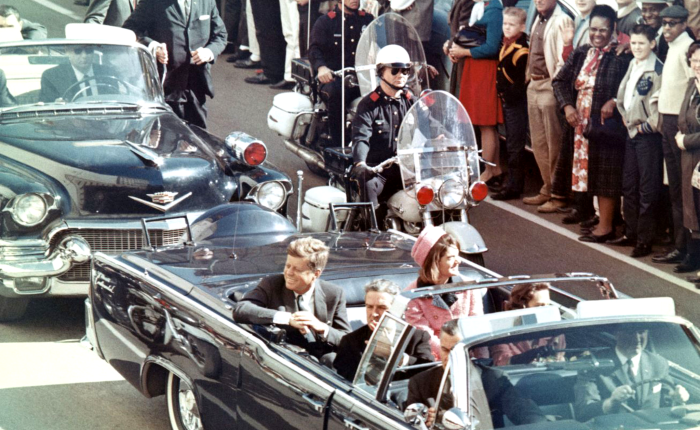
From the first pages, I could see what Herzog enjoyed about the book. In the guise of a bureaucratic, governmental document, we have an excellent true crime thriller. Unlike the overworked detectives of cop shows, the Commission had the nearly unlimited resources of the United States government at their disposal, and were able to perform any tests they wished. Expert riflemen attempted to replicate the shots; key witnesses were timed reenacting their movements; a car was driven at the exact speed as the presidential limo while pictures were taken through the scope on the rifle; the frame rate on the Zapruder film was used to determine the exact timings of the shots fired; and so on.
This way, the Commission closes in on the conclusion: it was Oswald—and only Oswald—from the sixth floor of the Texas School Book Depository. Every minute is accounted for, every movement is traced, every alternative theory is considered and discarded. It is, in short, a tour de force in the prosecutorial arts.
Yet I think this does not fully explain the report’s appeal to Herzog. Speaking purely in terms of aesthetic appreciation, what is especially compelling about the book is how grand, potentially historic conclusions follow from tiny questions of fact. Could the rifle be operated fast enough? Was the shot too difficult? How many shots were heard? Among the delights of Herzog’s best documentaries is the sensation of a profound abyss of mystery opening up in unexpected places. And the report certainly provides that sensation.
Now, I think it would be remiss of me if I did not at least attempt to comment on the plausibility of the report’s conclusions. I should say that, going into it, I was highly disposed to accept Oswald as the lone gunman. After all, we live in the era of mass shootings, most often carried out by loners with inscrutable motives. Indeed, Lee Harvey Oswald—a 24-year old white guy, a misfit with few friends—seems like the textbook example of a mass shooter. As a case in point, the would-be assassin of Donald Trump, Thomas Matthew Crooks, seems to have had a similar profile.
And the evidence linking Oswald to the crime is quite strong. There is the picture of him with the rifle, the fact that the rifle was found in his place of work, the visit to his wife the day before to pick up the rifle, the fact that he immediately fled the scene, his history of impulsive decision-making, his interest in left-wing movements, the total lack of an alibi, the multiple witnesses linking him to the subsequent murder of officer Tippit, resisting arrest shortly thereafter with a gun on his person… The list goes on.
What is more, in addition to the (apparent) lack of evidence linking Oswald to a conspiracy, several considerations seem to make such a link unlikely. For one, it is not as if JFK was a highly unusual president in terms of his politics. If Kennedy had been proposing something truly radical—provoking a nuclear war with the USSR, say, or instigating a communist revolution in the USA—then I could imagine a sizable contingent of disloyal personnel who might want him dead. But the fact is that JFK was a liberal anti-communist, and he was succeeded by… LBJ, a liberal anti-communist.
As for the Soviet Union, they would appear to have had little to gain and much to lose by getting involved in an assassination attempt, since discovery could provoke a massive war, and success did not materially benefit them in any way. The connection with Cuba is admittedly plausible, if only because of Kennedy’s many dealings with the country (the Bay of Pigs invasion, the Missile Crisis, attempted CIA assassinations of Castro…).
As for LBJ, though he was as power-hungry as they come, and had a penchant for unscrupulous behavior, it is frankly difficult for me to believe that, as Vice-President, he could have wooed away enough government agents, and sworn them all to absolute secrecy, in the service of his personal ambition. A single whistle-blower would have toppled the plan—and humans are bad at keeping secrets.
This is all to say that I found the report extremely believable. But in the interest of fairness, I decided to watch the first major documentary questioning the conclusions of the report: Rush to Judgment. This is the film version of a 1966 book by Mark Lane, a lawyer. And its premise is, I think, a fair one. If the Warren Commission was the posthumous prosecution, Oswald also deserved a posthumous defense, which Lane intended to provide.
To start, I think it is only fair to point out some considerations that undermine the report’s conclusions. The most conspicuous one is that LBJ created the Commission to prove to the public that Oswald was the lone gunman, in order, in his words, to avoid a war that could “kill 40 million Americans in an hour.” That is to say that the Commission worked to prove a foregone conclusion, ostensibly to avoid a crisis in international relations. And, of course, the killing of Oswald by Jack Ruby before he could be tried cannot help but raise eyebrows.
In his documentary, Mark Lane interviews several witnesses whose testimony does not conform with the official story. Many people from different vantage points report hearing the shots from—you guessed it—the grassy knoll, and some even said they saw smoke in the air. Mark Lane also probes potential connections between Jack Ruby and the Dallas Police Department, including officer Tippit, and he portrays the so-called “magic bullet” theory (namely, that a single bullet pierced Kennedy’s neck and wounded Governor Connally) as being inconsistent with the evidence.
For me, the contrary eye- and earwitness testimony is fairly easy to discount. In such a chaotic environment, with people running everywhere, several vehicles on the road, and many hard surfaces for sounds to reflect from, I think it would be difficult for an unprepared observer to localize the source of a sound or even to make a precise count of the shots. In any case, given the somewhat contradictory testimony, many people simply must be mistaken.
The argument that Oswald was not a good enough marksman also strikes me as weak. Oswald had military training, an accurate weapon, and in any case there’s always an element of luck involved. (Thomas Matthew Crooks missed by a fraction of an inch—the difference between a historic turning point and a footnote.)
Many conspiracy theories rely on a close examination of the Zapruder film. Among the arguments made are that Kennedy jerks back instead of forward in response to the lethal shot to his head (indicating it came from in front and not behind), and that Connally seems to react the first shot—the “magic bullet”—a couple seconds after Kennedy clutches his throat.
For what it’s worth, to my eyes it does look like the president is shot in the head from behind (it’s gruesome to watch). But the timing problem between Kennedy’s and Connally’s initial reactions is harder to explain if they were, indeed, struck by the same bullet. In fact, what the film apparently shows does correspond with how Connally remembered the event: hearing a shot, turning to his right to check on Kennedy, and then getting shot himself before the final, fatal shot to the president.
This would seem to indicate three shots: the first hitting Kennedy in the neck, the second hitting Connally in the back, and the third lethally wounding Kennedy in the head. The problem with that sequence is that the bullet exiting Kennedy’s neck would have caused substantial damage to the inside of the car, had it not hit another person. What’s more, given the constraints of the bolt-action Carcano rifle used in the attack, it seems almost impossible that three shots could have been gotten off in such quick succession. Thus the single-bullet theory.
I think it would be dishonest of me to say that I know enough about ballistics, marksmanship, firearms, traumatic wounds, or any other pertinent subject to venture my own explanation. (And I think I will probably regret even touching my toes into this vast reservoir of fevered speculation.) I will say, however, that the popular theory of a second shooter wouldn’t explain the lack of damage to the inside of the car—not to mention requiring the supposed second shooter to fire in such close coordination with Oswald as to be basically indistinguishable.
To round out this review, I should mention the bevy of documents made available to the public, starting in the 90s and as recently as last year. One of the strangest findings concerns a trip that Oswald made in late September and early October of 1963—in other words, shortly before the assassination—to Mexico City, in order to obtain a visa to either the Soviet Union or Cuba. Both of those embassies were being closely monitored by the CIA, and apparently somebody was caught on tape impersonating Oswald in phone calls. This was subsequently denied and covered up by the CIA. I really have no idea what that might mean.
There are approximately one million other stories and rumors—involving the Mafia, Jack Ruby, Officer Tippit, failed assassination attempts, murdered witnesses, and so on—which no single person could summarize or evaluate.
For me, I come back to my general skepticism of conspiracy theories, which is founded on my unshakable belief in human incompetence. Any task that requires a large number of people to work together and keep absolute secrecy arouses my suspicion. Aside from that, it seems that Oswald would be a uniquely bad co-conspirator. As the report points out, he attracted the notice of law enforcement everywhere he went; and his arrogance and impulsiveness made him difficult to work with. Given what is known about Oswald, he doesn’t seem to be the sort of person to be recruited for a secret operation.
I am also wary of the strong psychological pull of conspiracy theories. The idea that a lone gunman could change history—for the murkiest of motives—is inherently unsatisfying. Only connoisseurs of the absurd (like Herzog) could relish the fact that luck and chance can play such a defining role in our lives. I think it is significant that both Reagan’s and Trump’s attempted assassination have received far less attention from amateur sleuths, for the simple reason that their assailants failed while Oswald accomplished his grim task.
That being said, I also think that the members of the Warren Commission did not act as pure factfinders, but as prosecutors of the lone gunman theory. In so doing, they worked closely with the Secret Service, CIA, and FBI, rather than using their own investigators. And it seems clear that the FBI and CIA were not entirely truthful about what they knew about Oswald in the wake of the assassination.
If there was a cover-up, however, that does not necessarily mean there was a full-blown conspiracy. Governments can keep secrets simply to avoid looking incompetent, or to protect clandestine sources of information, or to avoid diplomatic crises, or simply out of a reflexive furtiveness, or for any number of reasons. As a case in point, the weather balloon explanation of the Roswell incident was, indeed, revealed to be a cover story—not of aliens, but of a top-secret balloon apparatus to detect atomic research.
Yet if there is a lesson to be learned from the Kennedy assassination, it is arguably the same rather boring lesson taught by the attempted Trump assassination: the need for better presidential protection.
View all my reviews
Category: Politics
Review: The Corner
The Corner: A Year in the Life of an Inner-City Neighborhood by David Simon
My rating: 5 of 5 stars
Some authors have the power to make you feel that you are just understanding the world for the first time. This is, for example, Roberto Caro’s gift. In every one of his books, he seems to expose the world of politics, revealing its inner workings like an ant colony on display in a transparent container. And this is also the consummate gift of this writing team, Simon and Burns. Here, as in Simon’s Homicide, and as in their masterpiece The Wire, these authors show you something you think you already know about: urban poverty. But you really see it for the first time.
In many ways, this book is the ideal companion to William Julius Wilson’s book, When Work Disappears, which was published just one year earlier. Wilson, a sociologist, explains urban poverty using historical trends, statistics, and surveys, whereas Simon and Burns worked like anthropologists: following around their subjects for an entire year and more, trying to understand their world through their eyes.
These different methodologies converge on the same story. When decent working-class jobs disappear from an area, it sets off a chain reaction that erodes the fabric of the society. Those with means move out; those that remain behind are left with few and stark choices. The teenagers in this story, for example, are faced with the options of attending a struggling school system, working for a minimum-wage job, or selling drugs. And while there are significant risks to this last option—risks that, sooner or later, become terrible consequences for all of them—it is undeniable that the reward is immediate and great.
Another theme of both books is how strategies and mindsets that are adaptive on “the corner” are maladaptive anywhere else. The tendency to think in the short-term, to backstab, to lie and cheat, to never show vulnerability—all of these are essential for both the addicts and dealers, though of course they become self-defeating when any of them try to leave this world. And of course many do try to leave it, earnestly and repeatedly. But with so few economic opportunities and so many barriers to government aid (the struggle to just get into a rehab center is Sisyphean), these efforts meet with scant success.
When writing of people in such difficult circumstances, it is tempting to treat them as pure victims. Yet the authors manage to convey the full humanity of their subjects—their many shortcomings and also their strivings—while never minimizing what they are up against. Indeed, this is perhaps the most impressive aspect of this book, and what makes these stories so compelling simply as stories, and not just illustrations of American decadence.
If there is any moral to this book, it is the absolute failure of the war on drugs. Simon and Burns tell of an unending, unceasing drug market—an entire ecosystem of sellers and buyers, operating 24 hours a day, 7 days a week, right in the open. Yes, the police do come and make arrests and confiscate a few vials. But the risk of incarceration is nothing compared to the force of full-fledged addiction or the endless, easy money that dealing provides. At one point, the authors aptly compare the drug war to the debacle of the Vietnam War: all the money, manpower, and machinery in the world is not enough when a war is ill-conceived to begin with.
But what is the solution? What would help? The authors—wisely, I think—refrain from any policy suggestions. Instead, we are left with a kind of mirror-image of the America that Robert Caro describes. Whereas Caro focuses on extraordinary individuals who fundamentally change their worlds, Simon and Burns show how political inertia, economic forces, and human folly conspire to trap everyone—inner-city teachers, beat cops, social workers, rehab nurses, and everyone selling and using—in an endless cycle that chews people up and spits them out, generation after generation. As in Homicide, this is a remarkable work of journalism.
View all my reviews
Review: Travel as a Political Act
Travel as a Political Act by Rick Steves
My rating: 4 of 5 stars
Since Rick Steves has taken over my life lately—don’t ask—I decided to see how all his travelling has affected his politics. I was sort of afraid, given his background, that this book would be little more than a collection banalities and platitudes (“make friends with people from other cultures,” “don’t think your way is the only way,” and that sort of thing); but this book surprised me by being genuinely, well, political. Steves has definite opinions and a real message—with a few platitudes thrown in, too, of course.
It should be noted that, like almost everything Steves writes, this book is primarily for Americans. Many of his “lessons” will be obvious to people who live elsewhere. For example, he begins with a good chapter on the wars in former Yugoslavia. He paints a vivid picture of the how the Balkan countries are still scarred by the conflict—including a woman who still has a piece of shrapnel in her back. His point is simple: most Americans don’t know what it is like to be in a war, and seeing its effects up close might make us reconsider our proclivity to bomb and invade other countries.
Some of the content is to be expected by any thoughtful American who has travelled in Europe. It is hard not to think at least some aspects of life overseas are superior: public transport, social healthcare, bike-friendly cities, long vacations, family leave… the list goes on. I would add the lack of guns. After you spend some time in a country where you can be sure the vast majority of people—criminals included—do not have guns, the entire “debate” in the United States is immediately seen to be silly. When Americans argue that guns increase personal safety and ensure political freedom, the rest of the world simply laughs.
Steves is strongest on drug policy. He notes the many European countries which have substituted a public safety for a law enforcement model with drugs, and makes a strong case that it is both more humane and more effective than just locking people up. The travel writer is not just all talk, either, since he helped to promote and sponsor the bill to legalize marijuana in his home state of Washington. This is another excellent example of how travel can affect one’s politics, since the first time you travel to a country where marijuana is legal to consume, and notice that the sky isn’t falling, you wonder if it’s really worth imprisoning people for doing so.
The chapters on Iran and on the Holy Land were classic Rick Steves. They were both attempts to understand a conflict (between the US and Iran, and between Israel and Palestine) from a less partisan perspective. It is perhaps extremely naïve to think that by simply getting to know ordinary people “on the other side,” so to speak, we can reduce antagonism. As Steves himself makes clear, there are historical and structural forces at work, which push peoples into conflict. Nevertheless, I find it heartwarming that he so earnestly tries to focus on the ordinary humanity of these peoples, rather than on the political narratives. It is something we see all too little in conventional news.
The chapter on El Salvador was perhaps the most impressive. The United States’ interventions—often violent and undemocratic—in Latin American politics is something that most Americans are hardly aware of. It is an uncomfortable history to say the least, and only figures such as Noam Chomsky routinely talk about it. But Steves travelled to El Salvador during the Salvadoran Civil War, and several times after that, to see our foreign policy with his own eyes. He even had his travel diary printed and sent to members of Congress, in a bid (albeit an idealistic one) to stop American interference.
By the end, for someone who could easily have spent his life eating gelato for the camera, Steves is shown to be a man of strong convictions. Of course, the book is not perfect. Steves is prone to falling into stereotypes when he compares Europeans and Americans; and, not being an expert on anything he writes about, his analysis can be fairly superficial. And of course there is the trademark cheesy Rick Steves style—that is inevitable. But I think this book is valuable for voicing some opinions that are likely to be quite unpopular among many Americans, and for doing so in a way that is accessible and friendly. Maybe travel really is enlightening? Now, if we could only figure out how to fly without creating greenhouse gases…
View all my reviews
Review: 9-11 (Chomsky)
9-11 by Noam Chomsky
My rating: 4 of 5 stars
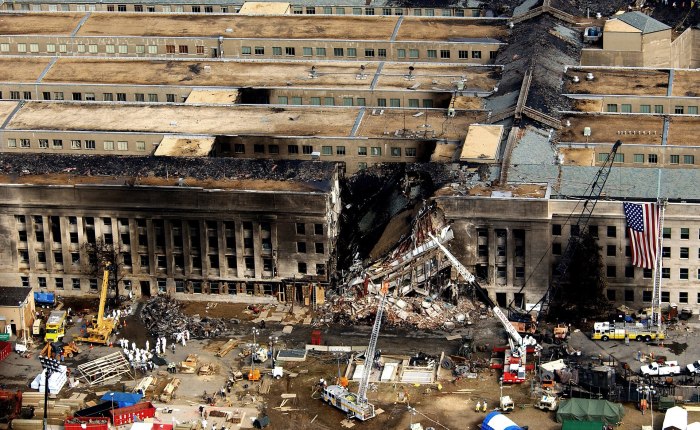
For a book that is admittedly kind of a rush job (it consists of a series of interviews done within a few weeks of the attacks, at a time when we were still uncertain whether Bin Laden was responsible), it has held up pretty well. If you are familiar with Chomsky’s critiques of American foreign policy, there will not be very much new here. This book is, rather, an attempt to popularize his basic views; and this means contextualizing the terrorist attack of 9/11 within the history of America’s own violent attacks on other nations.
Ironically, though the tone and subject of this book are quite serious, I often found myself thinking of a comical exchange between Chomsky and the popular philosopher, Sam Harris. Harris presents himself as a paragon of reason; and as part of that, he attempted to have a sort of sober “exchange” of views with Chomsky. This quickly devolved into acrimony as Chomsky was not, shall we say, in a friendly mood. However, I do think that the exchange does, somehow, effectively pinpoint the ethical position that Chomsky is taking, and that so many people fail to understand.
The disagreement between the two centers around the 1998 U.S. bombing of the Al-Shifa pharmaceutical factory, in Sudan. Chomsky uses this as an example of American state terrorism, and in this book asks the reader what would be the response if the situation was reversed, and Sudan had bombed a U.S. pharmaceutical plant. Harris’s defense—and I believe this is the standard argument in favor of U.S. intervention—is that our intentions were pure. We did not mean to kill anybody or deprive anybody of life-saving medication; we were just trying to stop terrorists from producing weapons.
Harris presents Chomsky with several thought experiments, making the (rather facile) point that intentions matter when making ethical judgments. If I try to save somebody and they die anyway, I am ethically superior to someone who killed somebody and succeeded. But Harris overlooks the (I think) quite obvious point that there is a grey area between altruistic and hostile intentions—that is, not caring one way or the other—which, ethically speaking, is often hardly better than being actively hostile.
This aptly describes the mentality behind the U.S. bombing of Al-Shifa. Consider: If we thought that weapons were being produced by terrorists in, say, Brussels, would we have sent cruise missiles to blow up the building? Obviously not, because the “collateral damage” would be deemed totally unacceptable. And yet, in the case of Sudan—a much poorer country, where people are far more dependent on a single factory for life-saving medicine—the decision was made quickly in favor of attack. Clearly, Sudanese lives were not deemed as important as Belgian ones would have been; and this shows an ethical stance of disregard.
A great deal of Chomsky’s critique on American foreign policy boils down to an attempt to get us to consider all lives as equally valuable, and all nations as equally sovereign. That is, to stop applying a double standard—one treatment for poor nations, another for rich ones. We are still very far from this stance. If we found out that the attack of 9/11 originated in, say, Ireland, what are the chances that we would have invaded the entire country? As Chomsky points out, the U.K. did not invade and bomb Boston, even though many of its citizens actively funded the IRA.
We can see this uncaring attitude of American foreign policy in the August 29 bombing that killed 10 in Kabul this year. None of those killed were terrorists, but six of them were children. Harris excuses “mistakes” like this by pointing to limitations in our intelligence and our weapons technology. With perfect knowledge and perfect weapons, we would never kill any civilians. This is like hunting for ducks in a crowded city park, and then blaming the shotgun when a person gets hit. Being ethical means acting within the limitations imposed by a situation, and considering the possible negative consequences of an action. No drone strike would have taken place in Brussels. But again, the possibility of killing innocent Afghanis is given very little weight.
It is clear that we are dealing with a serious sort of moral blindness, since it leads us to commit blunders as well as crimes. We even seem to think that everyone else will see past the accidental death and destruction, and give us credit for our irreproachably pure intentions. Thus, we are surprised when our long occupation of Afghanistan ends in a humiliating defeat, as we cannot understand why the population does not rally around our wonderful American values. But what speaks louder: the beautiful words on our lips, or the thousands of dead in our wake?
View all my reviews
Review: A Promised Land
A Promised Land by Barack Obama
My rating: 4 of 5 stars
Barack Obama rose to national prominence after giving the speech of his life at the 2004 Democratic Convention. I remember it. I was 13 at the time, on a camping trip in Cape Cod, listening to the speech in a tent on a battery-powered radio. Though I was as ignorant as it is possible for a human to be, I was completely electrified by this unknown, strangely-named man. “That should be the guy running for president!” I said, my hair standing on end. Four years later, I watched Obama’s inauguration in my high school auditorium, cheering along with the rest of the students, and felt that same exhilaration.
I am telling you this because I want to explain where I am coming from. Obama was the politician who introduced me to politics, so I cannot help but feel a special affection for him. You can even say that Obama was foundational to my political sensibilities, as he was president during my most sensitive years. This makes it difficult for me to view him ‘objectively.’
In this book Obama displays that quality which, despite him having almost nothing in common with me, made it so easy for me to identify with him during his presidency: his bookishness. He is clearly a man delighted by the written word. And Obama is able to hold his own as a writer. While I do think his prose is, at times, marred by his having read too many speeches—his sentences crowded with wholesome lists of good old fashioned American folks, like soccer moms, firefighters, and little-league coaches—the writing is consistently vivid and engaging, pivoting from narrative to analysis to characterization quite effortlessly. If Obama is guilty of one cardinal literary sin, it is verbosity. This book—700 pages, and only the first of two volumes—could have used a bit of chopping.
Obama is notorious for his caution, his conservative temperament, his insistence on seeing issues from as many perspectives as possible. But what struck me most of all in this book was his confidence. Aiming to justify himself to posterity, I suppose, Obama spends the bulk of this book explaining why he made the right decision in this or that situation. Indeed, Obama attributes even his few admitted missteps to noble intentions gone awry.
As Obama goes through the first term of his presidency, explaining how he tackled the financial crisis, healthcare, global warming, or the wars in Iraq and Afghanistan, the central tension of his presidency becomes apparent: the conflict between idealism and realism. Obama the speaker is, as I said, electrifying—soaring to rhetorical heights equaled by very few politicians. And yet Obama the president does not soar, but plods his way forward, examining the earth for any pitfalls five steps in advance. Indeed, I think Obama’s philosophy of governance could by fairly described as technocratic, preoccupied with effectiveness rather than liberty or justice.
This, I would say, is the central flaw in Obama’s governing philosophy. Obama ran for office with a simple message: the promise that we Americans could put aside party loyalty and work together towards a common goal. But this both underestimates and overestimates the forces that pull us into competing factions. In other words, this is both naïve and slightly cynical. Naïve, by failing to understand that politics is about power, and that there was more power to be gained through division than unity. But cynical, by considering our differing political ideologies to be superficial and ultimately unimportant.
Obama seemed to believe that the goals were obvious—that we all basically agreed on the sort of country we wanted to live in—and that the only thing needed was somebody competent enough to actually get the job done. Admittedly, this is quite a compelling idea, even an inspiring one in its way; and Obama is a very convincing proponent. But the limits of this thinking are on display all throughout this book. Obama is constantly making pre-emptive concessions to the Republicans, thinking that a market-friendly healthcare plan, or a strong commitment to killing terrorists, or a more modest stimulus bill will win them over, or at least mute their dissent. The consequence is that, in his policy—such as the deportations or the drone strikes (hardly mentioned here)—he is sometimes unfaithful to the principles he so eloquently expounds at the podium.
I am being somewhat critical of Obama, which is difficult for me. He was subjected so much silly and unfair criticism during his presidency that it can feel mean to add to this chorus of contumely. And I do not wish to take away from his very real accomplishments. Compared to either the administrations that came before or after his, Obama’s presidency was an oasis of calm, sensible governance. Though the fundamental change promised by his campaign failed to materialize, by any conventional standard Obama’s policies were successful—helping to heal the economy, expand healthcare, and slowly disentangle us from foreign wars.
It is also difficult to criticize Obama because it is clear that so much opposition to him was fueled by racial resentment. Obama was continuously subjected to a double-standard, constrained in the things he could do or say. No story better illustrates this than the Henry Louis Gates arrest controversy. After Obama rightly called the decision to arrest a black Harvard professor on his own property ‘stupid,’ the political backlash was so fierce that he had to recant and subject himself to an insipid ‘beer summit.’ And, of course, the moronic birther controversy speaks for itself. In short, it is difficult to imagine the opposition to Obama’s policies being so fierce and so persistent had he been a white man.
I listened to a part of this book on January 6th, the day of the Capitol Riot. After watching the events unfold on the television all day, I decided I could not take anymore, and went out for a walk. As I strolled along the Hudson River, I played this audiobook, listening to Obama narrate his presidential campaign. The contrast between that time and this was astonishing. I could not help but feel nostalgia for those days of relative innocence, when Obama’s “You’re likable enough, Hillary” qualified as a scandal. But I also could not help wondering to what extent, if any, Obama was responsible for what was becoming of my country. If he had embraced bolder initiatives, rather than striving to be as respectable as possible, could he have staved off this backlash of white rage? It is impossible to say, I suppose.
In the end, if I came away somewhat disappointed from this book, it is only because the Obama I found did not measure up to the messianic figure I embraced as an adolescent. But that is an unfair standard. Judged as a mere mortal, Obama is as about as impressive as any person can be—a man of prodigious talents and keen intelligence, whose presidency provided a relief from the onslaught of Republican incompetence. For that we can say, thanks, Obama.
View all my reviews
Review: We Were Eight Years in Power
We Were Eight Years in Power: An American Tragedy by Ta-Nehisi Coates
My rating: 4 of 5 stars
Racism was not a singular one-dimensional vector but a pandemic, afflicting black communities at every level, regardless of what rung they occupied.
Ta-Nehisi Coates has turned what could have been a routine re-publication of old essays into a genuine work of art.
The bulk of this book consists of eight essays, all published in The Atlantic, one per year of the Obama presidency. But Coates frames each one with a kind of autobiographical sketch of his life leading up to its writing. The result is, among other things, a surprisingly writerly book—and by that I mean a book written about writing—a kind of Bildungsroman of his literary life. Even on that narrow basis, alone, this book is absorbing, as it shows the struggles of a young writer to hone his craft and find his voice. And that voice is remarkable.
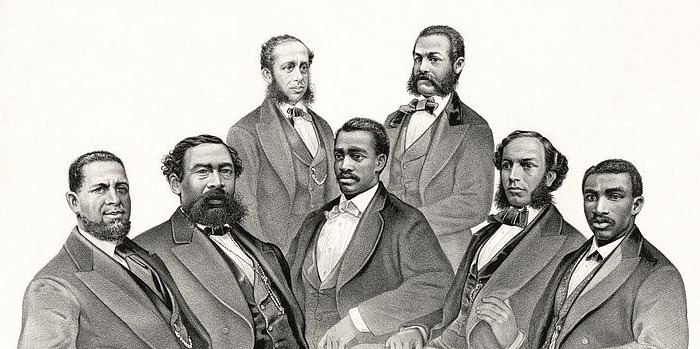
But this book is far more than that. Though the essays tackle diverse topics—Bill Cosby, the Civil War, Michelle Obama, mass incarceration—they successfully build upon one another into a single argument. The kernel of this argument is expressed in the finest and most famous essay in this collection, “The Case for Reparations”: namely, that America must reckon with its racist past honestly and directly if we are ever to overcome white supremacy. Much of the other essays are dedicated to criticizing two principal rivals to this strategy: Respectability Politics, and Class-Based Politics.
First, Respectability Politics. This is the notion—popular at least since the time of Booker T. Washington—that if African Americans work hard, strive for an education, and adhere to middle-class norms, then racism will disappear. Though sympathetic to the notion of black self-reliance, Coates is basically critical of this strategy—first, because he believes it has not and will never work; and second, because it is deeply unjust to ask a disenfranchised people to earn their own enfranchisement.
His portraits of the Obamas—both Barack and Michelle—are fascinating for Coates’s ambivalence towards their use of respectability politics. Coates seems nearly in awe of the Obamas’ ability to be simultaneously black and American, and especially of Barack Obama’s power to communicate with equal confidence to the black and white communities. And he is very sympathetic to the plight of a black president, since, as Coates argues, Obama’s ability to take a strong stance regarding race was heavily constrained by white backlash. Coates is, however, consistently critical of Obama’s rhetorical emphasis on hard work and personal responsibility (such as his many lectures about black fatherhood), rather than the historical crimes perpetrated against the black community.
Coates’s other target is the left-wing strategy of substituting class for race—that we ought to help the poor and the working class generally, and in so doing we will disproportionately benefit African Americans. The selling point of this strategy is that, by focusing on shared economic hardships, the left will be able to build a broader coalition without inflaming racial tensions. But Coates is critical of this approach as well. For one, he thinks that racial tension runs far more deeply than class tension, so that this strategy is unlikely to work. What is more, for Coates, this is a kind of evasion—an attempt to sidestep the fundamental problem—and therefore cannot rectify the crime of racism.
The picture that emerges from Coates’s book is rather bleak. If the situation cannot be improved through black advancement or through general economic aid, then what can be done? The only policy recommendation Coates puts forward is Reparations—money distributed to the black community, as a way of compensating for the many ways it has been exploited and disenfranchised. But if I understand Coates correctly, it is not that he believes this money itself would totally solve the problem; it is that such a program would force us to confront the problem of racism head-on, and to collectively own up to the truth of the matter. Virtually nobody—Coates included—thinks that such a program, or such a reckoning, will happen anytime soon, which leaves us in an uncomfortably hopeless situation.
The easy criticism to make of Coates is that his worldview is simplistic, as he insists on reducing all of America’s sins to anti-black racism. But I do not think that this is quite fair. Coates does not deny that, say, economic inequality or sexism are problems; indeed, he notes that these sorts of problems all feed into one another. Furthermore, Coates reminds us that racism is rarely as simple as a rude remark or an insult; rather, it is as complex, diffuse, and widespread as an endemic disease. Coates’s essential point, then, is that racism runs far more deeply and strongly in American life than we are ready to acknowledge—mainly, because persistent racism undermines most of our comfortable narratives or even our policy ideas, not to mention our self-image.
For a brief moment, after Obama’s election, we dreamed of a post-racial America. But, as Coates shows, in the end, Obama’s presidency illustrated our limitations as much as our progress. This was apparent in the sharp drop in Obama’s approval ratings after he criticized a police officer for arresting a black college professor outside of his own house. This was shown, more dramatically, in the persistent rumors that Obama was a Muslim, and of course in Trump’s bigoted birtherism campaign. And this was shown, most starkly, by the fact that Barack Obama—a black man entirely free of scandals, of sterling qualifications, fierce intelligence, and remarkable rhetorical gifts —was followed by Donald Trump—a white man with no experience, thoughtless speech, infinite scandals, and who is quite palpably racist.
As so many people have noted, it is impossible to imagine a black man with Trump’s resumé of scandals, lack of experience, or blunt speaking style approaching the presidency. Even if we focus on one of Trump’s most minor scandals, such as his posing with Goya products after the CEO praised Trump’s leadership, we can see the difference. Imagine the endless fury that Obama would have faced—and not only from the Republican Party—had he endorsed a supporter’s product from the Resolute Desk of the Oval Office! Indeed, as Coates notes, Trump’s ascension is the ultimate rebuke to Respectability Politics: “Barack Obama delivered to black people the hoary message that in working twice as hard as white people, anything is possible. But Trump’s counter is persuasive—work half as hard as black people and even more is possible.”
Whether Obama’s optimism or Coates’s pessimism will be borne out by the country’s future, I do think that Coates makes an essential point: that racism is deeply rooted in the country, and will not simply disappear as African Americans become less impoverished or more ‘respectable.’ Communities across America remain starkly segregated; incarceration rates are high and disproportional; the income, unemployment, and wealth gaps are deep and persistent; and we can see the evidence of all of these structural inequalities in the elevated mortality suffered by the black community during this pandemic. The intractability of this problem is bleak to contemplate, but an important one to grapple with. And it helps that this message is delivered in some of the finest prose by any contemporary writer.
View all my reviews
Review: Capital in the Twenty-First Century
Capital in the Twenty-First Century by Thomas Piketty
My rating: 4 of 5 stars
In any case, truly democratic debate cannot proceed without reliable statistics.
For such a hefty book, so full of charts and case studies, the contents of Capital in the Twenty-First Century can be summarized with surprising brevity. Here it goes:
For as long as we have reliable records, market economies have produced huge disparities in income and wealth. The simple reason for this is that private wealth has consistently grown several times faster than the economy; furthermore, the bigger your fortune, the faster it grows. As a result, in the 18th and 19th centuries, inequality was high and consistently grew: most of the population owned nothing or close to nothing, and a small propertied class accumulated vast generational wealth. This trend was only reversed by the cataclysms of the 20th century—the World Wars and Great Depression—as well as the resultant government policies, such as social security and progressive taxes. But all signs indicate that the general pattern is re-emerging, and we are reverting to levels of inequality not seen since the Belle Epoque.
This is a relatively simple story, but Piketty goes to great lengths to prove it. Indeed, the value of this book consists in its wealth of data rather than any seismic theoretical insights. Piketty is an artist on graph paper; and with a few simple dots and lines he cuts to the heart of the matter. The large time scales help us to see things invisible in the present moment. For example, while some economists have thought that the ratio of income going to labor and capital was quite stable, Piketty shows that it fluctuates through time and space. Seen in this way, the economy ceases to be a static entity following fixed rules, but something all too human—responding to government policy, cultural developments, and historical accidents.
Given the title of this book, comparisons to Marx are inevitable. Piketty himself begins with a short historical overview of the thinkers he considers his predecessors, with Marx given due credit. Piketty even concurs with the basic Marxian logic—that capitalism inevitably leads to a crisis of accumulation, with the capitalists siphoning off more and more resources until none are left for the rest of the population (with revolution inevitable). If we have avoided such a crisis, says Piketty, it is because Marx based his analysis on a static economy, not a growing one. The twentieth century was exceptional, not only because of its many calamities, but also because it saw enormous rates of economic growth, which also helped to offset the basic logic of capitalist accumulation. Growth rates have significantly slowed in this century.
In summarizing Piketty this way, I fear that I am not doing justice to his appeal. This book is at its most enjoyable when Piketty is at his most empirical—when he is taking the reader through historical trends and case studies. This is extremely refreshing in an economist. I often complain that economics, as a discipline, is needlessly theoretical, getting lost in abstruse debates about how certain variables affect one another, rather than focusing on observable data. Piketty explicitly rejects this style of economics, and puts forward his own method of historical research. This has many advantages. For one, it makes the book far easier to understand, since Piketty’s point is always grounded in a set of facts. What is more, this way of doing economics can be integrated with other disciplines, like history or sociology, rather than existing apart in its own theoretical realm. For example, Piketty often has occasion to bring up the novels of Jane Austen and Honoré de Balzac to illustrate his points.
Well, if Piketty is even approximately correct, then we are left in a rather uncomfortable situation. As Piketty repeatedly notes, vast inequality leads to political instability and the undermining of democratic government, as the super-wealthy are able to accumulate ever-larger influence. So what should we do about it? Here, the difference in temperament between Marx and Piketty is especially apparent. Instead of advocating for any kind of revolution, Piketty puts forward the decidedly wonkish solution of a global tax on wealth. The proposed tax would be progressive (only significantly taxing large fortunes) and would extend throughout the world, so that the rich could not simply hide their money in tax havens. Yet as Piketty himself notes, this solution is nearly as utopian as the Proletariat Revolution, so I am not sure where that leaves us.
As much as I enjoyed and appreciated this book, nowadays it is somewhat difficult to see why it became so wildly popular and influential. This had more to do with the historical moment in which it was published than the book itself, I suspect. The world was still reeling from the shock of the 2008 crash, and the public was just coming to grips with the scale and ramifications of inequality. Specifically, while most people tend to think of inequality in terms of income—partly, because most people do not have much wealth to speak of—Piketty’s emphasis on wealth, specifically generational wealth, added another dimension to the debate. Piketty evidently succeeded in getting his message across, since I did not find anything in this book shocking. Now we all know about inequality.
While I am no economist, it does seem clear to me that Piketty’s argument has several weak points. For one, his narrow focus on income and wealth distributions lead him to ignore other important factors—most notably, for me, unemployment rates. Further, the major inequality that Piketty identifies—that wealth grows faster than the economy, or r > g—could have used more theoretical elaboration. I wonder: How can private wealth grow so much faster than the economy, if it is a major component of the economy? At one point, Piketty argues that the super rich can afford to hire the best investors and financial consultants; but from what I understand, professional investors do not, on the whole, outperform index funds (which grow along with the economy). Clearly, there is much for professional economists to argue about here.
Whatever its flaws, Capital in the Twenty-First Century is an ambitious and compelling book that made a lasting and valuable contribution to political debate. Piketty may be no Marx; but for a man who loves charts and graphs, he is oddly compelling.
View all my reviews
Review: Rage
Rage by Bob Woodward
My rating: 4 of 5 stars
We were speaking past each other, almost from different universes.
Under normal circumstances, I would not subject myself to a single book about Donald Trump, much less two. But I happened to finish A Very Stable Genius—written by two of Woodward’s fellow reporters at the Washington Post—during one of the most bizarre weeks in Trump’s very bizarre presidency.
The week began ordinarily enough, with the revelation in the New York Times that Trump was using his business failures to avoid taxes. Big surprise. This scandal was quickly eclipsed by Trump’s unhinged performance in the first presidential debate, which even some keen supporters found unpalatable. And then Trump managed to top his own performance, by announcing his coronavirus diagnosis. Somehow, even this potentially solemn event quickly devolved into a carnival of lies, as various reports on the president’s health conflicted. The farce was capped off by Trump’s tweeting “Don’t be afraid of COVID” after leaving the hospital.
I mention all this only to show that, even after four years and four thousand scandals, Trump has retained his ability to completely absorb my attention and, yes, to shock me. Hoping for some more insight or clarity, I reached for this book—yet another in the long list of Trump exposés. And I did find that Rage complemented the story told in A Very Stable Genius quite nicely, covering much of what is left out in that earlier book. Whether I am any the wiser for having read these books is another question.
The basic story is simple: Trump relentlessly wore down his advisors and officials through unreasonable and often contradictory demands, until they either resigned in frustration or were fired (often via a Tweet). As the authors of A Very Stable Genius put it, Trump ground through his human guard rails. This way, advisors willing to oppose or moderate the president were gradually replaced by sycophants who did little to curb his more destructive whims. Thus, when a real crisis hit the country, one requiring a complex and coordinated response, the White House was completely unprepared.
However, it is also apparent that this was not originally the story that Woodward set out to tell. The first half of the book focuses quite steadily on foreign policy, and is clearly the fruit of much careful research. There are the usual stories of Trump snubbing allies and pining after Putin. But the real surprise comes when Woodward reveals that he somehow obtained the letters exchanged between Trump and Kim Jong-un. Though containing little of substance, these letters are quite surprising in their affectionate and even flowery tone. Even so, this is one section of the book where Trump does not come off so badly. Nothing was gained from the meetings and the letters, but nothing was lost, either; and arguably it was worth a try to extend an olive branch.
Like so much of life, the book gets severely derailed in its second half by the arrival of the coronavirus. It was around this time, too, that Woodward gained access to Trump himself. From January to shortly before the book’s publication, Woodward interviewed the president eighteen times, for a total of over nine hours. This meant that Woodward had a direct line to Trump during the greatest test of his presidency. The book thus becomes a kind of character study in a time of crisis, with Woodward pushing and probing, trying to understand why Trump is handling the pandemic so badly.
The closer a look one gets of Trump, the stranger he appears. To use Woodward’s phrase, he is a “living paradox”—or at least bafflingly inconsistent. One obvious example of this is Trump’s decision to do these interviews in the first place. After all, Woodward had already written a book highly critical of Trump, and is an associate editor at the Washington Post, a paper Trump routinely derides as liberal media spouting fake news. Was it simply bad judgment? More likely, in my opinion, Trump thought that by personally speaking with Woodward, he could convince the journalist to change his tone. (Trump hoped to do the same with Mueller, Putin, and Kim Jong-un, after all.) Either that, or he simply found the publicity and prestige offered by a Woodward book irresistible.
Another tension in Trump’s personality is that between authoritarianism and negligence. Trump’s admiration for strong-men around the world has often been noted, as has his demand for loyalty and praise from his subordinates. And his response to the Black Lives Matter protests—threatening to send the military, and using federal troops to illegally detain protesters—is broadly authoritarian. On the other hand, Trump’s response to the coronavirus crisis reveals a man quite averse to real responsibility, as he often left it up to the governors to deal with the problem. An aspiring autocrat could easily have used the emergency to appropriate more power for himself, but Trump did no such thing.
But this apparent paradox is resolved when one realizes that Trump’s conception of authority is very superficial. Being praised by subordinates, being the center of attention, being declared the best, being seen as a tough guy—this is the extent of what Trump demands from the world.
This superficiality is pervasive in Trump’s makeup, and has much to do with his (almost non-existent) relationship with the truth. It is common to call Trump a “liar”—and, of course, the major revelation of this book is that Trump apparently knew how dangerous the coronavirus was in February, and did not take action or warn the public. Yet for me this term is misleading, as it implies that Trump is fully aware of the truth and is carefully concealing it. I am sure he does that sometimes, of course. But more often it is as if he is speaking as a person might when totally overcome with emotion—in extreme rage or ecstatic joy—without even considering the truth.
The reason I say this—and I hope that I am not getting carried away here—is that, when Trump speaks, the words do not seem to come from some deep place inside himself, as happens during a thoughtful conversation. Rather, the words seem to pop out of thin air, determined only be the immediate needs of the present. To put it slightly differently, Trump never seems to be searching inside himself as he speaks—turning an issue over mentally or finding the appropriate phrase—but instead his mouth goes off by itself, like a machine gun, in its predictably staccato rhythm. The following excerpt captures this quite well:
“I’ve talked to lots of your predecessors,” [Woodward] said. “I never talked to Nixon, but I talked to many, many of them. They get philosophical when I ask the question, what have you learned about yourself? And that’s the question on you: What have you learned about yourself?”
Trump sighed audibly. “I can handle more than other people can handle. Because, and I’ll tell you what, whether I learned about it myself—more people come up to me and say—and I mean very strong people, people that are successful, even. A lot of people. They say, I swear to you, I don’t know how it’s possible for you to handle what you handle. How you’ve done this, with the kind of opposition, the kind of shenanigans, the kind of illegal witch hunts.”
I find this response so telling, because we can safely ignore the truth or falsity of Trump’s words. Indeed, I am inclined to think that questions of this kind usually elicit bullshit. But if I were asked this, I know that I would have to pause and search within myself for something that at least appeared to be self-knowledge. I would have to at least simulate speaking from the heart. And it takes a certain amount of self-awareness to do this. Trump’s answer, meanwhile (which essentially amounts to “I am better than other people”), pivots almost immediately from self-knowledge to what anonymous “very strong people” are telling him. In other words, it does not even betray the modicum of self-knowledge necessary to plausibly bullshit.
I am writing this to fully express these thoughts for myself, even though I am painfully aware that I am falling into the tar-pit of Trump’s personality. But enough. Let us move on from Trump to the secondary question of whether Woodward is guilty of journalistic malpractice for sitting on the information about the coronavirus. And I think he is. Woodward has given multiple reasons why he did not go public with the Trump tape, such as that he needed to give the story more context, or that he thought Trump was just talking about China. Neither of these make much sense to me. And I do think it could have made a difference if the recording of Trump had been released in, say, March.
Be that as it may, this book is still a valuable and alarming look into Trump’s White House and character. After such a steady inspection, it is difficult to disagree with Woodward’ conclusion: “Trump is the wrong man for the job.”
Review: A Very Stable Genius
A Very Stable Genius: Donald J. Trump’s Testing of America by Philip Rucker
My rating: 4 of 5 stars
‘It’s just so unfair that American companies aren’t allowed to pay bribes to get business overseas,’ Trump told the group. ‘We’re going to change that.’
The Trump book has quickly become its own genre. First, there are the many handwringing analyses of what went wrong—economic pain, journalistic negligence, polarized politics, cultural malaise—which is probably the most intellectually valuable of the lot. But the juicier stuff is to be found in the tell-alls of those fired by Trump: John Bolton, Omarosa Manigault Newman, James Comey, Michael Cohen (with doubtless many more to come). There is even a psychoanalysis by Trump’s niece! Only slightly less scandalous than these first-person accounts are the works of journalists covering Trump’s White House. The first major book of this kind was Michael Wolff’s Fire and Fury, followed soon by Bob Woodward’s Fear. This book, by Philip Rucker and Carol Leonnig, falls squarely in that category.
First, I want to note that I feel conflicted about these sorts of books. On the one hand it is obviously important to cover the White House and the doings of the president; and if these are dysfunctional then we should know about it. However, books like this do play into Trump’s general strategy, which is to ceaselessly focus all attention on himself. By the end we are lost in Trump-world, engrossed by a never-ending series of scandals that always seem to be on the cusp of overturning the presidency, but which never do. The result, for anyone following the news, is a kind of exasperated exhaustion that is not especially productive. After all, it is far better to focus on a substantive issue, like healthcare (which we might be able to change), rather than on the president’s bad diet or aversion to hugs (which we cannot).
Another danger of these sorts of books is that they reinforce the “fake news” narrative that has become so powerfully corrosive. For one, this book is obviously written to attack Trump, which apparently justifies Trump’s attacks on the liberal news media. What is more, any book of this kind will inevitably rest upon anonymous sources. This is the nature of investigative journalism in politics. But it leaves the door wide open to accusations of dishonesty, and is easily dismissed by those who support the president. This is a difficult challenge for journalists.
Nevertheless, the personality of the commander-in-chief is—unfortunately—profoundly important to his ability to govern. For evidence of this, look no further than the first presidential debate, where Trump’s behavior entirely derailed the event. Being very rude in a debate is not the end of the world, of course; but presidents do a lot more than debate. So I do think that books of this kind have value, if only because they bring together, in one place, the scattered impressions of news stories, and put Trump into the sharpest possible focus.
A Very Stable Genius covers the Trump presidency in its first three years, reporting on the doings of the president and his cabinet. The backbone of the narrative is the Mueller investigation of Russian campaign interference and Trump’s obstruction of justice (something that feels like ancient history now); and Trump’s impeachment (which also feels remote) is mentioned in the epilogue. Most of the book consists of sharply-written scenes within the White House or the Pentagon, a series of conversations and confrontations between the president and his advisors.
The reader quickly gets a taste of Trump’s managing style. His fundamental ethical principle is loyalty, which means of course loyalty to him personally. The vetting process for potential hires apparently had little to do with competence, and much more with whether they had ever publicly said anything bad about Trump. (Looking good on TV is also a plus.) Conflicts then occur whenever Trump perceives a “divided” loyalty in one of his subordinates—such as loyalty to a protocol, a tradition, an overseas ally, or simply the rule of law. When this happens, Trump inevitably grows petulant, and refuses to acknowledge why what he is asking for is either a bad idea, illegal, or simply impossible. This process results, quite often, with the subordinate being fired and replaced with someone more sycophantic, who is less willing to curb Trump’s impulses.
The portrait that emerges of Trump is unflattering but hardly new. While Trump demands loyalty to himself, he has very little loyalty for anything or anyone in return. He even treats reality itself like a subordinate, embracing (or inventing) the facts that redound to his credit, and violently rejecting the rest. As you can imagine, this makes briefing the president extremely difficult, especially since any kind of reading or extended presentation leaves the president listless and bored. And then there is Trump’s worldview, which sees almost everything as a zero-sum game, a world of winners and losers (or “suckers”). Thus, any treaty that benefits an American ally must, perforce, be hurting America. All of this explains why Trump is so notoriously chummy with authoritarian rulers, since they command the “loyalty” of their subordinates, and are clearly not suckering America into giving them money. Like Trump, they are winners.
As repellant as I find the president, I must admit that I find his personality mesmerizing. He seems to step right out of a Dickens novel—a cartoonish trickster, a living caricature of the capitalist American, all the way down to his love of television and fast food. It is all just so ridiculous that it would be quite hilarious if it were not true. Consider what Trump said to reporters after his meeting with Kim Jong-un:
[The North Koreans] have great beaches,” Trump told reporters. “You see that whenever they’re exploding their cannons into the ocean, right? I said: ‘Boy, look at that place. Wouldn’t that make a great condo?’ And I explained it. I said, ‘Instead of doing that, you could have the best hotels in the world right there.’ Think of it from a real estate perspective.
I submit that if you were writing the silliest political comedy, you could not come up with anything more perfectly absurd.
It is a testimony to Trump’s outrageous character that, even after four years as president, he can still shock us into speechlessness. Indeed, as the recent revelations of his taxes make clear, this is the entire basis of his success. If he were not entertaining enough to be the center of a reality show, then he would no doubt be just another bankrupt casino owner. Likewise, if he did not draw in viewers and readers for journalists, then he would never have become president.
Unfortunately for Trump, the coronavirus seems perfectly designed to expose all of the many flaws in his governance. The pandemic has shown that there is a real world which is neither loyal, nor easily distracted, and that cannot be sued or fired. With any luck, it will spell the end to this disgraceful period in our history. But it is frightening to think that it took a once-in-a-century emergency to remove such an obviously unfit man from the highest office in the land. It is even more frightening to think that even this might not be enough.And to be clear, I am referring to the coronavirus as a political liability for, and not as a personal threat to, the president.*
*To be clear, I am referring to the coronavirus as a political liability for, and not a personal threat to, the president.
Review: The Deficit Myth
The Deficit Myth: Modern Monetary Theory and the Birth of the People’s Economy by Stephanie Kelton
My rating: 3 of 5 stars
Deficits can be used for good or evil.
Robert Skidelsky, in his enormous biography of Keynes, remarks that economics today occupies the same situation as theology did in the Middle Ages—as a complex a priori logic that can be used to reach any number of contradictory conclusions. The more I read in the subject, the more I agree with him. To be taken seriously in politics means being able to use this logic. And yet, despite the seemingly scientific nature of this language, we seem hardly better able to pinpoint the nature of economic reality than the scholastics were able to count the angels.
I am exaggerating, of course. But I am a little distressed to find that, according to Stephanie Kelton, most economists and politicians—who already disagree with one another—are still fundamentally wrong about money, taxes, fiscal policy, and government debt. Here is another perspective to add to the mix: Modern Monetary Theory, or MMT.
Kelton begins the book by taking a page right out of David Graeber’s history of debt. Money was not invented, as so often supposed, to solve the problems of a barter economy. Instead, money and taxes go hand in hand. The argument goes like this: If you introduce a currency into a fully functioning credit economy (where people just keep track of what is owed to one another), then there is little reason why people would adopt it. But if you institute a tax payable only in this currency, and threaten punishment for non-payment, then suddenly everyone must find a way to acquire the new currency, and this means doing some work for the state.
In other words, governments introduced taxes, not to collect money (which it was producing anyway) but to compel work. And Kelton argues that this is still true today: that governments do not depend on taxes. She uses the example of a scorekeeper in a board game. The scorekeeper adds and subtracts points for other players, but they are never in need of points for themselves. Points are simply willed into existence whenever needed. Kelton argues that the US government (and other governments with what she calls “monetary sovereignty”) is in essentially the same position with regard to the US dollar. Since we use a fiat currency, any number of dollars can be willed into existence. Thus, the government does not depend on tax revenue, any more than a scorekeeper must subtract points from other players in order to stay afloat. In short, we do not have to worry about the deficit, since government debt is nothing like the debt you or I may have.
Does that mean that the government can just spend infinite money? No, Kelton says: though the deficit is not a problem, inflation may be. Too much government spending may lead to too many dollars chasing too few resources, which can cause prices to rise. Does that mean that taxes are unnecessary? Also no, according to Kelton, since, apart from compelling work, taxes perform at least two important functions. First, they remove money from circulating, thus decreasing inflationary pressure; and second, they reduce inequality, which leads to a healthier society. Yet if the government cannot spend infinitely, and if we still do need to tax, then what are we doing wrong?
To answer that, Kelton next turns her attention to unemployment. Kelton notes that unemployment is built into our economy, largely via the policies of the Federal Reserve. The Fed aims for an arbitrary level of unemployment (say, 3%) which it considers the “natural” rate. Going below this natural rate would, it is feared, cause inflation to kick in, since demand would outpace supply. But this “natural” rate is little more than a guess, Kelton argues. Even when unemployment has been very low in recent years, inflation has remained low. Indeed, in this argument Kelton seems to have been prescient, since just in August the Fed decided to change its policy of lifting interest rates once employment hits a certain level, thus paving the way for more sustained employment growth.
But Kelton has a fairly dim view of the prospects of using monetary policy to govern the economy. Instead, she thinks that unemployment should be directly eliminated using a Federal Jobs Guarantee. This is the main policy proposal of the book, and Kelton spends a good deal of time selling it. The advantages are compelling. Most obviously, unemployment is bad for people and communities, so it would be highly desirable to get rid of it. And a jobs guarantee would give workers more bargaining power, since the wage floor would rise (the jobs would pay a living wage) and the threat of losing work and health insurance would be eliminated.
Still, I admit that I was not convinced. For one, even according to MMT’s own premises, the huge increase in aggregate demand—caused by increased federal spending, eliminating unemployment, and increasing wages across the board—could cause inflation. Kelton does not really address this potential pitfall.
On a more practical level, I also have trouble imagining the logistics. Kelton describes a program that can employ anyone, anywhere, in socially meaningful jobs. But there is not necessarily the right amount of meaningful work in any given location, nor do the unemployed necessarily have the skills necessary to do this work (and re-training has its limits). I think that a substantial amount of make-work is inevitable in such a scheme. Furthermore, I can hardly contemplate the enormous bureaucracy that would be needed to administer such a program. It seems there would be just as many people making jobs as people needing jobs made for them.
The job guarantee’s major policy rival, universal basic income (UBI), has none of these practical challenges (though of course it could cause inflation, too), since it is merely paid via the IRS. Admittedly, jobs do provide social and psychological benefits that an income does not. But Kelton does not discuss UBI at all, which I thought disappointing.
At this point, the reader may be forgiven for wondering what is so new about MMT. After all, Paul Krugman—an orthodox Keynesian economist critical of MMT—has been writing for years about the mistake of thinking of the federal budget like a household budget, and the desirability of federal deficits in times of recession. The difference, so far as I understand it, brings us into dangerously wonky territory. Krugman avers that when we near full employment, a large deficit may require higher interest rates in order to avoid inflation. Kelton counters that our assumptions that low interest rates boost spending, and higher interest rates constrict spending, are actually incorrect. In other words, Krugman thinks that monetary policy can partly compensate for fiscal policy, while Kelton thinks that monetary policy is not particularly useful.
I have little to add to this, other than to remark that I can never understand why these disputes—like theology—always take the form of high theoretical debates from first principles. It strikes me that the impact of monetary policy is an empirical question that could be answered with a careful look at the historical record. But what do I know?
Well, I have done my best to elucidate this sacred mystery, but I ought to evaluate the book. Like many readers, I found the writing in this book extremely grating. The tone was somewhere between a salesperson and a televangelist—promising instant enlightenment and easy solutions—which immediately put me on edge. In fairness, when Kelton is not selling MMT but explaining it, the book can be quite fascinating. But Kelton’s insistence on treating MMT as blindingly true, and its enemies as either blinkered traditionalists or deceptive politicians, was not charming or effective. And the amount of repetition could even be condescending. By the time I reached the end, I really could not stand to hear another iteration of the central tenets of MMT. I got it the first couple times.
Whatever the flaws of the book, and whether or not MMT is an accurate picture of how the economy works, it at least makes you think about how the deficit is treated in public discourse. Anyone who reads the news cannot help but notice that the swelling deficit is only invoked when we have to pay for, say, healthcare or infrastructure; but, somehow, when tax cuts to the wealthy or defense spending are on the table, nobody seems to worry. Even if the deficit presents more of a problem than Kelton believes, it is obvious that, if anything is worth going into debt for, it is programs that benefit the public, rather than bombs or yachts. I hope that followers of Keynes, MMT, Thomas Aquinas, and William of Ockham can at least agree with that.
View all my reviews