Review: Gorgias

Review: Gorgias

GorgiasGorgias by Plato

My rating: 4 of 5 stars

… for philosophy, Socrates, if pursued in moderation and at the proper age, is an elegant accomplishment, but too much philosophy is the ruin of human life.

Gorgias is easily one of Plato’s best stand-alone dialogues. Indeed, as others have mentioned, it often reads like a germinal version of the Republic, so closely does it track the same themes. A transitional dialogue, the early know-nothing Socrates of unanswered questions is already gone; instead we get Socrates espousing some of Plato’s key positions on truth and morality.

Socrates descends on a party of rhetoricians, seemingly determined to expose them. He questions Gorgias, a well-known teacher of rhetoric, in the attempt to pinpoint what, exactly, rhetoric consists of. We get the usual Socratic paradoxes: if we ought to be convinced by knowledgeable people—a doctor when it comes to medicine, an architect when it comes to buildings—how can somebody who lacks this knowledge teach the art of convincing?

Gorgias insists that rhetoric is used to accomplish justice. But is Gorgias an expert on justice? No. Are his pupils already just? Neither. And cannot rhetoric be used for unjust ends? Of course. This effectively trips up the old rhetorician. Gorgias’ energetic young pupil, Polus, steps up to defend the old master. He denies what Gorgias said about rhetoric being used to accomplish justice, and instead claims that it is used to gain power.

This brings Socrates to another one of his paradoxes: that powerful orators are actually to be pitied, since inflicting injustice is worse than suffering injustice. Though Polus laughs, Socrates trips him up just as they did his mentor, by getting him to assent to a seemingly unobjectionable proposition and then deducing from them surprising conclusions. (Socrates was not, you see, without his own rhetorical tricks.) Polus finds himself agreeing that tyrants are to be pitied.

At this, Callicles enters the fray, not a rhetorician but an Athenian gentleman and a man of affairs, who plays the same role that Thrasymachus plays in the Republic. He scorns philosophy and insults Socrates. All this highfalutin’ talk of justice and truth and such rubbish. Doesn’t Socrates know that what is right is a mere convention and justice is simply whatever the strong wish? Socrates then embarks on his usual procedure, trying to get Callicles to assent to a proposition that is incompatible with Callicles’ position. Callicles eventually gets confused and tired and gives up, allowing Socrates to finish with a grand speech and a Platonic myth about the judgment of souls.

To the modern reader very little in this dialogue will be convincing. Plato is no doubt right that rhetoric is, at best, neither bad nor good, but is akin to cosmetics or cooking rather than exercise or medicine—the art of pleasing rather than improving people. Yet since we have learned that we cannot trust people to be selfless, disinterested seekers after the truth—as Socrates repeatedly claims to be—we have decided that it’s best to let self-interested parties compete with all the tools at their disposal for their audience’s attention. Heaven knows this procedure is far from perfect and leaves us vulnerable to demagogues. But the world has proven depressingly bereft of pure souls like Socrates.

Also unconvincing is Plato’s moral stance—namely, that those who commit injustice are to be pitied rather than envied. He proves, of course, that the unjust are more deserving of punishment than the just; this was never in doubt. But he does not, and cannot, prove that the unjust are less happy—since a single jolly tyrant would refute his whole chain of reasoning. Indeed, by establishing a moral precept that is so independent of happiness, Socrates falls into the same plight as did Kant in his categorical imperative. This is a serious difficulty, since, if acting justly can easily lead to unhappiness, what is the motivation to do so? The only way out of this dilemma, as both thinkers seemed to realize, was to hypothesize an afterlife where everyone got their just desserts—the good their reward and the bad their castigation. Needless to say I do not find this solution compelling.

Yet you can disagree with all of Plato’s positions and still relish this dialogue. This is because, as usual, the most charming thing about Plato is that he is so much bigger than his conclusions. Though Socrates is Plato’s hero and mouthpiece, Plato also seems to be aware of Socrates’ (and his own) limitations. Callicles is not a mere strawman, but puts forward a truly consistent worldview; and Plato leaves it in doubt whether his own arguments prevailed. He even puts some good comebacks in Callicles’ mouth: “Yes, by the Gods, you are literally always talking of cobblers and fullers and cooks and doctors, as if this had to do with our argument.” By the Gods, he is!

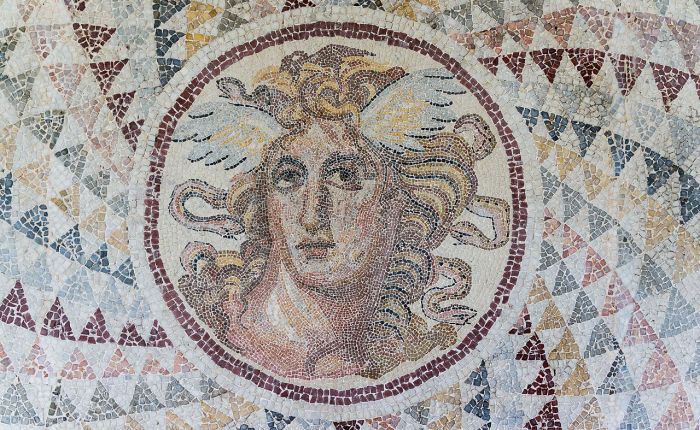
(Cover photo by Jebulon; licensed under CC0; taken from Wikimedia Commons.)

View all my reviews

Review: Letters on England

Review: Letters on England

Letters on EnglandLetters on England by Voltaire

My rating: 4 of 5 stars

Time, which alone gives reputation to writers, at last makes their very faults venerable.

Voltaire and Rousseau are usually grouped together as the twin pillars of the 18th century, the first championing reason and reform, the second romanticism and revolution. After reading them back to back, I know who I prefer. Rousseau is arguably a far more original thinker and writer; yet his personality is so irksome and his arguments so irrational that it can be unpleasant to read him. Voltaire, by contrast, is witty, charming, and delightful; and after Rousseau’s lyrical fantasies, Voltaire’s deflating sarcasm is extremely refreshing.

This book is a collection of essays on topics related to England, written after Voltaire’s three-year stay on the island nation. He interviews a Quaker, visits Parliament, goes to the theater, and then expounds the philosophy of Bacon, Locke, and Newton. He skips lightly from topic to topic, a barb here, a jest there, while revealing an impressive range of knowledge—from inoculation to history, from theater to physics. In general his opinion of England is quite positive, arguably idealized, seeing England as a land of toleration and philosophy. Indeed, the only thing that Voltaire shows some reservation towards is Shakespeare, whose dramas struck Voltaire’s Enlightenment taste as lacking refinement.

The book was controversial when published, since many in France saw Voltaire’s praise of England—correctly—as veiled criticism of their own country. Nowadays, this political purpose only adds to the essays’ charms, as we see Voltaire as a champion of an open society, from religion to science to literature, in addition to an omnivorous intellectual. Few books pack so much into so little space.

View all my reviews

Review: Rameau’s Nephew & D’Alembert’s Dream

Review: Rameau’s Nephew & D’Alembert’s Dream

Rameau's Nephew / d'Alembert's DreamRameau’s Nephew / d’Alembert’s Dream by Denis Diderot

My rating: 4 of 5 stars

The best order of things, to my way of thinking, is the one I was meant to be part of, and to hell with the most perfect of worlds if I am not of it.

With this book, I come to the third member of the triumvirate of the French enlightenment. While Diderot’s writing may lack the sharp wit of Voltaire and the soaring lyricism of Rousseau, Diderot is nevertheless just as interesting and perhaps more lovable than his two more famous contemporaries. For Diderot maintained a childlike curiosity and an excitement for ideas that makes his writing straightforwardly pleasant, without any of Voltaire’s satiric malice or Rousseau’s paranoid egotism. It is interesting to note that, though Diderot was a widely respected writer during his lifetime, his most daring and original works, such as these two dialogues, remained unpublished until well after his death. It takes talent to be both a conventional and an unconventional genius.

Rameau’s Nephew, in addition to its philosophical content, is remarkable simply as literature. It consists of a dialogue between a philosopher (who most assume to be Diderot) and the nephew of the famous composer, Jean-Philippe Rameau, who is an eccentric, ne’er-do-well, moocher, bohemian sort of fellow, whose ostensible profession is to give music lessons, but who really makes his living by playing the fool and flattering rich patrons. The conversation takes many twists and turns, which gives Diderot the opportunity to include some barbs against his rivals and enemies. Indeed, it is difficult to say that any topic is the main focus of the conversation, since—as in reality—the speakers break off on tangents, bring up and drop points, interrupt each other and themselves, and so on. This veracity of Diderot’s representation, and the excellent portrait of a hedonist living on the edge of respectable society, give the dialogue a literary value independent of any intellectual considerations. On a philosophical level, what mainly interested me was the confrontation of a virtuous philosopher with a selfish nihilist.

D’Alembert’s Dream is a more strictly philosophical exercise, detailing Diderot’s materialistic theory of biology. His main contention is that all matter is sensitive, or at least potentially sensitive, and thus no mind or soul is needed to explain life, movement, memory, sensation, or thought. Though this hypothesis mainly consists of armchair theorizing, which may sound very facile in the light of serious research, Diderot does put forward a hazy idea of evolution in this dialogue. What is more, in his notion of characteristics disappearing for several generations, and then reappearing, he also hazily hits upon Mendel. Not content to simply write an essay, Diderot puts all this in the mouth of his fellow encyclopedist D’Alembert (who spends most of the dialogue talking in his sleep), Mlle de Lespinasse (a close friend of D’Alembert who hosted a famous salon), and a doctor that serves as Diderot’s mouthpiece. D’Alembert and Mlle de Lespinasse were understandably upset when they heard about this (especially considering that the dialogue ends with a ringing endorsement of masturbation), and even compelled Diderot to burn the manuscript, but another one (in the possession of Grimm) survived.

As I put the book down, I find myself wishing I could spend more time in the company of Diderot, whose writing is warm and direct, witty but not showy, intellectual but not pretentious, daring but not wilfully provocative. It is amazing that one man could find the time to write literary classics while keeping his day job as the editor of the Encyclopédie and a popular playwright.

View all my reviews

Review: Emile

Review: Emile

EmileEmile by Jean-Jacques Rousseau

My rating: 4 of 5 stars

If all the philosophers in the world should prove that I am wrong, and you feel that I am right, that is all I ask.

My reaction to Rousseau is very similar to my reaction to Thoreau, whose back-to-nature ethic owed much to Rousseau’s philosophy. Though constantly impressed with the breadth of their vision and the force of their rhetoric, I find the personalities of these two men—at least as manifested in their books—to be grating and unpleasant. When I am not underlining brilliant passages, I read Rousseau through gritted teeth and with frequent interruptions to roll my eyes.

I see much in common between these two Romantic devotees of nature. While Thoreau’s dour and stern demeanor is not comparable to Rousseau’s sentimental imagination, the two of them are self-involved, prickly, and vain. Both praise wild isolation at the expense of society because neither seemed to fit into the latter. Though the two of them were brilliant in the extreme, neither of them seemed to have reached the level of intellectual maturity that allows feelings to be submitted to reasons and other perspectives to be considered. Both of them fire off opinions with wild abandon, saying what feels good, without taking the trouble to thoroughly argue their points, to consider competing ideas, or even to make their own thoughts consistent.

To pick just one example of this last tendency in Rousseau, at one point he says: “Amid the uncertainty of human life, let us shun that false prudence which seeks to sacrifice the present to the future; what is, is too often sacrificed to what will never be. Let us make man happy at every age lest in spite of our care he should die without knowing the meaning of happiness.” And yet, almost immediately after this pronouncement, he insists that his titular pupil, after having fallen in love and proposed marriage, postpone the delight of union for two years—leaving his beloved to go travel—in order to learn to master his feelings. The book is rife with such inconsistency. And not only that but, as in Thoreau’s case, Rousseau’s manner of life was notoriously inconsistent with the principles he espoused, adding hypocrisy into the bargain. That a man who sent his own children to an orphanage should write a manifesto of education is rich indeed.

But Rousseau must be read and praised, this book above all, since he—as well as his American disciple—contributed a great deal to our common stock of ideas and the expansion of our cultural faculties. Under the guise of a treatise on education, Rousseau has written a universal reflection on human life, comparable to Plato’s Republic or The Brothers Karamazov for its omnidirectional scope. The novelistic device of describing himself as a tutor educating a child allows Rousseau to illustrate his philosophy of society, ethics, government, love, history, travel, religion, literature, and much else along the way, besides to his groundbreaking views on education.

Rousseau begins with his famous dictum that nature makes everything good, and it is human society corrupts our natural goodness into evil. His stated purpose is to illustrate how natural goodness can be preserved in a growing boy destined for life in society—that is, without Thoreau’s recourse of reverting to a state of nature. With this principle in mind, Rousseau blasts mothers for hiring wet nurses to breastfeed their children rather than doing it themselves. And though Rousseau’s reasons are fallacious, this advice probably did the world much good, since, in addition to the emotional bonding, breastfeeding allows important antibodies to be transferred from the mother to the infant.

After infancy gives way to childhood, Rousseau’s real educational work begins. Here he made another important contribution to child-rearing, by insisting that children’s minds are not suited to adult ideas and methods. A child is a different creature altogether and education must be suited to a child’s capacities and predilections. Lectures, sermons, and catechisms must be avoided; and using punishment and reward only corrupt the child. Instead the tutor must find ways to motivate the child to learn without ever seeming to do so. Rousseau the tutor is constantly devising tricks and schemes to get his imaginary pupil, Emile, to learn valuable lessons in a “natural” way—that is, relying on the child’s intrinsic motivation and using no explicit instruction. Everything in Rousseau’s model must simulate life and the child must work on his own conclusions following his own curiosity. The tutor is much more a guide—and, behind the scenes, an impresario—than a real teacher.

Following this procedure, lessons on magnetism and morality are woven into a magician’s act. Geography is taught by getting lost in the forest. Geometry is taught by attempting to draw and map. Botany and agriculture are taught through gardening. And so on, covering sciences, arts, and moral lessons. This way, Emile grows up into a competent, strong, and thoroughly honest boy with no social pretensions and no vanity whatsoever. At least, Rousseau assures us that this would be the result. By the time Rousseau takes Emile into Paris, as a young man, the student is disgusted at the foppery of the men, the arrogance of the philosophes, and the affected manners of the women.

More contentiously, Rousseau would not teach his pupil anything about God or religion until the age of eighteen, considering such subjects too abstruse and profound for a child to understand. He would not even teach Emile to read until shortly before that. And this is not all that occasioned scandal. Rousseau famously interrupts the story of Emile’s education to include the Profession of Faith of a Savoyard Vicar, the most well-known, influential, and controversial section of the book. Though couched in the language of philosophy, the Profession is essentially an argument against both organized religion and atheism in favor of deism, based on feeling alone. Voltaire, a deist himself, considered this the book’s only worthwhile section, only lamenting that it has been written by “such a rascal.” It was largely this trenchant criticism of organized religion that led to the book getting banned and burned in Paris and Geneva. And yet, ironically enough, the idea that inner conviction is a surer basis for faith than logic was to become a pillar of religious thought in the coming centuries.

The last section of the book consists in finding a mate for Emile. This is by far the most unpleasant part of the book. Rousseau’s view on women and their upbringing is reactionary and sexist to the utmost, not to mention unpleasantly marred by Rousseau’s own sentimental (and sexual) fantasies regarding women. Rousseau’s ideal companion for his pupil is named Sophie, and her education differs markedly from Emile’s. Sophie is to be a kind of passive doll, a creature not fit for reason or art, whose job is to caress Emile and to make his life easier. Rousseau describes their courtship with the drama of a novelist and the passion of an onanist. Both the principles and the writing are revolting.

Finally, after enduring a forced separation for his beloved—a very unnatural thing for Rousseau to recommend!—Emile settles down happily in blissful union with Sophie, and prepared to educate his own children along Rousseau’s lines.

This summary does not exactly do justice to Emile, since it omits all of the manifold digressions that Rousseau yields to in the book’s wandering course. Some of these are among the best sections of the work; others are pointless rambling. Even when he is not off in the bushes, Rousseau can be very repetitive, giving us five sentences where one would do, spending three paragraphs harping on a minor point. The final result is a book much longer than it has to be. This is Rousseau’s most conspicuous stylistic flaw, which he excuses in typical Rousseau fashion: “If this book is to be well written, I must enjoy writing it.” Unfortunately the author’s pleasure is often gotten at the expense of the reader’s. Yet the book’s best moments are masterful, rising to heights of power and lyricism that cannot be forgotten. Immanuel Kant famously had to read the book twice, the first time just for the style, the second for the content.

The flaws in Rousseau’s ideas are many and grave. Most obviously, Rousseau’s educational program is impractical in the extreme, relying on a perfectly wise tutor to devote twenty years of his life to a perfectly malleable pupil. This may be excused, however, by treating the arrangement as an explanatory device and not a real proposal to be emulated. More seriously, Rousseau’s conviction that nature is intrinsically good is, I think, incorrect and even incoherent. Natural disasters, such as the Lisbon Earthquake in Rousseau’s own lifetime, demonstrate that nature can be cruel and merciless; and in any case, how can you know what nature is, or where nature ends and human culture begins? Besides, doesn’t Rousseau advocate many “unnatural” things? The level of control exercised by his tutor over his pupil’s reality is far greater than any real parent or teacher.

Yet even when strictly viewed as an educational treatise, there is much to be praised in the book. Rousseau’s emphasis on experiential rather than theoretical learning was quite valuable. And his conviction that education must take into account the child’s development and maturity was a revolution. I also share his suspicion towards using external rewards and punishments to motivate children, since the bad is avoided and the good is sought for artificial, rather than instrinctic, reasons.

Of course the book’s merits extend much further than education. Taken together, Rousseau’s philosophy touched on every aspect of society, from philosophy to fashion, from labor to love. For all his naïveté, Rousseau seemed to have correctly sensed that his society was artificial and could not last. Thirty years before the revolution, he says: “The crisis is approaching, and we are on the edge of a revolution.” And he then goes on in a footnote: “In my opinion, it is impossible that the great kingdoms of Europe should last much longer. Each of them has had its period of splendor, after which it must inevitably decline.” Like Thoreau, Rousseau was a prophet and a true original, embittered by being misunderstood, isolated, and ostracized, whose all-too-obvious faults concealed the revolutionary reach of his vision.

View all my reviews

Review: The Realms of Being

Review: The Realms of Being

Realms of BeingRealms of Being by George Santayana

My rating: 4 of 5 stars

Mind was not created for the sake of discovering the absolute truth.

George Santayana wrote the four volumes of The Realms of Being over a period of about twenty years. The first volume, The Realm of Essence, was published in 1927 after several years of work; and the last volume did not appear until 1942. When published together, the work fills some 850 dense pages, making it comparable in bulk and bearing with The Phenomenology of Spirit, Being and Time, Being and Nothingness, and other metaphysical monsters. And yet the book received a lukewarm reception during Santayana’s lifetime and has not found a more receptive audience since. So what is in here that Santayana found worthy to devote his final years to?

On the surface The Realms of Being is a metaphysical system. Like a philosopher king, Santayana divides up Being into four territories: Essence, Matter, Truth, and Spirit. Each book is devoted to one of these lands, attempting to delineate its borders and chart its geography. Santayana begins with “essence.” For my part I think this term poorly chosen, since his doctrine has nothing to do with essentialism. Rather, Santayana means “form” in the Aristotelian sense. An essence is any form at all—whether given in sensation, defined in thought, or manifested in the universe. Essence is just pure distinction, any and every quality that differentiates one thing from another. So the look of the Mona Lisa under bright lighting is one essence; the look of the same painting under dim lighting is another essence; and so on, for every distinction imaginable.

According to Santayana, essence does not and cannot “exist”—that is, be a part of the physical universe. Yes, an essence can be temporarily manifested in the universe; but its real being consist purely in its qualities, purely in the fact that it can be distinguished. Mathematics and logic, for Santayana, are just systems of essences; they have no existence save their defined qualities. Since essence consists in pure distinction, the realm of essence is infinite and eternal. Form must be possible before any real thing manifests form. Thus essence logically precedes existence, and is unaffected by existence. And since the vast majority of possible forms will neither be manifested nor imagined, the realm of essence is mostly unexplored and unguessed at.

Matter is precisely the opposite. Matter is the very thing that an essence cannot capture, since it consists of substance, change, and duration. Matter takes up space and morphs through time. Matter is not controlled or guided by any essence, though some essences—such as the equations of physics—may help us to understand how matter behaves, at least locally. But why matter exists in the first place is inexplicable; and whether matter might behave otherwise in other circumstances is unknowable. If the realm of essence is like a shop full of empty dresses, matter is like an impatient child who tries on every dress in an unpredictable order, thus momentarily bringing the essence to life. Matter is the principle of existence.

The historical path that matter charts through essence is Santayana’s realm of truth. It is all the essences that have been, are, and will be manifested in the material universe. Again, Santayana’s choice of term is puzzling, since most philosophers would call this “reality,” reserving the name “truth” for the quality of being correct about reality. But Santayana thought it important to use historical terminology, which is why he called his last realm “spirit,” when his meaning is far closer to “consciousness.” Spirit is the awareness of any creature alive in the universe. Now, for Santayana consciousness has no function in the survival of an organism, since spirit is entirely impotent. Thus the task of spirit is merely to observe and enjoy the world.

This is Santayana’s system in a nutshell. I consider the above paragraphs a fair summary of the basic facets of his realms, and they took me about half an hour and barely a page of writing. So why did Santayana need twenty years and 800 pages? This is because the book is not quite what it at first purports to be—that is, a metaphysical system. Santayana himself disavows having written an ontology of the world: “I am not concerned in these Realms of Being with alleged separate substances or independent regions. I am endeavoring only to distinguish the types of reality that I encounter; and the lines of cleavage that I discern are moral and logical, not physical, chasms.”

Putting aside for the moment whether this can be accepted, let us look at what else The Realms of Being might be. Santayana’s style is certainly not that of a Kant expounding his system. As always, he is suave, eloquent, and cultured. The organization of the book is also not exactly systematic—one part building on the other, with appropriate subdivisions and appendixes—but thematic, tackling different subjects chapter by chapter. All together, The Realms of Being seems more like a series of humanistic essays on metaphysical themes rather than a system of ontology itself. Seen in that light, the book has considerable merits. Santayana was a penetrating cultural critic, and here serves as a sort of critic on the highest planes of abstraction.

Aside from the metaphysical and the humanistic, there is a third aspect to this book: the spiritual. In this way, Santayana’s book is comparable to the Enneads of Plotinus, an ontology that serves as the backbone for meditative or mystical practices. Santayana’s own system is entirely secular and naturalistic. For him, spirituality consists in the mind’s absorption in the realm of essence—in the pure contemplation of form. Remember that, for Santayana, consciousness is entirely impotent; consciousness itself has no power to change anything, but is just a kind of byproduct of the brain. Thus all the suffering we go through in our way through the world, and all the worrying and fretting we do about ourselves, is just a waste. Santayana’s solution to this predicament has much in common with Proust’s—the appreciation of essence, stripped of all attachment to the material world—although Santayana does not consider memory vital for this task.

Here are three ways that this book can be read. Yet, though it is rich with ideas and pungent with wit, The Realms of Being is not wholly satisfying either as a metaphysical treatise, a humanistic critique, or a spiritual guide. First, Santayana is difficult to take seriously as a philosopher because he never deigns to argue: “Technical philosophy abounds in unnecessary problems, which the truly wise will not trouble about, seeing that they are insoluble or solved best by not raising them.” While I fully agree with Santayana that the disputatious tone and nit-picking arguments of philosophy can be wearisome, I also think that mere assertion is hardly less irritating. Indeed, for all his literary excellence, Santayana failed to understand the rhetorical purpose of an argument. To give reasons for an opinion is not pure quarrelsomeness. By understanding the author’s reasons for believing something and for finding it worth writing about, the reader better understands both the what and the why of the point.

Santayana seemingly wants to play an impossible double game by writing metaphysics and then disclaiming metaphysics. He scorns professional philosophers and their subject; and yet who else could be interested in this book? And what does he mean by saying that his realms of being are mere logical or moral categories? The definitions that he gives of his realms are undeniably metaphysical in the traditional sense. Thus I see no way that he can escape from the necessity of arguing his points, unless Santayana escapes into pure subjectivism, claiming only to describe his own experience of reality. But then what would be the point of the book, aside from autobiography? And as a spiritual guide, the book hardly fares better. For Santayana’s main insight—to live absorbed in the moment—is widely preached, without all of the ontological baggage Santayana attaches to it.

The Realms of Being is most successful when read as a collection of critical essays. For Santayana does bring an unusual perspective to bear on many traditional problems of philosophy—the nature of logic, truth, mind, and so on—and writes with the polished elegance that is his trademark. As I hope my updates of the book have shown, these pages brim with epigrams and ideas, touching on a vast intellectual territory.

And yet it must be said that, even here, Santayana is not beyond criticism. Bertrand Russell summed up Santayana’s defect as a writer by comparing his style to a river so wide and so placid that you cannot tell you are moving. This is to say that, when reading Santayana, it can be easy to lose track of where he is going or why he is going there. Partly because of the lack of argument, his train of thought is never obvious; and so elegant sentence follows elegant sentence without apparent direction or design. The final result is that it is easy to put the book down without being able to remember what it was about.

For these reasons I would rank this book behind Santayana’s Scepticism and Animal Faith, which was intended as a critical introduction to The Realms of Being but which adequately sums up the system as well as provides an epistemological argument. Nevertheless, I do not regret reading this book. Santayana’s writing is suffused with a kind of infectious calm, bordering on languor, as if he is an ambrosia-sipping god looking down from Olympian heights. It is invigorating to see somebody so sure of himself, so willing to think in his own terms, so careless of approval. I envy his detachment and his self-assurance even if I do not adopt his system.

View all my reviews

Review: The Life of Reason

Review: The Life of Reason

The Life of ReasonThe Life of Reason by George Santayana

My rating: 5 of 5 stars

George Santayana, in both his life and mind, was the embodiment of several contradictions. He was a European raised in America; a Spaniard who wrote in English; a philosopher who despised professional philosophy. He was an atheist who loved religion, a materialist who loved ideals. His writings seem somehow both strangely ancient and strikingly modern; he cannot be comfortably assimilated into either the analytic or continental traditions, nor dismissed as irrelevant. He stands alone, an intellectual hermit—like an embarrassing orphaned child that history can’t decide what to do with.

What is, at first, most conspicuous about Santayana is his writing style. His prose is elegance and balance itself. His style is, in fact, so supremely balanced that it seems to stand stock-still; the reader, instead of being drawn from sentence to sentence by the usual push and pull of connectives, must guide her own eye down the page, just as one might guide one’s eye across a painting. Will Durant summed this up quite nicely when he called Santayana’s writing “statuesque”; I can think of no better word it. Yet if his prose be a statue, it is a beautiful one; like a Greek nude, Santayana’s writing seems to both represent something real, as well as to capture the ideal essence hidden within—and this, you will see, is a feature of his mind as well as pen.

A dream is always simmering beneath the conventional surface of speech and reflection. Even in the highest reaches and serenest meditations of science it sometimes breaks through. Even there we are seldom constant enough to conceive a truly natural world; somewhere passionate, fanciful, or magic elements will slip into the scheme and baffle rational ambition.

This book, his most influential, is about the Life of Reason. It is a simple idea. We all know from experience that every desire we possess cannot and will not be satisfied. Even the richest and most powerful are saddled with unrealizable dreams. And these dreams and desires, Santayana notes, are not in themselves rational; in fact, there is no such thing as a rational or irrational desire. All desires, taken on their own terms, are simply givens.

Rationality comes in when we must decide what to do with our various wishes and wants. The Life of Reason consists in selecting a subset of our desires, and pruning off all the rest; more specifically, it consists in selecting the subset of our desires that consists in the greatest number that do not thwart one another. No single desire is itself rational, but a combination of desires may be:

In itself, a desire to see a child grow and prosper is just as irrational as any other absolute desire; but since the child also desires his own happiness, the child’s will sanctions and supports the father’s. Thus two irrationalities, when they conspire, make one rational life.

This is what we all already do—at least, to a certain extent. The key is to think of everything we desire, and to select those desires which go harmoniously together, neglecting all discordant impulses; and this harmony is our ideal towards which we strive. There is, indeed, a certain tragedy in this, for the Life of Reason requires that we choke off all incompatible desires, and thus eliminate a part of ourselves; yet this tragedy is unavoidable. All life, even exceedingly happy life, has some tragedy; our lives are too short and the universe too indifferent to satisfy our every whim:

Injustice in this world is not something comparative; the wrong is deep, clear, and absolute in each private fate.

All this seems very commonsensical, and it is. But note that this commits you to a certain type of moral relativism: relativism of the individual. Santayana is in agreement with Aristotle in thinking that happiness is the aim of life: “Happiness is the only sanction of life; where happiness fails, existence remains a mad and lamentable experiment.”

And since happiness is achieved by satisfying certain desires—somatic, sensual, or spiritual—and since desires spring from irrational impulses that we cannot control, every person’s happiness will, or at least might, be different. What would be the ideal Life of Reason for one man is a living nightmare for another. We can only prune and harmonize the desires we are given; we cannot manufacture desires and change our natures. We are given a set of propensities and potentialities, and it is the task of a reasonable life to realize them as best we can.

This, I think, is the core of this book; yet it is far from being the only attraction. Santayana’s mind is curious and roving, and in this volume he covers a huge territory. Just as Santayana’s style transforms imperfect bodies into perfect statues, so his mind is concerned with finding the ideal form in all things human. He commences a survey of governments, and concludes that a timocracy (or meritocracy) is the best form. Santayana would have total equality of opportunity, not in order to establish a perfect communism, but to select those whose natures are the best fitted to advance. Thus, he advocates a kind of natural aristocracy. (Not being a very practical man by nature, Santayana doesn’t speculate how such a perfect state could be realized.)

Santayana explores the history of morals and the morals of history; he discusses science and its purported rivals. He is an ardent naturalist, and espouses a rather pragmatic view of truth: “Science is a bridge touching experience at both ends, over which practical thought may travel from act to act, from perception to perception.” Yet I think Santayana is most refreshing when he discusses religion.

When Santayana wrote this book, he was living in a time that was, in one respect at least, very similar to our own: there was a bitter clash between science and religion. Like now, there were several thorny atheists ridiculing and dismissing religion as nonsense; and, like now, there were dogmatists who took their myths literally. Santayana is at home in neither camp; he thinks both views miss the point entirely.

Religious rituals and myths should be treated like poetry; they do not represent literal truths, but moral ones. To mistake the story in the Book of Genesis for a scientific hypothesis would be as egregious as mistaking Paradise Lost for a phonebook. The myths and stories of religions are products of culture, which express, in symbolic guise, deep truths about one’s history, society, and self. Thus, both the bilious atheists and the doctrinaire devotees were overlooking what was beautiful in religion:

Mythical thinking has its roots in reality, but, like a plant, touches the ground only at one end. It stands unmoved and flowers wantonly into the air, transmuting into unexpected and richer forms the substances it sucks from the soil.

This brings me to my original point: that Santayana was the embodiment of several contradictions. He holds no supernatural beliefs, yet admires religions for their deep artistic power. He is a materialist, yet thinks that life must be organized around an ideal. He is a naturalist in thinking that science is the key to truth; but he holds that science is a mere efficacious representation of reality, not reality itself. He seems antiquated in his love of aristocracy, yet modern in his relativism. He seems, from a modern point of view, analytic in his pragmatic attitude to truth and his emphasis on reason; yet he is, unlike analytic philosophers, greatly preoccupied with aesthetics, ethics, and history.

Certainly, Santayana is not without his shortcomings. Although his prose is beautiful, his concern for beauty often leads him to select a phrase for being tuneful rather than clear; the reader often expresses the half-wish that Santayana would write with less prettiness and more directness. His concern for beauty affects the content as well; he very seldom puts forward careful arguments for his positions, but more often resorts to putting them forth as attractively as possible. But I cannot help forgiving him for his faults.

For me, reading this book was a sort of thoughtful meditation; one must read it slowly and with great attention, carefully unwrapping the germinal thoughts from the flower petals in which Santayana enfolds them, so that they may bloom in your mind’s soil. Santayana may indeed be a hermit of history; yet because of his solitude, reading him is an escape from the bustle and noise of the world, a reprieve from the normal tired controversies and paradoxes, a diversion as refreshing and revitalizing as cool water.

View all my reviews

Review: Scepticism and Animal Faith

Review: Scepticism and Animal Faith

Scepticism and Animal FaithScepticism and Animal Faith by George Santayana

My rating: 5 of 5 stars


Who was Santayana?

Santayana has long attracted my curiosity. He just has so many things going for him.

For one, his background is interesting: a Spanish citizen who grew up in Boston, and whose professional career was spent at Harvard during its golden age, alongside William James and Josiah Royce. Like Nabokov, he learned English as a second language; also like Nabokov, he was a fantastic writer of English prose. His philosophy is as unique as his background: a personal statement far removed from the technical problems of his discipline. And in addition to authoring several influential philosophical works, he was also a man of letters, penning a best-selling novel and autobiography. He belonged to no country and no philosophical school. He was an individual.

Seeking an entry point into the writings of this half-forgotten sage, I picked up this book: Scepticism and Animal Faith. This is meant to be a critical introduction to a longer work that Santayana later wrote on metaphysics, The Realms of Being. But nowadays this book is more often read than its hefty sequel. It is a rich text. Santayana manages to compress an epistemological argument into just over 300 pages.

The first thing the reader will notice is Santayana’s writing style, which is elegant, humane, and often poetic:

Here is one more system of philosophy. If the reader is tempted to smile, I can assure him that I smile with him… My endeavor is to think straight in such terms as are offered to me, to clear my mind of cant and free it from the cramp of artificial traditions; but I do not ask any one to think in my terms if he prefers others. Let him clean better, if he can, the windows of his soul, that the variety and beauty of the prospect may spread more brightly before him.

He also has a knack for aphorisms. “Scepticism is the chastity of the intellect, and it is shameful to surrender it too soon or to the first comer.”

But lurking underneath this melodious stream of words is quite a sophisticated philosophical argument. Ironically, Santayana’s eloquence actually makes him harder to understand than other, less literary, writers. He takes pains to clothe his thoughts in fine words, when more cumbersome and less artful language would actually make his point easier to grasp. By the time that I got halfway through this book, I felt uncertain that I was following his argument.

Seeking guidance, I picked up John Lachs’s On Santayana, which is a marvelous little book that I recommend to anybody struggling. For what it’s worth, I put my own attempted summary in this review.

Santayana in a Nutshell

Santayana was a realist, a materialist, a naturalist, and an epiphenomenalist. By realist I mean that he believed that reality existed independently of it being perceived. He is a materialist in that he thinks that matter, not mind, is the fundamental stuff of nature. He is a naturalist in that he thinks scientific investigation is the only valid explanation for the universe; that natural laws, not supernatural principles, are what govern reality.

Epiphenomenalism is just a fancy word indicating the view that mind is distinct from matter, but fully and totally dependent on matter. Someone who holds this view believes that mental events cannot possibly influence or affect material events. For example, you see a bear; the sight of the bear triggers a flight-or-flight mechanism in your limbic system; you run away. Subjectively you have the experience of seeing, of feeling fear, and of deciding to run away. But your body performs this action because of things happening in your brain, which fully determine the things that happen in your mind; not the reverse.

Think of foam on the top of an ocean wave. The foam only appears if the wave is tall and fast enough. The presence of this foam has no effect on the height or speed of the wave; it is a byproduct of certain conditions. This is what an epiphenomenalist thinks of the body (the wave) and the mind (the foam).

These are his general conclusions; so how does he arrive at them?

Santayana’s Epistemology

Like Descartes, Santayana starts the book by doubting everything that can be doubted. But Santayana finds—to his and our astonishment—that he can doubt himself out of existence. He doesnt get himself down to just a transcendental ego, like Descartes or Husserl; instead, at the end of Santayana’s doubting, all that remains is pure appearance.

Perhaps ‘doubt’ isn’t quite the right word for this kind of radical skepticism, since the word is too active; a better term would be ‘letting go.’ Santayana’s ultimate skeptic is completely and totally engrossed by pure appearance. Like a sage having a mystical vision, the experience absorbs him entirely—so entirely that the idea of him somehow being a distinct entity, or somehow possessing a quality called ‘existence’, couldn’t even be thought.

There’s no logical or philosophical way to return from this kind of skepticism. There is no argument that can be made; no kind of being that can be posited. The ultimate skeptic exists in a timeless, egoless ecstasy of images.

The thrust of this argument is that the Cartesian method of arguing outward from a condition of doubt can’t work; it’s an insoluble puzzle.

But clearly most people—including most philosophers—don’t doubt themselves senseless. They eat, drink, go to the bathroom, and fall in love. Idealists (who think all is mental) still enjoy eating spaghetti; anti-realists (who don’t think anything exists independently of perception) still run out of the way of oncoming traffic. Underneath all of the varied customs in history and around the world, in spite of all the different philosophies concerning the nature of reality, certain fundamental assumptions are constant to human behavior. And these assumptions, taken together, Santayana calls animal faith.

For example, one influential idea in the history of philosophy is phenomenalism. This is the view of knowledge which holds that, since we can never experience something that isn’t a perception, it is illogical to posit something that is ‘behind’ or ‘responsible for’ the perception, which in itself cannot be perceived. No such unperceivable object is necessary, they argue; the perception is self-sufficient. Imagine an apple. Now remove the color; now remove the texture; now remove the shape; now remove the taste; now remove the smell. What’s left? Nothing. Therefore (argue phenomenalists) an apple is merely a collection of sensations; nothing more.

Santayana responds by saying, of course we can never perceive something that isn’t perceivable; that much is obvious. And of course we can’t have evidence for something we didn’t observe; that would be a contradiction. But nobody acts on the phenomenalist assumption; nobody acts as though sensations constitute all reality; we all assume that substance exists. Now, Santayana uses the word ‘substance’ to indicate the thing that exists independently of it being perceived. He doesn’t mean that substance is metaphysical, distinct from physical objects; to the contrary, Santayana thinks that substance is a name for the fundamental constituents of matter—whatever they might be.

It is a tenet of animal faith that things are more than mere sensations. Nobody thinks that, if they were standing in front of an oncoming trolley, closing their eyes and plugging their ears would make it disappear. And we all consider children to be the same individuals as the adults they eventually become—a gratuitous assumption, in the phenomenalist view, since the sensations associated with the person have changed entirely. If you left your house to go to work, and returned to find that a large tree had fallen and crushed it, I bet you wouldn’t conclude that the house was a certain set of sensations when you left, and is now a different set of sensations. Rather, we all assume that the tree which fell in the forest did make a sound (or at least made vibrations travel through the air) and did destroy your house—even though you weren’t around to hear and see it.

Santayana’s point is that we believe in substance not for logical reasons, nor for experiential reasons; in fact, as far as logic and experience go, the phenomenalist argument is quite compelling. But we can’t help believing in substance. It is an assumptions that is inescapable. All attempts to doubt substance presuppose it. And any philosophical criticisms of substance are bound to be hypocritical, since the philosopher who offers the criticism also operates via animal faith.

So the task of epistemology, Santayana argues, is merely to describe these fundamental beliefs that make up animal faith. We all already assume and act as if knowledge is possible; that experience can be trusted; that reality is more than sensation or ideas. So all epistemological inquiries into the possibility of knowledge are bloodless, academic exercises—the wild play of the imagination when sophistry is embraced. These arguments are as far removed from reality as the wildest myths.

Santayana’s realization that he must believe certain things in order to function, regardless of their logical cogency, leads him to his materialism, his naturalism, and his realism.

This more or less sums up Santayana’s epistemological argument. What is his metaphysical argument? I confess that I found this aspect of his thinking both harder to understand and to accept. But I’ll do my best to explain it.

Santayana’s Metaphysics

Santayana thinks that there is not one simple type of being, but four distinct types of being: matter, essence, truth, and spirit. His conceptualizations of truth, matter, and spirit are hardly touched upon in this volume. Santayana spends most of his time explaining his notion of essence. His definition of essence, however, I find puzzling.

Before I muddle things up, here are some of the ways Santayana defines essence:

The realm of essence is not peopled by choice forms or magic powers. It is simply the unwritten catalogue, prosaic and infinite, of all the characters possessed by such things as happen to exist, together with the characters which all different things would possess if they existed. It is the sum of mentionable objects, of terms about which, or in which, something might be said.

Later, he says “distinction, infinitely minute and indelible distinction from everything else, is what essence means.” I don’t know about you, but I’m still confused. Is an essence a potential object of experience? Is essence an adjective that isn’t necessarily attached to a noun? A disembodied quality? But Santayana thinks that essences exist independently of both mind and matter; they are eternal and infinite. But how could a quality exist independently of a perceiving mind to take note of it?

This quote made it more clear to me: “Substance is the speaker and substance is the theme; intuition is only the act of speaking or hearing, and the given essence is the audible word.” Let us recall Santayana’s view of the mind. Santayana thinks consciousness is an inner myth; that our experiences are quite literally fiction. But it is fiction that allows us to operate in the world.

When we see the color red, for example, we see a completely arbitrary mental representation of a certain wavelength of electromagnetic radiation. This representation is neither true nor false; it is a sort of visual symbol that indicates to you that something is in your environment. It is confirmed in experience when you point to a stop sign and say “that’s red,” and your friends agree with you. Similarly, the smell of spaghetti and meatball is an arbitrary mental representation of the atoms and molecules that are buzzing through the air and hitting your nostrils. Whether this is the ‘true’ smell of the spaghetti is besides the point; what matters is that this smell reliably indicates the presence of delicious food that makes your belly feel full and doesn’t poison your body. In summary, sensations are signposts that tell you what to do and where to go; they aren’t the things themselves.

Words are also arbitrary signs. The word ‘red’ is normally not printed in red ink; and the words ‘spaghetti and meatballs’ don’t smell like spaghetti and meatballs.

Now imagine there’s somebody near you speaking a foreign language. At least you think it’s a foreign language. For all you know, it could be meaningless gibberish. The only thing you know for sure is that it’s speech. You listen to the speech; but instead of listening as you usually do—interpreting the audible sounds into various meanings—you listen to the pure sound of it. In other words, instead of paying attention to the significance of the sign, you pay attention to the qualities of the sign itself.

The pure qualities of sensations are, I think, what Santayana is getting at with his term ‘essence’. The pure experience of red; the pure smell of spaghetti and meatballs. By ‘pure’ I mean the qualities of the sensation as a sensation—not purporting to signify something beyond the sensation. They are the qualities that differentiate one sensation from another. The visual qualities that make the letter A what it is are its essence. Every shade of red has its own essence. Every possible object of experience has its own essence—often multiple.

Parting Thought

In case you haven’t already guessed from this laborious summary, I found this book extremely engrossing. I must wait until I read his Realms of Being to pronounce on his metaphysics. But as an epistemological notion, I find “animal faith” extremely useful—and worth revisiting.

One of the things I most like about Santayana is his constant concern with the lived ramifications of philosophy:

My criticism is not a learned pursuit, though habit may sometimes make my language scholastic; it is not a choice between artificial theories; it is the discipline of my daily thoughts and the account I actually give to myself from moment to moment of my own being and of the world around me.

But to this humane and classical conception of philosophy, Santayana adds a considerable amount of dialectical sophistication. Thus in the same breath his system is convincing and vital.

View all my reviews

Review: The Complete Essays

Review: The Complete Essays

The Complete EssaysThe Complete Essays by Michel de Montaigne

My rating: 5 of 5 stars

e’ssay. (2) A loose sally of the mind; an irregular indigested piece; not a regular and orderly composition.
—From Samuel Johnson’s Dictionary of the English Language.

Now I finally have an answer to the famous “desert island book” question: This book. It would have to be. Not that Montaigne’s Essays is necessarily the greatest book I’ve ever read—it’s not. But here Montaigne managed to do something that has eluded the greatest of our modern science: to preserve a complete likeness of a person. Montaigne lives and breathes in these pages, just as much as he would if he’d been cryogentically frozen and brought back to life before your eyes.

Working your way through this book is a little like starting a relationship. At first, it’s new and exciting. But eventually the exhilaration wears off. You begin looking for other books, missing the thrill of first love. But what Montaigne lacks in bells and whistles, he more than compensates for with his constant companionship. You learn about the intimacies of his eating habits and bowel movements, his philosophy of sex as well as science, his opinion on doctors and horsemanship. He lets it all hang out. And after a long and stressful day, you know Montaigne will be waiting on your bedside table to tell you a funny anecdote, to have easygoing conversation, or to just pass the time.

To quote Francis Bacon’s Essays: “Some books are to be tasted, others to be swallowed, and some few to be chewed and digested.” Montaigne’s essays are to be sipped. This book took me a grand total of six months to read. I would dip into it right before bed—just a few pages. Sometimes, I tried to spend more time on the essays, but I soon gave it up. Montaigne’s mind drifts from topic to topic like a sleepwalker. He has no attention span for longwinded arguments or extended exposition. It’s not quite stream-of-consciousness, but almost. As a result, whenever I tried to spend an hour on his writing, I got bored.

Plus, burning your way through this book would ruin the experience of it. Another reviewer called Montaigne’s Essays the “introvert’s Bible”. This is a very perceptive comment. For me, there was something quasi-religious in the ritual of reading a few pages of this book right before bed—night after night after night. For everything Montaigne lacks in intelligence, patience, diligence, and humility, he makes up for with his exquisite sanity. I can find no other word to describe it. Dipping into his writing is like dipping a bucket into a deep well of pure, blissful sanity. It almost seems like a contradiction to call someone “profoundly down-to-earth,” but that’s just it. Montaigne makes the pursuit of living a reasonable life into high art.

Indeed, I find something in Montaigne’s quest for self-knowledge strangely akin to religious thinking. In Plato’s system, self-knowledge leads to knowledge of the abstract realm of ideals; and in the Upanishads, self-knowledge leads to the conception of the totality of the cosmos. For Montaigne, self-knowledge is the key to knowledge of the human condition. In his patient cataloging of his feelings and opinions, Montaigne shows that there is hardly anything like an unchanging ‘self’ at the center of our being, but we are rather an ever-changing flux of emotions, thoughts, memories, anxieties, hopes, and sensations. Montaigne is a Skeptic one moment, an Epicurean another, a Stoic still another, and finally a Christian.

And isn’t this how it always is? You may take pride in a definition of yourself—a communist, a musician, a vegan—but no simple label ever comes close to pinning down the chaotic stream that is human life. We hold certain principles near and dear one moment, and five minutes later these principles are forgotten with the smell of lunch. The most dangerous people, it seems, are those that do try to totalize themselves under one heading or one creed. How do you reason with a person like that?

I’ve read too much Montaigne—now I’m rambling. To return to this book, I’m both sorry that I’ve finished it, and excited that it’s done. Now I can move on to another bedside book. But if I ever feel myself drifting towards radicalism, extremism, or if I start to think abstract arguments are more important than the real stuff of human life, I will return to my old friend Montaigne. This is a book that could last you a lifetime.

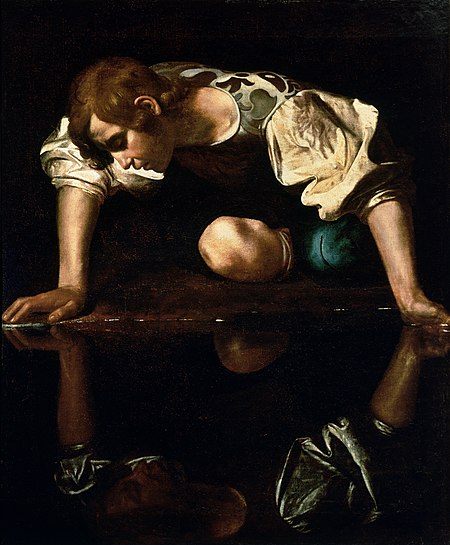
Narcicus Caravaggio

View all my reviews
Review: The Guide of the Perplexed

Review: The Guide of the Perplexed

The Guide of the PerplexedThe Guide of the Perplexed by Maimonides

My rating: 3 of 5 stars

This treatise has as its principal object to clarify the meaning of certain terms in the Bible.

Moses Maimonides, born in 1135, was and remains the most famous Jewish theologian in history, and this is his most influential book. Well, this is a part of his most influential book; more specifically, this is about a quarter of the whole work, the other three quarters having been pruned away by the editors of this volume. This was ideal for me, dabbler that I am, especially considering that the abridgement, so far as I can tell, was made with taste and skill.

The first striking aspect of this book is its accessibility. Maimonides writes simply and directly; indeed, sometimes I found the tone a bit pedestrian. The sentence I quoted above, the first sentence of the book, is quite typical of Maimonides. The work is written in the form of a (very long) letter to a perplexed pupil, broken into bite-sized chapters for easy comprehension. The only technical terms are those derived from Aristotle—essence, form, matter, etc.—which posed no problem for me.

The second striking aspect of The Guide is how similar Maimonides’s intellectual approach is to that of Thomas Aquinas. Indeed, the aim of both thinkers was more or less the same: to provide a rational defense and systemization of their respective faiths. Both lean heavily on Aristotle for this task, adopting his doctrines, terms, arguments, and philosophical style.

Of course this isn’t a coincidence. The attempt to harmonize Greek thought, specifically Aristotle, with religious thinking originated, I believe, with Muslim philosophers, and later spread to Europe. Maimonides himself was born in Muslim Spain (Al-Andalus), wrote in Arabic, and was clearly well read in Islamic philosophy. Later on, the works of Aristotle, translated from Greek into Arabic, entered Europe through Toledo, where they were translated from Arabic into Latin so that people like Aquinas could read them. Aquinas also read Maimonides, by the way.

Thus the three Abrahamic religions were engaged in almost the same philosophical project during this time. But of course, being of different faiths, the thinkers reached different conclusions. For example, Maimonides’s conception of God is strikingly different from Aquinas’s. Instead of expounding on all the different perfections of God, as does Aquinas—his omnipotence, omniscience, omnibenevolence, necessary existence—Maimonides holds that God’s essence cannot be described in any satisfactory way. In fact, Maimonides’s conception of God strongly reminded me of, and was perhaps influenced by, the Neo-Platonist conception of The One, the mystical, mysterious, ineffable fountainhead of all existence. Like Plotinus says of The One, Maimonides asserts that we cannot even attribute existence to God, since he holds that existing things are always composite, while there is nothing composite about God.

But for me, Maimonides’s most interesting opinion was his explanation of rituals, worship, and animal sacrifices. As he points out, “what is the purpose of His worship, since God’s perfection is not increased even if everything He has created worships Him and apprehends Him to the utmost possible degree, nor is it at all diminished if there is nothing in existence beside Him?”

For Maimonides the purpose of religious practice is not to please God through worship, but to know Him by training the mind and purifying the soul. The reason that God commanded rituals and sacrifices was only because the original Chosen People were still accustomed to idolatry, and thus they would not have accepted the true religion if they were not allowed to practice their religious customs. The rituals were, therefore, a kind of transitional device, allowing the people to turn their thoughts from idols to the true God. I found this explanation remarkable, since it anticipates the modern, historical approach to religion, while remaining within the bounds of orthodoxy.

Maimonides insists that the exterior forms of a ceremony are totally irrelevant if the practitioner is not thinking of God. It is the mental state of the worshipper, not their ritual actions, that are essential. This doctrine also reminded me of Neo-Platonic mysticism, wherein the final goal is a direct knowledge of the The One through mental discipline. But Maimonides is not so straightforwardly mystical as Plotinus, as he places much more emphasis on rational argument and the holding of the correct metaphysical and theological opinions.

This book was obviously not intended for me, since I am a nonbeliever, and Maimonides considers nonbelievers beneath contempt and not even worth responding to. Thus this book was of purely historical interest for me. This is, of course, not a bad thing, and indeed as a historical document it is rewarding. But I cannot say I found it an exhilarating read, since I not only disagreed with Maimonides’s conclusions but with his methods and his premises. Nevertheless, I am very glad to have read the book, if only because I have been intending to ever since my trip to Córdoba, his birthplace, and stood next to his statue in the Jewish district of that old city. Just like walking through those crooked, cobblestone streets, reading this book is a voyage in time.

(Photo by Selbymay; licensed under CC BY-SA 3.0; taken from Wikimedia Commons.)

View all my reviews

Review: Medieval Islamic Philosophical Writings

Review: Medieval Islamic Philosophical Writings

Medieval Islamic Philosophical WritingsMedieval Islamic Philosophical Writings by Muhammad Ali Khalidi

My rating: 4 of 5 stars

Just as one must protect unskilled swimmers from perilous shores, people must be shielded from reading philosophical books.

For a long time, I’ve been bothered by the tremendous gap in my philosophical reading. Most of the medieval period is simply a blank for me, an intermission that stretches from Boethius (480 – 524) to St. Thomas Aquinas (1225 – 1274). Part of the problem is that, for a variety of reasons, in most of Europe not much notable philosophy was being written in the years following the collapse of the Roman Empire; the major Christian philosophical project, scholasticism, didn’t get on its feet until St. Anselm (1093 – 1109) started writing. But another problem is that, owing to Western provincialism, most of the good philosophy written during these years isn’t read nowadays, because it was written by Muslims.

This collection was expressly put together to rectify this situation, and it does the job admirably. Now, instead of an enormous gap, I can move comfortably from Boethius to Al-Farabi (872 – 950), to Ibn-Sina, or Avicenna (980 – 1037), to Al-Ghazali (1058 – 1111), to Ibn Tufail (1105 – 1185), and finally to Ibn Rushd, or Averroes (1126 – 1198). This progression completes not only the temporal picture, but has the geographic advantage of leading from Baghdad to the Iberian Peninsula. We thus see the trajectory through which the works of Aristotle, preserved in Arabic translation, as well as copious commentary on Aristotle’s works, entered Europe, where they later gained ascendency.

The editor and translator of this volume, Muhammad Ali Khalidi, put it together for non-specialists. He made his selection with the hopes of showing the relevance of these thinkers to contemporary philosophical questions; but he also hoped to show something of the cultural significance of these philosophers. None of the selections is very long, and none is very difficult. It is a mere tasting, not a feast. For me, it was perfect, since I have only a layman’s interest in the subject.

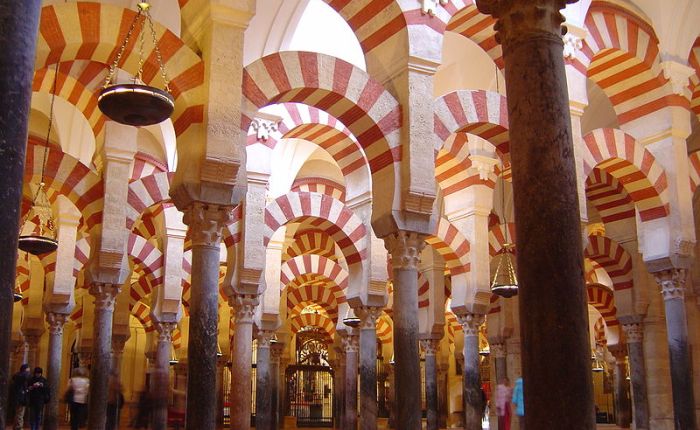
My interest was ignited in medieval Islamic culture through my visits to Andalusia, where I was continually astounded by the beauty of Moorish architecture. If a culture was vibrant enough to build the Great Mosque in Cordoba, I figured, then they must have had some excellent thinkers too—which they certainly did.

In what follows are my brief summaries and reactions to each of the pieces in this collection. But before that, I want to add my reflections on the whole. What most struck me during my reading was how familiar were the styles and ideas. Truly, medieval Islamic philosophy does not represent some alien tradition, or a mere curiosity, nor were these philosophers mere preservers of the Greeks; rather, they should be regarded as an integral part of western philosophical history.

The fact that we still read Aquinas but seldom Maimonides and rarely Averroes has little to do with merit, and more to do with religious allegiance. All three of these traditions were engaged in similar philosophical projects—namely, the harmonization of faith with reason, relying heavily on Aristotle. Incidentally, I can’t help thinking that the persistent Islamophobia (and Anti-Semitism) in the West would be less virulent if history were not taught in such a fashion that the contributions of Jews and Muslims to European culture were not so deemphasized. But I suppose that’s another matter.

Al-Farabi. Like nearly everyone in this collection, Al-Farabi was a polymath, writing not only on philosophy, but on music, math, science, and cosmology. But he is perhaps most important for being one of the first and most prominent Muslim philosophers to elevate Aristotle as the epitome of reason. His work in this collection is taken from The Book of Letters. It puts forward a schematic philosophy of history, during which he lays out what he considers the essential stages of historical development. Most striking is Al-Farabi’s elevation of philosophy. According to him, nearly every other discipline, practical or theoretical, stems from philosophy. Even religion takes second place. In Al-Farabi’s opinion, prophets do not access supernatural knowledge, but merely transform the insights of philosophers into metaphorical garb, so that common people can understand them. Indeed, for Al-Farabi almost all religion is just popularized, allegorized, simplified philosophy—Aristotelianism for the people, you might say.

Avicenna, or Ibn Sina, is the Thomas Aquinas of Islamic philosophy, except perhaps greater. An astounding polymath, he not only wrote encyclopedias of science and philosophy, but an encyclopedia of medicine that was still being used in Renaissance Italy. Like Aquinas, and like Aristotle himself, Avicenna was a great systematizer. He had a prosaic, orderly, and remarkably capacious mind, allowing him to compose encyclopedic works in many disparate subjects. In this collection is the short work, On the Soul, which is an investigation into the capacities of the human mind, with a special emphasis on epistemology. Unlike Al-Farabi, Avicenna didn’t consider prophets to be popularizers, but a kind of super-philosopher whose intellects intuit things faster than other people’s.

Al-Ghazali probably wouldn’t like being called a philosopher. He was, rather, a mystic who wrote against philosophy. Included in this collection is his Rescuer from Errors, which is a sort of intellectual autobiography. In it, he describes a crisis of faith he experienced when he realized that his religion was mere conformity. After doubting everything, he proceeded to study theology, which he found inadequate, and then philosophy, which he found slightly better, and eventually settled on being a mystic. This was by far my favorite work in this collection. Al-Ghazali is an excellent writer, and his procedure of radical doubt can’t help but remind one of Descartes. Indeed, if you’re inclined to doubt the existence of the world, becoming a mystic might be a more rational solution than the one Descartes settled upon.

Ibn Tufail (sometimes called Abubekar) was born in Moorish Spain, near Granada. In addition to being a philosopher, he was a novelist, physician, and court official during his lifetime. (Reading the biographies of these guys makes you really mourn the rise of specialization.) He contributes the longest section to this book, in the form of Hayy bin Yaqzan. Not exactly a work of philosophy, it is rather the description of a man born and raised in social isolation on a deserted island. The titular character, using nothing but his cleverness, manages to deduce the entirety of Aristotelian thought, and eventually becomes a mystic. I suppose this story was meant to demonstrate that revealed religion wasn’t necessary to reach the truth, but that a monotheistic mysticism could be deduced from experience. I found it quite unconvincing.

Averroes, or Ibn Rushd, was born in Córdoba (the same city where Seneca and Maimonides were born), and was perhaps the greatest Muslim philosopher after Avicenna. Interestingly, Averroes’s influence was bigger in Christian Europe than in Islam, because many of his key positions were seen as heretical. After his death came the trend known as Averroism, which held, among other things, that the individual soul is not eternal, only the universal soul which every individual shares. In this collection we find his The Incoherence of the Incoherence, a work written in refutation of Al-Ghazali’s work The Incoherence of the Philosophers. Al-Ghazali attempted to demonstrate that belief in causes and natural laws was heretical; there are no laws, Al-Ghazali held, and no causes except the direct intervention of God. Averroes quotes Al-Ghazali in extenso, and then argues against him point by point. The final effect is of a real debate, since Al-Ghazali anticipated many of the rejections that Averroes brought against him.

Well, that’s it for my review. I hope I’ve at least convinced you that there is a lot of historical and philosophical value in these pages, and in Islamic philosophy generally.

(Cover photo by Timor Espallargas; licensed under CC BY-SA 2.5; taken from Wikimedia Commons.)

View all my reviews