2022 in Books

2022 in Books

2022 on Goodreads by Various

My rating: 4 of 5 stars


I have the nagging feeling that I’ve gotten lazy about reading—as if I fail to prioritize it, or that it is rarer for me to get swept up into a book. When I examine the books I did manage to read, however, I see that I have had an altogether decent year in this department. In any case, it is wiser to focus on the positives.

As usual, my reading was divided between certain themes and a random spattering of other books.

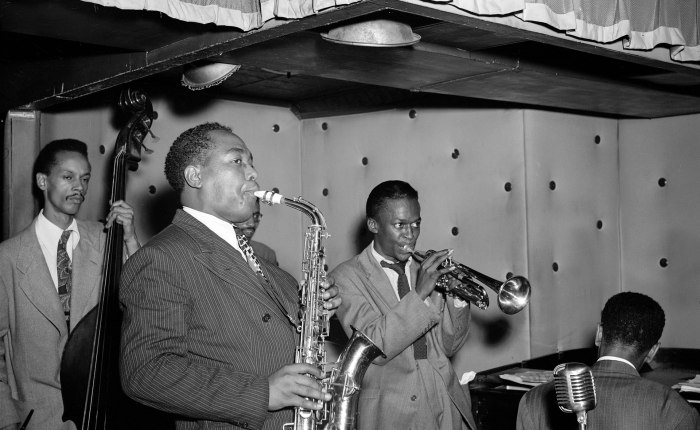
One major theme—arguably the dominant theme of the year—was music. The first book I completed was Paul McCartney’s The Lyrics, which coincided with my second viewing of Peter Jackson’s incredible Beatles documentary, Get Back. This reignited my Beatlemania and, more generally, my musical fandom. During the course of the year, I made my way through three books on blues, a history of jazz, a history of music in New York City, a history of modern pop music, biographies of Biggie Smalls and Bob Dylan, and the memoirs of Bob Dylan, Pattie Smith, and Miles Davis. Of these, the absolute best was Miles Davis’s Autobiography, which is so engaging, so full of great stories, so illuminating, that it easily ranks among the best books of the year. And I should also mention Malcolm Gladwell’s audiobook on Paul Simon, a delightful little gem. If nothing else, I am grateful to have reconnected with my love of music this year.

Another, rather vague category could be termed “nature and adventure.” This incorporates Ken Burns’s excellent documentary on America’s National Parks, a book about the Hudson River school of landscape paintings, as well as several accounts of getting lost in the wilderness. Most of these combine danger with discovery: Lewis and Clark’s journals on their voyage across the country, Ernest Shackleton’s account of his failed attempt to cross Antarctica, and Steven Callahan’s record of his struggle to survive in an inflatable life-raft. Best of all was Over the Edge of the World, Laurence Bergreen’s book about Magellan’s journey around the world. This last book was such a winning combination of excitement and historical interest that I would recommend it to nearly anyone.

In the realm of fiction, I made my way through some old classics: Eugénie Grandet, Eugene Onegin, The Charterhouse of Parma, Ivanhoe, As I Lay Dying, The Scarlet Pimpernel, and Their Eyes Were Watching God… My absolute favorite was younger, slimmer, and more stylish than these hoary volumes: Italo Calvino’s If on a winter’s night a travelerThough not profound, it is a delightful work which manages to be utterly post-modern without being annoying (well, it is slightly annoying). I should also mention Camus’s The Fall, which is certainly profound but not quite delightful.

By far the longest book I finished was a history of science in Spain, El país de los sueños perdidos. I feel almost silly for having dedicated so much time to it, since I neither enjoyed it very much nor learned what I hoped to learn. My most popular review of the year was of David Graeber’s posthumously released book, The Dawn of Everything, which somehow managed to be both brilliant and disappointing at once. Meanwhile, the most-represented author on my list is none other than Rick Steves. Somehow, this dorky, goofy tour-guide absolutely won me over. In addition to reading three of his books, I watched all of his travel programs on YouTube—learning a lot about European travel and travel writing in the process.

Two of the most moving books of the year concerned the holocaust: Anne Frank’s diary and Elie Wiesel’s Night. The books are, in a way, complementary, as they are both written from the perspective of a young adolescent swept up in this catastrophe—indeed, Wiesel’s book begins where Frank’s diary ends, at the gates of the concentration camp. These first-hand accounts of human cruelty were supplemented by Paul Preston’s book on atrocities committed during the Spanish Civil War. There seem to be no depths too deep for us to sink to. But since I don’t think a book review—or the year itself, for that matter—should end on such a dark, depressing note, I also would like to mention that I finally read some books on Norse Mythology, which were lovely.

I suppose if next year’s books are just as good as this year’s, I will have no cause to complain. And, as always, the pleasure will be all the greater with the Goodreads community.

To see the rest of my books, click here.


View all my reviews

Review: The Song Machine

Review: The Song Machine

The Song Machine: Inside the Hit Factory by John Seabrook

My rating: 4 of 5 stars

When I was quite young, somebody gave my brother and me a new toy for Christmas. It was a little plastic speaker, which played 60-second clips from popular songs from tiny memory cards called “HitClips.” Though primitive in retrospect, at the time it seemed like incredible technology—to us kids, at least—and I spent weeks driving my mother crazy by playing and re-playing the one-minute version of NSYNC’s “Bye Bye Bye” I had. My brother, meanwhile, had the HitClip of Bon Jovi’s “It’s My Life,” and now if I listen to either song it makes me slightly nauseous.

This was, however, probably the most significant intrusion of contemporary pop music into my childhood. My father is a musician and, under his influence, I became a fan of the music of his generation—the Beatles, Jimi Hendrix, the Who, Bob Dylan—and remained mostly ignorant of, and uninterested in, the music of my peers. Indeed, like many teenagers with pretentions to artistic and intellectual superiority, I was quite proud to be disdainfully unaware of what was on the radio. It was therefore quite interesting to retrospectively learn about this music via John Seabrook.

Seabrook examines just the music that I was busy snubbing my nose at: the pop music of the nineties and aughts, such as the Backstreet Boys, NSYNC, Brittney Spears, Rihanna, Kesha, Kelly Clarkson, and Katy Perry. However, as quickly becomes clear, these artists are not the real focus of the book. Rather, Seabrook wants to examine the far less famous people who actually write and produce the songs that make popstars so famous. Indeed, it is fairly uncommon for a pop star to actually write their own music nowadays, which is why they have to tour and perform so regularly—they do not make much money on record sales.

A surprising number of songwriters are Swedish (apparently, the culture or the language fosters melodic gifts), such as Max Martin—a man infinitely less well-known than the singers I listed above, but who has written many of the songs that made them famous. Martin, along with others such as Dr. Luke and Tricky Stewart, do not write songs the way you might imagine is the “normal” way. Rather than searching for chords and melodies on a guitar or a piano, they focus on making “beats” or backing tracks—usually, using only digital tools, a fact that has put many studio musicians out of business. Then, this track is sent out to “top line” writers, who come up with the melody and perhaps the title; and finally, a lyrics writer finishes up the product.

Working this way, a song can be created relatively quickly. This is key to the modern pop song industry, as it allows producers to search for potential hits via trial and error. The same backing track can be sent out to a dozen or more top line writers, who in turn send back their melodies and ideas for the song. Of these options, the most appealing is chosen, and then worked into a full song. Even at this point, however, it is not unusual for a recorded song to be canned for being deemed insufficient. With so many options to choose from, producers need only to release what they are confident will succeed. And this is not merely a matter of guesswork. According to Seabrook, there are computer programs which analyze songs and rate their likelihood of becoming popular.

Now, being a purist is a good way to make yourself unhappy. And, in any case, “authenticity” in art is difficult to insist on, as it is such a slippery thing to pin down. Even so, I have to say that my sneering teenage self felt amply justified by this book. But before I snub my nose, I must add some caveats.

First, as Seabrook points out, this is hardly the first time in history when songs have been written by professionals for purely commercial ends. From Tin Pan Alley, to the Brill Building songwriters, to Motown and Phil Specter, there have long been professional songwriters creating material for charismatic singers. And hardly anybody thinks it inauthentic, for example, when a trained soprano sings an aria written by a professional composer (and many opera composers were quite shamelessly commercial, recycling old material and working with tight deadlines). At the very worst, this production model puts pop singers on the same level as movie stars, who are admired and praised just for knowing how to recite their lines. If anything is new about the modern “song machine,” then, it is just that the producers nowadays have more advanced tools than their predecessors.

All of this being granted, I must admit that parts of the book turned my stomach. This was especially true of the chapter on K-pop, which describes how potential stars are trained to sing and dance from a young age, and whose lives—from their schedules, to their diet, or even the boundaries of their love life—are carefully managed. The section on the dispute between Kesha and Dr. Luke—which included allegations of abuse and rape—was just as upsetting, epitomizing the exploitative extremes of the business. Indeed, as another reviewer has pointed out, there is a striking gender imbalance in the industry, with the overwhelming of producers and songwriters being men. And, of course, even if it is not exactly new, it is never pretty to see the inner workings of industrialized pop culture. It is like a visit to a hot dog factory.

Seabrook, for his part, seems to have come to like contemporary pop music more as a result of his delve into this world. Well, to each their own I suppose. He has written an informative and entertaining book on a subject that most people are familiar with, but which relatively few understand, and so has earned the right to listen to as much NSYNC as his stomach can handle.


View all my reviews

Review: Over the Edge of the World

Review: Over the Edge of the World

Over the Edge of the World: Magellan’s Terrifying Circumnavigation of the Globe by Laurence Bergreen

My rating: 5 of 5 stars


I am a sucker for books like this—stories of survival and exploration—and this one must be among the best. It has everything: wild orgies, bloody battles, mutinies, shipwrecks, torture, disease, treasure—and all of this excitement is woven into a historically significant tale. Indeed, aside from being just a darn good story, Magellan’s voyage provides an insightful window into its time: the state of navigation, of European politics, and of global trade, as well as a snapshot of early European encounters with other cultures (it did not go well).

Magellan was arguably a victim of the same misconception that misled Columbus: namely, that the earth was significantly smaller than it really is. Just as Columbus believed that he could make it to Asia simply by heading straight across the Atlantic, so did Magellan believe that the spice islands would be within a few days or, at most, weeks sail beyond South America. Both were mistaken, though for Magellan’s crew the consequences were significantly more dire.

In the 99 days at sea between the strait which now bears the explorer’s name, and their first landfall at Guam, nineteen sailors died of scurvy, and many others fell gravely ill. (Of the 270 sailors who set out on the voyage, 173 would die, 55 would desert, 12 would be taken prisoner, and only 30 would successfully complete the circumnavigation.)

In retrospect, it is difficult to believe that Europeans could remain so ignorant for so long about the causes of the disease (vitamin C deficiency). Somehow, it did not even cross the sailors’ minds that their diet of biscuits and dried meat could be the cause of their ill health. Even seemingly obviously sources of evidence—such as their quick recovery upon eating fresh fruit, or the seeming immunity from the disease of all those (like Magellan) who were eating preserved quince—did not provoke any sort of epiphany. Instead, the sailors vaguely chalked up the disease to “bad air.” This is an illustrative moment in the history of science, for it shows how background assumptions and beliefs shape the sorts of things we are inclined to view as pertinent evidence.

Indeed, many aspects of this voyage strike the modern reader as absurd. For one, the expedition’s main objective was the acquisition of spices—namely, cloves, nutmeg, and cinnamon. Considering that virtually anyone can now obtain each of these spices in a supermarket for a pittance, it beggars belief that so many sailors would risk their lives for such a purpose. At the time, these “exotic” spices were only grown in a few islands in the Pacific Ocean, and were thus rarer and more valuable than gold. Nowadays, in the age of factory farming, this is obviously not the case—a vivid lesson in supply and demand. What used to be the quintessential marker of extreme wealth are now the standard components of a pumpkin spice latte.

Another absurdity is that Magellan never intended to circumnavigate the globe. Thinking that the spice islands (the Moluccas) were not very far from South America, his plan was to return the way he came. Instead, he proved that his new route to Asia was entirely impractical, with virtually no commercial prospects whatsoever. The Pacific Ocean (which he named) proved to be both far too big and not at all “pacific.” Ironically, the main accomplishment of the voyage was intellectual—proving, for example, that the earth was far larger than previously thought—which had nothing to do with its original purpose. Certainly, Magellan himself was the furthest thing from a scientist.

If I have one criticism of the book, it is that Bergreen is far too laudatory of Magellan, using words like “heroic” to describe him and his men. The man was undoubtedly impressive: brave to the point of foolhardiness, determined to the point of stubbornness, and a highly skilled navigator. However, he was hardly an exemplary leader. Brutal, cruel, highhanded, he did not inspire any loyalty among his armada. He was almost the victim of a popular mutiny (and, in any case, one ship did sneak back to Spain), and he was possibly abandoned by the bulk of his men during the battle that claimed his life. One can clearly see the shape of European colonization to come in his attempts at mass conversion and his willingness to kill and enslave those he comes across.

It is yet another irony that the man most famous for circumnavigating the globe only got about halfway before dying in an ill-advised and unnecessary battle. Interestingly, though in Spain Juan Sebastián Elcano—the captain who led the survivors back to Spain after Magellan’s death—is almost as famous as Magellan himself, the Basque mariner does not feature prominently in this book. Elcano, for his part, is certainly a less colorful character than the Portuguese commander, though he must have been a skilled leader to have successfully completed the voyage. (He later died of scurvy on another expedition.) In celebration of the 500th anniversary of the voyage (completed on September 6, 1522), there was even a cantata written in Elcano’s honor and performed at the National Spanish Auditorium. Unfortunately, there were no more tickets available, and I missed it.

Yet if this strange and terrible voyage had a true hero, I would argue it was neither Magellan nor Elcano, but the Venetian nobleman, Antonio Pigafetta. A gentleman scholar, he kept a diary of the voyage that has proven to be a trove of information. He was endlessly curious, and made genuine attempts to understand the language and culture of some of the places they visited. It is largely thanks to him that we have such a vivid account of the voyage. And I think a good story is worth all the tea in China—or all the cloves in the Moluccas.


View all my reviews

Review: Miles, the Autobiography

Review: Miles, the Autobiography

On a hot day a few summers ago, I took a trip to Woodlawn Cemetery, in the Bronx, with my dad. It is an enormous place, so even with the official map it took some time to find who we were looking for. Eventually we stopped the car and got out to front a large black slab, inscribed with two bars of music, so shiny that we could see our own reflections in it. This was the tomb of “Sir” Miles Davis (he was a member of the Knights of Malta), the man who had helped inspire my dad to devote himself to jazz bass.

Through my dad’s influence, I have been listening to jazz all my life (though not always intentionally), and I have come to know and love most of the great names. Some of them were right there in the cemetery: Duke Ellington, Max Roach, Coleman Hawkins. It was with this background that I approached Miles Davis’s autobiography, and I loved every minute of it.

The magic of this book is the skill with which Quincy Troupe has captured Miles’s voice. He is completely there, in all his profane glory (much to the chagrin of some readers). This, combined with an uncanny impersonation by Dion Graham in the audiobook, makes you feel like you are right in the room with him. But of course the person who ultimately deserves the credit is Miles himself, for agreeing to the project, and for being just so uncompromisingly blunt. His raw honesty is what makes this into a great autobiography.

And if you are in any way a jazz fan, this is a real feast. Miles knew close to everybody. From the very beginning of his career, he was thrown in with Charlie Parker and Dizzy Gillespie, right at the center of the Bebop world. His stories of Charlie Parker alone—who seems to prefigure Miles in many ways—are worth the price of the book. After his early years, Miles becomes a bandleader, and helps to launch the careers of many other musical giants: Cannonball Adderley, Bill Evans, John Coltrane, Herbie Hancock… In short, for decades Miles’s career was at the very center of jazz history. And more often than not, he was at the vanguard.

But this book is not just namedropping and a few memorable anecdotes. As I said, Miles the man really comes alive in these pages, and that means, most of all, his love for the music. Near the end of the book, he describes himself as having “musical demons,” and I think that is an apt description of the way that music ruled his life. It really seemed to open up the finest part of his nature: not only in pure musical expression, but also in his treatment of other musicians. Despite his mean reputation, he is generosity itself when discussing the accomplishments of his fellows, and does not stint on praise. This is what, I think, made him such an effective bandleader—he could really appreciate different sorts of musical gifts.

The dark side to an overwhelming obsession like this is that it leaves little in your life for other things. This is apparent in his often abysmal—indeed, abusive—treatment of the women in his life. This is perhaps even more apparent in his behavior as a father—or lack thereof, as his four children are barely mentioned at all in the book (he takes time to criticize two of his sons, though admits he had not been much of a father). Another major theme is drug abuse—an occupational hazard of touring musicians, I suppose—which ebbs and flows throughout his life. Indeed, his substance abuse and mistreatment of women often go hand in hand, as he depends on women either to enable his habit or to help him get clean. Suffice to say that this isn’t the autobiography of a saint.

The final impression is of a deeply restless man. He was never fully satisfied, and never content to sit on his laurels. This is what enabled him to stay musically innovative for so long, this constant searching. It is only near the end of his life that he seems to achieve a modicum of peace, and he accomplished this by turning to painting—another creative outlet that would make the musical demons quiet down. (I quite like his paintings, actually.)

As far as political opinions go, there really is only one Miles expresses, but he does so over and over: That white Americans are stealing black culture—copying styles of music and making millions off of them. Now, to me, this seems to be an obvious fact, as it has repeatedly happened throughout the course of history, most notoriously with Elvis Presley. So I cannot fault him for being resentful. I also think Miles is onto something when he says that black music is America’s one great contribution to world culture.

I picked up this book feeling curious, and put it down nearly obsessed with Miles. It is worth reading because he was one of the major musical forces of the last century, but also because it is simply a great autobiography by any standard. Miles was a complex, and contradictory person, and the book seems to capture his every vice and virtue, and even his living voice. I wish it were longer.

Review: Travel as a Political Act

Review: Travel as a Political Act

Travel as a Political Act by Rick Steves

My rating: 4 of 5 stars


Since Rick Steves has taken over my life lately—don’t ask—I decided to see how all his travelling has affected his politics. I was sort of afraid, given his background, that this book would be little more than a collection banalities and platitudes (“make friends with people from other cultures,” “don’t think your way is the only way,” and that sort of thing); but this book surprised me by being genuinely, well, political. Steves has definite opinions and a real message—with a few platitudes thrown in, too, of course.

It should be noted that, like almost everything Steves writes, this book is primarily for Americans. Many of his “lessons” will be obvious to people who live elsewhere. For example, he begins with a good chapter on the wars in former Yugoslavia. He paints a vivid picture of the how the Balkan countries are still scarred by the conflict—including a woman who still has a piece of shrapnel in her back. His point is simple: most Americans don’t know what it is like to be in a war, and seeing its effects up close might make us reconsider our proclivity to bomb and invade other countries.

Some of the content is to be expected by any thoughtful American who has travelled in Europe. It is hard not to think at least some aspects of life overseas are superior: public transport, social healthcare, bike-friendly cities, long vacations, family leave… the list goes on. I would add the lack of guns. After you spend some time in a country where you can be sure the vast majority of people—criminals included—do not have guns, the entire “debate” in the United States is immediately seen to be silly. When Americans argue that guns increase personal safety and ensure political freedom, the rest of the world simply laughs.

Steves is strongest on drug policy. He notes the many European countries which have substituted a public safety for a law enforcement model with drugs, and makes a strong case that it is both more humane and more effective than just locking people up. The travel writer is not just all talk, either, since he helped to promote and sponsor the bill to legalize marijuana in his home state of Washington. This is another excellent example of how travel can affect one’s politics, since the first time you travel to a country where marijuana is legal to consume, and notice that the sky isn’t falling, you wonder if it’s really worth imprisoning people for doing so.

The chapters on Iran and on the Holy Land were classic Rick Steves. They were both attempts to understand a conflict (between the US and Iran, and between Israel and Palestine) from a less partisan perspective. It is perhaps extremely naïve to think that by simply getting to know ordinary people “on the other side,” so to speak, we can reduce antagonism. As Steves himself makes clear, there are historical and structural forces at work, which push peoples into conflict. Nevertheless, I find it heartwarming that he so earnestly tries to focus on the ordinary humanity of these peoples, rather than on the political narratives. It is something we see all too little in conventional news.

The chapter on El Salvador was perhaps the most impressive. The United States’ interventions—often violent and undemocratic—in Latin American politics is something that most Americans are hardly aware of. It is an uncomfortable history to say the least, and only figures such as Noam Chomsky routinely talk about it. But Steves travelled to El Salvador during the Salvadoran Civil War, and several times after that, to see our foreign policy with his own eyes. He even had his travel diary printed and sent to members of Congress, in a bid (albeit an idealistic one) to stop American interference.

By the end, for someone who could easily have spent his life eating gelato for the camera, Steves is shown to be a man of strong convictions. Of course, the book is not perfect. Steves is prone to falling into stereotypes when he compares Europeans and Americans; and, not being an expert on anything he writes about, his analysis can be fairly superficial. And of course there is the trademark cheesy Rick Steves style—that is inevitable. But I think this book is valuable for voicing some opinions that are likely to be quite unpopular among many Americans, and for doing so in a way that is accessible and friendly. Maybe travel really is enlightening? Now, if we could only figure out how to fly without creating greenhouse gases…


View all my reviews

Review: The Dawn of Everything

Review: The Dawn of Everything

The Dawn of Everything: A New History of Humanity by David Graeber

My rating: 4 of 5 stars

Social theory is largely a game of make-believe in which we pretend, just for the sake of argument, that there’s just one thing going on…

This is a difficult book to review. Not only is it long and extremely ambitious, it is also a beguiling mixture of strengths and weaknesses that are difficult to untangle. To begin with, this book is not, as its title promises, a history of humanity; and considering that the book only examines the past 10,000 years, it is also not about the dawn of humanity, much less everything. Really, this book has a far more focused purpose: to dismantle the standard narrative of how humans went from hunter-gatherers to urban-dwelling agriculturalists.

The standard narrative—as found in many popular books, from Steven Pinker to Jared Diamond to Yuval Noah Harari—goes something like this: In the beginning, humans were all hunter-gatherers, living in small groups, taking only what they needed from their environments. Only the most rudimentary technologies were employed; yet there was no war, no poverty, no oppression, no office jobs, no television commercials, no taxes, no bureaucracy, no robo-calls—in short, it was a simple time.

Now, depending on whether you follow Rousseau or Hobbes, you may differ as to whether you consider such a state of affairs a paradise or a slaughterhouse, and thus you may think that the switch to city life was a fall from grace or a stairway to heaven. But both camps agree that agriculture implies hierarchy, since the extra resources freed up some members of the group to do things other than just gather food; and once there was specialization, there had to be people to coordinate the specialists—in a word, leaders, middle-managers, and bureaucrats. Thus, the egalitarian band of hunter-gatherers eventually became the walled city controlled by an oligarchy, or the great empire ruled by a monarchy, or the insurance office run by the regional manager.

The simplest way to characterize this book is that it is a long refutation of this narrative. The authors do this by citing counter-example after counter-example from the archaeological record. This is where the book is most entertaining, as a great many of these archaeological anecdotes are both surprising and fascinating. By citing this evidence, the authors attempt to show, first, that hunter-gatherers did not all have the roaming lifestyle or the total lack of social structure that is often projected onto them. Elaborate burials and, most conspicuously, large stone monuments paint quite a different story of our ancestors.

The authors go on to show that the transition to farming was not sudden, nor did it immediately lead to dramatic social changes. Many communities, they aver, practiced a kind of limited farming for centuries before they became full-time agriculturalists. Furthermore, there is no necessary connection between the switch to city life and the rise of hierarchy, or the rise of empires and the invention of bureaucracy. In a nutshell, the authors contend that the main characteristics of the modern state—centralized leadership, a monopoly on violence, an administration to carry out laws, and so on—are a kind of constellation of social features, all of which have diverse and, often, quite unrelated origins, and which only came together to form the modern state gradually. To put the matter most succinctly, then, our world of nation states was not the inevitable outcome of a deterministic process.

Now, summarizing the book in the above manner is not exactly fair. The central thesis of the book is all too often in the background, and the reader is instead swimming through a sea of examples and ideas, struggling to spot land. This is both a vice and a virtue, since many of these observations, arguments, and examples—though leading off in a thousand directions from the central path—are quite intriguing. Still, it does often feel as though the authors are trying to take on the entire world, criticizing everything from the naming of epochs in archaeological literature to the academic treatment of feminist theories of prehistory. Interesting, yes, but a little distracting.

How to evaluate the book, then? As an attack on a commonly held myth of how humans went from agriculturalists to urbanites, it is successful. At the very least, the authors convince us that prehistory is an awful lot more complex and compelling than the simple, linear narratives we often project onto it. Nevertheless, I found myself wondering to what extent this myth predominates in the academic community. After all, the direct targets of the authors’ criticism are popular writers, whose specialty is not even prehistory (Pinker, Diamond, etc.). When academia is mentioned, the authors portray researchers as so hopelessly specialized, or so beholden to prejudices, as to be unable to see the big picture. Is that true? Regardless, I do think this book has a lot to offer the interested layperson, at least. It is a successful popularization of archaeology.

Yet it would be remiss of me not to mention the obvious political motivations of the authors. Both of them anarchists, this book can be read as one long justification of their beliefs. It is as if they are saying, “See? Humans don’t have to life in states, with huge bureaucracies and oppressive hierarchies!” But I do not think this was necessarily a good rhetorical strategy for promoting their philosophy. For one, when we are considering what we should do now, today, in a sense it does not matter whether humans lived in this or that place, at this or that time, in an approximately anarchist manner. History is not destiny. What is more, the societies the authors discuss are so totally unlike our own—in terms of scale, technology, and accumulated history—that it does not seem particularly relevant, anyway. (I am not, you understand, arguing against anarchism here, only the rather heavy-handed role their sympathies played in the writing of the book.)

While somewhat overbearing, disorganized, and not altogether convincing, as a corrective to many other popular accounts of human history, this book is valuable indeed.


View all my reviews

Review: Auschwitz, a New History

Review: Auschwitz, a New History

Auschwitz: A New History by Laurence Rees

My rating: 4 of 5 stars


I am having difficulty writing a review of this book without getting sucked down into a spiral of sputtering despair. So I will try to keep it short. There is plenty of information about Auschwitz available on the market; so what makes this book “new”? The simple answer are the interviews. Rees has personally spoken to both survivors and perpetrators, and weaves their individual stories into a larger narrative of the camp. In this way, the book becomes almost as much a psychological study as it is a history.

Judged purely as a history, this book is good but not superlative. Rees does an admirable job of covering the broad sweep of the camp’s history, including many unexpected (and usually quite disturbing) details. However, the book’s brevity precludes any detailed examination, and I was often left wanting to learn more about certain aspects of the camp. Curiously, Rees also includes many stories that are outside the purported purview of the book—such as the story of how the citizens of Britain’s Channel Islands reacted to the Nazi’s persecution of the Jews—stories that are usually quite compelling, but which seem difficult to justify including in a book of this size.

It is as an examination of inmates and perpetrators that the book is most valuable. One conclusion is that the common Nazi excuse—that they were merely acting under orders—does not hold water. Indeed, Rees shows that the National Socialist organization did not have to rely on violent coercion in order to motivate its members; the majority of men in leadership positions were genuine believers in the ideology. This certainly describes Rudolf Höss, the camp commandant. Another conclusion, even more unsettling, is that people can change—not just superficially, but fundamentally—when put under extreme conditions. As one survivor put it:

People asked me, ‘What did you learn?’ and I think I’m only sure of one thing—nobody knows themselves. The nice person on the street, you ask him, ‘Where is North Street?’ and he goes with you half a block and shows you, and is nice and kind. That same person in a different situation could be the worst sadist. Nobody knows themselves.

Yet, for me, the book’s defining character is Oskar Groening. He was a low-level SS officer whose job at the camp was to count the money of incoming (and usually executed) prisoners. He is memorable precisely because he is so ordinary: he worked at a bank before the war and at a glass factory afterwards, leading a quiet life. Indeed, he disliked the violence and bloodshed of the camp—not on moral grounds, but because it sickened him. Nevertheless, he worked diligently at Auschwitz for years, counting up foreign currencies with hardly a spot on his conscience. Hannah Arendt was undoubtedly wrong in applying the term, ‘the banality of evil,’ to Adolf Eichmann; but it fits Groening like a glove. For him, Auschwitz was just a job—and a rather cushy one at that.

Indeed, if there is one general takeaway from this history, it is that only the most strong-willed of individuals can rise above their moral climate. Most people (and I am thinking of perpetrators, not victims here) simply go along with prevailing attitudes. There were plenty of ideologically committed Nazis, such as Höss; and there were probably many Groenings, who just wanted a stable job. But there is no record of a single SS officer deserting or refusing to serve at Auschwitz on moral grounds. Indeed, the most disturbing thing of all is that, without exception, none of the former perpetrators interviewed by Rees feel much, if any, remorse. Groening was finally motivated to speak about his experiences, in his old age, not because of lingering guilt, but because he encountered some Holocaust deniers (he wanted to assure them that it was real).

Though it may seem off topic, Rees includes a lengthy section on the Danish resistance to Nazi persecution, which forms a sharp contrast to the many stories of shameful cooperation (for example, by the French, the Hungarians, the Channel Islanders). But he does so to make an important point: in all of these cases, individual behavior seems to be largely a consequence of cultural and social influences. Just as there is no evidence that every Nazi was a true sociopath, so is there no reason to believe everyone in Copenhagen was a born angel. Indeed, as Rees emphasizes again and again, we are talking about people who, in other circumstances, would have been quite ordinary. Yet this is very disturbing, since it seems to exonerate evil doers while depriving the virtuous of their dues. This is a paradox of human behavior: only individuals can be held morally accountable, and yet individuals so often go along with their group. So if the Danes are ordinary as individuals, what explains their extraordinarily praiseworthy actions in this circumstance?

I don’t have the answer. All I can say that few books will make you feel less optimistic about our species than this one. Yet it is important to learn about Auschwitz for that very reason.

View all my reviews

Review: The Phenomenology of Perception

Review: The Phenomenology of Perception

Phenomenology of Perception by Maurice Merleau-Ponty

My rating: 3 of 5 stars

There are few things more unpleasant than reading a book that you do not understand. One is writing a review of one. But as this is the life I have chosen, I must come to terms with the hardship. There are various strategies for this predicament, none perfect. You can admit that you do not understand (embarrassing), pretend that you understand (risky), or try even harder to understand (exhausting). I have found that the surest method is usually to mix all three, hopefully keeping the reader guessing as to which strategy was employed at any given moment.* On we go.

Maurice Merleau-Ponty, along with Simone de Beauvoir and Jean Paul Sartre, formed the third wheel of the great existentialist tricycle that rolled through the twentieth century. While his two flashier comrades were busy plotting all sorts of revolutions in cafés (social, political, philosophical, aesthetic, sexual), Merleau-Ponty—more respectable, more sedate, and, dare I say, more bourgeois—was busy editing the magazine, Les Temps Modernes, shaping a solid academic career for himself, and enjoying the married life. The Phenomenology of Perception, his most famous contribution to philosophy, was just one of many triumphs in a parade of intellectual distinction.

Now, to cut to the chase, I did not enjoy this book very much, nor did I ultimately agree with much of what Merleau-Ponty (henceforth MP) had to say. But the man was brilliant and must be given his due.

The most influential parts of this book are concentrated in Part 1, on the body. It is telling that, before the twentieth century, this subject was almost entirely neglected by the philosophical tradition. For this alone, MP deserves quite a lot of credit. He also includes a chapter on sex, a subject that had hardly been touched since Plato advised that it is best avoid it entirely (the act, not the subject). Perhaps it helped that MP was married. (The list of unmarried philosophers is virtually identical to the syllabus in an introductory course.)

Another great virtue of MP is his engagement with psychological research. There is a long section devoted to the phenomenon of phantom limb, and an even longer one about a patient with brain damage known as Schneider. This latter case is quite fascinating, as Schneider’s injury profoundly impacted his ability to function, without either impeding his intellect or his motor function. His impediment consisted, rather, in his ability to sense his body, known as proprioception. That is, for Schneider, his body is rather like an object that he clumsily manipulates rather than an extension of his being. When asked to, say, draw a circle in the air, he must first wave his hand in the air, making shapes at random, until he can see what he is doing and, by trial and error, finally make the circle.

This is not an Oliver Sacks book, however; this (unfortunately) is a tome of French philosophy. So what is MP trying to say with all this? In a nutshell, his philosophy is Anti-Cartesian. By this I mean that he wants to dislodge the view that our subjective consciousness and the objective world stand irreconcilably opposed, totally distinct yet somehow in communication. MP prefers to see the subject and the world as two poles of a continuous field, with the body smack dab in the middle—both object and subject. This is in contrast to scientific materialism, which seeks to reduce the subjective to the objective, or to philosophic idealism, which seeks just the opposite.

Throughout the book, MP is at pains to contrast his own views with both the materialistic and the idealistic views, intending to sail a middle course that avoids the pitfalls of both. His solution is to turn reductionism on its head—that is, in characteristic phenomenological fashion, to regard basic human experience as fundamental and everything else as derivative. This basic human experience normally takes the form, in his view, of a gestalt—of a totality that transcends the combination of elements that compose it.

This is entirely within the tradition of Husserl and Heidegger (the two great influences on this book), in which logical arguments are discarded in favor of what an anthropologist might call a “thick description” of consciousness—that is, rather than trying to explain the world in the manner of a scientist, with theories about causal underpinnings, the phenomenologist operates more like an ethnologist writing a study of a particular village.

Advocates of this approach will argue that it is both logical and honest, since of course our experience is the only reality we have direct access to, and arguably all of our other theories and ideas are evolved from this primordial pool. And MP cannot, in fairness, be compared to the mystic or the monk who issues verdicts on the nature of reality based on his own private experience. As I tried to indicate before, MP’s philosophy is anti-Cartesian, by which I mean that he hardly even believes in “private” experience, much as Wittgenstein did not believe in private language. Experience is fundamentally worldly and only accidentally secret. In one of MP’s more poetic turns of phrase, he describes humanity as a “hollow” or a “fold” in being, “which can be made which can be unmade.” (This is in contrast to Hegel, who considered us a “hole,” and Sartre, who considered us a “nothingness.”)

This is reasonable enough. What irks me is that MP substitutes description for explanation. It could be perfectly valid, for example, to argue that depression—which responds to both medication and therapy, and which seems to have both physiological and psychological causes—is a non-reducible gestalt. And a phenomenologist as brilliant as MP may be able to pinpoint the exact structure of the depressed experience. Nevertheless, if we want to actually help a depressed patient, the irreducible richness of human experience will do little to avail us. We need either a therapy (inevitably based on some theory of the mind) or a drug (based on theories of biochemistry). In short, we need reductionism.

This is why much of MP’s philosophy rang hollow for me: it lacks the essential characteristic of an explanation, to reduce the complex to the simple. I must immediately grant, however, that reduction can easily be taken too far. As MP ably shows, for an awfully long time reductionist theories of human consciousness effectively ignored the uncomfortable fact that we have a body in addition to a mind. Similar criticisms can be lodged at any number of sociological or psychological theories of human behavior. Often these dogmas can blind us to the reality of the phenomena under study. Careful observers (and MP certainly qualifies) perform a great duty in puncturing these errors.

In short, my opinion of MP’s philosophy is rather mixed. But my opinion of his writing is decisive: I hated it. Whoever taught MP and Sartre how to write (someone at the École nórmale supérieure presumably) apparently did not believe in paragraphs. This book is one long block of text. I know this sounds petty, but for me the paragraph is the unit of writing, the fundamental organizing principle of prose. It tells us when one train of thought ends and another begins. At the very least, it provides a ledge where the mind can take a break from the relentless climb. Without at least two paragraphs per page, I feel lost and adrift. And it did not help that his prose is rather awkward and cumbersome:

The Gestalt of a circle is not its mathematical law but its physiognomy. The recognition of phenomena as an original order is a condemnation of empiricism as an explanation of order and reason in terms of a coming together of facts and natural accidents, but it leaves reason and order themselves with the character of facticity. If a universal constituting consciousness were possible, the opacity of fact would disappear.

The result is a book where some very sharp thinking is covered in dross and surrounded by masses of unfocused material. After Part 1, in which he makes impressive and original contributions, he spends the next two thirds of the book taking up every philosophical problem he can think of, fiddling with it, and then moving on, as if he thought the psychological material was not heavy enough. Thus it is a book that, while quite profound, is not nearly as profound as its author intended it to be. But if you shoot for the stars…

____________
*A fourth strategy is to write about something else entirely and hope nobody notices.

View all my reviews

Review: 9-11 (Chomsky)

Review: 9-11 (Chomsky)

9-11 by Noam Chomsky

My rating: 4 of 5 stars

For a book that is admittedly kind of a rush job (it consists of a series of interviews done within a few weeks of the attacks, at a time when we were still uncertain whether Bin Laden was responsible), it has held up pretty well. If you are familiar with Chomsky’s critiques of American foreign policy, there will not be very much new here. This book is, rather, an attempt to popularize his basic views; and this means contextualizing the terrorist attack of 9/11 within the history of America’s own violent attacks on other nations.

Ironically, though the tone and subject of this book are quite serious, I often found myself thinking of a comical exchange between Chomsky and the popular philosopher, Sam Harris. Harris presents himself as a paragon of reason; and as part of that, he attempted to have a sort of sober “exchange” of views with Chomsky. This quickly devolved into acrimony as Chomsky was not, shall we say, in a friendly mood. However, I do think that the exchange does, somehow, effectively pinpoint the ethical position that Chomsky is taking, and that so many people fail to understand.

The disagreement between the two centers around the 1998 U.S. bombing of the Al-Shifa pharmaceutical factory, in Sudan. Chomsky uses this as an example of American state terrorism, and in this book asks the reader what would be the response if the situation was reversed, and Sudan had bombed a U.S. pharmaceutical plant. Harris’s defense—and I believe this is the standard argument in favor of U.S. intervention—is that our intentions were pure. We did not mean to kill anybody or deprive anybody of life-saving medication; we were just trying to stop terrorists from producing weapons.

Harris presents Chomsky with several thought experiments, making the (rather facile) point that intentions matter when making ethical judgments. If I try to save somebody and they die anyway, I am ethically superior to someone who killed somebody and succeeded. But Harris overlooks the (I think) quite obvious point that there is a grey area between altruistic and hostile intentions—that is, not caring one way or the other—which, ethically speaking, is often hardly better than being actively hostile.

This aptly describes the mentality behind the U.S. bombing of Al-Shifa. Consider: If we thought that weapons were being produced by terrorists in, say, Brussels, would we have sent cruise missiles to blow up the building? Obviously not, because the “collateral damage” would be deemed totally unacceptable. And yet, in the case of Sudan—a much poorer country, where people are far more dependent on a single factory for life-saving medicine—the decision was made quickly in favor of attack. Clearly, Sudanese lives were not deemed as important as Belgian ones would have been; and this shows an ethical stance of disregard.

A great deal of Chomsky’s critique on American foreign policy boils down to an attempt to get us to consider all lives as equally valuable, and all nations as equally sovereign. That is, to stop applying a double standard—one treatment for poor nations, another for rich ones. We are still very far from this stance. If we found out that the attack of 9/11 originated in, say, Ireland, what are the chances that we would have invaded the entire country? As Chomsky points out, the U.K. did not invade and bomb Boston, even though many of its citizens actively funded the IRA.

We can see this uncaring attitude of American foreign policy in the August 29 bombing that killed 10 in Kabul this year. None of those killed were terrorists, but six of them were children. Harris excuses “mistakes” like this by pointing to limitations in our intelligence and our weapons technology. With perfect knowledge and perfect weapons, we would never kill any civilians. This is like hunting for ducks in a crowded city park, and then blaming the shotgun when a person gets hit. Being ethical means acting within the limitations imposed by a situation, and considering the possible negative consequences of an action. No drone strike would have taken place in Brussels. But again, the possibility of killing innocent Afghanis is given very little weight.

It is clear that we are dealing with a serious sort of moral blindness, since it leads us to commit blunders as well as crimes. We even seem to think that everyone else will see past the accidental death and destruction, and give us credit for our irreproachably pure intentions. Thus, we are surprised when our long occupation of Afghanistan ends in a humiliating defeat, as we cannot understand why the population does not rally around our wonderful American values. But what speaks louder: the beautiful words on our lips, or the thousands of dead in our wake?


View all my reviews

Review: The Omnivore’s Dilemma

Review: The Omnivore’s Dilemma

The Omnivore’s Dilemma: A Natural History of Four Meals by Michael Pollan

My rating: 5 of 5 stars


I feel compelled to give this book top marks, not because it I loved every second of it, and not because I agreed with every one of Pollan’s many opinions, but simply because I cannot imagine a better book about food. For a book dedicated to such a seemingly banal subject as what to eat for dinner, The Omnivore’s Dilemma is remarkably ambitious—so ambitious, in fact, that I am inclined to view my dinner with even more reverence than I customarily do.

The titular dilemma refers to the difficulty omnivores have in choosing what to eat. A panda or a koala does not have to spare a moment’s thought in deciding that question. But for a human, capable of eating everything from fried beetles to foie gras, this choice can be dizzyingly open-ended. Traditionally, culture has cut through this infinitude of options by prescribing a typical diet. But in the United States—a place nearly bereft of culture—we have come to rely on government regulation, food science, and big industry to take the place of these traditional prescriptions. The problem, as our waistlines reveal, is that these make poor substitutes.

So Michael Pollan sets out to investigate the American diet, using four meals as focal points. The first is an order from McDonalds, which represents industrial food. Unsurprisingly, it is a depressing picture. Farmers grow acres upon acres of genetically modified corn, which is itself not fit for eating, but meant to be processed into any number of food products. Much of this corn (along with soybeans) is also fed to cattle, who are not really evolved to eat the stuff, but are fed it anyway because the corn makes them fatter, faster. One of the more memorable scenes of the book is Pollan’s visit to a CAFO (concentrated animal feeding operation)—which is equal parts horrifying and disgusting.

The next meal is a dinner cooked with ingredients from Whole Foods, which represents industrial organic. Pollan takes the reader through the history of the organic movement, revealing how the designation “organic” has come to be defined by bureaucrats in ways that are not necessarily meaningful. The truth, he concludes, is that many of these products are only marginally better than their non-organic industrial counterparts. After that, we get to the centerpiece of the book: Pollan’s portrait of Polyface Farm, run by Joel Salatin. Salatin uses what you might call deliberately old-fashioned, small-scale techniques to create an ultra-sustainable farm—where cows, chickens, and pigs are used to graze, clean, and fertilize the soil. He sells his products directly to customers.

The final meal (after Pollan eats a chicken from Polyface) is one that he grows, gathers, or hunts himself. He shoots a wild pig, “hunts” some wild mushrooms, and gathers some vegetables from his garden to create what, for him, is the perfect meal. But why “perfect”? Because, Pollan says, this is the only meal he has ever had in which he knew exactly where everything came from, and what it took to get it to his table. In contrast to the meal from McDonalds, in other words—which is made out of who-knows-what from who-knows-where—the food is entirely transparent. This is Pollan’s ideal.

In the end, then, Pollan is advocating that we eat very much how Joel Salatin wants us to: old-fashioned, and small-scale. Perhaps it would be quickest to describe him as a modern-day Rousseauian—someone who thinks that the natural is always preferable to the artificial. He argues, for example, that scientists have not truly discovered what makes soil fertile or food nutritious, so traditional practices are possibly better guides. He thinks we should eat what we can get locally, and in-season, so that we can feel a connection to the land and understand where the food came from. He is, in a word, an anti-industrialist.

Now, that is quite an unfairly simplistic summary of Pollan’s positions. Even so, I cannot help but suspect that he is advocating something unworkable. I simply do not think that we could feed the world using farming practices like those in Polyface. And how could everyone in a major city eat locally? This is not to say that we cannot create more sustainable farms or attempt to reduce food transportation. But I don’t see this as a grand solution. Admittedly, Pollan was writing when the issue of global warming was not as omnipresent an issue as it is today. He has an entire chapter on the morality of meat-eating, for example, without mentioning what has become the primary reason for reducing meat consumption: greenhouse gas emissions.

It would be unfair to end this review without mentioning Pollans many virtues. For one, he is a great writer, able to both paint a scene and explain a concept with style. He is also intellectually broad. During the course of this book, he weaves a story together that includes chemistry, biology, government policy, history, philosophy, anthropology, and of course gastronomy. And he is thorough. He visits an industrial cornfield, buys a cow in a CAFO, spends a week at Polyface Farm, and learns to fire a rifle and identify wild mushrooms. I very much appreciated these eyewitness reports, as I often feel myself quite disconnected from my own personal food-chain.

In sum, if you want to think more deeply than ever before about what to have for dinner—so deeply that you accidentally start pondering the whole cosmos—then I can heartily recommend this book.


View all my reviews