Review: King John

Review: King John

King JohnKing John by William Shakespeare

My rating: 3 of 5 stars

And oftentimes excusing of a fault
Doth make the fault the worse by the excuse

King John is normally regarded as one of Shakespeare’s earliest and weakest history plays. The plot mainly concerns the king’s conflict with France over his legitimacy, since John inherited the throne from his brother, Richard the Lionheart, even though the late king’s son, Arthur, was alive and well. This leads to a rather silly confrontation between the two powers, in which they try to get the town of Angiers to recognize one of them as the true king, which the townsfolk resolutely refuse to do. The warring factions finally decide to just destroy Angiers—presumably for the satisfaction—until they receive the timely recommendation to marry the prince of France to the princess of England, thus uniting their houses. This is done, and succeeds in suppressing the conflict for about five minutes, until a Cardinal stirs up the war again (which leads to some notable anti-Catholic blasts from Shakespeare).

Compared to Shakespeare’s more mature works, the characters in this play are mostly stiff and lifeless, with far less individualizing marks than we expect from the master of characterization. As Harold Bloom says, at this point Shakespeare was very much under the influence of Christophe Marlowe, and follows that playwright in his inflated, bombastic speeches. I admit that the swollen rhetoric often had me laughing, especially during the first confrontation between the English and French parties. The pathetic and spiteful King John is somewhat more interesting, if not more lovable, than the rest, but the real star is Philip Faulconbridge (later Richard Plantaganet), the bastard son of Richard the Lionheart, and the only immediately recognizable Shakespearean character. As with Launce in Two Gentlemen of Verona, it is a relief and a delight whenever Philip appears onstage.

As far as notable quotes go, this play is the source of our phrase “gild the lily,” though it misquotes the play, which goes: “To gild refined gold, to paint the lily.” Also notable is this description of grief for a lost child, which many surmise expressed Shakespeare’s grief for his own deceased son, Hamnet, though this is pure speculation:

Grief fills the room up of my absent child
Lies in his bed, walks up and down with me,
Puts on his pretty looks, repeats his words,
Remembers me of his gracious parts,
Stuffs out his vacant garments with his form

View all my reviews

Review: Letters on England

Review: Letters on England

Letters on EnglandLetters on England by Voltaire

My rating: 4 of 5 stars

Time, which alone gives reputation to writers, at last makes their very faults venerable.

Voltaire and Rousseau are usually grouped together as the twin pillars of the 18th century, the first championing reason and reform, the second romanticism and revolution. After reading them back to back, I know who I prefer. Rousseau is arguably a far more original thinker and writer; yet his personality is so irksome and his arguments so irrational that it can be unpleasant to read him. Voltaire, by contrast, is witty, charming, and delightful; and after Rousseau’s lyrical fantasies, Voltaire’s deflating sarcasm is extremely refreshing.

This book is a collection of essays on topics related to England, written after Voltaire’s three-year stay on the island nation. He interviews a Quaker, visits Parliament, goes to the theater, and then expounds the philosophy of Bacon, Locke, and Newton. He skips lightly from topic to topic, a barb here, a jest there, while revealing an impressive range of knowledge—from inoculation to history, from theater to physics. In general his opinion of England is quite positive, arguably idealized, seeing England as a land of toleration and philosophy. Indeed, the only thing that Voltaire shows some reservation towards is Shakespeare, whose dramas struck Voltaire’s Enlightenment taste as lacking refinement.

The book was controversial when published, since many in France saw Voltaire’s praise of England—correctly—as veiled criticism of their own country. Nowadays, this political purpose only adds to the essays’ charms, as we see Voltaire as a champion of an open society, from religion to science to literature, in addition to an omnivorous intellectual. Few books pack so much into so little space.

View all my reviews

Review: Rameau’s Nephew & D’Alembert’s Dream

Review: Rameau’s Nephew & D’Alembert’s Dream

Rameau's Nephew / d'Alembert's DreamRameau’s Nephew / d’Alembert’s Dream by Denis Diderot

My rating: 4 of 5 stars

The best order of things, to my way of thinking, is the one I was meant to be part of, and to hell with the most perfect of worlds if I am not of it.

With this book, I come to the third member of the triumvirate of the French enlightenment. While Diderot’s writing may lack the sharp wit of Voltaire and the soaring lyricism of Rousseau, Diderot is nevertheless just as interesting and perhaps more lovable than his two more famous contemporaries. For Diderot maintained a childlike curiosity and an excitement for ideas that makes his writing straightforwardly pleasant, without any of Voltaire’s satiric malice or Rousseau’s paranoid egotism. It is interesting to note that, though Diderot was a widely respected writer during his lifetime, his most daring and original works, such as these two dialogues, remained unpublished until well after his death. It takes talent to be both a conventional and an unconventional genius.

Rameau’s Nephew, in addition to its philosophical content, is remarkable simply as literature. It consists of a dialogue between a philosopher (who most assume to be Diderot) and the nephew of the famous composer, Jean-Philippe Rameau, who is an eccentric, ne’er-do-well, moocher, bohemian sort of fellow, whose ostensible profession is to give music lessons, but who really makes his living by playing the fool and flattering rich patrons. The conversation takes many twists and turns, which gives Diderot the opportunity to include some barbs against his rivals and enemies. Indeed, it is difficult to say that any topic is the main focus of the conversation, since—as in reality—the speakers break off on tangents, bring up and drop points, interrupt each other and themselves, and so on. This veracity of Diderot’s representation, and the excellent portrait of a hedonist living on the edge of respectable society, give the dialogue a literary value independent of any intellectual considerations. On a philosophical level, what mainly interested me was the confrontation of a virtuous philosopher with a selfish nihilist.

D’Alembert’s Dream is a more strictly philosophical exercise, detailing Diderot’s materialistic theory of biology. His main contention is that all matter is sensitive, or at least potentially sensitive, and thus no mind or soul is needed to explain life, movement, memory, sensation, or thought. Though this hypothesis mainly consists of armchair theorizing, which may sound very facile in the light of serious research, Diderot does put forward a hazy idea of evolution in this dialogue. What is more, in his notion of characteristics disappearing for several generations, and then reappearing, he also hazily hits upon Mendel. Not content to simply write an essay, Diderot puts all this in the mouth of his fellow encyclopedist D’Alembert (who spends most of the dialogue talking in his sleep), Mlle de Lespinasse (a close friend of D’Alembert who hosted a famous salon), and a doctor that serves as Diderot’s mouthpiece. D’Alembert and Mlle de Lespinasse were understandably upset when they heard about this (especially considering that the dialogue ends with a ringing endorsement of masturbation), and even compelled Diderot to burn the manuscript, but another one (in the possession of Grimm) survived.

As I put the book down, I find myself wishing I could spend more time in the company of Diderot, whose writing is warm and direct, witty but not showy, intellectual but not pretentious, daring but not wilfully provocative. It is amazing that one man could find the time to write literary classics while keeping his day job as the editor of the Encyclopédie and a popular playwright.

View all my reviews

Review: Emile

Review: Emile

EmileEmile by Jean-Jacques Rousseau

My rating: 4 of 5 stars

If all the philosophers in the world should prove that I am wrong, and you feel that I am right, that is all I ask.

My reaction to Rousseau is very similar to my reaction to Thoreau, whose back-to-nature ethic owed much to Rousseau’s philosophy. Though constantly impressed with the breadth of their vision and the force of their rhetoric, I find the personalities of these two men—at least as manifested in their books—to be grating and unpleasant. When I am not underlining brilliant passages, I read Rousseau through gritted teeth and with frequent interruptions to roll my eyes.

I see much in common between these two Romantic devotees of nature. While Thoreau’s dour and stern demeanor is not comparable to Rousseau’s sentimental imagination, the two of them are self-involved, prickly, and vain. Both praise wild isolation at the expense of society because neither seemed to fit into the latter. Though the two of them were brilliant in the extreme, neither of them seemed to have reached the level of intellectual maturity that allows feelings to be submitted to reasons and other perspectives to be considered. Both of them fire off opinions with wild abandon, saying what feels good, without taking the trouble to thoroughly argue their points, to consider competing ideas, or even to make their own thoughts consistent.

To pick just one example of this last tendency in Rousseau, at one point he says: “Amid the uncertainty of human life, let us shun that false prudence which seeks to sacrifice the present to the future; what is, is too often sacrificed to what will never be. Let us make man happy at every age lest in spite of our care he should die without knowing the meaning of happiness.” And yet, almost immediately after this pronouncement, he insists that his titular pupil, after having fallen in love and proposed marriage, postpone the delight of union for two years—leaving his beloved to go travel—in order to learn to master his feelings. The book is rife with such inconsistency. And not only that but, as in Thoreau’s case, Rousseau’s manner of life was notoriously inconsistent with the principles he espoused, adding hypocrisy into the bargain. That a man who sent his own children to an orphanage should write a manifesto of education is rich indeed.

But Rousseau must be read and praised, this book above all, since he—as well as his American disciple—contributed a great deal to our common stock of ideas and the expansion of our cultural faculties. Under the guise of a treatise on education, Rousseau has written a universal reflection on human life, comparable to Plato’s Republic or The Brothers Karamazov for its omnidirectional scope. The novelistic device of describing himself as a tutor educating a child allows Rousseau to illustrate his philosophy of society, ethics, government, love, history, travel, religion, literature, and much else along the way, besides to his groundbreaking views on education.

Rousseau begins with his famous dictum that nature makes everything good, and it is human society corrupts our natural goodness into evil. His stated purpose is to illustrate how natural goodness can be preserved in a growing boy destined for life in society—that is, without Thoreau’s recourse of reverting to a state of nature. With this principle in mind, Rousseau blasts mothers for hiring wet nurses to breastfeed their children rather than doing it themselves. And though Rousseau’s reasons are fallacious, this advice probably did the world much good, since, in addition to the emotional bonding, breastfeeding allows important antibodies to be transferred from the mother to the infant.

After infancy gives way to childhood, Rousseau’s real educational work begins. Here he made another important contribution to child-rearing, by insisting that children’s minds are not suited to adult ideas and methods. A child is a different creature altogether and education must be suited to a child’s capacities and predilections. Lectures, sermons, and catechisms must be avoided; and using punishment and reward only corrupt the child. Instead the tutor must find ways to motivate the child to learn without ever seeming to do so. Rousseau the tutor is constantly devising tricks and schemes to get his imaginary pupil, Emile, to learn valuable lessons in a “natural” way—that is, relying on the child’s intrinsic motivation and using no explicit instruction. Everything in Rousseau’s model must simulate life and the child must work on his own conclusions following his own curiosity. The tutor is much more a guide—and, behind the scenes, an impresario—than a real teacher.

Following this procedure, lessons on magnetism and morality are woven into a magician’s act. Geography is taught by getting lost in the forest. Geometry is taught by attempting to draw and map. Botany and agriculture are taught through gardening. And so on, covering sciences, arts, and moral lessons. This way, Emile grows up into a competent, strong, and thoroughly honest boy with no social pretensions and no vanity whatsoever. At least, Rousseau assures us that this would be the result. By the time Rousseau takes Emile into Paris, as a young man, the student is disgusted at the foppery of the men, the arrogance of the philosophes, and the affected manners of the women.

More contentiously, Rousseau would not teach his pupil anything about God or religion until the age of eighteen, considering such subjects too abstruse and profound for a child to understand. He would not even teach Emile to read until shortly before that. And this is not all that occasioned scandal. Rousseau famously interrupts the story of Emile’s education to include the Profession of Faith of a Savoyard Vicar, the most well-known, influential, and controversial section of the book. Though couched in the language of philosophy, the Profession is essentially an argument against both organized religion and atheism in favor of deism, based on feeling alone. Voltaire, a deist himself, considered this the book’s only worthwhile section, only lamenting that it has been written by “such a rascal.” It was largely this trenchant criticism of organized religion that led to the book getting banned and burned in Paris and Geneva. And yet, ironically enough, the idea that inner conviction is a surer basis for faith than logic was to become a pillar of religious thought in the coming centuries.

The last section of the book consists in finding a mate for Emile. This is by far the most unpleasant part of the book. Rousseau’s view on women and their upbringing is reactionary and sexist to the utmost, not to mention unpleasantly marred by Rousseau’s own sentimental (and sexual) fantasies regarding women. Rousseau’s ideal companion for his pupil is named Sophie, and her education differs markedly from Emile’s. Sophie is to be a kind of passive doll, a creature not fit for reason or art, whose job is to caress Emile and to make his life easier. Rousseau describes their courtship with the drama of a novelist and the passion of an onanist. Both the principles and the writing are revolting.

Finally, after enduring a forced separation for his beloved—a very unnatural thing for Rousseau to recommend!—Emile settles down happily in blissful union with Sophie, and prepared to educate his own children along Rousseau’s lines.

This summary does not exactly do justice to Emile, since it omits all of the manifold digressions that Rousseau yields to in the book’s wandering course. Some of these are among the best sections of the work; others are pointless rambling. Even when he is not off in the bushes, Rousseau can be very repetitive, giving us five sentences where one would do, spending three paragraphs harping on a minor point. The final result is a book much longer than it has to be. This is Rousseau’s most conspicuous stylistic flaw, which he excuses in typical Rousseau fashion: “If this book is to be well written, I must enjoy writing it.” Unfortunately the author’s pleasure is often gotten at the expense of the reader’s. Yet the book’s best moments are masterful, rising to heights of power and lyricism that cannot be forgotten. Immanuel Kant famously had to read the book twice, the first time just for the style, the second for the content.

The flaws in Rousseau’s ideas are many and grave. Most obviously, Rousseau’s educational program is impractical in the extreme, relying on a perfectly wise tutor to devote twenty years of his life to a perfectly malleable pupil. This may be excused, however, by treating the arrangement as an explanatory device and not a real proposal to be emulated. More seriously, Rousseau’s conviction that nature is intrinsically good is, I think, incorrect and even incoherent. Natural disasters, such as the Lisbon Earthquake in Rousseau’s own lifetime, demonstrate that nature can be cruel and merciless; and in any case, how can you know what nature is, or where nature ends and human culture begins? Besides, doesn’t Rousseau advocate many “unnatural” things? The level of control exercised by his tutor over his pupil’s reality is far greater than any real parent or teacher.

Yet even when strictly viewed as an educational treatise, there is much to be praised in the book. Rousseau’s emphasis on experiential rather than theoretical learning was quite valuable. And his conviction that education must take into account the child’s development and maturity was a revolution. I also share his suspicion towards using external rewards and punishments to motivate children, since the bad is avoided and the good is sought for artificial, rather than instrinctic, reasons.

Of course the book’s merits extend much further than education. Taken together, Rousseau’s philosophy touched on every aspect of society, from philosophy to fashion, from labor to love. For all his naïveté, Rousseau seemed to have correctly sensed that his society was artificial and could not last. Thirty years before the revolution, he says: “The crisis is approaching, and we are on the edge of a revolution.” And he then goes on in a footnote: “In my opinion, it is impossible that the great kingdoms of Europe should last much longer. Each of them has had its period of splendor, after which it must inevitably decline.” Like Thoreau, Rousseau was a prophet and a true original, embittered by being misunderstood, isolated, and ostracized, whose all-too-obvious faults concealed the revolutionary reach of his vision.

View all my reviews

Review: The Realms of Being

Review: The Realms of Being

Realms of BeingRealms of Being by George Santayana

My rating: 4 of 5 stars

Mind was not created for the sake of discovering the absolute truth.

George Santayana wrote the four volumes of The Realms of Being over a period of about twenty years. The first volume, The Realm of Essence, was published in 1927 after several years of work; and the last volume did not appear until 1942. When published together, the work fills some 850 dense pages, making it comparable in bulk and bearing with The Phenomenology of Spirit, Being and Time, Being and Nothingness, and other metaphysical monsters. And yet the book received a lukewarm reception during Santayana’s lifetime and has not found a more receptive audience since. So what is in here that Santayana found worthy to devote his final years to?

On the surface The Realms of Being is a metaphysical system. Like a philosopher king, Santayana divides up Being into four territories: Essence, Matter, Truth, and Spirit. Each book is devoted to one of these lands, attempting to delineate its borders and chart its geography. Santayana begins with “essence.” For my part I think this term poorly chosen, since his doctrine has nothing to do with essentialism. Rather, Santayana means “form” in the Aristotelian sense. An essence is any form at all—whether given in sensation, defined in thought, or manifested in the universe. Essence is just pure distinction, any and every quality that differentiates one thing from another. So the look of the Mona Lisa under bright lighting is one essence; the look of the same painting under dim lighting is another essence; and so on, for every distinction imaginable.

According to Santayana, essence does not and cannot “exist”—that is, be a part of the physical universe. Yes, an essence can be temporarily manifested in the universe; but its real being consist purely in its qualities, purely in the fact that it can be distinguished. Mathematics and logic, for Santayana, are just systems of essences; they have no existence save their defined qualities. Since essence consists in pure distinction, the realm of essence is infinite and eternal. Form must be possible before any real thing manifests form. Thus essence logically precedes existence, and is unaffected by existence. And since the vast majority of possible forms will neither be manifested nor imagined, the realm of essence is mostly unexplored and unguessed at.

Matter is precisely the opposite. Matter is the very thing that an essence cannot capture, since it consists of substance, change, and duration. Matter takes up space and morphs through time. Matter is not controlled or guided by any essence, though some essences—such as the equations of physics—may help us to understand how matter behaves, at least locally. But why matter exists in the first place is inexplicable; and whether matter might behave otherwise in other circumstances is unknowable. If the realm of essence is like a shop full of empty dresses, matter is like an impatient child who tries on every dress in an unpredictable order, thus momentarily bringing the essence to life. Matter is the principle of existence.

The historical path that matter charts through essence is Santayana’s realm of truth. It is all the essences that have been, are, and will be manifested in the material universe. Again, Santayana’s choice of term is puzzling, since most philosophers would call this “reality,” reserving the name “truth” for the quality of being correct about reality. But Santayana thought it important to use historical terminology, which is why he called his last realm “spirit,” when his meaning is far closer to “consciousness.” Spirit is the awareness of any creature alive in the universe. Now, for Santayana consciousness has no function in the survival of an organism, since spirit is entirely impotent. Thus the task of spirit is merely to observe and enjoy the world.

This is Santayana’s system in a nutshell. I consider the above paragraphs a fair summary of the basic facets of his realms, and they took me about half an hour and barely a page of writing. So why did Santayana need twenty years and 800 pages? This is because the book is not quite what it at first purports to be—that is, a metaphysical system. Santayana himself disavows having written an ontology of the world: “I am not concerned in these Realms of Being with alleged separate substances or independent regions. I am endeavoring only to distinguish the types of reality that I encounter; and the lines of cleavage that I discern are moral and logical, not physical, chasms.”

Putting aside for the moment whether this can be accepted, let us look at what else The Realms of Being might be. Santayana’s style is certainly not that of a Kant expounding his system. As always, he is suave, eloquent, and cultured. The organization of the book is also not exactly systematic—one part building on the other, with appropriate subdivisions and appendixes—but thematic, tackling different subjects chapter by chapter. All together, The Realms of Being seems more like a series of humanistic essays on metaphysical themes rather than a system of ontology itself. Seen in that light, the book has considerable merits. Santayana was a penetrating cultural critic, and here serves as a sort of critic on the highest planes of abstraction.

Aside from the metaphysical and the humanistic, there is a third aspect to this book: the spiritual. In this way, Santayana’s book is comparable to the Enneads of Plotinus, an ontology that serves as the backbone for meditative or mystical practices. Santayana’s own system is entirely secular and naturalistic. For him, spirituality consists in the mind’s absorption in the realm of essence—in the pure contemplation of form. Remember that, for Santayana, consciousness is entirely impotent; consciousness itself has no power to change anything, but is just a kind of byproduct of the brain. Thus all the suffering we go through in our way through the world, and all the worrying and fretting we do about ourselves, is just a waste. Santayana’s solution to this predicament has much in common with Proust’s—the appreciation of essence, stripped of all attachment to the material world—although Santayana does not consider memory vital for this task.

Here are three ways that this book can be read. Yet, though it is rich with ideas and pungent with wit, The Realms of Being is not wholly satisfying either as a metaphysical treatise, a humanistic critique, or a spiritual guide. First, Santayana is difficult to take seriously as a philosopher because he never deigns to argue: “Technical philosophy abounds in unnecessary problems, which the truly wise will not trouble about, seeing that they are insoluble or solved best by not raising them.” While I fully agree with Santayana that the disputatious tone and nit-picking arguments of philosophy can be wearisome, I also think that mere assertion is hardly less irritating. Indeed, for all his literary excellence, Santayana failed to understand the rhetorical purpose of an argument. To give reasons for an opinion is not pure quarrelsomeness. By understanding the author’s reasons for believing something and for finding it worth writing about, the reader better understands both the what and the why of the point.

Santayana seemingly wants to play an impossible double game by writing metaphysics and then disclaiming metaphysics. He scorns professional philosophers and their subject; and yet who else could be interested in this book? And what does he mean by saying that his realms of being are mere logical or moral categories? The definitions that he gives of his realms are undeniably metaphysical in the traditional sense. Thus I see no way that he can escape from the necessity of arguing his points, unless Santayana escapes into pure subjectivism, claiming only to describe his own experience of reality. But then what would be the point of the book, aside from autobiography? And as a spiritual guide, the book hardly fares better. For Santayana’s main insight—to live absorbed in the moment—is widely preached, without all of the ontological baggage Santayana attaches to it.

The Realms of Being is most successful when read as a collection of critical essays. For Santayana does bring an unusual perspective to bear on many traditional problems of philosophy—the nature of logic, truth, mind, and so on—and writes with the polished elegance that is his trademark. As I hope my updates of the book have shown, these pages brim with epigrams and ideas, touching on a vast intellectual territory.

And yet it must be said that, even here, Santayana is not beyond criticism. Bertrand Russell summed up Santayana’s defect as a writer by comparing his style to a river so wide and so placid that you cannot tell you are moving. This is to say that, when reading Santayana, it can be easy to lose track of where he is going or why he is going there. Partly because of the lack of argument, his train of thought is never obvious; and so elegant sentence follows elegant sentence without apparent direction or design. The final result is that it is easy to put the book down without being able to remember what it was about.

For these reasons I would rank this book behind Santayana’s Scepticism and Animal Faith, which was intended as a critical introduction to The Realms of Being but which adequately sums up the system as well as provides an epistemological argument. Nevertheless, I do not regret reading this book. Santayana’s writing is suffused with a kind of infectious calm, bordering on languor, as if he is an ambrosia-sipping god looking down from Olympian heights. It is invigorating to see somebody so sure of himself, so willing to think in his own terms, so careless of approval. I envy his detachment and his self-assurance even if I do not adopt his system.

View all my reviews

Review: The Rise and Fall of the Third Reich

Review: The Rise and Fall of the Third Reich

The Rise and Fall of the Third Reich: A History of Nazi GermanyThe Rise and Fall of the Third Reich: A History of Nazi Germany by William L. Shirer

My rating: 4 of 5 stars

Reading this book is an ordeal. It is very long and very depressing. Charting the Third Reich from the birth of Hitler to the collapse of Germany, Shirer tells the whole story with the sweep of a novelist and the detail of an accountant. He wrote the book after having access to huge stores of documents captured by the Allies after the war. Diaries, schedules, testimonies from the Nuremberg trials, the minutes of meetings, and much more were the raw material marshalled to create this tome.

As is often noted, Shirer was a journalist, not a historian, a fact that helps to explain much about this book. He lived in Berlin as a foreign correspondent from 1933 to the end of 1940, reporting on the rise of Hitler and the beginnings of the war, until the threat of the Gestapo forced him to return home. This firsthand experience lent color to his narrative, but also focused his attention on readily observable events. Rather than talk of larger trends—social shifts, economic pressures, cultural developments—Shirer focuses almost exclusively on the doings of individuals in power, such as he had been reporting on.

This focus makes the narrative vivid and pleasingly concrete, but also results in a superficial analysis. A historian would naturally spend more time on the rampant inflation of the times, the institutional weakness of the Weimar Republic, the wider political trends in Europe, the mechanics of a totalitarian state, and so on. Further, Shirer’s explanation of why Germany embarked on such a destructive enterprise boils down to: because it is peopled by Germans. That is, he locates a kind of cultural essence in the German people, an essence stemming from the Reformation and especially Martin Luther, added to by Hegel and then by Nietzsche, which came to full fruition in National Socialism. But this sort of cultural essentialism is, for me, just intellectual laziness. It can be used to explain anything or everything, since these posited cultural qualities are vague and unobservable.

In any case wider historical analysis plays a very small part in this book, which is mainly a record of the decisions and actions of the leading men of the Nazi regime. That is to say that this book is a political and not a military history. The Second World War is discussed, of course, but only insofar as its developments affected or were caused by the Nazi leaders. Shirer is mainly concerned with charting the rise to power of these ruthless men: how they outsmarted the Weimar Republic leaders, fooled the international community, bullied and threatened their way to conquests, and finally instigated a war that resulted in their own ruin.

The balance of the book is tilted heavily towards the rise of the Third Reich. This can make for some dreary reading. In retrospect it is stupefying to witness how blind, inept, and spineless were Hitler’s opponents, first within Germany and then beyond its borders, until the final crisis spurred the world into action against him. Though Shirer’s sturdy prose is normally quite plain and unadorned, he has a steady instinct for the dramatic and writes several unforgettable scenes. Nevertheless the scale of detail Shirer saw fit to include sometimes weighs down the narrative into benumbing dullness. The endless, petty diplomatic maneuvers that preceded the beginning of the War—negotiations, ambassadors, threats, ultimatums, calculations, second thoughts, and so on—made it a relief when the soldiers finally started shooting.

These political dealings of the Nazis constitute the vast bulk of this book. It is a masterclass in how far a little cunning, shameless lying, and absolute ruthlessness can get you. It is also a lesson in the need to cooperate to take decisive action against common threats. In the years since Vietnam, many have concluded that the main lesson to be drawn from America’s foreign policy is the folly of interventionist wars. After the First World War, the Western powers were understantly ever more chary of violence. And yet, at least in Shirer’s telling of the history, a timely show of force could have nipped Hitler’s rise in the bud. If England and France had upheld their treaties and defended their territories and their allies, Hitler could not have amassed so much power at a time when the German military was still small. (Though it must be said that Shirer’s intellectual weakness appears here, too, since he attributes this inaction to pure cowardice.)

In any case, this does bring out an interesting dilemma in foreign policy concerning the benefits and risks of violent intervention. In the case of Hitler, timely action could have prevented a disastrous conflict. And yet in many other historical cases, such as with Saddam Hussein, the threat of non-intervention was vastly overestimated, while the cost of intervention vastly underestimated. The word “estimate” is key here, since these decisions must necessarily be based on guesses of future threats and costs—guesses which may easily be wrong. Since it is impossible to know with certainty the scale of a threat that a situation may pose if left unchecked, there is no surefire way out of this dilemma. This, of course, is just a part of a wider dilemma in life, since so many of our everyday decisions must necessarily be made based on guesses of what the future holds.

You can see that this book, though a popular account, is not lightweight in its details or its implications. Yet it does show its age. Published in 1960, it was written before many valuable sources of information became available, such as the French archives. It also shows its age in its occasional references to homosexuality, which Shirer treats as a perverted vice. This is, of course, morbidly ironic, considering the Nazi persecution of homosexuals (something that Shirer fails to mention). But all in all The Rise and Fall of the Third Reich remains a gripping popular overview of this nightmarish time.

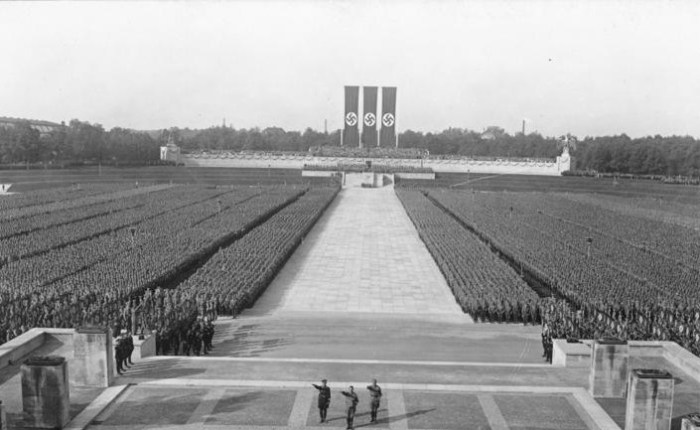
(Cover attributed to Bundesarchiv, Bild 102-16196; licensed under CC BY-SA 3.0; taken from Wikimedia Commons.)

View all my reviews

Review: The Aeronautic Adventure

Review: The Aeronautic Adventure

La aventura aeronáutica: Emilio Herrera, Juan de la CiervaLa aventura aeronáutica: Emilio Herrera, Juan de la Cierva by Carlos Lazaro Avila

My rating: 4 of 5 stars

This book has the very modest distinction of being the only book I’ve read whose author I have interviewed. Carlos Lázaro is a history teacher at the school in which I work; and when he is not scolding students or grading reports, he is researching Spanish military aviation history. This is one of the numerous books he has published on this topic.

La aventura aeonáutica is a dual biography of two of the most important innovators in Spanish aviation history: Emilio Herrera and Juan de la Cierva. Herrera was of the same generation as the Wright Brothers. His specialty was lighter-than-air crafts—dirigibles, zeppelins, and so on—to which he made great practical and theoretical contributions. Among his many accomplishments was his participation in the first intercontinental flight of the Graf Zeppelin, which earned him a ticker-tape parade in New York City. He also designed what is considered the first spacesuit, for a planned but never realized ascension to the stratosphere. Later in life he was also important for his loyalty to the Spanish Republic in exile, even becoming its (mostly ceremonial) president.

Juan de la Cierva is mainly remembered for his invention of the autogiro, or autogyro. This was a sort of early-generation helicopter, designed to fly at speeds impossibly slow for fixed-wing aircraft. The principle of the autogyro is, however, quite different from that of a helicopter. Most notably, the rotor on top is completely unpowered. Forward thrust is provided by a small frontal propeller. This motion pushes air up into the rotor, causing it to spin—though notably, unlike in a helicopter, the air flows through the rotor upwards, not downwards. The rotor’s blades are angled so that the rotation provides lift. You may think of an autogyro as a plane whose wings rotate rather than stay fixed. For this reason autogyros cannot take off and land vertically, nor can they hover, unless there is a countervailing breeze. In any case, I hope you can see from this description that this was an ingenious and original contribution to aeronautic technology.

Like Herrera, De la Cierva was politically active; unlike Herrera, De la Cierva was a committed member of the Right, and threw his support behind Franco. His life was cut short in a plane crash—ironically a passenger plane, not any experimental flight—while trying to organize international support for the coup.

I found the lives of these two men fascinating, since I had not even known their names beforehand, much less any of their accomplishments. The book is admirably informative and concise, full of attractive photos and nifty little side-panels. Hopefully I will visit the Museo del Aire in Madrid soon, to see some of these historical craft for myself.

[Cover photo licensed under CC BY-SA 3.0; taken from Wikimedia Commons; author unknown.]

View all my reviews

Review: Two Gentlemen of Verona

Review: Two Gentlemen of Verona

The Two Gentlemen of VeronaThe Two Gentlemen of Verona by William Shakespeare

My rating: 2 of 5 stars

I think Crab, my dog, be the sourest-natured dog that lives.

Two Gentlemen of Verona is usually grouped with A Comedy of Errors and The Taming of the Shrew as one of Shakespeare’s early comedies. I am inclined to see it as the earliest, if only because it is by far the least compelling. Whereas Shakespeare is rightly known for the depth of his psychological insight and the realism of his characters, the personages of this play are shallow and implausible creatures.

The two titular gentlemen are anything but. Proteus is a cad, a lout, and finally a monster, while his friend Valentine is a nincompoop. The women who capture their hearts are rather more compelling—especially Silvia, who sees right through Proteus—and yet their attraction to these unscrupulous airheads dims their stature as well. The final scene is the culmination of everything wrong with this play: after banishing his friend and lying through his teeth, Proteus tries to rape Silvia, and is then immediately forgiven by Valentine (note: not Silvia), in an ambiguous line that, at first glance, seems to mean that Valentine is gifting him his paramour Silvia. The scene could almost be funny if it were played as a farce, but the straight version I saw was sickening

The real heroes of this play are Proteus’s servant Launce and Launce’s dog Crab—a mutt who, despite having no lines, is better-realized than any of the protagonists. Now with Launce we have the real Shakespearean magic: a living, breathing, fully human character, immediately relatable and deeply compelling. His hilarious monologues are the jewels of this play, which does not deserve him. Other than this pair, the play is only interesting for prefiguring many of the themes Shakespeare would later explore with greater clarity and depth.

View all my reviews

Review: Selected Writing (Ruskin)

Review: Selected Writing (Ruskin)

Selected WritingsSelected Writings by John Ruskin

My rating: 4 of 5 stars

Taste is not only a part and an index of morality;—it is the ONLY morality.

John Ruskin can be said to be the John the Baptist of the religion of art, a herald of things to come. He was shortly followed by the great aesthetes, Walter Pater, Oscar Wilde, and Marcel Proust—who all read and were deeply influenced by his work. But Ruskin himself cannot be called an aesthete—at least, not in the sense that he considered aesthetic appreciate the central goal of life. For Ruskin, art provided not only aesthetic pleasure but genuine moral instruction; great paintings could be read like psalms, and great buildings were sermons in stone.

In this, as in so many other ways, Ruskin can be jarring for the modern reader. Indeed, his ideas were jarring even back then. He made a profession of insistently, dogmatically, and unequivocally asserting opinions that, to most people, seem manifestly untrue. The most notorious of these opinions is thus summed up by him: “You can have noble art only from noble persons, associated under laws fitted to their time and circumstances.” Unethical people, therefore, could produce only base art. And if an entire age habitually produced shoddy paintings and buildings—as Ruskin believed of his own age—then there must obviously be something deeply wrong with that society.

Art and society were thus, for Ruskin, deeply intertwined. This is the bridge that connects his art and his social criticism. Art is never just for art’s sake; it has a didactic and a moral purpose. A work of art is great in proportion to the greatness of its ideas; and these ideas are not the products of an eccentric individual, but of a whole culture, evolving and refining itself through generations. Every great work that results from this evolution “is the embodiment of the Polity, Life, History, and Religious Faith of nations.” As such, these works have a vital social purpose; and it is the job of the art critic to explicate their moral significance. We see this most clearly in Ruskin’s major works on architecture, The Stones of Venice and The Seven Lamps of Architecture, which are concerned, above all, with the ethical lessons inherent in gothic architecture.

For Ruskin, however, art was not only moral, but truthful. From this conviction came his youthful defense of J.W. Turner in his five-volume Modern Painters. Turner’s works, he thought, revealed a deep insight into the workings of nature; and since Ruskin was himself keenly sensitive to natural beauty, especially mountains, he became Turner’s champion. The job of the landscape painter, like that of the poet, is to record nature as faithfully as possible. Inferior painters and poets allow themselves to be overpowered by emotions, which lead them to personify or to distort nature: Ruskin called this the “pathetic fallacy.” But the truly great painter or poet, the Turners and Dantes, are always in complete control of themselves.

One can see why this was jarring. Most of us naturally distinguish whether something is good, beautiful, or true; but Ruskin insisted that these qualities were inextricable. Art could not be great if it was immoral or if it was untrue. Indeed, for Ruskin, you might say that these qualities were not separable at all; having any of them without having all three was inconceivable. But their existence was not dependent on solitary, virtuous geniuses. To the contrary: the ability to understand nature only exists in developed cultures; moral systems are the products of peoples; and great art can only exist within a school and a tradition. Society was therefore deeply important for Ruskin, being the wellspring of everything he admired and sought.

The later half of his life was, as a result, spent in social reform. Specifically, Ruskin set himself up as the enemy of industrial capitalism. Gothic art was great because each workman was an artist; but in mass-production the workers are reduced to machines. The division of labor is, as he said, really the division of souls, allowing for efficiency but stunting human growth. The ethic of enlightened selfishness could never inspire any great works, since the highest ethical value is selflessness. The environmental destruction wrought by industrialism was not only a crime against future generations but a crime against ourselves, since we were destroying the truth and beauty of nature, which is one of the vital sources of happiness.

This is the quickest summary I can give this selection of Ruskin’s work, whose volumes fill many shells and touch on many different disciplines. There are many reasons to dismiss Ruskin’s ideas. The relationship of beauty to truth and to goodness is obviously more complicated than he insisted. Murderers, rapists, and thieves have been great painters. Honorable men have built ugly houses. And what is the truth of a symphony? But for me it is a relief to find someone who finds beauty so socially vital.

I have spent far too long in concrete landscapes, surrounded by endless rows of identical houses, each one ugly in itself and uglier en masse. The effect that such thoughtless dreariness has on my mood—in contrast with the great enlivening freshness I feel when in a lovely city—has convinced me that architectural beauty is not merely an added frill or an extra perk, but is a positive social good. And it is difficult to dismiss Ruskin’s ideas on architecture, society, and the economy when one goes from a modern suburb to a well-preserved medieval town. How is it that finer houses were built by peasants? How is it that the most wealthy society in history can produce only the most mindless repetition, vast labyrinths of stupidity, destroying whole landscapes in the process?

Ruskin is the prophet of this phenomenon, and thus valuable now more than ever. But apart from this, Ruskin is worth reading just for the quality of his writing. His early style, flowery and involuted, gave way to a clearer strain later in life. But throughout his career his prose is rich with observation and abounding in memorable phrases. Even if one disagrees with all of his conclusions, it is impossible to read him without some stimulating thought.

View all my reviews

Review: Lazarillo de Tormes

Review: Lazarillo de Tormes

La vida del Lazarillo de TormesLa vida del Lazarillo de Tormes by Anonymous

My rating: 4 of 5 stars

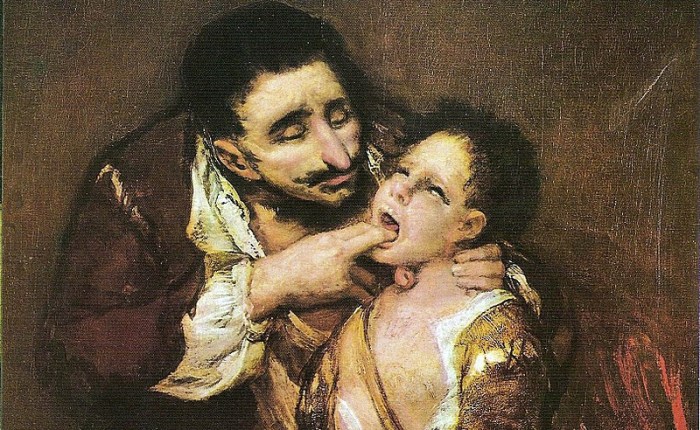
One can imagine the anonymous author of Lazarillo de Tormes sitting down to write in a mood similar to that of Erasmus when he penned In Praise of Folly, or of Voltaire when he composed Candide: full of the wry amusement of one engaged in a learned, witty, and irreverent literary exercise. And yet this book, like those other two, quickly became something far more than an elegant diversion. For with Lazarillo the author spawned an entire literary genre, the picaresque, creating a character and a story that have retained their charms long after the targets of the author’s satire have passed out of this world.

The most conspicuous target of the author’s derision is the church—which is likely why the author wished to remain unknown. Pardoners, priests, friars, and chaplains are exposed as hypocritical sinners—as gluttons, profligates, and fornicators, with a pious word for everybody. But the writer also takes aim at the inflated sense of honor that infected society in his day, which most famously compels a starving knight to go about town, pretending to be well off, preferring to suffer and even to die rather than have his poverty revealed.

We see all this through the eyes of Lázaro, a man of humble origins whose highest ambition is to have a full belly. This proves extremely difficult, however, as he goes from one master to another, each of them proving unable or unwilling to satisfactorily feed the ravenous rogue. Like all picaresque heroes, Lázaro is, at bottom, simple and good, with a robust and hearty humor, but who is nevertheless forced into cunning and trickery by hard circumstances. This formula—so successful in the age of television—was used to its full potential in its first historical appearance. Even through the difficult lens of old Castilian, Lázaro’s schemes to steal some crumbs of bread or some swigs of wine are still wonderfully funny.

But the novella is more than a slapstick comedy. The necessities of his belly and the earthiness of his mind allow Lázaro to penetrate all the hypocrisies of those around him—since, after all, hypocritical words cannot be eaten. Lázaro thus proves the ideal vessel for exposing the gulf between being and seeming. The reality he faces is bleak: full of sin, suffering, and poverty. And yet his society is in a state of constant denial, covering up this bleak reality with noble phrases and unheeded pieties. That this is more or less always the case in human life is why this book remains one of the jewels of Spanish literature.

View all my reviews