Review: The Warren Commission Report

Review: The Warren Commission Report

The Warren Commission Report: The Official Report of the President’s Commission on the Assassination of President John F. Kennedy by Warren Commission

My rating: 4 of 5 stars


Before launching into this review, I ought to say why I read this infamous report in the first place. I have never been particularly interested in JFK or the assassination, and thus I knew just the bare basics of the official story and the conspiracy theories. My interest in the book was actually sparked by Werner Herzog, who named the Warren Commission Report as one of his favorite books. I read the report, then, mainly to appreciate how the story is told and the conclusions are reached, rather than to find any hidden truths of the assassination.

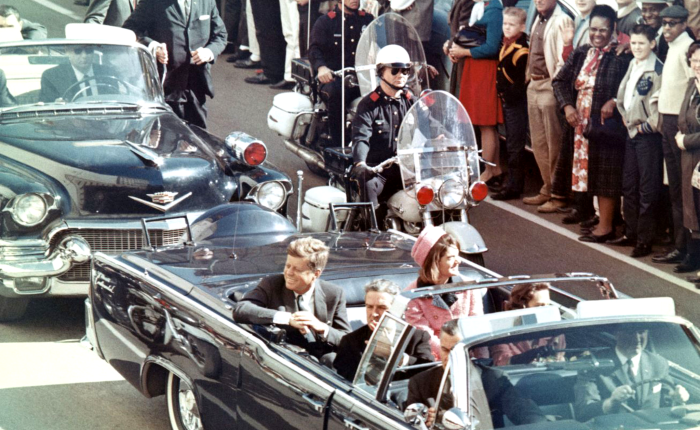
From the first pages, I could see what Herzog enjoyed about the book. In the guise of a bureaucratic, governmental document, we have an excellent true crime thriller. Unlike the overworked detectives of cop shows, the Commission had the nearly unlimited resources of the United States government at their disposal, and were able to perform any tests they wished. Expert riflemen attempted to replicate the shots; key witnesses were timed reenacting their movements; a car was driven at the exact speed as the presidential limo while pictures were taken through the scope on the rifle; the frame rate on the Zapruder film was used to determine the exact timings of the shots fired; and so on.

This way, the Commission closes in on the conclusion: it was Oswald—and only Oswald—from the sixth floor of the Texas School Book Depository. Every minute is accounted for, every movement is traced, every alternative theory is considered and discarded. It is, in short, a tour de force in the prosecutorial arts.

Yet I think this does not fully explain the report’s appeal to Herzog. Speaking purely in terms of aesthetic appreciation, what is especially compelling about the book is how grand, potentially historic conclusions follow from tiny questions of fact. Could the rifle be operated fast enough? Was the shot too difficult? How many shots were heard? Among the delights of Herzog’s best documentaries is the sensation of a profound abyss of mystery opening up in unexpected places. And the report certainly provides that sensation.

Now, I think it would be remiss of me if I did not at least attempt to comment on the plausibility of the report’s conclusions. I should say that, going into it, I was highly disposed to accept Oswald as the lone gunman. After all, we live in the era of mass shootings, most often carried out by loners with inscrutable motives. Indeed, Lee Harvey Oswald—a 24-year old white guy, a misfit with few friends—seems like the textbook example of a mass shooter. As a case in point, the would-be assassin of Donald Trump, Thomas Matthew Crooks, seems to have had a similar profile.

And the evidence linking Oswald to the crime is quite strong. There is the picture of him with the rifle, the fact that the rifle was found in his place of work, the visit to his wife the day before to pick up the rifle, the fact that he immediately fled the scene, his history of impulsive decision-making, his interest in left-wing movements, the total lack of an alibi, the multiple witnesses linking him to the subsequent murder of officer Tippit, resisting arrest shortly thereafter with a gun on his person… The list goes on.

What is more, in addition to the (apparent) lack of evidence linking Oswald to a conspiracy, several considerations seem to make such a link unlikely. For one, it is not as if JFK was a highly unusual president in terms of his politics. If Kennedy had been proposing something truly radical—provoking a nuclear war with the USSR, say, or instigating a communist revolution in the USA—then I could imagine a sizable contingent of disloyal personnel who might want him dead. But the fact is that JFK was a liberal anti-communist, and he was succeeded by… LBJ, a liberal anti-communist.

As for the Soviet Union, they would appear to have had little to gain and much to lose by getting involved in an assassination attempt, since discovery could provoke a massive war, and success did not materially benefit them in any way. The connection with Cuba is admittedly plausible, if only because of Kennedy’s many dealings with the country (the Bay of Pigs invasion, the Missile Crisis, attempted CIA assassinations of Castro…).

As for LBJ, though he was as power-hungry as they come, and had a penchant for unscrupulous behavior, it is frankly difficult for me to believe that, as Vice-President, he could have wooed away enough government agents, and sworn them all to absolute secrecy, in the service of his personal ambition. A single whistle-blower would have toppled the plan—and humans are bad at keeping secrets.

This is all to say that I found the report extremely believable. But in the interest of fairness, I decided to watch the first major documentary questioning the conclusions of the report: Rush to Judgment. This is the film version of a 1966 book by Mark Lane, a lawyer. And its premise is, I think, a fair one. If the Warren Commission was the posthumous prosecution, Oswald also deserved a posthumous defense, which Lane intended to provide.

To start, I think it is only fair to point out some considerations that undermine the report’s conclusions. The most conspicuous one is that LBJ created the Commission to prove to the public that Oswald was the lone gunman, in order, in his words, to avoid a war that could “kill 40 million Americans in an hour.” That is to say that the Commission worked to prove a foregone conclusion, ostensibly to avoid a crisis in international relations. And, of course, the killing of Oswald by Jack Ruby before he could be tried cannot help but raise eyebrows.

In his documentary, Mark Lane interviews several witnesses whose testimony does not conform with the official story. Many people from different vantage points report hearing the shots from—you guessed it—the grassy knoll, and some even said they saw smoke in the air. Mark Lane also probes potential connections between Jack Ruby and the Dallas Police Department, including officer Tippit, and he portrays the so-called “magic bullet” theory (namely, that a single bullet pierced Kennedy’s neck and wounded Governor Connally) as being inconsistent with the evidence.

For me, the contrary eye- and earwitness testimony is fairly easy to discount. In such a chaotic environment, with people running everywhere, several vehicles on the road, and many hard surfaces for sounds to reflect from, I think it would be difficult for an unprepared observer to localize the source of a sound or even to make a precise count of the shots. In any case, given the somewhat contradictory testimony, many people simply must be mistaken.

The argument that Oswald was not a good enough marksman also strikes me as weak. Oswald had military training, an accurate weapon, and in any case there’s always an element of luck involved. (Thomas Matthew Crooks missed by a fraction of an inch—the difference between a historic turning point and a footnote.)

Many conspiracy theories rely on a close examination of the Zapruder film. Among the arguments made are that Kennedy jerks back instead of forward in response to the lethal shot to his head (indicating it came from in front and not behind), and that Connally seems to react the first shot—the “magic bullet”—a couple seconds after Kennedy clutches his throat.

For what it’s worth, to my eyes it does look like the president is shot in the head from behind (it’s gruesome to watch). But the timing problem between Kennedy’s and Connally’s initial reactions is harder to explain if they were, indeed, struck by the same bullet. In fact, what the film apparently shows does correspond with how Connally remembered the event: hearing a shot, turning to his right to check on Kennedy, and then getting shot himself before the final, fatal shot to the president.

This would seem to indicate three shots: the first hitting Kennedy in the neck, the second hitting Connally in the back, and the third lethally wounding Kennedy in the head. The problem with that sequence is that the bullet exiting Kennedy’s neck would have caused substantial damage to the inside of the car, had it not hit another person. What’s more, given the constraints of the bolt-action Carcano rifle used in the attack, it seems almost impossible that three shots could have been gotten off in such quick succession. Thus the single-bullet theory.

I think it would be dishonest of me to say that I know enough about ballistics, marksmanship, firearms, traumatic wounds, or any other pertinent subject to venture my own explanation. (And I think I will probably regret even touching my toes into this vast reservoir of fevered speculation.) I will say, however, that the popular theory of a second shooter wouldn’t explain the lack of damage to the inside of the car—not to mention requiring the supposed second shooter to fire in such close coordination with Oswald as to be basically indistinguishable.

To round out this review, I should mention the bevy of documents made available to the public, starting in the 90s and as recently as last year. One of the strangest findings concerns a trip that Oswald made in late September and early October of 1963—in other words, shortly before the assassination—to Mexico City, in order to obtain a visa to either the Soviet Union or Cuba. Both of those embassies were being closely monitored by the CIA, and apparently somebody was caught on tape impersonating Oswald in phone calls. This was subsequently denied and covered up by the CIA. I really have no idea what that might mean.

There are approximately one million other stories and rumors—involving the Mafia, Jack Ruby, Officer Tippit, failed assassination attempts, murdered witnesses, and so on—which no single person could summarize or evaluate.

For me, I come back to my general skepticism of conspiracy theories, which is founded on my unshakable belief in human incompetence. Any task that requires a large number of people to work together and keep absolute secrecy arouses my suspicion. Aside from that, it seems that Oswald would be a uniquely bad co-conspirator. As the report points out, he attracted the notice of law enforcement everywhere he went; and his arrogance and impulsiveness made him difficult to work with. Given what is known about Oswald, he doesn’t seem to be the sort of person to be recruited for a secret operation.

I am also wary of the strong psychological pull of conspiracy theories. The idea that a lone gunman could change history—for the murkiest of motives—is inherently unsatisfying. Only connoisseurs of the absurd (like Herzog) could relish the fact that luck and chance can play such a defining role in our lives. I think it is significant that both Reagan’s and Trump’s attempted assassination have received far less attention from amateur sleuths, for the simple reason that their assailants failed while Oswald accomplished his grim task.

That being said, I also think that the members of the Warren Commission did not act as pure factfinders, but as prosecutors of the lone gunman theory. In so doing, they worked closely with the Secret Service, CIA, and FBI, rather than using their own investigators. And it seems clear that the FBI and CIA were not entirely truthful about what they knew about Oswald in the wake of the assassination.

If there was a cover-up, however, that does not necessarily mean there was a full-blown conspiracy. Governments can keep secrets simply to avoid looking incompetent, or to protect clandestine sources of information, or to avoid diplomatic crises, or simply out of a reflexive furtiveness, or for any number of reasons. As a case in point, the weather balloon explanation of the Roswell incident was, indeed, revealed to be a cover story—not of aliens, but of a top-secret balloon apparatus to detect atomic research.

Yet if there is a lesson to be learned from the Kennedy assassination, it is arguably the same rather boring lesson taught by the attempted Trump assassination: the need for better presidential protection.


View all my reviews

Review: The Ethical Slut

Review: The Ethical Slut

The Ethical Slut: A Guide to Infinite Sexual Possibilities by Dossie Easton

My rating: 4 of 5 stars


This is a good example of a book which I almost certainly would never have read had it not been for an excellent review on Goodreads. I refer to the one by Trevor, whose reaction pretty much sums up my thoughts as well as I can hope to. But I would still like to take a crack at it.

Polyamory has been having a kind of cultural moment lately, and I admit that my gut reaction has been consistently negative. The whole idea struck me as naïve and foolish—maybe even a bit sordid—and I resented even being made to think about the topic. But there was a corner of my brain that was unsatisfied with this reaction. After all, I studied anthropology in college, so I knew that lifelong monogamy was hardly a human universal. (Though, in fairness, I’m also unaware of any culture that practices the free love as described in this book.) In short, it seemed merely an irrational bias of mine to react so negatively, and I decided I ought not to bow to my biases.

There does seem to be a lot of confusion regarding sex lately. While tolerance of different sexualities is probably at an all-time high, sex itself seems to be on the decline. It is well known that the birthrate in the developed world has been on the wane for decades, and this isn’t due simply to widespread access to birth control. Young people actually seem to be doing less lovemaking, though nobody quite knows why. Added to this are disturbing trends like the rise of the woman-hating “incel” community, or the disheartening phenomenon of “trad wives.” One gets the impression that traditional modes of relating are breaking down, and nobody really knows what to do.

Consensual polyamory is one proposed solution that appears to be growing in popularity—or, at least, in visibility. It promises to be a sexuality for the future, free of shame, sexism, and possessiveness—a sexuality based on purely utilitarian grounds of harmless pleasure. (As a side note, it is curious that John Stuart Mill, the apostle of utilitarianism, was a devoted monogamist. Was he really promoting “the greatest good for the greatest number” by being loyal to his wife?!) However, the notion of free love is hardly new. This book was first published in 1997, and has a great many forbears—from Alfred Kinsey and Margaret Mead, all the way back to the Adamites.

In that spirit, I wanted to go through an exercise from an early chapter of this book, which advises us to think of examples of non-monogamous people we may know of. For me, the people who spring most readily to mind are Simone de Beauvoir and Jean-Paul Sartre, whose open relationship would certainly qualify as consensual polyamory today. And, if I’m not mistaken, Bertrand Russell was an advocate of free love, though I am not sure to what extent he practiced it (besides sleeping with T.S. Eliot’s wife). Martin Heidegger had an affair with Hannah Arendt, which would make him both a polyamorist and—as Arendt was Jewish and Heidegger a member of the Nazi party—an outrageous hypocrite.

Ironically, however, the book I most often think of in this connection is Will and Ariel Durant’s massive historical series, The Story of Civilization. Will and Ariel, for their part, were models of monogamy, having married when Will was 28 and Ariel just 15, and dying one week apart. Yet one of the main takeaways from their historical writings is that seemingly no one in history (besides them) was a faithful monogamist. Kings had their mistresses, artists their muses (and lovers), and writers their brothels. Even bishops and popes were known to breed discretely (thus cheating on God Himself). And though Durant treats these sexual connections as failings or missteps, the final impression is that one has got to be very tolerant indeed if one isn’t to condemn the entire human race.

The vast majority of this behavior is admittedly non-consensual, and thus ethically dubious to say the least. Yet considering its apparent ubiquity, one is tempted to make the same argument regarding polyamory as has been made with marijuana: If everyone is already doing it, and society isn’t crumbling, then why not just change the rules and allow it? Instead of building barriers to pleasure, why not just let it rip?

The main argument leveled against polyamory (besides religious ones, which don’t concern me) is jealousy: Namely, that it is a powerful, primitive, and uncontrollable emotion, dangerous to tamper with. Judging from the local news, sexual jealousy is among the most common motivations for murder. Besides that, jealousy is the machine that drives any number of classic stories, from Odysseus viciously murdering his wife’s suitors (and the maids they slept with), to Othello choking Desdemona over a handkerchief, to Madame Bovary’s and Anna Karenina’s tragic deaths for attempting to break free from the bonds of holy matrimony. I mean, for Pete’s sake, our entire foundational theory of psychology is, thanks to Freud, based on sexual jealousy.

Perhaps because of to this cultural inheritance, many of us—myself included—are apt to think of jealousy as an implacable force, deeply rooted in our biology, that we must bow to. However, the authors of this work contest this view in their chapter on jealousy, which for me was the heart of this book.

They make many interesting points. For one, considering jealousy as an unyielding fact of our nature is a kind of self-fulfilling prophecy. Lots of unpleasant things are deeply rooted in our collective psyche—envy, phobias, prejudices, violence—which we still try to combat. If we can do our best to overcome, say, fear of public speaking, why not try the same with jealousy?

What is more, despite just having one word for it, “jealousy” comprises several disparate things. It can involve many sorts of emotions—blinding rage, crippling anxiety, or just the sadness of loss—and include all sorts of thoughts, from blame to shame, not to mention all the religious and cultural baggage that comes along for the ride. This may seem like a banal point, but it at least allows you to get a hold of the sensation and examine its roots.

When you do, I suspect that you will find (as I do) that jealousy is a manifestation of anxiety regarding your own inadequacy—the fear of being found wanting in the most intimate sense. Such anxiety would seem obviously to be a “me problem.” The tricky thing about jealousy is that it encourages us to make it a “you problem”—to try to manage it by controlling other people. To use self-help speak, jealousy often involves a failure to “own your feelings,” putting yourself at the emotional mercy of somebody else rather than acknowledging that nobody but you can make you feel a certain way.

(There does seem to be some limits on the philosophy. If somebody stole my bicycle I would say that person was at least partially responsible for my feeling lousy.)

I admit that I found this view to be quite refreshing, since beforehand I was apt to think of jealousy as something unconquerable. It strikes me as far more productive to view it, instead, as just another one of the many emotional hang-ups we are prone to. And considering that jealousy can be an issue in even committed, monogamous relationships, I found the advice to be valuable indeed. I especially appreciated their realism. They don’t promise that we can achieve a Buddha-like detachment, immune from pangs of the heart. According to them, even “experienced sluts” occasionally suffer! All we can do is develop strategies to cope with it.

The rest of the book was surprisingly useful, too, even for prudes such as myself. Perhaps this should come as no surprise, as polyamorists almost by definition have the most experience dealing with relationships. Even when the information did not really apply to my situation, I found it to be of anthropological interest, as a window into another world. And while I’m not convinced that going to a sex-party is a “radical political act” (all the orgies in the world won’t stop the far-right!), I do think the authors’ sex-positive attitude is probably a lot healthier than how we often think about sex—as a commodity, a shameful secret, something to boast about, etc., etc.

So am I a convinced polyamorist? Unfortunately not. If there is one thing in which I vehemently disagree with the authors, it is their liking of complexity.

At various points, the authors describe in rapturous terms the forming of a sexual extended family, built up of present and former lovers into a “constellation.” Maybe this sounds appealing to some; but the thought of my ex-girlfriend going on a date with my current partner, who in turn call on an ex-boyfriend to look after their respective kids, while another ex takes a nap on the couch after making love to my roommate, who is also involved with both me and my partner—frankly, this sounds like a nightmare. The amount of time and energy it would take me to manage a single one of those relationships would utterly drain me. And the scope for drama is stupefying to contemplate.

I also don’t share the authors’ conviction that love is a boundless resource. Maybe some highly extroverted people may feel that they can fit any number of new people into their lives without having to boot out the old ones. But I know from experience that a few close friends, plus a romantic partner, is about as much as I can handle at any given moment. Love may not be limited, but time and energy certainly are; and true intimacy requires both.

But I don’t think this book can be fairly evaluated as an attempt to persuade people to be polyamorous. Rather, it is a how-to manual for those who are already on that path. And judged by that standard, I think the book could hardly be better.


View all my reviews

Review: Master of the Senate

Review: Master of the Senate

Master of the Senate by Robert A. Caro

My rating: 5 of 5 stars


When I finish a doorstopper like this—a book of enormous scope and ambition, a genuine tour de force—I usually feel that I should reflect this weightiness in my review. After all, I spent months on this thing, bringing it up in conversation after conversation, enjoying the feeling of gradual enlightenment as I made my way from the beginning to the end. And yet, I think Caro has made his point so well, so clearly, and so forcefully that there is very little left to be said on this subject.

Apart from Lyndon Johnson, this book must be one of the best books written about the United States Senate. Indeed, one gets a sense that this was precisely Robert Caro’s goal, since he begins with a kind of book within a book, going through the entire history of the institution. In this respect, Master of the Senate can be rather depressing, since the Senate has always been, if not quite a broken, a malfunctioning body. This is largely the fault of the founders, who had the high-minded idea of creating a legislative house composed of older, wiser statesmen who could modify the rash impulses of the electorate. Instead, they created an anti-democratic institution, unresponsive to the will of the people, and historically on the side of the already rich and powerful.

The book’s central theme explores a disturbing irony: it took a bastard of historical proportions to get this legislative body to become, however briefly and modestly, a force for good. For eighty years since Reconstruction, idealistic politicians had tried to get Civil Rights legislation passed through the Senate, and they had all failed. Pure hearts, noble ideals, and moving eloquence had not made a dent in the Senate’s ability to block the legislation. But Lyndon Johnson, who loved power above all, whose personal ambition outweighed every other goal, who stole his election to the Senate, who abused his inferiors, flattered his superiors, and manipulated his equals, who was even cruel to his loving and loyal wife—this man, whom Caro had spent two volumes portraying in the least flattering possible light, had what it took to get a Civil Rights bill through the Senate.

This book thus has a dispiriting message. Put bluntly: maybe we need these Type-A assholes after all. And Johnson is perhaps the perfect representation of this cultural stereotype, all the way down to his heart attack. If you had asked me before starting on this series about this sort of person—selfish, restless, ambitious, domineering—I would have said they all ought to be sent to therapy, for their and our mutual benefit. Indeed, I occasionally fantasized about what would happen if a relatively normal person (me, for example) became president—what would happen if our government were composed of ordinary folks rather than the most power-hungry or ideological among us. The utter foolishness of this thought is demonstrated by this book. If I were suddenly appointed, say, Senate Majority Leader, I would accomplish precisely nothing.

As a final thought, a very clever friend of mine put a question to me some months ago, which at the time I couldn’t answer: Why would a Texas Democrat push so hard for civil rights, when it inevitably meant losing the support of southern whites? This book goes a considerable way in making sense of Johnson’s decision. There were many factors, but the most important in 1957 was that Johnson needed to drop the stigma of being a southern racist if he was ever to have a chance at the presidency—and the presidency was always his ultimate goal. However, this does not explain why Johnson, once president, would continue the fight. The truth seems to be that, when his overwhelming urge for power was satisfied, and other qualities of his personality were allowed to come to the fore, he did genuinely care about helping the disadvantaged. If only every type-A were like that.


View all my reviews

Review: The Way

Review: The Way

The Way by Dermot C. Miller

My rating: 4 of 5 stars


The story of how I came to read this book is, I think, necessary to relate before I launch into the review. It began with an invitation to a birthday party. There, amid strangers, I met a thoroughly charming Irishman named Enda, another expat (he hates the word, but it seems to fit) with a literary bent. Last year, Enda—along with his writing and business partner, María—commenced on the bold experiment of opening their own publishing company, Ybernia. This book is among the first published by this new enterprise, and I was given a free copy.

For this reason, this review can hardly be unbiased. However, there are other reasons to be suspicious of my opinion. Despite never having met Miller, I could tell quite soon that we have many experiences, tastes, and opinions in common. I am not talking about anything so lofty as a spiritual connection. Simply put, we are both guiris (another word that seems to fit) who enjoy sunny Spanish landscapes and greasy Spanish jamón. And we are both writers.

Beyond this, as another expat author, I have considered the same sorts of writerly challenges that Miller confronts in this book—namely, how to weave together stories of one’s native country with experiences abroad. I remember a review by Orwell of Henry Miller’s Tropic of Cancer (about Miller’s—that is, Henry Miller’s—depraved time in Paris), where Orwell remarked that life abroad can convey a certain superficiality to one’s experiences—and thus one’s writings—since one is normally single and unattached, both in terms of family and of culture. Orwell himself was quite familiar with this issue, as he wrote about his time in Paris (as a plongeur in a hotel) and in Spain (fighting in the Civil War).

Now, this may seem like a trivial issue to you; but in my experience, even after years abroad, one’s imagination—the images which resonate most deeply—remains tied to where one grew up. Aside from that, in a foreign land, one is inclined to focus on the most salient cultural differences—the cuisine, the weather, the history, the great monuments—which, depending on one’s taste, can be attractive or repellent, but little more. In one’s native land, however, these features move far into the background, allowing one to write about potentially “deeper” subjects.

This, at least, is how I think of the problem confronting an expat author. And unless I am mistaken, Miller (that is, Dermot C. Miller) has confronted this same challenge here in this book. And his solution is interesting.

He settles on a bipartite design. The frame story is a trek on the Camino de Santiago, undertaken by an Irishman haunted by his past. This tragic backstory is then recounted in a series of flashbacks, which take the reader from his childhood to the events that traumatize our hero (who shares Miller’s first name and middle name). Most of this backstory takes place in Miller’s Northern Ireland, and serves to explain how he ended up here on the Iberian Peninsula. He thus hits upon a natural way of uniting his native land and his adopted home.

Both stories, taken separately, are quite well done. The backstory ultimately becomes a kind of thriller, as the protagonist eventually gets mixed up in the IRA. Meanwhile, the frame story is a travelog, in which the protagonist revels in the landscapes, folklore, and history of the Camino de Santiago. The contrast in emotional registers between these two parts gives the book its impetus—as either one, without relief, might have grown wearisome. Nevertheless, the juxtaposition is sometimes jarring, as the reader is thrown from tragedy to tourist brochure rather abruptly. I should say, however, that I did find it believable that a bookish type would use travel as a kind of nerdy therapy. It’s certainly been done before.

In terms of prose style, I actually found myself identifying with Miller—both with his strengths and his shortcomings. To his credit, he achieves the most important quality of prose—namely, readability. I made my way through these pages quite quickly, never put off by any thorny or offensively ugly sentences. If he is guilty of any writerly sins, it is (for lack of a better word) prettifying. That is to say, for my taste, Miller gives a literary polish to some parts which would have been better left simple and raw. Yet, as I am absolutely guilty of doing this myself, it would be hypocritical of me to knock him about for it. I can only say, in his (and my) defense, that if you are a relatively unknown author, it is difficult to resist the temptation to prove that you have serious literary chops.

This overlong and self-important review has been written merely to say that Miller has authored a greatly enjoyable novel. It can be read with profit by readers with an interest in the Troubles or the Way of Saint James (how much overlap is there in the two groups?), or by any reader interested in Irish or Spanish history more generally. Indeed, I would recommend this book to any expats (sorry, Enda) and guiris who want to think of ways their past and present homelands can be woven together.


View all my reviews

Review: The Hinge of Fate

Review: The Hinge of Fate

The Second World War, Volume IV: The Hinge of Fate by Winston S. Churchill

My rating: 5 of 5 stars


I find that I am liking each one of these volumes more than the last. The pleasure of this history is that, through the eyes of Winston Churchill, the war takes the shape of an enormous board game, played over months and years. Far removed from the gore of the front lines, Churchill sees the conflict as symbols on a map, which he needs to arrange in the most advantageous possible way—a game he plays brilliantly. This is not to say that he is frivolous or superficial. But warfare is far more palatable when experienced from the command chair than from the trenches.

Added to purely military decisions is the messier business of courting allies. Indeed, the best parts of this book describe Churchill’s cultivation of his relationships with Roosevelt and Stalin. Dealing with the Americans was relatively easy, as Roosevelt and Churchill seemed to have gotten along very well. Nevertheless, working so closely together required constant coordination of plans, both short-term and long-term; and Churchill sometimes struggled to get the American command to accept his military vision.

With Stalin, relations were far more tense. The Soviet leader is constantly demanding from Churchill fresh supplies and for a second front in France. Churchill, meanwhile, does his best to placate Stalin while firmly refusing to do what he feels is unwise. This culminates in his 1942 visit to Moscow, narrated in the two best chapters of the book. Churchill, sure that he will not be able to invade France in 1942, decides he must deliver this message personally if he is to maintain his working relationship with the Soviets. Stalin, at first, doesn’t take the news well, but by the end they are up all night, drinking vodka. In virtually any other circumstances, the two men would have been sworn enemies, and it is fascinating to see them try to cooperate.

The title of the book is quite apt, as it contains the battles that marked the beginning of the end for both Germany and Japan: Midway, Stalingrad, and Tunisia. These books, it should be remembered, are public memoirs rather than objective history; and so Stalingrad and Midway, being battles Churchill had nothing to do with, get only a cursory treatment. Northern Africa, on the other hand, occupies much of the book, as British and then American forces beat Rommel, invaded the Vichy territories, and finally won a decisive victory in Tunisia.

As a final thought, I am constantly surprised at how much I am learning from these books. Somehow, after a lifetime of World War II media, I knew close to nothing about operation “Torch,” and had no real idea of the significance of the Northern African campaigns. I was also unfamiliar with the Katyn massacres—Russia’s mass executions of Polish prisoners, an issue which Churchill felt he could not raise with the Soviets, for fear of hurting their relationship. Indeed, having been in Dresden just two weeks ago, I’ve had occasion to reflect that it was not only the axis who committed war crimes.


View all my reviews

Review: Two Brecht Plays

Review: Two Brecht Plays

Mother Courage and Her Children by Bertolt Brecht

My rating: 4 of 5 stars

The poor need courage. Why? They’re lost. That they even get up in the morning is something.

It is surprising to read, from such a famously doctrinaire thinker, a work of art that is so rich in moral ambiguity. The titular character is enormously compelling, despite being neither hero nor villain. Mother Courage has moments of courage, of course, but also of capitulation, moments wherein she is admirable and when she is despicable. She is, on the one hand, a war profiteer, a kind of jackal gnawing at the scraps of human carnage. But can a person living on the edge of poverty, with hardly any other viable option to make a living, be condemned?

The world that Brecht presents is as hopeless and absurd as in any work from the previous century. It is a world where both morality and immorality are rewarded with cruelty. Two of Mother Courage’s children are killed as a direct consequence of their attempts to do the right thing, whereas her oldest son is killed for his crimes (the same crimes, ironically, that were praised in wartime). Mother Courage herself, who at least survives, is moral within the bounds of practicality. Even when life and death are on the line, she is always a business woman first and foremost, unwilling to make any sacrifice that will jeopardize her ability to make a living.

Considering Brecth’s Marxism, I am tempted to view Mother Courage as a kind of embodiment of the evils of capitalism—or, at least, as a portrait of how capitalism degrades us. And certainly she is far from ennobled by her ceaseless dealings and negotiations. In perhaps the pivotal scene in the play, she convinces a soldier that protests against the powers that be are useless. Her worldview, in other words, is materialistic and cynical.

And yet it is the war, not the economy, that is the defining element of the setting. And it is a war of religion. Is Brecht showing us, then, how capitalists lack the moral ability to oppose war? Certainly Mother Courage’s attempts to profit from the conflict ultimately destroys her family; but there doesn’t seem to be any other option open to her besides starvation.

Rather than a condemnation of capitalism or even of war, then, my final impression was of a cry of despair for the entire human race, written at one of the darkest moments of the previous century. Not cunning, nor cruelty, nor selfishness, nor martyrdom, nor religion, nor anything else can save the characters of this play from ruin. It is a portrait of an entire world gone mad.


Galileo by Bertolt Brecht

My rating: 4 of 5 stars

The evidence of your eyes is a very seductive thing. Sooner or later everybody must succumb to it.

This play succeeds as a drama while failing as history, at least as a history of science. Galileo here is presented as a kind of anti-religious working-class hero—who wants to liberate the toiling masses through knowledge. However, the idea that his philosophy of the heaven’s would naturally lead to atheism and, thus, political disquiet—an argument put against him at various points in the play—would have seemed very foreign to the seventeenth century. To my knowledge, those who censured Galileo were far more afraid of the Protestant Reformation than the Proletariat Revolution.

And as Eric Bentley’s astute introduction points out, the terms of the debate are also not fairly portrayed. True, when Galileo was looking through his telescope and merely reporting what he saw, this was a case of raw observation overturning established doctrine. But in the more important case—Galileo’s advocacy of the Copernican system—it is simply not true that the heliocentric astronomy was manifestly superior to the geocentric.

On the contrary, arguments for its adoption were in the realm of abstract mathematics, far removed from the realm of simple observation. Ironically, then, Galileo was indeed not simply asking the doctrinaire philosophers to accept the evidence of their senses. He was, in a real sense, asking them to disregard it—since, as we all know, what we experience every day is the sun rising and setting, not the earth in motion.

Also, the argument that the Copernican astronomy is a blow to human vanity is also rather anachronistic. Readers of Dante’s Divine Comedy will recall that, although Earth is regarded as the center, it is hardly a privileged place in the cosmos. On the contrary, each of the heavenly spheres is the more divine the further it is from earth, with God himself furthest of all. Thus, for Galileo to place earth among the heavenly spheres was rather flattering to humanity’s stature.

Yet this is a play, not history, and must be judged as such. Written at nearly the same moment as Mother Courage and Her Children, this play—though apparently quite different—shares the central feature of a morally ambiguous hero in compromising circumstances. At various points, particularly at the end, Brecht seems to want to condemn the famous scientist, just as Brecht judges Mother Courage rather harshly. And yet, in both plays, the cowardly behavior of the protagonists is their only real option, the alternatives being a pointless martyrdom.

The ambiguous nature of Galileo—hero and coward, genius and bungler (scientifically astute and yet politically inept)—is what gives him his authentic humanity as a character, as somebody we can readily identify with. That is not to deny his greatness. For Brecht here has portrayed a truly great figure, even an authentically tragic figure, whose flaws form an integral part of his virtues. The play succeeds, then, in spite of its historical inaccuracies, through a compelling portrayal—all too rare in drama—of an intellectual struggling against his surroundings.


View all my reviews

Review: The Grand Alliance

Review: The Grand Alliance

The Grand Alliance by Winston S. Churchill

My rating: 4 of 5 stars


Churchill’s account of the Second World War continues. I am finding that these volumes have a kind of cumulative power, which far exceeds that of any single volume. As I slowly make my way through the war, month by month, campaign by campaign, theater by theater, the mind-boggling scale of the conflict is beginning to sink in. What would be major operations in other wars are here mere side-shows or diversions. To pick just one example, if the Anglo-Iraq War were to happen today, it would be considered a momentous event that dominated the news. But in the context of World War II, it hardly even registers.

Merely keeping track of all this—the troop strengths, the ships available to the Navy, the number of serviceable aircraft, all distributed literally around the globe—would strain any military organization today. Two silly but revealing examples illustrate just how many different places Churchill had to keep in mind. He insisted that Iceland be written with a (C) after it, so that it could never be confused with Ireland (R). And he also preferred that Iran be called “Persia,” since otherwise somebody might confuse it with Iraq. The very idea that people might mix up what countries to attack or defend I think says more about the scale of the War than any superlative could.

But the military organization is only half of the equation. For Churchill is always acutely aware of the political situation, in ways that strictly military commanders are not.

To pick a simple example, Churchill has occasion to criticize a general for putting a British regiment in a relatively safe zone, while sending colonial forces into battle—for the apparently superficial, but politically real, reason that it reflects poorly on the British government. Indeed, Churchill’s frustrations with General Auchinleck’s hesitations to attack Rommel in North Africa reminded me very much of Lincoln’s own admonishments to George B. McClellan to be more aggressive. In both cases, the political leader realized the value of at least appearing to have the initiative. Appearances are important when you are courting potential allies and public opinion.

Like Manny, I was also impressed by Churchill’s willingness to put politics aside in order to win the war. Few politicians in Britain, I imagine, were less sympathetic to Soviet Communism than Churchill. But as soon as Hitler made his great error and commenced Operation Barbarossa, Churchill did not hesitate to send vital supplies and equipment to his former foe, even though it weakened his own position—correctly predicting that a strong Russian defense would debilitate the German army. The tense and sometimes downright rude correspondence between Stalin and Churchill was especially interesting to read. Even then, at the beginning of their alliance, the Cold War was looming ahead.


View all my reviews

Review: Get the Picture

Review: Get the Picture

Get the Picture: A Mind-Bending Journey Among the Inspired Artists and Obsessive Art Fiends Who Taught Me How to See by Bianca Bosker

My rating: 5 of 5 stars


Much like Michael Pollan’s Omnivore’s Dilemma, I feel compelled to give this book top marks—not because I agreed with everything Bosker said, and not because I loved every moment of it—simply because I doubt a better book could be written about its subject. Bosker threw herself at the world of contemporary art with the devotion of a fanatic and the patience of a saint. This book represents, in a very real sense, a decent chunk of Bianca Bosker’s life. Years went into it.

The comparison with Pollan is apt, as—like the food writer—Bosker is a kind of experiential journalist. She is not content to read art theorists and to visit a few galleries. No, she must work for a gallerist, apprentice with a painter, watch over the art in a museum, sell paintings in a show, plan an exhibition—in short, she must do everything that anyone involved in the art world does. And in so doing, she painstakingly assembles a map of this small, strange world.

The (ahem) portrait that she paints of this world is not flattering. This is especially true of the first part of the book, in which she becomes an assistant to a hip Brooklyn gallerist, Jack Barrett. I must say that I found Barrett to be the most unlikable person I had read about in quite some time—and I am including the murderous cannibals in The Road. He epitomizes everything unsavory in the art world: an obsession with reputation, with coolness, with inaccessibility, with fitting in—with everything, in short, except the art itself.

Like many gallerists, apparently, he prefers a property on an upper floor, so that it doesn’t attract street traffic. Visits from ordinary people—so-called ‘schmoes’—are to be avoided at all costs, as their appreciation is worse than worthless: it is detrimental. He even contemplates, at one point, hiring a web designer to make his website as difficult to use as possible, perhaps with white font over a white background. (Judging from his current website, this was wisely decided against.)

This emphasis on inaccessibility is certainly reflected in the language of the art world, whose style will be familiar to anybody who has been in academia. Probably many of you have had the experience of seeing something incomprehensible in an exhibition, turning to the plaque for guidance, and being confronted with a text that only adds to the confusion. As Bosker notes, this style of writing came into vogue in the 20th century, modelled after the French deconstructionists—whose already turgid prose was translated into highly unidiomatic English, and then emulated by anglophone writers. It is, in short, language meant to mystify and intimidate, not enlighten.

Most importantly, in Mr. Barrett’s world, “context” is king—which is really just a pretentious word for “reputation.” He is constantly worried about whether the people he is talking to are the “right” sort of people, in the sense that doing business with them will bolster his own reputation. When deciding whether to represent an artist, his most important question is whether they are the sort of person he would like to hang out with. He even goes so far as to nitpick Bosker’s clothes and to coach her behavior—not too many questions, no complements, no staring at the art—during their visits to galleries, since he doesn’t want her to taint his own manicured reputation.

The final irony is that Barrett, like so many in the art world, does so much of what he does in the name of progressive values, while personally betraying them. Several times, for example, he berates older painters and art critics (like Kenneth Clarke) for their focus on the female body, but he has no problem openly criticizing Bosker’s outfits, and even her exercise habits. He is critical of the white male establishment while being, quite obviously, a part of it—someone who is certainly from a rich family, but who hides his background so as to conceal his own privilege. And he is far from an aberration: as Bosker points out, the majority of galleries are owned by white males.

I am probably spending too much time on Barrett, who really only occupies the first quarter of the book. But I found his entire attitude towards art to be so poisonous that I could hardly even believe that such a person could really exist, much less be (as Bosker insists) one of the ‘nicer’ gallery-owners in New York. Yet perhaps the most damning fact is that, as Bosker points out, Barrett rarely if ever comments on the formal qualities of a work. In the rare moments that he deigns to explain why he likes a particular piece, he resorts to interpretations that rely on his knowledge of the artist—of “context,” in other words. If the book consisted solely of Bosker’s experience with Barrett, one would have to conclude that the art world was entirely and utterly vapid.

But Bosker has an incredible capacity for hope; and even after her tense working relationship with Barrett breaks down completely (he implies that he purposely told her the wrong way to paint a wall, so that he could criticize her for doing it wrong), she persists and actually succeeds in meeting some pretty nice people. The next gallerists she works for tell her, contra Barrett, to “stay in the work”—to appreciate the art you see in front of you, and not fall back on its reputation. And rather than insist on a frigid dress code and an affectless demeanor, they are bouncing off the walls with enthusiasm for the art they sell.

Yet the hero of this book is, undoubtedly, Julie Curtiss. With all of the focus on gallerists, curators, and collectors in the beginning half of the book, it is easy to forget the actual people who make the art. And Curtiss, whatever you think of her work, is every inch an artist—manic about her craft, able to talk your ears off about color, a perfectionist in every detail, and motivated by a kind of ineffable aesthetic vision. In stark contrast to the Barrett camp of art, Curtiss seems motivated purely by the formal qualities of her work—a vision in her head that she is trying to make manifest. What it means—whether it means anything—is of far less significance.

Bosker ends the book by taking her own stab at the question: What is the value of art? She decides that art works by reuniting us with the basic data of our senses. As she notes, our brains are constantly taking the information from our eyes and fitting it to preconceived patterns, which aid us in quickly making sense of what we experience. The advantage of this is greatly increased processing time (we know a lion immediately when we see one), but the disadvantage is that we can become disconnected from the real stuff of experience. Art breaks this pattern by presenting images to our brains that we can’t immediately make sense of.

Now, I think there is a great deal to be said for this view. For one thing, it avoids the over-reliance on “context” that plagues so much modern art—a sculpture of a coffee mug that comes with an essay about modern-day consumerism. However, as an attempt to come to grips with art it strikes me as both too broad and too narrow—too broad, in that many things besides art can reconnect us with our senses (travel, drugs, exercise…), and too narrow, in that art can do more than just attune us to the beauty of color and form. Yet it is difficult to criticize Bosker on this point, given that Plato and Kant also tried and failed to come up with an all-encompassing philosophy of art.

In any case, before writing this review, I made sure to try to put Bosker’s advice into practice. Last Saturday, I went to the Reina Sofia museum and forced myself to stare at art that, otherwise, I would probably have scornfully walked right by. As she advised, I tried to notice at least five things about each work I focused on, and even set a timer on my watch for five minutes, not allowing myself to move on until the time ran out. Perhaps this sounds more like a form of self-hypnosis or meditation than genuine art appreciation, but I did find myself enjoying some rather far-out contemporary works that were not to my usual taste.

And it is a great testament to Bosker’s book that, in spite of the (ahem, ahem) ugly picture she paints of the art world—so full of empty pretensions and hypocrisy, a “progressive” world of starving artists and rich collectors—that despite all this, she still deepened my enjoyment of contemporary art. It is a masterpiece.


View all my reviews

Cover photo by Wallygva at English Wikipedia, CC BY-SA 3.0, https://commons.wikimedia.org/w/index.php?curid=15372441

Review: The Assassination of García Lorca

Review: The Assassination of García Lorca

El asesinato de García Lorca by Ian Gibson

My rating: 5 of 5 stars


Sometimes the simple act of remembering is political. History is, unfortunately, replete with crimes that one government or another would prefer to remain hidden. And, certainly, forgetting is probably easier for everyone involved—less traumatic, more convenient—even, perhaps, for the victims. Thus, whenever some busybody like Ian Gibson begins stirring up old trouble, the accusation of “opening up old wounds” is inevitably trotted out (ironically, by the ones who did the wounding in the first place).

And yet, even if it is not entirely logical—even if what is done is done, and nothing can change that—some sense of moral duty, of obligation to victims who are beyond all human help, seems to compel us nevertheless to reach back into the past and seek justice. This book is imbued with that sense—perhaps a quixotic sense—of ethical duty, as Gibson attempts to nudge the moral balance of the universe back in the right direction.

He first establishes that Lorca was anything but the apolitical flower child that he is sometimes portrayed as. It is true that Lorca was perhaps somewhat naïve and, in general, was averse to party politics (he repeatedly refused to join the communist party). But he was politically active and unambiguously allied with the left, as was evident by several public declarations. Indeed, the idea that Lorca was, in his final days, converting to the fascist cause—an openly homosexual poet who dramatized the evils of conservative Catholicism!—was never anything but laughable.

Gibson then does his best to establish the events that lead to Lorca’s death in Granada, using interviews with witnesses (admittedly many years after the fact) to pin down as many details as he can. In the process, he gives the reader a sense of the climate of terror and repression that engulfed Granada in the opening days of the military uprising—jails packed to bursting, mass graves filled by firing squads, a knock on the door at mightnight to go “take a walk.” In the process, he also lays to rest another myth of Lorca’s murder, that he was somehow killed by uncontrollable elements of the falangist party—a random act of violence, in other words. On the contrary, Lorca’s death was the product of an intentional campaign of “purification,” approved of and organized by the authorities.

This book might not have had such an impact on me had I not visited Granada as I was on the final pages. Though I had read many of Lorca’s works before the visit, he was still just a historical personage for me—one of Spain’s many dead poets. But visiting his former houses (there are several, as his family was very wealthy) transformed him into somebody startlingly real and close. I saw the piano that he liked to noodle on, the writing desk on which he wrote his most famous plays, and even hand-drawn theater backdrops to be used in a puppet show for his baby sister.

This trip culminated in a visit to the Barranco de Víznar, the place of his execution. We arrived on a foggy Sunday morning and followed the path into the woods. Soon, we came upon several white tents, which covered the excavations sites of mass graves. The trees around the site were covered with laminated posters bearing the names and faces of those executed there—professors, politicians, farmers, pharmacists, music teachers… In the center was a simple memorial covered in flowers, with the inscription “They were all Lorca.”

So far, the remains of dozens of individuals have been recovered there by a team of investigators, though none have yet been identified by DNA tests. That this excavation had to wait nearly 100 years to take place is a measure of the silence—imposed, in an attempt to forget—that followed the Spanish Civil War. But relatives of the victims have kept their memories alive, and now they are perhaps receiving some modicum of justice. Even today, memorializing these victims takes courage. Just last week, a hiker was assaulted at that very place by a man screaming “There aren’t many buried here!” The hiker was hospitalized. But the work continues.


View all my reviews

Review: Battle Cry of Freedom

Review: Battle Cry of Freedom

Battle Cry of Freedom by James M. McPherson

My rating: 5 of 5 stars

It is amazing how ignorant one can be without knowing it. As a product of the American school system, and a veteran of all 11 and a half hours of Ken Burns’s iconic documentary, I thought that I was in for few surprises when I began this book. But because of deficiencies in either my education or my memory—probably a bit of both—I was constantly surprised throughout this telling of the war, and became absolutely riveted.

Though I am certainly not in a position to judge, I would venture to say that this book simply must be the best one-volume account of the war. It is a remarkable performance on every level. Despite the relatively limited amount of space that McPherson can devote to any one subject, the reader never feels that he is offering a superficial or a cursory account. On the contrary, as in the best overviews of historical events, the whole is greater than the sum of its parts, as each element in the story sheds light on every other.

McPherson shows himself to be a skilled and flexible author. Whether he is analyzing the Confederate economy, or examining the Northern political situation, or explaining the advances in naval technology, or narrating battles and troop movements, McPherson’s prose is steady, clear, and engaging. His grasp of the subject is so strong, and his vision so clear, that the chaos of politics and war plays out on the page with the orderliness of a Victorian novel. The simple act of taking such a huge mass of information and rendering it into something comprehensible—while remaining nuanced and enlightening—is, in my opinion, a great literary accomplishment.

As might be expected, the comforting notion that the war was somehow about states’ rights—and not slavery—does not hold up to even a moment of scrutiny. It is true that the Confederate states, in general, did place a high value on the autonomy of individual states. Yet these states’ support of the Fugitive Slave Act before the war—a huge extension of federal power, allowing the national government to overrule individual state laws to return escaped slaves—shows that slavery trumped this concern. In any case, whenever the states’ rights argument is made, it immediately leads to the question: their right to do what, exactly? (Answer: maintain slavery.)

As a final irony, after vociferously denouncing the use of black troops by the Union Army, and refusing to treat captured blacks as soldiers (either summarily executing them or selling them into slavery), in its final months, the Confederacy considered the use of slave soldiers. This idea was so totally contradictory to their stated values that it produced anger, shame, and confusion among the Confederates. Some preferred simply to give up to the North than to resort to this horrible betrayal of their values. Others admitted that, if blacks could make good soldiers, their entire way of life was based on a lie. Politicians wrangled with the implications of slave soldiers: If they were to fight, shouldn’t they be promised their freedom as a reward? In any case, this handwringing came to nothing, as the Confederacy collapsed before they could put this desperate—and hopelessly contradictory—idea into practice.

On a purely military level—admittedly, perhaps the most superficial way a war can be judged—the American Civil War is as thrilling and fascinating as any war in history. There were brilliant generals on the Union and Confederate sides whose campaigns are still studied today by would-be commanders. In McPherson’s telling, the main lesson of the war is the wisdom of an aggressive strategy. The first two years of the war, from 1861-63, are marked by defeat after Union defeat under generals (particularly McClellan) who shied away from confrontation, while Southern generals took the initiative. However, when Grant and Sherman—as aggressive as they come—finally took control on the Union side, the carnage of battle went from horrible to simply nauseating, and I began to have some sympathy for McClellan’s reluctance to subject his troops to such slaughter.

In many ways, the American Civil War seems to prefigure the terrible conflicts of the following century. By the end of the war, the basic tactics of the infantry resembled those of the First World War—massed troop attacks against entrenched positions, with predictably horrible casualty rates. The invention of iron-clad ships reminds one of the first tanks, while the Union use of a subterranean mine to break the enemy line in the siege of Petersburg prefigured what became a common strategy in the Great War. On the other hand, the horrible conditions of prisoners of war—particularly in the Confederate camp, Andersonville—are an unsettling forerunner of the German camps in World War II. The photographs of emaciated Union soldiers will look very familiar nowadays. And this is not to mention the millions of enslaved blacks forced to aide in the war effort of their enslavers, another omen of things to come.

And yet, there is a certain horror peculiar to civil wars. I am now, for example, making my way through interviews of civilians and soldiers who lived through the Second World War, and a common thread is how easy it was to hate and fight someone alien—someone who lives far away, speaks a different language, and maybe even looks different. But in a Civil War, neighbors fight neighbors, friends fight friends, and family fight family—not metaphorically, mind you, but literally. It is difficult to understand how a country could devolve to such a point that a boy from Maine is willing to stick a bayonet in the guts of a teenager from North Carolina.

What is even more remarkable, perhaps, is that the country was able to come together after such a vicious conflict. Though the hysterical and uncompromising tone of many of the politicians prior to the war now sound distressingly familiar, I suppose I should derive some hope from the fact that the country survived intact—indeed, became stronger than ever before—after this murderous episode.

Historians are averse to counterfactuals, and perhaps rightfully so. After all, how could you possibly know what might have happened in some imagined parallel timeline? However, I do think it worthwhile to consider these questions, even if precise answers elude us. What would have happened, then, if the South had successfully seceded? In a rapidly industrializing world, in which all of the major powers had abolished slavery or serfdom, how long would the “peculiar institution” have lasted in an independent Confederacy? As valuable as was their cotton, it is difficult for me to resist the idea that they would quickly have ended up an agricultural backwater, increasingly shunned by the rest of the world.

I am getting off track. This is a review of the book, not the war itself. But it is a mark of McPherson’s accomplishment that I cannot stop thinking about this defining conflict. Lately, I have even found myself watching long video tours of the great Civil War battlefields (either a great testament to the book’s value or to my own need to get a life). Of course, in any single-volume work of this kind, there will inevitably be omissions and shortcomings. I would have liked more on the experience of being a common soldier, for example. Yet such criticisms are easy to make, and seem very petty when compared to everything that McPherson has accomplished here. It is a great achievement.


View all my reviews