Times Square Red, Times Square Blue by Samuel R. Delany
My rating: 5 of 5 stars
When I was an undergraduate, having rashly and unwisely switched my major from chemistry to anthropology, I met with my academic advisor. He asked me: What do I hope to learn as an anthropologist? To this, I gave the answer: I want to walk through Time Square and understand why it is the way it is. Yes, grandiose and pretentious, but it did capture something—the urge to figure out why the world is filled with so much soulless, commercial crap.
I am now suffering the financial consequences of studying anthropology, and not much closer to enlightenment. Thanks to this book, however, I do feel closer to understanding that mecca of American consumerism: Times Square.
This is a highly unusual book. Delany, who usually writes science fiction, set out to write a work of urban studies. And yet it is just as much a memoir as an academic analysis, and it comes to its point in a very roundabout way. Even so, it is easily among the best books about New York City I have ever read.
The book is divided into two essays, originally published independently. The first, “Times Square Blue,” recounts Delany’s experience of the old, seedy Times Square—the Times Square of peep shows, prostitutes, drugs, and sex shops. Specifically, it focuses on the porn theaters, places which became gay cruising grounds, despite showing almost exclusively straight porn. Delany spent decades visiting these theaters and paints a memorable portrait of this now unimaginable Times Square.
Yet this part of the book is not prurient. Delany doesn’t write to titillate the reader, or even to mourn a part of the city that has disappeared. He writes, instead, to illustrate an idea about what makes cities work. It is really an expansion of what Jane Jacobs said in her classic book on the subject: that cities need to foster contact between different sorts of people. Delany merely adds a sexual dimension to this analysis, and he shows how his own search for men threw him into contact with all sorts of people whom he would never have met through work or other socializing.
Part Two, “… Three, Two, One Contact: Times Square Red” expands this observation into a theory. Delany contrasts “contact”—the kind of random meeting of a stranger, such as in line at a grocery store—with “networking,” which is a more formalized way of meeting people, such as at a book convention. An important difference between the two is that, in the former, it is common to meet people of different backgrounds and socio-economic classes, while the latter usually restricted to members of the same class.
Delany asserts that much of the modern world is intentionally created to promote networking and to discourage contact. And the redevelopment of Times Square is a case in point. Whereas it was possible to go to the old Times Square and meet all sorts of people, in the Times Square as it exists today there are simply tourists and people trying to make money off of tourists. And very few people who visit Times Square now, I reckon, meet anyone at all.
There are further aspects of Delany’s analysis—much of it in a Marxist vein—but to me the pleasure of this book was simply in the love of city life that he exudes. On every page, the reader can feel that he simply enjoys meeting people of different sorts, and finds that it enriches his life. It is a wonderful antidote to the sometimes suffocating loneliness that big cities can engender—the feeling of being surrounded by people, and yet completely ignored. While reading this book on the metro, I suddenly became aware of everyone else on the train as individuals and not faceless mannequins. It made the ride far more pleasant.
View all my reviews
Category: NY & US
Review: The Worst Hard Time
The Worst Hard Time: The Untold Story of Those Who Survived the Great American Dust Bowl by Timothy Egan
My rating: 4 of 5 stars
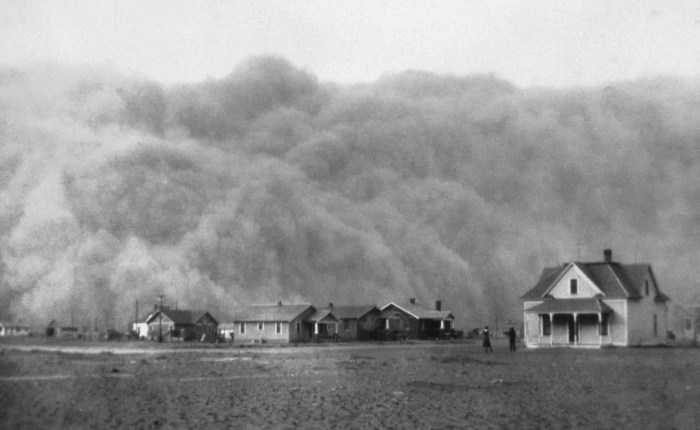
The Dust Bowl has always been a somewhat vague disaster in my mind. It occurred during the Great Depression, and the images it generated helped to define the misery of the period. But the question has always lingered in my mind: was it simply chance that the two coincided? Or did one cause the other? Like many people, my primary touchstone for the event is The Grapes of Wrath; but that novel is mainly about people escaping the Dust Bowl, not what it was like to be in it. In short, for such an important event, I had only a vague notion of the Dust Bowl.
This book remedied the problem; and for that, Timothy Egan deserves a great deal of credit. The Worst Hard Time traces the disaster from its historical origins to its conclusion, and provides harrowing descriptions of what it was like to live through the dusters—or die trying.
I have never experienced a dust storm. The closest I’ve come was a few years back, when strong winds deposited sand from the Saharan Desert in Madrid, a climatic event called la calima in Spanish. It was unsettling. The air had a rust-colored hue, with visibility at a minimum. Rain drops fell and left dirty stains on your clothes. I was teaching physical education at the time, and we instructed the kids to use the face masks (which they still had, thanks to the pandemic) when we exercised outside. The only other relevant experience I’ve had was a few summers back, when the huge forest fires in Canada sent haze down to my town in New York. I tried to go on a run in the gray air and ended up with a persistent cough.
These experiences are mild to the point of triviality compared with the dusters of the 1930s. Visibility would drop to zero, pitch blackness. Dust would block roads and bury equipment. Any vegetation would be drowned or stripped bare. Anyone exposed to the dust would develop a cough that could become a fatal case of “dust pneumonia.” Most surprising of all, the dusters would generate enormous amounts of static electricity which would discharge painfully if an unwary victim touched anything conductive.
As to the question of why this happened, the answer seems to be quite complicated. Regardless of human activity, the Great Plains undergo long periods of rainfall followed by drought; and it just so happened that they were populated when the climate was more benevolent. But the 1930s were a time of extreme drought on the plains. Yet human activity had prepared the way for crisis. First, the peoples of the plain—the Apache and Comanche—were pushed off their land, and the buffalo, upon which they depended, were hunted to oblivion. The federal government encouraged farmers to take up residence by simply giving away land. The combination of the increased demand of the First World War and the Russian Revolution—which took the biggest grain supplier out of commission—prompted farmers to increase yield, plowing up as much topsoil as they could.
Like the Great Depression, then, the Dust Bowl seems to have not been the cause of one simple error, but a kind of perfect storm created by many contributing factors. And like the Great Depression—which was partly provoked by a massive trade imbalance, caused by WWI—the Dust Bowl as a kind of delayed hangover of the Great War.
Once again, Egan deserves a great deal of credit for writing such an informative book about a topic simultaneously so well-known and so poorly understood. That being said, I don’t have warm feelings about The Worst Hard Time. Though it is not an especially long book, it feels bloated and repetitious; and I think this is due to the prose, which was heavy-handed and inflated with a kind of false melodrama. This was frustrating, since the story of Dust Bowl contains more than enough drama to stand on its own.
The first lines give some idea of the tone:
On those days when the wind stops blowing across the face of the southern planes, the land falls into a silence that scares people in the way that a big house can haunt after the lights go out and no one else is there. It scares them because the land is too much, too empty, claustrophobic in its intensity. It scares them because they feel lost, with nothing to cling to, disoriented. Not a tree, anywhere. Not a slice of shade. Not a river dancing away, life in its blood.
I don’t know about you, but I find this ponderous and dull. And it irritates me especially because I don’t think this is Egan’s true voice. It is like he is putting on a persona (a quality of much irritating prose, I find). Mostly, it is extremely redundant—we get it, it’s scary—which is why the book feels so long.
This is just one of the faults of style I thought the book suffered from. However, I don’t want to harp on stylistic shortcomings too much. After all, I didn’t pick up this book to be blown over by the prose, but to learn about the Dust Bowl; and that, I certainly did. Even if it is irritating to read, then, The Worst Hard Time comes close to being the definitive work on the subject.
Review: Master of the Senate
Master of the Senate by Robert A. Caro
My rating: 5 of 5 stars
When I finish a doorstopper like this—a book of enormous scope and ambition, a genuine tour de force—I usually feel that I should reflect this weightiness in my review. After all, I spent months on this thing, bringing it up in conversation after conversation, enjoying the feeling of gradual enlightenment as I made my way from the beginning to the end. And yet, I think Caro has made his point so well, so clearly, and so forcefully that there is very little left to be said on this subject.
Apart from Lyndon Johnson, this book must be one of the best books written about the United States Senate. Indeed, one gets a sense that this was precisely Robert Caro’s goal, since he begins with a kind of book within a book, going through the entire history of the institution. In this respect, Master of the Senate can be rather depressing, since the Senate has always been, if not quite a broken, a malfunctioning body. This is largely the fault of the founders, who had the high-minded idea of creating a legislative house composed of older, wiser statesmen who could modify the rash impulses of the electorate. Instead, they created an anti-democratic institution, unresponsive to the will of the people, and historically on the side of the already rich and powerful.
The book’s central theme explores a disturbing irony: it took a bastard of historical proportions to get this legislative body to become, however briefly and modestly, a force for good. For eighty years since Reconstruction, idealistic politicians had tried to get Civil Rights legislation passed through the Senate, and they had all failed. Pure hearts, noble ideals, and moving eloquence had not made a dent in the Senate’s ability to block the legislation. But Lyndon Johnson, who loved power above all, whose personal ambition outweighed every other goal, who stole his election to the Senate, who abused his inferiors, flattered his superiors, and manipulated his equals, who was even cruel to his loving and loyal wife—this man, whom Caro had spent two volumes portraying in the least flattering possible light, had what it took to get a Civil Rights bill through the Senate.
This book thus has a dispiriting message. Put bluntly: maybe we need these Type-A assholes after all. And Johnson is perhaps the perfect representation of this cultural stereotype, all the way down to his heart attack. If you had asked me before starting on this series about this sort of person—selfish, restless, ambitious, domineering—I would have said they all ought to be sent to therapy, for their and our mutual benefit. Indeed, I occasionally fantasized about what would happen if a relatively normal person (me, for example) became president—what would happen if our government were composed of ordinary folks rather than the most power-hungry or ideological among us. The utter foolishness of this thought is demonstrated by this book. If I were suddenly appointed, say, Senate Majority Leader, I would accomplish precisely nothing.
As a final thought, a very clever friend of mine put a question to me some months ago, which at the time I couldn’t answer: Why would a Texas Democrat push so hard for civil rights, when it inevitably meant losing the support of southern whites? This book goes a considerable way in making sense of Johnson’s decision. There were many factors, but the most important in 1957 was that Johnson needed to drop the stigma of being a southern racist if he was ever to have a chance at the presidency—and the presidency was always his ultimate goal. However, this does not explain why Johnson, once president, would continue the fight. The truth seems to be that, when his overwhelming urge for power was satisfied, and other qualities of his personality were allowed to come to the fore, he did genuinely care about helping the disadvantaged. If only every type-A were like that.
View all my reviews
Review: Means of Ascent
Means of Ascent by Robert A. Caro
My rating: 5 of 5 stars
Robert Caro sets his own standard for political biographies, and if this volume was at all lacking for me it was only in comparison to the masterful first volume in this series. But even this is not exactly a fair comparison, as The Path to Power covered Johnson’s formative years—delving into his family history, his marriage, his schooling, his environment, his first working experience, and finally his rise to the House of Representatives. Its scope, in other words, is quite broad.
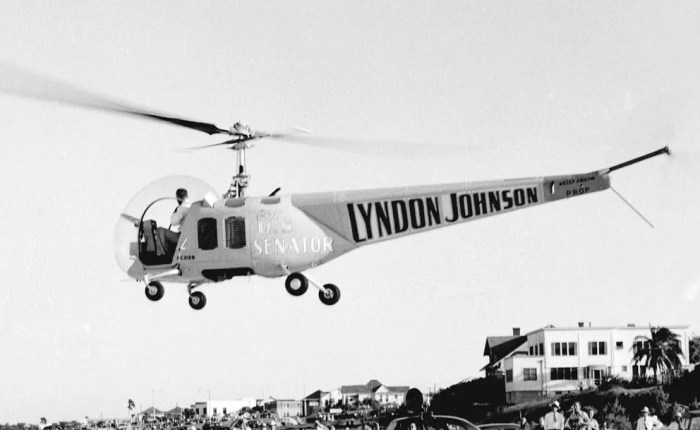
Means of Ascent is a very different book, covering only seven years (1941-48). It is significantly shorter (though still hefty enough), and most of these pages are dedicated to Johnson’s 1948 Senate race. This corresponds to what Winston Churchill called his “wilderness years,” in which Johnson was directionless and cut off from the main arteries of power. He spent some of this time in a non-combat role in the military (and spent the rest of his life shamelessly exaggerating his minimal exploits), some of this time using his connections to get rich through a radio station—and finally got back onto the path to power by stealing a Senate election.
As Caro says repeatedly, Johnson is a complex personality with a strange admixture of the despicable and the admirable—and this book contains precious little of the latter. As a result, whereas in the first volume one could sometimes feel sympathetic for the young man from Texas, here he is little more than a power-grasping villain. Caro himself obviously came to feel disgusted with Johnson’s personality, and his feelings seep through in his descriptions of Johnson’s ample transgressions: his blatant mistreatment—indeed, verbal abuse—of anyone he considers inferior (including receptionists, waiters, his own staff, and his poor wife), his absolute amorality regarding even basic ideals (such as democracy itself), and his willingness to stop at nothing to obtain power.
Caro contrasts Johnson’s personality with that of his opponent in the 1948 Senate election, Coke Stevenson—a man Caro portrays as honest and honorable. And here the esteemed biographer got into a little bit of trouble. While Stevenson may indeed have been upstanding in the sense that he was true to his word, did not bow to lobbyists, did not attack political opponents, and did not seek political office in order to satisfy a lust for power—while all this may have been true, Stevenson was also certainly a reactionary and a racist.
These rather unflattering qualities are given only a passing mention in the book, which may leave the reader with a skewed impression of Stevenson. Caro was roundly criticized for this, and in an article in the New York Times, published in 1991, he responded some of these criticisms. Yet his defense—that the subject of race played little role in the election—while valid as far as historical explanation goes, still does not quite excuse the glowing portrait he painted. Upon finishing the book, it is difficult to resist the impression that Caro himself came to admire Stevenson.
Even so, as abhorrent as I find Stevenson’s views to be, I would still prefer such a man to the Johnson of 1948, who seems to have had no political philosophy, no political aspirations beyond his desire to control people, and—worst of all—no respect for the institution of democracy. Throughout all of the legal battles and maneuvers which allowed him to keep his stolen election victory, Johnson never once betrayed the slightest hint that he might have had misgivings about betraying the will of the people. Indeed, as Caro makes clear, he seems to have been proud of it, virtually boasting of the “victory” in later years.
Now, at this point I will do something very brave—or cowardly, perhaps—and venture a slight criticism of Caro. After so many pages, his writing style is beginning to ware on me. This is because, I think, his primary rhetorical technique is that of superlatives. What I mean is that, for Caro, everything is as extreme as possible. Johnson is not just a sleazy politician, but unprecedentedly amoral; Stevenson is not just a popular governor, but a Texan hero; and so on, and so on. Caro relentlessly emphasizes how extreme every event and experience was—so much so that, by the end, you are begging for something totally ordinary and unremarkable to happen (and no, not superlatively ordinary).
That said, the book is eminently readable and highly enjoyable. Here Caro creates such a memorable portrait of an amoral, power-crazed politician that, had this book been written by anyone else, it would by itself be considered an enduring classic of American political writing. It is only when compared to his other books that this one may seem somewhat light.
View all my reviews
Review: American Colonies
American Colonies: The Settling of North America by Alan Taylor
My rating: 5 of 5 stars
This is an exceptional volume of popular history. Few periods, I reckon, are as mythologized and misunderstood as the European colonization of the United States. In my public school, for example, I learned that the heroic Columbus proved the earth wasn’t flat, and that the Pilgrims lived in joyful harmony with the Wampanoag. To be fair, in high school, this ridiculously rosy picture was brought back to earth somewhat. Still, I think that many Americans (and I may still fall into this category) hold onto many misconceptions about our early history.
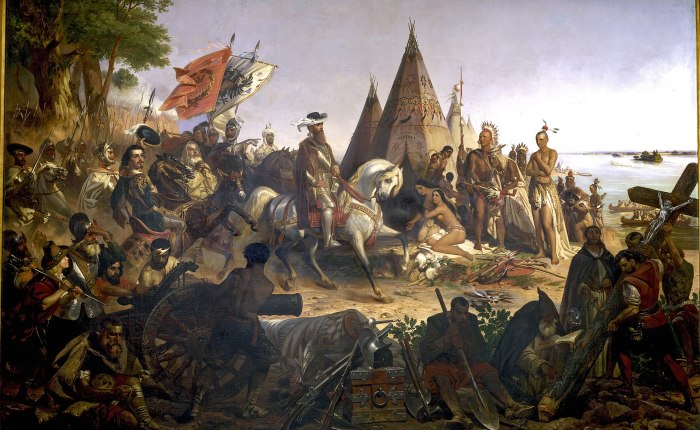
Taylor begins with Columbus and ends with the Russian and Spanish colonization of North America’s west coast. On the way, he discusses the Spanish conquistadores, the French fur traders, the main islands of the Caribbean, the slave trade, and of course the English colonies along the east coast. Even Captain James Cook and his fateful exploration of Hawaii gets a section. Taylor shows what dynamics in Europe motivated expansion—both the large-scale political and economic considerations, and the push and pull factors that made people want to leave. And, of course, Taylor mentions the many Native American groups who cooperated with and resisted, fought for and against, exploited and were exploited by the incoming Europeans.
This history begins with a calamity on a scale difficult for us even to imagine. European diseases ravaged the indigenous population of the United States, causing a population collapse so dramatic that it makes the bubonic plague seem mild by comparison. There is no way to exaggerate the loss this represents, both in terms of people and their lifeways. However, while Taylor does not minimize this tragedy, he also avoids falling into the opposite error of portraying the natives as innocent nature people. To the contrary, he shows how different groups adapted to European presence, often becoming essential allies and trading partners to the new colonists.
Taylor also gives ample space to that other original sin of America: slavery. It is not pleasant reading. His relatively brief coverage of the conditions aboard a slave ship, for example, is deeply disturbing. But even in this case, he does not ignore the agency of his subjects. He describes, for example, how slaves would subtly resist their overseers by feigning misunderstanding or working inefficiently. I also appreciated his explanations of how slavery operated differently in the Caribbean and on the continental United States, according to climate and economic pressures.
In sum, what emerges from these pages is a vivid portrait of a rapidly changing continent—a complicated story to which innumerable groups contributed. While Taylor does demolish the patriotic myth of heroic and benevolent European colonizers, this book is not simply a hit job. Rather, it is a rich, well-written, and dispassionate account of a one of history’s most consequential periods.
View all my reviews
Review: The Corner
The Corner: A Year in the Life of an Inner-City Neighborhood by David Simon
My rating: 5 of 5 stars
Some authors have the power to make you feel that you are just understanding the world for the first time. This is, for example, Roberto Caro’s gift. In every one of his books, he seems to expose the world of politics, revealing its inner workings like an ant colony on display in a transparent container. And this is also the consummate gift of this writing team, Simon and Burns. Here, as in Simon’s Homicide, and as in their masterpiece The Wire, these authors show you something you think you already know about: urban poverty. But you really see it for the first time.
In many ways, this book is the ideal companion to William Julius Wilson’s book, When Work Disappears, which was published just one year earlier. Wilson, a sociologist, explains urban poverty using historical trends, statistics, and surveys, whereas Simon and Burns worked like anthropologists: following around their subjects for an entire year and more, trying to understand their world through their eyes.
These different methodologies converge on the same story. When decent working-class jobs disappear from an area, it sets off a chain reaction that erodes the fabric of the society. Those with means move out; those that remain behind are left with few and stark choices. The teenagers in this story, for example, are faced with the options of attending a struggling school system, working for a minimum-wage job, or selling drugs. And while there are significant risks to this last option—risks that, sooner or later, become terrible consequences for all of them—it is undeniable that the reward is immediate and great.
Another theme of both books is how strategies and mindsets that are adaptive on “the corner” are maladaptive anywhere else. The tendency to think in the short-term, to backstab, to lie and cheat, to never show vulnerability—all of these are essential for both the addicts and dealers, though of course they become self-defeating when any of them try to leave this world. And of course many do try to leave it, earnestly and repeatedly. But with so few economic opportunities and so many barriers to government aid (the struggle to just get into a rehab center is Sisyphean), these efforts meet with scant success.
When writing of people in such difficult circumstances, it is tempting to treat them as pure victims. Yet the authors manage to convey the full humanity of their subjects—their many shortcomings and also their strivings—while never minimizing what they are up against. Indeed, this is perhaps the most impressive aspect of this book, and what makes these stories so compelling simply as stories, and not just illustrations of American decadence.
If there is any moral to this book, it is the absolute failure of the war on drugs. Simon and Burns tell of an unending, unceasing drug market—an entire ecosystem of sellers and buyers, operating 24 hours a day, 7 days a week, right in the open. Yes, the police do come and make arrests and confiscate a few vials. But the risk of incarceration is nothing compared to the force of full-fledged addiction or the endless, easy money that dealing provides. At one point, the authors aptly compare the drug war to the debacle of the Vietnam War: all the money, manpower, and machinery in the world is not enough when a war is ill-conceived to begin with.
But what is the solution? What would help? The authors—wisely, I think—refrain from any policy suggestions. Instead, we are left with a kind of mirror-image of the America that Robert Caro describes. Whereas Caro focuses on extraordinary individuals who fundamentally change their worlds, Simon and Burns show how political inertia, economic forces, and human folly conspire to trap everyone—inner-city teachers, beat cops, social workers, rehab nurses, and everyone selling and using—in an endless cycle that chews people up and spits them out, generation after generation. As in Homicide, this is a remarkable work of journalism.
View all my reviews
Review: The Path to Power
The Path to Power by Robert A. Caro
My rating: 5 of 5 stars
Last winter, I went to the Film Forum in Manhattan with some friends to see the new documentary about Robert Caro and his famous editor, Robert Gottlieb. It was a wonderful experience on many levels. The documentary was fascinating and inspiring—the story of two people who, in quite different ways, have lived fully dedicated to literature—and it was the perfect place to see it, in the heart of Caro’s and Gottlieb’s city, surrounded by other New Yorkers.
Gottlieb comes across as a lovable and brilliant person (he has, sadly, since passed away at the age of 92), but Caro comes across as something superhuman, an embodied intellectual force. The name of the documentary, Turn Every Page, aptly summarizes what makes Caro so special: the meticulous, obsessive, even demented attention to detail—the determination to get to the heart of every aspect of every story, to never be satisfied with half-truths or empty explanations. And then, once he has gathered together his facts, this relentless attention is focused on the writing. For Caro is not satisfied with merely presenting us with his (always impressive) research. He is determined—again, maniacally so—to make us understand on a deep emotional level what each of these facts mean.
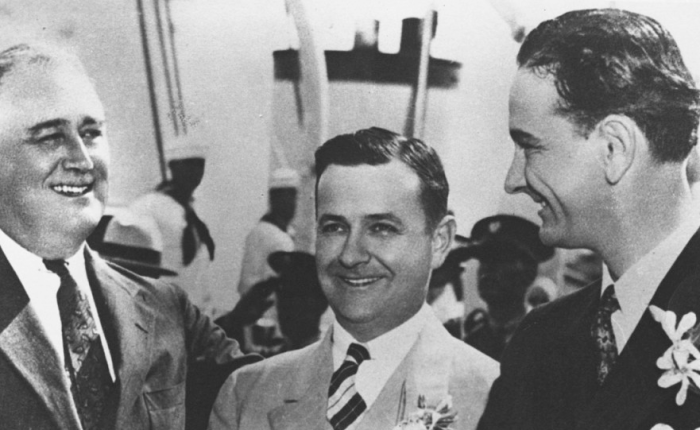
All of these qualities are fully on display in this, the first book of Caro’s monumental biography of the 36th president of the United States. As a political biography—a record of the accumulation and use of power—the book is peerless. Caro traces how Johnson, by sheer force of his personality, went from a rural boy with little education and less money to a member of Congress in just a few years. His chapters on Johnson’s elections alone—his campaign strategies, his fundraising, his advertising—are a goldmine for any political historian, and eye-opening for even the most cynical of readers.
Yet everybody knows that Caro is a master of political biography. What surprised me most was how brilliant this book was in other respects. His descriptions of the Texas Hill Country, for example—its climate, its soil, its weather—often rise to such a level of poetry that I was reminded of John Steinbeck. And his chapter on life in the Hill Country before electrification—the difficulty of even simple chores like washing and ironing—is so empathetic that it brings this experience to life as powerfully as even the most gifted novelist could manage.
Aside from this wonderful scene-setting, and aside from the incisive history, this book is of course the study of a personality. And it is a peculiar one. Indeed, underneath all of the historical detail, I think there is a very basic moral conundrum at the heart of this book. It is, in short, that Johnson is successful and effective—indeed, often a force for good—while being personally unlikeable and morally vacuous.
Caro goes to great lengths to illustrate the uglier sides of Johnson’s character. His urge for power is so great that it trumps every other consideration in his life: love, loyalty, ideals, friendship, ethics. When he is stealing elections, betraying friends and allies, and cheating on his wife, not once does he give evidence that he even possesses a conscience. And yet, in his quest for power, he educates children, helps the unemployed find jobs, secures money for veterans, and electrifies his district, among much else.
This paradox is illustrated in Johnson’s treatment of his secretaries. While he worked as a congressional assistant, Johnson went to great lengths to help the constituents of his district—far more than any ordinary assistant could or would. But this unusual effectiveness was achieved by working his own secretaries to such a degree that they could not have any life outside of work, and one had a nervous breakdown and fell into alcoholism. This is a consistent pattern: the specific people close to Johnson are used as tools for his own advancement, while the abstract people out in the world benefit from his obsessive work ethic.
To put the matter another way, Johnson seems to violate every ethical precept I know regarding the treatment of others, and lives in total contradiction of every piece of advice I know regarding wise and good living. Johnson comes across as a miserable person destined to share his misery with the world. But it becomes clear that Johnson’s personality type is perfectly suited for politics, and he achieves almost instant success when he enters that field. Indeed, one gets the impression that everyone else in Washington D.C. is just a toned-down version of Johnson—equally as power-hungry, but not as effective.
Somehow, we seem to have a system designed to elevate people whom most of us would find repulsive. Maybe this is inevitable, as the people who most desire power are the ones most likely to get hold of it. Perhaps the best thing to do, then, is to hope that the institutions are set up in such a way that, as in the case of Johnson, these driven individuals end up having beneficent effect on society. And yet, this does seem like an awfully risky strategy.
In any case, as I hope you can see, this is a superlative book, excellent on many levels. It is, in fact, among the select class of books that can forever change your outlook.
View all my reviews
Review: The Autobiography of Malcolm X
The Autobiography of Malcolm X by Malcolm X
My rating: 5 of 5 stars
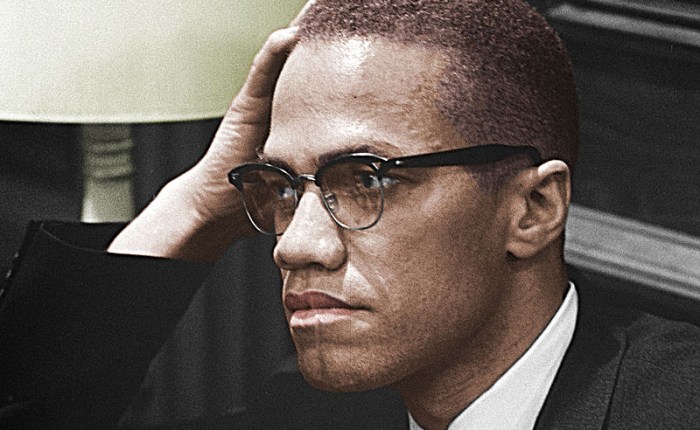
By some fateful coincidence, I find myself writing this review on the 55th anniversary of Malcolm X’s murder. The coincidence feels significant, if only because this is probably one of the most crucial books in my reading life. I originally encountered the little paperback in university—borrowed from a roommate who had to read it for a class. Though I had only the vaguest idea of who Malcolm X was, the book transfixed me, even dominated me. Every page felt like a gut punch. My love of reading was substantially deepened by the experience. One decade later, The Autobiography of Malcolm X has lost none of its power.
This book has so many things going for it that it is a challenge to focus on a few. For one, Haley has beautifully captured Malcolm X’s voice. You can really hear him speak through the page—with humor, with wit, with passion, and most of all with righteous anger. (This time around, I listened to Lawrence Fishburne’s excellent audio version, which brought an extra dimension of realism to Malcolm’s voice.) What is more, the story that he tells is simply a good story on any terms, even if it were all made up. His childhood poverty, his gradual introduction into the ‘hustling life’ (as he called it), his incarceration, his conversion, his betrayal, his journey to Mecca—a novelist would have difficulty coming up with anything better.
But what is most valuable book is, as Malcolm X himself says, its sociological import. The first time I read this, I thought of it mainly as a historical document. Yet the sad truth is that Malcolm X’s story is still very much possible—indeed, a reality—in the United States. All of the essential ingredients are still there: segregation (de facto if not de jure), limited job opportunities, and mass incarceration. Indeed, while some things have gotten better, and much has remained the same, in some ways things have gotten worse. For example, the US certainly imprisons more people nowadays (disproportionately POC) than in Malcolm X’s day. There is still a direct pipeline from the failing public school in the black neighborhood to the prison cell.
Malcolm X is often contrasted with Martin Luther King, Jr., for presenting a “violent” alternative to King’s non-violence. But the perspective that Malcolm X consistently articulates cannot be simply boiled down to violence. His essential point is that, if any group of people in the world had been treated like black people in America have been—enslaved, lynched, legally disenfranchised, economically shut out, thrown into jails—then they would be well within their rights to fight back, “by any means necessary.” One can hardly imagine a group of, say, German immigrants, after undergoing such an ordeal, marching “peacefully” for their rights. Few ethical or legal codes prohibit self-defense. And it is the height of moral hypocrisy to hold the oppressed to a higher ethical standard than the oppressors.
The best response to this I know is from James Baldwin, who, while conceding the premises, wrote: “Whoever debases others is debasing himself.” In other words, if blacks did unto whites what whites did unto blacks, they would do spiritual damage to themselves. Now, not being of any religious bent myself, I at first treated this as a vaguely mystical sentiment. But I have to admit that, during the presidency of Donald Trump, I gradually came to see the real, practical truth in this statement. Racism is really a kind of psychic rot—not localized simply to our attitudes about race, but spreading in all directions, poisoning our sense of justice, spoiling our intelligence, stultifying our emotions. Though Malcolm X never gave up his insistence on the right to self-defense, he agreed with Baldwin in treating racism, not simply as a matter of prejudice to overcome, but a gnawing cancer at the heart of the country, capable of destroying it. And, for my part, I am no longer inclined to view such statements as merely rhetorical.
So in addition to being a thrilling story, wonderfully told, The Autobiography of Malcolm X presents us with a challenging indictment of America—still as true and valid as when he spoke it, fifty five years ago. I think any citizen will be improved by wrestling with Malcolm’s story and his conclusions. But let us not forget the personality of Malcolm, the man—someone who radiates genuine charisma. For my part, what I find most appealing and inspiring in Malcolm X is his intellectual side. Deprived of a formal education, he largely educated himself in prison by reading voraciously. And this curiosity stayed with him all his life. He recounts the thrill of debating college students—white and black—during his speaking tours, and speaks wistfully of going back to school to get a degree, and filling up his days studying all sorts of arcane subjects. In a saner society, Malcolm X would certainly have become a respected member of the intelligentsia, pushing the bounds of knowledge. It is up to us to create such a society.
View all my reviews
Review: A Promised Land
A Promised Land by Barack Obama
My rating: 4 of 5 stars
Barack Obama rose to national prominence after giving the speech of his life at the 2004 Democratic Convention. I remember it. I was 13 at the time, on a camping trip in Cape Cod, listening to the speech in a tent on a battery-powered radio. Though I was as ignorant as it is possible for a human to be, I was completely electrified by this unknown, strangely-named man. “That should be the guy running for president!” I said, my hair standing on end. Four years later, I watched Obama’s inauguration in my high school auditorium, cheering along with the rest of the students, and felt that same exhilaration.
I am telling you this because I want to explain where I am coming from. Obama was the politician who introduced me to politics, so I cannot help but feel a special affection for him. You can even say that Obama was foundational to my political sensibilities, as he was president during my most sensitive years. This makes it difficult for me to view him ‘objectively.’
In this book Obama displays that quality which, despite him having almost nothing in common with me, made it so easy for me to identify with him during his presidency: his bookishness. He is clearly a man delighted by the written word. And Obama is able to hold his own as a writer. While I do think his prose is, at times, marred by his having read too many speeches—his sentences crowded with wholesome lists of good old fashioned American folks, like soccer moms, firefighters, and little-league coaches—the writing is consistently vivid and engaging, pivoting from narrative to analysis to characterization quite effortlessly. If Obama is guilty of one cardinal literary sin, it is verbosity. This book—700 pages, and only the first of two volumes—could have used a bit of chopping.
Obama is notorious for his caution, his conservative temperament, his insistence on seeing issues from as many perspectives as possible. But what struck me most of all in this book was his confidence. Aiming to justify himself to posterity, I suppose, Obama spends the bulk of this book explaining why he made the right decision in this or that situation. Indeed, Obama attributes even his few admitted missteps to noble intentions gone awry.
As Obama goes through the first term of his presidency, explaining how he tackled the financial crisis, healthcare, global warming, or the wars in Iraq and Afghanistan, the central tension of his presidency becomes apparent: the conflict between idealism and realism. Obama the speaker is, as I said, electrifying—soaring to rhetorical heights equaled by very few politicians. And yet Obama the president does not soar, but plods his way forward, examining the earth for any pitfalls five steps in advance. Indeed, I think Obama’s philosophy of governance could by fairly described as technocratic, preoccupied with effectiveness rather than liberty or justice.
This, I would say, is the central flaw in Obama’s governing philosophy. Obama ran for office with a simple message: the promise that we Americans could put aside party loyalty and work together towards a common goal. But this both underestimates and overestimates the forces that pull us into competing factions. In other words, this is both naïve and slightly cynical. Naïve, by failing to understand that politics is about power, and that there was more power to be gained through division than unity. But cynical, by considering our differing political ideologies to be superficial and ultimately unimportant.
Obama seemed to believe that the goals were obvious—that we all basically agreed on the sort of country we wanted to live in—and that the only thing needed was somebody competent enough to actually get the job done. Admittedly, this is quite a compelling idea, even an inspiring one in its way; and Obama is a very convincing proponent. But the limits of this thinking are on display all throughout this book. Obama is constantly making pre-emptive concessions to the Republicans, thinking that a market-friendly healthcare plan, or a strong commitment to killing terrorists, or a more modest stimulus bill will win them over, or at least mute their dissent. The consequence is that, in his policy—such as the deportations or the drone strikes (hardly mentioned here)—he is sometimes unfaithful to the principles he so eloquently expounds at the podium.
I am being somewhat critical of Obama, which is difficult for me. He was subjected so much silly and unfair criticism during his presidency that it can feel mean to add to this chorus of contumely. And I do not wish to take away from his very real accomplishments. Compared to either the administrations that came before or after his, Obama’s presidency was an oasis of calm, sensible governance. Though the fundamental change promised by his campaign failed to materialize, by any conventional standard Obama’s policies were successful—helping to heal the economy, expand healthcare, and slowly disentangle us from foreign wars.
It is also difficult to criticize Obama because it is clear that so much opposition to him was fueled by racial resentment. Obama was continuously subjected to a double-standard, constrained in the things he could do or say. No story better illustrates this than the Henry Louis Gates arrest controversy. After Obama rightly called the decision to arrest a black Harvard professor on his own property ‘stupid,’ the political backlash was so fierce that he had to recant and subject himself to an insipid ‘beer summit.’ And, of course, the moronic birther controversy speaks for itself. In short, it is difficult to imagine the opposition to Obama’s policies being so fierce and so persistent had he been a white man.
I listened to a part of this book on January 6th, the day of the Capitol Riot. After watching the events unfold on the television all day, I decided I could not take anymore, and went out for a walk. As I strolled along the Hudson River, I played this audiobook, listening to Obama narrate his presidential campaign. The contrast between that time and this was astonishing. I could not help but feel nostalgia for those days of relative innocence, when Obama’s “You’re likable enough, Hillary” qualified as a scandal. But I also could not help wondering to what extent, if any, Obama was responsible for what was becoming of my country. If he had embraced bolder initiatives, rather than striving to be as respectable as possible, could he have staved off this backlash of white rage? It is impossible to say, I suppose.
In the end, if I came away somewhat disappointed from this book, it is only because the Obama I found did not measure up to the messianic figure I embraced as an adolescent. But that is an unfair standard. Judged as a mere mortal, Obama is as about as impressive as any person can be—a man of prodigious talents and keen intelligence, whose presidency provided a relief from the onslaught of Republican incompetence. For that we can say, thanks, Obama.
View all my reviews
Review: We Were Eight Years in Power
We Were Eight Years in Power: An American Tragedy by Ta-Nehisi Coates
My rating: 4 of 5 stars
Racism was not a singular one-dimensional vector but a pandemic, afflicting black communities at every level, regardless of what rung they occupied.
Ta-Nehisi Coates has turned what could have been a routine re-publication of old essays into a genuine work of art.
The bulk of this book consists of eight essays, all published in The Atlantic, one per year of the Obama presidency. But Coates frames each one with a kind of autobiographical sketch of his life leading up to its writing. The result is, among other things, a surprisingly writerly book—and by that I mean a book written about writing—a kind of Bildungsroman of his literary life. Even on that narrow basis, alone, this book is absorbing, as it shows the struggles of a young writer to hone his craft and find his voice. And that voice is remarkable.
But this book is far more than that. Though the essays tackle diverse topics—Bill Cosby, the Civil War, Michelle Obama, mass incarceration—they successfully build upon one another into a single argument. The kernel of this argument is expressed in the finest and most famous essay in this collection, “The Case for Reparations”: namely, that America must reckon with its racist past honestly and directly if we are ever to overcome white supremacy. Much of the other essays are dedicated to criticizing two principal rivals to this strategy: Respectability Politics, and Class-Based Politics.
First, Respectability Politics. This is the notion—popular at least since the time of Booker T. Washington—that if African Americans work hard, strive for an education, and adhere to middle-class norms, then racism will disappear. Though sympathetic to the notion of black self-reliance, Coates is basically critical of this strategy—first, because he believes it has not and will never work; and second, because it is deeply unjust to ask a disenfranchised people to earn their own enfranchisement.
His portraits of the Obamas—both Barack and Michelle—are fascinating for Coates’s ambivalence towards their use of respectability politics. Coates seems nearly in awe of the Obamas’ ability to be simultaneously black and American, and especially of Barack Obama’s power to communicate with equal confidence to the black and white communities. And he is very sympathetic to the plight of a black president, since, as Coates argues, Obama’s ability to take a strong stance regarding race was heavily constrained by white backlash. Coates is, however, consistently critical of Obama’s rhetorical emphasis on hard work and personal responsibility (such as his many lectures about black fatherhood), rather than the historical crimes perpetrated against the black community.
Coates’s other target is the left-wing strategy of substituting class for race—that we ought to help the poor and the working class generally, and in so doing we will disproportionately benefit African Americans. The selling point of this strategy is that, by focusing on shared economic hardships, the left will be able to build a broader coalition without inflaming racial tensions. But Coates is critical of this approach as well. For one, he thinks that racial tension runs far more deeply than class tension, so that this strategy is unlikely to work. What is more, for Coates, this is a kind of evasion—an attempt to sidestep the fundamental problem—and therefore cannot rectify the crime of racism.
The picture that emerges from Coates’s book is rather bleak. If the situation cannot be improved through black advancement or through general economic aid, then what can be done? The only policy recommendation Coates puts forward is Reparations—money distributed to the black community, as a way of compensating for the many ways it has been exploited and disenfranchised. But if I understand Coates correctly, it is not that he believes this money itself would totally solve the problem; it is that such a program would force us to confront the problem of racism head-on, and to collectively own up to the truth of the matter. Virtually nobody—Coates included—thinks that such a program, or such a reckoning, will happen anytime soon, which leaves us in an uncomfortably hopeless situation.
The easy criticism to make of Coates is that his worldview is simplistic, as he insists on reducing all of America’s sins to anti-black racism. But I do not think that this is quite fair. Coates does not deny that, say, economic inequality or sexism are problems; indeed, he notes that these sorts of problems all feed into one another. Furthermore, Coates reminds us that racism is rarely as simple as a rude remark or an insult; rather, it is as complex, diffuse, and widespread as an endemic disease. Coates’s essential point, then, is that racism runs far more deeply and strongly in American life than we are ready to acknowledge—mainly, because persistent racism undermines most of our comfortable narratives or even our policy ideas, not to mention our self-image.
For a brief moment, after Obama’s election, we dreamed of a post-racial America. But, as Coates shows, in the end, Obama’s presidency illustrated our limitations as much as our progress. This was apparent in the sharp drop in Obama’s approval ratings after he criticized a police officer for arresting a black college professor outside of his own house. This was shown, more dramatically, in the persistent rumors that Obama was a Muslim, and of course in Trump’s bigoted birtherism campaign. And this was shown, most starkly, by the fact that Barack Obama—a black man entirely free of scandals, of sterling qualifications, fierce intelligence, and remarkable rhetorical gifts —was followed by Donald Trump—a white man with no experience, thoughtless speech, infinite scandals, and who is quite palpably racist.
As so many people have noted, it is impossible to imagine a black man with Trump’s resumé of scandals, lack of experience, or blunt speaking style approaching the presidency. Even if we focus on one of Trump’s most minor scandals, such as his posing with Goya products after the CEO praised Trump’s leadership, we can see the difference. Imagine the endless fury that Obama would have faced—and not only from the Republican Party—had he endorsed a supporter’s product from the Resolute Desk of the Oval Office! Indeed, as Coates notes, Trump’s ascension is the ultimate rebuke to Respectability Politics: “Barack Obama delivered to black people the hoary message that in working twice as hard as white people, anything is possible. But Trump’s counter is persuasive—work half as hard as black people and even more is possible.”
Whether Obama’s optimism or Coates’s pessimism will be borne out by the country’s future, I do think that Coates makes an essential point: that racism is deeply rooted in the country, and will not simply disappear as African Americans become less impoverished or more ‘respectable.’ Communities across America remain starkly segregated; incarceration rates are high and disproportional; the income, unemployment, and wealth gaps are deep and persistent; and we can see the evidence of all of these structural inequalities in the elevated mortality suffered by the black community during this pandemic. The intractability of this problem is bleak to contemplate, but an important one to grapple with. And it helps that this message is delivered in some of the finest prose by any contemporary writer.
View all my reviews