American Colonies: The Settling of North America by Alan Taylor
My rating: 5 of 5 stars
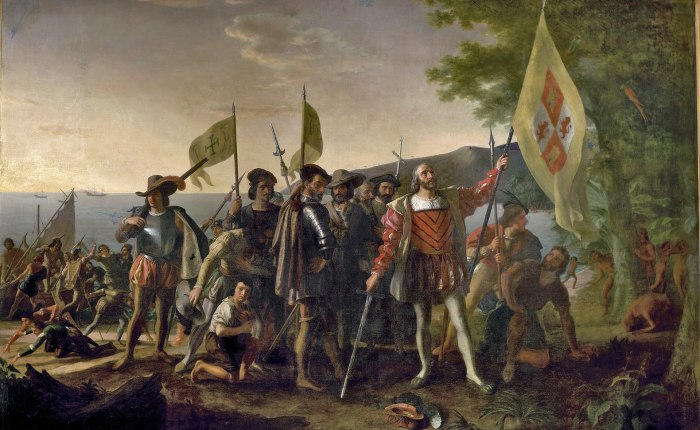
This is an exceptional volume of popular history. Few periods, I reckon, are as mythologized and misunderstood as the European colonization of the United States. In my public school, for example, I learned that the heroic Columbus proved the earth wasn’t flat, and that the Pilgrims lived in joyful harmony with the Wampanoag. To be fair, in high school, this ridiculously rosy picture was brought back to earth somewhat. Still, I think that many Americans (and I may still fall into this category) hold onto many misconceptions about our early history.
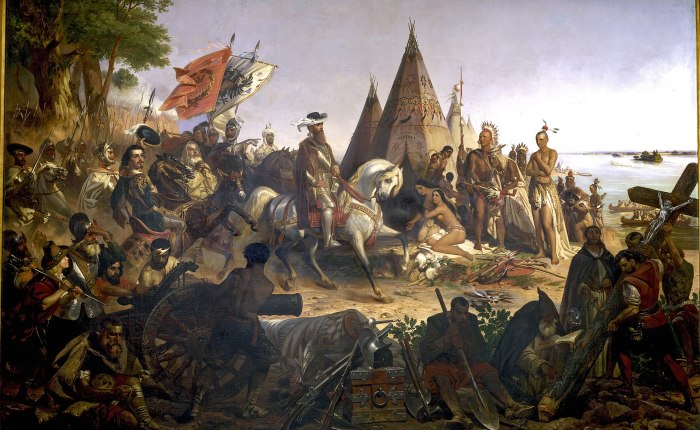
Taylor begins with Columbus and ends with the Russian and Spanish colonization of North America’s west coast. On the way, he discusses the Spanish conquistadores, the French fur traders, the main islands of the Caribbean, the slave trade, and of course the English colonies along the east coast. Even Captain James Cook and his fateful exploration of Hawaii gets a section. Taylor shows what dynamics in Europe motivated expansion—both the large-scale political and economic considerations, and the push and pull factors that made people want to leave. And, of course, Taylor mentions the many Native American groups who cooperated with and resisted, fought for and against, exploited and were exploited by the incoming Europeans.
This history begins with a calamity on a scale difficult for us even to imagine. European diseases ravaged the indigenous population of the United States, causing a population collapse so dramatic that it makes the bubonic plague seem mild by comparison. There is no way to exaggerate the loss this represents, both in terms of people and their lifeways. However, while Taylor does not minimize this tragedy, he also avoids falling into the opposite error of portraying the natives as innocent nature people. To the contrary, he shows how different groups adapted to European presence, often becoming essential allies and trading partners to the new colonists.
Taylor also gives ample space to that other original sin of America: slavery. It is not pleasant reading. His relatively brief coverage of the conditions aboard a slave ship, for example, is deeply disturbing. But even in this case, he does not ignore the agency of his subjects. He describes, for example, how slaves would subtly resist their overseers by feigning misunderstanding or working inefficiently. I also appreciated his explanations of how slavery operated differently in the Caribbean and on the continental United States, according to climate and economic pressures.
In sum, what emerges from these pages is a vivid portrait of a rapidly changing continent—a complicated story to which innumerable groups contributed. While Taylor does demolish the patriotic myth of heroic and benevolent European colonizers, this book is not simply a hit job. Rather, it is a rich, well-written, and dispassionate account of a one of history’s most consequential periods.
View all my reviews
Category: History
Review: The Emperor of All Maladies
The Emperor of All Maladies: A Biography of Cancer by Siddhartha Mukherjee
My rating: 5 of 5 stars
I do not consider myself a superstitious person—not even remotely—but somehow I felt a deep reluctance to pick up this book. It may have taken us a long time to figure out the germ theory of diseases, yet the psychology of contagion runs deep. I had the irrational fear that even learning about cancer would somehow unleash it into my life.
But turning away from frightful things is not a good way to live. And, anyway, even though there is a lot of sadness in this book, and a lot to stoke your fears (perhaps it is best to avoid if you have a tendency toward hypochondria), but this is basically a story of innovation.
Mukherjee moves through surgery, radiation therapy, chemotherapy, cancer prevention, and modern targeted drugs, showing how each arose and developed in response to different sorts of cancer and out of the science and technology of the moment. It is a vast story, which includes the development of anasthesia and antibiotics, the discovery of genes and chromosomes, the first research into radioactivity, and the campaign against smoking. To use the obvious metaphor, it is a war waged on multiple fronts.
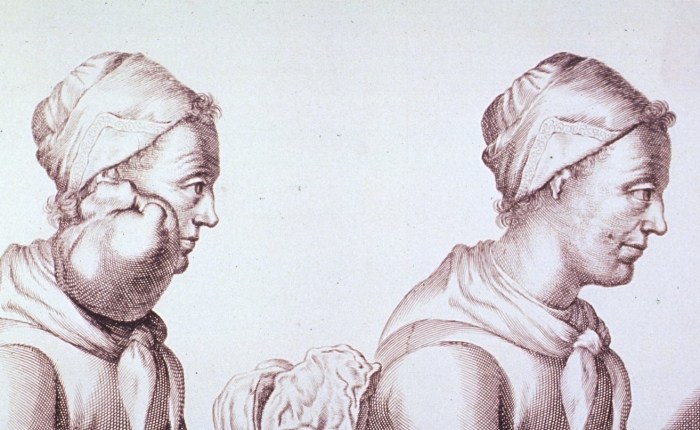
The challenges are manifold. I had naively thought that all cancer was basically the same disease, with its subtypes just minor variations. But it turns out that there is enormous genetic and chemical variety among cancers, so that a treatment effective for one may do little for another. Indeed, even for a single type—breast cancer, say—treatment can be unpredictable. This is what makes the story of doctor’s attempt to treat the disease so riveting, as it feels like a battle between two equally wily antagonists. At several points in this history, doctors attempt extreme cures—radical surgeries, or nearly fatal doses of chemotherapy—only to be defeated. Meanwhile, the victories can be as modest as a remission of just a few months.
It is probably best not to philosophize about a fatal disease, but there does seem to be a lot of irony in our quest to defeat cancer. For one, it has only become so prevalent in the modern period, because we have started living so long. Its appearance as the great killer, then, is a kind of perverse mark of progress. Further, there is the irony of trying to fight what is, in essence, a corrupted version of ourselves—a group of renegade cells which have figured out how to replicate and survive even better than our own body. There is great scope for metaphor here, but if there is a moral to cancer then I don’t think it is a simple one.
Mukherjee does an admirable job weaving a potentially chaotic and depressing story into something coherent and even hopeful. Though the book is composed of history, science, and his own experience as a doctor, these different threads reinforce one another rather than clash. The clinical anecdotes are sparing—just enough to connect the past to the present—and his thumbnail explanations of science are lucid and illuminating. But, most important, despite the many tragic deaths which litter these pages, the final impression is of how much can be accomplished when a researcher’s diligence, a doctor’s pledge to save life, and a patient’s will to live work together, generation after generation.
View all my reviews
Review: The Path to Power
The Path to Power by Robert A. Caro
My rating: 5 of 5 stars
Last winter, I went to the Film Forum in Manhattan with some friends to see the new documentary about Robert Caro and his famous editor, Robert Gottlieb. It was a wonderful experience on many levels. The documentary was fascinating and inspiring—the story of two people who, in quite different ways, have lived fully dedicated to literature—and it was the perfect place to see it, in the heart of Caro’s and Gottlieb’s city, surrounded by other New Yorkers.
Gottlieb comes across as a lovable and brilliant person (he has, sadly, since passed away at the age of 92), but Caro comes across as something superhuman, an embodied intellectual force. The name of the documentary, Turn Every Page, aptly summarizes what makes Caro so special: the meticulous, obsessive, even demented attention to detail—the determination to get to the heart of every aspect of every story, to never be satisfied with half-truths or empty explanations. And then, once he has gathered together his facts, this relentless attention is focused on the writing. For Caro is not satisfied with merely presenting us with his (always impressive) research. He is determined—again, maniacally so—to make us understand on a deep emotional level what each of these facts mean.
All of these qualities are fully on display in this, the first book of Caro’s monumental biography of the 36th president of the United States. As a political biography—a record of the accumulation and use of power—the book is peerless. Caro traces how Johnson, by sheer force of his personality, went from a rural boy with little education and less money to a member of Congress in just a few years. His chapters on Johnson’s elections alone—his campaign strategies, his fundraising, his advertising—are a goldmine for any political historian, and eye-opening for even the most cynical of readers.
Yet everybody knows that Caro is a master of political biography. What surprised me most was how brilliant this book was in other respects. His descriptions of the Texas Hill Country, for example—its climate, its soil, its weather—often rise to such a level of poetry that I was reminded of John Steinbeck. And his chapter on life in the Hill Country before electrification—the difficulty of even simple chores like washing and ironing—is so empathetic that it brings this experience to life as powerfully as even the most gifted novelist could manage.
Aside from this wonderful scene-setting, and aside from the incisive history, this book is of course the study of a personality. And it is a peculiar one. Indeed, underneath all of the historical detail, I think there is a very basic moral conundrum at the heart of this book. It is, in short, that Johnson is successful and effective—indeed, often a force for good—while being personally unlikeable and morally vacuous.
Caro goes to great lengths to illustrate the uglier sides of Johnson’s character. His urge for power is so great that it trumps every other consideration in his life: love, loyalty, ideals, friendship, ethics. When he is stealing elections, betraying friends and allies, and cheating on his wife, not once does he give evidence that he even possesses a conscience. And yet, in his quest for power, he educates children, helps the unemployed find jobs, secures money for veterans, and electrifies his district, among much else.
This paradox is illustrated in Johnson’s treatment of his secretaries. While he worked as a congressional assistant, Johnson went to great lengths to help the constituents of his district—far more than any ordinary assistant could or would. But this unusual effectiveness was achieved by working his own secretaries to such a degree that they could not have any life outside of work, and one had a nervous breakdown and fell into alcoholism. This is a consistent pattern: the specific people close to Johnson are used as tools for his own advancement, while the abstract people out in the world benefit from his obsessive work ethic.
To put the matter another way, Johnson seems to violate every ethical precept I know regarding the treatment of others, and lives in total contradiction of every piece of advice I know regarding wise and good living. Johnson comes across as a miserable person destined to share his misery with the world. But it becomes clear that Johnson’s personality type is perfectly suited for politics, and he achieves almost instant success when he enters that field. Indeed, one gets the impression that everyone else in Washington D.C. is just a toned-down version of Johnson—equally as power-hungry, but not as effective.
Somehow, we seem to have a system designed to elevate people whom most of us would find repulsive. Maybe this is inevitable, as the people who most desire power are the ones most likely to get hold of it. Perhaps the best thing to do, then, is to hope that the institutions are set up in such a way that, as in the case of Johnson, these driven individuals end up having beneficent effect on society. And yet, this does seem like an awfully risky strategy.
In any case, as I hope you can see, this is a superlative book, excellent on many levels. It is, in fact, among the select class of books that can forever change your outlook.
View all my reviews
Review: The Story of Civilization
The Complete Story of Civilization by Will Durant
My rating: 5 of 5 stars
I have finally done it. Eight years, eleven volumes, nearly 15,000 pages and millions of words. It is certainly the longest thing I have ever read as well as the most educational. I have already left a review of every individual volume. Some are stronger than others—I would rank Volume 1, on Asia, as the worst, and possibly Volume 4, on the Middle Ages, as the best—but in general the quality is consistent and the books have the same strengths and weaknesses.
(Though half of the books are credited to both Will and Ariel Durant, I think it is clear that Will did most of the actual writing, so I will be referring to him. However, I do not mean to diminish the great contributions of Ariel to this project.)
First, I want to emphasize that these books are not a history in the conventional sense, as an attempt to understand the past on its own terms and explain why it developed in the way it did. Judged as such, the books are certainly a failure. And, in any case, Durant did not do any primary research for this work and makes no pretentions to original findings. Yet whatever might be his professions to the contrary, Durant is really writing as a popularizer—specifically, as a popularizer of European capital-C Culture. Enough political, economic, and military history is given to serve the reader as a basic background. But the central figures of the book are artists, writers, poets, musicians, scientists, historians, philosophers, as well as the rulers who directly or indirectly promoted these creators of Culture.
Judged as a popularizer of these figures—from Plato to Voltaire, from Homer to Lord Byron, from Palestrina to Beethoven, from Giotto to Goya, from Pythagoras to Newton—Durant is remarkably successful. And this is due as much to his strong mind as to his fluent prose. His books, though long, are well-organized and well-written. His prose is urbane without ever being taxing to read, and each page has at least one unexpected detail, one memorable anecdote, or one amusing aside. He is, in a word, companionable. While he often veers into abstruse territory his writing is never dense, yet neither does he give the impression—as so many current popularizers do—of writing in a dumbed-down style.
And, somehow, Durant’s writing is also extremely easy to remember. I have gone over sections long after reading them to find that I had retained a great deal of the information. Thus, reading this books gives one the pleasant sensation of downloading information directly into one’s brain.
Durant is also versatile. The number of topics covered in these books is innumerable—architecture, fashion, music, war, the list goes on—but Durant always succeeds in making the subject interesting and transparent. And he is reliably amusing when writing of the eccentricities and personalities of the legions who march through these pages. This, indeed, is what makes the books so readable: it is not a series of processes, epochs, or events, but of individuals actively shaping their own lives. (This is also, of course, what makes the books questionable history, as the wider social, cultural, and economic forces at play are given little consideration.)
Durant begins the series by examining what he regards as the elements of “Civilization.” His list is not surprising (or entirely convincing): writing, morals, government, religion, laws, etc. Yet for most of the series, his main theme—if he can be said to have one—is the conflict of religion and reason. As the thinkers of the series gradually lose their respect for organized religion, Durant continually wonders whether society can function if the populace loses their belief in hell, since the basis of morals will be removed. To me this seems somewhat insulting and, in any case, rather uninteresting. As a general rule, the most secular countries enjoy relatively low levels of crime, so the idea seems to be obviously untrue.
There are some other peculiarities of Durant’s writing. He often discusses “sexual morality,” and takes care to note how frequently this or that person committed adultery. True, the many tales of unfaithfulness to add the only dash of scandal in these otherwise staid pages. Even so, I found Durant’s tendency to judge his subjects based on their love lives to be rather distasteful—and ironic, considering that Durant’s own marriage would certainly not be considered “moral” nowadays. (He married Ariel when she was 15 and he was 28. She had been his student.)
The series has other shortcomings, of course. The most glaring is that it is Eurocentric; and, besides, it is a classic example of a “great man” history (the vast majority of the protagonists are men).
Even so, I do think that, read in the right spirit, The Story of Civilization is a tremendous resource for those, like me, who were not taught any of these things—the history of art, literature, philosophy, among much else—in school. It is a kind of remedial education, and a very good one.
Durant is not the same sort of writer as Gibbon, Burkhardt, or Thucydides—a scholar who shines new, unexpected light on the past. He is, strangely, far more akin to Rick Steves. This may sound slightly insulting, and the writer certainly provides more breadth and depth that the tour guide. But the two of them have the same mission: to allow people (mainly Americans) to appreciate the wealth of Western culture. Indeed, The Story of Civilization was extremely useful to me as I traveled around Europe, just as it helped in my journeys through literature and philosophy. Durant will not make you an expert but he will at least point you in the right direction.
In this way, these books were created in the same spirit as art museums or public classical music radio: to bring Culture to the people. The idea does seem somewhat antiquated now. Collectively, we have lost faith in Culture. And I can see why. Highly cultivated men have committed atrocities, while the most ignorant have led saintly lives. And, in any case, our definition of what counts as Culture has widened so much—has been so thoroughly democratized—that it hardly specifies anything now.
Even so, it is worth remembering that everything we enjoy today is the product of a long and rich tradition. And even if it seems stuffy or snobby to say so, I think it is still very much worth it to acquaint oneself with this heritage. Not to become “better” people, but to fill our lives with beauty.
View all my reviews
Review: Hiroshima
Hiroshima by John Hersey
My rating: 5 of 5 stars
This is certainly one of the great books of the previous century. It is superlative in many respects. Most obvious is the book’s historical value, which needs no further elaboration. Hiroshima is also a stylistically innovative and influential book, pioneering the dramatic writing techniques that would come to characterize some of the best journalistic writing after the war. And Hersey also deserves praise for his stylistic restraint. Virtually no event could have been more liable to evoke overwrought prose or vain attempts to capture the broad sweep of the tragedy. Hersey’s decision to focus on only six survivors, and to narrate what they saw with simple directness, was an act of great authorial self-control.
But this book is great for more important reasons than these. The power of atomic weapons is such that most of us can barely imagine it, much less picture ourselves their victims. Thus, as with many historical atrocities, the stories of survivors bridge the gap between imagination and experience, and allow us—at least dimly—to grasp the extent of the horror. Merely being faced with the reality of the bomb is enough to make a point. Without any explicit preaching, Hiroshima utterly convinces us that weapons which wreak such indiscriminate violence and widespread destruction have no possible rational use, even in war.
Last, the book is a wonderfully humanistic document. The people in this book were struck with a weapon they did not even suspect existed. They lost their homes, churches, and businesses, and they lost parents, children, spouses, and friends. And yet Hersey shows how these ordinary people often proved capable of extraordinary heroism and resilience, not only in the immediate aftermath, but in the years that followed. I found this especially moving, as I am often ashamed of my own inability to deal calmly with petty frustrations and minor setbacks. Books like this may not make me any wiser, but they at least leave me with a little hope—for myself, and for us all.
View all my reviews
Review: Over the Edge of the World
Over the Edge of the World: Magellan’s Terrifying Circumnavigation of the Globe by Laurence Bergreen
My rating: 5 of 5 stars
I am a sucker for books like this—stories of survival and exploration—and this one must be among the best. It has everything: wild orgies, bloody battles, mutinies, shipwrecks, torture, disease, treasure—and all of this excitement is woven into a historically significant tale. Indeed, aside from being just a darn good story, Magellan’s voyage provides an insightful window into its time: the state of navigation, of European politics, and of global trade, as well as a snapshot of early European encounters with other cultures (it did not go well).
Magellan was arguably a victim of the same misconception that misled Columbus: namely, that the earth was significantly smaller than it really is. Just as Columbus believed that he could make it to Asia simply by heading straight across the Atlantic, so did Magellan believe that the spice islands would be within a few days or, at most, weeks sail beyond South America. Both were mistaken, though for Magellan’s crew the consequences were significantly more dire.
In the 99 days at sea between the strait which now bears the explorer’s name, and their first landfall at Guam, nineteen sailors died of scurvy, and many others fell gravely ill. (Of the 270 sailors who set out on the voyage, 173 would die, 55 would desert, 12 would be taken prisoner, and only 30 would successfully complete the circumnavigation.)
In retrospect, it is difficult to believe that Europeans could remain so ignorant for so long about the causes of the disease (vitamin C deficiency). Somehow, it did not even cross the sailors’ minds that their diet of biscuits and dried meat could be the cause of their ill health. Even seemingly obviously sources of evidence—such as their quick recovery upon eating fresh fruit, or the seeming immunity from the disease of all those (like Magellan) who were eating preserved quince—did not provoke any sort of epiphany. Instead, the sailors vaguely chalked up the disease to “bad air.” This is an illustrative moment in the history of science, for it shows how background assumptions and beliefs shape the sorts of things we are inclined to view as pertinent evidence.
Indeed, many aspects of this voyage strike the modern reader as absurd. For one, the expedition’s main objective was the acquisition of spices—namely, cloves, nutmeg, and cinnamon. Considering that virtually anyone can now obtain each of these spices in a supermarket for a pittance, it beggars belief that so many sailors would risk their lives for such a purpose. At the time, these “exotic” spices were only grown in a few islands in the Pacific Ocean, and were thus rarer and more valuable than gold. Nowadays, in the age of factory farming, this is obviously not the case—a vivid lesson in supply and demand. What used to be the quintessential marker of extreme wealth are now the standard components of a pumpkin spice latte.
Another absurdity is that Magellan never intended to circumnavigate the globe. Thinking that the spice islands (the Moluccas) were not very far from South America, his plan was to return the way he came. Instead, he proved that his new route to Asia was entirely impractical, with virtually no commercial prospects whatsoever. The Pacific Ocean (which he named) proved to be both far too big and not at all “pacific.” Ironically, the main accomplishment of the voyage was intellectual—proving, for example, that the earth was far larger than previously thought—which had nothing to do with its original purpose. Certainly, Magellan himself was the furthest thing from a scientist.
If I have one criticism of the book, it is that Bergreen is far too laudatory of Magellan, using words like “heroic” to describe him and his men. The man was undoubtedly impressive: brave to the point of foolhardiness, determined to the point of stubbornness, and a highly skilled navigator. However, he was hardly an exemplary leader. Brutal, cruel, highhanded, he did not inspire any loyalty among his armada. He was almost the victim of a popular mutiny (and, in any case, one ship did sneak back to Spain), and he was possibly abandoned by the bulk of his men during the battle that claimed his life. One can clearly see the shape of European colonization to come in his attempts at mass conversion and his willingness to kill and enslave those he comes across.
It is yet another irony that the man most famous for circumnavigating the globe only got about halfway before dying in an ill-advised and unnecessary battle. Interestingly, though in Spain Juan Sebastián Elcano—the captain who led the survivors back to Spain after Magellan’s death—is almost as famous as Magellan himself, the Basque mariner does not feature prominently in this book. Elcano, for his part, is certainly a less colorful character than the Portuguese commander, though he must have been a skilled leader to have successfully completed the voyage. (He later died of scurvy on another expedition.) In celebration of the 500th anniversary of the voyage (completed on September 6, 1522), there was even a cantata written in Elcano’s honor and performed at the National Spanish Auditorium. Unfortunately, there were no more tickets available, and I missed it.
Yet if this strange and terrible voyage had a true hero, I would argue it was neither Magellan nor Elcano, but the Venetian nobleman, Antonio Pigafetta. A gentleman scholar, he kept a diary of the voyage that has proven to be a trove of information. He was endlessly curious, and made genuine attempts to understand the language and culture of some of the places they visited. It is largely thanks to him that we have such a vivid account of the voyage. And I think a good story is worth all the tea in China—or all the cloves in the Moluccas.
View all my reviews
Review: The Dawn of Everything
The Dawn of Everything: A New History of Humanity by David Graeber
My rating: 4 of 5 stars
Social theory is largely a game of make-believe in which we pretend, just for the sake of argument, that there’s just one thing going on…
This is a difficult book to review. Not only is it long and extremely ambitious, it is also a beguiling mixture of strengths and weaknesses that are difficult to untangle. To begin with, this book is not, as its title promises, a history of humanity; and considering that the book only examines the past 10,000 years, it is also not about the dawn of humanity, much less everything. Really, this book has a far more focused purpose: to dismantle the standard narrative of how humans went from hunter-gatherers to urban-dwelling agriculturalists.
The standard narrative—as found in many popular books, from Steven Pinker to Jared Diamond to Yuval Noah Harari—goes something like this: In the beginning, humans were all hunter-gatherers, living in small groups, taking only what they needed from their environments. Only the most rudimentary technologies were employed; yet there was no war, no poverty, no oppression, no office jobs, no television commercials, no taxes, no bureaucracy, no robo-calls—in short, it was a simple time.
Now, depending on whether you follow Rousseau or Hobbes, you may differ as to whether you consider such a state of affairs a paradise or a slaughterhouse, and thus you may think that the switch to city life was a fall from grace or a stairway to heaven. But both camps agree that agriculture implies hierarchy, since the extra resources freed up some members of the group to do things other than just gather food; and once there was specialization, there had to be people to coordinate the specialists—in a word, leaders, middle-managers, and bureaucrats. Thus, the egalitarian band of hunter-gatherers eventually became the walled city controlled by an oligarchy, or the great empire ruled by a monarchy, or the insurance office run by the regional manager.
The simplest way to characterize this book is that it is a long refutation of this narrative. The authors do this by citing counter-example after counter-example from the archaeological record. This is where the book is most entertaining, as a great many of these archaeological anecdotes are both surprising and fascinating. By citing this evidence, the authors attempt to show, first, that hunter-gatherers did not all have the roaming lifestyle or the total lack of social structure that is often projected onto them. Elaborate burials and, most conspicuously, large stone monuments paint quite a different story of our ancestors.
The authors go on to show that the transition to farming was not sudden, nor did it immediately lead to dramatic social changes. Many communities, they aver, practiced a kind of limited farming for centuries before they became full-time agriculturalists. Furthermore, there is no necessary connection between the switch to city life and the rise of hierarchy, or the rise of empires and the invention of bureaucracy. In a nutshell, the authors contend that the main characteristics of the modern state—centralized leadership, a monopoly on violence, an administration to carry out laws, and so on—are a kind of constellation of social features, all of which have diverse and, often, quite unrelated origins, and which only came together to form the modern state gradually. To put the matter most succinctly, then, our world of nation states was not the inevitable outcome of a deterministic process.
Now, summarizing the book in the above manner is not exactly fair. The central thesis of the book is all too often in the background, and the reader is instead swimming through a sea of examples and ideas, struggling to spot land. This is both a vice and a virtue, since many of these observations, arguments, and examples—though leading off in a thousand directions from the central path—are quite intriguing. Still, it does often feel as though the authors are trying to take on the entire world, criticizing everything from the naming of epochs in archaeological literature to the academic treatment of feminist theories of prehistory. Interesting, yes, but a little distracting.
How to evaluate the book, then? As an attack on a commonly held myth of how humans went from agriculturalists to urbanites, it is successful. At the very least, the authors convince us that prehistory is an awful lot more complex and compelling than the simple, linear narratives we often project onto it. Nevertheless, I found myself wondering to what extent this myth predominates in the academic community. After all, the direct targets of the authors’ criticism are popular writers, whose specialty is not even prehistory (Pinker, Diamond, etc.). When academia is mentioned, the authors portray researchers as so hopelessly specialized, or so beholden to prejudices, as to be unable to see the big picture. Is that true? Regardless, I do think this book has a lot to offer the interested layperson, at least. It is a successful popularization of archaeology.
Yet it would be remiss of me not to mention the obvious political motivations of the authors. Both of them anarchists, this book can be read as one long justification of their beliefs. It is as if they are saying, “See? Humans don’t have to life in states, with huge bureaucracies and oppressive hierarchies!” But I do not think this was necessarily a good rhetorical strategy for promoting their philosophy. For one, when we are considering what we should do now, today, in a sense it does not matter whether humans lived in this or that place, at this or that time, in an approximately anarchist manner. History is not destiny. What is more, the societies the authors discuss are so totally unlike our own—in terms of scale, technology, and accumulated history—that it does not seem particularly relevant, anyway. (I am not, you understand, arguing against anarchism here, only the rather heavy-handed role their sympathies played in the writing of the book.)
While somewhat overbearing, disorganized, and not altogether convincing, as a corrective to many other popular accounts of human history, this book is valuable indeed.
View all my reviews
Review: Auschwitz, a New History
Auschwitz: A New History by Laurence Rees
My rating: 4 of 5 stars
I am having difficulty writing a review of this book without getting sucked down into a spiral of sputtering despair. So I will try to keep it short. There is plenty of information about Auschwitz available on the market; so what makes this book “new”? The simple answer are the interviews. Rees has personally spoken to both survivors and perpetrators, and weaves their individual stories into a larger narrative of the camp. In this way, the book becomes almost as much a psychological study as it is a history.
Judged purely as a history, this book is good but not superlative. Rees does an admirable job of covering the broad sweep of the camp’s history, including many unexpected (and usually quite disturbing) details. However, the book’s brevity precludes any detailed examination, and I was often left wanting to learn more about certain aspects of the camp. Curiously, Rees also includes many stories that are outside the purported purview of the book—such as the story of how the citizens of Britain’s Channel Islands reacted to the Nazi’s persecution of the Jews—stories that are usually quite compelling, but which seem difficult to justify including in a book of this size.
It is as an examination of inmates and perpetrators that the book is most valuable. One conclusion is that the common Nazi excuse—that they were merely acting under orders—does not hold water. Indeed, Rees shows that the National Socialist organization did not have to rely on violent coercion in order to motivate its members; the majority of men in leadership positions were genuine believers in the ideology. This certainly describes Rudolf Höss, the camp commandant. Another conclusion, even more unsettling, is that people can change—not just superficially, but fundamentally—when put under extreme conditions. As one survivor put it:
People asked me, ‘What did you learn?’ and I think I’m only sure of one thing—nobody knows themselves. The nice person on the street, you ask him, ‘Where is North Street?’ and he goes with you half a block and shows you, and is nice and kind. That same person in a different situation could be the worst sadist. Nobody knows themselves.
Yet, for me, the book’s defining character is Oskar Groening. He was a low-level SS officer whose job at the camp was to count the money of incoming (and usually executed) prisoners. He is memorable precisely because he is so ordinary: he worked at a bank before the war and at a glass factory afterwards, leading a quiet life. Indeed, he disliked the violence and bloodshed of the camp—not on moral grounds, but because it sickened him. Nevertheless, he worked diligently at Auschwitz for years, counting up foreign currencies with hardly a spot on his conscience. Hannah Arendt was undoubtedly wrong in applying the term, ‘the banality of evil,’ to Adolf Eichmann; but it fits Groening like a glove. For him, Auschwitz was just a job—and a rather cushy one at that.
Indeed, if there is one general takeaway from this history, it is that only the most strong-willed of individuals can rise above their moral climate. Most people (and I am thinking of perpetrators, not victims here) simply go along with prevailing attitudes. There were plenty of ideologically committed Nazis, such as Höss; and there were probably many Groenings, who just wanted a stable job. But there is no record of a single SS officer deserting or refusing to serve at Auschwitz on moral grounds. Indeed, the most disturbing thing of all is that, without exception, none of the former perpetrators interviewed by Rees feel much, if any, remorse. Groening was finally motivated to speak about his experiences, in his old age, not because of lingering guilt, but because he encountered some Holocaust deniers (he wanted to assure them that it was real).
Though it may seem off topic, Rees includes a lengthy section on the Danish resistance to Nazi persecution, which forms a sharp contrast to the many stories of shameful cooperation (for example, by the French, the Hungarians, the Channel Islanders). But he does so to make an important point: in all of these cases, individual behavior seems to be largely a consequence of cultural and social influences. Just as there is no evidence that every Nazi was a true sociopath, so is there no reason to believe everyone in Copenhagen was a born angel. Indeed, as Rees emphasizes again and again, we are talking about people who, in other circumstances, would have been quite ordinary. Yet this is very disturbing, since it seems to exonerate evil doers while depriving the virtuous of their dues. This is a paradox of human behavior: only individuals can be held morally accountable, and yet individuals so often go along with their group. So if the Danes are ordinary as individuals, what explains their extraordinarily praiseworthy actions in this circumstance?
I don’t have the answer. All I can say that few books will make you feel less optimistic about our species than this one. Yet it is important to learn about Auschwitz for that very reason.
Review: A Splendid Exchange
A Splendid Exchange: How Trade Shaped the World from Prehistory to Today by William J. Bernstein
My rating: 4 of 5 stars
Five or six years ago, a Christmas mix-up resulted in my brother receiving two copies of this book. Not knowing what to do with one, he simply gave it to me. In so doing, however, he disobeyed Adam Smith’s doctrine that humanity has a natural instinct to truck and barter. Clearly, a rational animal would have used it to exchange for something he himself lacked, like cinnamon or frankincense or some textiles. What a wasted opportunity.
This book is part history of, and part homage to, trade. Four hundred pages is not nearly enough space to give such an expansive topic exhaustive coverage. But Bernstein does manage to pack quite a lot of interesting tidbits into his narrative. What most struck me was how central trade has been to human history. It has caused wars of invasion, spurred on colonialism, motivated the great journeys of “discovery,” helped to spread epidemic diseases, and stimulated newer forms of economic organization. In short, the urge to turn a profit has helped to join together every corner of the world—leading to many wonderful things and quite a few atrocities, too.
After reviewing this thrilling history, Bernstein ends by examining the old conflict between free trade and protectionism—or, more concretely, low tariffs or high tariffs. It is an interesting question. Low tariffs provide a small but tangible benefit to the general populace in the form of cheaper goods; but they do so at the expense of workers displaced by competition from abroad (and vice versa with high tariffs). So what is more important, knocking off a few cents from something bought by millions or allowing a few thousand people to keep their job? The traditional answer is that the government should keep tariffs low, and “bribe” those displaced with additional support in the form of welfare and job retraining. But in practice most workers are left to fend for themselves, which can eventually create political instability if resentment grows too widespread.
Another question has to do with the development of an economy. High tariffs can be used to shield domestic industries from foreign competition, allowing them to grow to the point that they can effectively compete. But high tariffs can also preserve inefficient companies and obsolete technologies, putting a country at a long-term disadvantage. Orthodox economic logic always favors free trade, but the evidence is mixed. According to Bernstein, several studies actually found a positive correlation between high tariffs and economic growth in the 19th century. Still, Bernstein comes down in favor of free trade, not because it offers an economic miracle (he says its benefits are overstated), but because it helps to foster bonds between potential enemies. But, if you ask me, when a nation is dependent on another (and potentially weaker) country for its resources, this can easily become a powerful source of conflict.
Now, if you don’t mind, I am going to disobey Adam Smith myself and donate this book to a library.
View all my reviews
Review: Lost Worlds of South America
Lost Worlds of South America by Edwin Barnhart
My rating: 4 of 5 stars
This is the last installment (well, really, the first, but I did it backwards) in Barnhart’s lecture series on Pre-Columbian archaeology. They are all quite excellent and greatly enlightening. Throughout the series, I was constantly surprised—both at the material, and at my own ignorance of the material.
You see, I was raised in the United States, where some material on Pre-Columbian cultures was on the syllabus. Not only that, but I studied anthropology and archaeology in university. So I assumed that I would have at least a fair impression of what was going on in the Americas before Columbus.
But I had only the faintest notion. I did not know, for example, that some of the oldest stone structures on earth can be found in South America. Nor did I know that these ancient peoples also made the world’s oldest mummies. Now, mummies and stone huts may not seem very important to you, but their very early appearance underlies the surprisingly early presence of humans in the Americas. For a long time it was thought that humans crossed the Bering Strait after the end of the last ice age, around 11,000 years ago. Many recent findings have dramatically pushed back the date of these first humans, however; and most mysteriously, the oldest finds are in South America.
In high school I was taught about the Inca. But I did not realize that the Inca Empire occupied only a small part of this long history. Nor did I know anything at all about the other historical cultures that preceded the Inca—the Moche, the Chavín, or the Norte Chico, just to name a few. Of the Inca, I knew little more than that they were conquered by Pizarro and built Machu Picchu. That they built earth-quake resistant buildings, an enormous system of roads, and even (possibly) a writing system (quipu) in the form of knots—all this had either been either forgotten or never learned.
In short, I would encourage all Americans to get better acquainted with these ancient peoples. Most of us know, on some level, that the land had been occupied before Europeans arrived. But it is difficult to wrap your mind around the scale of what was lost. These lectures are an excellent place to start. By carefully examining the archaeological record, Barnhart brings this lost world—at least partially—back to life. And as he constantly reminds us, there is still much left to learn.
View all my reviews