Review: The Conquest of New Spain

Review: The Conquest of New Spain

The Conquest of New Spain by Bernal Díaz del Castillo

My rating: 5 of 5 stars


In the introduction to this book, its translator J.M. Cohen makes a point to emphasize how badly it is written. This is hardly normal for a book that is widely considered to be a classic—though perhaps it shouldn’t come as a surprise for a document composed by a poorly-educated soldier of fortune. For this edition, Cohen trimmed much of what he considered to be repetitive, and straightened out some of the knottier prose. Even after this treatment, however, a great deal of this book is a confused and monotonous narration of battles.

And yet, it is an absolutely fascinating document. Díaz wrote his account as an old man, to correct some of the earlier stories about the conquest of “New Spain,” which glorified Cortés at the expense of his followers. This would seem to indicate that Díaz—who was one of these followers—had a proverbial axe to grind. But Díaz’s lack of intellectual subtlety, his clumsiness as a writer, and his obvious frankness combine to make this document strangely absent of perceivable bias. Writing down what he witnessed was such a chore in itself, the reader feels, that Díaz did not have it in him to twist the story to his ends.

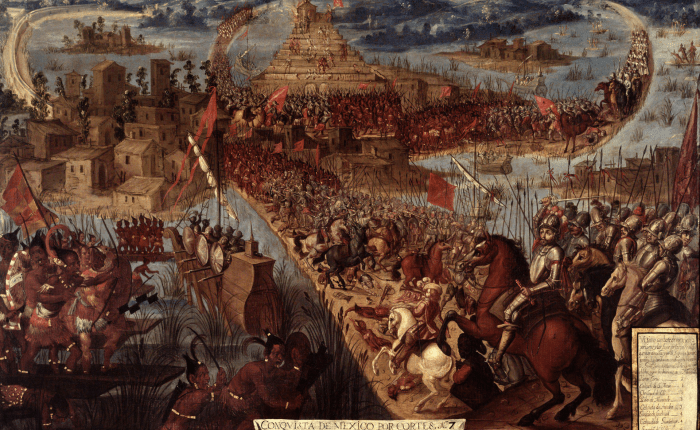
The result is an eyewitness account of one of the most monumental events in human history—the collapse of a great empire, and with it the only power in Central America capable of resisting the Spanish colonists. It is a story rich in drama and intrigue, as Cortés navigates the politics of his Spanish backers (who turn on him) as well as the local peoples he encounters, seeming to stay one step ahead of trouble through his cunning and a generous amount of luck.

It is also a gruesome and tragic story. Hardly a page goes by in this book without armed conflict and human butchery. It is impossible to root for the Spaniards as they slash and burn their way through the landscape, provoking unimaginable losses to our cultural heritage in the process. And yet, ironically, Díaz—an agent of this civilization’s destruction—was one of the last people to see it at its full splendor, and is now one of our best sources of information on what he helped to destroy.

The passages about the Aztec cities, and especially meeting Montezuma in Tenochtitlan, are easily my favorite part of the book. Despite their selfish and bloody purpose, Díaz and his fellows were absolutely dazzled at the splendor of the empire. He was amazed at the broad and straight causeway, the network of canals and bridges, the high stone pyramids. The vast markets, teeming with alien plants and animals, he compares favorably to those of Constantinople or Rome; and he goes into raptures at the beauty of their gardens. The sheer number of people is shocking for the modern reader, who may be accustomed to thinking of the New World as only lightly populated at the time of European contact. On the contrary, Tenochtitlan would have dwarfed the London or Seville of the time.

A tone of regret or remorse creeps into the writing at this point, as if he is sorry that such a wonderful place was destroyed. It is an especially striking tonal shift, given that so much of the book is one battle after another, often told quite matter-of-factly. In another passage, Díaz seems to be amazed that all of this really happened, and seems unable to explain how it could occur, deciding that it must have been divine intervention. This is somewhat self-serving, to be sure, but it does give a taste of his complete lack of guile. As an author, he writes what he remembers, and shrugs his shoulders at the explanation.

What continually strikes Díaz—and undoubtedly his readers—is the prevalence of human sacrifice in the Aztec world. He describes finding people in cages being fattened for sacrifice, temples covered in blood, and the horrifying way in which victims would be dragged up the temple steps and have their chests cut open. As far as I know, there is no reason to doubt that this really happened. Yet it also serves rhetorically as a constant justification for the Spaniards’ actions. It is difficult to feel bad for the Aztecs, after all, if they are murdering on such a scale.

But I think it is important for the modern reader to keep in mind that Díaz and his fellows were hardly there on a humanitarian mission. These conquistadors—who would go on to commit violence on a much larger scale—were there for personal enrichment above all else. The lives of the peoples they conquered had little interest or value for them, beyond their possessions or their enslavement. To pick just one example, after expounding on the horrors of human sacrifice, Díaz calmly relates: “we dressed our wounds with the fat from a stout Indian whom we had killed and cut open, for we had no oil.” I do not say this to re-litigate the past, only because I think this book is more profitable and compelling if not read as a story of heroes and villains.

So while I cannot call this document a literary masterpiece, or even well-written, I found it to be a window—and a surprisingly clear window—into one of history’s great moments. And the sad truth is, to learn about this moment, we must turn to books like these, for “today all that I then saw is overthrown and destroyed; nothing is left standing.”
View all my reviews

Review: The Greatest Sentence Ever Written

Review: The Greatest Sentence Ever Written

The Greatest Sentence Ever Written by Walter Isaacson

My rating: 4 of 5 stars


This year, 2026, will mark the 250th anniversary of these United States. Well, this is more a convention than a fact. After the signing of the Declaration of Independence, the Revolutionary War would drag on for seven more years; and the Constitution would not be adopted until 1789. Still, it is fair to say that the drafting of this fateful document was both a decisive moment on our road to independence, as well as an important statement of the principles we would later see as defining this nation.

This short book is ostensibly a close look at the second sentence of this sacred text. It is the one that many Americans know by heart, which begins: “We hold these truths to be self-evident…” Isaacson declares it the “greatest sentence ever crafted by human hand”—a grandiose claim, but a defensible opinion in light of both the sentence’s import and felicity. This book is an examination of how it was written and revised.

Thomas Jefferson wrote the first draft of this document. In his version, the sentence reads: “We hold these truths to be sacred & undeniable; that all men are created equal & independant, that from that equal creation they derive rights inherent & inalienable, among which are the preservation of life, & liberty, & the pursuit of happiness.”

The changes made to this original are telling. Aside from a bit of pruning—removing “independant” and “inherent”—there are two important shifts. For one, “sacred and undeniable” is changed to “self-evident,” a mathematical term in vogue among Enlightenment philosophers. This was undoubtedly Benjamin Franklin’s idea, who emphasizes the (highly controversial) position that rights are a basic property of anyone living in a society. The other change is the addition “by their Creator,” which actually makes Jefferson’s original sentence more conventional in outlook—a personal creator God, rather than simply an “equal creation.”

In any case, all of these changes certainly help make the sentence more memorable and punchy. Along with a bit of historical and philosophical background—very little, considering the length of this book—that, it would seem, would be that with regards to this finest of sentences.

Yet it becomes clear in the final three chapters that this book is not merely an exercise in lexical appreciation. Isaacson shifts from an appreciation of this sentence to a brief reflection on what he sees as our broader problems. Compositionally, this is awkward, as his suggestions do not stem from the content of this sentence, or indeed of the Declaration as a whole. In light of what feels like an endless national emergency, however, his input does not feel entirely out of place.

Isaacson asserts that what we have lost, and what we need to recover, is a notion of the “commons.” This is an idea alluded to in John Locke’s Second Treatise of Government, that each working society must ensure a common pool of resources over and above the private property owned by every individual. He views our current political crisis as a consequence of self-segretation—gated communities, private schools, VIP entrances, severely biased news sources. The two separate half-time shows for the recent Super Bowl—Bad Bunny for the libs, Kid Rock for the MAGA crowd—would seem to perfectly encapsulate this growing divide.

While I fully agree with Isaacson, this is hardly a novel observation—and, in any case, he doesn’t really suggest anything we can do about it, aside from getting back to our nation’s roots. Indeed, his own book illustrates this problem, when he briefly (and correctly) points out the contradictions in a document that proclaims equality while excluding women and American Indians and condoning slavery—an obvious fact, and yet one which will likely turn off many Republican readers.

Perhaps, rather than trusting our salvation to Jefferson, Franklin, and Adams—who, after all, got us into this mess—we should put our faith in Bad Bunny, the author of the second greatest sentence ever written: “The only thing more powerful than hate is love.”


View all my reviews

2025 in Books

2025 in Books

2025 on Goodreads by Various

My rating: 4 of 5 stars


2025 was a year of upheaval for me. Virtually everything changed: my job, my relationship, and even my country. Strangely, this has been true for many of the people I know (my theory is that the stability we cobbled together during the pandemic is finally unwinding). In any case, this didn’t leave as much room for reading, which is a pity. Even so, the books I did read provided comfort and guidance in these strange times, for which I’m grateful.

New York City was a major topic of my reading. I kicked off the year with The Works, an excellent book about how the city gets its electricity and water, how it gets rid of its garbage, how it controls traffic and moves its citizens. Even more revelatory was Times Square Red, Times Square Blue, by Samuel R. Delaney, which explores the ways that cities promote or discourage genuine human contact. Ottessa Moshfegh’s superlative novel, My Year of Rest and Relaxation, manages to shed just as much light on what it is like to live in this strange place.

Apart from this, my reading was kind of a mixed bag. Esther Perel’s two major books on long-term relationships were extremely interesting for her wide and somewhat unconventional perspective. Vicky Hayward’s translation of an 18th century Spanish cookbook managed to be one of the most fascinating works of history that I’ve encountered in a long while. David Grann’s books—on the Osage murders and Percy Fawcett’s quest to discover the Lost City of Z—were both thrilling; and I continued my slow exploration of Murakami’s fiction.

But the most significant event of my year in books was the publication of my novella, Don Bigote. Thanks to the editors at Ybernia, Enda and María, I even had my first book event, and got to talk about my writing in public for the first time in my life. To top it off, I contributed two chapters to a book about living in Madrid, Stray Cats—ironically, just in time to decide to move away from that lovely city. In a year in which I often felt low and lost, these accomplishments helped to get me through.

Yet perhaps my favorite moment was being able to meet and interview Warwick Wise, whose writing I greatly admire, and whom I met through Goodreads. Even after all these years, then, this site continues to enrich my life.


View all my reviews

Review: Persians, by Lloyd Llewellyn-Jones

Review: Persians, by Lloyd Llewellyn-Jones

Persians: The Age of the Great Kings by Lloyd Llewellyn-Jones

My rating: 3 of 5 stars


This book begins with a great promise: to correct the distorted view that so many of us have of the Persian Empire. This distortion comes from two quite different directions.

In the West, our view of the Persian Empire has largely been filtered through Greek sources, Herodotus above all. This is nearly unavoidable, as the Greeks wrote long and engaging narrative histories of these times, while the Persians—although literate—did not leave anything remotely comparable. Yet the Greeks were sworn enemies of the Persians, and thus their picture of this empire is hugely distorted. Taking them at their word would be like writing a history of the U.S.S.R. purely from depictions in American news media.

The other source of bias is from within Iran itself. Starting with Ferdowsi, who depicts the Persian kings as a kind of mythological origin of the Persian people, the ruins of this great empire have been used to contrast native Persian culture from the language, religion, and traditions imported by the Muslim conquest. In more recent times, Cyrus the Great has become a symbol of the lost monarchy, a kind of secular saint—a tolerant ruler, who even originated the idea of human rights. This purely fictitious view is, at bottom, a kind of protest against the current oppressive theocracy.

But this book does not live up to its promise. To give the author credit, however, I should note that the middle section of the book—on the culture, bureaucracy, and daily life of the empire—is quite strong. Here, one feels that Llewellyn-Jones is relying on archaeological evidence and is escaping from the old stereotypes. The epilogue is also a worthwhile read, detailing the ways that subsequent generations have used (and abused) the history of this ancient power.

Yet the book falters in the chapters of narrative history. Here, Llewellyn-Jones is forced to rely on the Greek sources, and as a result many sections feel like weak retellings of Herodotus, with a bit of added historical context. Even worse, there are several parts in which I think he is not nearly skeptical enough regarding the stories in these Greek authors. At one point, for example, he retells the story of Xerxes’s passionate love affair with the princess Artaynte—a story taken straight out of Herodotus, and which has all of the hallmarks of a legend. That Llewellyn-Jones decides to treat this story as a fact, and does not even gesture towards its source, is I think an odd display of credulity in a professional historian.

The irony is that the final section of the book—full of scandalous tales taken out of Greek authors, depicting the decadence and depravity of the Persian court—only reinforces the very stereotypes that Llewellyn-Jones sets out to destroy. The really odd thing, in my opinion, is that there are no footnotes or even a section on his sources, so the reader must take him at his word—or not. I suspect this omission is to cover up the embarrassing fact that he relied so heavily on Herodotus.

This is a shame, as the Persian Empire does deserve the kind of reevaluation he proposes. It is fascinating on its own terms, and not just as a foil to the noble Greek freedom-fighters. Still, I think this book is a decent starting point for anyone interested in the subject. One must only read it with a skeptical eye.


View all my reviews

Review: New Art of Cookery

Review: New Art of Cookery

New Art of Cookery: A Spanish Friar’s Kitchen Notebook by Juan Altamiras by Vicky Hayward

My rating: 5 of 5 stars


I did not expect to be going to a book event during my last weekend in Madrid. But when I learned that an author was going to be talking about a historic Spanish cookbook at my favorite bookstore in the city, I decided that I had to make time for it.

I was transfixed from the start. The history of food is, I think, often overlooked—even by history buffs; and yet it provides a fascinating lens through which to learn about the past. In daily life, we are often apt to think of traditional dishes as things that have existed since time immemorial. But this often isn’t the case. In this cookbook, originally published in 1745, you will not find potato omelette, or paella, or croquetas, or cocido, or gazpacho…

Wait, I’m getting ahead of myself. Let me describe what this book is, first. Nuevo arte de la cocina is a cookbook published under the name Juan de Altamiras (a pseudonym) in 1745. It proved to be immensely popular, remaining a bestseller well into the next century. The book’s author—whose real name was Raimundo Gómez—was a Franciscan friar, who grew up and spent much of his life in rural Aragón. This book is a contextualized translation by the English author Vicky Hayward. Throughout the book, she adds a great deal of fascinating historical context, as well as modernized versions of each of the over 200 recipes here.

As you might expect, the book is organized along religious lines, with food for meatless and meat days. Back then, something like a third of the year consisted of meatless days; and during Lent, the pious were supposed to be basically vegan. This makes the book a surprisingly good resource for vegetarian cooking. Yet what made it so innovative in its time was that, unlike so many previous cookbooks, Altamiras wrote for ordinary Spaniards—not courtly chefs. The recipes here are simple home cooking at its finest, requiring basic ingredients and straightforward technique. This was revolutionary at the time.

And to return to my previous point, much of the cooking can seem surprisingly exotic. Altamiras uses sauces made from hazlenuts, almond milk, and pomegranate juice. He mixes citrus, saffron, and tomato, and loves to add cloves and cinnamon to his savory dishes. Hayward was good enough to cook samples for the audience at the book event—several of which made me think of Iranian food. According to Hayward, this is because the Morisco influence (Muslims who had converted to Christianity in the 15th century) was still alive and well in Altamiras’s childhood.

I was also surprised at the wealth of ingredients available to Altamiras. He calls on a wide range of fruits and vegetables, as well as fresh fish—despite not living near the coast. He had eggs aplenty and endless ham and lamb, not to mention nuts, legumes, and spices. Saffron grew locally in his day, and salt cod was a staple (though including such a humble ingredient as salt cod was innovative). Most surprising of all, he made iced lemon slushies by using the snow in the nearby mountains. This was a rich and varied diet.

Hayward has fascinating things to say about all of this—the cooking techniques, the sources for ingredients, the role of religion, the Muslims influence, and so much more. More than so many other history books, this one made me feel transported back in time. And a delicious time it was.

Now, one would think that there could be nothing more innocuous than a translation of an 18th century Spanish cookbook. And yet, the event I went to last month was the first event held in honor of the book—eight years after its initial publication! According to Hayward, this is because her book attracted the ire of the Aragonese government, who were offended that a foreigner had beaten them to the punch in bringing their native son to a wider audience. She reports being attacked left and right by Spanish academics. If this is true, it is very silly.

I left the event in a buoyant mood, glad that I could still be so surprised by Spanish history after so many years. And I celebrated, appropriately, by the orgy of food that is Tapapiés—Madrid’s annual tapa festival, held in the Lavapiés neighborhood. It was a wonderful way to spend my last Friday in the city.


View all my reviews

Review: Stray Cats

Review: Stray Cats

Stray Cats: Life in Madrid Through 17 Voices by John Dapolito

My rating: 5 of 5 stars


I met John Dapolito at the Antón Martín metro stop on a cold autumn night. He was smoking a cigarette and scanning the crowd, and when he recognized me he told me to follow him to a nearby bar. I was nervous, as this was a kind of interview. He was looking for writers to contribute to a new volume, a collection of mini-memoirs of people who have moved to Madrid from elsewhere. He wanted them to answer three questions: How has Madrid changed since you moved here? How have you changed? And how has Madrid changed you?

“Nine years?” he said, mulling over my time in Madrid. “Nine years…” his voice trailing off. To many Americans in Madrid, this is quite a long time. But compared to John’s twenty-five, it seemed rather paltry. So we talked about how I could write my essay, what angle I could take, what I could emphasize about my experience to differentiate from everyone else’s. The next day, I started writing a draft of my essay long-hand, in a notebook—something I seldom do—and now it is a pleasure to see it in print in this collection.

Ironically, in the months since I sent off the final draft to John, I’ve grown to love Madrid more than ever. While I used to feel the need to escape into the sierra every couple of weeks, craving a bit of nature, lately I’ve been content to just stroll around the city, exploring its nooks and crannies, and getting ever-more integrated into its peculiar form of life. In short, now that my nine years are nearing ten, I am finally beginning to feel like a proper madrileño, fully at home in this great Spanish metropolis. And now that I have my story of Madrid in print, I feel now more than ever that I’ve really made a home here.

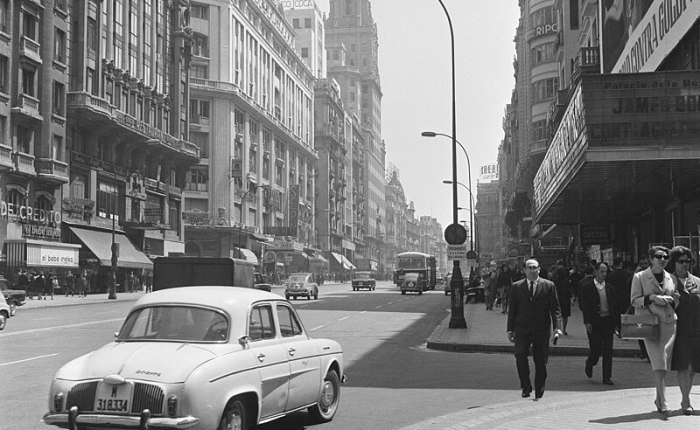
The stories in this volume have many common themes: learning the language, enjoying the nightlife, resenting the gentrification, and so on—themes that would have appeared had this book been written about Budapest or Bangkok. But beneath these superficial commonalities are what make the essays worth reading—insights into Madrid and, more often, into the person writing about it. And these essays are illustrated by black-and-white photos by the editor, John. I remember him opening a binder of them at the bar, during our first meeting, and admiring their atmosphere, how they really captured an aspect of the beauty of this city. And I thought to myself: “I want to be a part of this project.”


View all my reviews

Review: Times Square Red, Times Square Blue

Review: Times Square Red, Times Square Blue

Times Square Red, Times Square Blue by Samuel R. Delany

My rating: 5 of 5 stars


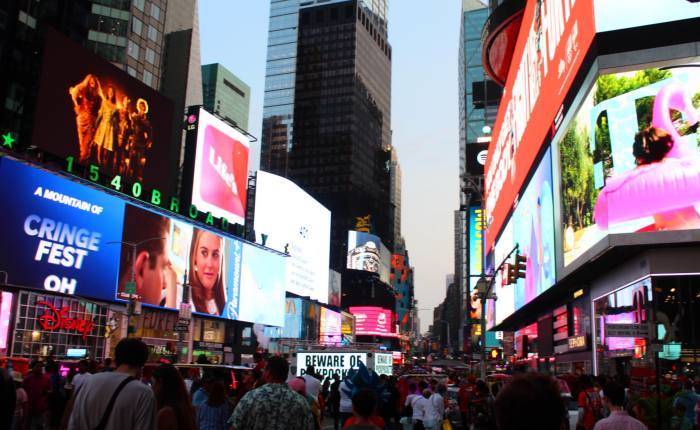
When I was an undergraduate, having rashly and unwisely switched my major from chemistry to anthropology, I met with my academic advisor. He asked me: What do I hope to learn as an anthropologist? To this, I gave the answer: I want to walk through Time Square and understand why it is the way it is. Yes, grandiose and pretentious, but it did capture something—the urge to figure out why the world is filled with so much soulless, commercial crap.

I am now suffering the financial consequences of studying anthropology, and not much closer to enlightenment. Thanks to this book, however, I do feel closer to understanding that mecca of American consumerism: Times Square.

This is a highly unusual book. Delany, who usually writes science fiction, set out to write a work of urban studies. And yet it is just as much a memoir as an academic analysis, and it comes to its point in a very roundabout way. Even so, it is easily among the best books about New York City I have ever read.

The book is divided into two essays, originally published independently. The first, “Times Square Blue,” recounts Delany’s experience of the old, seedy Times Square—the Times Square of peep shows, prostitutes, drugs, and sex shops. Specifically, it focuses on the porn theaters, places which became gay cruising grounds, despite showing almost exclusively straight porn. Delany spent decades visiting these theaters and paints a memorable portrait of this now unimaginable Times Square.

Yet this part of the book is not prurient. Delany doesn’t write to titillate the reader, or even to mourn a part of the city that has disappeared. He writes, instead, to illustrate an idea about what makes cities work. It is really an expansion of what Jane Jacobs said in her classic book on the subject: that cities need to foster contact between different sorts of people. Delany merely adds a sexual dimension to this analysis, and he shows how his own search for men threw him into contact with all sorts of people whom he would never have met through work or other socializing.

Part Two, “… Three, Two, One Contact: Times Square Red” expands this observation into a theory. Delany contrasts “contact”—the kind of random meeting of a stranger, such as in line at a grocery store—with “networking,” which is a more formalized way of meeting people, such as at a book convention. An important difference between the two is that, in the former, it is common to meet people of different backgrounds and socio-economic classes, while the latter usually restricted to members of the same class.

Delany asserts that much of the modern world is intentionally created to promote networking and to discourage contact. And the redevelopment of Times Square is a case in point. Whereas it was possible to go to the old Times Square and meet all sorts of people, in the Times Square as it exists today there are simply tourists and people trying to make money off of tourists. And very few people who visit Times Square now, I reckon, meet anyone at all.

There are further aspects of Delany’s analysis—much of it in a Marxist vein—but to me the pleasure of this book was simply in the love of city life that he exudes. On every page, the reader can feel that he simply enjoys meeting people of different sorts, and finds that it enriches his life. It is a wonderful antidote to the sometimes suffocating loneliness that big cities can engender—the feeling of being surrounded by people, and yet completely ignored. While reading this book on the metro, I suddenly became aware of everyone else on the train as individuals and not faceless mannequins. It made the ride far more pleasant.


View all my reviews

2024 in Books

2024 in Books

2024 on Goodreads by Various

My rating: 4 of 5 stars


I seem to be slowing down in my old age. About a decade ago, I was reading well over 100 books a year. Since then, my total book count has steadily gone downward, a dismal sign of adult responsibilities encroaching on my free time. But I still managed to finish some excellent books.

In election years, I tend to get swept up in the frantic political mood, but this year somehow I managed to maintain calm. My big election read was What It Takes, Richard Ben Cramer’s monumental account of the 1988 election. It was a thorough reminder of how much American politics have decayed during my lifetime. This was complemented by Robert Caro’s Master of the Senate, a monumental exploration of how power operates on a national scale. The attempted Trump assassination also prompted me to read the Warren Commission Report and to finally learn all of the gory and suspicious details of the JFK assassination.

But the major theme of the year was, broadly speaking, the 1920s, 30s, and 40s in America. I’m fascinated by this period because it seems to separate the past from the present—a historical crisis that birthed the modern world. The best general overview of the period I know is David M. Kennedy’s Freedom From Fear, but I supplemented this with Studs Terkel’s books on the Great Depression and World War II, Frederick Lewis Allen’s books on the 1920s and 30s, two volumes of Churchill’s WWII memoirs, and two books on the Dust Bowl. I admit that it was reassuring to be reminded that the United States has already survived crises of extraordinary proportions as we face a second Trump term.

But many other valuable books just came my way. Among these were Mozart’s letters—a thoroughly charming self-portrait—and Bianca Bosker’s wonderful book on the contemporary art scene, which illuminated a world that had previously been a complete conundrum to me. This also included Jon Krakauer’s two most famous books—about Chris McCandless and the 1996 Mount Everest Disaster—which deserve their fame. Sei Shonagan’s classic of Heian Japan, The Pillow Book, made a lasting impression on me; but the most unexpectedly good read was The Ethical Slut, a manual of polyamory which has much to teach prudes such as myself.

Like last year, this one has been rather light on literature. I read some good plays—a couple of Brecht plays, and Tom Stoppard’s postmodern Shakespeare sendup—and two novels by Sinclair Lewis. Yet the most beautiful piece of writing I encountered was James Agee’s sui generis Let Us Now Praise Famous Men, a book worth reading for the quality of the prose alone.

As always, I heartily thank the Goodreads community for allowing me to express my thoughts and to learn from yours. In the new world of AI, this platform seems to be stuck in time, and I’m not complaining.


View all my reviews

Review: Into the Wild

Review: Into the Wild

Into the Wild by Jon Krakauer

My rating: 5 of 5 stars


Jon Krakauer’s two most famous books, Into the Wild and Into Thin Air, are both stories of failures to survive in harsh environments. One would think that such stories, though thrilling, would leave little room for controversy; but somehow that is not the case. His account of the Everest disaster attracted criticism because his version of events—his apportioning of praise and blame—did not always match other survivors’. This book, meanwhile, was criticized for two principal reasons: first, Krakauer’s story of McCandless final weeks in Alaska may go beyond the evidence; and second, he portrayed McCandless in a highly favorable light.

I’ll take them in reverse order. A fervid outdoorsman himself, Krakauer obviously sympathized deeply with Chris McCandless, and this book shows the young man as a kind of flawed hero. Many readers feel quite differently, seeing him as an arrogant, naïve, and misguided young man whose stubbornness unnecessarily put his family through hell. As Krakauer notes, however, the deep antipathy that some readers feel for McCandless seems a bit excessive. After all, if he was misguided, he certainly paid the price for it. And among all of the misdeed of our sorry species, going unprepared into the bush hardly seems like the worst sin.

In any case, one hardly needs to admire McCandless to find his story worthwhile. Indeed, I think this book is most valuable when read as a case study of a certain psychological type. It is a mindset most prevalent among young men, though hardly exclusive to them. At his age, I remember being a toned-down version of McCandless myself: reading Tolstoy and Thoreau and feeling superior to everyone, wanting nothing more than to explore, seeing no value in being tied down in a relationship or a job when a world of experiences awaited me.

Many people, I suspect, go through a phase like this, even if they don’t take it as far as McCandless. And most of us come out the other side learning why life can’t just be wandering and rhapsodizing. This is what happened to Krakauer, and what happened to me, and maybe what happened to you. It might have happened to McCandless, had he lived.

Indeed, I think many of us are apt to look back on our ideological young selves with a mixture of horror and embarrassment. How could I ever think that Dostoyevsky would solve all my problems? How could I have been stupid enough to go hitchhiking in a foreign country? And so on. But I suspect that some of the pain that these reflections cause is the recognition that we became the very thing we abhorred. Growing up almost inevitably means compromising our values, and settling into our little corner of the world, wherever that happens to be.

What I’m trying to say, I suppose, is that the pure and idealistic vision of so many young people is not invalid, it’s just too demanding. In other words, though we gain the ability to have rewarding lives as functioning members of society when we settle down, we do lose that sense of wonder—the feeling that all we need are words, ideas, and experiences.

And it should be said that many people in this mold have contributed mightily to society. Tolstoy and Thoreau are two obvious examples, and they are widely admired. Had McCandless lived, maybe he would have written a celebrated book, too. Celebrated or not, it is worth noting that even these great figures have their share of the pathetic. Thoreau was a brilliant writer and an original thinker; he also camped out in what was effectively Emerson’s backyard. I’m sure, for example, that if you met someone living in a small cottage on the edge of town as preachy and as self-obsessed as Thoreau, you’d likely find very little to admire.

Whether we view these people as heroes or kooks largely depends on how they’re framed. Krakauer chooses to see McCandless as heroic in his straining to live on his own terms. But for the other side of the coin, watch Herzog’s documentary Grizzly Man, the story of Timothy Treadwell, another man killed in the Alaskan wilderness. Herzog’s portrayal of Treadwell shows him to be wildly irresponsible and hopelessly deluded, perhaps not even fully sane. And I think both perspectives are true. McCandless was both heroic and pathetic, both admirable and irresponsible, both clear-eyed and deluded. In the end, it is the old story of Don Quixote, who is simultaneously morally superior to everyone around him, and undeniably out of touch with reality.

Anyway, that’s my take on the question of whether McCandless is admirable. This only leaves the second question of whether Krakauer’s account of McCandless’s final days goes beyond the available evidence.

The main source of evidence of McCandless’s stay in Alaska is the journal he kept. However, the entries are extremely short, often just a word or two, and are mainly a record of the animals he killed and ate. To flesh out the story, Krakauer often had to guess what a journal entry might mean. To give just one example, on Day 69 McCandless wrote “Rained in. River look impossible. Lonely, scared.” Krakauer supposes that McCandless had decided to head back toward civilization, but was stopped by the Teklanika River, which was swollen by the snowmelt.

Some publications, such as the Anchorage Daily News, take Krakauer to task for this and the many other assumptions he makes while interpreting this diary. On Day 92, for example, the entry simply reads “Dr Zhivago,” which Krakauer announces is the last book McCandless ever finished. But of course, we can’t really know that. As a result, Krakauer has been accused of writing a kind of fiction rather than journalism, at least in this section. For my part, however, I think his interpretations of the diary entries are quite reasonable, even if we can never know for sure if they are correct.

Krakauer is particularly vexed as to the question of what killed McCandless. On day 94 it says: “Extremely weak. Fault of pot. seeds. Much trouble just to stand up. Starving. Great jeopardy.” In the book, Krakauer proposes that McCandless had eaten the seeds of the so-called Eskimo potato plant, which contained toxic alkaloids. Subsequent testing later refuted this hypothesis. Unwilling to let it go, Krakauer recruited scientists and even co-authored a scientific paper, in which they report that the seeds actually contain a toxic amino acid. He believes this is what killed McCandless.

However, unremarked upon in this book—and it is a notable omission—is the entry on day 89, which says “DREAM” in giant letters. Arrows point from this word to “many mushrooms,” and underneath it is a garbled entry that reads “2 infinity holes, 1 at the belt, 1 at the foot, gives frequency.” This strange entry would seem to indicate that he had taken hallucinogenic mushrooms and had a psychedelic experience. And if McCandless was eating mushrooms, it is easy to conclude that he inadvertently ate a poisonous variety. After all, telling mushroom species apart is notoriously difficult.

But why does this matter? Well, it seems obvious that Krakauer wants to believe that the potato seeds, not mushrooms, were the culprit. This is because the toxicity of wild potato seeds was not well-known, while eating unidentified mushrooms is obviously a dangerous idea. In other words, if the potato plant did Chris in, it would mean that he was less reckless and unprepared than many think. I must admit, however, that the omission of any reference to the DREAM entry is hard to justify.

In the end, I think this is a story about being young, idealistic, and rash. When I was about Chris’s age, I quit my Ph.D. and moved to Spain, spending all my savings in order to traipse around the country. My future was inconceivable, and the idea of real consequences—much less death—too abstract to contemplate. Now, nearly ten years later, I have a steady job and a relationship, and feel far less wanderlust. I’ve come to appreciate, like I never could then, that the small joys of being around people you love, in a community where you feel at home, are just as valuable and as uplifting as the any brilliant book or beautiful landscape. It’s quite possible that Chris would have come to the same conclusion. Now, his life stands as a monument to what most of us leave behind.


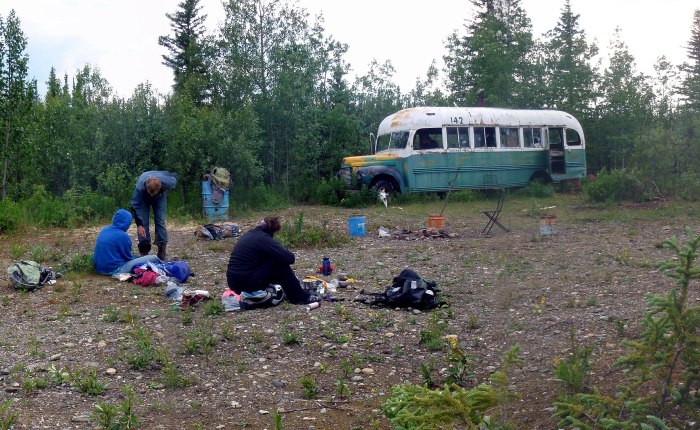
Cover photo by Erikhalfacre – CC BY-SA 3.0, https://commons.wikimedia.org/w/index.php?curid=13274101

View all my reviews

Review: Moral y civilización

Review: Moral y civilización

Moral y civilización. Una historia by Juan Antonio Rivera

My rating: 4 of 5 stars


This book was given to me as a birthday present by my friend, Carlos Gómez, who went to university with the author. Not long thereafter, Juan Antonio Rivera passed away unexpectedly, leaving this book as his final work. Carlos, naturally, was distraught at the news. The last time we spoke, I asked Carlos about Juan’s life. Juan was a highly independent man, who lived surrounded by books—thousands and thousands of books, on every subject and in every genre. Carlos recalls entering his home and being unable to sit down for the sheer quantity of reading material.

Naturally, I can only respect someone so singularly dedicated to the life of the mind. I read this work, therefore, as a kind of homage to this thinker whom I never had the opportunity to meet.

As it happens, I was well-prepared to tackle this work. With the exception of Friedrich Hayek, I was familiar with all the thinkers most often cited: Charles Darwin, Steven Pinker, Jonathan Haidt, David Graeber, Richard Dawkins, Daniel Kahneman, and Jared Diamond, among others. If you are familiar with these writers, you may notice that none of them are philosophers. And, indeed, this book is not really a work of moral philosophy in the strict sense. Rivera is not concerned with the old question of ethics—how an individual might make a moral choice. He is concerned, rather, with how morality evolved over time, and how it operates now.

In a book that begins with the evolution of altruistic behaviors and ends with a defense of classical liberalism, a lot of intellectual ground is covered. It is not easy to summarize it all. The pithiest way that I can encapsulate Rivera’s view is that he is extremely suspicious of rationality. By this, I mean that he distrusts individual decision-making, even—or especially—when it is guided by conscious, logical thought. He thinks it is impossible for one person to have it all figured out.

This will be clearer if I give examples. People are moral, he thinks, when they are guided by a combination of biology and custom—that is, when they act as programmed. But when they strive to create an explicit morality, they create ideologically extreme systems like communism or religious fundamentalism, and seek to subject everyone to their vision. To give another example, he thinks that societies are pushed forward, not by individual geniuses, but by collective intelligence—the ability to subdivide work, to find inspiration in others’ ideas, to find new uses for other’ inventions. Both in natural selection and the free market, he sees the operation of an intelligence that far exceeds any given person’s, and he trusts these processes for their very impersonality.

Perhaps I am making this sound unreasonable, but there is a strong logic to his argument. After all, it is true that evolution has given rise to miracles of engineering that far exceed what humanity has accomplished, and that even our own engineering marvels are often a result of a slow accumulation of collective insight. Arguably, most people act reasonably moral without ever pausing to reflect on the basis of their ethical system. Even AI works, not through high-powered logic, but by being trained with masses of data. You might say his philosophy is trial and error elevated to a principle.

For about the first three-quarters of the book, Rivera examines how different sorts of trial-and-error processes gave rise to the modern concept of morality. He begins with Darwinian selection, using the oft-cited prisoner’s dilemma to show how altruistic behavior can evolve. Then he shows how the human brain, shaped by evolution and then culture, subconsciously guides our actions. He discusses how the rise of agriculture led to a kind of self-domestication by the human species, how the Catholic church led to a rise in individualism in Europe, and finally how a rise in material prosperity led to a decline in violence.

In short, Rivera marshals principles of psychology, sociology, and history in order to demonstrate that morality is the by-product of non-rational, evolutionary processes. And all of this leads up, somewhat unexpectedly, to an endorsement of liberalism. Rivera sees a society that strongly emphasizes individual rights as the one most likely to be morally advanced—partly, because it benefits from a diversity of skills and insights, and partly because it forces its members to develop an ethic of tolerance and respect.

Indeed, this last point is captured by one of Rivera’s coinages: “cold morality” vs. “warm morality.” A warm morality is one based on familial ties—in other words, an ethic of collectivism. While such an ethic might work very well for a small group of hunter-gatherers, Rivera says, the familial ethic cannot be scaled up to work on a societal scale. It is simply impossible for me to care about a stranger on the street the way I care about my brother. This is why he endorses a “cold morality,” which involves little more than leaving people alone to do what they think best. As he says, it is the negative version of the golden rule—don’t do unto others what you wouldn’t have them do unto you—rather than the positive version.

Both in his politics, then, and in his philosophical views, he is extremely skeptical of others—their conclusions, their reasoning, and their values. His defense of liberalism is thus rooted in the idea that nobody can have it all figured out, so we ought to just leave each other alone.

Certainly, there is a great deal to recommend this view. Believe me: I am not going to argue in this review that we ought not to have individual rights. Nevertheless, I was not fully satisfied by the way that Rivera set about arguing his conclusions. His rejection of utopian thinking and embrace of liberalism largely rests on his perception that the former has failed and the latter has succeeded in practice. That may be true, though there are many factors which influence the success or failure of a political system. Further, in the earlier sections of the book, I felt as if he were taking concepts from works of popular science and combining them rather too freely—like the puzzle-pieces of a foregone conclusion.

I should also mention the unacknowledged irony of an tome such as this arguing against the preeminence of the intellect. It seems self-defeating to spend a great deal of intellectual energy arguing that thinkers ought not to try to find a universal set of morals. Morality may be a product of natural and social evolution, and moral reasoning may be subconscious most of the time, but I still think the question of what is right or wrong cannot be entirely sidestepped. Virtually everyone is confronted, from time to time, with a moral conundrum, when it seems entirely unclear what the right thing to do is. Rivera admits that these situations exist, though his book doesn’t provide any guideposts for navigating difficult terrain.

Nevertheless, I think this is an impressive book. Rivera is obscenely well-read and combines insights from many different fields. More than that, he is able to make his philosophy readable. Going back to José Ortega y Gasset, Spain has a strong tradition of popular philosophy—of original philosophical works written in a charming and accessible style. Rivera’s book is a worthy contribution to this tradition, as it is learned without being pedantic. It is a shame that we cannot look forward to more works by this thinker.


View all my reviews