This past Friday was the official book release of Don Bigote and it went far better than I expected. Surprisingly, the venue was full, with people even sitting on the floors! And we sold (and I signed) far more books than I had dared to hope for.
One of the visitors to the event was an author whose own book I had previously reviewed: Mario Grande, a great polyglot. A man of prodigious talents, he read my book is less than 24 hours and wrote a review, which I quite enjoyed. I wanted to pass it along for anyone interested.
As part of the promotion for my new book (it’s a dirty job, but someone’s got to do it), I’ve written three ariticles for other websites. On the off chance that you want to read even more of my writing, here they are:
One is about my long and rewarding experience on Goodreads, a platform I’ve been contributing to for over a decade now. Another is about my accidental connection to the writer Washington Irving, another son of the Hudson Valley who moved to Spain and wrote about the country. And the last is a modest contribution to literary criticism, using the philosophy of science, that I wrote for The Madrid Review.
When I began to write fiction, I hardly dared to dream that I would ever have a book published, much less two! I wish I could believe that this was due to my immense literary talent; but the truth is that, for this book, luck played a huge role in getting it published.
A few years ago, at a house party, I was introduced to a pleasant Irish man named Enda. It just so happened that he was also a writer; and, frustrated with the world of publishing, he was thinking of founding his own publishing company. It was this new enterprise, Ybernia, which agreed to put out my comic novella. As the Spanish say, I am an “enchufado.”
Don Bigote originated as an exercise in pure silliness, written to entertain a few close friends. The genesis of the idea was nothing more profound than the realization that the Spanish word bigote resembles the English bigot, and sounds like Quixote. Thus my hero was born, a mustachioed right-wing conspiracy theorist who wishes to save Western civilization.
The book consists of ten chapters and was written piecemeal over a number of years, from the first to the last years of the Trump presidency. After Trump’s defeat to Biden, I was content to let this hastily written misadventure wallow in obscurity and collect the internet equivalent of dust. It is the world’s ill luck, but my literary good fortune, that this book is now once again relevant.
If you happen to be in Madrid on February 21st, there will be a book release event in the Secret Kingdoms book shop at 8:00 p.m. (with wine, don’t worry), and I would be delighted to sign a copy for you. If not, you can find the book on Amazon or Ybernia’s website!
When I was an undergraduate, having rashly and unwisely switched my major from chemistry to anthropology, I met with my academic advisor. He asked me: What do I hope to learn as an anthropologist? To this, I gave the answer: I want to walk through Time Square and understand why it is the way it is. Yes, grandiose and pretentious, but it did capture something—the urge to figure out why the world is filled with so much soulless, commercial crap.
I am now suffering the financial consequences of studying anthropology, and not much closer to enlightenment. Thanks to this book, however, I do feel closer to understanding that mecca of American consumerism: Times Square.
This is a highly unusual book. Delany, who usually writes science fiction, set out to write a work of urban studies. And yet it is just as much a memoir as an academic analysis, and it comes to its point in a very roundabout way. Even so, it is easily among the best books about New York City I have ever read.
The book is divided into two essays, originally published independently. The first, “Times Square Blue,” recounts Delany’s experience of the old, seedy Times Square—the Times Square of peep shows, prostitutes, drugs, and sex shops. Specifically, it focuses on the porn theaters, places which became gay cruising grounds, despite showing almost exclusively straight porn. Delany spent decades visiting these theaters and paints a memorable portrait of this now unimaginable Times Square.
Yet this part of the book is not prurient. Delany doesn’t write to titillate the reader, or even to mourn a part of the city that has disappeared. He writes, instead, to illustrate an idea about what makes cities work. It is really an expansion of what Jane Jacobs said in her classic book on the subject: that cities need to foster contact between different sorts of people. Delany merely adds a sexual dimension to this analysis, and he shows how his own search for men threw him into contact with all sorts of people whom he would never have met through work or other socializing.
Part Two, “… Three, Two, One Contact: Times Square Red” expands this observation into a theory. Delany contrasts “contact”—the kind of random meeting of a stranger, such as in line at a grocery store—with “networking,” which is a more formalized way of meeting people, such as at a book convention. An important difference between the two is that, in the former, it is common to meet people of different backgrounds and socio-economic classes, while the latter usually restricted to members of the same class.
Delany asserts that much of the modern world is intentionally created to promote networking and to discourage contact. And the redevelopment of Times Square is a case in point. Whereas it was possible to go to the old Times Square and meet all sorts of people, in the Times Square as it exists today there are simply tourists and people trying to make money off of tourists. And very few people who visit Times Square now, I reckon, meet anyone at all.
There are further aspects of Delany’s analysis—much of it in a Marxist vein—but to me the pleasure of this book was simply in the love of city life that he exudes. On every page, the reader can feel that he simply enjoys meeting people of different sorts, and finds that it enriches his life. It is a wonderful antidote to the sometimes suffocating loneliness that big cities can engender—the feeling of being surrounded by people, and yet completely ignored. While reading this book on the metro, I suddenly became aware of everyone else on the train as individuals and not faceless mannequins. It made the ride far more pleasant.
Happy New Year, everyone! This year turned out to be a great year for writing. True, I didn’t finish working on my new novel, but that’s because I decided that it needed to be more thoroughly re-written. But I branched out in my writing, trying to write stories based on original research and interviews, rather than just my own experience. This led to my writing about my neighborhood, craft beer, and hot sauce; and I hope to continue this kind of pseudo-journalism in the future. The world is full of interesting people, after all.
In other news, I have a new book coming out in February! In fact, it’s one that originated on this blog: Don Bigote. I may even get an official book release! I’ll keep you posted.
But I do have a backlog of travel pieces. Here’s a quick list:
And of course there are an endless number of books to read and review. As it happens, I just came into possession of a trove of books about New York City, so it appears that the great Metropolis will be a major subject of my reading. I also still have the last of Caro’s LBJ books, and the last two of Churchill’s WWII memoirs. Apart from that, I can’t guess what books the year will throw my way.
Outside of the blog, my major goal is to get myself a more lucrative job, whatever that takes. But I suppose that’s always the case. So here is to a happy, healthy, prosperous 2025!
I seem to be slowing down in my old age. About a decade ago, I was reading well over 100 books a year. Since then, my total book count has steadily gone downward, a dismal sign of adult responsibilities encroaching on my free time. But I still managed to finish some excellent books.
In election years, I tend to get swept up in the frantic political mood, but this year somehow I managed to maintain calm. My big election read was What It Takes, Richard Ben Cramer’s monumental account of the 1988 election. It was a thorough reminder of how much American politics have decayed during my lifetime. This was complemented by Robert Caro’s Master of the Senate, a monumental exploration of how power operates on a national scale. The attempted Trump assassination also prompted me to read the Warren Commission Report and to finally learn all of the gory and suspicious details of the JFK assassination.
But the major theme of the year was, broadly speaking, the 1920s, 30s, and 40s in America. I’m fascinated by this period because it seems to separate the past from the present—a historical crisis that birthed the modern world. The best general overview of the period I know is David M. Kennedy’s Freedom From Fear, but I supplemented this with Studs Terkel’s books on the Great Depression and World War II, Frederick Lewis Allen’s books on the 1920s and 30s, two volumes of Churchill’s WWII memoirs, and two books on the Dust Bowl. I admit that it was reassuring to be reminded that the United States has already survived crises of extraordinary proportions as we face a second Trump term.
But many other valuable books just came my way. Among these were Mozart’s letters—a thoroughly charming self-portrait—and Bianca Bosker’s wonderful book on the contemporary art scene, which illuminated a world that had previously been a complete conundrum to me. This also included Jon Krakauer’s two most famous books—about Chris McCandless and the 1996 Mount Everest Disaster—which deserve their fame. Sei Shonagan’s classic of Heian Japan, The Pillow Book, made a lasting impression on me; but the most unexpectedly good read was The Ethical Slut, a manual of polyamory which has much to teach prudes such as myself.
Like last year, this one has been rather light on literature. I read some good plays—a couple of Brecht plays, and Tom Stoppard’s postmodern Shakespeare sendup—and two novels by Sinclair Lewis. Yet the most beautiful piece of writing I encountered was James Agee’s sui generis Let Us Now Praise Famous Men, a book worth reading for the quality of the prose alone.
As always, I heartily thank the Goodreads community for allowing me to express my thoughts and to learn from yours. In the new world of AI, this platform seems to be stuck in time, and I’m not complaining.
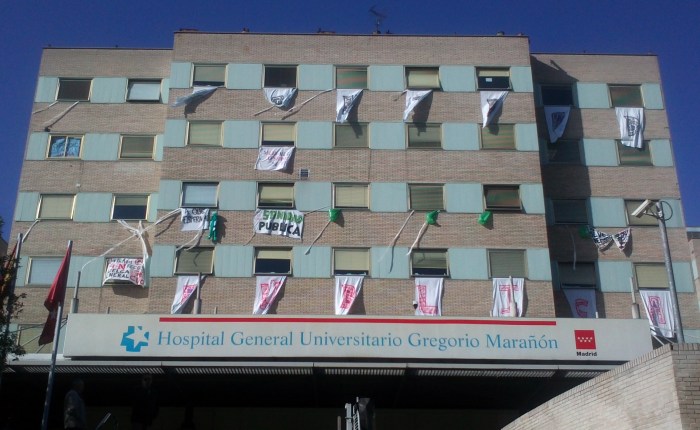
In the wake of the murder of Brian Thompson, the simmering anger that Americans feel for their healthcare system has boiled over. The internet is full of stories of people denied necessary treatments and medicine by our byzantine and heartless insurance industry. The alleged killer, Luigi Mangione, has even become a kind of folk hero to some, for taking revenge against a system they believe is just as guilty of murder—if not more so.
Fortunately, I don’t have a horror story about the American healthcare system to contribute. Nor am I here to lionize Mangione. Instead, I wanted to write up my experience dealing with a public healthcare system, in case any Americans are curious about what it is like in the rest of the world.
Shortly after running the Marathon, in 2023, I wanted to go to get a checkup to make sure I was alright. At the time I had private insurance through my job, which is fairly common even in a country with a robust public system. However, I should note that even the private insurance here is much better than it is in the United States. I never had a copay and, as far as I know, didn’t have a deductible. When I went to the dentist, podiatrist, or radiologist, the subject of money was not even brought up. Far from the American experience, here people get private insurance for convenience, and don’t seem to spend any time fighting with their insurers.
I went to an English-speaking doctor popular among expats. After a blood test, it turned out that I had extremely low iron reserves and was mildly anemic. My levels of ferritin (an enzyme that stores iron) were particularly low, about a quarter of the minimum level.
My doctor didn’t seem particularly concerned. He prescribed me iron pills to take for 90 days and told me to check back after the summer. By chance, during that time I got a new job, a better one, but which didn’t come with private insurance. Thus, when I went to do the follow-up, I went to the public health center in my neighborhood.
The experience was quite different. While the private doctor’s office was basically comparable to what I was used to in America—with a front desk, a waiting room, and a private room in the back to see patients—the public health center was more like an urgent care. There was a large central waiting room with metal benches and rows of doors leading to dozens of doctor’s offices.
After a brief talk with the doctor, I was told to come back in a few days for the blood test. The results were later delivered to me on the public health portal. After 90 days of iron supplements, my iron and ferritin levels were still abnormally low. Shortly thereafter, I got a call from the doctor. She seemed concerned. She asked me if I was a vegetarian or a vegan; and when I said no, whether I suffered from stomach pain or diarrhea. When I said no again, she told me that I would have to do an additional blood test and, more upsetting, bring in a stool sample.
This is when I began to panic. I had blithely assumed that my low iron levels were due to overtraining for the marathon, but the doctor seemed to think it could indicate something far more serious. I will spare you the details, but the stool sample was brought, and the blood test done, with no progress. There was no blood in my stool nor was I positive for celiac disease.
The doctor called me again, and told me that I would have to go get an ultrasound. This is when I realized that they were looking for lumps in my digestive tract—ulcers, cysts, or even tumors. A letter came in the mail, telling me how to make the appointment. Within a month, my belly was smothered in sticky goo and the nurse was passing her baton over it, as if I were pregnant. I expected her to say something but she didn’t, so I just wiped off the goo and left. The report came a few days later, again through the health portal: no irregularities found.
I thought that this might be the end of it, but I got another call from the public doctor. She said that, to be absolutely sure, I would have to get a colonoscopy (of my intestines) and an endoscopy (of my stomach). This is when panic really started to set in. You see, both stomach and colon cancer can cause iron deficiency, often without noticeable symptoms—until it’s too late, that is. And while colon cancer has a relatively good outlook, stomach cancer decidedly does not.
The appointment for the procedure was set for the beginning of April. This left me about two months to stew in anxiety. My mind was not soothed when a story was published in the New York Times, just a week before the appointment, that colon and rectal cancer rates are growing among young people. It seemed like an ominous sign.
For an endoscopy, a tube is inserted down your throat; and for a colonoscopy, up the other end. You’re spit-roasted, in other words. Thankfully, they sedate you for the procedure. It is the leadup to the colonoscopy that is the really unpleasant part. As the day nears, you must increasingly restrict your diet, cutting out foods with lots of fiber or strong colors, and finally cutting out food altogether. The final step is taking a powerful laxative. It’s not a fun way to pass the day.
Since you’re put under sedation, which takes a while to wear off, you can’t go to a colonoscopy alone. There has to be someone to help get you back home. Thankfully, I had Rebe. She arrived home from work and it was time to go. Strangely, at that moment, I didn’t feel a lot of anxiety about the results. I was so tired from not eating that I just wanted to get it over with.
I waited for just about five minutes before I was ushered in. The next thing I knew, I was on a stretcher with a needle in my arm. “You’re going to sleep,” the doctor said, and I was out. I came to, as many anesthetized patients do, wondering when they were going to start, and was astounded to learn that it was already over. I felt groggy and hungover. After waiting for fifteen minutes, I was handed the report: they hadn’t found anything—no tumors, no cysts, no ulcers, just a mild gastritis. It turns out that, as I originally thought, I had just over-trained for the marathon and used up my iron reserves.
You would think that I would be ecstatic at the news. But in my groggy state, I only felt annoyed that I had gone through so much trouble just to be told I was fine. I had pizza that night and drifted off into sleep.
I wanted to relate this health scare simply because it was shocking to me that, after so many tests, and speaking to so many doctors and nurses, I was never once asked to pay. No bill came in the mail. I walked out of the hospital a free (and healthy) man. What’s more, though I had to wait a couple months for the procedure, I never felt like the wait times were excessive—a common argument against public healthcare in America. As far as the doctors went, though they couldn’t spend a lot of time with me, they were highly professional, and arguably did a better job than their private counterpart, who only prescribed me iron supplements for a potential symptom of cancer.
To be absolutely fair, I should mention that the public system in Spain seems to do a very bad job when it comes to dentistry. I’ve never heard a good word about the public dental system, and the vast majority of the people I know don’t even bother trying to use it. As a result, like many people, I have private health insurance, paying a measly four euros a month. With those four euros, I get a cleaning and a checkup twice a year, with no co-pay—though, if I need anything beyond that, I have to pay out of pocket.
However, I should also mention that dental procedures are incomparably cheaper here than in the US. A single cavity drilling and filling costs between 40 and 50 euros, for example, and a root canal is about 200—prices that would seem almost free to many Americans. Even so, this doesn’t excuse the lack of good public dental care in Spain. For the life of me, I can’t understand why teeth are deemed categorically different from the rest of the body when it comes to insurance.
Even with that lack, however, I think that the healthcare system here in Spain is far superior to what Americans have to suffer through. It is cheaper both individually and collectively, and achieves better outcomes, as evidenced by Spain’s significantly higher lifespan. Going bankrupt due to a health problem is unheard of; people are not afraid of going to the doctor or the hospital or to call an ambulance. Not everyone is satisfied, for sure, but there certainly isn’t the deep hatred on display in my country.
Unfortunately, here the public system is continually in danger of privatization by right-wing parties. But if more Spaniards understood what Americans had to deal with, they would cherish their system, with all of its faults.
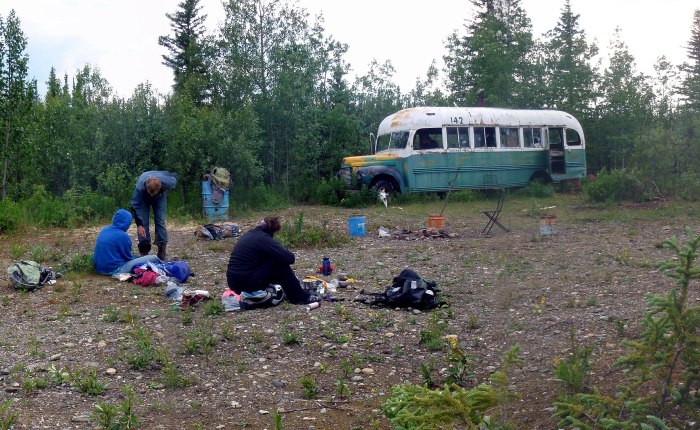
Jon Krakauer’s two most famous books, Into the Wild and Into Thin Air, are both stories of failures to survive in harsh environments. One would think that such stories, though thrilling, would leave little room for controversy; but somehow that is not the case. His account of the Everest disaster attracted criticism because his version of events—his apportioning of praise and blame—did not always match other survivors’. This book, meanwhile, was criticized for two principal reasons: first, Krakauer’s story of McCandless final weeks in Alaska may go beyond the evidence; and second, he portrayed McCandless in a highly favorable light.
I’ll take them in reverse order. A fervid outdoorsman himself, Krakauer obviously sympathized deeply with Chris McCandless, and this book shows the young man as a kind of flawed hero. Many readers feel quite differently, seeing him as an arrogant, naïve, and misguided young man whose stubbornness unnecessarily put his family through hell. As Krakauer notes, however, the deep antipathy that some readers feel for McCandless seems a bit excessive. After all, if he was misguided, he certainly paid the price for it. And among all of the misdeed of our sorry species, going unprepared into the bush hardly seems like the worst sin.
In any case, one hardly needs to admire McCandless to find his story worthwhile. Indeed, I think this book is most valuable when read as a case study of a certain psychological type. It is a mindset most prevalent among young men, though hardly exclusive to them. At his age, I remember being a toned-down version of McCandless myself: reading Tolstoy and Thoreau and feeling superior to everyone, wanting nothing more than to explore, seeing no value in being tied down in a relationship or a job when a world of experiences awaited me.
Many people, I suspect, go through a phase like this, even if they don’t take it as far as McCandless. And most of us come out the other side learning why life can’t just be wandering and rhapsodizing. This is what happened to Krakauer, and what happened to me, and maybe what happened to you. It might have happened to McCandless, had he lived.
Indeed, I think many of us are apt to look back on our ideological young selves with a mixture of horror and embarrassment. How could I ever think that Dostoyevsky would solve all my problems? How could I have been stupid enough to go hitchhiking in a foreign country? And so on. But I suspect that some of the pain that these reflections cause is the recognition that we became the very thing we abhorred. Growing up almost inevitably means compromising our values, and settling into our little corner of the world, wherever that happens to be.
What I’m trying to say, I suppose, is that the pure and idealistic vision of so many young people is not invalid, it’s just too demanding. In other words, though we gain the ability to have rewarding lives as functioning members of society when we settle down, we do lose that sense of wonder—the feeling that all we need are words, ideas, and experiences.
And it should be said that many people in this mold have contributed mightily to society. Tolstoy and Thoreau are two obvious examples, and they are widely admired. Had McCandless lived, maybe he would have written a celebrated book, too. Celebrated or not, it is worth noting that even these great figures have their share of the pathetic. Thoreau was a brilliant writer and an original thinker; he also camped out in what was effectively Emerson’s backyard. I’m sure, for example, that if you met someone living in a small cottage on the edge of town as preachy and as self-obsessed as Thoreau, you’d likely find very little to admire.
Whether we view these people as heroes or kooks largely depends on how they’re framed. Krakauer chooses to see McCandless as heroic in his straining to live on his own terms. But for the other side of the coin, watch Herzog’s documentary Grizzly Man, the story of Timothy Treadwell, another man killed in the Alaskan wilderness. Herzog’s portrayal of Treadwell shows him to be wildly irresponsible and hopelessly deluded, perhaps not even fully sane. And I think both perspectives are true. McCandless was both heroic and pathetic, both admirable and irresponsible, both clear-eyed and deluded. In the end, it is the old story of Don Quixote, who is simultaneously morally superior to everyone around him, and undeniably out of touch with reality.
Anyway, that’s my take on the question of whether McCandless is admirable. This only leaves the second question of whether Krakauer’s account of McCandless’s final days goes beyond the available evidence.
The main source of evidence of McCandless’s stay in Alaska is the journal he kept. However, the entries are extremely short, often just a word or two, and are mainly a record of the animals he killed and ate. To flesh out the story, Krakauer often had to guess what a journal entry might mean. To give just one example, on Day 69 McCandless wrote “Rained in. River look impossible. Lonely, scared.” Krakauer supposes that McCandless had decided to head back toward civilization, but was stopped by the Teklanika River, which was swollen by the snowmelt.
Some publications, such as the Anchorage Daily News, take Krakauer to task for this and the many other assumptions he makes while interpreting this diary. On Day 92, for example, the entry simply reads “Dr Zhivago,” which Krakauer announces is the last book McCandless ever finished. But of course, we can’t really know that. As a result, Krakauer has been accused of writing a kind of fiction rather than journalism, at least in this section. For my part, however, I think his interpretations of the diary entries are quite reasonable, even if we can never know for sure if they are correct.
Krakauer is particularly vexed as to the question of what killed McCandless. On day 94 it says: “Extremely weak. Fault of pot. seeds. Much trouble just to stand up. Starving. Great jeopardy.” In the book, Krakauer proposes that McCandless had eaten the seeds of the so-called Eskimo potato plant, which contained toxic alkaloids. Subsequent testing later refuted this hypothesis. Unwilling to let it go, Krakauer recruited scientists and even co-authored a scientific paper, in which they report that the seeds actually contain a toxic amino acid. He believes this is what killed McCandless.
However, unremarked upon in this book—and it is a notable omission—is the entry on day 89, which says “DREAM” in giant letters. Arrows point from this word to “many mushrooms,” and underneath it is a garbled entry that reads “2 infinity holes, 1 at the belt, 1 at the foot, gives frequency.” This strange entry would seem to indicate that he had taken hallucinogenic mushrooms and had a psychedelic experience. And if McCandless was eating mushrooms, it is easy to conclude that he inadvertently ate a poisonous variety. After all, telling mushroom species apart is notoriously difficult.
But why does this matter? Well, it seems obvious that Krakauer wants to believe that the potato seeds, not mushrooms, were the culprit. This is because the toxicity of wild potato seeds was not well-known, while eating unidentified mushrooms is obviously a dangerous idea. In other words, if the potato plant did Chris in, it would mean that he was less reckless and unprepared than many think. I must admit, however, that the omission of any reference to the DREAM entry is hard to justify.
In the end, I think this is a story about being young, idealistic, and rash. When I was about Chris’s age, I quit my Ph.D. and moved to Spain, spending all my savings in order to traipse around the country. My future was inconceivable, and the idea of real consequences—much less death—too abstract to contemplate. Now, nearly ten years later, I have a steady job and a relationship, and feel far less wanderlust. I’ve come to appreciate, like I never could then, that the small joys of being around people you love, in a community where you feel at home, are just as valuable and as uplifting as the any brilliant book or beautiful landscape. It’s quite possible that Chris would have come to the same conclusion. Now, his life stands as a monument to what most of us leave behind.
This book was given to me as a birthday present by my friend, Carlos Gómez, who went to university with the author. Not long thereafter, Juan Antonio Rivera passed away unexpectedly, leaving this book as his final work. Carlos, naturally, was distraught at the news. The last time we spoke, I asked Carlos about Juan’s life. Juan was a highly independent man, who lived surrounded by books—thousands and thousands of books, on every subject and in every genre. Carlos recalls entering his home and being unable to sit down for the sheer quantity of reading material.
Naturally, I can only respect someone so singularly dedicated to the life of the mind. I read this work, therefore, as a kind of homage to this thinker whom I never had the opportunity to meet.
As it happens, I was well-prepared to tackle this work. With the exception of Friedrich Hayek, I was familiar with all the thinkers most often cited: Charles Darwin, Steven Pinker, Jonathan Haidt, David Graeber, Richard Dawkins, Daniel Kahneman, and Jared Diamond, among others. If you are familiar with these writers, you may notice that none of them are philosophers. And, indeed, this book is not really a work of moral philosophy in the strict sense. Rivera is not concerned with the old question of ethics—how an individual might make a moral choice. He is concerned, rather, with how morality evolved over time, and how it operates now.
In a book that begins with the evolution of altruistic behaviors and ends with a defense of classical liberalism, a lot of intellectual ground is covered. It is not easy to summarize it all. The pithiest way that I can encapsulate Rivera’s view is that he is extremely suspicious of rationality. By this, I mean that he distrusts individual decision-making, even—or especially—when it is guided by conscious, logical thought. He thinks it is impossible for one person to have it all figured out.
This will be clearer if I give examples. People are moral, he thinks, when they are guided by a combination of biology and custom—that is, when they act as programmed. But when they strive to create an explicit morality, they create ideologically extreme systems like communism or religious fundamentalism, and seek to subject everyone to their vision. To give another example, he thinks that societies are pushed forward, not by individual geniuses, but by collective intelligence—the ability to subdivide work, to find inspiration in others’ ideas, to find new uses for other’ inventions. Both in natural selection and the free market, he sees the operation of an intelligence that far exceeds any given person’s, and he trusts these processes for their very impersonality.
Perhaps I am making this sound unreasonable, but there is a strong logic to his argument. After all, it is true that evolution has given rise to miracles of engineering that far exceed what humanity has accomplished, and that even our own engineering marvels are often a result of a slow accumulation of collective insight. Arguably, most people act reasonably moral without ever pausing to reflect on the basis of their ethical system. Even AI works, not through high-powered logic, but by being trained with masses of data. You might say his philosophy is trial and error elevated to a principle.
For about the first three-quarters of the book, Rivera examines how different sorts of trial-and-error processes gave rise to the modern concept of morality. He begins with Darwinian selection, using the oft-cited prisoner’s dilemma to show how altruistic behavior can evolve. Then he shows how the human brain, shaped by evolution and then culture, subconsciously guides our actions. He discusses how the rise of agriculture led to a kind of self-domestication by the human species, how the Catholic church led to a rise in individualism in Europe, and finally how a rise in material prosperity led to a decline in violence.
In short, Rivera marshals principles of psychology, sociology, and history in order to demonstrate that morality is the by-product of non-rational, evolutionary processes. And all of this leads up, somewhat unexpectedly, to an endorsement of liberalism. Rivera sees a society that strongly emphasizes individual rights as the one most likely to be morally advanced—partly, because it benefits from a diversity of skills and insights, and partly because it forces its members to develop an ethic of tolerance and respect.
Indeed, this last point is captured by one of Rivera’s coinages: “cold morality” vs. “warm morality.” A warm morality is one based on familial ties—in other words, an ethic of collectivism. While such an ethic might work very well for a small group of hunter-gatherers, Rivera says, the familial ethic cannot be scaled up to work on a societal scale. It is simply impossible for me to care about a stranger on the street the way I care about my brother. This is why he endorses a “cold morality,” which involves little more than leaving people alone to do what they think best. As he says, it is the negative version of the golden rule—don’t do unto others what you wouldn’t have them do unto you—rather than the positive version.
Both in his politics, then, and in his philosophical views, he is extremely skeptical of others—their conclusions, their reasoning, and their values. His defense of liberalism is thus rooted in the idea that nobody can have it all figured out, so we ought to just leave each other alone.
Certainly, there is a great deal to recommend this view. Believe me: I am not going to argue in this review that we ought not to have individual rights. Nevertheless, I was not fully satisfied by the way that Rivera set about arguing his conclusions. His rejection of utopian thinking and embrace of liberalism largely rests on his perception that the former has failed and the latter has succeeded in practice. That may be true, though there are many factors which influence the success or failure of a political system. Further, in the earlier sections of the book, I felt as if he were taking concepts from works of popular science and combining them rather too freely—like the puzzle-pieces of a foregone conclusion.
I should also mention the unacknowledged irony of an tome such as this arguing against the preeminence of the intellect. It seems self-defeating to spend a great deal of intellectual energy arguing that thinkers ought not to try to find a universal set of morals. Morality may be a product of natural and social evolution, and moral reasoning may be subconscious most of the time, but I still think the question of what is right or wrong cannot be entirely sidestepped. Virtually everyone is confronted, from time to time, with a moral conundrum, when it seems entirely unclear what the right thing to do is. Rivera admits that these situations exist, though his book doesn’t provide any guideposts for navigating difficult terrain.
Nevertheless, I think this is an impressive book. Rivera is obscenely well-read and combines insights from many different fields. More than that, he is able to make his philosophy readable. Going back to José Ortega y Gasset, Spain has a strong tradition of popular philosophy—of original philosophical works written in a charming and accessible style. Rivera’s book is a worthy contribution to this tradition, as it is learned without being pedantic. It is a shame that we cannot look forward to more works by this thinker.
In 1492, Christopher Columbus set out from Spain to find a shorter route to Asia. Europeans knew very little about the Far East at that time; but they did know, albeit vaguely, that Asia was where spices grew. Though it is difficult to imagine nowadays, cinnamon, nutmeg, and cloves were more valuable than gold. Anyone who could find a way to get them directly from the source, avoiding all the intermediary merchants, would stand to make a fortune. This is what motivated Columbus’s journey.
Of course, he did not arrive in Asia and did not find cinnamon, nutmeg, or cloves. The only spice his party did stumble upon was allspice, in Jamaica, which tasted vaguely like a blend of all three (thus the name). But the Spaniards who arrived in the so-called New World were introduced to a product that, in the present day, seems infinitely more important: hot chili peppers.
So the rest of the world was introduced to real, proper spice. To a remarkable extent, however, Spanish cuisine remains free of the influence of its former colonies. Hundreds of years of conquest, colonization, and commerce were not enough to convince the Spanish to find a use for chilis, and their food remains almost entirely picante-free.
Judging from my own experience, there is still a deep-rooted hostility to spice in Spain. I have been solemnly assured by many Spaniards that my hot sauce habit will inevitably result in stomach ulcers, if not full-blown cancer. They look on in alarm as I douse the food at the school cafeteria in my personal bottle of Tabasco, day after day. “On everything?” they ask me, dismayed. “Every day?”
Considering this, it appears to be a minor miracle that Adam Mayo has a stand in the Mercado de San Fernando dedicated to nothing but artisanal hot sauces—and properly spicy ones, too.
The Mercado de San Fernando, in the busy barrio of Lavapiés, is an excellent example of a municipal market. In its cavernous interior, green grocers, fishmongers, and butchers sell fresh foodstuffs, and an array of bars and restaurants cater to the greedy public. Like so many Spanish markets, it is a hub of the neighborhood. Regulars play dominoes and chat with bartenders, while children play tag in the labyrinthine space. On my last visit, a group of amateur musicians had set up and were playing through their set list—not for the public, but just for fun.
One of my favorite spots in this market is Mi Casita. This is a food stand run by Julián, who makes food from his native Colombia. The bulk of his business is selling empanadas—Colombian style, with beef and potato on the inside of a soft corn masa. They are cheap, filling, and delicious. Julian has been living in Spain for 24 years. Originally from Bogotá, he studied business administration, specializing in hospitality and tourism; but like many immigrants, he ended up overqualified for the job he ended up doing in his new home.
While I was chatting with Julián, a security guard, Fernanda, said hello as she made her rounds. Also a fan of Julián’s empanadas, Fernanda hails from Ecuador, and has worked in the market for the past nine years. When I asked her about the relationships between the different workers, she replied that “it’s like a community of neighbors.”
For his part, Adam, the chili sauce vendor, was drafted to dress up as Santa for the market’s holiday celebrations. “It wasn’t very good for business,” he said, “but it was fun.”
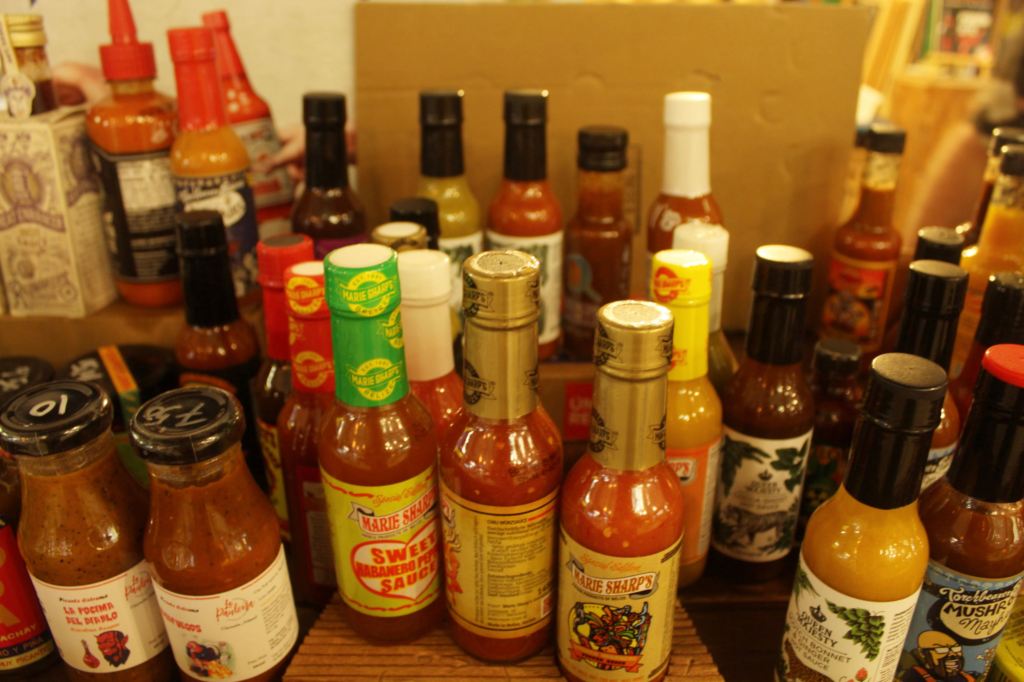
The path from a London boyhood to hot sauce vendor in the Spanish capital wasn’t exactly straightforward. Adam’s interest in chili was actually sparked on a holiday in Belize, where he tried the legendary sauce made by Marie Sharp’s. All these years later, the astoundingly smoky sauce made by this women-owned Belizean company is still Adam’s best-selling product.
Adam showing off a spicy beer he made in colaboration with a Spanish craft beer company, La Bailandera. It was properly hot.
Yet much of Adam’s personal and professional life has been focused, not in Latin America or Spain, but further east: in China. He has several degrees in Chinese history and spent many years studying the language at the Escuela Oficial de Idiomas (Spain’s public language academy). Even more impressive, he traveled extensively in the country—not only to its most famous attractions, but all over, visiting rural regions seldom seen by outsiders. All of this is documented in his wonderful blog, holachina.com, which is worth perusing for the photos alone.
One would think that a man who, unlike Columbus, actually reached the far east would be possessed of a singular determination. But Adam is the picture of calm and he sits on a stool beside his table of red bottles, seemingly unconcerned whether anyone buys his wares or not. He is a master of the soft sell, letting the sauces speak for themselves. “The most important part of selling hot sauce is letting customers taste it,” he says. “And of course you’ve got to start mild and then get hotter.”
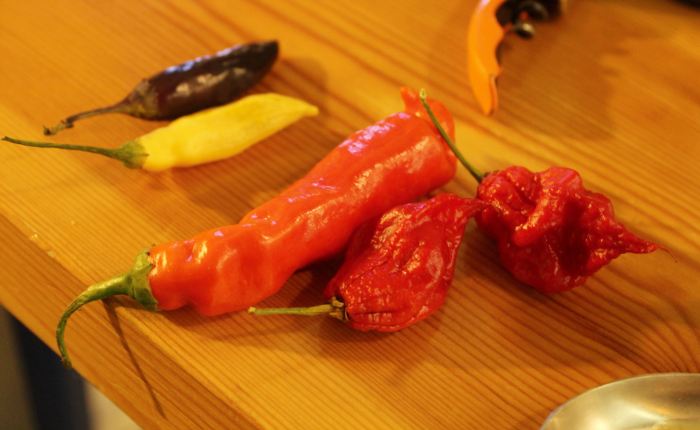
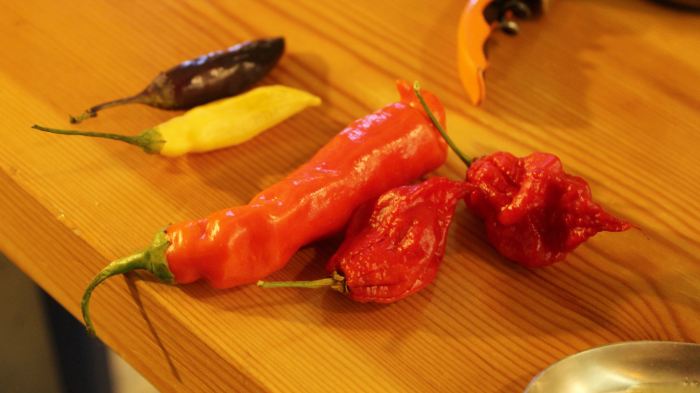
Now, to the uninitiated, the idea of artisanal hot sauces might seem absurd. Aren’t they all the same? A few minutes at Adam’s Chilli Academy dispels one of that notion. Just as beers are measured with IBU (international bitterness units), hot sauces are measured in Scovilles, which indicates the level of capsaicin in the product. And capsaicin is what makes spicy food spicy. While a jalapeño might get to a few thousand on the Scoville scale, superhot varieties like Ghost peppers, Naga Vipers, or Carolina Reapers can top one million. It is the difference between a tickle on your tongue and a trip to the emergency room.
During the pandemic, Adam started growing his own chilis on his balcony.
Yet heat is just one aspect of a good sauce. Some sauces are fermented, and have that characteristic pickled flavor. Vinegar is commonly added, such as in Tabasco, giving the sauces an additional pungency. But anything can be put into a sauce: from common additions like carrots and onions, to more exotic ingredients like mangos and bananas, to offbeat flavors like maple syrup or horseradish. The varieties are really endless, which is why people can become obsessed with it. Adam has clearly fallen down this rabbit hole, as he rummages through his collection of bottles like an alchemist, displaying his encyclopedic knowledge.
It is one thing to have a store, however, and another thing to make a sale. Are people actually buying? “Oh yes,” he says. “Business is swift.” And according to Adam, 80% of his clients are Spaniards. This would seem to indicate a change in attitude. “A lot of young people are interested in hot sauce,” he explains. “They see it on Hot Ones.” If you don’t know, this is a YouTube talk show, wherein celebrities answer questions while trying increasingly spicy hot wings. The show has proven to be such a hit that there are various spinoffs, such as the Spanish version A las Bravas, which uses potatoes rather than chicken wings.
Adam isn’t the only one who believes in the future of hot sauce in Spain. This article was kicked off by a message I received on this blog from a man named Mark, another Londoner in the chili business. He invited me to come see him in the Mercado de Motores, and I agreed.
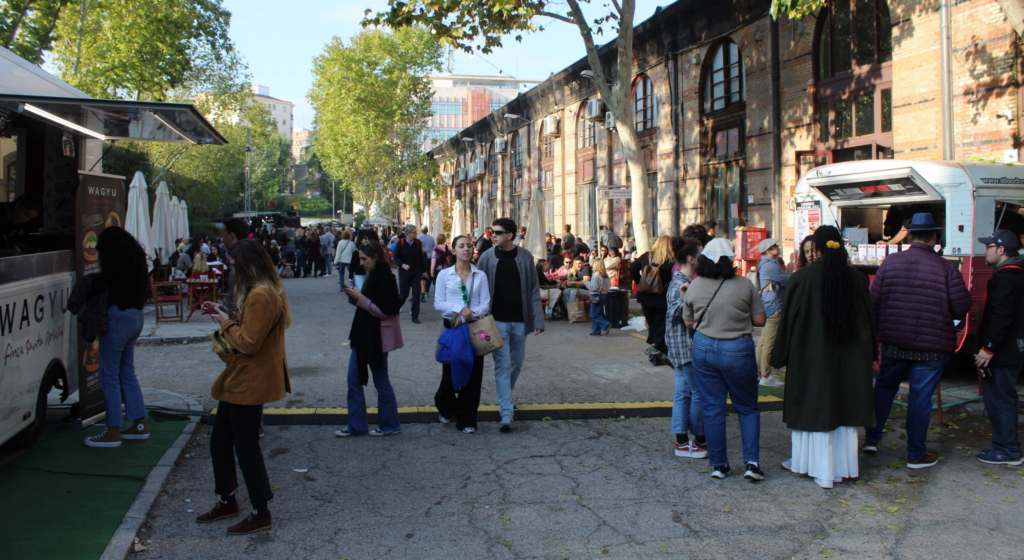
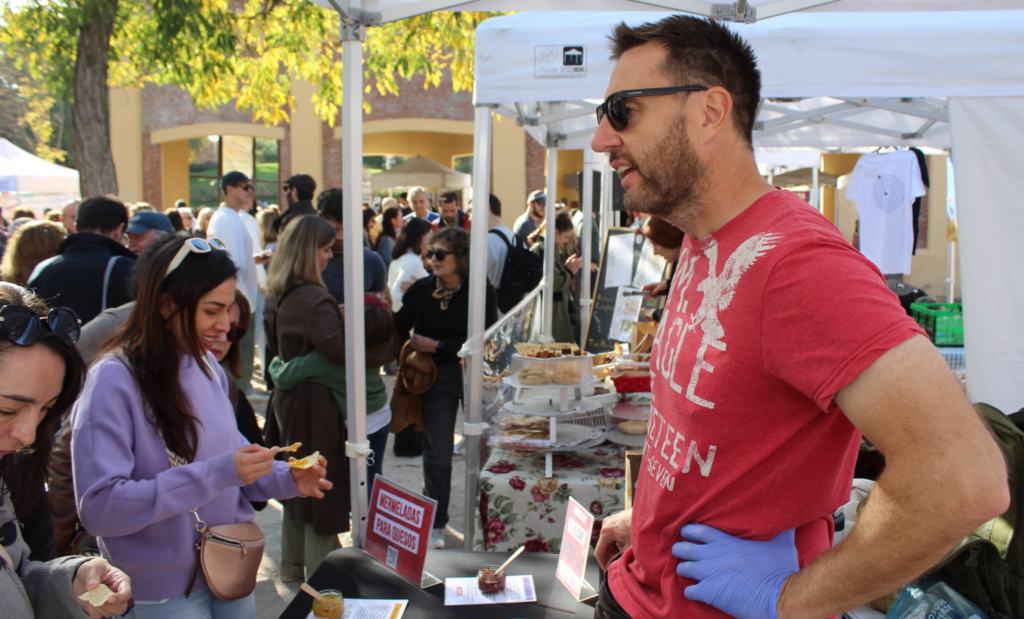
In addition to the municipal markets which dot Spanish neighborhoods, there are many temporary markets that are set up on weekends all around the city. The Mercado de Motores is one of the biggest and the best. It takes place every other weekend in the Museo Ferrocarril, or Railway Museum—a collection of antique trains in the old Delicias station that is worth visiting in any case. During the market, vendors selling everything from scarves to earrings to handmade jewelry set up inside the old station, while food trucks dish out burgers and tacos outside.
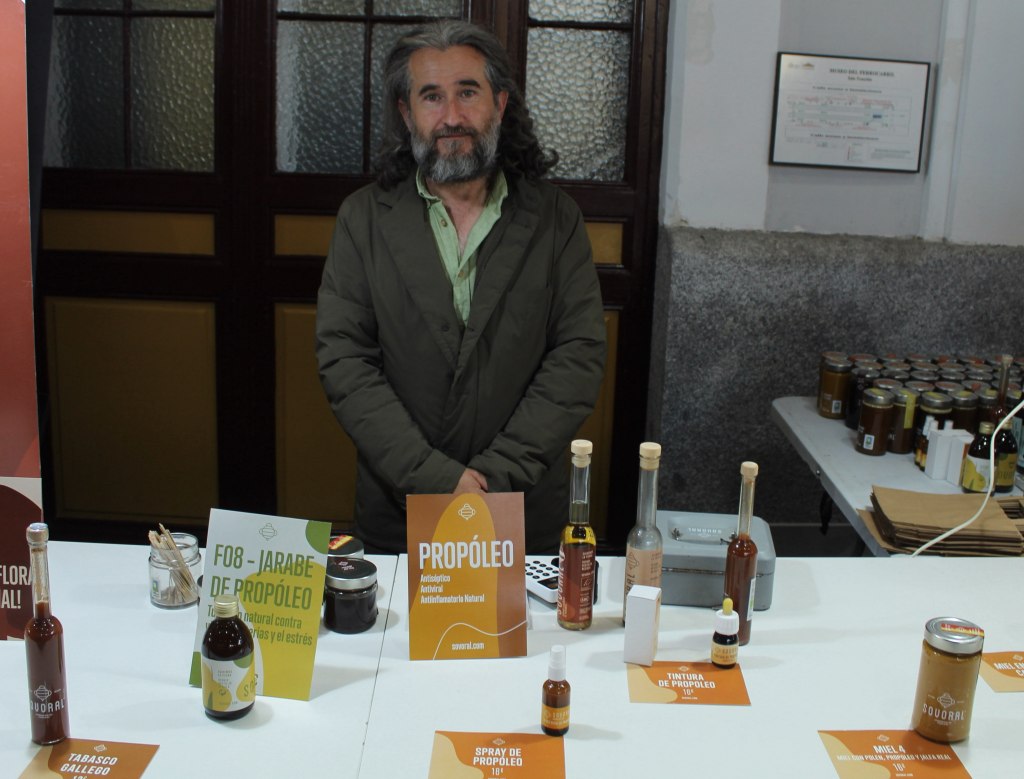
On my way to see Mark, I was stopped in my tracks by a familiar face. The previous spring, I had gone on a trip to Galicia with my mom; and in a little town overlooking the Cañon de Sil we stumbled across a stand where a man was selling artisanal honey. This was the man I encountered now, several hundred kilometers to the south, with the same spread of honeys before him. His name is Óscar, and he is one of the owners of Sovoral. I stopped to have a chat.
Óscar informed me that he got into the honey business through his wife, who comes from a family of beekeepers. Before that, he was a truck driver. Óscar does much of the beekeeping himself now, despite having an allergy to bee stings. “Doesn’t it scare you?” I asked. “No,” he said, shrugging stoically. “Like anything, you get used to it.” Though I love honey, I was more interested in another of his products, a hot sauce made from pimientos de padrón (a Galician variety of pepper), sherry vinegar, and (of course) honey. It is sold in a beautiful, long-necked bottle and has a surprising flavor. It is not just foreigners, then, who are in the hot sauce business.
Notice the tabasco on the bottom left.
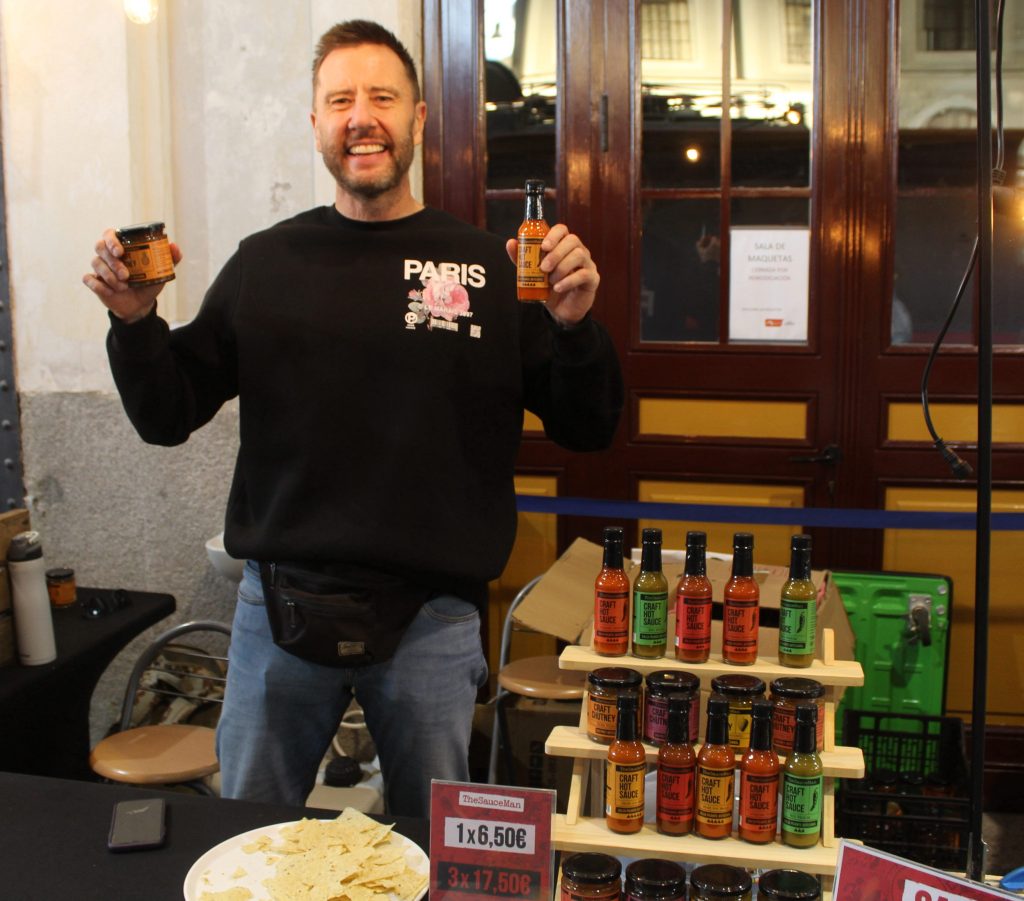
Mark’s stand was just further down. Though I arrived at a less-busy time of day, between the midday and afternoon rushes, Mark was still mobbed with customers. Like Adam, he realizes the importance of letting customers try his products. On the left were crackers with cream cheese, ready to be anointed with one of his four styles of chutney. On the right, corn chips were similarly prepared, ready to be covered in one of his four hot sauces.
Mark’s life before becoming the Sauce Man (his brand name) was just as meandering as Adam’s. He worked in a PR company, and as a DJ, and for a long time in the British consulate, helping befuddled countrymen sort out legal problems.
Mark is energetic. Whether in Spanish or English, his speech is rapid fire. As he works, he is in constant motion. If Adam prefers to let the sauces do the talking, Mark fills up the air around him, seeming to grab every passerby and pull them in. And his approach was working, as I could hardly get a word in amid the constant flow of customers.
Catering to the Spanish market, Mark decided not to go in for intense heat. Many of his chutneys are not spicy at all (though they’re quite good), and even his hottest sauce won’t burn your tongue off. Even so, he is quite convinced that hot sauces have a bright future in Spain. “You and me, we have an advantage,” he explained. “Where do food trends come from? Your country. Then they get to the UK, and finally filter into Europe. It’s like craft beer.”
Judging from his success, he seems to be right. Somehow, while three hundred years of colonizing Mexico were not enough to develop a taste for chili peppers in Spain, just a few decades of exposure to American culture have done the trick. When I ran into Mark the following weekend, at the Mercado Planetario near my apartment, he was similarly deluged with customers—and all of them locals.
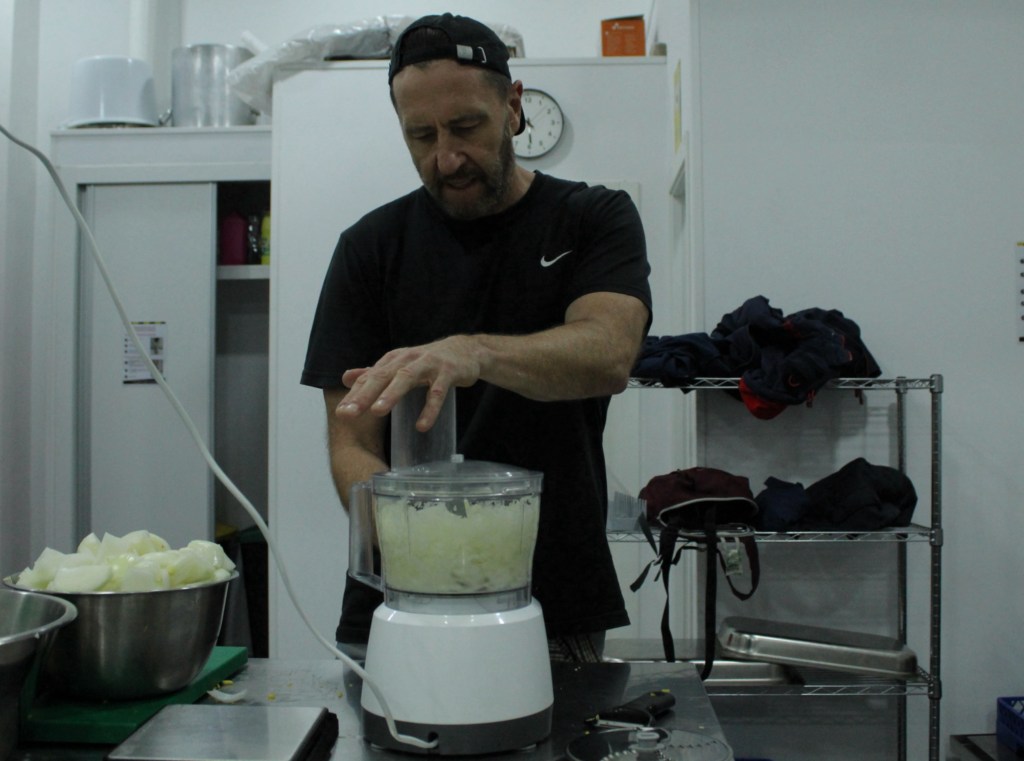
Mark very kindly invited me to his kitchen in Vallecas, where he personally makes all of his sauces by hand, with only occasional help. I arrived one afternoon, while Mark was putting the finishing touches on one of his chutneys. “When I’m in production, I work 12-hour days,” he said, pouring sugar into the boiling pot. “Don’t you get tired?” I asked. “Not really. When you’re your own boss, it doesn’t really feel like work.”
But it did look like work, as he peeled and diced onions, blitzed garlic and ginger into a paste, and chopped up pineapples. The striking thing about his process was how uncomplicated it seemed. And I suppose a hot sauce is a simple foodstuff, at least in concept: get some chilis together with a few other ingredients, and blend it all up. The key is finding the right balance of flavor and, crucially, the right consistency—neither gloopy nor runny. How does Mark do it? “I don’t use xanthan gum,” he said, “which is what’s normally used to give it viscosity. I have my own way, but it’s a secret.”
Both Mark and Adam would qualify as small-business owners. Thanks to Adam, however, I got a chance to talk to somebody who produces hot sauce on an industrial scale.
Carlos Carvajal is Spanish-American—with a Granadina mother and an American father. Born in Spain, he grew up in California. There, as a young man, he met a Jamaican man named Joel, who introduced him to the magic of jerk sauce. Carlos himself learned the recipe and, in 1994, opened a hot sauced company with another friend called Slow Jerk. The company was relatively small and they eventually sold it, but it was a beginning.
Now, he is the founder and part-owner of Salsas y Especias Sierra Nevada, which sells hot sauces under the brand Doctor Salsa. In just over a decade, his company has grown into a veritable empire of picante, selling chutneys, seasoning mixes, spicy chips and peanuts, and even spicy honey, in addition to his hot sauces. Most dangerously, you can order pure capsaicin extract from the website—aptly called “tears of the devil.” Based in the town of Ogíjares, near Granada, Carlos’s company now sells sauces throughout the country and beyond, exporting them around Europe.
During our phone conversation, I asked Carlos something that I had also asked Adam and Mark: “Is hot sauce a way of life?” A silly question, sure; but there does seem to be something that unites chiliheads together. In Carlos’s case, he is a blackbelt in several martial arts, and in his free time likes to drive high-powered cars. Adam, as we saw, is a world traveler, while Mark spends his scant free time, not relaxing, but playing golf and tennis. If anything unites lovers of spice, I would posit that it is a certain restlessness: a dissatisfaction with the ordinary, a need to take things to the next level. Why else would they need to make their food painful?
And this brings me back to an earlier question. Is hot sauce unhealthy? The answer seems to be a qualified no. Rather than causing stomach ulcers, hot sauce may actually help prevent them—though it can aggravate any ulcers already formed. Chilis are extremely high in Vitamin C, but only a few drops of hot sauce won’t contribute much to your diet. It’s possible that capsaicin has some health benefits, though the evidence is unclear. According to this article, however, if you ingested too much capsaicin it could actually be fatal; but you’d have to eat 2% of your weight in superhot peppers—an unlikely scenario. For most people, then, the quantity of sauce they consume probably proves to be nutritionally insignificant.
This may sound like a letdown, but I find it liberating. As Carlos pointed out to me, just a few drops of a sauce can change the flavor of an entire dish—adding a new element to it—without altering its nutrition. A simple dish of, say, rice and beans can be turned into a memorable meal with the shake of a bottle. So I think I will continue my Tabasco habit at the school cafeteria.









 Lotz in Translation