In any case, truly democratic debate cannot proceed without reliable statistics.
For such a hefty book, so full of charts and case studies, the contents of Capital in the Twenty-First Century can be summarized with surprising brevity. Here it goes:
For as long as we have reliable records, market economies have produced huge disparities in income and wealth. The simple reason for this is that private wealth has consistently grown several times faster than the economy; furthermore, the bigger your fortune, the faster it grows. As a result, in the 18th and 19th centuries, inequality was high and consistently grew: most of the population owned nothing or close to nothing, and a small propertied class accumulated vast generational wealth. This trend was only reversed by the cataclysms of the 20th century—the World Wars and Great Depression—as well as the resultant government policies, such as social security and progressive taxes. But all signs indicate that the general pattern is re-emerging, and we are reverting to levels of inequality not seen since the Belle Epoque.
This is a relatively simple story, but Piketty goes to great lengths to prove it. Indeed, the value of this book consists in its wealth of data rather than any seismic theoretical insights. Piketty is an artist on graph paper; and with a few simple dots and lines he cuts to the heart of the matter. The large time scales help us to see things invisible in the present moment. For example, while some economists have thought that the ratio of income going to labor and capital was quite stable, Piketty shows that it fluctuates through time and space. Seen in this way, the economy ceases to be a static entity following fixed rules, but something all too human—responding to government policy, cultural developments, and historical accidents.
Given the title of this book, comparisons to Marx are inevitable. Piketty himself begins with a short historical overview of the thinkers he considers his predecessors, with Marx given due credit. Piketty even concurs with the basic Marxian logic—that capitalism inevitably leads to a crisis of accumulation, with the capitalists siphoning off more and more resources until none are left for the rest of the population (with revolution inevitable). If we have avoided such a crisis, says Piketty, it is because Marx based his analysis on a static economy, not a growing one. The twentieth century was exceptional, not only because of its many calamities, but also because it saw enormous rates of economic growth, which also helped to offset the basic logic of capitalist accumulation. Growth rates have significantly slowed in this century.
In summarizing Piketty this way, I fear that I am not doing justice to his appeal. This book is at its most enjoyable when Piketty is at his most empirical—when he is taking the reader through historical trends and case studies. This is extremely refreshing in an economist. I often complain that economics, as a discipline, is needlessly theoretical, getting lost in abstruse debates about how certain variables affect one another, rather than focusing on observable data. Piketty explicitly rejects this style of economics, and puts forward his own method of historical research. This has many advantages. For one, it makes the book far easier to understand, since Piketty’s point is always grounded in a set of facts. What is more, this way of doing economics can be integrated with other disciplines, like history or sociology, rather than existing apart in its own theoretical realm. For example, Piketty often has occasion to bring up the novels of Jane Austen and Honoré de Balzac to illustrate his points.
Well, if Piketty is even approximately correct, then we are left in a rather uncomfortable situation. As Piketty repeatedly notes, vast inequality leads to political instability and the undermining of democratic government, as the super-wealthy are able to accumulate ever-larger influence. So what should we do about it? Here, the difference in temperament between Marx and Piketty is especially apparent. Instead of advocating for any kind of revolution, Piketty puts forward the decidedly wonkish solution of a global tax on wealth. The proposed tax would be progressive (only significantly taxing large fortunes) and would extend throughout the world, so that the rich could not simply hide their money in tax havens. Yet as Piketty himself notes, this solution is nearly as utopian as the Proletariat Revolution, so I am not sure where that leaves us.
As much as I enjoyed and appreciated this book, nowadays it is somewhat difficult to see why it became so wildly popular and influential. This had more to do with the historical moment in which it was published than the book itself, I suspect. The world was still reeling from the shock of the 2008 crash, and the public was just coming to grips with the scale and ramifications of inequality. Specifically, while most people tend to think of inequality in terms of income—partly, because most people do not have much wealth to speak of—Piketty’s emphasis on wealth, specifically generational wealth, added another dimension to the debate. Piketty evidently succeeded in getting his message across, since I did not find anything in this book shocking. Now we all know about inequality.
While I am no economist, it does seem clear to me that Piketty’s argument has several weak points. For one, his narrow focus on income and wealth distributions lead him to ignore other important factors—most notably, for me, unemployment rates. Further, the major inequality that Piketty identifies—that wealth grows faster than the economy, or r > g—could have used more theoretical elaboration. I wonder: How can private wealth grow so much faster than the economy, if it is a major component of the economy? At one point, Piketty argues that the super rich can afford to hire the best investors and financial consultants; but from what I understand, professional investors do not, on the whole, outperform index funds (which grow along with the economy). Clearly, there is much for professional economists to argue about here.
Whatever its flaws, Capital in the Twenty-First Century is an ambitious and compelling book that made a lasting and valuable contribution to political debate. Piketty may be no Marx; but for a man who loves charts and graphs, he is oddly compelling.
If there is a common thread to this pandemic, it is loss. Many have lost jobs, businesses, or homes. Others have lost members of their family, and still others have lost their lives. Even the luckiest among us have lost something, if only time. But this essay seeks to focus on another kind of loss: the loss of patience. Specifically, I want to put into words for myself this strange and unsettling feeling that, of late, comes over me at least once a day, the feeling we call pandemic fatigue.
The first time the coronavirus entered my consciousness as anything more than a blip was around Chinese New Year, in late January. I was going to see the celebratory parade in Usera, Madrid’s Chinese barrio, and I asked a friend of mine if he wanted to come. “Doesn’t seem like a good idea,” he said. “Lots of people coming from Wuhan.” Wuhan? I did not understand. “You know, that new coronavirus.”
I was stunned that someone in my life—and someone I considered sensible—was willing to change their behavior because of this virus on the news. Long before that, I had written off the periodic media frenzies about foreign diseases. Every other year there seemed to be some new virus ready to destroy the world—avian flu, swine flu, zika, SARS, Ebola—and every year it amounted to very little, at least in my life. Besides, I figured the media had such a strong financial incentive to frighten people that they would play up any potential danger, however remote.
So I went to the Chinese New Year Parade, and I didn’t get sick (though my camera was stolen), and I pushed coronavirus back to the peripheries of my awareness. It did not stay there for long. The news coming out of China seemed increasingly dire. The city of Wuhan was shut down completely. A whistleblower doctor died. Travel from China was banned. And still, stories of coronavirus infections started popping up all over the place.
I went on vacation in late February with my brother—to Poland—and, for the most part, life was still completely normal. But our flight back to Madrid took us through Milan, just for a short layover. By that time Italy was in bad shape, and parts of the country were already on lockdown. Milan was one of the worst hit areas. Even so, we did not even consider changing our flight. I was still quite sure that this virus business would blow over. All this was just our instinctual fear of the unknown.
By the first of March, most people were still in denial. By that I mean that we were thinking of this virus like some other kind of natural disaster, a flood or a fire—one that is localized in space and time. Maybe Italy was bad, and maybe China was bad, but we didn’t live in Italy or China. The virus would go away and we would move on. Yet two weeks after I got back to Madrid, the schools were closed. Two days later, restaurants had to shut down; and the next day we were shut up in our houses. It was the lockdown.
I really believed that it would just be for two weeks. A month, tops. I encouraged my mom to buy tickets for a trip to Ireland in June. No way this would still be going on in June, I thought. No chance. But now that I had so much extra time, I decided to read a little about pandemics. I read books by experts in public health and infectious disease, by historians and novelists, and by investigative journalists. And slowly, the truth dawned on me—the hard truth that this emergency was going to last a long time.
This was the first time that I was living through a world-historical crisis as an adult. The closest thing I could remember were the attacks of September the 11th, but I was just a kid then, and I did not really understand what was going on. This time, I was painfully aware, and yet equally powerless to do anything about it.
I had heard stories of the solidarity that arises during times of crisis, but this was the first time I experienced it. Admittedly, it was difficult to show solidarity in any normal way, since we could not be physically close to one another. This was one of the most depressing aspects of the situation. But people figured out ways to lift each other’s spirits. There were the balcony concerts, the children’s drawings taped to windows, and the nightly rounds of applause for the healthcare workers.
The other aspect that helped us to get through this lockdown was fear. During these months we were still coming to grips with this new infection. How deadly was it, exactly? How did it spread? Could it stay in the air? Who was more vulnerable? What were all the symptoms? The uncertainty made the virus all the more frightening. Even so, it was clear that the virus was dangerous: overwhelmed emergency rooms, bodies stored in hockey rinks, and improvised field hospitals. With such a predator lurking the streets, it was less tempting to go outside.
The twin supports of fear and solidarity made the lockdown bearable. That, and a certain amount of creativity.
In Spain we were only allowed out to go shopping for food. We could not take walks or exercise outside. This really limited the options when it came to maintaining mental health—especially in my case, since I love a long walk or a good run.
But I adapted. I created a workout routine I could do in my tiny room, and made sure to do it every day. To get some sun, I snuck out onto my roommate’s balcony. Missing the local parks, I bought a bunch of plants. I made YouTube videos for my students learning English at home. Since we could not go to restaurants, my brother and I started cooking ever-more elaborate dishes—braised oxtail stew, Brazilian feijoada, French cassoulet, and even homemade kebab.
Still, the monotony could be numbing, the social isolation irritating. I can hardly imagine what it would have been like for someone living alone.
Eventually, after what seemed to be half an eternity, we were let out to exercise. In mid-May, I took my first run in over two months. I emerged onto the street almost shivering with excitement.
And yet the run was somehow less enjoyable than I thought it would be. Partly this was due to circumstances. For whatever reason, the Spanish government decided to let us out only at certain prescribed times; so when I set out the streets were absolutely packed. But I was more disappointed at my own physical shape. Though I had been regularly exercising in my little room, running even a fairly short distance felt difficult, heavy, painful. Breathing was so uncomfortable that I even wondered if I had gotten the virus. And, of course, I was much slower than before.
By the beginning of summer, some flicker of light began to appear at the end of the tunnel. We were coming down from the virus’s curve, and hopefully hitting a flat bottom. The state of alarm lifted on June 21 and we were free to do whatever we wanted. Except for the masks, life began to look pretty normal again.
But even at this relatively calm time, the virus could not be forgotten. This was brought home to me when I tried to get my papers in order to visit New York for the summer. I do this every year, and I was even more eager than usual to go home, since it is always nice to take refuge in times of trouble. Even after getting the requisite documents together, however, I was faced with uncertainty.
Here was my predicament: though I could legally travel there and back with my documents, there was no guarantee that the airlines would know that. Visa regulations are enforced very imperfectly by airlines, who tend to err on the side of caution since they face penalties if they transport someone who cannot legally enter a country. Aside from that, flights could simply get cancelled from lack of demand, or the rules could change while I was in the United States, leaving me unable to return to my job in Spain. I hoped that someone in authority could give me some clarity. But the Spanish consulate could only tell me that the situation was evolving, and advised me not to risk it. So, in the end, I had to forego a visit to my homeland.
I focus on this situation because it captures an essential part of pandemic fatigue: the sense of total uncertainty about the future. It is the feeling of being in limbo, of your life being totally up in the air, of being unable to plan even in the short-term. The most one could do was to wait, while the normal pleasures of life passed silently by.
During the summer, I slowly tried to regain the running facility I had lost. It was far more difficult than I anticipated. My body was slow and sluggish, and even rather delicate. On one run I pulled a muscle in my core and had to spend several days recuperating. Nearly every run was in some way a disappointment. But I did discover a new place to run: a park near my apartment, affectionately called siete tetas (seven boobs), a name the park owes to its seven prominent hills that stand above the surrounding city. Running there obviously meant a lot of running uphill, and I figured that this challenge might be enough to get me back into shape.
Practicing this way, I quickly discovered the key to uphill running: look down. It is simply too painful to focus on how much of the hill remains. When you look forward, you become hyper-aware of your labored breathing, and the urge to give up becomes irresistible. But if you look down, focus on your feet, you notice that each individual step is not that much harder than running on level ground, and so you can continue. And it quickly struck me that the pandemic requires just this same mentality: look down, focus on each step, and forget about how much of the hill is left to climb.
Perhaps a Buddhist would describe this state of mind as enlightened, since it is just this absorption in the present moment that meditation tries to cultivate. And, indeed, it is a powerful strategy when times are tough. But few runners, I suspect, would enjoy running the whole time with their head down. Part of the pleasure of a good run is the scenery—at least for me. Likewise, a big part of the motivation of running comes from setting goals and trying to accomplish them: an attitude inherently oriented towards the future. The pandemic, just like this hill, made all this impossible, and it was all we could do to just keep our heads down and keep pushing forward.
Time became a problem during the pandemic—empty time.
At first, I admit, it was exciting to have so much time to fill. Indeed, mixed in with all the alarm and frustration of the early days of the lockdown, there was a distinct note of relief—the opportunity to slow down, to maybe work on some hobbies, or simply to relax and introspect.
But very soon people began to hit a wall, or at least I did. Humans are simply not meant to spend so much time inactive, cut off, and without a fixed schedule. We need a bit of structure and variety, or else time turns into an mushy purée, thin and bland. With no reason to get up early or late, to do something in the morning or the evening, today or tomorrow, this week or next, it somehow became all the more difficult to focus on anything productive. Focus, after all, is as much an act of exclusion—expelling extraneous distractions—as it is of inclusion; and there was nothing to exclude (or, perhaps, there was everything at once?).
One consequence of this lack of any fixed temporal landmarks was an increase in my consumption of alcohol. Simply put, there was not much else to do, and none of the usual reasons not to drink. Not that I was deliberately drowning my sorrows, you see (at least not most of the time); rather, my background consumption of alcohol grew steadily, until I was drinking almost every day. This only exacerbated the physical toll of prolonged inactivity, contributing to the general sense of malaise and torpor that became my natural element. I would wake up groggy and late, and hang around the house most of the day, even when we were finally allowed outside.
The cumulative effect of all this has been pandemic fatigue: a listlessness mixed with an undercurrent of anxiety. Without a routine, unable to see my family, I passed the time the best I could—taking a few trips, teaching a few online classes, and trying to carry on with my usual hobbies. It was not an altogether unpleasant way to live, I suppose.
Yet the feeling was rather like sunbathing on an active volcano. The whole world had a delicate, fragile quality, as if the situation might suddenly and drastically change once again. This made it difficult to fully relax or to fully commit to future plans. Even the approach of the new school year seemed distant and unreal. Would the schools really re-open? And if so, how long would they remain so?
The reason I have become so aware of pandemic fatigue is that, for the moment, it is partially lifting. School has started for in-person classes, and I am once again in front of a classroom, writing on a white board, trying to memorize students’ names (much more difficult with the masks!). In short, I not only have a routine once more, but also a social purpose. It feels surprisingly good. Aristotle was correct when he noted that we are social animals.
Now, after all this time, I have to be presentable in front of other people. This means no more gym shorts and sweatpants. The pandemic beard—quite impressively long, if I may say so—was shaven off, and my long hair trimmed. I even decided to do a dry month, Sober October, in order to reduce my drinking to pre-pandemic levels.
Best of all, my running ability has started to reach pre-lockdown levels once again. All that running uphill paid off, and I can finally run without my body dragging behind my intentions. Better still, I can run while looking forward instead of with my head down, staring at my feet.
But this pandemic is not over yet, and neither is the fatigue. We are in the midst of the long-predicted second wave of infections. The Spanish government is scrambling, amid bitter partisan bickering, to put together a coherent response for this new challenge, and without much success. The main consequence has been a slew of new rules, changing unpredictably from week to week, the majority more annoying than effective. Even as I write this, I am not sure what I will be allowed to do by next week.
The worst part of the current situation is that we will have to endure the next round of restrictions and rules without the psychological supports from the early days. The buoyant solidarity has vanished into the usual humdrum concerns and routine bickerings of life. Lately, most of us (especially the politicians) are more concerned with finger-pointing than with lending a helping hand.
Also, the fear of the virus has lessened considerably. While this is, perhaps, partly justified, since we are more familiar with its symptoms and have better treatments, this is mostly a result of familiarity. Coronavirus is beginning to shift into the background threats in our environments, like car crashes or lung cancer—one of many dangers that we mostly ignore.
After the solidarity and the fear have mostly gone, the only thing left is the feeling of fatigue. In the end, this fatigue is a failure to live with coronavirus, to really face up to it. Most of us badly want to forget about this emergency and move on, and yet we are constantly reminded of its nagging presence. Without the support of the community or even the fear of a new threat, the virus becomes merely a burden, an extra chore, an added whisper of anxiety. Somehow, a problem affecting nearly everyone on the globe has become a dull ache that we all must deal with privately and alone.
I am afraid that there is still a lot of uphill running in our future. The only thing to do is to put our heads down, and push on.
Processing…
Success! You're on the list.
Whoops! There was an error and we couldn't process your subscription. Please reload the page and try again.
Drawing was one of my first obsessions. Not that I was ever any good at it. I had very little interest or ability in the visual arts; rather, I used drawing as a way to channel my other young obsessions. These ranged from whales, to dinosaurs, to guns, to cars, to phantasy battles—all of which I drew in a kind of careful, painstaking schematic style, wholly two-dimensional, like a crude blue-print. Eventually, my interest shifted to music and reading, and drawing was left behind.
My interest in this childhood preoccupation was reignited by reading Leonardo da Vinci and Santiago Ramón y Cajal. Both of these men used the pencil as a way of examining the world, of almost literally pulling it apart (both of them performed dissections, too), and of thinking about structure and form in ways no one had before. In short, for both the Renaissance painter and the Spanish neuroscientist, drawing was a philosophy and a science in addition to being an art, and this piqued my curiosity. Besides, I had always wondered if I could finally learn to draw in three-dimensions.
This set of lectures by David Brody was an excellent resource in this goal. Brody covers all of the basic techniques of drawing—line, composition, value, color, perspective, and the human form—including exercises, analysis, and history along with his demonstrations. To really work through all of these lectures would take a great deal of time. I spent over a year, on and off (mostly off), with these lectures, and even so I think far more time would be required to achieve results comparable to his (intimidatingly amazing) students.
On the whole, I would rate these lectures very highly. Brody takes an academic approach, trying to get his students to think analytically and to apply general-purpose techniques to a wide range of problems. That is, rather than focusing on specific tricks—such as how to draw convincing eyes or a tree—Brody tries to boil down drawing into fundamental techniques and approaches. Granted, I do think Brody took this approach too far, as a few lectures consist almost entirely of abstract discussions of visual space, hierarchy, color, and so forth. I think the series would have been improved with more draw-along types of activities.
Brody himself comes across as intelligent and surprisingly erudite. He uses many historical examples in his lectures—including many from Asia, which was a nice touch. (Brody is also, as it happens, a talented musician who published a popular fake book for the fiddle.) But he is, unfortunately, a rather dry and uncharismatic lecturer, which is one reason why it took me so long to get through this series.
Yet I cannot really complain, since Brody finally helped me to understand perspective, and to finally draw images in three dimensions. (I still need to work on bodies and faces.) And though I entertain few illusions about my own talent as an artist, I do think I developed a better artistic eye. And this is a reward in itself.
Below I have added some photos of the exercises, not because I am proud of them, but because it gives some idea of what one does in this course:
The way that this year is going, 2019 is beginning to look like a long lost paradise. This was especially true for me—partly because, last year, one of my oldest friends, Greg, was living and working in Europe. Fluent in French, willing to travel, he was the perfect partner in my goal to finally see Normandy.
The plan was simple: I would fly to Nantes (on the west coast of France), where I would pick up a rental car, and then drive about three and a half hours to Caen. Meanwhile, Greg would take a train up from Paris and meet me there. Alright, perhaps the plan was not exactly simple, but we did save money this way (both the flight to Nantes and the rental car were bargains).
I arrived in Nantes on an early May morning, in a sorry state. Flying always makes me nervous—the security, the long lines, the altitude—and the prospect of driving does not exactly calm me, either. As a consequence of using my license only occasionally, I have managed to remain an inexperienced driver for many years. And this time I would have to drive in an entirely new country, all by myself.
But when I walked into the rental car agency, anxiety was rebuffed by incompetence: They did not have my car. In fact, they did not have any car with automatic transition in the lot. I would have to wait until the truck came with new cars. (As a side note, I still do not understand why nearly all Europeans drive manuals, while Americans have switched to automatics.)
Thus, I found myself sitting in an airport café, sipping on a café au lait, for about two hours until a suitable car arrived. And no, I was not offered a discount. But the mistakes and misdeeds of rental car agencies are too sordid to dwell upon.
The drive was blessedly easy. The French, as it turns out, obey the same traffic laws as do other drivers around the world. Soon I felt confident enough to listen to an audiobook: Livy’s History of Rome. This quickly proved to be a bad idea, however, as the narrator’s deep and sonorous voice, combined with the fairly monotonous rhythm of his delivery, had a powerful soporific effect. At one point, my eyes even started to close, and my car drifted into the next lane. Luckily, I jerked awake before any calamity could occur. The historical audiobook was then replaced by upbeat music.
I arrived in Caen just in time to pick Greg up at the train station. Then, we headed to our Airbnb, which was a bedroom in a little house on the outskirts of the city. Our host was a young Frenchman with a broken leg. Nearby there were formidable concrete walls, which I romantically imagined to be connected to the Second World War. In truth, it was the Centre pénitentiare de Caen, a prison for people serving long sentences.
By the time we were ready to head out, the hour was already late, and daylight was waning. We got into the car and drove into the center of Caen; and though I have a bad history with underground parking garages, it was the only place to leave the car. The sky was overcast and the city’s stone streets equally grey. It was too late to visit anything, so we strolled around until we found a place to eat, sampling some of the local cuisine (hamburgers). After a satisfying meal, we wandered through the historical center, where Greg—who was dressed in a colorful shirt, a long red trench coat, and an equally scarlet wide-brimmed hat—had his dazzling cranial accoutrement snatched by a mischievous drunk, who danced around asking for money with the stolen article. Eventually the hat was returned, the drunk unrewarded.
Soon we passed by the Abbey of Saint-Étienne, a beautiful romanesque monastery that was, unfortunately, closed by the time we arrived. (It was founded by none other than William the Conqueror, who is buried there.) Nearby was a wine and liquor shop, where Greg bought some hard cider, a specialty of the region. Then, we headed to the Château de Caen, an impressive castle situated on a hill overlooking the city. (This, too, was built by William the Conqueror.) The front gate was still open, so we strolled right in and climbed up to the walls, where Greg opened the cider in celebration. And, truly, it felt surreal and awfully pleasant to leave my Madrid apartment in the morning and to end up, that night, sipping cider with an old friend on a Norman castle.
Darkness fell and the day was over. Time to go to sleep. But we had quite a bit of trouble finding the car. I could not remember where the parking garage was, or how to get down into it. Eventually we had to ask a local in a hotel, who told us, with mock solemnity, that we had forfeited our rights to the car and that it was his now. (Normans are more jolly than Parisians, it seems.) That was one day’s adventure. We still had two more to go.
Our first full day in Normandy had only one objective: to visit Mont-Saint-Michel.
I had first seen the island in a photo, some years ago, and had assumed that it was from some fantasy movie like Lord of the Rings. Upon learning that it was real, I could hardly believe it. Now I was finally going to see it, and I could hardly believe that, either. I had mentally filed Mont-Saint-Michel away in a folder of places that I would often see in photographs, but never travel to, like the Taj Mahal or Machu Picchu. Apparently I had underestimated life.
During the hour’s long journey there, we listened to a podcast that Greg recommended, 99% Invisible, which focuses on architecture and design. The subject of that podcast was Isamu Noguchi, a Japanese-American artist who, among other things, designed an iconic coffee table, as well as innovative playground ideas. His culminating work was a large landscape called Play Mountain, which looks to me like an overgrown South American pyramid.
Feeling properly edified, we arrived. Formerly, visitors were able to drive on an elevated causeway up to the walls of the commune and park on the island; but the authorities rightly decided that the parking lot was an eyesore. Now, one must park in a large area on the mainland, and then choose either to walk or take a shuttle bus to the island. We took one look at the long bus line, and quickly decided that walking would be better. And it was. This way, we were able to relish the slow approach.
Mont-Saint-Michel is a tidal island, situated in the middle of a silty bay. The island was formed as the tough granite at its base resisted the abrasion of the sea, while the softer land around it was gradually worn away. At high tide, water pours in from the ocean, filling in the space between the island and the mainland. But at low tide, enough water drifts out that a pilgrim can walk directly to the island without any sort of walkway (though with very muddy shoes). Apart from giving Mont-Saint-Michele its air of mysterious beauty, this situation has also given the island military importance. Neither a naval nor a land attack is safe, since the changing tides can either leave boats stranded or wash soldiers away. This has allowed quite small garrisons on the island to hold out against far larger forces.
But Mont-Saint-Michel has never been primarily a military site. It began, in the early Middle Ages, as a small hermitage, much like San Juan de Gaztelugatxe remains today. This hermitage eventually grew in size and importance (bolstered, of course, by the obligatory legend of a heavenly figure appearing to inspire someone to build a church there), and became a site of pilgrimage within France. As such, it was integrated into a much wider network of European pilgrimage, ultimately connected to Santiago de Compostela in Spain. (In the Abbey’s gift shop there was a lovely map of these routes.) Thus, as both a holy site and a bulwark against invading English forces, the small hermitage grew into an architectural wonder.
Once we passed through the main gate, we found ourselves in an environment built of greyish brown stone (the locally-sourced granite). The plan of Mont-Saint-Michel follows a kind of zig-zagging spiral up to the top. We wasted little time in ascending up from the streets to the commune’s walls, which allowed us to avoid the crowd and enjoy the view at once. Besides, there is not much in the way of street life or local culture in Mont-Saint-Michel. The island has seldom supported populations above 200 (though it rose over 1,000 during the 19th century), and lately has dwindled to about thirty lonely souls. So it is safe to say that every business on the island exists exclusively for tourists.
We followed the walls ever upward, revealing a progressively more expansive view of the bay. Eventually we reached the very top, occupied by the Abbey, which sits on the island like a crown. Amazingly, at the entrance to the Abbey, Greg and I almost balked at the price of admission. This would have been a remarkably stupid decision.
The view of the bay from Mont Saint-Michel
As soon as we entered the church, we were blown away by a beauty that, cliché as it is, must be described as “heavenly.” It is hard to capture in words, since everything hit us at once. There was the environment. The church epitomizes the Norman style—austere and unadorned, with strong vertical lines. Bright sunlight flowed in from the long windows, almost blinding us at first. There was also the sound. A group of nuns and monks in white robes were chanting in harmony, and their voices echoed spectrally—even, yes, celestially—in the cavernous space. The result was a mixture of light and sound that almost knocked us off our feet. We went from animated conversation to hushed, reverential silence, and left the abbey in a kind of daze. Both of us spontaneously admitted that we had almost converted to Catholicism on the spot. It really was that powerful.
We wandered through the rest of the Abbey complex, chattering happily about the nuns. The Abbey had what one might expect from a monastic space: a cloister for meditation, a refectory for shared meals, and a hall to receive pilgrims. The most striking feature was a treadwheel crane, which was used to haul up supplies from the lower levels. In order to operate it, people actually had to climb inside and walk forward, like hamsters. This feature was installed in the later history of the abbey, when its religious function was stripped away during the fiercely anti-clerical French Revolution, and it was turned into a prison (mostly for priests!). Unsurprisingly, it was the prisoners who had to operate this winch. Mont Saint-Michel served this ghastly function for over half a century, until campaigners—most notably Victor Hugo—convinced the government to restore the Abbey to its former glory.
After the visit, we found ourselves back on the twisting streets of the commune. It was rather jarring to see the overpriced restaurants and junky gift shops stuffed into the exquisite medieval streets. In such tourist hotspots, I normally opt for the cheapest, fastest food available, since there is little hope of having a genuinely good meal. So we ordered some ham and cheese sandwiches in a place so cramped that the kitchen was actually on the floor below (all of the orders had to be sent down a little elevator, and the food brought up the same way). Having dined with our wallets intact, we left through the front gate and walked out into the bay in order to see the other side of the island.
The ground was sticky—covered in thick pasty silt—and smelled of the ocean. Every so often we would come across a decomposing fish, left behind by the receding tide. In the distance we could make out Tombelaine, a small island further out in the bay. We put some distance between ourselves and the city, and looked back to see a less-famous aspect of Mont-Saint-Michel. Whereas from the land you can see the walls, the town, and the lower structures of the Abbey, the northward facing side is covered in a thick mass of trees. The only notable feature is the Chapelle Saint-Aubert, a small stone structure that is about as simple as a chapel can be. The chapel is named in honor of Aubert of Avranches, who had the legendary vision that led to the creation of the abbey.
This was all for Mont-Saint-Michel. We circled back around the island, walked back to the mainland, and, after some confusion finding the car in the parking lot, we were off in search of something else to do. Luckily, Greg knew a Norman who gave him a few suggestions. One of these was the nearby town of Granville, where we headed to next.
Granville is a lovely coastal commune on the English Channel. The town immediately reminded me of some of the more picturesque pueblos from the north of Spain—a jagged peninsula jutting out into the rough waters of the North Atlantic. There are also several sandy beaches in Granville, which helped to make it a popular resort for landlocked Parisians. On the day we arrived, however, the town seemed to be rather sleepy, the only notable street life being a group of older men playing pétanque (a very simple game in which you try to throw balls as close as possible to a given target).
We parked the car and admired the town’s principal church, Notre Dame du Cap Lihou, an attractive stone building that stands at the commune’s highest point. Then we walked out to the end of the peninsula, the Pointe du Roc, which is a kind of park. There, a stumpy little lighthouse overlooked cliffs of pale schist, while a few boats blew about in the water. In the distance we could see the Chausey Islands, a sparsely-inhabited archipelago out in the English channel. If we had binoculars we could, perhaps, have made out Jersey—which, I was surprised to learn, is technically not part of either France or the United Kingdom, but a self-governing state. (Europe is filled with all sorts of absurd historical artifacts like this.)
After taking in our fill of the view and the cold ocean breeze, we retreated to the center of town for a snack. For this, Greg ordered rillettes. He told me it was a kind of meat, so I was surprised to be confronted with something that looked more like butter. In fact, rillettes is meat cooked in its own fat at low temperatures for a long time, and then served as a spread at room temperature. It was quite delicious.
marBy now, the day was mostly spent, and we still had to make the drive back to Caen. Back in the Airbnb, we decided to cook instead of going out for dinner; and for a meal decided to recreate the exact menu we had the last time we were together, in Marseille: merguez sausages, ratatouille, and couscous. And even though my ratatouille wasn’t as good as my friend Lily’s, and even though Greg made far too much couscous, the meal was a success. We went to bed with full stomachs, dreaming of the morrow.
I have only taken one art history class in my life, an introductory course in college with a fairly apathetic teacher. And yet, this one basic class has had quite a lasting impact on my travels. Whenever I realize that I have the opportunity to see something from my old textbook, I make it a priority on my trips. This time, that piece of art was the Bayeux Tapestry.
As you will probably not be surprised to learn, this famous tapestry is located in the city of Bayeux, which was our first destination for the day. This small city is only a short drive from Caen (though the drive was still slightly stressful due to my making a fool of myself at a gas station because I didn’t know which side of the car the fuel cap was on, and also my general incompetence when it comes to parking). We headed straight for the museum where the tapestry is held; but instead of walking inside, we got involved with a group of Erasmus students standing out front, who needed the two of us to get the group discount rate. We participated and saved a few euros. This is communism in action.
The museum issued us audio guides and then directed us to the tapestry. This tapestry is about 70 meters (230 feet) long, and is displayed in a long case that wraps from the entrance to the exit. No photos are allowed, and the hallway is kept quite dark. The audio guide was programmed to play automatically as we proceeded through the space, which made the experience almost like watching a documentary. I was impressed.
But I ought to describe the tapestry itself. The Bayeux Tapestry is one of the jewels of Romanesque art. It is a kind of woven comic book, telling the story of the conquest of England by the invading Normans (1064-1066), led by William the Conqueror. For centuries it hung in the Bayeux Cathedral, exposed to the smoke of incense and candles, and yet it has survived in quite excellent condition. The story reads like an epic poem: It begins with a dispute over succession after the death of Edward the Confessor, king of England, and culminates in the huge, bloody Battle of Hastings. In the course of the story we can see Mont Saint-Michel, Hailey’s Comet, and many historical figures like William and his enemy Harold Godwinson, as well as more humble historical details like boat building, roasting a meal, or the construction of a fortification.
A public domain detail of the tapestry
By the time you reach the end (which takes about half an hour), you really do feel as though you have seen an engrossing film. But I wish I had had more time to stop and pause over the details of the tapestry (we had to keep moving through the hallway), since it is a wonderful work of visual art, in addition to a compelling narrative. Though it can seem crudely made at first glance, the stylized aesthetic effectively brings you into a different world—a world with different values and different concepts of beauty. This makes the tapestry one of those rare portals to the past. And it just so happens that the event depicted was quite genuinely epic, since it marked the end of Anglo-Saxon rule and the beginning of Norman domination in England. If it were not for this event, and the resultant use of French, the English language would be very different (not to mention the rest of England).
Another public domain detail
The rest of the museum was interesting but, I admit, not especially memorable. I do remember seeing a facsimile of the famous Domesday book. This was compiled by William the Conqueror in order to take account of his newly acquired realm. Thus the book is part census and part Internal Revenue Service. Indeed, the name of the book (Middle English for “Doomsday Book”) seems to indicate that even back then, taxes were seen as inevitable—quite as inevitable as the apocalypse.
We exited the museum and found ourselves in a bright and brisk day. We strolled around Bayeux a bit, which has an attractive medieval center, and stopped to wolf down some sandwiches from a little corner shop. Then, we ducked inside the gothic Bayeux Cathedral, which is surprisingly beautiful given its relative lack of fame. But we did not have time to pause over spires and arches. This was our last day, and we had to go and see American Cemetery at Omaha Beach.
When Normandy is mentioned, the first thing that comes to mind for most Americans (if anything comes to mind at all) is D-Day. The bloody scenes of combat, so often dramatized in films, took place here in northern France, signaling a new phase of the European war that put Nazi Germany on the defensive. It was an enormous operation, likely the largest invasion by sea in human history, which nevertheless had to be kept top secret. And it was a success: the Nazis were caught off guard, as they had expected the invasion to occur elsewhere; and Allied casualties were actually much lower than expected. And yet, as we can see from the Bayeux Tapestry, even though the invasion was carried out with battleships and bombers, it was not all that different from the many naval invasions that have taken place here. Normandy has long been a site of contact and conflict between the British Isles and the Continent.
We parked the car and walked into the cemetery. The American flag was flying overhead, signalling that we were crossing a border. (The land is a concession from France to the United States, though it technically still belongs to the French.) For the third time in this trip—after Mont Saint-Michel and the Bayeux Tapestry—I was filled with that strange, reverent feeling, the sensation of witnessing something iconic and significant. For the third time, I was going to see something which, just a few months ago, I assumed that I was never going to see. It seems trite to describe the sensation like that of walking onto a movie set, though the comparison always comes to mind. Perhaps it would be better to say that it is like walking into history.
The cemetery is so famous that it hardly needs describing. Rows upon rows of white marble tombstones extend in every direction—over 9,000 in all. Most of these are crucifixes, for Catholics and Protestants, though 151 are stars of David for Jewish service members. (These were the only officially recognized religions at the time.) In fact, the entire complex is arranged as a crucifix, which lays parallel to the shore. In the center of the cross is a simple chapel, and a semi-circular memorial sits at the far end, listing the names of the missing. The most recent burial in the cemetery occurred just two years ago, in 2018, when a veteran was laid to rest next to his twin brother—one of 45 pairs of brothers in the cemetery. Not every casualty of the landings are buried here, of course; the soldiers’ families had the option to repatriate the remains.
We wandered around the cemetery, trying to wrap our minds around this epochal battle. It was unlike any cemetery I had ever visited, in that the vast majority of those interred did not die of natural causes. These people were deliberately killed. Such carnage is simultaneously a noble sacrifice and a tragic waste—a loss endured by those fighting to end a war that they did not start. It is humbling to think what sorts of lives these men and women could have led, had not a group of crazed nationalists decided to seize their “birthright.”
After walking through this somber monument, we decided that we had to set foot on Omaha beach itself. There is a little path that leads down towards the ocean, which takes you past a small memorial and a ruined German bunker. The beach itself is both wide and long—stretching 5 miles (8 km), with several hundred feet from the water’s edge to the other side. One can see both the advantages and disadvantages of such a spot: plenty of space for landing crafts, but no cover whatsoever or the advancing troops. It must have been terrifying.
After taking our fill of the chill ocean air, we climbed back up towards the car, to visit another monument to this war: the artillery battery at Longues-sur-Mer. This consists of four guns in concrete bunkers. The guns are huge: firing 15 cm bullets, with a range of 20 km, originally designed for use aboard destroyers. A good hit could easily have taken down a warship.
The guns were fired in action during the Allied landings, though quite ineffectually since most of the Allied ships were out of range. The concrete fortification did hold up against aerial and naval bombardments, however, and the guns remain in a good state of preservation. Like the tombs in the American Cemetery, these old rusted barrels brought home for us the intensity of the fighting on these beaches. The guns are also, in a way, a reminder that war can touch any earthly spot, however apparently tranquil. The area surrounding Longues-sur-Mer is nowadays lovely and bucolic, with fields of wildflowers overlooking the sandy coastline. It almost boggles the imagination that people were willing to fight and die over this bit of land.
Having had enough of war for the day, we got in the car to see some of the local life. Greg’s friend had recommended a small village to us, Beuvron-en-Auge. Personally I did not think this village would be very special, if only because every village we passed through looked so similar. That is not to say they were boring. On the contrary, as we drove through the countryside, I was in an almost continual state of delight. The country roads took us by farmland with grazing cows, through wooded areas and fields of flowers, and passed dozens of the distinctive stone barns in the local style. But the charm reached almost absurd heights when we reached Beuvron-en-Auge.
This town is legitimately special. Rather than the typical grey stone, most of the village’s buildings are made of wood, all of them painted in bright colors with criss-crossing patterns on their façades. There also seemed to be flowers everywhere: on the street, hanging from walls, and in the shops. Really, I do not think I can do justice to the sensation we had from seeing this town by mere description. The emotional effect was like stepping into a fairy tale. We stopped into a café, and were served tea in appropriately adorable kettles. Then, we made a lap around the town. This was not hard to do, considering that only about 200 people live in it.
“Look, that’s the town hall,” Greg said.
“Really?” I said, examining the little house. “Who do you think the mayor is, an elf?”
The town is, admittedly, a bit touristy, as evidenced by the many shops selling typical local products. These include lots of sweets, cheeses, jars of honey, and of course calvados, the regional apple brandy. There were even locally brewed beers and honey mead. We bought a few drinks for later, and returned to the car.
Our last stop for the day was, like Granville, another beach resort town: Cabourg. The town itself is frankly not particularly memorable, except for the appropriately named Grand Hotel. But the reason for this town’s fame becomes clear as soon as one catches a glimpse of the shore. Just as in Omaha Beach, a wide expanse of sand—seemingly endless—stretches out on either side. This is what made Cabourg a popular resort town for Parisians hoping to escape the summer in the city.
Most famous among those Parisians was none other than Marcel Proust, who immortalized Cabourg as the fictional Balbec in his interminable novel, In Search of Lost Time. Here is a taste of his writing:
Among the rooms which I most often evoked in my sleepless nights, none resembled the rooms at Combray, sprinkled with a grainy, pollinated, edible, and devout atmosphere, less than that of the Grand Hotel, at Balbec, whose lacquered walls contained, like the polished walls of a swimming pool where the water turns blue, a pure, azure, and saline air.
(And, yes, all 3,000 pages are written like that.)
After taking in our fill of the beach, we had to find a place to have dinner. Privately, I was a little concerned, since I doubted we would be able to find anything decent and affordable in such a ritzy town. But my phone told me that there was an inexpensive restaurant nearby. Well, “nearby” turned out to be an overstatement, since my phone took us into the residential part of town, over a bridge, and across a major road, into what looked like a strip mall. Worse still, according to the restaurant sign, the place would only be open for another half-hour before closing; and we had to wait for a table. These sorts of situations provoke an unreasonable amount of anxiety in me, so I spent all the time waiting for a table in a quiet panic.
But there was nothing to fear. We were seated and enjoyed a delicious meal. The restaurant was the Creperie Suzette et Sarzin, and specialized in galettes. This is a kind of savory crepe from Brittany (entirely new to me) made with buckwheat flour and served with the filling of your choice. I ordered one with chicken, potatoes, and mushrooms in a cream sauce, and it was scrumptious.
The rest of our plan was simple: return to the Airbnb, drink the alcohol we purchased in the little village, and watch a documentary. This was, after all, our last night. But fate had something else in store for us. When we arrived, our Airbnb host was drinking a beer and was all dressed up and ready to go out. He told us he expected to leave shortly to see his friends, and made some light conversation with us in the meantime. However, it soon became clear that his friends were either very disorganized or blowing him off. Half an hour stretched into sixty minutes, one hour into two, and then three. Throughout all this time, he kept up an almost continuous string of broken English, which became louder, more slurred, and nonsensical as he continued to drink. The night ended, memorably, with him explaining his antipathy to cream.
“Imagine!” he cried. “I am Norman, and I can’t eat cream! It makes me do like this.”
Then he proceeded to stick his finger in his mouth while he imitated a retching noise.
“Blegh, blegh, blegh. You see? Cream makes me blegh!”
Greg lost all patience at around the one hour mark, so by this time he was angrily responding in monosyllables. But our host was far past the point of being able to pick up on social cues.
Finally, at around midnight, he mercifully left the house. But by then, we were thoroughly tired and soon went to bed. So ended our last day in Normandy.
On our final morning together, we walked into the center of Caen to get something to eat. It was a Sunday, and we found ourselves smack in the middle of the weekly market.
It was this humble event that, of everything I saw on the trip, contrasted most powerfully with Spain. Not that Spanish people are averse to markets; quite the contrary. However, in a typical Spanish outdoor market you can find fruit, jewelry, clothes, or cheap consumer items like kitchen knives or extension cords. But you will usually not find a stand selling street food. Spanish people have preserved their dislike for eating while standing, walking, or even on a bench. (They do make an exception for churros.)
What is more, Spaniards are not overly fond of “ethnic” cuisines (they are convinced their food is the best); and in any case there are not nearly so many immigrants in Spain. But this Norman market was a paradise of international street food. The selection on offer was amazingly diverse. There seemed to be food from all over the globe being sold in this smallish, northerly Norman city.
The reason I am bothering to write all this is to convey how unexpected and delightful it was for me. Suddenly I found myself surrounded by all types of scrumptious cuisines, most of which I would have trouble finding in Madrid. The choice was indeed overwhelming, as we walked passed stand after stand, each one looking better than the last. Finally we settled on a woman selling food from the Caribbean (I think it was Trinidad?)—savory meat stews served over rice. We sat down and devoured our meal.
And that was that. Greg had to catch his train back down to Paris, and I had to get to Nantes for my flight back to Madrid. It is always bittersweet—if not altogether bitter—to leave a place that has put you under its spell. It is also quite unpleasant to say goodbye to friends. But after all we had seen and done, we were in good enough moods to last us a long time.
The only thing that remains is to tell of my own return journey. I drove the rental car back to Nantes, fighting traffic and my own bladder along the way. (I was greatly relieved when I figured out that Aire in French was used to indicate rest stops.) The car was returned without a dent or a scratch; and even though I am sure I ran at least one red light as I drove through the medieval city centers, I never received an additional bill.
I stayed the night in an Airbnb with a somewhat eccentric host. He was an older man, retired, with surprisingly good English, who had a great passion for films. His apartment was covered with movie posters and filled with books about cinema. He even offered to walk me into town, since he himself was on his way to see a screening of a David Lynch movie.
As I arrived towards evening, I did not see much of Nantes. But what I saw, I liked. The town is situated along the Loira River, a fact that has made it a major commercial port. Indeed, two centuries ago Nantes was an important hub in the Atlantic Slave Trade, a sad fact now memorialized in a kind of mini-museum along the river. (My host even informed me that the homes of slave-traders were distinguished by including little sculptures of faces in the façades.) I was quite impressed by the city’s castle, the Château des Ducs de Bretagne, as well as the local cathedral. Even putting aside the monuments, the historical center itself is attractive and filled with character.
Naturally, I had dinner in a kebab restaurant. Then, I bid adieu to France and went to sleep. It was a wonderful adventure.
Processing…
Success! You're on the list.
Whoops! There was an error and we couldn't process your subscription. Please reload the page and try again.
We were speaking past each other, almost from different universes.
Under normal circumstances, I would not subject myself to a single book about Donald Trump, much less two. But I happened to finish A Very Stable Genius—written by two of Woodward’s fellow reporters at the Washington Post—during one of the most bizarre weeks in Trump’s very bizarre presidency.
The week began ordinarily enough, with the revelation in the New York Times that Trump was using his business failures to avoid taxes. Big surprise. This scandal was quickly eclipsed by Trump’s unhinged performance in the first presidential debate, which even some keen supporters found unpalatable. And then Trump managed to top his own performance, by announcing his coronavirus diagnosis. Somehow, even this potentially solemn event quickly devolved into a carnival of lies, as various reports on the president’s health conflicted. The farce was capped off by Trump’s tweeting “Don’t be afraid of COVID” after leaving the hospital.
I mention all this only to show that, even after four years and four thousand scandals, Trump has retained his ability to completely absorb my attention and, yes, to shock me. Hoping for some more insight or clarity, I reached for this book—yet another in the long list of Trump exposés. And I did find that Rage complemented the story told in A Very Stable Genius quite nicely, covering much of what is left out in that earlier book. Whether I am any the wiser for having read these books is another question.
The basic story is simple: Trump relentlessly wore down his advisors and officials through unreasonable and often contradictory demands, until they either resigned in frustration or were fired (often via a Tweet). As the authors of A Very Stable Genius put it, Trump ground through his human guard rails. This way, advisors willing to oppose or moderate the president were gradually replaced by sycophants who did little to curb his more destructive whims. Thus, when a real crisis hit the country, one requiring a complex and coordinated response, the White House was completely unprepared.
However, it is also apparent that this was not originally the story that Woodward set out to tell. The first half of the book focuses quite steadily on foreign policy, and is clearly the fruit of much careful research. There are the usual stories of Trump snubbing allies and pining after Putin. But the real surprise comes when Woodward reveals that he somehow obtained the letters exchanged between Trump and Kim Jong-un. Though containing little of substance, these letters are quite surprising in their affectionate and even flowery tone. Even so, this is one section of the book where Trump does not come off so badly. Nothing was gained from the meetings and the letters, but nothing was lost, either; and arguably it was worth a try to extend an olive branch.
Like so much of life, the book gets severely derailed in its second half by the arrival of the coronavirus. It was around this time, too, that Woodward gained access to Trump himself. From January to shortly before the book’s publication, Woodward interviewed the president eighteen times, for a total of over nine hours. This meant that Woodward had a direct line to Trump during the greatest test of his presidency. The book thus becomes a kind of character study in a time of crisis, with Woodward pushing and probing, trying to understand why Trump is handling the pandemic so badly.
The closer a look one gets of Trump, the stranger he appears. To use Woodward’s phrase, he is a “living paradox”—or at least bafflingly inconsistent. One obvious example of this is Trump’s decision to do these interviews in the first place. After all, Woodward had already written a book highly critical of Trump, and is an associate editor at the Washington Post, a paper Trump routinely derides as liberal media spouting fake news. Was it simply bad judgment? More likely, in my opinion, Trump thought that by personally speaking with Woodward, he could convince the journalist to change his tone. (Trump hoped to do the same with Mueller, Putin, and Kim Jong-un, after all.) Either that, or he simply found the publicity and prestige offered by a Woodward book irresistible.
Another tension in Trump’s personality is that between authoritarianism and negligence. Trump’s admiration for strong-men around the world has often been noted, as has his demand for loyalty and praise from his subordinates. And his response to the Black Lives Matter protests—threatening to send the military, and using federal troops to illegally detain protesters—is broadly authoritarian. On the other hand, Trump’s response to the coronavirus crisis reveals a man quite averse to real responsibility, as he often left it up to the governors to deal with the problem. An aspiring autocrat could easily have used the emergency to appropriate more power for himself, but Trump did no such thing.
But this apparent paradox is resolved when one realizes that Trump’s conception of authority is very superficial. Being praised by subordinates, being the center of attention, being declared the best, being seen as a tough guy—this is the extent of what Trump demands from the world.
This superficiality is pervasive in Trump’s makeup, and has much to do with his (almost non-existent) relationship with the truth. It is common to call Trump a “liar”—and, of course, the major revelation of this book is that Trump apparently knew how dangerous the coronavirus was in February, and did not take action or warn the public. Yet for me this term is misleading, as it implies that Trump is fully aware of the truth and is carefully concealing it. I am sure he does that sometimes, of course. But more often it is as if he is speaking as a person might when totally overcome with emotion—in extreme rage or ecstatic joy—without even considering the truth.
The reason I say this—and I hope that I am not getting carried away here—is that, when Trump speaks, the words do not seem to come from some deep place inside himself, as happens during a thoughtful conversation. Rather, the words seem to pop out of thin air, determined only be the immediate needs of the present. To put it slightly differently, Trump never seems to be searching inside himself as he speaks—turning an issue over mentally or finding the appropriate phrase—but instead his mouth goes off by itself, like a machine gun, in its predictably staccato rhythm. The following excerpt captures this quite well:
“I’ve talked to lots of your predecessors,” [Woodward] said. “I never talked to Nixon, but I talked to many, many of them. They get philosophical when I ask the question, what have you learned about yourself? And that’s the question on you: What have you learned about yourself?”
Trump sighed audibly. “I can handle more than other people can handle. Because, and I’ll tell you what, whether I learned about it myself—more people come up to me and say—and I mean very strong people, people that are successful, even. A lot of people. They say, I swear to you, I don’t know how it’s possible for you to handle what you handle. How you’ve done this, with the kind of opposition, the kind of shenanigans, the kind of illegal witch hunts.”
I find this response so telling, because we can safely ignore the truth or falsity of Trump’s words. Indeed, I am inclined to think that questions of this kind usually elicit bullshit. But if I were asked this, I know that I would have to pause and search within myself for something that at least appeared to be self-knowledge. I would have to at least simulate speaking from the heart. And it takes a certain amount of self-awareness to do this. Trump’s answer, meanwhile (which essentially amounts to “I am better than other people”), pivots almost immediately from self-knowledge to what anonymous “very strong people” are telling him. In other words, it does not even betray the modicum of self-knowledge necessary to plausibly bullshit.
I am writing this to fully express these thoughts for myself, even though I am painfully aware that I am falling into the tar-pit of Trump’s personality. But enough. Let us move on from Trump to the secondary question of whether Woodward is guilty of journalistic malpractice for sitting on the information about the coronavirus. And I think he is. Woodward has given multiple reasons why he did not go public with the Trump tape, such as that he needed to give the story more context, or that he thought Trump was just talking about China. Neither of these make much sense to me. And I do think it could have made a difference if the recording of Trump had been released in, say, March.
Be that as it may, this book is still a valuable and alarming look into Trump’s White House and character. After such a steady inspection, it is difficult to disagree with Woodward’ conclusion: “Trump is the wrong man for the job.”
‘It’s just so unfair that American companies aren’t allowed to pay bribes to get business overseas,’ Trump told the group. ‘We’re going to change that.’
The Trump book has quickly become its own genre. First, there are the many handwringing analyses of what went wrong—economic pain, journalistic negligence, polarized politics, cultural malaise—which is probably the most intellectually valuable of the lot. But the juicier stuff is to be found in the tell-alls of those fired by Trump: John Bolton, Omarosa Manigault Newman, James Comey, Michael Cohen (with doubtless many more to come). There is even a psychoanalysis by Trump’s niece! Only slightly less scandalous than these first-person accounts are the works of journalists covering Trump’s White House. The first major book of this kind was Michael Wolff’s Fire and Fury, followed soon by Bob Woodward’s Fear. This book, by Philip Rucker and Carol Leonnig, falls squarely in that category.
First, I want to note that I feel conflicted about these sorts of books. On the one hand it is obviously important to cover the White House and the doings of the president; and if these are dysfunctional then we should know about it. However, books like this do play into Trump’s general strategy, which is to ceaselessly focus all attention on himself. By the end we are lost in Trump-world, engrossed by a never-ending series of scandals that always seem to be on the cusp of overturning the presidency, but which never do. The result, for anyone following the news, is a kind of exasperated exhaustion that is not especially productive. After all, it is far better to focus on a substantive issue, like healthcare (which we might be able to change), rather than on the president’s bad diet or aversion to hugs (which we cannot).
Another danger of these sorts of books is that they reinforce the “fake news” narrative that has become so powerfully corrosive. For one, this book is obviously written to attack Trump, which apparently justifies Trump’s attacks on the liberal news media. What is more, any book of this kind will inevitably rest upon anonymous sources. This is the nature of investigative journalism in politics. But it leaves the door wide open to accusations of dishonesty, and is easily dismissed by those who support the president. This is a difficult challenge for journalists.
Nevertheless, the personality of the commander-in-chief is—unfortunately—profoundly important to his ability to govern. For evidence of this, look no further than the first presidential debate, where Trump’s behavior entirely derailed the event. Being very rude in a debate is not the end of the world, of course; but presidents do a lot more than debate. So I do think that books of this kind have value, if only because they bring together, in one place, the scattered impressions of news stories, and put Trump into the sharpest possible focus.
A Very Stable Genius covers the Trump presidency in its first three years, reporting on the doings of the president and his cabinet. The backbone of the narrative is the Mueller investigation of Russian campaign interference and Trump’s obstruction of justice (something that feels like ancient history now); and Trump’s impeachment (which also feels remote) is mentioned in the epilogue. Most of the book consists of sharply-written scenes within the White House or the Pentagon, a series of conversations and confrontations between the president and his advisors.
The reader quickly gets a taste of Trump’s managing style. His fundamental ethical principle is loyalty, which means of course loyalty to him personally. The vetting process for potential hires apparently had little to do with competence, and much more with whether they had ever publicly said anything bad about Trump. (Looking good on TV is also a plus.) Conflicts then occur whenever Trump perceives a “divided” loyalty in one of his subordinates—such as loyalty to a protocol, a tradition, an overseas ally, or simply the rule of law. When this happens, Trump inevitably grows petulant, and refuses to acknowledge why what he is asking for is either a bad idea, illegal, or simply impossible. This process results, quite often, with the subordinate being fired and replaced with someone more sycophantic, who is less willing to curb Trump’s impulses.
The portrait that emerges of Trump is unflattering but hardly new. While Trump demands loyalty to himself, he has very little loyalty for anything or anyone in return. He even treats reality itself like a subordinate, embracing (or inventing) the facts that redound to his credit, and violently rejecting the rest. As you can imagine, this makes briefing the president extremely difficult, especially since any kind of reading or extended presentation leaves the president listless and bored. And then there is Trump’s worldview, which sees almost everything as a zero-sum game, a world of winners and losers (or “suckers”). Thus, any treaty that benefits an American ally must, perforce, be hurting America. All of this explains why Trump is so notoriously chummy with authoritarian rulers, since they command the “loyalty” of their subordinates, and are clearly not suckering America into giving them money. Like Trump, they are winners.
As repellant as I find the president, I must admit that I find his personality mesmerizing. He seems to step right out of a Dickens novel—a cartoonish trickster, a living caricature of the capitalist American, all the way down to his love of television and fast food. It is all just so ridiculous that it would be quite hilarious if it were not true. Consider what Trump said to reporters after his meeting with Kim Jong-un:
[The North Koreans] have great beaches,” Trump told reporters. “You see that whenever they’re exploding their cannons into the ocean, right? I said: ‘Boy, look at that place. Wouldn’t that make a great condo?’ And I explained it. I said, ‘Instead of doing that, you could have the best hotels in the world right there.’ Think of it from a real estate perspective.
I submit that if you were writing the silliest political comedy, you could not come up with anything more perfectly absurd.
It is a testimony to Trump’s outrageous character that, even after four years as president, he can still shock us into speechlessness. Indeed, as the recent revelations of his taxes make clear, this is the entire basis of his success. If he were not entertaining enough to be the center of a reality show, then he would no doubt be just another bankrupt casino owner. Likewise, if he did not draw in viewers and readers for journalists, then he would never have become president.
Unfortunately for Trump, the coronavirus seems perfectly designed to expose all of the many flaws in his governance. The pandemic has shown that there is a real world which is neither loyal, nor easily distracted, and that cannot be sued or fired. With any luck, it will spell the end to this disgraceful period in our history. But it is frightening to think that it took a once-in-a-century emergency to remove such an obviously unfit man from the highest office in the land. It is even more frightening to think that even this might not be enough.And to be clear, I am referring to the coronavirus as a political liability for, and not as a personal threat to, the president.*
*To be clear, I am referring to the coronavirus as a political liability for, and not a personal threat to, the president.
The title image is of my brother (left) with Greg in Marseille.
Greg Valdespino is one of my oldest and best friends. But this doesn’t mean we were always friendly. We began our friendship competing for the best grades in class. For a while I was on top (I’m good at exams), and I wasn’t afraid to brag. But in high school, Greg shot forward, and it was his turn to rub it in. Greg quite dramatically won our long competition by graduating third in our class and going off to become a true scholar. (I wasn’t either 1st or 2nd.)
Now that we’re adults—or trying to be—Greg has become an even better friend than before, in part for his rare ability to be simultaneously serious and silly. It is difficult to combine a strong sense of what is right with an ability to laugh at oneself, but Greg somehow manages it. He also manages to make me feel like I don’t know the first thing about history. Here’s our conversation:
ROY LOTZ: Can you give me some description of your education? Do any professors or classes stand out for special mention?
GREG VALDESPINO: I went to public school in Sleepy Hollow, from Kindergarten to twelfth grade. And I do remember most of my history teachers from this time. There are phrases and quotes of individuals I remember about why history is important to them.
But the big influence was Ms. Heskestad, who was my eighth and tenth grade teacher, who was a foundational, educational figure in my life. She really kind of let me deeply geek out and engage in history, as something you can really get obsessed with, making history the big thing I pursued. (And of course she’s French, and I’m a sucker for France.) I would even go to her office every day before school—or once or twice a week at least—and just talk about the readings that we had for AP European History. And I don’t know why she let me do this, but I did. She had better things to do with her time.
Then, after Sleepy Hollow, I went to Stanford for four years. At first I was hesitant to do history, since I didn’t just want to do the thing that I was really good at in high school. And I took a history class on medieval Europe and I hated it. Or I loved it, but I was really bad at it. It was at 9 a.m. and I kept falling asleep. And the professor slapped the table pretty frequently to wake me up. (It was a twelve-person class, so it wasn’t like I could be hiding in the back.) And since I was always the last person to arrive to class, I would have to sit right next to the professor, so he’d be in the perfect position to slap the table. It was not a great introduction to higher learning.
But then I took a class while I was studying abroad, with professor Caroline Winterer, who is a historian of American intellectual and cultural history in the eighteenth century. She did a class on French-American connections since the colonial period. And it was just spectacular. She had this marvelous, beautiful way of using history to reveal the complexity of the past, and the impossibility of pigeonholing past actors, and the astoundingly complex ways that they thought about their world, and that the ways that they thought evolved over time and produced the way we think… And she gave these beautiful lectures about construction of forms of knowledge and ways of approaching the world. I didn’t think it would be so moving, but it was.
Then I got the chance to do my own research in France, where after studying 18th-century intellectual history, I was in this village, talking to people about memories of World War II. To go from an intellectual approach of history to people’s actual relationships with the past—two different ways of looking at history—was a kind of master-class in the subject. So after that I was totally committed to being a historian. Within a year, I went from “Do I want to major in this?” to being like “I want this to be my life.” Even though Caroline Winterer kept telling me that it was a bad idea.
There’s a thing Rabbis do with converts, where they have to push them away three times to find out if they’re really committed. And the first three times I told Professor Winterer I wanted to go to grad school, she admonished me about how terrible an idea that was, and how awful grad school is, and how I’ll never get a job. Then, only by senior year, the fourth time I did it, she started making a game-plan.
I finished Stanford with a history degree, knowing that I wanted to be a historian. After two years off, I started a Ph.D. in history as the University of Chicago, where I work under Leora Auslander, who is a historian of modern Europe, and Emily Osborn, who studies social history and history in West Africa. And they are glorious, and they are very different, and very wonderful.
RL: Why did you choose history as opposed to any other discipline?
GV: I think I started studying history because I was interested in stories. And I found real stories more interesting than fiction. I thought that looking at past events was an interesting way of understanding humanity, and “the human condition” (except that the longer I studied it I realized I don’t believe in anything called “the human condition,” or if I do it’s very qualified).
As I go through my Ph.D. I think less and less that the reason to study history is stories—even though I love stories—and instead I think that we study history to understand the formation of ways of being and thinking, and how they emerged and evolved and changed over time, and how they’re always doing it.
One of my advisors says that “history is the study of change over time.” And we’re always within that. We are the inheritors and the products of change over time, but at the same time we are also producing and participating in that flow of new changes. So it’s a way of viewing the world that’s in constant flux. And there’s a humility to that which I appreciate. It gives me the ability to think beyond the moment. Or at least try to.
RL: What are some of the books—both academic and non-academic—that inspire you the most?
GV: In high school, one summer, I read both King Leopold’s Ghost by Adam Hochschild—about the Belgium Congo (spoiler alert: it was bad)—and Things Fall Apart by the Nigerian writer Chinua Achebe. So it’s two very different—not complementary—perspectives on how to think about colonialism in Africa. I think that was the first time I ever thought about the history of Africa in any serious way.
In college, the most important book I read was probably The Wretched of the Earth, by Franz Fanon. As far as my intellectual trajectory goes, this book was foundational.
RL: That’s about colonialism right?
GV: Yeah, he’s a psychoanalyst thinking about the consequences of colonialism for black men—and it’s very much about black men, not at all about black women, very misogynistic. It’s a classic psychoanalytical, existentialist approach, like “the black man is created by the white gaze”—these things that have become very common knowledge now. But he was one of these pioneering thinkers. He was one of the main intellectuals of decolonization. So reading that was like a bolt of lightning. And I remember in my class of 90 people only one other person liked it (who now studies black radical thought) because Fanon advocates violence as a form of self-affirmation. It’s a very controversial book. And I bought into it, immediately.
There’s a wonderful book called Affective Communities, by Leela Gandhi, where she talks about the relationships between South Asian and British radicals in turn-of-the-century London. And she looks as vegetarians, spiritualists, anti-colonialists, homosexuals, and how they were imagining different kinds of political relationships that weren’t about similarity. Where the basis of political community isn’t forming bonds with people who are like you. And she has a wonderful theory of political action, rejecting identity politics in the sense of communities formed to include people like us and exclude others.
Then there’s this awesome book by James H. Sweet, called Domingos Álvarez, and it’s a micro-history, a history of one person. It’s based on these inquisition files for this guy who is from what is now Benin. He’s kind of magical healer who gets enslaved and sent to Brazil. But he eventually gets freed, and he becomes a healer in a community in what is now Rio de Janeiro. Then he gets accused of witchcraft, captured by the Inquisition, and sent to Lisbon in the 1760s. There he’s interviewed, producing hundreds of pages about his life. Sweet’s book is an astounding intellectual biography of him, and his efforts to use his medicinal practices to form a community and resist the social death of slavery. It’s a beautiful resurrection of a man’s life, but it also opens up a way for us to understand African intellectual traditions in the creation of the modern world.
RL: What qualities do you think a good historian should have?
GV: A good historian definitely needs patience and the persistence to get through archival work, which is often extremely boring. They need to be simultaneously self-critical and confident. Self-critical, in order to not just use their own biases to explain the past. But confident, to believe that they are saying something worth discussing. And they need to be endearingly excited about things. Without irony, and without a need for an audience.
RL: Is there one worst intellectual sin that a historian can commit?
GV: I mean the classic answer is an anachronism, of course. That means using a term or a logic or a conceptual framework of the present to explain the past. It’s a sin because it doesn’t do service to actually explaining the past or its relationship to the present. But of course some people, including myself, believe that we shouldn’t separate the present from the past, because we really can’t escape the present or put it aside. But the anachronism is the classic great sin of historians.
But I think the real great sin is looking for documents and evidence that feed your pre-existing theory as opposed to letting your theory emerge from the evidence. That you don’t go into an archive knowing what your argument is going to be. Your argument emerges from the research. Otherwise, you just do bad work. You won’t move knowledge forward in any meaningful way. Of course, it’s the same problem in any kind of research, and it’s extremely difficult not to do this, at least a little bit.
RL: How do you think history should be taught at the university level?
GV: I think that it’s important to assign a combination of secondary and primary sources. People need to get excited about engaging with the objects of the past. And you need to give them direct access to the words of people who came before us. But if you just give them those words, images, or objects without any framework, then people will have no ability to understand how exciting they are, beyond just “This is cool!”
You get them in with the coolness, with the story, but they become historians by learning how to analyze it. The most important thing is to teach people that history is a debate, and an analysis, and they have the right to do that analysis, to be historians, to debate it. As opposed to a high school style, which is “Here is the narrative.” People need to be given permission to make the narrative. And in order to do that they need to have access to both the data points and the broader debates.
RL: But do you think there’s a danger to this, in a sense that it gives people the license to write history to reinforce their own preferred narratives?
GV: I’ve gone past my postmodern crisis in college. Obviously all positions are personal and subjective. But that doesn’t mean that some positions aren’t more accurate than others. You need to ground historical study in evidence. Everyone has a right to be a historian. But in order to be a historian, you have to work with the sources, you have to do the analytical work. And if I can prove you didn’t do the work, or I have contrary evidence, I can disprove you. That’s what makes it different from story-telling.
RL: Can you describe some of your doctoral research?
GV: The basic question of my dissertation is: When, where, and why did West Africans’ ability to feel at home become a political and social issue in France and Senegal in the 20th century. So essentially what I’m asking is: When did individuals’ ability to feel physical senses of comfort and social senses of belonging within certain spaces become central to certain people’s understandings of broader social and political debates. What role did these debates play in colonialism? And how does studying this allow us to rethink our understandings of colonial cultures and ideas of segregation, separation, unity, and multiculturalism in the 20th century?
RL: Can you tell us something about how you went about researching it?
GV: I’ve done archival work in France and Senegal. I did a year in France and about three months in Senegal, and I’ve spent the past year writing. The archives were mostly government archives: the National Archives of Senegal, the National Archives of France, the Colonial Archives of France, various regional archives in France, a few archives of housing agencies, or police archives. I’ve done some oral history, I’ve spoken with some nuns and missionaries. So I’ve gone all over looking at textual sources, a lot of photographs, films, novels.
RL: What kind of textual sources were they, exactly?
GV: It can be anything from a police file, to a census record, to shipping inventories. A problem is a lot of my actors aren’t literate. So even though I would love to have more letters—and I have a good amount—they mostly aren’t there. And they didn’t end up in government archives all the time, for obvious reasons. But I do have a lot of soldiers’ letters that were intercepted by censors. I have letters that individuals wrote to state officials when they were either trying to get support after their homes were destroyed by the state, trying to get support for community centers, trying to get interventions in insalubrious housing. But I don’t have a ton of interpersonal letters, unfortunately.
Each chapter in my dissertation is oriented around a specific kind of space that was seen as a solution to, or the cause of, the problem of how to make West Africans feel at home. And a big source-base for pretty much every chapter are inspections or plans of those spaces. Those can be textual inspections but also drawings, blueprints, photographs, audiovisual records, interviews with residents… it runs the whole gamut.
RL: How do you approach writing up your research? What are you trying to accomplish?
GV: I’ll answer the second part of the question first, because I think it’s harder. Basically, I’m trying to make an argument—that’s the core. An argument that allows us to view something in a new way. The structure of my dissertation is it moves chronologically from 1914 to 1974, and each chapter is about a different time and place. So I’m trying to use home as a lens to reinterpret a certain period that people have been studying. I want to make an argument that allows us to see something in a new way. And which allows us to see West Africans and their sense of belonging as essential to this time period.
On the whole, I’m trying to produce a new understanding of empire. People say that empire is always predicated on distance and separation, and that’s true in many ways. But closeness is also a central part of empire. The paradox of empire is that it’s an entity that is predicated simultaneously on unity and division, which is very counterintuitive to our understanding of politics. So the reason empire’s didn’t work is that they’re based on the politics of differentiation when politics is supposed to be based on similarity.
But for so many people this wasn’t a paradox, and so many West Africans and French people were trying to think of make this distance and closeness work politically. So I’m trying to produce a new understanding of empire that acknowledges that, for many people, the distance did not preclude it from also being intimate. And I don’t mean “intimate” in the sense of sex, I mean that you can bring these political structures close into your life. That’s my overall argument—changing our ideas of empire and why it worked or didn’t work in certain moments.
As far as when I’m writing—a totally different question, I suppose—it’s about getting all of those little arguments in each chapter that will get me to the big argument. And in the process, the first phase is what I call “word vomiting”: just write, write, write. Get all the quotes from all the sources I think are relevant and then I just kind of stream-of-consciousness analyze them. I kind of arrange them roughly into a sequence I think might be interesting, but I don’t really know what I’m going to say about them when I start writing. I write about them, and write around each of these quotes, until I get to an end.
And that’s the first draft. It’s usually about sixty pages of absolute gobbledygook. And then I ask: What’s the argument here? And then I spend weeks trying to craft an argument out of that word vomit. So I imagine vomiting onto my computer and then scrubbing it away, until I get to the argument that was underneath the vomit.
RL: Just like Michelangelo. You remove every part of the stone that doesn’t look like a beautiful sculpture. Just like you remove every part of the vomit that doesn’t look like a dissertation.
GV: Beautifully put. I even have a separate word document that’s just called “Scraps,” because I find it much easier to delete things if I know they’re going somewhere and not just being deleted.
So, basically, the writing is the thinking. You can’t think without writing—or at least I can’t. That means that you’re going to do a lot of crumpling up paper and throwing it away. But you have to write down those thoughts first
I try to get a good chapter draft done in 4-6 weeks. When I’m in the writing phase, I write about 4 hours a day. So with that pace, by the end of a few weeks, I should have a pretty solid chapter draft that has gone through 2 or 3 revisions. My goal is to have six substantive chapters and an introduction and a conclusion. Each chapter is about 40 pages. So, pretty thick.
RL: More broadly, why do you think it’s important for society to have good historians?
GV: I was thinking about this, because we had a round-table for the history department, examining COVID-19 from a historical perspective. And I think what a historian can contribute is narration. Not storytelling, but an analytic narration. Because the way we narrate the past determines the lessons that we draw from it.
So, for example, if the narration of the coronavirus crisis is: “There was a problem in 2020 and science solved it,” then this will overlook the months of social and economic dislocation that occurred before a vaccine was (hopefully) found. Rather, we need to emphasize that long-term changes in our economy and social structure made us vulnerable so that, when there was a disruption that required time to develop a technical response, we weren’t able to handle it. The lesson we draw then isn’t “Make a technical fix,” but “Make a technical fix, and design the economic and social infrastructure that can handle the time in-between the appearance of the problem and the solution.”
That’s just the COVID example. The way that you narrate the way that something happened completely structures how you move forward into the future.
RL: So do you think that history is about learning from our mistakes?
GV: To some extent it is learning from our mistakes. But what does that really mean? We can say “We know slavery is bad,” but the bigger question is “Why did slavery emerge?” In fact, slavery is the rule, historically. It’s only the last two hundred years where it’s been banished from certain parts of the world.
So I do think learning from our mistakes is important. I don’t think that history is bound to repeat itself. That’s not how the world works. History echoes, maybe, but it never repeats. So we learn from our mistakes, but we need to understand why those mistakes occurred. Because many of the structures that created those mistakes in the past are still with us.
But to make another point, we should also learn that there were roads not taken in history that maybe we should try to take. That’s a big part of what I do. Part of the reason I study empire and the way people tried to make empire work at home is because now we have the narrative of the failure of multiculturalism in Europe. But I’m part of a group of historians who say that there were people who tried to make empire work by trying to imagine a society that wasn’t premised on similarity, but difference, and that difference wouldn’t be an obstacle to solidarity and unity. Why did that vision fail? And how could we resurrect that vision?
The historian E.P. Thomson said that we must save the past “from the enormous condescension of posterity.” The people in the past were not worse or more foolish than we are, and we aren’t smarter than them because we came after them. We can learn a lot from them. And we can be better by trying to be more like them in certain ways. That’s what I dislike about a lot of liberalism and a lot of progressive politics is that there’s always a move “forward.” But some things might have been better in the past.
A great example is that living in multi-generational housing might actually be better. And that used to be the norm. I think we’ve lost a lot. History is not progress and it’s not loss. It’s loss and gain. We need to understand what we’ve lost and try to resurrect it, or at least get it back in some way.
And the last thing I like about history is that historians don’t panic as much. Because we know that human beings have survived horrible things. Not individuals, of course, but humanity. Historians have the benefit and advantage of seeing things in the long term. Horrible things happen, but I think historians are less crisis-prone. Or maybe just I am. Even in wars and holocausts, people survive—and I mean people with a capital “P.”
So there’s analytic narration, there’s learning from the past, and there’s the ability to avoid crisis-thinking. Because we don’t think well when we think in terms of crises.
Robert Skidelsky, in his enormous biography of Keynes, remarks that economics today occupies the same situation as theology did in the Middle Ages—as a complex a priori logic that can be used to reach any number of contradictory conclusions. The more I read in the subject, the more I agree with him. To be taken seriously in politics means being able to use this logic. And yet, despite the seemingly scientific nature of this language, we seem hardly better able to pinpoint the nature of economic reality than the scholastics were able to count the angels.
I am exaggerating, of course. But I am a little distressed to find that, according to Stephanie Kelton, most economists and politicians—who already disagree with one another—are still fundamentally wrong about money, taxes, fiscal policy, and government debt. Here is another perspective to add to the mix: Modern Monetary Theory, or MMT.
Kelton begins the book by taking a page right out of David Graeber’s history of debt. Money was not invented, as so often supposed, to solve the problems of a barter economy. Instead, money and taxes go hand in hand. The argument goes like this: If you introduce a currency into a fully functioning credit economy (where people just keep track of what is owed to one another), then there is little reason why people would adopt it. But if you institute a tax payable only in this currency, and threaten punishment for non-payment, then suddenly everyone must find a way to acquire the new currency, and this means doing some work for the state.
In other words, governments introduced taxes, not to collect money (which it was producing anyway) but to compel work. And Kelton argues that this is still true today: that governments do not depend on taxes. She uses the example of a scorekeeper in a board game. The scorekeeper adds and subtracts points for other players, but they are never in need of points for themselves. Points are simply willed into existence whenever needed. Kelton argues that the US government (and other governments with what she calls “monetary sovereignty”) is in essentially the same position with regard to the US dollar. Since we use a fiat currency, any number of dollars can be willed into existence. Thus, the government does not depend on tax revenue, any more than a scorekeeper must subtract points from other players in order to stay afloat. In short, we do not have to worry about the deficit, since government debt is nothing like the debt you or I may have.
Does that mean that the government can just spend infinite money? No, Kelton says: though the deficit is not a problem, inflation may be. Too much government spending may lead to too many dollars chasing too few resources, which can cause prices to rise. Does that mean that taxes are unnecessary? Also no, according to Kelton, since, apart from compelling work, taxes perform at least two important functions. First, they remove money from circulating, thus decreasing inflationary pressure; and second, they reduce inequality, which leads to a healthier society. Yet if the government cannot spend infinitely, and if we still do need to tax, then what are we doing wrong?
To answer that, Kelton next turns her attention to unemployment. Kelton notes that unemployment is built into our economy, largely via the policies of the Federal Reserve. The Fed aims for an arbitrary level of unemployment (say, 3%) which it considers the “natural” rate. Going below this natural rate would, it is feared, cause inflation to kick in, since demand would outpace supply. But this “natural” rate is little more than a guess, Kelton argues. Even when unemployment has been very low in recent years, inflation has remained low. Indeed, in this argument Kelton seems to have been prescient, since just in August the Fed decided to change its policy of lifting interest rates once employment hits a certain level, thus paving the way for more sustained employment growth.
But Kelton has a fairly dim view of the prospects of using monetary policy to govern the economy. Instead, she thinks that unemployment should be directly eliminated using a Federal Jobs Guarantee. This is the main policy proposal of the book, and Kelton spends a good deal of time selling it. The advantages are compelling. Most obviously, unemployment is bad for people and communities, so it would be highly desirable to get rid of it. And a jobs guarantee would give workers more bargaining power, since the wage floor would rise (the jobs would pay a living wage) and the threat of losing work and health insurance would be eliminated.
Still, I admit that I was not convinced. For one, even according to MMT’s own premises, the huge increase in aggregate demand—caused by increased federal spending, eliminating unemployment, and increasing wages across the board—could cause inflation. Kelton does not really address this potential pitfall.
On a more practical level, I also have trouble imagining the logistics. Kelton describes a program that can employ anyone, anywhere, in socially meaningful jobs. But there is not necessarily the right amount of meaningful work in any given location, nor do the unemployed necessarily have the skills necessary to do this work (and re-training has its limits). I think that a substantial amount of make-work is inevitable in such a scheme. Furthermore, I can hardly contemplate the enormous bureaucracy that would be needed to administer such a program. It seems there would be just as many people making jobs as people needing jobs made for them.
The job guarantee’s major policy rival, universal basic income (UBI), has none of these practical challenges (though of course it could cause inflation, too), since it is merely paid via the IRS. Admittedly, jobs do provide social and psychological benefits that an income does not. But Kelton does not discuss UBI at all, which I thought disappointing.
At this point, the reader may be forgiven for wondering what is so new about MMT. After all, Paul Krugman—an orthodox Keynesian economist critical of MMT—has been writing for years about the mistake of thinking of the federal budget like a household budget, and the desirability of federal deficits in times of recession. The difference, so far as I understand it, brings us into dangerously wonky territory. Krugman avers that when we near full employment, a large deficit may require higher interest rates in order to avoid inflation. Kelton counters that our assumptions that low interest rates boost spending, and higher interest rates constrict spending, are actually incorrect. In other words, Krugman thinks that monetary policy can partly compensate for fiscal policy, while Kelton thinks that monetary policy is not particularly useful.
I have little to add to this, other than to remark that I can never understand why these disputes—like theology—always take the form of high theoretical debates from first principles. It strikes me that the impact of monetary policy is an empirical question that could be answered with a careful look at the historical record. But what do I know?
Well, I have done my best to elucidate this sacred mystery, but I ought to evaluate the book. Like many readers, I found the writing in this book extremely grating. The tone was somewhere between a salesperson and a televangelist—promising instant enlightenment and easy solutions—which immediately put me on edge. In fairness, when Kelton is not selling MMT but explaining it, the book can be quite fascinating. But Kelton’s insistence on treating MMT as blindingly true, and its enemies as either blinkered traditionalists or deceptive politicians, was not charming or effective. And the amount of repetition could even be condescending. By the time I reached the end, I really could not stand to hear another iteration of the central tenets of MMT. I got it the first couple times.
Whatever the flaws of the book, and whether or not MMT is an accurate picture of how the economy works, it at least makes you think about how the deficit is treated in public discourse. Anyone who reads the news cannot help but notice that the swelling deficit is only invoked when we have to pay for, say, healthcare or infrastructure; but, somehow, when tax cuts to the wealthy or defense spending are on the table, nobody seems to worry. Even if the deficit presents more of a problem than Kelton believes, it is obvious that, if anything is worth going into debt for, it is programs that benefit the public, rather than bombs or yachts. I hope that followers of Keynes, MMT, Thomas Aquinas, and William of Ockham can at least agree with that.
This is the last installment (well, really, the first, but I did it backwards) in Barnhart’s lecture series on Pre-Columbian archaeology. They are all quite excellent and greatly enlightening. Throughout the series, I was constantly surprised—both at the material, and at my own ignorance of the material.
You see, I was raised in the United States, where some material on Pre-Columbian cultures was on the syllabus. Not only that, but I studied anthropology and archaeology in university. So I assumed that I would have at least a fair impression of what was going on in the Americas before Columbus.
But I had only the faintest notion. I did not know, for example, that some of the oldest stone structures on earth can be found in South America. Nor did I know that these ancient peoples also made the world’s oldest mummies. Now, mummies and stone huts may not seem very important to you, but their very early appearance underlies the surprisingly early presence of humans in the Americas. For a long time it was thought that humans crossed the Bering Strait after the end of the last ice age, around 11,000 years ago. Many recent findings have dramatically pushed back the date of these first humans, however; and most mysteriously, the oldest finds are in South America.
In high school I was taught about the Inca. But I did not realize that the Inca Empire occupied only a small part of this long history. Nor did I know anything at all about the other historical cultures that preceded the Inca—the Moche, the Chavín, or the Norte Chico, just to name a few. Of the Inca, I knew little more than that they were conquered by Pizarro and built Machu Picchu. That they built earth-quake resistant buildings, an enormous system of roads, and even (possibly) a writing system (quipu) in the form of knots—all this had either been either forgotten or never learned.
In short, I would encourage all Americans to get better acquainted with these ancient peoples. Most of us know, on some level, that the land had been occupied before Europeans arrived. But it is difficult to wrap your mind around the scale of what was lost. These lectures are an excellent place to start. By carefully examining the archaeological record, Barnhart brings this lost world—at least partially—back to life. And as he constantly reminds us, there is still much left to learn.
For a very long time, the intellectual consensus has been that we can no longer ask Great Questions. Increasingly, it’s looking like we have no other choice.
Three years ago, I went on vacation in the north of Spain, to the city of A Coruña. There, perched on the jagged rocks below the Roman lighthouse, I read Oswald Spengler’s Decline of the West. The crashing sound of ocean waves just seemed an appropriate accompaniment to Spengler’s grandiose attempt to analyze all of human history.
At it happened, I ended up reading David Graeber’s Debt in the exact same circumstances. And perhaps this coincidence highlighted the odd similarities between Graeber’s book and Spengler’s. On the surface, the two men are quite radically opposed: Spengler is mystical, conservative, and mainly preoccupied with ‘high culture,’ while Graeber is conversational, leftist, and usually focused on more humdrum human affairs. But both The Decline of the West and Debt are sweeping scholarly exercises which attempt to completely alter our view of history. As a consequence, the books have similar merits—a large perspective, unusual connections, an original angle—while suffering from the same basic weakness: the attempt to strap history into a Procrustean bed.
But I am getting ahead of myself, as I should explain what this book is about. Graeber set out to write about debt, partly as a response to the 2008 financial crash, but also to respond to a certain moral confusion he noticed in the general culture. This is the notion that one always ought to ‘pay one’s debts.’ Most of us, I suspect, would agree that this is the right and proper thing to do. But there are many cases in which debt can be morally questionable. Consider a man who had an unexpected heart attack and was taken to a hospital out of his insurance network, or a young student who took out college loans but then had to drop out because her father had a heart attack, or a family who had agreed to a predatory mortgage for a house that the bank knew they could not afford, or a poor country forced to adopt austerity policies by the IMF in order to pay their debts richer countries—in any of these cases, is it moral to pay one’s debts?
As Graeber points out, standard economic theory does not hold that all debts must be repaid. Rather, both the lender and the debtor enter into an arrangement with a certain amount of risk. The loan is, in a sense, an investment like buying stock, and may or may not yield money according to the fortunes of the debtor. But this is not how we typically treat debt. Bolstered by our moral sense that debts should be paid, we accept a moral lopsidedness in the relationship, giving lenders quite extraordinary powers (garnishing wages, confiscating property) to extract money from debtors. Yet Graeber is not an economist, and does not want to restore a balance to the arrangement. Rather, he is disturbed by the very concept of debt. For what sets debt apart from an obligation is that it can be precisely quantified. This means debts require a system of money.
This leads Graeber to examine the origins of money, which for me was easily the strongest section of the book. Most economist textbooks explain money by pointing out that money solves the problem of a double coincidence of wants. That is, if I have some extra boots, and I would like to trade them for some beer, it is quite possible the brewer already has all the boots he needs. But if I can sell the boots for money, and the brewer accepts cash payments, then we are in business. The problem with this story is that there is no historical evidence that such a thing happened. Indeed, this hypothetical situation is rather bizarre—essentially taking a world very much like our own, and then removing the money.
Instead, it appears from the historical record that credit systems developed before actual money. These could be formal or quite informal. As an example of the latter, imagine you are living in a small village. One day, you see your neighbor wearing a nice pair of boots, and you ask if he has any extras. He does, and offers them to you as a gift. Next month, you make a big brew of beer and then give him a jug of it, offering it as a gift. The key is that, using such a credit system, you effectively get around the double coincidence of wants, since there is a very good chance that you will eventually have something your neighbor wants, and vice versa. This is just one informal example of how such a credit system could work with ‘virtual money.’ Graeber, being an anthropologist, is full of fun examples of exchange practices from around the world, all of which fly in the face of our idealized notions of purely economic transactions.
After quite effectively demolishing what Graeber calls the ‘myth of barter,’ he embarks on a grand tour of history. And here is where the book fell off the rails for me. Now, this is not to say I did not enjoy the ride: Graeber is an engaging writer and is full of fascinating factoids and radical notions. But I was constantly bugged by the sensation that either I was misunderstanding Graeber, or that he was not proving what he thought he was proving. To give you a smattering of Graeber’s points, he argues that the use of coinage influenced ancient Greek philosophers’ concepts of matter, that religions emphasizing selfless charity arose in reactions to markets emphasizing selfish acquisition, that our notions of property derive through Roman law from slavery, that money was actually introduced by kings who used it to debt-finance wars, and that the Spanish conquistadores were driven to commit such atrocities because they were in debt.
As you can see, that is an awful lot of material to cover; and this is just a sample. Each of these arguments is, in my opinion, quite interesting (if not always convincing). But, again, I was always unsure as to the larger point that Graeber was trying to make. On the one hand, Graeber seemed to be saying that money and debt are inextricably bound up in an ugly history of violence; but on the other, Graeber demonstrates that debt financing is a remarkably old and persistent practice, and is partly responsible for what we (pretentiously) call ‘civilization.’ At the end of the book, Graeber states that his purpose was to give his readers a wider taste of what is possible, so that we can reimagine our society. However, one of Graeber’s main insights is that history is cyclical: alternating from periods of hard money (like precious metals) and virtual money (like IOUs and fiat currency)—though both of these systems involve debt. If anything, then, this book left me with the impression that debt is an inescapable part of life.
Allow me, if you please, to mention one of my pet peeves here. Graeber is a big fan of etymologies. This book is peppered with words and their unexpected origins, which Graeber often uses as evidence in his arguments. In my opinion, this is a very lazy and unconvincing way of arguing. Do not misunderstand me: I like a good etymology as much as anyone. But the fact that a word once meant one thing and now means another does not, in my opinion, prove that these two concepts are somehow secretly connected. I would have much preferred more detailed examinations of historical evidence; but Graeber actually goes out of his way in the afterward to criticize historians for being overly empirical. This is not a message I can get behind.
But enough of that. I am sorry to be writing even a moderately critical review in the wake of Graeber’s tragic passing. For all of this book’s (perceived) faults, I am very glad to have read it. Like Spengler, Graeber had a mind full of fire, and was always letting off sparks in every direction. He was, in advertising parlance, an idea man; and this book is full of bold new ways of seeing our past and present. And even if Graeber’s grand theories about society and history do not, ultimately, pan out, one can say of Graeber what Walter Pater said of aesthetic theorists:
Many writers have been made by writers on art and poetry to define beauty in the abstract, and express it in the most general terms, to find a universal formula for it. The value of these attempts has most often been in the suggestive and penetrating things said by the way.

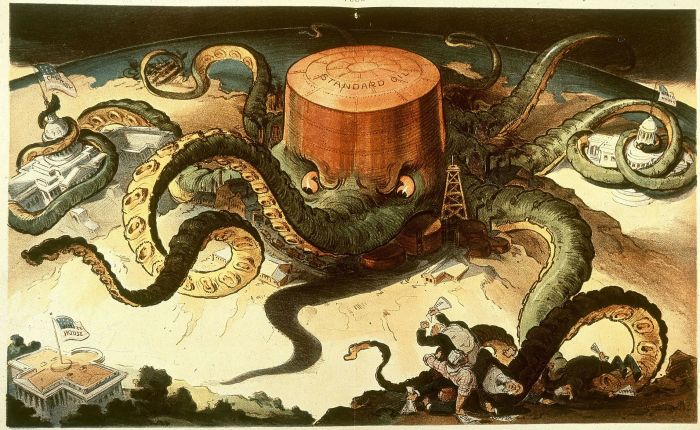
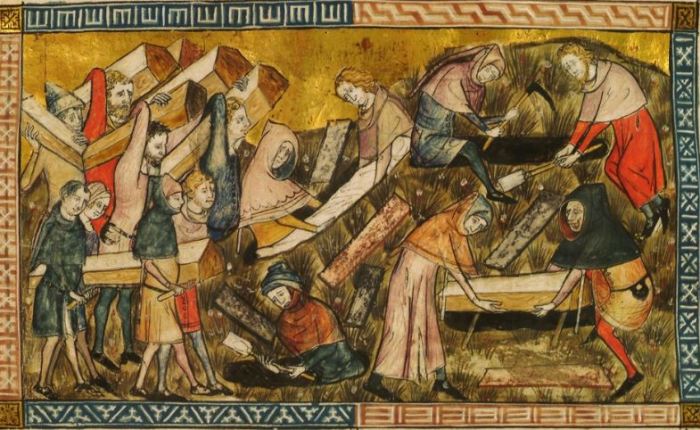
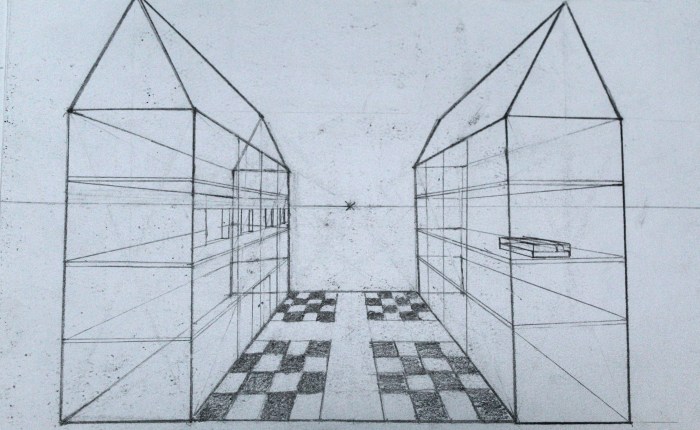
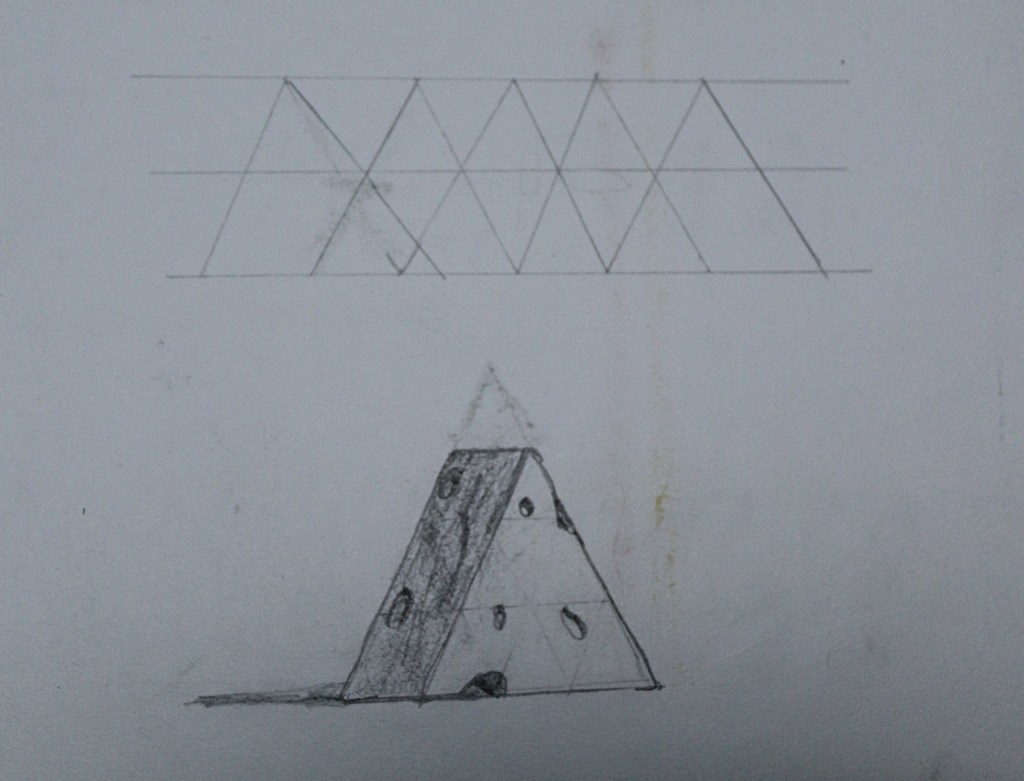
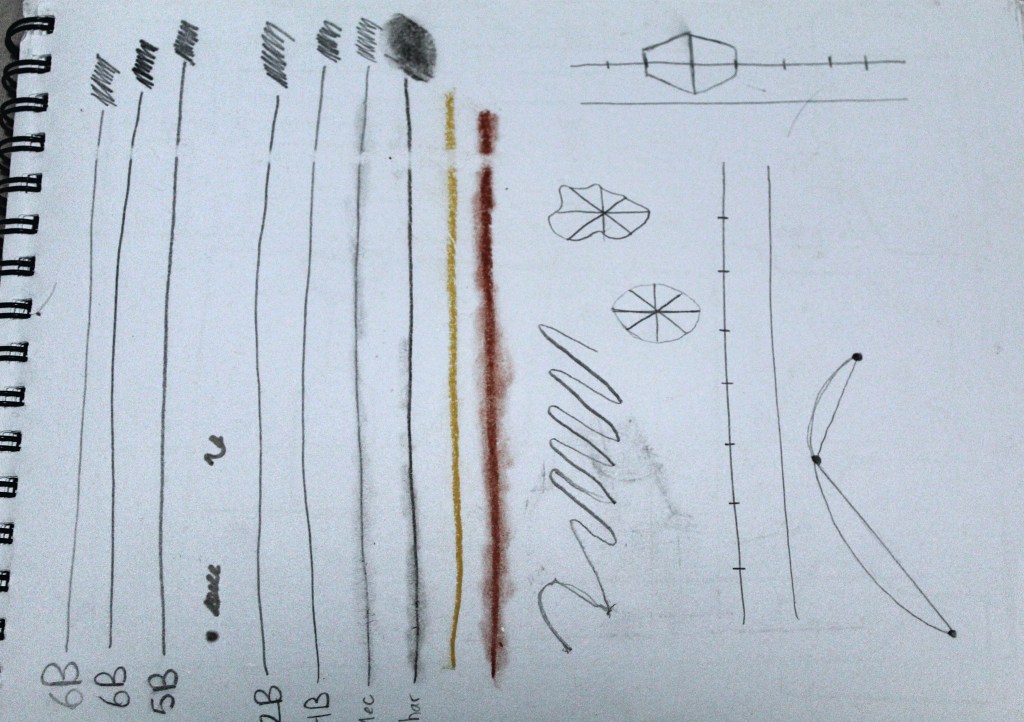
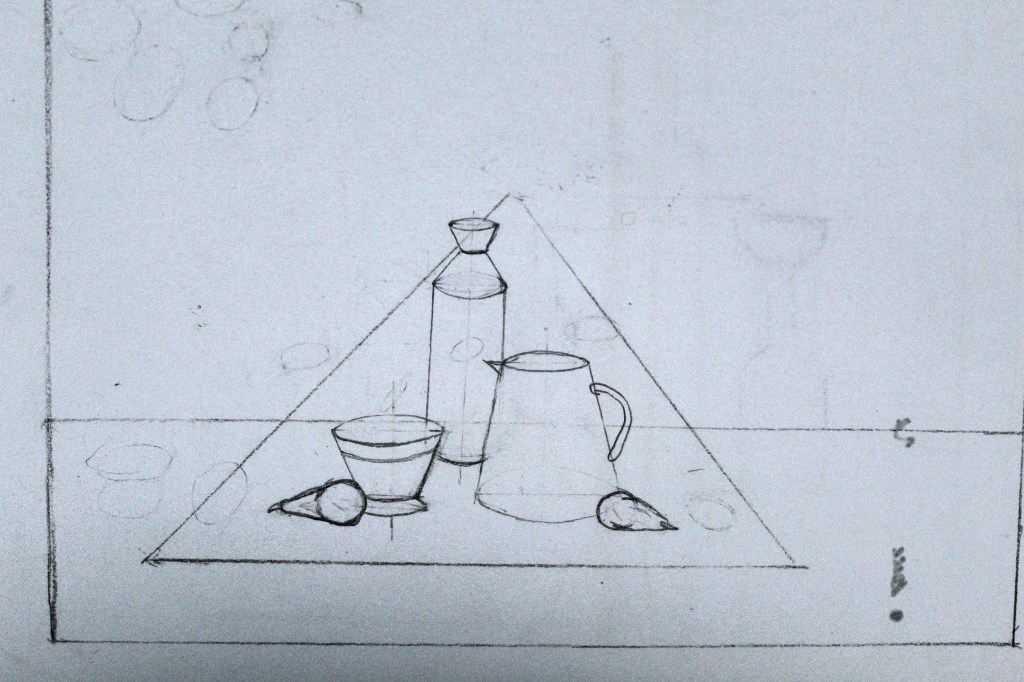
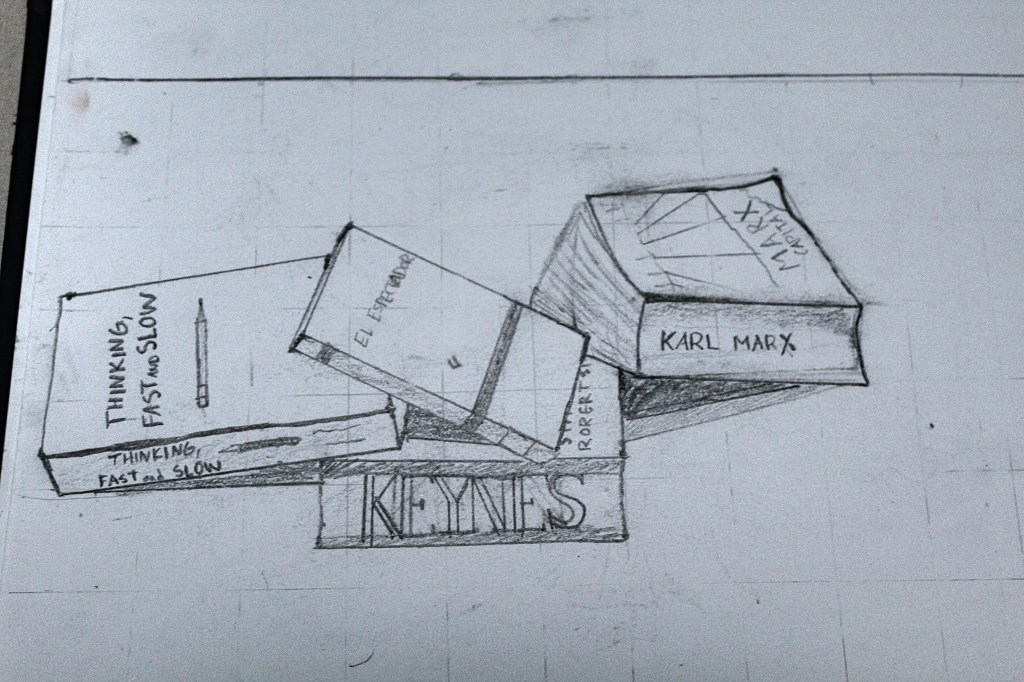

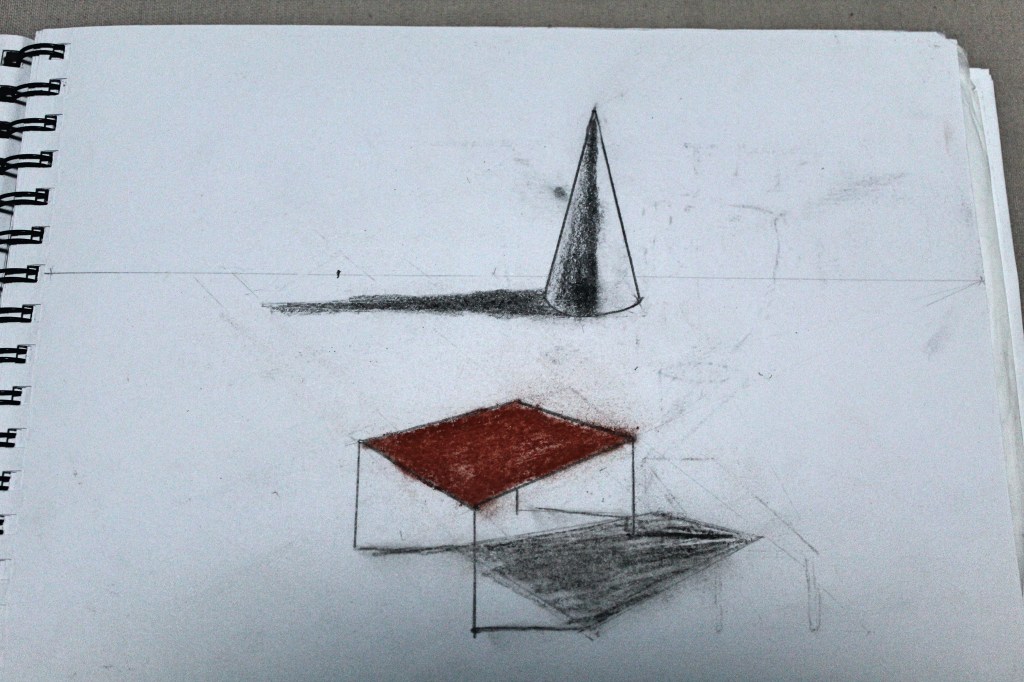

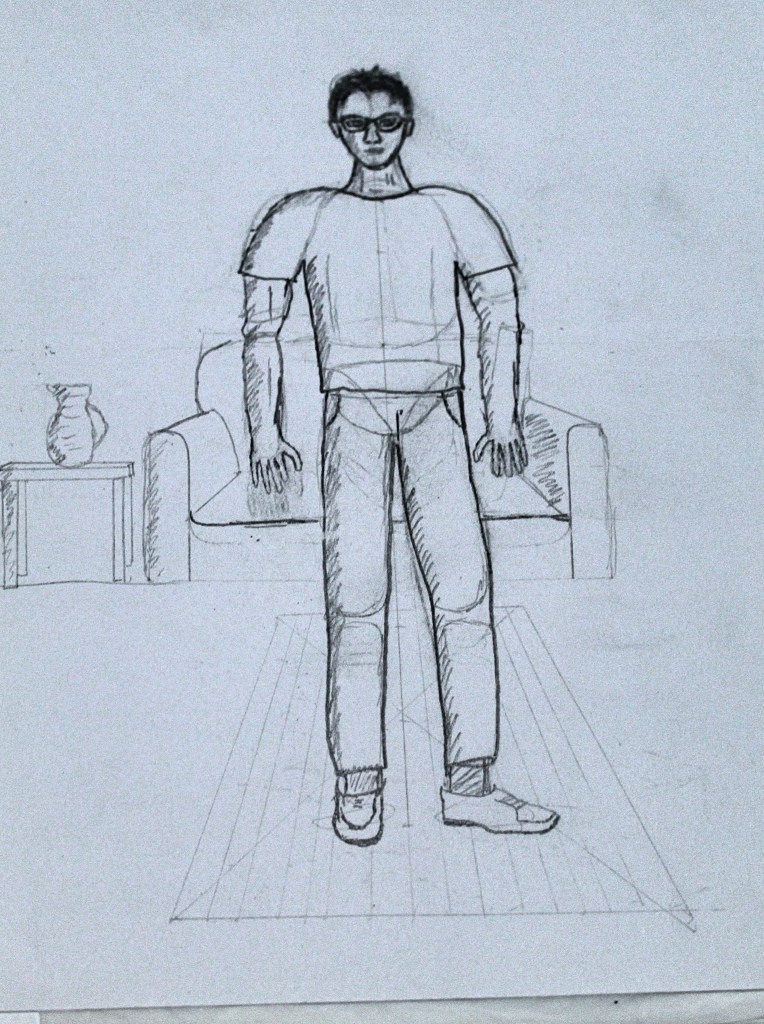


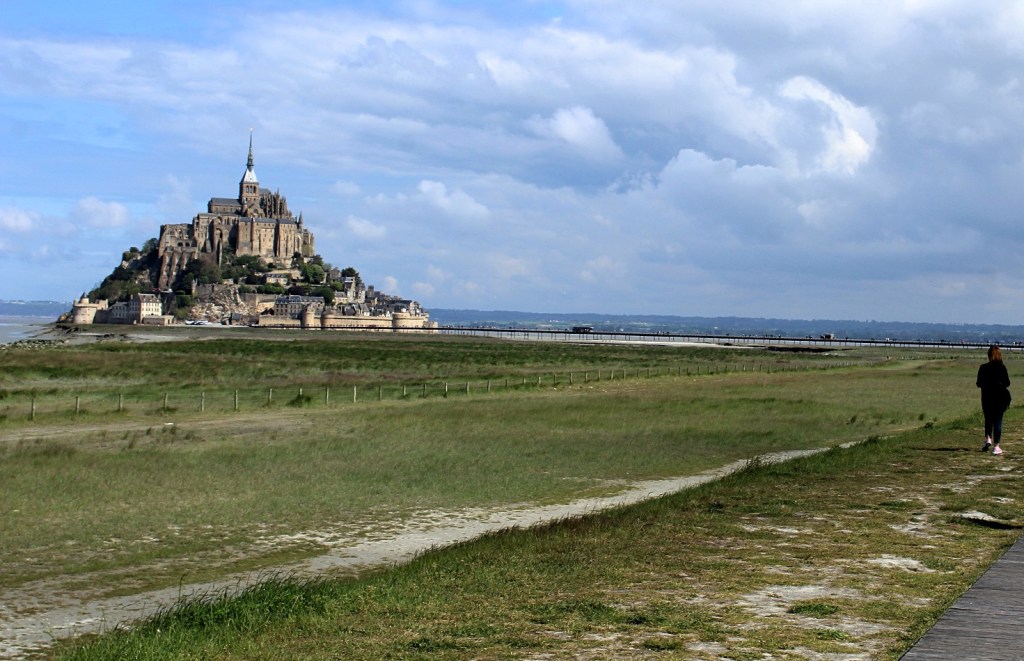
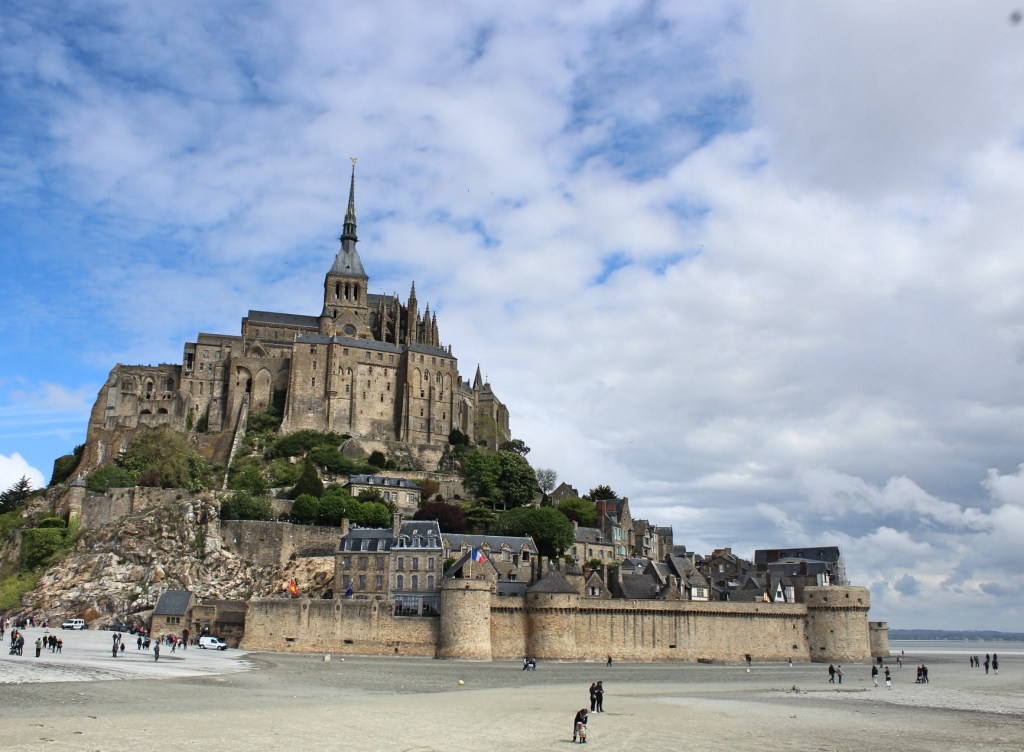
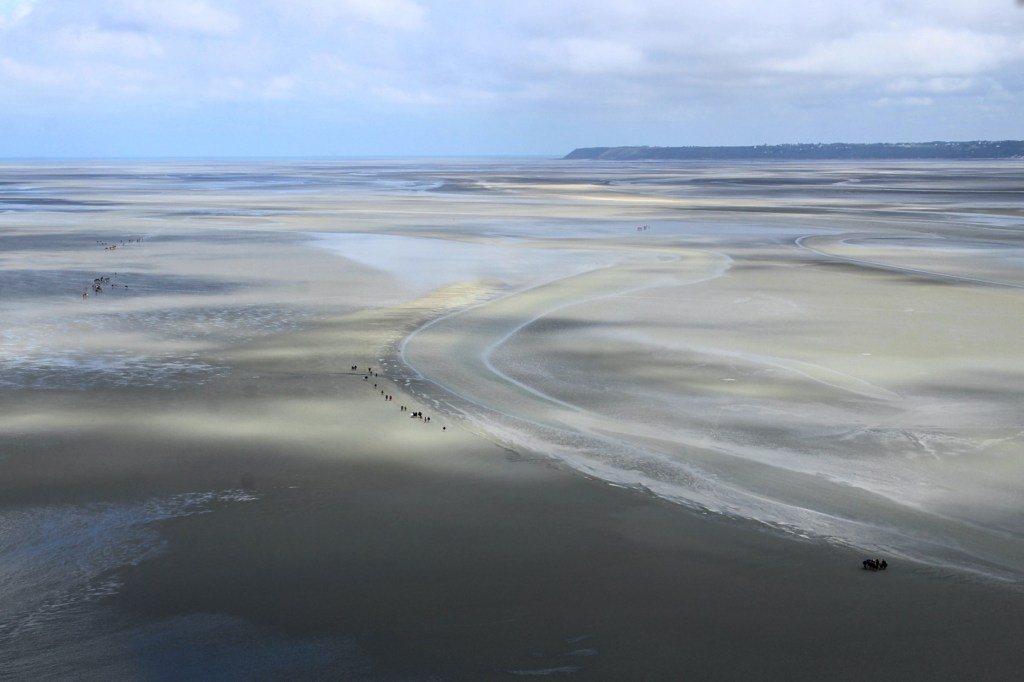
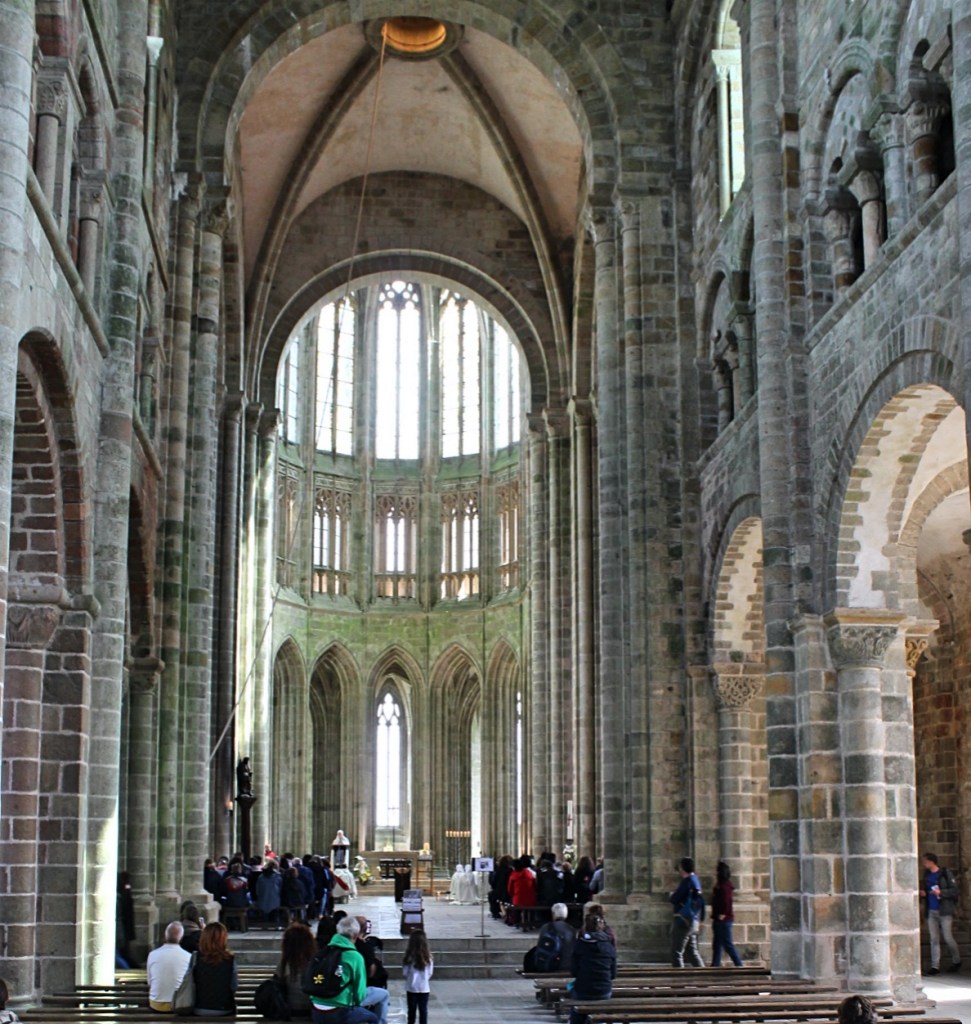
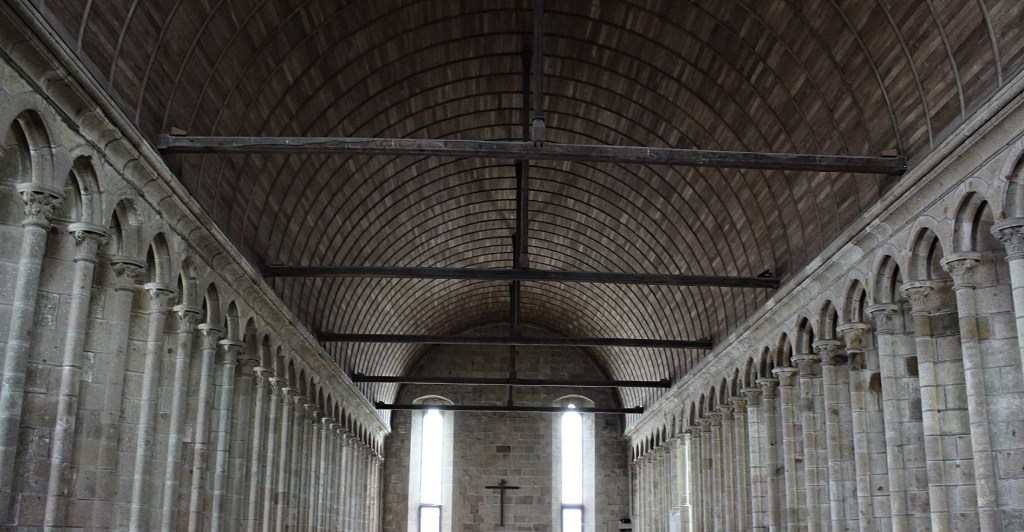
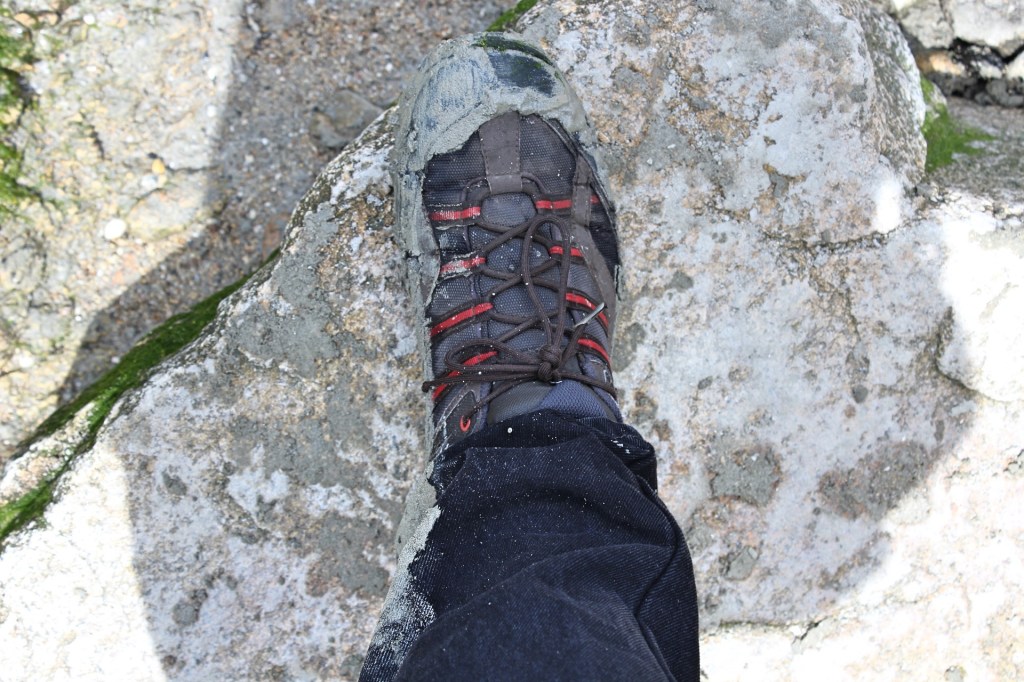


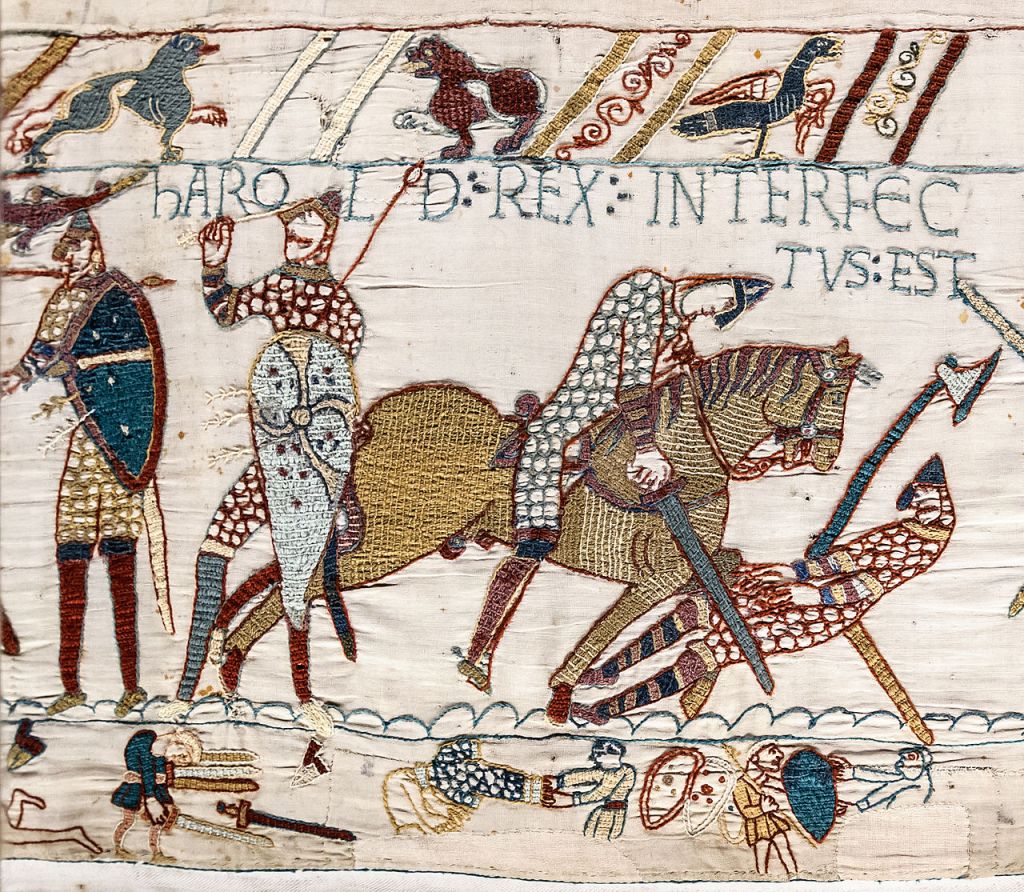
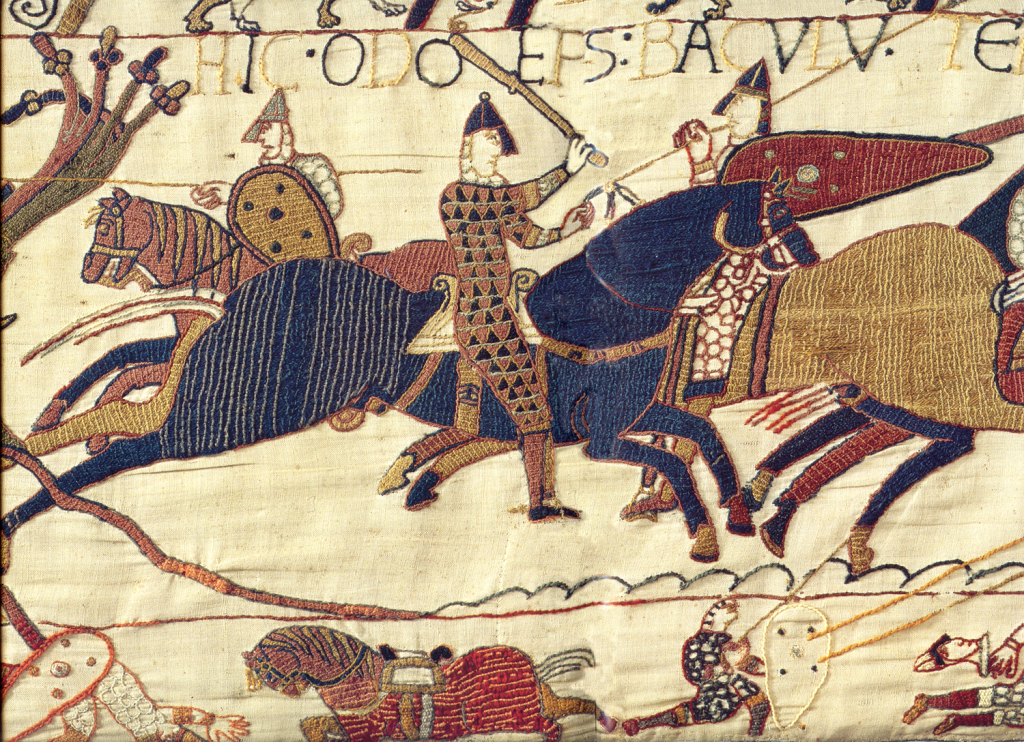


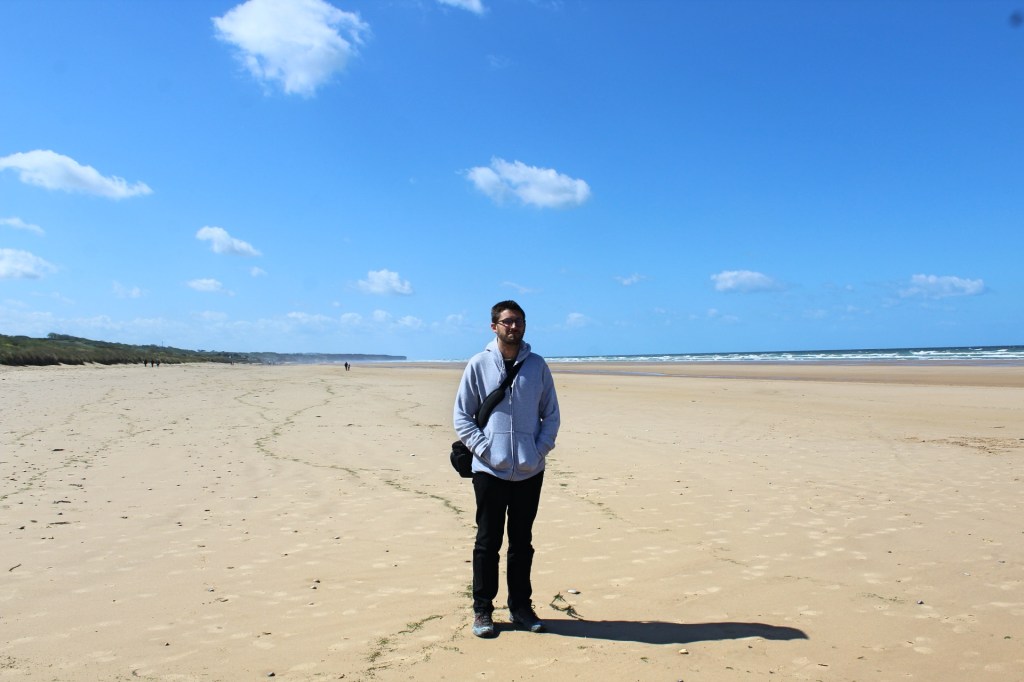
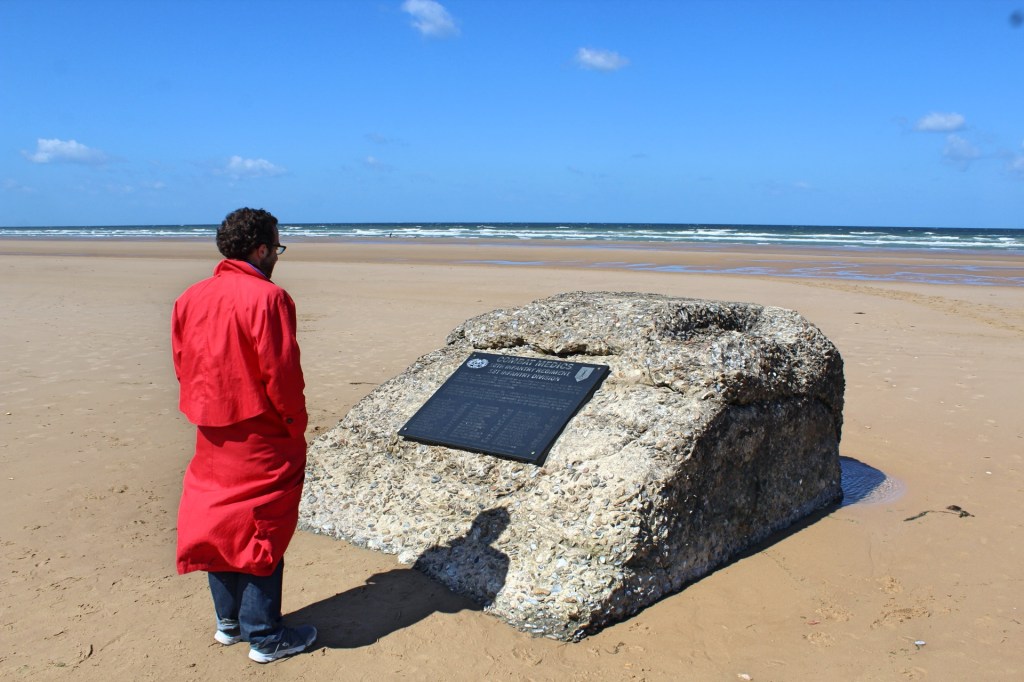
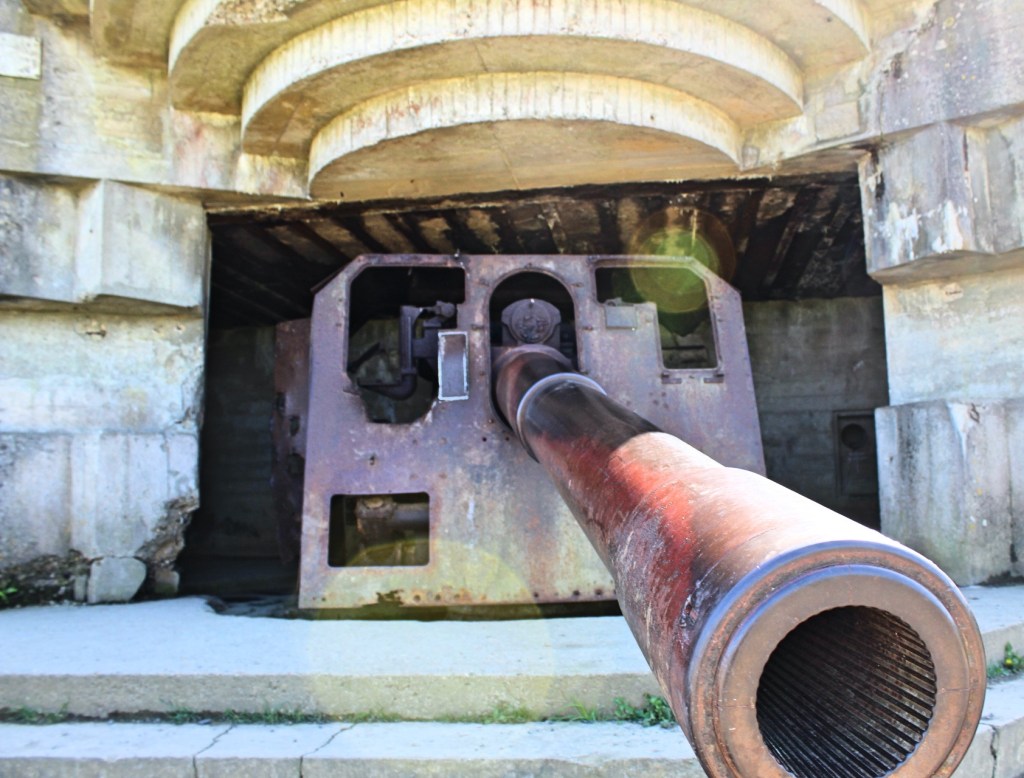

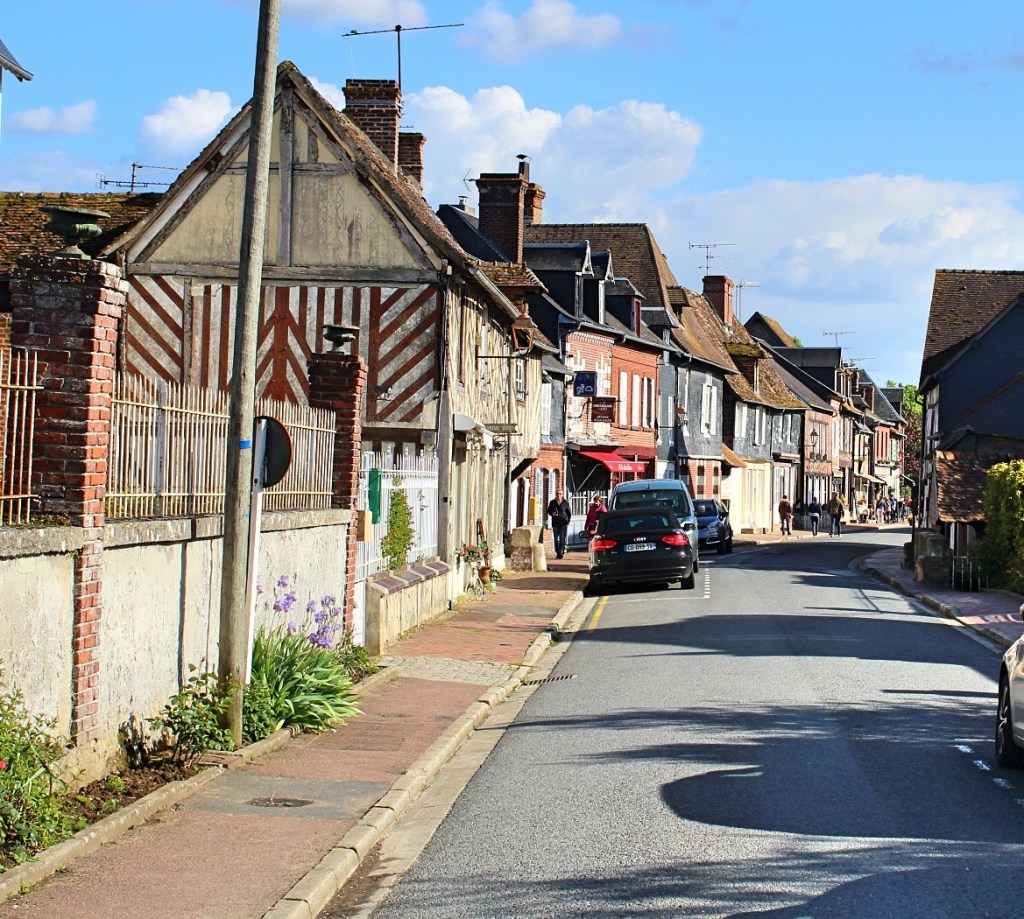


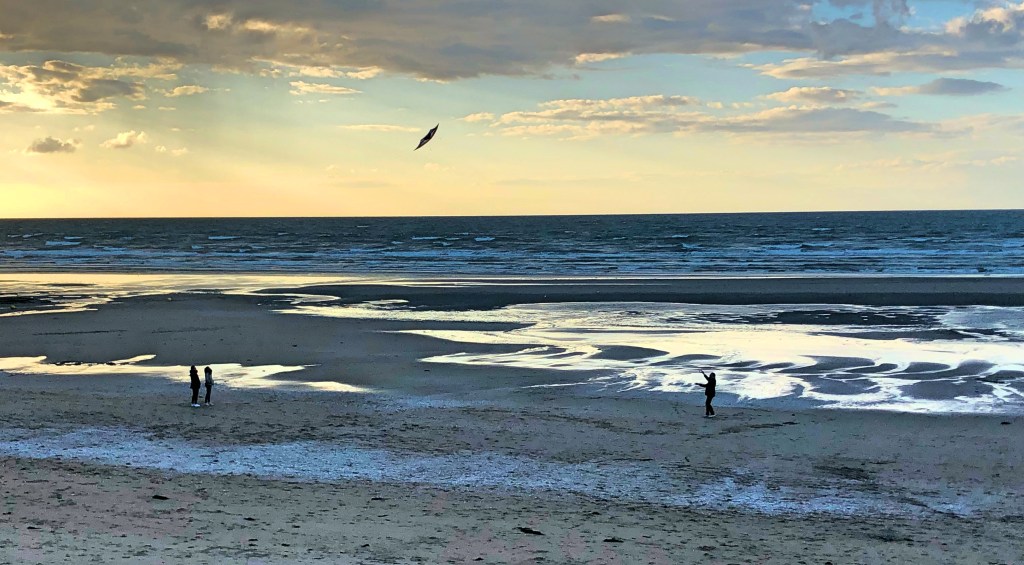
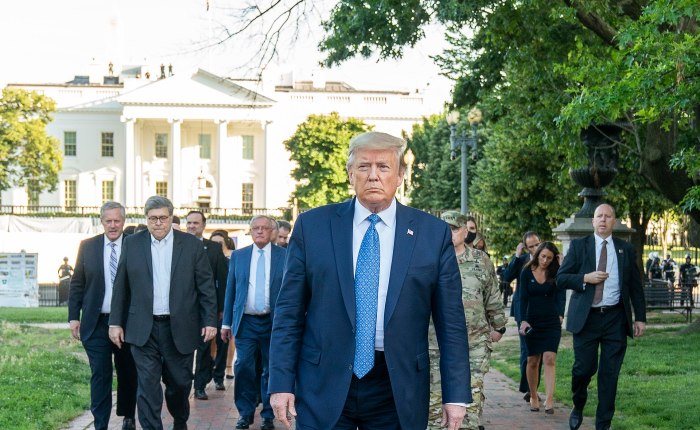

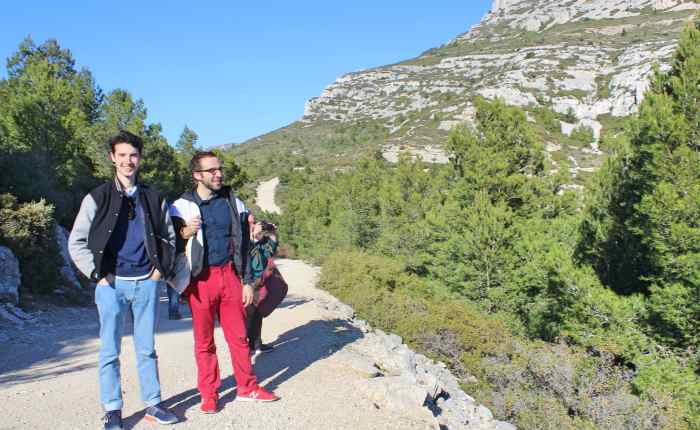
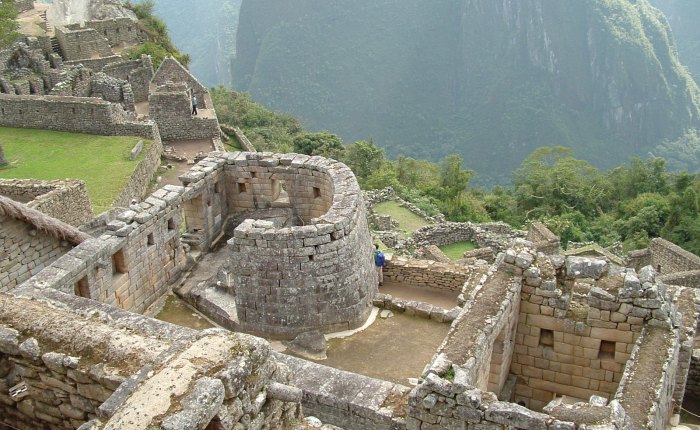

 Lotz in Translation