The name of Claude Monet stands over the artworld like a colossus—the man who defined one of the most iconic movements in art: impressionism. For a great many, I suspect, these blurs of color and light are what immediately spring to mind when they imagine the French countryside. The image of the paint-stained artist, brush in hand, standing in a field of grass, flouting both artistic conventions and social norms, is virtually a cliché now. But all of this we owe to Claude Monet.
Stereotype or no, I admit that this vision of the artist has a certain romantic appeal to me. And so I decided, on my last trip to Paris, to pay a visit to the home of this artist to partake of this dreamy, wistful aesthetic.
Normally, getting there from Paris is no challenge. A high-speed train bridges the distance in less than an hour—departing from Gare Saint-Lazare, a station Monet depicted in a series of paintings, and then arriving in the town of Vernon. This town lies just across the river Seine from Giverny. A taxi, a bus, or even a sprightly walk will get you to Monet’s house in no time.
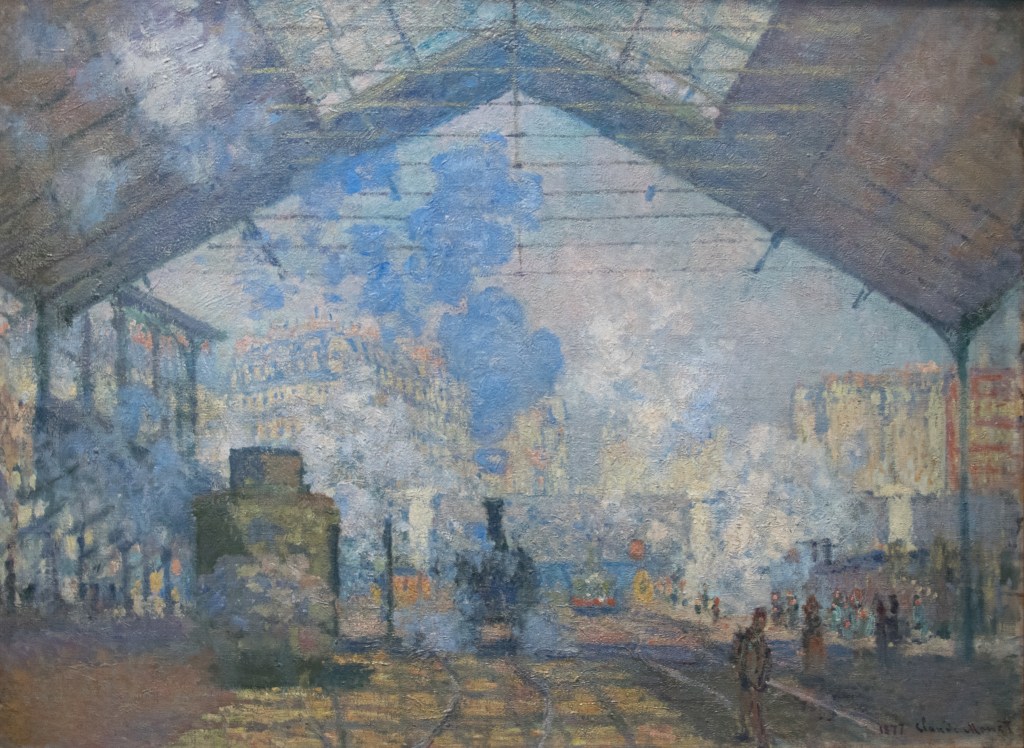
But I was unlucky. During my trip, in May of 2024, there was maintenance scheduled on this particular train line, so this option was out. So I opted for something I habitually avoid: a guided bus tour.
The bus was set to depart early in the morning, from the Avenue de la Bourdonnais, in the shadow of the Eiffel Tower. However, there was a hitch. As the group of tourists—speaking a babble of tongues—gathered on the pavement to board the bus, a police officer approached the tour guides and explained something with authoritative insistence. Apparently, the bus could not park in its usual spot, because of the new rules put in place in preparation of the summer olympics.
The preparation was already apparent. The Champs de Mars was buried in a mass of scaffolds, and a large stage was nearly finished in the Trocadero on the other side of the river. What this meant for us, however, was that we had to walk to a street a few blocks away. As we walked, a young Italian woman, who spoke astoundingly good English, chit chatted with an elderly American couple; but I was too focused on Monet for smalltalk.
The bus swept us out of the city and into rolling fields of green. We were headed north, towards Normandy. On the bright May morning, it was easy to imagine why this gentle, domesticated landscape inspired artists to capture its delicacy.
We arrived in no time, and I followed the crowd into the property. This was a moment I had imagined to myself many times. Monet’s gardens are a kind of mythical place in the world of art, a place I had seen through Monet’s eyes innumerable times, imbued by his vision with mystery and translucent beauty. It was almost a surreal moment, then, when I realized that I was standing in the gardens, and that they were real, physical, concrete.
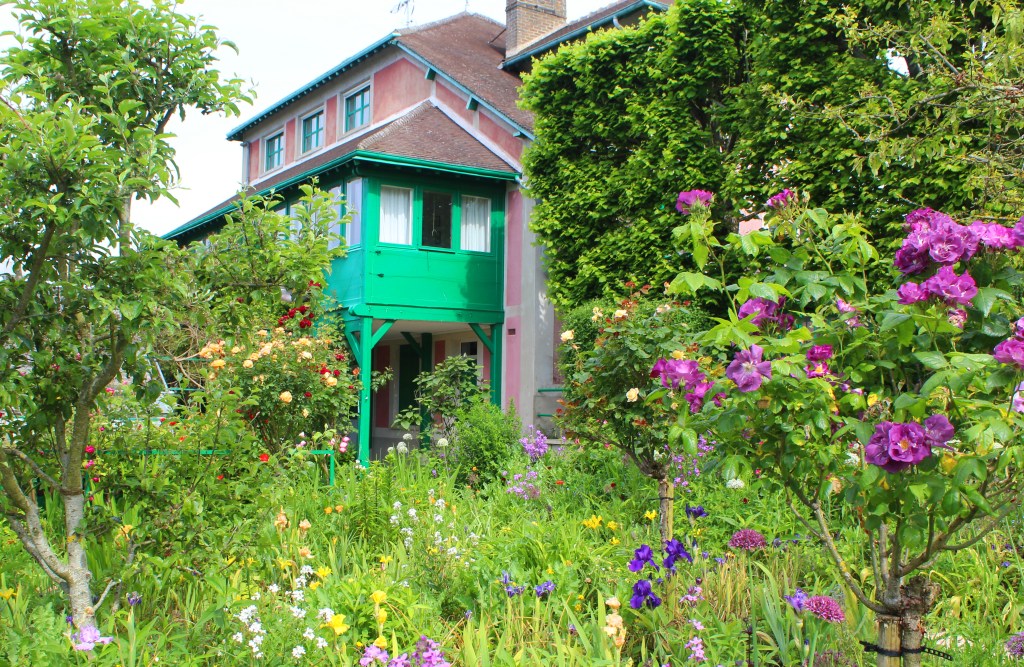
The gardens are divided into two sections. Directly in front of the simple house, with its pink plaster walls and vine-covered trellises, there are rows of flowers in square plots. They are arranged like globs of paint, splashes of color that look organized from afar but haphazard from up close. It is impressionism made manifest.
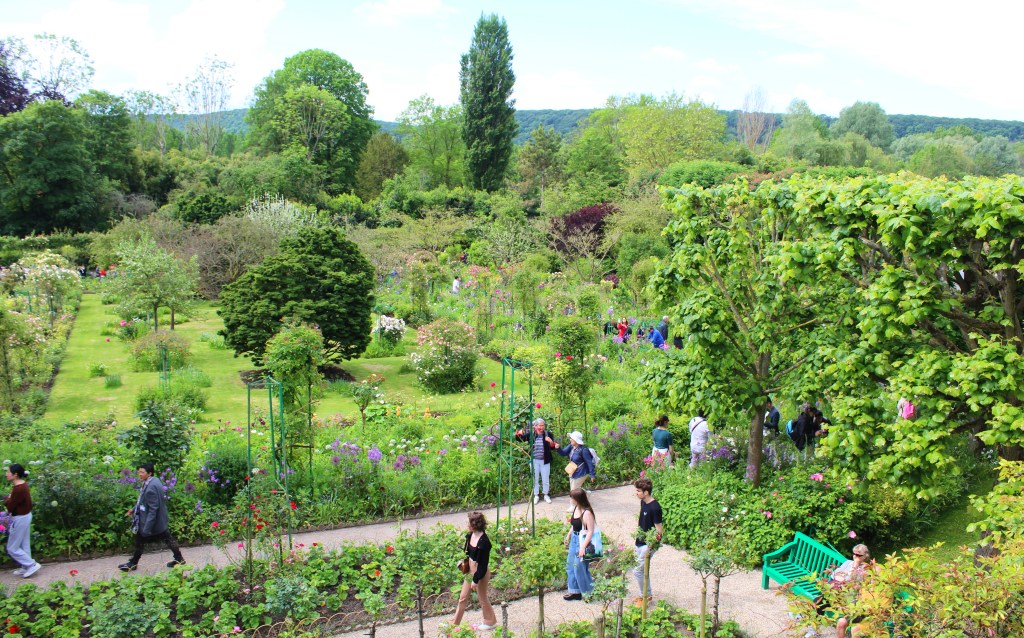
The more famous section of the garden is on the other side of the highway that runs through town. Monet purchased this property later, which is why it is not contiguous with the original gardens. Visitors nowadays can pass from one to the other through a small underpass under the road, but Monet himself would have had to cross it.
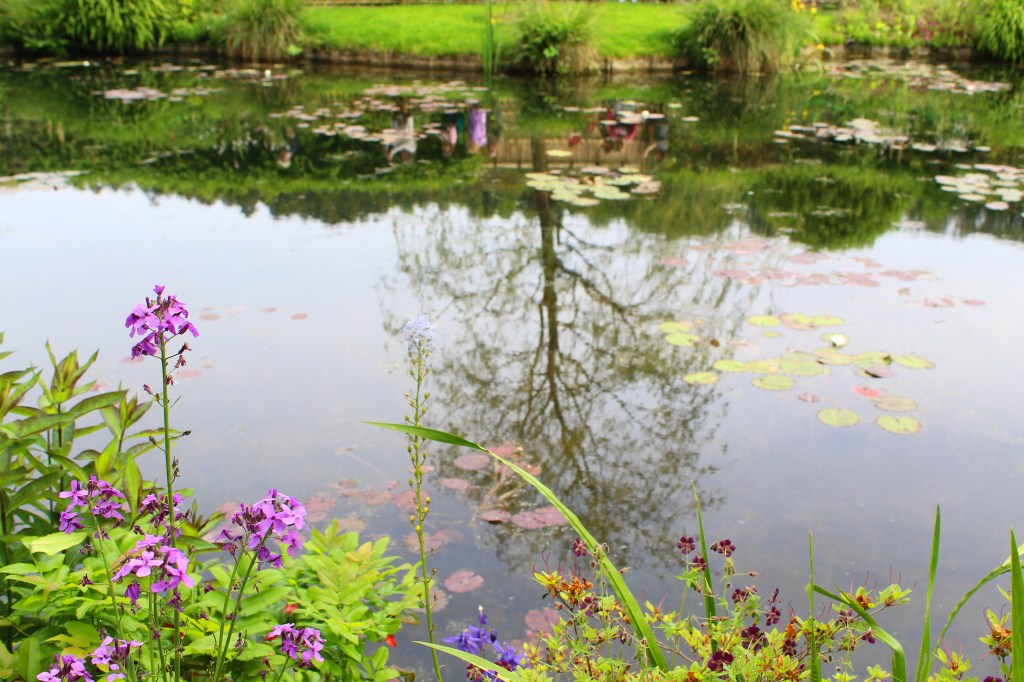
If the first section embodies the lightness and prettiness that is often associated with impressionism, this one is its highest embodiment. Here, Monet expressed his love for Japan, with the thicket of bamboo, the famous pond of water lilies, and the green wooden bridge. The pond is shallow and murky, and ringed all sorts of trees, bushes, and flowers. As a result, the surface texture is a mixture of reflections—of the blue sky, grey clouds, and the surrounding gardens—and the waterlilies lurking below. Though I was there briefly, it took little imagination to picture how the surface could change with the time of day, the weather, and the seasons. It is a kind of laboratory to study color and light.
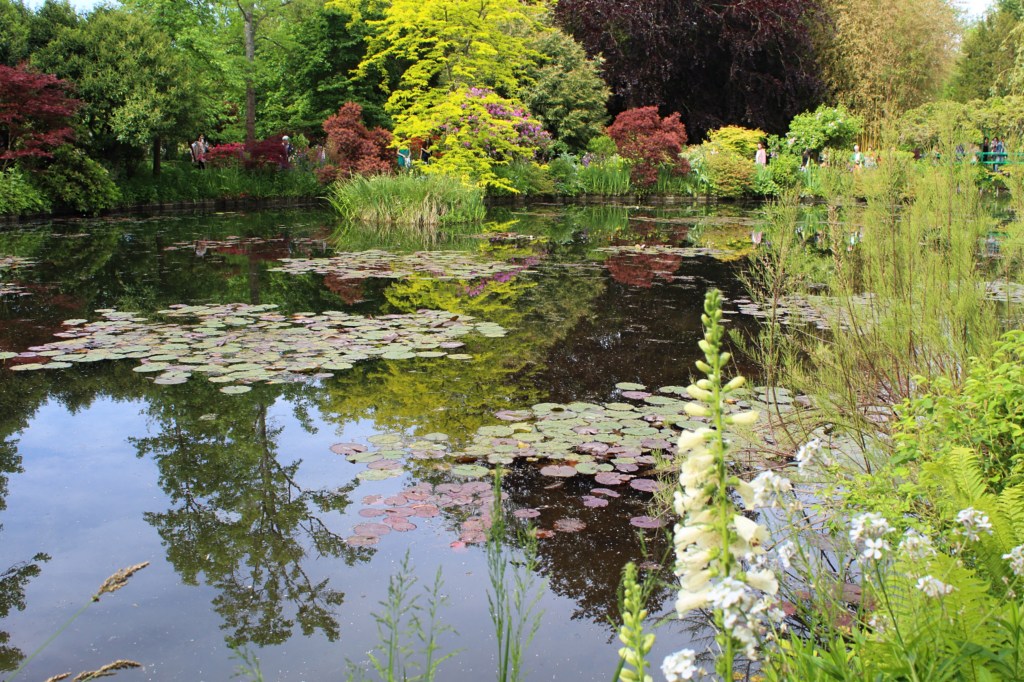
I would have loved to have basked in the garden for hours, but my time was limited by the tour bus schedule. So I pulled myself away to queue up for the house. It is much as one might expect of Monet—open, light, airy, and unpretentious. Unfortunately, however, it is difficult to put oneself in the artist’s shoes and imagine oneself at home, if only for the constant crowds pushing the visitor from room to room. But I still had a few moments to appreciate Monet’s fine collection of Japanese prints.
The visit ends, as so many do, in the gift shop. Yet unlike so many gift shops, this one is actually one of the main attractions. Though it looks like a large green-house, this was actually Monet’s studio—and it is easy to see why, as the large windows in the ceiling flood the space with light. Perhaps it is sacrilegious to fill such a space with knick-knacks for tourists; yet, as far as knick-knacks go, the items on display are surprisingly enticing, if only because they are adorned with the master’s paintings.
If I had more time in Giverny, I would have walked the short distance to the Église Sainte-Radegonde, where Monet is buried in a family plot. I would also have liked to visit the small Museum of Impressionism, which has a collection of paintings by Monet and others. But, alas, my tour bus was departing for Paris, and I didn’t have any more time to spend in Giverny.
When I got back into the city, I decided to round out my Monet experience by visiting the Musée Marmottan. This is located near the Bois de Boulogne, a huge park to the west of the city. The museum has one of the finest Monet collections in the world, mostly thanks to a huge donation by Michel Monet, the artist’s only heir. It is housed in what used to be a Duke’s old hunting lodge; and like the Frick Collection in New York, it preserves some of the ambience of obscene wealth.
The museum has a series of rotating special exhibits (when I visited, it was about art and sport) and a collection of impressionists that goes far beyond Monet. But his work is the main attraction. The paintings are held in an underground space, modeled after another museum in Paris, the Musée de l’Orangerie—with large, open, well-lit rooms which situate the viewer in a kind of simulated garden.
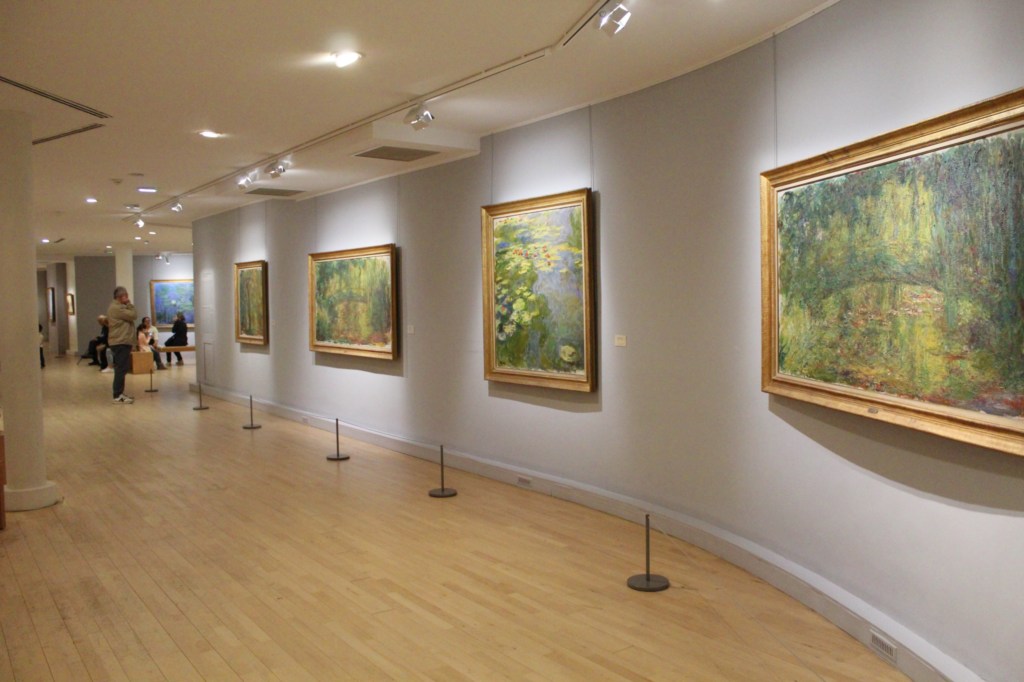
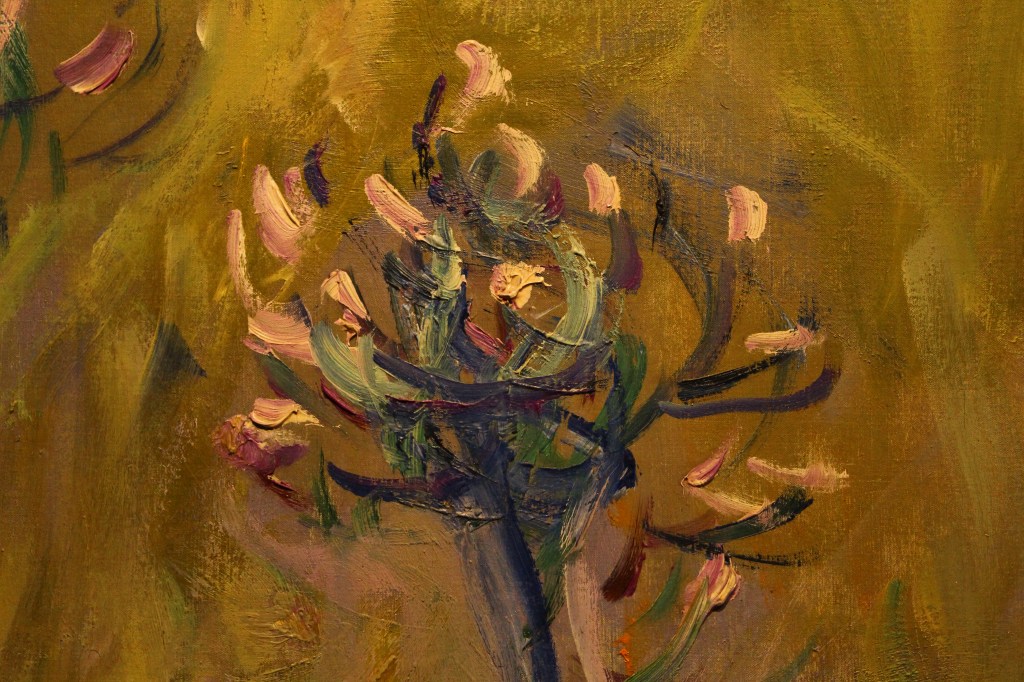
And, indeed, standing there after paying a visit to the real garden gives you a wonderful insight into the way an artist’s eye can both capture and transform its subject. Monet’s paintings are both highly “unrealistic”—impossible to mistake for a photograph, say—and yet startlingly accurate. They convey subtleties of light and color that a more “correct” technique would overlook. Or rather, they convey a kind of flavor—a subjective sensation, overlaid with aesthetic appreciation.
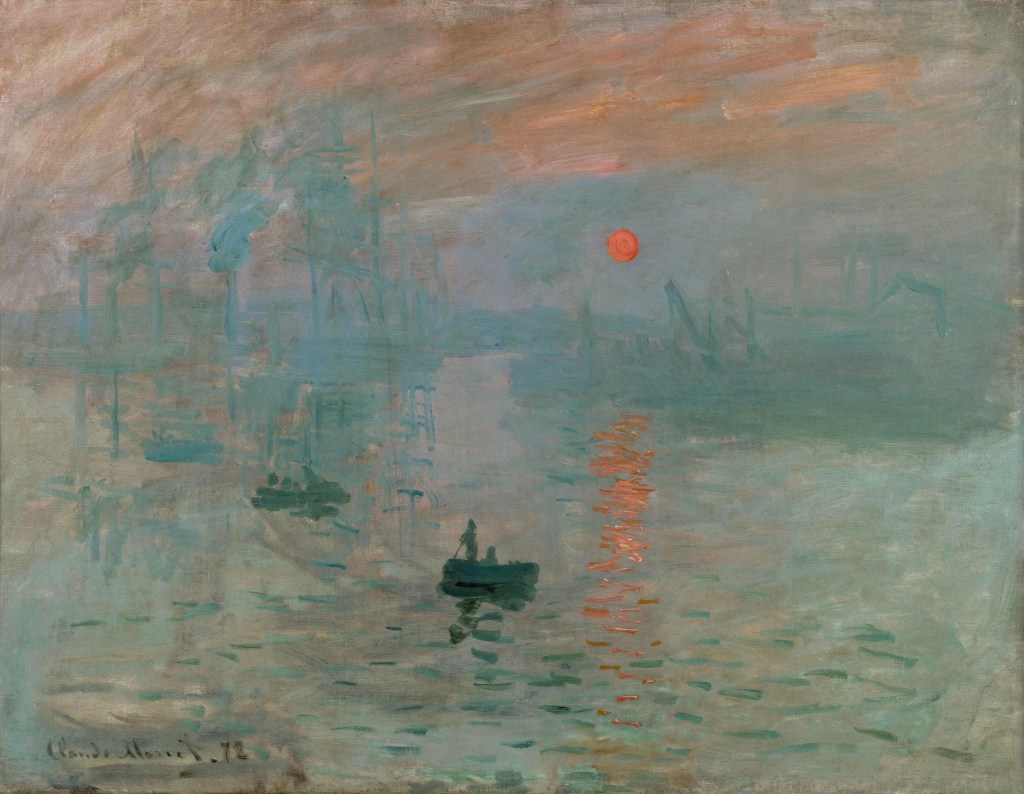
The only disappointment of my visit was that the museum’s most famous work, Impression, Sunrise, was away on loan. This work, which Monet completed in 1872, was monumentally influential; it would eventually give the entire artistic movement its name. The painting was both daringly original and a continuation of trends that came before. Its originality is apparent when compared to the oil paintings of the established French artists of Monet’s day, with their impeccable technique and focus on mythological or allegorical subjects. Monet’s work is nothing like that. But a side-by-side comparison with, say, a Victor Turner painting shows how Monet took pre-existing techniques for portraying light and atmosphere, and then expanded on them.
The last museum I want to discuss is one I visited many years before this trip, before even the 2020 pandemic: the Musée de l’Orangerie. This museum is in what used to be an “orangery,” a building to protect orange trees from the harsh Paris winter. In the past, you see, oranges were something of a royal prerogative—so delicate that only the huge resources of the monarchy could keep them alive in European climes. This particular orangery is located in the Tuileries Garden, and is the home of Monet’s most impressive works.
The visitor enters and almost immediately finds herself in an oval room, flooded with white light. Running along either wall are huge canvases, the Water Lilies—so big that you can easily imagine that you are visiting Monet’s home in Giverny. They are mesmerizing: exuding an almost mystical intensity. In their own way, these paintings are as ambitious and monumental in scope as any in art history; and yet, they are concerned with something completely ordinary. What makes them so powerful is the intensity of vision that Monet brings to the scene, as if he is somehow penetrating the surface layer of reality and looking at its essence.
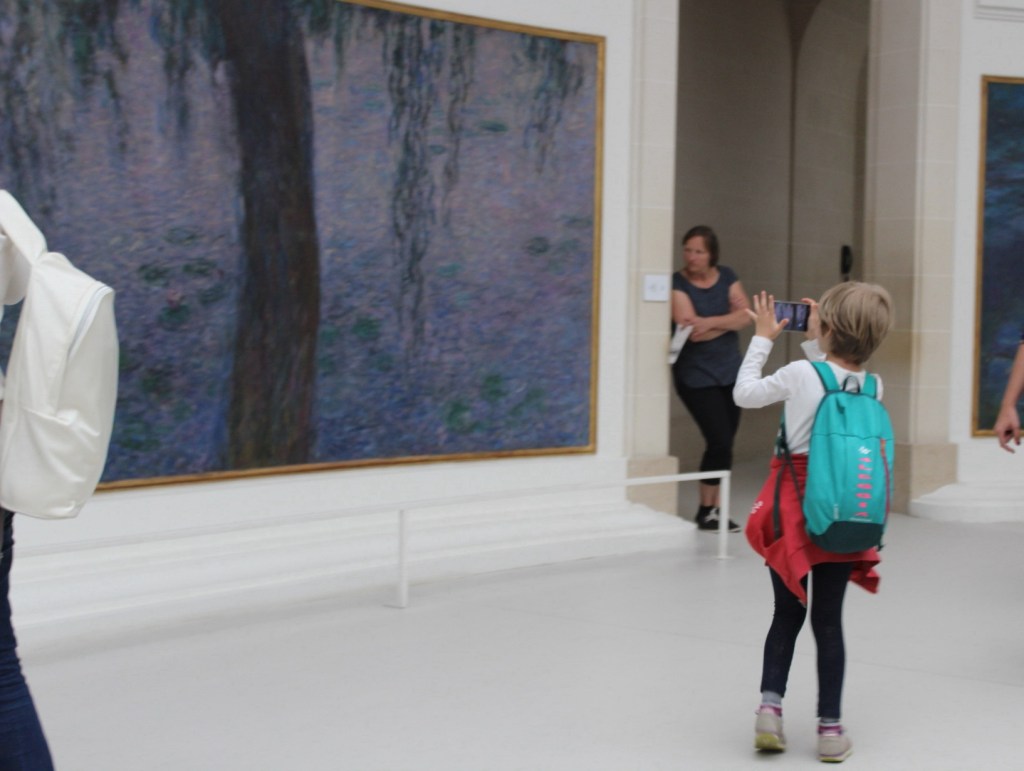
I remember sitting on the central benches a long time, and willing myself to extract as much from the paintings as I could. I tried to imagine what it would be like for me to have such a vision, to see light and color as pure attributes of nature, rather than mere signs of material things. What I’m trying to say is that these paintings struck me as being wonderfully profound, in a way that very few paintings do. But then again, perhaps I just like pretty pictures.
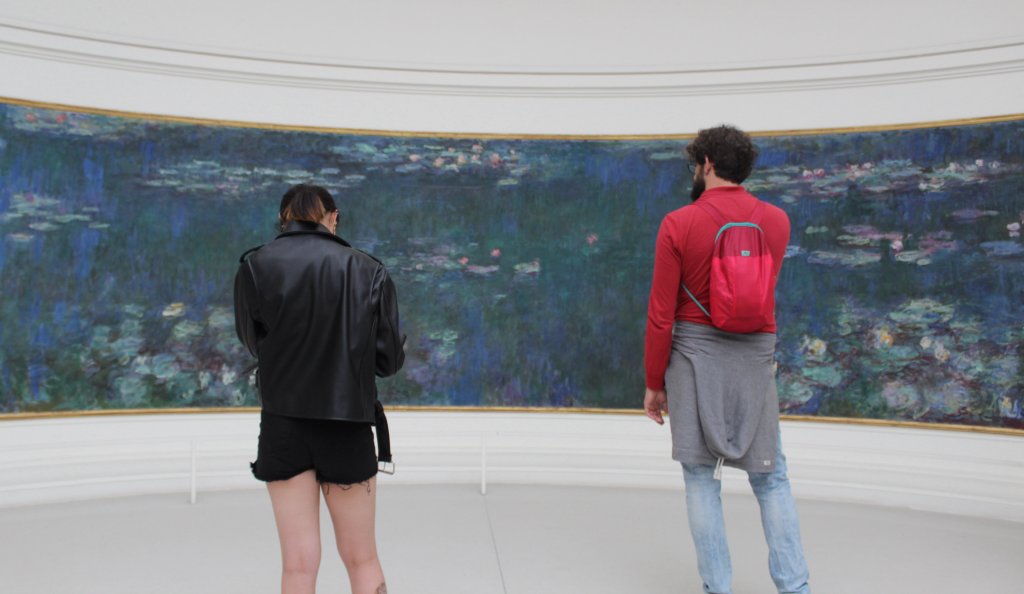
Well, that rounds out my Parisian Monet experience. While I’m sure his work is not to everybody’s taste—with its focus on pure aesthetic qualities instead of content—I think that Monet has earned his place in the pantheon of artistic greatness. His career was intensely innovative, and he nurtured his creativity into his old age. Unlike so many artists, it is Monet’s final works which have arguably become his most celebrated. Further, I think his art is especially relevant now, as the contemporary art world—with its emphasis on message over form—has moved so radically away from the principles he embodied. This is not to say that either camp is correct, only that Monet’s vision of art is one that is worth getting to know.

 Lotz in Translation
One thought on “Monet: Giverny, L’Orangerie, Mormottan”