Throughout most of our relationship, I have been the traveller—visiting as many corners of Europe as time and money allowed. But recently Rebe has started surpassing me, most notably by taking a 10-day trip—by herself!—to the heart of China. This is an interview about her trip, edited for clarity. All photo credits also belong to her: Rebeca López.
ROY: To begin with, why China? Of all the countries in Asia, it’s not the trendiest place to visit. Most people I know want to go to Japan or Thailand.
REBE: Well, I got interested in learning Chinese because my childhood best friend was my chinese neighbor. Also, Chinese is just such an important language. I’ve heard that, if you can speak Chinese, Spanish, and English, you can talk with almost anyone on earth. So I started taking Chinese classes some years ago, though I still have a low level. Also, to be honest, I’ve always liked the food…
ROY: What did you have to do to prepare for your trip? Anything unusual?
REBE: It’s recommended, for some reason, to get vaccinated against Hepatitis, so I did that. Normally I would’ve needed a visa, but China has a special, temporary visa promotion for citizens of some European countries to encourag tourism, so I didn’t have to do anything special. This offer is valid until the end of 2025.
ROY: I’ve heard that using the internet in China is difficult, since they have a lot of restrictions.
REBE: Yeah, so it’s recommended to get a VPN on your phone, which allows you to get around the firewall. Even so, certain applications like Google Maps didn’t really work. Instead, I used an app called Maps.me to get around. Also, most Chinese people use WeChat as their main messaging app, but with the VPN I was able to use Whatsapp as usual. But I did use WeChat to pay for things, since I couldn’t pay directly with my Spanish bank card. Alipay is also really common.
ROY: So, what was the flight like?
REBE: Actually, it wasn’t bad. I was on the plane for 11 hours but somehow it was comfortable. I slept a lot.
ROY: What was your first stop?
REBE: I began in Beijing. I was supposed to be there for 3 days, but my original flight was overbooked and I arrived a day early.
ROY: I know that Beijing is one of the biggest cities in the world. Did it feel massive and overcrowded?
REBE: Not really. Even though there are tons of people, it doesn’t feel overwhelming due to the wide extent of the city. The metro was quite good and it was easy to get around. One thing that was weird, though, was that there were passport checks on every street corner. The police were stationed there checking everyone’s documentation, even Chinese people.
ROY: So what’d you do there?
REBE: The first thing I did was to visit the Forbidden City. It’s really massive. I read online that it has 9,999 rooms. All the buildings are made of wood and it’s really beautiful. There is an exhibition hall called Hall of Clocks and Watches with an impressive collection of luxurious clocks from the Qing Dynasty. Near the Forbidden City there is the Jingshan Park, from which you get astounding views of the palace complex. You can make stops on the way up to admire the many different pavilions that crowd the park.
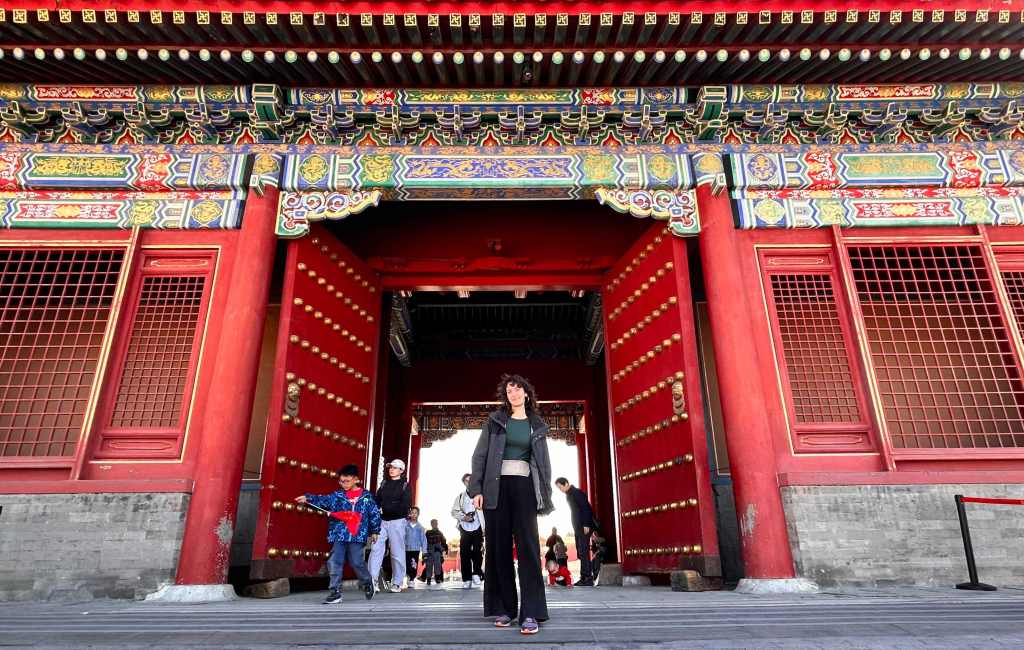
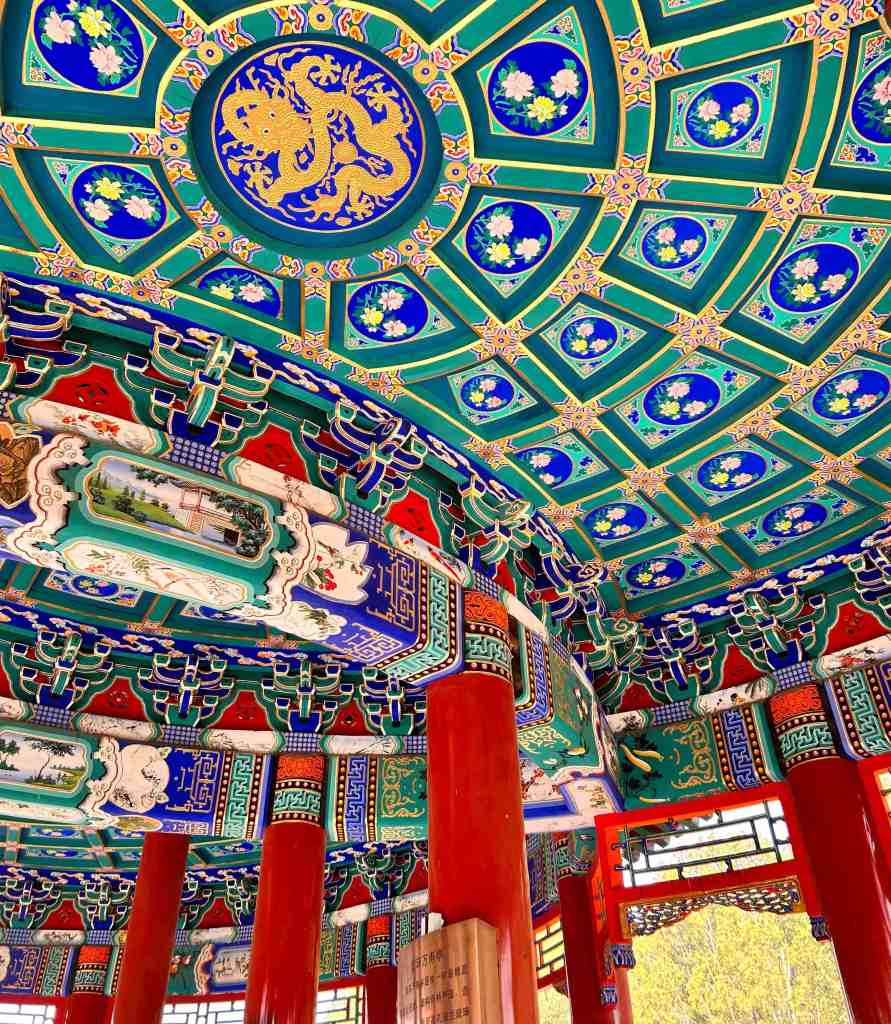
The next day I visited the Temple of Heaven, built during the Ming dynasty, which is also huge. The largest building of this complex, and the most famous one, is called The Hall of Prayer for Good Harvests. It’s 38 meters tall and it’s entirely made of wood, with no nails. This was probably my favorite monument in the city. Next to the Temple of Heaven I strolled around Tian-Tan park where I saw other pavilions, such as the double-loop Longevity Pavilion. In this park it’s very common to see locals in singing groups, dance lessons or playing a popular chinese game called Jianzi, a sport like badminton that you play with your feet.
Later that day I strolled through Qianmen, a famous 570 year old shopping street. But what I really enjoyed were the Hutongs in the adjacent streets. Hutongs are historical, small grey buildings in narrow streets where people used to live in the past.
The last stop of the day was Beihai Park, with its famous White Pagoda.
ROY: Was that it for Beijing?
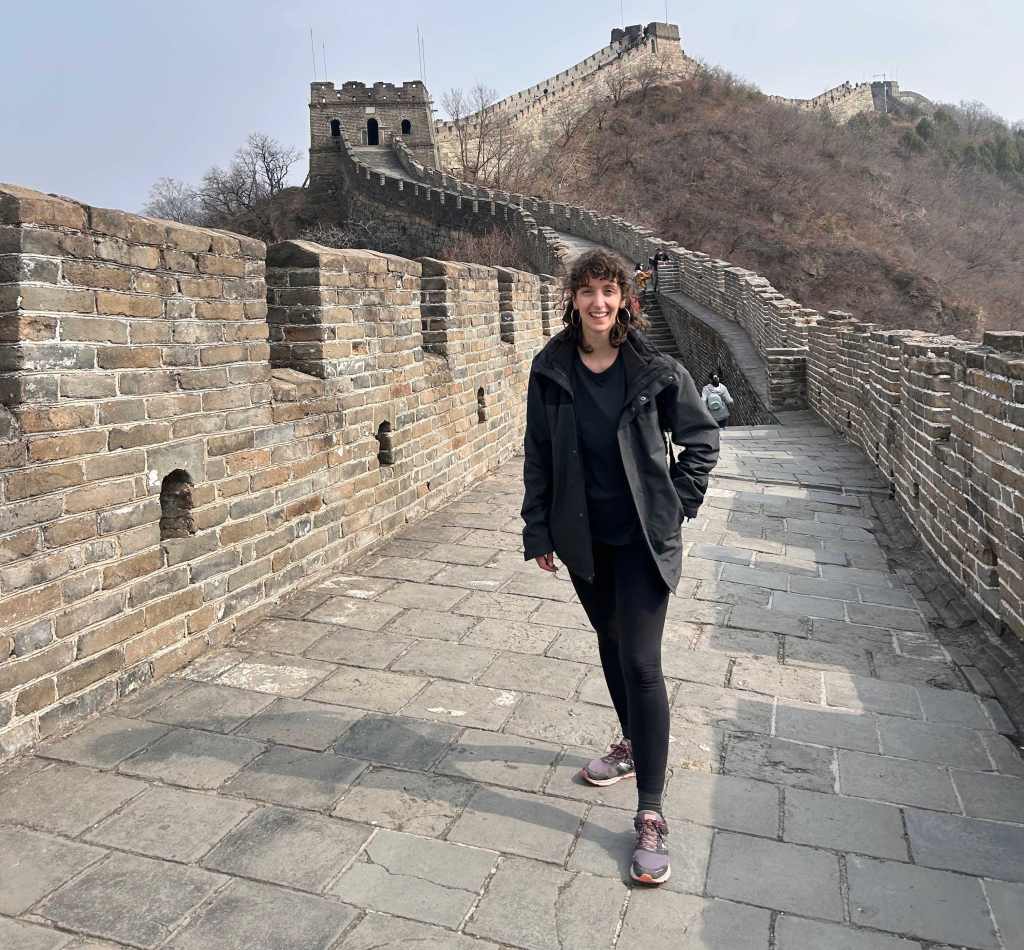
REBE: Well, I took a day to go visit the Great Wall. I tried to go to a part of the wall that was less touristy, but it was kind of hard to get to. I was supposed to take a bus, to another bus, and then to a shuttle bus, but I got off at the wrong stop on the first bus and ended up taking a taxi. Taxis in China are pretty cheap.
ROY: What was it like seeing the wall?
REBE: It’s weird, because it’s something you’ve seen in photos so many times, and then you see it for real. It’s a lot of stairs, a lot of going up and down. It was overcast and probably a bit too early in the year to get the best views. The trees were still bare. But of course it was great to see it.
ROY: Did you visit Tiananmen Square?
REBE: Actually I didn’t have time. I was so jet-lagged during the first few days that I fell asleep at like 6 in the afternoon. It was brutal.
ROY: So what did you do after Beijing?
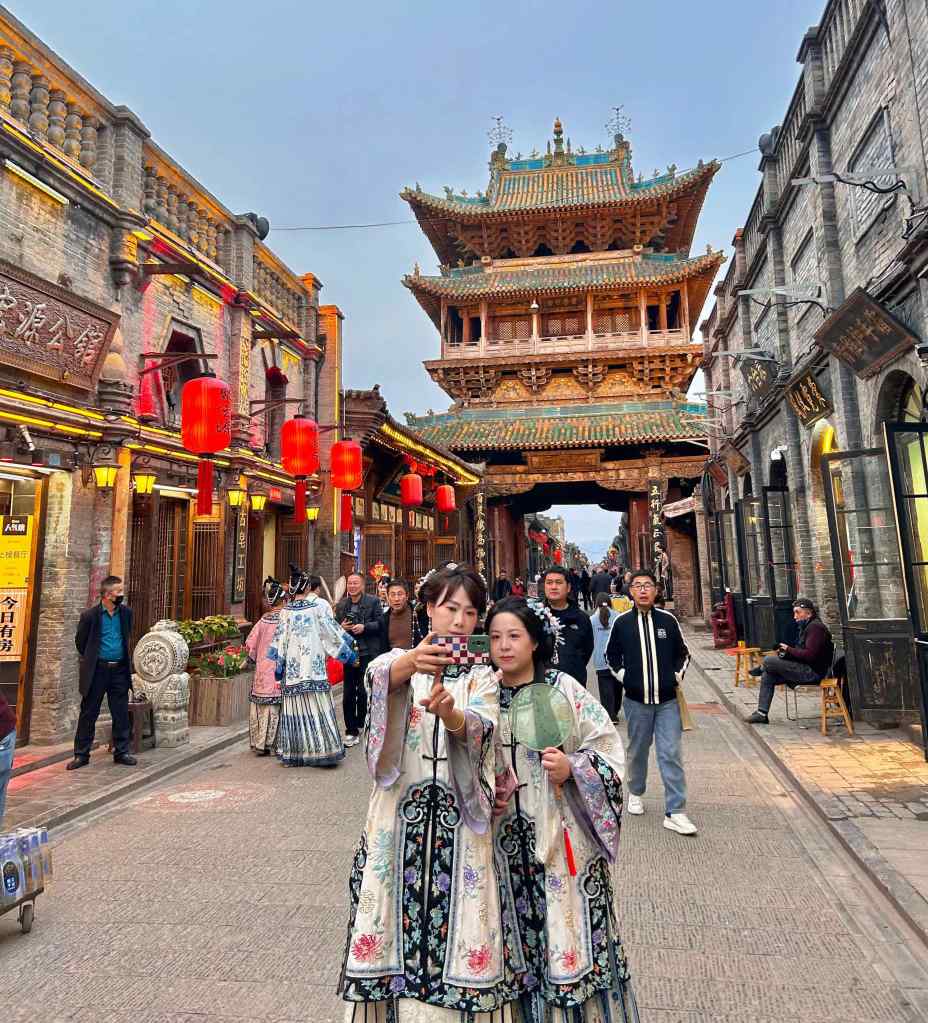
REBE: My next stop was Pingyao. For a Chinese city, it’s actually pretty small, just a few thousand people. But it’s famous for being a well-preserved medieval city. The first bank of China was actually located in Pingyao. It’s surrounded by old walls and the streets look like they did hundreds of years ago. The main thing to do is to visit all the temples. There are Confucian, Taoist, and Buddhist temples. But I didn’t see many because they close by 5 o’clock.
ROY: How long were you there?
REBE: Just a day. That night, I actually slept on a kang, which is a traditional kind of wooden bed.
ROY: Was it comfortable?
REBE: Actually, yes, more than what it sounds like.
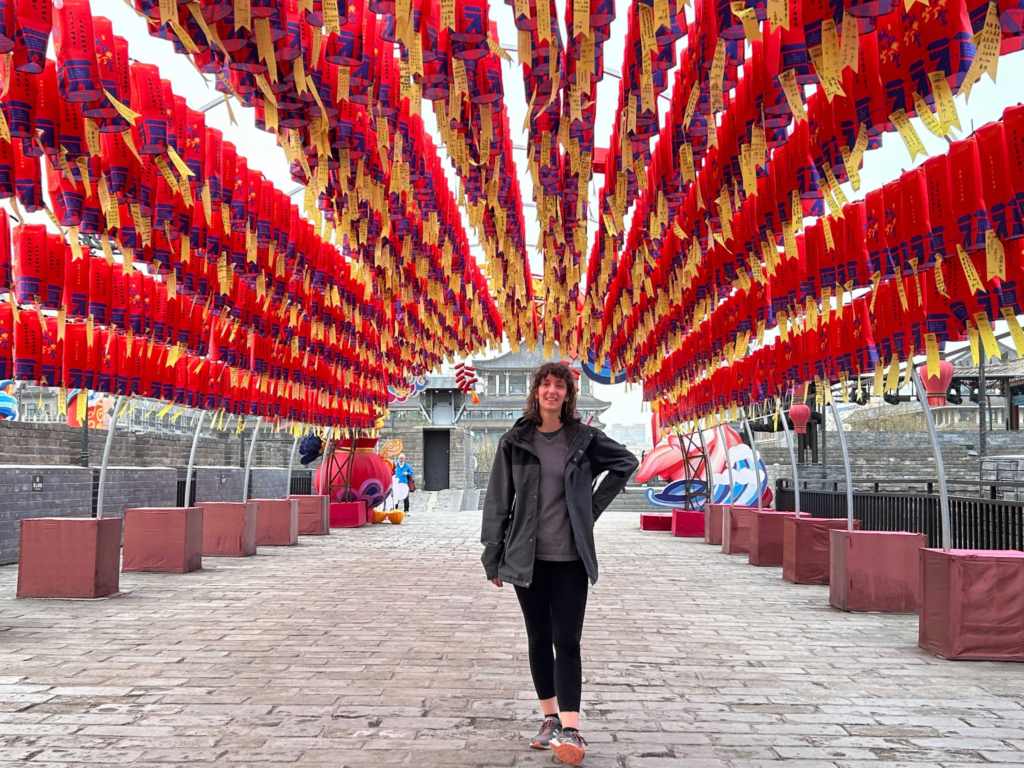
Then the next day I went on to Xi’an. This is a much bigger city, though it also has a preserved wall. There I saw the Wild Goose Pagoda, which is huge. And there’s also the Bell Tower and the Drum Tower, which I think were used to tell people the time of day.
ROY: Like a cathedral’s bells?
REBE: Yeah, the Bell Tower marked the dawn and the Drum Tower the sunset. But, anyway, Xi’an is most famous for the Terracotta Army.
ROY: Oh right! Is that inside the city?
REBE: No, but it’s close. I just took a taxi to get there.
ROY: Aren’t they in a mountain or something?
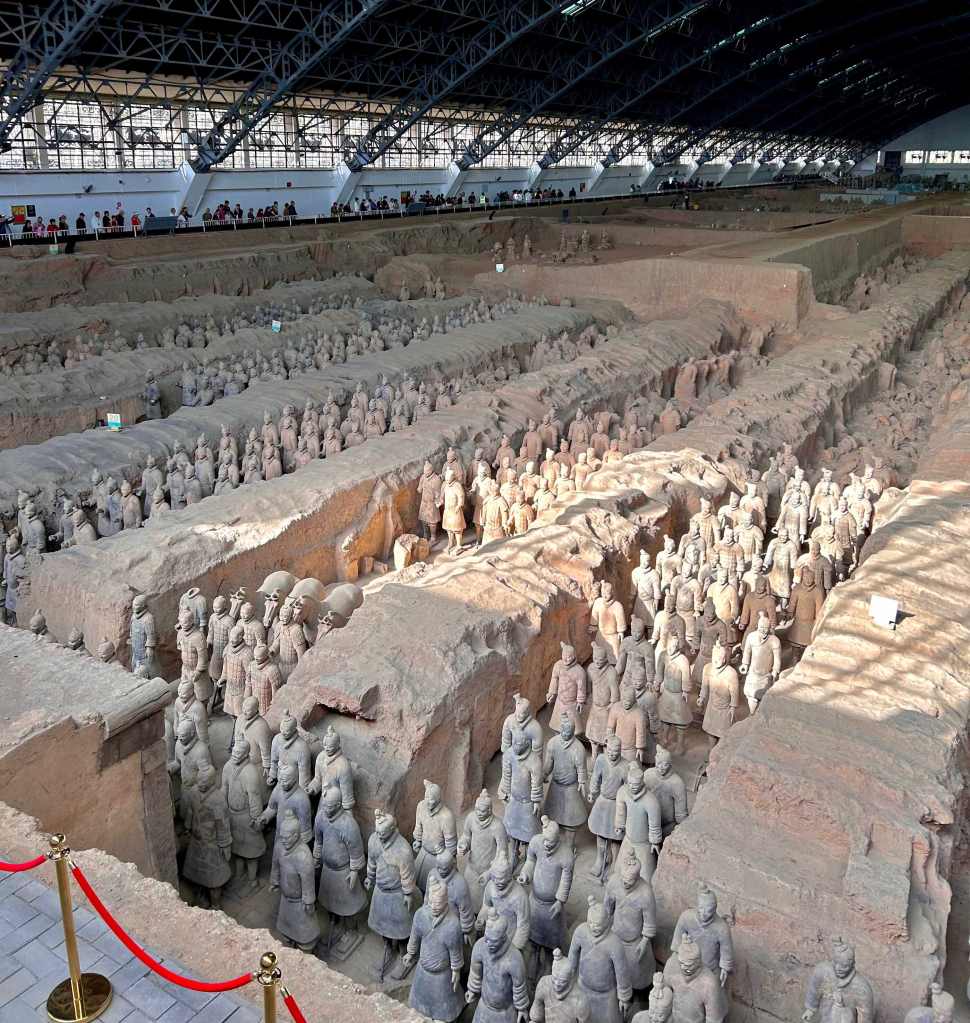
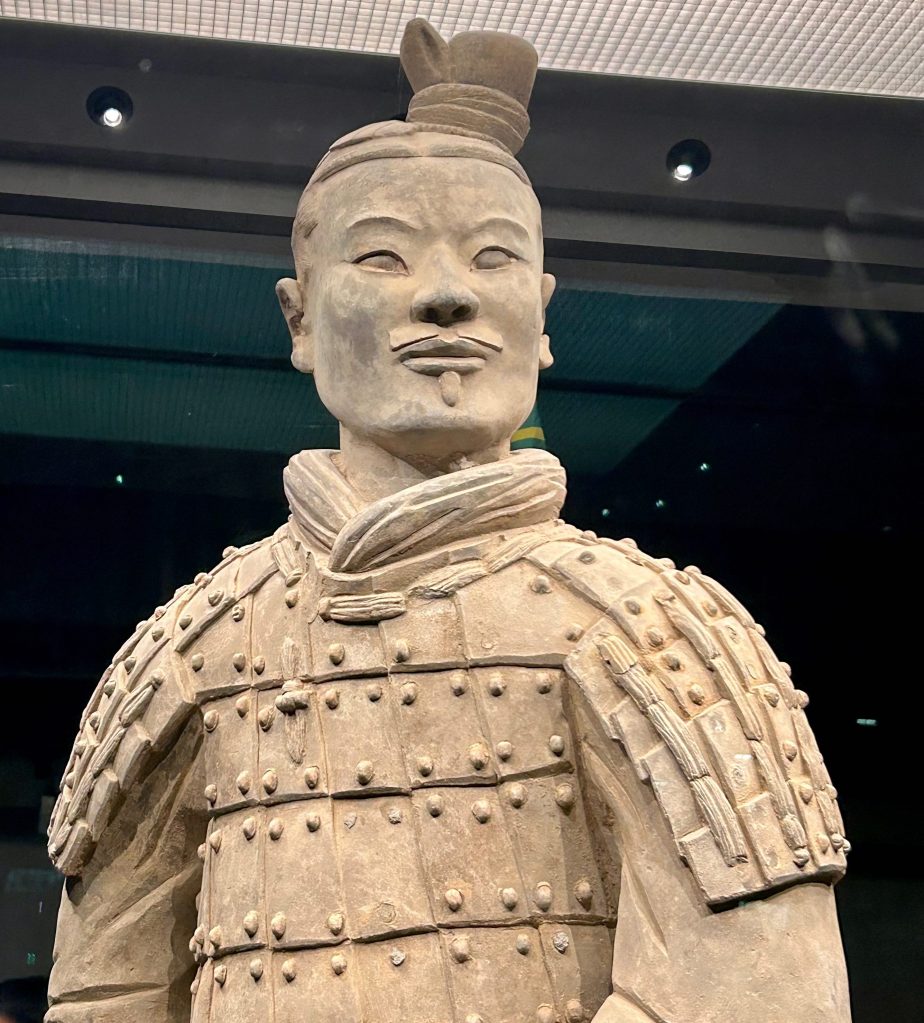
REBE: No, there’s a hill where I think the emperor is buried. But the army is in like an open pit, which has a huge roof built over it. There are three pits, and the second one is the largest. It’s very impressive to see it. There are so many soldiers—thousands. One interesting thing is that they were originally painted. Once they got exposed to the atmosphere, the paint started to fade and peel off in a matter of minutes. When I visited, there were some researchers down in one of the pits, working.
ROY: So that was it for Xi’an?
REBE: Uh, there is a Muslim Quarter in Xi’an where you can visit different mosques and eat amazing food. I also tried biangbiang noodles, which are thick and really good. Fun fact: the Chinese character for these noodles is one of the most difficult and complicated.
ROY: Weird.
REBE: My next stop, and my last destination, was Chengdu. This is the capital of Sichuan. It’s most famous for the giant panda reserve and the plentiful hot pot restaurants.
ROY: You saw pandas?
REBE: I didn’t really have time. There was other stuff I wanted to see.
ROY: So what did you do?
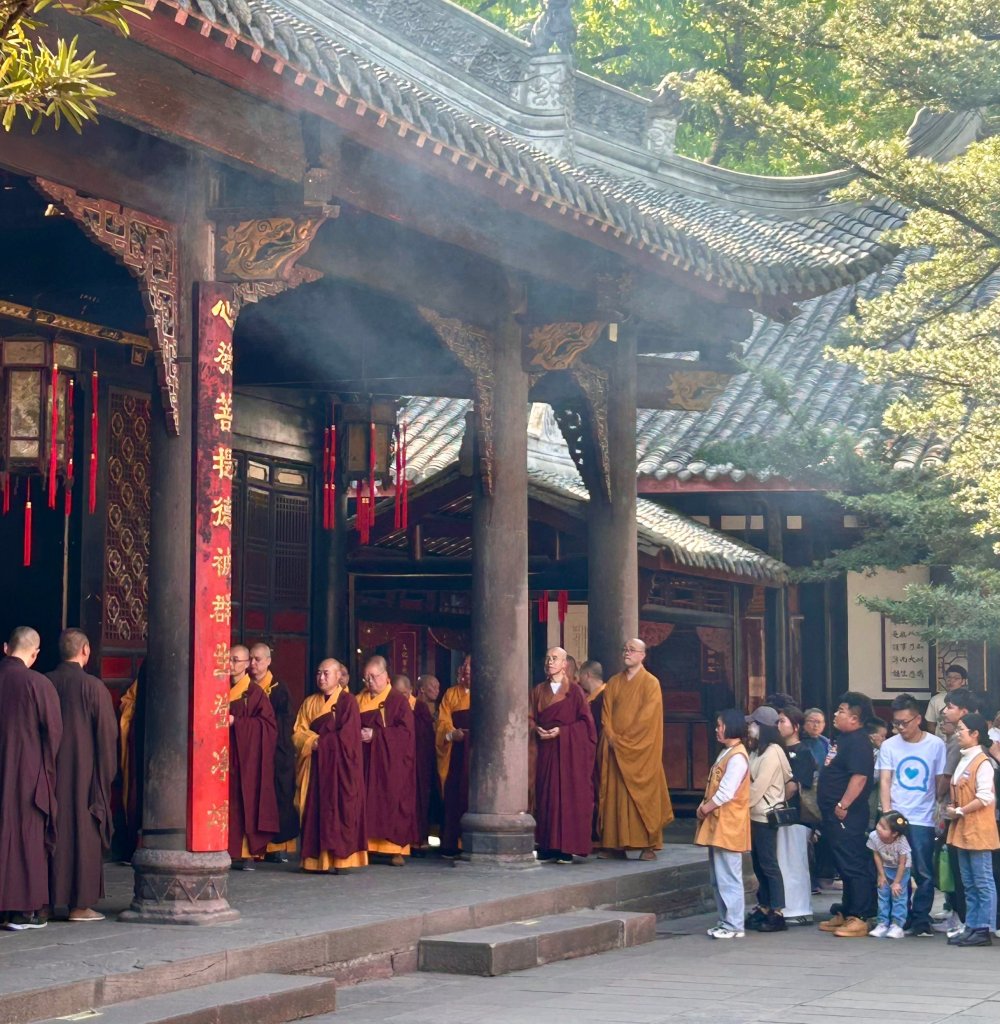
REBE: I went to the house of Du Fu, one of the most famous Chinese poets. It’s kind of outside the city center. The house is small, and I think it’s been reconstructed. But it was nice seeing the old, traditional space. I passed through People’s Park, where I saw professional ear cleaners working. And I also visited the Wuhou Temple, where I saw Buddhist monks singing. It reminded me a lot of Catholic monks, actually.
ROY: Different religions, the same rituals.
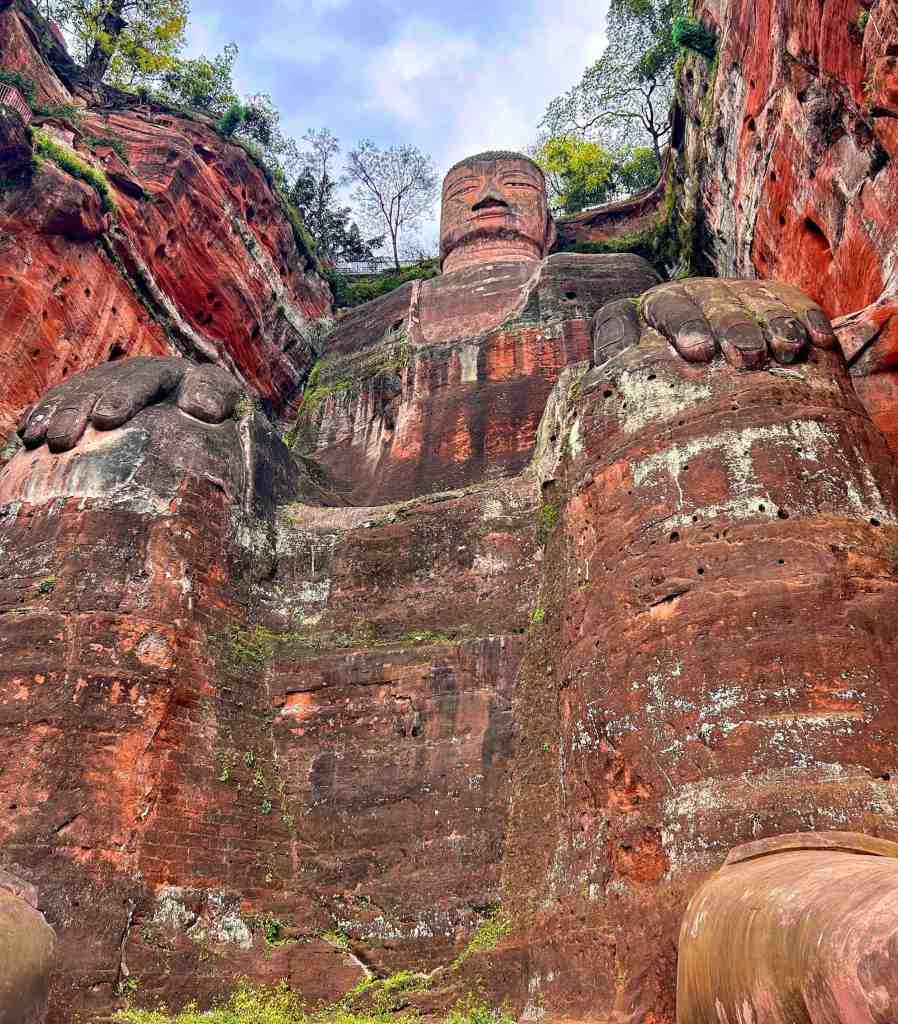
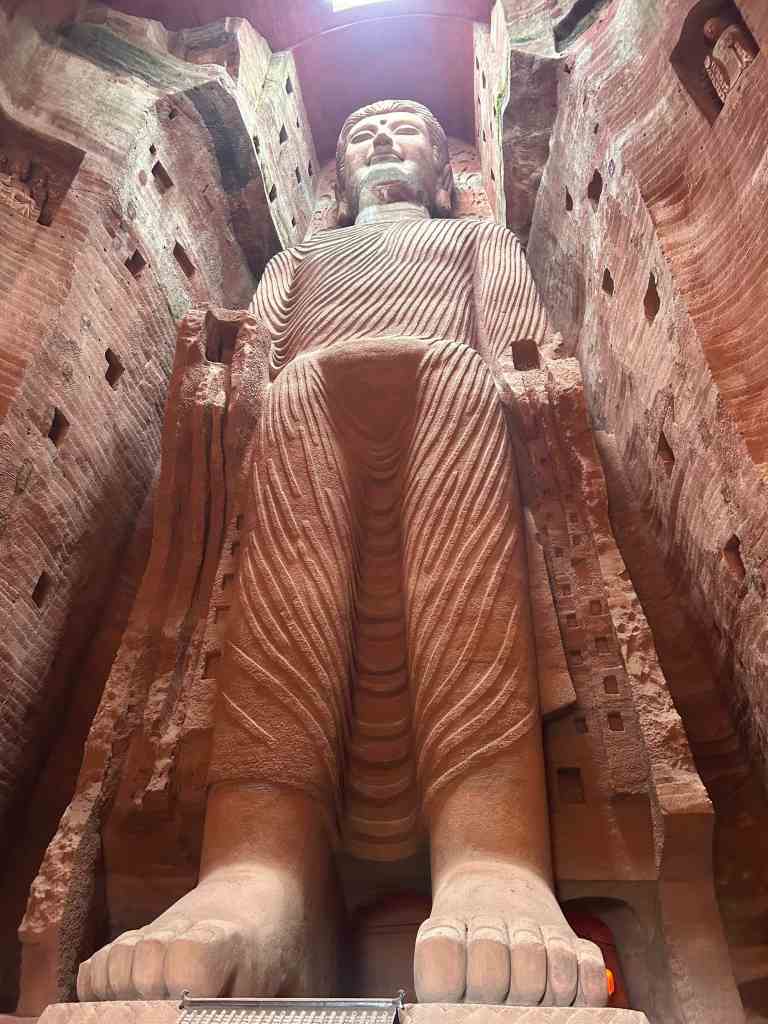
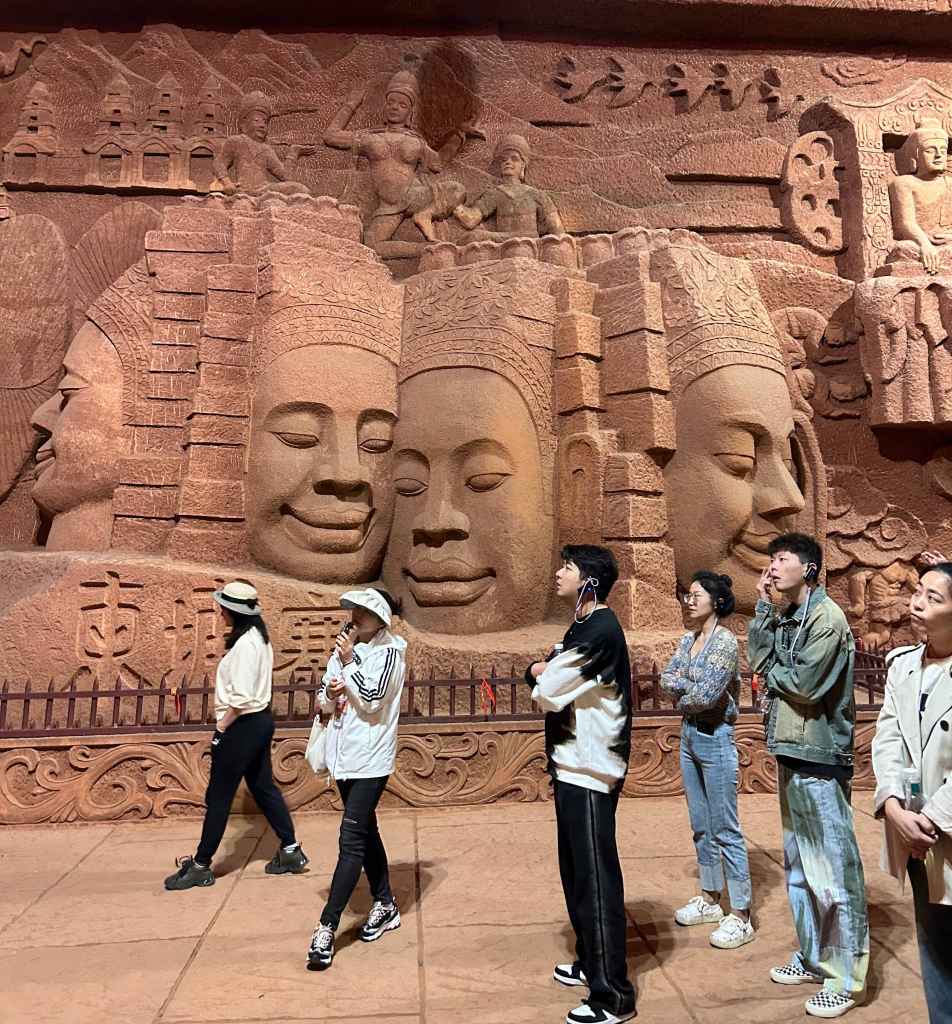
REBE: The best thing, by far, was the Leshan Giant Buddha. This was carved into a cliffside over a thousand years ago, and it’s absolutely gigantic. You can’t even really take a good picture when you’re standing under it, because it’s just so tall. Also, the Buddha is in an area full of stone statues of the Buddha, and many of these are really big as well. It’s just very impressive.
ROY: That’s in the city?
REBE: No, you take a train to get to Leshan, which is about an hour. And then you have to take a bus.
ROY: Ok, so then you flew back to Spain—with two stopovers, I remember. But I wanted to ask: What are your final thoughts on the trip?
REBE: Well, I saw lots of amazing things. And I even met a few locals, since some younger people are eager to talk to foreigners and practice their English. But the thing I liked most about the trip was the sensation of being so far away, in a place that is so different. Unlike visiting some touristy places in Europe, it didn’t feel like the places were made for visitors. So navigating the country felt like an adventure.

 Lotz in Translation