Historic Hudson Homes: Springwood & Vanderbilt Mansion

Historic Hudson Homes: Springwood & Vanderbilt Mansion

This is part of a series on Historic Hudson Homes. For the other posts, see below:


Of the many famous names associated with the Hudson Valley—John D. Rockefeller, Alexander Hamilton, Washington Irving, just to name a few—one name looms over them all: Franklin Delano Roosevelt. He needs no introduction. As president, he guided the nation through two existential threats; and he did much of his work from the home where he was born, overlooking the Hudson River.

The young cousin of the great Teddy Roosevelt—whose own stately home Long Island, Sagamore Hill, has also been turned into a monument—Franklin was from a wealthy family. His father, James, had a degree in law but chose to stop practicing, having received an ample inheritance. It was James who purchased the property in 1866, which he dubbed “Springwood” (a fairly bland name, if you ask me). And it was here, on January 30th, 1882, that his son Franklin was born.

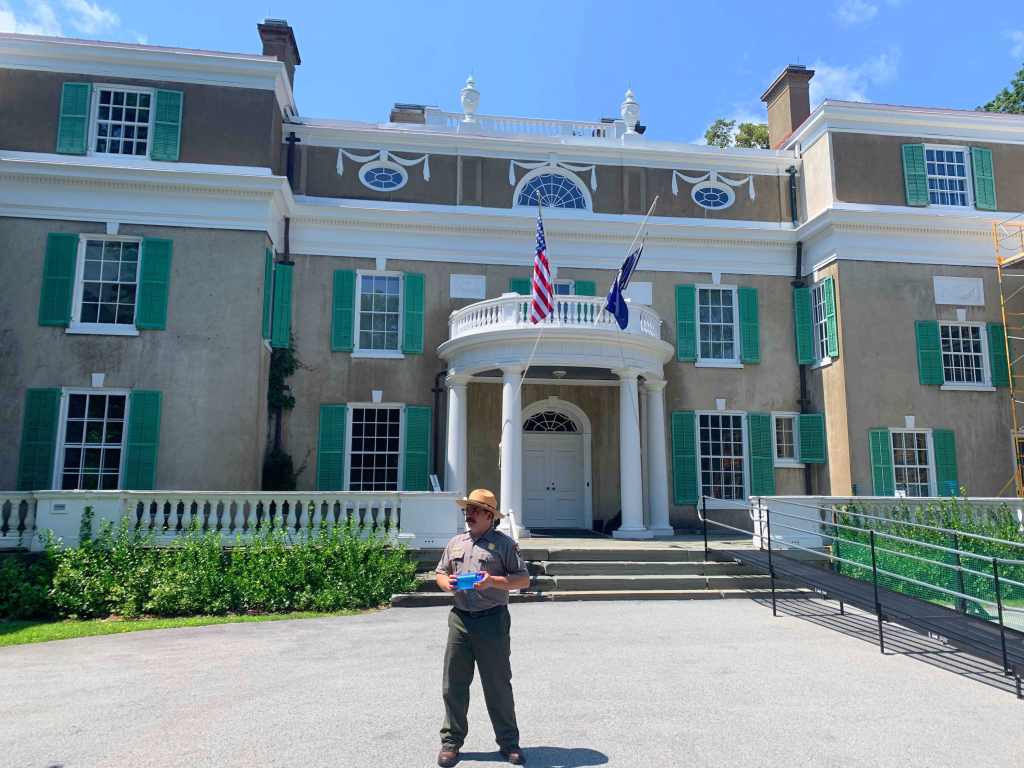
When Franklin himself inherited the house, in 1900, he set about expanding and improving the place. Children notwithstanding, the extra space was mainly to house his collections of books, prints, model ships, stuffed birds, and other paraphernalia. He was apparently something of a packrat. But the result of this remodeling is a beautiful neoclassical structure—grand, without being grandiose.
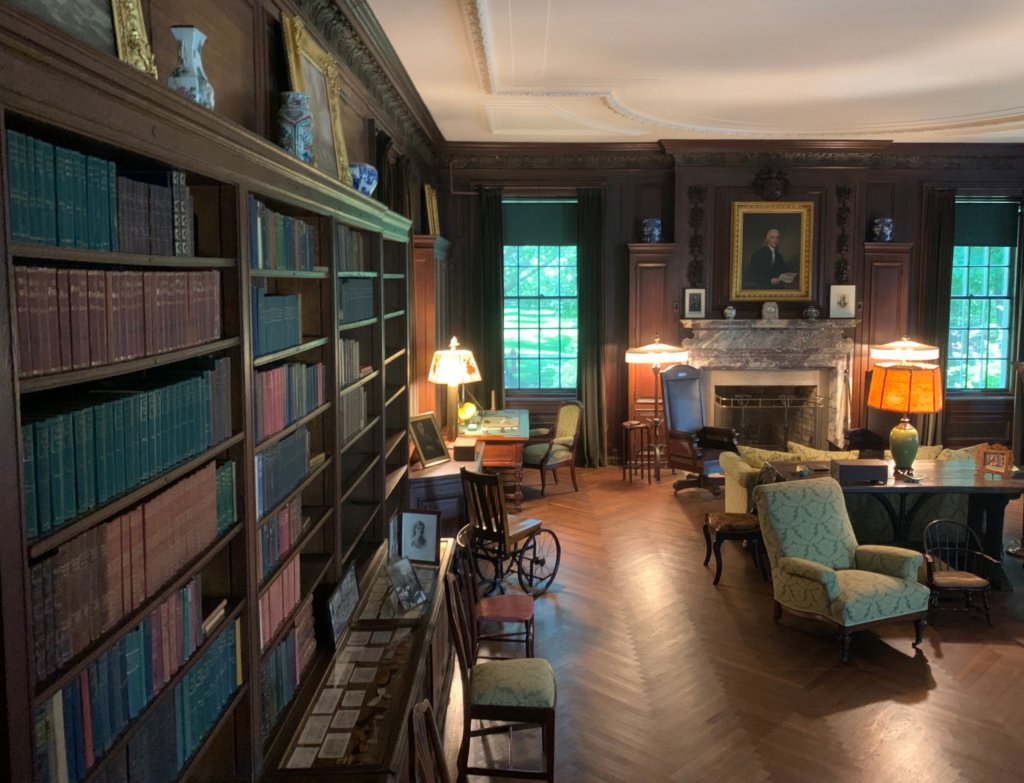
Having been donated to the government two years before his death, the furnishings of the house are perfectly preserved. Often these are just the sort of things one might expect to see in the house of a patrician: fine furniture, oil paintings, expensive pottery. But a few things stick out in my memory. The most impressive room in the house is Franklin’s library, a beautiful space with dark, polished oak bookshelves filled to the brim. Other rooms are surprising for their simplicity. The bedrooms are anything but luxurious; and the dining room, though elegant, hardly seems big enough for the entourage of the head of state.
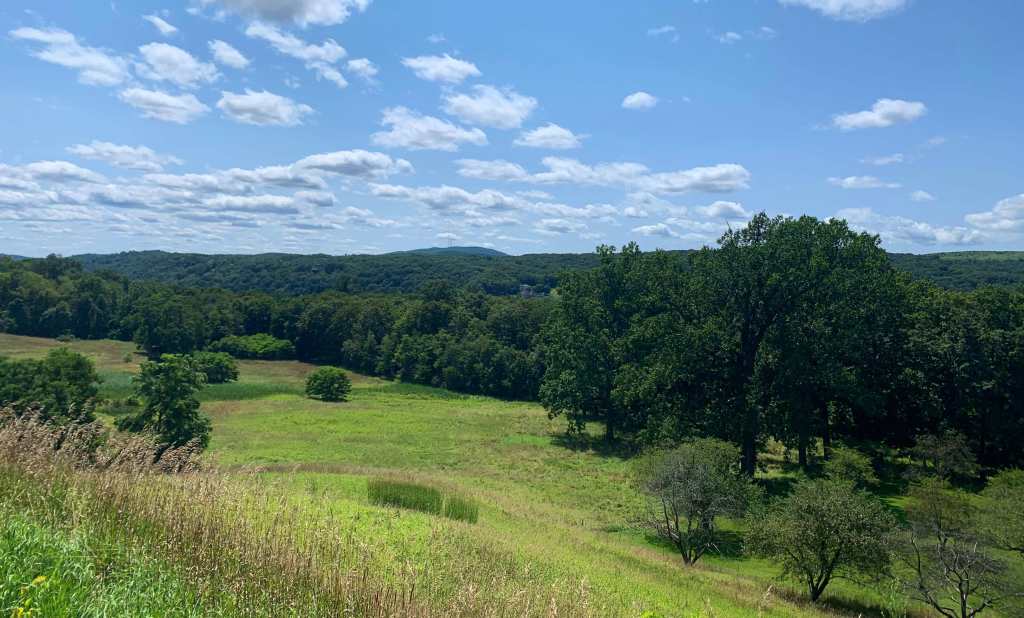
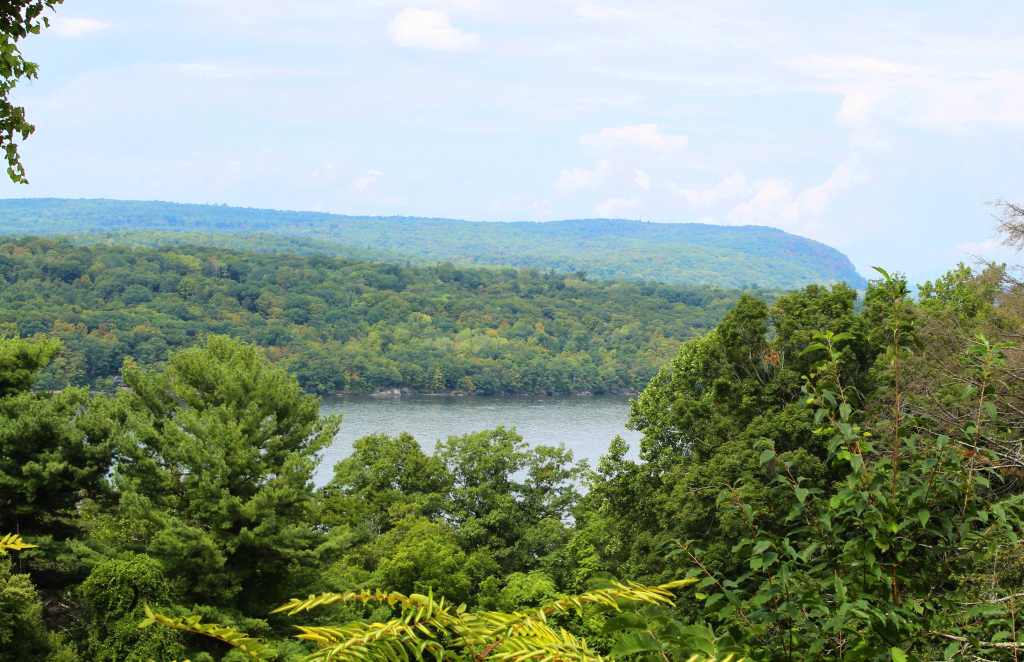
Undoubtedly the loveliest aspect of the house is its location. The view of the Hudson Valley from its upper floors could hardly be improved. It is no wonder that the young Franklin came to have a keen appreciation for natural scenery—doing more to expand America’s national parks than even his mustachioed cousin.
The tour of the house is relatively brief. After that, the visitor is free to explore the grounds. Nearby are the stables (Franklin’s father was an avid horse breeder), and I was amused to find a plaque for a horse named “New Deal.”
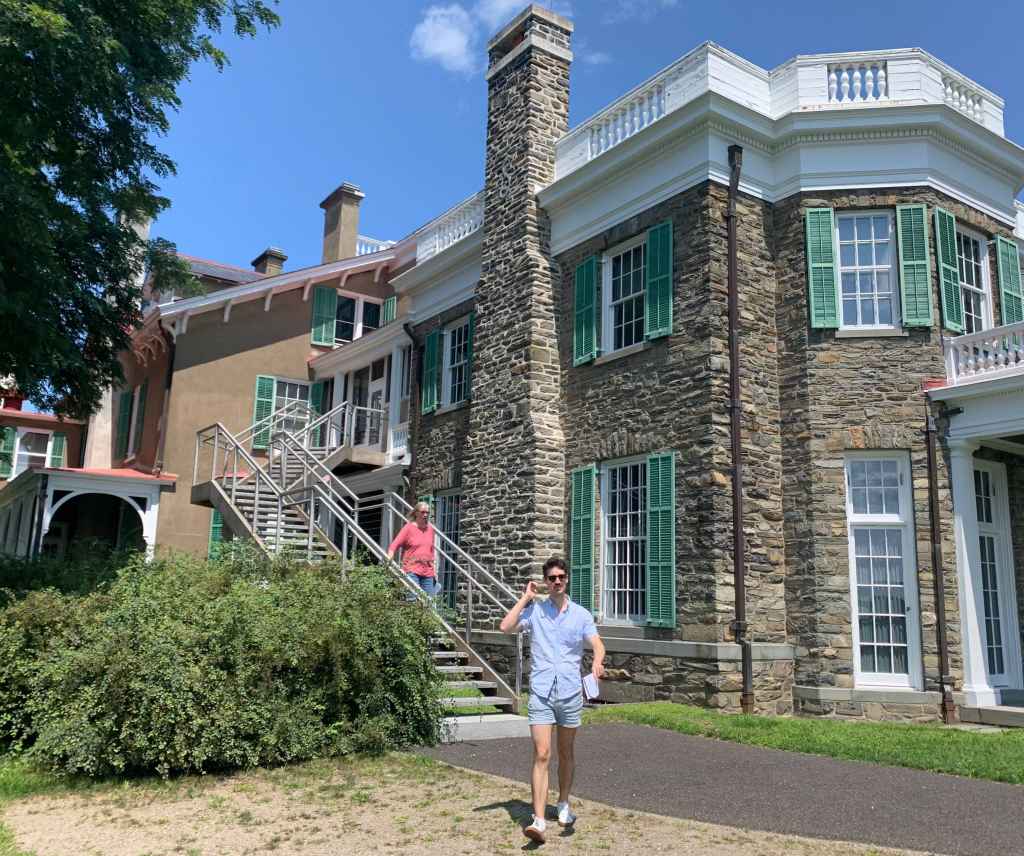
My mom and my brother, who was in his pandemic mustache phase

But the most moving spot on the entire property is Franklin’s tomb. As per his instructions, he is buried in his garden, where a sundial used to stand, encircled by roses. His tombstone is plain white marble, devoid of any decorations. The president died unexpectedly at the age of 63, of a brain hemorrhage, after being elected a record four times. His body was carried in a grand and somber procession to this place, as the shocked nation mourned his loss. 
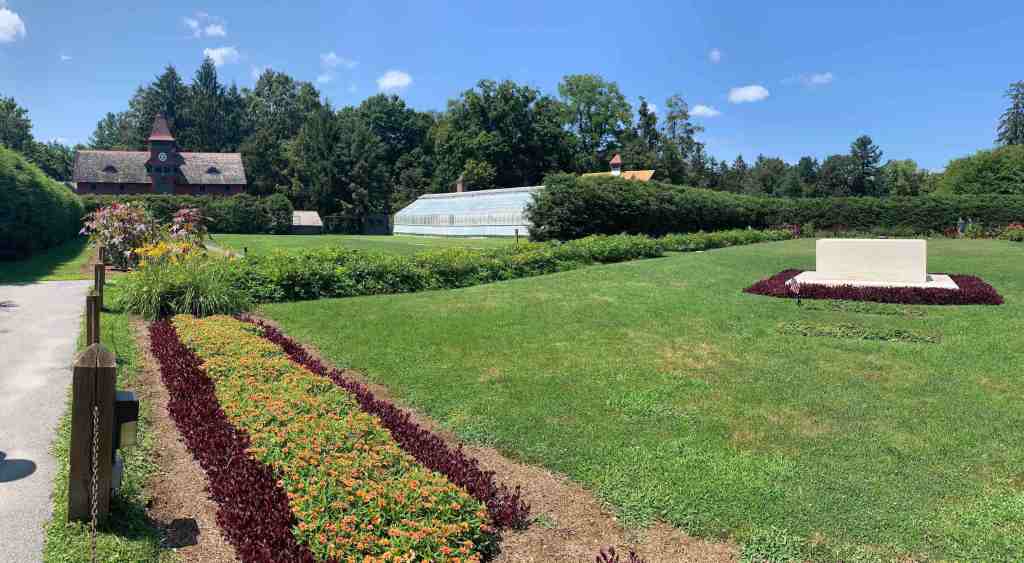
Interred with him is his wife, Eleanor, who died seventeen years later, in 1962. She was just as much a revolutionary as her husband, and transformed what it meant to be First Lady. If I had properly done my research, I would have gone to see her famous residence, Val-Kill, which is about two miles east of Springwood. Eleanor purchased this property along with two women’s rights activists, Nancy Cook and Marion Dickerman. There, they put into practice their idea of handicrafts (heavily influenced by the art critic John Ruskin), teaching locals to make pewter and furniture.

The site is perhaps more interesting for its LGBT history, as Cook and Marion were romantic partners, and Eleanor herself had a long relationship with the journalist Lorena Hickok. (FDR, for his part, had a prolonged affair with Lucy Mercer Rutherford, Eleanor’s social secretary. You can say that they had a modern marriage.)

Closeby is Top Cottage. Aside from Jefferson’s architectural wonders in Virginia, this is actually the only building designed by a sitting president. It is certainly not a showpiece. Indeed, the cottage was primarily designed to be more wheelchair accessible, after his bout with polio in 1921 left FDR’s legs paralyzed. Curiously, then, Val-Kill and Top Cottage reveal how two normally marginalized groups—the LGBT and the disabled communities—were connected to the center of power during one of the country’s most perilous periods.

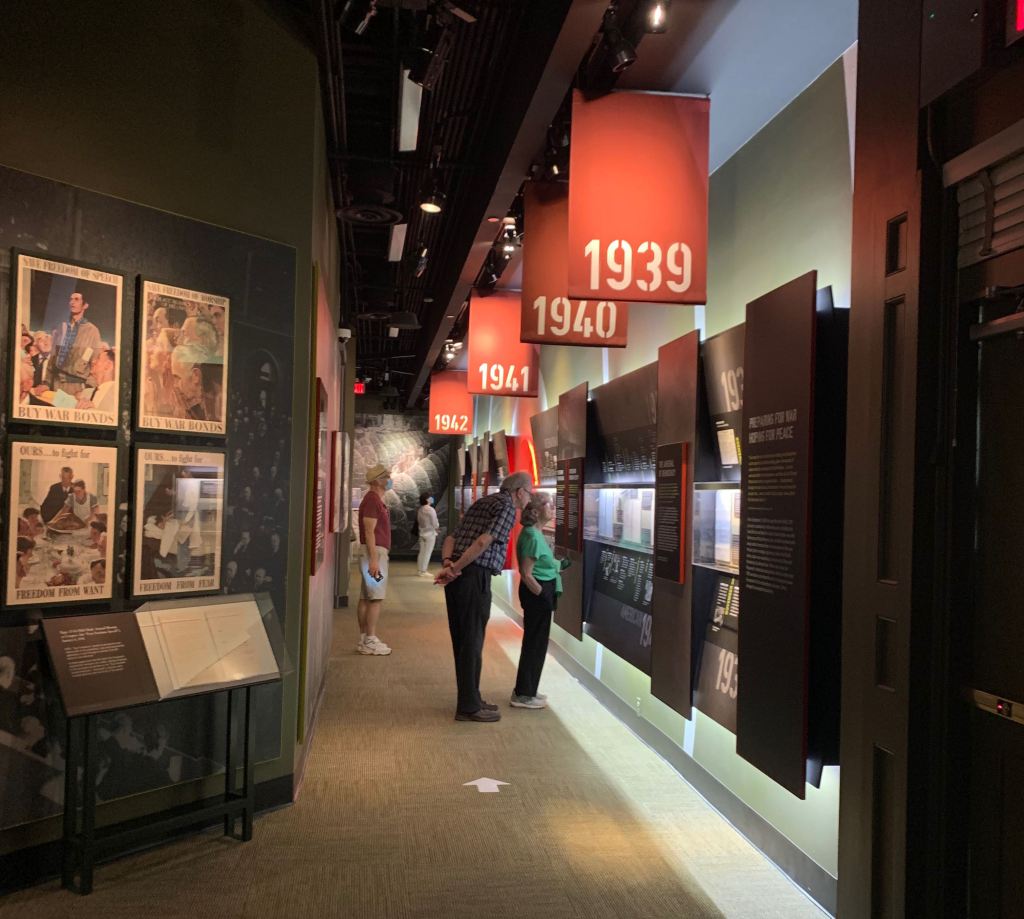
To get back to Springwood, however, no visit to the property is complete without the museum, located in the Henry A. Wallace Center. Now, normally I am not a fan of exhibits which consist mainly of long texts with historical photos. It always strikes me that the information would be better displayed in a book or magazine, rather than distributed throughout a building. Even so, I enjoyed the long biographical exposition of FDR’s life, and learned a great deal.
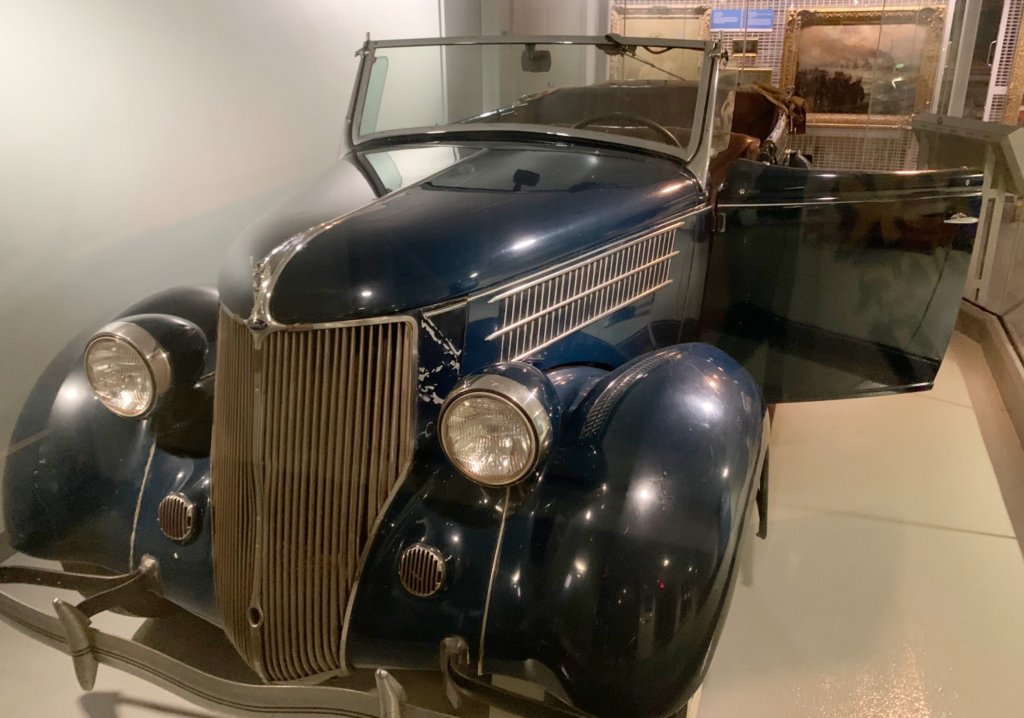
The visit culminates in the basement, with FDR’s iconic Ford Phaeton. It was modified to allow him to drive with his hands, and he keenly enjoyed driving. There is an excellent chapter in Winston Churchill’s memoirs of the Second World War, in which he describes a visit to Springwood, where he was terrified by Franklin’s tendency to race around the country lanes. But Churchill had nothing but praise for the hospitality he received in Hyde Park.
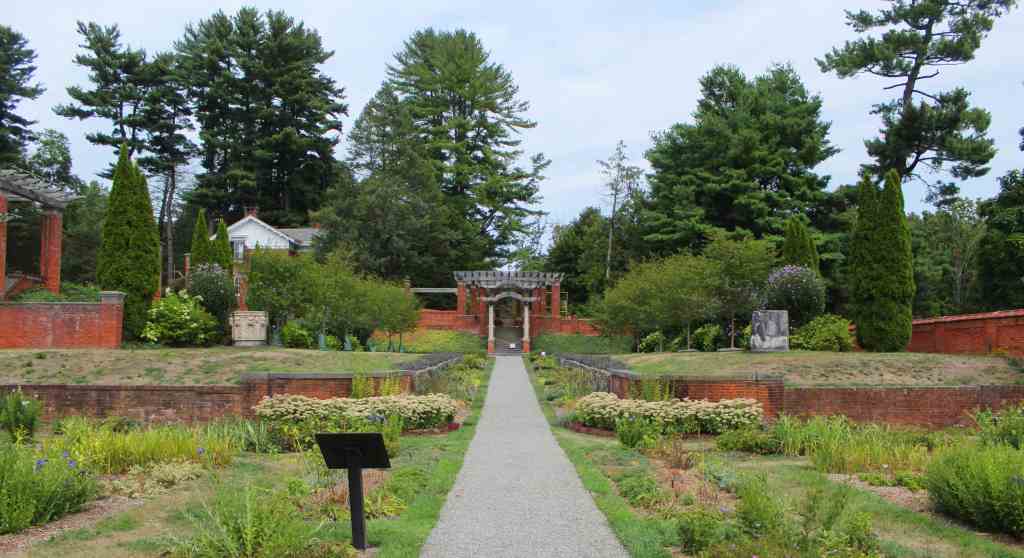
Now, a visit to the Franklin D. Roosevelt Historic Site would be more than enough to fill a day. But the visitor is spoiled by being able to also pay a visit to the Vanderbilt Mansion, which is located just up the Albany Post Road.

The name Vanderbilt is nearly as synonymous with old money as Rockefeller. The dynasty began with Cornelius Vanderbilt (1764 – 1877), who managed to transform his father’s modest ferry business into a railroad empire. Upon his death he bequeathed the vast majority of his riches to his oldest son, William Henry, often called “Billy.” Understandably, the other Vanderbilt descendents were not happy with this arrangement, and this led to a lengthy court battle—which Billy eventually won, thereby becoming the richest man in America.

Billy was a careful guardian of his father’s empire. Though he survived his father by just nine short years, he managed to double the family’s wealth during that time. But he did not decide to imitate his father in leaving all of his wealth to his oldest son. Rather, he split his money between his eight children. While admirably equitable, this fairly well ended the Vanderbilt Empire, as his children proceeded to squander the family fortune, leaving very little for the next generation.

As a case in point, while Cornelius and Billy lived in (comparatively) modest circumstances, the grandchildren built a series of mansions across the United States. All told, they left 40 elaborate dwellings, many of which have become monuments. Among the best-known are Marble House, Rough Point, and The Breakers, all in Newport, Rhode Island. And the most famous of them all: Biltmore Estate, still the largest privately-owned residence in the United States, in Asheville, North Carolina.

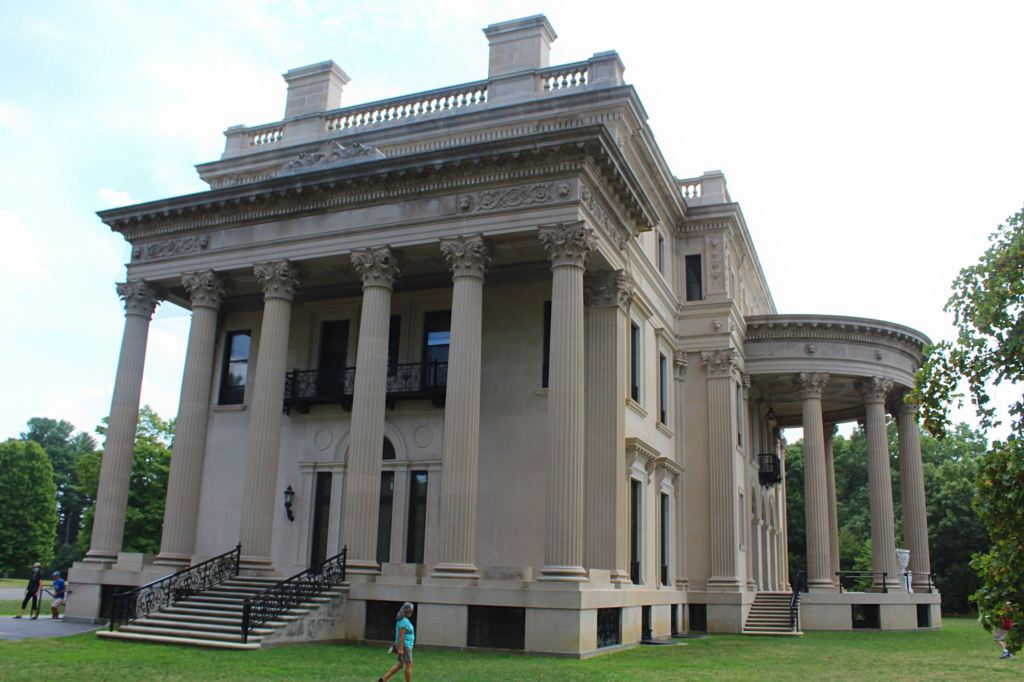
The Vanderbilt Mansion in Hyde Park belonged to Frederick William Vanderbilt. Of all of the grandchildren, he was perhaps the most reserved and upright. The ostentatious mansion notwithstanding, he managed to preserve his inheritance and lived free of scandal, quietly devoted to his wife Louise.
But there is nothing quiet about this house. It is palatial, making the Roosevelts’ Springwood look puny by comparison. Every room is decorated to the highest standards of Gilded Age taste—the American nouveau riche imitating European aristocrats. As far as furnishings go, it is a convincing copy: a photo of the interior could easily pass for the house of an English country squire.
My clearest memory of the tour was the guide’s description of their daily routine. It was leisure elevated into a formal art, with rigid rules. Men and women both had different attires for different times of the day—for some light outdoor sport, then for cocktails, then for dinner—and each hour came with its specific sort of alcohol. I imagine mustachioed men in tuxedos, drinking copious quantities of port wine and filling the room with cigar smoke, while their wives sat on the divan in the next room, sipping sherry in elegant ball gowns. It was the transmutation of alcoholism into sophistication. 
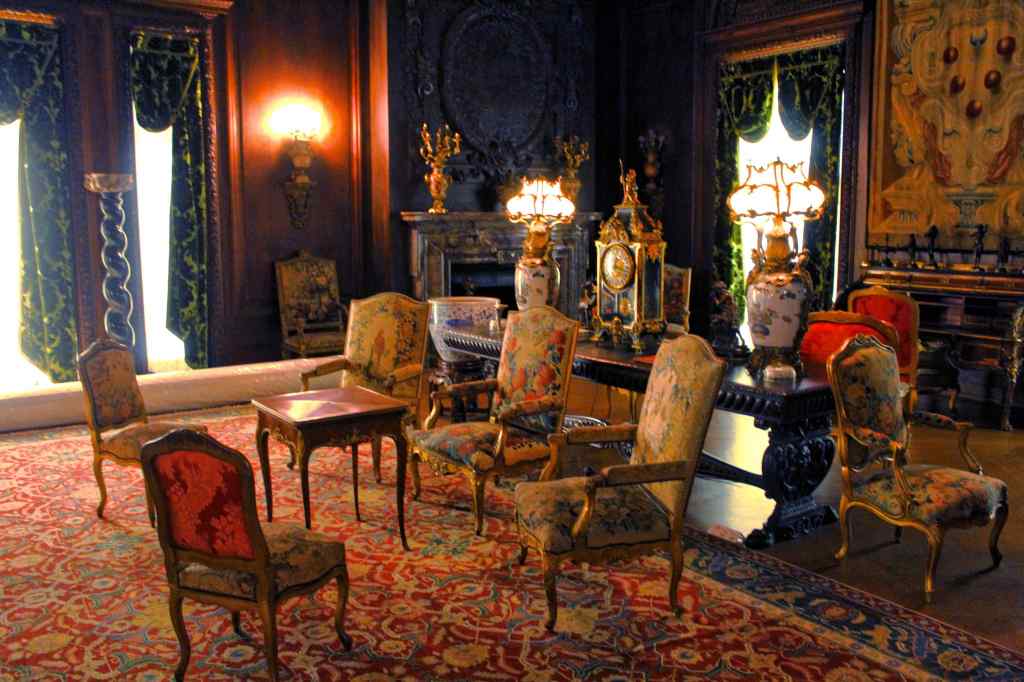
The tour ended in the servants quarters in the basement—shockingly bare and utilitarian compared with the extravagant luxury in the house above. It was a stark reminder of the huge staff whose (poorly remunerated) work was necessary to make a life like this possible.

When Frederick Vanderbilt died in 1938—having survived his wife by twelve years, and never having had children—he bequeathed his estate to his niece, Margaret. Yet by this time, the huge Gilded Age mansion was a relic from another age; and his niece understandably had little interest either in living on the property or in paying for the upkeep. Her neighbor Franklin thus easily persuaded Margaret to donate the mansion and its property to the United States government (for the token sum of $1) to be turned into a national monument. In fact, FDR occasionally used the property to house his secret service and some visiting guests.

At the end of the tour, we asked the guide (who was excellent) where we could get a local bite to eat. He recommended the nearby Eveready Diner. And as I took a bite of my hamburger, I reflected that I’d just had a wonderful—and a wonderfully American—day in the Hudson Valley.
Interview: A Trip to China

Interview: A Trip to China

Throughout most of our relationship, I have been the traveller—visiting as many corners of Europe as time and money allowed. But recently Rebe has started surpassing me, most notably by taking a 10-day trip—by herself!—to the heart of China. This is an interview about her trip, edited for clarity. All photo credits also belong to her: Rebeca López.


ROY: To begin with, why China? Of all the countries in Asia, it’s not the trendiest place to visit. Most people I know want to go to Japan or Thailand. 

REBE: Well, I got interested in learning Chinese because my childhood best friend was my chinese neighbor. Also, Chinese is just such an important language. I’ve heard that, if you can speak Chinese, Spanish, and English, you can talk with almost anyone on earth. So I started taking Chinese classes some years ago, though I still have a low level. Also, to be honest, I’ve always liked the food…

ROY: What did you have to do to prepare for your trip? Anything unusual?

REBE: It’s recommended, for some reason, to get vaccinated against Hepatitis, so I did that. Normally I would’ve needed a visa, but China has a special, temporary visa promotion for citizens of some European countries to encourag tourism, so I didn’t have to do anything special. This offer is valid until the end of 2025.

ROY: I’ve heard that using the internet in China is difficult, since they have a lot of restrictions.

REBE: Yeah, so it’s recommended to get a VPN on your phone, which allows you to get around the firewall. Even so, certain applications like Google Maps didn’t really work. Instead, I used an app called Maps.me to get around. Also, most Chinese people use WeChat as their main messaging app, but with the VPN I was able to use Whatsapp as usual. But I did use WeChat to pay for things, since I couldn’t pay directly with my Spanish bank card. Alipay is also really common.

ROY: So, what was the flight like?

REBE: Actually, it wasn’t bad. I was on the plane for 11 hours but somehow it was comfortable. I slept a lot.

ROY: What was your first stop?

REBE: I began in Beijing. I was supposed to be there for 3 days, but my original flight was overbooked and I arrived a day early.

ROY: I know that Beijing is one of the biggest cities in the world. Did it feel massive and overcrowded?

REBE: Not really. Even though there are tons of people, it doesn’t feel overwhelming due to the wide extent of the city. The metro was quite good and it was easy to get around. One thing that was weird, though, was that there were passport checks on every street corner. The police were stationed there checking everyone’s documentation, even Chinese people.

ROY: So what’d you do there?

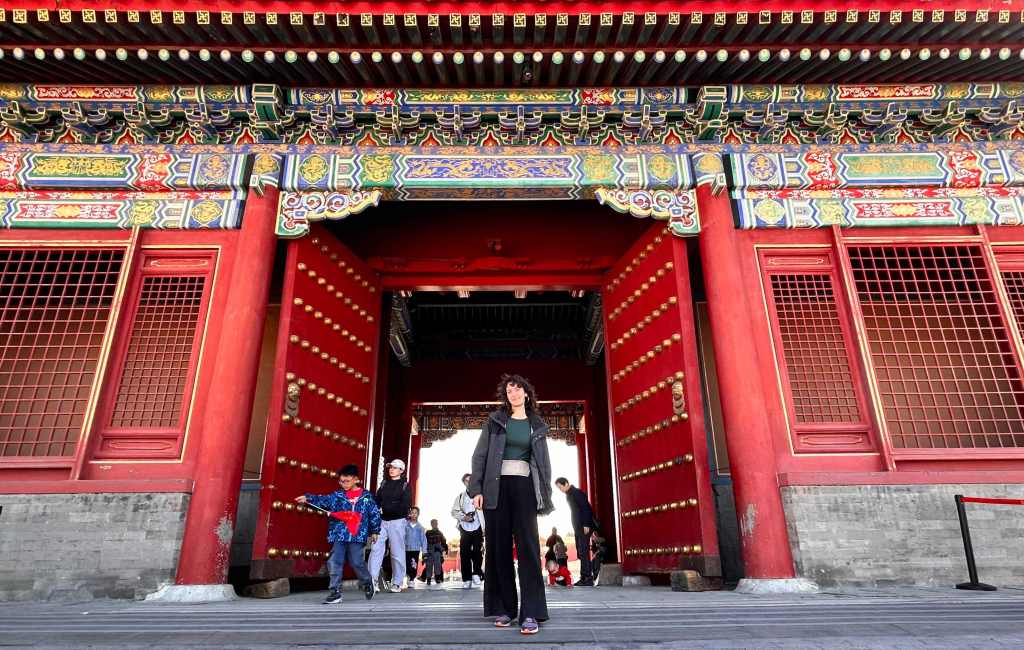
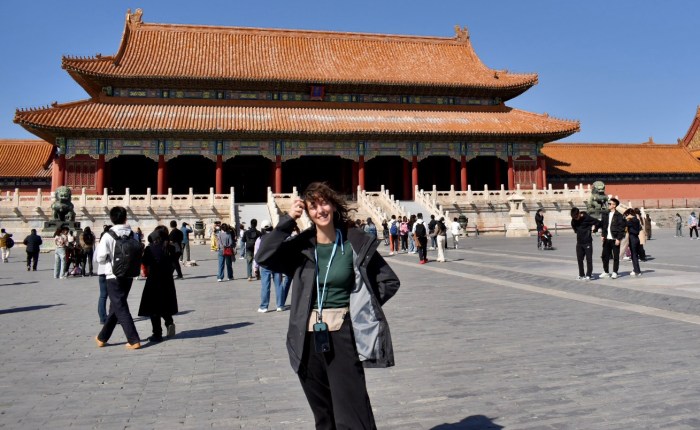
REBE: The first thing I did was to visit the Forbidden City. It’s really massive. I read online that it has 9,999 rooms. All the buildings are made of wood and it’s really beautiful. There is an exhibition hall called Hall of Clocks and Watches with an impressive collection of luxurious clocks from the Qing Dynasty.  Near the Forbidden City there is the Jingshan Park,  from which you get astounding views of the palace complex. You can make stops on the way up to admire the many different pavilions that crowd the park.

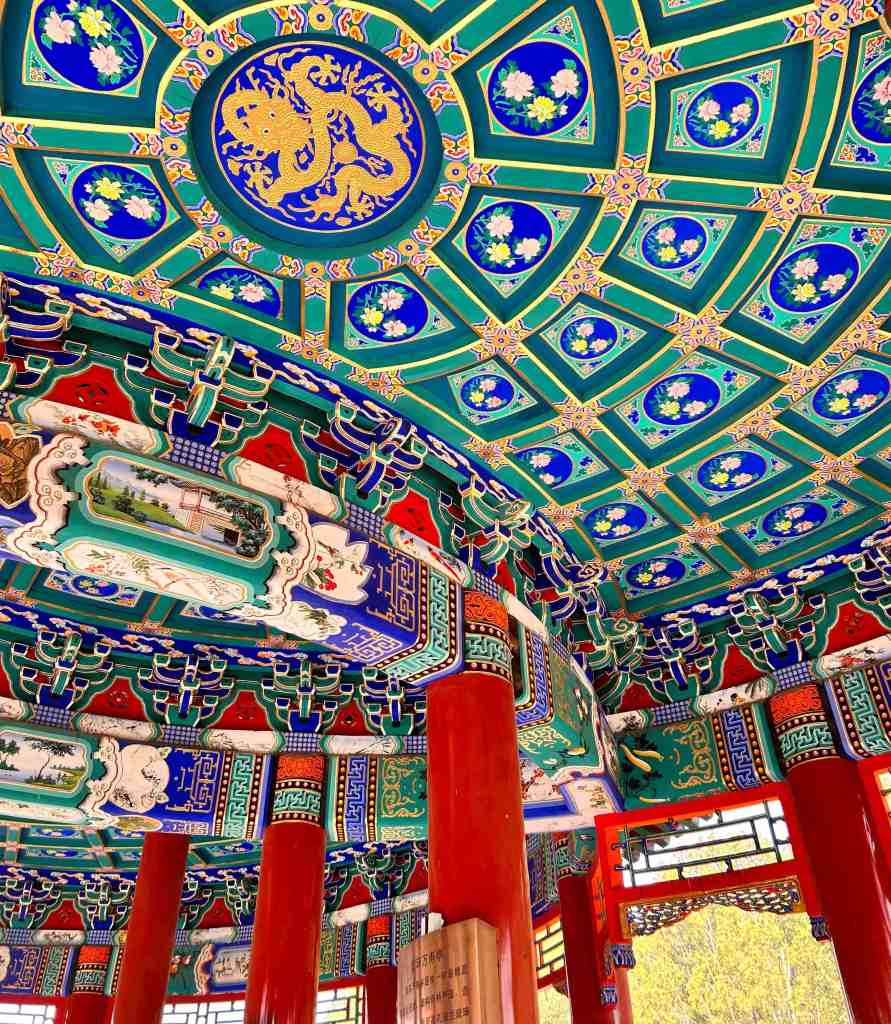
The next day I visited the Temple of Heaven, built during the Ming dynasty, which is also huge. The largest building of this complex, and the most famous one, is called The Hall of Prayer for Good Harvests. It’s 38 meters tall and it’s entirely made of wood, with no nails. This was probably my favorite monument in the city. Next to the Temple of Heaven I strolled around Tian-Tan park where I saw other pavilions, such as the double-loop Longevity Pavilion. In this park it’s very common to see locals in singing groups, dance lessons or playing a popular chinese game called Jianzi, a sport like badminton that you play with your feet.

Later that day I strolled through Qianmen, a famous 570 year old shopping street. But what I really enjoyed were the Hutongs in the adjacent streets. Hutongs are historical, small grey buildings in narrow streets where people used to live in the past.

The last stop of the day was Beihai Park, with its famous White Pagoda. 

ROY: Was that it for Beijing?

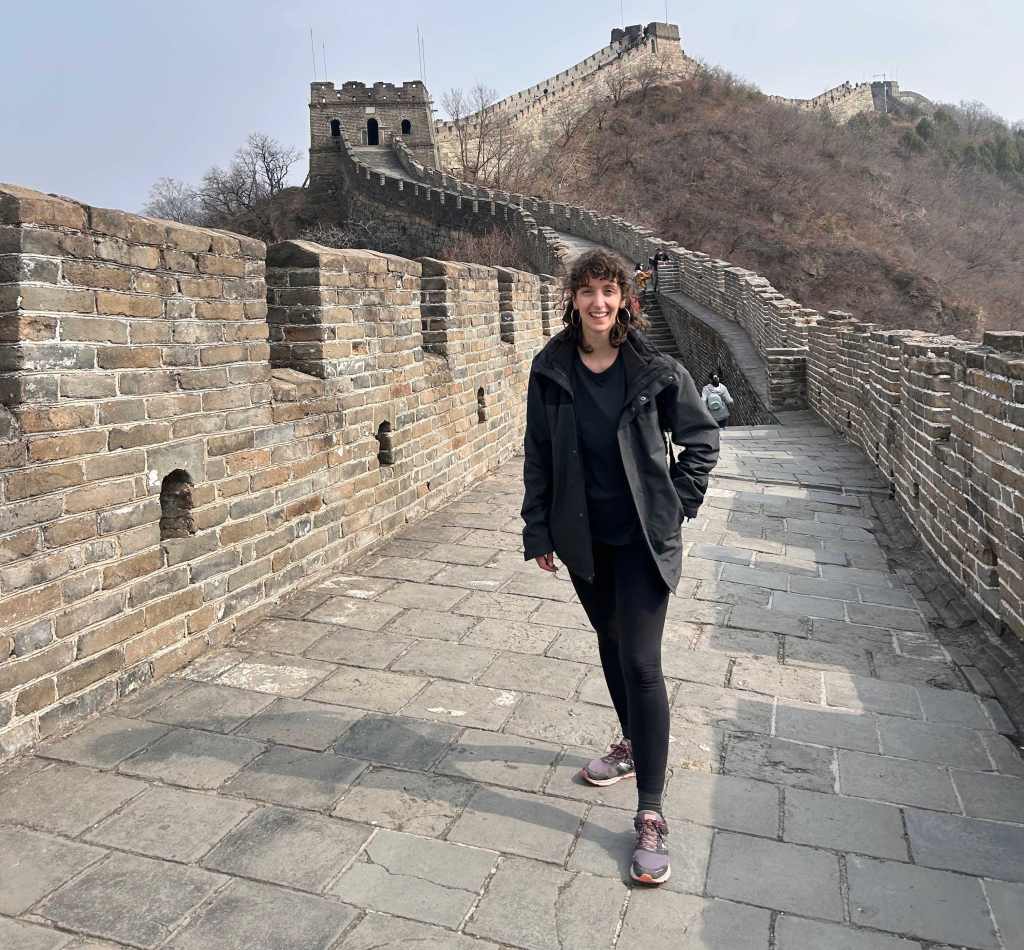
REBE: Well, I took a day to go visit the Great Wall. I tried to go to a part of the wall that was less touristy, but it was kind of hard to get to. I was supposed to take a bus, to another bus, and then to a shuttle bus, but I got off at the wrong stop on the first bus and ended up taking a taxi. Taxis in China are pretty cheap.

ROY: What was it like seeing the wall?

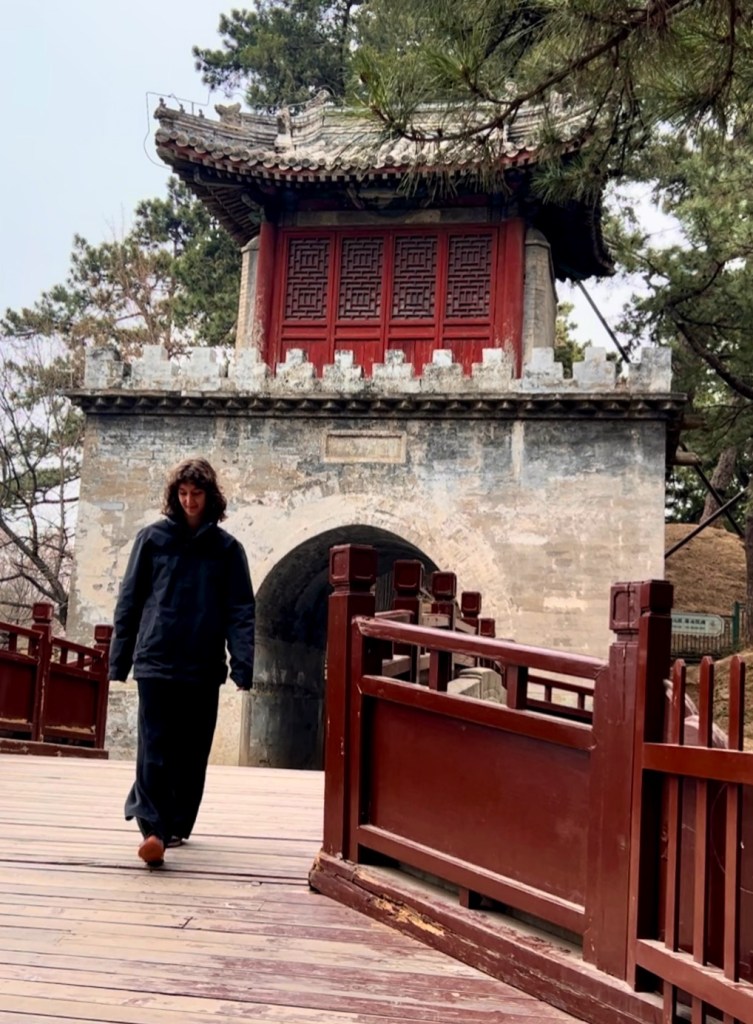
REBE: It’s weird, because it’s something you’ve seen in photos so many times, and then you see it for real. It’s a lot of stairs, a lot of going up and down. It was overcast and probably a bit too early in the year to get the best views. The trees were still bare. But of course it was great to see it. 

ROY: Did you visit Tiananmen Square?

REBE: Actually I didn’t have time. I was so jet-lagged during the first few days that I fell asleep at like 6 in the afternoon. It was brutal.

ROY: So what did you do after Beijing?

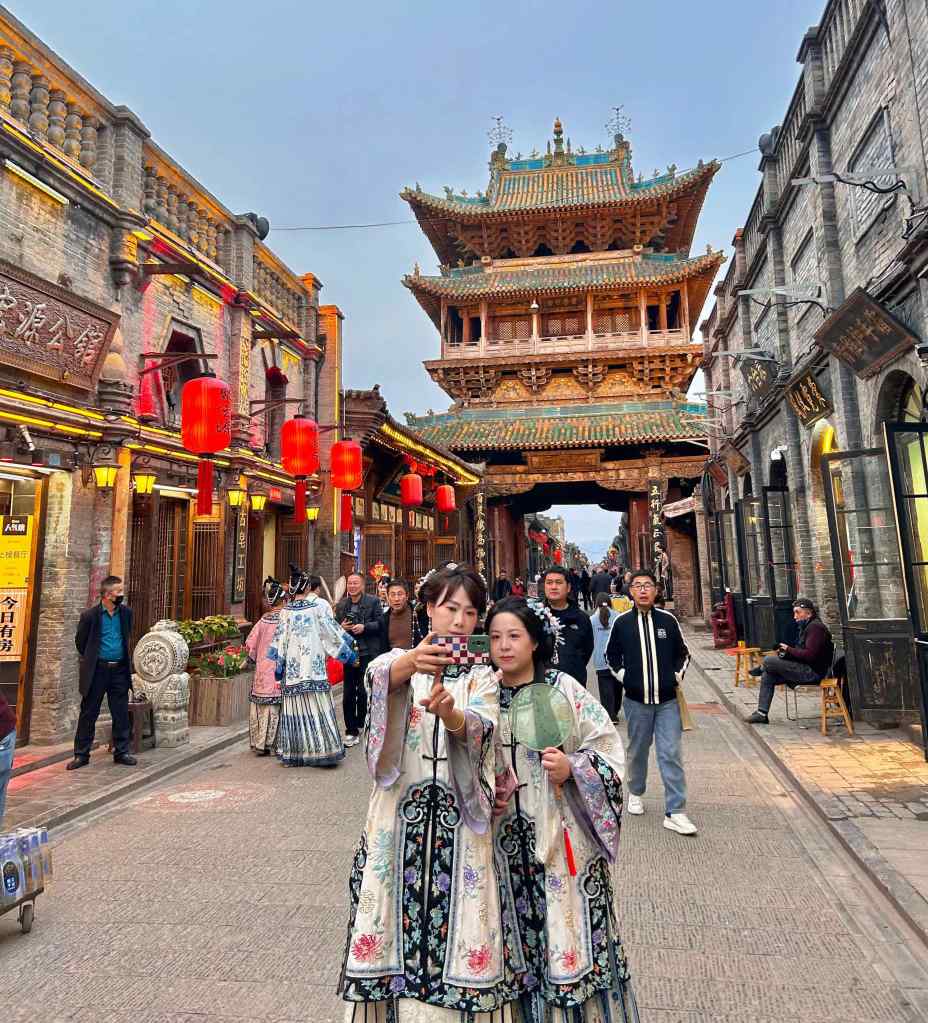
REBE: My next stop was Pingyao. For a Chinese city, it’s actually pretty small, just a few thousand people. But it’s famous for being a well-preserved medieval city. The first bank of China was actually located in Pingyao. It’s surrounded by old walls and the streets look like they did hundreds of years ago. The main thing to do is to visit all the temples. There are Confucian, Taoist, and Buddhist temples. But I didn’t see many because they close by 5 o’clock.

ROY: How long were you there?

REBE: Just a day. That night, I actually slept on a kang, which is a traditional kind of wooden bed. 

ROY: Was it comfortable?

REBE: Actually, yes, more than what it sounds like.

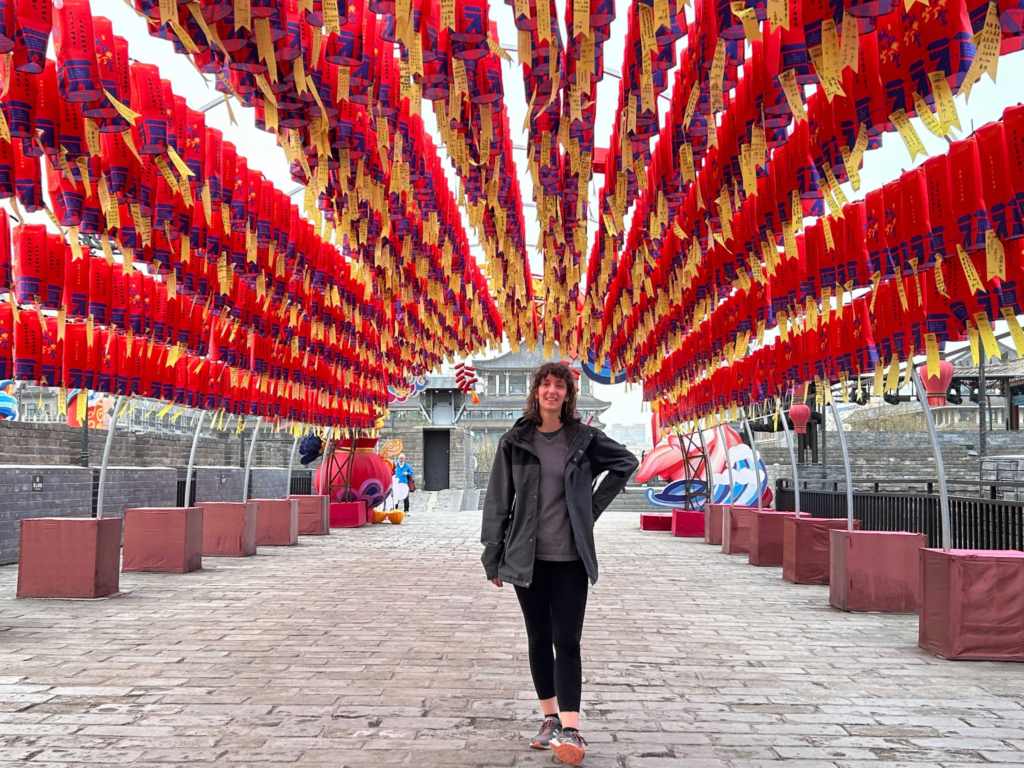
Then the next day I went on to Xi’an. This is a much bigger city, though it also has a preserved wall. There I saw the Wild Goose Pagoda, which is huge. And there’s also the Bell Tower and the Drum Tower, which I think were used to tell people the time of day.

ROY: Like a cathedral’s bells?

REBE: Yeah, the Bell Tower marked the dawn and the Drum Tower the sunset. But, anyway, Xi’an is most famous for the Terracotta Army.

ROY: Oh right! Is that inside the city?

REBE: No, but it’s close. I just took a taxi to get there.

ROY: Aren’t they in a mountain or something?

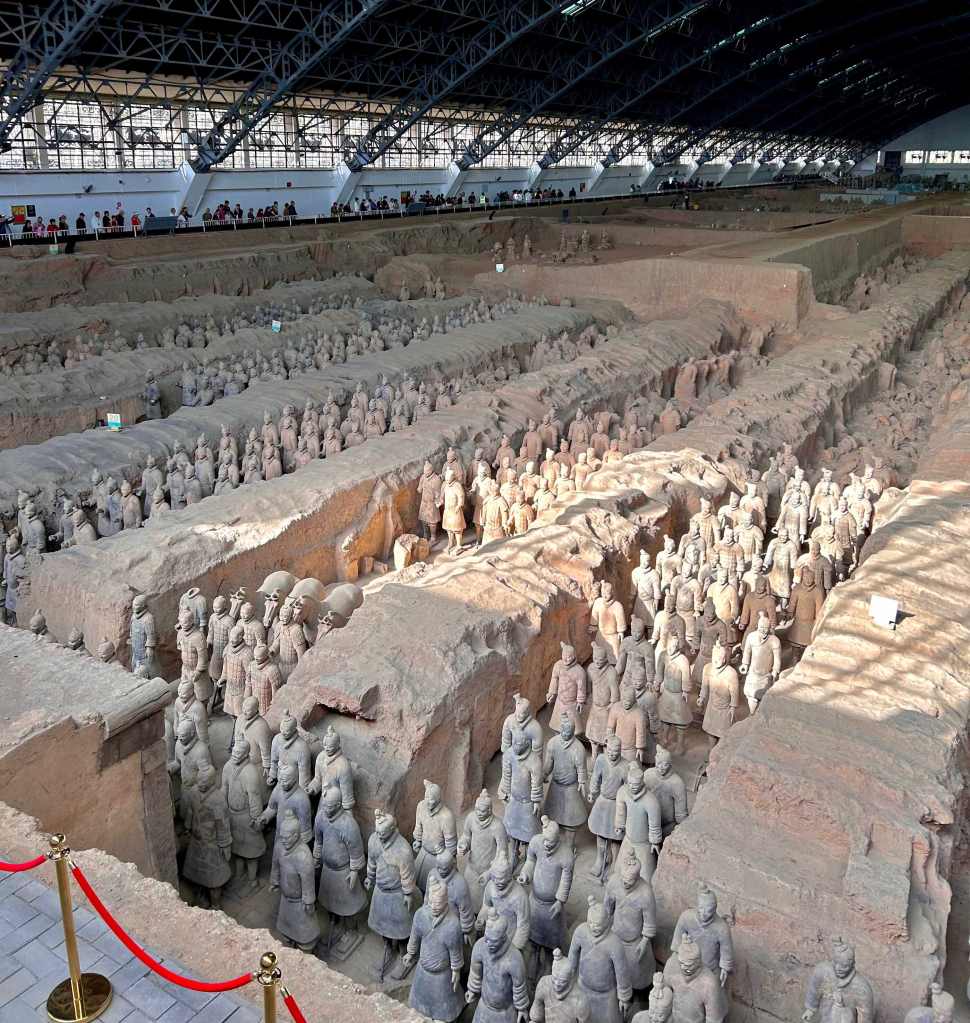
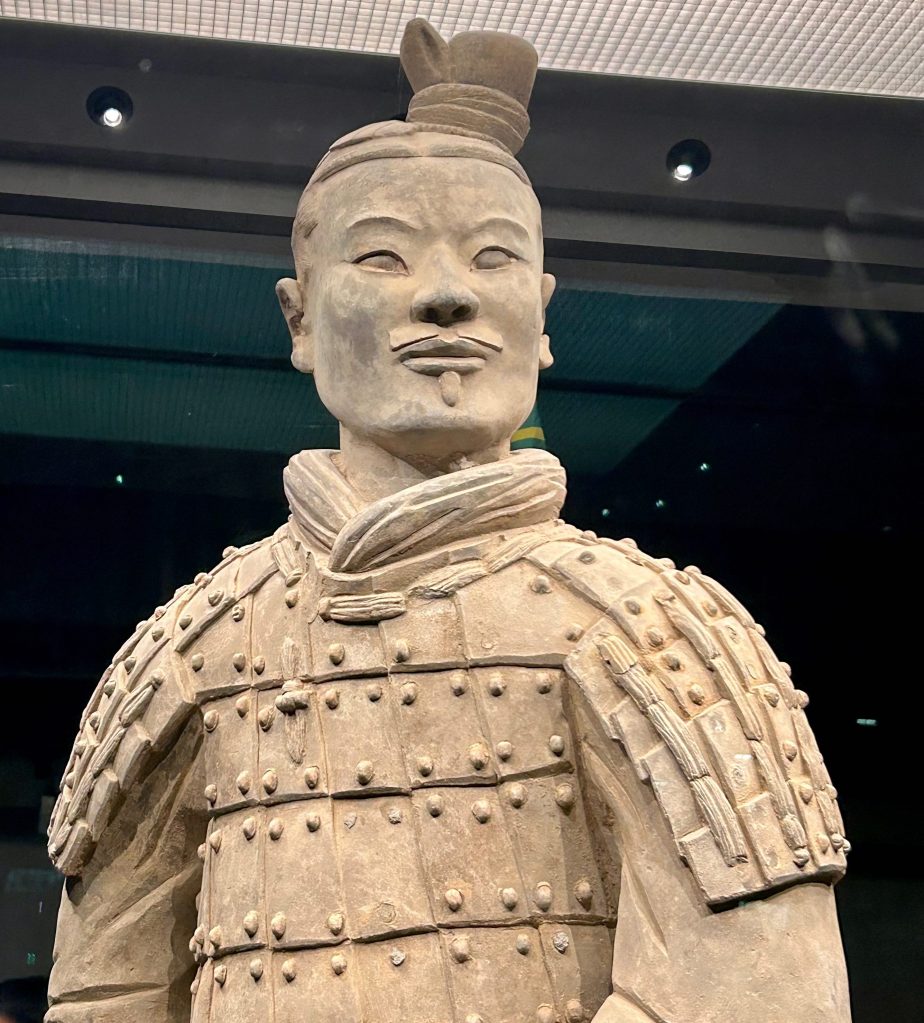
REBE: No, there’s a hill where I think the emperor is buried. But the army is in like an open pit, which has a huge roof built over it. There are three pits, and the second one is the largest. It’s very impressive to see it. There are so many soldiers—thousands. One interesting thing is that they were originally painted. Once they got exposed to the atmosphere, the paint started to fade and peel off in a matter of minutes. When I visited, there were some researchers down in one of the pits, working.

ROY: So that was it for Xi’an?

REBE: Uh, there is a Muslim Quarter in Xi’an where you can visit different mosques and eat amazing food.  I also tried biangbiang noodles, which are thick and really good. Fun fact: the Chinese character for these noodles is one of the most difficult and complicated.

ROY: Weird.

REBE: My next stop, and my last destination, was Chengdu. This is the capital of Sichuan. It’s most famous for the giant panda reserve and the plentiful hot pot restaurants.

ROY: You saw pandas?

REBE: I didn’t really have time. There was other stuff I wanted to see.

ROY: So what did you do?

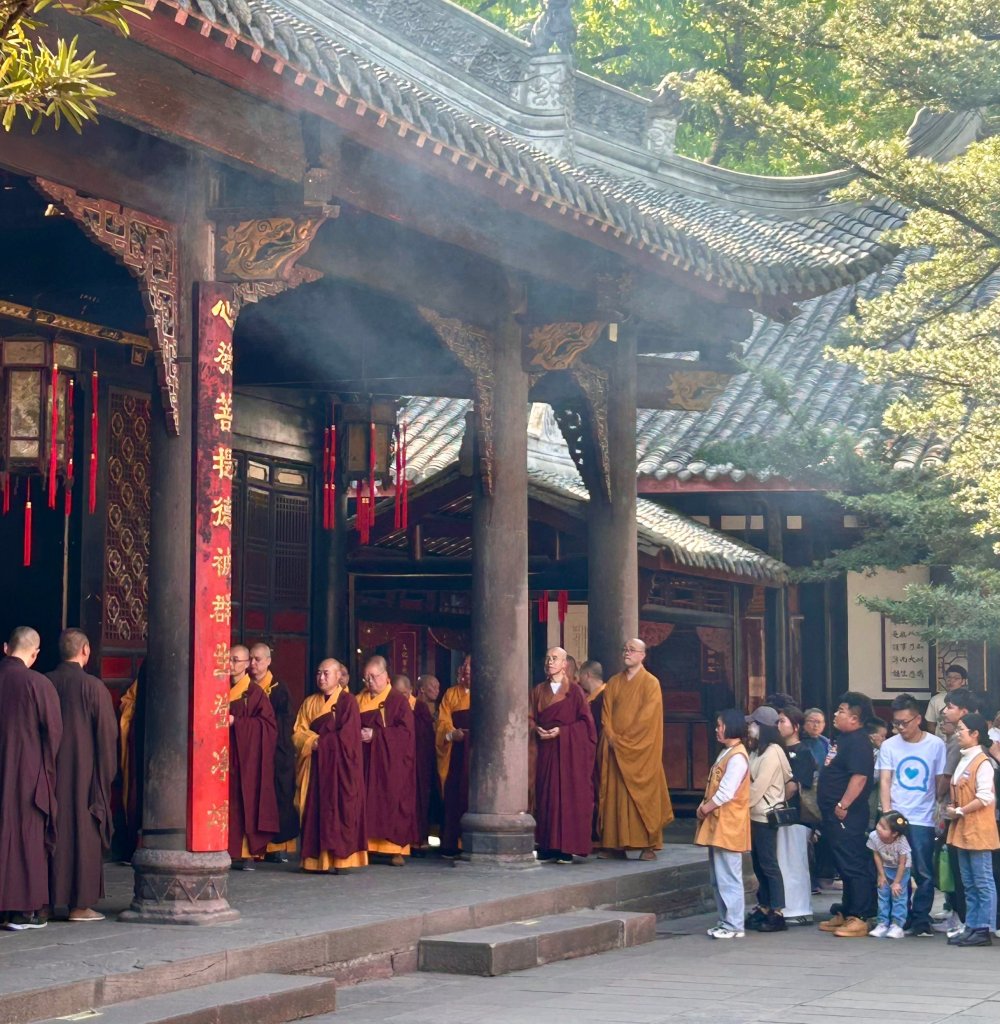
REBE: I went to the house of Du Fu, one of the most famous Chinese poets. It’s kind of outside the city center. The house is small, and I think it’s been reconstructed. But it was nice seeing the old, traditional space. I passed through People’s Park, where I saw professional ear cleaners working. And I also visited the Wuhou Temple, where I saw Buddhist monks singing. It reminded me a lot of Catholic monks, actually.

ROY: Different religions, the same rituals.

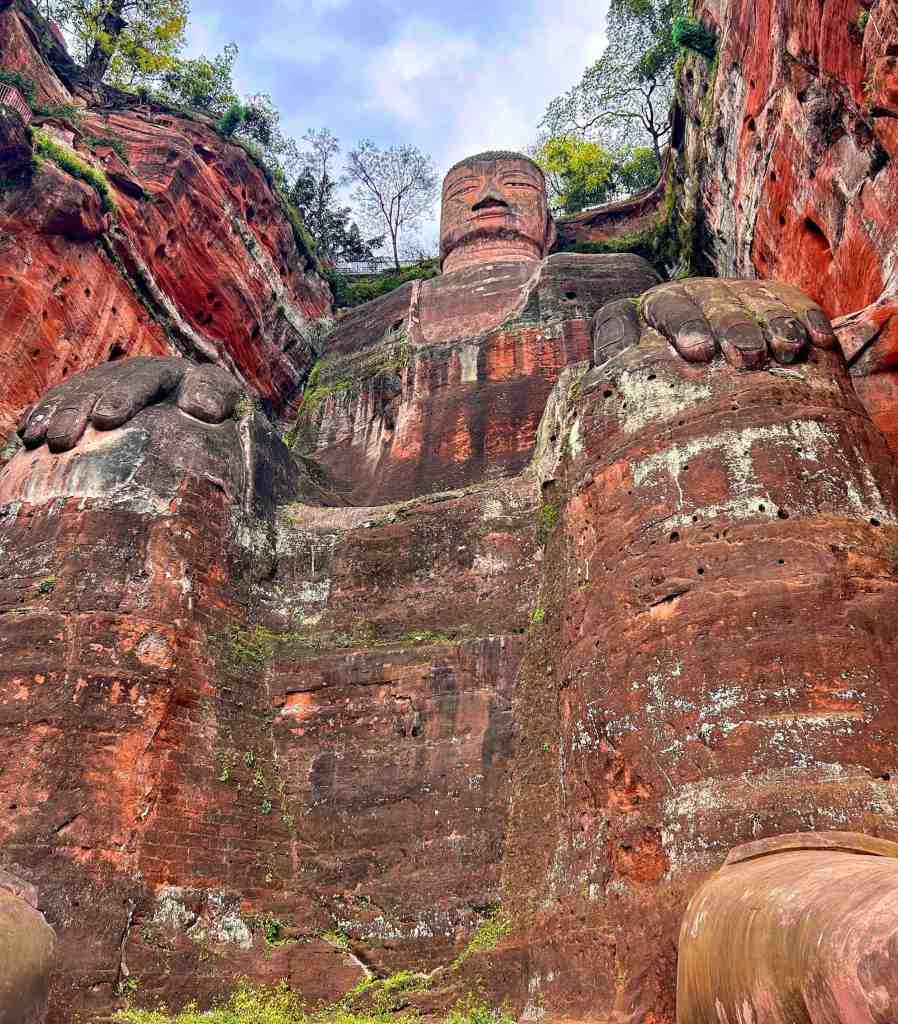
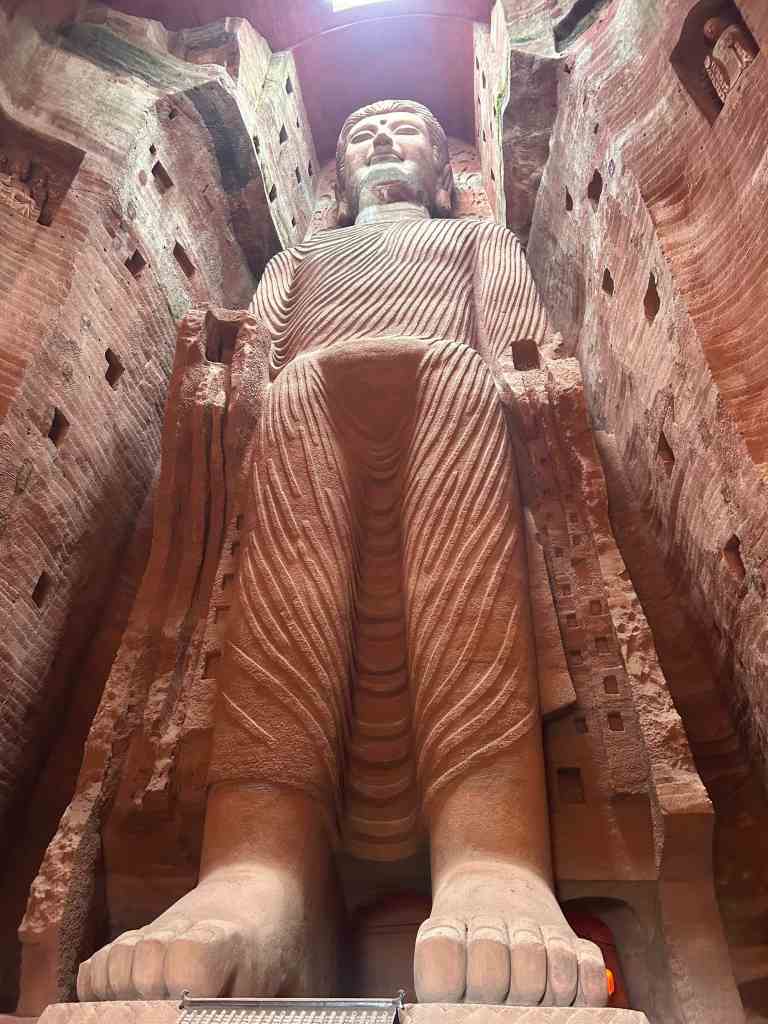
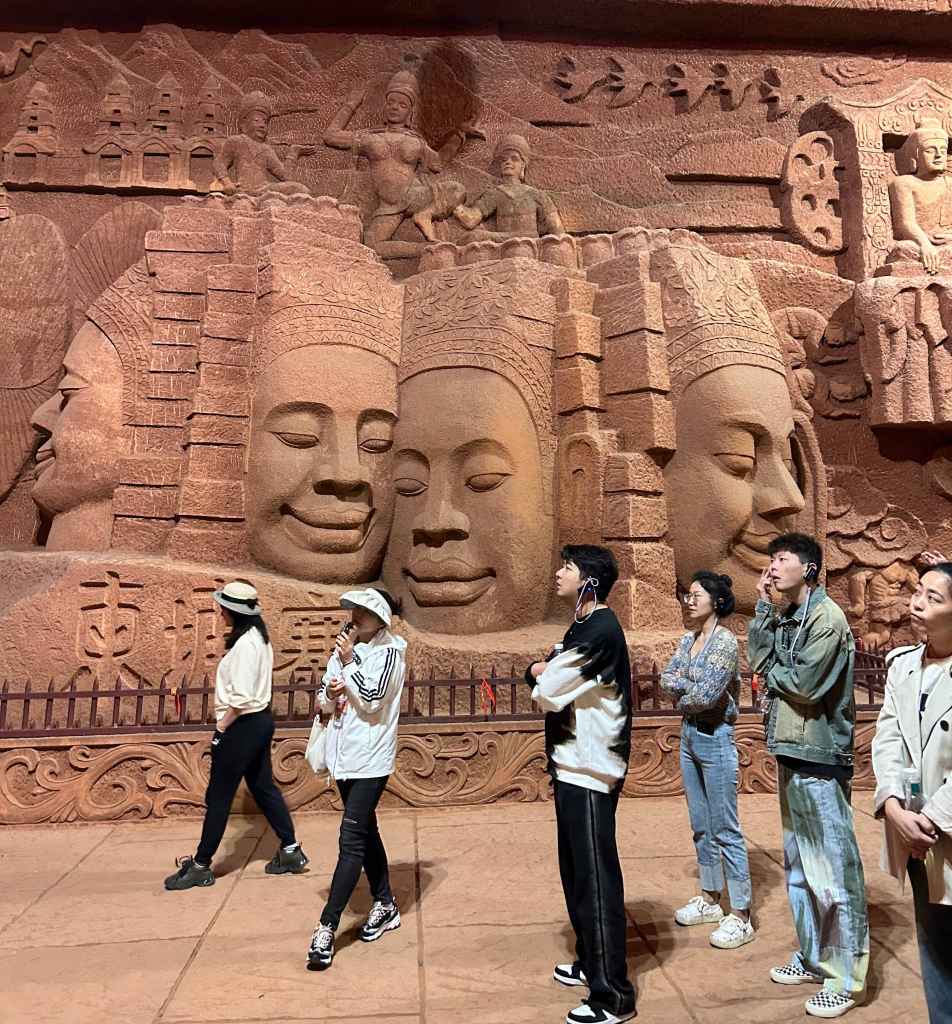
REBE: The best thing, by far, was the Leshan Giant Buddha. This was carved into a cliffside over a thousand years ago, and it’s absolutely gigantic. You can’t even really take a good picture when you’re standing under it, because it’s just so tall. Also, the Buddha is in an area full of stone statues of the Buddha, and many of these are really big as well. It’s just very impressive.

ROY: That’s in the city?

REBE: No, you take a train to get to Leshan, which is about an hour. And then you have to take a bus.

ROY: Ok, so then you flew back to Spain—with two stopovers, I remember. But I wanted to ask: What are your final thoughts on the trip?

REBE: Well, I saw lots of amazing things. And I even met a few locals, since some younger people are eager to talk to foreigners and practice their English. But the thing I liked most about the trip was the sensation of being so far away, in a place that is so different. Unlike visiting some touristy places in Europe, it didn’t feel like the places were made for visitors. So navigating the country felt like an adventure.

Sorolla: A Tale of Two Cities

Sorolla: A Tale of Two Cities

Madrid has some of the finest museum-going in Europe, holding its own against Vienna, London, and even Paris. And this would be true if the city only had its big three: the Prado, the Thyssen, and the Reina Sofia. In addition to these heavyweight picture galleries, however, the city is also home to a great many excellent small museums. The best of these is, without a doubt, the one dedicated to Joaquín Sorolla.

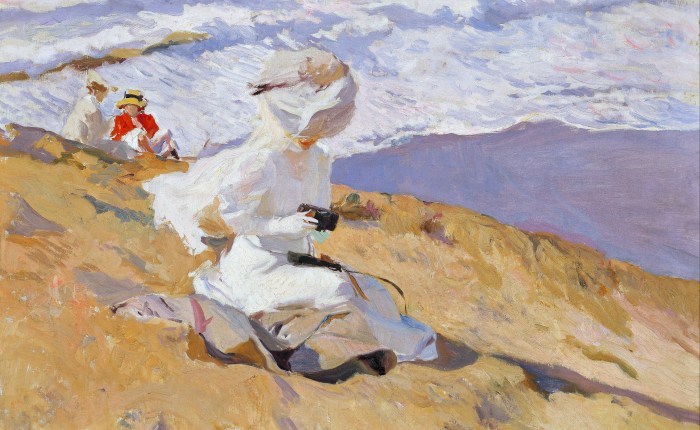
It is somewhat ironic that Sorolla’s museum should be located in Madrid, as he was a valenciano by birth and disposition. His most famous and distinctive paintings are those featuring beach scenes, bathed in a kind of brilliant lucidity, every surface shimmering under the Mediterranean sun. But he was far more than a provincial painter. During his life, he became the most celebrated artist in the country—and, indeed, one of the most famous in the world. This is why he was able to afford such a fine house in the center of the nation’s capital.

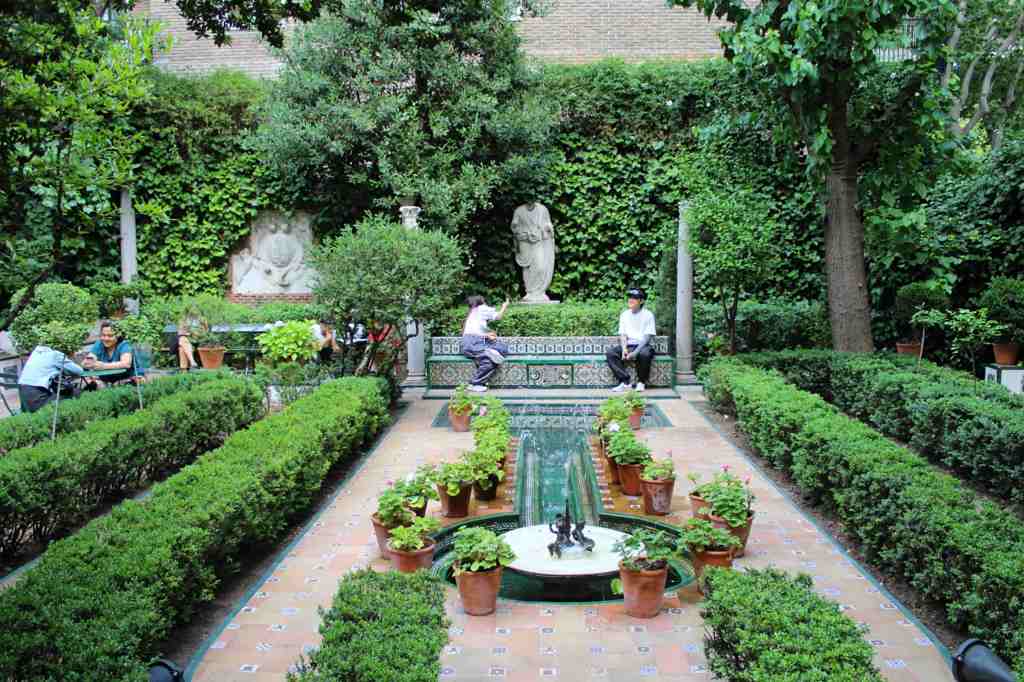
The first thing the visitor will notice upon entering the museum is its lovely garden. This was designed after the Andalusian fashion, featuring colorful tiles, little aqueducts, and gurgling fountains. It is such an attractive space that some locals come here just to hang out, as it is free to enter. Sorolla designed the garden himself, and it is easy to picture him sitting here after a long day in his studio, resting his eyes.

The entrance to the ticket office is distinct from that of the museum itself. As it is a state museum, they charge the standard fee of 3€. It is free on Saturdays, but perhaps it is worth it to go on a different day, as the museum is most pleasant with fewer people. While purchasing your ticket, I recommend pausing to admire the Andalusian patio, as well as the painter’s impressive collection of Spanish ceramics. He seems to have had a keen appreciation for the rural, rustic handcrafts of his countrymen.

The first room of the museum is the picture gallery, featuring several excellent, large-scale paintings of the Spanish master. Here the visitor gets a good impression of his style. In his portraits—such as those of his wife or children—Sorolla’s work resembles other painters of his era, such as John Singer Sargent (whom Sorolla met and admired). He was more than capable of painting in a traditional manner.

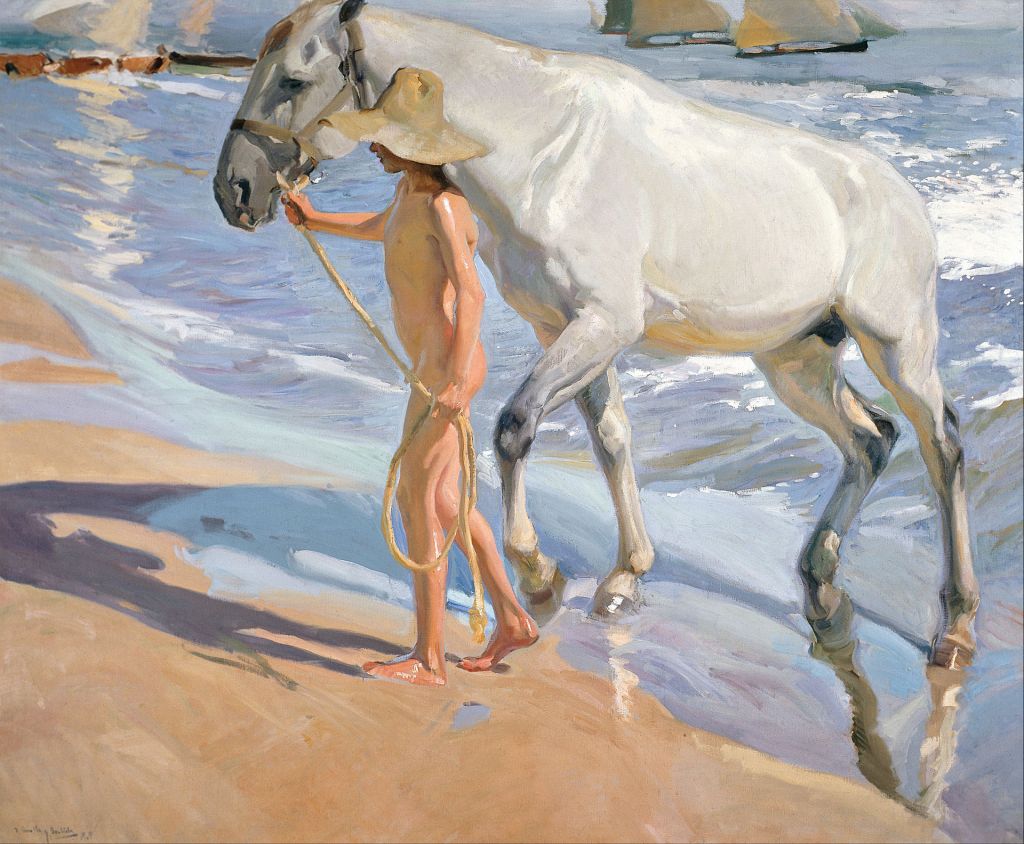
His brush comes alive, however, whenever he depicts bright, shining light. No other painter has captured the sensation of Spanish sun so successfully. His human figures seem to dissolve into gleam and reflection. In his beach scenes, you can smell the saltwater and hear the waves. If you have ever stayed on a Mediterranean beach long enough to go blind from the reflections and dizzy from dehydration, you can see that, in his paintings, Sorolla captured an experiential truth.

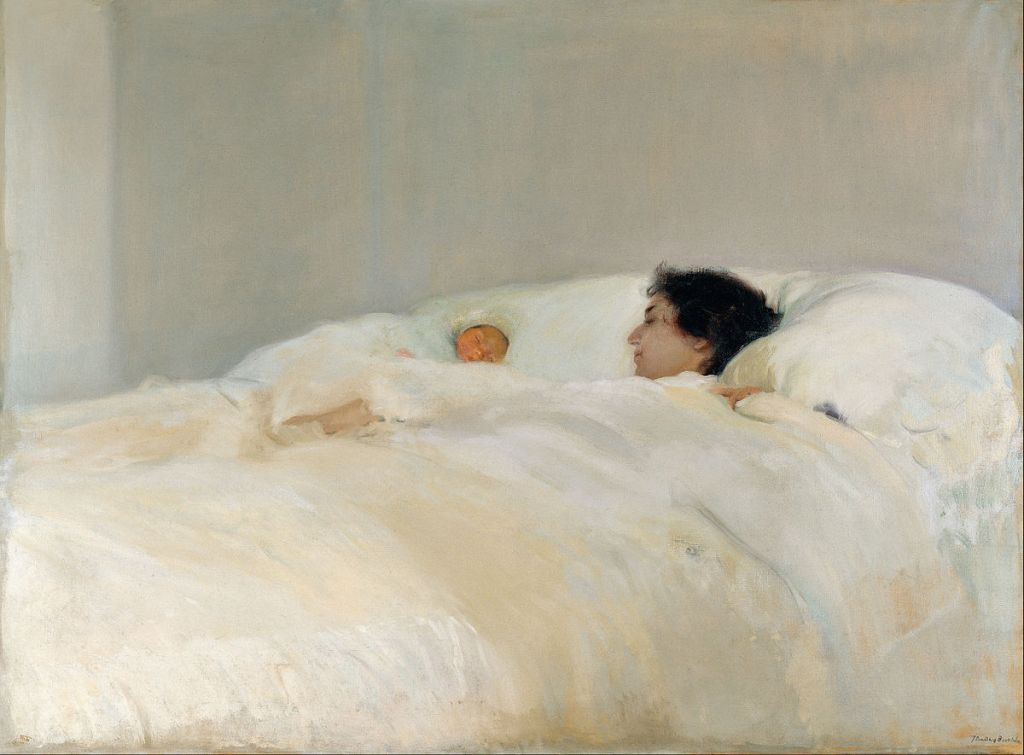
And though Sorolla was the epitome of a bourgeois artist during his lifetime, he was capable of great artistic daring. On my last visit, I was impressed by his work Madre, which depicts a mother in bed with her baby. Their tan faces are the only points of contrast with the white pillows, sheets, and walls, making it seem as if they were floating in a sea of light. There is nothing conventional about it.

The next room features some of Sorolla’s more familial works. Among the portraits we can find Joaquín Sorolla García, his son, who was the museum’s first director. It is largely thanks to him that we have such a fine museum, as he preserved it after his father’s death and left it to a foundation in his will. Unlike so many other house museums, then, nobody else ever lived here before it was turned into a museum. Another notable offspring we may find is Elena Sorolla. She became a talented painter and sculptor in her own right, though she later abandoned art in favor of her family.

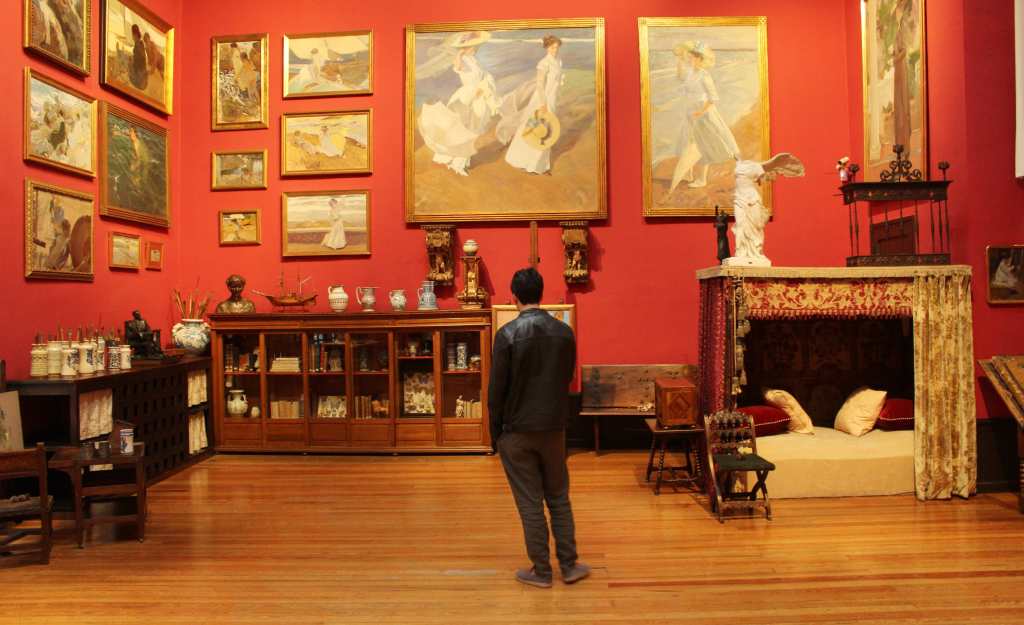
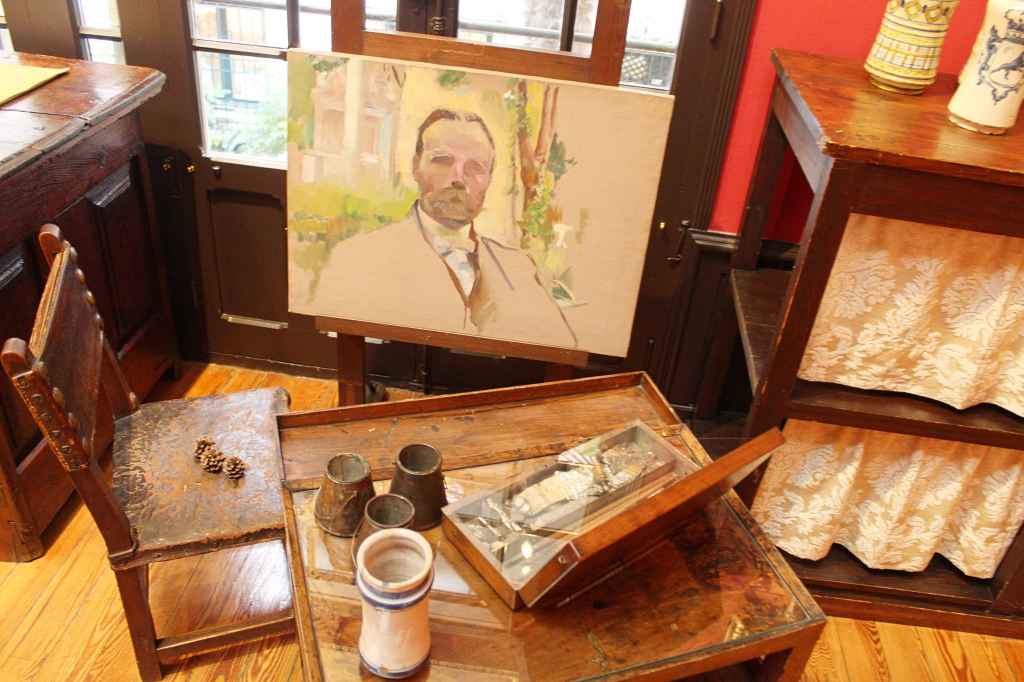
The next room, Sala III, is the showstopper of the museum. It is Sorolla’s former studio. The space is ideal for painting, with large windows, a high ceiling, and skylights. Old, dirty paint brushes stand on a table, and a painting sits on the easel, half-finished, as if Sorolla just stepped out for a cigarette. The walls are covered in his paintings—so many and so high up that it is hard to even appreciate them. In the center of the room hangs a large copy of the Portrait of Pope Innocent X, by Velázquez (one of Sorolla’s heroes). Nearby is an ornate bed in one corner, which looks barely big enough for one person, much less Sorolla and his wife. Was it just for siestas? 

The visitor next climbs the stairs into the temporary exhibition space. I have been to the museum many times by now, and have consistently been impressed with the quality of these exhibits. The museum has far more paintings in its collection than it can display at any one time (Sorolla was prolific), as well as objects and artwork from Sorolla’s own substantial collections. So there is a lot to choose from.

The last time I visited, they had an exhibit commemorating the 100-year anniversary of his death: “Sorolla en 100 objetos.” This is an attempt to tell the story of his life using Sorolla’s possessions. One gets the impression of a man whose career could hardly have gone any better—of an artist who achieved success early, and was highly respected until the end of his life. He is, in other words, at the other end of the scale from Van Gogh: not the lone, eccentric genius but a pillar of his community. And yet, judging from his massive output, one cannot rate his commitment to painting as any less than the Dutchman’s.

The rest of the museum consists of rooms furnished as they were during his time, whose richness only serves to exemplify the degree of success Sorolla enjoyed. The visitor is then, once again, deposited in the lovely gardens—to either bask in aesthetic pleasure or to be consumed by envy at such a fortunate life.

At the end of your visit, you will have a good idea of both the artist and his work. And yet, to see Sorolla’s most ambitious and monumental paintings, you will have to visit another museum—one on the other side of the ocean.

The Hispanic Society of America is perhaps one of the strangest and least-known museums in New York City. The name itself is misleading in two ways: first, because it isn’t and never was a learned society; and second, because—despite being located in Washington Heights, a “Hispanic” (meaning Latino) part of the city—it is really dedicated to Spanish culture. 

In many ways, the museum is a relic from another time. It is the brainchild of Archer Milton Huntington, an eccentric millionaire who had a keen interest in all things Spain. Using his money (inherited) and his many intellectual connections (he was an amateur scholar), he assembled a collection of museums around Audubon Terrace—a monumental complex of ornate Beaux-Arts buildings—and had his wife, Anna Hyatt Huntington, add the sculptures and friezes.

(It is worth noting that Mrs. Huntington was a remarkable artist, who achieved widespread success at a time when it was very rare indeed for women to be sculptors, and who left many attractive monuments all over the Americas and Spain.)

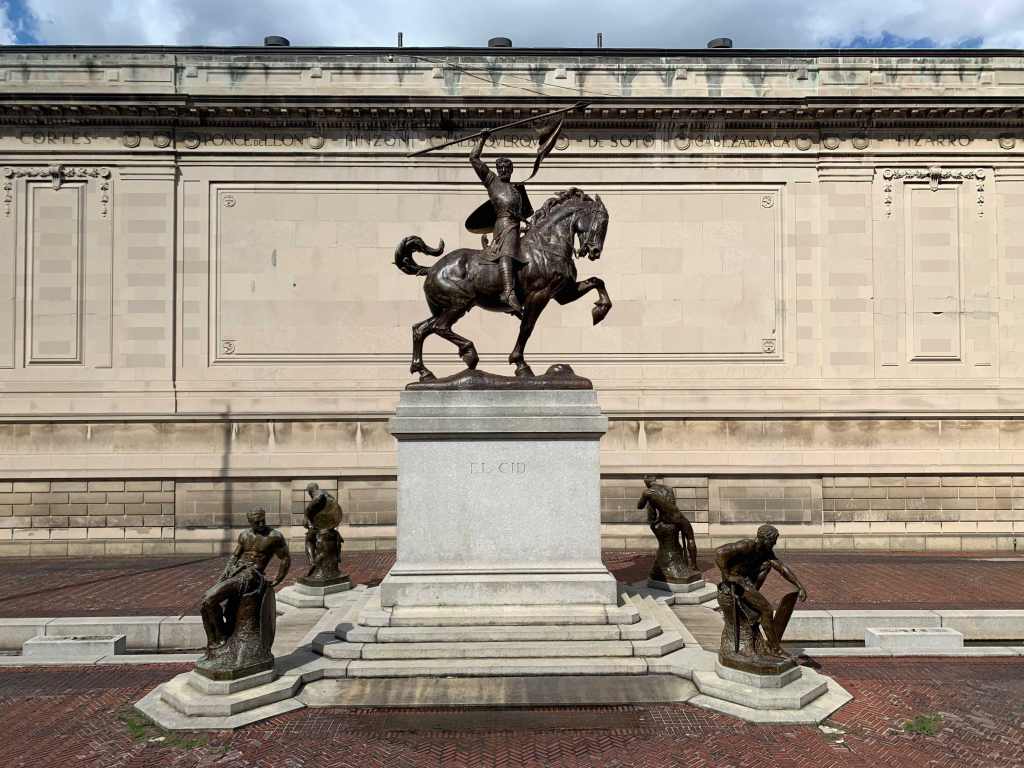
Yet I am afraid that the decoration adorning the outside of the museum will likely rub some people the wrong way nowadays. Above Anna Hyatt Huntington’s wonderful statue of El Cid Campeador—the legendary hero of the Spanish Middle Ages—there are names inscribed on the outside of the building, as if to commemorate heroes. Yet the names include Pizarro, De Soto, Ponce de León, and Cortés—conquistadores, who are now more often reviled as destroyers than celebrated as civilizers. 

The museum has a collection of art and rare books from Spain that is unrivaled outside the country. There are paintings by the big three—Velázquez, El Greco, and Goya—and even a first-edition copy of Don Quixote. For many years, however, this collection hasn’t been available to the public, as the museum had to undergo extensive repairs and renovations. I was fortunate enough to see some of this during my first year in Spain, when the Prado had a temporary exhibition showcasing some of the treasures of the Hispanic Society’s collection. But during my one and only visit to the actual museum, last summer, most of its collection was still unavailable.

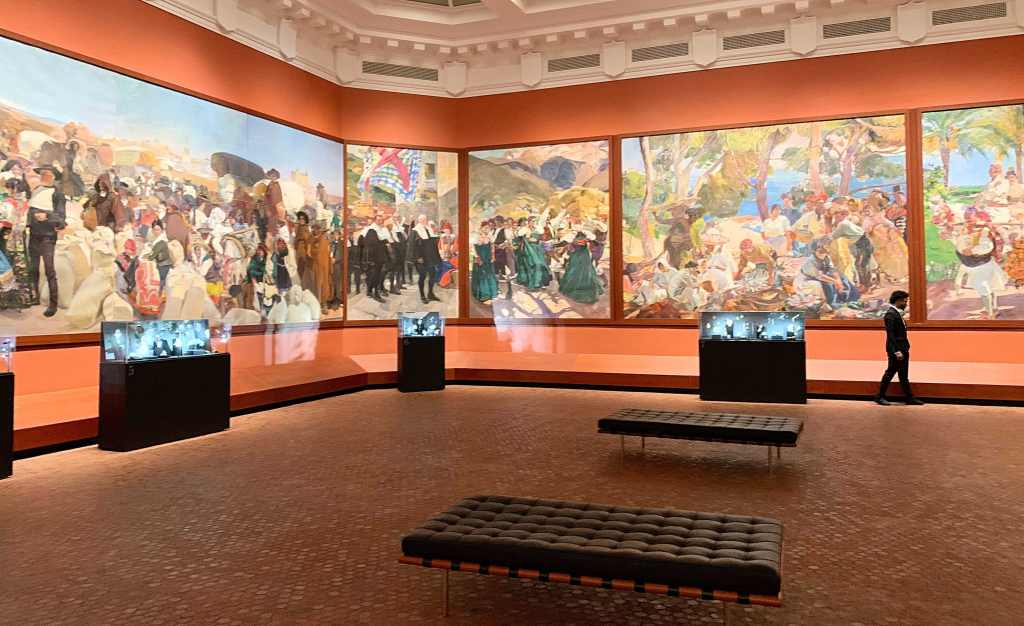
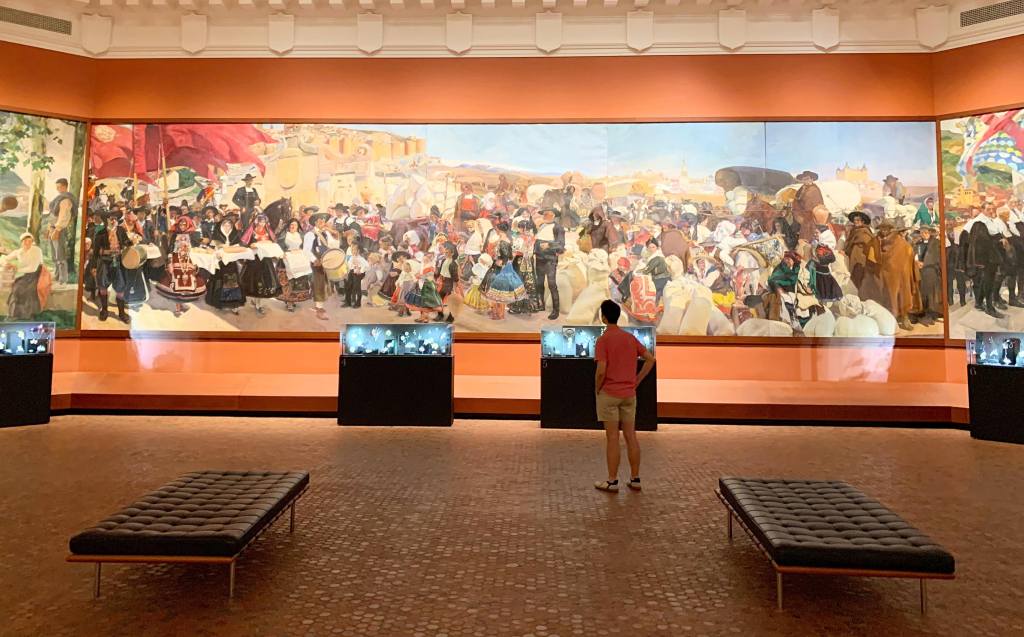
But I was able to see Sorolla’s magnum opus: Visions of Spain. This is a truly massive series of oil paintings, all about 4 meters in height (12ish feet) and wrapping 70 meters (over 200 feet) around the room. Amazingly, despite this huge scale, Sorolla completed nearly all of these paintings outside, working en plein air at various locations around Spain. He must have needed a stepladder and a team of helpers.

The murals depict the many regions of Spain, focusing on their most distinctive qualities. We can see a Semana Santa procession in Seville, as well as some joyful flamenco dancing; in Aragon they dance the jota and in Galicia they listen to a bagpipe; in the Basque Country they play their distinctive ball game, while in Valencia and Catalonia they prepare the day’s catch of fish. By far the biggest painting depicts a bread festival in Old Castile, with both the famous cities of Ávila and Toledo visible in the background (impossibly, since the two cities are quite distant).

Now, judged purely as paintings, the murals in this series are perhaps not as pleasing as Sorolla’s finest individual works, such as El baño del caballo. They are too busy with detail to make for clean compositions, and do not always showcase Sorolla’s exceptional gift for portraying light. Judged by their scale and ambition, however, the paintings are absolutely remarkable. For such a large work, Sorolla paid exceptional attention to details of costume and custom, attempting to make his paintings as anthropologically informative as possible. And the execution is immaculate. It is no wonder that, after completing this series, the painter felt exhausted. He would die just four years later.

If a visit to the Museo Sorolla in Madrid proves that he was a wonderful painter, then a visit to the Hispanic Society in New York proves that he was something else: a patriot. Admittedly, this is not always an admirable quality in an artist (think of Wagner); but in Sorolla it drove him, not to bigotry, but to celebration of the scintillating beauty of his homeland—and not just its famous landscapes and monuments, but its people. For any who love both fine painting and that sunbaked land, his paintings provide a peculiar delight.