Review: Stoner

Review: Stoner

Stoner by John Williams

My rating: 4 of 5 stars

This book is among the class I call ‘Goodreads Books,’ because so many of my friends here have read the book, whereas nobody I know in the real world has even heard of it, much less read it. Among a certain niche of readers, this book is quite highly regarded; some have even gone so far as to dub it the ‘perfect novel.’ I would hate to be the dissenting voice in this chorus of praise; so I am happy to report that I liked the book, even if I did not find it ‘perfect.’

The novel follows the life, from birth to death, of William Stoner, a farm boy turned man of letters. It tracks the few successes and many disappointments in his long and fairly undistinguished earthly career. What makes the novel special is not the character of Stoner—a rather bland and colorless fellow—nor anything that happens to him. Rather, it is the tone with which Williams narrates Stoner’s life—a sort of tender melancholy, searching for the beauty and sadness in ordinary things.

For me, the strongest parts of this book were the beginning and the end (which are very good parts for a book to be strong). We first see Stoner emerging from his drudging life of farm work into the halls of academe, and witness his discovery of literature. Any devoted reader will naturally appreciate this. The book ends with a striking narration of Stoner’s confrontation with his own mortality, and his acceptance of his deeply flawed life.

The middle parts of the book were dominated by a series of interpersonal conflicts, and I enjoyed these somewhat less. The dominant relationship of this novel is that between Stoner and his wife, Edith. Shortly after the marriage, it becomes clear that Edith has been emotionally (and perhaps physically?) abused, and is traumatized from this abuse, which turns her into an abuser. This makes the marriage hellish for Stoner; and the dynamics of a dysfunctional relationship are described quite expertly. However, I was frustrated by Williams’s portrayal of Edith, which is almost entirely without sympathy. As a character, she has no interiority, no real perspective, but is merely a kind of wounded automaton that goes on wounding. As a result, I found her actions incomprehensible and even unbelievable.

I would lodge a similar complaint about the novel’s other villain, Hollis Lomax. Stoner’s academic rival and eventual boss, he is possessed by a kind of vindictiveness that is never fully explained, or even investigated. The third major relationship in the book—the affair between Stoner and Katherine Driscoll—is far more sympathetic. Still, I was baffled by its eventual end. (Spoilers here.) Lomax threatens to have Driscoll fired, so Driscoll quits? Stoner ends the relationship to preserve his non-existent family life? This did not square.

It is fair to say that the only character granted interiority is Stoner himself. Judging from the reviews, many readers seem to have found in Stoner a certain nobility—seen him as a fundamentally decent man borne down by circumstances—and thus interpret this book as a tragedy of a good man in a bad world. And while I agree that Stoner is decent enough, I read this book as a case study of the pathetic man. To say this in a slightly more cultivated way, I interpreted Stoner as a prime example of what the existentialists call ‘bad faith.’

By that I mean that Stoner never seems to consciously choose what he wants from life. Even in the book’s beginning, when Stoner switches from studying agriculture to literature, this is narrated not as a conscious choice but as a kind of instinctual impulse. The same goes for his marriage, and for virtually everything else. Very often, Stoner seems hardly aware of what is happening, and most often he decides to simply go along with the current. The only time he really goes against the prevailing wind was in his attempt to prevent a bad student from obtaining a Ph.D., and even then he frames this decision as an attempt to defend the university from the world ‘out there.’ Indeed, Stoner’s whole attitude towards the university is that of a diver’s towards a shark cage. It is a shield from life.

My point is that Stoner is largely responsible for the way his life turned out. He could have divorced his wife, or have tried far more vigorously to have protected his daughter from his wife’s abuse. After Lomax decided to torture him, Stoner could have simply left the university and gone to another one. He could have eloped with Katherine Driscoll—why not? In each of these instances, Stoner simply did nothing, staying in a bad marriage, relinquishing his daughter to his wife’s power, bowing to Lomax’s schemes, and cutting it off with the only person he ever loved.

The best example of Stoner’s decision making may have been his refusal to enlist to fight in World War I. When it finally dawns on him that he would have to decide, for himself, whether to fight, he seems absolutely dumbstruck. He asks the people in his life to tell him what to do. And then, he does nothing, merely continuing on with his routine—not because he is against war, and not even because he is afraid of dying on the battlefield, but simply because it is the null choice. This, to me, is bad faith.

Now, all this is not to say that I did not like the book, or that I did not find any value in reading it. To the contrary, I think there is a great deal of value in exploring such a character. But I do not blame the world for Stoner’s problems.

Stylistically, I could not make up my mind whether I liked or disliked Williams’s writing. There were times when the prose swelled into beautiful lyricism, but mostly the narration is deadpan, often dreary, and occasionally even dirge-like—a kind of funeral procession for Stoner’s life. As for the story, I wish Williams had focused far more on Stoner’s relationship with literature, rather than simply narrating it from a distance. We never experience Stoner, say, savoring a poem; most of his energy is expended in rather dry academic work—though this, again, accords with his use of literature as an existential shield rather than a way of enhancing his life.

Regardless of one’s take on Stoner, or William’s prose, or the untapped veins in the story, it is evident that this book evokes strong reactions from its readers, some negative and mostly positive. And that, if anything, is a mark of a good book.


View all my reviews

Review: The World as Will and Representation

Review: The World as Will and Representation

The World as Will and Representation, Vol. 1 by Arthur Schopenhauer

My rating: 3 of 5 stars

To truth only a brief celebration of victory is allowed between the two long periods during which it is condemned as paradoxical, or disparaged as trivial.

Arthur Schopenhauer is possibly the Western philosopher most admired by non-philosophers. Revered by figures as diverse as Richard Wagner, Albert Einstein, and Jorge Luis Borges, Schopenhauer’s influence within philosophy has been comparatively muted. True, Nietzsche absorbed and then repudiated Schopenhauer, while Wittgenstein and Ryle took kernels of thought and elements of style from him. Compared with Hegel, however—whom Schopenhauer detested—his influence has been somewhat limited.

For my part, I came to Schopenhauer fully prepared to fall under his spell. He has much to recommend him. A cosmopolitan polyglot, a lover of art, and a writer of clear prose (at a time when obscurity was the norm), Schopenhauer certainly cuts a more dashing and likable figure than the lifeless, professorial, and opaque Hegel. But I must admit, from the very start, that I was fairly disappointed in this book. Before I criticize it, however, I should offer a little summary.

Schopenhauer published The World as Will and Representation when he was only thirty, and held fast to the views expressed in this book for the rest of his life. Indeed, when he finally published a second edition, in 1844, he decided to leave the original just as it was, only writing another, supplementary volume. He was not a man of tentative conclusions.

He was also not a man of humility. One quickly gets a taste for his flamboyant arrogance, as Schopenhauer demands that his reader read his book twice (I declined), as well as to read several other essays of his (I took a rain check), in order to fully understand his system. He also, for good measure, berates Euclid for being a bad mathematician, Newton for being a bad physicist, Winckelmann for being a bad art critic, and has nothing but contempt for Fichte, Schlegel, and Hegel. Kant, his intellectual hero, is more abused than praised. But Schopenhauer would not be a true philosopher if he did not believe that all of his predecessors were wrong, and himself wholly right—about everything.

The quickest way into Schopenhauer’s system is through Kant, which means a detour through Hume.

David Hume threw a monkey wrench into the gears of the knowledge process with his problems of causation and induction. In a nutshell, Hume demonstrated that it was illogical either to assert that A caused B, or to conclude that B always accompanies A. As you might imagine, this makes science rather difficult. Kant’s response to this problem was rather complex, but it depended upon his dividing the world into noumena and phenomena. Everything we see, hear, touch, taste, and smell is phenomena—the world as we know it. This world, Kant said, is fundamentally shaped by our perception of it. And—crucially—our perception imposes upon this observed world causal relationships.

This way, Hume’s problems are overcome. We are, indeed, justified in deducing that A caused B, or that B always accompanies A, since that is how our perception shapes our phenomenal world. But he pays a steep price for this victory over Hume. For the world of the noumena—the world in-itself, as it exists unperceived and unperceivable—is, indeed, a world where causal thinking does not apply. In fact, none of our concepts apply, not even space and time. The fundamental reality is, in a word, unknowable. By the very fact of perceiving the world, we distort it so completely that we can never achieve true knowledge.

Schopenhauer begins right at this point, with the division of the world into phenomena and noumena. Kant’s phenomena become Schopenhauer’s representation, with only minimal modifications. Kant’s noumena undergo a more notable transformation, and become Schopenhauer’s will. Schopenhauer points out that, if space and time do not exist for the noumena, then plurality must also not exist. In other words, fundamental reality must be single and indivisible. And though Schopenhauer agrees that observation can never reveal anything of significance about this fundamental reality, he believes that our own private experience can. And when we look inside, what we find is will: the urge to move, to act, and to live.

Reality, then, is fundamentally will—a kind of vital urge that springs up out of nothingness. The reality we perceive, the world of space, time, taste, and touch, is merely a kind of collective hallucination, with nothing to tell us about the truly real.

Whereas another philosopher could have turned this ontology into a kind of joyous vitalism, celebrating the primitive urge that animates us all, Schopenhauer arrives at the exact opposite conclusion. The will, for him, is not something to be celebrated, but defeated; for willing leads to desiring, and desiring leads to suffering. All joy, he argues, is merely the absence of suffering. We always want something, and our desires are painful to us. But satisfying desires provides only a momentary relief. After that instant of satiety, desire creeps back in a thousand different forms, to torture us. And even if we do, somehow, manage to satisfy all of our many desires, boredom sets in, and we are no happier.

Schopenhauer’s ethics and aesthetics spring from this predicament. The only escape is to stop desiring, and art is valuable insofar as it allows us to do this. Beauty operates, therefore, by preventing us from seeing the world in terms of our desires, and encouraging us to see it as a detached observer. When we see a real mountain, for example, we may bemoan the fact that we have to climb it; but when we see a painting of a craggy peak, we can simply admire it for what it is. Art, then, has a deep importance in Schopenhauer’s system, since it helps us towards the wisdom and enlightenment. Similarly, ethics consists in denying the will-to-live—in a nutshell, asceticism. The more one overcomes one’s desires, the happier one will be.

So much for the summary; on to evaluation.

To most modern readers, I suspect, Schopenhauer’s metaphysics will be the toughest pill to swallow. Granted, his argument that Kant should not have spoken of ‘noumena’ in the plural, but rather of a single unknowable reality, is reasonable; and if we are to equate that deeper reality with something, then I suppose ‘will’ will do. But this is all just a refinement of Kant’s basic metaphysical premises, which I personally do not accept.

Now, it is valid to note that our experience of reality is shaped and molded by our modes of perception and thought. It is also true that our subjective representation of reality is, in essence, fundamentally different from the reality that is being represented. But it strikes me as unwarranted to thus conclude that reality is therefore unknowable. Consider a digital camera that sprung to life. The camera reasons: “The image I see is a two-dimensional representation of a world of light, shape, and color. But this is just a consequence of my lens and software. Therefore, fundamental reality thus must not have any of those qualities—it has no dimensions, no light, no shape, and no color! And if I were to stop perceiving this visible world, the world would simply cease to exist, since it is only a representation.”

I hope you can see that this line of reasoning is not sound. While it is true that a camera only detects certain portions of reality, and that a photo of a mountain is a fundamentally different sort of thing than a real mountain, it is also true that cameras use real data from the outside world to create representations—useful, pleasing, and accurate—of that world. If this were not true, we would not buy cameras. And if our senses were not doing something similar, they would not help us to navigate the world. In other words, we can acknowledge that the subjective world of our experience is a kind of interpretive representation of the world-in-itself, without concluding that the world-in-itself has no qualities in common with the world of our representation. Besides, it does seem a violence done to language to insist that the world of our senses is somehow ‘unreal’ while some unknowable shadow realm is ‘really real.’ What is ‘reality’ if not what we can know and experience?

I also think that there are grave problems with Schopenhauer’s ethics, at least as he presents it here. Schopenhauer prizes the ascetics who try to conquer their own will-to-live. Such a person, he thinks, would necessarily be kind to others, since goodness consists in making less distinction between oneself and others. Thus, Schopenhauer’s virtue results from a kind of ego death. However, if all reality, including us, is fundamentally the will to live, what can be gained from fighting it? Some respite from misery, one supposes. But in that case, why not simply commit suicide? Schopenhauer argues that suicide does not overcome the will, but capitulates to it, since its an action that springs from the desire to be free from misery. Be that as it may, if there is no afterlife, and if life is only suffering punctuated by moments of relief, there does not seem to be a strong case against suicide. There is not even a strong case against murder, since a mass-murderer is arguably riding the world of more suffering than any sage ever could.

In short, it is difficult to have an ethics if one believes that life is necessarily miserable. But I would also like to criticize Schopenhauer’s argument about desires. It is true that some desires are experienced as painful, and their satisfaction is only a kind of relief. Reading the news is like that for me—mounting terror punctuated by sighs of relief. But this is certainly not true for all desires. Consider my desire for ice cream. There is absolutely nothing painful in it; indeed, I actually take pleasure in looking forward to eating the ice cream. The ice cream itself is not merely a relief but a positive joy, and afterwards I have feelings of delighted satisfaction. This is a silly example, but I think plenty of desires work this way—from seeing a loved one, to watching a good movie, to taking a trip. Indeed, I often find that I have just as much fun anticipating things as actually doing them.

The strongest part of Schopenhauer’s system, in my opinion, is his aesthetics. For I do think he captures something essential about art when he notes that art allows us to see the world as it is, as a detached observer, rather than through the windows of our desires. And I wholeheartedly agree with him when he notes that, when properly seen, anything can be beautiful. But, of course, I cannot agree with him that art merely provides moments of relief from an otherwise torturous life. I think it can be a positive joy.

As you can see, I found very little to agree with in these pages. But, of course, that is not all that unusual when reading a philosopher. Disagreement comes with the discipline. Still, I did think I was going to enjoy the book more. Schopenhauer has a reputation for being a strong writer, and indeed he is, especially compared to Kant or (have mercy!) Hegel. But his authorial personality—the defining spirit of his prose—is so misanthropic and narcissistic, so haughty and bitter, that it can be very difficult to enjoy. And even though Schopenhauer is not an obscure writer, I do think his writing has a kind of droning, disorganized quality that can make him hard to follow. His thoughts do not trail one another in a neat order, building arguments by series of logical steps, but flow in long paragraphs that bite off bits of the subject to chew on.

Despite all of my misgivings, however, I can pronounce Schopenhauer a bold and original thinker, who certainly made me think. For this reason, at least, I am happy to have read him.


View all my reviews

Review: We Were Eight Years in Power

Review: We Were Eight Years in Power

We Were Eight Years in Power: An American Tragedy by Ta-Nehisi Coates

My rating: 4 of 5 stars

Racism was not a singular one-dimensional vector but a pandemic, afflicting black communities at every level, regardless of what rung they occupied.

Ta-Nehisi Coates has turned what could have been a routine re-publication of old essays into a genuine work of art.

The bulk of this book consists of eight essays, all published in The Atlantic, one per year of the Obama presidency. But Coates frames each one with a kind of autobiographical sketch of his life leading up to its writing. The result is, among other things, a surprisingly writerly book—and by that I mean a book written about writing—a kind of Bildungsroman of his literary life. Even on that narrow basis, alone, this book is absorbing, as it shows the struggles of a young writer to hone his craft and find his voice. And that voice is remarkable.

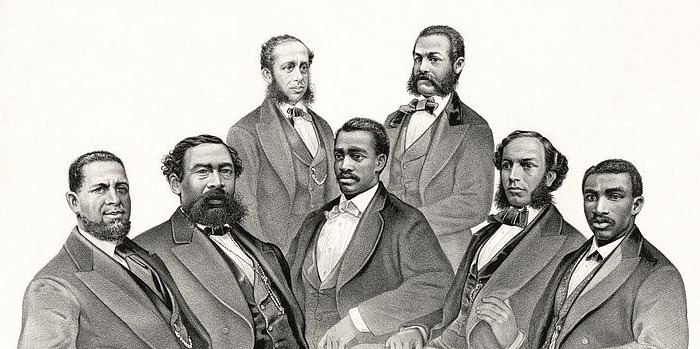
But this book is far more than that. Though the essays tackle diverse topics—Bill Cosby, the Civil War, Michelle Obama, mass incarceration—they successfully build upon one another into a single argument. The kernel of this argument is expressed in the finest and most famous essay in this collection, “The Case for Reparations”: namely, that America must reckon with its racist past honestly and directly if we are ever to overcome white supremacy. Much of the other essays are dedicated to criticizing two principal rivals to this strategy: Respectability Politics, and Class-Based Politics.

First, Respectability Politics. This is the notion—popular at least since the time of Booker T. Washington—that if African Americans work hard, strive for an education, and adhere to middle-class norms, then racism will disappear. Though sympathetic to the notion of black self-reliance, Coates is basically critical of this strategy—first, because he believes it has not and will never work; and second, because it is deeply unjust to ask a disenfranchised people to earn their own enfranchisement.

His portraits of the Obamas—both Barack and Michelle—are fascinating for Coates’s ambivalence towards their use of respectability politics. Coates seems nearly in awe of the Obamas’ ability to be simultaneously black and American, and especially of Barack Obama’s power to communicate with equal confidence to the black and white communities. And he is very sympathetic to the plight of a black president, since, as Coates argues, Obama’s ability to take a strong stance regarding race was heavily constrained by white backlash. Coates is, however, consistently critical of Obama’s rhetorical emphasis on hard work and personal responsibility (such as his many lectures about black fatherhood), rather than the historical crimes perpetrated against the black community.

Coates’s other target is the left-wing strategy of substituting class for race—that we ought to help the poor and the working class generally, and in so doing we will disproportionately benefit African Americans. The selling point of this strategy is that, by focusing on shared economic hardships, the left will be able to build a broader coalition without inflaming racial tensions. But Coates is critical of this approach as well. For one, he thinks that racial tension runs far more deeply than class tension, so that this strategy is unlikely to work. What is more, for Coates, this is a kind of evasion—an attempt to sidestep the fundamental problem—and therefore cannot rectify the crime of racism.

The picture that emerges from Coates’s book is rather bleak. If the situation cannot be improved through black advancement or through general economic aid, then what can be done? The only policy recommendation Coates puts forward is Reparations—money distributed to the black community, as a way of compensating for the many ways it has been exploited and disenfranchised. But if I understand Coates correctly, it is not that he believes this money itself would totally solve the problem; it is that such a program would force us to confront the problem of racism head-on, and to collectively own up to the truth of the matter. Virtually nobody—Coates included—thinks that such a program, or such a reckoning, will happen anytime soon, which leaves us in an uncomfortably hopeless situation.

The easy criticism to make of Coates is that his worldview is simplistic, as he insists on reducing all of America’s sins to anti-black racism. But I do not think that this is quite fair. Coates does not deny that, say, economic inequality or sexism are problems; indeed, he notes that these sorts of problems all feed into one another. Furthermore, Coates reminds us that racism is rarely as simple as a rude remark or an insult; rather, it is as complex, diffuse, and widespread as an endemic disease. Coates’s essential point, then, is that racism runs far more deeply and strongly in American life than we are ready to acknowledge—mainly, because persistent racism undermines most of our comfortable narratives or even our policy ideas, not to mention our self-image.

For a brief moment, after Obama’s election, we dreamed of a post-racial America. But, as Coates shows, in the end, Obama’s presidency illustrated our limitations as much as our progress. This was apparent in the sharp drop in Obama’s approval ratings after he criticized a police officer for arresting a black college professor outside of his own house. This was shown, more dramatically, in the persistent rumors that Obama was a Muslim, and of course in Trump’s bigoted birtherism campaign. And this was shown, most starkly, by the fact that Barack Obama—a black man entirely free of scandals, of sterling qualifications, fierce intelligence, and remarkable rhetorical gifts —was followed by Donald Trump—a white man with no experience, thoughtless speech, infinite scandals, and who is quite palpably racist.

As so many people have noted, it is impossible to imagine a black man with Trump’s resumé of scandals, lack of experience, or blunt speaking style approaching the presidency. Even if we focus on one of Trump’s most minor scandals, such as his posing with Goya products after the CEO praised Trump’s leadership, we can see the difference. Imagine the endless fury that Obama would have faced—and not only from the Republican Party—had he endorsed a supporter’s product from the Resolute Desk of the Oval Office! Indeed, as Coates notes, Trump’s ascension is the ultimate rebuke to Respectability Politics: “Barack Obama delivered to black people the hoary message that in working twice as hard as white people, anything is possible. But Trump’s counter is persuasive—work half as hard as black people and even more is possible.”

Whether Obama’s optimism or Coates’s pessimism will be borne out by the country’s future, I do think that Coates makes an essential point: that racism is deeply rooted in the country, and will not simply disappear as African Americans become less impoverished or more ‘respectable.’ Communities across America remain starkly segregated; incarceration rates are high and disproportional; the income, unemployment, and wealth gaps are deep and persistent; and we can see the evidence of all of these structural inequalities in the elevated mortality suffered by the black community during this pandemic. The intractability of this problem is bleak to contemplate, but an important one to grapple with. And it helps that this message is delivered in some of the finest prose by any contemporary writer.


View all my reviews

Review: Capital in the Twenty-First Century

Review: Capital in the Twenty-First Century

Capital in the Twenty-First Century by Thomas Piketty

My rating: 4 of 5 stars

In any case, truly democratic debate cannot proceed without reliable statistics.

For such a hefty book, so full of charts and case studies, the contents of Capital in the Twenty-First Century can be summarized with surprising brevity. Here it goes:

For as long as we have reliable records, market economies have produced huge disparities in income and wealth. The simple reason for this is that private wealth has consistently grown several times faster than the economy; furthermore, the bigger your fortune, the faster it grows. As a result, in the 18th and 19th centuries, inequality was high and consistently grew: most of the population owned nothing or close to nothing, and a small propertied class accumulated vast generational wealth. This trend was only reversed by the cataclysms of the 20th century—the World Wars and Great Depression—as well as the resultant government policies, such as social security and progressive taxes. But all signs indicate that the general pattern is re-emerging, and we are reverting to levels of inequality not seen since the Belle Epoque.

This is a relatively simple story, but Piketty goes to great lengths to prove it. Indeed, the value of this book consists in its wealth of data rather than any seismic theoretical insights. Piketty is an artist on graph paper; and with a few simple dots and lines he cuts to the heart of the matter. The large time scales help us to see things invisible in the present moment. For example, while some economists have thought that the ratio of income going to labor and capital was quite stable, Piketty shows that it fluctuates through time and space. Seen in this way, the economy ceases to be a static entity following fixed rules, but something all too human—responding to government policy, cultural developments, and historical accidents.

Given the title of this book, comparisons to Marx are inevitable. Piketty himself begins with a short historical overview of the thinkers he considers his predecessors, with Marx given due credit. Piketty even concurs with the basic Marxian logic—that capitalism inevitably leads to a crisis of accumulation, with the capitalists siphoning off more and more resources until none are left for the rest of the population (with revolution inevitable). If we have avoided such a crisis, says Piketty, it is because Marx based his analysis on a static economy, not a growing one. The twentieth century was exceptional, not only because of its many calamities, but also because it saw enormous rates of economic growth, which also helped to offset the basic logic of capitalist accumulation. Growth rates have significantly slowed in this century.

In summarizing Piketty this way, I fear that I am not doing justice to his appeal. This book is at its most enjoyable when Piketty is at his most empirical—when he is taking the reader through historical trends and case studies. This is extremely refreshing in an economist. I often complain that economics, as a discipline, is needlessly theoretical, getting lost in abstruse debates about how certain variables affect one another, rather than focusing on observable data. Piketty explicitly rejects this style of economics, and puts forward his own method of historical research. This has many advantages. For one, it makes the book far easier to understand, since Piketty’s point is always grounded in a set of facts. What is more, this way of doing economics can be integrated with other disciplines, like history or sociology, rather than existing apart in its own theoretical realm. For example, Piketty often has occasion to bring up the novels of Jane Austen and Honoré de Balzac to illustrate his points.

Well, if Piketty is even approximately correct, then we are left in a rather uncomfortable situation. As Piketty repeatedly notes, vast inequality leads to political instability and the undermining of democratic government, as the super-wealthy are able to accumulate ever-larger influence. So what should we do about it? Here, the difference in temperament between Marx and Piketty is especially apparent. Instead of advocating for any kind of revolution, Piketty puts forward the decidedly wonkish solution of a global tax on wealth. The proposed tax would be progressive (only significantly taxing large fortunes) and would extend throughout the world, so that the rich could not simply hide their money in tax havens. Yet as Piketty himself notes, this solution is nearly as utopian as the Proletariat Revolution, so I am not sure where that leaves us.

As much as I enjoyed and appreciated this book, nowadays it is somewhat difficult to see why it became so wildly popular and influential. This had more to do with the historical moment in which it was published than the book itself, I suspect. The world was still reeling from the shock of the 2008 crash, and the public was just coming to grips with the scale and ramifications of inequality. Specifically, while most people tend to think of inequality in terms of income—partly, because most people do not have much wealth to speak of—Piketty’s emphasis on wealth, specifically generational wealth, added another dimension to the debate. Piketty evidently succeeded in getting his message across, since I did not find anything in this book shocking. Now we all know about inequality.

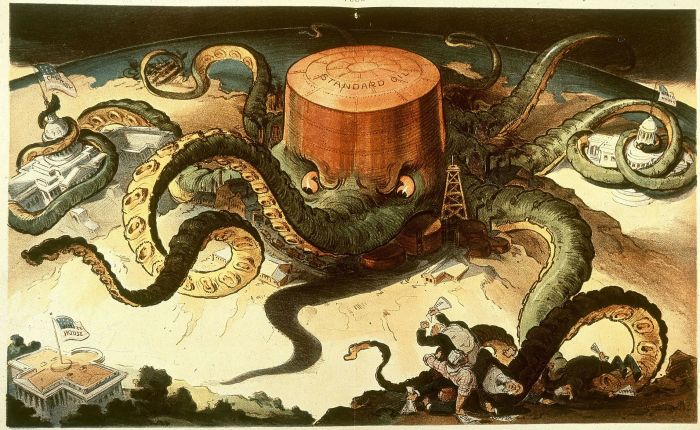
While I am no economist, it does seem clear to me that Piketty’s argument has several weak points. For one, his narrow focus on income and wealth distributions lead him to ignore other important factors—most notably, for me, unemployment rates. Further, the major inequality that Piketty identifies—that wealth grows faster than the economy, or r > g—could have used more theoretical elaboration. I wonder: How can private wealth grow so much faster than the economy, if it is a major component of the economy? At one point, Piketty argues that the super rich can afford to hire the best investors and financial consultants; but from what I understand, professional investors do not, on the whole, outperform index funds (which grow along with the economy). Clearly, there is much for professional economists to argue about here.

Whatever its flaws, Capital in the Twenty-First Century is an ambitious and compelling book that made a lasting and valuable contribution to political debate. Piketty may be no Marx; but for a man who loves charts and graphs, he is oddly compelling.


View all my reviews